When writing about the importance of education, it’s important to understand how learning helps people grow, make better choices, and live successful lives. This essay on the importance of education explains its meaning, benefits, role in personal growth, and why every child should go to school. It’s written in 10-line, 250-word, and 500-word formats to help students with homework or exams. You can download this education essay as a free PDF or image to study or print.
10 Lines Importance of Education Essay for Class 2 to Class 5
- Education helps us learn new things every day.
- It teaches us how to read, write, and count.
- Education makes us smart and confident.
- It helps us know right from wrong.
- Educated people can get better jobs.
- Education teaches us to be kind and helpful.
- It helps us solve problems easily.
- Schools and teachers help us get a good education.
- Education makes our future bright.
- It is very important for every child to go to school.

250 Words Essay on Importance of Education for Middle School
The importance of education in our lives cannot be overstated. Education helps us gain knowledge, develop good habits, and grow as individuals. It teaches us how to think, read, write, and solve problems. Through education, we also learn values like honesty, respect, and kindness.
An educated person has a better chance of getting a good job and earning a living. Education opens the door to many opportunities in life and gives us the tools to make good decisions. It also helps us understand the world around us and become responsible citizens.
Education is not just about books and exams. It also helps us build character, confidence, and creativity. It teaches us how to work with others and how to treat people kindly. Education helps people from different backgrounds live together peacefully.
Every child has the right to go to school and learn. Unfortunately, some children cannot attend school because of poverty or other problems. That is why it is important for families, schools, and governments to make sure all children get a chance to study.
In conclusion, education is the key to a better life. It helps us grow in every way—personally, socially, and professionally. We should all respect the gift of education and never stop learning.
500 Words Importance of Education Essay for Upper Primary and Lower Secondary
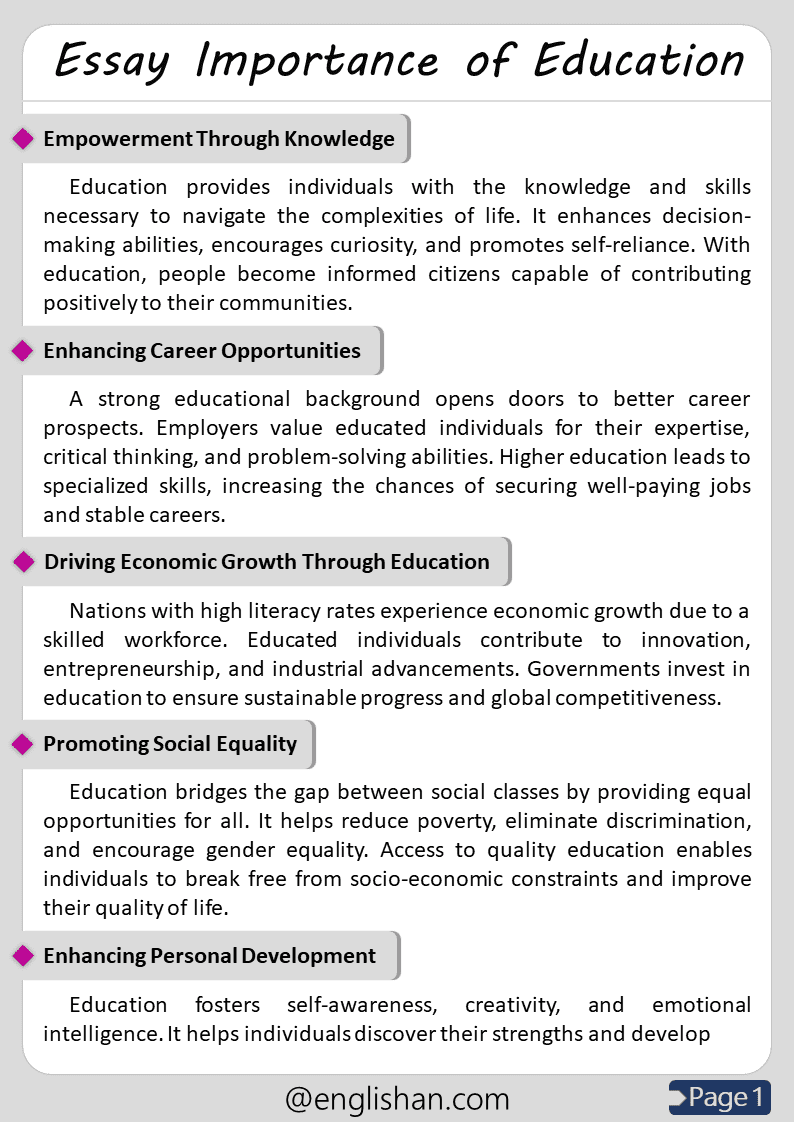
Empowerment Through Knowledge
Education provides individuals with the knowledge and skills necessary to navigate the complexities of life. It enhances decision-making abilities, encourages curiosity, and promotes self-reliance. With education, people become informed citizens capable of contributing positively to their communities.
Enhancing Career Opportunities
A strong educational background opens doors to better career prospects. Employers value educated individuals for their expertise, critical thinking, and problem-solving abilities. Higher education leads to specialized skills, increasing the chances of securing well-paying jobs and stable careers.
Driving Economic Growth Through Education
Nations with high literacy rates experience economic growth due to a skilled workforce. Educated individuals contribute to innovation, entrepreneurship, and industrial advancements. Governments invest in education to ensure sustainable progress and global competitiveness.
Promoting Social Equality
Education bridges the gap between social classes by providing equal opportunities for all. It helps reduce poverty, eliminate discrimination, and encourage gender equality. Access to quality education enables individuals to break free from socio-economic constraints and improve their quality of life.
Enhancing Personal Development
Education fosters self-awareness, creativity, and emotional intelligence. It helps individuals discover their strengths and develop new skills, leading to continuous self-improvement and personal fulfillment.
Building Self-Confidence Through Education
Education instills confidence by improving communication skills and decision-making abilities. A well-educated person is more likely to take initiative, express ideas clearly, and handle challenges effectively in both personal and professional settings.
Building a Knowledgeable Society
An educated society is more aware of global issues, civic responsibilities, and ethical considerations. Education promotes values such as tolerance, cooperation, and respect for diversity. It helps individuals make responsible choices that contribute to societal harmony and progress.
Advancing Scientific and Technological Innovations
Education plays a vital role in scientific discoveries and technological advancements. Researchers and scientists rely on education to develop solutions for global challenges such as healthcare, environmental sustainability, and digital transformation. A society that prioritizes education fosters innovation and continuous progress.
Improving Health and Well-being
Education contributes to better health outcomes by increasing awareness of hygiene, nutrition, and disease prevention. Educated individuals are more likely to adopt healthy lifestyles and seek medical care when needed, leading to overall well-being.
Fostering Leadership and Decision-Making
Education helps develop leadership qualities by enhancing analytical thinking and problem-solving skills. Leaders with strong educational backgrounds make informed decisions that benefit individuals and communities alike.
Promoting Lifelong Learning
Education instills a love for learning that extends beyond formal schooling. Lifelong learning allows individuals to adapt to new technologies, career advancements, and societal changes, ensuring continuous personal and professional growth.
Strengthening Democracy and Civic Participation
An educated population actively participates in democratic processes, such as voting and policy-making. Education empowers citizens to engage in discussions, understand governance, and contribute to social change.
Reducing Crime Rates
Education plays a crucial role in lowering crime rates by providing individuals with opportunities for personal and professional growth. People who receive proper education are less likely to engage in illegal activities and more likely to contribute positively to society.
Conclusion of Importance of Education Essay
The importance of education cannot be overstated. It shapes individuals, enhances career opportunities, and strengthens societies. By investing in education, nations ensure long-term economic growth, social harmony, and personal development. Efforts must be made to expand educational access and improve learning quality to create a brighter future for all.
Difficult Words Used in 500 Importance of Education Essay
| Word | Meaning |
|---|---|
| Empowerment | The process of gaining confidence and control over one’s life |
| Literacy | The ability to read and write |
| Socio-economic | Relating to both social and economic factors |
| Innovation | The act of creating new ideas or technologies |
| Independence | The state of being self-sufficient and not relying on others |
| Competitiveness | The ability to compete successfully in a field or market |
| Adaptability | The ability to adjust to new conditions or changes |
| Ethical | Relating to moral principles and values |
Importance of Education Essay PDF
You May Also Like