A supermarket carries five or six of them at most: nectarines through summer, navel oranges through winter, and a nashi pear or two in the Asian section. The rest of the fruit names that start with N belong somewhere else entirely, in the Andes, the Nepali mid-hills, or the mangrove swamps of Southeast Asia, and most never travel far from home. Two of them barely count as food at all. Nageia is a pine relative whose seed oil tastes of hazelnut, while North Star cherry exists because Minnesota needed a cherry that could survive a northern winter.
Every fruit with N in this list has its own season, growing region, and use in the kitchen.
Fruit That Start With N

Nectarine, navel orange, nashi pear, naartjie, and nagami kumquat are the N fruit names most shoppers know.
The letter splits fairly evenly across citrus, stone fruit, and tropical types. A few are supermarket staples, but most are fruit that shoppers outside their home region never see.
| Fruit | What It Is | Category |
|---|---|---|
| Nectarine | Smooth-skinned peach, one gene apart | Stone fruit |
| Navel Orange | Seedless orange with a belly-button mark | Citrus |
| Nashi Pear | Crisp Asian pear, apple-like bite | Pear |
| Naartjie | South African satsuma, loose skin | Citrus |
| Nagami Kumquat | Olive-sized citrus, sweet skin, sour flesh | Citrus |
| Narenj | Seville bitter orange, used for marmalade | Citrus |
| Natsudaidai | Japanese citrus, stored to soften its sourness | Citrus |
| Nagpur Orange | Loose-skinned orange from Maharashtra | Citrus |
| Nimbu | Indian lime, picked green | Citrus |
| Nectacot | Trade name listed as a pure apricot | Stone fruit |
| Nectacotum | Barely recorded plum cross | Stone fruit |
| Nectaplum | Nectarine, peach, and plum cross | Stone fruit |
| Nanking Cherry | Half-inch sour cherry on a hardy bush | Stone fruit |
| North Star Cherry | Sour pie cherry bred in Minnesota | Stone fruit |
| Naranjilla | Orange skin, green pulp, tastes of pineapple | Tropical |
| Noni | Strong-smelling Pacific fruit, drunk as juice | Tropical |
| Nutmeg Fruit | Apricot-like flesh around the nutmeg seed | Tropical |
| Nungu | Jelly seeds inside a palm fruit | Tropical |
| Nam Dok Mai Mango | Thai mango, smooth and free of strings | Tropical |
| Nance | Cherry-sized, golden, slightly cheesy | Tropical |
| Nepali Hog Plum | Sour Himalayan fruit, eaten pickled | Tropical |
| Nere Fruit | Sweet powder inside an African bean pod | Tropical |
| Nonda Plum | Australian bush fruit, tastes of baked potato | Tropical |
| Nikita’s Gift Persimmon | Dark red hybrid bred in Crimea | Tropical |
| Naseberry | Sapodilla or chiku, tastes of brown sugar | Tropical |
| Native Fig | Wild Australian figs, several kinds | Tropical |
| Neem Fruit | Bitter-sweet pulp, seed gives neem oil | Tropical |
| Naples Fig | Trade name for the White Genoa fig | Tropical |
| Nageia | Conifer seed, grown for looks and oil | Tropical |
| Nam Nam | Wrinkled pod growing straight from the trunk | Tropical |
| Nipa Fruit | Attap chee, jelly seeds from a palm | Tropical |
| Northern Spy Apple | Sour old apple that keeps for months | Apple |
| Newtown Pippin | Colonial American apple, now mostly cider | Apple |
| Nonpareil | French 1696 apple with a sweet-sharp taste | Apple |
| Niitaka Pear | Large brown-skinned Japanese pear | Pear |
| Nocera Grape | Old Sicilian wine grape | Grape |
| Noiret | Cold-hardy red grape bred at Cornell | Grape |
| Nannyberry | North American berry that tastes of dates | Berry |
| Natal Plum | Red African berry, not a true plum | Berry |
Citrus Fruit That Start With N
Seven citrus fruit start with N. Three are sweet enough to peel and eat on the spot, while the rest belong in the kitchen instead.
Naartjie
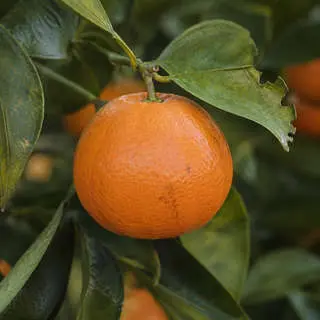
Citrus unshiu
A naartjie is South Africa’s satsuma, small and slightly flat, with thin orange skin that peels away by hand in a single piece. Inside sit ten to twelve soft segments around a hollow middle, juicy and almost always seedless. The taste is mild and sweet, with no bitter edge to it at all.
Most of the crop grows in Limpopo and the Cape provinces, where picking runs from April to August. Nearly all of it is eaten fresh by hand, though bakers dry the skin and use it to flavour cakes.
Nagami Kumquat
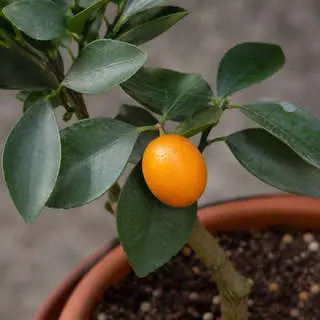
Citrus japonica ‘Nagami’
A nagami kumquat is oval and roughly the size of an olive, about 3 cm long, with thin, shiny, deep orange skin. You eat the whole thing at once, skin included, which surprises most people the first time. The skin is the sweet part and the pale flesh inside is sour, the reverse of every other citrus fruit. Five or six small seeds sit in the middle.
The tree comes from southern China, and Japan has grown it for hundreds of years. Today it also grows in Florida, Israel, Brazil, and on the Greek island of Corfu. Fruit ripens in winter and hangs on the tree for months afterwards, going into jam, candied sweets, and a liqueur that Corfu still bottles.
❌ The kumquat’s skin is bitter and its flesh is sweet. ✅ The kumquat’s skin is sweet and its flesh is sour.
Navel Orange
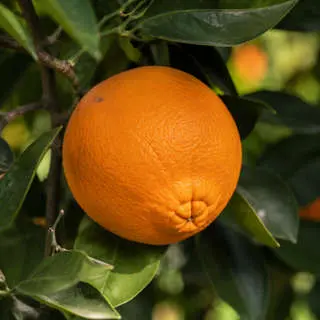
Citrus sinensis
Every navel orange grows a tiny second fruit at its base, and that is what forms the small dent people call the navel. The skin is deep orange, fairly thick and pitted with small holes, and it comes away in one piece. The flesh is firm and completely seedless, because the tree cannot produce working seed, and it tastes rich and sweet with very little sharpness.
Squeeze it, though, and the juice turns bitter within a few hours because of a natural chemical in the fruit. That is why shops sell navels for eating rather than juicing. The first tree was found at Bahia in Brazil around the 1810s, and California, Australia, Spain, and South Africa now grow it, picking from November into January.
Narenj
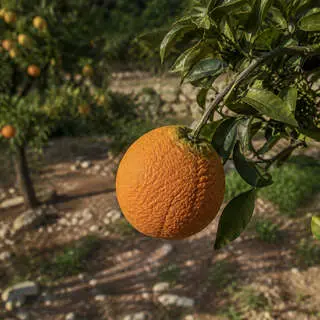
Citrus × aurantium
Narenj, the Seville orange, measures 7 to 8 cm across and can be round, flat, or slightly oval. Its red-orange skin is thick and rough, dotted with sunken oil spots that smell wonderful even though the skin itself tastes bitter. Ten to twelve segments hold very sour pulp behind bitter walls, and nobody eats it raw.
Seville ships its January and February crop to Britain for marmalade. Iran’s Gilan region treats it as a souring agent instead: the juice goes into slow-cooked meat dishes, the skin is cooked in sugar, and the blossom becomes a cold drink. Those same flowers give neroli oil, and the peel flavours Cointreau and Curaçao.
Natsudaidai
Citrus natsudaidai
Natsudaidai is about the size of a grapefruit and almost round, with thick yellow-orange skin covered in raised oil spots. Under that sits a soft white layer, then ten to twelve segments of pale orange flesh holding cream-coloured seeds.
Farmers pick it in winter, when it is far too sour to eat, and a few months in storage soften that sourness into something pleasant. That is why it reaches shops in late spring and summer, and why its name comes from natsu, the Japanese word for summer. Yamaguchi, Kumamoto, and Ehime grow nearly all of it, and it is eaten fresh, cooked in sugar, or set into jelly.
Nagpur Orange
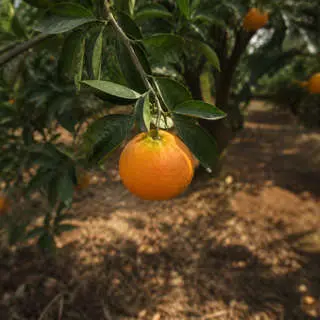
Citrus reticulata
A Nagpur orange weighs 100 to 125 grams and sits slightly flat, its thin yellow-orange skin dotted with oil spots and loose enough to peel with almost no effort. The pulp is deep orange and very juicy, the segments pull apart cleanly, and small pointed seeds run through them. Sweetness depends on the crop, since the winter picking runs sharper while the spring crop is noticeably sweeter.
The Vidarbha region of Maharashtra grows it around the city that gave it its name, and India granted it a protected origin tag in 2014. Fruit ships nationwide from November to March. Most is eaten fresh, and the rest becomes juice, squash, and the orange barfi sold across central India.
Nimbu
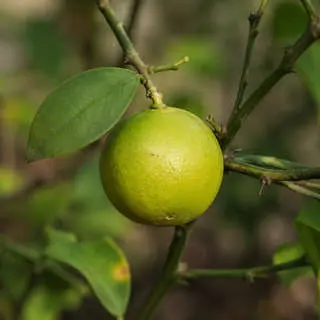
Citrus × aurantiifolia
Nimbu is the Indian lime, picked green and never left to yellow on the tree. It is small and round, 3 to 6 cm across, with skin that clings tightly enough to make peeling hard work. The green-yellow pulp holds more juice than its size suggests, over half the weight of the fruit, with a few small pale seeds running through it.
The taste is sharp rather than bitter, and far more sour than sweet. Farms across Andhra Pradesh, Maharashtra, Gujarat, Karnataka, and Tamil Nadu crop it all year round. It turns up in nimbu pani, shikanji, lime pickle, and any dal or biryani that needs a squeeze of acid.
Stone Fruit That Start With N
Growers have crossed the nectarine with several relatives, and the names that came out of it sound close enough to confuse anyone. Two of them turn out to be less recorded than their labels suggest.
Nectarine
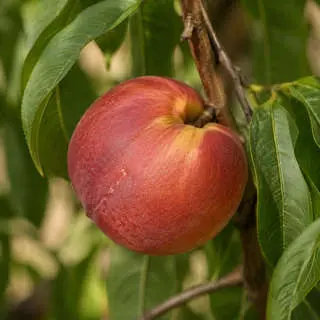
Prunus persica
A nectarine and a peach are the same species, separated by a single gene that switches off the soft hairs. Nectarines are round and slightly smaller than peaches, with smooth, shiny skin whose red patch runs darker, so the fruit can look almost like a plum. The flesh is white or yellow, and depending on the type the stone either lifts out cleanly or holds on tight.
Quality comes down to the balance of sugar and sourness, since the United States sets no legal grade for them. China grows roughly two thirds of the world’s peaches and nectarines together, while California leads American production with about 150,000 tons a year, picked from May to September.
Nectacot
Prunus armeniaca
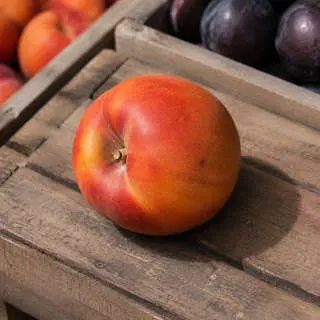
Shops sell nectacot as a nectarine crossed with an apricot, but the paperwork tells a different story. The one plant behind the name, Honey Pearls, is listed under US plant patent PP27166 as a pure apricot. Joseph Goffreda and Anna Voordeckers bred it at Rutgers in New Jersey, and the patent records both parents as unknown.
The fruit is a little larger than a golf ball, about 4.3 cm long and 38 grams, with shiny hairless skin, golden underneath and washed with pink. That smooth skin is almost certainly where the nectarine half of the name came from. The yellow-orange flesh lifts easily off the stone and turns very sweet and strongly scented once soft, ripening in early July.
Nectacotum
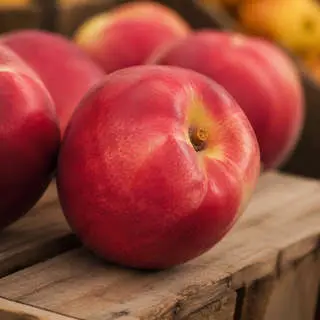
Nectacotum is the least recorded of all the fruit that start with N. No plant patent, nursery catalogue, university programme, or farm service lists it anywhere. Its English Wikipedia page was deleted, leaving only a copy that credits Ito Packing Company in California, with Melissa’s Produce as the seller.
Old shop listings in food databases suggest it did exist as a product line, a plum cross sold under an invented name rather than a recorded one. Reports describe red-green skin over light pink flesh, sweet, eaten fresh or made into jam. The apricot-plum-nectarine mix repeated online has no breeding record behind it.
Nectaplum
Prunus persica × Prunus salicina
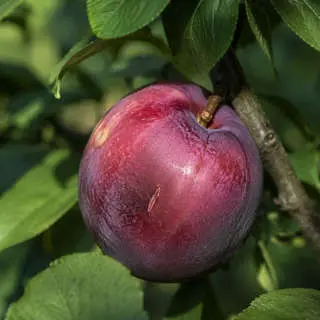
The trade name hides a tangled family tree, since the patent for the main type, Spice Zee, lists nectarine, peach, and plum rather than a straight two-way cross. The fruit is large and round, about 6.4 cm tall and 7 cm wide at roughly 190 grams, with smooth hairless skin that starts dark red-brown and fades to pale pink as it matures. The white flesh lifts off the stone, and nectarine sweetness meets a plum tang.
Zaiger Genetics near Modesto, California patented it in 2003, and it ripens from mid-July into early August. Home growers plant it as much for its pink spring blossom and purple-red leaves as for the fruit itself.
Nanking Cherry
Prunus tomentosa
Nanking cherries are tiny, barely 1.3 cm across, round and coloured bright to dark red, with skin that marks at a touch and a stone taking up much of the fruit. The red flesh is soft and juicy, somewhere between sour and sweet-sour, though plants grown from seed vary enough that it pays to taste before buying.
The plant is a bush 6 to 10 feet tall rather than a tree, native to northern China, central Asia, and the Himalaya, and it reached North America in 1882. It handles USDA zone 2 and swings from minus 40 to 90 degrees Fahrenheit within a single year, but it needs a second plant nearby before it sets fruit. Growers on the northern plains use it as a windbreak and an edible hedge, and the June crop goes into jam, jelly, pie, and juice.
North Star Cherry
Prunus cerasus ‘North Star’
North Star is a sour cherry about 19 mm across, which counts as large for its type, under thin dark red-brown skin. Both the flesh and the juice run deep red, and that is what separates true morello cherries from the paler kinds. It tastes sour first, settling into a sweet-sour balance only once fully ripe on the tree.
The University of Minnesota bred it from English Morello crossed with Serbian Pie I and released it in 1950. It grows as a natural dwarf, 7 to 10 feet tall, and fruits on its own without a second tree nearby, handling zones 4 to 8. The late June crop goes almost entirely into pies, jam, juice, and wine.
Tropical Fruit That Start With N
Seventeen tropical fruit start with N, and most stay close to the places that grow them. A few are eaten fresh, several are processed before anyone tastes them, and one is grown for its leaves.
Naranjilla
Solanum quitoense
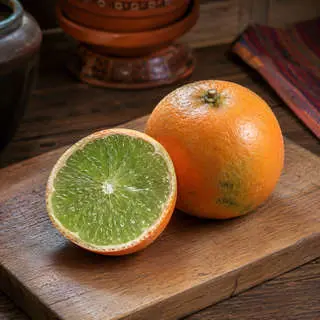
Naranjilla grows to about 6 cm across and hangs in groups of three or four. Young fruit wears a coat of short brown hairs that rub off as it ripens, revealing bright orange skin too tough and thick to eat. Cut one open and you find four sections of see-through green pulp scattered with small pale seeds.
Green flesh inside orange skin is the fruit’s signature, and the taste is sharp and bright, closest to pineapple crossed with lime. It grows wild in Andean mountain forest across Peru, Ecuador, and southern Colombia, with Ecuador’s Pastaza valley supplying most of the farmed crop. Almost all of it is drunk rather than eaten: blended with water and sugar it makes a foamy juice, and crushed by hand with lime and ice it becomes Colombian lulada.
Noni
Morinda citrifolia
Noni is lumpy and uneven, up to 9 cm long and 6 cm wide, its surface broken into small pits like a little warty breadfruit. It ripens from green through pale yellow to a see-through whitish grey, and the skin is soft enough to eat along with the watery pulp inside. Every section holds four seeds.
The smell is the problem. Two strong chemicals give ripe noni a rotten, blue-cheese reek, and the taste is bitter and sharp, which is why Pacific communities ate it in hard times rather than by choice.
Noni came from Southeast Asia and travelled the Pacific with Polynesian sailors. It fruits all year, a full-grown plant giving four to eight kilos a month, and nearly all of it is turned into juice. Cooks in India and Southeast Asia add the unripe fruit to curries.
Nutmeg Fruit
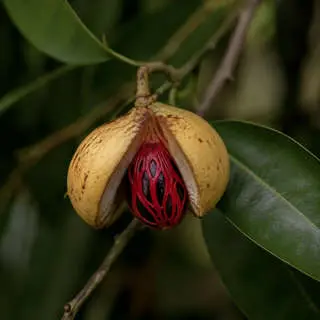
Myristica fragrans
Nutmeg fruit is 5 to 8 cm long, shaped like a pear or almost round, and it looks a great deal like a pale apricot. It ripens yellow to orange with a groove down one side, then splits open on its own. The thick white flesh is stringy and dries the mouth, and inside sits the nutmeg seed, 2 to 3 cm long, wrapped in a lacy red cover that dries into the spice called mace.
Raw, that outer flesh is sharp and slightly sour with a warm spicy smell, though sugar turns it tangy and sweet. The tree comes from the Banda Islands of Maluku in Indonesia and now grows in Grenada, Kerala, Penang, and Sri Lanka. There the flesh becomes nutmeg sweets, jam, and a syrup drink popular across West Java.
Nungu
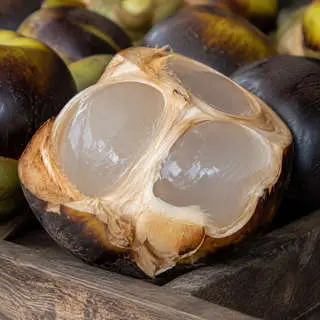
Borassus flabellifer
The whole palm fruit is heavy and round, 15 to 25 cm across, ripening purple-black, but nobody eats that part. Nungu is what sits inside: two to four see-through seeds, each about the size of a golf ball with a flat base, wrapped in a thin brown skin that peels away. They are soft as jelly and hold a pocket of sweet, watery liquid, tasting faintly of young coconut and closest to a mild lychee.
The palm grows across South and Southeast Asia, and nungu reaches Indian markets from May to July at the peak of the summer heat. Maharashtra sells it as tadgola while further south it goes by ice apple. Most is eaten cold and plain, though it also turns up in payasam, Bengali taler payesh, and fritters.
Nam Dok Mai Mango
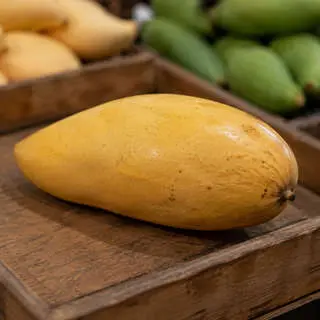
Mangifera indica ‘Nam Dok Mai’
Nam dok mai is long and slim with an S-curve and a pointed tip, running 12 to 15 cm long and weighing 250 to 500 grams. Ripe fruit turns an even golden yellow, its thin skin covered in tiny pale spots. The flesh is pale gold with no strings at all, fine and smooth right up to a thin flat seed.
It is sweeter than other Thai mangoes, tasting of honey and flowers, and the name itself translates to flower water. Thailand’s main season runs March to May. This is the mango for khao niao mamuang, or mango sticky rice, and it also goes into smoothies, dried slices, and green slices served with a sweet fish-sauce dip.
Nance
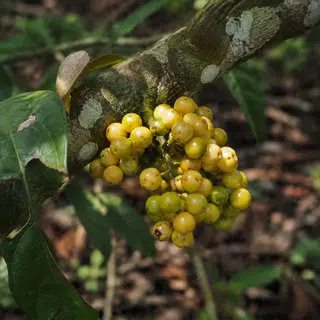
Byrsonima crassifolia
Nance is round and about the size of a cherry, just over 1 cm across, growing in loose groups. Its thin skin turns golden yellow when ripe and is eaten along with the fruit. The pulp inside is white, juicy and slightly oily, closer to an olive than to a berry, wrapped around a single stone holding one to three seeds.
The smell arrives before the taste, and it is strong: sweet and clearly cheesy, a flavour people either love or refuse outright. The tree grows from southern Mexico down through Central America to Peru and Brazil, picked in September and October in Mexico and from December to April in Brazil. Sellers offer it fresh, soaked in vinegar, or cooked into a sweet paste and a drink called chicha.
Nepali Hog Plum
Choerospondias axillaris
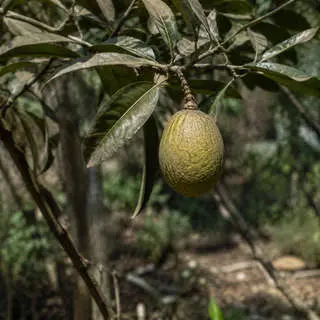
Lapsi is oval and about 3 cm long, roughly the size of a small plum, with thin skin that turns from green to yellow. You can eat that skin, though it is sour. Under it lies soft pale pulp around a single hard stone marked with five small holes at one end. The taste is very sour and slightly drying, with a mango-like edge that makes sense once you learn the two trees are related.
The tree grows across the Himalaya and into southern China and Japan, but Nepal’s mid-hills farm it most, picking from September to January. Almost none of it is eaten raw. It becomes lapsi ko achar pickle, titaura and mada sweets, and a thin Newar sauce served after a meal to settle the stomach.
Nere Fruit
Parkia biglobosa
Nere is not a round fruit at all but a flat pod 30 to 45 cm long, hanging in groups and ripening pink-brown to dark brown. The tough pod wall gets thrown away, and inside is the part people want: a sweet, dry, powdery yellow pulp packed around as many as thirty hard black seeds in a row. That pulp tastes sweet, floury, and slightly tangy.
The tree grows across the dry grassland belt from Senegal east to Sudan, with northern Nigeria alone producing around 200,000 tonnes of seed a year. The seeds are worth more than the pulp. Left to sour in the heat, they become dawadawa, soumbala, iru, or netetou, the strong savoury flavouring at the base of West African soups.
Nonda Plum
Parinari nonda
Nonda plum is shaped like an egg and 3 to 4 cm long, ripening orange-brown to yellow-brown with firm, slightly rough skin. The flesh is yellow-orange, dry and floury rather than juicy, packed around one hard stone about 25 mm long that carries ridges outside and brown hairs within.
The taste is the surprise. It is starchy and dry, described again and again as baked potato with barely a hint of sweetness. The tree grows wild across northern Australia and New Guinea, from the Kimberley through the Top End to Cape York, dropping fruit between August and November. Aboriginal communities pick it up off the ground and eat it raw, and nobody has ever farmed it.
Nikita’s Gift Persimmon
Diospyros virginiana × Diospyros kaki
Nikita’s Gift is a flattish persimmon about 6.4 cm across, weighing 60 to 120 grams, its thin smooth skin deepening from red-orange to a dark burgundy. Fully ripe, the flesh turns deep red and softens to the texture of jam, which is the point at which it becomes sweet and rich. Eat it any earlier and it dries the mouth out completely, so patience pays.
It came from the Nikita Botanical Garden in Yalta, Crimea, bred around 1980 from an earlier cross called Rossianka, and its Russian name is Nikitskaya Bordovaya. It survives cold down to about minus 24 degrees Celsius, which is why growers in the colder parts of the United States and Europe plant it. Fruit ripens in October and November, and a full-grown tree can carry 70 kilos or more.
Naseberry
Manilkara zapota
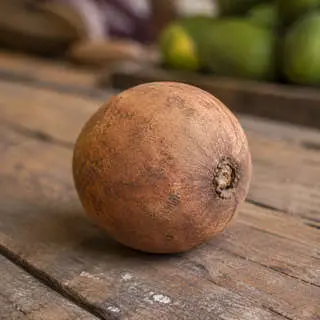
Naseberry is round to oval and 4 to 8 cm across, wrapped in dull tan-brown skin that feels slightly rough. Once fully ripe the skin sags and stops leaking white sap, and that is the sign it is ready. The flesh is pale yellow to earthy brown and slightly gritty, much like a very ripe pear, holding one to six shiny black seeds with hooked ends that need taking out.
Ripe, it is very sweet, tasting of pear, cinnamon, and brown sugar together, while unripe fruit dries the mouth. It comes from southern Mexico and Central America and now grows across India, Pakistan, Southeast Asia, the Caribbean, and Florida, where the season runs December to June. India knows it as chiku. The tree’s white sap, chicle, was the original base for chewing gum.
Native Fig
Ficus coronata and Ficus racemosa
Australia has several native figs, and two turn up most. The sandpaper fig is about the size of a grape, up to 20 mm long, ripening purple-black under a coat of fine hairs, and its leaves are rough enough to have been used like sandpaper. Fruit ripens from January to June along creeks and rainforest edges, from central Queensland down to eastern Victoria.
The cluster fig is bigger at 2 to 5 cm across, and it grows straight out of the trunk and branches, up to twenty at a time, ripening green through orange to dark red. It smells of spiced apple and tastes sweet but mild, its tiny seeds giving a slight crunch. People eat it raw, soak it in vinegar while young, or cook it into curries.
Neem Fruit
Azadirachta indica
Neem fruit is smooth and shaped like an olive, 14 to 28 mm long and 10 to 15 mm wide. Thin skin covers a yellow-white stringy pulp only 3 to 5 mm thick, and under that sits a hard white shell holding a single long seed. The pulp is bitter-sweet and safe to eat, which surprises anyone who knows the tree only through its famously bitter leaves and oil.
The tree comes from India and mainland Southeast Asia and now grows throughout the tropics, flowering March to May and fruiting May to July. People eat the pulp fresh or cook it into sweets and a lemonade-style drink, but the seed is the valuable part, since neem oil is one of the world’s main plant-based bug killers.
Naples Fig
Ficus carica ‘White Genoa’
Naples fig is not the separate type many lists claim. White Naples is simply another name for White Genoa, an old Italian fig also sold as Genoa, Blanche, and Marseilles. The fig databases that do carry a Naples White record leave nearly every field blank.
The fig itself is medium to large, with an early crop that is lopsided and pear-shaped and a main crop that widens toward the top. Its green-yellow skin is marked with white, thin enough to eat, and it splits open when very ripe, revealing pulp that runs amber to pink-red. It does well in cool coastal areas and badly in hot ones, ripening mid to late season and carrying on past the first frosts in mild years.
Nageia
Nageia nagi
Nageia is a conifer, so its fruit is not really a fruit at all but a soft seed, round and 10 to 15 mm across, sitting on a small fleshy stalk. It ripens blue-green to dark purple under a light dusty coating, and nobody eats it fresh. About half the seed is oil, and that oil is safe to eat and tastes close to hazelnut, while young leaves are boiled and eaten too.
The tree grows in southern China, southern Japan, Taiwan, and Vietnam, and habitat loss and collecting have put it on the Near Threatened list. Its real job is decoration. Gardens, parks, shrines, and temple grounds plant it, one specimen stands as a sacred tree at Nyakuoji Shrine in Kyoto, and cut stems will last a full year in water.
Nam Nam
Cynometra cauliflora
Nam nam is a pod shaped like a kidney, 5 to 10 cm long, with deeply wrinkled tough skin that ripens green-yellow. You eat that skin along with the yellow pulp inside, and there is only one seed. Young pods are painfully sour, though the sourness fades as they ripen and leaves a pleasant, mildly sharp fruit.
What makes the tree stand out is where the fruit grows, since flowers and pods push straight out of the trunk and main branches instead of the twigs. The tree is thought to have started in Malaysia and no longer grows truly wild, though it is found across Indonesia, Malaysia, Sumatra, Sulawesi, and India. Ripe fruit is eaten fresh or in rujak fruit salad, while the sourer young pods go into sambal, pickles, fried snacks, or jam.
Nipa Fruit
Nypa fruticans
The nipa palm produces a round head of fruit 30 to 45 cm across that can weigh 30 kilos, built from hard woody nuts 10 to 15 cm long. Their chestnut-brown husk floats, which is how the palm spreads through coastal swamps. Inside each nut is a single egg-shaped seed, and while it is young the inside of that seed is white, soft, and jelly-like. This is attap chee.
The flavour is delicate, creamy, and only lightly sweet, close to plain, which is why it is nearly always sold in sugar syrup as see-through balls. Older seeds go hard and cannot be eaten. The palm grows wild from northern Australia through Southeast Asia to southern China, India, and Bangladesh, and the sweetened seeds top ice kacang and cendol across Singapore, Malaysia, and Thailand.
Apples And Pears That Start With N
Five apples and pears start with N, and three of them are older than the modern supermarket by a century or more.
Nashi Pear
Pyrus pyrifolia
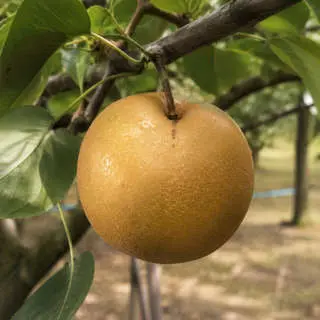
A nashi pear is round and flat rather than pear-shaped, measuring 6.5 to 10 cm across, and it comes in two groups: rough bronze-brown types and smooth yellow-green ones. The skin is soft and marks easily, so rough handling shows as black patches within a day. The white flesh is crisp, slightly gritty, and remarkably full of water, with plenty of sugar and little sharpness.
Unlike a European pear it never goes soft off the tree, which is why it eats like an apple. It comes from southern China and northern Indochina and now grows across Japan, Korea, China, Australia, and California’s Central Valley, picked mid-July to September and keeping up to six months in cold storage. Korean cooks grate it into bulgogi sauce, where it tenderises the meat.
Northern Spy Apple
Malus domestica
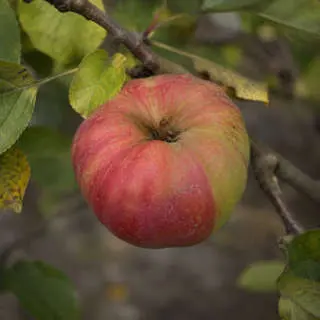
Northern Spy is a large apple with an uneven shape, its thin skin striped bright red to near scarlet over a pale yellow background, dull rather than shiny, and quick to mark. The white flesh is crisper and harder than most apples and very juicy, with a rich, strong taste far sourer than anything in a modern supermarket line-up. It also carries considerably more vitamin C than most apples.
The variety turned up by chance from a seed in East Bloomfield, New York around 1800, and it remains a Great Lakes and upstate New York apple, rarely sold elsewhere. Picking runs late September into late October and the fruit keeps very well. Trees can take ten years to bear unless grafted, which is part of why it stayed local, and most of the crop goes into pies, juice, and cider.
Newtown Pippin
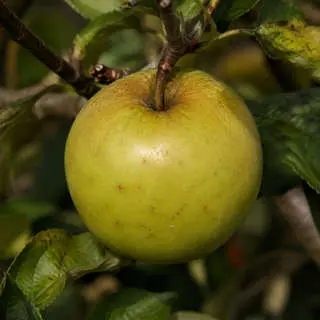
Malus domestica
Newtown Pippin has light green skin touched with yellow and roughened around the stem, over yellow flesh that is firm, crisp, and juicy. The taste is complex and sour, with a pine note many tasters catch at once. It needs storage to reach its best, and it keeps better than almost any other apple.
The variety began by chance from a seed in Newtown, now Elmhurst, in Queens, New York around 1700. Cuttings reached Albemarle County, Virginia in 1777, where it became known as the Albemarle Pippin, and both Jefferson and Washington grew it. A gift of the fruit to Queen Victoria in 1838 won it tax-free access to Britain. It is picked in October, and most New York fruit now goes into sparkling and hard cider.
Nonpareil
Malus domestica
Nonpareil is a medium to small apple, round and broad, narrowing a little toward the base. Its green-yellow skin carries a dull red patch on the sunny side under large rough brown areas, and the green-white flesh beneath is fine, crisp, and juicy. The taste is sweet and sharp at once, strongly scented, with a pear-drop note that stands out.
France produced it in 1696, though nobody recorded who bred it, and Victorian England made it a favourite. It is still grown for market and gardens. A late apple, it holds up to six months in cold storage and is eaten fresh rather than cooked.
Niitaka Pear
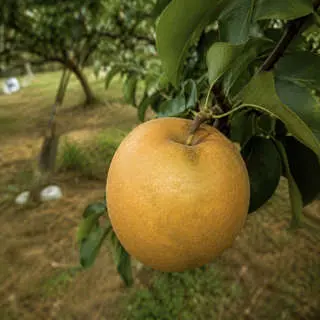
Pyrus pyrifolia ‘Niitaka’
Niitaka is a large Asian pear, round and apple-shaped, over 7.5 cm in both height and width, with flat brown skin that marks easily if handled roughly. The flesh is white, crisp, and very juicy, grainier than a European pear, sweet with little sharpness.
Japan developed it in 1927, and it has since become one of Korea’s leading market pears, grown in California too. It fights off fire blight better than the smooth green Chinese pears. Picking falls in late August and early September, the fruit keeps up to five months, and its size makes it a standard gift pear, sold boxed and wrapped.
Grapes And Berries That Start With N
Four grapes and berries start with N: two wine grapes, one wild North American bush fruit, and one red berry that is not the plum its name promises.
Nocera Grape
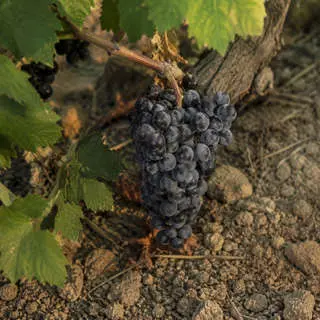
Vitis vinifera
Nocera is an old Sicilian grape from the hills behind Messina, growing in medium cone-shaped bunches of oval berries with thick blue-black skins. The wine it makes is deep ruby with purple edges, sharp even in warm places, with a firm and slightly rough grip and a smell of dark fruit, violets, and wild Mediterranean plants.
The vine grows fast but catches disease easily. Five Italian wine zones allow it, including Faro from the Peloritani hills and Mamertino di Milazzo, along with fifteen wider regional zones. Winemakers nearly always blend it with Nerello Mascalese and Nerello Cappuccio rather than bottling it alone.
Noiret
Vitis hybrid
Bruce Reisch and Thomas Henick-Kling bred Noiret at Cornell’s Geneva station, making the cross in 1973 and releasing it in July 2006. The berries are blue-black, and the wine is deep in colour and full-bodied, closer to Shiraz than to anything expected of a hybrid. It tastes of green and black pepper, raspberry, blackberry, and mint, with a fine grip and none of the musky note that spoils many American hybrids.
The vines grow fast but crop lightly, ripening mid to late season. They suit cold sites across the eastern United States, though they need shelter from hard winter cold and from mildew.
Nannyberry
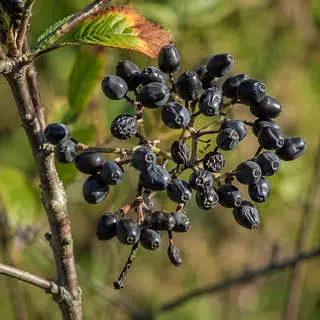
Viburnum lentago
Nannyberry is small and oblong, 8 to 16 mm long, ripening green through yellow and pink-red to blue-black under a light dusty coating. Thin skin covers sweet, juicy pulp around one large flat stone shaped like a watermelon seed with sharper edges, and that stone has to be worked out by hand. The taste is sweet and date-like, and foragers describe it as prunes crossed with banana.
The bush grows 15 to 30 feet tall across northeast and midwest North America, from New Brunswick to Saskatchewan and south to Virginia, with scattered stands in Wyoming and Colorado. Fruit ripens in October and November and hangs on the branches into winter, eaten straight off the bush or cooked down into jam, fruit spread, and fruit leather.
Natal Plum
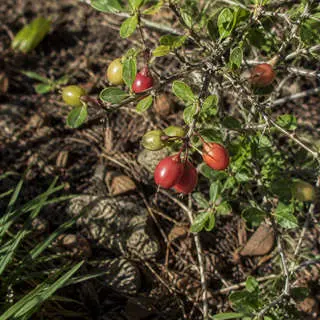
Carissa macrocarpa
Natal plum is not a plum. It belongs to a different plant family altogether and grows on a thorny evergreen bush armed with forked spines up to 4 cm long. The fruit is oval and 2.5 to 4 cm long, its thin smooth skin ripening green, then red, then deep purple, over soft many-seeded flesh that tastes of raspberry crossed with cranberry.
The bush comes from the coast of southern and tropical Africa, from the Eastern Cape north to Kenya. It now grows in southern Florida, California, Hawaii, and the Caribbean, thriving in salt spray and ocean wind. Fruit comes mainly in summer and autumn and goes into jam, jelly, and pies. The plant carries a white sap, and eating a lot of the non-fruit parts can upset the stomach, though the common claim that the whole plant is poisonous is a myth.
N Se Fruit Name: Hindi And Indian Names
Searchers across India and Pakistan want a different set entirely: the fruits whose Hindi or Urdu names begin with N. Four names dominate:
| Hindi Name | Devanagari | English Fruit |
|---|---|---|
| Nashpati | नाशपाती | Pear |
| Narangi | नारंगी | Orange |
| Nimbu | नींबू | Lemon or lime |
| Nariyal | नारियल | Coconut |
Several fruits on the main list also grow in India under local names. Nungu is sold as tadgola or ice apple across Tamil Nadu and Maharashtra through summer, and naseberry is the chiku found in nearly every Indian market. Nagpur orange takes its name from the Maharashtra city that ships it nationwide, while neem fruit, called nimboli, is far better known for its medicinal seed oil than as anything to eat.
Fruit That Start With N For Kids
Five of them suit young children well, since each one is quick to recognise and small enough to hold.
Nectarine looks like a peach but feels smooth instead of hairy, and navel orange is round, bright, and peels without any tools, which makes it a natural first citrus to hand a child.
Nashi pear is shaped like an apple yet tastes like a pear, while nance is small and yellow, about the size of a large cherry. Most children meet nutmeg as a spice jar in the kitchen long before they ever see the fruit it grows inside.
Nutrition And Health Benefits
Citrus supplies most of the vitamin C here. Navel oranges, naartjie, and nagpur oranges all deliver a solid dose in a single serving, with Nagpur fruit measuring around 35 mg per 100 ml.
Nashi pear and naartjie bring real fibre alongside that vitamin C, which is part of why nutritionists tell people to eat the fruit rather than drink its juice. Northern Spy apple carries considerably more vitamin C than most apples, and nance is a strong source of both vitamin C and fibre.
Nere seeds are about 35 percent protein, which makes them a real staple food across the West African grasslands rather than a garnish.
Cooking And Everyday Uses of N for Fruits
Naranjilla is blended into a sharp, bright drink across Ecuador and Colombia, nungu is served cold straight from its shell, and noni is almost never taken any way other than as juice.
Baking calls on a different set. Nashi pear holds its shape in tarts rather than going mushy, nectarines go straight into cobblers and crisps, and North Star cherry was bred for pie. Nutmeg, ground from the seed inside its own fruit, flavours everything from pumpkin pie to eggnog.
The sour and bitter ones do work no sweet fruit can. Narenj sours Persian meat dishes and becomes Seville marmalade, nimbu runs through South Asian pickles and cold drinks, lapsi becomes Nepali achar, and soured nere seeds flavour soups across West Africa.
Misnamed Fruit And Common Mistakes
Eight fruit that start with N get repeated incorrectly across lists, and researching each one turned up a different problem.
- Nopal is a vegetable, not a fruit. The flat pad of the prickly pear cactus is what shops sell as nopal, while the actual fruit of that cactus is the prickly pear, which starts with P.
- Nutmeg is a seed rather than a fruit. The tree grows a soft yellow fruit around that seed, and only the outer part counts as nutmeg fruit.
- Neroli is not a fruit either. It is the oil pressed from bitter orange blossom, which is why some lists include it by mistake.
- Natal plum is a berry from a southern African bush, and it belongs to a different family from true plums.
- Nectacot is sold as a nectarine-apricot cross, yet the plant behind the name is listed under its plant patent as a pure apricot with unknown parents.
- Nectacotum has no traceable breeder, patent, or plant record anywhere, and the apricot-plum-nectarine mix attached to it is marketing rather than botany.
- Naples fig is another name for the old Italian fig White Genoa, not a type in its own right.
- Nikita’s Gift persimmon is regularly credited to New Zealand. It was bred at the Nikita Botanical Garden in Yalta, Crimea, and its Russian name is Nikitskaya Bordovaya.
FAQs
Nectarine, navel orange, nashi pear, naartjie, and nagami kumquat are the N fruit names sold in ordinary shops. Naranjilla, noni, nungu, nance, and nam nam grow in the tropics, and nashpati, narangi, nimbu, and nariyal are the Hindi names.
Nectarine is the one most people give first, since it sells worldwide and gets used the same way as a peach. Navel orange and nashi pear follow it, and both reach supermarkets outside their home regions.
The nectarine is the main one, joined by three trade names: nectacot, nectacotum, and nectaplum. Nanking cherry and North Star cherry are stone fruits too.
Nashpati (pear), narangi (orange), nimbu (lemon or lime), and nariyal (coconut) are the four Hindi fruit names that begin with N.
Naranjilla, nance, noni, nungu, and nam dok mai mango are the ones people ask about most, and each is tied to a single region rather than sold everywhere.
Nam nam, nipa fruit, nageia, nonda plum, and nere fruit are among the rarest. Each grows in a small area and almost never reaches export markets.
Nectarine, navel orange, nashi pear, nance, and nutmeg suit children well, since each one is quick to recognise, small enough to hold, and common in most kitchens.
Nutmeg itself is a seed. The tree that produces it grows a soft fruit around that seed, and that outer part is what people call nutmeg fruit.
You May Also Like
Fruits That Start With N Quiz
Fruits That Start With N
Which of these is a stone fruit, built around one hard pit?
Nectarine is a stone fruit, built around one hard pit. A peach without the fuzz, differing by a single recessive gene rather than by species.
Group by what the thing actually is, not by where it turns up.
Nectarine is a stone fruit, built around one hard pit.
Two of these fruits begin with N. Which one does not?
Tangerine begins with T, so it is the one that does not belong.
Check each first letter before reading further.
Tangerine is the odd one out.
Which of these fruits begins with the letter N?
A peach without the fuzz, differing by a single recessive gene rather than by species.
Read the first letter before anything else.
Nectarine begins with N.
Name a fruit beginning with this letter.
A fruit whose name begins with N is ___.
Accepted here: Nance, Nectarine.
More than one answer is right; any fruit starting with the letter counts.
Nance begins with N.
Which fruit does this describe? A small yellow Central American fruit with a strong, cheese-like smell.
A small yellow Central American fruit with a strong, cheese-like smell.
Match the description to the fruit rather than to the letter.
A small yellow Central American fruit with a strong, cheese-like smell.
Turn on JavaScript for the interactive quiz. The full practice set is shown above.