

Ice apple, ilama, and icaco are eaten every day in South Asia, Central America, and the Caribbean, though almost none of them reach a Western supermarket. Their English names happen to begin with the same letter, which makes them a small puzzle for anyone learning food vocabulary. Most fruits that start with I grow in the tropics, and the best known among them is the cactus pear sold as Indian fig.
Fruits That Start With I
Fruits from A to Z:
A · B · C · D · E · F · G · H · J · K · L · M · N · O · P · Q · R · S · T · U · V · W · X · Y · Z
Fruits that start with I are fruits whose common English names begin with the letter I. Roughly fifty of them exist, and the great majority ripen in tropical or subtropical climates. Ice apple, Indian gooseberry, Indian fig, ice cream bean, and ilama are the five you meet first.
- Iboga
- Ibope
- Icacina
- Icaco
- Ice Apple
- Ice Cream Bean
- Ice Cream Mango
- Ichang Papeda
- Ichekú
- Idesia
- Ilama
- Illawarra Plum
- Imbe
- Imbu
- Inaja
- Incaberry
- Independence Nectarine
- Indian Almond
- Indian Bael
- Indian Barberry
- Indian Blood Cling Peach
- Indian Cherry
- Indian Fig
- Indian Gooseberry
- Indian Hog Plum
- Indian Jujube
- Indian Mango
- Indian Mulberry
- Indian Olive
- Indian Persimmon
- Indian Plum
- Indian Prune
- Indian Sherbet Berry
- Indian Strawberry
- Indian Sugar Apple
- Indonesian Lime
- Indonesian Snake Fruit
- Ingrid Marie Apple
- Inharé
- Interdonato Lemon
- Irwin Mango
- Island Apple
- Isolda Pear
- Ita Palm
- Italia Grape
- Italian Plum
- Ivory Mango
- Ivory Palm
- Ivy Gourd
- Iyokan
Fruits That Start With I With Pictures
Thirty of these fruits are distinct species rather than named varieties. Each one looks different enough to recognise on sight once you have seen it whole.
Ice Apple
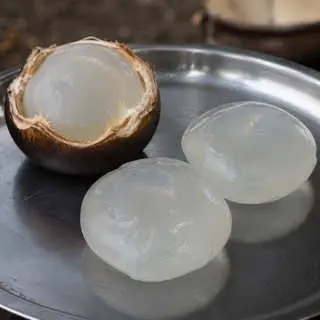
The ice apple is the young seed socket of the palmyra palm, and Tamil sellers call it nungu. Each socket measures about the width of a golf ball, with translucent jelly flesh under a thin brown skin. The flavour stays mild and faintly sweet, close to coconut water. Through the hot months, street vendors across South India and Sri Lanka cut the sockets from the husk and serve them chilled.
Ice Cream Bean
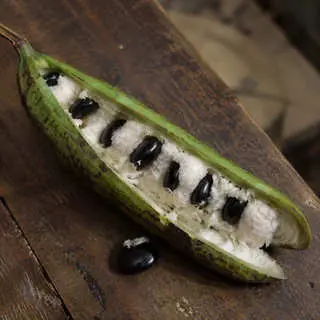
The ice cream bean is a long green pod from the Inga edulis tree, also sold as inga fruit. Each pod grows up to a foot long and splits open along one seam. White pulp with the texture of cotton wool wraps every black seed inside, and it tastes of vanilla. Across the Amazon, people pull the pulp off the seeds and eat it straight from the pod.
Icaco
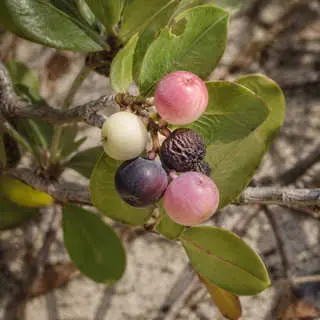
Icaco, said ee-KAH-koh, is a small coastal fruit better known in English as cocoplum. The skin ripens through white and pink to near black, over soft flesh around one large stone. The flavour stays mild rather than sharp, and bushes growing close to the sea produce the sweetest fruit. Cooks in Florida, the Caribbean, and West Africa turn it into jam, and the roasted kernel is eaten as a snack.
Icacina
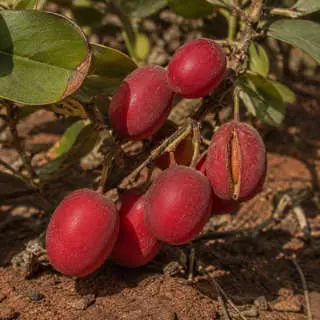
Icacina, said ik-uh-SEE-nuh, is a red West African drupe from a low shrub of dry savannah. The fruits ripen scarlet, each about two centimetres long, over a single hard seed. Sweet, starchy pulp surrounds that seed, with a nutty finish. Villages across Senegal, Nigeria, and Guinea eat the pulp fresh and grind the seed into flour when other food runs short.
Ichang Papeda
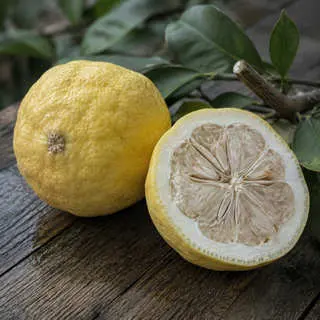
Ichang papeda is a wild citrus from the mountains of southern China, classed as Citrus cavaleriei. The rind grows thick and bumpy, ripening pale yellow over dry, seedy segments. Juice from it turns fiercely sour, so kitchens work with the zest rather than the flesh. Citrus breeders value the tree above all for its cold tolerance, and it is the parent of the yuzu.
Ilama
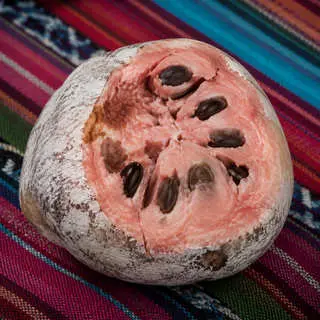
Ilama, said ee-LAH-mah, is a Central American relative of the custard apple, Annona diversifolia. The fruit reaches the size of a grapefruit, under a bumpy rind dusted grey-white. Green-rinded ilamas taste sweet with white flesh, while pink-rinded ones turn tart and rose-coloured. From Mexico to El Salvador, it is halved, chilled, and eaten with a spoon and a squeeze of lime.
Illawarra Plum
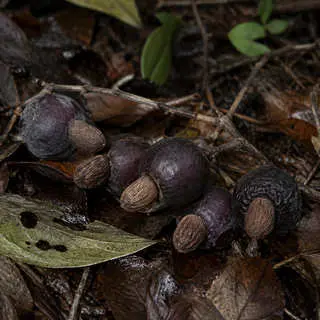
The Illawarra plum is an Australian rainforest fruit from the plum pine, Podocarpus elatus. Each fruit grows to about the size of a large grape, purple-black and slightly waxy. The taste combines berry sweetness with a resinous pine note, and the seed grows outside the flesh rather than within it. Australian cooks reduce it into sauces for game meat and set it into jams.
Imbe
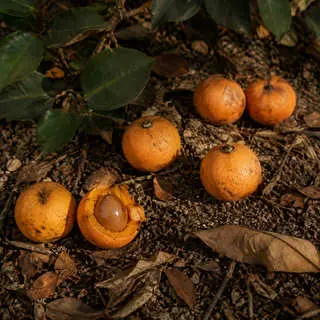
Imbe, said IM-bay, is the African mangosteen, Garcinia livingstonei. Bright orange skin wraps thin flesh around one large seed, and each fruit measures roughly two centimetres across. The flavour turns sharply tangy, closer to apricot crossed with citrus than to its mangosteen cousin. Across Mozambique, Zimbabwe, and South Africa, people eat it straight from the tree or ferment it into a light beer.
Imbu
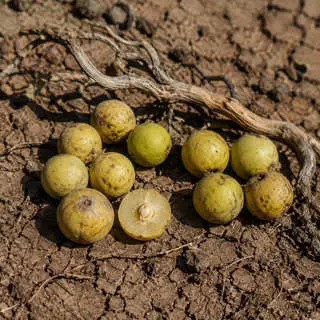
Imbu is a Brazilian fruit from the umbu tree, Spondias tuberosa, which survives long droughts in the caatinga. Each fruit grows round and roughly the size of a ping-pong ball, ripening from green to yellow. Thin skin wraps juicy pulp that tastes both sweet and sharply sour at once. In Bahia, imbu goes into sorbets, jams, and a milk drink called umbuzada.
Incaberry
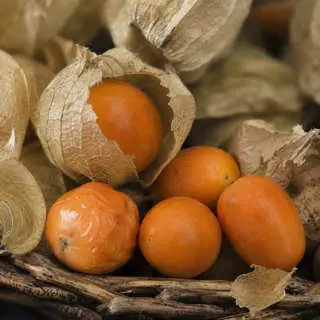
The incaberry is a small orange fruit of the Andes, sold in Europe as golden berry or physalis. A thin papery husk encloses each berry until you peel it back. It tastes tart and tropical, close to pineapple crossed with citrus. Peruvian growers export it fresh for cheese boards and dried for baking, where it turns chewy like a raisin.
Indian Almond
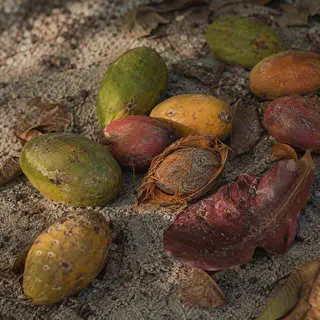
The Indian almond is the drupe of the tropical almond tree, Terminalia catappa. Each fruit flattens into an oval two to three inches long, turning green, then yellow, then red as it ripens. Thin fibrous flesh surrounds a hard shell, and the kernel inside tastes close to a true almond. Coastal communities from Kerala to the Pacific crack the shells for that kernel rather than eating the flesh.
Indian Bael
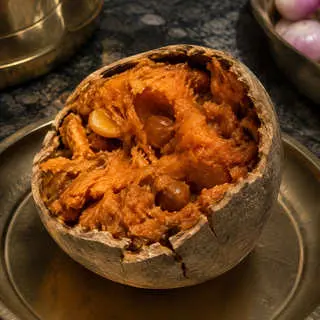
Indian bael is a hard-shelled fruit of Aegle marmelos, a tree held sacred in Hindu tradition. The woody rind grows thick enough to need a hammer, and the pulp inside ripens deep orange and fragrant. The pulp tastes sweet and slightly resinous, and it smells close to marmalade. Across North India, the pulp is whisked with water and sugar into bael sharbat, a summer cooler.
Indian Cherry
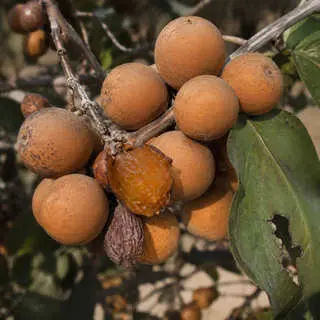
Indian cherry is the fruit of Cordia myxa, known in Hindi as lasoda or gunda. Small round fruits ripen from green to orange-brown in tight clusters along the branch. The ripe flesh turns notably sticky and mildly sweet, which is why the tree is also called the glue berry. Rajasthani and Gujarati kitchens pickle the unripe green fruits in mustard oil.
Indian Fig
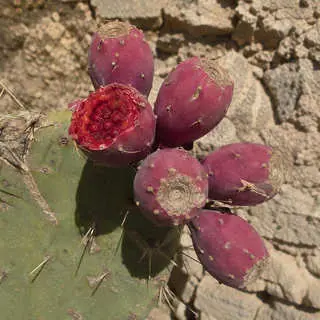
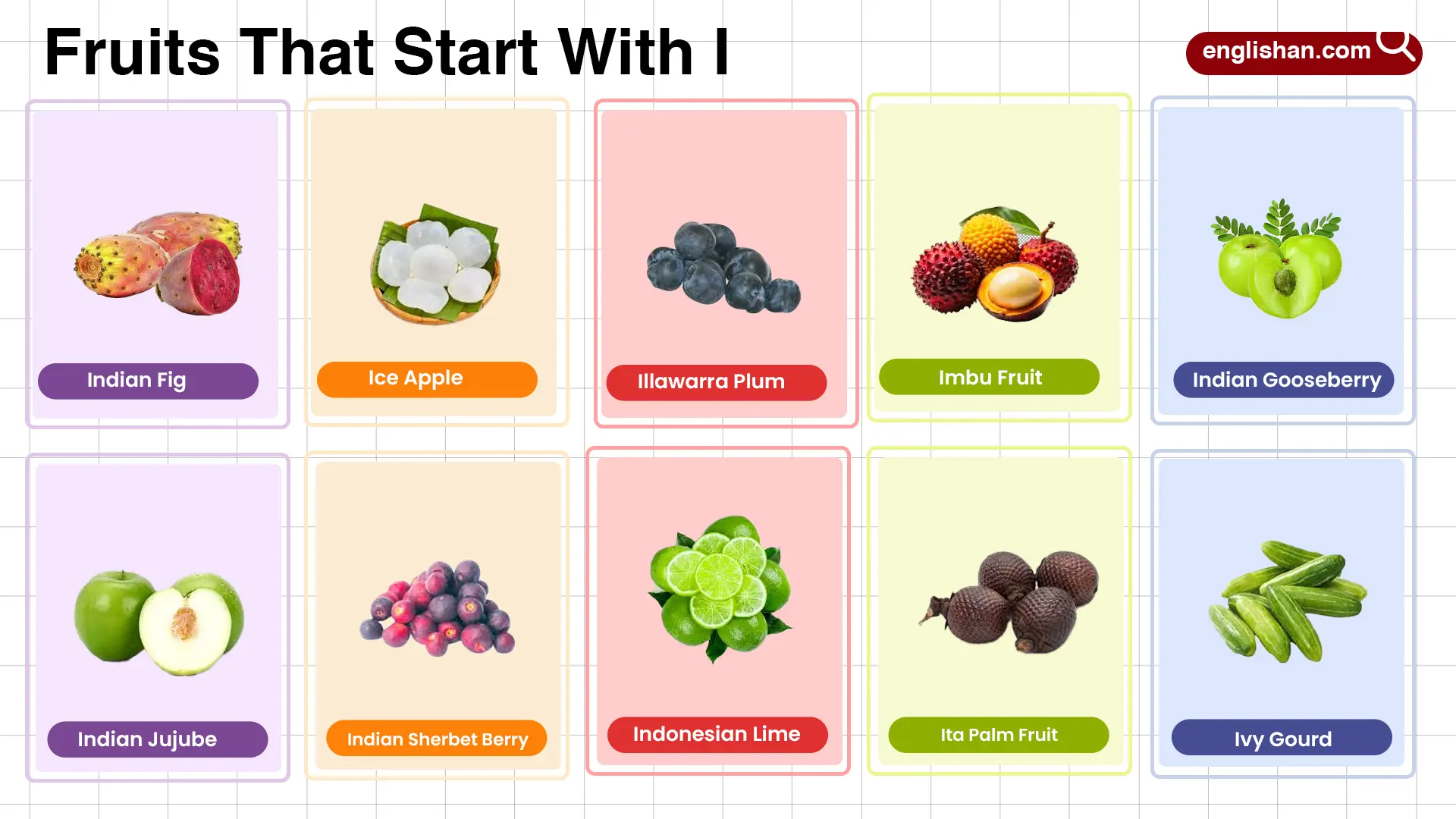
The Indian fig is the fruit of the prickly pear cactus, Opuntia ficus-indica. Each fruit grows to the size of a small egg, with skin in green, yellow, orange, or deep magenta. Fine spines cover that skin and must be scraped away before eating. The flesh tastes as sweet as watermelon around small crunchy seeds. Around the Mediterranean and across Mexico, it is peeled and eaten cold or pressed for juice.
Indian Gooseberry
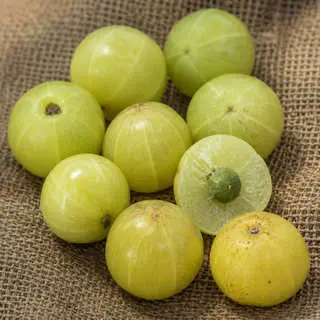
Indian gooseberry is the fruit of Phyllanthus emblica, known across South Asia as amla. Each one measures about the width of a marble, pale green and translucent, marked with six faint vertical ridges. It tastes intensely sour and astringent, then turns sweet on the tongue once you drink water. Indian kitchens candy it, pickle it, and juice it, and Ayurvedic practice has drawn on it for centuries.
Indian Hog Plum
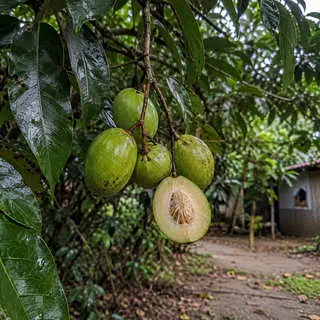
The Indian hog plum is the sour fruit of Spondias pinnata, called amra in Bengal. Oval fruits about five centimetres long ripen from green to dull yellow in hanging clusters. Fibrous, sharply acidic flesh surrounds a single spiny stone. Bengali and Thai cooks slice it green into chutneys, sour curries, and salt-and-chilli snacks.
Indian Jujube
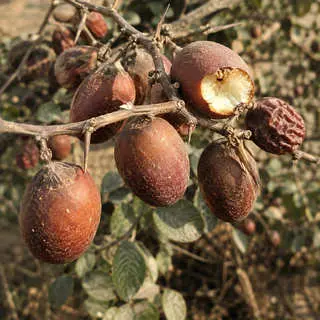
Indian jujube is the fruit of Ziziphus mauritiana, sold across South Asia as ber. Each fruit ripens from green to reddish-brown, roughly the size of a large olive. Young fruits eat crisp and tart like a green apple, then soften and sweeten into something close to a date. Village markets sell it fresh in winter and sun-dried for the rest of the year.
Indian Mango
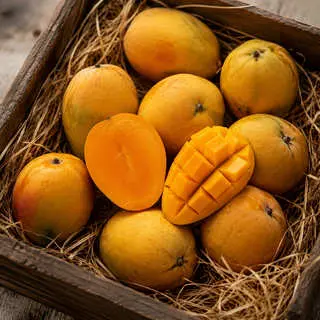
Indian mango is the name for the mango varieties grown across India, all of them Mangifera indica. Alphonso, Kesar, Dasheri, and Langra each ripen to a different shade of gold and a different depth of perfume. The best varieties ripen fibreless, saffron-coloured and intensely sweet. India grows more than a thousand named varieties, and the fruit is its national fruit.
Indian Mulberry
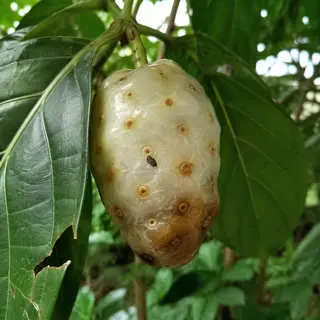
Indian mulberry is the fruit of Morinda citrifolia, sold worldwide as noni. Lumps cover the pale surface, which turns almost translucent white when fully ripe. Ripe fruit smells strongly of blue cheese, which is why almost nobody eats it fresh. Pacific island communities ferment it into juice, and it was a famine food long before it became a health drink.
Indian Olive
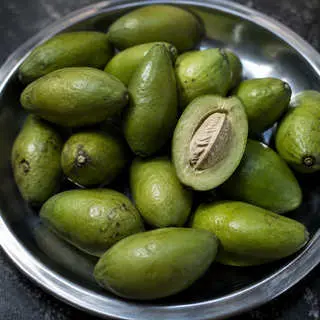
The Indian olive is Elaeocarpus serratus, called jalpai in Bengali and unrelated to the Mediterranean olive. Small green fruits taper at both ends, each about three centimetres long over a ridged stone. Raw flesh tastes crisp and mouth-puckeringly sour. Bengali cooks slow-cook it with mustard and jaggery into a sweet-sour chutney called jalpai achar.
Indian Persimmon
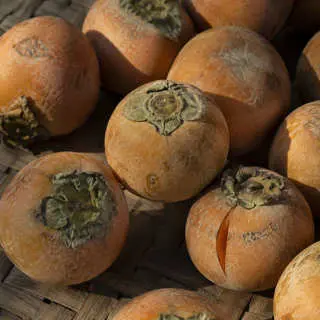
Indian persimmon is Diospyros malabarica, a relative of the Japanese persimmon known as gaub or Malabar ebony. Round fruits ripen to a dull orange-brown under a dusty coating, each about five centimetres wide. Unripe flesh puckers the mouth, and only fully soft fruit tastes sweet. Fishermen in Bengal have long used the unripe pulp to tan and waterproof their nets.
Indian Plum
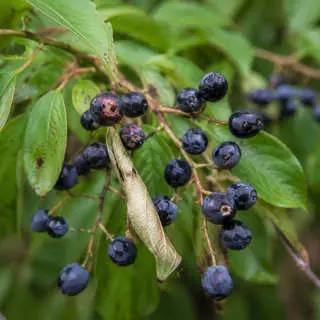
Indian plum is Oemleria cerasiformis, a shrub of the Pacific Northwest also called osoberry. Small fruits ripen from peach to blue-black, roughly a centimetre long, each with a large stone. Thin flesh tastes bitter even when ripe, with a faint note of wild grape. Coast Salish peoples ate it fresh in small quantities, and birds strip most of the crop first.
Indian Prune
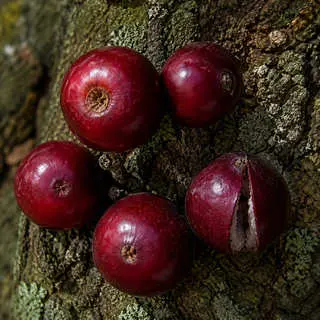
Indian prune is the fruit of Flacourtia jangomas, known in Bengal as paniala. Glossy fruits ripen from red to near black, about two centimetres across, growing straight from the trunk and older branches. Sweet-sour flesh surrounds several small flat seeds. Street sellers in Kolkata and Dhaka toss it with salt and chilli powder, and home cooks set it into jelly.
Indian Sherbet Berry
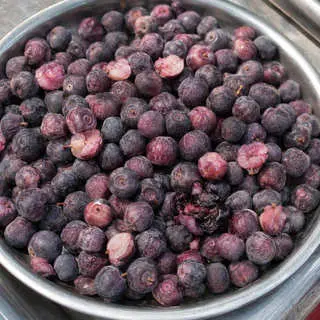
The Indian sherbet berry is phalsa, Grewia asiatica, a summer berry of the Indian plains. Each berry measures about a centimetre wide, purple-black under a dusty bloom over pale pink flesh. The flavour balances sweet and sour with an almost grape-like edge. Delhi and Lahore sell it by the bowl in May and June, crushed with salt and ice into a sherbet.
Indian Strawberry
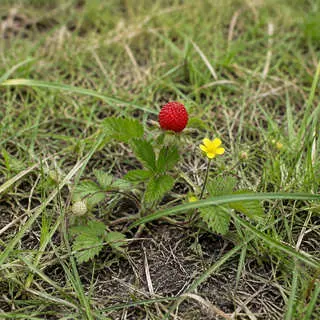
Indian strawberry is Potentilla indica, the mock strawberry that spreads through lawns across Asia and North America. The fruit looks like a small wild strawberry, bright red with seeds studding the outside, and it grows upright rather than hanging. The flesh tastes watery and nearly flavourless, with a faint melon note. Yellow flowers mark it out from the true strawberry, which flowers white.
Indonesian Lime
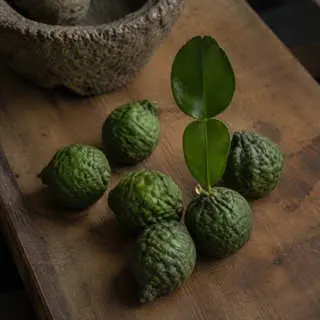
The Indonesian lime is Citrus hystrix, known in English as makrut lime. Deep wrinkles and knobbles cover the dark green fruits, which measure about five centimetres across and yield little juice. The rind and the double-lobed leaves smell intensely floral and citrusy. Thai, Indonesian, and Malaysian cooks shred the zest into curry pastes and drop whole leaves into soups.
Indonesian Snake Fruit
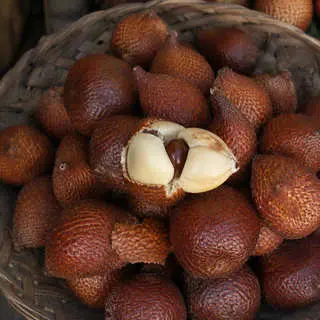
Indonesian snake fruit is salak, Salacca zalacca, which grows in clusters at the base of a short spiny palm. Reddish-brown scales cover each fruit like snakeskin and peel away whole. The flesh divides into ivory segments, crisp and dry, tasting of apple with a pineapple tang. Java and Bali grow the sweetest varieties, and salak pondoh is the one worth seeking out.
Ita Palm
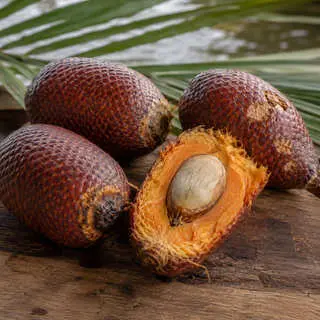
The ita palm fruit is buriti, Mauritia flexuosa, gathered from swamp palms across the Amazon basin. Overlapping red-brown scales cover each oval fruit, and soft orange flesh surrounds a large seed. It tastes rich and slightly caramel, closer to a sweet potato than to a berry. Brazilian and Venezuelan cooks make it into ice cream, sweets, and a bright orange cooking oil.
Iyokan
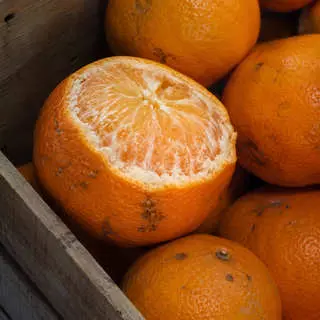
Iyokan, said ee-YOH-kan, is a Japanese citrus, Citrus × iyo, ranking second only to satsuma in Japanese production. Fruits grow to eight or ten centimetres across, with thick, glossy, deep orange peel that lifts off by hand. The segments taste juicy and aromatic, sweet with a firm acid edge. Ehime Prefecture grows about ninety percent of the crop, and the season runs from January to March.
Iboga
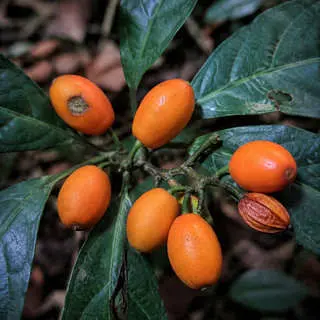
Iboga is the fruit of Tabernanthe iboga, a shrub of the Central African rainforest. Small oval fruits ripen orange, about an inch long, over soft pulp and several seeds. The pulp tastes mildly sweet and is eaten in small amounts by people and forest animals alike. Gabon and Cameroon know the plant chiefly for its root, which is central to Bwiti ceremony rather than to cooking.
Common Fruits That Start With I
Five of these fruits reach ordinary shops outside their home regions. Indian mango arrives boxed in Asian grocers every May and June. Indian gooseberry sells frozen, dried, and as juice wherever amla is stocked. Incaberry reaches European supermarkets under the golden berry label, fresh in punnets and dried in the baking aisle. Indonesian lime leaves are stocked by almost every Thai supplier, and Indian fig turns up on Mediterranean market stalls each autumn as cactus pear.
Tropical Fruits Start With I
Nearly every one of these fruits needs a frost-free climate, which is why so few are familiar in Britain or North America. The palm fruits are the clearest case: ice apple, ita palm, and ivory palm all ripen only where the temperature never drops far. Ice cream bean, ilama, imbe, imbu, and icacina all grow within the same warm band across four continents. Iyokan and Indian plum are the exceptions, since both tolerate real winter cold.
Citrus Fruits That Start With I
Iyokan, ichang papeda, Indonesian lime, and Interdonato lemon are the four true citrus fruits with I names. Iyokan outgrows the other three by a wide margin.
- Iyokan: a thick-skinned Japanese tangor, sweet and juicy, harvested in Ehime from January to March.
- Ichang papeda: a wild Chinese citrus too sour to juice, prized instead for cold hardiness and used as breeding stock.
- Indonesian lime: grown for its perfumed rind and leaves rather than for juice, and central to Southeast Asian curry pastes.
- Interdonato lemon: a Sicilian lemon variety, elongated and thin-skinned, first on the market each autumn.
Indian Fruits And Their Market Names
Eleven of these fruits share the Indian prefix in English, and each one sells under a different name in its home market. Ask for the local name if you ever shop for these fruits, since the English one rarely gets you far.
| English name | Market name | Where it is sold |
|---|---|---|
| Indian gooseberry | Amla | South Asia, year-round |
| Indian jujube | Ber | North India and Pakistan, winter |
| Ice apple | Nungu or tadgola | Tamil Nadu and Maharashtra, summer |
| Indian sherbet berry | Phalsa | North India, May and June |
| Indian olive | Jalpai | West Bengal and Bangladesh, autumn |
| Indian bael | Bel or bilva | North India, spring |
| Indian hog plum | Amra or amrataka | Bengal and Odisha, monsoon |
| Indian prune | Paniala | Bengal and Assam, late summer |
| Indian cherry | Lasoda or gunda | Rajasthan and Gujarat, spring |
| Indian persimmon | Gaub or tendu | Bengal and Odisha, winter |
| Indian mango | Aam | All India, April to July |
Exotic Fruits That Start With I
These five fruits are eaten regularly in their home regions yet almost never exported.
- Indian sugar apple: the custard apple sold as sitaphal, with creamy segmented flesh and a soft green rind.
- Island apple: the Malay apple of the Pacific, pear-shaped and rose-red, crisp and faintly perfumed.
- Ivory palm fruit: the young fruit of the tagua palm, sweet and soft before the seed hardens into vegetable ivory.
- Ivy gourd: a small striped fruit of Coccinia grandis, eaten green as a vegetable and sweet once it ripens scarlet.
- Ichekú: the black velvet tamarind of West Africa, said ee-che-KOO, with dry orange pulp inside a brittle black shell.
Rare Fruits Beginning With I
Five more names turn up in botanical writing and local markets but rarely anywhere else.
- Ibope: the sweet seed pod of Prosopis alba, ground into flour across the Gran Chaco of Argentina and Paraguay.
- Idesia: small red berries of Idesia polycarpa, an East Asian tree, tart and citrus-like in hanging clusters.
- Inharé: an Amazonian red mulberry, soft and bright red, eaten by the handful where it grows.
- Inaja: the orange fibrous fruit of an Amazon palm, sugary and chewed off the large seed.
- Indian barberry: the dark berry of Berberis aristata, dried in the Himalayas and sold as a sour cooking spice.
Fruit Varieties That Start With I
Named varieties are worth separating from species, since a variety is one cultivar of a fruit rather than a fruit in its own right. Ten of them are named with an initial I.
| Variety | Fruit | Grown in |
|---|---|---|
| Irwin mango | Mango | Florida, Taiwan, Japan |
| Ivory mango | Mango | Thailand and Vietnam |
| Ice cream mango | Mango | Southeast Asia |
| Ingrid Marie apple | Apple | Denmark and northern Europe |
| Isolda pear | Pear | Central Europe |
| Italia grape | Grape | Italy and Greece |
| Italian plum | Plum | Italy, Germany, North America |
| Interdonato lemon | Lemon | Sicily and Turkey |
| Independence nectarine | Nectarine | California |
| Indian blood cling peach | Peach | Southern United States |
Nutrition Facts For I Fruits
Ten of these fruits rank high for one nutrient in particular.
| Fruit | Standout nutrient | What that means |
|---|---|---|
| Indian gooseberry | Vitamin C | Among the richest natural sources measured |
| Ita palm | Beta-carotene | One of the highest levels recorded in any plant |
| Incaberry | Carotenoids | Bright colour signals a high pigment load |
| Ice apple | Potassium and water | Suited to hot-weather rehydration |
| Indian fig | Magnesium and betalains | Pigments that also colour beetroot |
| Illawarra plum | Anthocyanins | The purple pigments in dark berries |
| Indian bael | Fibre | Traditional use as a digestive remedy |
| Indian jujube | Vitamin C | Higher than in most stone fruits |
| Ice cream bean | Fibre | Comes from the pulp rather than the seed |
| Indian mulberry | Vitamin C | Retained after fermentation into juice |
FAQs
Yes, roughly fifty fruits are named in English with an initial I. Most of them grow in tropical regions, which is why the letter feels empty to shoppers in Britain and North America. Ice apple, ilama, icaco, and Indian fig are four of the best established.
Indian mango, Indian gooseberry, Indian fig, ice cream bean, and Indonesian lime are the ones you meet most widely. Indian mango and Indian gooseberry sell across South Asia year after year, and Indian fig turns up on Mediterranean stalls as cactus pear. Indonesian lime leaves are stocked by nearly every Thai grocer.
Icacina and ichekú are the rarest, since both are gathered locally in West Africa and almost never traded beyond it. Ibope, idesia, inharé, and inaja are similarly confined to single regions. None of them reaches export markets in any quantity.
Yes, Indian gooseberry and amla are two names for one fruit, Phyllanthus emblica. Amla is the Hindi name used across South Asia, and Indian gooseberry is the English translation. Neither name refers to the European gooseberry, which grows on a plant from a different family altogether.
Yes, the ice cream bean is a real tropical fruit from the Inga edulis tree. The edible part is the white pulp wrapped around the seeds inside a long green pod, not the pod or the seeds themselves. That pulp tastes of vanilla, which is where the name originated.
Ice cream bean is the sweetest, with pulp close to vanilla in flavour and almost no acidity to balance it. Ilama and Indian sugar apple follow closely, both creamy and heavily sweet. Ice apple ranks at the opposite end, mild and barely sweet at all.
Fruits That Start With I Quiz
Fruits That Start With I
Which of these is a berry in the botanical sense?
Indian gooseberry is a berry in the botanical sense. Known as amla, sharply sour, and long used in South Asian cooking and medicine.
Group by what the thing actually is, not by where it turns up.
Indian gooseberry is a berry in the botanical sense.
Two of these fruits begin with I. Which one does not?
Honeydew melon begins with H, so it is the one that does not belong.
Check each first letter before reading further.
Honeydew melon is the odd one out.
Which of these fruits begins with the letter I?
Known as amla, sharply sour, and long used in South Asian cooking and medicine.
Read the first letter before anything else.
Indian gooseberry begins with I.
Name a fruit beginning with this letter.
A fruit whose name begins with I is ___.
Accepted here: Indian fig, Indian gooseberry.
More than one answer is right; any fruit starting with the letter counts.
Indian fig begins with I.
Which fruit does this describe? The fruit of the prickly pear cactus, sweet once the spines are removed.
The fruit of the prickly pear cactus, sweet once the spines are removed.
Match the description to the fruit rather than to the letter.
The fruit of the prickly pear cactus, sweet once the spines are removed.
Turn on JavaScript for the interactive quiz. The full practice set is shown above.