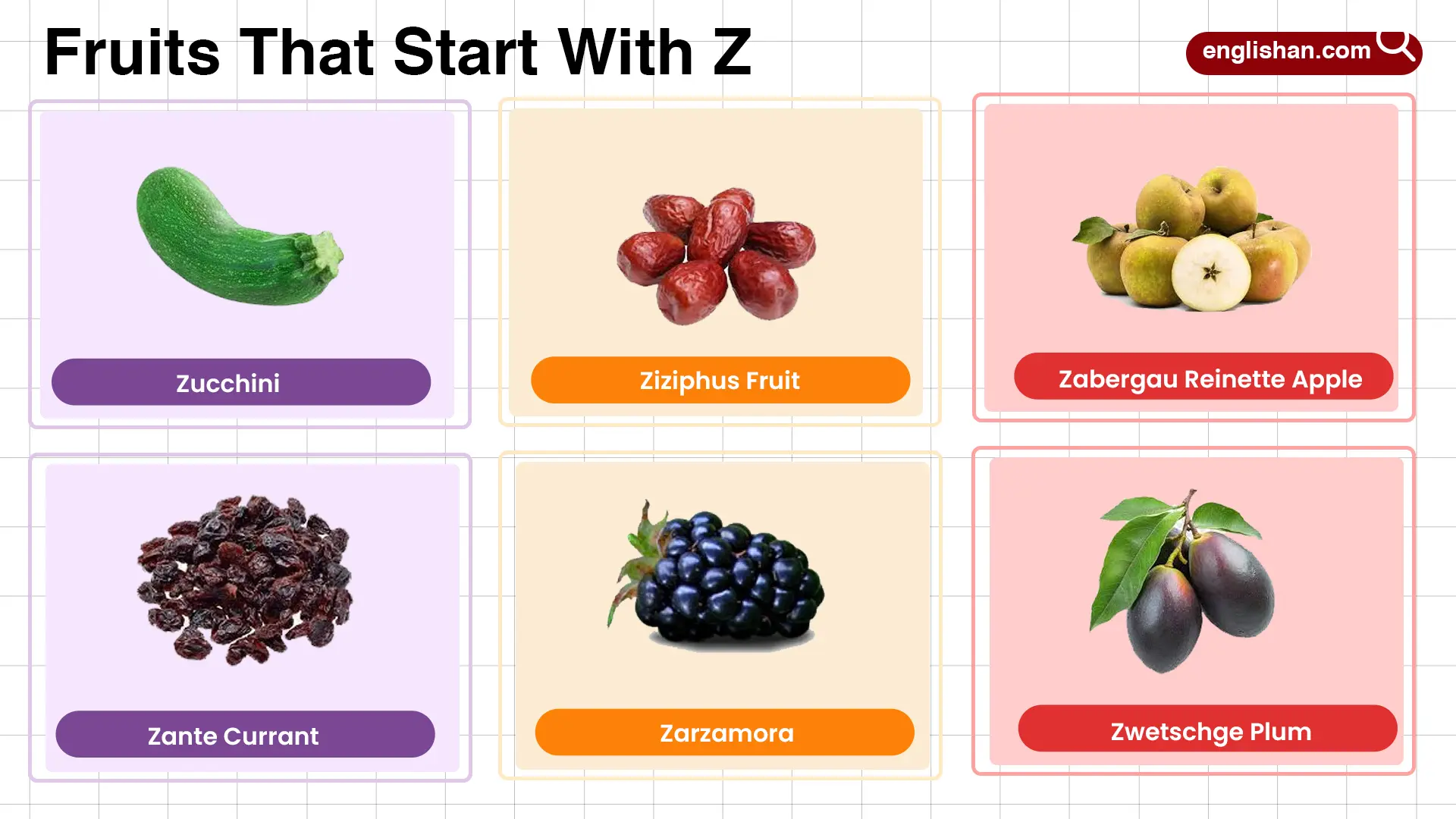
Ask anyone to name a fruit beginning with E and most stop after eggplant. In a supermarket that is close to right, since E barely shows up in the produce aisle. Outside it, more than forty fruit names begin with the letter.
Fruits that start with E run from the European pear in your fruit bowl to a Bornean fruit eaten with salt the way you would eat an avocado. Two of them should never go in your mouth straight off the plant.
The familiar ones make the best place to start.
List Of Fruits That Start With E
More than forty fruits begin with E. The best known are the eggplant, elderberry, European pear, egg fruit and Enterprise apple. The rarer ones include the etrog citron, the Bornean engkala and the Sri Lankan etambe. Only one of them, the elderberry, has to be cooked before you eat it.
| Earliglow strawberry | Elderberry | Etrog |
| Early Girl tomato | Elephant apple | Eucalyptus fruit |
| Early Gold mango | Elephant ear fig | Eugenia |
| Eastern hawthorn | Elmleaf blackberry | Eureka lemon |
| Eastern mayhaw | Emblica | European blueberry |
| Eastern prickly pear | Emerald Beaut plum | European cornel |
| Eastern teaberry | Emu apple | European crabapple |
| Edelweiss grape | Emu berry | European dwarf cherry |
| Edward mango | Engkala | European gooseberry |
| Egg fruit | Enset | European pear |
| Eggplant | Entawak | European plum |
| Eglantine rose hip | Enterprise apple | European red raspberry |
| Egremont Russet apple | Ephedra berry | Euterpe |
| Egusi melon | Etambe | Evergreen huckleberry |
| Elands sour fig | Etna fig |
Common Fruits That Start With E
Eight of these turn up in an ordinary shop or garden. The rest of the letter makes far more sense once you know what the familiar ones taste like.
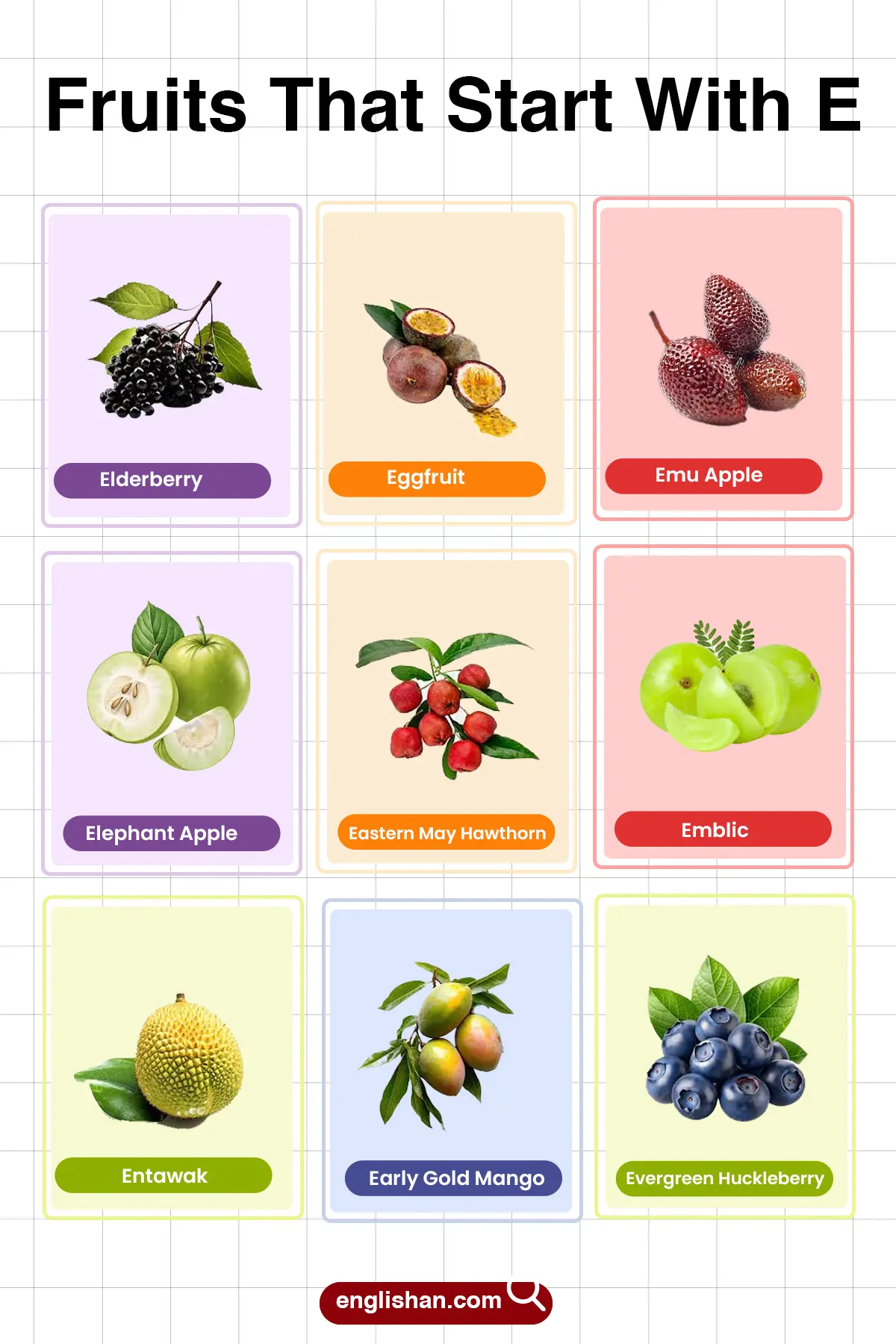
Eggplant
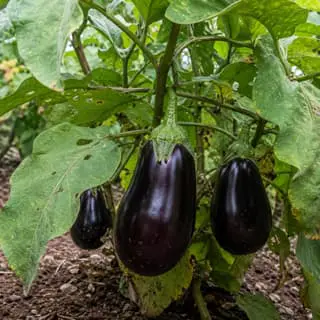
Eggplant is the one E fruit everybody has eaten and almost nobody thinks of as a fruit. Botanically it is a berry, since it develops from the flower’s ovary and contains the seeds. The kitchen disagrees, and so does every greengrocer.
Raw flesh is spongy and faintly bitter. Heat collapses those air pockets and the texture turns silky, which is why roasting, frying and stewing all work while steaming does not.
Elderberry
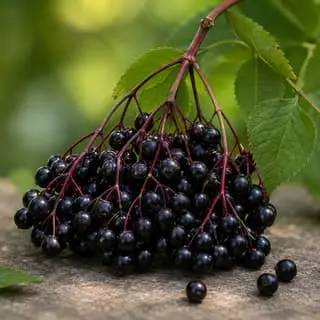
Elderberry clusters ripen almost black in late summer across Europe and North America, small enough that a hundred fit in one handful. The flavour lands tart and winey, nearer blackcurrant than blueberry.
You will meet it as cordial, syrup or jam rather than as fresh fruit, and taste is not the only reason. Cooking is not optional with this one.
European pear
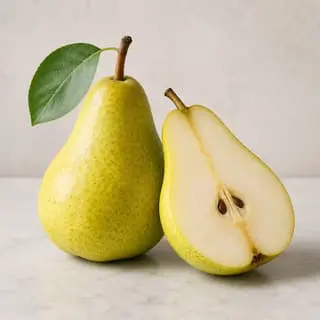
Conference, Comice, Bartlett and Williams all descend from one species, Pyrus communis, domesticated in Europe several thousand years ago. Unlike an apple, a pear ripens off the tree rather than on it.
Press the neck near the stem with your thumb. A little give means ready, and firm means two more days on the counter. Fruit left to soften on the branch goes gritty at the core.
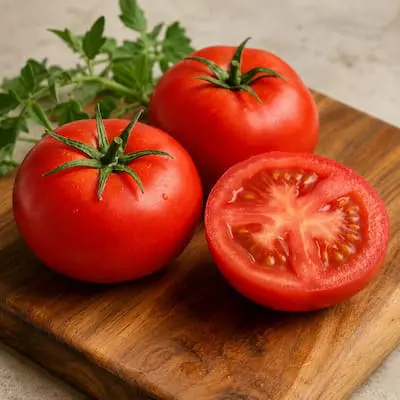
- Early Girl tomato: bred to ripen weeks ahead of a beefsteak, which is why gardeners with short summers grow little else.

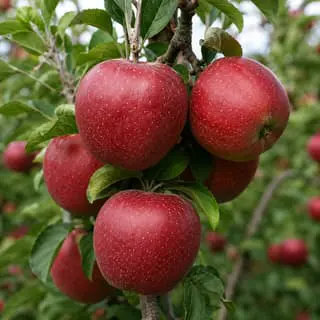
- Enterprise apple: crisp, red, and released by Purdue in 1993 to resist scab without spraying, so organic orchards planted it heavily.

- European plum: dense, oval, and sweet enough to dry into prunes.
- European red raspberry: the wild parent of nearly every raspberry grown across Europe and North America, and its flavour beats most named varieties picked early in the season.
- Earliglow strawberry: first to ripen in a northern garden, small, deep red, and sweeter than every berry that follows it.
Berries That Start With E
Eight berries begin with E, and no two of them taste alike. Three grow wild where nobody has ever planted them, and one tastes so exactly of chewing gum that children refuse to believe it grew that way.
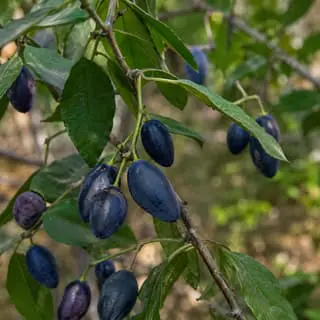
Evergreen huckleberry
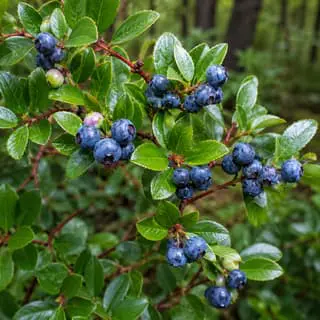
Shiny black berries cling to this Pacific Northwest shrub well into winter, and the flavour sharpens rather than fades after the first frost. Coastal foragers wait for that frost deliberately.
The plant does double duty. Florists cut its glossy foliage for arrangements, which makes it one of the few fruit bushes harvested commercially for its leaves.
- Emu berry: orange when ripe, sticky-sweet, and eaten straight off the bush across northern Australia.
- Eastern teaberry: one berry tastes exactly like wintergreen chewing gum, because the gum was flavoured from this plant in the first place.
- Elmleaf blackberry: the Mediterranean bramble behind most cultivated blackberries, with fruit smaller and darker than a garden variety and a flavour nearer wine than jam when fully black.
- European gooseberry: green, striped, and sour enough to pucker your mouth until it ripens to red.
- European blueberry: bilberry to most people, and its dark flesh stains the mouth the way an American blueberry never does.
- Euterpe: açaí grows on this palm, and the fruit is mostly seed.
- Eglantine rose hip: scarlet, packed with vitamin C, and lined with fine hairs that have to be scraped out before you eat it.
Tropical Fruits That Start With E
Eight tropical fruits begin with E, and the first one confuses everybody who tries it.
Egg fruit
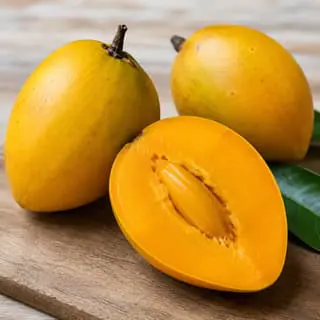
Cut a canistel open and the flesh has the exact consistency of a hard-boiled egg yolk, which is where the name came from. Each fruit runs 5 to 12.5 centimetres long, sweet and musky, and tastes nearer baked sweet potato than any other fruit.
Central America and northern South America grow it. Because the texture is so dry, most cooks blend it into custards and milkshakes instead of eating it out of hand.
Entawak
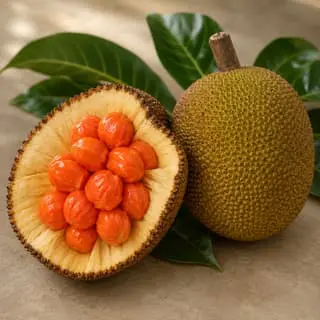
Split an entawak open and orange arils sit packed around seeds the size of almonds. They taste of custard and honey, and the smell fills a room within seconds.
The tree shares a genus with jackfruit and grows wild through Borneo and Sumatra. Almost nobody outside Southeast Asia has tried one, since the fruit bruises within a day of picking.
Emblica
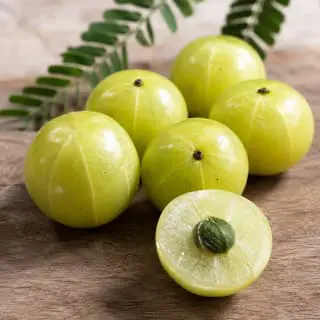
A single amla delivers more vitamin C than an orange, and the fruit comes pale green, hard, and about the size of a golf ball. The taste arrives sour first, then bitter, then astringent, and finally sweet the moment you drink water afterwards.
India pickles it, juices it, and candies it in sugar syrup. Ayurvedic practice has used the fruit for well over a thousand years, which is why it turns up in far more supplements than fruit bowls.
- Elephant apple: hard, green, and grapefruit-sized, with a sour pulp that Indian cooks turn into chutney and dal rather than anything a Westerner would call dessert.
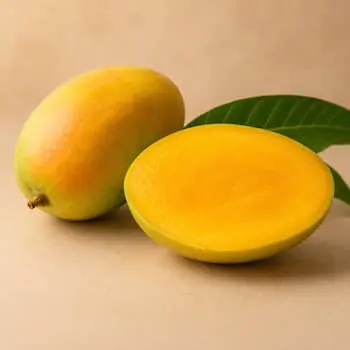
- Early Gold mango: one of Florida’s earliest, ripe by June, and small enough to eat standing over the sink.

- Edward mango: rich almost fibreless flesh, and Florida growers rate it the best-eating mango they grow.
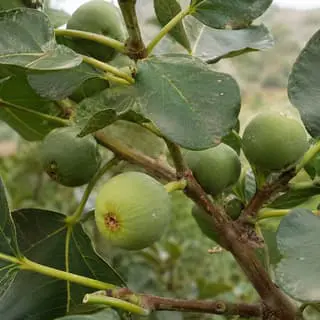
- Elephant ear fig: leaves wide enough to serve as a plate, and figs ripening in clusters straight off the trunk.
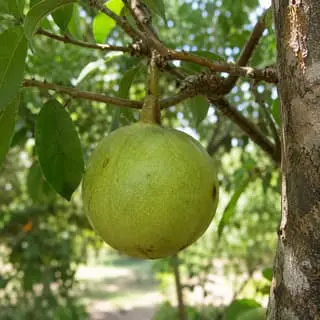
- Engkala: pink-skinned, buttery, and eaten with salt in Borneo.
Rare Fruits That Start With E
Eleven more begin with E and almost never leave the region that grows them. Some are wild fruit that never entered cultivation at all. Among them are named varieties grown in one valley and nowhere else.
Etambe
Etambe is Sri Lanka’s wild mango, small and fibrous, and it rarely leaves the island. Villagers pick it green and cook it into curry rather than waiting for a sweetness that never arrives.
Breeders now want it for its genes. They cross it into commercial mangoes for disease resistance, which makes a fruit few people eat one of the more valuable mangoes growing.
Eugenia
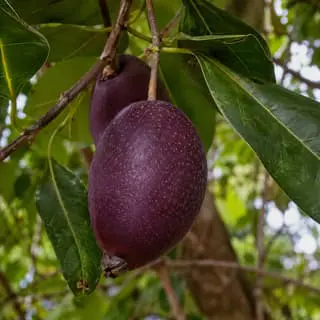
Surinam cherry ripens from green through orange to a deep crimson, ribbed down its sides like a pumpkin the size of a thumbnail. Colour decides the flavour completely.
Picked at orange it tastes resinous and faintly of turpentine, which puts most people off for good. Left until it turns almost black-red and drops at a touch, the same fruit turns sweet and gently spicy.
- Elands sour fig: dried, salted or cooked into konfyt across South Africa, and the juice treats sore throats.
- Emu apple: bitter enough that most people cook it, and the tree survives drought that kills everything around it.
- Eastern prickly pear: the only cactus native to the eastern United States, and its magenta fruit tastes like watermelon crossed with fig once the spines come off.
- Egusi melon: nobody eats the flesh. The ground seed thickens West African stews into something between soup and porridge.
- European cornel: cornelian cherry to most growers, olive-shaped, and too sharp to eat until it drops from the tree unaided.
- European dwarf cherry: knee-high shrub of the Eurasian steppes, and its sour fruit parented the Morello.
- Edelweiss grape: a cold-hardy table grape ripening where vinifera vines freeze out.
- Emerald Beaut plum: green skin, amber flesh, and one of the sweetest plums grown anywhere.
- Etna fig: Sicilian, dark, small, and better dried than shipped.
Citrus Fruits That Start With E
Only two citrus fruits begin with E, and they could hardly be less alike.
Etrog
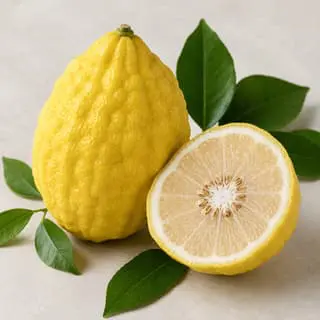
The etrog is a citron, one of the three ancestral citrus species every lemon and orange descends from. Cut one open and you find almost no flesh: nearly the whole fruit is thick white pith under a ridged yellow rind. That rules out juice and suits candied peel perfectly.
Its real value lies in ritual. During Sukkot the etrog goes in the left hand while the palm branch, myrtle and willow go in the right. To qualify, a fruit has to be flawless in stem and body. Growers inspect each one under a lens and pack the best in flax before shipping. No other citrus reaches the prices those specimens command.
Eureka lemon
Almost every lemon on a Western shelf is a Eureka. It fruits nearly year-round, sets few seeds, and yields more juice than any other common lemon.
Californian growers selected it in the 1850s from Italian seed, and it has held the commercial market since. A Lisbon lemon looks similar and comes off a thornier tree with a shorter season.
Apples And Pears Starting With E
Four pome fruits begin with E. All four grow on trees in the rose family, which is why hawthorn fruit looks like a miniature apple.
- Egremont Russet: rough brown skin, dry dense flesh, and a nutty flavour England pairs with cheese instead of pie.
- European crabapple: sour raw, though its pectin sets jelly.
- Eastern hawthorn: small red pomes the mayhaw’s cousin bears, which Southern cooks strain into a pale pink jelly.
- Eastern mayhaw: ripens in May across southern swamps, and pickers scoop the fallen fruit off the water with nets before it sinks to the bottom.
Taste And Origin Of E Fruits
The eight most searched of them, side by side. Taste comes first, since that is the one quality a photograph cannot give you.
| Fruit | Taste | Where it grows | Eaten as |
|---|---|---|---|
| Elderberry | Tart and winey | Europe and North America | Cordial, syrup, jam |
| Eggplant | Mild and savoury | Asia, Mediterranean | Roasted, fried, stewed |
| Egg fruit | Sweet and musky | Central America | Custard, milkshake |
| European pear | Sweet and floral | Europe worldwide | Fresh, poached, tart |
| Emblica | Sour and astringent | India, Southeast Asia | Pickle, juice, candy |
| Etrog | Bitter rind, no flesh | Israel, Italy, Morocco | Candied peel |
| Entawak | Custard and honey | Borneo | Fresh, scooped |
| Evergreen huckleberry | Sharp then sweet | Pacific Northwest | Fresh, pie, preserve |
Which E Fruits Are Safe To Eat
Most of the forty go straight into your mouth. Four do not, and one of those four turns up on every list of E fruits without a word of warning beside it.
Elderberry is the one that matters. Raw elderberries and raw elderberry juice cause nausea, and Oregon State University Extension has documented cases that ended in hospitalisation. Cyanogenic glycosides in the fruit release cyanide during digestion. Heat destroys them, which is why every elderberry product you buy has been cooked.
All four species behave the same way, blue, American, European and red, and the stems and leaves contain more of the compound than the berries do. Strip the fruit off its stalks before anything goes near a pan. Fifteen minutes at a simmer, or a proper syrup boil, settles the rest.
Cooking elderberries before eating them ✅
Eating elderberries raw from the bush ❌
The other three come with conditions of their own.
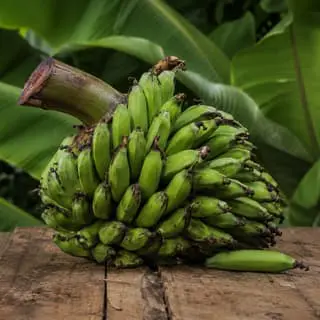
- Enset: the banana-like fruit is inedible and full of hard seeds, so Ethiopia eats the corm and pseudostem instead, fermented into kocho or refined into bulla.
- Ephedra berry: eaten in parts of Asia and the American Southwest, though the plant’s stimulant alkaloids rule it out for anyone with a heart condition.
- Eucalyptus fruit: a woody seed capsule that nobody eats.
- Egusi melon: bitter flesh, thrown away, and only the ground seed goes into the pot.
How To Pronounce E Fruit Names
Several of these names trip you up on sight, because the stress lands where you would not expect it. Say the capitalised part louder.
| Fruit | Say it as |
|---|---|
| Canistel | KAN-iss-tel |
| Emblica | EM-blih-kuh |
| Engkala | eng-KAH-lah |
| Enset | EN-set |
| Entawak | en-TAH-wak |
| Ephedra | eh-FED-ruh |
| Etambe | eh-TAM-bay |
| Etrog | ET-rog |
| Eugenia | yoo-JEE-nee-uh |
| Euterpe | yoo-TER-pee |
| Egusi | eh-GOO-see |
| Mayhaw | MAY-haw |
Two of these cause more trouble than the rest. Etrog takes a short first vowel, so it rhymes with net rather than with eat. And euterpe keeps its final E sounded, which is what makes açaí seem unconnected to the palm it grows on.
Names borrowed whole from another language give the most difficulty across the alphabet, which is the same reason okapi and oryx catch people out among the animals.
Fruits That Start With E For Kids
Younger children learn the letter fastest through fruit they can picture at once. Six work best.
- Eggplant: shiny and purple, and it grows on a bush like a tomato.
- Elderberry: tiny and dark, and it always gets cooked first.
- Egg fruit: yellow inside, like a boiled egg.
- European pear: the green pear in the fruit bowl, sweet and soft when you press the neck with your thumb, which is how you tell it is ready.
- Elephant apple: big, green, hard, and named for the elephants that eat it in the forests of India.
- Emu berry: an orange berry from Australia, named after the big bird that eats it.
Say each name out loud and press the E at the front. Eggplant and egg fruit land easiest, since both start with a word a child already knows.
FAQs
The elderberry, eggplant, European pear and egg fruit are the four most people name first. Beyond those, more than forty begin with E, from the etrog citron to the Bornean engkala. Most grow outside Europe and North America, which is why the letter feels so thin in a Western shop.
Eggplant is botanically a fruit, and specifically a berry, since it develops from the flower’s ovary and contains the seeds. In every kitchen it counts as a vegetable, because it tastes savoury and cooks like one. Both answers are right, each in its own setting.
The elderberry answers that one. Its clusters ripen almost black and stain everything they touch, which is how elder trees get found in autumn. For a deeper purple still, look at eggplant, where the skin rather than the flesh supplies the colour.
Several berries do. The elderberry, evergreen huckleberry, emu berry, European gooseberry and European blueberry are the ones you will meet first. Eastern teaberry adds a wintergreen flavour none of the others has.
The etrog answers that question. This citron grows for its rind and its role in Sukkot rather than for juice, since there is almost no flesh inside it. Behind it comes the Eureka lemon, which fills most supermarket shelves.
The egg fruit takes that one. Its flesh matches the colour and the texture of a hard-boiled egg yolk, which is where the name came from. Ripe European pears and Eureka lemons turn yellow too.
No, elderberries should not be eaten raw. Raw berries and raw juice cause nausea and have led to hospitalisation, because cyanogenic glycosides in the fruit release cyanide during digestion. Cooking removes the risk, which is why elderberry reaches you as syrup, cordial or jam.
The etambe ranks among the rarest, a wild Sri Lankan mango that hardly ever leaves the island. Close behind come engkala and elands sour fig, since both stay inside their home regions. You will not find any of the three in a Western shop.
You May Also Like
Fruits That Start With E Quiz
Fruits That Start With E
Two of these fruits begin with E. Which one does not?
Indian gooseberry begins with I, so it is the one that does not belong.
Check each first letter before reading further.
Indian gooseberry is the odd one out.
Which of these fruits begins with the letter E?
Toxic raw and safe once cooked, which is why it appears as syrup rather than fruit.
Read the first letter before anything else.
Elderberry begins with E.
Name a fruit beginning with this letter.
A fruit whose name begins with E is ___.
Accepted here: Egg fruit, Elderberry.
More than one answer is right; any fruit starting with the letter counts.
Egg fruit begins with E.
Which fruit does this describe? Also called canistel, with a dry sweet flesh close to a boiled egg yolk in texture.
Also called canistel, with a dry sweet flesh close to a boiled egg yolk in texture.
Match the description to the fruit rather than to the letter.
Also called canistel, with a dry sweet flesh close to a boiled egg yolk in texture.
Which of these is a berry in the botanical sense?
Elderberry is a berry in the botanical sense. Toxic raw and safe once cooked, which is why it appears as syrup rather than fruit.
Group by what the thing actually is, not by where it turns up.
Elderberry is a berry in the botanical sense.
Turn on JavaScript for the interactive quiz. The full practice set is shown above.