
A gas stove may look simple from the outside, but it is made up of several important parts that work together to help you cook safely and efficiently. From the burners on top to the control knobs and oven section, each component has a specific role. Understanding the parts of a gas stove not only helps you use it properly but also makes cleaning, maintenance, and troubleshooting much easier. In this article, we’ll walk through the labeled diagram and explain the function of each part clearly.
List Of Gas Stove Parts With Names
- Glass Lid / Cover
- Cooktop Surface
- Cooktop Burners (Top Burners)
- Grill Burner
- Burner Cap
- Burner Head
- Pan Support / Grate
- Control Panel
- Control Knobs
- Ignition Window / Pilot Light Window
- Oven Cavity
- Oven Rack
- Baking Tray
- Roasting Pan / Broiler Pan
- Oven Door
- Oven Door Handle
- Oven Door Glass
- Storage Drawer / Warming Drawer
- Drawer Handle
- Side Panel
- Base / Bottom Frame
- Adjustable Feet
Parts of a Gas Stove Diagram With Names
A gas stove is a complete cooking system made up of several important components that work together to produce controlled heat for preparing food. The burners release and spread the flame evenly, while the control knobs regulate the gas flow to adjust the heat level. The pan supports hold your cookware steady above the flame, ensuring safe and balanced cooking. Inside the stove, the oven cavity traps and circulates heat for baking and roasting. Every part, from the ignition system to the oven door and glass panel, plays a key role in safe operation, heat efficiency, and smooth everyday cooking.
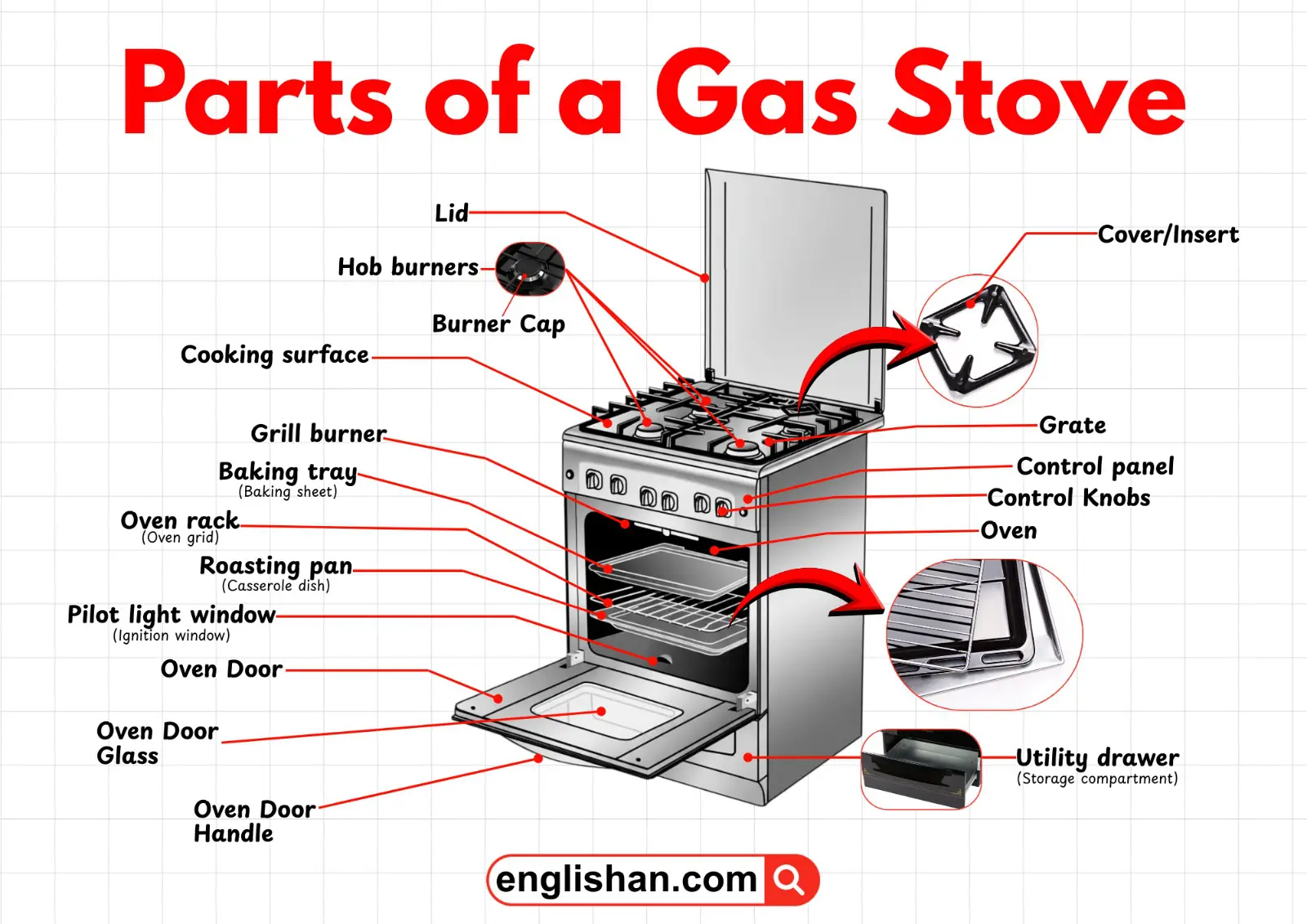
Cooktop Components
These parts are located on the top section of the stove. They are responsible for producing and supporting the flame used for everyday cooking tasks like boiling, frying, and simmering.
Glass Lid / Cover
The glass lid is a protective cover attached to the back of the stove’s top. When closed, it protects the burners from dust, grease, and accidental spills. Most lids are made from tempered, heat-resistant glass, so they can safely handle warmth. When opened, it also works as a backsplash, helping to protect the wall behind the stove from oil splashes.
Cooktop Surface
The cooktop surface is the flat upper area where all the burners are mounted. It provides a stable base for the cooking system. This surface is usually made from stainless steel or enamel-coated metal, which makes it durable, heat-resistant, and easy to clean after cooking.
Cooktop Burners
Cooktop burners are the main heat sources used for cooking food in pots and pans. They release gas through small holes and create a controlled flame. Different burners may produce different flame sizes, allowing you to choose between low heat for simmering and high heat for fast cooking.
Grill Burner
The grill burner is designed to produce stronger and more direct heat compared to regular burners. It is commonly used for grilling meat or cooking food that requires high temperatures. This burner helps achieve faster cooking and better browning.
Burner Head
The burner head is the circular metal part where gas comes out and forms the flame. It contains small openings that distribute gas evenly. This even distribution ensures the flame surrounds the bottom of the pan properly for balanced heating.
Burner Cap
The burner cap sits on top of the burner head. It helps shape and stabilize the flame. It also protects the burner head from food spills and prevents uneven flames. A properly placed burner cap ensures smooth and efficient cooking.
Pan Support / Grate
The pan support, also called the grate, is the strong metal frame placed over the burners. It holds cookware firmly in place and keeps it stable while cooking. It also maintains a safe distance between the flame and the bottom of the pan for proper heat distribution.
Control Components
These parts allow you to operate the stove safely and control the heat levels precisely.
Control Panel
The control panel is the front section of the stove where all operating controls are located. It organizes the knobs clearly so you can easily identify which burner or oven setting you are adjusting. In some models, it may also include temperature markings and indicators.
Control Knobs
Control knobs regulate the flow of gas to the burners or oven. When you turn a knob, it increases or decreases the gas supply, which changes the size of the flame. This allows you to control cooking temperature accurately.
Ignition Window / Pilot Light Window
The ignition or pilot light window allows you to see whether the flame has been successfully lit. It provides visual confirmation, helping you ensure the stove is operating safely and properly.
Oven Components
These parts are inside the oven section and are mainly used for baking, roasting, and grilling food.
Oven Cavity
The oven cavity is the main enclosed space where food is placed for baking or roasting. It is insulated to trap heat inside, allowing food to cook evenly. The interior is usually coated with heat-resistant material to withstand high temperatures.
Oven Rack
The oven rack is a removable metal shelf placed inside the oven cavity. It supports baking trays and dishes. Many ovens allow you to adjust the rack height, giving you flexibility depending on the type of food being cooked.
Baking Tray
The baking tray is a flat metal sheet used for baking items like cookies, cakes, or bread. It provides a smooth surface for even heat contact and is easy to remove for serving or cleaning.
Roasting Pan / Broiler Pan
The roasting pan is deeper than a baking tray and is designed to hold meat or vegetables during roasting. It collects juices and fat that drip during cooking, helping prevent mess and smoke inside the oven.
Oven Door
The oven door seals the oven cavity and keeps heat trapped inside during cooking. It is insulated to prevent heat from escaping and to protect users from burns.
Oven Door Handle
The oven door handle allows you to open and close the oven safely. It is designed to remain cooler than the oven interior, making it easier to handle.
Oven Door Glass
The oven door glass is a transparent panel built into the door. It allows you to monitor your food without opening the oven, which helps maintain a consistent cooking temperature.
Storage & Lower Section Components
These parts are located at the bottom of the stove and provide additional convenience.
Storage Drawer / Warming Drawer
The storage drawer is usually found beneath the oven. In basic models, it is used to store trays, racks, and cookware. In advanced models, it may function as a warming drawer to keep cooked food warm before serving.
Drawer Handle
The drawer handle makes it easy to pull the drawer open and close smoothly.
Structural & Support Components
These parts form the outer body and support system of the stove.
Side Panel
The side panels enclose and protect the internal components of the stove. They also provide structural strength and give the appliance its finished appearance.
Base / Bottom Frame
The base or bottom frame supports the entire weight of the stove. It ensures stability and proper balance during operation.
Adjustable Feet
Adjustable feet are small supports located underneath the stove. They can be raised or lowered to level the appliance on uneven floors, ensuring stability and safe use.
Key Takeaway
As we learned, a gas stove is made up of several essential parts that work together to make cooking safe and efficient. The burners produce heat, the control knobs and panel let you adjust the flame, the oven and trays handle baking and roasting, and the structural components provide stability and protection. Knowing each part and its function helps you operate the stove correctly, maintain it easily, and troubleshoot problems effectively.
You May Also Like