
A tennis racket might look simple at first, but it’s actually made up of several important parts, each with its own role in helping you play better. From the head where you hit the ball, to the handle you hold, every part affects your control, power, and comfort on the court. Whether you’re a beginner trying to choose the right racket or just curious about how it works, in this article, we’ll explore all the main parts of a tennis racket and what they do.
List of Tennis Racket Parts With Names
- Head
- Strings
- String Bed
- Sweet Spot
- Grommets
- Bumper Guard
- Frame
- Throat
- Throat Bridge (Yoke)
- Shaft
- Handle
- Grip
- Replacement Grip
- Overgrip
- Butt Cap
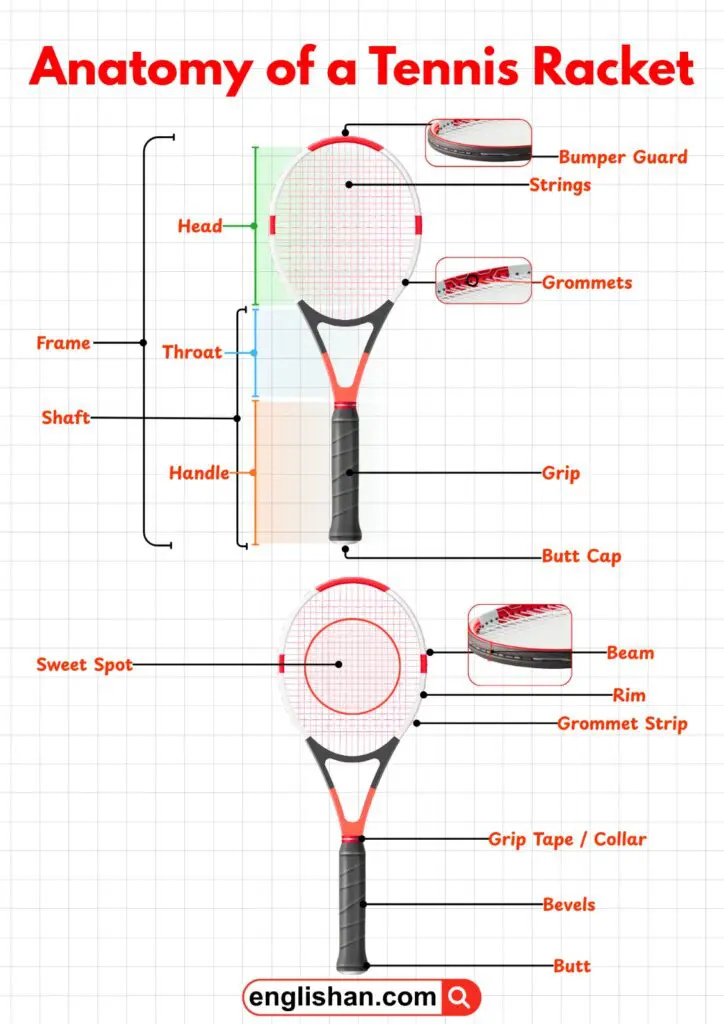
Parts of a Tennis Racket Diagram With Names
A tennis racket is made up of several important parts that work together to help you play better. The strings and string bed hit and control the ball, while the sweet spot ensures powerful and accurate shots. The frame and throat provide stability and strength, keeping the racket balanced during swings. The handle, grip, and overgrip give you comfort and a secure hold, while the butt cap keeps the grip in place. Every part, from the head to the shaft and throat bridge, plays a role in giving players control, power, and comfort on the court.
Head Area
The head area is the upper part of the tennis racket where the ball makes contact. This section contains the string system and the main hitting surface that helps generate power, spin, and control during shots.
Head
The head is the large oval section at the top of the tennis racket. It holds the strings and forms the main hitting surface. The size of the head determines how large the hitting area is. Larger heads usually provide a bigger sweet spot, making it easier for beginners to hit the ball effectively.
Strings
Strings are the tightly stretched cords that run across the racket head. They are arranged in vertical and horizontal patterns to form the hitting surface. When the ball hits the strings, they flex slightly and then snap back, helping generate power and spin.
String Bed
The string bed refers to the entire network of strings inside the racket head. It is the area that actually makes contact with the tennis ball. The tension and pattern of the string bed affect the level of control, power, and spin a player can produce.
Sweet Spot
The sweet spot is the ideal area located near the center of the string bed. When the ball hits this area, the racket produces the most efficient transfer of energy. Shots hit in the sweet spot feel smoother, more powerful, and more controlled.
Grommets
Grommets are small plastic inserts that line the holes around the racket frame. They allow the strings to pass through the frame while protecting them from friction against the hard frame material. Grommets help extend the life of the strings.
Bumper Guard
The bumper guard is a protective strip located along the outer edge of the racket head. It helps protect the frame and strings from damage when the racket touches the ground or court surface during play.
Frame Structure
The frame structure forms the main body of the racket and connects the head to the handle. It provides strength, stability, and balance, allowing the racket to withstand the impact of powerful shots.
Frame
The frame is the main structural body of the tennis racket. It surrounds the string bed and supports all other parts of the racket. Frames are commonly made from materials such as graphite, aluminum, or composite materials that provide strength and durability.
Throat
The throat is the section located just below the racket head where the frame narrows before connecting to the shaft. This part helps stabilize the racket and supports the structure during powerful shots.
Throat Bridge (Yoke)
The throat bridge, also known as the yoke, is the V-shaped support located in the throat area. It connects the two sides of the frame and strengthens the overall structure of the racket. The yoke helps improve balance and stability during swings.
Shaft
The shaft is the narrow portion between the throat and the handle. It acts as the connection that transfers the player’s swing energy from the handle to the racket head, allowing the ball to be struck effectively.
Handle Area
The handle area is the lower part of the tennis racket that players hold while playing. This section is designed to provide comfort, grip stability, and better control during swings.
Handle
The handle is the long lower section of the racket that players hold while playing. It allows players to control the direction and force of their shots. Handles come in different sizes so that players can choose the one that fits their hand comfortably.
Grip
The grip is the covering wrapped around the handle. It provides a comfortable and secure surface for the player’s hand. A good grip helps prevent slipping and improves control during fast swings.
Replacement Grip
The replacement grip is the main grip layer attached directly to the handle. Over time it can wear out due to sweat and use, so players often replace it to maintain comfort and proper control of the racket.
Overgrip
An overgrip is a thin layer wrapped on top of the replacement grip. It helps absorb sweat, improve traction, and provide additional comfort. Many players change overgrips regularly because they wear out faster.
Butt Cap
The butt cap is the small cap located at the very bottom of the racket handle. It secures the grip and prevents it from sliding off the handle. The butt cap also helps players maintain a firm hold on the racket.
Key Takeaway
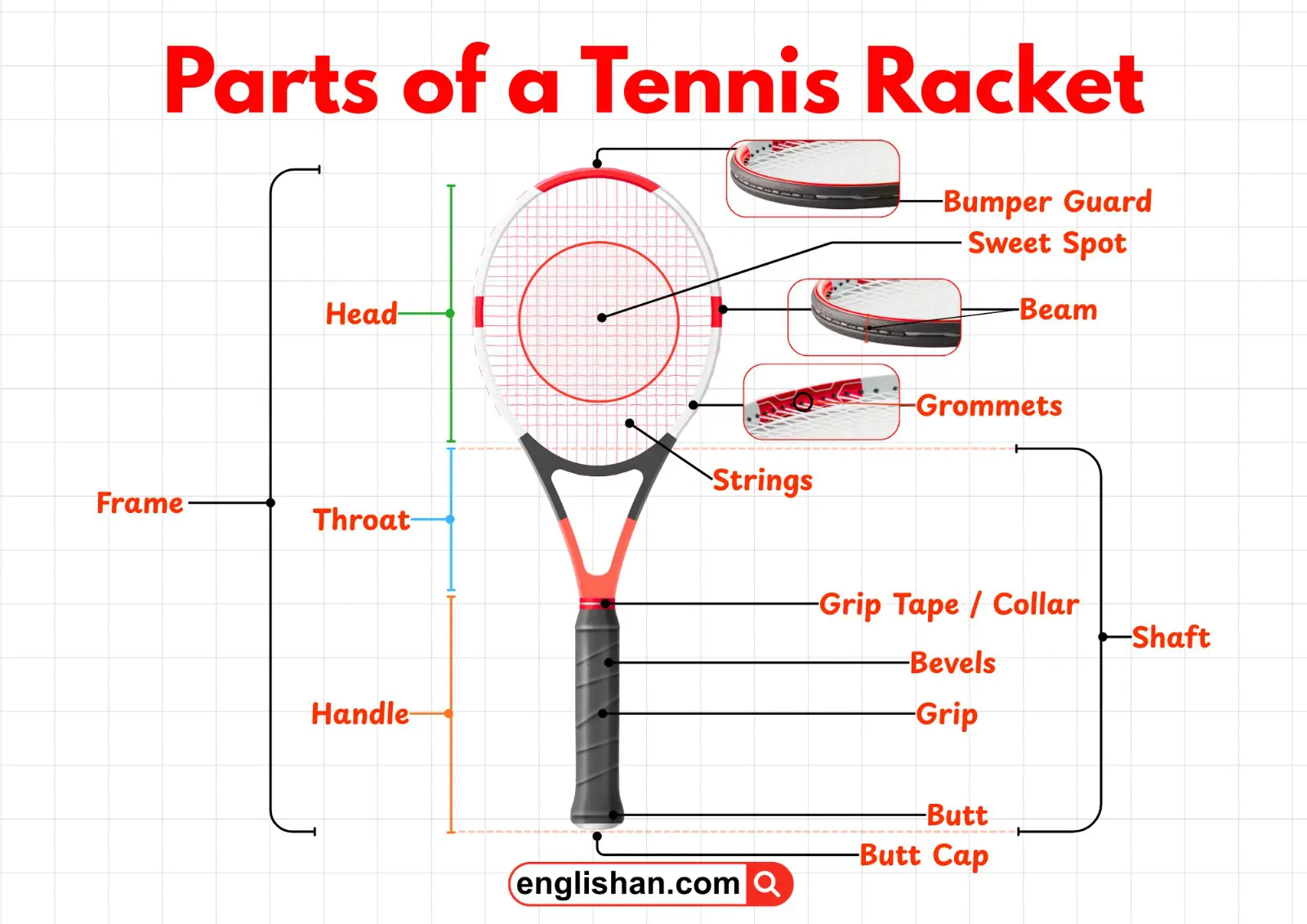
As we learned, a tennis racket is more than just a hitting tool — each part, from the head and strings to the shaft and handle, plays a specific role in power, control, and comfort. Understanding these parts helps players choose the right racket, improve their game, and maintain the racket properly. Knowing the head area, frame structure, and handle components ensures every shot is effective and every swing is supported by the racket’s design.
You May Also Like