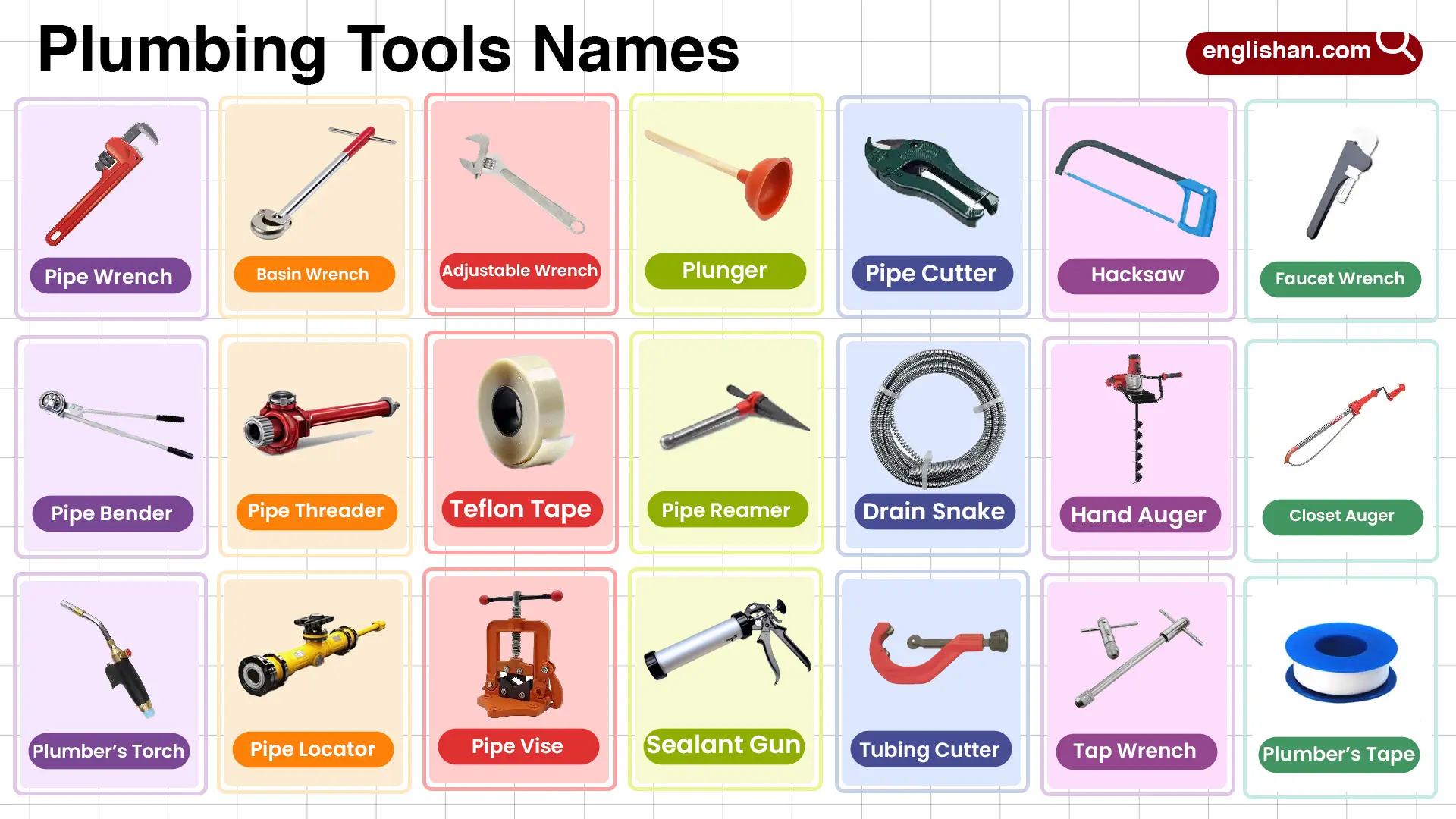
Many tools are used by plumbers to fix pipes, taps, and water systems in homes and buildings. These plumbing tools include wrench, plunger, pipe cutter, and tape used for repair and fitting work.
This post lists their names with pictures. You’ll learn common plumbing tools, grouped to support better vocabulary building and understanding of their use.
List of Plumbing Tools Names
This list includes the names of common plumbing tools used for different tasks like cutting, tightening, sealing, and cleaning pipes. Each tool has a special purpose to help plumbers fix or install water systems easily and safely.
- Adjustable Wrench
- Basin Wrench
- Closet Auger
- Compression Sleeve Puller
- Drain Cleaning Bladder
- Drain Snake
- Faucet Seat Wrench
- Faucet Wrench
- Hand Auger
- Hacksaw
- Inspection Camera
- Pipe Bender
- Pipe Cutter
- Pipe Deburring Tool
- Pipe Freezing Kit
- Pipe Locator
- Pipe Reamer
- Pipe Threader
- Pipe Vise
- Pipe Wrench
- Plumber’s Tape
- Plumber’s Torch
- Plunger
- Sealant Gun
- Soldering Kit
- Tap Wrench
- Teflon Tape
- Tongue and Groove Pliers
- Tubing Cutter
- Water Pressure Gauge
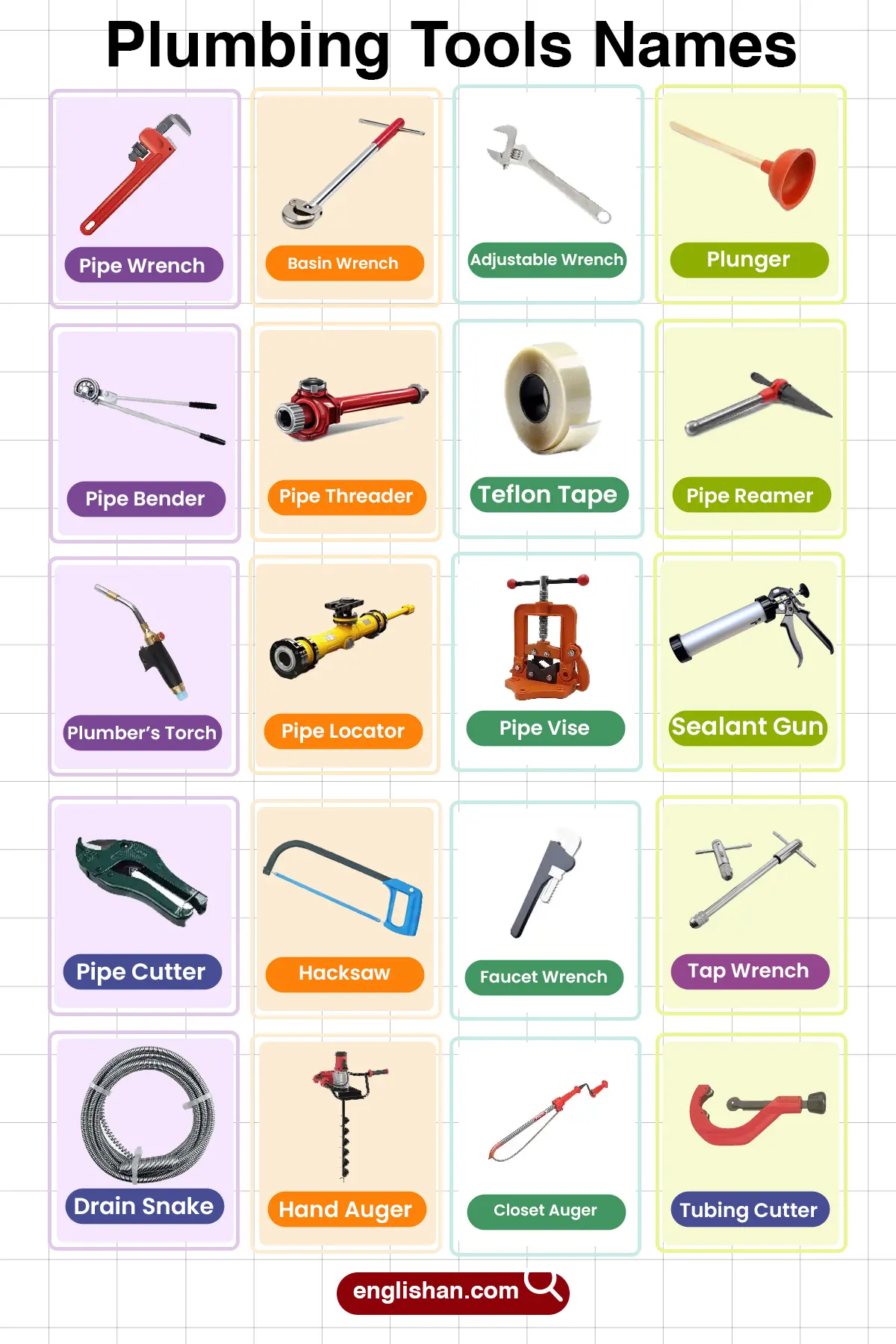
Types of Plumbing Tools and Their Uses
Plumbing tools come in many types, each designed to help with a specific task. Some tools tighten or loosen pipes, while others cut, shape, seal, or clear them. Knowing how these tools work makes plumbing jobs easier, safer, and more effective. In this list, you’ll learn about the most common types of plumbing tools and what they are used for, explained in simple words for easy understanding.
Wrenches and Gripping Tools
Used for tightening or loosening plumbing fittings.
- Pipe Wrench: This heavy-duty wrench is used to grip and turn metal pipes during plumbing repairs or installation.
- Basin Wrench: Designed for tight spots, especially under sinks, it helps reach and loosen nuts behind faucets.
- Adjustable Wrench: It can change size to fit different bolts and nuts, making it handy for many plumbing jobs.
- Faucet Wrench: Helps in removing or installing faucet mounting nuts, especially where space is too small for hands.
- Tongue and Groove Pliers: Also called channel-lock pliers, these are used to grip, twist, or hold plumbing parts.
- Compression Sleeve Puller: Removes compression sleeves from pipes without damaging the pipe or the fitting.
- Faucet Seat Wrench: Used for removing or tightening faucet seats, which often wear out and cause leaks.
- Tap Wrench: Holds and turns taps to cut threads inside pipe fittings; essential when creating threaded holes.
Pipe Cutting and Shaping Tools
Used to cut, shape, or thread pipes.
- Pipe Cutter: Gives clean and even cuts on copper, PVC, or steel pipes, better than a regular saw.
- Hacksaw: A basic tool for cutting metal and plastic pipes; great when other tools can’t be used.
- Tubing Cutter: Best for cutting small-diameter pipes like copper or plastic, often used for plumbing under sinks.
- Pipe Bender: It helps shape pipes without breaking them, useful when pipes need to turn around corners.
- Pipe Threader: Creates screw-like threads on the ends of metal pipes, so they can fit tightly together.
- Pipe Reamer: Cleans out the rough inside edges after a pipe is cut, so water flows smoothly through it.
- Pipe Deburring Tool: Removes sharp burrs or edges from the outside and inside of cut pipes for safety and smooth flow.
Sealing and Joining Tools
Used to seal joints and ensure leak-free connections.
- Teflon Tape: A thin tape that wraps around pipe threads to stop leaks and make tight, water-resistant seals.
- Plumber’s Tape: Similar to Teflon tape, used to seal threaded pipe connections and keep water from leaking out.
- Sealant Gun: Holds sealant tubes and helps apply glue or caulk around pipe joints and fixtures easily.
- Soldering Kit: Used for joining copper pipes together with melted solder, creating a strong and leak-free bond.
Drain Cleaning Tools
Used to unclog and clear drains.
- Plunger: This common tool clears clogs in sinks and toilets by creating suction and pushing blockages away.
- Drain Snake: A flexible tool that goes deep into pipes to grab or break up tough clogs blocking the flow.
- Hand Auger: A manual tool that works like a snake to remove clogs in household drains such as tubs or sinks.
- Closet Auger: Made for toilets, this tool clears out blockages that a regular plunger can’t reach.
- Drain Cleaning Bladder: Attaches to a garden hose and uses water pressure to push clogs out of the drain.
Diagnostic and Inspection Tools
Used to inspect, locate, or test plumbing systems.
- Inspection Camera: A small camera on a flexible cable that shows the inside of pipes to find problems or blockages.
- Pipe Locator: Helps find hidden pipes underground or behind walls before starting any digging or drilling work.
- Water Pressure Gauge: Measures the pressure in your plumbing system to make sure it’s working at a safe level.
Specialized Plumbing Tools
Tools that perform specific or advanced plumbing tasks.
- Plumber’s Torch: Heats pipes for soldering metal parts together, often used in copper pipe work.
- Pipe Vise: A clamp that holds pipes steady while cutting or threading them, making the job easier and safer.
- Pipe Freezing Kit: Temporarily freezes water inside a pipe so repairs can be made without shutting off the supply.
Conclusion
Knowing plumbing tools names helps you understand how each tool works in repairs. From cutting pipes to fixing leaks, these tools are essential. Learning them builds clear vocabulary and confidence when talking about plumbing in English.
FAQs About Plumbing Tools
A pipe wrench grips round pipes firmly to tighten or loosen threaded fittings. It uses serrated jaws and leverage to turn heavy metal pipe connections efficiently.
A basin wrench has a long shaft and pivoting jaw, ideal for tight spaces under sinks. A pipe wrench is sturdier with serrated jaws for gripping large pipes. They’re designed for different tasks.
Pipe wrenches range from 6 inches to over 48 inches. Smaller sizes suit delicate work, while larger ones provide more torque for heavy-duty plumbing jobs.
You May Also Like