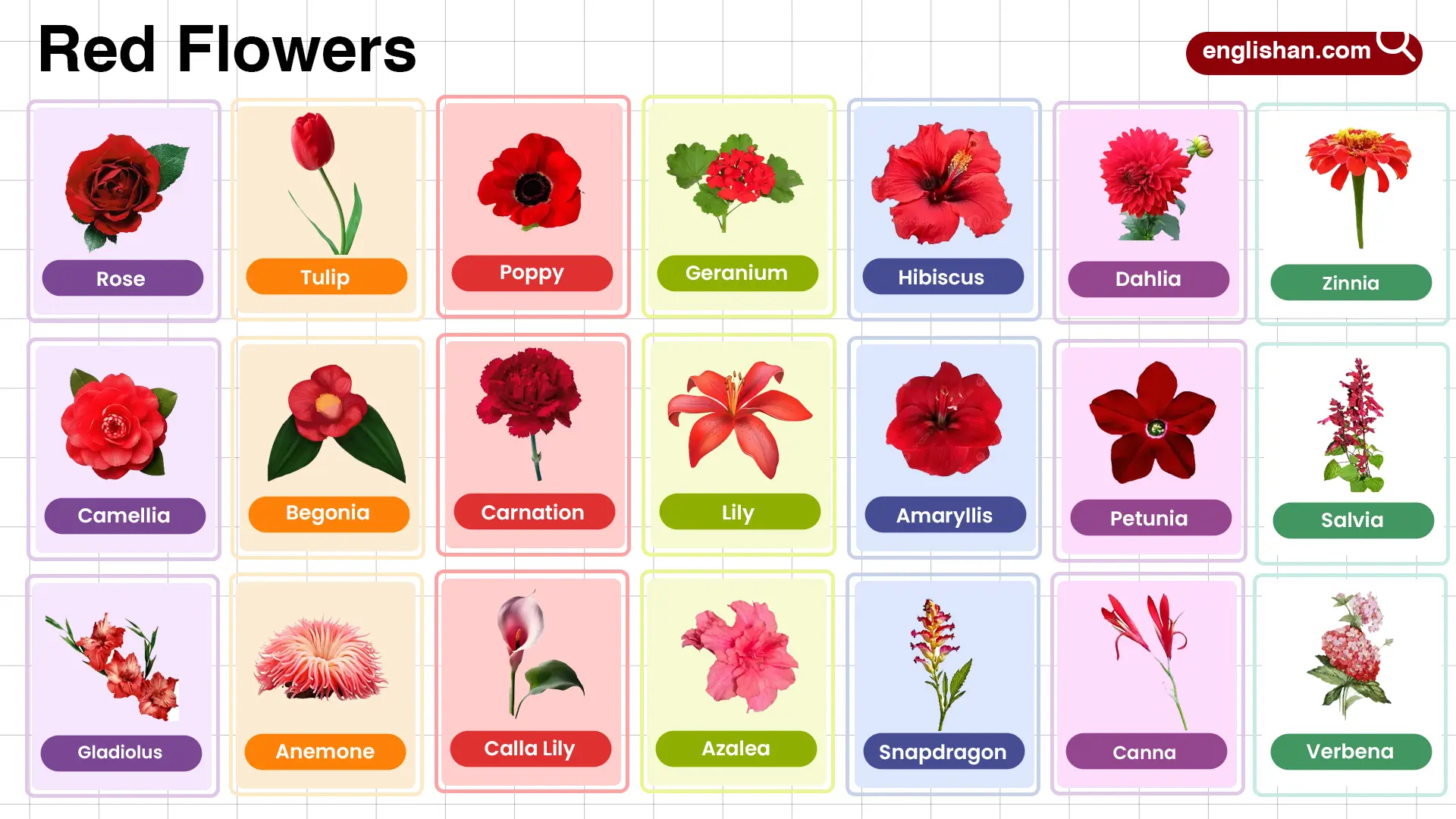
Learning the names of red flowers helps build vocabulary in a natural and visual way. These flowers come in many shapes, sizes, and uses, and their bright color makes them easy to recognize. Many plants with red blooms are common in gardens and wild places, making them a great starting point for flower vocabulary.
In this post, you will learn the names of red flowers with pictures. Knowing these names can help you describe flowers in daily talk, gardening, biology, or classroom activities.
List of Red Flowers Name
This list includes 30 red flower names, featuring bright blooms from garden favorites to wild species. Each flower adds rich red color to landscapes, bouquets, and seasonal displays.
- Rose
- Tulip
- Poppy
- Geranium
- Hibiscus
- Dahlia
- Zinnia
- Camellia
- Begonia
- Carnation
- Lily
- Amaryllis
- Petunia
- Salvia
- Gladiolus
- Anemone
- Calla Lily
- Azalea
- Snapdragon
- Canna
- Chrysanthemum
- Verbena
- Pentas
- Marigold
- Ixora
- Bottlebrush
- Red Hot Poker
- Blanket Flower
- Celosia
- Freesia

Type of Red Flowers and Growth Style
Red flowers add vibrant color and charm to gardens, landscapes, and indoor pots. This list categorizes red flowers by their growth habits, plant types, and natural traits to help you understand their characteristics and uses. From popular garden blooms to tropical varieties, each category gives a clear idea of what to expect from these red beauties.
Popular Garden Red Flowers
These flowers are commonly found in home gardens and public landscapes due to their bright red colors and ease of care.
- Rose: A classic symbol of love, roses bloom in many red shades and work well in borders and bouquets.
- Tulip: Spring-blooming bulbs with cup-shaped flowers in bold red tones.
- Geranium: Hardy flowering plants with red clusters perfect for pots and window boxes.
- Hibiscus: Large, tropical-looking flowers that bloom in warm climates and attract pollinators.
- Zinnia: Sun-loving annuals with daisy-like blooms in deep reds, perfect for summer beds.
- Dahlia: Round, showy flowers in vibrant reds ideal for cutting gardens.
- Petunia: Long-blooming flowers used in baskets, borders, and containers.
- Begonia: Shade-friendly flowers with waxy red blooms and attractive foliage.
- Carnation: Fragrant red flowers often used in floral arrangements and decorations.
- Marigold: Bright red-orange blooms known for their strong scent and pest-repelling properties.
List of Bulb Flowers
These flowers grow from bulbs or tubers and are often used in seasonal planting.
- Amaryllis: Bold, trumpet-shaped red flowers that bloom indoors or in warm climates.
- Lily: Elegant red blooms with a sweet scent, perfect for garden borders and vases.
- Gladiolus: Tall spikes of red flowers that bloom in summer, ideal for cut flowers.
- Calla Lily: Smooth, funnel-shaped red blooms often used in modern floral designs.
- Freesia: Fragrant red flowers on arching stems, often used in bouquets.
List of Shrubs
These plants grow as woody or semi-woody shrubs and often bloom in clusters.
- Camellia: Glossy-leafed shrubs with red, rose-like flowers that bloom in cooler months.
- Azalea: Compact bushes with red blooms in spring, often used in shaded gardens.
- Ixora: Tropical shrub with small red flower clusters, commonly used in hedges.
- Bottlebrush: Unique red flowers resembling a brush, attracting hummingbirds and bees.
Bedding Plants Name
These red flowers bloom quickly and are great for seasonal color in beds or containers.
- Salvia: Upright red spikes that bloom all summer and attract pollinators.
- Snapdragon: Cool-season annuals with dragon-shaped red flowers.
- Pentas: Star-shaped red blooms loved by butterflies and bees.
- Verbena: Low-growing red flower clusters ideal for borders and ground covers.
- Celosia: Flame-like red blooms that add texture and color to gardens.
Wildflower
These flowers often grow in open fields and are great for low-maintenance, naturalistic landscapes.
- Poppy: Delicate red petals with a black center, known for symbolic and ornamental value.
- Blanket Flower: Daisy-like red blooms with yellow edges, great for sunny, dry areas.
- Anemone: Vibrant red flowers with dark centers, blooming in spring or fall.
- Red Hot Poker: Spiky red flowers that rise above grassy leaves, drought-tolerant and showy.
Tropical Flowers Name
These flowers are bold and striking, often thriving in warm, humid climates.
- Canna: Large red blooms with broad leaves, giving a tropical feel.
- Chrysanthemum: Fall-blooming red flowers used in gardens and floral decorations.
Common Red Garden Flowers
Many red flowers are perfect for gardens. These flowers not only look beautiful but also suit different soil and light conditions. Below is a list of common red flowers used in home gardens.
- Rose
- Tulip
- Geranium
- Hibiscus
- Begonia
- Zinnia
- Petunia
- Carnation
- Camellia
- Dahlia
Red Flowers in Pots
Many red flowers can be grown in pots, which is ideal for balconies or patios. Below is a list of potted red flower options.
- Geranium
- Begonia
- Petunia
- Zinnia
- Pentas
- Camellia
- Carnation
Pollinator-Friendly Red Blooms
These red flowers attract bees, butterflies, and even hummingbirds. Below is a list of red flowers known for drawing pollinators.
- Zinnia
- Salvia
- Snapdragon
- Pentas
- Verbena
- Bottlebrush
- Blanket Flower
Annual and Perennial Red Flowers
Red flowers are either annuals (grow for one season) or perennials (return every year). Below is a list sorted by type.
Annual Red Flowers
- Zinnia
- Petunia
- Celosia
- Marigold
Perennial Red Flowers
- Rose
- Hibiscus
- Dahlia
- Chrysanthemum
- Verbena
- Azalea
- Geranium
Conclusion
Red flowers name help you understand and describe many kinds of blooms used in gardens and nature. Learning their types and meanings builds useful vocabulary for daily conversations, writing, and recognizing plants more easily. Keep practicing with pictures and examples.
FAQs on Red Flowers
Red flowers symbolize passion, love, and courage. They also represent strength, energy, and deep respect in many cultural contexts.
Some of the most common red flower varieties include rose, tulip, poppy, carnation, gerbera daisy, and hibiscus.
Absolutely. Red flowers at funerals can express respect, courage, and heartfelt tribute, especially using darker shades like deep crimson.
You May Also Like