Eggplant got its English name from the small, white, egg-shaped varieties early European farmers grew, long before the deep purple kind became common. Vegetables that start with E come with backgrounds like that all the way through.
Endive is grown in complete darkness to keep its leaves pale and tender. Edamame is the same soybean plant, picked young while the pods stay soft and bright green. Elephant garlic looks like garlic but tastes much milder, since it’s really a leek in disguise.
There’s a similar backstory behind nearly every E-vegetable, and you’ll come to know each one here. Students, parents helping with homework, quiz fans, and curious eaters will leave knowing the full letter inside out.
Vegetables That Start With E At A Glance
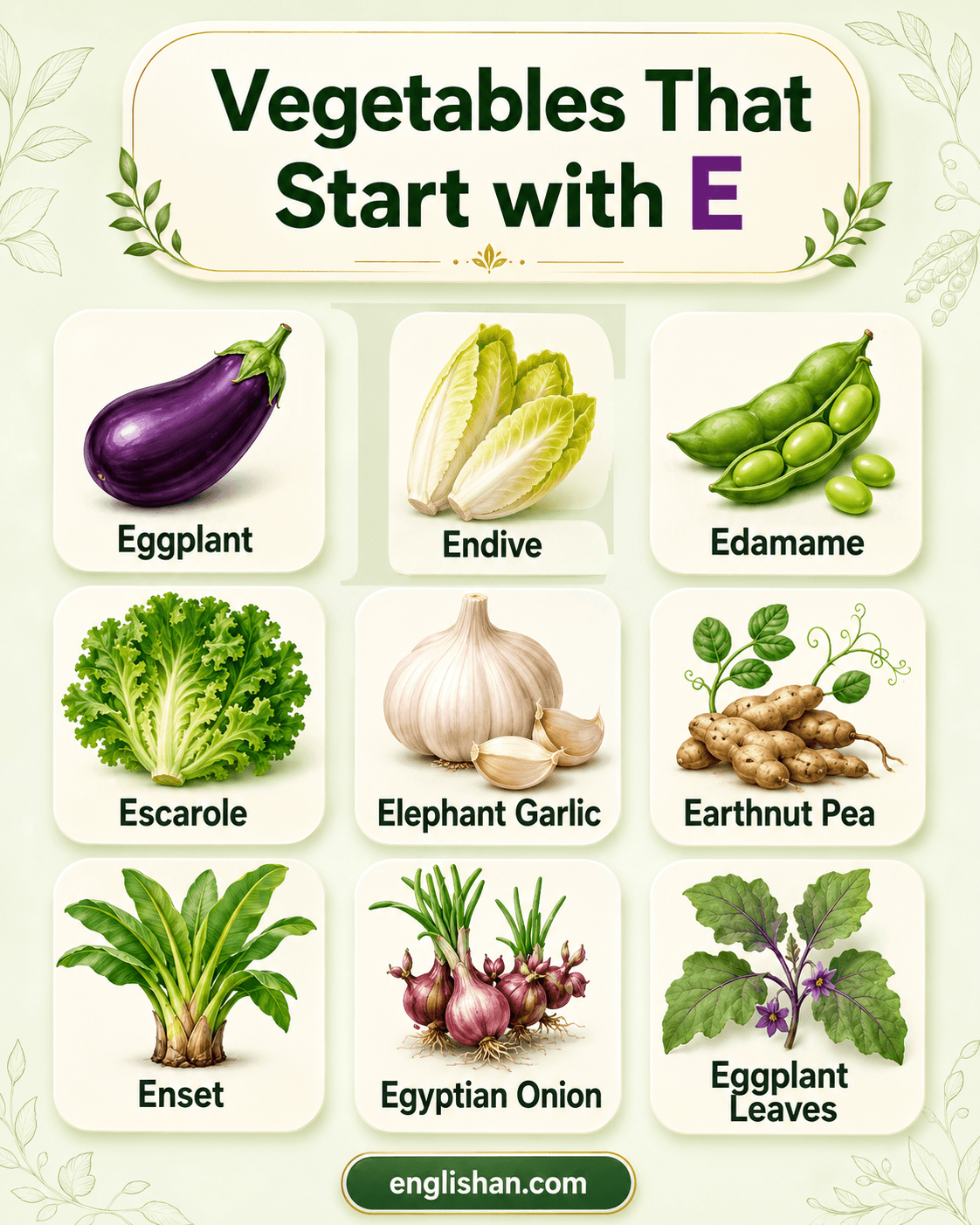
Here are 15 vegetables that start with E, ranging from familiar produce to rare regional ingredients.
- Earthnut pea
- Edamame
- Eddo
- Eggplant
- Egyptian onion
- Elephant foot yam
- Elephant garlic
- Endive
- English cucumber
- English peas
- Enoki mushrooms
- Enset
- Epazote
- Escarole
- Ethiopian kale
The most familiar E vegetables are eggplant, edamame, endive, escarole, English cucumber, English peas, and elephant garlic. The rarer names, such as earthnut pea, enset, eddo, and elephant foot yam, add depth without turning the article into a padded alphabet list.
Vegetables That Start With E With Pictures
The sections below give you more than a name. You’ll get a fast sense of how each vegetable looks, tastes, cooks, or shows up in real kitchens, without turning the list into a recipe book.
Earthnut Pea
Earthnut pea is one of the more unusual vegetables that start with E, and it will not be sitting beside carrots at most supermarkets. This old European legume produces attractive purple flowers above ground and small edible tubers below.
The tubers have a nutty, chestnut-like flavor once cooked. Think of earthnut pea as a specialty garden vegetable rather than an everyday pantry staple, interesting for readers who enjoy rare roots and heritage crops.
Edamame
Edamame is probably the easiest E vegetable to love on the first try. These young soybeans are harvested while still green, then usually steamed or boiled in their fuzzy pods and finished with salt.
Pop the beans from the pod and the flavor lands sweet, fresh, and lightly grassy. Edamame works as a snack, rice bowl topping, salad ingredient, stir-fry addition, or protein-rich side at Japanese-style meals.
Eddo
Eddo is a small taro-like corm with rough brown skin and firm white flesh. It looks humble, but once cooked it turns starchy, smooth, and filling, much like a denser potato.
This is not a raw salad vegetable. Eddo belongs in soups, curries, stews, and boiled vegetable plates, where its mild flavor absorbs spice, coconut, broth, and savory sauces.
Eggplant
Eggplant is the E vegetable most readers probably know first, though it still surprises people with how much flavor it can carry. The glossy skin hides soft flesh that soaks up oil, tomato, garlic, smoke, herbs, and spices with almost no resistance.
Also called aubergine in British English, eggplant anchors dishes such as baba ganoush, ratatouille, moussaka, caponata, baingan bharta, and eggplant parmesan. Roast it well and the flesh turns silky rather than spongy.
Egyptian Onion
Egyptian onion earns attention before it even reaches the pan. Also called walking onion or tree onion, it produces small bulbils at the top of tall green stems, which bend down and root nearby as the plant spreads.
The flavor sits in the onion family, sharp when raw and sweeter once cooked. Use the greens like scallions, and treat the bulbils like small onions in sautés, pickles, soups, and garden-to-table dishes.
Elephant Foot Yam
Elephant foot yam is a large tropical tuber with rough skin and dense starchy flesh. It is common in parts of South and Southeast Asia, especially in curries, fries, stews, and mashed vegetable dishes.
This vegetable demands proper preparation, because the raw flesh can irritate the skin and throat. Once cleaned, cooked, and seasoned well, elephant foot yam becomes hearty, earthy, and satisfying in spice-rich dishes.
Elephant Garlic
Elephant garlic looks like garlic that grew with extra confidence, but its flavor is far gentler. Botanically, it sits closer to leeks than true garlic, which explains the large cloves and milder bite.
Roast the cloves whole and they turn sweet, soft, and spreadable. Elephant garlic is perfect for readers who like allium flavor but find regular raw garlic too sharp or aggressive.
Endive
Endive is the crisp, slightly bitter leafy vegetable that makes salads feel sharper and more polished. Belgian endive has tight pale leaves shaped almost like small boats, while curly endive has frilly green leaves and a more tangled look.
The pale leaves hold dips, cheese, walnuts, citrus, and creamy fillings beautifully. Braising softens the bitterness and brings out a mellow, almost nutty flavor.
English Cucumber
English cucumber is the long, slender cucumber often wrapped in plastic at the grocery store. Its skin is thin, the seeds are small, and the flavor stays mild and refreshing.
Slice it into salads, sandwiches, yogurt bowls, pickles, and mezze plates. Because the skin is tender, peeling is rarely necessary, which gives English cucumber an easy advantage for everyday prep.
English Peas
English peas are the sweet green peas tucked inside pods, also called garden peas or shelling peas. Fresh ones taste brighter and more delicate than frozen peas, especially in spring.
Shell them for risotto, pasta, soups, salads, or simple buttered peas with mint. The pods are usually not eaten like snow peas or sugar snaps, so the small round peas inside are the prize.
Enoki Mushrooms
Enoki mushrooms are not vegetables in the botanical sense, but cooks treat them like vegetables in soups, hot pots, ramen, stir-fries, and rice bowls. Their long white stems and tiny caps make them easy to recognize.
The texture is delicate, slightly crisp, and almost noodle-like. Add enoki near the end of cooking, because they soften quickly and do not require long heat.
Enset
Enset, also called false banana, looks like a banana plant, but the fruit is not the main food. In Ethiopia, the starchy pseudostem and corm are processed into staple foods, most famously kocho.
This is one of the most important rare entries on the list because it is not merely a curiosity. Enset feeds communities and belongs to a deep agricultural tradition, especially in the Ethiopian highlands.
Epazote
Epazote is a pungent Mexican leafy herb that behaves more like a powerful cooking green than a delicate garnish. The aroma is resinous, citrusy, and a little wild, which makes sense once it hits a pot of beans.
A small sprig can season black beans, quesadillas, squash dishes, stews, and moles. Use it with restraint; epazote has character, and too much can dominate a dish.
Escarole
Escarole is a broad-leaved chicory with a pleasant bitterness that is softer than many sharper salad greens. The pale ribs stay sturdy, while the outer leaves bring more chew and flavor.
Italian kitchens love escarole with white beans, garlic, olive oil, sausage, soups, and braises. It is the kind of green that can move from salad bowl to soup pot without losing its identity.
Ethiopian Kale
Ethiopian kale is a leafy green related to brassicas, with tender leaves that cook well in stews, sautés, and spiced vegetable dishes. Depending on the variety, it can feel closer to kale, collards, or mustard greens.
Its strength is flexibility. Cook it with garlic, onions, chilies, lentils, or warm spices, and it gives the dish a sturdy green base without turning limp too quickly.
Common Types Of E-Named Vegetables
Vegetables that start with E come from several edible plant parts, which explains the wide range of textures in this list. The letter gives you crisp cucumbers, creamy eggplant, bitter chicories, starchy tubers, tender mushrooms, leafy herbs, and protein-rich green soybeans.
- Leafy vegetables: Endive, escarole, epazote, and Ethiopian kale bring bitterness, aroma, and green depth to salads, soups, beans, and sautés.
- Starchy roots and corms: Eddo, elephant foot yam, earthnut pea tubers, and enset’s edible starchy parts add body to curries, stews, and traditional staple foods.
- Legumes and peas: Edamame, English peas, and earthnut pea connect the letter E with sweet green seeds, savory beans, and rare edible tubers.
- Alliums: Egyptian onion and elephant garlic bring onion-garlic warmth in different forms, one with walking bulbils and the other with oversized mild cloves.
- Fruits cooked as vegetables: Eggplant and English cucumber belong here by kitchen habit, one soft and savory under heat, the other crisp and refreshing raw.
- Mushrooms cooked as vegetables: Enoki mushrooms add a delicate, noodle-like texture to broths, hot pots, and stir-fries.
Frequently Asked Questions About Vegetables That Start With E
Q1. What Are Common Vegetables That Start With E?
Common vegetables that start with E are eggplant, edamame, endive, escarole, English cucumber, English peas, and elephant garlic. These are the names most readers are likely to recognize from supermarkets, restaurants, or home cooking.
Q2. Is Eggplant A Vegetable That Starts With E?
Yes. Eggplant is botanically a fruit, but kitchens treat it as a vegetable because it is cooked in savory dishes. It is also called aubergine in British English and brinjal in many South Asian contexts.
Q3. What Green Vegetables Start With E?
Green vegetables that start with E are edamame, endive, escarole, English peas, English cucumber, epazote, and Ethiopian kale. Some are eaten raw, while others work better cooked in soups, beans, stews, and sautés.
Q4. What Root Vegetables Start With E?
Root and underground vegetables that start with E are eddo, elephant foot yam, earthnut pea tubers, and the edible starchy parts of enset. These vegetables are usually cooked before eating because their texture and flavor improve with heat.
Q5. What Leafy Vegetables Start With E?
Leafy vegetables that start with E are endive, escarole, epazote, and Ethiopian kale. Endive and escarole belong to the chicory family, epazote is a strong Mexican cooking herb, and Ethiopian kale works well as a sturdy cooked green.
Q6. What Is The Rarest Vegetable That Starts With E?
Enset is one of the rarest vegetables that start with E for many readers outside Ethiopia, though it is an important staple in its home region. Earthnut pea, elephant foot yam, and eddo may also be uncommon outside specialty markets.
Q7. Are Enoki Mushrooms Vegetables?
Enoki mushrooms are fungi, not plants, but they are commonly cooked and served with vegetables. In culinary lists, they belong beside vegetables because they fill the same role in soups, hot pots, stir-fries, and noodle dishes.
Q8. Are Endive And Escarole The Same?
No. Endive and escarole are related chicories, but they are not the same. Endive is usually crisper and more sharply bitter, while escarole has broader leaves, a softer bitterness, and a stronger role in soups and cooked dishes.
Q9. What Indian Vegetables Start With E?
Elephant foot yam is the strongest Indian vegetable that starts with E, especially in curries, fries, and regional vegetable dishes. Eggplant is also common in Indian cooking, although it is usually called brinjal or baingan rather than eggplant.
You May Also Like
Vegetables That Start With E Quiz
Vegetables That Start With E
Two of these vegetables begin with E. Which one does not?
Queensland blue pumpkin begins with Q, so it is the one that does not belong.
Check each first letter before reading further.
Queensland blue pumpkin is the odd one out.
Which of these vegetables begins with the letter E?
Crisp and bitter, and often confused with chicory because the names swap between countries.
Read the first letter before anything else.
Endive begins with E.
Name a vegetable beginning with this letter.
A vegetable whose name begins with E is ___.
Accepted here: Edamame, Endive.
More than one answer is right; any vegetable starting with the letter counts.
Edamame begins with E.
Which vegetable does this describe? Soybeans picked young and steamed in the pod.
Soybeans picked young and steamed in the pod.
Match the description to the fruit rather than to the letter.
Soybeans picked young and steamed in the pod.
Which of these is a leafy vegetable?
Endive is a leafy vegetable. Crisp and bitter, and often confused with chicory because the names swap between countries.
Group by what the thing actually is, not by where it turns up.
Endive is a leafy vegetable.
Turn on JavaScript for the interactive quiz. The full practice set is shown above.