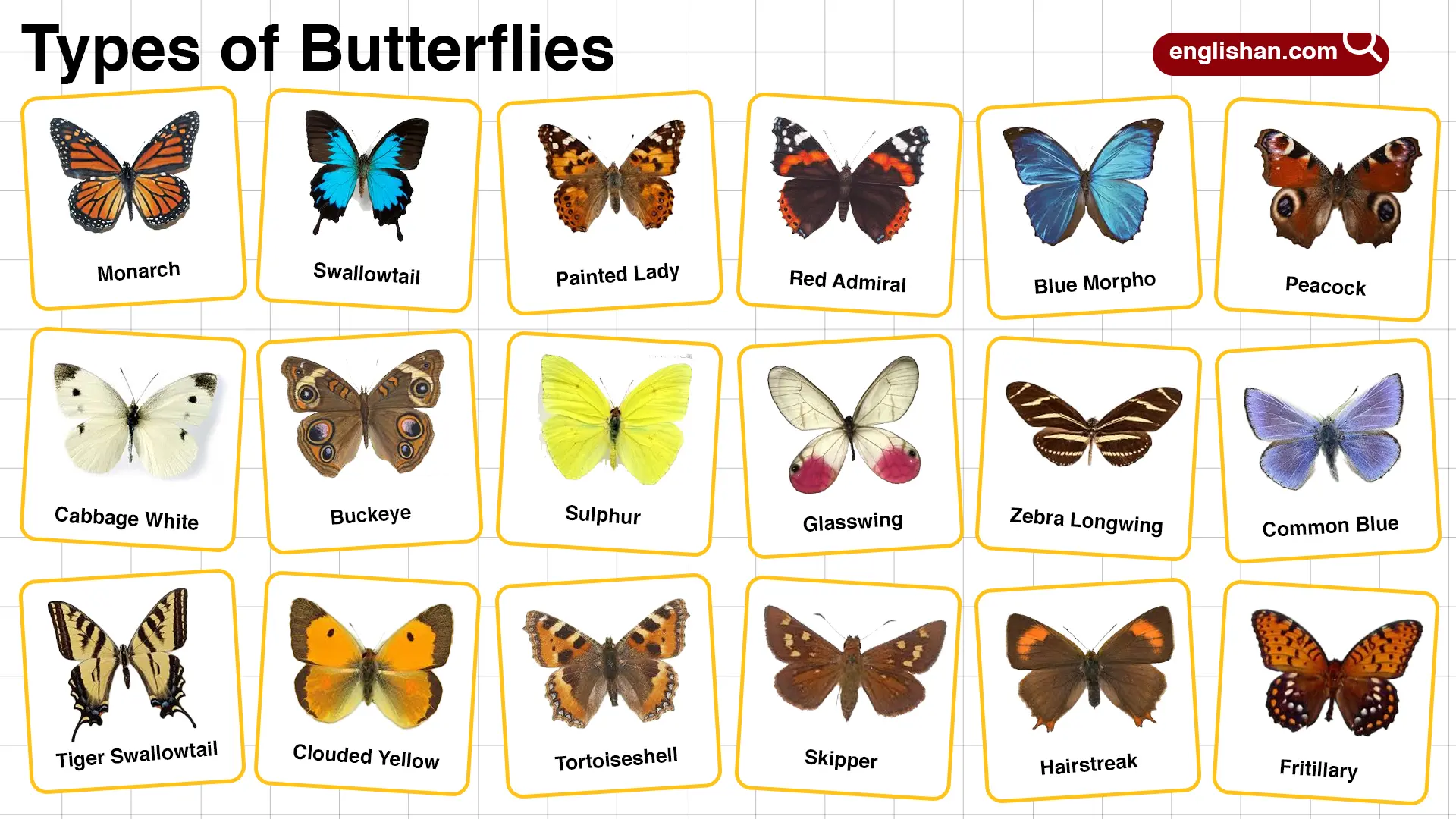
Scientists have named close to 20,000 butterfly species, and every one of them belongs to a handful of families that share a clear set of traits. A Monarch and a Tiger Swallowtail look nothing alike, yet learning the families behind them turns a confusing flutter of wings into something you can actually name. Once you know that swallowtails carry tails on their hindwings and that brush-footed butterflies stand on four legs instead of six, the types of butterflies in your garden start to sort themselves.
How Many Types of Butterflies Are There
There are roughly 17,500 to 20,000 butterfly species worldwide, grouped into seven families. Around 750 species live in the United States.
That number sounds enormous, and it is, but almost every butterfly you will ever see fits into one of seven families. Each family carries its own signature: a wing shape, a flight style, a favourite host plant, or a quirk of the caterpillar. The six families below cover nearly all the butterflies people recognise by sight, and the named species under each are the ones worth knowing first.
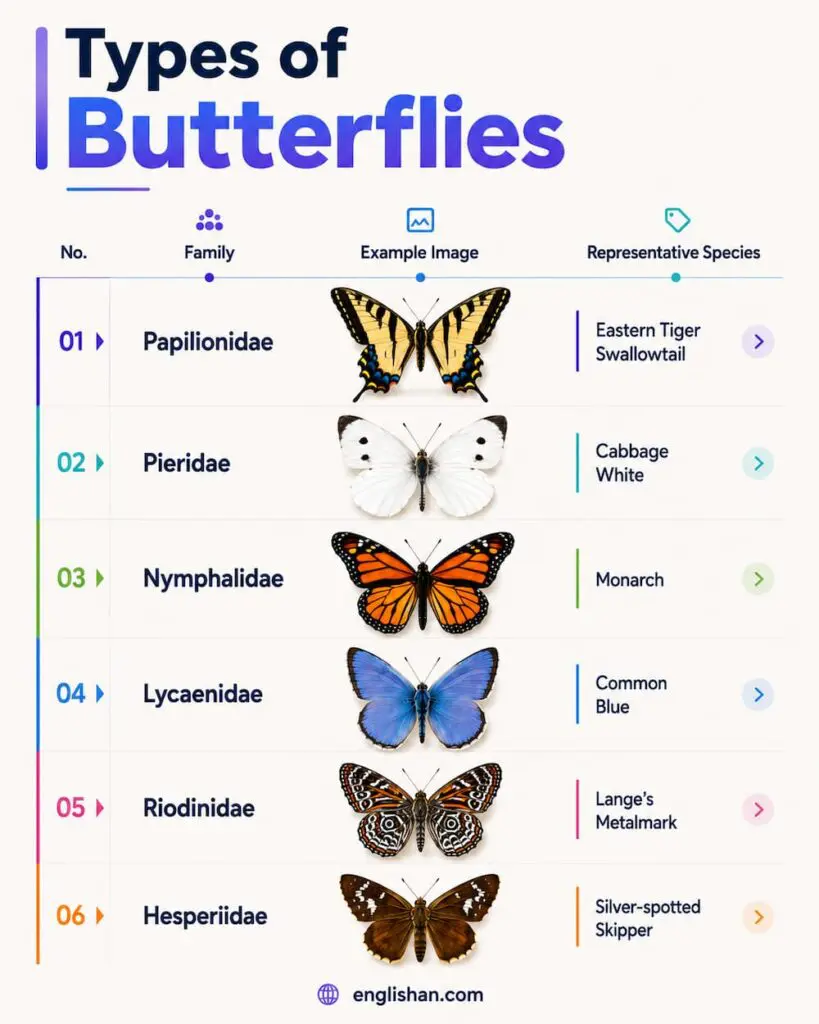
Butterfly Families and Their Types
Swallowtail Butterflies
Swallowtails (family Papilionidae) are large, bold, and named for the tail-like extensions trailing from their hindwings. Their caterpillars hide an odd defence: a forked, foul-smelling organ called an osmeterium that flips out behind the head when a bird leans in too close.
Tiger Swallowtail (Papilio glaucus)
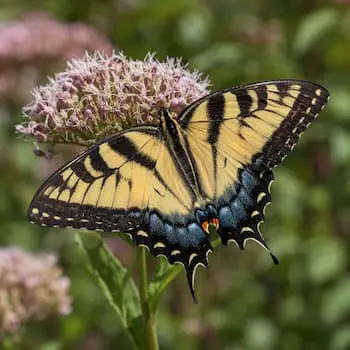
Yellow wings ruled with black tiger stripes, common in gardens and woodland edges across North America. One of the first big butterflies most people learn to name.
Black Swallowtail (Papilio polyxenes)
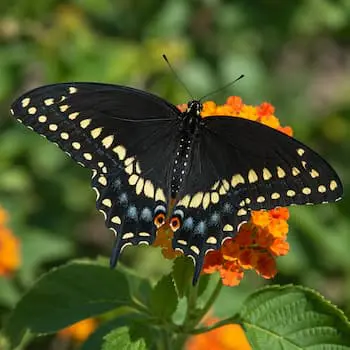
Dark wings dotted with rows of yellow and a blush of blue near the tail. You will often find its striped green caterpillar feeding on parsley, dill, and fennel.
Zebra Swallowtail (Eurytides marcellus)
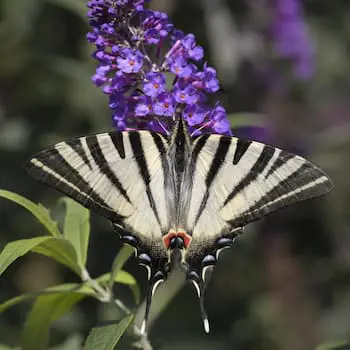
Black and white stripes and unusually long tails, drifting through eastern forests near its only host plant, the pawpaw tree. Summer broods grow even longer tails than spring ones.
Giant Swallowtail (Papilio cresphontes)
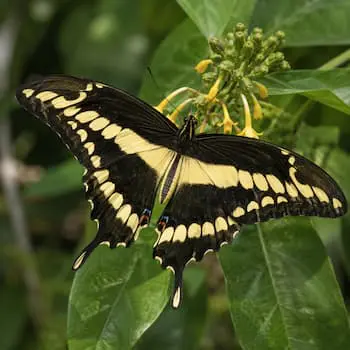
The largest butterfly in North America, with a wingspan reaching nearly six inches. Its dark wings carry a sweeping diagonal band of yellow.
Brush Footed Butterflies
Brush-footed butterflies (family Nymphalidae) are the largest family and the one most people picture when they think of a butterfly. Their front pair of legs is reduced and brush-like, so they appear to stand on four legs. This single family holds many of the most familiar names in the world.
Monarch (Danaus plexippus)
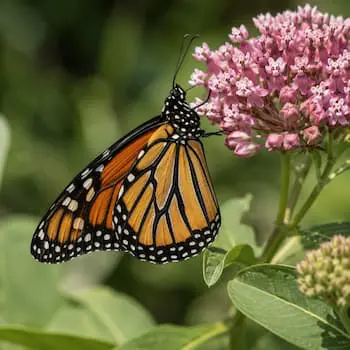
Orange wings veined in black, famous for the 3,000-mile migration that carries successive generations between Canada and central Mexico. Its caterpillars feed only on milkweed, which makes the adult mildly toxic to predators.
Painted Lady (Vanessa cardui)
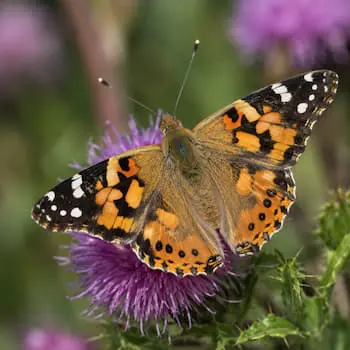
A salmon-orange and brown butterfly found on six continents, the most widespread species on Earth. In some years millions move north together in waves you can watch from a roadside.
Red Admiral (Vanessa atalanta)
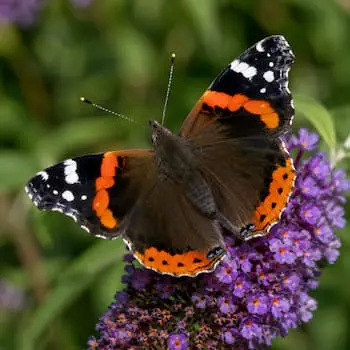
Black wings crossed by vivid red-orange bands, bold and territorial rather than shy. Males will patrol a sunny patch and chase off anything that enters.
Peacock (Aglais io)
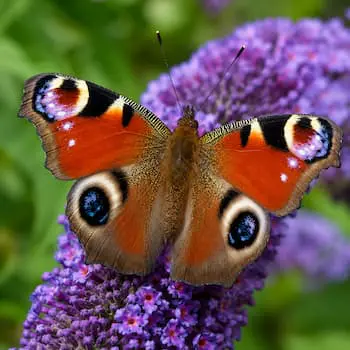
Deep red wings marked with four large eyespots that mimic the stare of a bigger animal. When a bird approaches, it snaps its wings open and the eyes appear at once.
Mourning Cloak (Nymphalis antiopa)
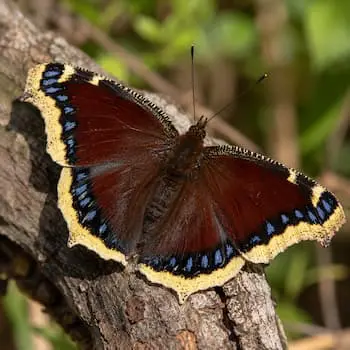
Dark maroon wings edged with a pale yellow border, one of the few butterflies that hibernates as an adult. It glides through bare winter woods on warm February days while everything else still sleeps.
Small Tortoiseshell (Aglais urticae)
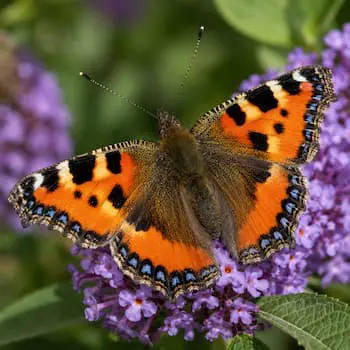
Patterned in orange, brown, and black like polished tortoiseshell, with a closed-wing underside that vanishes against bark and fallen leaves.
Comma (Polygonia c-album)
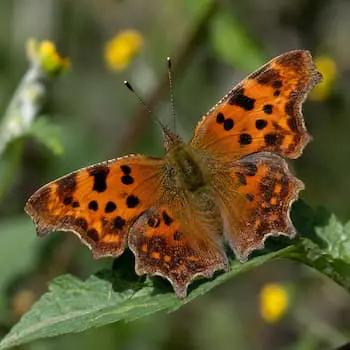
A ragged-edged orange butterfly named for the small white comma mark on its drab underside. With wings shut, it reads as a dead leaf.
Common Buckeye (Junonia coenia)
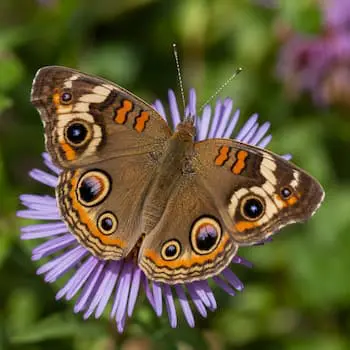
Tan-brown wings carrying large multicoloured eyespots, a desert-and-meadow butterfly that uses those false eyes to startle predators.
Gulf Fritillary (Agraulis vanillae)
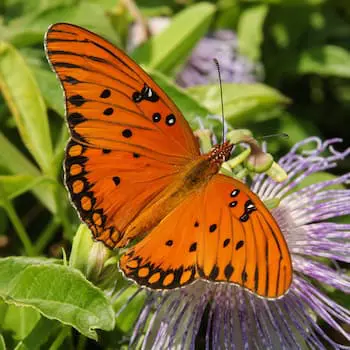
Long narrow orange wings with black lines above and big silver spots below, named for the Gulf of Mexico. Gardeners draw it in by planting passion vine, its host.
Blue Morpho (Morpho menelaus)
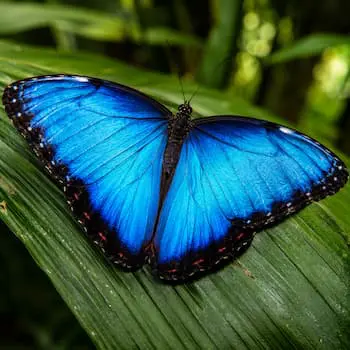
One of the most striking butterflies in the world, with iridescent blue upper wings spanning up to eight inches in the largest individuals. The brown, eyespotted underside hides it the moment it lands, so it seems to blink in and out of view as it flies through tropical forest.
Glasswing (Greta oto)
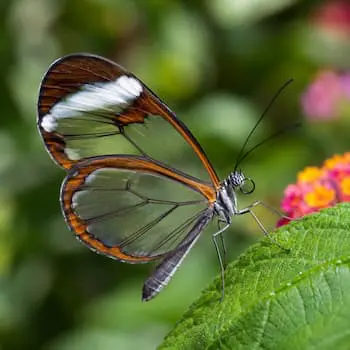
A small tropical butterfly with transparent wings that let the background show straight through, which makes it almost invisible against leaves. The clear panels lack the coloured scales that cover most butterfly wings.
Queen (Danaus gilippus)
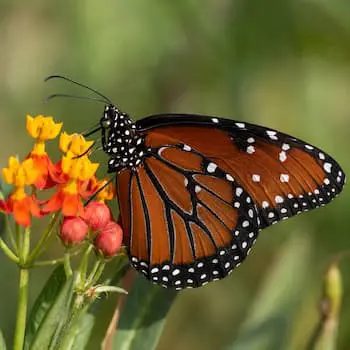
A close cousin of the Monarch in warm deep orange, with white-flecked black wingtips instead of heavy veining. Its caterpillars also feed on milkweed, so it carries the same protective toxins.
Zebra Longwing (Heliconius charithonia)
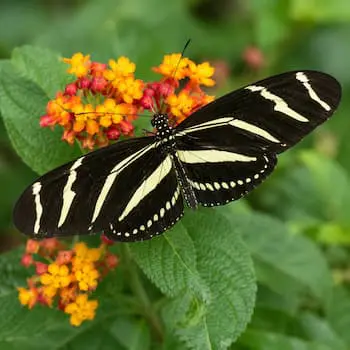
Long black wings striped in pale yellow, a slow, drifting flier of southern woodlands. It is one of the few butterflies that eats pollen as well as nectar, which lets it live for months rather than weeks.
Owl Butterfly (Caligo memnon)
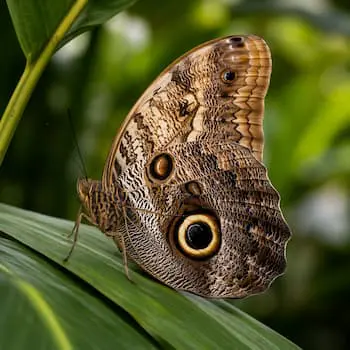
A large tropical butterfly with a single huge eyespot on each underwing that mimics an owl’s eye. It flies at dusk, when that giant false eye unsettles hungry birds.
Viceroy (Limenitis archippus)
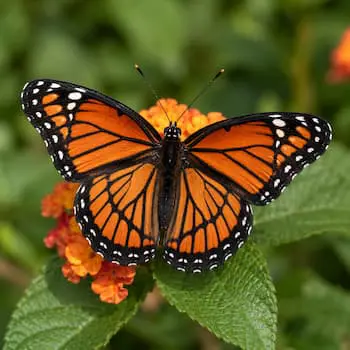
Orange and black like a smaller Monarch, set apart by a black line curving across the hindwing. It mimics the Monarch’s warning colours so predators leave it alone.
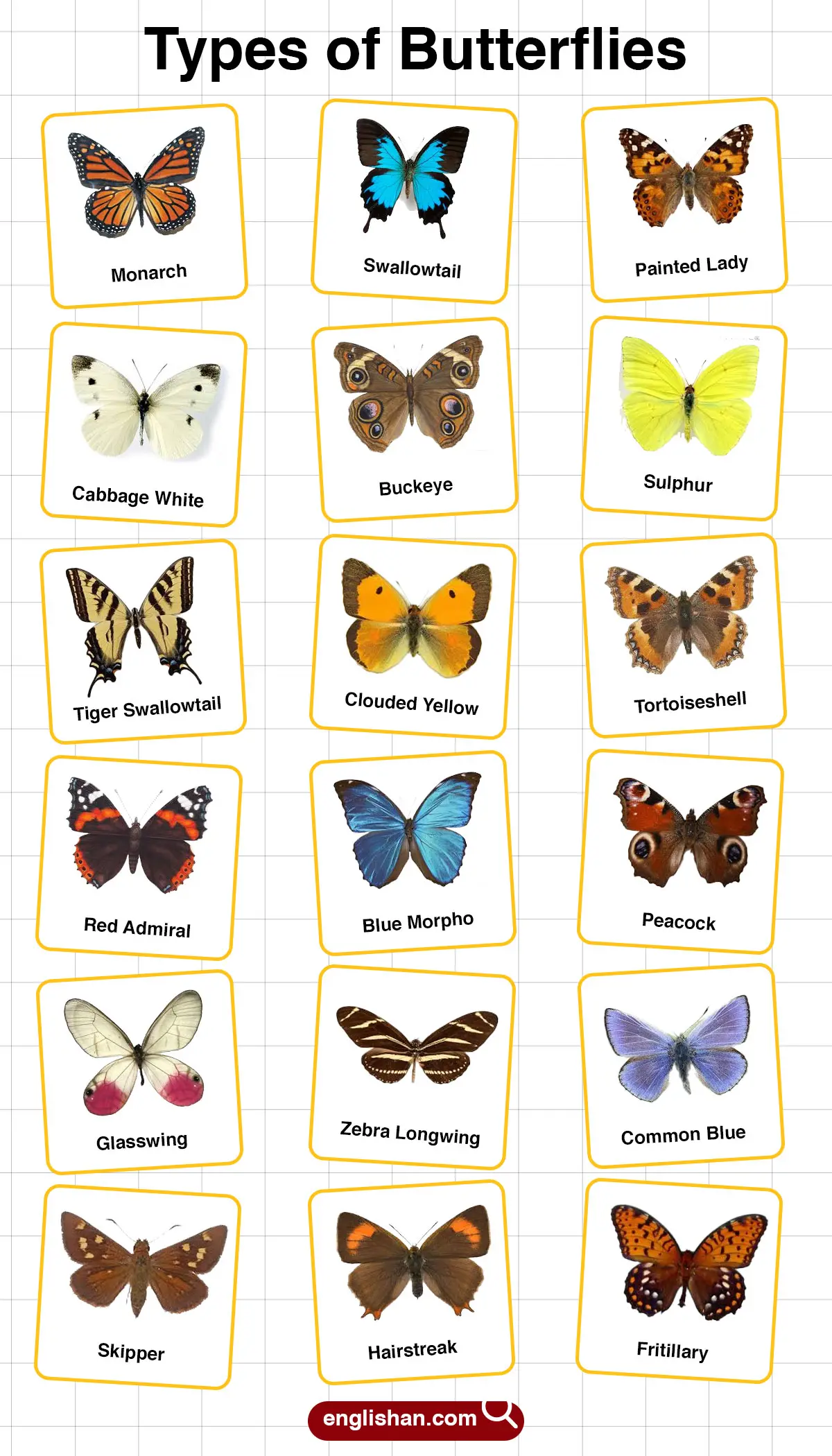
Whites and Sulphurs
Whites and sulphurs (family Pieridae) wear white, yellow, and orange, and their colours can shift between the sexes and the seasons. Their caterpillars favour two plant groups: the mustard family for whites, legumes for sulphurs.
Cabbage White (Pieris rapae)
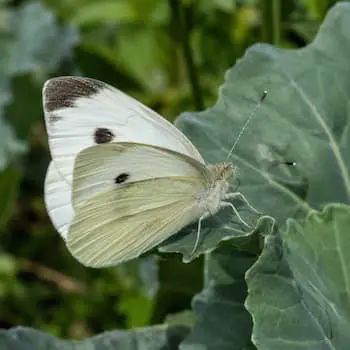
A plain white butterfly with one or two black wing spots, seen fluttering over gardens and crop fields worldwide. Its caterpillar is the small green pest gardeners find on broccoli and cabbage.
Brimstone (Gonepteryx rhamni)
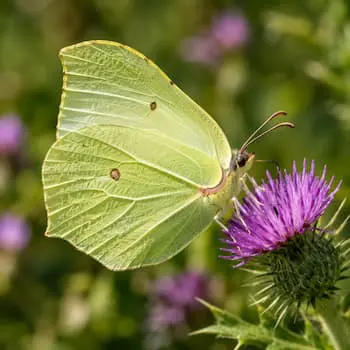
A soft buttery-yellow butterfly, among the first to appear in spring in Europe. Its old English name, the “butter-coloured fly,” may be where the word butterfly itself began.
Clouded Sulphur (Colias philodice)
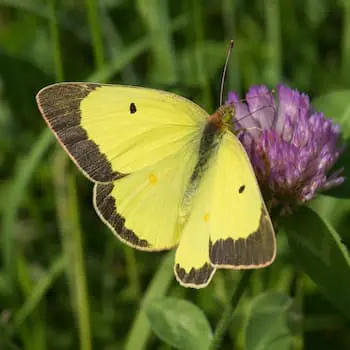
A bright lemon-yellow butterfly of open fields and roadsides, often gathering in small crowds at damp ground to drink minerals.
Blues Hairstreaks and Coppers
This family (Lycaenidae), also called the gossamer-winged butterflies, holds many of the smallest and most delicate species. Their caterpillars often share a strange partnership with ants, which guard them in exchange for a sugary secretion.
Common Blue (Polyommatus icarus)
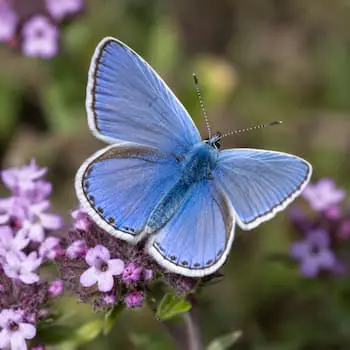
A small butterfly with shining blue upper wings in the male and a brown, spotted underside in both sexes. A familiar sight low over grassland.
Western Pygmy Blue (Brephidium exilis)
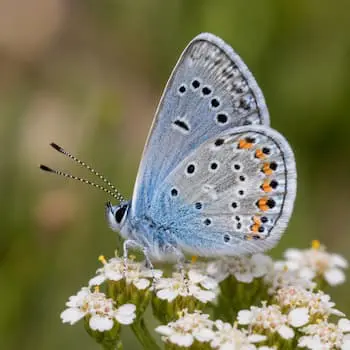
The smallest butterfly in North America, barely over half an inch across, fluttering close to the ground over salt flats and vacant lots. There is scarcely room on its wings for the touch of blue that shows in flight.
Green Hairstreak (Callophrys rubi)
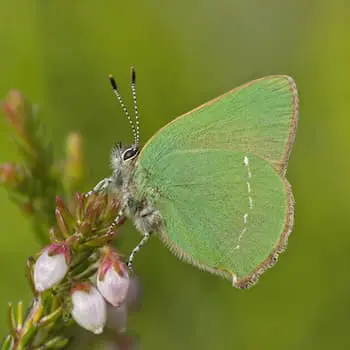
A tiny butterfly with metallic green undersides and fine tail-like points on the hindwings, perched on shrubs and hedgerows.
Small Copper (Lycaena phlaeas)
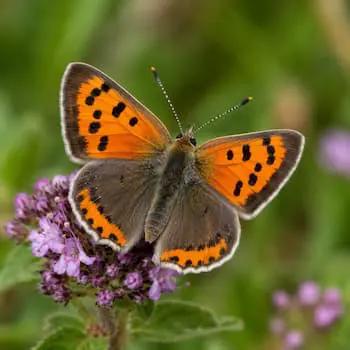
Bright coppery-orange forewings rimmed in dark brown, fast and feisty for its size, holding a sunlit perch against all comers.
Metalmark Butterflies
Metalmarks (family Riodinidae) are small butterflies named for the metallic, almost reflective flecks scattered across their wings. Most live in the tropics, where their patterns range from quiet shimmer to bold metallic colour.
Mormon Metalmark (Apodemia mormo)
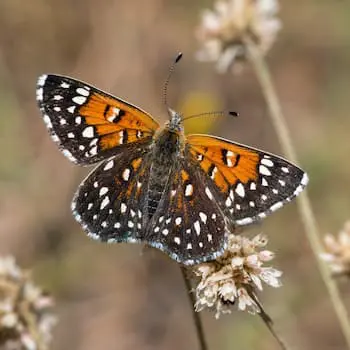
A checkered butterfly of orange, black, and white with bright silver spots, found on dry slopes in western North America. It often perches with wings half open, flashing those metallic marks.
Skipper Butterflies
Skippers (family Hesperiidae) are small, quick, and moth-like, with stout bodies and hooked tips on their antennae. They dart between flowers in short, fast hops that make them hard to follow, let alone catch.
Silver Spotted Skipper (Epargyreus clarus)
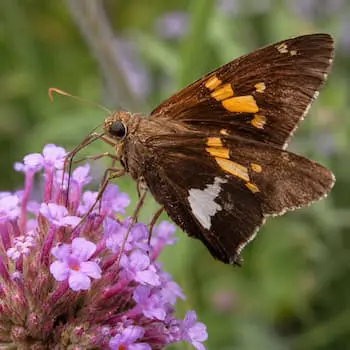
A brown skipper with a gold band above and a clear silver-white patch on the underwing. Strong and fast, it favours legumes as a caterpillar and visits a wide range of garden flowers as an adult.
Difference Between Butterflies and Moths
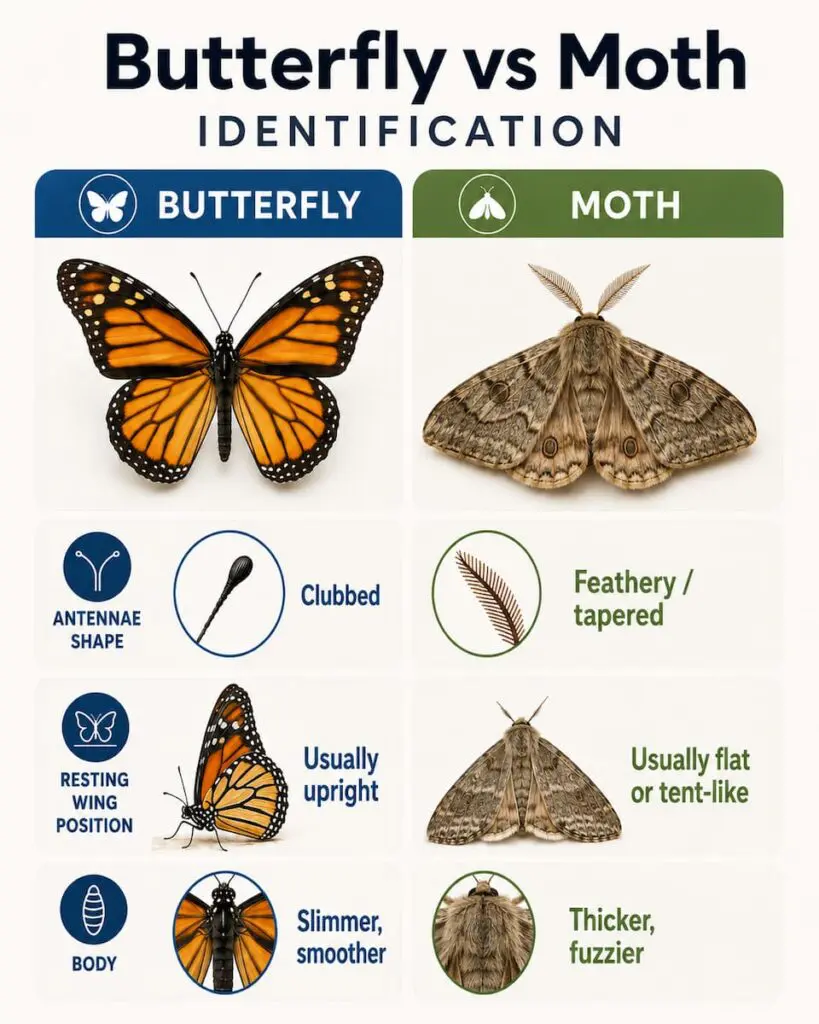
Butterflies and moths both belong to the order Lepidoptera and share scaled wings, yet three quick cues tell them apart in the field.
| Cue | Butterfly | Moth |
|---|---|---|
| Antennae | Thin with a club or knob at the tip | Feathery or thread-like, no club |
| Wings at rest | Folded upright over the back | Held flat or tented over the body |
| Activity | Mostly day-flying and bright | Mostly night-flying and dull |
A butterfly also coils its proboscis, the long tube it drinks nectar through, and uncoils it only to feed. Catch the antennae first: a clubbed tip is the fastest single giveaway.
Interesting Facts About Butterflies
They taste with their feet. Chemical sensors on a butterfly’s feet let it taste a leaf the moment it lands, so a female knows whether a plant will feed her caterpillars before she lays a single egg.
Their colours come from light, not just pigment. Microscopic scales cover the wings, and some of the most vivid blues and greens come from the way those scales bend light rather than from any pigment at all.
Some see colours we cannot. Many butterflies see into the ultraviolet range and carry UV patterns on their wings, hidden to us but bright to other butterflies looking for a mate.
Monarchs run one of the longest insect migrations on Earth. No single Monarch makes the full round trip; the journey north and south is shared across several generations.
Swallowtail caterpillars bluff with snake faces. Some rear up and show false eyespots that read as a small snake, enough to send a hungry bird the other way.
FAQs
There are roughly 17,500 to 20,000 butterfly species worldwide, with around 750 of them found in the United States. All of them fall into seven scientific families.
The seven families are the Swallowtails, the Brush-footed butterflies, the Whites and Sulphurs, the Blues, Hairstreaks and Coppers, the Metalmarks, the Skippers, and the small moth-like Hedylidae. The first six cover almost every butterfly people recognise by sight.
Butterflies have thin antennae tipped with a club, rest with their wings folded upright, and fly mostly by day. Moths have feathery or thread-like antennae, rest with wings flat or tented, and fly mostly at night.
Tiny scales cover the wings and reflect light to create the colours you see. Some shades come from pigment, while iridescent blues and greens come from the structure of the scales bending light, which is why those wings shimmer as they turn.
Lifespan varies by species. Many adults live only a few weeks, while a migrating Monarch can survive several months to complete its long journey south and into winter.
You May Also Like
Types of Butterflies Quiz
Types of Butterflies
Which butterfly does the picture show?
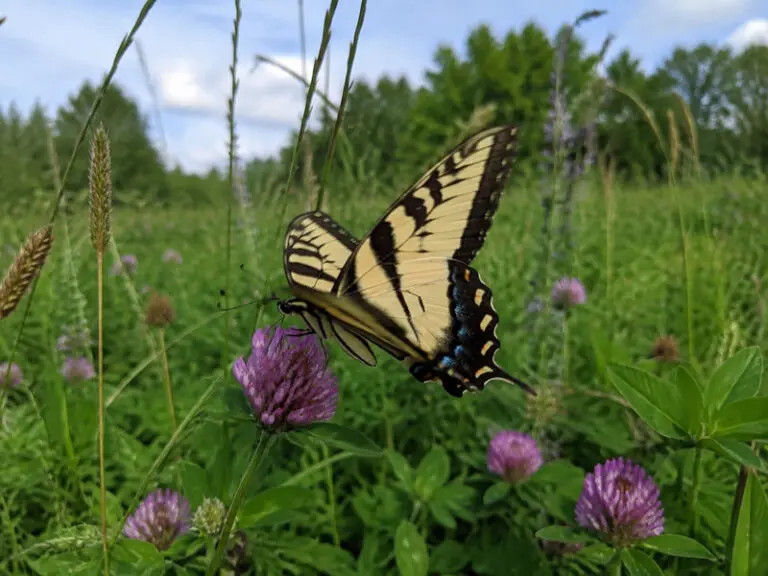
The picture shows a swallowtail.
Read the picture before reading the options.
The picture shows a swallowtail.
Which family is named for the tails on its hindwings?
The extensions may deflect attacks from the body.
Family names come from shape or colour.
The tails read as a false head to a predator.
Why is the blue morpho so vividly blue?
The underside is dull brown, and the flashing on and off in flight confuses pursuit.
Structural colour again, as in peacocks.
A morpho appears to blink as it flies.
Name the butterfly.
The orange and black butterfly that migrates to Mexico over several generations is the ___.
Its caterpillars feed on milkweed, which makes the adult toxic to birds.
The warning colour is backed by real toxicity.
The viceroy butterfly copies the monarch's pattern.
What is Batesian mimicry?
It borrows protection without paying the cost of being toxic.
Batesian is a bluff; Müllerian is a shared honest signal.
The bluff only works while the model stays common.
What are butterfly wings actually covered in?
The order name Lepidoptera means scale-winged, and the dust on your fingers is those scales.
Every colour on the wing sits on a scale.
A worn butterfly loses colour as scales rub off.
Turn on JavaScript for the interactive quiz. The full practice set is shown above.