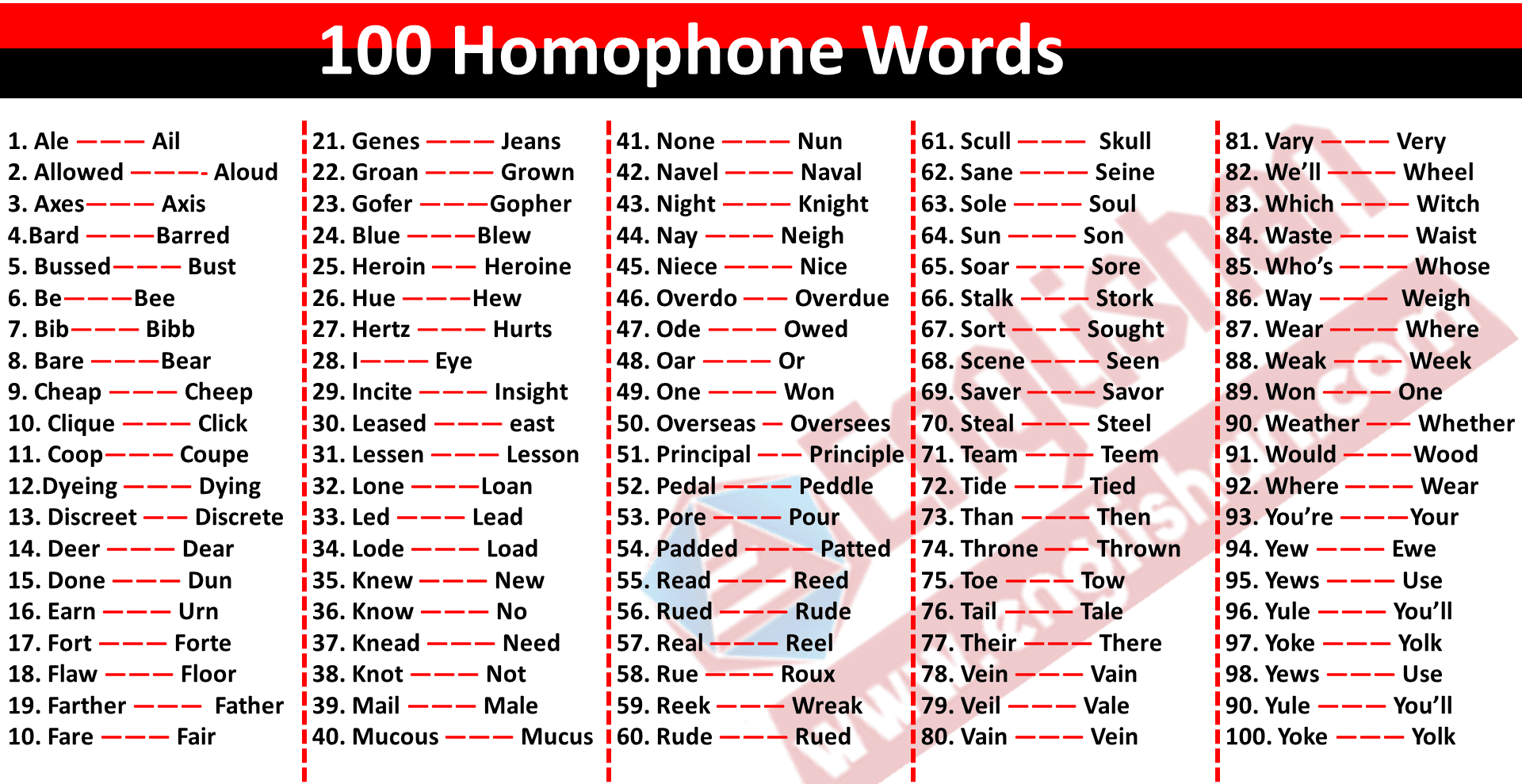
Learning homophones examples helps learners choose the correct word when writing or reading similar-sounding words. These words sound the same but have different spellings and meanings, like sea and see. Understanding homophones builds spelling accuracy and prevents mix-ups in daily English use. In this post, you will learn a list of homophones examples with meanings to remember them easily and use the right word in the right place.
What Are Homophones in English?
Homophones are words that sound the same but have different spellings and meanings. These can confuse learners because they are heard the same in speech but must be written differently depending on context.
Difference Between Homophones, Homonyms, and Homographs
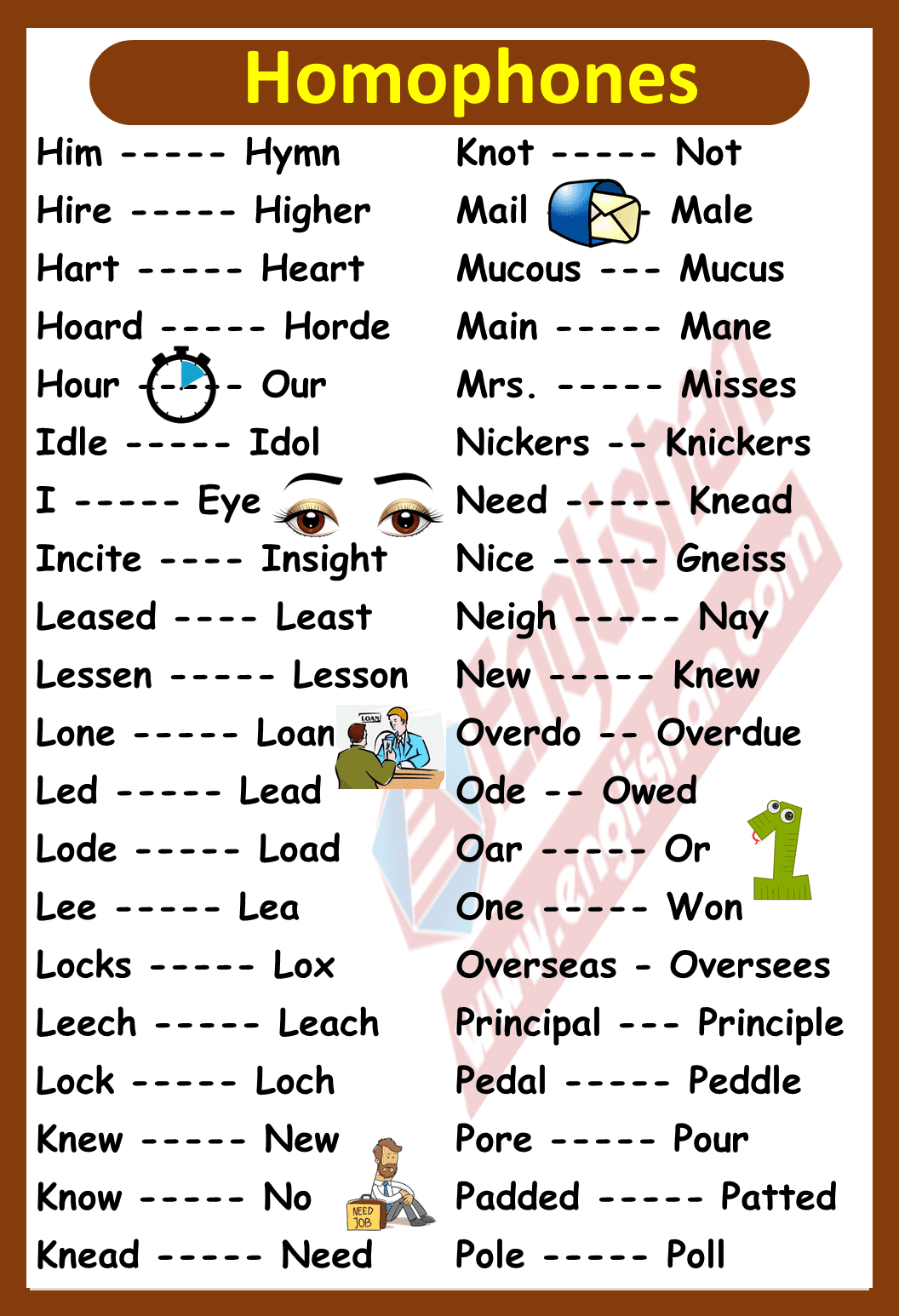
- Homophones: Sound same, different meaning and spelling (e.g. pair / pear)
- Homonyms: Sound and spell same, different meaning (e.g. bat for animal and bat in cricket)
- Homographs: Spell same, may sound different, different meaning (e.g. lead (to guide) / lead (metal))
Complete List of 100 Homophones Examples A to Z
Below is a complete homophones examples list grouped by alphabet. Each pair sounds the same but has a unique meaning and usage in English.
Homophones A–D with Meanings
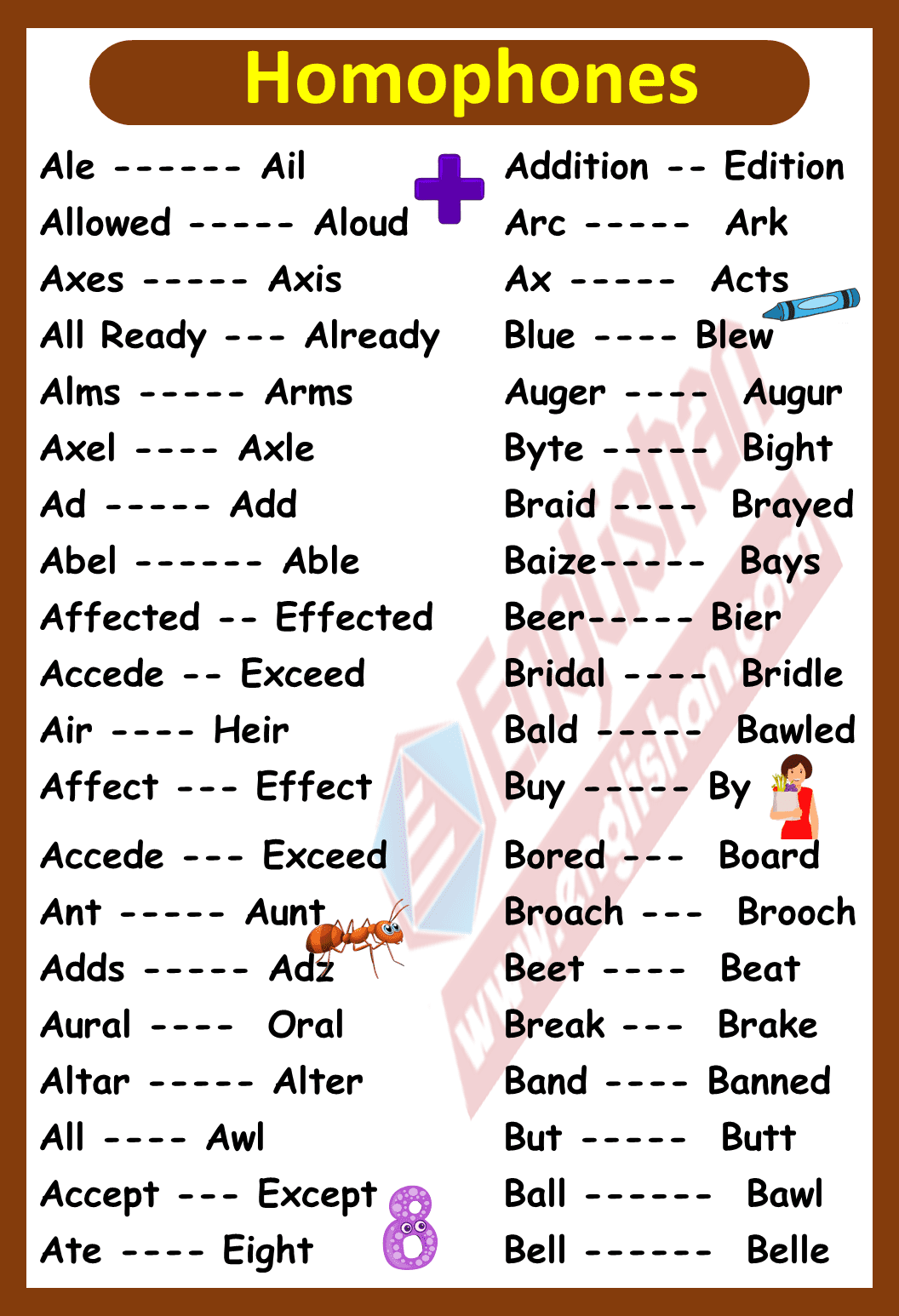
Learn homophones examples from A to D, including common sound-alike pairs like “ate” and “eight”.
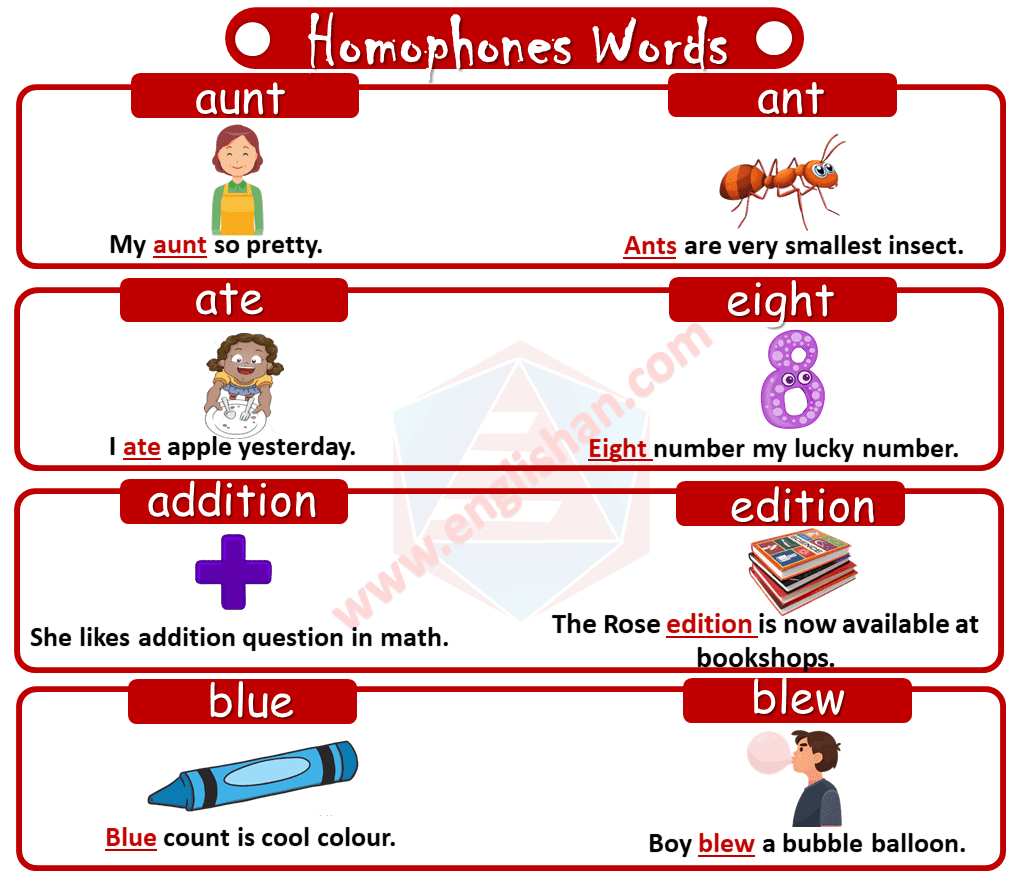
- Ate / Eight: Ate means consumed food, eight is the number after seven
- Bare / Bear: Bare means without covering, bear is an animal
- Be / Bee: Be means to exist, bee is an insect
- Blew / Blue: Blew is the past of blow, blue is a color
- Board / Bored: Board is a flat surface, bored means not interested
- Brake / Break: Brake is used to stop a vehicle, break means to shatter
- Buy / By: Buy means to purchase, by means next to
- Cell / Sell: Cell is a small unit, sell means to exchange for money
- Cent / Scent: Cent is a unit of currency, scent is a smell
- Cite / Site: Cite means to reference, site is a location
- Coarse / Course: Coarse means rough, course means path or class
- Deer / Dear: Deer is an animal, dear means loved one
- Die / Dye: Die means to stop living, dye means to color something
- Dual / Duel: Dual means having two parts, duel means a fight between two
- Doe / Dough: Doe is a female deer, dough is used in baking
- Days / Daze: Days means calendar days, daze means a confused state
- Dawn / Don: Dawn is the beginning of day, don means to put on clothing
Homophones E–H with Meanings
Below is a list of homophones examples from E to H that often confuse ESL learners in writing and listening.
- Eye / I: Eye is an organ to see, I is a pronoun
- Flew / Flu: Flew is the past of fly, flu is an illness
- For / Four: For means intended to, four is a number
- Foul / Fowl: Foul means unpleasant, fowl is a bird
- Flour / Flower: Flour is used in baking, flower is a plant bloom
- Hair / Hare: Hair is on the head, hare is a rabbit-like animal
- Heal / Heel: Heal means to recover, heel is the back of the foot
- Him / Hymn: Him is a male pronoun, hymn is a religious song
- Hole / Whole: Hole is an empty space, whole means entire
- Hour / Our: Hour is a time unit, our means belonging to us
- Hoarse / Horse: Hoarse means rough voice, horse is an animal
- Hail / Hale: Hail is frozen rain, hale means healthy
- Hanger / Hangar: Hanger holds clothes, hangar stores aircraft
Homophones I–L with Meanings
Below is a list of I to L homophone examples. These word pairs sound the same but mean very different things.
- Idle / Idol: Idle means inactive, idol means object of worship
- In / Inn: In means inside, inn is a lodging place
- Knight / Night: Knight is a warrior, night is the dark time
- Leak / Leek: Leak means escape of liquid, leek is a vegetable
- Lead / Led: Lead is a heavy metal, led is past of lead
- Loan / Lone: Loan is borrowed money, lone means single
- Liar / Lyre: Liar means one who lies, lyre is a musical instrument
- Limb / Limn: Limb is a body part, limn means to draw or describe
- Lesson / Lessen: Lesson is a teaching unit, lessen means to reduce
- Loot / Lute: Loot is stolen goods, lute is a musical instrument
Homophones M–P with Examples
- Mail / Male: Mail means postal item, male means man or boy
- Meat / Meet: Meat is edible flesh, meet means to come together
- Morning / Mourning: Morning is time of day, mourning is grief
- Pair / Pear: Pair means set of two, pear is a fruit
- Peace / Piece: Peace means calmness, piece means a portion
- Plain / Plane: Plain means simple, plane is an aircraft
- Principal / Principle: Principal is head of school, principle is a moral rule
- Passed / Past: Passed means went by, past is a previous time
- Praised / Prays: Praised means gave praise, prays means speaks to God
- Pause / Paws: Pause means stop briefly, paws are animal feet
- Peak / Peek: Peak is the top, peek means to look quickly
List of Q–T Homophones
Below is a helpful list of Q to T homophones examples. Learning these will prevent common writing mix-ups.
- Queue / Cue: Queue is a line, cue is a signal
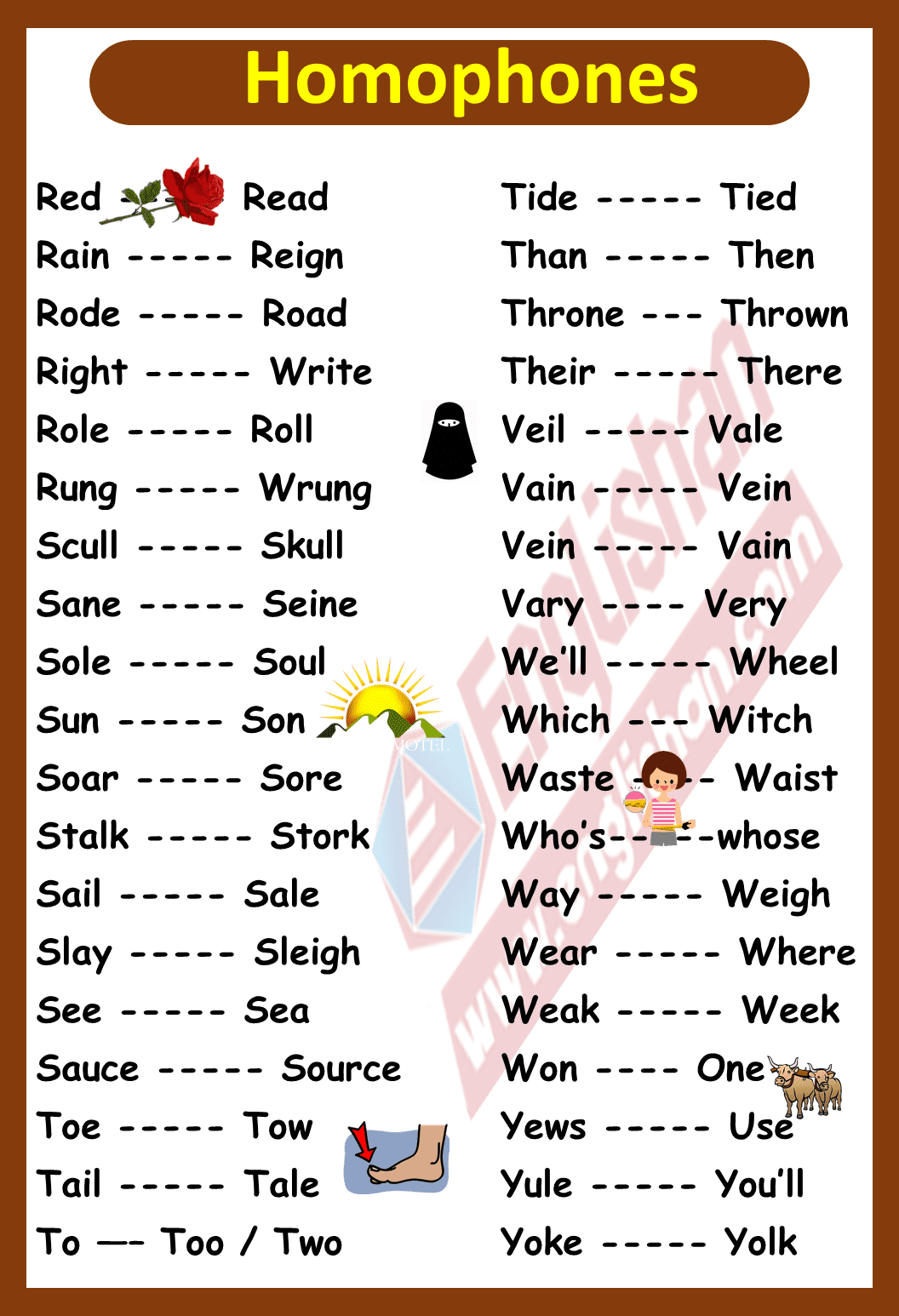
- Rain / Reign: Rain is water from sky, reign is to rule
- Read / Red: Read is past of read, red is a color
- Right / Write: Right means correct, write means to form letters
- Road / Rode: Road is a path for travel, rode is past of ride
- Rough / Ruff: Rough means uneven, ruff is a frill on clothing
- Scene / Seen: Scene is part of a play, seen is past of see
- Sole / Soul: Sole means only one, soul is a spirit
- Son / Sun: Son is a male child, sun is a star
- Steal / Steel: Steal means to take unlawfully, steel is a strong metal
- Tail / Tale: Tail is a part of an animal, tale means story
- Their / There / They’re: Their means belonging to them, there means in that place, they’re means they are
- To / Too / Two: To is a preposition, too means also, two is a number
- Team / Teem: Team is a group, teem means overflow
- Toe / Tow: Toe is a part of foot, tow means to pull
- Tacks / Tax: Tacks are small nails, tax is money paid to government
U–Z Homophones List
- Vain / Vein: Vain means proud, vein is a blood vessel
- Vary / Very: Vary means to change, very means extremely
- Wait / Weight: Wait means to stay, weight means heaviness
- Ware / Wear: Ware means goods, wear means to have on
- Way / Weigh: Way is a path, weigh means to measure weight
- Weak / Week: Weak means not strong, week means 7 days
- Weather / Whether: Weather means climate, whether means if
- Which / Witch: Which is a question word, witch is a magic user
- Yolk / Yoke: Yolk is part of an egg, yoke is a harness
- Your / You’re: Your means belonging to you, you’re means you are
- Yews / Use: Yews are trees, use means to employ
- Zinc / Sink: Zinc is a metal, sink is to go lower
- Zig / Zag: Zig means sharp turn one way, zag means turn opposite
Most Confusing Homophones Examples in English
Some homophones confuse even advanced learners. Below are groups often mixed up in exams and daily usage.
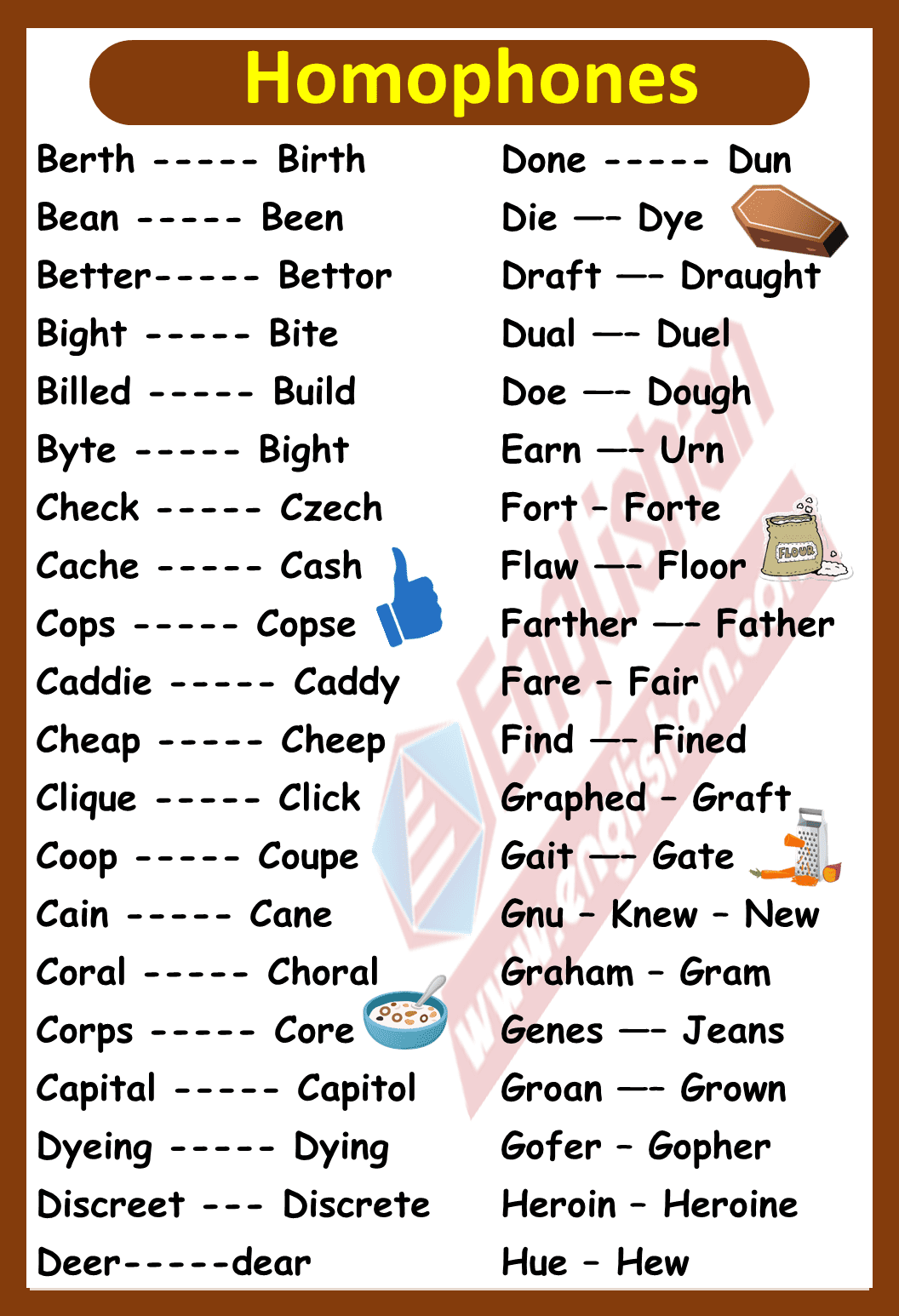
Commonly Mixed-Up Homophones
- Accept / Except
- Effect / Affect
- Complement / Compliment
- Principal / Principle
- Brake / Break
Homophones Examples with Close Spellings
- Bare / Bear
- Weather / Whether
- Buy / By / Bye
- Sight / Site / Cite
- Hole / Whole
Easy Homophones Examples for Beginners
These beginner-level homophones are often used in basic English lessons, making them perfect for children and ESL students.
Basic Homophones Examples for Kids
- Sun / Son
- Toe / Tow
- One / Won
- Sea / See
- No / Know
One-Syllable Homophone Pairs
- Be / Bee
- Hear / Here
- Blue / Blew
- Red / Read
- New / Knew
FAQs
Here are 10 examples of homophones:
1. Ace / Aces
2. Add / Ad
3. Ail / Ale
4. Air / Heir
5. Aloud / Allowed
6. Aunt / Ant
7. Bare / Bear
8. Bark / Bark
9. Be / Bee
10. Beau / Bow
Here are 12 easy sentences using homophones:
1. I can hear the music from here.
2. She wants to buy a dress by the shop.
3. The sun is shining, and my son is outside.
4. I saw a bear in the woods, but my feet were bare.
5. The cake needs flour, not a flower!
6. We need peace, not more pieces of the puzzle.
7. The sea is big, and I love to see it.
8. The sky is plain, like a flying plane.
9. The team was weak after a long week.
10. I’m not sure if I’m right or what to write.
11. Look there to see if it’s their car.
12. We have two tickets, and you can come too!
These sentences are simple and show how homophones work!
You May Also Like