Pulses are a part of daily meals in many parts of the world. Learning the pulses name in English helps you talk about food, nutrition, and agriculture more confidently. Whether you are reading recipes, discussing farming, or just improving your English vocabulary, knowing these names is a must. You’ll explore their types, plant sources, and scientific names in one place. Let’s begin with what pulses really are.
What Are Pulses? (Definition with Examples)
Pulses are edible seeds of certain legume plants. They grow in pods and are harvested dry. They include beans, peas, and lentils but don’t include crops like soybeans or peanuts.
Below is a short list of well-known pulses you may already eat:
- Chickpea
- Red lentil
- Green gram (Mung bean)
- Black gram
- Pigeon pea (Toor dal)
- Kidney bean
- Navy bean
- Split pea
- Adzuki bean
- Horse gram
- Lima bean
- Broad bean (Fava bean)
- Black-eyed pea
- Bambara bean
- Moth bean
- Lablab bean
- Cowpea
- Marrowfat pea
- French green lentil
- Brown lentil
- Yellow split pea
- White pea
- Field pea
- Cranberry bean
- Great Northern bean
- Pinto bean
- Tepary bean
- Scarlet runner bean
- Mung bean
- Lupin bean
- Rice bean
- Winged bean
- Hyacinth bean
These seeds are rich in protein and fiber. They are important for vegetarians, athletes, and anyone who wants to eat healthy.
Types of Pulses with Common Names and Uses
Pulses come in many shapes, sizes, and colors. Each type is used for different recipes and meals around the world.
Below is a list of the most common pulses and how they are used:
Chickpea: Used in hummus, curries, and salads. It has a nutty flavor and firm texture.
Red lentil: Quick to cook and turns soft. Used in soups and Indian dals.
Green gram (mung bean): Used in both sweet and savory dishes. Rich in nutrients.
Black gram: Creamy when cooked. Common in South Indian meals like dosa and idli.
Pigeon pea (toor dal): Has a mild, earthy taste. A main ingredient in many Indian dals.
Kidney bean: Large and red. Used in chili, stews, and Caribbean rice dishes.
Navy bean: Small white beans used in baked beans. Mild and creamy.
Split pea: Yellow or green. Used in thick soups.
Adzuki bean: Sweet red bean used in Japanese desserts.
Horse gram: High in iron. Often used in South Indian food.
Lima bean: Flat green or white beans with a buttery texture.
Broad bean (fava bean): Has a slightly bitter taste. Often eaten fresh or in stews.
Black-eyed pea: Creamy with a black dot. Popular in Southern U.S. dishes.
Bambara bean: Groundnut-like pulse popular in African cooking.
Moth bean: Drought-resistant pulse used in dry Indian recipes.
Lablab bean: Grown mainly in tropical areas. Needs long cooking.
Cowpea: Drought-tolerant, used in many African and Asian cuisines.
Marrowfat pea: Mature green pea used in snacks and mushy peas.
French green lentil: Holds shape when cooked. Used in salads.
Brown lentil: Most common lentil for soups and dals.
Pulses Chart with Names and Nutritional Benefits
This chart shows popular pulses with their key nutrients. These help in protein intake, iron, and energy.
| Common Name | Protein (per 100g) | Rich In | Color/Type |
|---|---|---|---|
| Chickpea | 19g | Iron, fiber | Beige, round |
| Red Lentil | 9g | Folate, protein | Red, split |
| Kidney Bean | 24g | Magnesium, iron | Red, curved |
| Mung Bean | 24g | B vitamins | Green, oval |
| Black Gram | 25g | Calcium, potassium | Black, small |
| Pigeon Pea | 22g | Phosphorus, fiber | Yellow, split |
| Navy Bean | 22g | Fiber, protein | White, oval |
| Split Pea | 25g | Manganese, protein | Green/yellow, flat |
| Adzuki Bean | 20g | Zinc, iron | Red, small |
| Lima Bean | 21g | Folate, copper | Green/white, large |
These values are average estimates and help you choose pulses for energy, strength, and growth.
Pulses Plant Names and Their Botanical Origins
Each pulse comes from a specific plant species. These plants belong to the legume family and are known for enriching soil and being drought-resistant.
Below is a list of common pulses and the plants they come from:
Chickpea plant (Cicer arietinum): Grows in dry areas. Short plant with pods.
Pigeon pea plant (Cajanus cajan): A bushy plant with woody stems.
Green gram plant (Vigna radiata): A fast-growing annual vine.
Black gram plant (Vigna mungo): Short plant, grown mostly in South Asia.
Kidney bean plant (Phaseolus vulgaris): Climber with long vines.
Lentil plant (Lens culinaris): Low-growing, bushy plant with small pods.
Broad bean plant (Vicia faba): Strong plant, tall with white flowers.
Cowpea plant (Vigna unguiculata): Heat-tolerant with long pods.
Adzuki bean plant (Vigna angularis): Small plant, grows in cooler climates.
Lablab plant (Lablab purpureus): Decorative climbing plant with purple pods.
Horse gram plant (Macrotyloma uniflorum): Hardy, used in drylands of India.
Navy bean plant (Phaseolus vulgaris): Same species as kidney bean, different variety.
Split pea plant (Pisum sativum): Pea family plant with climbing habit.
Understanding these plant sources is useful for gardening, farming, or cooking from scratch.
Scientific Name of Pulses with English Equivalents
Here’s a table matching common names with their scientific (botanical) names to help you connect what you see on labels and in science books.
| Common Name | Scientific Name |
|---|---|
| Chickpea | Cicer arietinum |
| Red Lentil | Lens culinaris |
| Green Gram | Vigna radiata |
| Black Gram | Vigna mungo |
| Kidney Bean | Phaseolus vulgaris |
| Pigeon Pea | Cajanus cajan |
| Broad Bean | Vicia faba |
| Cowpea | Vigna unguiculata |
| Horse Gram | Macrotyloma uniflorum |
| Lima Bean | Phaseolus lunatus |
| Adzuki Bean | Vigna angularis |
| Navy Bean | Phaseolus vulgaris |
| Lablab Bean | Lablab purpureus |
| Moth Bean | Vigna aconitifolia |
| Bambara Bean | Vigna subterranea |
| Split Pea | Pisum sativum |
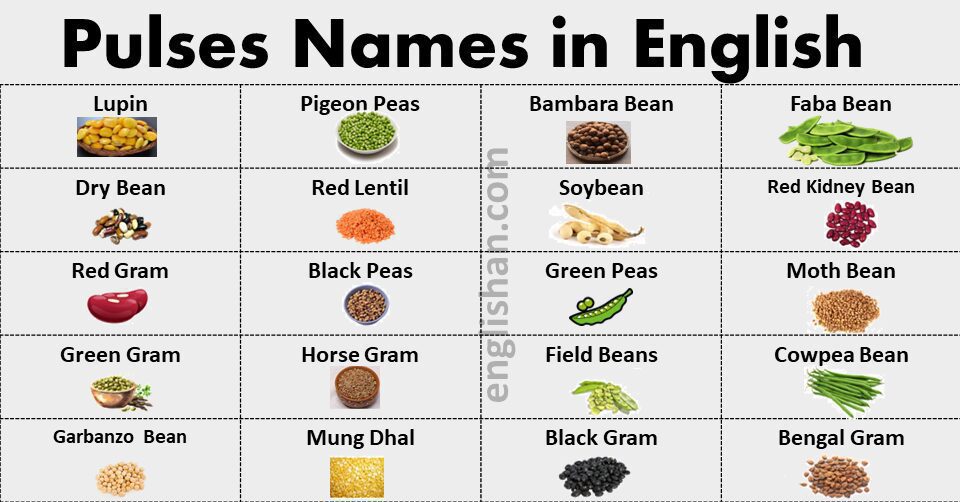
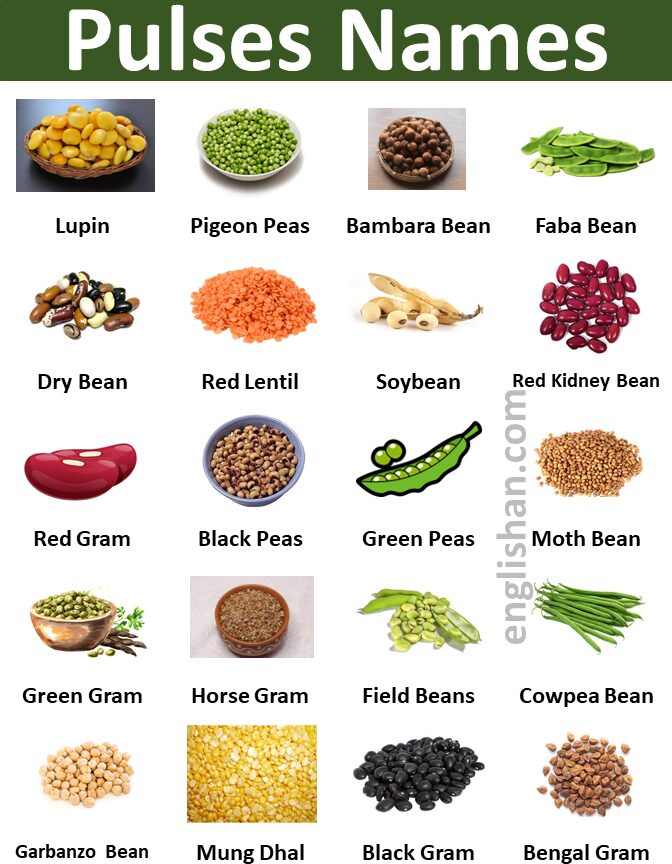
List of Common Pulses Name in English with Picture
Lupin
Pulse lupin, or narrow-leafed lupin, is a legume crop rich in plant-based protein (35–40%). It’s suitable for both human consumption and animal feed.

Dry Bean
Pulse dry beans include kidney beans, pinto beans, black beans, and navy beans. They’re highly nutritious and used in soups, salads, and dips.

Red Gram
Pulse Red Gram, also called Pigeon Pea or Arhar Dal, contains around 22g of protein per 100g. It’s widely used in Indian cuisine.

Green Gram
Pulse Green Gram (Mung Bean) provides about 24g of protein per 100g. It’s small, green, and widely cultivated in Asia.

Garbanzo Bean
Garbanzo beans are rich in fiber, protein, iron, and folate. They’re often processed to a grainy texture for spreads and dips.

Pigeon Peas
Pulsed pigeon peas are used in soups, stews, curries, and salads. They are high in protein, potassium, magnesium, and fiber.

Red Lentil
Pulsed red lentils are great in stews and dips. They’re gluten-free and rich in iron, fiber, and folate.

Black Peas
Pulsed black-eyed peas are popular in Southern dishes. They’re rich in folate, manganese, and protein.

Horse Gram
Pulsed horse gram is packed with iron and calcium. It’s commonly used in Indian rasam and curries.

Mung Dhal
Mung Dal (Moong Dal) is a mild-flavored lentil used in Indian cuisine. It’s easy to cook and digest.

Bambara Bean
Bambara beans may help control cholesterol, support heart health, and improve blood sugar. They’re a valued legume in African diets.

Soybean
Soybeans (Glycine max) are a complete protein source and provide edible oil. They’re rich in essential amino acids.

FAQs
Here are 12 types of pulses in English:
1. Lentils
2. Chickpeas
3. Kidney beans
4. Black beans
5. Pinto beans
6. Green peas
7. Yellow peas
8. Split peas
9. Mung beans
10. Lima beans
11. Adzuki beans
12. Fava beans
The Hindi name for lentils is दाल (dal). Different types of lentils may have specific names, such as:
1. Masoor dal (मसूर दाल) – Red lentils
2. Toor dal (तूर दाल) – Pigeon peas
3. Moong dal (मूंग दाल) – Mung beans
4. Chana dal (चना दाल) – Split chickpeas
Moong dal is called mung beans in English. When split and peeled, it is commonly referred to as yellow moong dal.
Black gram, kidney beans, and split peas are among the highest protein-rich pulses.
All pulses are legumes, but not all legumes are pulses. Pulses are dried edible seeds.
You May Also Like
- Vegetables Name
- Dry Fruits Names
- 50 Green Leafy Vegetables
- List of All Fruits Names
- Connectors in English