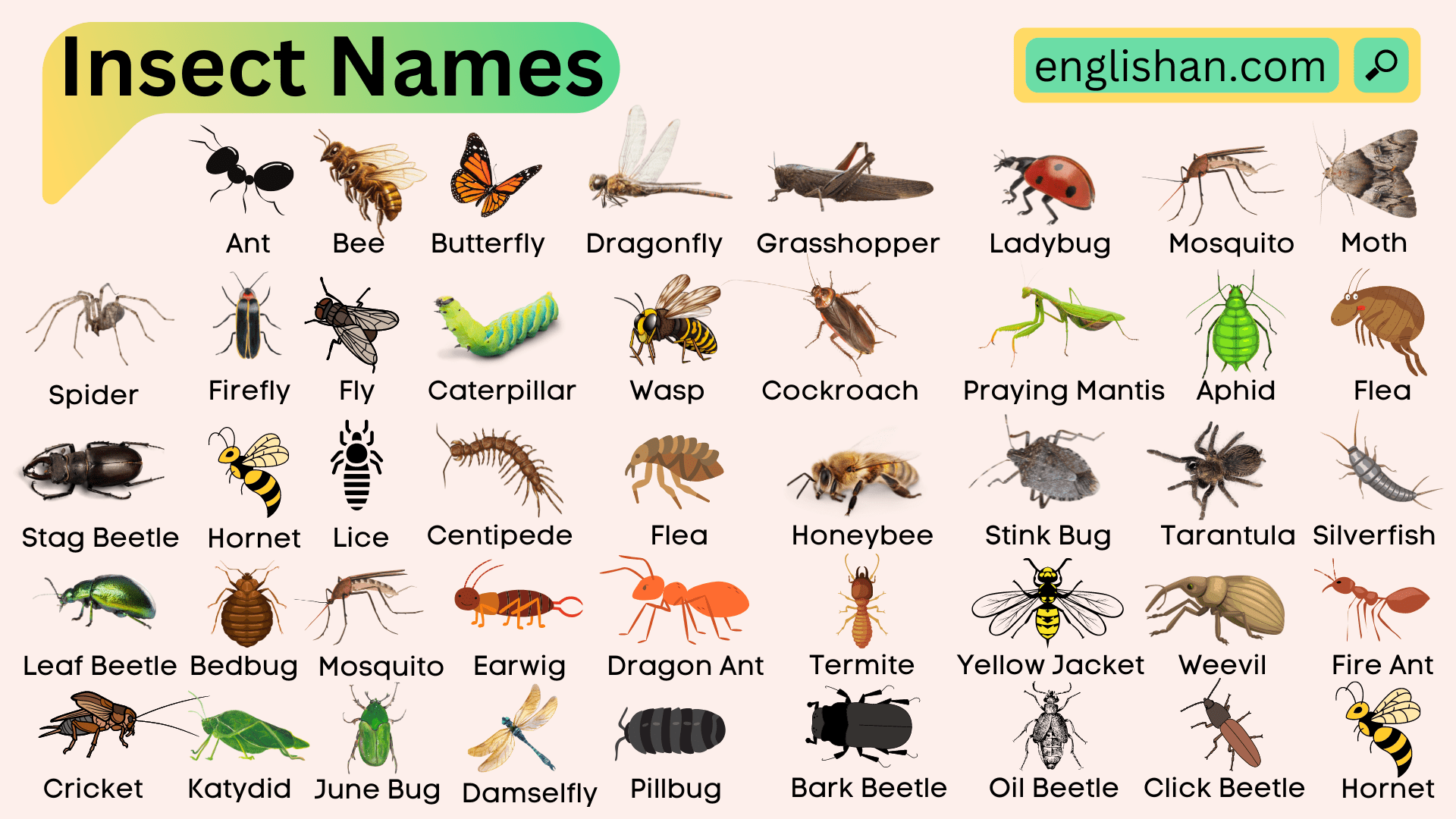
Step into any garden on a warm afternoon and you’re surrounded by insects, even if you only spot a few. Most people can name a handful of common ones, but the full list of insects names runs much longer once you start studying them.
Some are small enough to miss completely, while others catch the eye fast, like a dragonfly flashing across a pond. Each insect has its own shape, color, and habit, and learning the differences is what makes this group worth a closer look.
This post takes you through common and unusual insects, showing how they look and where they live. By the time you finish reading, you’ll recognize far more of them on sight and know the right name for each one.
What Counts As An Insect?
A true insect has six legs, one pair of antennae, and a body divided into head, thorax, and abdomen. Many insects also have wings, though not all of them fly. Ants, bees, butterflies, beetles, mosquitoes, termites, and grasshoppers are true insects.
Spiders, scorpions, ticks, snails, worms, centipedes, and millipedes are often mixed into bug charts, but they are not insects. Spiders have eight legs, snails have soft bodies with shells, and centipedes have many body segments with many legs. Keeping this difference in mind makes an insect names page more accurate.
Common Insects Names
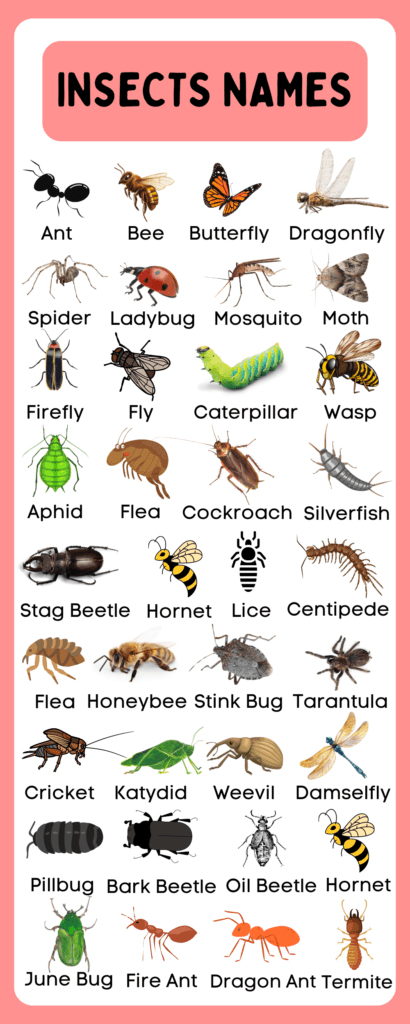
These are the insects people notice most often in daily life. Some are harmless visitors, some pollinate flowers, some bite, and others become pests when they gather near food, plants, fabric, or damp indoor spaces.
Ant
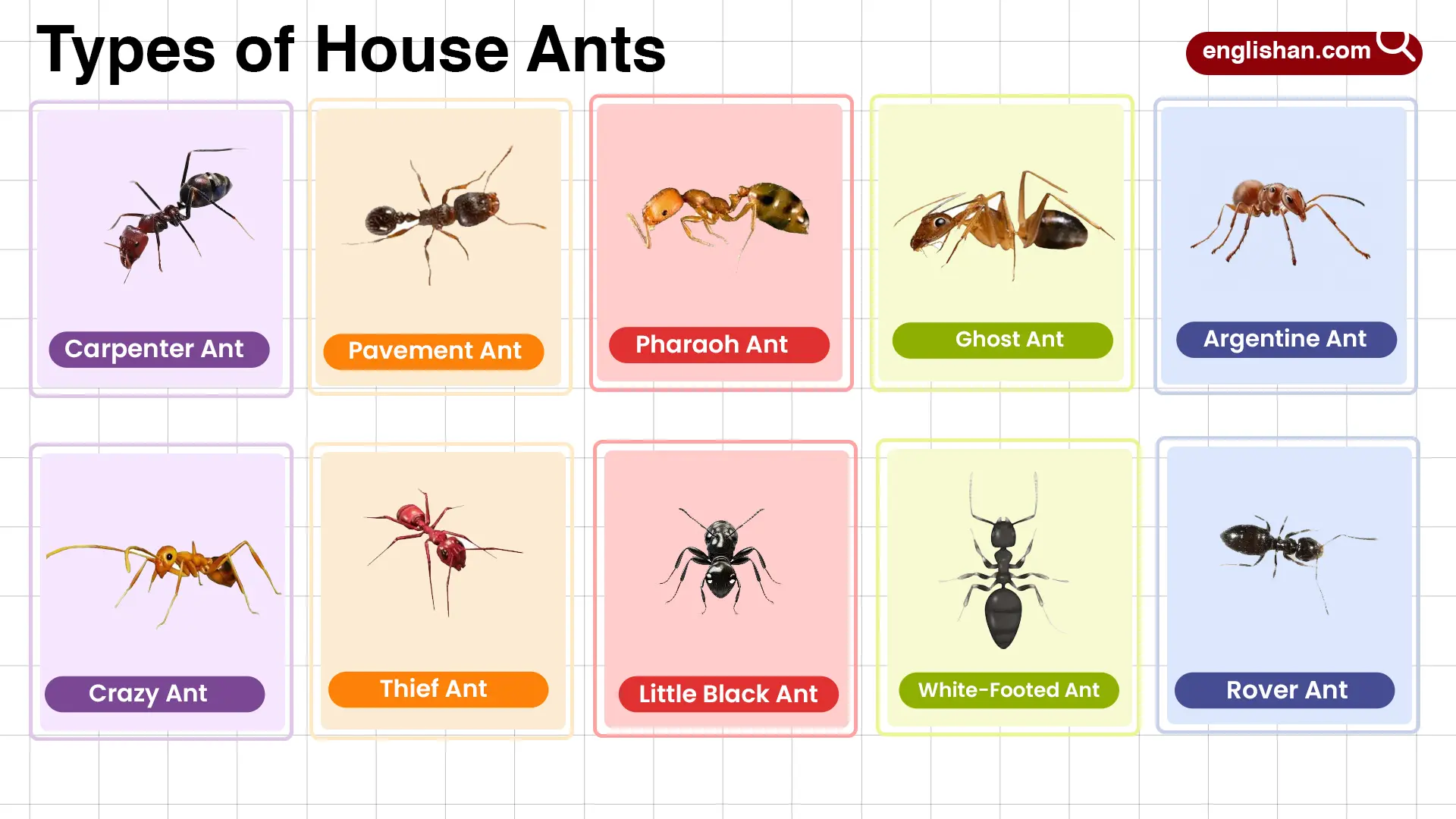
Ants are social insects that live in colonies, often inside soil, wood, wall gaps, or under stones. You may notice them walking in narrow trails as they carry food back to the nest. Their small bodies, bent antennae, and steady movement make them easy to recognize.
Bee
Bees have fuzzy bodies that collect pollen as they move between flowers. Honey bees live in hives, while many wild bees nest in soil, hollow stems, or small holes in wood. Their buzzing flight and flower visits make them one of the most important pollinating insects.
Butterfly
A butterfly has broad wings covered with tiny scales that create bright colors and patterns. Butterflies usually rest with their wings raised or partly open, and many drink nectar from flowers. Their life cycle begins as a caterpillar before the adult butterfly emerges.
Mosquito
Mosquitoes are slender flying insects with long legs and a needle-like mouthpart. Female mosquitoes feed on blood, while both males and females may feed on plant nectar. They often breed around still water, such as puddles, buckets, drains, and ponds.
Housefly
A housefly has a gray body, large red-brown eyes, and a quick, restless flight. It is often found around food scraps, garbage, animal waste, and warm indoor spaces. Houseflies do not sting, but they can carry germs from dirty surfaces to food.
Ladybug
A ladybug, also called a ladybird in many places, has a small rounded body with red, orange, yellow, or black coloring. Many species have black spots, though some have stripes or plain shells. Gardeners often like ladybugs because they feed on aphids and other soft-bodied plant pests.
Dragonfly
A dragonfly has a long body, huge eyes, and two pairs of strong transparent wings. Dragonflies often fly near ponds, streams, marshes, and lakes, where their young live in water before becoming adults. Their fast flight and sharp turns make them skilled insect hunters.
Beetle
Beetles are one of the largest insect groups, with hard front wings that act like shields over the softer flying wings. Some beetles are shiny and colorful, while others are dull brown or black and blend into bark, soil, or leaves. Ladybugs, weevils, fireflies, and rhinoceros beetles all belong to the beetle group.
Cockroach
A cockroach has a flat oval body, long antennae, and quick legs that let it run into cracks and dark corners. Many cockroaches are active at night and search for food crumbs, grease, paper, and damp hiding places. They are tough insects, but indoor infestations need careful cleaning and control.
Grasshopper
A grasshopper is easy to spot because of its strong back legs built for jumping. It has a narrow body, chewing mouthparts, and often green or brown coloring that blends into grass and leaves. Grasshoppers feed on plants and are common in fields, gardens, and open ground.
Moth
A moth is a close relative of butterflies, but many moths are active at night and have duller colors. Some rest with their wings flat like a tent, and many are drawn to porch lights. Their caterpillars may feed on leaves, stored food, wool, or natural fibers, depending on the species.
Wasp
A wasp usually has a narrow waist, smooth body, and strong wings. Some wasps hunt caterpillars and other insects, while others visit sweet food, fruit, or flowers. Many can sting when threatened, especially near nests.
Termite
Termites are pale, soft-bodied insects that live in colonies and feed on wood or plant material. They are often mistaken for ants, but termites have straighter bodies and straighter antennae. In homes, some termites damage wooden beams, floors, and furniture from the inside.
Cricket
A cricket has long back legs, long antennae, and a chirping sound made by rubbing its wings together. Crickets often hide in grass, soil cracks, leaf litter, and warm indoor spaces. Their sound is most common during quiet evenings and nights.
Firefly
A firefly is a soft-bodied beetle known for its glowing abdomen. Fireflies flash light to attract mates, and many species are active during warm evenings. They are often found near grass, trees, wetlands, and gardens with less artificial light.
Caterpillar
A caterpillar is the larval stage of a butterfly or moth. It has a soft body, short legs, and strong chewing mouthparts for eating leaves. Some caterpillars are smooth and green, while others have bright colors, hairs, spines, or bold warning marks.
Praying Mantis
A praying mantis has a long body, triangular head, and folded front legs that look like arms held in prayer. It waits quietly on plants before grabbing flies, moths, crickets, and other insects. Its slow body movement and sudden hunting strike make it one of the most recognizable garden insects.
Aphid
Aphids are tiny soft-bodied insects that gather on young stems, buds, and the undersides of leaves. They suck plant sap and may leave sticky honeydew behind. Green, black, yellow, and pink aphids are common in gardens, especially on tender new growth.
Cicada
A cicada has large eyes, clear wings, and a loud buzzing call made by males. Many cicadas spend years underground as nymphs before climbing trees and emerging as adults. Their empty shell-like skins are often left clinging to bark after they molt.
Weevil
A weevil is a type of beetle with a long snout-like head. Some weevils feed on seeds, grains, fruits, or stored food, while others live on garden plants. Their curved snout and small rounded body make them easy to separate from many other beetles.
Flying Insects
Flying insects move between flowers, trees, water, food, and light sources. Some fly fast and straight, while others flutter, hover, or dart in short bursts.
- Bee: A fuzzy pollinator that moves from flower to flower for nectar and pollen.
- Butterfly: A colorful insect with broad wings and a gentle fluttering flight.
- Mosquito: A thin-bodied insect often found near still water and warm outdoor areas.
- Dragonfly: A fast hunter with long wings and excellent vision near ponds and streams.
- Housefly: A common indoor and outdoor fly with quick movement and large eyes.
- Moth: A night-active insect often drawn to lamps and porch lights.
- Wasp: A narrow-waisted flying insect that may sting when disturbed.
- Firefly: A glowing beetle that flashes light during warm evenings.
Crawling And Ground Insects Names
Many insects spend most of their time on soil, walls, tree trunks, floors, and plant stems. Some crawl because they have no wings, while others have wings but move on foot when feeding or hiding.
- Ants travel in trails and carry food back to the colony.
- Beetles crawl across leaves, bark, soil, and stored food.
- Cockroaches run quickly through dark cracks and damp indoor areas.
- Termites move through soil, wood, and hidden tunnels.
- Crickets crawl, jump, and hide under grass or stones.
- Silverfish move through damp indoor spaces with a quick, fish-like wiggle.
- Earwigs crawl under pots, mulch, bark, and leaf litter.
Water Insects
Some insects live near water as adults, while others spend their young stage in ponds, streams, puddles, or marshes. Still water, wet soil, and aquatic plants often attract these insects.
Dragonfly
Dragonflies are often seen flying over ponds, lakes, and slow streams. Their young live underwater as nymphs and hunt tiny aquatic animals before climbing out and becoming winged adults.
Damselfly
A damselfly looks slimmer and more delicate than a dragonfly. Many rest with their wings folded close to the body. They are common around reeds, grasses, and pond edges.
Mosquito
Mosquitoes lay eggs in still water, and their larvae wiggle near the surface before changing into flying adults. Buckets, puddles, old tires, plant saucers, and drains can become breeding spots.
Water Strider
A water strider has long thin legs that let it move across the surface of ponds and slow streams. It feeds on small insects that fall into the water. Its body stays above the surface because of water tension and its light frame.
Mayfly
A mayfly has delicate wings, long tail-like filaments, and a short adult life. Its young live in freshwater and are an important food source for fish and other aquatic animals.
Caddisfly
A caddisfly often rests near streams and ponds with roof-like wings over its body. Its larvae live in water and may build small protective cases from sand, tiny stones, sticks, or plant pieces.
Garden Insects Names
Gardens attract insects because they offer leaves, flowers, nectar, pollen, soft stems, soil, shade, and hiding places. Some garden insects protect plants by eating pests, while others damage leaves, roots, buds, or fruits.
Pollinating Garden Insects
- Bees carry pollen between flowers while feeding on nectar.
- Butterflies visit colorful flowers and drink nectar with a long coiled mouthpart.
- Hoverflies look like tiny bees or wasps, but many are harmless pollinators.
- Moths pollinate night-blooming flowers while feeding after dark.
Plant-Feeding Garden Insects
- Aphids gather on soft stems and suck plant sap.
- Grasshoppers chew leaves and may damage young plants.
- Caterpillars eat leaves, buds, and soft plant tissue.
- Japanese beetles feed on leaves, flowers, and fruit crops.
- Leafhoppers jump quickly and feed on plant sap.
Garden Insect Hunters
- Ladybugs feed on aphids and other tiny plant pests.
- Praying mantises catch flies, moths, crickets, and grasshoppers.
- Dragonflies hunt mosquitoes and small flying insects.
- Lacewings have delicate green bodies, and their larvae feed on aphids.
Household And Indoor Insects
Indoor insects usually enter homes for food, warmth, moisture, fabric, wood, or shelter. A few may wander in by accident, while others settle into kitchens, bathrooms, basements, wardrobes, carpets, or wall gaps.
Housefly
Houseflies gather around food waste, open doors, garbage bins, and warm kitchens. They land often, move quickly, and can transfer germs from dirty places to eating surfaces.
Cockroach
Cockroaches hide in dark cracks, drains, cabinets, and damp spaces. They feed at night and often leave droppings, egg cases, or a musty smell when numbers grow.
Ant
Ants often enter homes after sweet food, grease, crumbs, or water. A thin line of ants usually means the colony has found a regular food source.
Silverfish
Silverfish have narrow silver-gray bodies and long tail-like bristles. They prefer damp, dark places and may feed on paper, glue, fabric, and stored items.
Flea
Fleas are tiny jumping insects that feed on the blood of animals and humans. They often enter homes through pets, carpets, bedding, or outdoor resting spots.
Clothes Moth
Clothes moth larvae feed on wool, silk, fur, feathers, and natural fibers. Adult moths are small and plain, but the larvae cause the real fabric damage.
Bed Bug
Bed bugs are flat, reddish-brown insects that hide in mattress seams, bed frames, cracks, and furniture. They feed on blood at night and leave itchy bites, dark spots, or shed skins.
Tiny And Small Insects Names
Small insects are easy to miss because many hide under leaves, in soil, inside fabric, around pets, or near damp surfaces. Their size may be tiny, but their effect on plants, homes, and people can be noticeable.
Aphid
Aphids are soft, tiny insects often found in groups on young plant growth. They may curl leaves, weaken stems, and attract ants with sticky honeydew.
Flea
Fleas are dark, narrow insects built for jumping. They can move between pets, bedding, carpets, and outdoor resting areas.
Gnat
Gnats are small flying insects that often gather around wet soil, fruit, drains, or damp organic material. Some are harmless, while others bite or bother plants.
Thrips
Thrips are very small, slender insects that scrape plant tissue and leave pale streaks or speckled marks on leaves and flowers. They can damage garden plants, greenhouse crops, and houseplants.
Louse
A louse is a tiny wingless insect that lives on mammals or birds. Head lice cling to human hair and feed on blood from the scalp.
Midge
Midges look like tiny mosquitoes, though many do not bite. They often gather in swarms near water, grass, and outdoor lights.
Green, Colorful, And Patterned Insects
Color helps insects blend into leaves, warn predators, attract mates, or imitate other creatures. Green insects often hide on plants, while red, yellow, black, blue, and metallic insects may stand out against flowers, bark, or soil.
Green Insects
- Katydid: A leaf-like insect with long antennae and green wings that blend into plants.
- Praying mantis: A green hunter that waits among stems and leaves before striking prey.
- Green lacewing: A delicate insect with pale green body, golden eyes, and transparent wings.
- Green shield bug: A rounded green insect often found on leaves and garden plants.
- Aphid: Many aphids are green and gather on soft plant tips.
Colorful And Patterned Insects
- Butterfly: Often bright, patterned, and easy to spot on flowers.
- Ladybug: Usually round and red or orange with black spots, though colors vary.
- Jewel beetle: A shiny beetle with metallic green, blue, gold, or copper tones.
- Monarch butterfly: Orange wings with black veins and white spots along the edges.
- Orchid mantis: A pale pink and white mantis that resembles flower petals.
- Lanternfly: A patterned insect with spotted wings and bold color on the hindwings.
Insects Active At Night
Night-active insects use darkness to feed, mate, hide from predators, or move safely through cooler air. Outdoor lights often attract many of them, especially moths, beetles, and flying insects.
Moth
Moths are among the most familiar night insects. Many rest during the day on walls, bark, or leaves, then fly after sunset to feed or find mates.
Firefly
Fireflies flash glowing signals during warm nights. Their light comes from the abdomen and is used mostly for communication during mating.
Cricket
Crickets often chirp after dark, especially in warm weather. The sound comes from males rubbing their wings together.
Cockroach
Cockroaches are mostly active at night indoors. They leave hiding places to search for food, water, and shelter when rooms are quiet.
Mosquito
Many mosquitoes are more active at dusk, night, or early morning. They are drawn to body heat, breath, and moisture.
Biting And Stinging Insects
Some insects bite to feed, while others sting to defend themselves or their colony. Biting and stinging insects should be treated with care, especially around nests, pets, sleeping areas, standing water, and outdoor food.
Biting Insects
- Mosquito: Bites with a long mouthpart and may leave itchy bumps.
- Flea: Jumps onto animals or people and leaves small itchy bites.
- Bed bug: Feeds at night and hides in beds, furniture, and cracks.
- Louse: Lives on hair, skin, feathers, or clothing and feeds on blood.
- Horsefly: A large fly with a painful bite, often found near animals, water, and fields.
Stinging Insects
- Bee: Can sting when handled, stepped on, or threatened near the hive.
- Wasp: Often stings when disturbed around nests or food.
- Hornet: A large wasp with a stronger sting and more defensive behavior near nests.
- Fire ant: Bites first, then stings, often causing burning pain and small pustules.
Pest And Harmful Insects
An insect becomes harmful when it spreads disease, damages crops, destroys stored food, weakens plants, bites people or animals, or harms wooden structures. Not every insect in these groups is dangerous all the time, but large numbers can cause real problems.
- Mosquitoes can spread diseases in some regions and breed in still water.
- Cockroaches contaminate food surfaces and thrive in damp indoor spaces.
- Termites damage wood, flooring, beams, and furniture.
- Aphids weaken garden plants by sucking sap from soft stems.
- Weevils may damage stored grains, seeds, and pantry foods.
- Bed bugs bite at night and hide in furniture, mattresses, and wall cracks.
- Fleas bite pets and people and may spread quickly in carpets and bedding.
- Grasshoppers can damage crops when large numbers gather.
- Clothes moths damage wool, silk, fur, and other natural fibers.
Helpful And Beneficial Insects
Many insects are valuable because they pollinate flowers, break down dead material, feed birds and fish, or control pests naturally. A garden with the right insects is often healthier than one with no insect life at all.
| Beneficial insect | Why it is helpful |
|---|---|
| Bee | Pollinates flowers, fruit trees, vegetables, and wild plants |
| Butterfly | Carries pollen while feeding on nectar |
| Ladybug | Eats aphids and other soft plant pests |
| Dragonfly | Hunts mosquitoes and small flying insects |
| Praying mantis | Catches many garden insects with its front legs |
| Ground beetle | Feeds on slugs, larvae, and soil-dwelling pests |
| Lacewing | Its larvae eat aphids, mites, and small plant pests |
| Dung beetle | Breaks down animal waste and improves soil movement |
Easy Insect Names For Kids And Beginners
These insect names are familiar, easy to picture, and common enough to recognize in gardens, homes, books, and outdoor spaces. The short sentences keep each insect tied to a real action or place.
- Ant: Ants walk in lines and carry food back to their colony.
- Bee: Bees visit flowers for nectar and pollen.
- Butterfly: Butterflies have wide wings covered with tiny colorful scales.
- Mosquito: Mosquitoes often breed near still water.
- Ladybug: Ladybugs are small round beetles that often eat aphids.
- Dragonfly: Dragonflies fly fast near ponds and streams.
- Grasshopper: Grasshoppers jump through grass with strong back legs.
- Housefly: Houseflies move quickly around food, bins, and warm rooms.
- Moth: Moths often fly at night and rest near lights.
- Beetle: Beetles have hard wing covers over their flying wings.
- Cockroach: Cockroaches hide in dark indoor cracks and come out at night.
- Cricket: Crickets chirp during warm evenings.
Scientific Names Of Insects
Scientific names are used to identify insects more precisely. A common name can change by region, but a scientific name points to a specific species or group. The genus and species names are usually written in italics.
| Common insect name | Scientific name |
|---|---|
| Honey bee | Apis mellifera |
| Monarch butterfly | Danaus plexippus |
| Housefly | Musca domestica |
| Common mosquito | Culex pipiens |
| Seven-spotted ladybug | Coccinella septempunctata |
| German cockroach | Blattella germanica |
| Field cricket | Gryllus campestris |
| Common green lacewing | Chrysoperla carnea |
| Western honey bee | Apis mellifera |
| Migratory locust | Locusta migratoria |
| Bed bug | Cimex lectularius |
| Common wasp | Vespula vulgaris |
Unusual Insects Worth Knowing
Some insects look so unusual that they seem closer to leaves, sticks, jewels, or flowers than animals. These insects are especially interesting for picture-based learning because their shapes and colors are easy to remember.
Stick Insect
A stick insect has a long narrow body that looks like a twig. It stays still among branches and stems, where its shape protects it from birds and other predators.
Leaf Insect
A leaf insect has a flat green body that resembles a living leaf. Some even have vein-like marks and slightly uneven edges that match real foliage.
Orchid Mantis
An orchid mantis has pale pink and white body parts that resemble flower petals. It waits on plants and catches insects that come too close.
Atlas Moth
An Atlas moth is one of the largest moths in the world, with huge patterned wings. The tips of the wings can look like snake heads, which may scare predators.
Rhinoceros Beetle
A rhinoceros beetle has a strong body and horn-like structures on the head or thorax. Males often use their horns to push rivals during fights.
Giraffe Weevil
A giraffe weevil has an unusually long neck-like body part, especially in males. It is one of the strangest-looking weevils and is often linked with Madagascar.
Jewel Beetle
A jewel beetle shines with metallic green, blue, gold, red, or copper colors. Its hard body reflects light, making it one of the most eye-catching beetles.
Lanternfly
A lanternfly has patterned wings and bright hidden colors on some species. Despite the name, it is not a fly in the common housefly sense.
A To Z Insects Names
This A to Z insect names list gives quick examples from different insect groups. Some letters have many insect names, while a few letters have fewer common examples.
| Letter | Insect Names |
|---|---|
| A | Ant, Aphid, Assassin Bug |
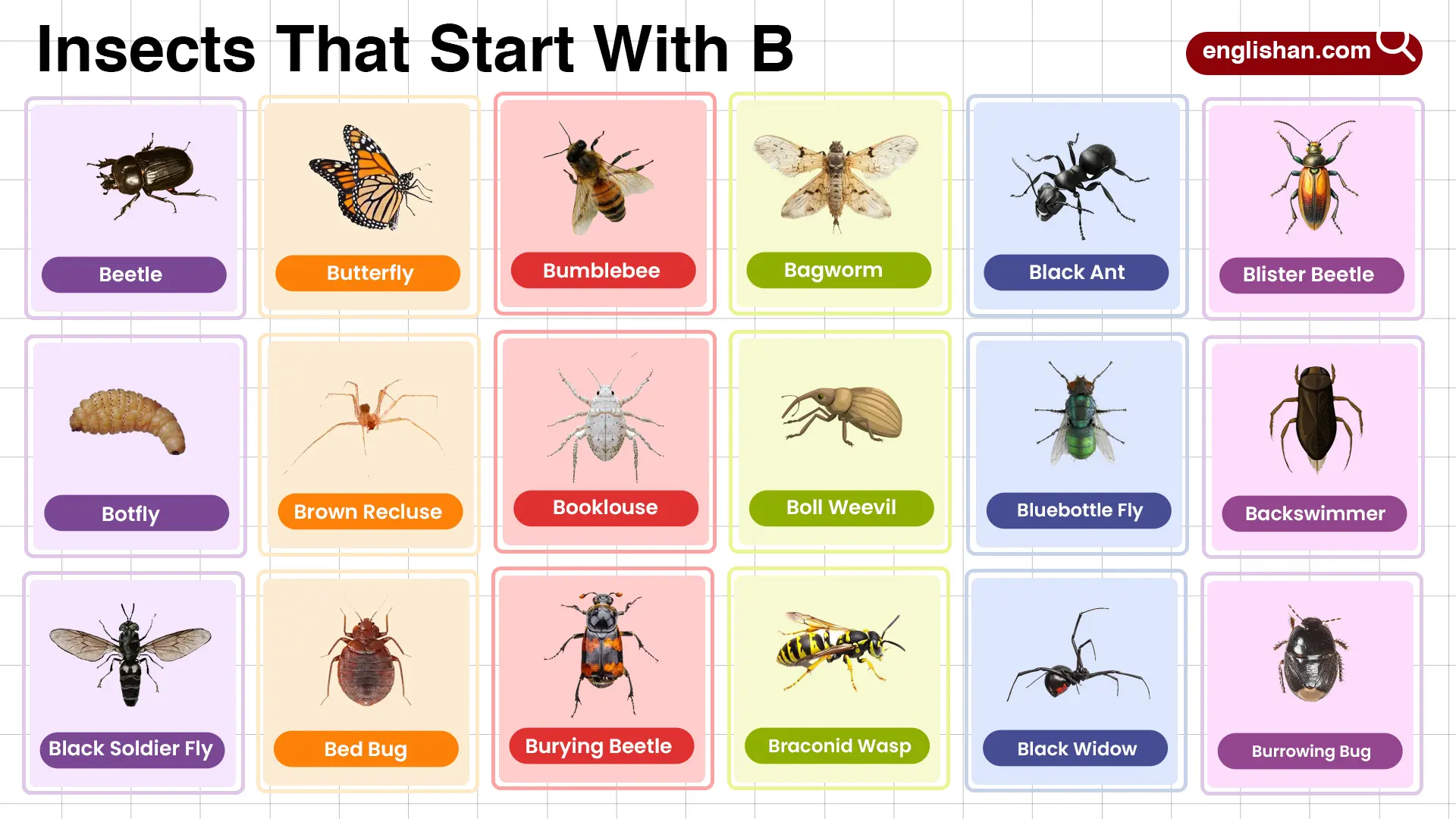
| B | Bee, Beetle, Butterfly, Bed Bug |
| C | Cricket, Cicada, Caterpillar, Cockroach |
| D | Dragonfly, Damselfly, Dung Beetle |
| E | Earwig, Emerald Ash Borer |
| F | Firefly, Flea, Fruit Fly |
| G | Grasshopper, Gnat, Green Lacewing |
| H | Honey Bee, Hornet, Horsefly |
| I | Ichneumon Wasp, Indian Meal Moth |
| J | Jewel Beetle, Japanese Beetle |
| K | Katydid, Kissing Bug |
| L | Ladybug, Locust, Louse, Lacewing |
| M | Mosquito, Moth, Mayfly, Midge |
| N | Net-Winged Beetle, Nymphalid Butterfly |
| O | Orchid Mantis, Owl Butterfly |
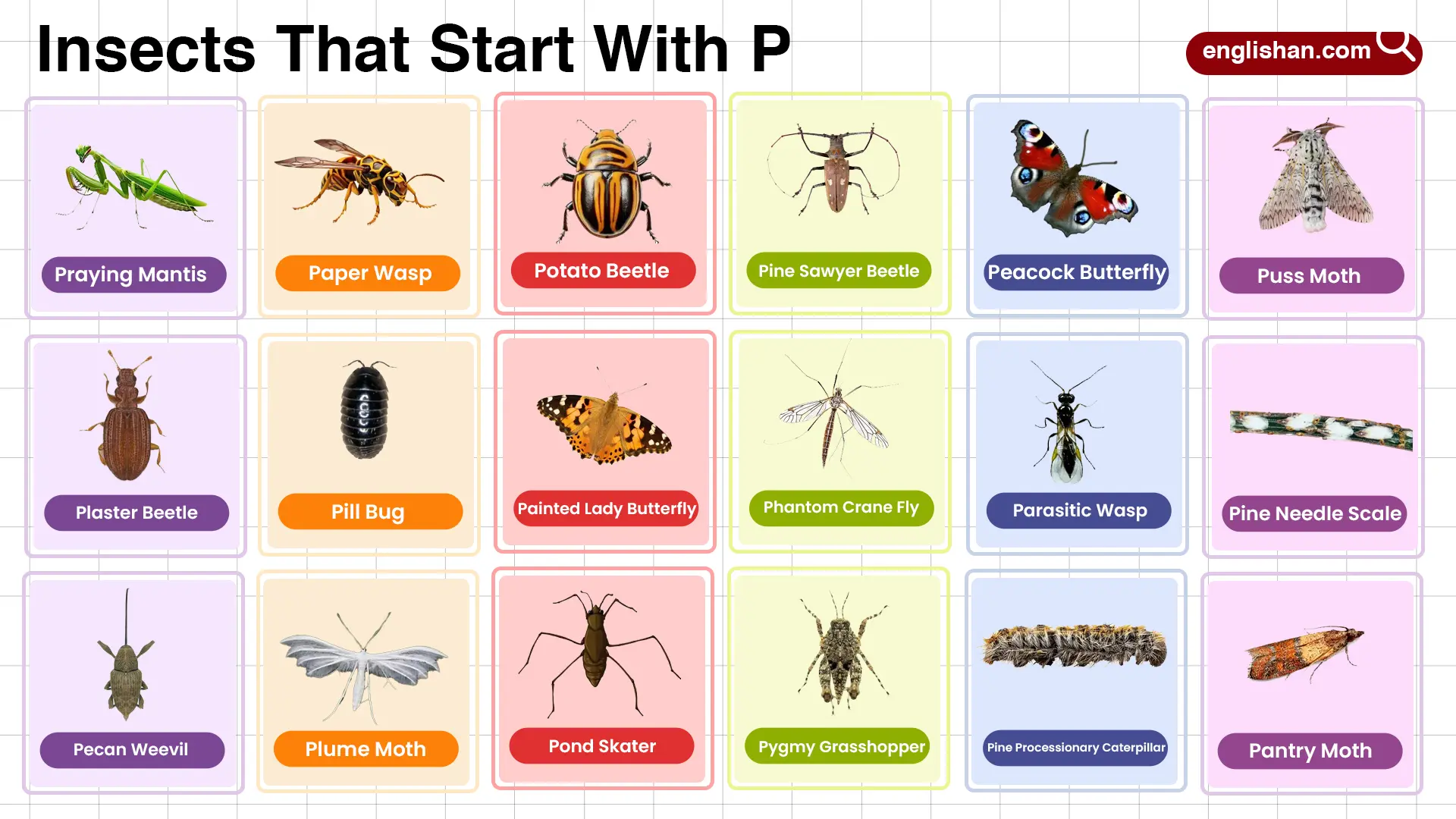
| P | Praying Mantis, Paper Wasp, Plant Bug |
| Q | Queen Bee |
| R | Rhinoceros Beetle, Robber Fly |
| S | Stick Insect, Silverfish, Stink Bug |
| T | Termite, Thrips, Tiger Beetle |
| U | Underwing Moth |
| V | Vinegar Fly, Velvet Ant |
| W | Wasp, Weevil, Water Strider |
| X | Xylocopa Bee |
| Y | Yellowjacket, Yucca Moth |
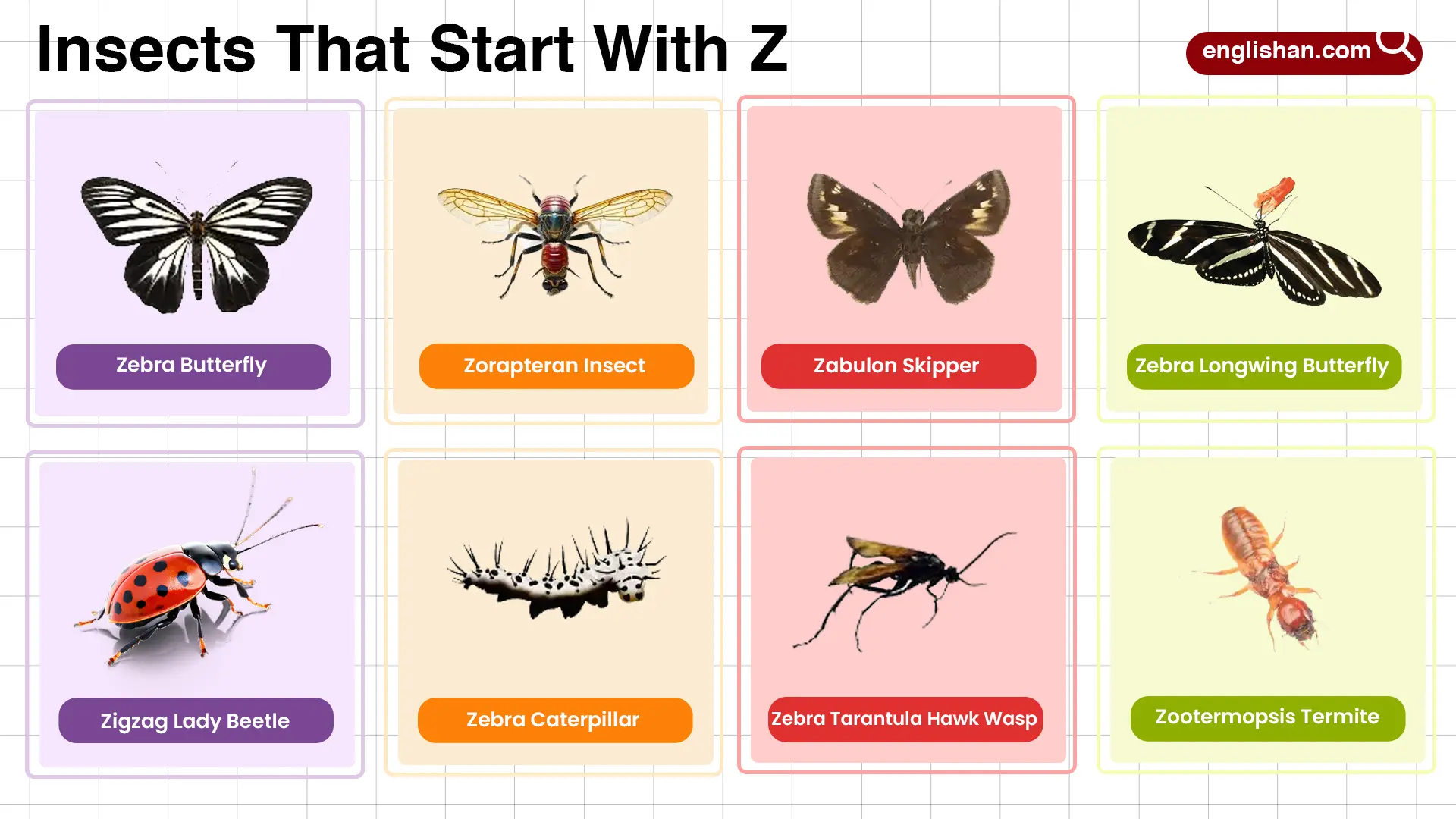
| Z | Zebra Swallowtail, Zorapteran |
FAQs
The most common insects include ants, bees, butterflies, mosquitoes, houseflies, beetles, cockroaches, grasshoppers, moths, ladybugs, termites, wasps, crickets, and dragonflies. These insects are often found around homes, gardens, farms, fields, flowers, water, and warm outdoor spaces.
There are more than one million described insect species, and scientists believe many more remain undescribed. Insects are the most diverse group of animals on Earth, with beetles, butterflies, moths, flies, bees, ants, wasps, and true bugs making up many familiar groups.
Some of the smallest insects are tiny fairyflies, which are minute wasps. They can be smaller than many single-celled organisms visible under a microscope. These insects are so small that most people never notice them in daily life.
The largest insect depends on how size is measured. Some stick insects are among the longest insects, while the giant weta and goliath beetles are among the heaviest. Atlas moths and Queen Alexandra’s birdwing butterflies are also famous for their large wingspans.
Mosquitoes are among the most dangerous insects because they can spread diseases in some parts of the world. Wasps, hornets, bees, fire ants, fleas, bed bugs, and certain biting flies can also harm people through stings, bites, allergic reactions, or irritation.
Bees, butterflies, moths, hoverflies, and some beetles pollinate plants. Ladybugs, lacewings, dragonflies, ground beetles, and praying mantises feed on other insects that may damage leaves, stems, flowers, and crops.
No, all bugs are not insects in everyday language. Spiders, ticks, worms, snails, centipedes, and millipedes are often called bugs, but they are not insects. True insects have six legs, antennae, and three main body parts.
No, a spider is not an insect. Spiders have eight legs and two main body sections, while insects have six legs and three main body sections. Spiders belong to a different animal group called arachnids.
Yes, a butterfly is an insect. It has six legs, antennae, three main body parts, and wings covered with tiny scales. Butterflies begin life as caterpillars before changing into winged adults.
Flying insects are simply insects that have wings and use them to move through the air. Common flying insects include bees, butterflies, mosquitoes, dragonflies, houseflies, moths, wasps, and fireflies.
Final Words
Insects are small, but their variety is enormous. Some pollinate flowers, some glow at night, some jump through grass, some hunt near ponds, and others live quietly in soil, wood, leaves, or indoor cracks. Learning insect names becomes much easier when each name is tied to a real body shape, color, place, sound, movement, or behavior.
A strong insect list should not mix every tiny creature into one pile. Ants, bees, butterflies, mosquitoes, beetles, grasshoppers, dragonflies, and ladybugs are true insects, while spiders, snails, worms, and centipedes belong elsewhere. That small difference makes the list more accurate, more memorable, and far better for picture-based identification.
You May Also Like