

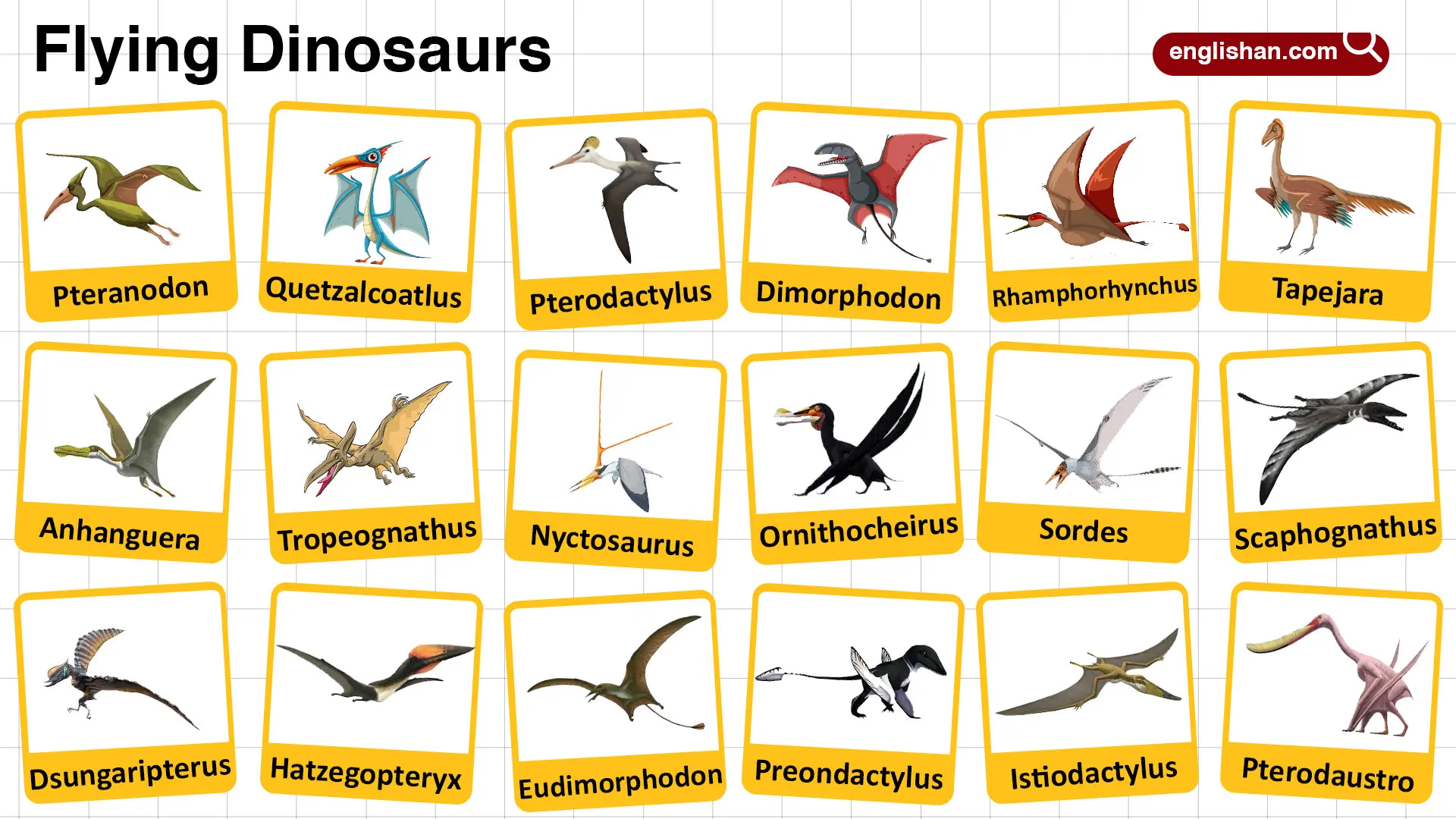
Nearly eighty million years before the first bird flapped a wing, reptiles were already hunting from the air on skin stretched across a single elongated finger. Almost every one of the flying dinosaur names people search for today comes from that group, and none of them was a dinosaur.
Size is what makes them hard to picture as one group. At the small end, Anurognathus chased insects at dusk on wings about 50 centimetres across, small enough to perch on your hand. Quetzalcoatlus stood as tall as a giraffe and spread wings near 11 metres.
Between those two extremes came roughly 130 named species, separated by wingspan, crest shape and jaw build. Wingspan is the quickest way to tell them apart.
Flying Dinosaurs Names and Wingspans
Flying dinosaurs is the popular name for pterosaurs, a group of warm-blooded flying reptiles and the first vertebrates to evolve powered flight. Scientists have identified over 150 pterosaur species so far, ranging from wingspans under 25 centimeters to well over 10 meters.
Each name below includes the species’ real wingspan, the geological period it lived in, its diet, and the trait that made it distinct.
What Were Flying Dinosaurs
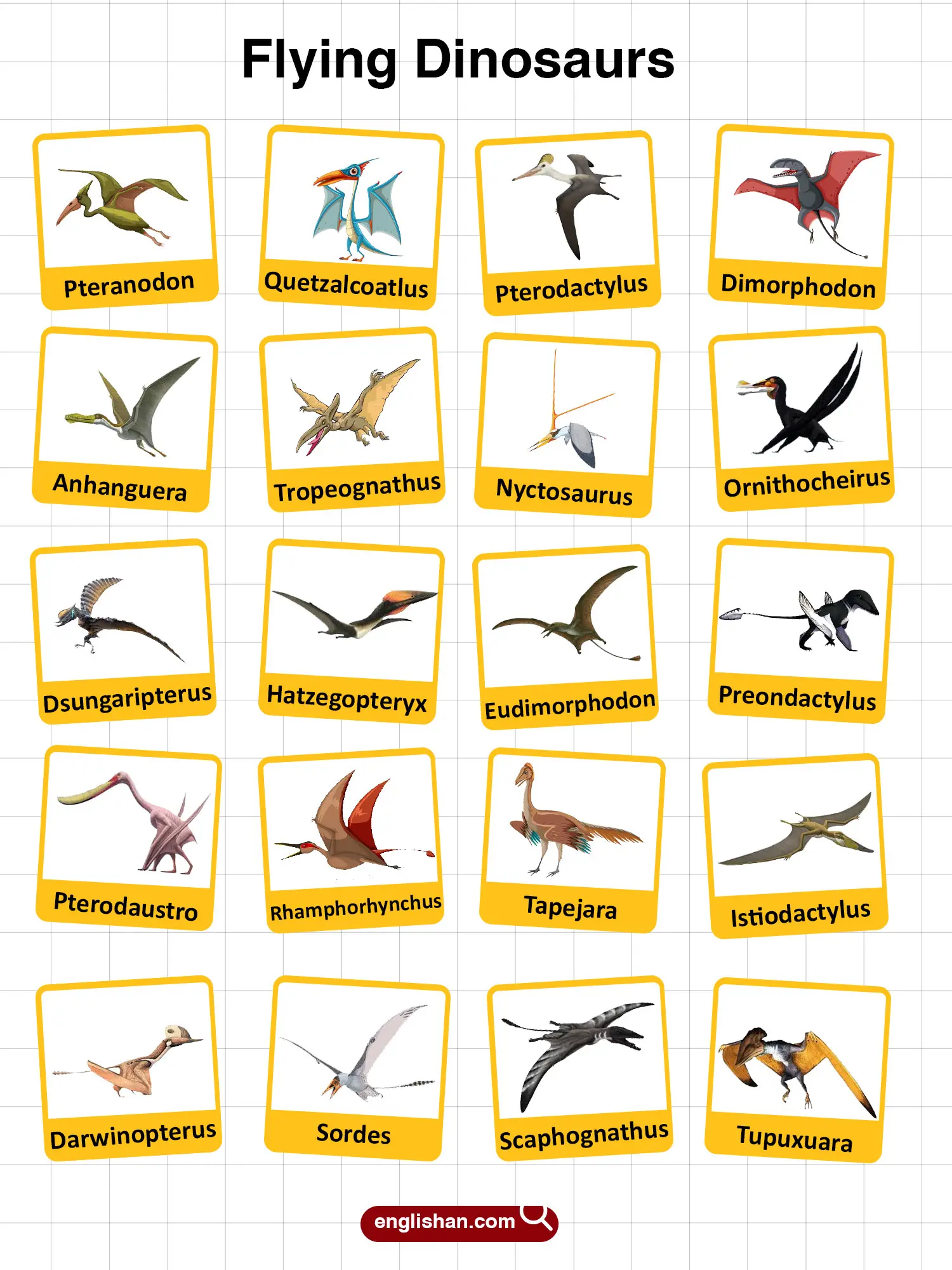
Pterosaurs were not dinosaurs. Both groups belonged to a larger clade called Archosauria (which also includes crocodilians), but pterosaurs split off on their own evolutionary branch. Dinosaurs walked with their legs directly beneath their bodies. Pterosaurs had wings formed by a membrane of skin, muscle, and other tissue that stretched from an enormously elongated fourth finger all the way down to the ankle.
That wing structure is one of the main differences between pterosaurs and birds. Birds have feathered wings supported by the entire arm. Pterosaurs had leathery membrane wings anchored to a single finger. Their bones were hollow and filled with air, making even the largest species light enough to fly.
Pterosaurs were also warm-blooded. Their bodies were covered in hair-like filaments called pycnofibers, which provided insulation much like mammal fur. They had efficient respiratory systems with air sacs, similar to modern birds, giving them the oxygen supply needed for sustained flight. The combination of hollow bones, strong muscles, and warm-blooded metabolism made pterosaurs powerful and agile flyers, not clumsy gliders as older science once assumed.
The reason people still call them “flying dinosaurs” comes mostly from popular culture. The Jurassic Park films featured Pteranodon prominently, and toy sets have packaged pterosaurs alongside T. rex and Triceratops for decades. The name stuck, even though it isn’t scientifically accurate.
Small Flying Dinosaurs
Not every pterosaur had a massive wingspan. Many were closer to the size of modern birds, and a few were even smaller.
Pterodactylus
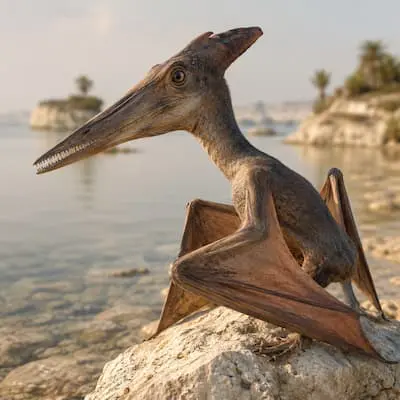
The first pterosaur ever discovered and named, back in 1784. Pterodactylus (pronounced TER-oh-DAK-til-us) lived during the Late Jurassic, around 150 million years ago, in what is now Germany. Its wingspan measured about 1 meter (3.3 feet). Unlike later pterosaurs, Pterodactylus had teeth and hunted small fish, insects, and invertebrates. The name means winged finger in Greek, a reference to the elongated fourth finger that supported its wing membrane.
Dimorphodon
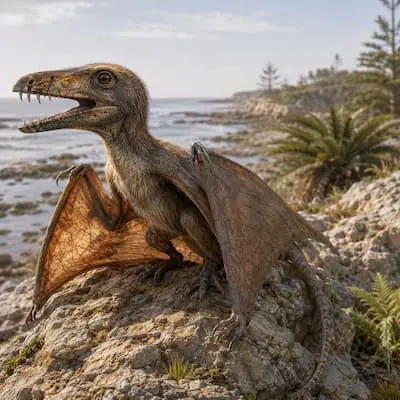
A stocky, short-winged pterosaur from the Early Jurassic, roughly 195 million years ago. Its wingspan reached about 1.4 meters (4.6 feet). The name means two-form tooth because it had two distinct types of teeth in its jaws: large fangs at the front and smaller teeth behind them. Dimorphodon lived in coastal regions of what is now England and fed on insects and small fish. With strong claws and a low center of gravity, it was also a capable climber.
Rhamphorhynchus
One of the best-known early pterosaurs, from the Late Jurassic of Europe, around 150 million years ago. Its wingspan reached about 1.8 meters (5.9 feet). Rhamphorhynchus (pronounced RAM-foh-RINK-us) had a long tail tipped with a diamond-shaped vane, sharp forward-pointing teeth built for snagging fish, and a narrow beak. Fossils have been found across England, Germany, Portugal, Spain, and even Tanzania.
Sordes
At 63 centimetres, Sordes pilosus from Late Jurassic Kazakhstan is the most consequential small pterosaur ever dug up. Collectors pulled it from the Karabastau beds in the foothills of the Karatau range during the 1960s.
Aleksandr Sharov described it in 1971, working from a fossil that preserved hair-like fibres across the body and soft tissue along the wing. That single specimen settled a long argument: these animals were insulated and warm-blooded, not scaly.
The name translates as hairy devil, which was Sharov’s joke about a small ugly fossil that overturned a century of reconstructions showing bare leathery skin. Every accurate pterosaur illustration made since 1971 owes its fuzz to this animal.
Anurognathus
A tiny nocturnal insect hunter from the Late Jurassic, found in Germany. With a wingspan of only about 50 centimeters (20 inches), Anurognathus was roughly the size of a sparrow. It had unusually large eyes and a wide, short mouth adapted for catching insects in flight during twilight and darkness. Among pterosaurs, it occupied a niche similar to modern nightjars.
Nemicolopterus
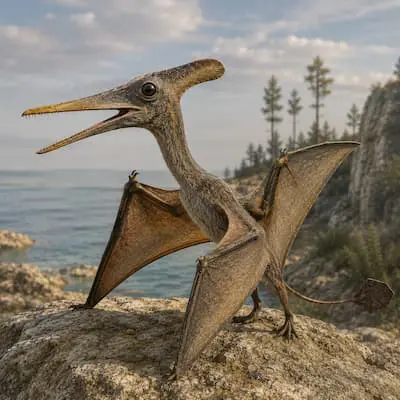
Chinese researchers announced this fossil in 2008 as the smallest pterosaur ever found, at slightly under 25 centimetres across the wings. The claim did not survive.
A 2021 analysis placed the specimen inside a growth series as a hatchling. Two years later a revision failed to match it to any known genus, leaving it as a young member of a related Chinese group. The record-holder turned out to be somebody’s baby.
Caiuajara
A bone bed near Cruzeiro do Oeste in Brazil yielded at least 47 individuals of this 2.35 metre pterosaur, with many more still in the rock. Nothing else in the pterosaur record gives paleontologists a whole colony at once.
The juveniles in that deposit measured 65 centimetres across, with the same body proportions and equally developed flight muscles as the adults. That tells you the young took wing almost as soon as they hatched.
Bone microstructure adds a second finding. Growth stayed rapid and metabolism stayed high across the whole life span, where other pterosaurs slowed with age. Only the crest changed shape, growing taller and tilting further back as each animal matured.
Large Flying Dinosaurs
The largest pterosaurs were also the largest flying animals in Earth’s history, rivaling small aircraft in wingspan.
Quetzalcoatlus
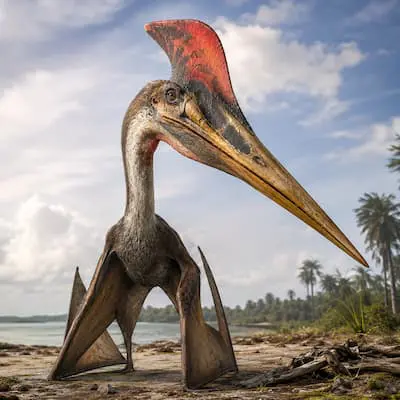
Quetzalcoatlus northropi reached a wingspan near 11 metres, which the Natural History Museum in London compares to a small aeroplane. Standing on the ground it matched a giraffe for height, and the whole animal weighed roughly a quarter of a tonne on a skeleton of hollow struts.
Behind those figures is a 2021 study, the first full description of the animal after four decades of partial reporting. It revised what this giant ate.
The beak was too delicate for meat or carrion, so Quetzalcoatlus fed like an oversized heron. It plucked fish, invertebrates, small amphibians and reptiles from shallow water and swallowed them whole. On the ground it hunted as readily as in the air, striding across floodplains far from any sea.
A smaller relative from the same Texas rocks, Quetzalcoatlus lawsoni, flew on wings of about 4.5 metres and lived around 69 million years ago. Most museum reconstructions of the giant are built partly from lawsoni material, because complete northropi bones remain rare.
Pteranodon
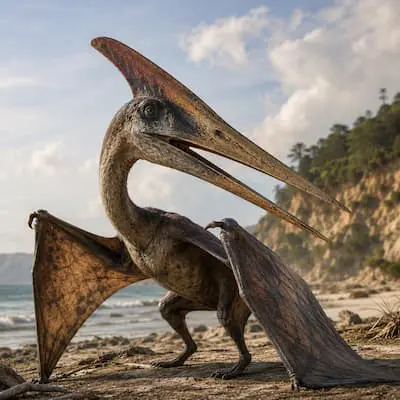
The most famous pterosaur, and the one most people picture when they hear “flying dinosaur.” Pteranodon (pronounced teh-RAN-oh-don) lived during the Late Cretaceous, roughly 86 to 84 million years ago, over what is now Kansas and the central United States, which was then covered by a shallow sea. Its wingspan measured 6 to 7 meters (20 to 23 feet). The name means wing without tooth, and true to its name, Pteranodon had a long, toothless beak and a prominent backward-pointing crest on its skull.
Over 1,200 Pteranodon fossils have been recovered, more than any other pterosaur. It fed on fish, scooping them from the water’s surface during flight.
Hatzegopteryx
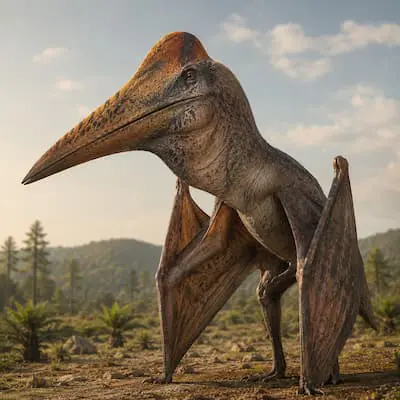
A massive azhdarchid from the Late Cretaceous of what is now Transylvania, Romania. Hatzegopteryx had an estimated wingspan of up to 10 to 11 meters (33 to 36 feet), rivaling Quetzalcoatlus. What set it apart was its unusually short, stocky neck and robust skull, which suggest it was a more powerful predator capable of hunting larger prey on the ground. Its name comes from the Hațeg Basin where the fossils were found.
Ornithocheirus
A Cretaceous pterosaur with an estimated wingspan exceeding 6 meters (20 feet), though some fragmentary fossils suggest it could have been even larger. Known from fossils found in England and other parts of Europe, Ornithocheirus had a distinctive rounded crest at the tip of its upper jaw. The name means bird hand. Its exact anatomy remains debated because the fossil record for this genus is incomplete.
Thanatosdrakon
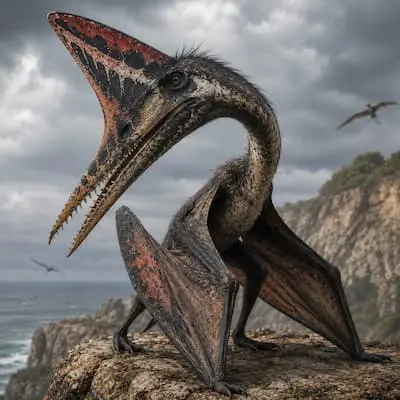
One of the most recently described giant pterosaurs. Discovered in Argentina and formally named in 2022, Thanatosdrakon lived during the Late Cretaceous, about 86 million years ago. Two specimens were found: a juvenile with a wingspan around 7 meters (23 feet) and an adult estimated at 9 meters (30 feet). The name means dragon of death in Greek. It is the largest pterosaur known from South America.
Cryodrakon
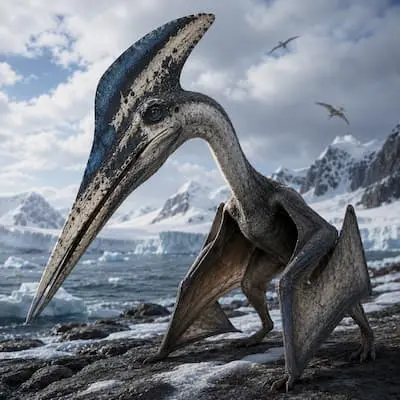
Described in 2019 from fossils found in Alberta, Canada. Cryodrakon (frozen dragon) was an azhdarchid from the Late Cretaceous with an estimated wingspan of about 10 meters (33 feet). Previously, the reference fossil was thought to belong to Quetzalcoatlus, but closer examination of the neck vertebrae revealed a distinct species. It is the largest flying reptile known from Canada.
Flying Dinosaurs with Head Crests
Many pterosaurs had elaborate crests on their skulls. Scientists now believe these were used for display and mate attraction, much like the plumage of modern peacocks, rather than for steering during flight.
Tapejara
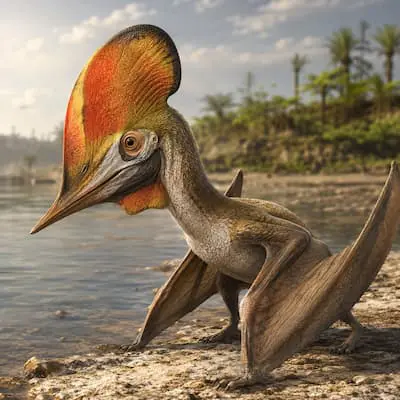
A Cretaceous pterosaur from Brazil with one of the most visually striking crests in the pterosaur world. Its crest was a tall, sail-like structure on top of its head, possibly brightly colored in life. Tapejara had a wingspan of about 3.5 meters (11.5 feet) and was active for short periods during the day. The name comes from the Tupi language and roughly translates to the lord of the ways.
Nyctosaurus
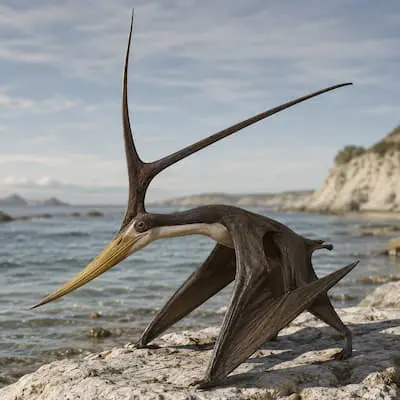
A Late Cretaceous pterosaur from the Western Interior Seaway of North America. Nyctosaurus had a spectacular L-shaped or antler-like crest that extended well beyond the back of its skull. Its wingspan was about 2 meters (6.5 feet). The crest’s size relative to the body was extraordinary, and no other pterosaur had anything quite like it. Nyctosaurus appears to have been capable of long-distance flight over open water, much like a modern albatross.
Tupandactylus
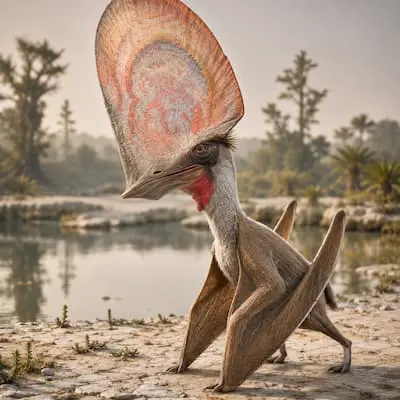
Described from beautifully preserved fossils in northeastern Brazil, Tupandactylus had one of the largest head crests relative to body size of any pterosaur. The crest was a tall, rounded sail made of bone and soft tissue. It lived during the Early Cretaceous. The name honors Tupan, the thunder god of the Tupi people. Tupandactylus was primarily a ground-dwelling predator that used the claws on its wings to move about, flying only over short distances.
Germanodactylus
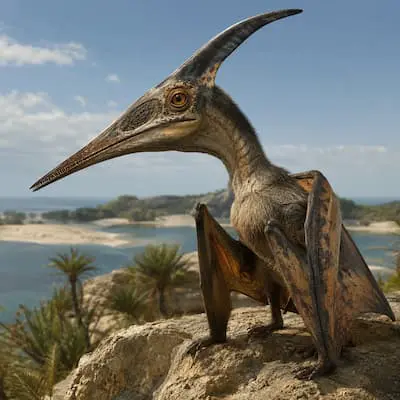
A Late Jurassic pterosaur from Germany with a bony crest along the top of its skull. The crest was covered in keratin (the same protein that makes up human fingernails), and it changed appearance during mating season. Germanodactylus had a wingspan of about 1 meter (3.5 feet), roughly raven-sized, and fed on small prey. The name means German finger.
Earliest Known Pterosaurs
The oldest pterosaurs appeared during the Late Triassic, about 228 million years ago. Even these earliest species were already fully adapted for flight, which makes tracing pterosaur origins difficult. No clear transitional fossils between ground-dwelling reptiles and flying pterosaurs have been found yet.
Eudimorphodon
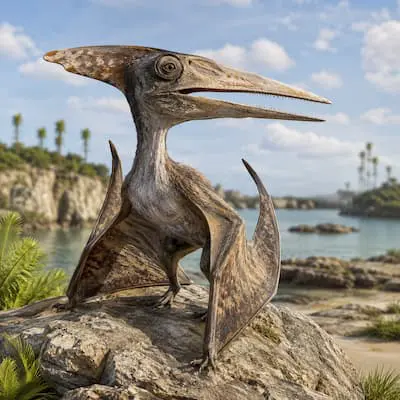
One of the earliest pterosaurs on record, dating to the Late Triassic, around 210 million years ago. Found in the Alps of northern Italy, Eudimorphodon had a wingspan of about 1 meter (3.3 feet) and a mouth full of multi-cusped teeth, more than 100 in total. Those teeth were adapted for catching fish, and fossilized stomach contents confirm a fish-based diet. The name means true two-form tooth.
Preondactylus
Another Triassic pterosaur from Italy, and one of the most primitive known. Its wingspan was about 45 centimeters (18 inches). Preondactylus was small and lightly built, with a long tail typical of early pterosaurs. It is named after the Preone valley in northeastern Italy where the fossil was discovered.
Darwinopterus
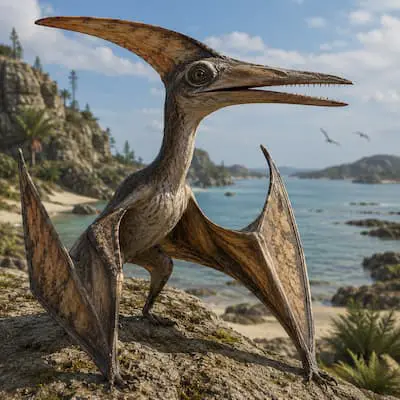
A Middle Jurassic pterosaur from China, around 160 million years old. Darwinopterus is scientifically significant because it shows a mix of primitive and advanced features: the long tail and certain skull traits of early pterosaurs combined with the shorter fifth toe and wing proportions of later pterodactyloids. This blend supports the theory that pterosaurs evolved through a modular pattern, with the head and neck modernizing before the rest of the body. Its wingspan was about 0.8 meters (2.6 feet). The name honors Charles Darwin.
Recently Discovered Flying Dinosaurs
Paleontologists continue to find new pterosaur species. Several major discoveries from the past decade have reshaped what we know about these animals.
Thanatosdrakon (2022)
Formally described from Mendoza Province, Argentina. With an adult wingspan around 9 meters (30 feet), Thanatosdrakon amaru is the largest pterosaur yet found in South America. The two specimens (one juvenile, one adult) were found in rocks dating to the Late Cretaceous, about 86 million years ago. The discovery showed that giant azhdarchids were not limited to North America and Europe.
Cryodrakon (2019)
Named from fossils in Dinosaur Provincial Park, Alberta, Canada. Previously mistaken for Quetzalcoatlus, Cryodrakon boreas was recognized as a separate azhdarchid species after detailed examination of its neck vertebrae. Adult wingspan: approximately 10 meters (33 feet). The name means frozen dragon, a nod to Canada’s climate.
Dearc sgiathanach (2022)
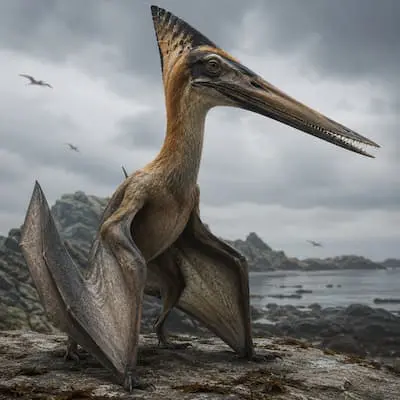
Discovered on the Isle of Skye, Scotland, and described as the best-preserved pterosaur skeleton from the Jurassic period worldwide. Dearc (pronounced “jark”) lived about 170 million years ago and had an estimated wingspan of over 2.5 meters (8 feet), making it the largest Jurassic pterosaur known. The name is Scottish Gaelic for winged reptile.
Feathered Dinosaurs That Could Fly
Pterosaurs were not the only prehistoric creatures that took to the air. Several small, feathered dinosaurs from the theropod group developed the ability to fly or glide. These are the ancestors of modern birds, not the pterosaurs.
Archaeopteryx
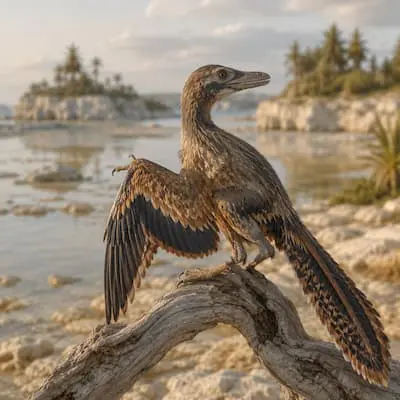
Widely regarded as the oldest known bird, Archaeopteryx lived during the Late Jurassic, about 150 million years ago, in what is now southern Germany. It had feathered wings with a span of about 0.5 meters (1.6 feet), but it also had teeth, clawed fingers, and a bony tail, traits shared with small predatory dinosaurs. Weighing about one kilogram, roughly the size of a raven, Archaeopteryx provides the strongest evidence for the evolutionary link between theropod dinosaurs and birds. Its German name, Urvogel, means original bird.
Microraptor
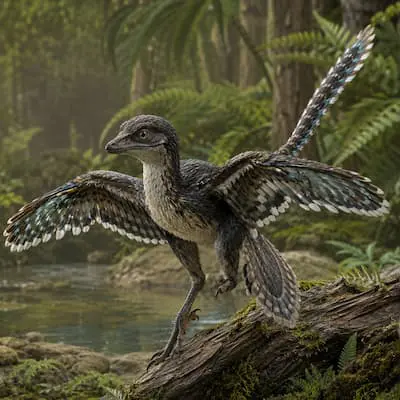
A four-winged feathered dinosaur from the Early Cretaceous of China, about 125 million years ago. Microraptor had flight feathers on both its arms and its legs, giving it four lifting surfaces. It was small, only about 77 centimeters (2.5 feet) long, and likely glided between trees rather than flapping for sustained flight. Fossils show iridescent black feathers similar to those of a modern crow.
Anchiornis
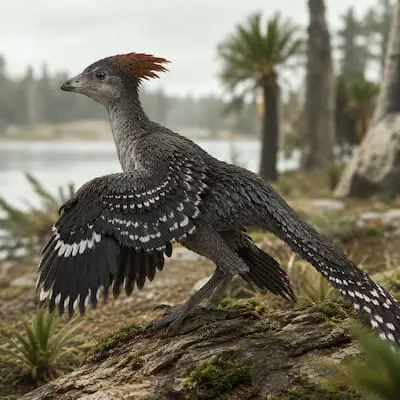
A tiny feathered dinosaur from the Late Jurassic of China, roughly 160 million years ago. Anchiornis weighed about 110 grams and had feathered limbs. Detailed fossil analysis has revealed its exact color pattern: a gray body, black-and-white striped wings, and a reddish-brown crest. Anchiornis could glide but was not capable of powered flight. Its name means near bird.
How Did Pterosaurs Fly
Pterosaur flight worked differently from bird flight. Their wings were membranes of skin and muscle stretched from the tip of an extremely elongated fourth finger to the body and hind legs. This membrane was not a thin flap. It contained densely packed muscle fibers called actinofibrils that gave the wing structure and control, allowing pterosaurs to adjust wing shape during flight.
Their bones were hollow and pneumatized (filled with air extensions from the lungs), which reduced weight dramatically. A Quetzalcoatlus with a 10-meter wingspan weighed only about 200 to 250 kilograms, lighter than most adult male humans relative to wing area.
Pterosaurs launched from the ground using a quadrupedal vault. Instead of running on two legs like birds, they crouched on all fours and used the powerful muscles in their forelimbs to leap into the air. A single leap could get even the largest species airborne. Once in the air, they alternated between flapping and soaring, much like modern albatrosses.
Being warm-blooded gave pterosaurs the sustained energy output needed for powered flight. Their air-sac respiratory system provided a continuous flow of oxygen to the muscles, far more efficient than the lungs of a cold-blooded reptile. Pycnofibers covering the body trapped heat, maintaining the high body temperature that this active lifestyle demanded.
What Did Pterosaurs Eat
Pterosaur diets varied as widely as bird diets do now, and jaw shape gives the answer in almost every case. Sort the flying dinosaur names by what they ate and the anatomy lines up:
- Fish hunters: Pteranodon, Rhamphorhynchus and Anhanguera all had long tapering jaws with either no teeth or thin gripping ones. Anhanguera, a 4.5 metre Brazilian species, added rounded crests on both jaw tips to steady the snout.
- Insect catchers: Anurognathus had a wide gape, huge eyes and bristles around the mouth, the standard equipment of an aerial insectivore working at dusk.
- Shellfish crushers: Dsungaripterus prised molluscs loose with the upturned toothless tip of its beak, then crushed them on flat teeth set further back.
- Scavengers: Istiodactylus cut portions from carcasses with interlocking razor-edged teeth rather than hunting live prey.
- Filter feeders: Pterodaustro, a 3 metre Argentine species from 105 million years ago, grew about a thousand bristle-like teeth in its lower jaw. It strained plankton and crustaceans from shallow water exactly as a flamingo does.
- Waders: Quetzalcoatlus and the other giant azhdarchids stalked shallows and floodplains on foot, picking off whatever fitted down the throat whole.
Flying Dinosaurs Names and Sizes at a Glance
| Name | Wingspan | Time Period | Diet |
|---|---|---|---|
| Quetzalcoatlus | 10–11 m (33–36 ft) | Late Cretaceous | Small land animals |
| Hatzegopteryx | 10–11 m (33–36 ft) | Late Cretaceous | Large ground prey |
| Cryodrakon | ~10 m (33 ft) | Late Cretaceous | Uncertain (azhdarchid) |
| Thanatosdrakon | ~9 m (30 ft) | Late Cretaceous | Uncertain (azhdarchid) |
| Pteranodon | 6–7 m (20–23 ft) | Late Cretaceous | Fish |
| Ornithocheirus | 6+ m (20+ ft) | Cretaceous | Fish, marine animals |
| Tapejara | 3.5 m (11.5 ft) | Early Cretaceous | Small animals |
| Dearc sgiathanach | 2.5+ m (8+ ft) | Middle Jurassic | Likely fish |
| Nyctosaurus | 2 m (6.5 ft) | Late Cretaceous | Fish |
| Rhamphorhynchus | 1.8 m (5.9 ft) | Late Jurassic | Fish |
| Dimorphodon | 1.4 m (4.6 ft) | Early Jurassic | Insects, fish |
| Pterodactylus | 1 m (3.3 ft) | Late Jurassic | Fish, insects |
| Eudimorphodon | 1 m (3.3 ft) | Late Triassic | Fish |
| Germanodactylus | 1 m (3.5 ft) | Late Jurassic | Small prey |
| Darwinopterus | 0.8 m (2.6 ft) | Middle Jurassic | Insects, small animals |
| Tupandactylus | ~0.8 m (2.6 ft) | Early Cretaceous | Small animals |
| Sordes | 0.6 m (2 ft) | Late Jurassic | Insects |
| Archaeopteryx | 0.5 m (1.6 ft) | Late Jurassic | Insects, small animals |
| Anurognathus | 0.5 m (1.6 ft) | Late Jurassic | Insects (nocturnal) |
| Preondactylus | 0.45 m (1.5 ft) | Late Triassic | Small prey |
| Microraptor | ~0.4 m (est.) | Early Cretaceous | Small animals, insects |
| Anchiornis | ~0.3 m (est.) | Late Jurassic | Insects |
| Nemicolopterus | 0.25 m (10 in) | Early Cretaceous | Unknown (smallest pterosaur) |
FAQs
A flying dinosaur is called a pterosaur (pronounced TER-oh-soar), meaning “winged lizard” in Greek. Pterosaurs were not true dinosaurs but a related group of flying reptiles that lived during the Mesozoic Era, from about 228 to 66 million years ago. The word “pterodactyl” is an informal term that people use interchangeably, but it technically refers to one specific genus, Pterodactylus.
Quetzalcoatlus northropi holds the record as the largest known flying animal in history. Its wingspan stretched 10 to 11 meters (33 to 36 feet), comparable to a small airplane. Standing on the ground, it was about as tall as a giraffe, roughly 5 meters (16 feet). It lived in Late Cretaceous Texas, about 68 to 66 million years ago.
The flying creature in the Jurassic Park films is a Pteranodon. It appears most prominently in Jurassic Park III and Jurassic World, with its long toothless beak and distinctive backward-pointing head crest. Pteranodon was a real pterosaur that lived during the Late Cretaceous, about 86 to 84 million years ago, with a wingspan of 6 to 7 meters (20 to 23 feet).
No. Pterosaurs and dinosaurs are related but belong to different groups. Both are archosaurs, a clade that also includes crocodilians and birds, but pterosaurs evolved on a separate branch. Dinosaurs are defined as the descendants of the last common ancestor of Saurischia and Ornithischia, and that definition does not include pterosaurs. The confusion comes from popular culture grouping them together.
Pterodactylus was a small, toothed pterosaur from the Late Jurassic with a wingspan of about 1 meter. Pteranodon was much larger (6 to 7 meters wingspan), toothless, and lived during the Late Cretaceous, about 86 to 84 million years ago. Pterodactylus had teeth and no prominent head crest. Pteranodon was toothless and had a long, backward-sweeping crest. The word “pterodactyl” is also used loosely to refer to all pterosaurs, which adds to the confusion.
The smallest confirmed adult pterosaurs measured around 40 to 50 centimetres across the wings, Anurognathus and Preondactylus among them. Nemicolopterus is still quoted at under 25 centimetres, but reassessments in 2021 and 2023 identified that specimen as a hatchling rather than a full-grown animal.
You May Also Like