Did you know a group of crows is called a murder? Or that flamingos gather in a flamboyance? English has some truly strange words for describing groups of animals, and once you start learning them, they’re hard to forget. Kids especially love these words because they sound like riddles: you have to picture the animal in action before the name actually makes sense. This article breaks down the most fascinating (and kid-friendly) animal group names, explains where they came from, and gives you fun facts to share at the dinner table.
Whether you’re helping with a homework assignment, prepping trivia night, or just answering the endless stream of “why” questions kids ask, this list covers farm animals, wild animals, birds, reptiles, sea creatures, and insects, along with the history behind these unusual words and answers to the questions people ask most.
What Are Animal Group Names Called?
The official term for these words is “collective nouns.” A collective noun is simply a word used to describe a group of things, whether that’s people, objects, or animals. “Team,” “family,” and “crowd” are all collective nouns we use every day.
Animals that live in groups, or collective nouns, are a special category because many of them are hundreds of years old and were originally used by hunters, poets, and nobles in medieval England. Some were meant to be clever or funny, describing something true about how the animal looks or behaves. That’s why a group of owls is called a “parliament” (owls look wise and serious, like a group of lawmakers) and a group of jellyfish is called a “smack” (because of how they move through the water).
Not every animal has an official, widely recognized group name. Some terms are centuries old and used constantly, like “pack” of wolves or “herd” of elephants. Others are rare, playful, or mostly found in trivia books rather than everyday speech.
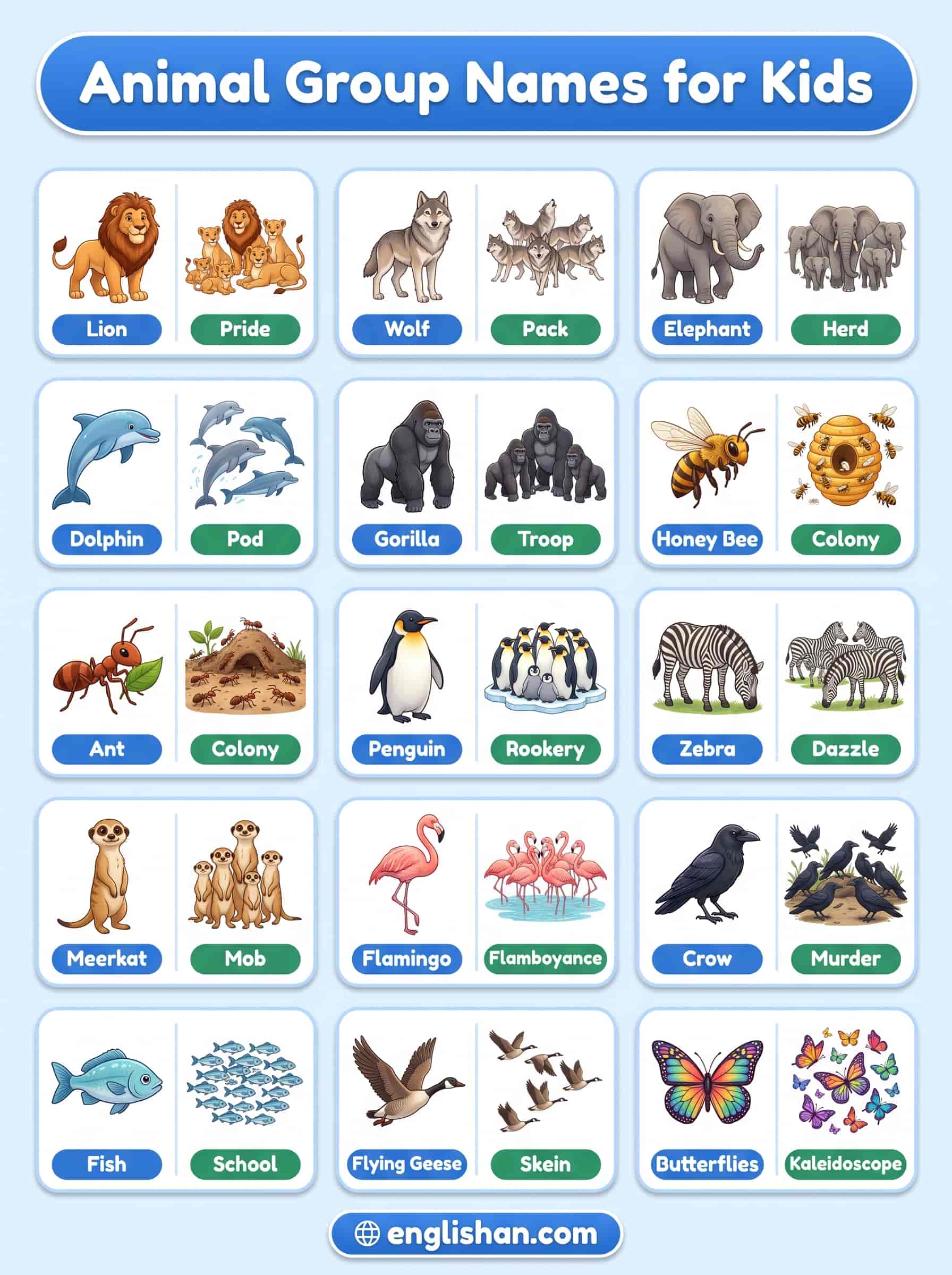
Most Popular Animal Group Names for Kids with Pictures
❶ Lions — A Pride
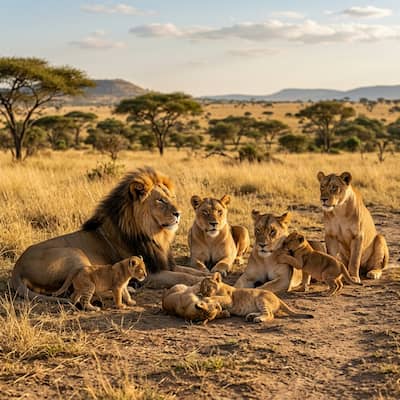
Lions are powerful big cats that live in close-knit social groups. A pride usually includes several related females, their cubs, and a small number of males. A group of lions is called a pride.
❷ Wolves — A Pack
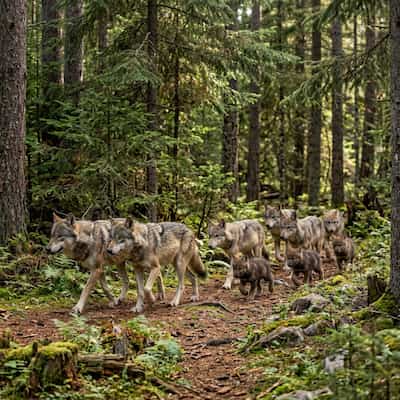
Wolves are intelligent and highly social wild canines that depend on cooperation to survive. They hunt, travel, and raise their young together as a family unit. A group of wolves is called a pack.
❸ Crows — A Murder
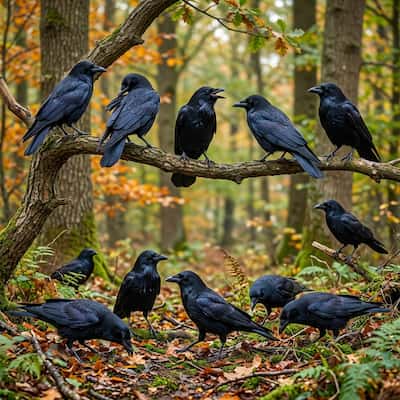
Crows are highly intelligent birds known for their problem-solving abilities and complex social behavior. They often gather in large groups, especially when roosting or searching for food. A group of crows is called a murder.
❹ Owls — A Parliament
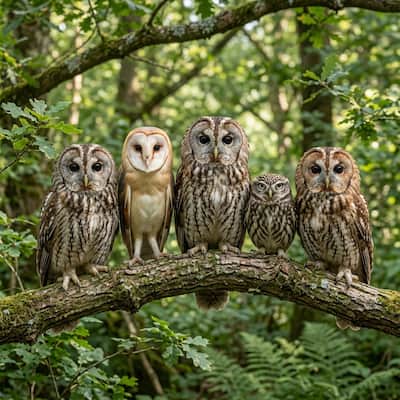
Owls are nocturnal birds of prey with excellent hearing, sharp talons, and remarkable silent-flight abilities. Although they are often solitary hunters, several owls may gather together. A group of owls is called a parliament.
❺ Zebras — A Dazzle
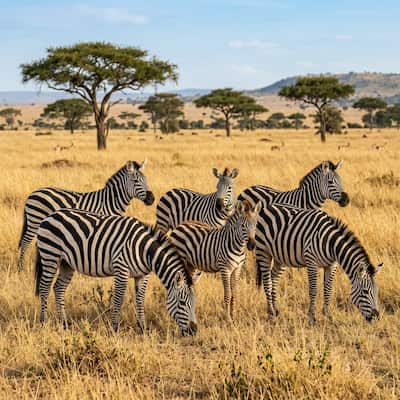
Zebras are African grazing animals famous for their distinctive black-and-white stripes. They often travel together in groups, which helps provide protection from predators. A group of zebras is called a dazzle.
❻ Elephants — A Herd
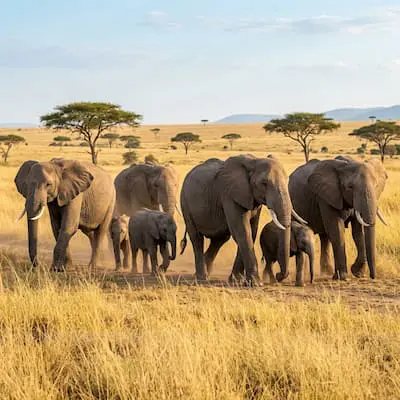
Elephants are the largest land animals and are known for their intelligence, strong memories, and close family relationships. Female elephants and their young usually live together in organized family groups. A group of elephants is called a herd.
❼ Flamingos — A Flamboyance
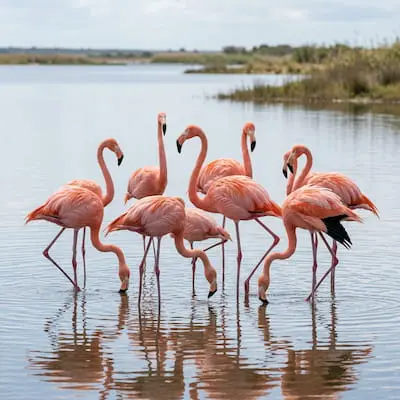
Flamingos are striking wading birds recognized for their long legs, curved bills, and pink feathers. They often gather in large colonies around lakes, lagoons, and other shallow wetlands. A group of flamingos is called a flamboyance.
❽ Giraffes — A Tower
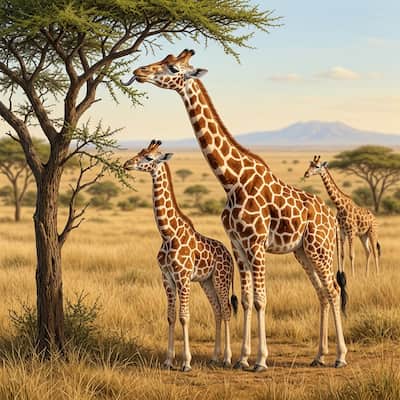
Giraffes are the tallest land animals, easily recognized by their extremely long necks and unique spotted coats. They often move together in loose social groups while feeding on leaves from tall trees. A group of giraffes is called a tower.
❾ Fish — A School
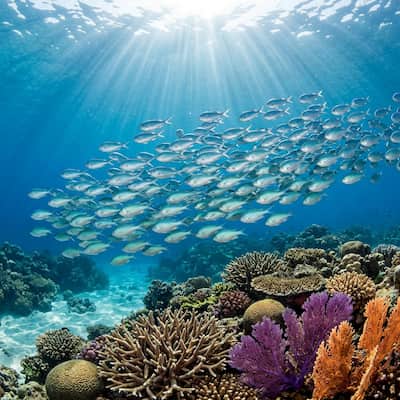
Fish are aquatic animals that often swim together in coordinated groups. Moving as a group can help them find food, navigate their environment, and reduce the risk of attack from predators. A group of fish is called a school.
❿ Geese (Flying) — A Skein
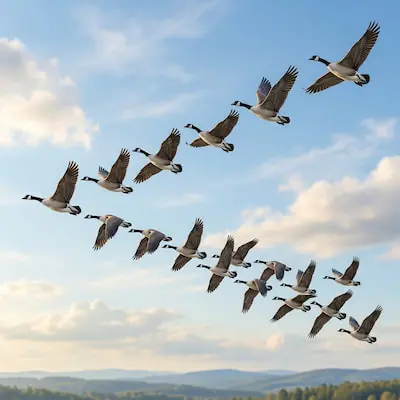
Geese are strong migratory birds that often travel long distances during seasonal migrations. When flying together, they may form organized patterns in the sky to make their journey more efficient. A group of flying geese is called a skein.
⓫ Jellyfish — A Smack
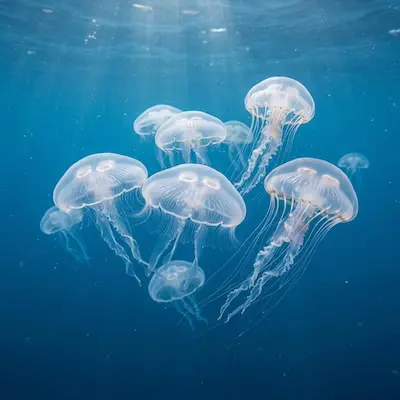
Jellyfish are soft-bodied marine animals that drift through oceans and seas with the help of water currents. They can sometimes gather in large numbers, creating impressive but potentially dangerous groups. A group of jellyfish is called a smack.
⓬ Butterflies — A Kaleidoscope
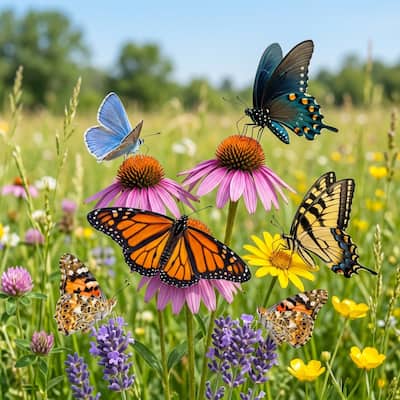
Butterflies are colorful insects known for their delicate wings and remarkable life cycle. When many butterflies gather in one place, their constantly moving wings can create a beautiful, colorful display. A group of butterflies is called a kaleidoscope.
⓭ Kangaroos — A Mob
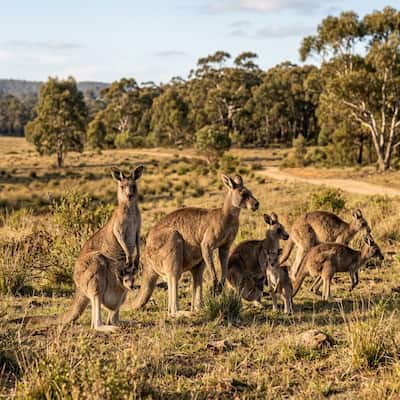
Kangaroos are powerful Australian marsupials famous for their strong hind legs and distinctive hopping movement. They are social animals that often live and travel together in groups. A group of kangaroos is called a mob.
⓮ Ravens — An Unkindness
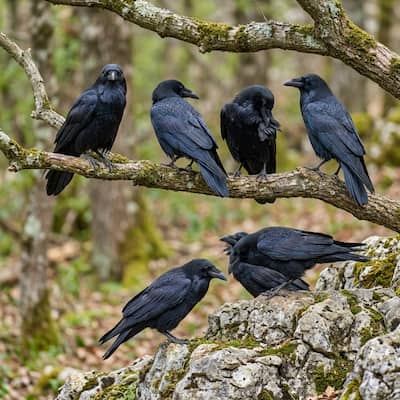
Ravens are large, intelligent black birds known for their problem-solving skills, adaptability, and impressive vocal abilities. They can form social groups and are often associated with fascinating folklore and symbolism. A group of ravens is called an unkindness.
⓯ Hippos — A Bloat
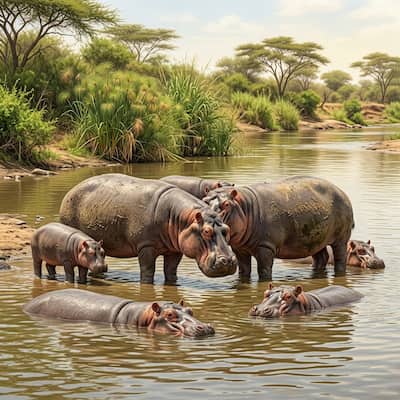
Hippos are massive semi-aquatic mammals that spend much of their time in rivers and lakes. They often gather in groups while resting in the water, where their social behavior can be clearly observed. A group of hippos is called a bloat.
Group Names for Farm Animals
Farm animals are a great place to start since kids often see these animals in person or in picture books.
- Cows: a herd
- Chickens: a flock (or a “peep” when referring to baby chicks)
- Pigs: a drove or a herd
- Sheep: a flock
- Horses: a herd (a group of wild horses is called a “band”)
- Ducks: a flock on land, but a “raft” when swimming on water
- Geese: a gaggle on land, but a “skein” when flying in formation
Here’s a fun detail kids love: geese change their group name depending on what they’re doing. On the ground, they’re a noisy “gaggle.” In the sky, flying in that classic V-shape, they become a “skein.”
Group Names for Wild Animals
Wild animals have some of the most memorable and unusual collective nouns.
| Animal | Group Name |
|---|---|
| Lions | Pride |
| Wolves | Pack |
| Elephants | Herd |
| Zebras | Zeal or dazzle |
| Giraffes | Tower |
| Rhinos | Crash |
| Hippos | Bloat |
| Monkeys | Troop |
| Kangaroos | Mob |
| Foxes | Skulk or leash |
A group of zebras being called a “dazzle” makes perfect sense once you picture a whole herd of them standing together. Their black and white stripes blur together, making it hard for predators to pick out just one zebra to chase. The name isn’t just cute, it actually describes a real survival strategy.
Giraffes get called a “tower” for an obvious reason: they’re the tallest land animals on Earth, and a group of them standing together looks exactly like a tower.
A few more wild animal names worth knowing: tigers are called a “streak” or, less commonly, an “ambush,” bears form a “sloth,” and squirrels gather in a “scurry.” Interestingly, tigers and leopards are solitary animals by nature, so seeing a real “streak” of tigers together in the wild is extremely rare. Domestic cats have their own quirky group name too: a “clowder.”
Group Names for Birds
Birds have some of the most poetic and unusual group names of any animal category.
- Crows: a murder
- Owls: a parliament
- Flamingos: a flamboyance
- Peacocks: an ostentation
- Ravens: an unkindness
- Larks: an exaltation
- Hawks: a kettle (when circling in the sky)
- Penguins: a colony (or a “waddle” on land)
- Vultures: a committee (on the ground) or a “kettle” (in flight)
The word “murder” for crows sounds dramatic, but it likely comes from old folktales where crows were seen as omens of death, not from anything crows actually do. Crows are actually very intelligent birds known for problem-solving and even remembering human faces.
“Parliament” for owls fits their serious, unblinking stare, which made people think of stern lawmakers gathered for a meeting. It’s a great example of how many of these names come from how an animal looks rather than how it behaves.
Group Names for Reptiles and Amphibians
Reptiles and amphibians don’t come up as often in group-name lists, but they have some memorable ones too.
- Crocodiles vs alligators: a float (or a “bask” when they’re sunning themselves on land)
- Turtles: a bale
- Snakes: a nest, or a “rhumba” for a group of rattlesnakes specifically
- Frogs: an army
- Toads: a knot
- Lizards: a lounge
A “bask” of crocodiles is a genuinely useful name to know, since these reptiles are cold-blooded, meaning they can’t generate their own body heat. Sunning themselves in groups, or basking, is exactly how they warm up.
Group Names for Sea Creatures
The ocean has its own set of surprising collective nouns.
- Fish: a school or a shoal
- Sharks: a shiver
- Dolphins: a pod
- Whales: a pod or a gam
- Jellyfish: a smack
- Sea otters: a raft
- Octopuses: a consortium
- Crabs: a cast
Sea otters holding hands (called “rafting”) while they float and sleep is a real behavior, not just a cute name. They do this to keep from drifting away from each other while resting in the water.
“School” is one of the most common group names kids already know, but its origin surprises most people. It doesn’t come from the classroom sense of “school” at all. It traces back to an old Dutch word, “schole,” which simply meant “a crowd” or “a group.” Fish just happened to keep that borrowed word in English.
Group Names for Insects and Small Creatures
Insects: Even the tiniest animals get their own special group names.
- Bees: a swarm
- Ants: a colony
- Butterflies: a kaleidoscope or a flutter
- Locusts: a plague
- Ladybugs: a loveliness
- Squirrels: a scurry (their nest, by the way, is called a “drey,” not to be confused with the group name)
“A kaleidoscope of butterflies” might be the prettiest entry on this whole list, and it’s easy to see why once you picture dozens of colorful butterflies fluttering together in a garden.
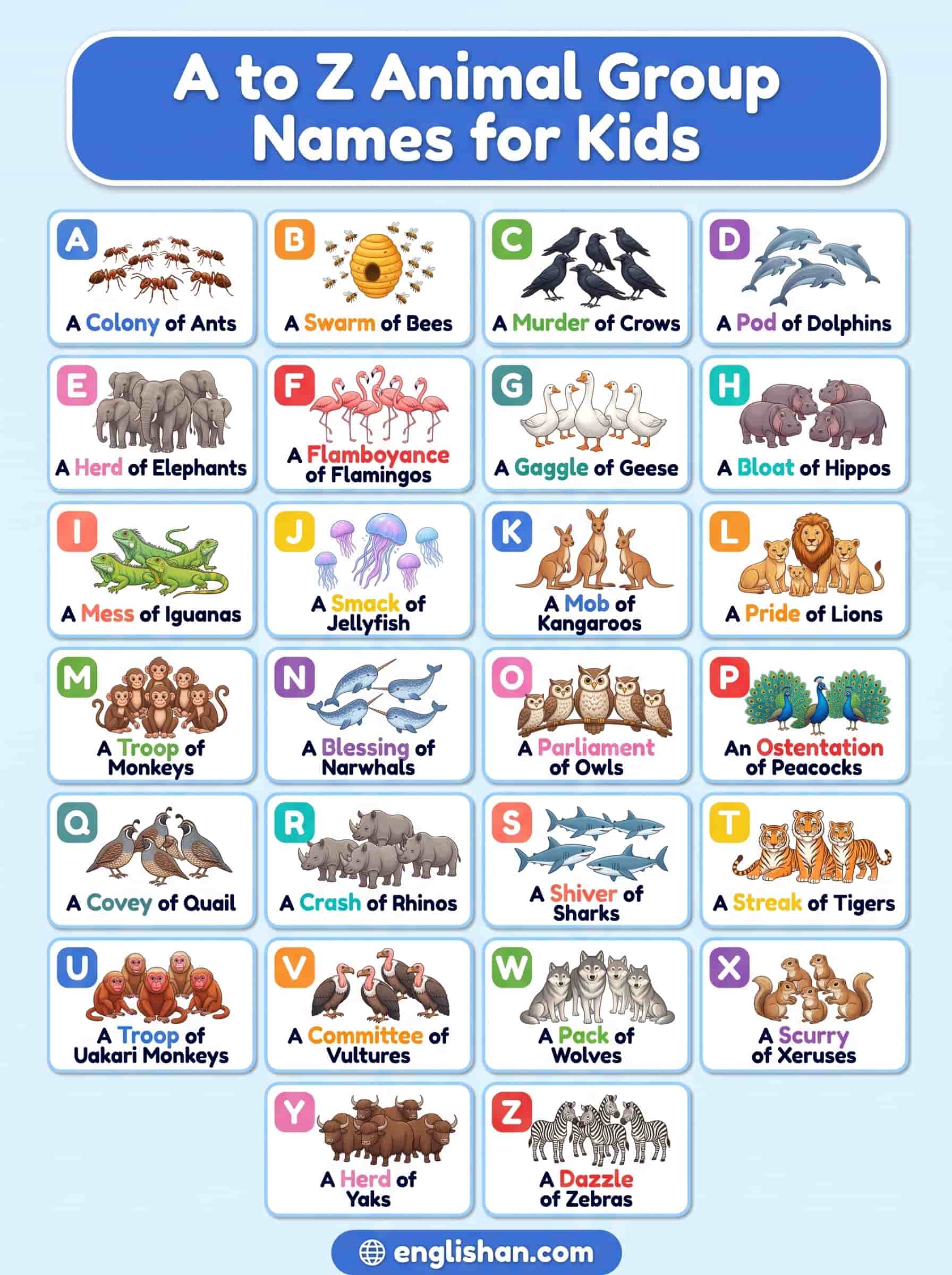
A to Z List of Animal Group Names for Kids
Here’s a full A to Z list covering one animal for every letter of the alphabet, so you have a complete reference in one place.
- A – Ants: a colony
- B – Bees: a swarm
- C – Crows: a murder
- D – Dolphins: a pod
- E – Elephants: a herd
- F – Flamingos: a flamboyance
- G – Geese: a gaggle
- H – Hippos: a bloat
- I – Iguanas: a mess
- J – Jellyfish: a smack
- K – Kangaroos: a mob
- L – Lions: a pride
- M – Monkeys: a troop
- N – Narwhals: a blessing
- O – Owls: a parliament
- P – Peacocks: an ostentation
- Q – Quail: a covey
- R – Rhinos: a crash
- S – Sharks: a shiver
- T – Tigers: a streak
- U – Uakari monkeys: a troop
- V – Vultures: a committee
- W – Wolves: a pack
- X – Xerus (African ground squirrels): a scurry
- Y – Yaks: a herd
- Z – Zebras: a dazzle
Letters like U and X don’t have many well-known animals, so their collective nouns are less commonly used than terms like “pride” or “herd.” Still, this list gives you a complete set to reference no matter which letter comes up.
Why Do Some Group Names Sound So Strange?
Many of these unusual terms come from a 15th-century English text called “The Book of Saint Albans,” which listed proper terms hunters and nobles were expected to know. Over time, some of these words became part of everyday language (like “flock” and “herd”), while others stayed rare and mostly show up in trivia and word games.
It’s worth knowing that not everyone agrees on which terms are “official.” Dictionaries sometimes list multiple accepted names for the same animal, and new playful terms get invented from time to time. If your child hears a different name than what’s listed here, it’s not necessarily wrong. It might just be a regional variation or an alternate term that’s also used.
Top 10 Animal Group Names for Kids
For a fast cheat sheet, here are some of the most commonly asked-about animal group names in one place:
| Animal | Group Name |
|---|---|
| Lions | Pride |
| Wolves | Pack |
| Crows | Murder |
| Owls | Parliament |
| Fish | School |
| Geese (flying) | Skein |
| Flamingos | Flamboyance |
| Elephants | Herd |
| Butterflies | Kaleidoscope |
| Jellyfish | Smack |
Fun Ways to Teach Kids Animal Group Names
Learning these words is more fun as a game than as a list to memorize. A few ideas that work well with kids:
- Matching games: Write animal names on one set of cards and group names on another, then have kids match them up.
- Silly sentences: Ask kids to use the group name in a sentence, like “A dazzle of zebras ran across the field.”
- Guess the reason: Ask kids to guess why an animal might have its group name before telling them the answer. This works especially well with names like “tower” of giraffes or “dazzle” of zebras.
- Zoo or nature walks: If you spot a group of birds or ducks in real life, ask your child what that group is called.
These activities build vocabulary while also encouraging kids to think about animal behavior and appearance, which makes the learning stick.
Key Takeaways
Animal group names, or collective nouns, add color and personality to the English language, and many of them describe something real about how an animal looks or behaves. Some, like “herd” and “flock,” are common words kids already know. Others, like “murder” of crows or “parliament” of owls, are more unusual but make for great trivia and fun conversation starters. Whether you’re helping with a school vocabulary assignment or just looking for a fun way to talk about animals, these terms are a simple, memorable way to make learning about the animal kingdom more interesting.
FAQs
Yes. “Herd” is generally used for large land mammals like cows, elephants, and horses, while “flock” is used for birds and some woolly mammals like sheep. The distinction isn’t a strict rule, though. Language evolves, and some names get used more loosely over time.
Sometimes, yes. A group of kittens is called a “kindle” or “litter,” a group of puppies is a “litter,” and baby geese are called a “gaggle” too, since gaggle can apply to geese of any age. Baby chickens gathered together are often called a “peep,” which comes from the sound they make.
Many animals picked up different names in different regions or eras, and dictionaries often keep several as equally valid. Crows, for example, are sometimes called a “murder” and other times a “horde.” Neither one is more correct than the other.
Not usually. Biologists and wildlife researchers typically just say “group,” “herd,” or “population” in scientific writing. Collective nouns like “parliament” of owls or “murder” of crows are cultural and linguistic traditions rather than scientific classifications.
There are a lot of contenders, but a “murder” of crows, a “parliament” of owls, and a “smack” of jellyfish are usually the ones that surprise people the most. What makes them memorable is that they don’t sound like typical animal words at all, which is exactly why kids tend to remember them so well.
Repetition and association work best. Instead of memorizing a plain list, connect each name to something visual or logical, like picturing zebra stripes blending together for a “dazzle” or picturing lawmakers for a “parliament” of owls. Games, flashcards, and pointing out real animals when you see them also help the names stick.
You May Also Like
Collective Nouns for Animals Quiz
Collective Nouns for Animals
What is a group of lions called?
Pride is used for lions and for nothing else.
Collective nouns are fixed and must be learned individually.
A pride of lions rested in the shade.
What is a group of crows called?
One of the oldest and strangest collective nouns in English.
Birds have some of the most distinctive group words.
A murder of crows lifted off the field.
Complete the phrase.
A group of fish swimming together is called a ___.
A shoal simply stays together; a school moves in coordinated formation.
School implies coordination, shoal only proximity.
The shoal broke into a school as the predator closed in.
What is a group of geese called on the ground?
On the ground it is a gaggle; in flight it becomes a skein.
The same birds change group word depending on what they are doing.
A gaggle on the water, a skein overhead.
Which pairing is wrong?
Wolves come in packs; herd belongs to grazing animals.
Herd for grazers, pack for hunters.
A pack of wolves crossed the ridge.
Turn on JavaScript for the interactive quiz. The full practice set is shown above.