

Animals are fascinating creatures, and one of the most remarkable behaviors they display is the tendency to live, travel, and survive together in groups. From the thundering herds of wildebeest crossing the African savanna to the tightly packed schools of fish darting through the ocean, group living is one of nature’s most powerful survival strategies. In this comprehensive article, you will discover the names of animals that live in groups, what those groups are called, why animals choose this lifestyle, and the incredible advantages it offers.
Why Do Animals Live in Groups?
Before diving into the list of animals that live in groups, it is important to understand why so many species have evolved this behavior. Living in a group is not simply a social preference. It is a carefully selected survival strategy shaped by millions of years of evolution.
Key reasons animals live in groups include:
- Protection from predators: More eyes mean threats are spotted sooner. Many animals in a group take turns acting as sentinels while others feed or rest.
- Cooperative hunting: Predators like wolves and lions work as a team to take down prey far larger than any individual could manage alone.
- Warmth and thermoregulation: Penguins huddle together in Antarctic blizzards, sharing body heat to survive extreme cold.
- Raising young: Group living allows animals to share the burden of protecting, feeding, and teaching offspring.
- Foraging efficiency: Groups can cover more ground when searching for food and share knowledge of resource locations.
- Mating opportunities: Living in a social group increases the chances of finding a suitable mate during breeding season.
Explore more animals that start with different letters:
A | B | C | D | E | F | G | H | I | J | K | L | M | N | O | P | Q | R | S | T | U | V | W | X | Y | Z
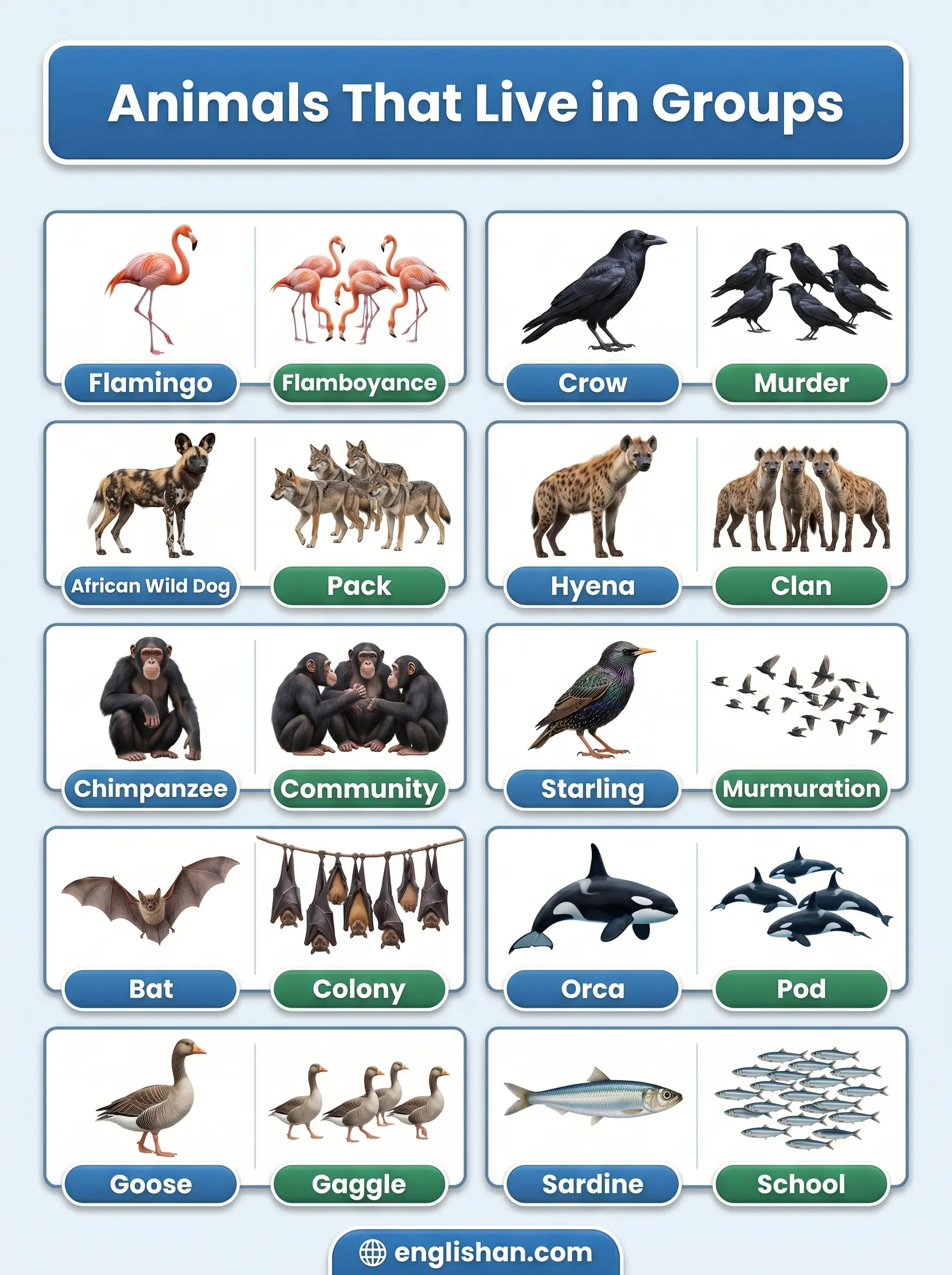
Types of Animal Groups
Not all animal groups are the same. Scientists classify animal social systems into distinct types based on how members interact, reproduce, and organize themselves. Understanding these types helps explain why group living looks so different across species.
1. Eusocial Colonies The highest level of social organization in the animal kingdom, found in bees, ants, termites, and naked mole rats.
- Only one or a few individuals reproduce; all others support the colony
- Multiple overlapping generations live and work together
- Labor is divided into castes: queens, workers, soldiers, nurses
- The colony functions as a single superorganism rather than a collection of individuals
2. Fission-Fusion Societies A flexible system found in chimpanzees, dolphins, elephants, and African wild dogs.
- The large group periodically splits into smaller sub-groups (fission) and reunites (fusion)
- Sub-group membership changes frequently depending on food availability and social factors
- Individuals maintain long-term bonds even when temporarily separated
- This system balances the benefits of large groups with the efficiency of small foraging parties
3. Dominance Hierarchy Groups Found in wolves, primates, hyenas, horses, and many other species.
- Group members are ranked in a clear social order from dominant to subordinate
- Higher-ranked individuals get priority access to food, mates, and resting sites
- Hierarchies reduce constant fighting by establishing predictable social rules
- Leadership typically goes to the strongest, most experienced, or most politically connected individual
4. Egalitarian Flocks and Shoals Found in many bird species, fish schools, and some insect swarms.
- No single leader directs the group permanently
- Leadership is temporary and goes to whoever has the best information at a given moment
- Movement and decisions emerge from each individual following simple rules based on nearest neighbors
- The result is stunningly coordinated collective behavior without any central command
5. Harem Groups Found in sea lions, gorillas, deer, and many ungulates.
- One dominant male controls exclusive mating access to a group of females
- Males compete intensely during breeding seasons for harem ownership
- Females and young benefit from the male’s territory defense
- Non-dominant males live separately in bachelor groups until they can challenge a harem holder
6. Cooperative Breeding Groups Found in meerkats, African wild dogs, and certain bird species like Arabian babblers.
- Non-breeding group members actively help raise offspring that are not their own
- Helpers may feed, guard, groom, or teach the young
- This system evolves when helpers are close relatives (sharing genes) or when helping improves their future breeding prospects
- Groups with more helpers typically raise more young successfully
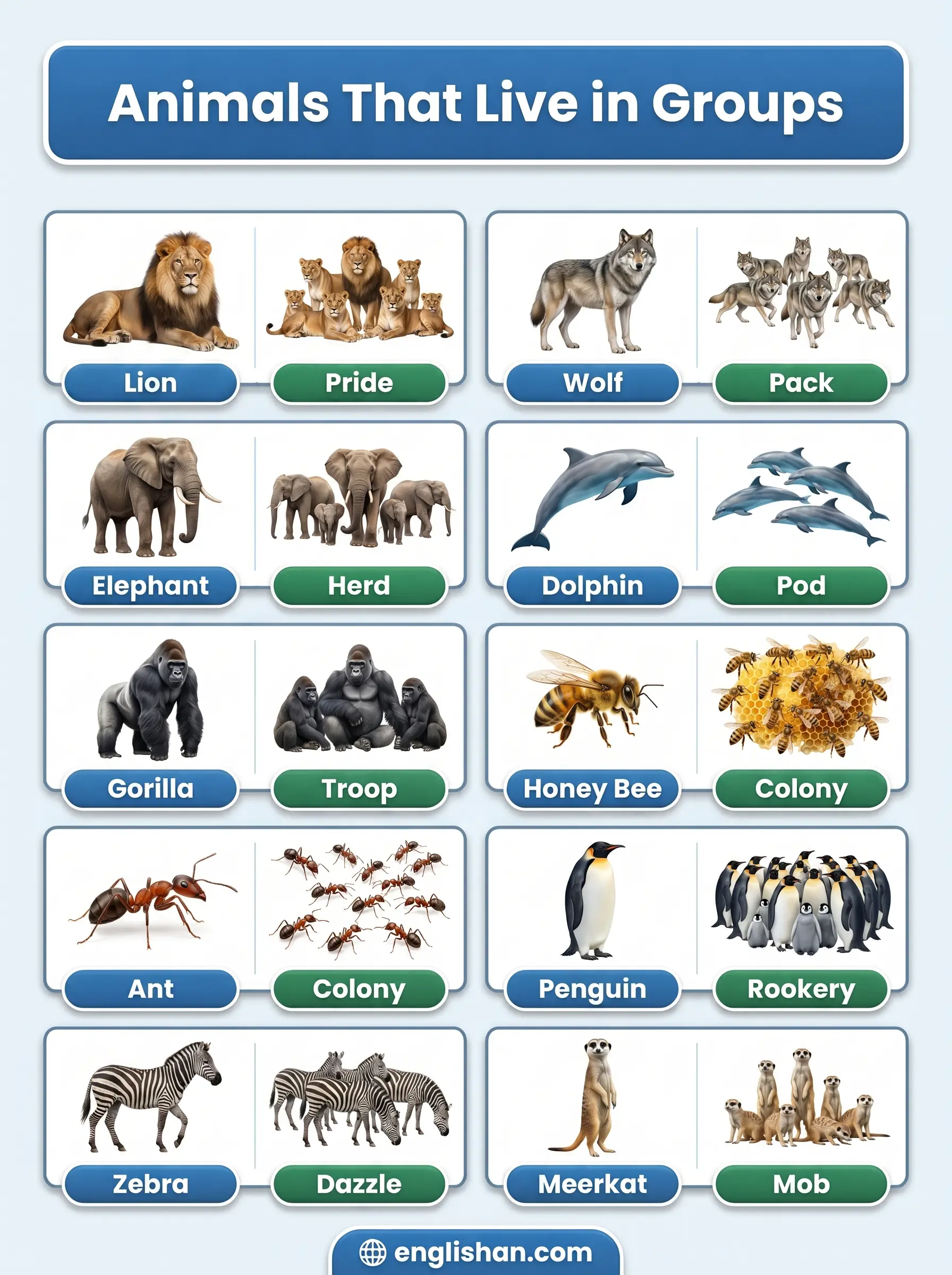
Common Animals That Live in Groups Names
Many of the animals people encounter most often in nature, wildlife documentaries, and everyday life are social species. Here are 20 of the most well-known group-living animals, covering land, sky, and sea.
❶ Lion — Pride of Lions
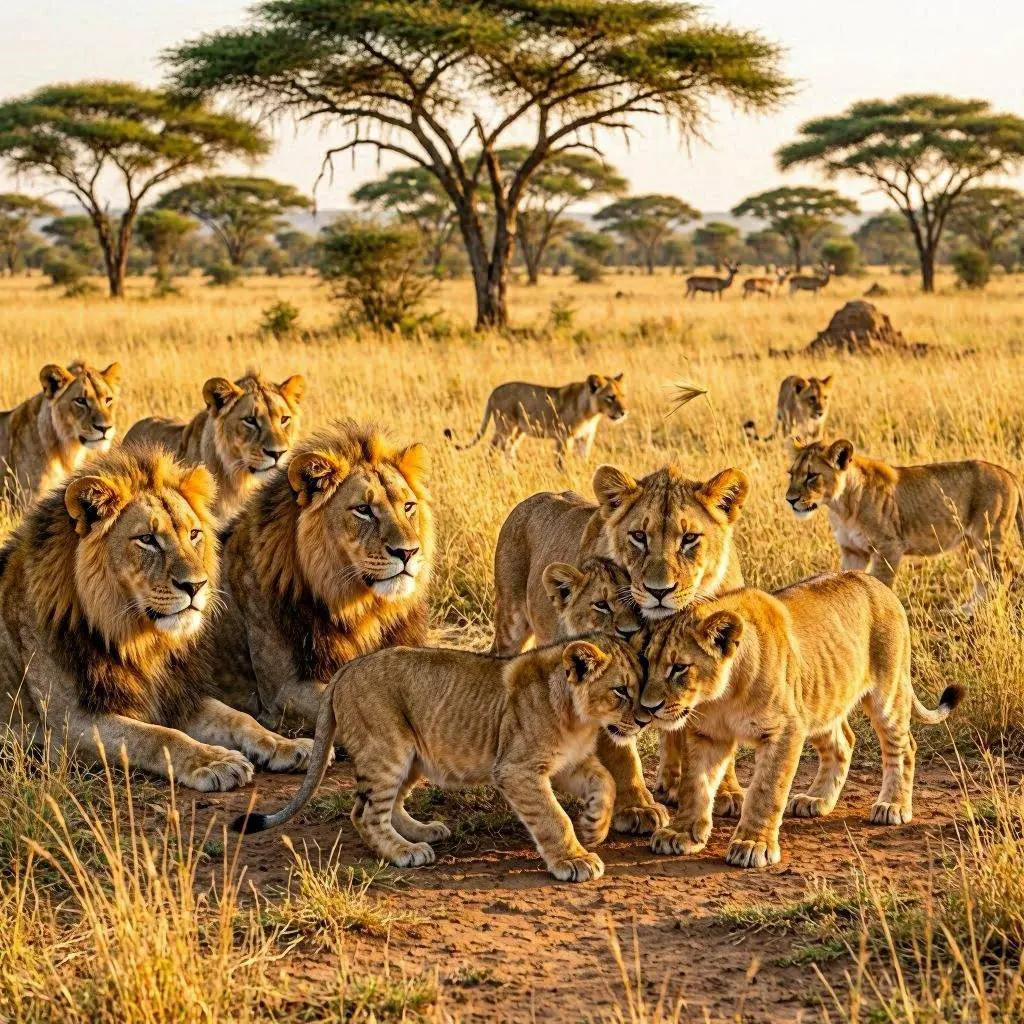
Group Name: Pride
Habitat: African savannas, grasslands, and open woodlands; a small population in Gir Forest, India
Lions are the only truly social wild cats. A pride of 10 to 15 members consists of related females, their cubs, and a coalition of males who defend the territory. Females do most of the hunting cooperatively, while males patrol and mark boundaries.
- Pride territory can span up to 100 square miles
- Female lions in a pride synchronize births so cubs are raised together
- A pride’s roar can be heard up to 8 km away
- Cubs are cared for communally by all females in the pride
❷ Wolf — Pack of Wolves
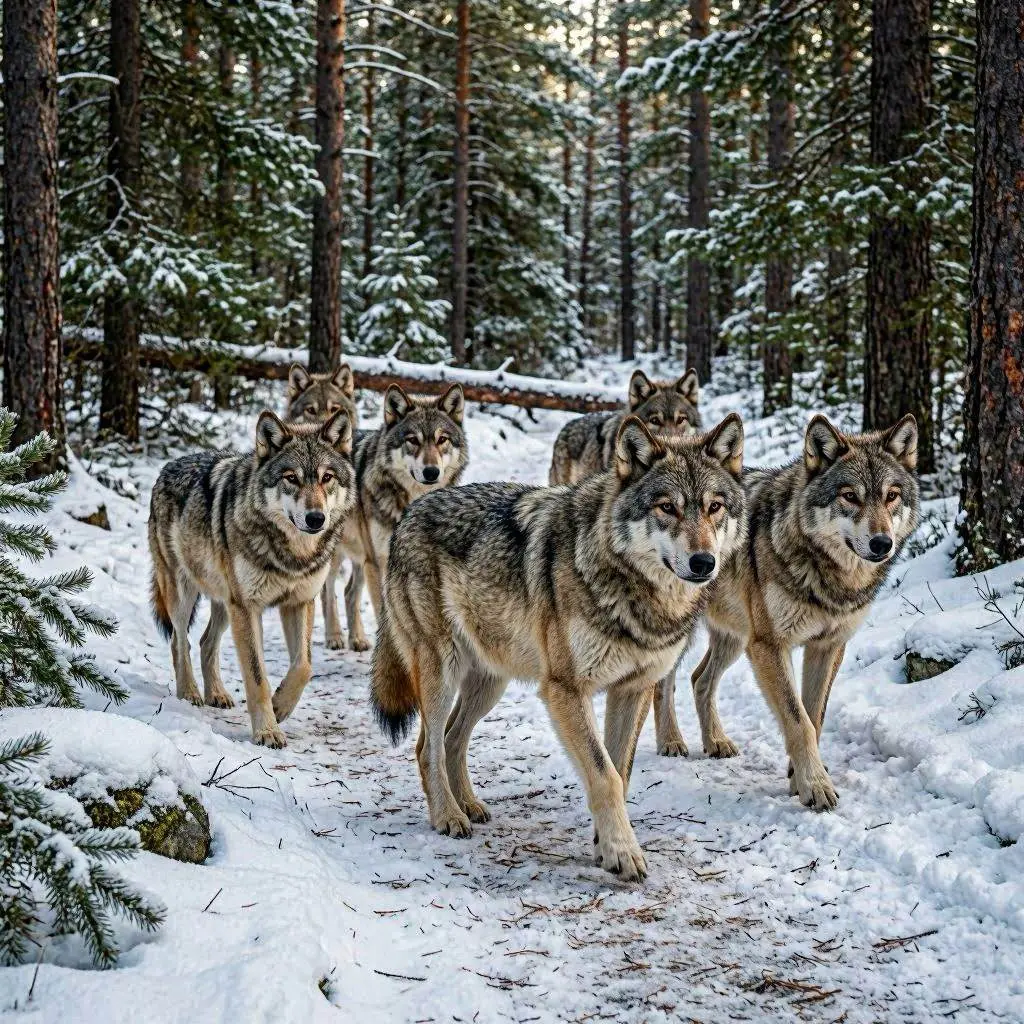
Group Name: Pack
Habitat: Forests, tundra, mountains, and grasslands across North America, Europe, and Asia
Wolves are among the most studied social carnivores on Earth. A pack of 5 to 10 wolves is led by an alpha breeding pair, and every member has a defined role in hunting, pup-rearing, and territory defense.
- Packs cooperate to hunt prey many times their individual size, including moose and bison
- All pack members help feed and protect pups by regurgitating food
- Each pack has a unique howl pattern that functions as a group signature
- Territories are marked with scent and defended against rival packs
❸ Elephant — Herd of Elephants
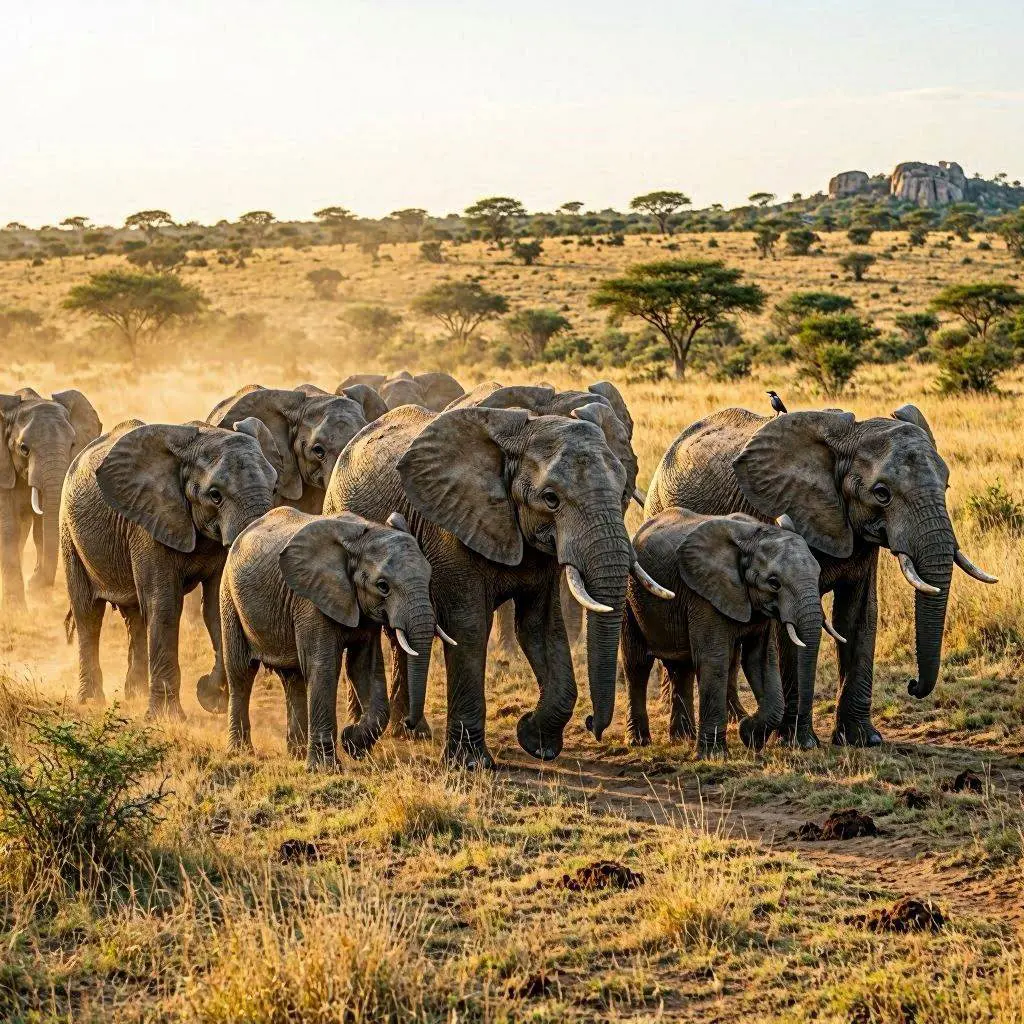
Group Name: Herd
Habitat: African savannas, forests, and Asian tropical forests and grasslands
Elephant herds are matriarchal societies led by the oldest and most experienced female. A typical herd contains 6 to 20 closely related females and their calves, while adult males live separately or in small bachelor groups.
- The matriarch’s memory guides the herd to water and food during droughts
- Elephants mourn their dead and show empathy toward distressed herd members
- Calves are protected and taught by every female in the group
- Herds communicate over long distances using infrasound below human hearing
❹ Dolphin — Pod of Dolphins
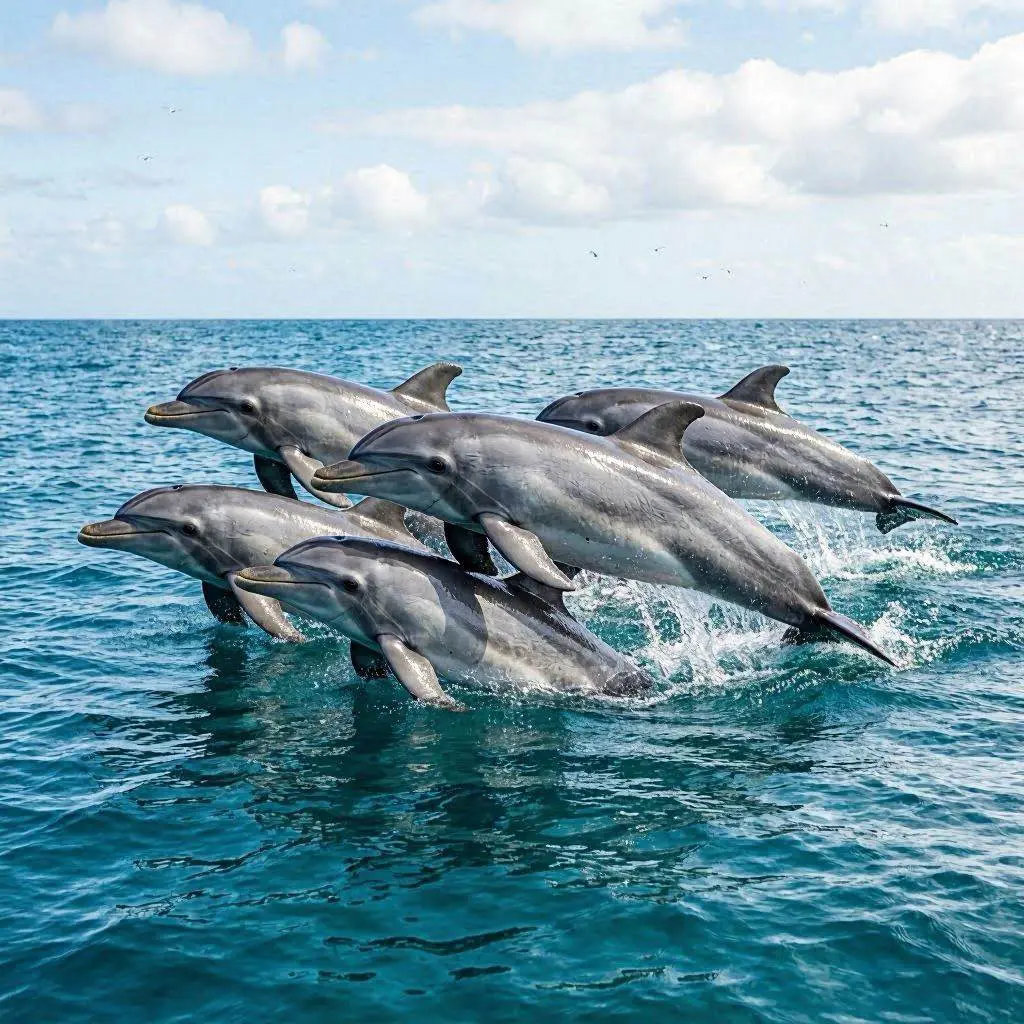
Group Name: Pod
Habitat: Oceans and coastal waters worldwide, including some river systems
Dolphins live in pods of 10 to 30 individuals, though super-pods of thousands form in productive feeding areas. They are among the most socially sophisticated marine animals, maintaining long-term individual bonds within the pod.
- Dolphins have individual signature whistles that function as names
- Pods cooperate to herd fish using coordinated swimming and bubble techniques
- Mothers and calves maintain a close bond for years after birth
- Pods have been observed teaching young dolphins hunting techniques specific to their region
❺ Gorilla — Troop of Gorillas
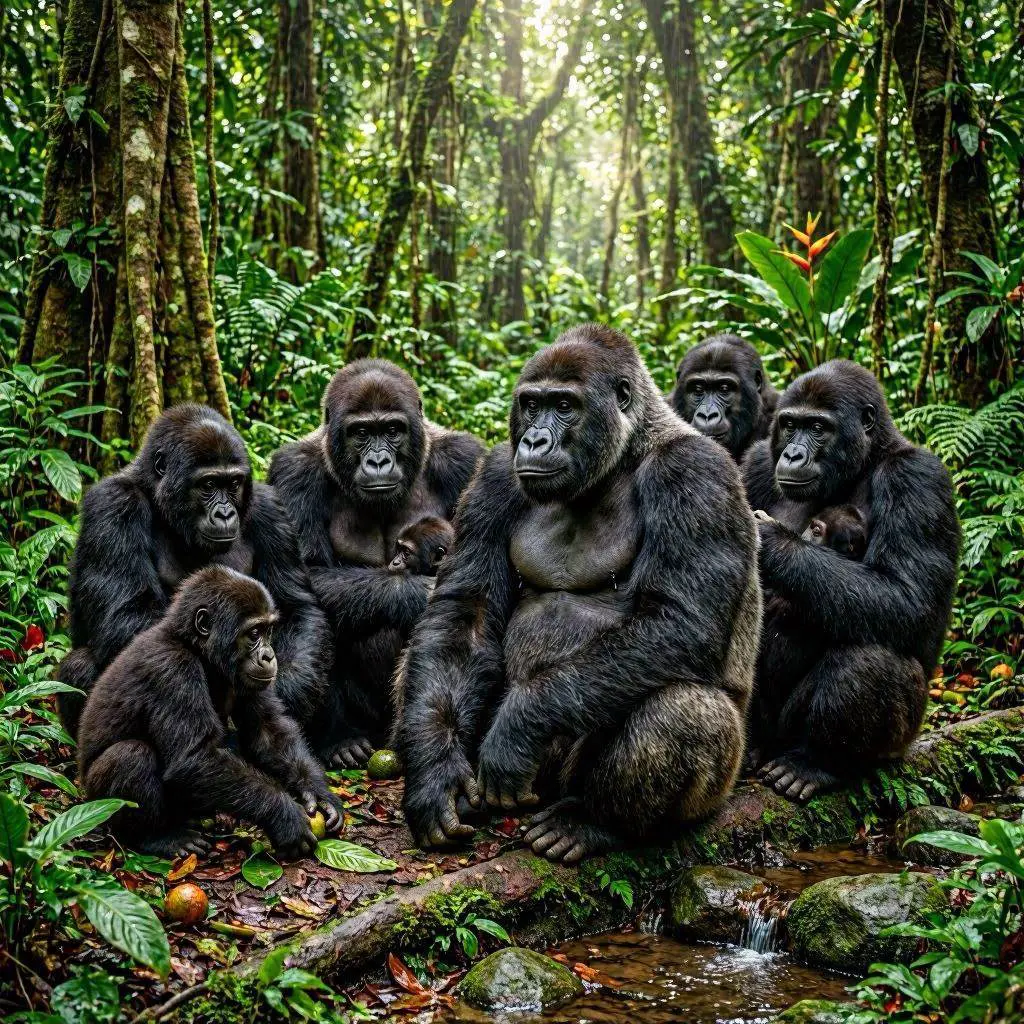
Group Name: Troop
Habitat: Tropical and subtropical forests of central Africa, including mountain and lowland regions
A gorilla troop of 5 to 30 individuals is led by a silverback male who makes all major decisions for the group. Females and juveniles build long-term relationships within the troop, maintained through grooming and close physical contact.
- The silverback protects the troop from predators and rival males
- Troop members communicate through a rich system of vocalizations, facial expressions, and postures
- Young gorillas play together extensively, which builds social bonds and motor skills
- Troops occasionally overlap in range but generally avoid direct conflict
❻ Bee (Honeybee) — Colony of Honey Bees
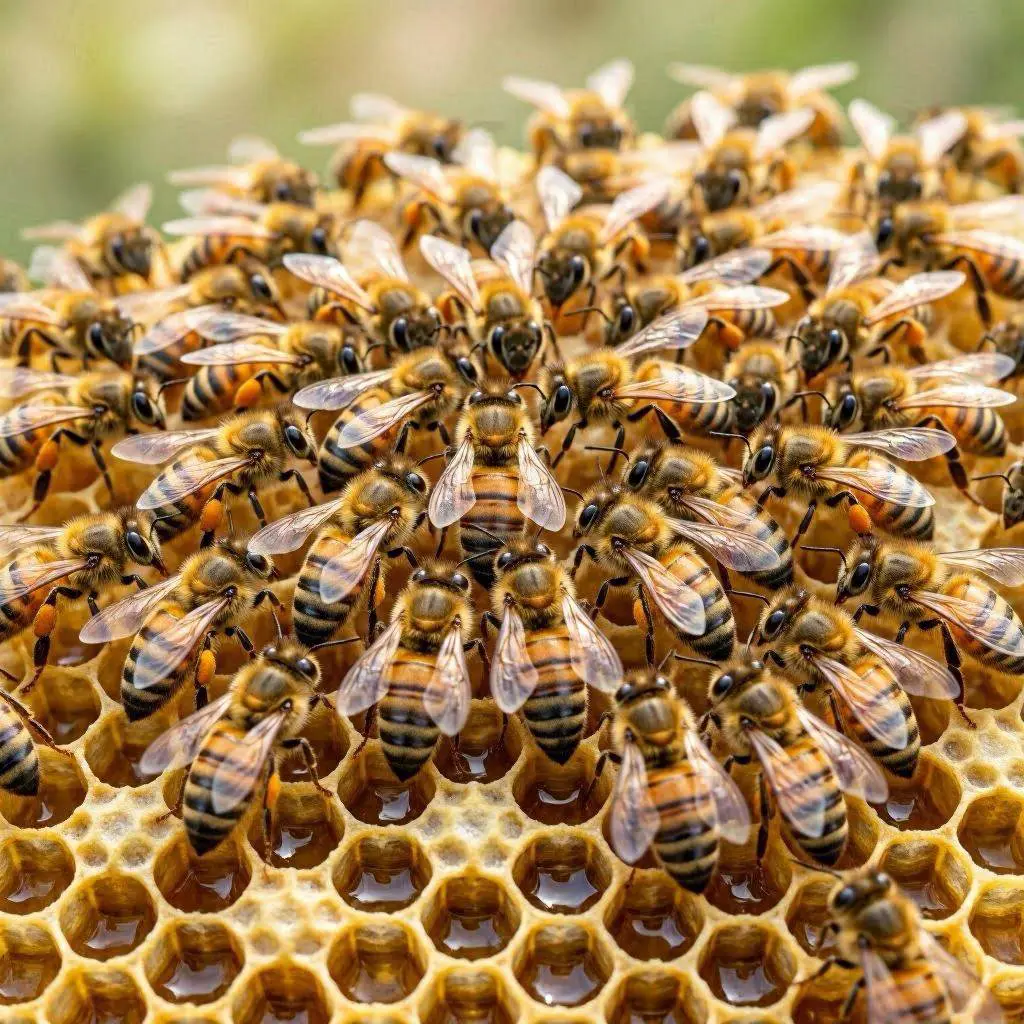
Group Name: Colony or Swarm
Habitat: Every continent except Antarctica; wild colonies in tree hollows, rock crevices, and other enclosed spaces
A honeybee colony of up to 80,000 individuals is one of nature’s most organized societies. A single queen is the sole reproducer, while thousands of female workers handle every other task from building the hive to foraging and defending.
- Worker bees communicate food locations through a precise “waggle dance”
- The colony maintains a constant internal temperature of about 35 degrees Celsius
- When overcrowded, the colony swarms: the queen leaves with half the workers to establish a new hive
- Male drones exist solely to mate with a new queen; they are expelled before winter
❼ Ant — Colony of Ants
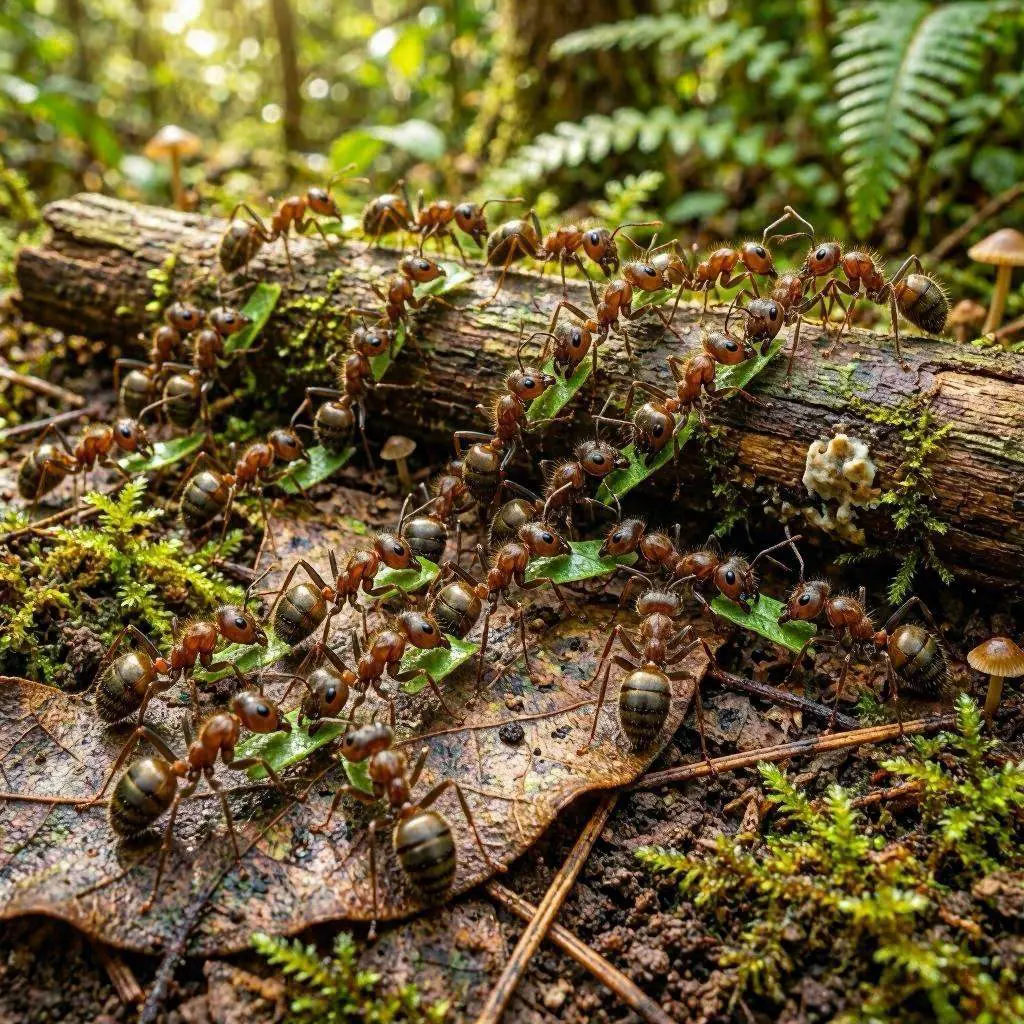
Group Name: Colony
Habitat: Nearly every terrestrial habitat on Earth, from rainforests to deserts to urban areas
Ant colonies are among the most complex social organizations in the animal kingdom. A colony operates as a superorganism with a clear division of labor: a queen who reproduces, workers who forage and maintain the nest, and soldiers who defend it.
- Some army ant colonies contain over 700 million individuals
- Ants communicate primarily through chemical signals called pheromones
- Leaf-cutter ants cultivate underground fungus gardens as their primary food source
- The combined weight of all ants on Earth is estimated to rival that of all humans
❽ Penguin — Colony of Penguins
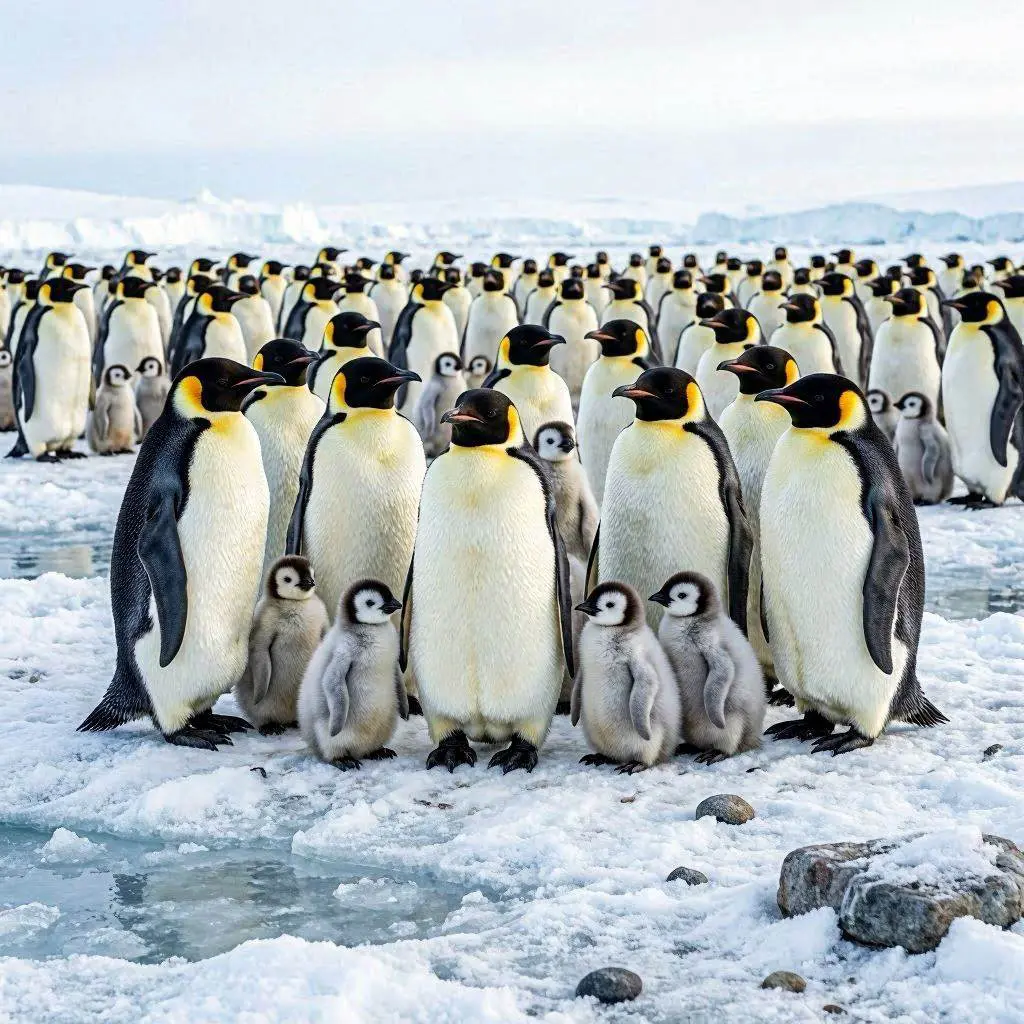
Group Name: Colony or Rookery
Habitat: Antarctic coasts, sub-Antarctic islands, and southern coastlines of South America, Africa, and Australasia
Penguins come ashore in massive colonies, sometimes containing hundreds of thousands of birds, for breeding and chick-rearing. Emperor penguin colonies endure the harshest winter conditions on Earth by huddling together in rotating groups to share warmth.
- Emperor penguins huddle in groups of thousands, reducing heat loss by up to 50%
- Both parents take turns incubating eggs and feeding chicks
- Adult penguins identify their own chick by its unique call among thousands of identical-sounding birds
- Colonies provide protection from aerial predators like skuas
❾ Zebra — Dazzle of Zebras
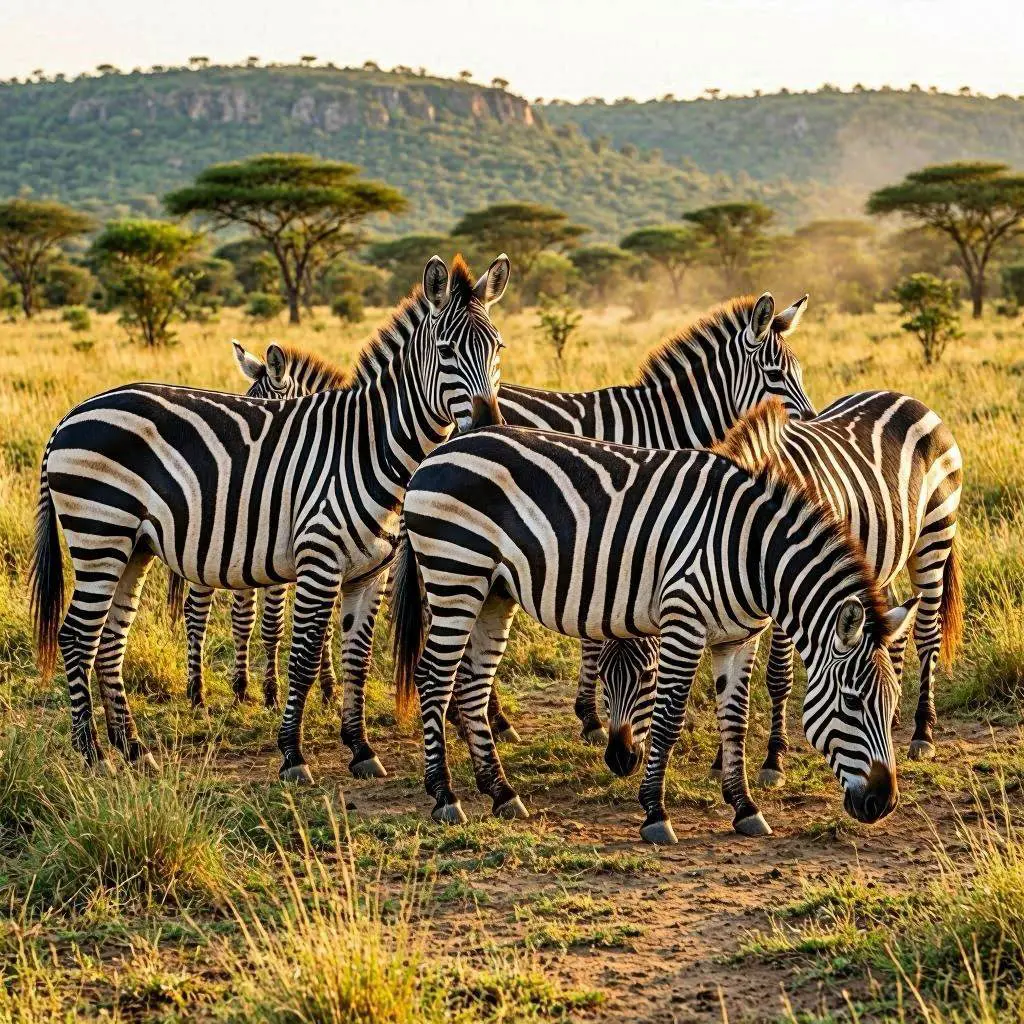
Group Name: Dazzle
Habitat: African savannas, grasslands, shrublands, and open woodlands
Zebras live in family units of one stallion, several mares, and their foals. These units join into larger herds during seasonal migrations, creating the iconic dazzle effect where stripes blend together to confuse predators.
- The stripe blur effect makes it difficult for predators to single out one individual
- Family bonds within a dazzle are long-lasting; mares stay with their stallion for years
- Zebras participate in the Great Migration alongside wildebeest and gazelles
- Foals can walk within an hour of birth, essential for keeping up with the moving herd
❿ Meerkat — Mob of Meerkats
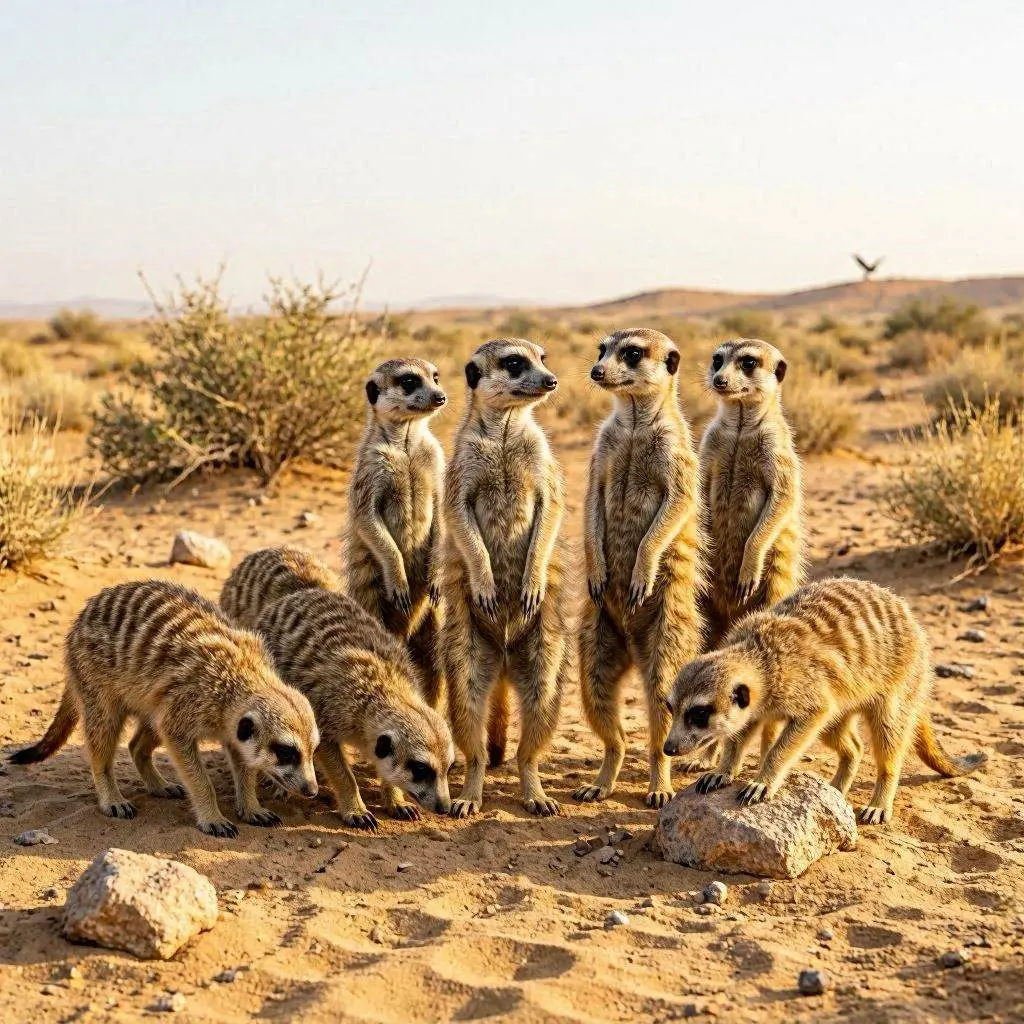
Group Name: Mob or Gang
Habitat: Kalahari Desert of Botswana and South Africa, and the Namib Desert of Namibia
Meerkats live in mobs of 20 to 30 individuals with extraordinary cooperative behavior. Designated sentinels stand guard while others forage, and the mob shares pup-rearing duties regardless of which individuals actually bred.
- Sentinels emit specific alarm calls that communicate predator type and urgency level
- Babysitters stay behind to guard pups while parents forage
- Meerkats are immune to many venoms and regularly eat scorpions and venomous snakes
- Young meerkats are taught to handle live prey before they are expected to hunt independently
⓫ Flamingo — Flamboyance of Flamingos
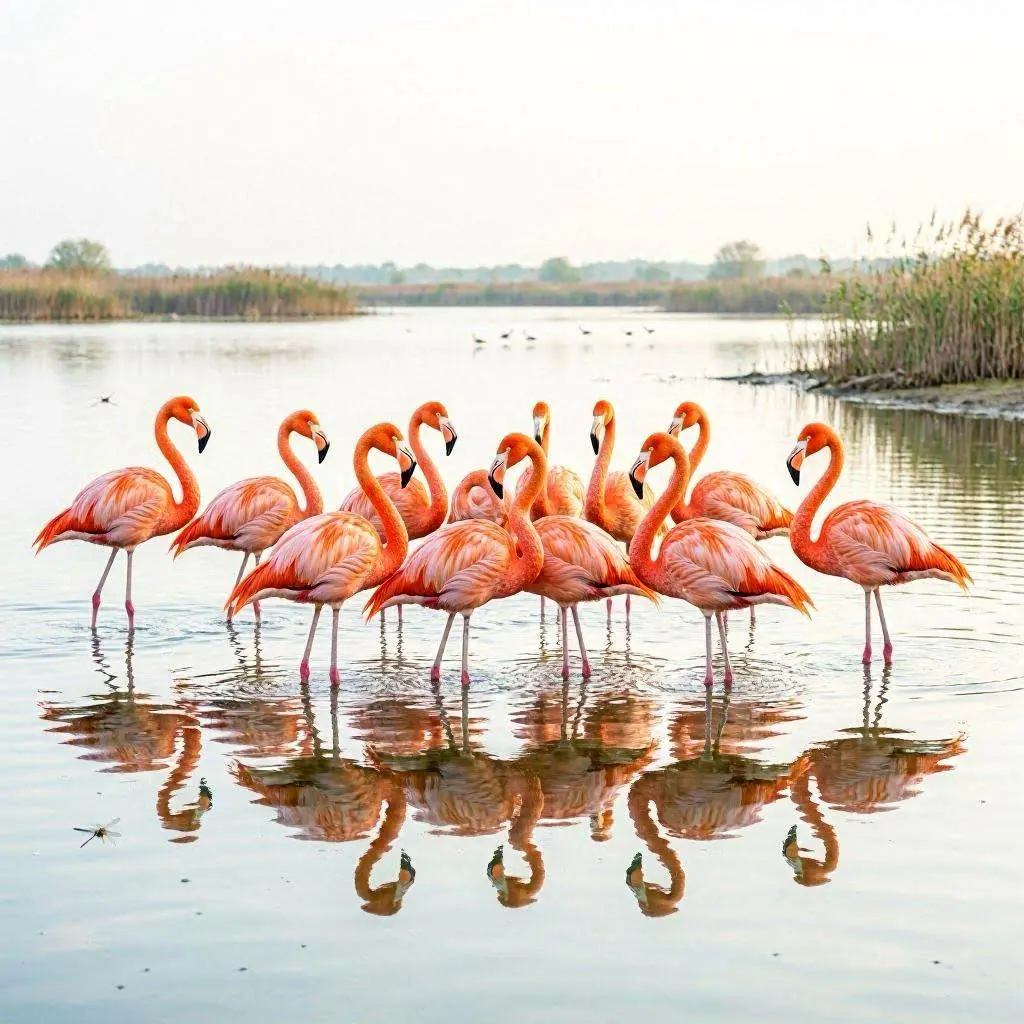
Group Name: Flamboyance
Habitat: Shallow saline or alkaline lakes and lagoons in Africa, southern Europe, the Middle East, and the Americas
Flamingos breed and feed in flamboyances that can number in the hundreds of thousands. Their pink coloration is derived from carotenoid pigments in their food, and birds in larger, more active flocks tend to be more vividly colored.
- Both parents produce crop milk to feed their single chick
- Synchronized courtship displays involving thousands of birds help trigger breeding across the entire colony simultaneously
- Flamingos can fly hundreds of kilometers overnight to find suitable feeding sites
- The colony’s noise and density deters most predators from approaching nesting areas
⓬ Crow — Murder of Crows
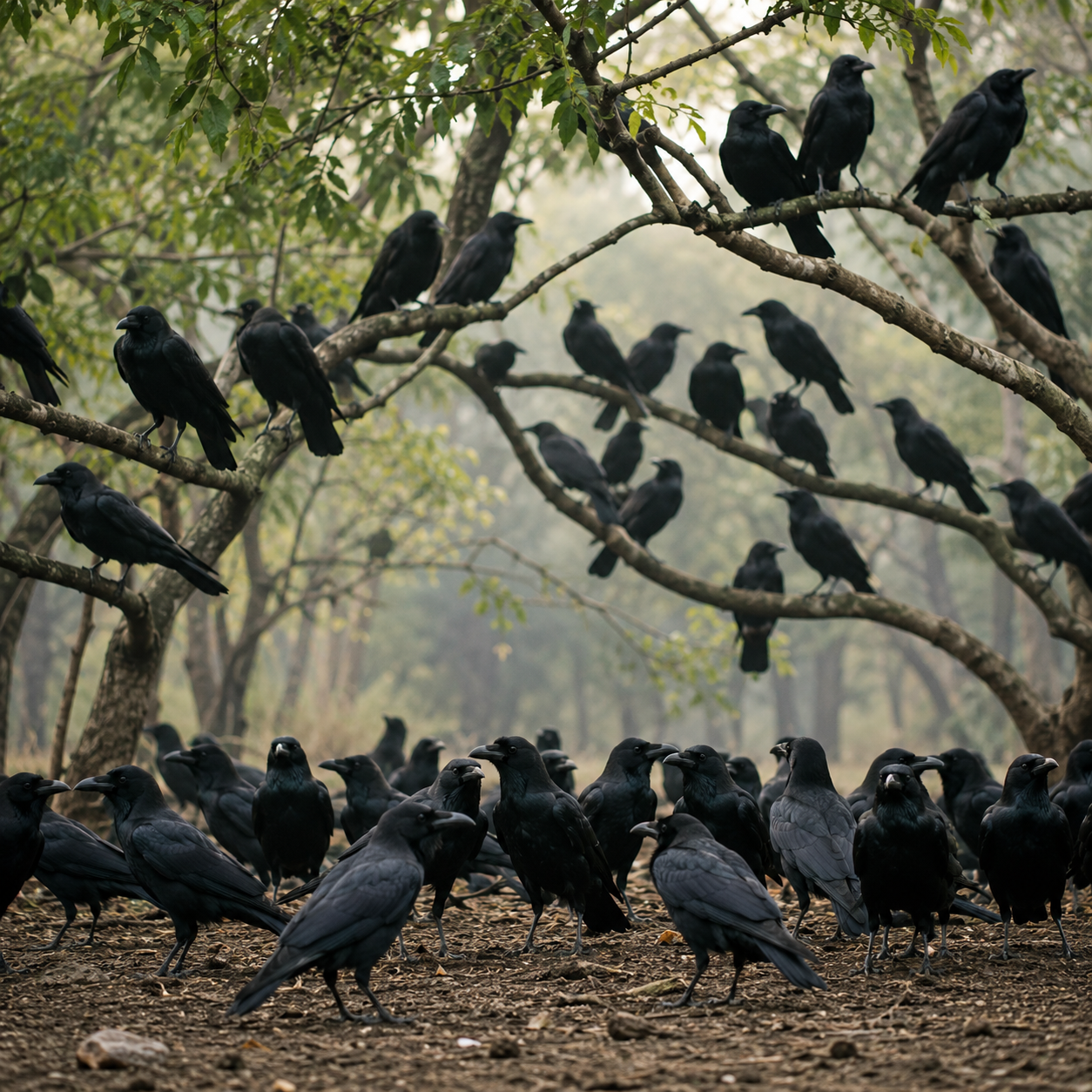
Group Name: Murder
Habitat: Forests, farmlands, urban areas, and coastal zones across North America, Europe, and Asia
Crows are highly intelligent birds that form complex social structures within their murders. They roost communally in large numbers and share information about food sources and threats, demonstrating memory and problem-solving abilities that rival those of primates.
- Crows remember individual human faces and pass that knowledge to their offspring
- They hold “funeral” gatherings around dead crows to assess potential danger
- Communal roosts may contain tens of thousands of birds in winter
- Young crows from previous years often help their parents raise the next brood
⓭ African Wild Dog — Pack of African Wild Dogs
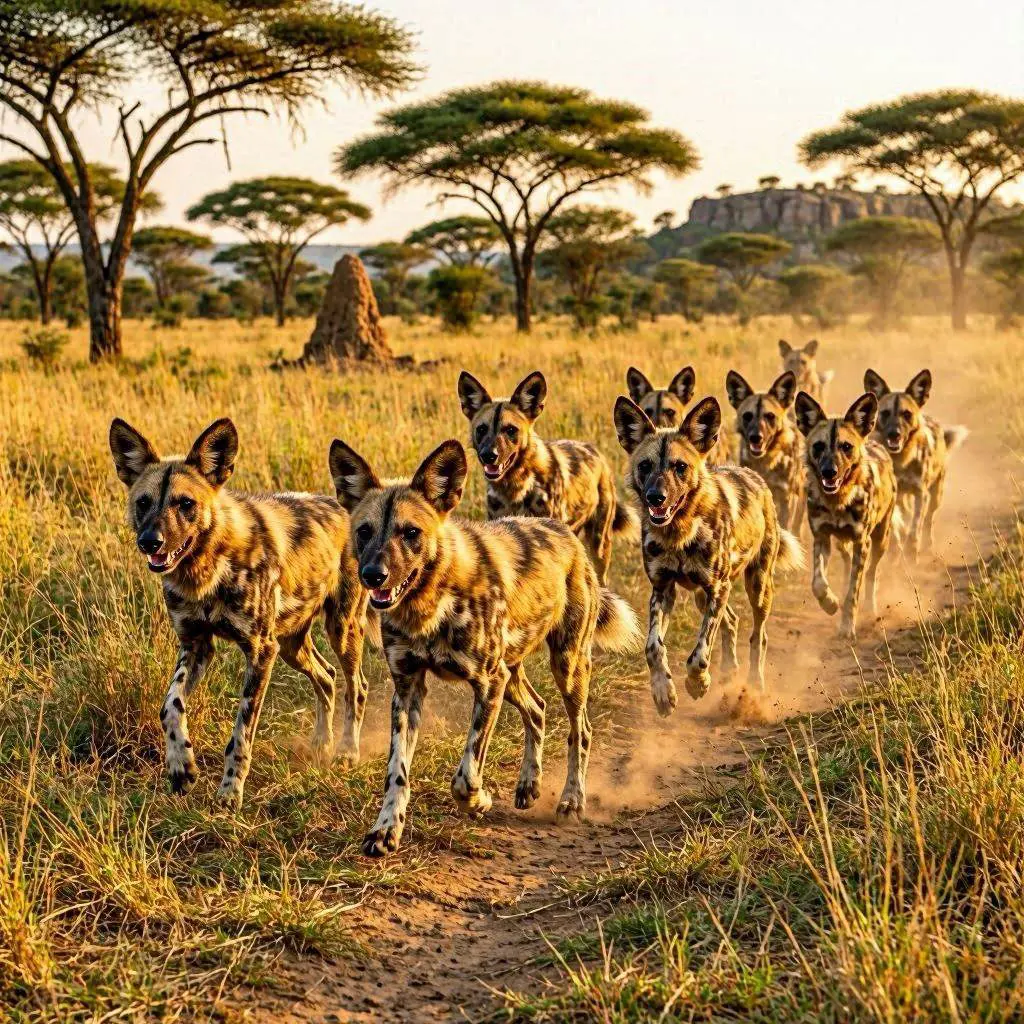
Group Name: Pack
Habitat: Open savannas, grasslands, and sparse woodlands of sub-Saharan Africa
African wild dogs form the most tightly bonded packs of any canine species. A pack of 6 to 20 individuals with a dominant breeding pair achieves hunting success rates of up to 80%, far exceeding other large African predators.
- Every pack member regurgitates food for pups, sick members, and individuals who missed the hunt
- Packs vote on whether to move by sneezing; a minimum number of sneezes is required before the group acts
- African wild dogs are the most endangered large carnivore in Africa
- Pack members greet each other with intense vocalizations and physical contact before every hunt
⓮ Hyena — Clan of Hyenas
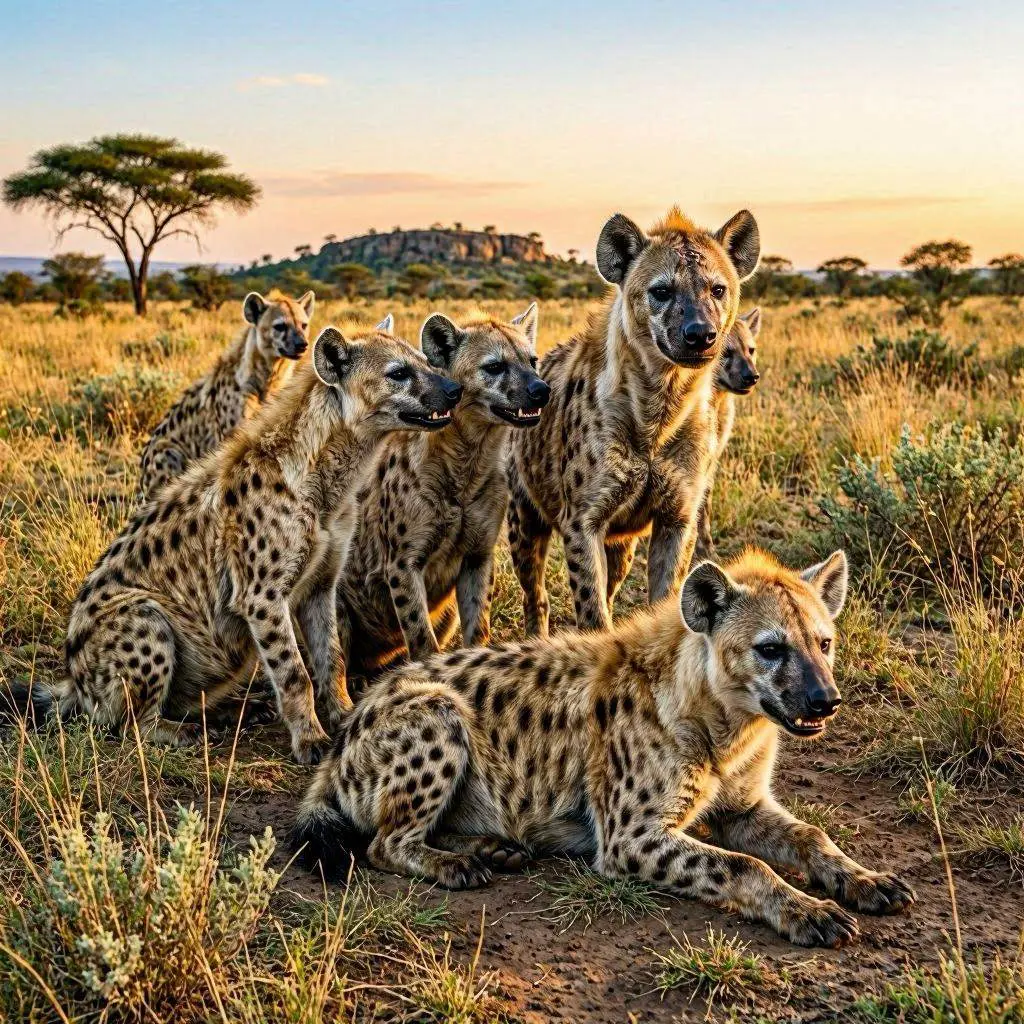
Group Name: Clan
Habitat: Savannas, grasslands, woodlands, and semi-arid regions of sub-Saharan Africa and parts of Asia
Spotted hyenas live in female-dominated clans of up to 80 individuals. The social hierarchy is determined by birth rank, with females consistently outranking males of any age. Clans cooperate in hunting, territory defense, and raising cubs in communal dens.
- Hyenas are more closely related to cats than to dogs despite their dog-like appearance
- Clan members recognize each other through a complex system of calls, including the famous “laugh”
- Spotted hyenas are highly effective hunters, killing up to 95% of their own food
- Cubs are born with eyes open and teeth already erupted, immediately establishing dominance over siblings
⓯ Chimpanzee — Community of Chimpanzees
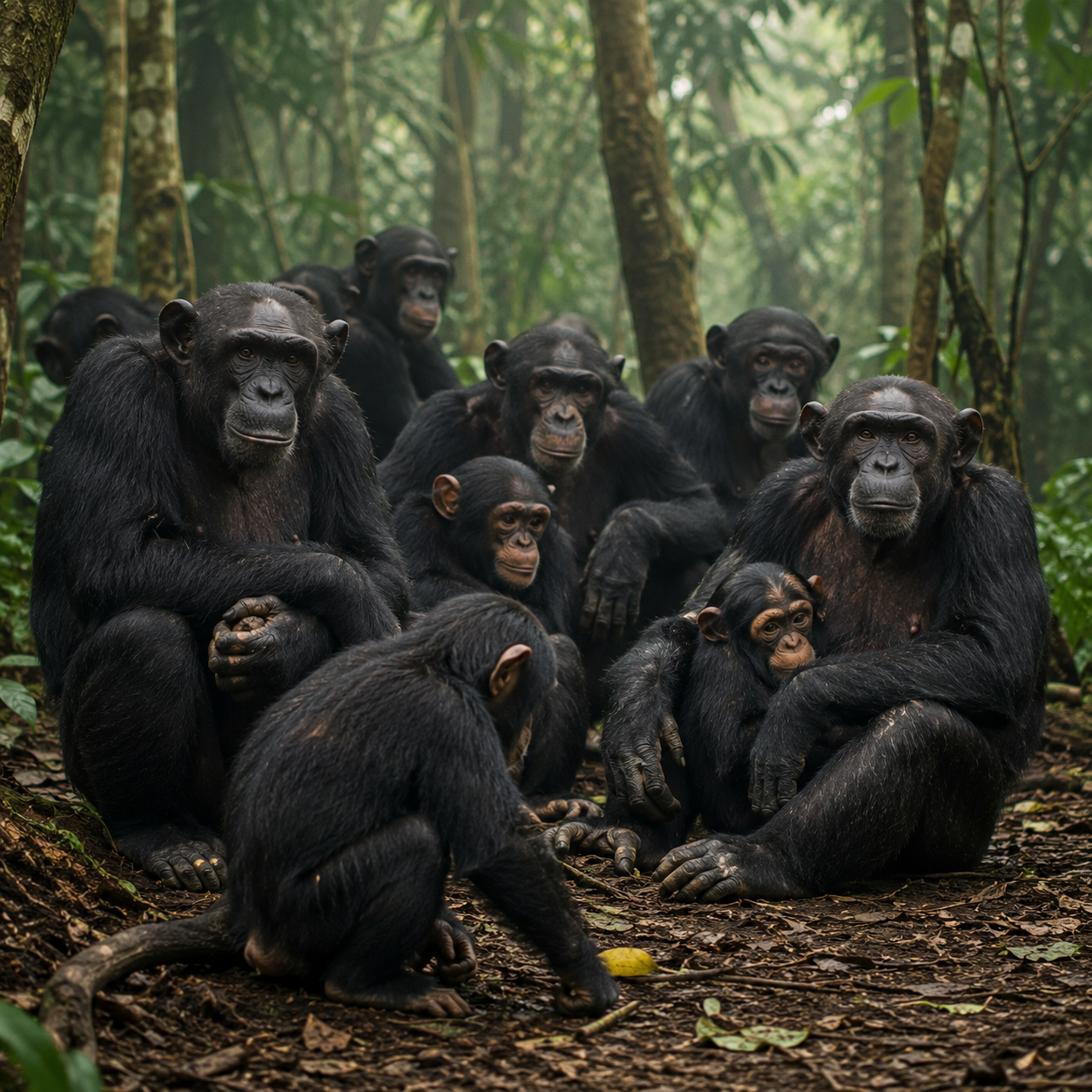
Group Name: Community
Habitat: Tropical and subtropical forests and woodland savannas of equatorial Africa
Chimpanzee communities of 15 to 150 individuals use a fission-fusion social system, splitting into smaller parties during the day and reuniting at sleeping sites. Alpha males maintain power through alliances, not just physical strength.
- Chimpanzees make and use tools, including sticks to extract termites and leaves as sponges
- Communities wage organized territorial conflicts against neighboring groups
- Young chimpanzees spend years learning survival skills by observing adults
- Females leave their birth community at adolescence; males remain for life
⓰ Starling — Murmuration of Starlings
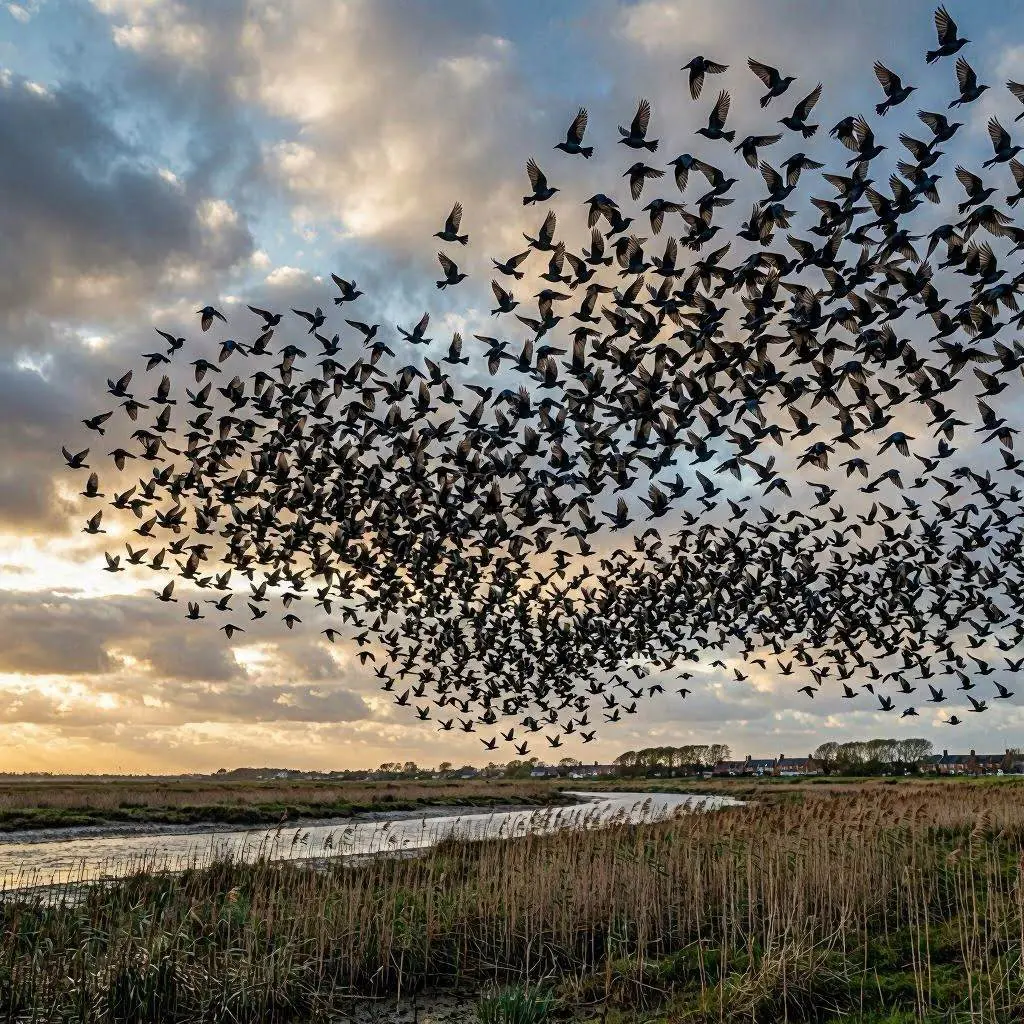
Group Name: Murmuration
Habitat: Open farmland, grasslands, urban areas, and wetland edges across Europe, Asia, and North America
A murmuration of starlings creates one of the most visually stunning phenomena in the natural world. Thousands to millions of birds move in fluid, shape-shifting formations at dusk, each bird responding to the movements of its seven nearest neighbors to create perfectly coordinated waves.
- Murmurations confuse and overwhelm aerial predators like peregrine falcons
- No leader directs the flock; coordination emerges from individual rule-following
- Starlings gather at communal roosts to share warmth and information about food locations
- The largest murmurations can contain over a million birds
⓱ Bat — Colony of Bats
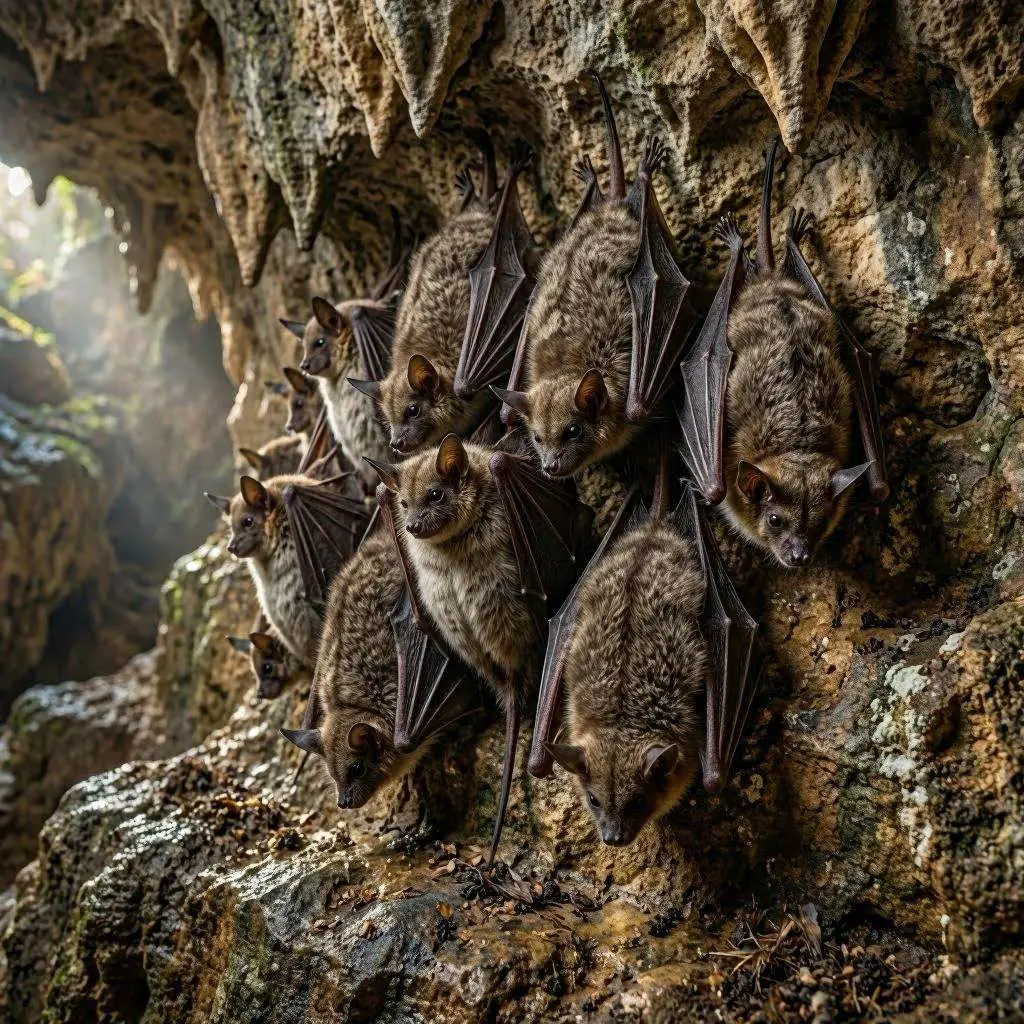
Group Name: Colony
Habitat: Caves, forests, urban structures, and tree hollows on every continent except Antarctica
Bats form some of the largest animal aggregations on Earth. Bracken Cave in Texas houses an estimated 20 million Mexican free-tailed bats. Colonial roosting allows bats to share warmth, information about insect swarms, and protection for pups while mothers are foraging.
- Some bat colonies consume tons of insects per night, providing massive agricultural pest control
- Mother bats locate their specific pup among millions of others using unique voice and scent recognition
- Certain bat species share food with unrelated roost-mates who failed to feed on a given night
- Colonies have roosted in the same cave systems for thousands of years
⓲ Whale (Orca) — Pod of Orcas
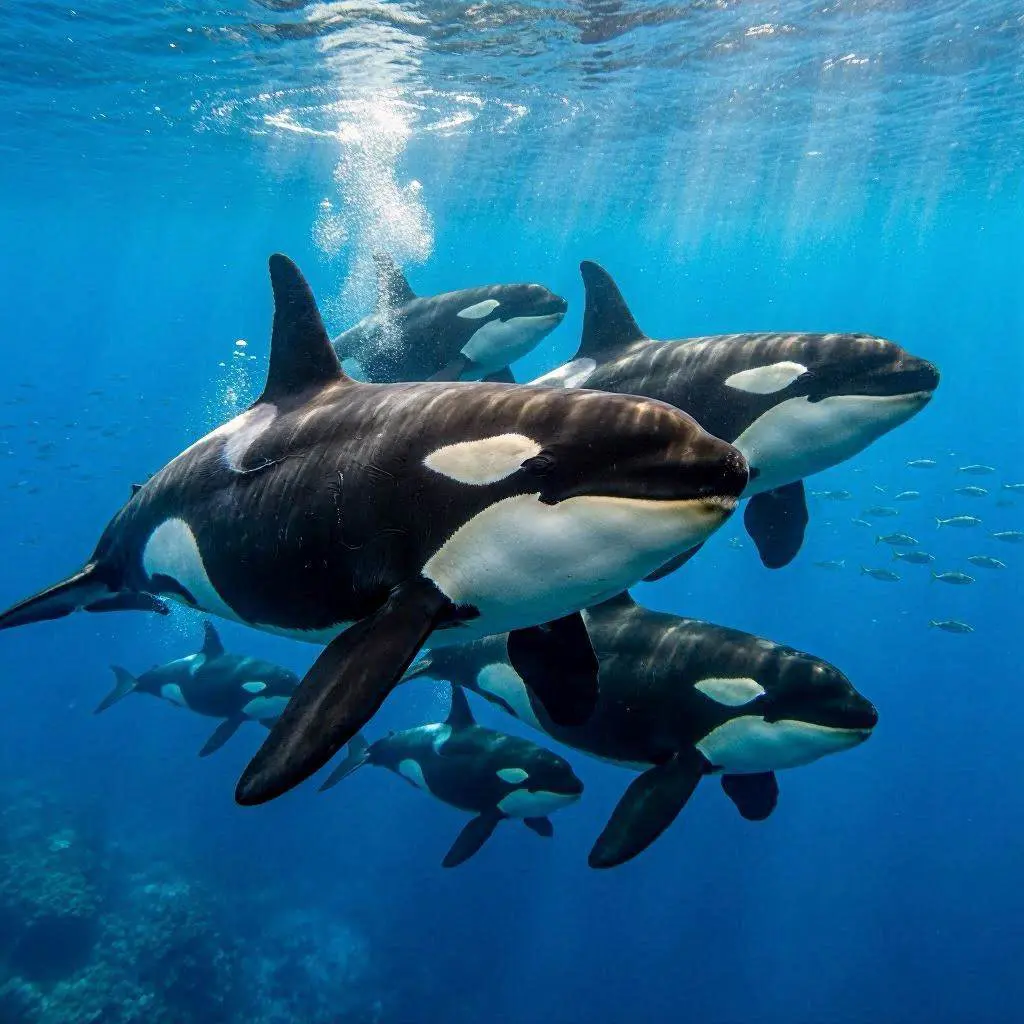
Group Name: Pod
Habitat: All oceans worldwide, from polar regions to tropical seas
Orca pods are matriarchal family units led by the oldest female, who possesses decades of ecological knowledge the entire group depends on. Different pods have distinct dialects, unique sets of calls that are learned and passed down through generations.
- Orca pods use cooperative hunting tactics that vary by region and prey type, from beach-hunting seals to carousel-feeding herring
- Sons remain with their mothers for their entire lives; even adult males stay in their birth pod
- The death of an elderly matriarch significantly increases mortality rates in the pod, demonstrating how vital her knowledge is
- Pods have been observed mourning dead members, carrying deceased calves for days
⓳ Geese — Skein of Geese
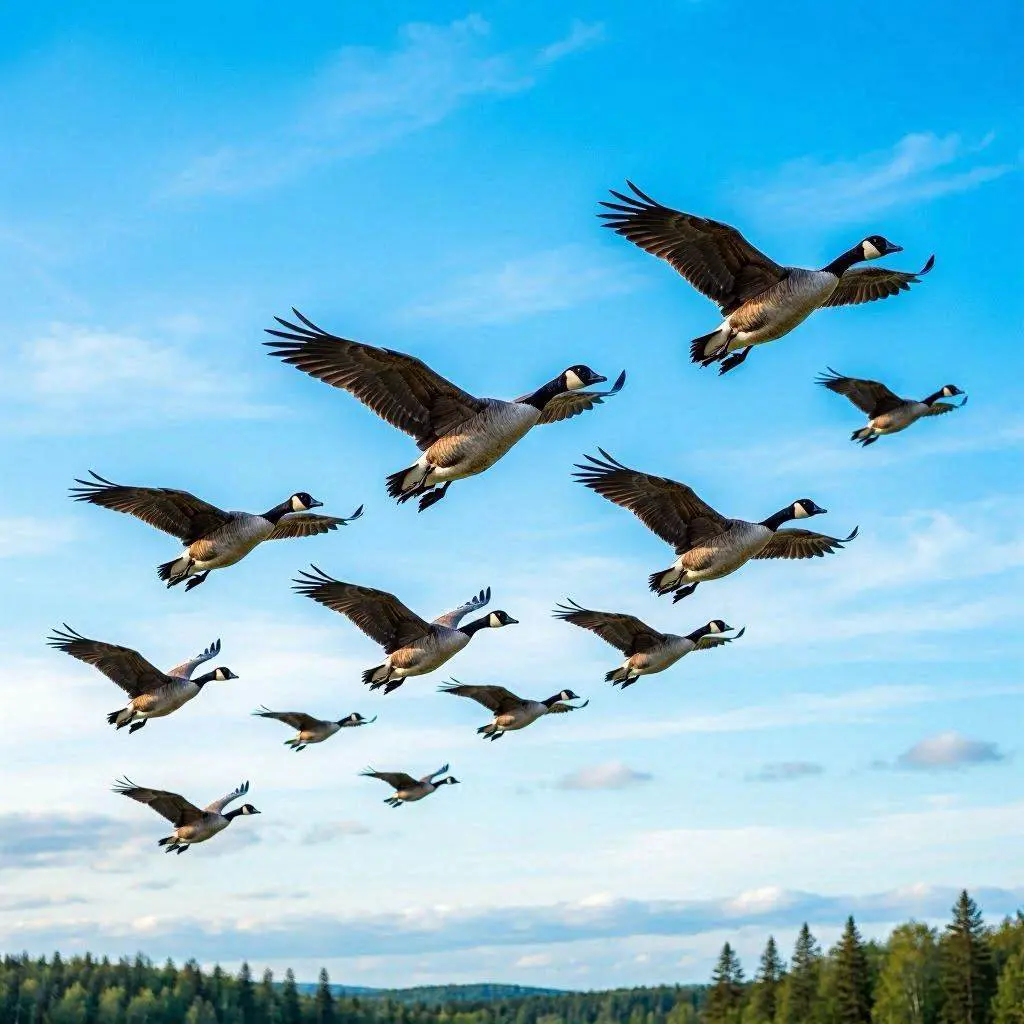
Group Name: Gaggle (on ground), Skein (in flight)
Habitat: Wetlands, grasslands, farmland, and coastal areas across the Northern Hemisphere; migratory, wintering in warmer regions
Geese are highly social and mate for life, maintaining pair bonds within their flock year-round. The V-formation used during migration is one of the best-documented examples of energy-saving cooperative behavior in birds.
- Each bird in a V-formation benefits from the lift created by the wingtip vortex of the bird ahead, reducing energy expenditure by up to 25%
- The lead position rotates among group members as the front bird tires
- Geese communicate constantly during flight using honking calls to maintain formation
- Goslings imprint on their parents immediately after hatching and stay with the family group through their first migration
⓴ Sardine — School of Sardines
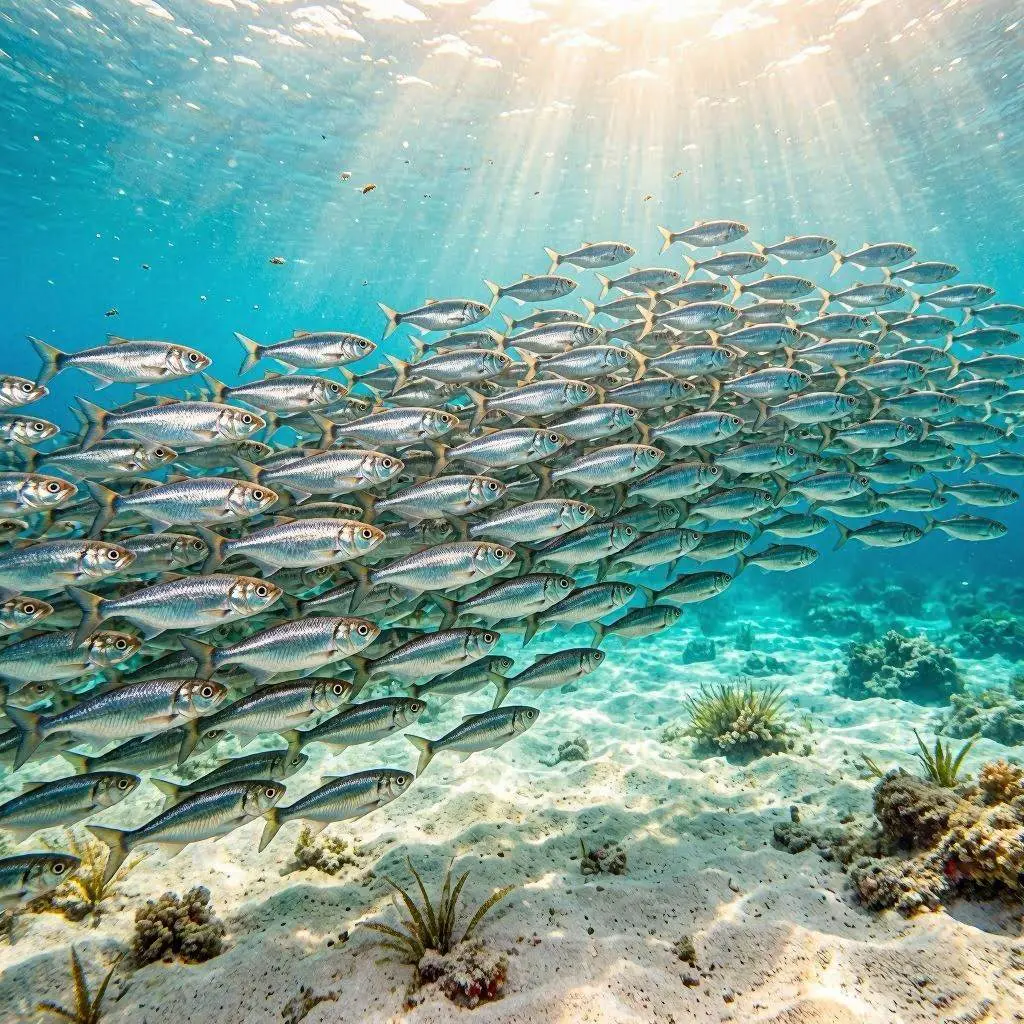
Group Name: Shoal or School
Habitat: Coastal waters of the eastern Atlantic, Mediterranean Sea, and the coasts of southern Africa
The sardine run off South Africa’s eastern coast is one of the greatest natural events on Earth, involving billions of sardines moving in an enormous shoal that can stretch 15 km long, 3.5 km wide, and 40 meters deep. Schooling provides overwhelming safety in numbers against predators.
- Sardines synchronize their movements so precisely that the shoal can change direction in milliseconds
- The sheer size of the school makes it impossible for predators to focus on a single fish
- Dolphins, sharks, whales, and birds all converge on the shoal during the sardine run
- Individual sardines in the center of the school face statistically far lower predation risk than those on the edges
Mammals That Live in Groups Names
Mammals have some of the most advanced social systems in the animal kingdom. Many cooperate to hunt, raise young, defend territory, and communicate with one another.
Big Cats & Carnivores
- Lion — Pride
The lion is the only truly social wild cat, living in family groups called prides. Females hunt together while males defend the territory. - Wolf — Pack
Wolves are intelligent predators that live in cooperative packs led by a breeding pair. Every member helps hunt, protect, and raise pups. - African Wild Dog — Pack
African wild dogs are among the world’s most successful hunters. Pack members share food and care for injured or young individuals. - Spotted Hyena — Clan
Spotted hyenas live in large female-led clans with strict social rankings. They hunt cooperatively and share communal dens. - Sea Otter — Raft
Sea otters spend much of their lives floating in groups called rafts. They often wrap themselves in kelp to avoid drifting apart. - Meerkat — Mob or Gang
Meerkats are highly cooperative mammals where some members act as lookouts while others search for food or care for pups. - European Badger — Cete
European badgers live in family groups called cetes inside extensive underground tunnel systems known as setts. - Coati — Band
Female coatis and their young travel together in bands, searching forests for fruits, insects, and small animals. - Mongoose — Pack or Mob
Many mongoose species live in organized groups that work together to defend against predators and raise their young.
Primates
- Gorilla — Troop
Gorillas live in stable troops led by a dominant silverback male who protects and guides the family. - Chimpanzee — Community
Chimpanzees form large communities that split into smaller groups throughout the day. They are famous for using tools and complex social behavior. - Baboon — Troop
Baboons live in large troops with clear social hierarchies and strong family relationships among females. - Macaque — Troop
Macaques live in matrilineal troops where females inherit their social rank from their mothers. - Howler Monkey — Troop
Howler monkeys live in small troops and are well known for their incredibly loud calls that echo through forests. - Bonobo — Community
Bonobos are peaceful great apes that rely on cooperation, grooming, and strong female leadership to maintain harmony. - Gelada — Herd
Geladas live in enormous herds on Ethiopian cliffs, making them one of the most social primates on Earth. - Ring-tailed Lemur — Troop
Ring-tailed lemurs live in female-dominated troops where members groom, play, and sunbathe together.
Ungulates & Grazers
- Elephant — Herd
Elephants live in matriarchal herds led by the oldest female, whose experience helps the family survive. - Zebra — Dazzle
Zebras form family groups that join into large dazzles during migration, confusing predators with their stripes. - Wildebeest — Herd
Wildebeest gather in massive herds famous for the annual Great Migration across the African savanna. - Cape Buffalo — Herd
Cape buffalo live in powerful herds that work together to defend calves against lions. - American Bison — Herd
Bison travel in herds that protect young by forming defensive circles when danger approaches. - Reindeer (Caribou) — Herd
Reindeer migrate in enormous herds across Arctic regions, traveling thousands of kilometers each year. - Musk Ox — Herd
Musk oxen protect their young by forming tight defensive circles with adults facing outward. - Elk — Herd
Elk spend most of the year in separate male and female herds, joining during the breeding season. - Bighorn Sheep — Herd
Bighorn sheep live in gender-based herds, with males competing through dramatic head-butting contests. - White Rhino — Crash
White rhinos are the most social rhino species, with females living together in small groups called crashes.
Marine Mammals
- Dolphin — Pod
Dolphins live in intelligent pods that communicate with unique whistles and cooperate while hunting. - Orca (Killer Whale) — Pod
Orcas remain with their family pod for life, learning hunting techniques and vocal traditions from older generations. - Humpback Whale — Pod or Gam
Humpback whales gather in feeding groups and sometimes cooperate using bubble-net feeding techniques. - Sea Lion — Colony or Raft
Sea lions gather in huge breeding colonies on shore and float together in rafts while resting at sea. - Walrus — Herd
Walruses haul out in enormous herds on beaches and ice, especially during the breeding season. - Sperm Whale — Pod
Female sperm whales live in close family pods where adults share responsibility for protecting calves. - Fur Seal — Colony
Fur seals breed in crowded colonies called rookeries, where thousands of pups are born each season.
Rodents & Small Mammals
- Prairie Dog — Town or Colony
Prairie dogs build vast underground towns with sophisticated alarm-call communication. - Naked Mole Rat — Colony
Naked mole rats are the only eusocial mammals, living in colonies with a single breeding queen. - Beaver — Family or Colony
Beaver families cooperate to build dams and lodges that reshape rivers and wetlands. - Marmot — Colony
Marmots live in colonies, posting sentinels while others forage and hibernating together during winter. - Flying Squirrel — Colony
Flying squirrels often share tree nests during cold weather to conserve body heat.
Marsupials
- Kangaroo — Mob or Troop
Kangaroos gather in mobs that provide protection while grazing across open landscapes. - Quoll — Pack
Although mostly solitary, some quolls temporarily gather around food sources or shared dens during cooler months.
Birds That Live in Groups
Birds exhibit some of the most remarkable group behaviors in nature. Living in flocks, colonies, and other social groups helps them migrate efficiently, avoid predators, find food, and raise their young.
Flocking & Soaring Birds
- Starling — Murmuration
Starlings gather in enormous murmurations, creating breathtaking aerial displays that help confuse predators. - Goose — Gaggle (ground) / Skein (flight)
Geese are highly social birds that travel in V-shaped formations, conserving energy during long migrations. - Swan — Bevy or Wedge
Swans often remain with lifelong mates and gather in groups while resting or migrating. - Duck — Raft or Flock
Ducks form rafts on water for safety and flocks in flight during seasonal migrations. - Sparrow — Flock
Sparrows roost together in large flocks, sharing warmth and information about food sources. - Parrot — Pandemonium
Wild parrots travel in noisy groups, allowing younger birds to learn feeding and nesting locations. - Crow — Murder
Crows live in intelligent social groups that share food locations and recognize individual human faces. - Vulture — Committee (resting) / Wake (feeding)
Vultures gather in groups to locate carcasses more efficiently and feed together. - Waxwing — Flock
Waxwings travel in close-knit flocks, feeding cooperatively on berries during winter.
Seabirds & Waterbirds
- Penguin — Colony or Rookery
Penguins breed in massive colonies and huddle together to survive extreme Antarctic temperatures. - Flamingo — Flamboyance
Flamingos gather in spectacular colonies where synchronized courtship displays improve breeding success. - Gannet — Colony
Gannets nest on coastal cliffs in dense colonies and often cooperate while hunting fish. - Pelican — Pod or Squadron
Pelicans work together to herd fish into shallow water before catching them. - Crane — Sedge or Siege
Cranes migrate and winter in large flocks while performing elaborate group courtship dances. - Cormorant — Gulp or Colony
Cormorants often fish cooperatively by driving schools of fish toward shallow water. - Puffin — Colony or Circus
Puffins breed in crowded cliff colonies, returning to the same nesting sites each year.
Ground Birds & Grassland Species
- Peacock — Muster or Party
Peacocks gather in groups where males display their colorful tails to attract females. - Turkey — Flock or Rafter
Wild turkeys forage and roost in flocks, providing safety and social interaction. - Quail — Covey
Quail live in close family groups that sleep in protective circles during the night. - Sandpiper — Flock or Contradiction
Sandpipers migrate in huge synchronized flocks that reduce the risk of predator attacks.
Fish & Marine Animals That Live in Groups Names
Many fish and marine animals live in schools, shoals, swarms, and pods. Group living increases protection from predators, improves feeding success, and helps individuals navigate the ocean.
- Sardine — Shoal or School
Sardines form massive schools containing billions of fish, making it difficult for predators to target individuals. - Herring — School or Shoal
Herring gather in enormous schools and coordinate their movements with remarkable precision. - Clownfish — School
Clownfish live in strict social groups within sea anemones, with a clear dominance hierarchy. - Shark — Shiver or School
Some shark species gather in schools during the day before dispersing to hunt at night. - Tuna — School
Tuna travel in fast-moving schools that allow efficient migration and coordinated hunting. - Mackerel — School
Mackerel form shimmering schools whose synchronized movements help avoid predators. - Manta Ray — School or Fever
Manta rays gather at feeding sites where abundant plankton supports large groups. - Squid — Shoal
Humboldt squid hunt cooperatively in shoals using visual signals to coordinate attacks. - Krill — Swarm
Antarctic krill form enormous swarms that provide food for whales, penguins, seals, and many fish. - Carp — School
Carp often feed in schools, stirring up riverbeds together to uncover hidden food.
Insects That Live in Groups
Insects include some of the most advanced social animals on Earth. Their colonies function as highly organized communities with specialized roles, communication systems, and cooperative behavior.
- Honeybee — Colony or Swarm
Honeybees live in colonies led by a queen, with workers cooperating to gather food and care for the hive. - Ant — Colony
Ants build highly organized colonies where individuals perform specialized jobs such as foraging, defense, and brood care. - Termite — Colony
Termites construct enormous mounds with advanced ventilation systems and complex social organization. - Bumblebee — Colony
Bumblebee colonies are smaller than honeybee colonies but still rely on teamwork to gather nectar and raise young. - Yellowjacket Wasp — Colony
Yellowjackets live in defensive colonies that respond rapidly when the nest is threatened. - Locust — Swarm or Plague
Locusts transform into massive swarms capable of traveling long distances and consuming vast amounts of vegetation. - Monarch Butterfly — Congregation or Roost
Monarch butterflies gather in huge overwintering colonies before migrating across North America. - Dung Beetle — Group
Some dung beetles cooperate in pairs to roll, protect, and bury dung balls for reproduction. - Paper Wasp — Colony
Paper wasps form small colonies with simple social hierarchies and cooperative nest building.
Reptiles That Live in Groups
Although many reptiles are solitary, several species gather in groups for basking, nesting, hibernation, or protection from predators.
- Crocodile — Float or Bask
Crocodiles often gather at basking sites and sometimes cooperate while feeding on large prey. - Marine Iguana — Colony
Marine iguanas gather in large colonies and huddle together after feeding in cold ocean waters. - Garter Snake — Den
Garter snakes spend winter together in communal dens, forming one of the largest snake gatherings in the world. - Desert Tortoise — Aggregation
Desert tortoises occasionally share underground burrows, especially during winter hibernation. - Sea Turtle — Arribada
Olive ridley sea turtles participate in synchronized mass nesting events called arribadas, where thousands of females lay eggs on the same beach at the same time.
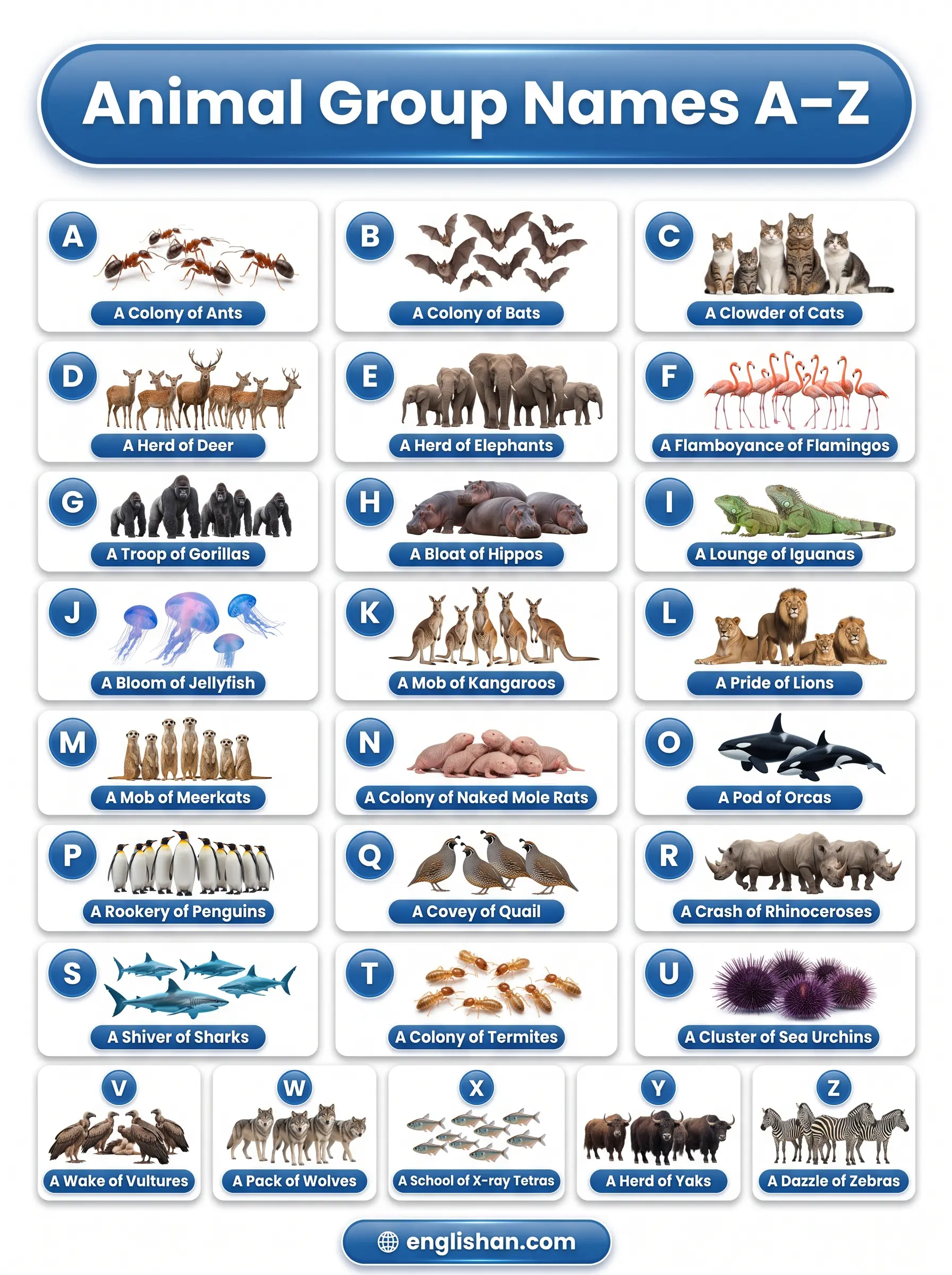
Animal Group Names A–Z
| Animal | Group Name | Animal | Group Name |
|---|---|---|---|
| Ants | Colony | Lions | Pride |
| Baboons | Troop | Locusts | Swarm / Plague |
| Bats | Colony | Mackerel | School |
| Bees | Colony / Swarm | Manta Rays | Fever / School |
| Bighorn Sheep | Herd | Meerkats | Mob / Gang |
| Bison | Herd | Monarch Butterflies | Congregation |
| Buffalo (Cape) | Herd | Monkeys | Troop |
| Caribou | Herd | Mongoose | Pack / Mob |
| Chimpanzees | Community | Musk Oxen | Herd |
| Coatis | Band | Naked Mole Rats | Colony |
| Cormorants | Gulp / Colony | Orcas | Pod |
| Cranes | Sedge / Siege | Parrots | Pandemonium |
| Crocodiles | Float / Bask | Peacocks | Muster / Party |
| Crows | Murder | Pelicans | Pod / Squadron |
| Deer | Herd | Penguins | Colony / Rookery |
| Dolphins | Pod | Prairie Dogs | Town / Colony |
| Ducks | Raft / Flock | Puffins | Colony / Circus |
| Elk | Herd | Quail | Covey |
| Elephants | Herd | Rhinos | Crash |
| Flamingos | Flamboyance | Sardines | Shoal / School |
| Gannets | Colony | Sea Lions | Colony / Raft |
| Geese | Gaggle / Skein | Sea Otters | Raft |
| Gorillas | Troop | Sharks | Shiver / School |
| Herring | School / Shoal | Squid | Shoal |
| Hippos | Bloat | Starlings | Murmuration |
| Horses (Wild) | Herd / Band | Swans | Bevy / Wedge |
| Hyenas | Clan | Termites | Colony |
| Jellyfish | Bloom / Smack | Turkeys | Rafter / Flock |
| Kangaroos | Mob / Troop | Vultures | Committee / Wake |
| Krill | Swarm | Walruses | Herd |
| Lemurs | Troop | Wasps | Colony |
| Leopards | Leap | Wildebeest | Herd |
| Lions | Pride | Wolves | Pack |
| Lizards (some) | Lounge | Zebras | Dazzle |
| Owls | Parliament | Cats (domestic) | Clowder |
The Science Behind Group Living: Benefits
- Dilution Effect
When living in a group, each individual’s statistical risk of being targeted by a predator drops sharply. In a herd of 1,000 zebras, each individual’s chance of being the target is just 0.1%. This mathematical safety advantage alone is a powerful driver of social living. - Many Eyes Hypothesis
Groups detect predators faster than lone individuals. As more animals scan for threats, each individual can spend more time feeding, drinking, and resting without compromising safety. This surveillance advantage compounds with group size. - Cooperative Defense (Mobbing)
Many prey animals actively mob and harass predators. Cape buffalo rescue calves from lions. Meerkats gang up on cobras. Crows harry hawks. Collective aggression that would be fatal for one individual becomes effective for a group. - Cooperative Foraging
Wolves bring down prey 10 times their own weight through coordinated hunting. Orca pods use complex regional tactics including wave-washing, carousel feeding, and beach-hunting. These are impossible achievements for a single individual. - Information Transfer
Groups serve as living information networks. An individual that finds a rich food source shares that knowledge through behavior, scent, or direct communication. Honeybees encode food location and quality in their waggle dance with remarkable precision. - Alloparental Care
In many species, group members who are not the biological parents help raise offspring. This increases pup or chick survival rates dramatically and frees breeding females to reproduce more frequently.
Disadvantages of Group Living
Group living is not without its costs:
- Increased competition for food, mates, and resting sites within the group
- Faster disease transmission in dense populations, particularly for parasites
- Greater conspicuousness: large groups are easier for predators to detect from a distance
- Reproductive suppression: in some species, only dominant individuals reproduce
- Higher parasite loads are consistently recorded in group-living species compared to solitary ones
- Free-rider problem: some individuals benefit from group resources without contributing equally
Despite these costs, evolution has repeatedly selected for group living across hundreds of species, confirming that the benefits consistently outweigh the disadvantages in the right ecological conditions.
Conclusion
The animal kingdom’s social structures are as diverse as life itself. From the democratic precision of a honeybee colony to the matriarchal wisdom of an elephant herd and the hypnotic synchrony of a starling murmuration, group living is one of evolution’s most powerful and versatile strategies. Each species has shaped its own version of social life to match the precise demands of its habitat, prey, and predators.
Whether you are a student, wildlife enthusiast, teacher, or nature lover, understanding why and how animals that live in groups names reveals fundamental truths about cooperation, communication, and survival that resonate far beyond the animal world. The next time you see a flock of birds wheeling overhead or a pack of wolves on a nature documentary, you are watching millions of years of social evolution in action.
FAQs
The largest animal groups on Earth depend on how they are measured. By the number of individuals, army ant colonies can contain more than 700 million ants, making them among the largest organized colonies in nature. In the oceans, Atlantic herring form enormous shoals that may contain billions of fish, stretching for several kilometers. These massive gatherings improve survival by confusing predators, increasing feeding efficiency, and boosting breeding success.
A group of adult cats is called a clowder, while the less common term glaring is also used, especially when the cats appear watchful or intimidating. A group of kittens is known as a kindle or a litter. Although domestic cats are often independent, they may form friendly colonies around reliable food sources, where related females sometimes help care for each other’s kittens.
A group of owls is called a parliament. The name likely comes from the birds’ upright posture and wise appearance, which reminded people of lawmakers in a parliament. Despite the famous term, most owl species are solitary and usually hunt alone. They only gather occasionally during migration, at communal roosts, or in family groups while raising young.
A group of kangaroos is commonly called a mob, although the terms troop and herd are also used. Kangaroos live together mainly for protection and increased awareness of predators. While grazing, many individuals keep watch, allowing others to feed safely. Group living also helps them find mates and move efficiently across open grasslands.
A group of crocodiles on land is called a bask, while a group in water is known as a float. Although crocodiles are often thought of as solitary reptiles, they frequently gather at basking sites, riverbanks, and feeding areas. During nesting season, females also show remarkable parental care by guarding nests and helping hatchlings reach the water.
No. Many animals spend most of their lives alone and are considered solitary species. Examples include tigers, leopards, orangutans, giant pandas, snow leopards, and many reptiles. These animals usually come together only to mate or, in some cases, for a mother to raise her young. Solitary living reduces competition for food and territory, especially in habitats where resources are limited.
The most social animals are generally considered to be eusocial insects, including ants, honeybees, and termites. Their colonies function like highly organized societies, with specialized roles for queens, workers, and soldiers that cooperate for the survival of the entire colony. Among vertebrates, orcas (killer whales) and chimpanzees are renowned for their exceptionally complex social lives. Orcas live in lifelong family pods that pass down hunting techniques and vocal traditions through generations, while chimpanzees build alliances, use tools, cooperate in hunting, and maintain intricate social relationships.
You May Also Like
- Scavenger Animals Names
- 70+ Animals and Their Lifespan with Pictures
- 100+ Types of Snakes Around the World
Animals That Live in Groups Quiz
Animals That Live in Groups
What is the main benefit of living in a large group?
Each individual spends less time on watch and more on feeding.
Group living is a trade, not a free gain.
A grazing zebra lifts its head less often in a large herd.
What is the dilution effect?
The predator takes one, and the larger the group the lower each animal's share of the risk.
Safety in numbers is a statistical claim.
One fish in a shoal of ten thousand is very unlikely to be the one taken.
Name the structure.
The ranking that determines which animal feeds or mates first is called a dominance ___.
A settled hierarchy reduces fighting, because the outcome is already known.
Hierarchy exists to avoid conflict, not to create it.
Wolves rarely fight once rank is established.
What is eusociality?
Sterile workers support one breeding female — ants, bees, termites and naked mole rats.
Reproductive division of labour is the test.
A worker bee gives up breeding entirely.
What cost comes with group living?
The same closeness that gives protection carries parasites and infection.
Every group benefit has a matching cost.
Colonial nesting birds carry heavy parasite loads.
Turn on JavaScript for the interactive quiz. The full practice set is shown above.