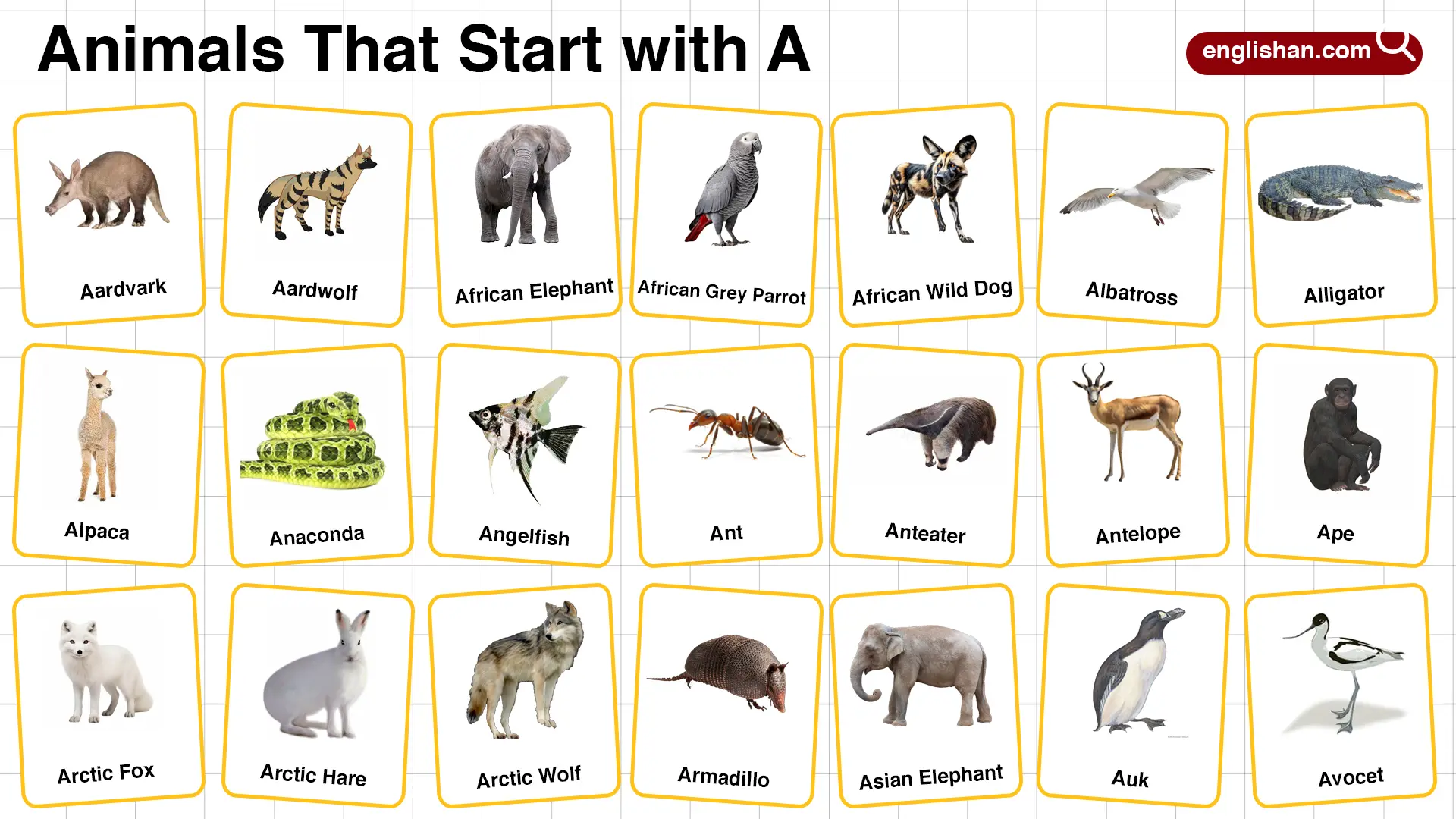
The aardvark, the alligator, and the ant are the three animals that start with A almost everyone pictures first, and each one is a member of a different animal group. Mammals, reptiles, birds, amphibians, fish, and insects all have members whose names begin with this letter. The pictures and short facts below help you name each animal and tell it apart from the animal it is most easily confused with.
Animals That Start With A With Pictures
Animals that start with A cover every major animal group. Among mammals there are the aardvark, alpaca, and Arctic fox. Among reptiles there are the alligator and the anaconda. The albatross and the avocet are birds, the axolotl is an amphibian, the angelfish and the anchovy are fish, and the ant and the aphid are insects. Each one has a coat, shape, or marking that makes it recognizable at a glance.
| Animal | Type | Recognize it by | Tell it apart from |
|---|---|---|---|
| Aardvark | Mammal | Long pig-like snout, tall ears, thick tail | Anteater, which has a tube snout and a bushy tail |
| Aardwolf | Mammal | Sandy coat with dark stripes, mane along the back | Striped hyena, which is more than twice as heavy |
| Alligator | Reptile | Broad rounded snout, dark armored back | Crocodile, whose snout is narrow and V-shaped |
| Alpaca | Mammal | Dense fleece, short face, blunt ears | Llama, which is taller with longer banana-shaped ears |
| Anaconda | Reptile | Very thick olive body with dark oval spots | Python, which is longer but far lighter |
| Angelfish | Fish | Tall flat body, long trailing fins | Butterflyfish, which is rounder and smaller |
| Ant | Insect | Pinched waist, bent antennae, six legs | Termite, which has no waist and straight antennae |
| Anteater | Mammal | Tube-shaped snout, bushy tail, hooked claws | Aardvark, which has a pig-like snout and bare tail |
| Antelope | Mammal | Slim legs, permanent horns, alert ears | Deer, which grows and sheds antlers every year |
| Arctic fox | Mammal | Small ears, short muzzle, white winter coat | Arctic hare, which has long ears and no bushy tail |
| Armadillo | Mammal | Bony plates over the back, pointed snout | Pangolin, which is covered in scales rather than plates |
| Auk | Bird | Black and white body, upright stance, short wings | Penguin, which cannot fly |
| Avocet | Bird | Long legs, thin bill curving upward | Stilt, whose bill is straight |
| Axolotl | Amphibian | Feathery red gills, wide flat head | Salamander, which loses its gills as an adult |
| Aye-aye | Mammal | Huge eyes, bat-like ears, one long thin finger | Other lemurs, which have even fingers |
| Albatross | Bird | Very long narrow wings, hooked pale bill | Gull, which is much smaller with rounded wings |
| Addax | Mammal | Pale coat, long spiral horns, broad hooves | Arabian oryx, whose horns are straight |
| African elephant | Mammal | Ears shaped like Africa, tusks on both sexes | Asian elephant, which has smaller ears and a domed head |
| African wild dog | Mammal | Blotched black, tan, and white coat, round ears | Hyena, which has a sloping back and a heavier head |
| Agama | Reptile | Blue or orange head on a grey body in males | Anole, which is smaller and green |
| Anhinga | Bird | Snake-like neck above the water, fanned wings | Cormorant, which has a hooked bill |
| Anglerfish | Fish | Huge mouth, glowing lure on the head | Any other deep-sea fish, since only the anglerfish has a lure |
| Abalone | Mollusk | Flat ear-shaped shell with a row of holes | Limpet, whose shell is a plain cone |
| Atlantic puffin | Bird | Orange and grey striped bill, white face | Razorbill, whose bill is black |
| Amur leopard | Mammal | Thick pale coat, widely spaced rosettes | African leopard, whose coat is shorter and darker |
| Atlas moth | Insect | Wings the size of a hand, snake-head tips | Any butterfly, which rests with wings closed |
| Anole | Reptile | Small green body, fan of skin under the throat | Chameleon, which has a curled tail and turret eyes |
| Arctic tern | Bird | Black cap, red bill, deeply forked tail | Common tern, whose bill has a black tip |
| Adder | Reptile | Zigzag stripe down the back | Grass snake, which has a yellow collar |
| Arapaima | Fish | Huge scales edged in red, long low body | Any river fish, since no other is so large |
Animals That Start With A: Each with Picture
Common Animals That Start With A
Ten animals cover most of what people mean by an animal that starts with A. Each is common enough to be seen in a zoo or on a farm, and each has a shape or a coat that fixes it in memory after one look.
- Aardvark: a night-time digger from Africa with a pig-like snout and rabbit-like ears.
- Alligator: a broad-snouted reptile of warm freshwater swamps in the southern United States and China.
- Alpaca: a fleece-bearing farm animal of the camel family, kept for its soft wool.
- Ant: a small waisted insect that lives in a colony under one queen.
- Anteater: a South American mammal with a tube snout and a tongue longer than a ruler.
- Antelope: a slim hoofed grazer of open country whose horns never fall off.
- Armadillo: a mammal wrapped in bony plates that digs for insects.
- Axolotl: a Mexican salamander that keeps its feathery gills for life.
- Albatross: an ocean bird with the widest wings of any living bird.
- Anaconda: the heaviest snake in the world, at home in South American rivers.
Mammals That Start With A
Mammals that start with A range from the largest land animal alive to a lemur the size of a house cat, and every one below is furred, warm-blooded, and feeds its young on milk.
Aardvark
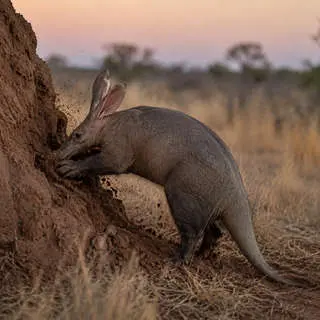
The aardvark (Orycteropus afer) is a heavy-bodied mammal with a pig-like snout, tall upright ears, and a thick tapering tail. Its coarse coat is sandy grey and thin enough to show the skin beneath. At night it digs into termite mounds with spade-shaped claws, then laps up the insects with a long sticky tongue, which is why it is rarely seen by day. The name means “earth pig” in Afrikaans, though the aardvark is not related to pigs at all. You tell it from an anteater by the snout, since an aardvark’s snout is blunt and rounded while an anteater’s is a narrow tube.
Aardwolf
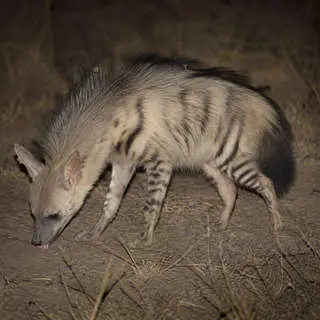
A small striped member of the hyena family (Hyaenidae), the aardwolf has a sandy coat with dark vertical stripes. A mane rises along its back when it is alarmed. At the shoulder it stands about knee height, and it weighs no more than a medium dog. Unlike the other hyenas it does not hunt large animals; it feeds almost only on termites, licking them off the ground with a broad sticky tongue. It works dry grassland at night and rests in an old burrow by day. A striped hyena is more than twice as heavy and has a far larger head, which is the quickest way to tell the two apart.
Addax
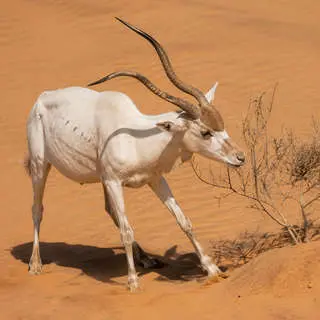
Pale as the sand it walks on, the addax (Addax nasomaculatus) is a desert antelope with a white summer coat. A brown patch of hair marks its forehead, and its long horns twist in a loose spiral. Its hooves are wide and flat, so it does not sink into dunes. In the Sahara it survives on grasses and shrubs and goes for long spells without drinking, taking its water from plants. Fewer than a few hundred remain in the wild, which places it among the rarest antelopes. You tell it from an Arabian oryx by the horns, because oryx horns are straight.
African elephant
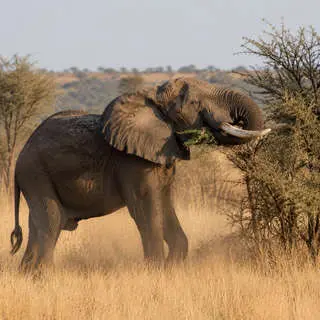
The African elephant (Loxodonta africana, the African bush elephant) is the largest land animal alive. Its skin is grey and deeply wrinkled, its ears are shaped like the continent itself, and both males and females carry tusks. At the shoulder a bull stands about as tall as a single-storey house. For most of the day it browses and grazes, pulling grass, bark, and branches with a trunk that works as a nose, hand, and drinking hose. An Asian elephant has smaller rounded ears and a twin-domed head, which is the fastest way to tell the two apart.
African wild dog
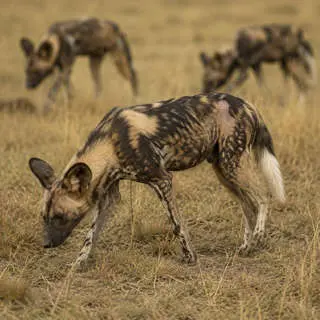
Blotched in black, tan, and white, the African wild dog (Lycaon pictus) has long legs, a lean body, and large round ears held upright. No two coats carry the same pattern, so researchers identify individuals by their markings. It hunts in packs across savanna and open woodland, running antelope down over long distances rather than ambushing them. Its other name is the painted dog. Next to it, a hyena has a sloping back and a much heavier head, so the two are easy to separate at a distance.
Agouti
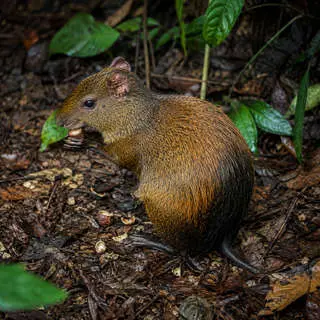
A rabbit-sized rodent of Central and South American forests, the agouti has a glossy coat that shades from orange-brown to near black. It has a short bare tail, slender legs, and hooved toes, and it sits up on its hind legs to eat. It gathers fallen fruit and nuts on the forest floor and buries what it cannot finish, which is how Brazil nut trees spread their seeds. Where a guinea pig’s coat is rough, the agouti’s is smooth.
Alpaca
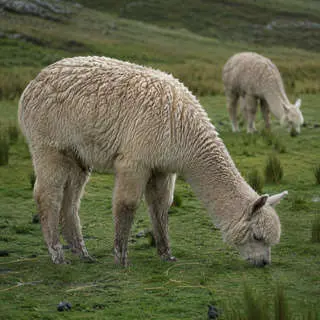
The alpaca (Lama pacos) is a domestic member of the camel family with a dense fleece, a short face, and blunt spear-shaped ears. It is about the height of a large dog at the shoulder and grazes on grass in herds. Farmers shear it once a year for fleece that is finer and warmer than sheep’s wool. A llama is taller, carries longer banana-shaped ears, and has a coarser coat, which is how you tell the two apart in a field.
Amur leopard
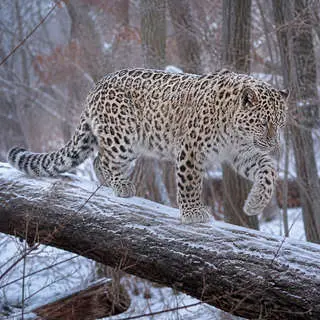
Thick pale fur and widely spaced rosettes mark the Amur leopard (Panthera pardus orientalis), a big cat whose rosettes are spaced farther apart than on any other leopard. Its long fur and long tail suit the snowy forests of the Russian Far East and northern China. It hunts deer and hare alone and at night, climbing trees to store what it does not finish. Around a hundred remain in the wild, so it is listed as Critically Endangered.
Anteater
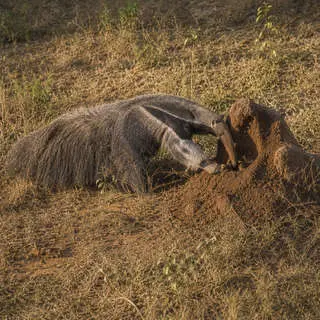
Larger than a big dog and far shaggier, the giant anteater (Myrmecophaga tridactyla) is a grey mammal with a narrow tube-shaped snout, a black shoulder stripe, and a bushy tail as long as its body. It has no teeth. It rips open ant and termite nests with hooked front claws. To draw the insects out, its tongue flicks in and out more than a hundred times a minute. Between feeds it walks on its knuckles to keep those claws sharp. Set beside it, an aardvark has a blunt snout and a bare tail, which is the difference to check.
Antelope
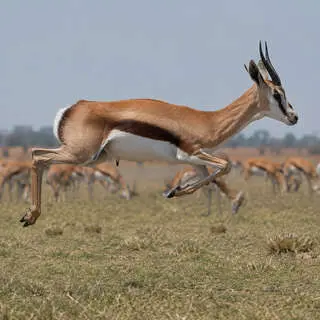
Antelopes are slim hoofed grazers with long legs, alert ears, and horns that grow for life and never fall off. The springbok, gazelle, kudu, eland, and oryx are all antelopes. Most live in African savanna, where they graze in herds and run from lions and wild dogs at speed. A deer looks similar from a distance, but a deer grows a new set of antlers every year and drops them again, so a deer in winter has no headgear at all.
Ape
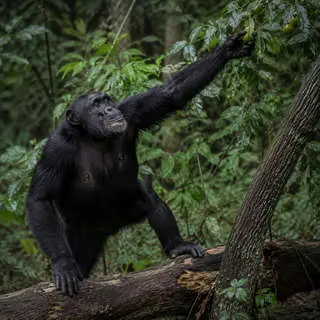
Apes swing through branches on long arms and walk upright when they choose, and none of them has a tail. They are primates with broad chests and hands that grip like ours. Gorillas, chimpanzees, bonobos, orangutans, and gibbons are all apes. They live in the forests of Africa and Southeast Asia, where they climb for fruit and leaves and build sleeping nests in the branches. A monkey almost always has a tail, which is the one feature that separates the two groups at a glance.
Arabian oryx
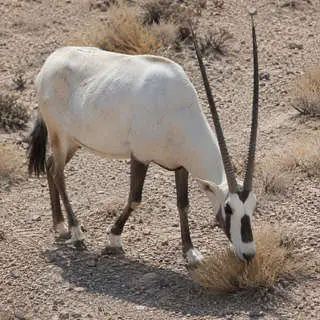
Almost white with black markings on the face and legs, the Arabian oryx (Oryx leucoryx) is a desert antelope. Its straight horns are nearly as long as its body is tall. It stands about a metre at the shoulder. In the Arabian Peninsula it grazes on desert grasses and follows rare rain to find fresh growth. Hunting wiped it out in the wild in the 1970s, and today’s herds descend from zoo-bred animals. An addax has spiral horns, while the oryx’s are straight.
Arctic fox
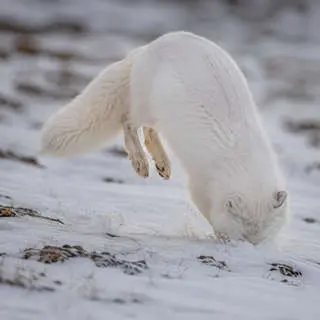
The Arctic fox (Vulpes lagopus) is a compact fox with a short muzzle, small rounded ears, and a bushy tail it wraps around its face when it sleeps. Its coat is pure white in winter and brown or grey in summer. Across the tundra it hunts lemmings, ground-nesting birds, and eggs, and follows polar bears to eat what they leave. Even in temperatures far below freezing it stays active thanks to fur that covers even the soles of its feet.
Arctic hare
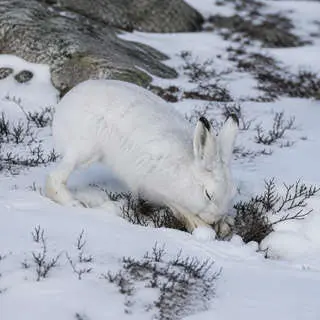
Bigger than any other hare, the Arctic hare (Lepus arcticus) has a thick white coat, black-tipped ears, and hind legs long enough to carry it at highway speed. It stands on its back legs to watch for foxes. It digs through snow to reach woody plants and moss, and in the far north it stays white all year. An Arctic fox has a bushy tail and a pointed face, which an Arctic hare does not.
Arctic wolf
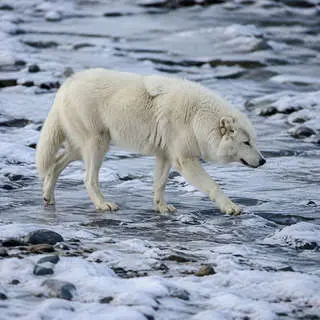
The Arctic wolf (Canis lupus arctos) is a white wolf with shorter ears and a shorter muzzle than the grey wolf of the south. Both shortenings reduce heat loss. On the islands of the Canadian Arctic and Greenland it lives in packs. Across ground that stays frozen most of the year it hunts musk oxen and Arctic hare. An Arctic fox is far smaller and has a much bushier tail.
Armadillo
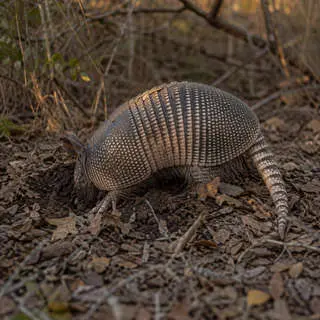
Bony plates (osteoderms) cover the back, head, and tail of the armadillo, a mammal with a pointed snout and strong digging claws. The nine-banded armadillo (Dasypus novemcinctus) is the one seen in the southern United States. It roots through leaf litter for insects and grubs by smell, since its eyesight is poor. Only the three-banded armadillo of South America rolls into a full ball. A pangolin looks similar but is covered in overlapping scales, not plates.
Asian elephant
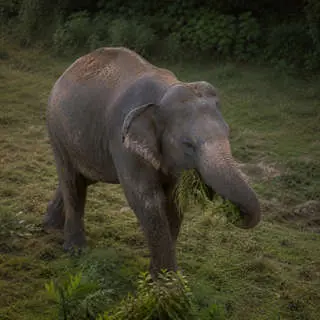
Smaller than its African relative, the Asian elephant (Elephas maximus) has rounded ears, a twin-domed forehead, and tusks only on some males. Its skin is smoother and its back arches upward. It feeds on grass, bark, and fruit in the forests of India and Southeast Asia and lives in family herds led by an older female. The IUCN lists it as Endangered.
Asiatic black bear
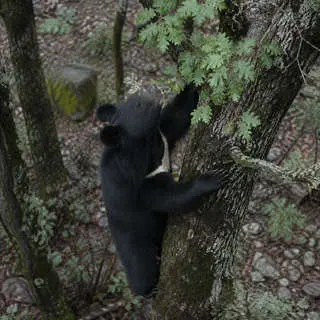
A white crescent across the chest marks the Asiatic black bear (Ursus thibetanus), a medium bear with glossy black fur. That crescent is why it is also called the moon bear. It has large round ears and a shaggy ruff around the neck. It climbs well and eats nuts, fruit, insects, and honey in the forests of the Himalayas and East Asia. Seen together, the American black bear has no chest crescent and smaller ears.
American bison
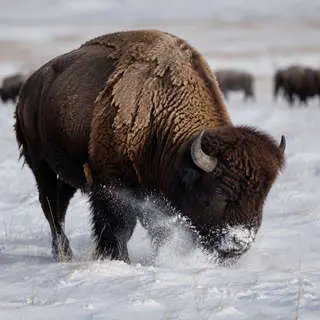
American bison (Bison bison) graze the prairie in herds, each animal shaggy and dark brown with a high shoulder hump and short curved horns on both sexes. A bull weighs about as much as a small car. It grazes on prairie grass in herds and swings its heavy head to clear snow in winter. No land animal in North America outweighs it.
Aye-aye
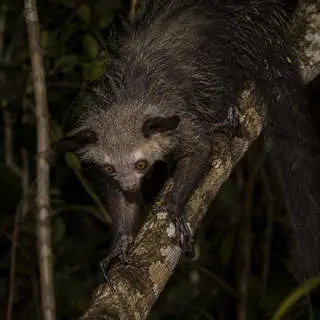
Huge orange eyes and bat-like ears mark the aye-aye (Daubentonia madagascariensis), a lemur of Madagascar with a bushy tail. Its middle finger is thin, long, and jointed like a wire. It moves through the forest canopy at night. With that finger it taps on bark, listens for hollow spaces where grubs hide, chews a hole with rodent-like front teeth, and hooks the grub out. No other primate feeds this way.
Other mammals that start with A: African civet, African forest elephant, Alpine ibex, Alpine marmot, Amazon river dolphin, American black bear, Amur tiger, Andean cat, Asian palm civet, Australian sea lion.
Related:
- 36 Burrowing Animals Names with Pictures: Animals That Live Underground
- Animals and Their Body Parts Names (With Pictures)
- 50+ Animal Group Names for Kids: A to Z Names of Animal Groups
Birds That Start With A
Birds that start with A stretch from an ocean glider with a wingspan wider than a car to a backyard songbird with an orange chest.
Adélie penguin
The Adélie penguin (Pygoscelis adeliae) is a mid-sized penguin with a black head and back, a white belly, and a thin white ring around each eye. It lives on the coast of Antarctica, where it nests on bare rock in colonies of thousands. It swims after krill and small fish, and it walks across the ice for miles between feeding and breeding grounds. On the other hand, a chinstrap penguin has a thin black line under its chin, which an Adélie lacks.
African grey parrot
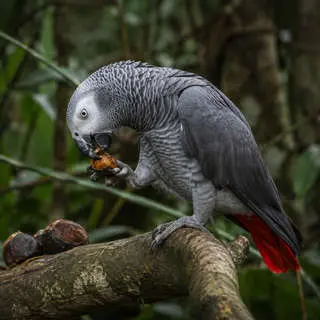
Grey feathers, a pale bare face, and a short red tail identify the African grey parrot (Psittacus erithacus). Its beak is black and strongly hooked. It feeds on fruit, nuts, and seeds in the rainforests of Central Africa and roosts in large noisy flocks. Captive birds learn hundreds of words, and wild trapping for the pet trade has left the species Endangered.
African penguin
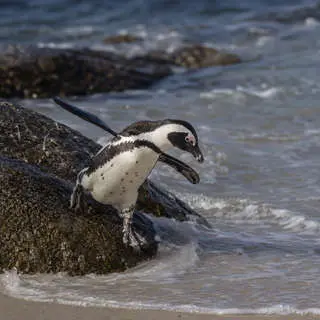
A small penguin of southern African coasts, the African penguin (Spheniscus demersus) has a black band across its chest and a pink patch of bare skin above each eye. No other penguin breeds in Africa, and it nests on beaches and islands off South Africa and Namibia. It dives for sardines and anchovies. Its loud braying call earned it the name jackass penguin.
Albatross
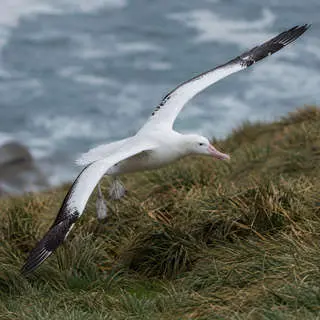
Albatrosses are large seabirds with long narrow wings, a pale body, and a hooked bill. The wandering albatross (Diomedea exulans) has the widest wingspan of any living bird, about three and a half metres tip to tip. It glides for hours over the open ocean with barely a wingbeat, feeding on squid and fish at the surface. Only to nest does it come ashore, on remote islands. Beside it, a gull is far smaller and has short rounded wings.
American robin
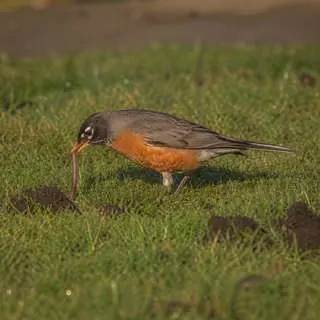
The American robin (Turdus migratorius) hops across lawns pulling earthworms from the soil, a grey-backed thrush with an orange-red chest and a white ring around each eye. In winter it eats berries instead. Its song is one of the first heard at dawn across North America. The European robin is a much smaller bird with a red face rather than a red chest.
Andean condor
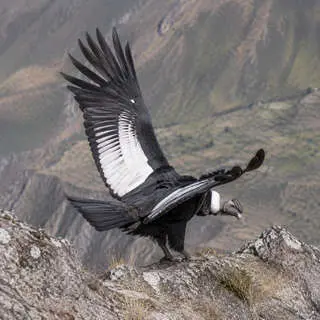
Larger than any eagle, the Andean condor (Vultur gryphus) is black with a white collar and a bare grey head. Its wingspan exceeds three metres. It soars on rising warm air above the Andes and scans the ground for carcasses, since it eats only dead animals. Males carry a fleshy comb on the head that females lack.
Anhinga
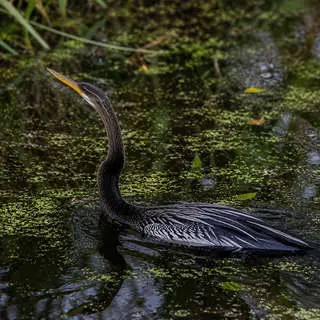
The anhinga (Anhinga anhinga) is a slim water bird with a long thin neck, a pointed bill, and black plumage streaked with silver on the wings. It swims with only its neck above the surface, which is why it is called the snakebird. Underwater it spears fish, then perches with wings spread to dry, because its feathers soak up water. Compared with it, a cormorant has a hooked bill and a thicker neck.
Arctic tern
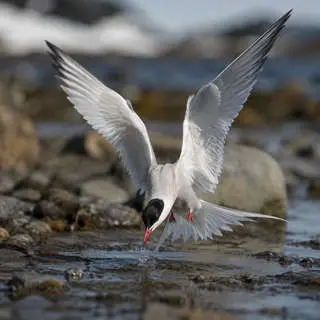
A slender grey and white seabird, the Arctic tern (Sterna paradisaea) has a black cap, a red bill, and a deeply forked tail. It hovers over the water and dips for small fish. Every year it flies from its Arctic breeding grounds to the Antarctic and back, the longest migration of any animal. A common tern is nearly identical but has a black tip on its bill.
Atlantic puffin
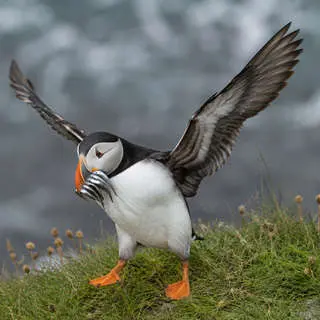
The Atlantic puffin (Fratercula arctica) is a stocky black and white seabird with a white face and orange feet. In the breeding season its broad bill turns striped orange, grey, and yellow. It nests in burrows on cliff tops around the North Atlantic. It dives for sand eels and carries a dozen at a time crosswise in its bill. By contrast, a razorbill has a plain black bill.
Auk
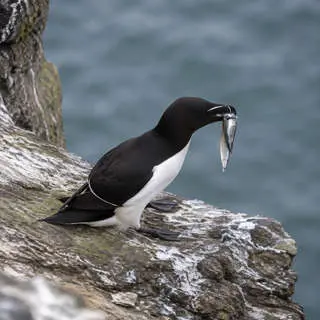
Upright like a penguin but able to fly, auks are black and white seabirds of the family Alcidae that swim underwater with their short wings. Puffins, razorbills, guillemots, and murres are all auks. They nest on northern cliffs in dense colonies and dive for fish and krill. They resemble penguins, but every living auk flies, and penguins do not.
Avocet
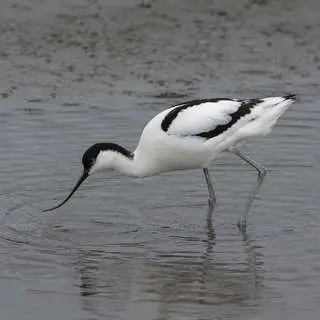
The avocet is a tall black and white wading bird with long grey-blue legs and a thin bill that curves upward. The pied avocet (Recurvirostra avosetta) lives in Europe and Asia; the American avocet has a rusty head in summer. In shallow water it wades and sweeps its bill from side to side to catch tiny shrimp and insects. By contrast, a stilt has a straight bill.
Other birds that start with A: African fish eagle, African jacana, Amazon parrot, American crow, American flamingo, American goldfinch, American kestrel, Anna’s hummingbird, Australian magpie, Australian pelican.
Reptiles And Amphibians That Start With A
Reptiles that start with A are scaly and lay eggs on land, while the amphibians in this group have moist skin and begin life in water.
Adder
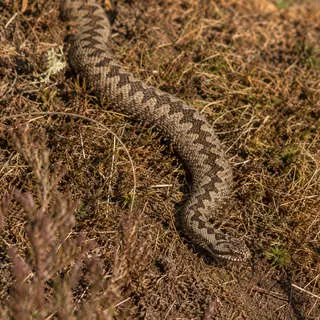
A dark zigzag stripe down the back marks the adder (Vipera berus), a short thick snake that is grey or brown. A V mark shows on its head. No other venomous snake lives in Britain, and the adder lives as far north as the Arctic Circle. It basks on heathland and hunts mice and lizards, striking with fangs and then following the scent. A grass snake is longer, plainer, and has a yellow collar behind the head.
African bullfrog
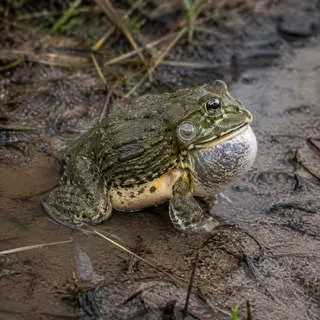
A massive olive-green frog the size of a dinner plate, the African bullfrog (Pyxicephalus adspersus) has a wide mouth and ridged skin. It feeds on insects, rodents, and other frogs. In the dry season it buries itself and seals its skin in a cocoon until the rains return. A male guards the tadpoles and digs channels so they do not dry out.
African clawed frog
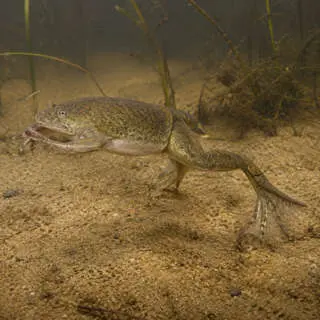
The African clawed frog (Xenopus laevis) is a flat smooth-skinned frog with small eyes on top of its head and three black claws on each hind foot. It has no tongue. Across sub-Saharan Africa it lives entirely in water and shovels food into its mouth with its front feet. For hours it sits still for hours, then lunges at whatever swims past.
Agama
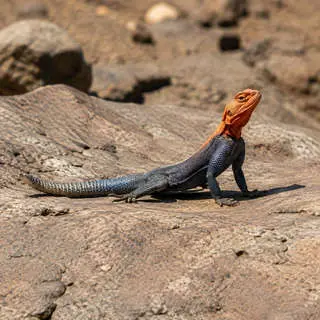
Rough scales and a flattened body mark agamas, lizards of Africa and Asia. A breeding male red-headed agama (Agama agama) carries a bright orange head on a blue-black body, while females stay brown. They bask on rocks and walls in full sun and bob their heads to warn off rivals. For food they take ants, beetles, and grasshoppers. By contrast, an anole is smaller and green.
Aldabra giant tortoise
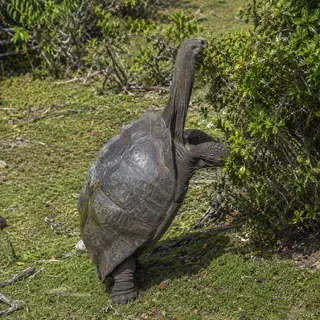
The Aldabra giant tortoise (Aldabrachelys gigantea) is a domed grey tortoise as long as a bathtub and as heavy as three grown men. It grazes on grass and browses low shrubs on Aldabra Atoll in the Indian Ocean. To pull leaves from bushes it reaches up on its hind legs. Individuals live well past a century.
Alligator
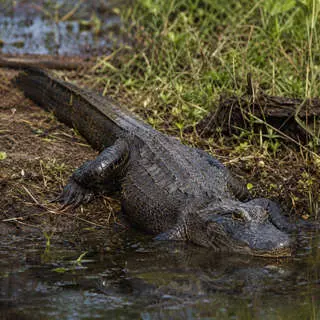
Broad-snouted and armored in dark scales, the American alligator (Alligator mississippiensis) has a thick muscular tail and eyes set high on the head. That eye position lets it watch the bank while nearly submerged. It lives in freshwater swamps, marshes, and slow rivers of the southeastern United States. It ambushes fish, turtles, and mammals at the water’s edge. By contrast, a crocodile has a narrow V-shaped snout, and its lower teeth show when the mouth is shut.
Alligator snapping turtle
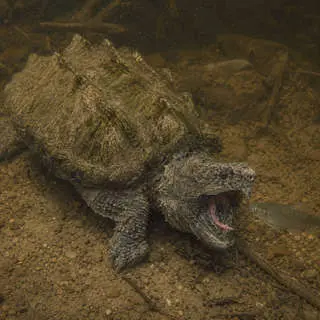
A huge brown turtle with three ridged keels along its shell, the alligator snapping turtle (Macrochelys temminckii) has a heavy head and a sharp hooked beak. It rests motionless on river bottoms in the southern United States with its mouth open. On its tongue a pink worm-shaped flap wriggles like bait, and any fish that investigates is snapped up.
American toad
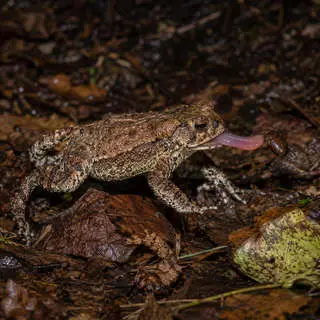
The American toad (Anaxyrus americanus) is a brown or reddish toad with warty skin, short legs, and a raised gland behind each eye. It hops through gardens and woodlands after dark, eating insects, slugs, and worms. In spring the male sings a long musical trill that lasts up to thirty seconds. A frog has smooth skin and long legs built for jumping.
Anaconda
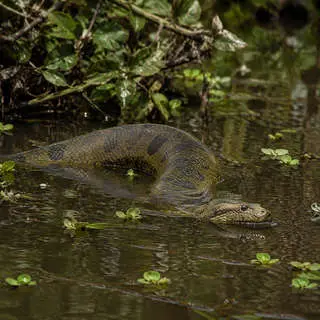
Thicker than a man’s thigh, the green anaconda (Eunectes murinus) is an olive snake with dark oval spots. It outweighs every other snake alive. Its eyes and nostrils are set on top of the head, so it floats almost hidden in the rivers and swamps of the Amazon. Around caiman, deer, and capybara it coils and squeezes until they stop breathing. By contrast, a python is longer but far lighter.
Anole
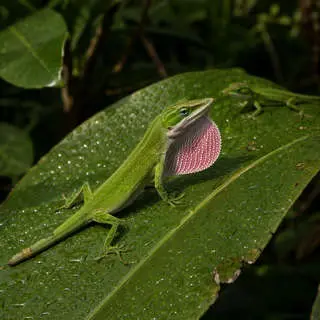
The green anole (Anolis carolinensis) is a slim lizard, shorter than a pencil, with a pointed snout and toe pads that grip walls and leaves. A male fans out a pink flap of skin under the throat to signal to rivals. With mood and temperature it shifts from bright green to brown. In the southeastern United States it hunts flies and spiders. By contrast, a chameleon has a curled tail and turret eyes.
Axolotl
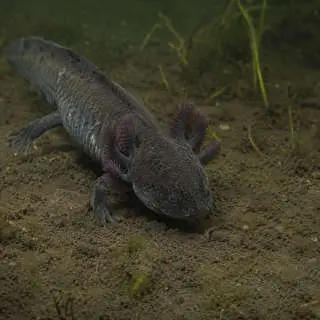
Three feathery red gills on each side of the head mark the axolotl (Ambystoma mexicanum), a salamander with a wide flat head and tiny limbs. Wild axolotls are dark; the pale pink ones are a captive form. It never leaves the water and keeps its gills for life. It eats worms, insect larvae, and small fish in the canals of Xochimilco near Mexico City. Lost limbs grow back, and in the wild the species is Critically Endangered.
Other reptiles and amphibians that start with A: African rock python, Alpine newt, Amazon tree boa, American crocodile, Argentine horned frog, Arizona coral snake, Armadillo lizard, Asian vine snake, Asian water monitor, Australian frilled lizard.
Sea Animals That Start With A
Sea animals that start with A live everywhere from coral reefs and river mouths to the lightless deep, and several are dinner-table fish.
Abalone
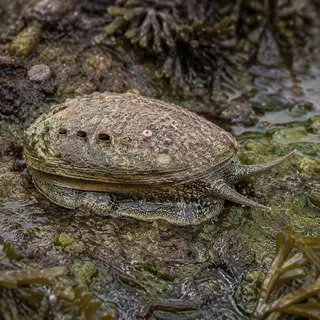
The abalone is a sea snail with a flat ear-shaped shell, a row of breathing holes along one edge, and an inside surface that shines with rainbow colors. It clamps to rocks in cold coastal water and scrapes algae off the surface with a rough tongue. Jewellers polish its shell, and its foot is eaten as seafood. By contrast, a limpet has a plain cone-shaped shell.
Amazon river dolphin
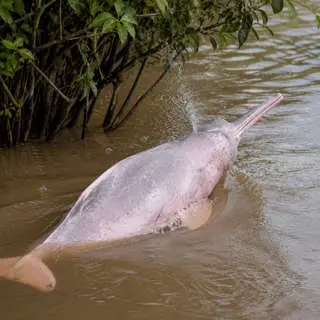
Pink-skinned in old age, the Amazon river dolphin (Inia geoffrensis) is a freshwater dolphin with a long thin beak. A low hump on its back takes the place of a fin. Its neck bends, so it turns its head to hunt fish among flooded trees. Through the rivers of the Amazon basin it swims under its other name, the pink dolphin.
Anchovy
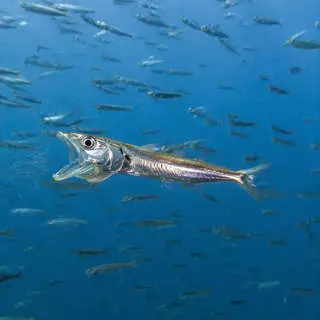
Anchovies are small slender fish with a silver stripe along each side, a blunt snout, and a mouth that reaches back past the eye. They swim in dense schools in the Atlantic, Pacific, and Mediterranean, filtering plankton with their mouths open. They feed seabirds, dolphins, and larger fish, and they are cured and salted for the kitchen. By contrast, a sardine is deeper-bodied with a shorter mouth.
Anemonefish
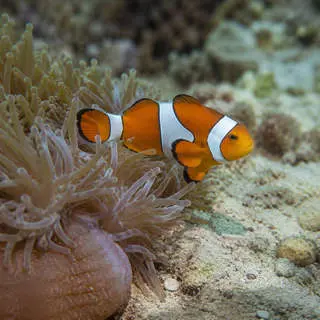
A small orange reef fish with white bars edged in black, the anemonefish, or clownfish, lives inside the stinging tentacles of a sea anemone. A coat of mucus stops the stings. From the anemone’s tentacles it picks food, and it chases off fish that try to eat its host. On reefs of the Indian and western Pacific oceans it is found in pairs.
Angel shark
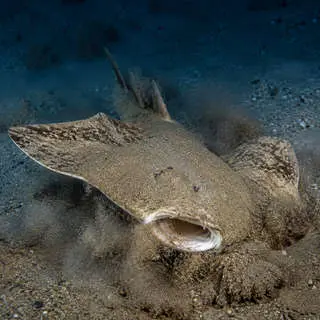
The angel shark (Squatina) is a flat sandy-colored shark with wide wing-like fins and eyes on top of the head. It looks like a ray but breathes through gill slits on its sides. In sand on the seabed it buries itself, then bursts upward to swallow passing fish. A ray’s gills open on its underside.
Angelfish
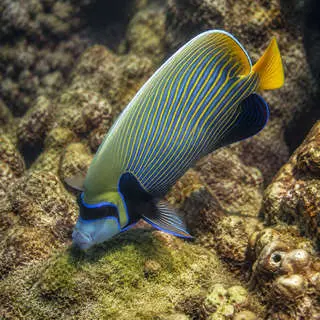
Angelfish swim upright on tall flat bodies trailing long fins. Marine angelfish are large reef fish striped in blue, yellow, and black; the freshwater angelfish (Pterophyllum) of the Amazon is the silver striped one seen in home aquariums. Both nibble algae and small invertebrates. A butterflyfish is rounder and smaller.
Anglerfish
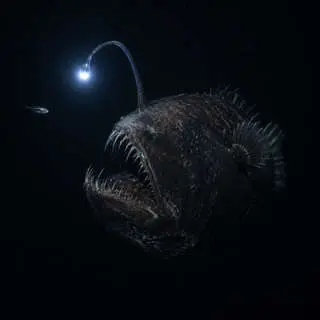
The deep-sea anglerfish is a round dark fish with a huge mouth full of needle teeth and a fleshy lure (the esca) dangling from a stalk on its head. Bacteria inside the lure glow. It waits in the dark and snaps at anything drawn to the light. Females are far larger than males, and in some species the tiny male fastens onto the female for life.
Arapaima
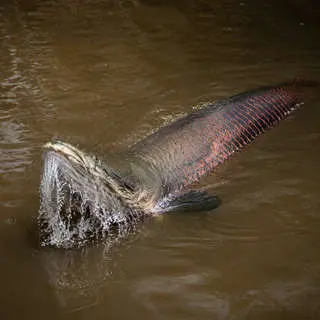
Longer than a man is tall, the arapaima is one of the largest freshwater fish alive, with a long low body and huge scales edged in red. It lives in the slow rivers of the Amazon. It gulps air at the surface every few minutes, and fishermen hear the sound before they see the fish. For food it takes fish, crabs, and fruit that falls into the water.
Archerfish
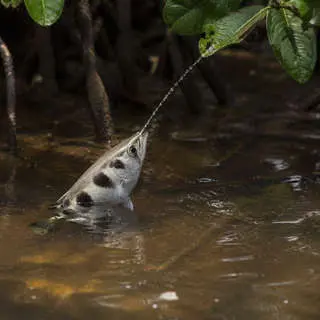
The archerfish (Toxotes) is a silver fish with black bars along the back and a mouth shaped for spitting. It swims in mangroves and river mouths of Asia and Australia. At insects on leaves above the surface it shoots a jet of water and knocks them into the water, hitting targets more than a metre away.
Arctic char
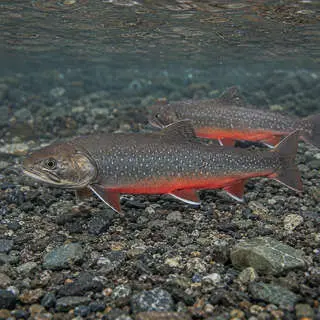
A trout-like fish with a silver body and pale spots, the Arctic char (Salvelinus alpinus) turns bright red on the belly in breeding season. It lives in cold northern lakes and coastal seas. It feeds on insects, crustaceans, and small fish. No freshwater fish lives farther north.
Atlantic cod
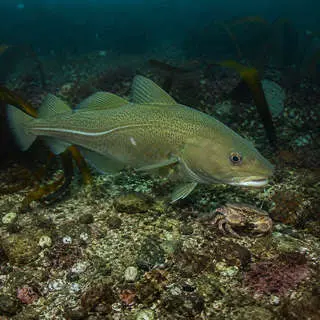
Thick-bodied and olive green, the Atlantic cod (Gadus morhua) has three dorsal fins and a pale line along each side. A short barbel (a fleshy feeler) hangs under its chin. It hunts crabs, shrimp, and smaller fish near the bottom of the cold North Atlantic. Fishing fleets catch more cod than almost any other species.
Sea anemone
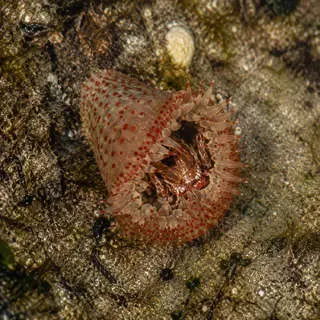
Flower-like on its rock, the sea anemone is an animal: a soft tube with a ring of stinging tentacles around its mouth. It comes in red, green, orange, and white. It paralyses small fish and shrimp that brush its tentacles and pulls them into its mouth. For years it stays in one place.
Other sea animals that start with A: Amberjack, Antarctic krill, Arctic cod, Arrow squid, Asian arowana, Atlantic bluefin tuna, Atlantic herring, Atlantic mackerel, Atlantic salmon, Australian fur seal.
Insects That Start With A
Insects that start with A range from the everyday ant to a moth with wings as wide as your hand.
Ant
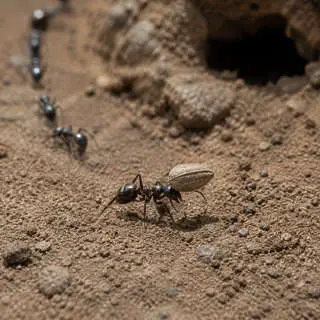
Ants live in colonies of thousands of workers under one queen. Each ant has a narrow waist, bent antennae, and six legs, and most are no longer than a grain of rice. Workers follow scent trails to seeds, nectar, and other insects, which is why a line of ants leads back to the nest. A termite has no waist and straight antennae.
Antlion
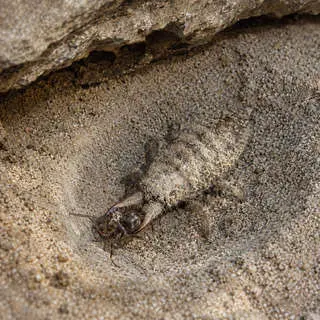
The antlion larva is a squat grey grub with huge curved jaws. It digs a cone-shaped pit in dry sand and hides at the bottom. Any ant that slips over the rim slides down and is grabbed. The adult antlion looks like a slender damselfly with long clear wings.
Aphid
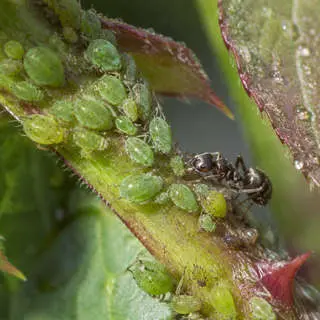
Soft pear-shaped insects no longer than a sesame seed, aphids are green, black, or pink. They cluster on stems and the undersides of leaves and suck sap through a needle-like mouth. They excrete a sugary liquid called honeydew, which ants collect, so ants guard aphid colonies from ladybirds.
Army ant
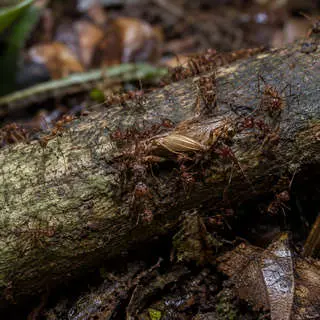
Army ants hunt in swarms of hundreds of thousands, each ant reddish-brown with large hooked jaws. They have no fixed nest. Instead the workers link their bodies to form a living shelter around the queen, then move on when food runs low. They overwhelm insects, spiders, and small lizards in their path across Central and South America and Africa.
Assassin bug
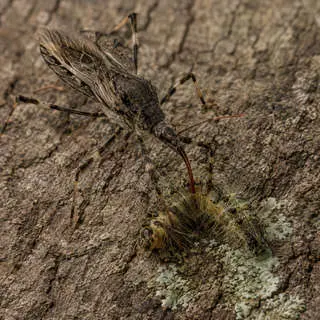
The assassin bug is a slender insect with a narrow head, long legs, and a curved beak folded under its body. It waits on flowers and bark, then stabs a passing insect, injects saliva that dissolves its insides, and drinks the result. Some species bite people if handled.
Asian giant hornet
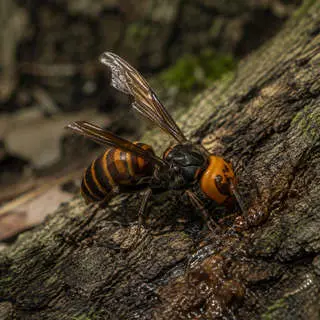
Longer than a thumb, the Asian giant hornet (Vespa mandarinia) is the largest hornet alive. It has a broad orange head, a dark thorax, and an abdomen banded orange and black. It hunts other insects and raids honeybee hives, where a few dozen hornets destroy a whole colony. When it flies the sound is loud enough to hear, and its sting is painful.
Atlas moth
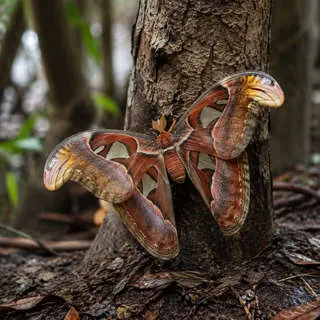
The Atlas moth (Attacus atlas) has wings as wide as an open hand, patterned in rust, cream, and brown. Each wing carries a clear window, and the tips resemble a snake’s head. In the forests of South and Southeast Asia it lives among the trees. Because the adult has no working mouth, it lives about a week on fat stored as a caterpillar.
Admiral butterfly
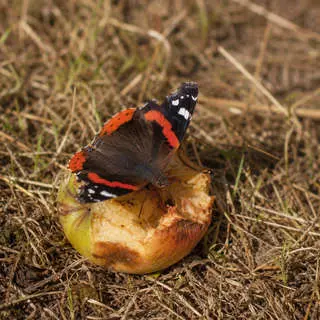
A red band across each forewing marks the red admiral (Vanessa atalanta), a dark butterfly with white spots at the wing tips. It basks on sunny walls and feeds on nectar and rotting fruit. Across Europe, North America, and Asia it flies, migrating north each summer.
Acorn weevil
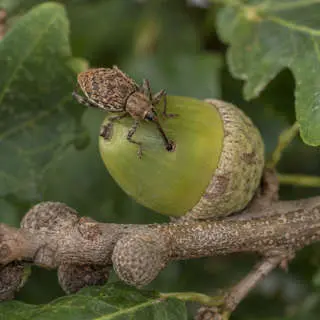
The acorn weevil is a small brown beetle with a snout as long as its body, thin as a hair, with the jaws at the tip. The female drills through an acorn shell and lays an egg inside. Inside, the grub eats the acorn and chews its way out in autumn to bury itself in the soil.
Other insects that start with A: Alderfly, American cockroach, Anise swallowtail butterfly, Apollo butterfly, Argentine ant, Armyworm, Asian lady beetle, Asian tiger mosquito, Asparagus beetle, Australian walking stick.
Farm Animals That Start With A
Farm animals that start with A are mostly breeds rather than species, and each one was bred for its fleece, milk, eggs, or gait.
Alpaca
On the farm the alpaca is kept in small herds and shorn once a year. The Huacaya alpaca has a dense crimped fleece that stands up from the body, while the Suri alpaca grows long silky locks that hang straight down. Both hum to each other and spit when annoyed.
Angora goat
The Angora goat is a white goat with long ringlets of curly hair, drooping ears, and small twisted horns. Its coat is shorn twice a year for mohair, a lustrous fibre used in suits and knitwear. On dry scrub it grazes well, and in wet cold it does poorly. Angora wool, by contrast, is shorn from the Angora rabbit, not from this goat.
Ancona chicken
Each black feather of the Ancona chicken is tipped with a white V, so the bird is speckled all over. It has a bright red comb and yellow legs mottled with black. Active on the ground all day, it lays white eggs and originated in the Italian port of Ancona.
Appaloosa horse
The Appaloosa is a horse with a spotted coat, striped hooves, and mottled skin around the muzzle. Some carry a white blanket of spots over the hips, others are spotted all over. It was bred by the Nez Perce people of the American Northwest as a riding horse and is still used for ranch work and trail riding.
Arabian horse
A dished face and a high-set tail mark the Arabian horse, which also has large eyes and a short strong back. Desert tribes of the Arabian Peninsula bred it for endurance, which makes it one of the oldest horse breeds. Riders choose it above every other breed for long-distance events.
Australorp chicken
The Australorp is a plump black chicken whose feathers shine green in sunlight. It has a red comb and dark eyes. In Australia it was bred from the Orpington for egg laying, and a hen lays about five brown eggs a week.
Ayam Cemani chicken
Black all over, in feathers, comb, skin, beak, and even bone, the Ayam Cemani is a chicken from Indonesia. Only its blood is red. Keepers raise it as an ornamental bird, and it lays cream-colored eggs.
Ayrshire cow
The Ayrshire is a dairy cow with a red and white coat in bold patches and long horns that curve upward. It originated in southwest Scotland and grazes well on poor hill pasture. Such pasture yields milk rich enough for cheese and butter.
Related: Domestic Animals Names in English with their Pictures
Wild Animals That Start With A
Wild animals that start with A live across African savanna, Arctic tundra, Amazon rivers, and Asian forests. Each of these ten carries a full description under its animal group above; the habitat here is the one word that separates it from its neighbours.
- Aardvark: African grassland, active at night
- African elephant: savanna and forest across sub-Saharan Africa
- African wild dog: savanna pack hunter
- Alligator: freshwater swamps of the southern United States
- Amur leopard: snowy forests of the Russian Far East
- Anaconda: rivers and swamps of the Amazon
- Antelope: grassland herds across Africa and Asia
- Arctic fox: tundra of North America and Eurasia
- Arctic wolf: islands of the Canadian Arctic
- Aye-aye: rainforest of Madagascar
Cute Animals That Start With A
Cute animals that start with A share round faces, soft fur or feathers, and small size, and those three traits explain why these eight are photographed far more than the rest.
- Alpaca: long eyelashes and a fleece that looks like a cloud
- Arctic fox: a white ball of fur with a black nose
- Atlantic puffin: a striped bill and an upright waddle
- Axolotl: a smiling mouth and feathery gills
- Adélie penguin: white eye rings and a stiff waddle
- Agouti: sits up on its hind legs to eat like a squirrel
- Arctic hare: black-tipped ears on a snow-white body
- Aye-aye: huge orange eyes, though its long finger startles some people
Big Animals That Start With A
Big animals that start with A are the biggest of their kind in several groups. The African elephant is the largest land animal, the anaconda is the heaviest snake, and the albatross has the widest wingspan of any living bird.
- African elephant: the largest land animal, about four metres at the shoulder
- Asian elephant: the largest land animal in Asia
- American bison: the heaviest land animal in North America
- Green anaconda: the heaviest snake in the world
- Arapaima: one of the largest freshwater fish, longer than a man is tall
- Aldabra giant tortoise: as heavy as three grown men
- Wandering albatross: the widest wingspan of any living bird
- Andean condor: one of the largest flying birds, with a three-metre span
- Atlas moth: one of the largest moths, with a hand-wide wingspan
Rare Animals That Start With A
Rare animals that start with A are mostly victims of habitat loss and hunting, and several survive today only because of captive breeding.
- Amur leopard: Critically Endangered, around a hundred in the wild
- Axolotl: Critically Endangered, found wild only in the canals of Xochimilco
- Addax: Critically Endangered, a few hundred left in the Sahara
- Arabian oryx: once extinct in the wild, restored from zoo herds
- African wild dog: Endangered, fewer than seven thousand adults
- Aye-aye: Endangered, hunted as a bad omen in parts of Madagascar
- African grey parrot: Endangered, trapped for the pet trade
- Angel shark: Critically Endangered in European waters
- Asian elephant: Endangered across its whole range
Animals That Start With A for Kids
Animals that start with A for kids are the twelve with the shortest names and a single feature strong enough to hold a young reader’s attention: a shell, a trunk, a long nose, or giant wings.
- Ant: a tiny insect that lives with thousands of friends
- Ape: a big monkey cousin with no tail
- Alligator: a swamp reptile with a wide flat mouth
- Alpaca: a fluffy farm animal with a long neck
- Anteater: a furry animal with a very long nose and tongue
- Antelope: a fast runner with horns
- Armadillo: a small animal with a hard shell
- Albatross: a sea bird with giant wings
- Axolotl: a water animal that looks like it is smiling
- Arctic fox: a white fox that lives in the snow
- Aardvark: a night animal that eats ants
- Anaconda: a very big snake that lives in rivers
Related: Animals and Their Babies
Animals That Start With A in Alphabetical Order
- Aardvark
- Aardwolf
- Abalone
- Abyssinian cat
- Abyssinian guinea pig
- Acorn weevil
- Acorn woodpecker
- Adder
- Addax
- Adélie penguin
- Admiral butterfly
- Affenpinscher
- Afghan hound
- African bullfrog
- African civet
- African clawed frog
- African elephant
- African fish eagle
- African forest elephant
- African grey parrot
- African jacana
- African penguin
- African rock python
- African wild dog
- Agama
- Agouti
- Airedale terrier
- Akita
- Alaskan malamute
- Albatross
- Aldabra giant tortoise
- Alderfly
- Alligator
- Alligator gar
- Alligator snapping turtle
- Alpaca
- Alpine ibex
- Alpine marmot
- Alpine newt
- Amazon parrot
- Amazon river dolphin
- Amazon tree boa
- Amberjack
- American alligator
- American badger
- American bison
- American black bear
- American bulldog
- American cockroach
- American crocodile
- American crow
- American eel
- American flamingo
- American goldfinch
- American kestrel
- American robin
- American toad
- Amur leopard
- Amur tiger
- Anaconda
- Anchovy
- Andean cat
- Andean condor
- Anemonefish
- Angel shark
- Angelfish
- Anglerfish
- Angora goat
- Angora rabbit
- Anhinga
- Anna’s hummingbird
- Anole
- Ant
- Antarctic krill
- Anteater
- Antelope
- Antlion
- Ape
- Aphid
- Apollo butterfly
- Appaloosa horse
- Arabian horse
- Arabian oryx
- Arapaima
- Archerfish
- Arctic char
- Arctic fox
- Arctic hare
- Arctic tern
- Arctic wolf
- Argentine ant
- Argentine horned frog
- Arizona coral snake
- Armadillo
- Armadillo lizard
- Army ant
- Armyworm
- Arrow squid
- Asian arowana
- Asian elephant
- Asian giant hornet
- Asian lady beetle
- Asian palm civet
- Asian tiger mosquito
- Asian vine snake
- Asian water monitor
- Asiatic black bear
- Asp
- Assassin bug
- Atlantic bluefin tuna
- Atlantic cod
- Atlantic herring
- Atlantic mackerel
- Atlantic puffin
- Atlantic salmon
- Atlas moth
- Aurochs
- Australian cattle dog
- Australian frilled lizard
- Australian fur seal
- Australian magpie
- Australian pelican
- Australian sea lion
- Australian shepherd
- Australorp chicken
- Avocet
- Axolotl
- Ayam Cemani chicken
- Aye-aye
- Ayrshire cow
Related: All Animals Names in English with Their Pictures
Fun Facts About Animals That Start With A
- The aardvark is the only living member of its order, Tubulidentata, with no close relatives alive today.
- A wandering albatross glides for hours over the ocean with barely a wingbeat, and a single bird covers more than a hundred thousand kilometres in a year.
- The axolotl regrows lost limbs, damaged eyes, and even parts of its heart and spinal cord.
- A colony of leafcutter ants strips a tree of its leaves in a single night and carries the pieces underground to grow fungus, which is what the ants eat.
- An antelope’s horns grow for life and never fall off, while a deer drops its antlers every year.
- The tips of an Atlas moth’s wings resemble a snake’s head, which scares off birds and lizards.
- An alligator replaces its teeth as they wear, growing roughly three thousand teeth over its life.
- The Arctic fox stays warm in temperatures below minus fifty degrees Celsius because fur covers even the pads of its feet.
- The anglerfish’s lure glows because bacteria living inside it produce light.
- An ant lifts up to fifty times its own body weight in its jaws.
- The aye-aye taps on bark with its long middle finger and listens for the hollow sound of a grub’s tunnel, a feeding method no other primate shares.
- The anaconda swallows caiman whole and then goes weeks without eating.
FAQs
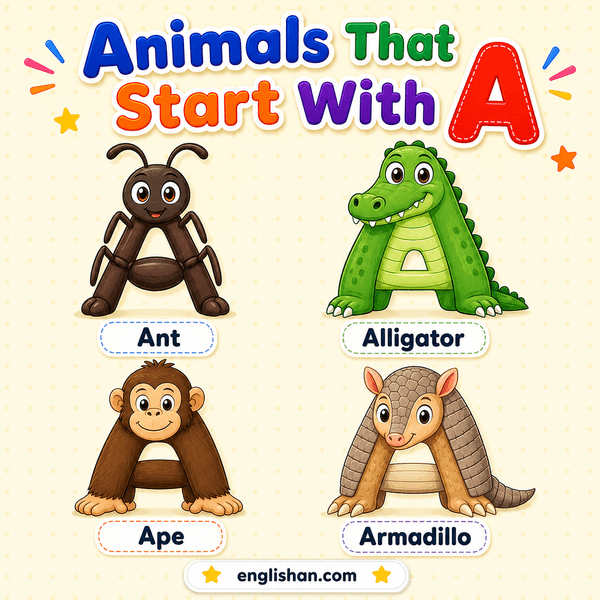
Ten animals that start with A are the aardvark, alligator, alpaca, ant, anteater, antelope, armadillo, axolotl, albatross, and anaconda. Together they cover mammals, reptiles, insects, amphibians, and birds, and every one of them appears in the pictures above.
The alligator is the most popular animal that starts with A, followed by the alpaca and the Arctic fox. All three are easy to picture and easy to see in a zoo, which is why most people name them first.
The African elephant is the largest animal that starts with A and the largest land animal alive, weighing up to six tonnes. In the sea the Atlantic blue marlin reaches about five metres, and among insects the Atlas moth has one of the widest wingspans.
The aphid is the smallest common animal that starts with A, at one to four millimetres long. The Amau frog of Papua New Guinea is the smallest vertebrate starting with A, at under eight millimetres.
The Amur leopard is the rarest animal that starts with A, with around a hundred left in the wild. The axolotl, addax, and Arabian oryx are also Critically Endangered or were once extinct in the wild.
The alpaca is the animal most people name as the cutest that starts with A because of its round face, long eyelashes, and cloud-like fleece. The Arctic fox, Atlantic puffin, and axolotl are the usual runners-up.
Sea animals that start with A are the angelfish, anchovy, abalone, anemonefish, angel shark, anglerfish, Atlantic cod, Arctic char, and the sea anemone. Freshwater relatives with the same letter are the arapaima, archerfish, and Amazon river dolphin.
The aardvark, aardwolf, aye-aye, and armadillo are nocturnal animals that start with A. All four sleep through the day in a burrow or a tree hole and search for food after dark.
The name aardvark means “earth pig” in Afrikaans, the language spoken in much of South Africa. It refers to the animal’s pig-like snout and its habit of digging burrows, though the aardvark is not related to pigs.
You May Also Like