Frog vs toad get lumped together constantly, and it is easy to see why. Both are tailless amphibians, both start life as swimming tadpoles, and both spend time hopping around gardens, ponds, and forest floors. But despite the confusion, frogs and toads are not the same animal. Toads are actually a specific type of frog, shaped by evolution to survive further from water than most of their relatives, and that single adaptation explains almost every physical and behavioral difference between them.
This article covers every meaningful difference between frogs and toads, what they have in common, and a full profile of each one covering their biology, behavior, and life cycle.
Frog vs Toad: The Main Differences
Frogs typically have smooth, moist skin, long powerful legs built for jumping, and stay close to water throughout their lives. Toads usually have dry, bumpy skin, shorter legs built for walking or short hops, and can live much further from water since their skin loses moisture more slowly. Toads also tend to have parotoid glands behind their eyes that secrete a mild toxin as a defense against predators.
Key Features:
- Toads are technically a type of frog, not a separate species group. Both belong to the order Anura.
- Skin texture is the fastest identifier: smooth and moist points to frog, dry and bumpy points to toad.
- Location matters too. An animal found far from any water is far more likely to be a toad.
- Toad toxin (bufotoxin) causes irritation in most species, but the invasive cane toad is toxic enough to kill pets and, in rare cases, seriously harm humans.
Now let’s go through every difference in detail before taking a closer look at each animal individually.
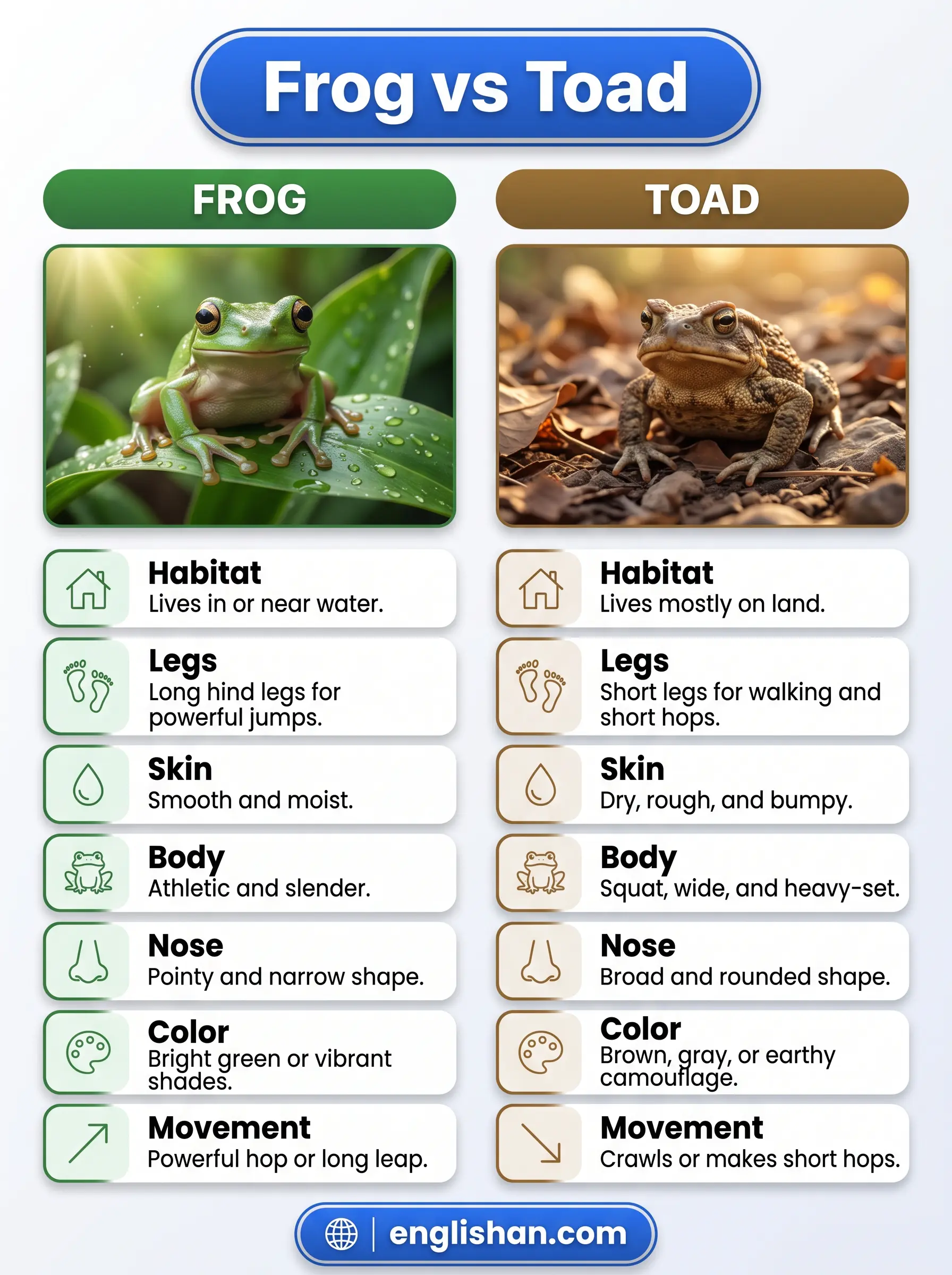
Detailed Differences Between Frog and Toad
Skin Texture
This is the single fastest way to tell them apart. Frog skin is smooth, thin, and almost always looks moist or slippery to the touch. Toad skin is thicker, drier, and covered in noticeable bumps or warts, which despite the popular myth do not come from handling toads and are simply part of their natural skin structure.
Skin Moisture and Water Dependence
Frog skin needs to stay moist to function properly, since frogs absorb oxygen and water partly through their skin. This is why frogs rarely stray far from ponds, streams, or damp vegetation.
Toad skin is thicker and more resistant to water loss, which allows toads to travel much further from water and survive in drier environments like gardens, forests, and even fields.
Body Shape
Frogs generally have slim, streamlined bodies built for swimming and leaping.
Toads have rounder, stockier bodies, which makes sense given that they spend more time walking on land and less time darting through water.
Legs and Movement
Frog legs are long, thin, and extremely powerful, built for large, explosive jumps that can cover many times their own body length in a single leap.
Toad legs are shorter and less muscular, so toads tend to take short hops or simply walk, rather than relying on big jumps to get around or escape predators.
Habitat
Frogs are almost always found in or very near water, including ponds, marshes, rivers, and lakes.
Toads are far more terrestrial and are commonly found in gardens, forests, and even dry, arid regions, only returning to water to breed.
Parotid Glands and Toxins
Most toads have a pair of raised parotoid glands located just behind their eyes. These glands secrete a milky, mildly toxic substance called bufotoxin when the toad feels threatened, which helps deter predators like snakes and birds.
Frogs generally lack these glands, though some frog species, particularly certain poison dart frogs, produce far more potent toxins through glands spread across their skin rather than concentrated behind the eyes.
Eyes
Frog eyes tend to bulge out more prominently and sit closer to the sides of the head, giving them a wide field of view useful for spotting predators and prey while partially submerged in water.
Toad eyes are often set slightly further back, and many toad species have a distinctive horizontal, cat like pupil.
Eggs
Frogs typically lay their eggs in clusters or clumps that float on the water’s surface.
Toads usually lay their eggs in long chains or strings, often wrapped around underwater plants or debris.
Teeth
Most frogs have small teeth on their upper jaw, called maxillary teeth, used to grip prey before swallowing it whole.
Most toads have no teeth at all, relying entirely on their sticky tongue and jaw strength to catch and swallow food.
Diet
Both frogs and toads are primarily carnivorous, but their diet largely reflects where they spend their time. Frogs eat insects, worms, small fish, and other invertebrates found in or near water. Toads eat a similar range of insects and invertebrates, but since they spend more time on land, their diet often includes garden pests like slugs, grubs, and beetles, which is one reason gardeners often welcome toads.
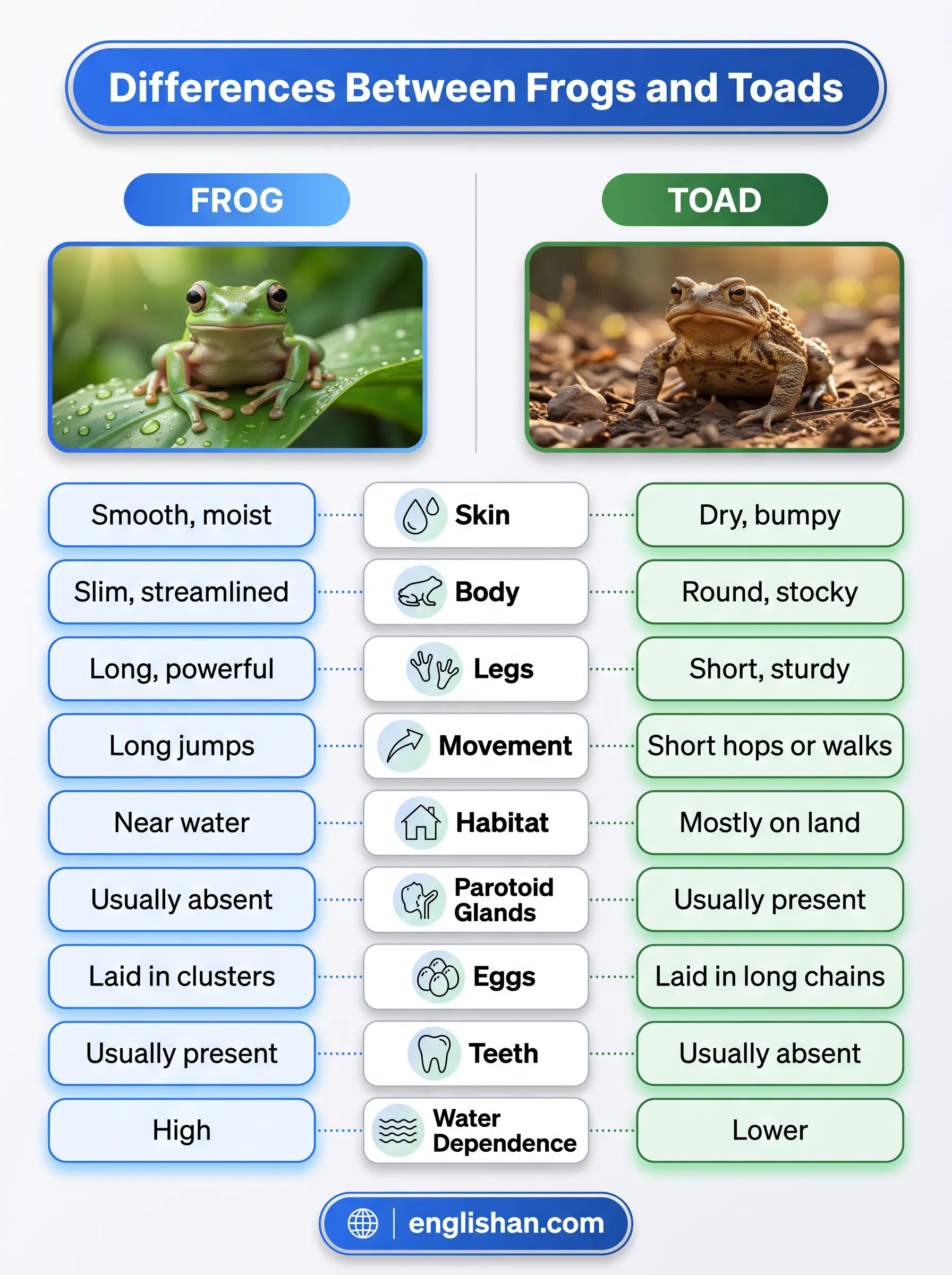
Frog vs Toad Comparison Table
| Feature | Frog | Toad |
|---|---|---|
| Skin texture | Smooth, moist | Dry, bumpy |
| Body shape | Slim, streamlined | Round, stocky |
| Legs | Long, powerful | Short, less muscular |
| Movement | Large jumps | Short hops or walking |
| Habitat | In or near water | Land, drier environments |
| Parotoid glands | Usually absent | Usually present |
| Eggs | Laid in clusters | Laid in long chains |
| Teeth | Usually present | Usually absent |
| Water dependence | High | Lower |
Similarities Between Frog vs Toad
Despite their differences, frogs and toads share a long list of traits, which is exactly why the two get confused so easily.
Shared classification: Toads are technically a type of frog. Both belong to the order Anura, the group of tailless amphibians, and toads are simply a specialized branch within that broader group.
Life cycle: Both go through the same basic metamorphosis, starting as eggs, hatching into swimming, gill breathing tadpoles, and eventually developing legs and lungs to become adults capable of living on land.
Cold blooded physiology: Both are ectotherms, relying on their environment to regulate body temperature, which is why both frogs and toads are far more active in warm weather and often hibernate or brumate during colder months.
Carnivorous diet: Both primarily eat insects and other small invertebrates, using a similar sticky, quick moving tongue to catch prey.
Permeable skin: Both breathe partly through their skin in addition to their lungs, which means both are highly sensitive to pollution, pesticides, and changes in environmental conditions.
Vocalizations: Both frogs and toads make calls, usually to attract mates, using an inflatable vocal sac that amplifies the sound.
Amphibian lifestyle: Both need water at some point in their life cycle to reproduce, even species like toads that otherwise spend most of their adult lives on dry land.
A Closer Look at Frog
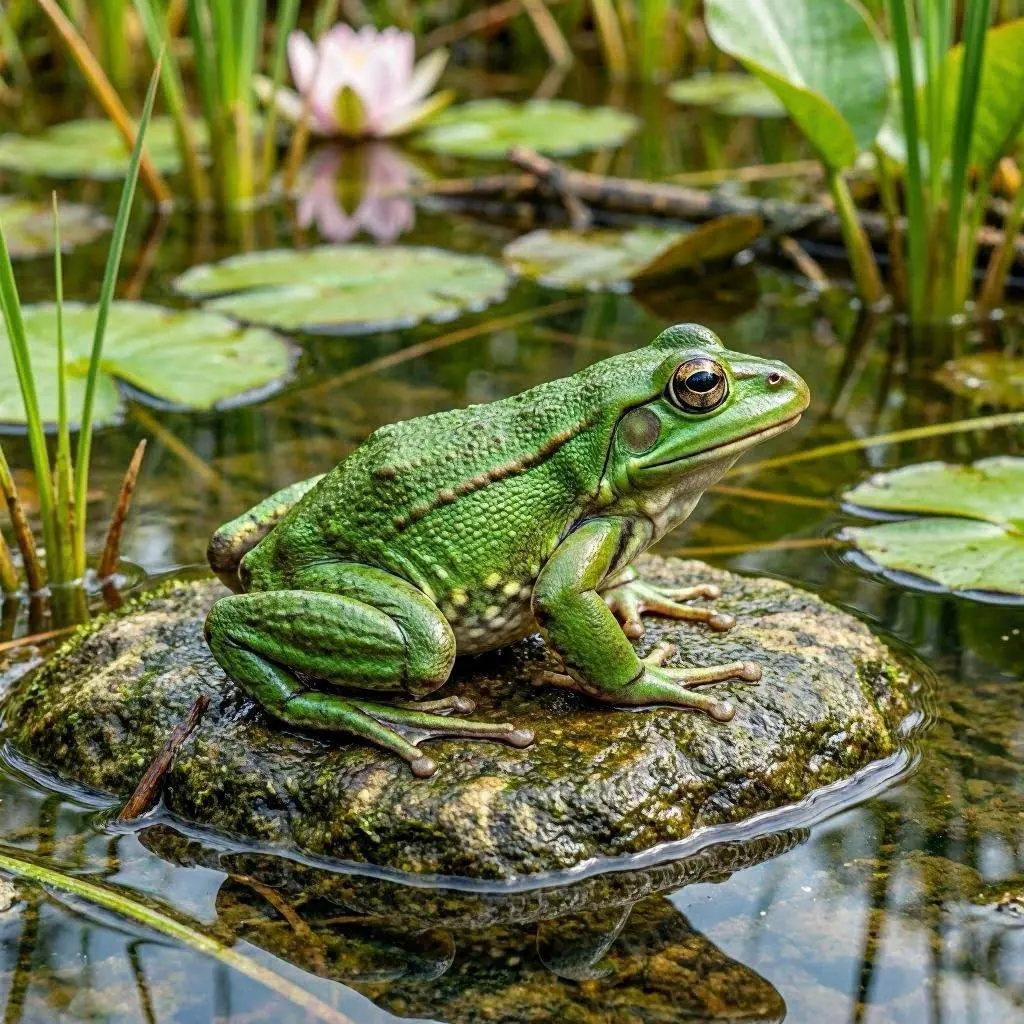
- Types of Frogs: Frogs make up the vast majority of amphibian species worldwide, with over 7,000 known species. Tree frogs, such as the red eyed tree frog, have adapted sticky toe pads for climbing and gripping leaves and branches. Poison dart frogs, native to Central and South America, are famous for their bright warning colors and, in some species, extremely potent skin toxins. True frogs, including the common bullfrog and leopard frog, represent the classic pond dwelling frog most people picture.
- Physical Characteristics: Frogs have smooth, moist skin, bulging eyes positioned for a wide field of view, and long, muscular hind legs built for jumping and swimming. Many species also have webbed feet, which improve swimming efficiency in water.
- Diet and Hunting Style: Frogs are carnivorous, feeding mainly on insects, worms, and other small invertebrates, with larger species occasionally eating small fish or even other frogs. Most frogs catch prey using a fast, sticky tongue that can strike in a fraction of a second.
- Reproduction: Most frogs lay eggs in clusters that float on the surface of ponds or streams. Eggs hatch into tadpoles, which breathe through gills and gradually develop legs and lungs over a period of weeks to months before completing metamorphosis into adults.
- Lifespan: Most frog species live 4 to 15 years in the wild, though some larger species can live longer under the right conditions.
- Conservation Status: Frogs are among the most threatened animal groups on Earth, with a significant percentage of known species classified as Vulnerable, Endangered, or Critically Endangered. Habitat loss, pollution, climate change, and a deadly fungal disease called chytridiomycosis have devastated frog populations worldwide.
Fun Facts About Frogs
- Some frog species can freeze solid during winter and thaw out unharmed in spring.
- The golden poison frog is considered one of the most toxic animals on Earth relative to its size.
- Frogs absorb water directly through their skin rather than drinking it.
- Frog calls can travel over a mile in the right conditions, especially at night.
A Closer Look at Toad
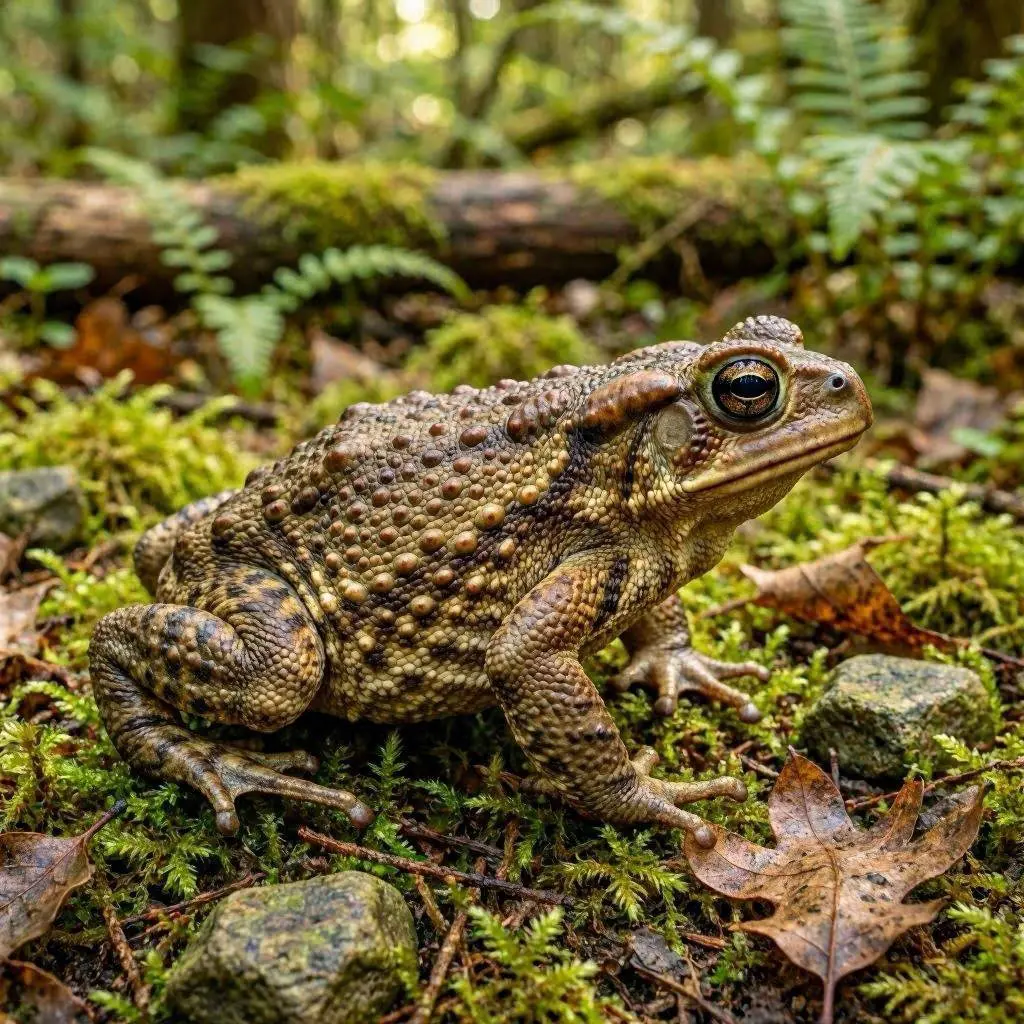
- Types of Toads: The American toad is one of the most common and widespread species in North America, found in gardens, forests, and grasslands. The cane toad, native to Central and South America, was introduced to Australia and other regions for pest control and has since become a highly destructive invasive species due to its potent toxin and rapid reproduction. The Fowler’s toad closely resembles the American toad but prefers sandier soil and slightly different habitats.
- Physical Characteristics: Toads have dry, thick, bumpy skin that helps retain moisture on land, short sturdy legs, and a pair of parotoid glands behind the eyes that secrete a defensive toxin when threatened. Their stockier build and shorter limbs reflect a lifestyle built around walking rather than swimming.
- Diet and Hunting Style: Like frogs, toads are carnivorous, eating insects, slugs, worms, and other small invertebrates. Many gardeners consider toads beneficial since they help control populations of common garden pests.
- Reproduction: Toads typically lay their eggs in long strings rather than clusters, often wrapped around aquatic plants. Like frogs, toad eggs hatch into tadpoles that eventually metamorphose into land dwelling adults.
- Lifespan: Toads often live longer than frogs on average, with many common species living 10 to 12 years in the wild, and some individuals in captivity living considerably longer.
- Conservation Status: Conservation status varies by species. Many common toad species remain widespread and stable, but some, like the Wyoming toad, are critically endangered due to habitat loss and disease. Meanwhile, invasive species like the cane toad have caused serious ecological damage in regions where they were introduced.
Fun Facts About Toads
- Cane toads are toxic enough at every life stage, including as eggs and tadpoles, to kill many predators that attempt to eat them.
- A toad’s bumpy skin is not a wart in the human sense and is not caused by handling toads.
- Some toad species can live over a decade further from water than most people expect for an amphibian.
- Toads often return to the same breeding pond year after year, sometimes traveling significant distances to do so.
Animals That People Often Confuse with Frogs and Toads
Frog vs toad are not the only amphibians people mix up. A couple of related comparisons come up often enough that they are worth covering here too.
Toad vs Bullfrog
Toad is a general term for frogs with drier, bumpier skin and shorter legs, and true toads belong specifically to the family Bufonidae. They tend to favor drier habitats than most frogs and have that classic warty look.
The bullfrog, and specifically the American bullfrog, is a completely different animal despite sometimes getting lumped into the same mental category. It is actually a large true frog, with smooth skin and long, powerful legs built for jumping and swimming. Bullfrogs stay close to lakes, ponds, and streams, relying on that leg strength to move efficiently both in water and on land. In short, a bullfrog is very much a frog, not a toad, and its size is really the only thing that occasionally causes confusion.
Frog vs Salamander
Salamanders get pulled into frog and toad conversations often, but they belong to an entirely different amphibian order. Where frogs and toads fall under Anura, salamanders belong to Caudata, also called Urodela. The biggest visual giveaway is body shape. Salamanders look more like lizards, with long bodies and tails that stick around into adulthood, something no frog or toad has. Their skin also tends to stay consistently moist, similar to a frog’s.
One place frogs, toads, and salamanders do overlap is early life. Many salamander species pass through an aquatic larval stage with visible external gills, a phase that looks broadly similar to the tadpole stage frogs and toads go through, even though the adults end up looking nothing alike.
Can Frogs and Toads Interbreed?
In most cases, no. Frogs and toads are generally too genetically distinct to produce viable offspring, though some very closely related species within the same genus have occasionally been documented hybridizing under specific conditions.
Are Toads Poisonous to Touch?
Most toads are not dangerous to touch briefly, though it is a good idea to wash your hands afterward and avoid touching your eyes or mouth, since the toxin secreted from their parotoid glands can cause irritation. Some toad species, particularly the cane toad, secrete a much more potent toxin that can be dangerous to pets and, in rare cases, seriously harm humans if ingested or if it contacts open wounds.
Do Frogs or Toads Make Better Pets?
Both can make interesting pets, but their care needs differ. Frogs generally require a more humid, water rich enclosure to keep their skin properly moist, while toads can thrive in a drier terrarium setup with a shallow water dish. Toads are often considered slightly easier for beginners due to their hardier skin and tolerance for a wider range of humidity levels.
Frog and Toad Symbolism in Culture
Frog vs toad have carried symbolic meaning across many cultures for centuries. In parts of Europe, toads were historically associated with witchcraft and folklore, often depicted as companions of witches or symbols of transformation. In Japanese and Chinese culture, frogs and toads are frequently seen as symbols of good fortune and prosperity, particularly the three legged toad associated with wealth in Chinese folklore. In many indigenous traditions across the Americas, frogs are connected to rain, fertility, and renewal, tied closely to their dependence on water.
Why Do Frogs and Toads Croak?
Croaking is almost always about reproduction. Male frogs and toads inflate a vocal sac, sometimes located under the chin or on the sides of the head depending on species, and use it to amplify their call in order to attract females and establish territory against rival males. Different species produce distinctly different calls, and experienced listeners can often identify which species is calling based on pitch, rhythm, and pattern alone.
Final Thoughts
The difference between frog vs toad really comes down to one evolutionary trade off: how much time an animal spends near water versus on dry land. Frogs stayed close to water and kept the smooth skin, powerful legs, and streamlined body that come with an aquatic lifestyle. Toads pushed further inland, trading jumping power and moist skin for a tougher, drier hide and a more defensive set of glands. Once you know what to look for, whether it is skin texture, leg length, or how far the animal is from the nearest pond, telling a frog from a toad becomes second nature.
FAQs
No. This is a persistent myth. Human warts are caused by a virus, and toads cannot transmit it. The bumps on a toad’s skin are a natural part of its skin structure, not warts in the human sense.
Generally speaking, some frogs are far more dangerous than any toad, since certain poison dart frog species produce toxins potent enough to be lethal in extremely small amounts. Most common toads produce a much milder toxin that causes irritation rather than serious harm, though invasive species like the cane toad are a notable exception.
Check the skin first. Smooth and moist usually means frog, while dry and bumpy usually means toad. Location matters too, since an animal found far from any water source is far more likely to be a toad.
Yes, both frogs and toads typically enter a dormant state during cold months, often called brumation in ectothermic animals. Some species burrow underground, while others bury themselves in mud at the bottom of ponds to survive the winter.
Yes, though they look broadly similar. Toad tadpoles are often smaller, darker, and tend to swim in large groups, while frog tadpoles vary more widely in size and coloring depending on species.
You May Also Like
Frog vs Toad Quiz
Frog vs Toad
Which one has dry, warty skin?
Drier skin lets a toad live further from water than a frog can.
Warty and dry means toad; smooth and wet means frog.
The dry warted back marked it as a toad.
Which one has long hind legs built for leaping?
Long powerful legs let a frog clear a metre in one jump.
Long legs and long jumps mean frog.
It crossed the path in three long leaps, so a frog.
What are the raised glands behind a toad's eyes called?
They release a bitter secretion that deters predators from swallowing the toad.
Parotoid glands are a toad feature, and they are why dogs foam after mouthing one.
The parotoid glands stood out clearly behind each eye.
Complete the sentence.
Frogs lay eggs in clusters, while toads lay them in long ___.
Toad spawn comes as long ribbons wound around water plants, unlike a frog's clump.
Clumped spawn means frog; strings of spawn mean toad.
Strings of toad spawn were wrapped around the reed stems.
Which one is generally found further from water outside the breeding season?
Tougher skin lets a toad forage in gardens and woodland well away from a pond.
Distance from water follows how well the skin holds moisture.
The toad was found under a log fifty metres from the nearest pond.
In strict classification, what is a toad?
Toads sit inside the order Anura, so every toad is a frog even though not every frog is a toad.
Toad is a description of body type, not a rank of its own.
Taxonomically, a toad is a frog with drier skin.
Turn on JavaScript for the interactive quiz. The full practice set is shown above.