Burrowing Animals Names reveal a fascinating world of underground survival. Digging a home beneath the surface solves several problems at once: it hides animals from predators, protects them from extreme heat and cold, and provides a safe place to raise young or store food. That is why burrowing behavior appears across nearly every major branch of the animal kingdom and even dates back to the age of dinosaurs.
This article covers the major groups of burrowing animals, including mammals, reptiles, amphibians, birds, insects, and other invertebrates. You’ll also discover where they live, how to identify the animal behind a burrow, the deepest and longest tunnels on record, and the important role burrows play in entire ecosystems.
What Is a Burrowing Animal?
A burrowing animal, technically called a fossorial animal, is one that digs tunnels or holes in the ground to live in, hide in, or store food in. The word fossorial comes from the Latin fodere, meaning “to dig,” and it applies to any animal specially adapted for digging, whether that’s through claws, snouts, tusks, or specialized limbs.
Scientists generally sort burrowing animals into three roles based on how they use their burrow.
- Primary excavators, animals that dig their own burrows from scratch and are physically adapted for digging, such as aardvarks, wombats, and prairie dogs.
- Secondary excavators, animals that move into a burrow someone else dug and then modify or expand it for their own use.
- Simple occupants, animals that move into an existing burrow and use it as is, without digging or changing anything.
This distinction matters because many famous “burrowing animals,” like burrowing owls, rarely dig their own tunnels. They usually take over burrows abandoned by prairie dogs or tortoises instead.
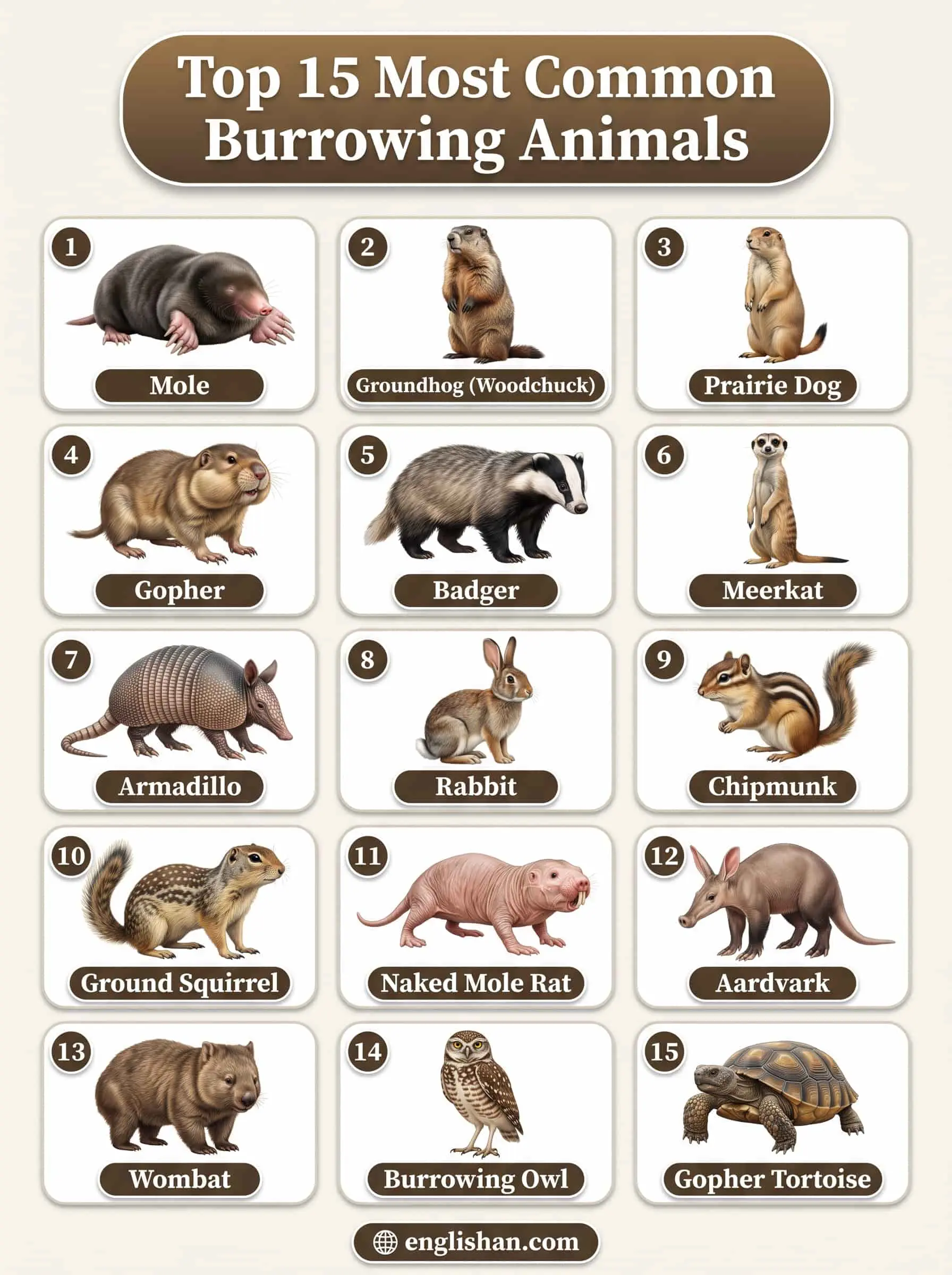
Top 15 Most Common Burrowing Animals with Pictures
For readers who just want the quick, recognizable list without digging through every category, here’s the countdown of the most well-known burrowing animals people search for.
❶ Mole
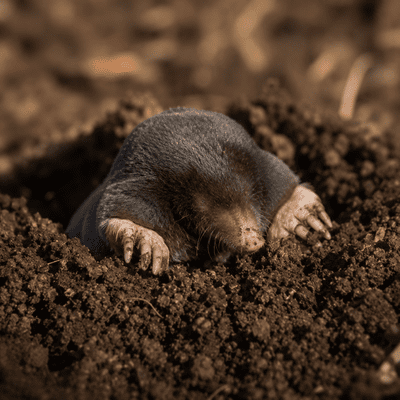
The animal most homeowners blame first when they spot lawn damage. Moles dig extensive tunnel networks just below the surface, extending their burrows by over 100 feet in a single day, and push soil straight up into telltale volcano shaped mounds.
❷ Groundhog (Woodchuck)
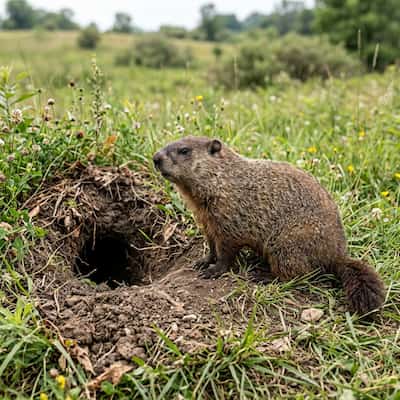
Best known for predicting spring in North American folklore. Groundhogs dig burrows with separate chambers for sleeping, waste, and winter hibernation, sometimes moving several hundred pounds of soil in the process.
❸ Prairie Dog
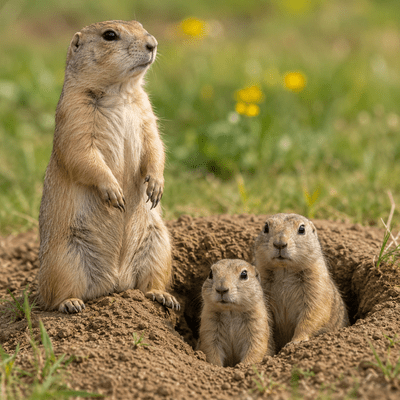
The most socially complex burrower on this list. Prairie dogs live in massive interconnected colonies called towns, with the largest ever recorded stretching 25,000 square miles across Texas and housing an estimated 400 million individuals.
❹ Gopher
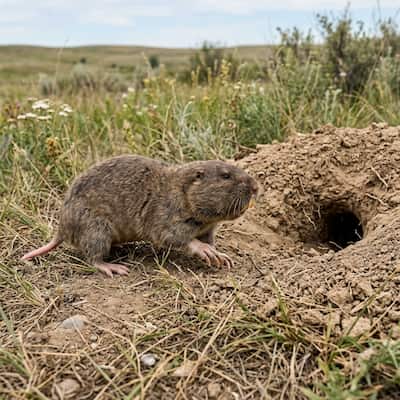
Easy to identify by the fan shaped mounds it leaves behind. Pocket gophers spend nearly their entire lives underground, pushing soil out at an angle and leaving the entrance partially open, unlike a mole’s sealed volcano mound.
❺ Badger
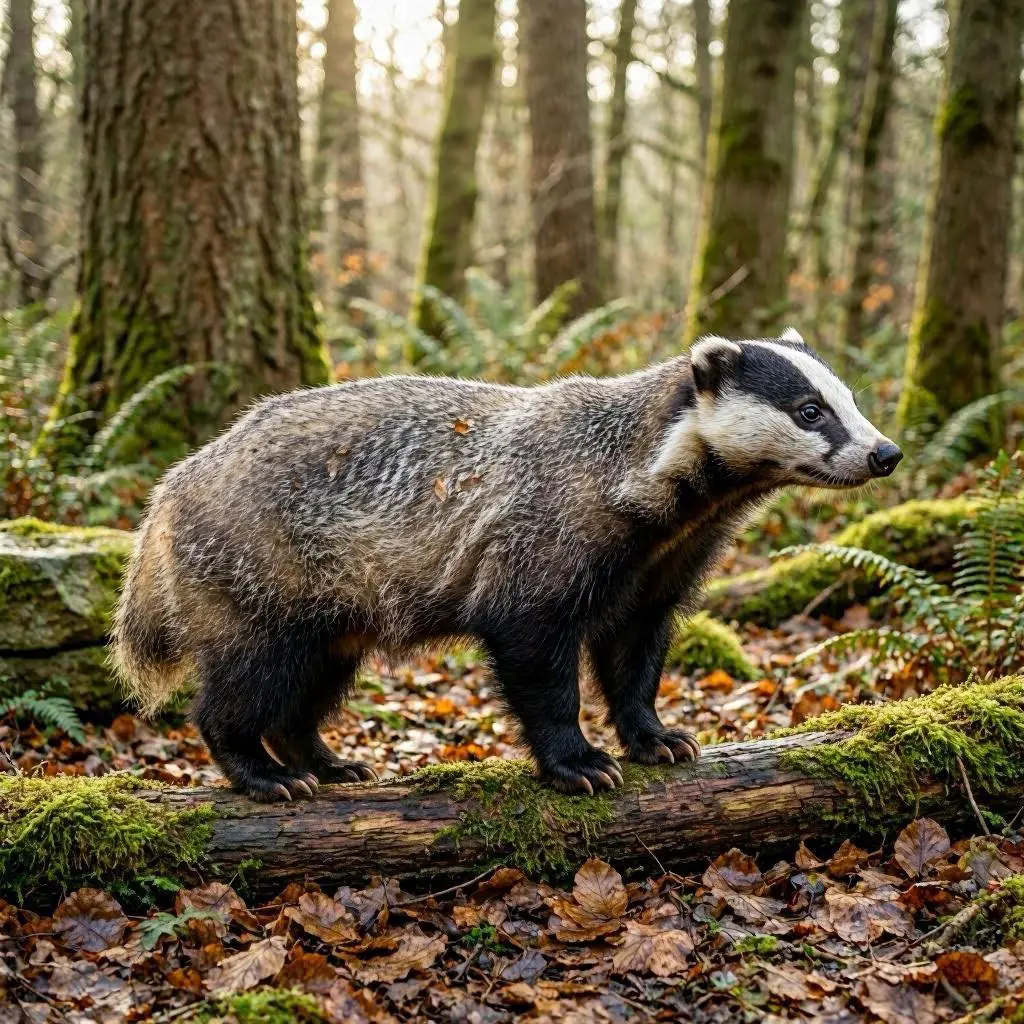
Widely considered the fastest digger in the animal kingdom. A badger can dig a hole large enough to hide its entire body in under two minutes, and its burrow systems, called setts, can be used by multiple generations over decades.
❻ Meerkat
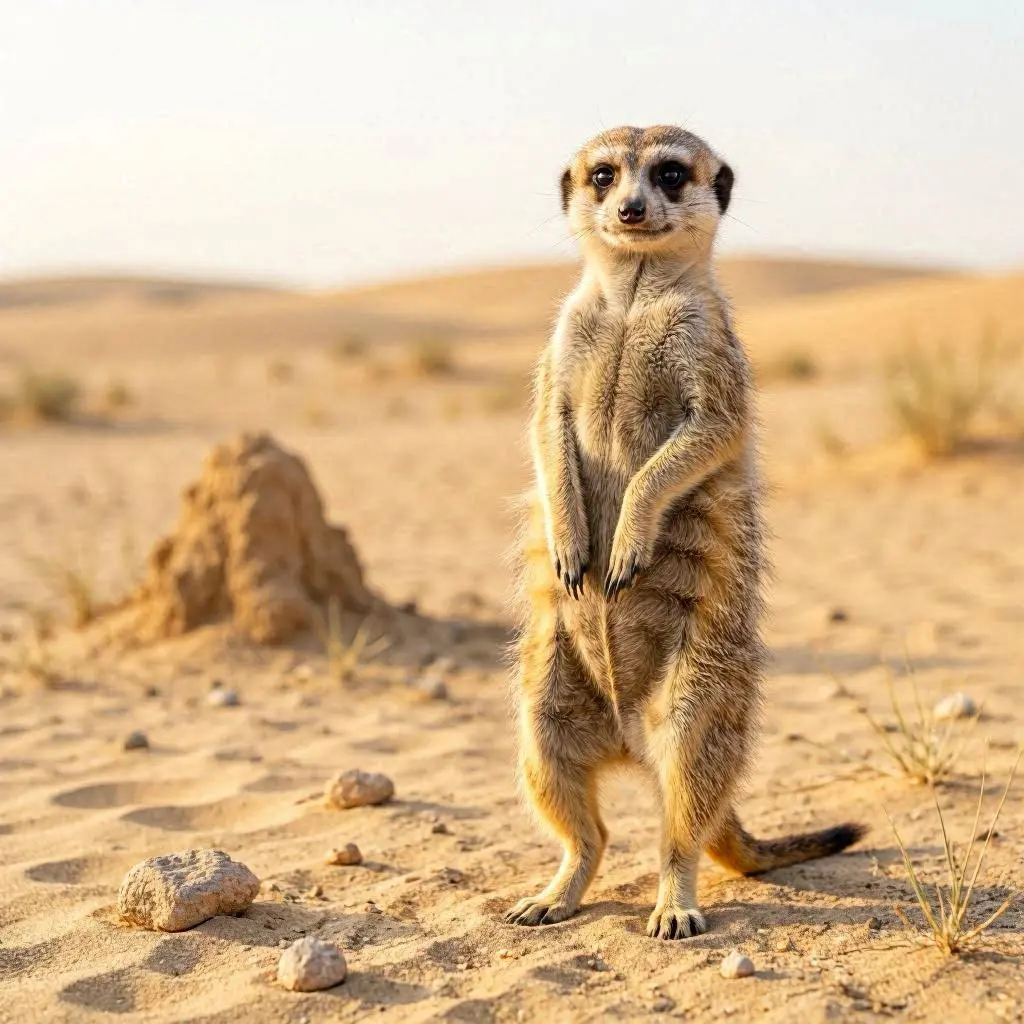
A highly social burrower found across southern Africa. Meerkats live in groups of up to 30 individuals inside sprawling burrow systems with multiple entrances and escape tunnels, while sentries stand guard above ground.
❼ Armadillo
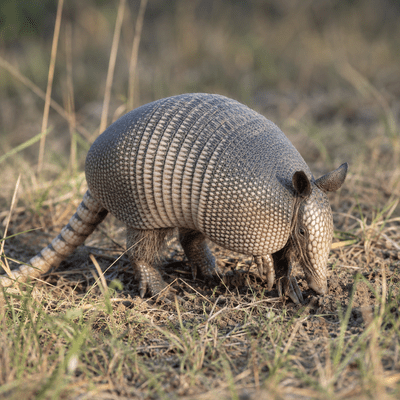
Recognizable by its armored shell and strong digging claws. Armadillos maintain several burrows within their territory and can dig a brand new one in just a few hours.
❽ Rabbit
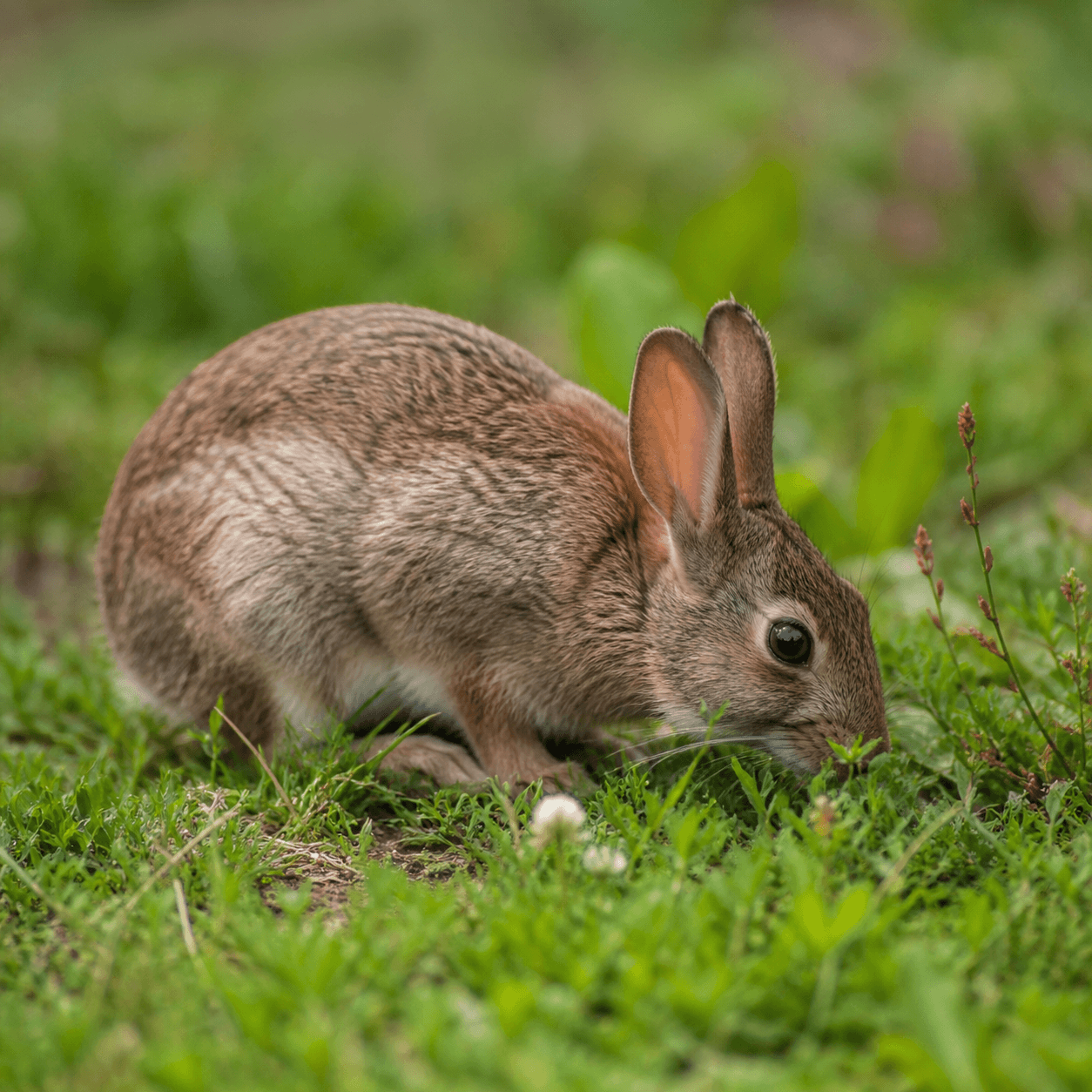
One of the most familiar backyard burrowers worldwide. Wild rabbits live in interconnected underground systems called warrens, which can include dozens of entrances and shared tunnels across multiple family groups.
❾ Chipmunk
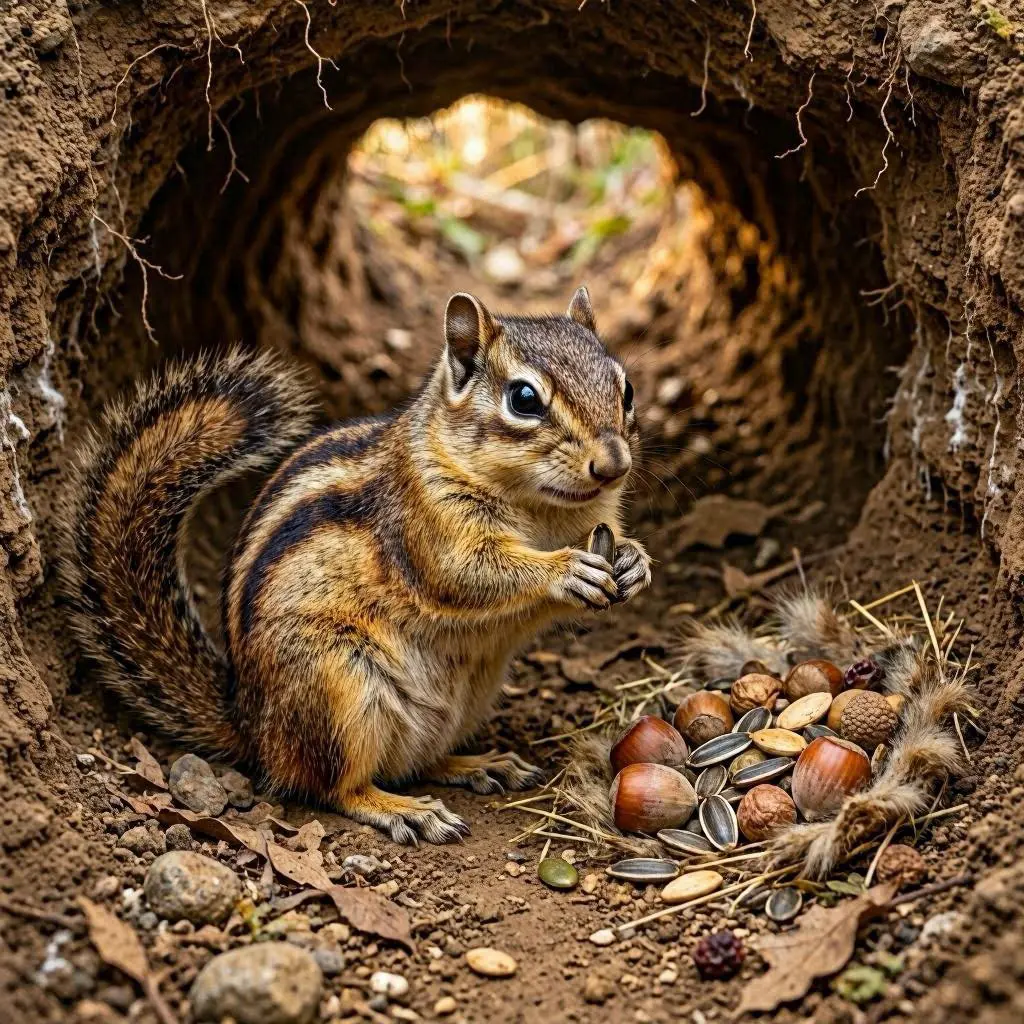
A common sight in gardens and near woodpiles. Chipmunks dig burrow systems up to 30 feet long with separate chambers for nesting and food storage, often disguising the entrance by scattering the excavated dirt away from the hole.
❿ Ground Squirrel
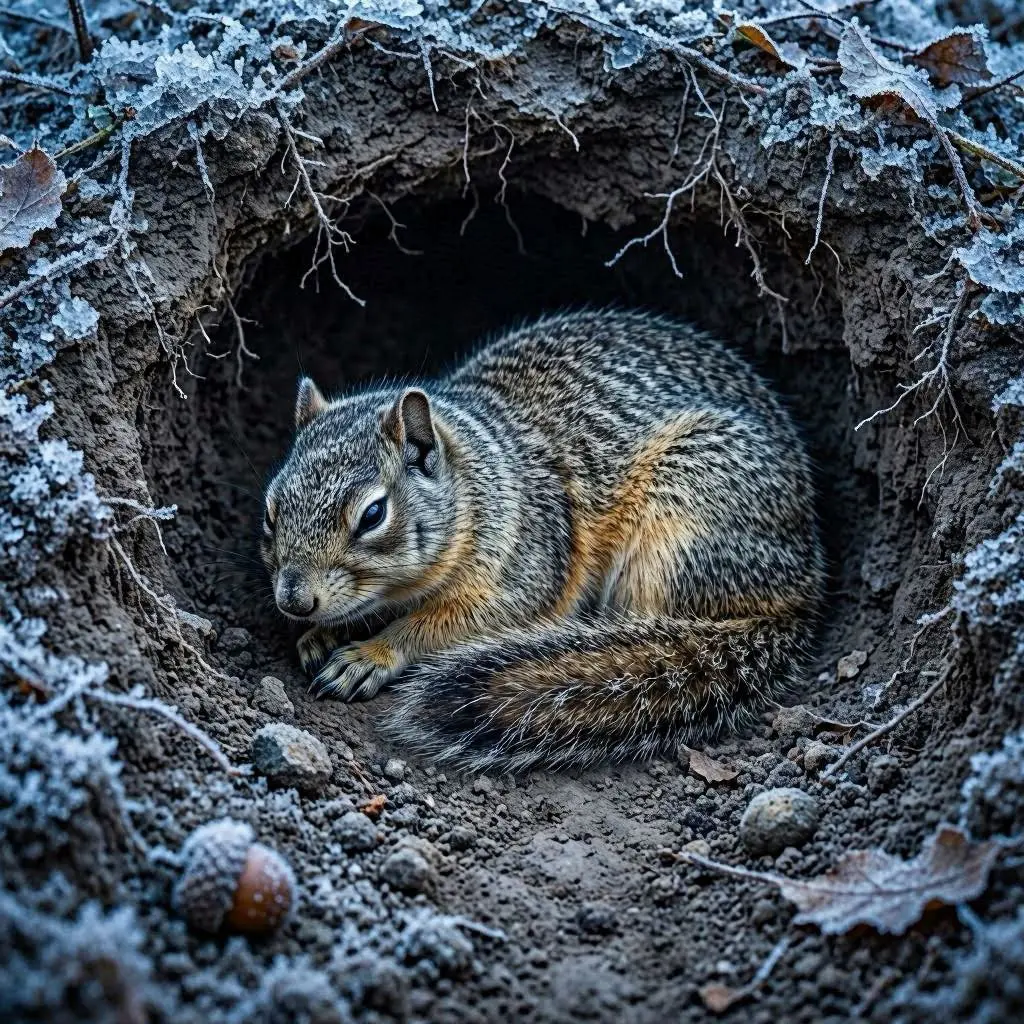
Frequently confused with chipmunks and prairie dogs. Ground squirrels build shallow colony burrows and often share their tunnel systems with unrelated species, including burrowing owls and rattlesnakes.
⓫ Naked Mole Rat
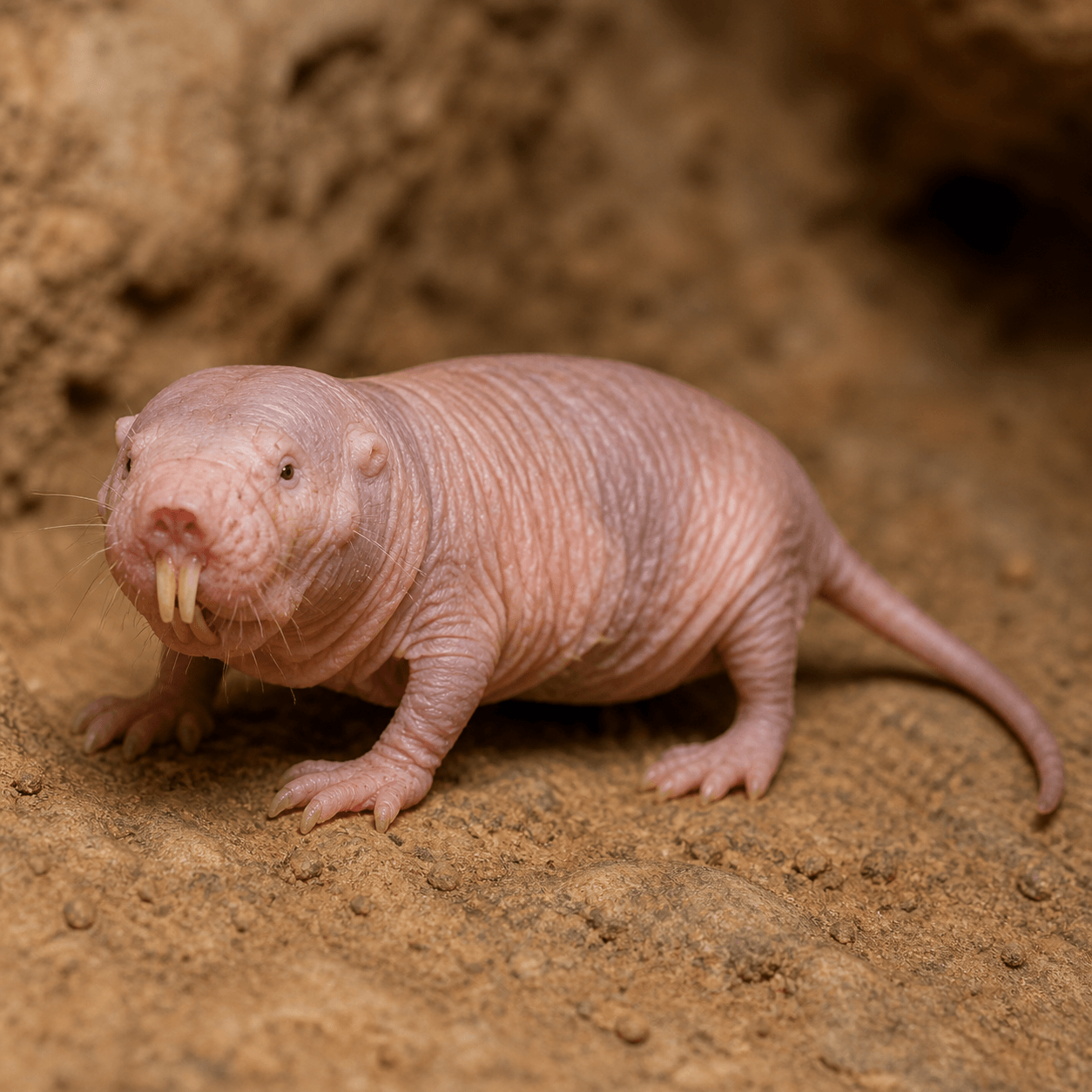
One of the strangest mammals on this list. Naked mole rats live in underground colonies led by a single breeding queen, structured more like an ant or bee colony than a typical mammal group.
⓬ Aardvark
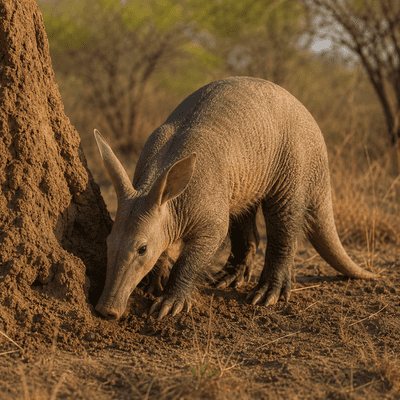
An African mammal built almost entirely for digging. Aardvarks use powerful claws to dig burrows up to 13 feet deep and can bury their entire body in about five minutes when threatened.
⓭ Wombat
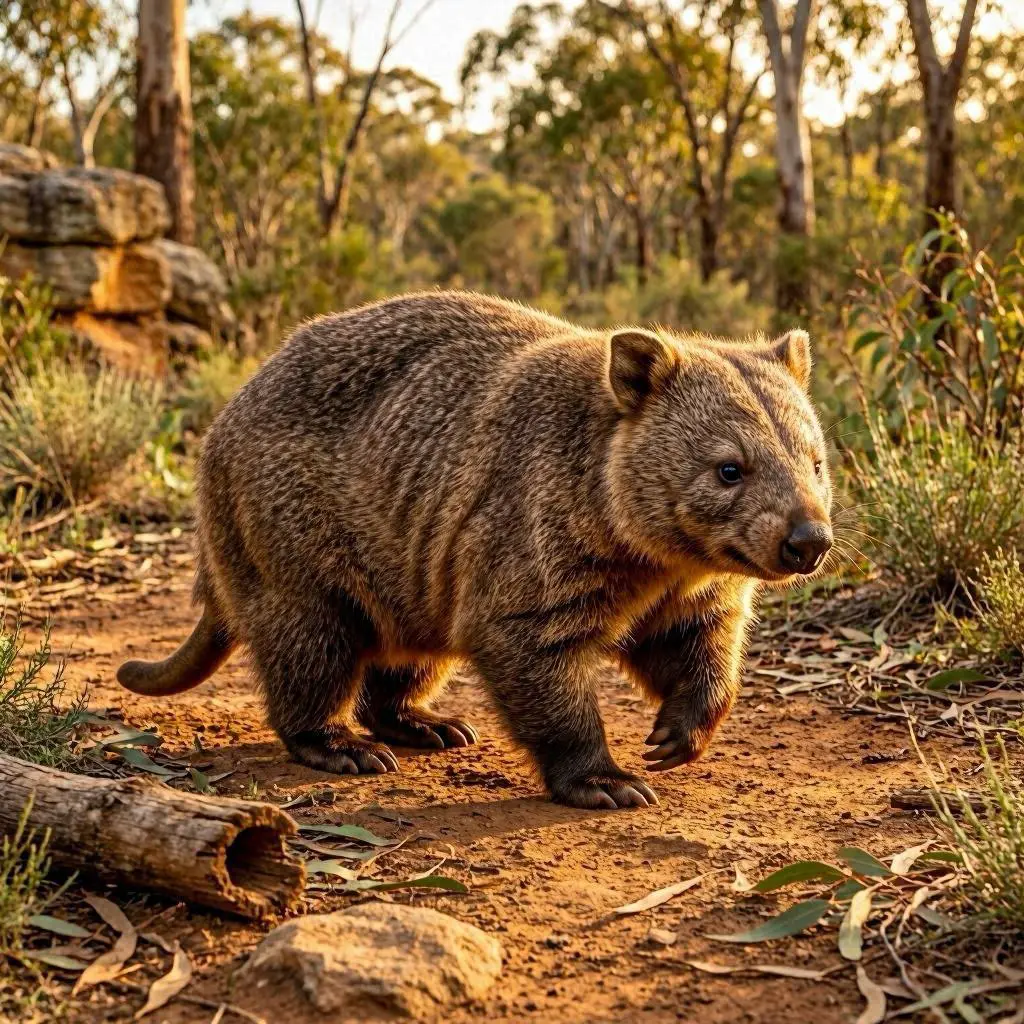
Australia’s heavyweight burrower. Wombats dig some of the most complex burrow systems of any mammal, with tunnels stretching over 100 feet and multiple entrances.
⓮ Burrowing Owl
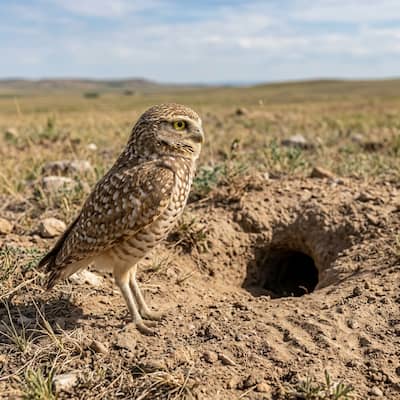
An unusual case among owls. Rather than digging its own burrow, this species typically moves into tunnels abandoned by prairie dogs or ground squirrels, and it’s active during the day as well as at night.
⓯ Gopher Tortoise
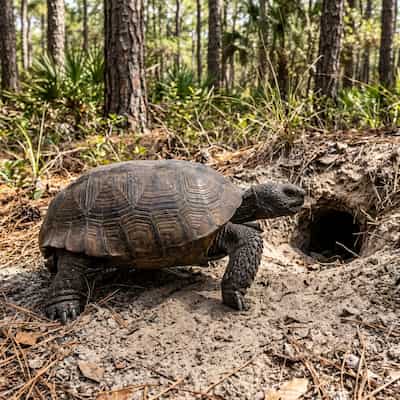
The most ecologically important burrower on this list. A single gopher tortoise burrow can stretch 40 feet long and 10 feet deep, and is used by more than 350 other species over its lifetime.
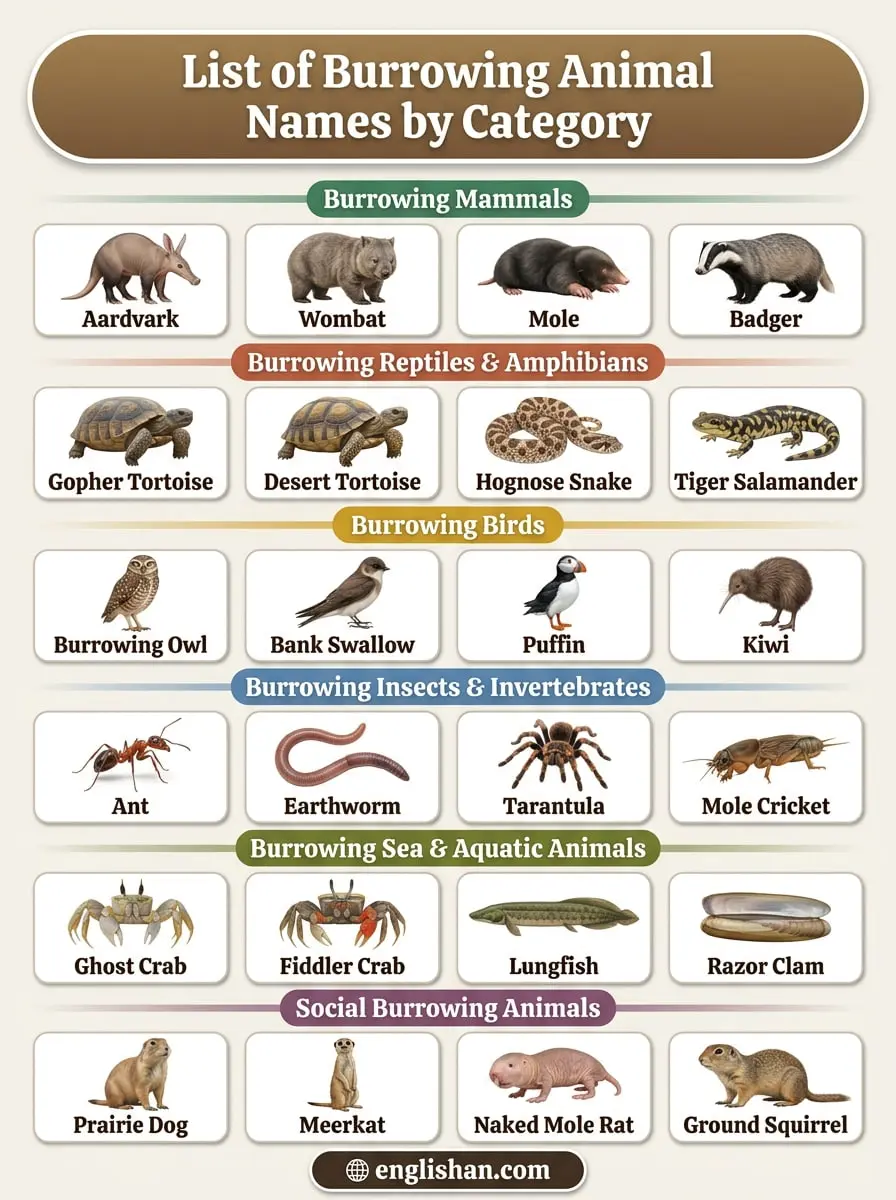
List of Burrowing Animal Names by Cetagory
From tiny insects to large mammals, many animals rely on burrows as secure homes beneath the surface. Now, let’s dig deeper into the world of burrowing animals and explore them by category.
Burrowing Mammals
Aardvark — Native to sub-Saharan Africa, the aardvark uses powerful claws to dig burrows up to 13 feet deep and can bury itself completely in about five minutes when threatened. It also digs shallower burrows purely to reach termite mounds, its primary food source.
Wombat — This Australian marsupial digs some of the most complex burrow systems of any mammal, with tunnels stretching over 100 feet and multiple entrances. Wombats are also famous for producing cube shaped droppings, which they use to mark burrow entrances without the waste rolling away.
Prairie Dog — Prairie dogs live in massive interconnected colonies called towns. The largest ever recorded, discovered in Texas in 1901, stretched roughly 25,000 square miles and was home to an estimated 400 million prairie dogs, making it the largest mammal colony ever documented.
Naked Mole Rat — This nearly hairless rodent lives in underground colonies structured like those of ants or bees, led by a single breeding queen. It’s also one of the only mammals with strong cancer resistance and an unusually long lifespan for its size, living up to 30 years.
Groundhog (Woodchuck) — Groundhogs dig burrows with separate chambers for sleeping, waste, and winter hibernation. A single burrow can involve moving several hundred pounds of soil.
European Mole — Moles dig extensive tunnel networks just below the surface using shovel like front paws. A single mole can extend its tunnel system by 100 feet or more in a single day, and its tunnels double as effective worm traps, since earthworms fall in and can’t easily climb out.
Badger — Widely considered one of the fastest diggers in the animal kingdom, badgers can dig a hole large enough to hide their entire body in under two minutes. Their burrow systems, called setts, can be used by multiple generations over decades.
Meerkat — These social mongooses live in groups of up to 30 individuals inside sprawling burrow systems with multiple entrances and escape tunnels. Sentries take turns standing guard above ground while the rest of the group forages or rests below.
Armadillo — Armadillos dig burrows using strong claws, and a single animal may maintain several burrows within its territory to rotate between.
Gopher — Pocket gophers spend almost their entire lives underground, pushing excess soil out through tunnel openings to form the small volcano shaped mounds often seen in lawns and fields.
Arctic Ground Squirrel — This squirrel can lower its body temperature below freezing during hibernation, the only known mammal to do so, while sheltering in an insulated underground burrow.
Pangolin — Ground pangolin species dig burrows using strong front claws, sometimes reusing burrows built by aardvarks or porcupines instead of digging their own.
Pygmy Rabbit — Unlike most rabbits, which use shallow depressions or borrowed burrows, the pygmy rabbit is one of the few that digs its own extensive burrow system, usually beneath dense sagebrush.
Platypus — This egg laying mammal digs both simple resting burrows and more complex nesting burrows along riverbanks, sometimes maintaining more than ten separate burrows across its territory.
Kangaroo Rat — A desert rodent found across the American Southwest, the kangaroo rat digs burrows with sealed entrances to trap humidity inside, letting it survive its entire life without ever drinking water, since it gets all the moisture it needs from seeds.
Chipmunk — Chipmunks dig burrow systems up to 30 feet long with separate chambers for nesting, food storage, and waste, and they disguise entrances by scattering excavated dirt away from the hole.
Ground Squirrel — Common across North America, ground squirrels live in colonies connected by shallow tunnel systems and often share burrow space with other species, including burrowing owls and rattlesnakes.
Vole — Voles dig shallow surface tunnels through lawns and fields, creating visible runways in grass rather than deep burrow chambers, and are frequently confused with moles despite eating plants rather than insects.
Muskrat — A semi-aquatic rodent, the muskrat digs burrows into pond and riverbanks with underwater entrances, keeping the living chamber above the waterline for safety and warmth.
Weasel — Weasels are secondary excavators that rarely dig their own burrows, instead taking over and modifying the burrows of rodents they’ve preyed on.
Burrowing Reptiles and Amphibians
Gopher Tortoise — This keystone species of the southeastern United States digs burrows up to 40 feet long and 10 feet deep, and its burrows are used by more than 350 other species, making it one of the most ecologically important burrowers in North America.
Desert Tortoise — Desert tortoises dig burrows to escape both extreme daytime heat and freezing nighttime temperatures, sometimes spending over 95 percent of their lives underground.
Hognose Snake — This nonvenomous snake uses an upturned, shovel shaped snout to burrow into loose or sandy soil, both to escape heat and to hunt burrowing prey like toads.
Sand Boa — Sand boas spend most of their lives buried in sand with only their eyes exposed, ambushing prey from just beneath the surface.
Tiger Salamander — One of the largest salamander species in North America, tiger salamanders spend most of their adult lives in underground burrows, only emerging to breed or during heavy rain.
Mexican Burrowing Toad — This stocky, ant eating toad spends nearly all its time underground and only surfaces briefly during heavy rains to breed.
Giant Burrowing Frog — Native to Australia, this frog uses hardened patches on its hind feet to dig backward into soil, sheltering underground during dry periods.
Olm (Cave Salamander) — Living permanently in underground caves rather than surface burrows, the blind olm survives in total darkness and can go without food for years thanks to an extremely slow metabolism.
Burrowing Birds
Burrowing Owl — Unlike most owls, this species nests underground, often in burrows abandoned by prairie dogs or ground squirrels rather than digging its own. It’s active during the day as well as at night, unusual among owls.
Bank Swallow — These small birds dig nesting tunnels directly into sandy riverbanks using their beaks and feet, often nesting in large colonies with hundreds of burrows packed close together.
Puffin — Atlantic puffins dig nesting burrows into grassy clifftops using their beaks and clawed feet, sometimes reusing the same burrow for multiple breeding seasons.
Magellanic Penguin — This penguin digs burrows in sand or soil along the coasts of Argentina and Chile to protect its eggs and chicks from predators and extreme weather.
Kiwi — New Zealand’s flightless kiwi digs burrows using its strong legs and long beak, resting inside during the day and emerging at night to forage by smell.
Burrowing Insects and Invertebrates
Ants — Ant colonies can extend many feet underground and include specialized chambers for food storage, waste disposal, and raising larvae.
Termites — Termite colonies build some of the most complex underground and above ground structures of any insect, with some mounds lasting for decades.
Earthworms — Earthworms tunnel through soil constantly, and their burrowing plays a major role in aerating soil and cycling nutrients.
Cicadas — Periodical cicadas spend 13 or 17 years underground as nymphs, feeding on root fluids, before emerging for a brief adult life above ground.
Dung Beetles — Many dung beetle species dig burrows beneath animal dung, dragging portions of it underground to feed their larvae.
Tarantulas — Many ground dwelling tarantula species dig or occupy burrows lined with silk, using them as both a home and an ambush point.
Mole Crickets — These insects use shovel like front legs to tunnel through soil and feed on roots and smaller insects.
Burrowing Sea and Aquatic Animals
Ghost Crab — These fast moving crabs dig burrows in sandy beaches up to four feet deep to escape heat, avoid predators, and rest during the day.
Fiddler Crab — Found in coastal mudflats, fiddler crabs dig burrows that they seal shut during high tide, both for protection and to maintain a pocket of breathable air.
Lungfish — During droughts, certain lungfish species burrow into mud and secrete a mucus cocoon around themselves, entering a dormant state called aestivation that can last for months.
Mantis Shrimp — Many mantis shrimp species dig and maintain burrows in sand or mud on the sea floor, using them as a base to ambush prey.
Razor Clam — These clams burrow rapidly into sand using a muscular foot, able to disappear beneath the surface in seconds when disturbed.
Prehistoric Burrowing Animals
Burrowing isn’t a modern invention. Fossil evidence shows it goes back tens of millions of years, and even includes dinosaurs.
Oryctodromeus — Discovered in 95-million-year-old rock in Montana, Oryctodromeus cubicularis is the first dinosaur ever confirmed to have burrowed. Paleontologists found an adult skeleton alongside two juveniles inside a fossilized burrow chamber roughly 6.5 feet long, evidence that this small, bipedal plant eater dug dens and cared for its young underground, much like a modern burrowing mammal.
Fona herzogae — A more recently identified burrowing dinosaur relative from Cenomanian-age rock in Utah, adding evidence that fossorial behavior existed in more than one dinosaur lineage.
Palaeocastor (the “Devil’s Corkscrew” beaver) — This prehistoric beaver relative dug spiral shaped burrows up to six feet deep, preserved as corkscrew shaped rock formations still found today in Nebraska, which puzzled geologists for decades before fossils confirmed they were fossilized burrows rather than mineral formations.
Deepest and Longest Burrows on Record
| Animal | Depth or Length | Notable Detail |
|---|---|---|
| Prairie Dog Town (colony, not a single burrow) | 25,000 square miles | The largest recorded prairie dog colony; it housed an estimated 400 million individuals in Texas in 1901. |
| Wombat | Over 100 feet of connected tunnels | Burrow systems can contain multiple entrances and chambers. |
| Gopher Tortoise | Up to 40 feet long and 10 feet deep | Its burrows can provide shelter for more than 350 other species. |
| Aardvark | Up to 13 feet deep | Can completely bury itself in about five minutes. |
| Palaeocastor (fossil beaver) | Up to 6 feet deep | Dug spiral-shaped burrows preserved as the famous “Devil’s Corkscrew” formations. |
| Oryctodromeus (dinosaur) | Roughly 6.5 feet long | The first confirmed dinosaur known to have lived in a burrow. |
| Mole | 100+ feet of new tunnel per day | Can dig at roughly 15 feet per hour in favorable soil. |
How to Identify Which Animal Is Burrowing in Your Yard?
Mound and hole shape are the fastest way to narrow down the culprit.
- Volcano shaped mound, no visible hole: mole.
- Fan shaped mound, open hole in the center: pocket gopher.
- Winding raised ridges, no mounds: mole feeding tunnels, same animal as above.
- Clean round hole, golf ball to tennis ball size, near garden beds: chipmunk or vole.
- Large holes (9+ inches) in open fields: groundhog or badger.
- Clusters of holes with raised rims, sparse dry grass: ground squirrels or prairie dogs.
- Holes near water, partly submerged entrance: muskrat, or ghost/fiddler crab on coastlines.
Fresh loose soil, footprints, or chew marks nearby confirm the current resident, since old burrowing animals names are often reused by a different species than the one that dug them.
Burrowing Animal Habitats
Grasslands and Prairies — Open grasslands support some of the largest burrowing communities on Earth, since loose, deep soil is easy to excavate and there’s little natural cover above ground. Prairie dogs, groundhogs, badgers, and burrowing owls all rely on this terrain, often sharing tunnel systems.
Deserts — Desert burrows exist almost entirely for temperature control, since surface conditions swing from scorching heat by day to near freezing at night. Desert tortoises, sand boas, kangaroo rats, and the Mexican burrowing toad spend the majority of their time underground.
Forests and Woodlands — Forest soil tends to be softer and richer in organic matter, supporting burrowers like moles, tiger salamanders, and armadillos, which need less deep protection from temperature extremes than desert species.
Wetlands and Riverbanks — Soft, muddy banks are ideal for species needing easy digging and quick water access. Platypuses, bank swallows, fiddler crabs, and muskrats all burrow into these banks.
Coastal and Marine Environments — Sandy beaches and shallow coastal waters support burrowers like ghost crabs, razor clams, and Magellanic penguins, which dig into sand rather than soil and often rebuild quickly after tides or storms.
Arctic and Alpine Tundra — In extreme cold, burrows serve as critical insulation. Arctic ground squirrels and arctic foxes dig deep into permafrost adjacent soil to survive temperatures that would be lethal on the surface.
Urban and Suburban Areas — Groundhogs, moles, voles, and certain ant species have adapted well to human developed land, digging burrows in lawns, parks, and under building foundations.
Why Burrowing Animals Matter to Their Ecosystems?
Burrowers frequently do far more ecological work than their small size suggests, which is why several species on this list are classified as keystone species, organisms whose impact on their environment is disproportionately large relative to their numbers.
- Gopher tortoises and prairie dogs create burrows that shelter hundreds of other species, from insects and amphibians to snakes and burrowing owls, meaning their decline can collapse an entire local food web.
- Earthworms and ants continuously mix and aerate soil, improving drainage and nutrient distribution in a way few other organisms replicate at that scale.
- Moles and gophers, despite their reputation as lawn pests, help control insect populations and improve soil structure through constant tunneling.
- Burrow abandonment cycles matter too: when a primary excavator like a prairie dog dies out or moves on, its burrows don’t disappear, they become critical habitat for secondary species that couldn’t dig such shelters themselves.
This is a major reason conservation groups pay close attention to burrowing animals species specifically. Losing a single keystone burrower, like the gopher tortoise in parts of the southeastern U.S., can ripple outward and threaten dozens of species that depend on its tunnels but never dig one themselves.
Fascinating Facts About Burrowing Animals Names
- A single gopher tortoise burrow can host more than 350 different species over its lifetime.
- Oryctodromeus, discovered in Montana, is the first dinosaur ever confirmed to have lived in burrows and cared for young underground.
- The “Devil’s Corkscrew” rock formations found in Nebraska are fossilized spiral burrows dug by an ancient beaver relative, not natural mineral formations, a mystery that confused geologists for years.
- The naked mole rat is one of the only cold blooded mammals known, relying on its burrow’s stable temperature rather than its own body heat to stay warm.
- Kangaroo rats can go their entire lives without drinking water, surviving entirely on moisture from seeds and the humidity trapped inside their sealed burrows.
- A single mole can extend its tunnel system by more than 100 feet in just one day.
- Periodical cicadas can spend up to 17 years underground as nymphs but live only a few weeks as flying adults.
- Arctic ground squirrels can lower their core body temperature below freezing during hibernation without freezing solid, a trait found in no other known mammal.
Conclusion
Burrowing animals names turn out to be one of nature’s most reliable survival strategies, one old enough that dinosaurs were doing it 95 million years ago and widespread enough today to include mammals, reptiles, birds, insects, and sea creatures with almost nothing else in common. Beyond the individual animals, these tunnels quietly hold entire ecosystems together, since a single burrow dug by a keystone species like the gopher tortoise can become lifesaving shelter for hundreds of others. The next time you spot a hole in your yard, there’s a good chance it’s the visible tip of a much larger, and much older, survival strategy.
FAQs
Animals that dig and live underground are called fossorial animals, from the Latin word for “digger.”
The aardvark is among the largest true burrowing mammals, capable of digging tunnels over 13 feet deep, though wombats and gopher tortoises are also known for unusually large burrow systems relative to their size.
Badgers are widely considered the fastest diggers in the animal kingdom, and moles are close behind, capable of extending tunnels by roughly 100 feet in a single day.
No. Secondary excavators and simple occupants move into burrows abandoned by other animals instead of digging their own, as burrowing owls commonly do with prairie dog and tortoise burrows.
Yes. Oryctodromeus cubicularis, discovered in Montana, is confirmed through fossil evidence to have dug burrows and raised its young underground, making it the first known burrowing dinosaur.
Mound shape is the biggest clue: volcano shaped mounds with no visible hole usually mean moles, fan shaped mounds with an open center usually mean gophers, and small clean round holes near garden beds are often chipmunks or voles.
Underground burrows stay significantly cooler than the desert surface during the day and retain warmth at night, making burrowing one of the most effective ways for desert animals to survive extreme temperature swings.
Species like gophers and moles can disturb lawns while tunneling, but their digging also aerates soil and improves drainage, and many, like moles, primarily eat pest insects rather than plants.
You May Also Like
- 30+ Animals With the Longest Lifespans
- Albino Animals Names with Pictures
- 25+ Animals Found Only in One Country
Burrowing Animals Quiz
Burrowing Animals
Which animal does the picture show?
The picture shows a mole.
Read the picture before reading the options.
The picture shows a mole.
What is a badger's underground home called?
Setts are dug over generations and can hold dozens of chambers.
Sett, warren, holt and burrow are not interchangeable.
Some setts have been in use for over a century.
What are a mole's forelimbs adapted for?
Broad hands turned outward push earth back as the animal advances.
The whole skeleton is rebuilt around digging.
A mole's shoulder is rotated to face forward.
Name the term.
An animal adapted to living underground is described as ___.
Fossorial animals share reduced eyes, powerful forelimbs and cylindrical bodies.
The same body plan evolves again and again underground.
Moles, mole rats and marsupial moles are unrelated and look alike.
Why is a burrow so much more stable than the surface?
A metre down, daily swings almost disappear.
Soil is an excellent insulator.
A desert burrow can be twenty degrees cooler than the surface.
Why are burrowing animals described as ecosystem engineers?
Abandoned burrows shelter owls, snakes, lizards and insects.
One digger creates habitat for dozens of species.
Burrowing owls nest in holes prairie dogs abandoned.
Turn on JavaScript for the interactive quiz. The full practice set is shown above.