

Animals and their camouflage are one of the oldest survival tools in the animal kingdom. Long before humans invented face paint or ghillie suits, animals had already perfected the art of blending in, standing out in confusing patterns, or changing their appearance entirely to avoid becoming someone’s meal.
This article breaks down how camouflage works, which animals use it best, and why it remains one of evolution’s most effective strategies.
What Animal Camouflage Actually Is
Camouflage is any trait, whether it’s color, pattern, shape, or behavior, that helps an animal avoid detection by predators or prey. Biologists call this “crypsis.” It’s not just about looking like your surroundings. Some animals hide by breaking up their outline, others by mimicking objects or other species, and some by matching light and shadow so precisely that they seem to disappear.
The two main reasons animals camouflage themselves are:
- Avoiding predators. Prey animals that blend into their environment are far less likely to be spotted and eaten.
- Ambushing prey. Predators use camouflage to get close enough to strike before their target notices them.
Both strategies rely on the same basic principle: the harder you are to see, the better your odds of surviving and reproducing.
Explore more animals that start with different letters:
A | B | C | D | E | F | G | H | I | J | K | L | M | N | O | P | Q | R | S | T | U | V | W | X | Y | Z
Types of Camouflage in the Animal Kingdom
Not all camouflage works the same way. Different species have evolved different tricks depending on their habitat, body shape, and lifestyle.
Background Matching (Cryptic Coloration)
This is the simplest and most common form of camouflage. An animal’s skin, fur, feathers, or scales closely match the colors and textures of its typical environment. A green tree frog against green leaves or a sand-colored lizard on a desert dune are classic examples. Background matching works best when an animal stays still, since movement gives away its position no matter how well the colors match.
Disruptive Coloration
Instead of matching the background exactly, some animals use bold patterns, stripes, spots, or blotches, that break up their body outline. A predator’s eye is trained to spot smooth, continuous shapes, so a disrupted outline is harder to recognize as “animal.” Zebra stripes and giraffe patches are well-known examples of this strategy at work.
Countershading
Countershading is a two-tone coloring pattern where an animal is darker on top and lighter underneath. Sunlight naturally lights up the top of an object and leaves the underside in shadow, which creates a strong sense of depth and shape. Countershading flattens that effect, making the animal look less three-dimensional and harder to spot from a distance. Sharks, deer, and many birds use this trick.
Mimicry
Mimicry is when an animal copies the appearance of another species, object, or plant. This isn’t the same as background matching, since the animal isn’t blending into a general environment, it’s specifically imitating something else. A stick insect that looks like a twig or a hoverfly that mimics a wasp’s yellow and black stripes are both practicing mimicry.
Active Camouflage
A handful of animals can change their color or pattern in real time to match new surroundings. This is called active or adaptive camouflage, and it requires specialized skin cells called chromatophores that expand or contract to shift pigment visibility. Octopuses, cuttlefish, and chameleons are the best-known masters of this ability.
Motion Camouflage
Some animals don’t just hide their appearance, they hide their movement. Motion camouflage involves moving in a way that makes an animal appear stationary relative to its background, often used by predators stalking prey without triggering the prey’s motion-detection instincts.
Popular Animals Known for Camouflage with Pictures
Some species have become famous specifically because of how well they disappear. Here’s a closer look at the most recognized camouflage experts in the animal kingdom, spanning land, sea, and air.
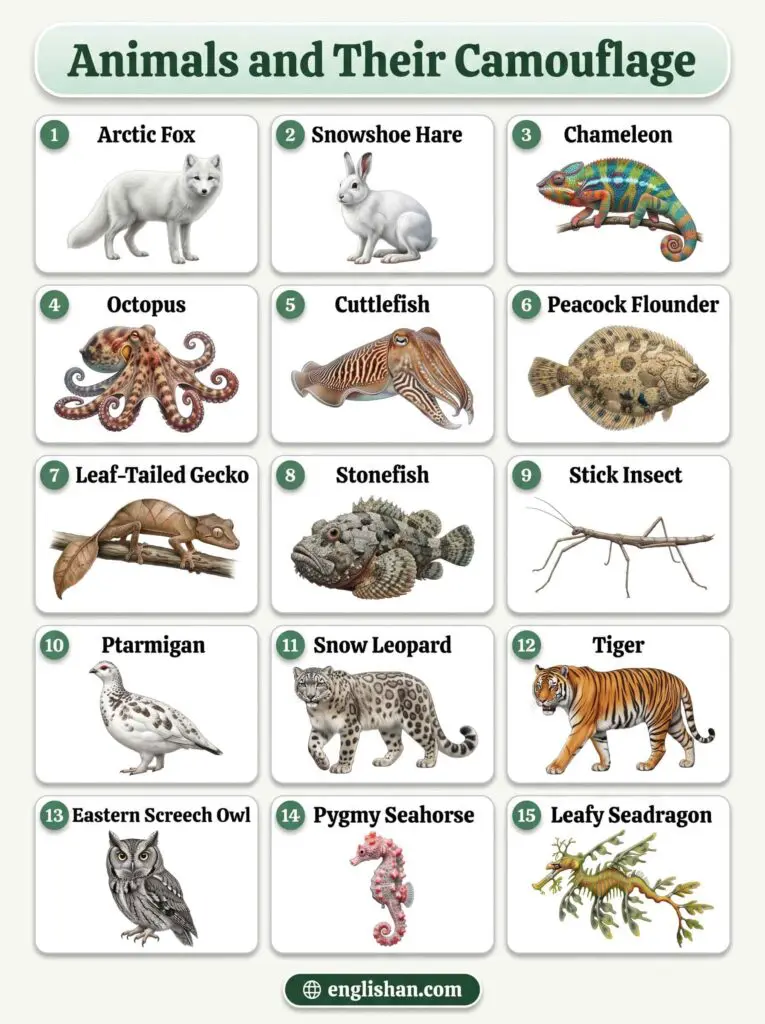
❶ Arctic Fox
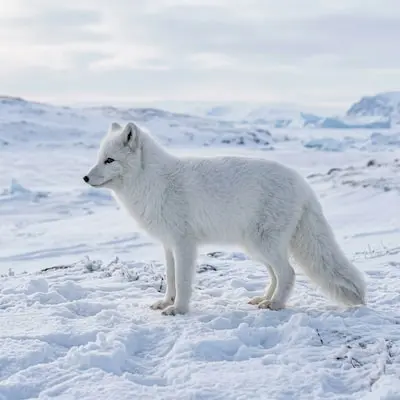
The Arctic fox changes its coat twice a year. It has brown or gray fur in summer and pure white fur in winter. This change is controlled by the length of daylight, not snowfall, helping it stay hidden in its environment.
❷ Snowshoe Hare
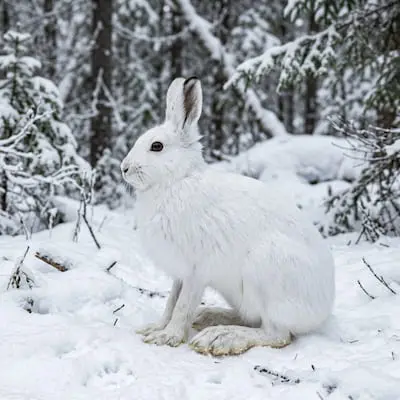
The snowshoe hare also changes from brown in summer to white in winter based on daylight. As snowfall patterns change because of climate change, the hare sometimes becomes more visible when its coat no longer matches the ground.
❸ Chameleon
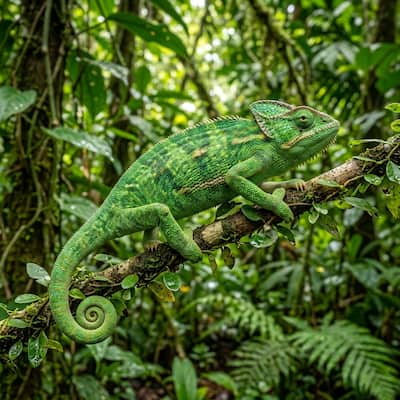
Chameleons are famous for changing color, but they do it mainly for communication and temperature control rather than camouflage. Their normal body color already helps them blend into their surroundings.
❹ Octopus
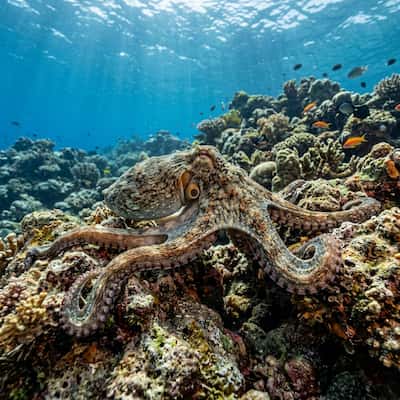
An octopus can change its skin color, patterns, and even texture in less than a second. Special pigment cells controlled by its nervous system allow it to react instantly to predators or changing environments.
❺ Cuttlefish
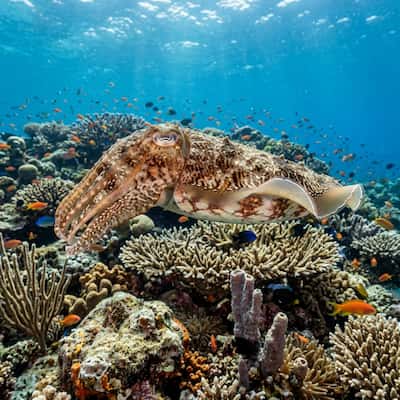
Cuttlefish are camouflage masters. Besides changing color and patterns, they can raise small skin bumps called papillae to copy the rough texture of rocks, coral, or the seafloor.
❻ Peacock Flounder
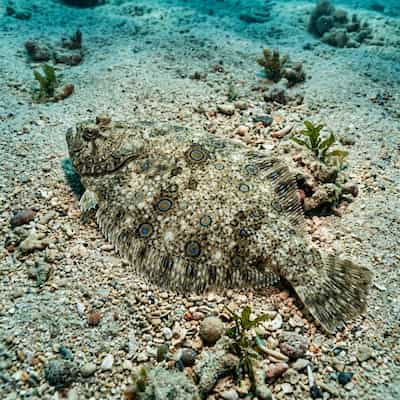
The peacock flounder can match the pattern of the seafloor in about eight seconds. It relies on its eyesight to copy the surface beneath it, making vision essential for its camouflage.
❼ Leaf-Tailed Gecko
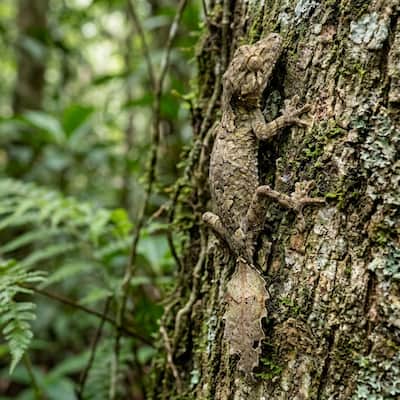
Native to Madagascar, the leaf-tailed gecko looks like a dead leaf. Its flattened body, ragged edges, and leaf-like veins help it disappear among tree bark and fallen leaves.
❽ Stonefish
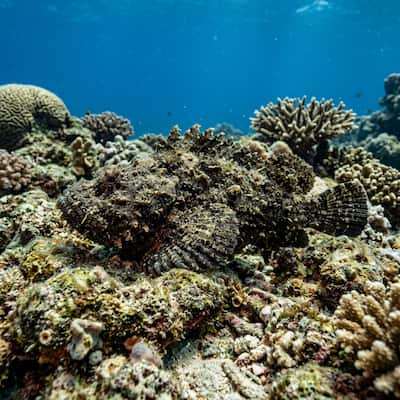
The stonefish resembles an algae-covered rock or coral. It stays perfectly still on the ocean floor, waiting for prey to come close. It is also one of the world’s most venomous fish.
❾ Stick Insect
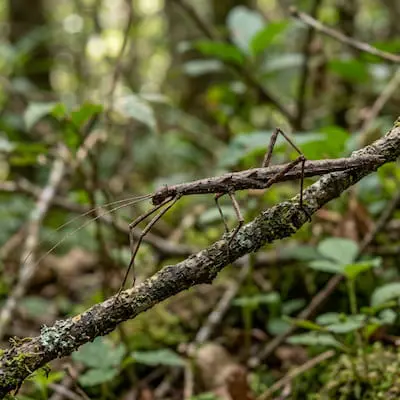
Stick insects closely resemble twigs in shape, color, and even movement. They gently sway like branches in the wind, making them extremely difficult for predators to notice.
❿ Ptarmigan
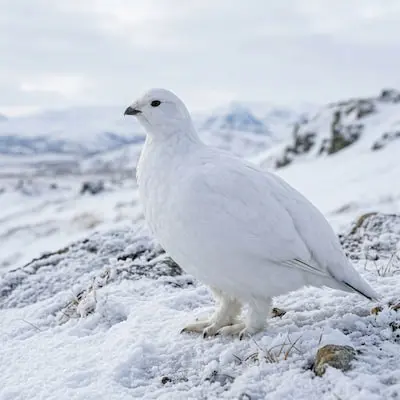
The ptarmigan changes its feathers three times each year. It is white in winter, brown-and-white in spring, and brown in summer, allowing it to stay hidden as the Arctic landscape changes.
⓫ Snow Leopard
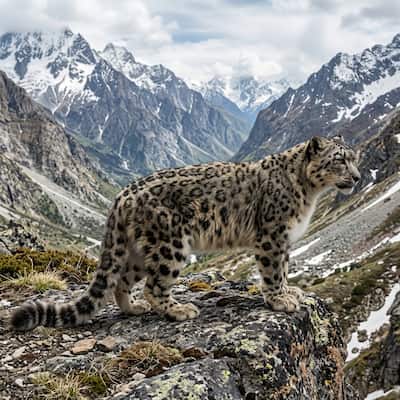
The snow leopard’s gray fur with black rosettes blends perfectly with rocky mountain terrain. Its camouflage is designed more for rocky cliffs than snowy landscapes.
⓬ Tiger
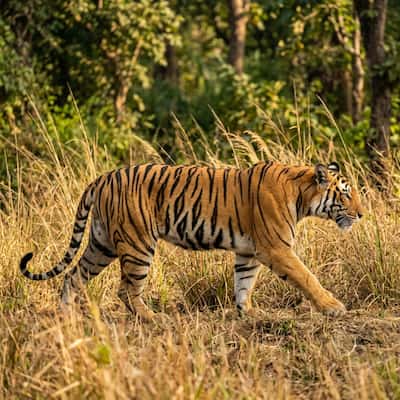
Every tiger has a unique stripe pattern. These stripes break up the animal’s outline in tall grass and forest shadows, making it difficult for prey to detect.
⓭ Eastern Screech Owl
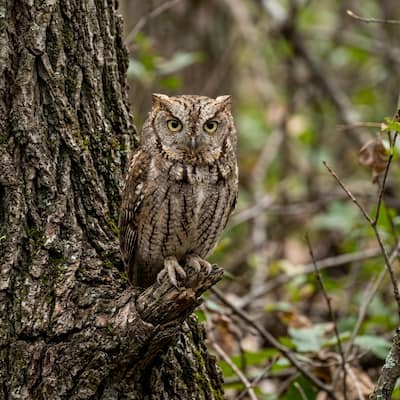
This small owl has bark-colored feathers that match tree trunks. During the day, it stays motionless with its feathers compressed, making it almost invisible.
⓮ Pygmy Seahorse
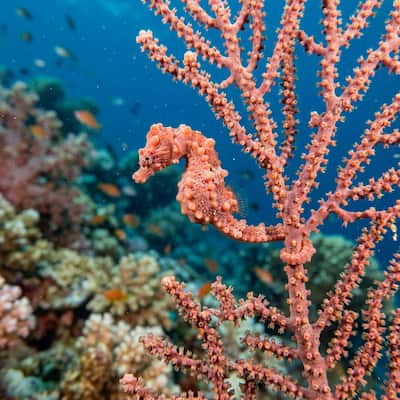
Pygmy seahorses have tiny skin bumps called tubercles that perfectly match the color and texture of coral polyps. Their camouflage is so effective that they remained undiscovered for many years.
⓯ Leafy Seadragon
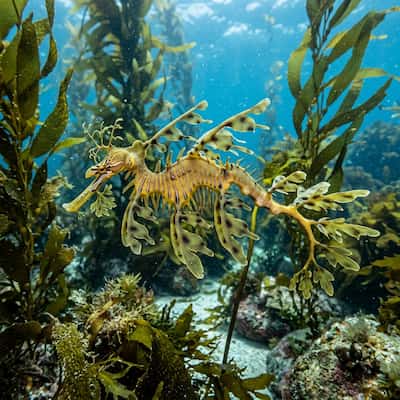
Found in southern Australia, the leafy seadragon has leaf-like skin appendages that make it look like floating seaweed. Its slow, swaying movement completes the illusion and helps it avoid predators.
List of Camouflage Animals Names by Category
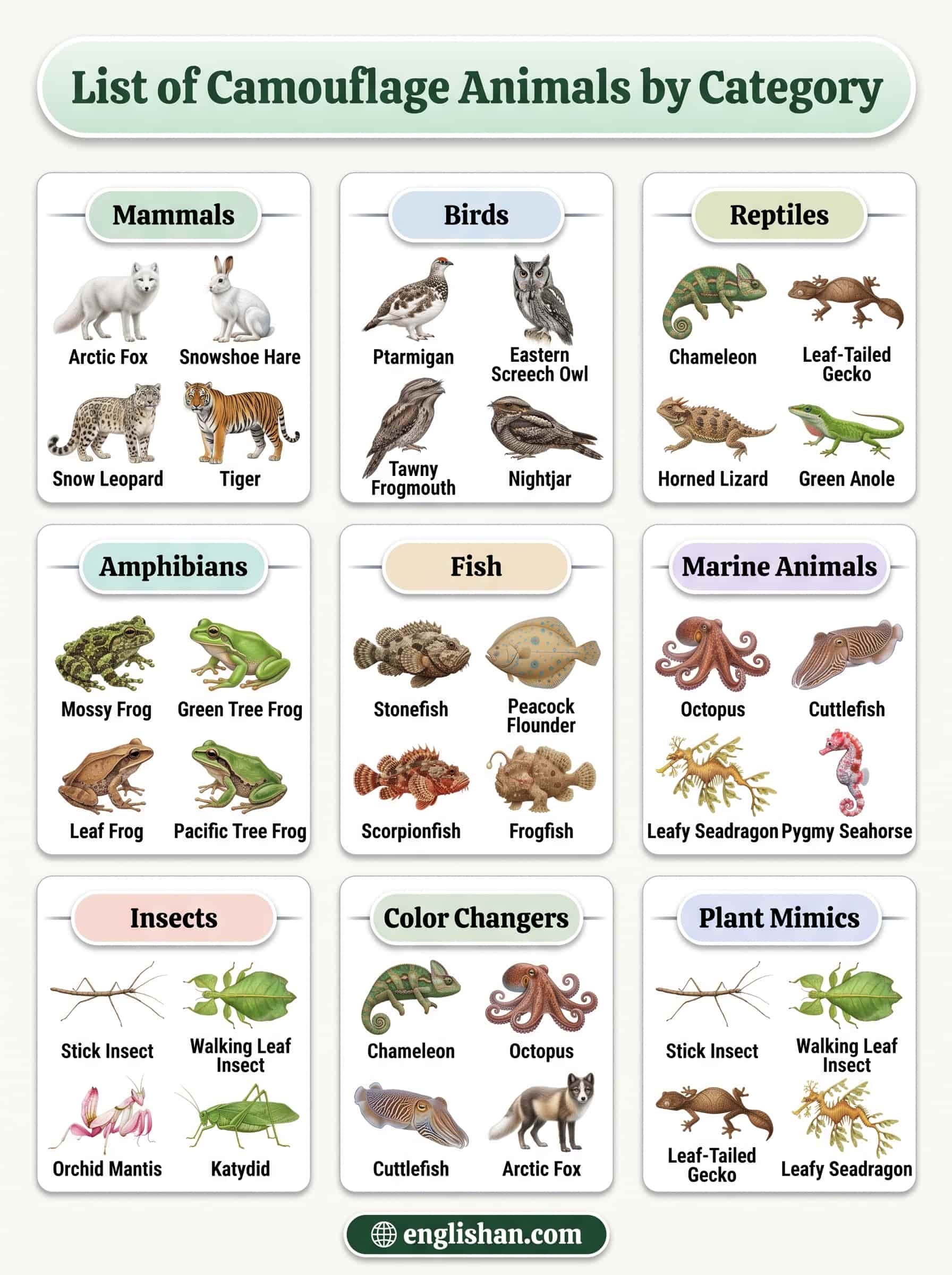
Camouflaged animals can be grouped into categories based on their class, habitat, or camouflage technique. The lists below make it easy to explore how different species use camouflage to survive in diverse environments.
Camouflaged Mammals
Mammals use camouflage through fur color, patterns, or seasonal coat changes to stay hidden from predators or sneak up on prey in forests, mountains, grasslands, and snowy regions.
- Arctic Fox
- Snowshoe Hare
- Snow Leopard
- Tiger
- Fawn (Baby Deer)
Camouflaged Birds
Many birds rely on feather colors and patterns that blend with tree bark, leaves, grass, or snow, making them difficult for predators and prey to spot.
- Ptarmigan
- Eastern Screech Owl
- Tawny Frogmouth
- Nightjar
- Bittern
Camouflaged Reptiles
Reptiles often camouflage themselves using scales, body shapes, and natural colors that match rocks, leaves, tree bark, or desert sand.
- Chameleon
- Leaf-Tailed Gecko
- Horned Lizard
- Green Anole
Camouflaged Amphibians
Amphibians blend into their surroundings with skin colors and textures that resemble moss, leaves, tree bark, or muddy water.
- Mossy Frog
- Green Tree Frog
- Leaf Frog
Camouflaged Fish
Many fish have evolved colors, patterns, and body shapes that help them disappear among rocks, sand, coral reefs, or the ocean floor.
- Stonefish
- Peacock Flounder
- Scorpionfish
- Frogfish
Camouflaged Marine Animals
Marine animals use some of the most advanced camouflage techniques, including changing color, texture, and patterns to blend perfectly into underwater habitats.
- Octopus
- Cuttlefish
- Leafy Seadragon
- Pygmy Seahorse
Camouflaged Insects
Insects are masters of disguise, often resembling sticks, leaves, flowers, or tree bark to avoid predators and survive in their environment.
- Stick Insect
- Walking Leaf Insect
- Dead Leaf Butterfly
- Katydid
- Orchid Mantis
- Peppered Moth
Animals That Change Color
Some animals can change their color or appearance over time or instantly, allowing them to adapt to seasonal changes or blend into new surroundings.
- Chameleon
- Octopus
- Cuttlefish
- Arctic Fox
- Snowshoe Hare
- Ptarmigan
Animals That Mimic Plants
Instead of simply blending into the background, these animals imitate leaves, twigs, seaweed, or other plants so closely that they become nearly impossible to detect.
- Stick Insect
- Walking Leaf Insect
- Leaf-Tailed Gecko
- Leafy Seadragon
- Dead Leaf Butterfly
How Camouflage Benefits Predators and Prey
Camouflage is a two-way arms race. Prey animals evolve better disguises to avoid predators, and predators evolve better disguises (or better vision) to catch prey despite those same disguises. This ongoing back-and-forth is a textbook example of what biologists call co-evolution.
For prey, camouflage buys time. Every second a predator spends searching instead of chasing is a second the prey animal can use to escape, hide better, or alert others. For predators, camouflage means less energy spent chasing and a higher success rate on each attempt, which matters since failed hunts cost calories the animal can’t afford to waste.
Camouflage by Habitat
Different habitats require different camouflage strategies. Animals have evolved unique adaptations that match the colors, textures, and lighting of the environments where they live.
- Forest: Tiger, Leaf-Tailed Gecko, Eastern Screech Owl
- Desert: Horned Lizard, Sand Lizard
- Arctic: Arctic Fox, Snowshoe Hare, Ptarmigan
- Ocean: Octopus, Cuttlefish, Stonefish
- Coral Reef: Pygmy Seahorse, Leafy Seadragon
- Grassland: Tiger, Bittern
- Rainforest: Chameleon, Katydid
Animals That Camouflage for Kids
- Chameleon
- Stick Insect
- Leaf-Tailed Gecko
- Arctic Fox
- Snowshoe Hare
- Octopus
- Cuttlefish
- Leafy Seadragon
- Pygmy Seahorse
- Stonefish
- Peacock Flounder
- Tiger
- Snow Leopard
- Eastern Screech Owl
- Ptarmigan
- Walking Leaf Insect
- Dead Leaf Butterfly
- Katydid
- Peppered Moth
- Green Tree Frog
A few quick facts that tend to stick with younger readers: an octopus can change its skin color in about one second, no two tiger stripe patterns are exactly alike, and some baby deer are born with white spots specifically to mimic dappled sunlight on the forest floor until they’re old enough to outrun predators instead of hiding from them.
Common Misconceptions About Animal Camouflage
“Bright colors always mean an animal isn’t camouflaged.” Not true. Many brightly colored animals, like certain frogs and caterpillars, use their colors as a warning sign (aposematism) rather than camouflage, but others use bright colors combined with disruptive patterns to blend into equally colorful environments like coral reefs.
“Camouflage only involves color.” Color is just one piece. Shape, texture, behavior, and even scent can all play a role in how well an animal avoids detection.
“Chameleons change color mainly to match their surroundings.” Research has shown that chameleons change color mostly for communication and temperature regulation, not primarily for camouflage. Their base coloring already provides decent background matching most of the time.
Key Takeaways
Camouflage isn’t a single trick, it’s a whole toolkit that animals have refined over millions of years of trial and error. Whether it’s a fox turning white for winter or an octopus rearranging its skin cells in real time, every strategy on this list solves the same problem: staying alive by staying unseen. Understanding these adaptations doesn’t just make for interesting trivia, it reveals just how much pressure survival puts on every visible trait an animal has.
FAQs
Not exactly. Camouflage is the broader category, blending in with the general environment, while mimicry is a specific type of camouflage where an animal copies the look of another species or object rather than just matching a background color.
Sometimes. Camouflage isn’t perfect invisibility, it just reduces the odds and distance at which an animal gets noticed. Many predators have evolved sharper color vision, motion detection, or a stronger sense of smell specifically to counter prey camouflage, which is part of why the arms race between predator and prey keeps pushing both sides to adapt.
No. Many species, including deer and wild boar, are born with spotted or striped patterns that fade as they mature, since young animals that can’t yet outrun predators rely more heavily on staying hidden than adults do
Most do. True color-changing ability (like in octopuses, cuttlefish, and some flatfish) is actually rare and energetically costly. Most camouflaged animals rely on a fixed color and pattern that matches their typical habitat well enough, combined with staying still, rather than active color change.
There isn’t a single “best” camouflaged animal because different species excel in different environments. However, octopuses, cuttlefish, stick insects, leaf-tailed geckos, and stonefish are often considered among the world’s best camouflage experts due to their remarkable ability to blend into their surroundings.
You May Also Like
- 95+ Prehistoric Animal Names with Pictures
- 50+ Most Colorful Animal Names in the World
- 50+ Grassland Animals Names with Pictures
Animal Camouflage Quiz
Animal Camouflage
What is countershading?
It cancels the shadow cast by overhead light, flattening the body's outline.
Countershading removes the shadow that gives shape away.
Sharks, deer and penguins are all countershaded.
What is mimicry, as opposed to camouflage?
A hoverfly copies a wasp; a stick insect copies a twig.
Camouflage hides; mimicry misidentifies.
A harmless hoverfly borrows a wasp's warning pattern.
Name the animal.
An Arctic ___ turns white in winter and brown in summer.
The moult is triggered by day length rather than by snow, which is why early thaws leave animals conspicuous.
Day length is a reliable cue; snowfall is not.
A white hare on bare ground is very easy to see.
Why does a cuttlefish's camouflage work despite it being colourblind?
It matches brightness and pattern, which fools predators that do see colour.
Pattern and brightness carry most of the concealment.
A colourblind animal produces convincing colour camouflage.
What is masquerade in camouflage?
A leaf insect is seen and dismissed rather than being overlooked.
Crypsis avoids detection; masquerade survives it.
A twig-mimicking caterpillar is looked at and ignored.
Turn on JavaScript for the interactive quiz. The full practice set is shown above.