

Reptiles are some of the most interesting creatures in the animal kingdom, and learning Reptile Animals Name in English helps us understand them better. They are cold-blooded animals that can survive in a wide range of environments such as deserts, forests, rivers, and oceans. From small lizards to large crocodiles, reptiles show amazing diversity in shape, size, and behavior.
Learning about them is both fun and educational, especially for students and nature enthusiasts. Each reptile has unique features that help it survive in its habitat, whether it’s a snake gliding through grass or a turtle moving slowly with its hard shell. Understanding these animals helps us appreciate nature more deeply.
In this article, we will explore Reptile Animals Name in English with pictures so you can easily recognize and learn about different types of reptiles. This article on Reptile Animals Name in English will make it simple for you to understand and remember them.
What Are Reptiles?
Reptiles are cold-blooded animals that belong to a group of vertebrates found in many different habitats around the world. They rely on external sources like sunlight to regulate their body temperature instead of producing their own heat.
Characteristics of Reptiles:
- Scaly skin that protects the body and prevents water loss
- Mostly lay eggs, although some species give birth to live young
- Cold-blooded (ectothermic), meaning body temperature depends on the environment
- Breathe through lungs throughout their life cycle
- Adapted to live in diverse habitats such as deserts, forests, rivers, and oceans
Explore more animals that start with different letters:
A | B | C | D | E | F | G | H | I | J | K | L | M | N | O | P | Q | R | S | T | U | V | W | X | Y | Z
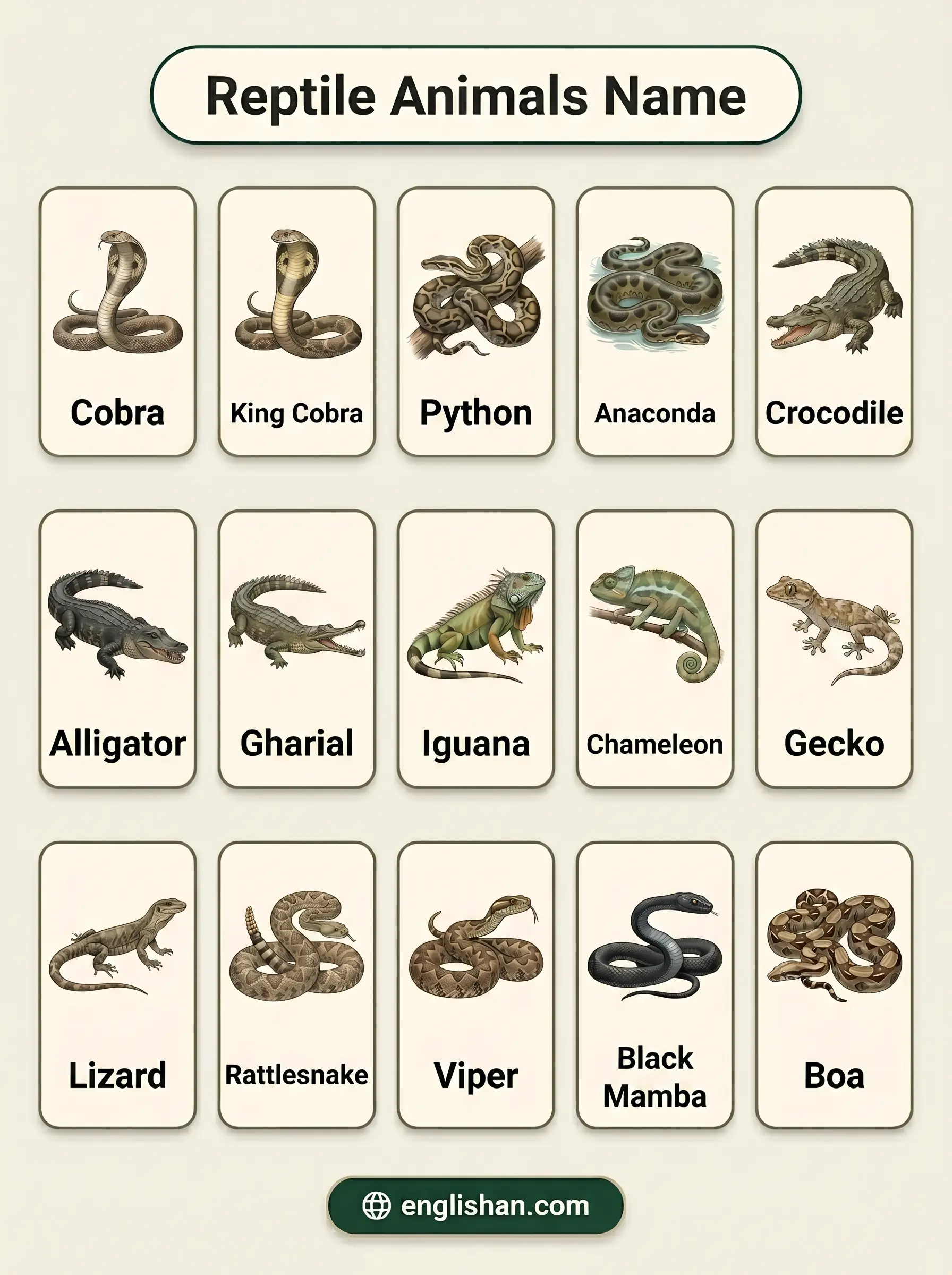
List of Reptile Animals Name In English
- Viper
- Gecko
- King Cobra
- Gila Monster
- Python
- Gharial
- Mamba
- Thorny Devil
- Massasauga
- Rattlesnake
- Iguana
- Indian Cobra
- Puff Adder
- Crocodile
- Timber Rattler
- Slow Worm
- Lizard
- Adder
- Cobra
- Alligator
- Anaconda
- Angonoka Tortoise
- Chinese Alligator
- Black Racer
- Cottonmouth
- Komodo Dragon
- Brookesia Micra
- Chameleon
- Constrictor
- Australian Gecko
- Black Mamba
- Boa
- Boomslang
- Copperhead
- Burmese Python
- Caiman
- Egyptian Cobra
Common Reptile Animals Name In English with Pictures
❶ Cobra
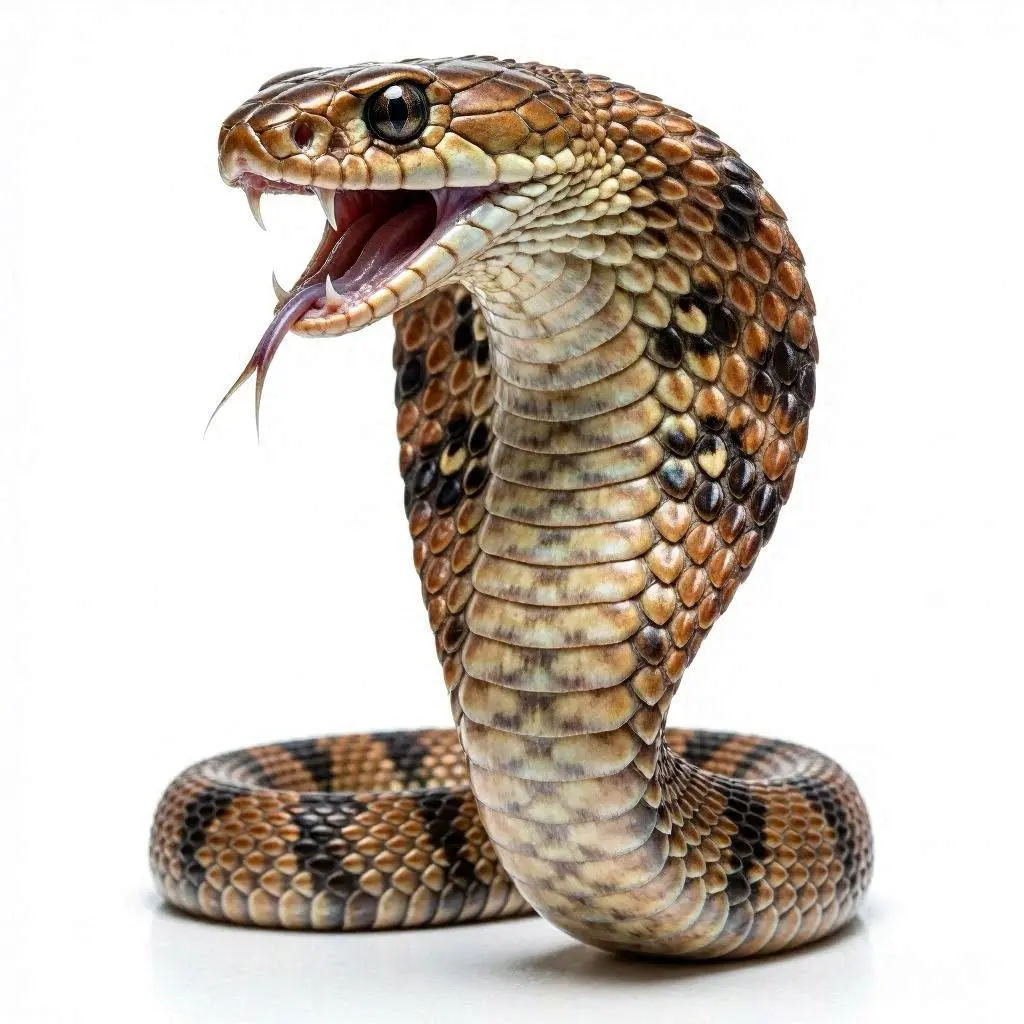
Origin: Asia & Africa
Size: Medium to Large
Life Span: 15–20 years
The cobra is a venomous reptile known for its hooded neck display. This reptile is commonly found in forests, farmlands, and grasslands. It is highly dangerous due to its strong venom and defensive nature.
❷ King Cobra
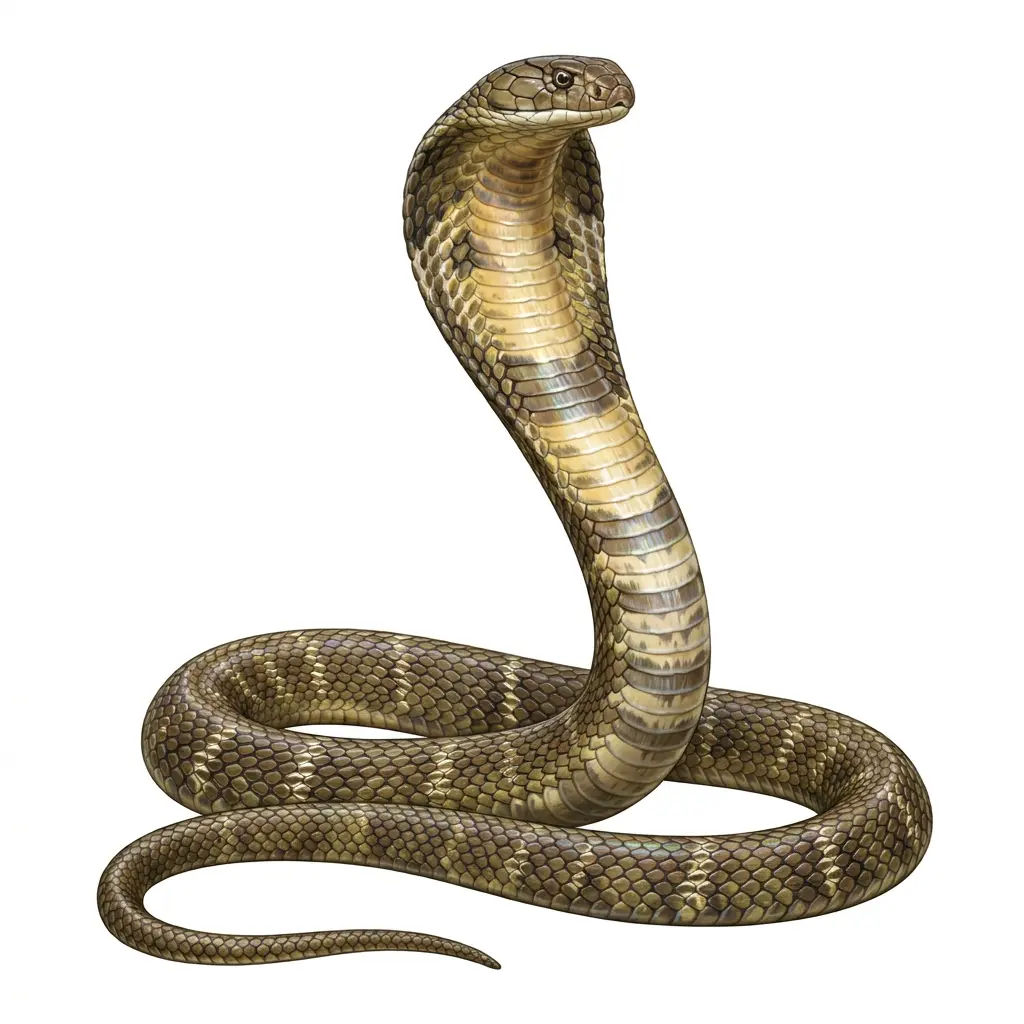
Origin: South and Southeast Asia
Size: Very Large
Life Span: 20–25 years
The king cobra is the longest venomous reptile in the world. This reptile mainly feeds on other snakes and is known for its intelligence, alert behavior, and ability to raise its body when threatened.
❸ Python
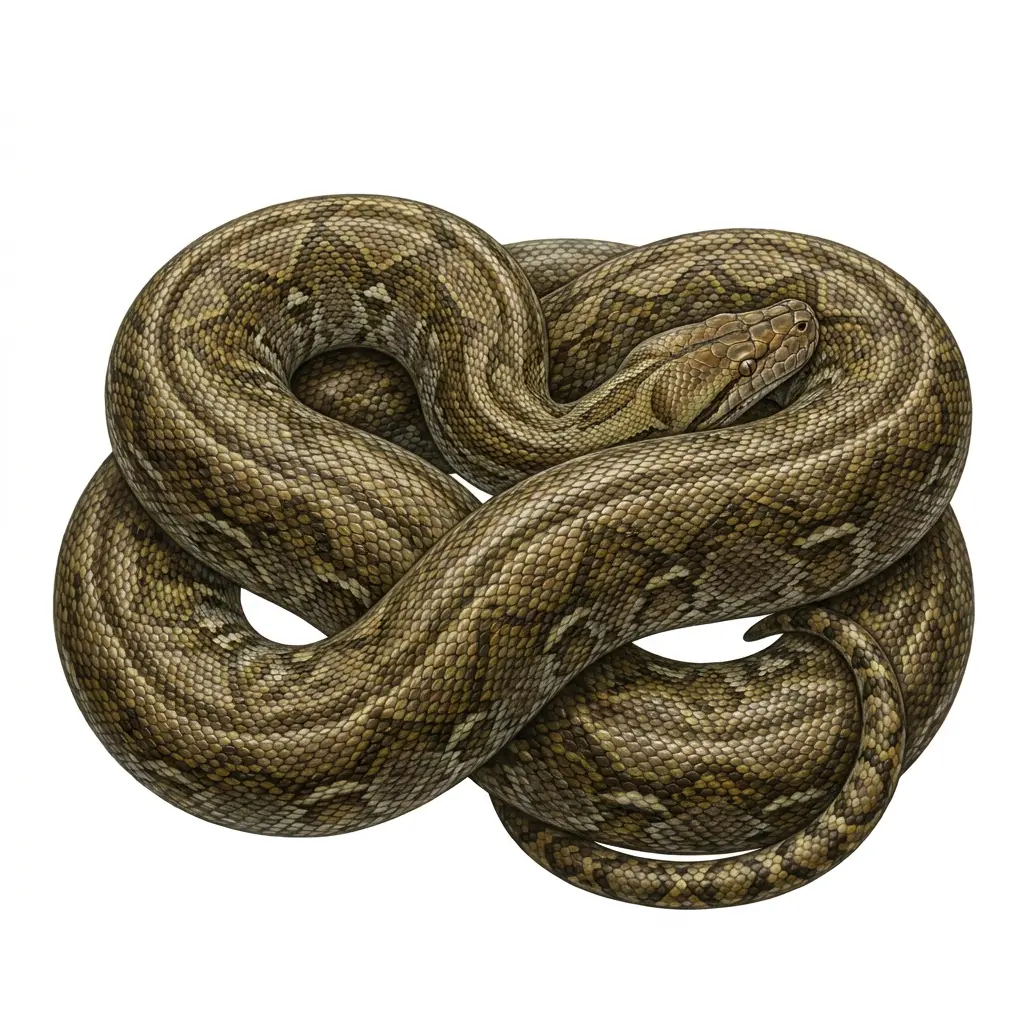
Origin: Africa, Asia
Size: Large
Life Span: 20–30 years
The python is a large non-venomous reptile that kills its prey by constriction. This reptile is slow-moving but extremely powerful and can consume large animals due to its flexible jaw structure.
❹ Anaconda
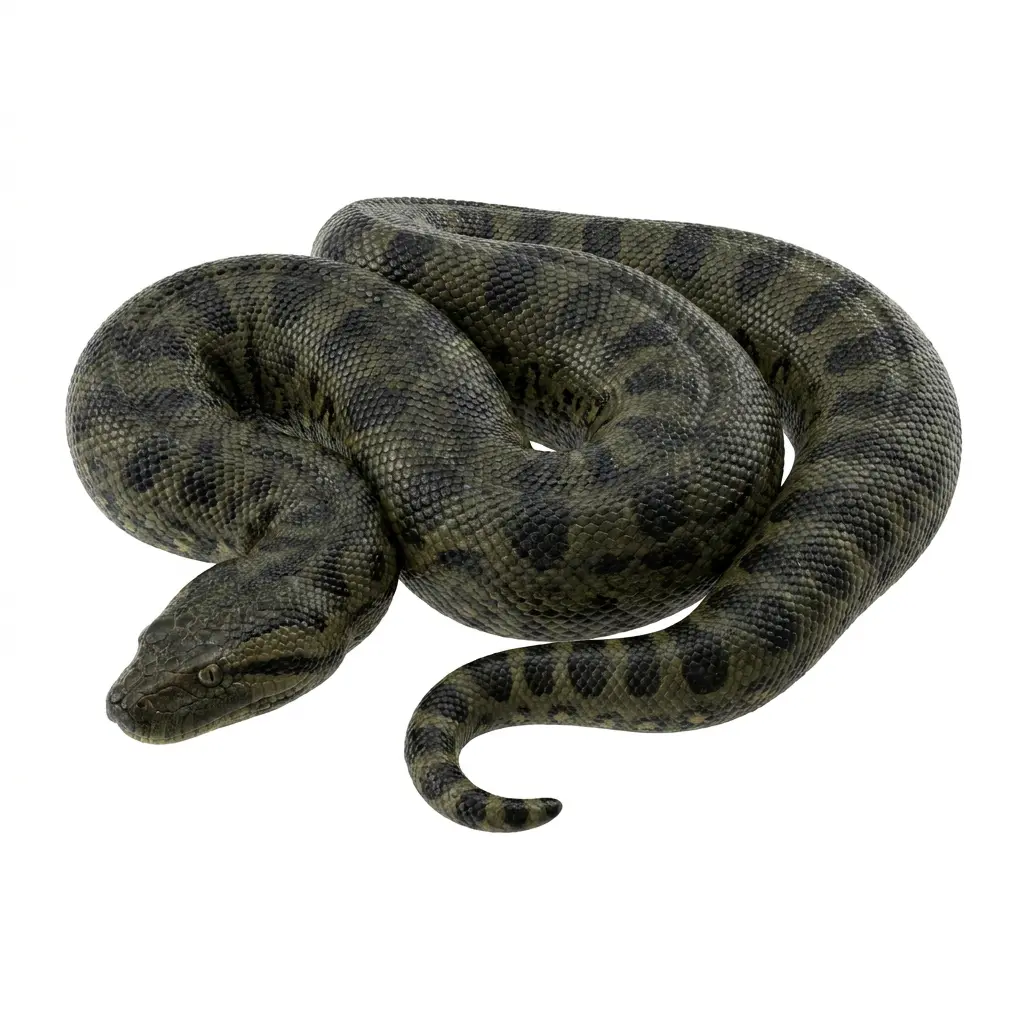
Origin: South America
Size: Very Large
Life Span: 10–15 years
The anaconda is a massive aquatic reptile found in swamps and rivers. This reptile is one of the heaviest snakes in the world and hunts by wrapping around its prey.
❺ Crocodile
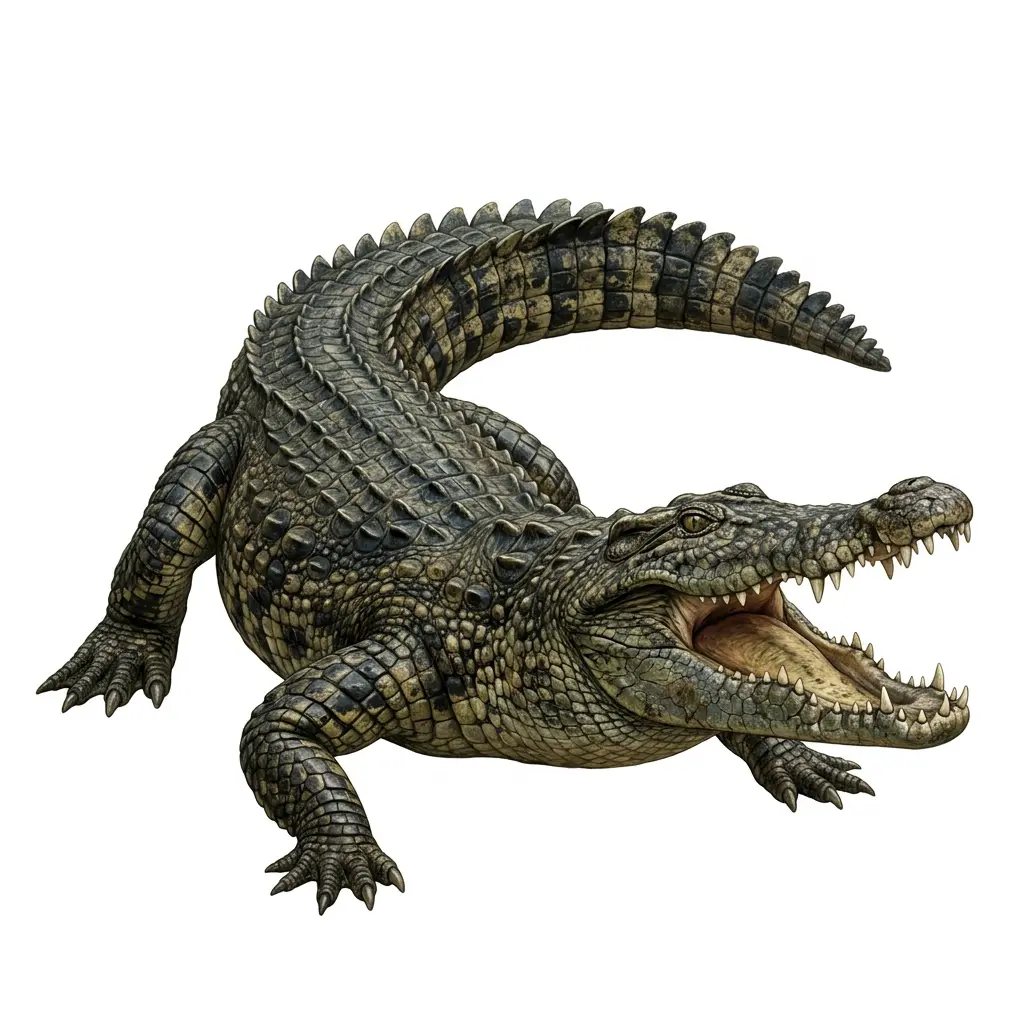
Origin: Africa, Asia, Australia, Americas
Size: Very Large
Life Span: 70–100 years
The crocodile is a powerful aquatic reptile with strong jaws and armored skin. This reptile is an apex predator and is well adapted to both water and land near river habitats.
❻ Alligator
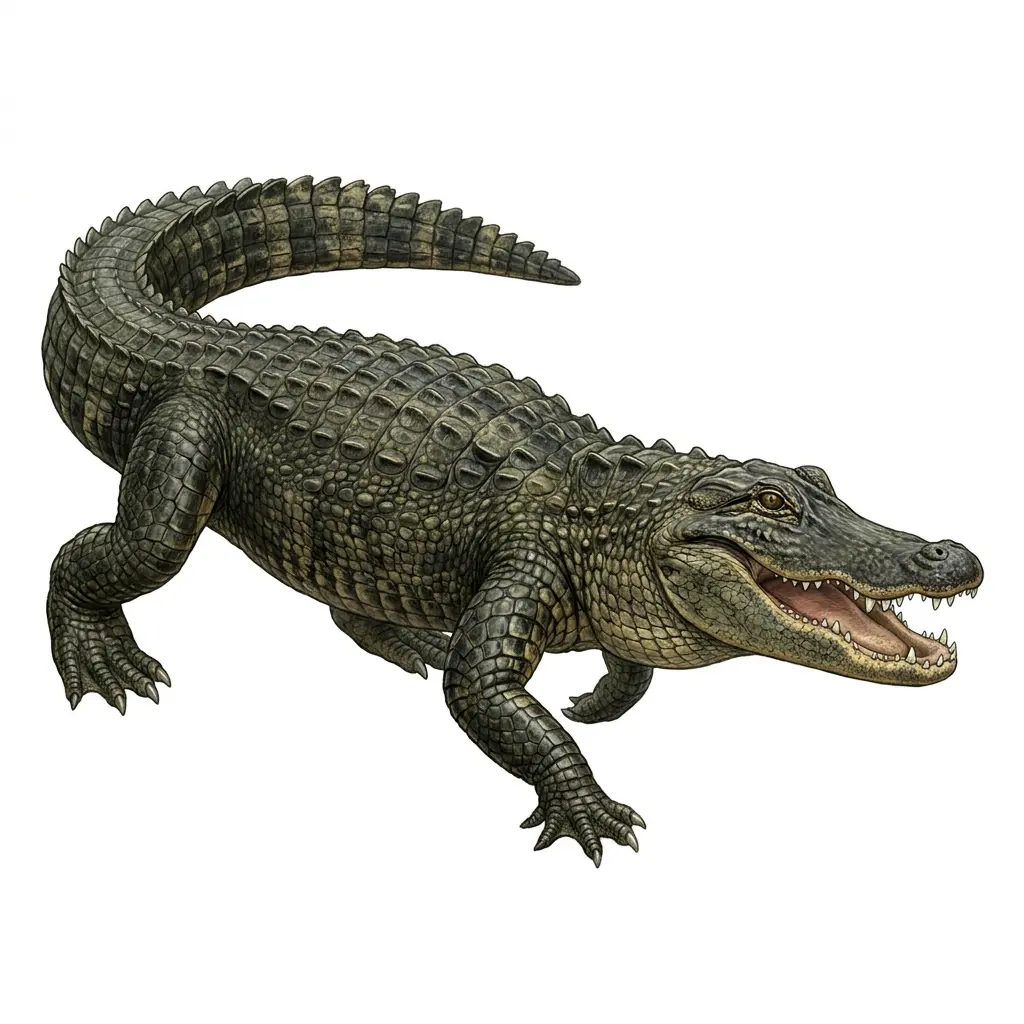
Origin: United States & China
Size: Large
Life Span: 35–50 years
The alligator is a large freshwater reptile similar to crocodiles but with a broader snout. This reptile is generally less aggressive unless provoked and is found in marshes and swamps.
❼ Gharial
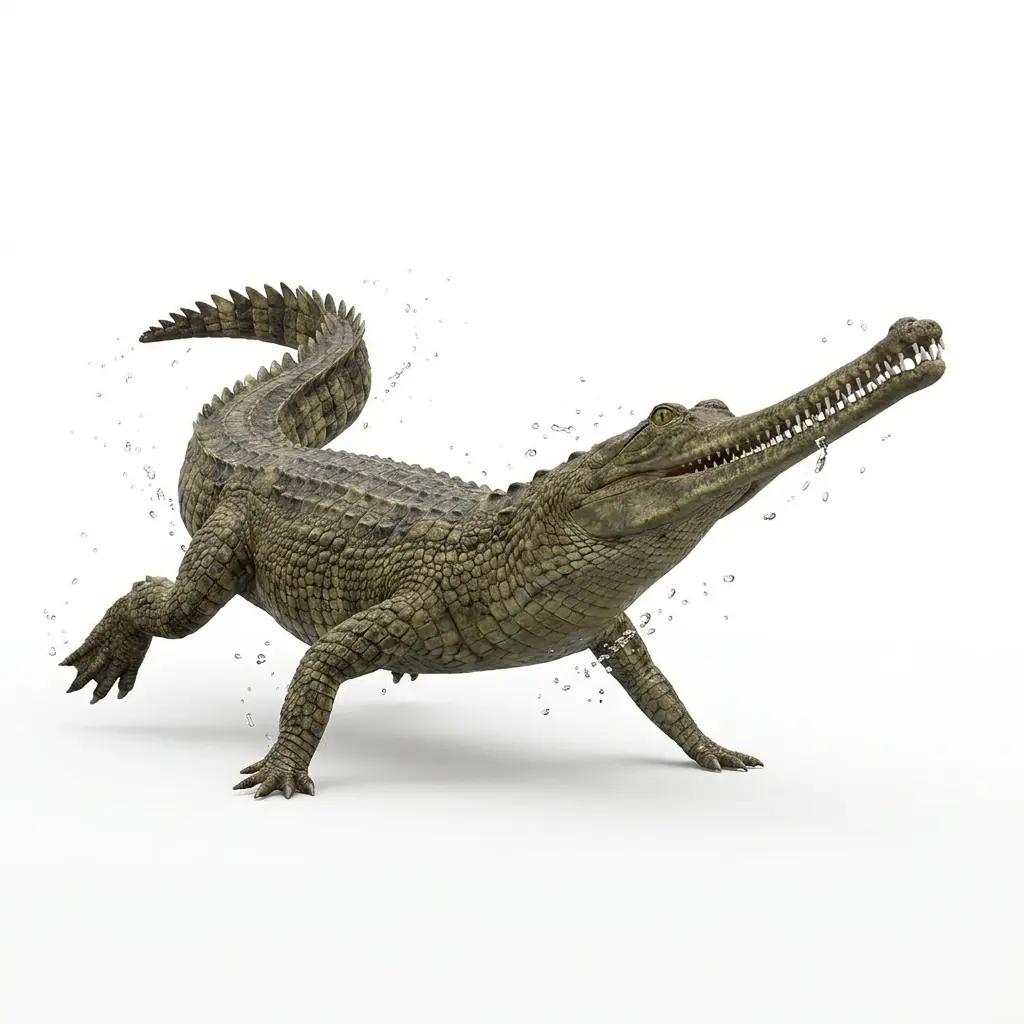
Origin: India & Nepal
Size: Large
Life Span: 40–60 years
The gharial is a fish-eating reptile with a long, narrow snout. This reptile lives mainly in river systems and is adapted for catching fish with precision.
❽ Iguana
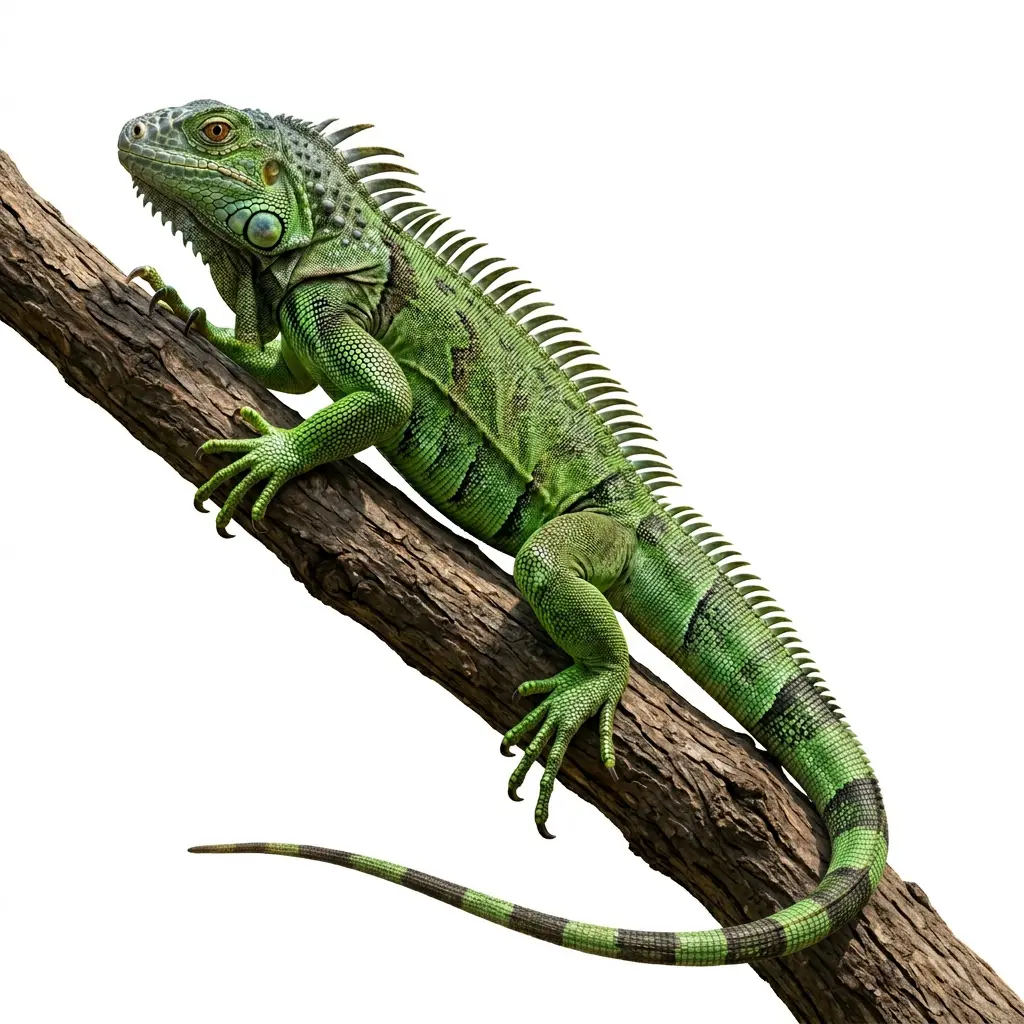
Origin: Central & South America
Size: Medium to Large
Life Span: 15–20 years
The iguana is a herbivorous reptile often found in tropical forests. This reptile is tree-dwelling, calm in nature, and commonly kept as a pet in many regions.
❾ Chameleon
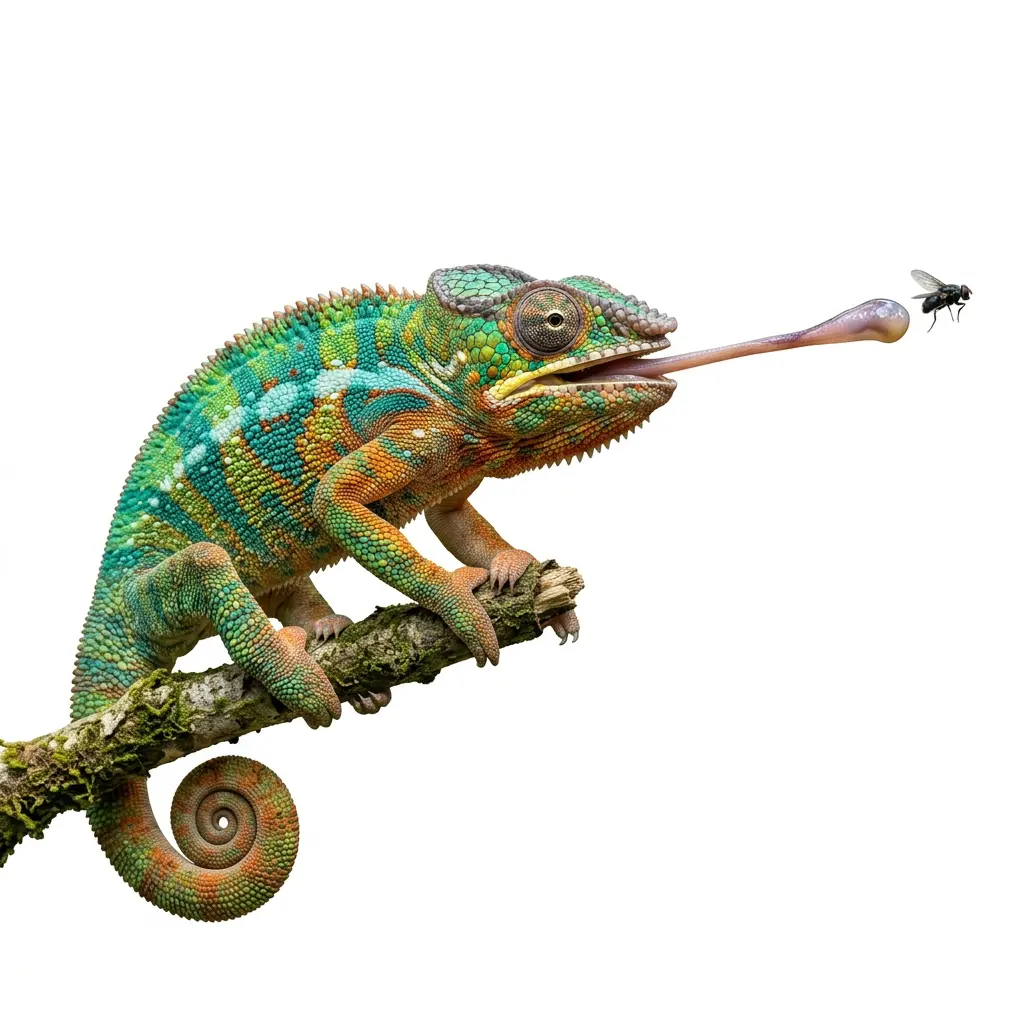
Origin: Africa, Madagascar, Southern Europe
Size: Small to Medium
Life Span: 3–10 years
The chameleon is a unique reptile known for changing its skin color. This reptile has long sticky tongues and independently moving eyes that help it catch insects.
❿ Gecko
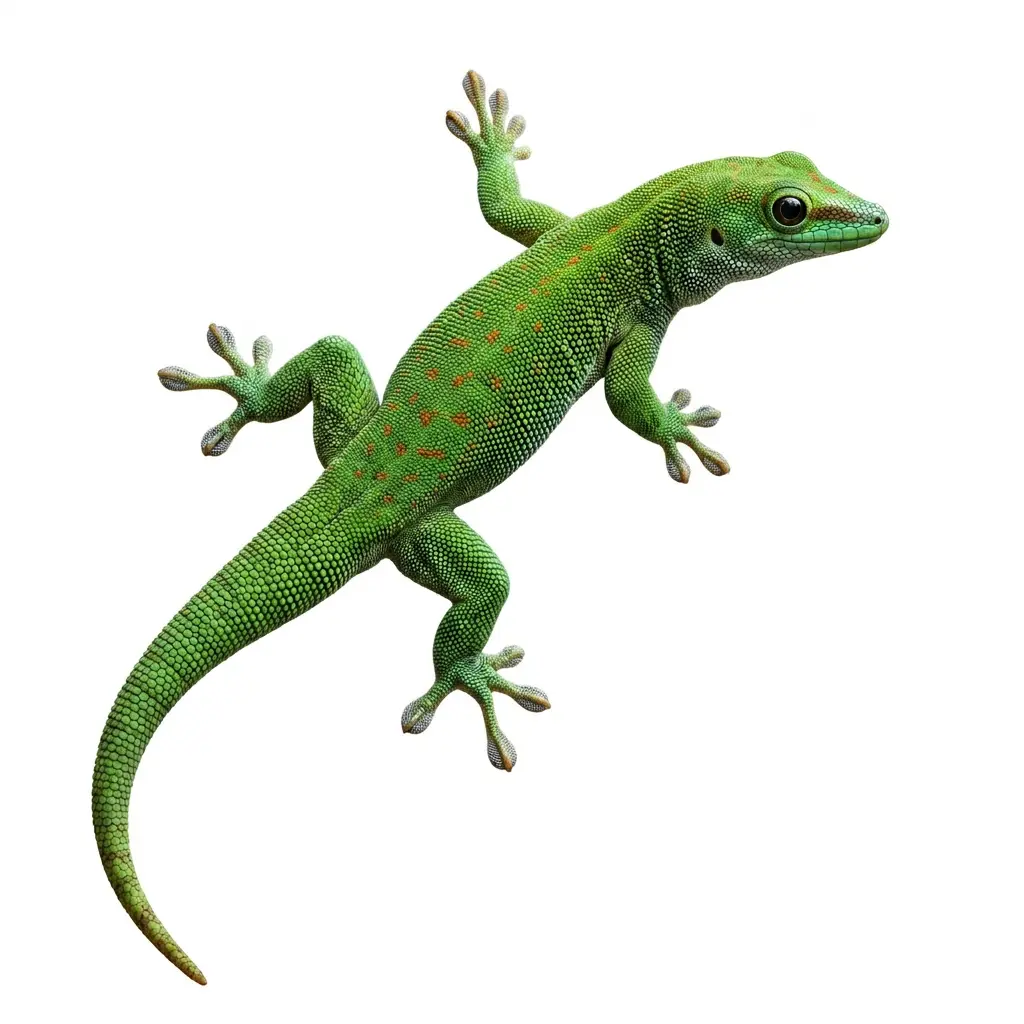
Origin: Worldwide (especially warm regions)
Size: Small
Life Span: 5–10 years
The gecko is a small reptile known for climbing walls and ceilings. This reptile is mostly nocturnal and feeds on insects in homes and natural habitats.
⓫ Lizard
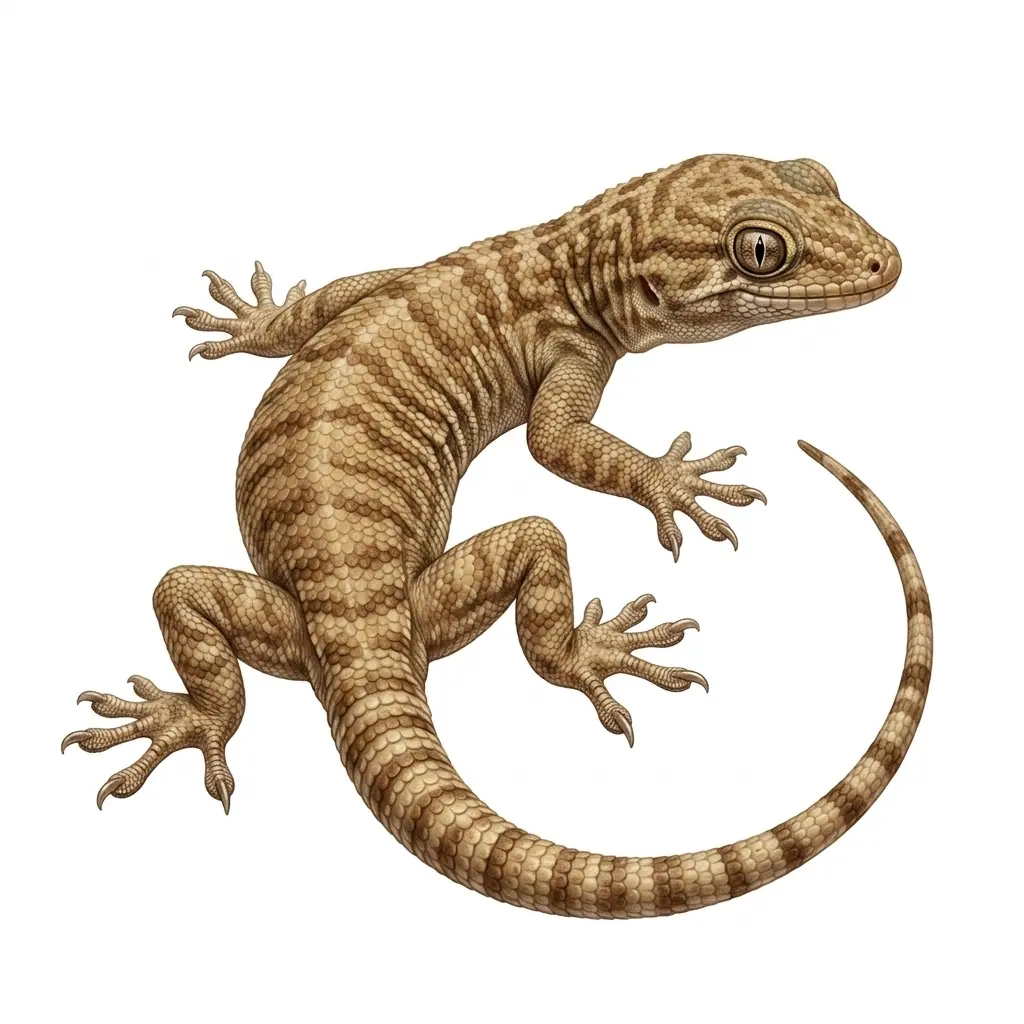
Origin: Worldwide
Size: Small to Large
Life Span: 3–15 years
The lizard is a diverse group of reptiles found in deserts, forests, and urban areas. This reptile varies widely in size, behavior, and habitat adaptation.
⓬ Rattlesnake
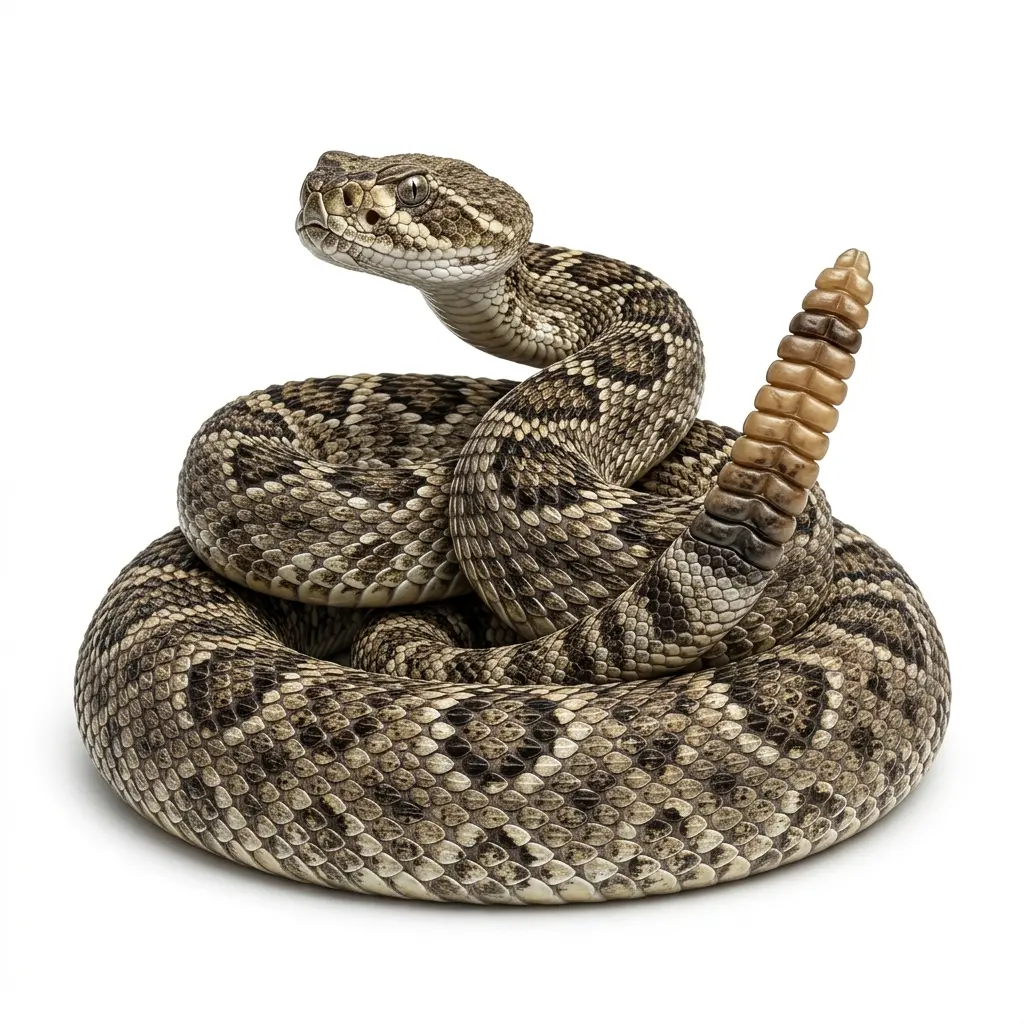
Origin: Americas
Size: Medium to Large
Life Span: 10–20 years
The rattlesnake is a venomous reptile recognized by the rattle on its tail. This reptile uses the sound as a warning before striking its prey.
⓭ Viper
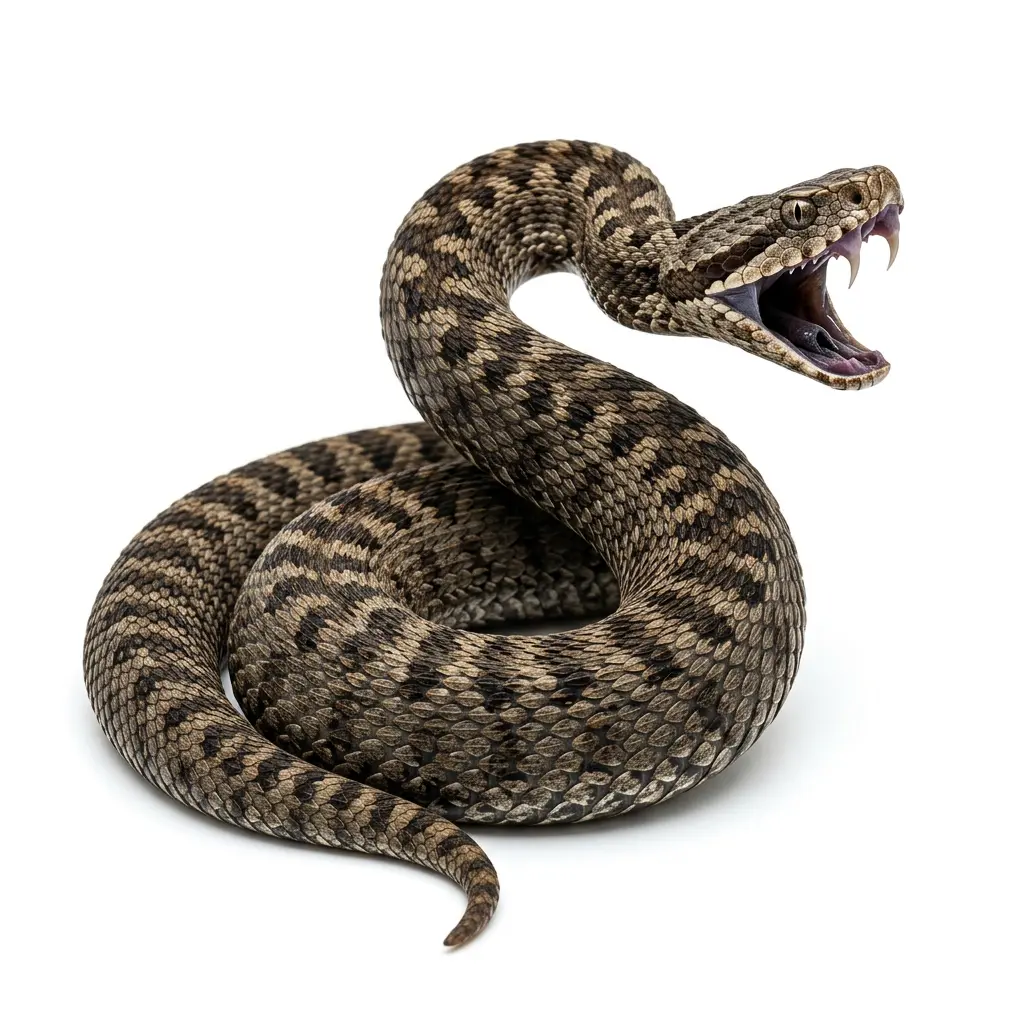
Origin: Worldwide
Size: Medium
Life Span: 10–15 years
The viper is a venomous reptile with long hinged fangs. This reptile relies on camouflage and quick strikes to catch its prey effectively.
⓮ Black Mamba
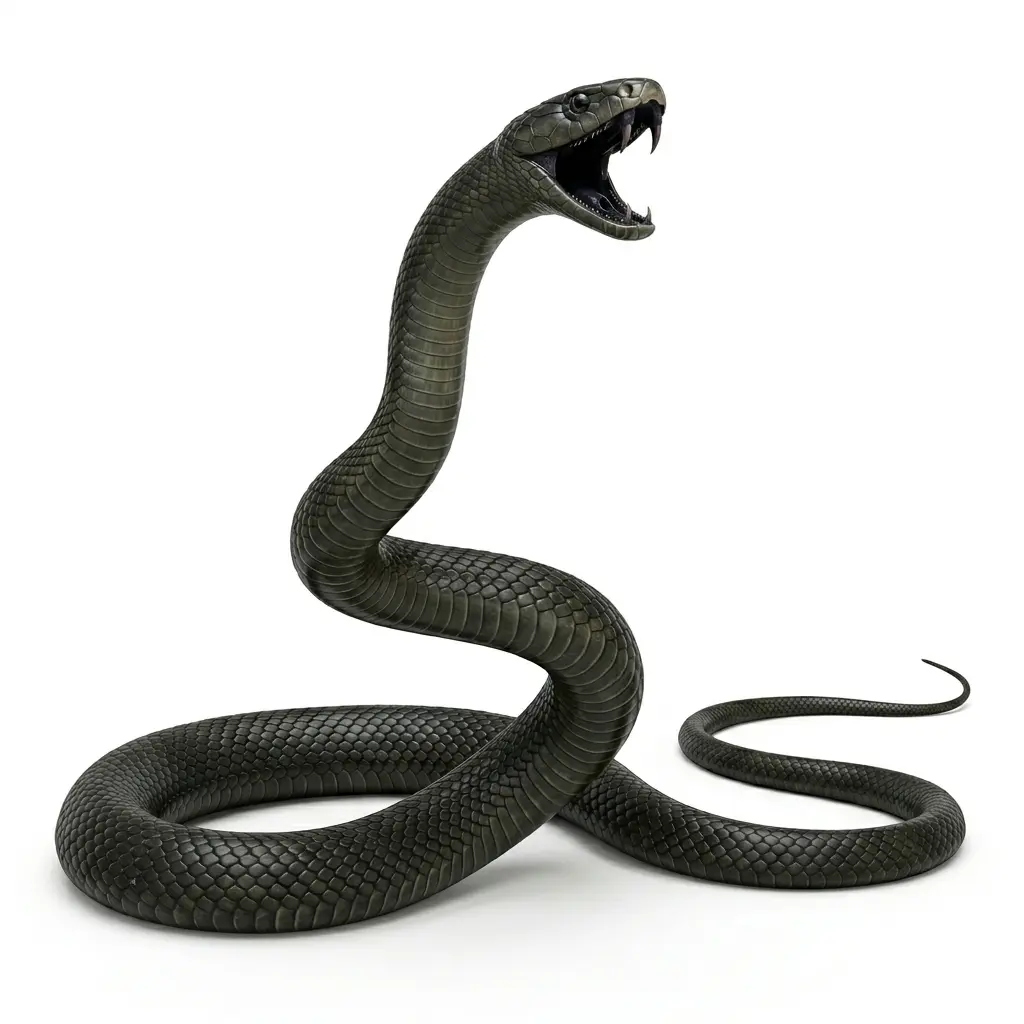
Origin: Africa
Size: Very Large
Life Span: 10–15 years
The black mamba is a highly venomous reptile known for its speed and aggression. This reptile is considered one of the most dangerous snakes in the world.
⓯ Boa
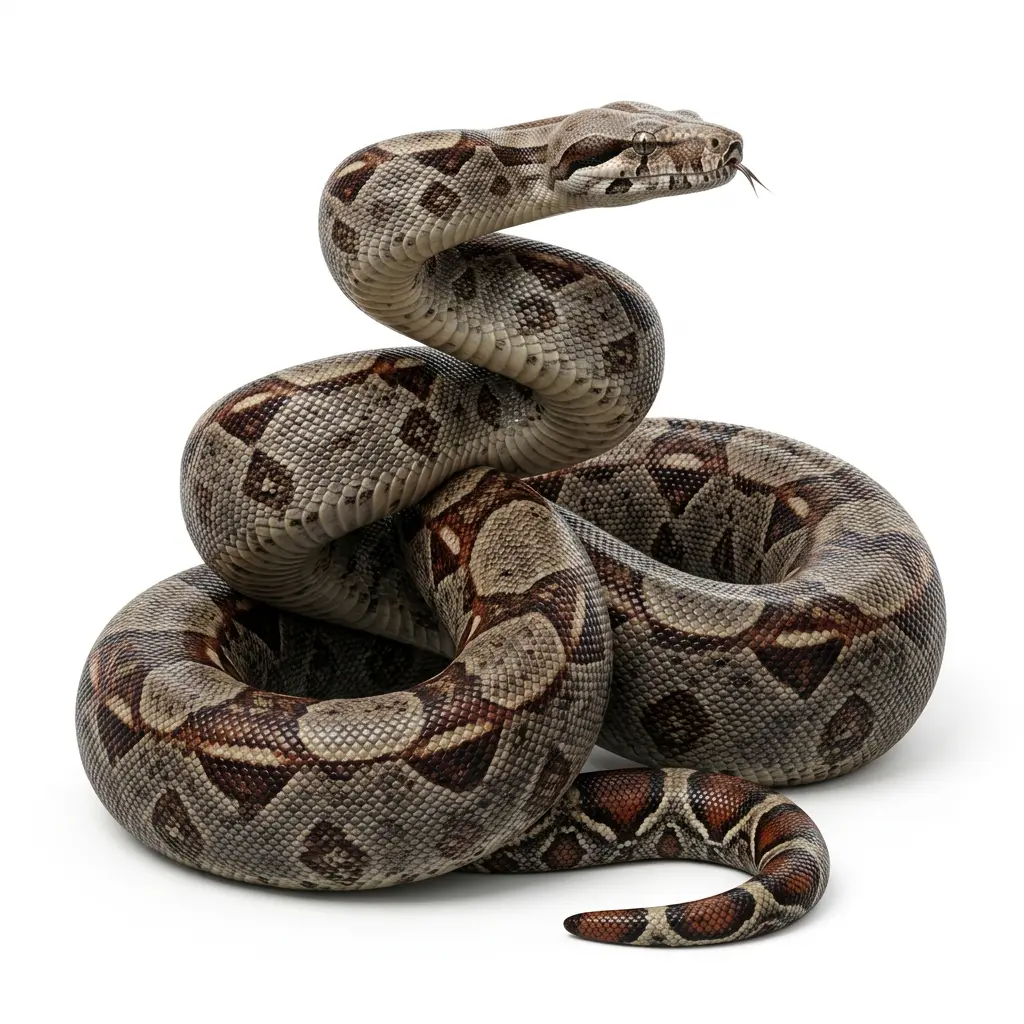
Origin: Central & South America
Size: Large
Life Span: 20–30 years
The boa is a non-venomous reptile that kills prey by constriction. This reptile is strong, slow-moving, and commonly found in tropical forests.
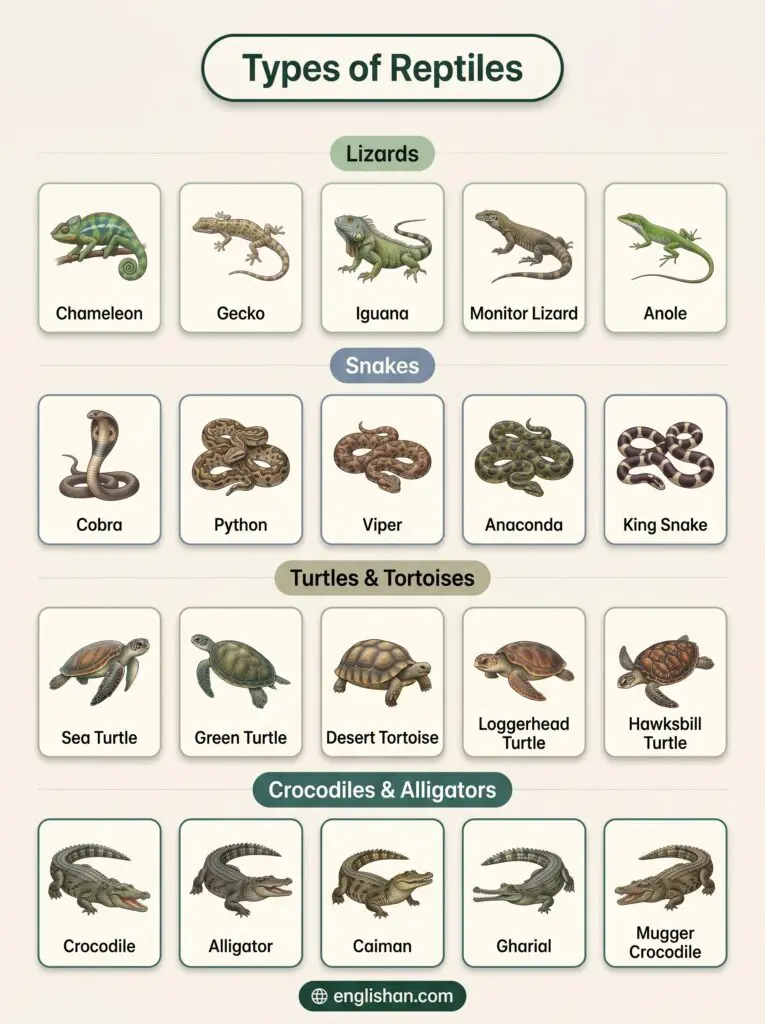
Types of Reptile Animals Names In English
Reptiles are a diverse group of animals found in almost every part of the world. They vary greatly in size, shape, and habitat, but all share some common features such as scaly skin and cold-blooded nature. Below are the main types of reptiles along with their examples.
Lizards
Lizards are small to medium-sized reptiles that usually have four legs, a long tail, and movable eyelids. They are active hunters and are found in deserts, forests, and even urban areas.
- Chameleon – A color-changing lizard known for its camouflage ability.
- Gecko – A small lizard famous for climbing walls and ceilings.
- Iguana – A large herbivorous lizard mostly found in tropical regions.
- Monitor Lizard – A strong and intelligent lizard species found in Asia and Africa.
- Anole – A small tree-dwelling lizard often seen in warm climates.
In short, lizards are adaptable reptiles that live in many environments and help maintain ecological balance.
Snakes
Snakes are legless reptiles with long, flexible bodies. They move by slithering and can be venomous or non-venomous depending on the species.
- Cobra – A venomous snake known for its hood and defensive posture.
- Python – A large non-venomous snake that kills prey by constriction.
- Viper – A venomous snake with long hollow fangs.
- Anaconda – One of the largest snakes in the world found in South America.
- King Snake – A non-venomous snake that often eats other snakes.
In short, snakes are important predators that control rodent populations and maintain the food chain.
Turtles and Tortoises
These reptiles are easily recognized by their hard protective shells. Turtles mostly live in water, while tortoises are mainly land-dwelling animals.
- Sea Turtle – A marine reptile that spends most of its life in the ocean.
- Green Turtle – A large sea turtle known for its herbivorous diet.
- Desert Tortoise – A land-dwelling tortoise adapted to dry desert conditions.
- Loggerhead Turtle – A strong sea turtle with a large head and powerful jaws.
- Hawksbill Turtle – A sea turtle known for its beautiful patterned shell.
In short, turtles and tortoises are slow-moving reptiles with strong protection that helps them survive in different habitats.
Crocodiles and Alligators
These are large, powerful reptiles that live mostly in freshwater habitats. They are strong predators with sharp teeth and strong jaws.
- Crocodile – A powerful aquatic reptile found in rivers and wetlands.
- Alligator – A large reptile mainly found in North America and China.
- Caiman – A smaller relative of alligators found in Central and South America.
- Gharial – A fish-eating crocodilian with a long, narrow snout.
- Mugger Crocodile – A crocodile species found in the Indian subcontinent.
In short, crocodiles and alligators are apex predators that play a key role in keeping aquatic ecosystems balanced.
Reptile Animals Name in English for Kids
Here are some easy and common reptile names that kids can learn and remember easily:
- Snake
- Lizard
- Crocodile
- Alligator
- Turtle
- Tortoise
- Iguana
- Gecko
- Chameleon
- Cobra
- Python
- Frog
- Salamander
- Komodo Dragon
- Rattlesnake
These are simple reptile names found in different parts of the world, and many of them live in forests, deserts, rivers, and even near human areas.
Differences Between Reptiles and Amphibians
Reptiles and amphibians are both cold-blooded vertebrates, but they differ in many important ways, including their skin type, habitat, and life cycle.
| Feature | Reptiles | Amphibians |
|---|---|---|
| Skin | Dry, scaly skin that prevents water loss | Moist, smooth skin that needs to stay wet |
| Habitat | Live mostly on land, some in water | Live both in water and on land |
| Eggs | Lay eggs with hard or leathery shells (mostly on land) | Lay soft, jelly-like eggs in water |
| Breathing | Breathe only through lungs | Breathe through lungs and skin |
| Examples | Snakes, lizards, crocodiles, turtles | Frogs, toads, salamanders, newts |
Reptiles are better adapted to dry environments, while amphibians depend more on water for survival and reproduction.
Aquatic Reptiles That Live in Water
Reptiles include many species that are adapted to live in aquatic environments such as rivers, lakes, swamps, and oceans. These water-dwelling reptiles are strong swimmers and play an important role in maintaining the balance of ecosystems.
- Crocodile – A large aquatic reptile found in rivers, lakes, and swamps. It is a powerful predator that lives in both water and nearby land areas.
- Alligator – A freshwater reptile found in swamps and marshes. It is similar to a crocodile but generally less aggressive.
- Gharial – A river-dwelling reptile found in South Asia. It has a long, thin snout used mainly for catching fish.
- Sea Turtle – A marine reptile that lives in oceans. It spends most of its life in water and returns to beaches only for laying eggs.
- Anaconda – A large aquatic snake found in rivers and swamps of South America. It is a strong swimmer and hunts in water.
- Sea Snake – A venomous marine reptile found in warm ocean waters. It is fully adapted to underwater life.
- Water Monitor Lizard – A large reptile found near rivers and wetlands in Asia. It is a strong swimmer and active hunter in water.
In short, water reptiles help maintain aquatic food chains by controlling prey populations and supporting ecological balance in their habitats.
Reptiles That Live on Land
Reptiles are highly adaptable animals, and many species are specially suited to live on land. These terrestrial reptiles are found in deserts, forests, grasslands, and rocky areas where they hunt, hide, and survive in different climates.
- Lizard – A common land reptile found in deserts, forests, and even homes. It is small, fast, and feeds mainly on insects.
- Iguana – A large herbivorous reptile that lives mostly in trees and tropical forests. It is calm and often seen basking in sunlight.
- Chameleon – A unique land reptile known for changing color. It lives in trees and uses its long tongue to catch insects.
- Cobra – A venomous land reptile found in fields, forests, and rural areas. It is known for its hood and defensive behavior.
- Python – A large non-venomous land reptile that lives in forests and grasslands. It kills prey by constriction.
- Viper – A venomous land reptile found in rocky and forested areas. It uses camouflage to hunt and survive.
- Gecko – A small land reptile often found on walls and trees. It is active at night and feeds on insects.
In short, these land reptiles play an important role in nature by controlling insect and rodent populations and maintaining ecological balance.
Rare Reptile Animals Names In English
Some reptiles are very rare and are not easily found in the wild due to habitat loss, climate change, and human activities. These species are often protected because of their declining populations.
- Chinese Alligator: One of the rarest crocodilian species, found only in small areas of China.
- Kemp’s Ridley Sea Turtle: The rarest sea turtle in the world, known for its very limited nesting sites.
- Gharial: A fish-eating crocodile with a long narrow snout, found mainly in the rivers of South Asia.
- Komodo Dragon: The largest lizard in the world, found only on a few Indonesian islands.
- Ploughshare Tortoise: A critically endangered tortoise native to Madagascar, threatened by illegal trade.
These rare reptiles need strong conservation efforts to protect their habitats and prevent extinction.
Habitat of Reptiles Animals
Reptiles are highly adaptable animals that live in different environments around the world. Their ability to survive in various climates makes them one of the most widespread animal groups on Earth.
| Habitat | Description | Reptile Names |
|---|---|---|
| Deserts | Hot, dry areas where reptiles stay in burrows or are active at night. | Desert Tortoise, Horned Lizard, Sidewinder Snake, Gecko |
| Forests | Humid areas with shelter, food, and camouflage. | Chameleon, King Cobra, Iguana, Forest Gecko |
| Rivers & Lakes | Freshwater habitats for hunting and living. | Crocodile, Gharial, Water Snake, Softshell Turtle |
| Oceans | Saltwater habitats where reptiles swim and feed. | Sea Turtle, Green Turtle, Hawksbill Turtle, Sea Snake |
| Grasslands | Open fields where reptiles hunt and move freely. | Cobra, Viper, Rat Snake, Agama Lizard |
Reptiles are successful survivors because they can live in such a wide range of habitats. This adaptability helps them play an important role in maintaining ecological balance across different ecosystems.
Reptile Species from Around the World
Reptiles are distributed across different regions of the world, each adapted to its own environment. This section highlights reptiles from America, Africa, Australia, Britain, and rainforests, showing their diversity and natural habitats.
Reptiles of America
America is home to a wide variety of reptiles, from massive alligators to colorful desert lizards. These reptiles inhabit wetlands, forests, grasslands, and deserts across North and South America.
- American Alligator – A large reptile commonly found in the southeastern United States.
- Gila Monster – One of the few venomous lizards in the world, native to the southwestern deserts.
- Green Iguana – A tree-dwelling lizard found in Central and South America.
- Eastern Diamondback Rattlesnake – The largest rattlesnake species in North America.
- Red-Footed Tortoise – A colorful tortoise native to South American rainforests.
Reptiles of Africa
Africa’s diverse landscapes support many unique reptiles, including giant snakes, desert lizards, and powerful crocodiles. They thrive in savannas, deserts, forests, and wetlands.
- Nile Crocodile – One of Africa’s largest and most feared predators.
- African Rock Python – The continent’s largest snake species.
- Pancake Tortoise – A unique tortoise with a flat, flexible shell.
- Boomslang – A highly venomous tree-dwelling snake.
- Leopard Tortoise – A large tortoise known for its spotted shell pattern.
Reptiles of Australia
Australia is famous for its unusual wildlife and is home to many distinctive reptiles, including some of the world’s most venomous snakes and largest lizards.
- Saltwater Crocodile – The largest living reptile on Earth.
- Frilled Lizard – Known for the dramatic frill around its neck.
- Inland Taipan – Considered the world’s most venomous snake.
- Thorny Devil – A small desert lizard covered in spiky scales.
- Perentie – Australia’s largest monitor lizard.
Reptiles of Britain
Britain has a relatively small number of native reptiles due to its cooler climate. However, several species can still be found in woodlands, heathlands, and grasslands.
- Adder – Britain’s only native venomous snake.
- Grass Snake – A harmless snake often found near water.
- Smooth Snake – A rare and secretive reptile.
- Common Lizard – Britain’s most widespread reptile.
- Slow Worm – A legless lizard often mistaken for a snake.
Rainforest Reptiles
Rainforests provide warm, humid environments that support an incredible variety of reptiles. Many species are expert climbers and camouflage specialists.
- Green Anaconda – One of the world’s largest snakes, found in South American rainforests.
- Emerald Tree Boa – A bright green snake that spends most of its life in trees.
- Spectacled Caiman – A crocodilian commonly found in rainforest waterways.
- Panther Chameleon – A colorful reptile native to tropical forests.
- Tokay Gecko – A large, vocal gecko found in Asian rainforests.
In short, reptiles across all these regions show great diversity and adaptation, making them an important part of global ecosystems that need to be studied and protected.
Importance of Reptiles Animals
Reptiles play a very important role in nature and ecosystems. They help maintain balance in the environment and support biodiversity.
- Maintain ecological balance by controlling population growth of other species
- Control pest populations such as insects and rodents naturally
- Act as an important part of the food chain as both predators and prey
- Support biodiversity by living in different habitats and interacting with many species
Threats to Reptiles Animals
Reptiles are facing several serious threats worldwide that are reducing their populations and damaging their natural habitats. Most of these issues are caused by human activities and environmental changes.
- Habitat Destruction – Forests, wetlands, and grasslands are cleared for farming, housing, and development, destroying reptile homes.
- Hunting & Illegal Trade – Many reptiles are hunted for skin, meat, or sold as exotic pets, leading to population decline.
- Climate Change – Rising temperatures and changing weather patterns affect reptiles’ body functions and breeding cycles.
- Pollution – Water, air, and soil pollution, including plastic waste and chemicals, harm reptiles and their habitats.
Reptiles are essential for ecosystems, and protecting them is important for maintaining biodiversity and environmental balance.
Interesting Facts About Reptiles Animals
- Some reptiles like snakes can swallow prey much larger than their head due to flexible jaw structure.
- Crocodiles are among the strongest reptiles and have one of the most powerful bite forces in the animal kingdom.
- Chameleons are unique reptiles that can change color to communicate, regulate temperature, and blend with surroundings.
- Turtles are long-living reptiles, and some species can survive for several decades or even over a century.
Conclusion
Reptiles are an important group of cold-blooded animals found in diverse environments such as forests, deserts, rivers, and oceans. They include a wide variety of species like snakes, lizards, crocodiles, turtles, and many others. Each reptile has unique features, habitats, and survival adaptations that make them fascinating to study.
Learning reptile names in English helps improve general knowledge and understanding of wildlife. These animals also play a vital role in maintaining ecological balance by controlling populations of insects and other small animals. Overall, reptiles are an essential part of nature and contribute significantly to biodiversity on Earth.
FAQs
Reptiles are cold-blooded animals that have dry, scaly skin and usually lay eggs to reproduce. They include a wide variety of animals such as snakes, lizards, crocodiles, turtles, and tortoises. These animals are found in different environments like deserts, forests, rivers, and even near human settlements. Reptiles depend on external heat sources like the sun to regulate their body temperature.
Some of the most common reptile names in English are snake, lizard, crocodile, alligator, turtle, tortoise, iguana, gecko, chameleon, python, and cobra. These reptiles are widely known because they are found in many parts of the world and are often studied in basic science and biology. Each reptile has its own unique features, habitat, and behavior.
Yes, snakes are reptiles. They belong to a group of legless reptiles that move by sliding their long, flexible bodies. Snakes can be venomous or non-venomous depending on the species. They are found in forests, deserts, grasslands, and sometimes even in water. Snakes play an important role in nature by controlling the population of rodents and other small animals.
Reptiles live in a wide range of habitats across the world. They can be found in hot deserts, dense forests, freshwater rivers, oceans, and grasslands. Some reptiles like crocodiles and gharials live in water, while others like lizards and geckos are often found on land or trees. Their ability to adapt to different environments makes them one of the most widespread animal groups.
Reptiles are very important for maintaining balance in the ecosystem. They control populations of insects, rodents, and other small animals by acting as predators. At the same time, they also serve as food for larger animals, which helps maintain the food chain. Reptiles also contribute to biodiversity, making ecosystems healthier and more stable.
You May Also Like
- 60+ Zoo Animals Names with Pictures
- 51+ Jungle Animals Names with Pictures
- 25+ Biggest Animals in the World
Reptiles Quiz
Reptiles
Which reptile does the picture show?
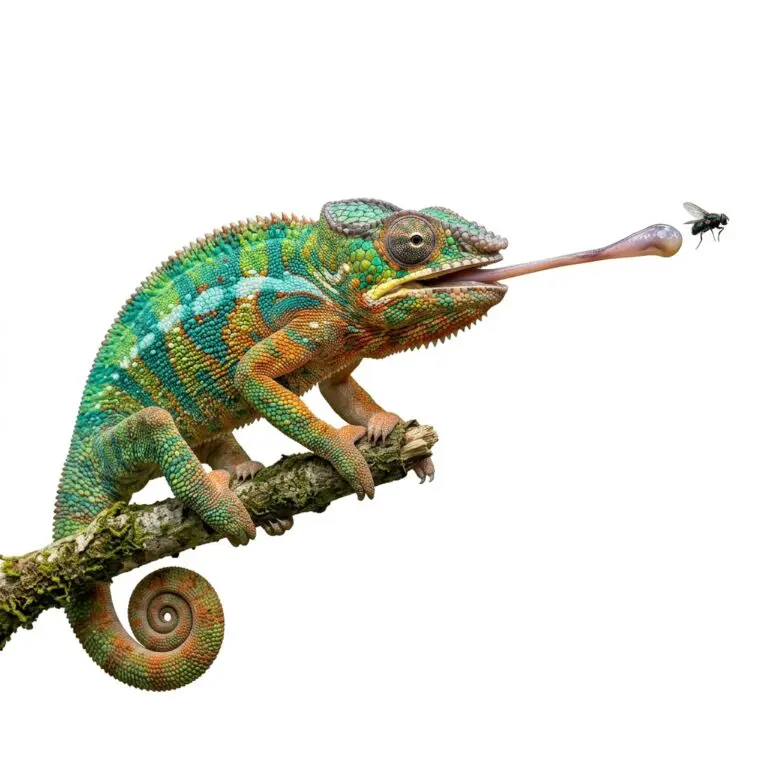
The picture shows a chameleon.
Read the picture before reading the options.
The picture shows a chameleon.
What does 'ectothermic' mean?
A lizard basks to warm up and moves to shade to cool down.
Cold-blooded is a misleading everyday term for ectothermic.
The lizard basked until it was warm enough to hunt.
What are reptile scales made of?
The same protein as hair, nails and feathers.
Fish scales are bony; reptile scales are keratin.
The snake shed a complete layer of keratin scales.
Name the process.
When a snake sheds its entire outer skin in one piece, this is called ___.
The old skin peels off inside out, eye caps included.
Growth demands shedding when the covering cannot stretch.
The shed skin lay in the grass, complete down to the eye caps.
Which of these is NOT a reptile?
A newt is an amphibian, with moist skin and an aquatic larval stage.
Moist skin points to amphibian; dry scales point to reptile.
Newts and salamanders are amphibians, not reptiles.
Why can reptile eggs be laid on dry land?
The amniotic egg carries its own pond, which freed vertebrates from water entirely.
The amniotic egg is what let vertebrates leave the water for good.
Reptile eggs need no pond, unlike frogspawn.
Which reptile group is most closely related to birds?
Crocodiles and birds share a more recent ancestor with each other than either does with lizards.
The everyday grouping 'reptiles' does not match the family tree.
A crocodile is closer to a sparrow than to a snake.
Turn on JavaScript for the interactive quiz. The full practice set is shown above.