Jungle animals names are always interesting to learn because they include some of the most powerful and beautiful creatures found in nature. These animals live deep inside forests where they depend on the jungle for food, shelter, and survival. From big cats like lions and tigers to intelligent monkeys and strong elephants, jungle life is full of amazing diversity.
In this article, we will explore jungle animals names with pictures in English. This list is created in a simple and easy way so kids, students, and animal lovers can quickly understand and remember different jungle animals names. It will also help you improve your general knowledge about wildlife in an engaging way.
What Are Jungle Animals?
Jungle animals are wild animals that live in dense forest environments called jungles. These areas are full of trees, plants, rivers, and natural shelters that provide food, safety, and living space for many different species. Jungle animals are not domesticated, which means they live in the wild and survive on their natural instincts.
They include a wide variety of species such as lions, tigers, elephants, monkeys, leopards, deer, snakes, and many types of birds. Each animal plays an important role in the jungle ecosystem. Some are predators, some are prey, and others help maintain balance in nature by supporting plant growth and controlling insect populations.
Explore more animals that start with different letters:
A | B | C | D | E | F | G | H | I | J | K | L | M | N | O | P | Q | R | S | T | U | V | W | X | Y | Z
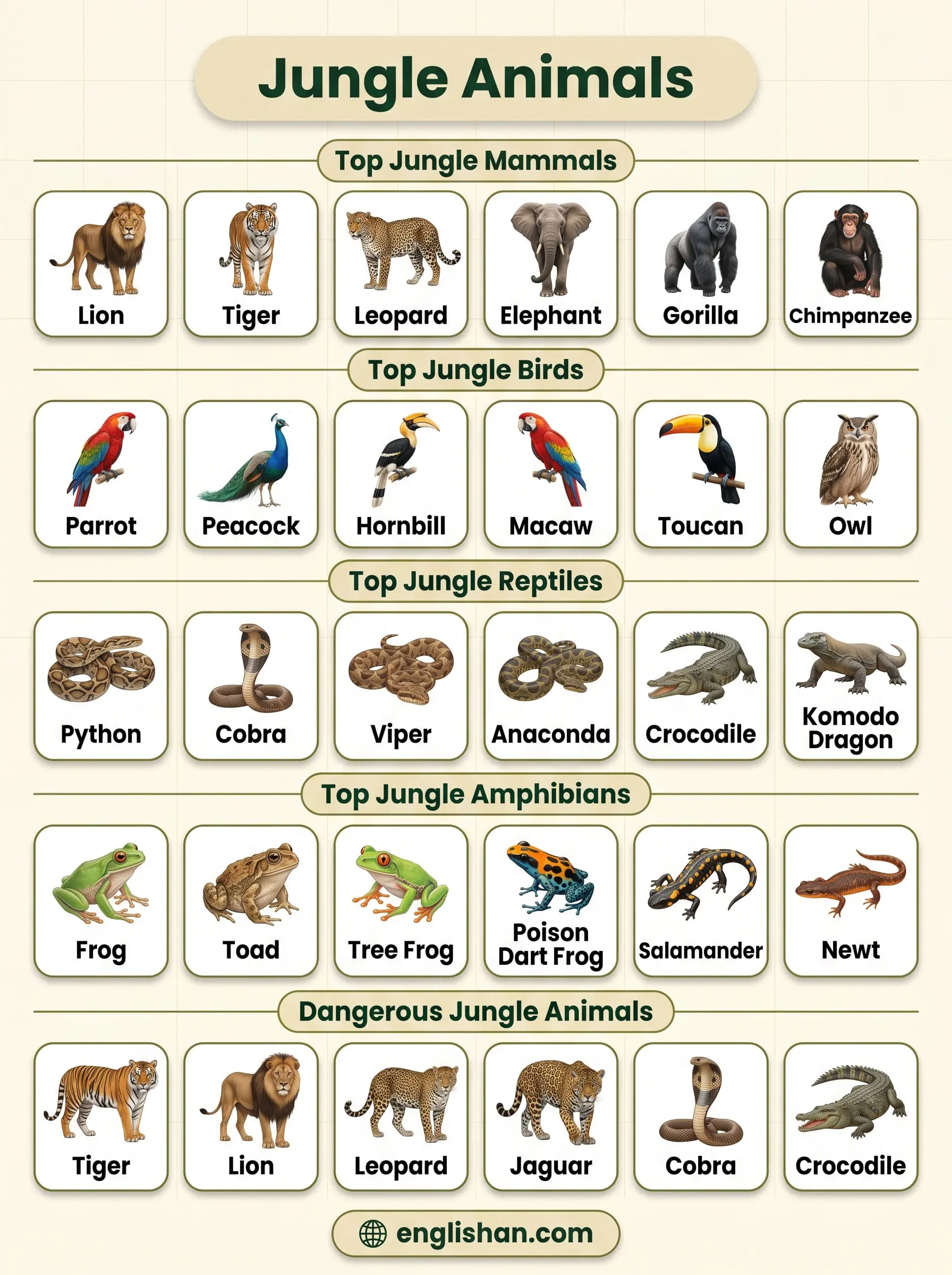
List of Jungle Animals Names
- Lion
- Tiger
- Leopard
- Jaguar
- Black Panther
- Elephant
- Gorilla
- Chimpanzee
- Orangutan
- Bonobo
- Gibbon
- Sloth Bear
- Sloth
- Deer
- Wild Boar
- Wolf
- Fox
- Hyena
- Jackal
- Mongoose
- Civet
- Porcupine
- Pangolin
- Tapir
- Okapi
- Python
- Cobra
- Viper
- Anaconda
- Monitor Lizard
- Chameleon
- Gecko
- Frog
- Crocodile
- Hornbill
- Macaw
- Toucan
- Woodpecker
- Owl
Common Jungle Animals Names with Pictures
❶ Lion
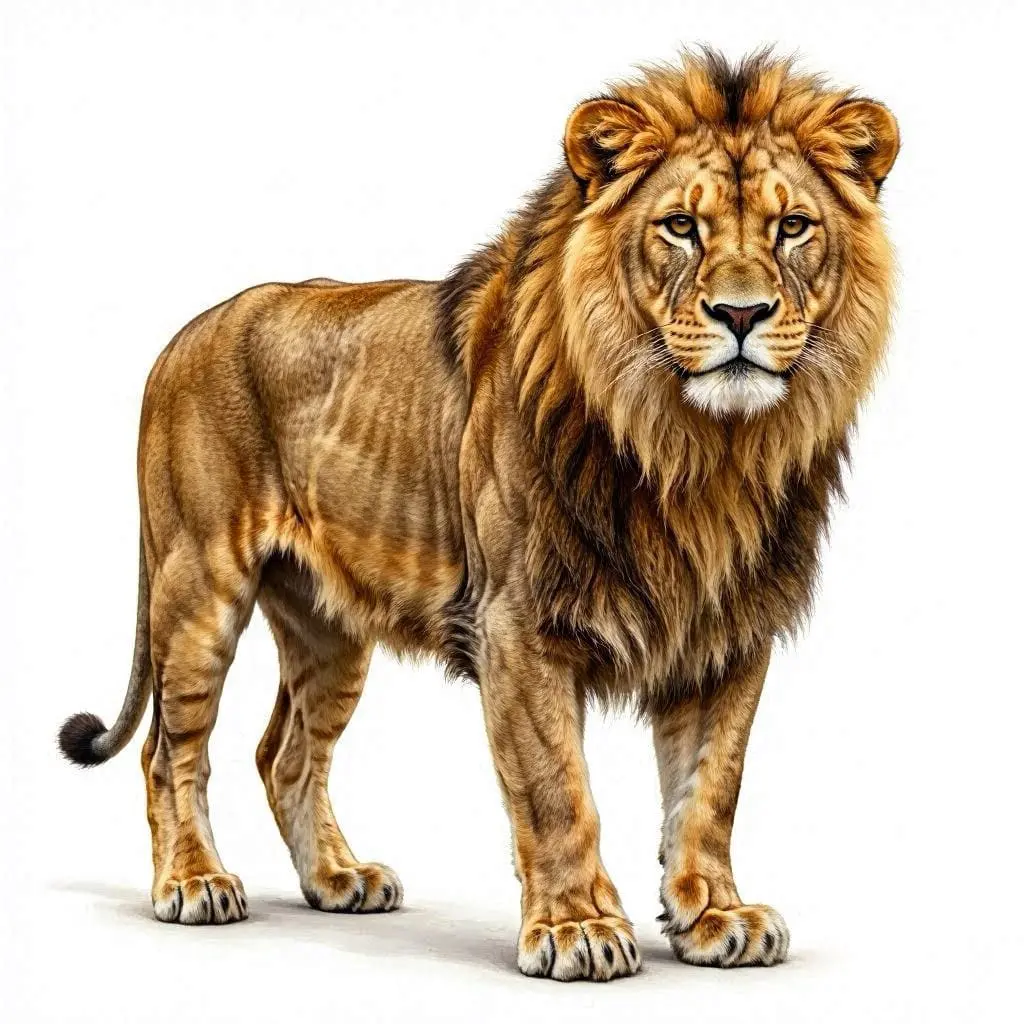
Type: Mammal
Lions are jungle animals with a strong body structure and powerful muscles that help them hunt large prey. They are social predators that live in groups called prides, where each member has a role in hunting, protecting territory, and raising cubs. Their sharp senses and teamwork make them one of the top predators in jungle and savanna regions.
Where found: Jungle edges, grasslands, and African savannas
❷ Tiger
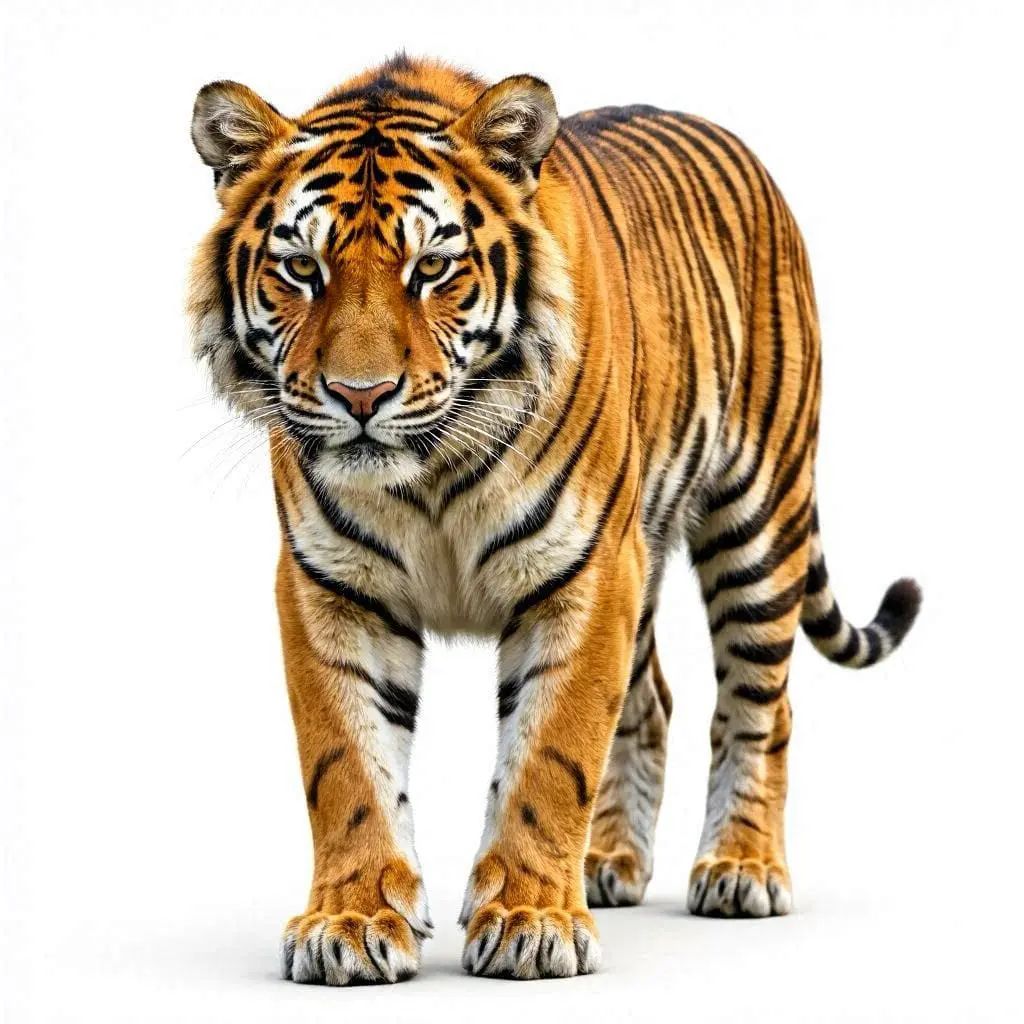
Type: Mammal
Tigers are jungle animals with a strong, muscular body and striped coat that helps them hide in dense forests. They are solitary hunters that rely on stealth, patience, and powerful attacks to catch their prey. Their strength and camouflage make them one of the most dangerous predators in the jungle.
Where found: Dense jungles and forests of Asia
❸ Leopard
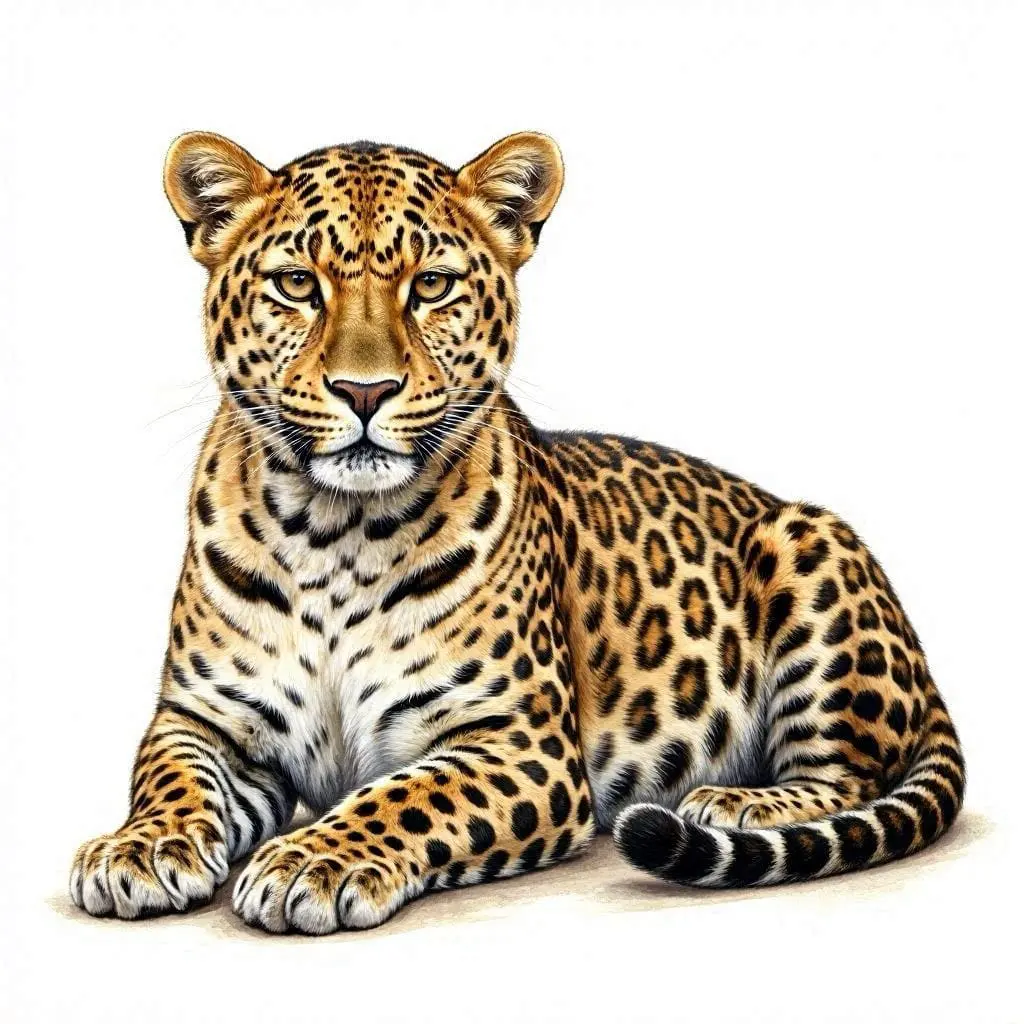
Type: Mammal
Leopards are jungle animals known for their flexible body and incredible climbing ability. They are stealth hunters that quietly stalk prey and often drag it up into trees to keep it safe from other predators. Their adaptability allows them to survive in many forest environments.
Where found: Forests and jungles of Africa and Asia
❹ Elephant
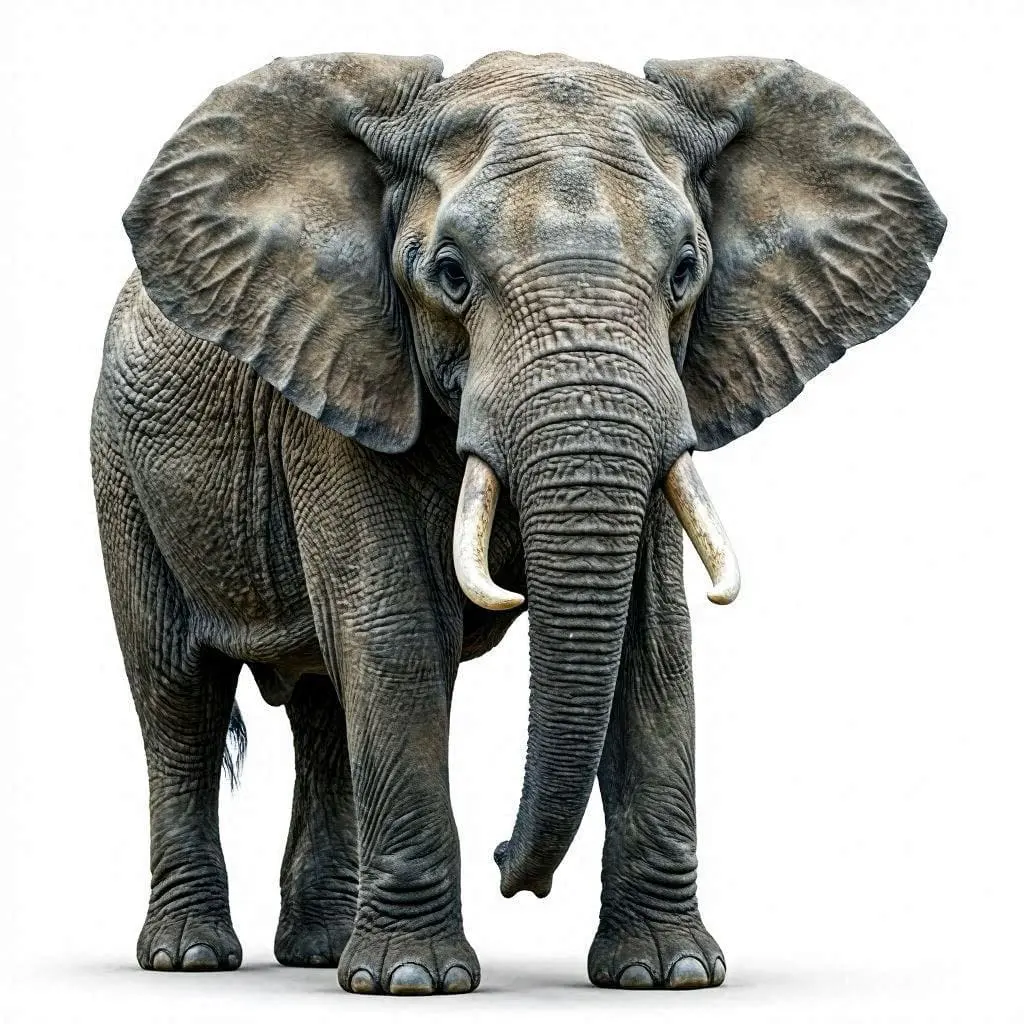
Type: Mammal
Elephants are jungle animals with massive bodies supported by strong bones and muscles. They are highly intelligent creatures that live in family herds and communicate using sounds and vibrations. Their memory and social behavior make them one of the most advanced animals in the jungle ecosystem.
Where found: Jungles and forests of Asia and Africa
❺ Gorilla
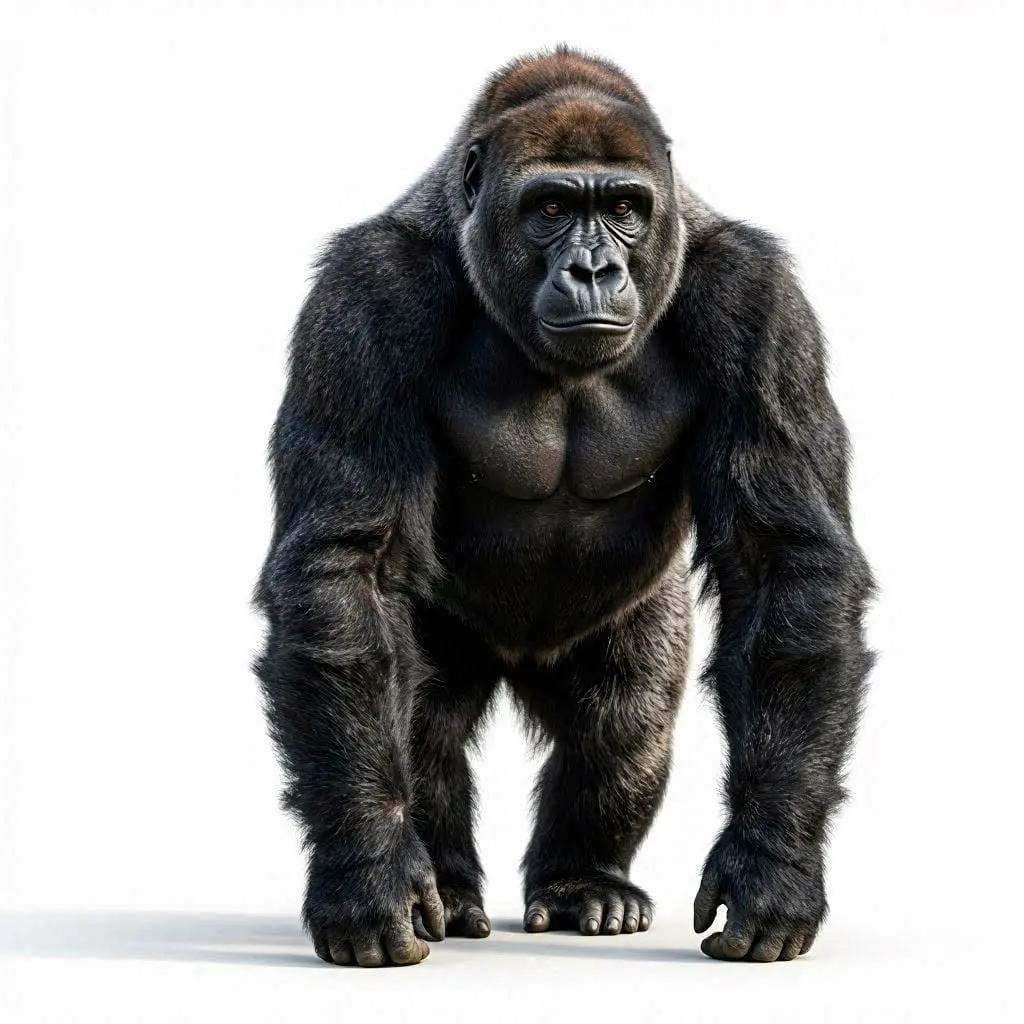
Type: Mammal
Gorillas are jungle animals with a powerful build and human-like intelligence. They live in close-knit groups led by a dominant silverback and spend most of their time foraging for plants in dense rainforests. Despite their strength, they are generally peaceful unless threatened
Where found: Rainforests of Central Africa
❻ Chimpanzee
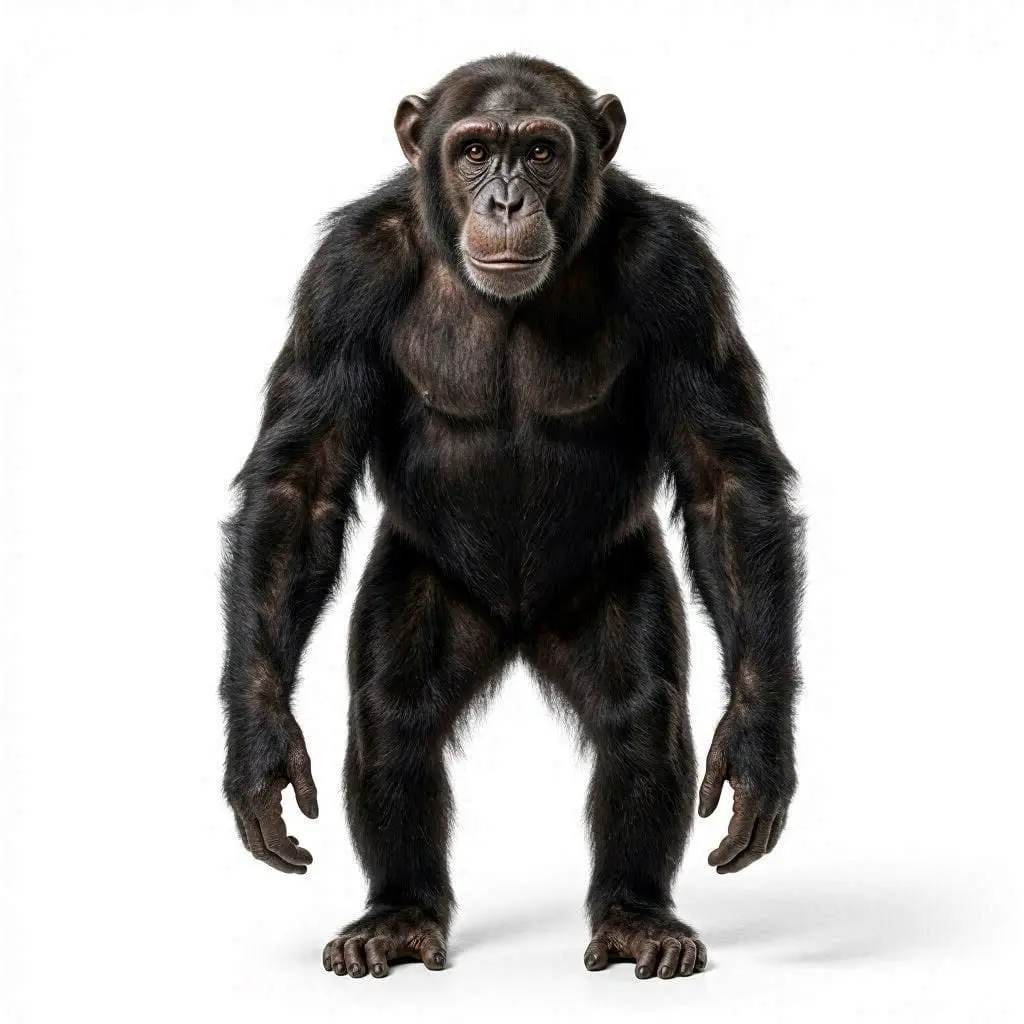
Type: Mammal
Chimpanzees are jungle animals known for their intelligence, tool use, and social behavior. They live in communities where they communicate, cooperate, and learn from each other. Their ability to adapt and solve problems makes them one of the closest relatives to humans.
Where found: Tropical jungles of Africa
❼ Orangutan
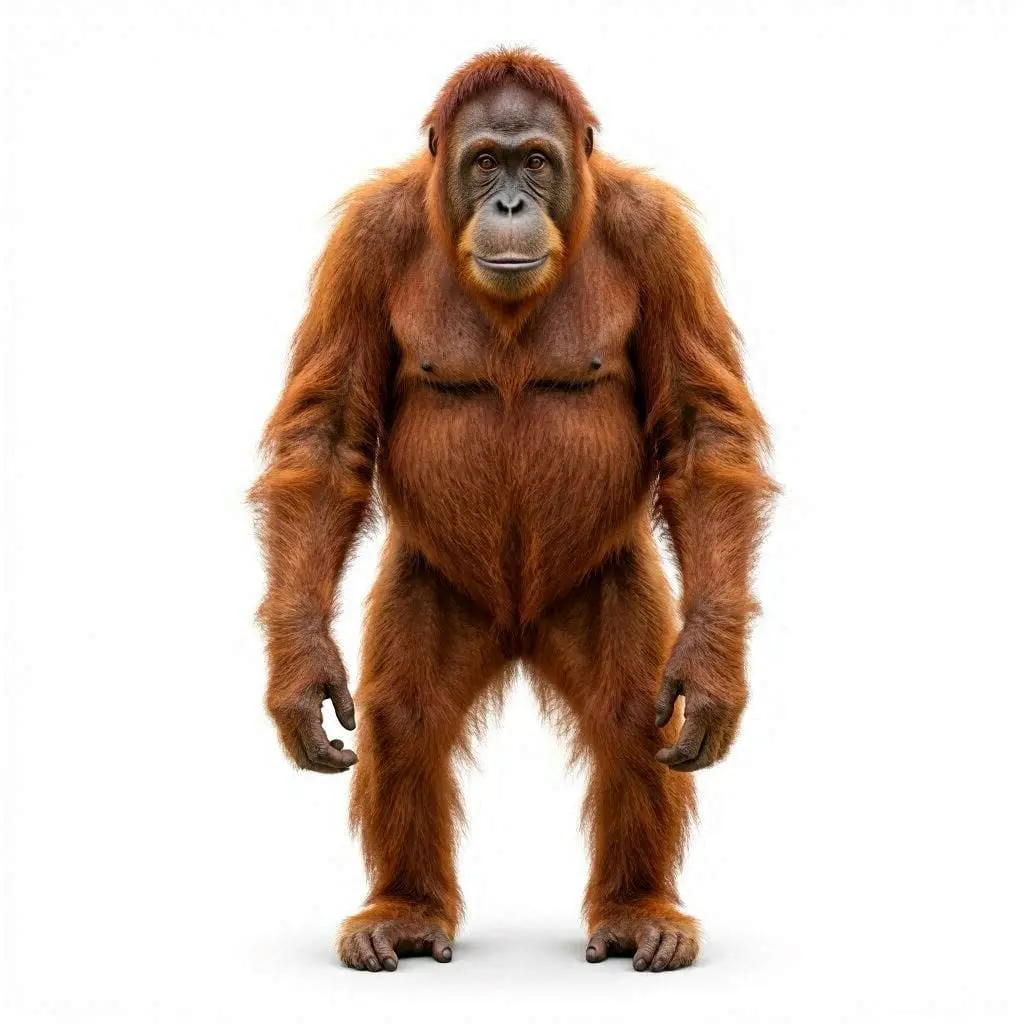
Type: Mammal
Orangutans are jungle animals with long, strong arms adapted for life in trees. They spend most of their time in the forest canopy, building nests and searching for fruit. Their slow, careful movements reflect their highly intelligent and solitary nature.
Where found: Rainforests of Borneo and Sumatra
❽ Deer
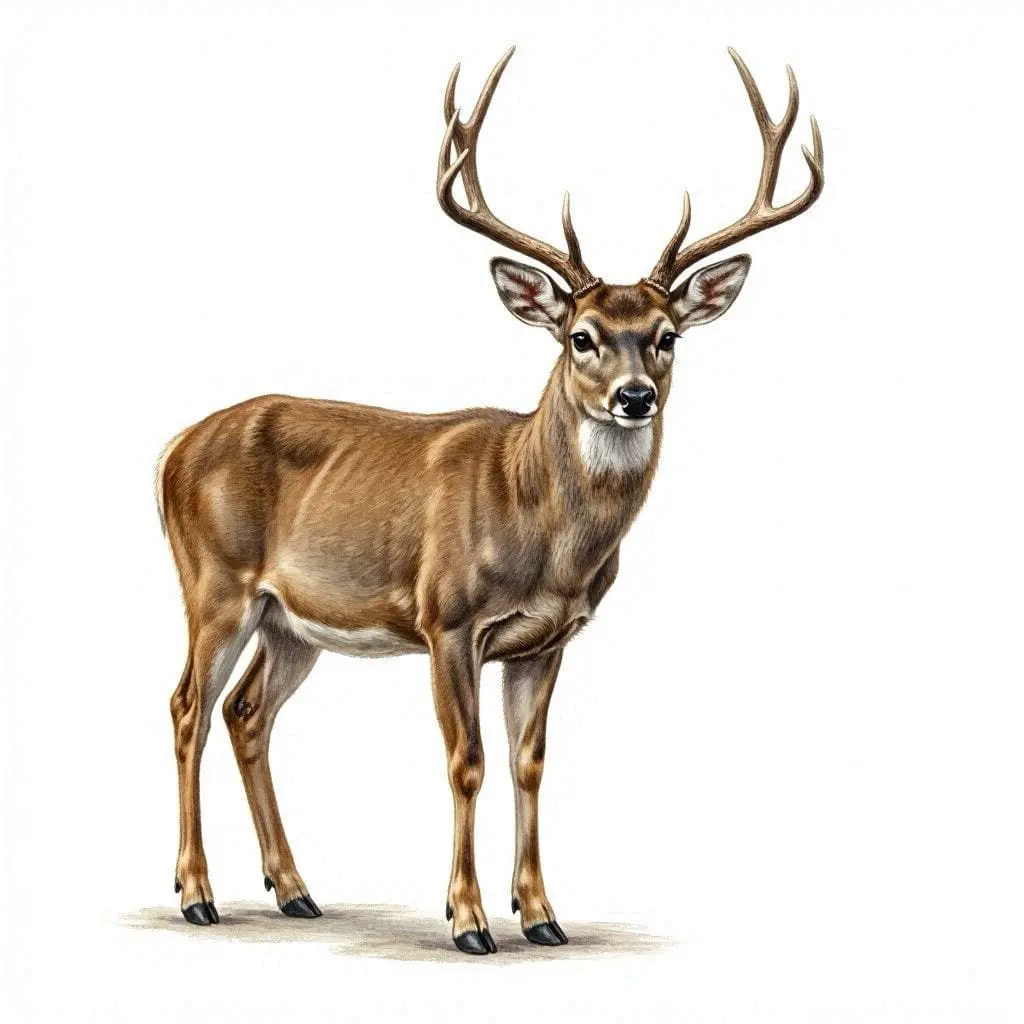
Type: Mammal
Deer are jungle animals with a light and agile body designed for speed and escape. They are gentle herbivores that live in forest areas and rely on alert senses and fast running to avoid predators. Their graceful movement makes them common in many jungle regions.
Where found: Forests and jungles across Asia, Europe, and Africa
❿ Wild Boar
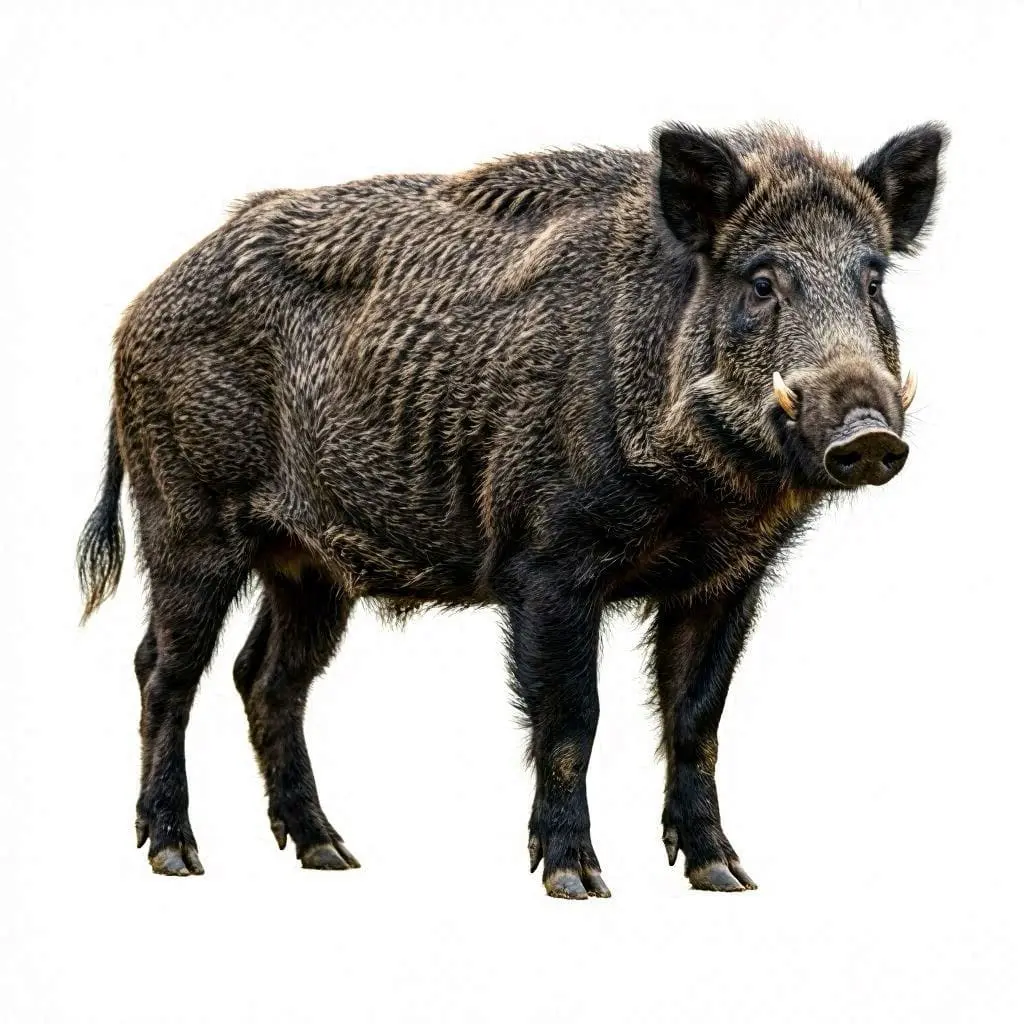
Type: Mammal
Wild boars are jungle animals with a strong and sturdy body built for digging and foraging. They are omnivores that search for roots, insects, and small animals in forest floors. Their toughness allows them to survive in harsh jungle environments.
Where found: Forests and jungles of Asia and Europe
⓫ Wolf
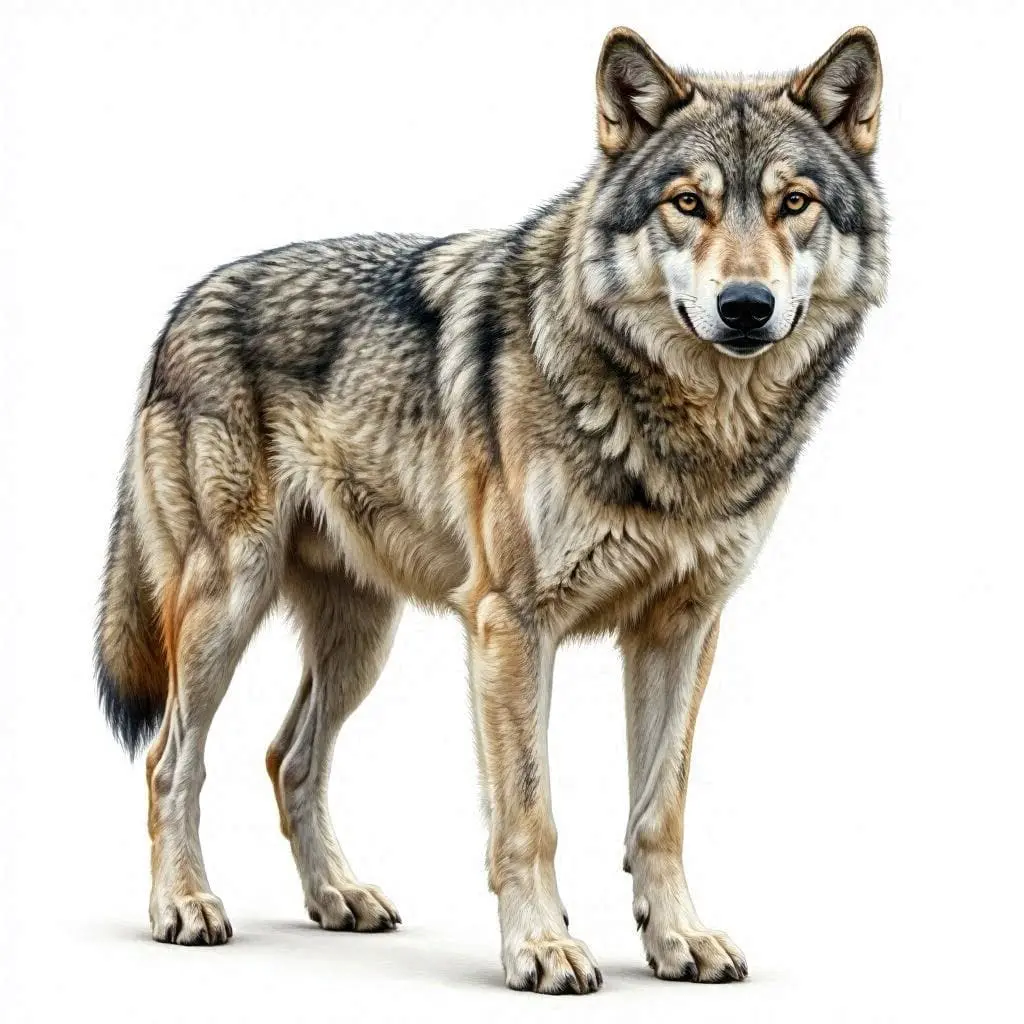
Type: Mammal
Wolves are jungle animals known for their strong social structure and pack hunting behavior. They communicate through howls and coordinated movement while hunting large prey. Their teamwork and intelligence make them highly effective predators in forest regions.
Where found: Forests and wilderness areas of North America, Europe, and Asia
⓬ Fox
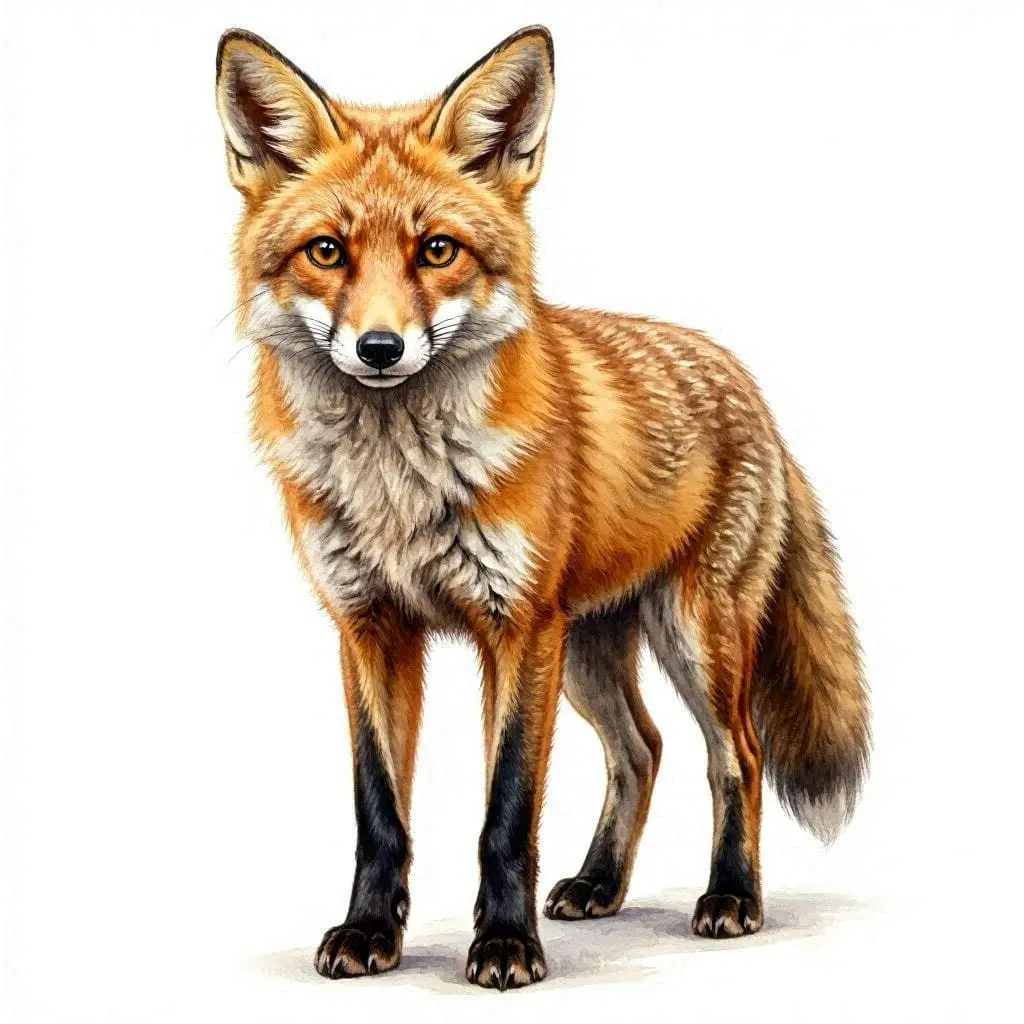
Type: Mammal
Foxes are jungle animals with a slim, agile body that helps them move silently through forests. They are clever hunters that adapt easily to different environments and feed on small animals, insects, and fruits. Their intelligence helps them survive in the wild.
Where found: Forests and jungles of the Northern Hemisphere
⓭ Hyena
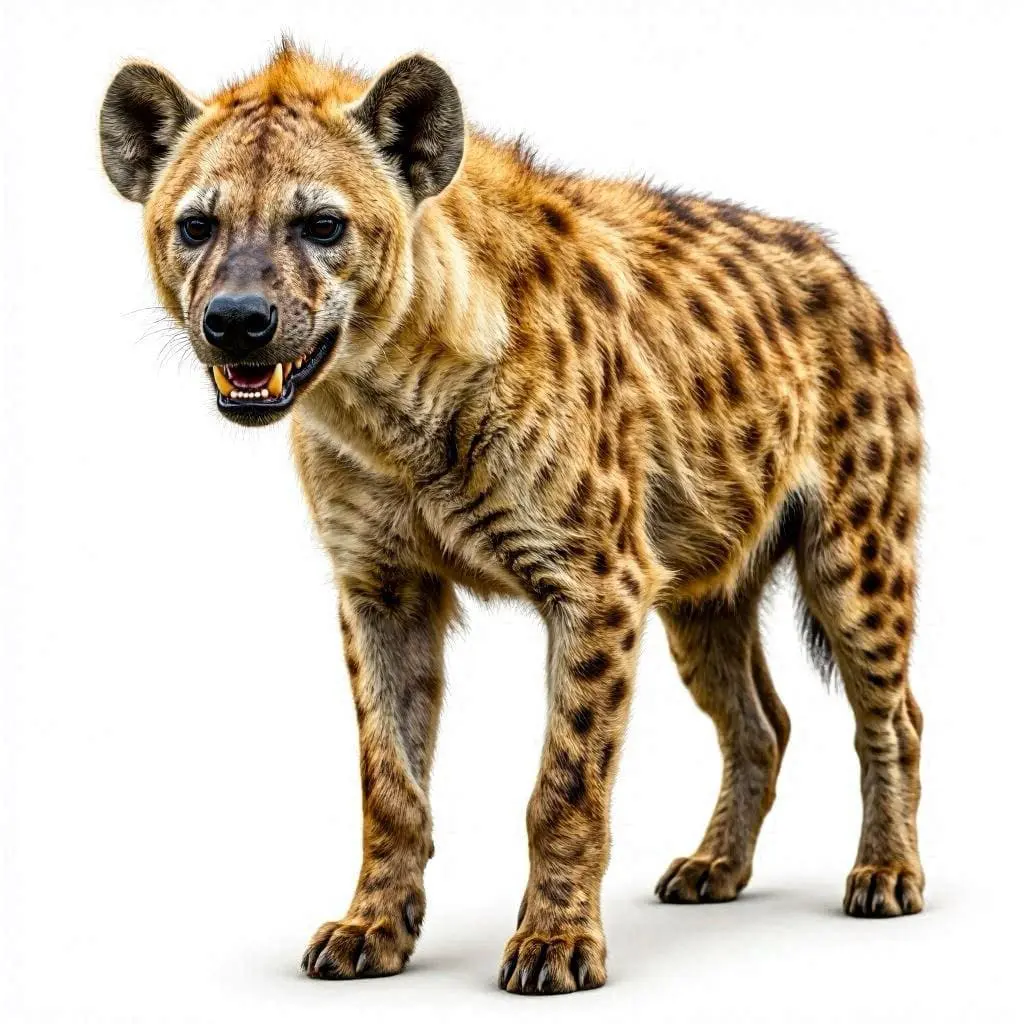
Type: Mammal
Hyenas are jungle animals with a strong jaw and endurance-based body built for survival. They are both hunters and scavengers that often work in groups to find food. Their loud calls and social behavior make them important predators in the ecosystem.
Where found: African forests and jungle-edge regions
⓮ Jackal
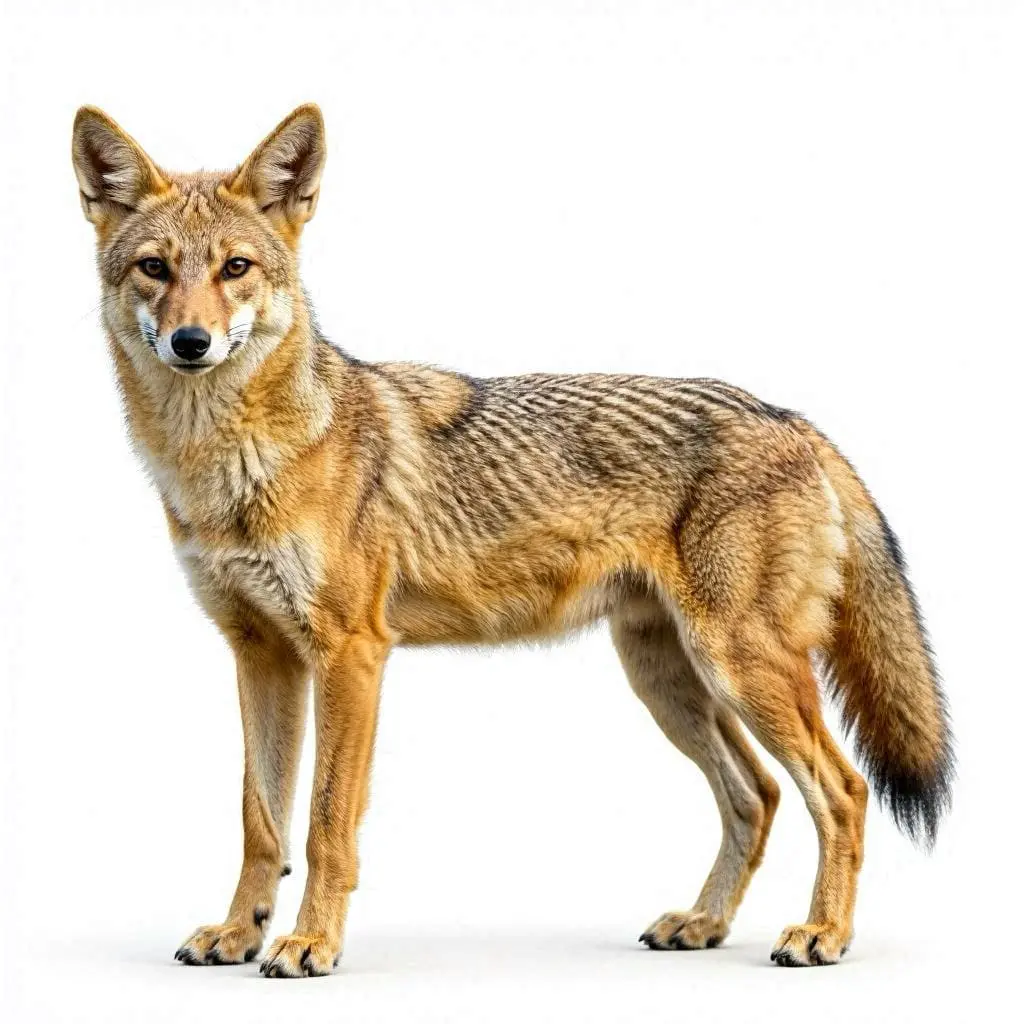
Type: Mammal
Jackals are jungle animals with a lean body designed for speed and adaptability. They are opportunistic feeders that hunt small animals and also scavenge when needed. Their intelligence helps them survive in forest and open jungle areas.
Where found: Forests and jungles of Africa and Asia
⓯ Mongoose
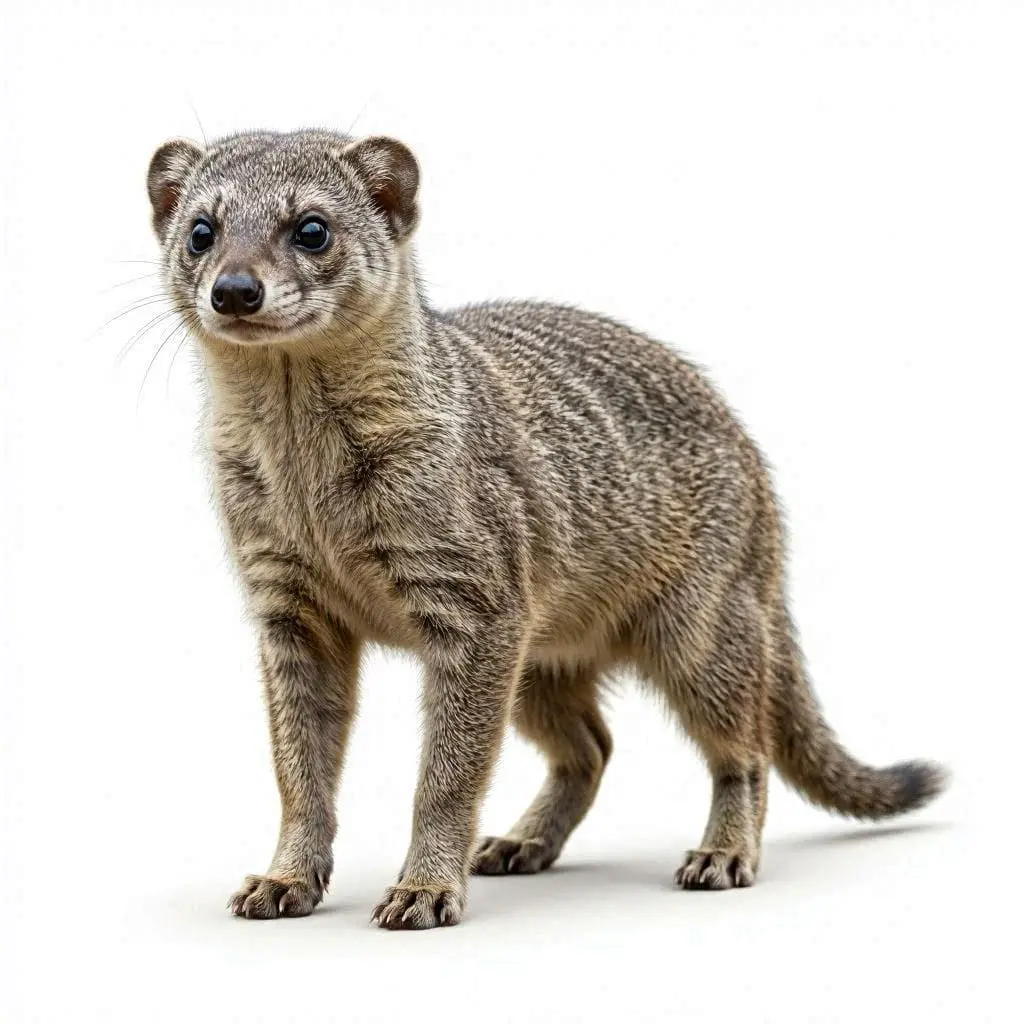
Type: Mammal
Mongooses are jungle animals with a small, quick body that allows them to move fast and react instantly to danger. They are known for their ability to fight and kill snakes, making them fearless hunters in the wild.
Where found: Forests and jungles of Africa and Asia
⓰ Civet
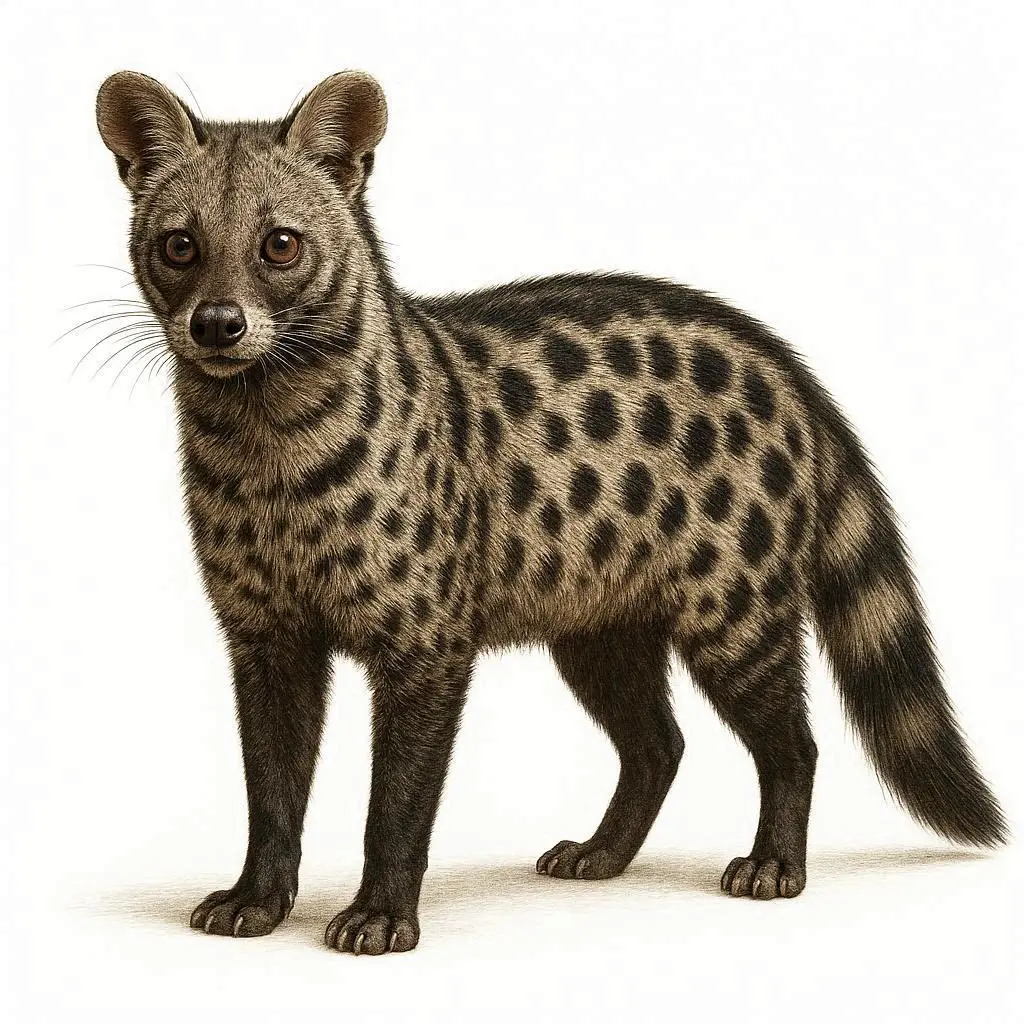
Type: Mammal
Civets are jungle animals with a slender body adapted for both climbing trees and moving on the ground. They are mostly nocturnal and feed on fruits, insects, and small animals, playing an important role in forest ecosystems.
Where found: Tropical forests of Asia and Africa
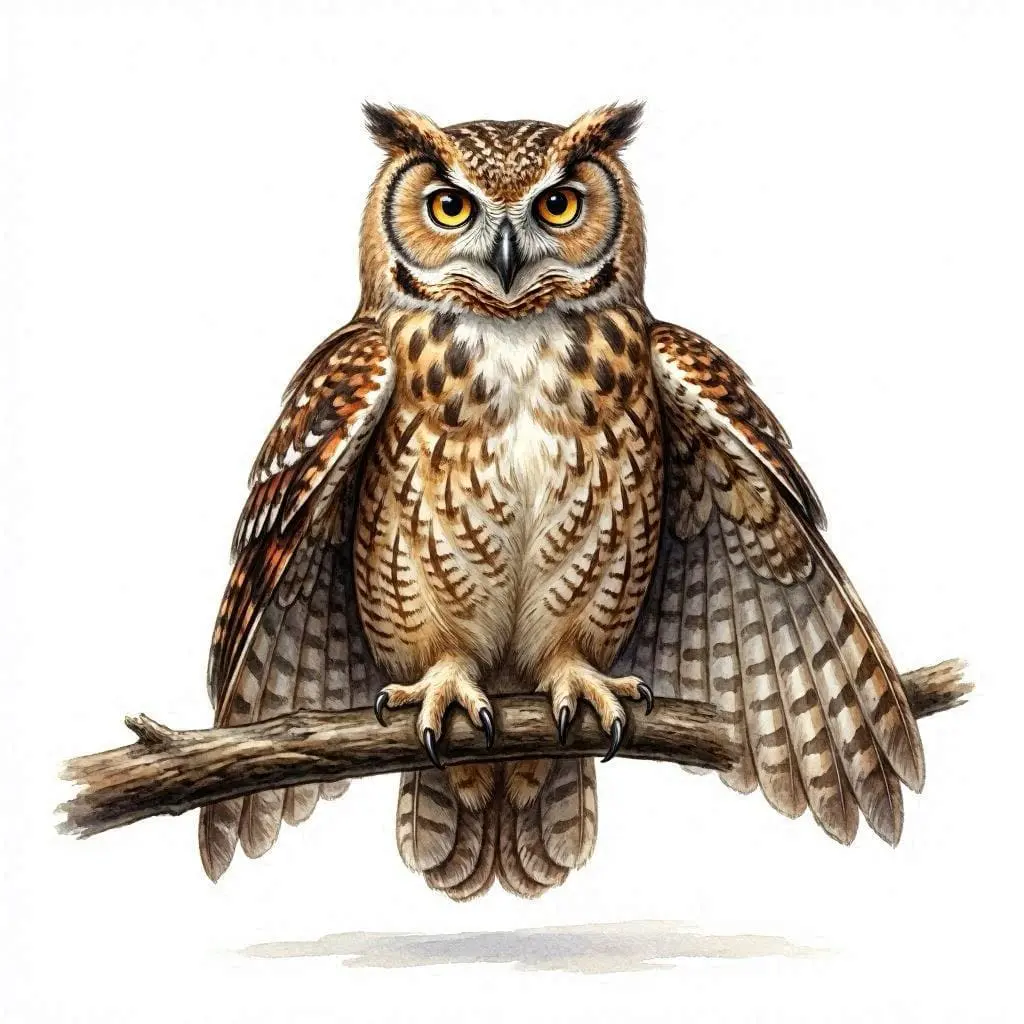
⓱ Owl
Type: Bird
Owls are jungle animals known for their silent flight and sharp night vision. They are nocturnal hunters that rely on hearing and vision to catch small animals in the dark forest.
Where found: Forests and jungles across the world
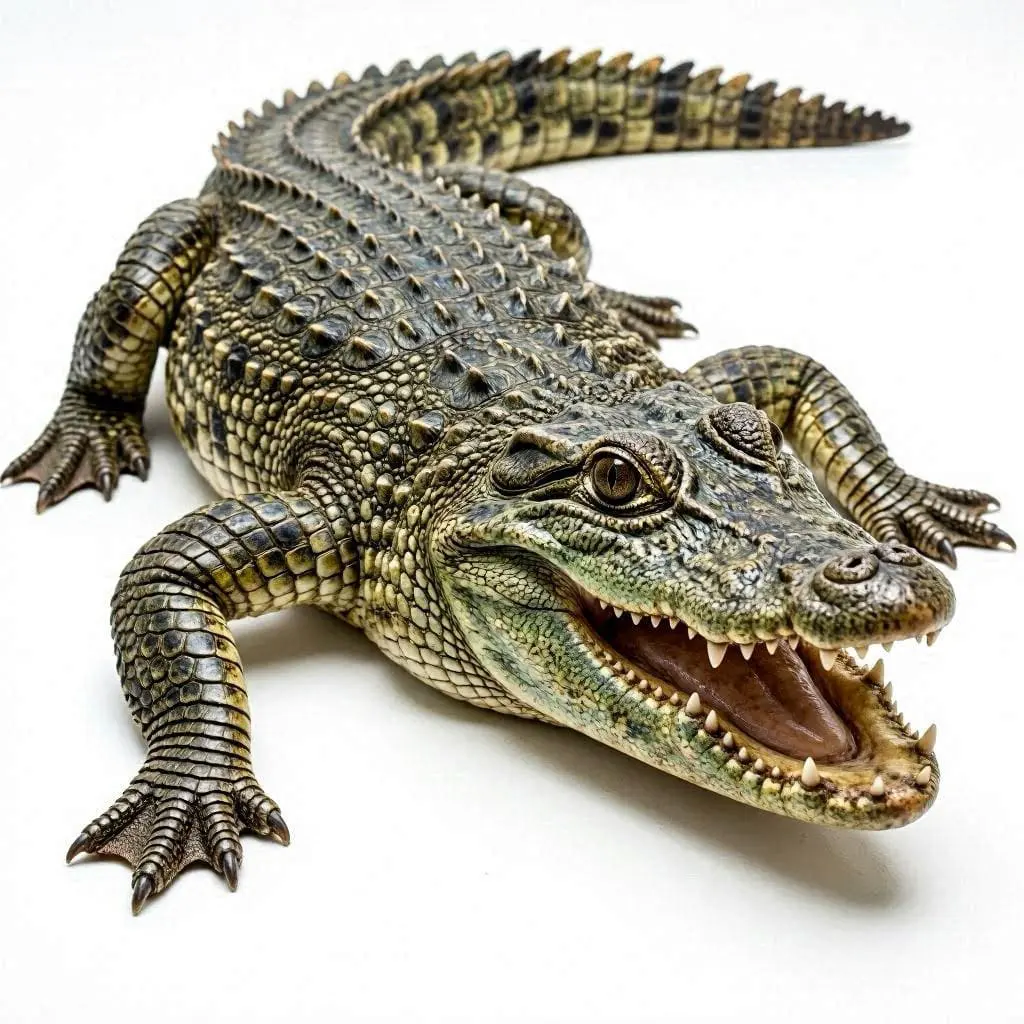
⓲ Crocodile
Type: Reptile
Crocodiles are jungle animals with a strong armored body and powerful jaws designed for hunting. They are ambush predators that wait silently in rivers and swampy jungle waters before attacking.
Where found: Jungle rivers and wetlands in Africa, Asia, and the Americas
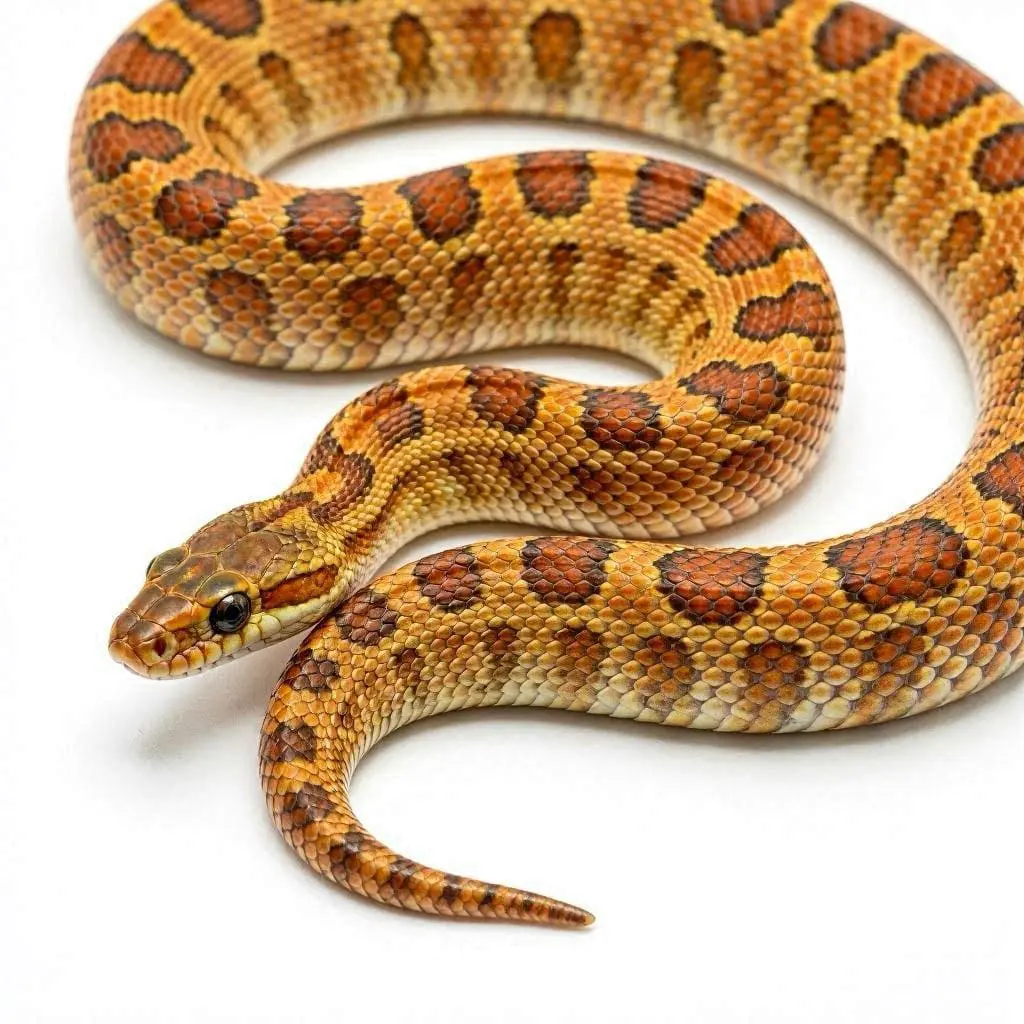
⓳ Snake
Type: Reptile
Snakes are jungle animals with a long, flexible body that allows them to move silently through dense forest areas. They are skilled predators that use stealth and quick strikes to catch their prey.
Where found: Tropical jungles worldwide
Top Jungle Mammals Names in English
Jungle mammals are warm-blooded animals that live in forests and depend on natural habitats for survival. They are strong, intelligent, and play a key role in the jungle ecosystem.
- Lion — A powerful jungle predator that lives in groups called prides and hunts large animals.
- Tiger — A solitary big cat known for its strength, speed, and striped camouflage in dense forests.
- Leopard — A stealthy hunter that climbs trees and drags its prey to safe places.
- Elephant — The largest land mammal with strong memory and social family groups.
- Gorilla — A strong and intelligent primate that lives peacefully in forest groups.
- Chimpanzee — A highly intelligent animal that uses tools and lives in social communities.
- Orangutan — A tree-dwelling ape known for its long arms and calm behavior.
- Sloth Bear — A forest bear that feeds on insects, fruits, and honey.
- Deer — A gentle herbivore that runs fast to escape predators in forests.
- Wild Boar — A strong and adaptable animal that digs forest soil for food.
Top Jungle Birds Names in English
Jungle birds are colorful, intelligent, and important for maintaining forest balance through seed dispersal and insect control.
- Parrot — A colorful bird known for mimicking sounds and human speech.
- Peacock — A beautiful bird famous for its vibrant feather display.
- Hornbill — A large-beaked bird that helps spread forest seeds.
- Macaw — A bright parrot species known for intelligence and loud calls.
- Toucan — A fruit-eating bird with a large, colorful beak.
- Owl — A nocturnal hunter with sharp vision and silent flight.
- Eagle — A powerful bird of prey with excellent eyesight.
- Woodpecker — A bird that pecks trees to find insects inside wood.
- Kingfisher — A fast-diving bird that catches fish near water.
- Vulture — A scavenger bird that cleans the ecosystem by eating dead animals.
Top Jungle Reptiles Names in English
Jungle reptiles are cold-blooded animals that survive in forests, rivers, and wetlands. They are skilled hunters and highly adaptable.
- Python — A large snake that kills prey by squeezing it tightly.
- Cobra — A venomous snake known for its hood and defensive posture.
- Viper — A fast-striking venomous snake found in forests.
- Anaconda — One of the largest snakes that lives in swampy jungles.
- Monitor Lizard — A strong reptile that hunts small animals and eggs.
- Chameleon — A color-changing reptile that blends into surroundings.
- Gecko — A small climbing lizard often seen on trees and walls.
- Crocodile — A powerful water predator with strong jaws.
- Iguana — A herbivorous lizard that lives in tropical forests.
- Komodo Dragon — The largest lizard species and a deadly predator.
Top Jungle Amphibians Names in English
Jungle amphibians are cold-blooded animals that live both in water and on land. They are usually found in moist forests, near rivers, ponds, and rainy environments where they can keep their skin wet for survival.
- Frog — A jumping amphibian that lives near water and helps control insect populations in jungles.
- Toad — A land-based amphibian with dry, bumpy skin often found in forest soil.
- Tree Frog — A small climbing amphibian that lives on trees and leaves in humid jungles.
- Poison Dart Frog — A brightly colored frog with toxic skin used for protection.
- Bullfrog — A large frog known for its deep sound and strong jumping ability.
- Salamander — A lizard-like amphibian that lives in damp forest areas and near streams.
- Newt — A small aquatic amphibian that spends time in both water and land.
- Caecilian — A rare, worm-like amphibian that lives underground in tropical forests.
- Glass Frog — A unique frog with transparent skin that reveals internal organs.
- Mudpuppy — An aquatic salamander that lives in freshwater jungle streams.
Dangerous Jungle Animals
Dangerous jungle animals are powerful wild creatures that can cause harm due to their strength, speed, venom, or defensive nature. They usually live in dense forests and rainforests and are often top predators in the food chain.
Big Cats (Strong Predators):
- Tiger — Silent hunter with powerful speed and strength.
- Lion — Social predator that hunts in groups (prides).
- Leopard — Stealthy climber that attacks quickly and quietly.
- Jaguar — Strong bite force, often hunts near water.
Venomous & Large Snakes:
- Cobra — Venomous snake with a defensive hood display.
- Python — Non-venomous but kills prey by constriction.
- Anaconda — One of the largest snakes, found in swampy jungles.
Reptile Predators:
- Crocodile — Ambush predator with extremely strong jaws.
Large & Defensive Mammals:
- Elephant — Very strong; can become dangerous if threatened.
- Hippopotamus — Highly aggressive and territorial in water.
In short, these animals are dangerous because of their hunting skills, physical power, or defensive behavior. Even though they can be risky, they are very important for keeping the jungle ecosystem balanced.
Rainforest Animals vs Jungle Animals
Rainforest animals are species that live in dense, hot, and highly humid forests with heavy rainfall throughout the year. Jungle animals are creatures that live in thick forest areas that may include both wet and dry environments.
| Feature | Rainforest Animals | Jungle Animals |
|---|---|---|
| Habitat | Dense tropical rainforests | Thick forests and jungles |
| Climate | Hot, wet, high rainfall | Varies (wet and dry forests) |
| Environment | Very humid and evergreen trees | Mixed forest vegetation |
| Movement Style | Mostly tree-dwelling (arboreal) | Mostly ground-based |
| Biodiversity | Extremely high | High but more varied |
| Examples | Sloth, Toucan, Orangutan, Jaguar | Tiger, Elephant, Deer, Leopard |
In short, rainforest animals are highly adapted to wet, tree-dense environments, while jungle animals are adapted to a wider range of forest habitats, including both dense and open woodland areas.
Carnivorous Jungle Animals
Carnivorous jungle animals are meat-eating predators that hunt other animals for survival. They are built for strength, speed, and precision, using sharp teeth, claws, and stealth to capture prey. Their role is essential in controlling animal populations and maintaining balance in the jungle ecosystem.
Examples:
- Tiger
- Leopard
- Jaguar
- Crocodile
- Snake
Key points:
- Meat-eating animals (predators)
- Skilled hunters using speed, strength, or camouflage
- Use strategies like ambush, stalking, and sudden attack
- Help maintain balance in the food chain
Herbivorous Jungle Animals
Herbivorous jungle animals are plant-eating creatures that depend on grass, leaves, fruits, and bark for survival. They are generally calm and form the base of the jungle food chain by supporting carnivores and maintaining vegetation balance.
Examples:
- Elephant
- Deer
- Zebra
- Rhinoceros
Key points:
- Essential for ecosystem stability
- Plant-eating animals
- Important for seed dispersal and plant control
- Mostly peaceful and herd-living species
Omnivorous Jungle Animals
Omnivorous jungle animals are creatures that eat both plants and animals. This flexible diet helps them survive in different environments, especially when food is limited. They are adaptable and can switch between fruits, leaves, insects, and small animals depending on availability.
Examples:
- Bear
- Monkey
- Chimpanzee
- Wild boar
- Orangutan
Key points:
- Eat both plants and meat
- Highly adaptable feeders
- Survive in changing food conditions
- Play an important role in seed dispersal and insect control in the jungle ecosystem
Jungle Animals Names for Kids
Here is a simple and easy table of jungle animals names for kids, along with their type and food habits:
| Animal | Type | Food |
|---|---|---|
| Lion | Carnivore | Meat |
| Tiger | Carnivore | Meat |
| Elephant | Herbivore | Plants, Grass |
| Monkey | Omnivore | Fruits, Insects |
| Deer | Herbivore | Grass, Leaves |
| Zebra | Herbivore | Grass |
| Bear | Omnivore | Fruits, Fish, Meat |
| Giraffe | Herbivore | Leaves |
| Leopard | Carnivore | Meat |
| Crocodile | Carnivore | Fish, Meat |
In short, these jungle animals live in different forests and help keep nature balanced. Each one plays an important role in the ecosystem, making jungles healthy and full of life.
Conclusion
Jungle wildlife shows a remarkable variety of animals, ranging from powerful predators to peaceful plant-eaters. This diversity helps maintain a stable and balanced ecosystem where every species has an important role.
Protecting these animals is essential for preserving nature and ensuring ecological balance for the future. They are also highly valuable for learning, especially for students and children who can better understand nature through them.
Share this article with animal lovers and students.
FAQs
Jungles are home to a wide variety of animals including big cats like tigers and leopards, large mammals like elephants, herbivores such as deer and zebras, reptiles like crocodiles and snakes, and many species of monkeys and birds. Each of these animals is adapted to survive in dense forest environments.
The most dangerous jungle animals are usually large predators and venomous species. Tigers are considered one of the most dangerous due to their strength and hunting ability. Venomous snakes and crocodiles are also highly dangerous because of their poison and powerful attacks.
Jungle animals and forest animals are often similar, but not exactly the same. Jungle animals typically live in dense, wild, and sometimes tropical areas, while forest animals may also include species from cooler or less dense woodland regions. However, many animals can be found in both habitats.
Elephants are generally considered the strongest jungle animals due to their massive size and physical power. Among predators, tigers are also extremely strong and powerful hunters with great muscle force and hunting skills.
Jungle animals eat different types of food depending on their category. Herbivores eat plants, leaves, and fruits, carnivores eat meat from other animals, and omnivores eat both plants and animals. This variety helps maintain balance in the jungle ecosystem.
- 45+ Vertebrate Animals Names with Pictures
- 50+ Nocturnal Animals Names with Pictures
- Desert Animals Names in English with their Pictures
Jungle Animals Quiz
Jungle Animals
Which animal does the picture show?
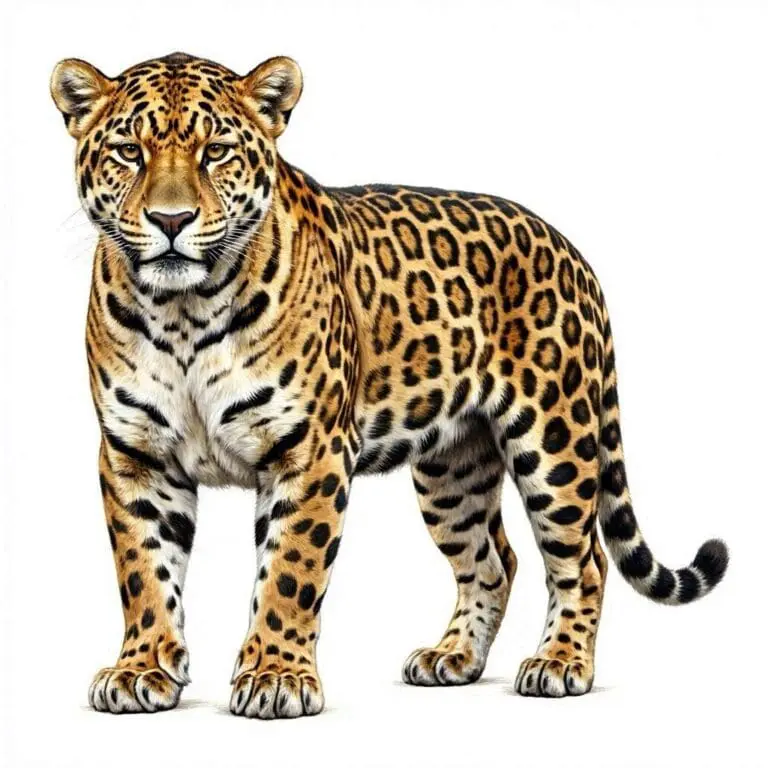
The picture shows a jaguar.
Read the picture before reading the options.
The picture shows a jaguar.
Which big cat is the top predator of South American jungle?
Powerfully built and comfortable in water, unlike most cats.
Match the predator to the continent.
The jaguar kills with a bite through the skull.
Why are so many jungle animals loud?
Howler monkeys and cicadas both broadcast where seeing is impossible.
When you cannot be seen, be heard.
A howler's call carries where nothing is visible past ten metres.
Name the snake.
The heaviest snake in the world, found in South American swamps and rivers, is the green ___.
It is a constrictor, and its weight is supported by water for much of the time.
Longest and heaviest snake are different species.
The reticulated python is longer; the anaconda is heavier.
Why do many jungle frogs breed in water trapped in plants?
Bromeliads hold small pools that fish and most predators never reach.
A small safe pool beats a large dangerous one.
Poison dart frogs carry tadpoles to individual bromeliad pools.
Three of these live in tropical jungle. Which does not?
A high-altitude animal of Central Asian mountains.
Coat thickness is a fair clue to climate.
The snow leopard's coat would be fatal in the tropics.
Turn on JavaScript for the interactive quiz. The full practice set is shown above.