Albino animals names have fascinated people for centuries. Their pale skin, white fur or feathers, and pink or red eyes make them stand out sharply against the natural world around them. But albinism is more than just a striking appearance. It is a genetic condition that affects animals across almost every species, from mammals and birds to reptiles, amphibians, and fish.
This article explains what albinism actually is, why it happens, how it affects an animal’s life in the wild, and some of the most notable albino animals names ever recorded.
What Is Albinism in Animals?
Albinism is a genetic condition caused by a mutation that prevents the body from producing melanin, the pigment responsible for coloring skin, hair, fur, feathers, and eyes. Melanin is produced by cells called melanocytes, and in albino animals, these cells either fail to produce pigment or cannot produce it at all due to a missing or malfunctioning enzyme called tyrosinase.
Because melanin also plays a role in eye development, many albino animals have pink or red eyes. This happens because the blood vessels in the eye become visible through the iris, which lacks the pigment that would normally mask them.
Albinism is inherited genetically and is typically recessive. This means both parents must carry the gene for an offspring to be born albino, even if neither parent shows visible signs of the condition themselves.
Explore more animals that start with different letters
A | B | C | D | E | F | G | H | I | J | K | L | M | N | O | P | Q | R | S | T | U | V | W | X | Y | Z
Top 10 Rarest Albino Animals Names with Pictures
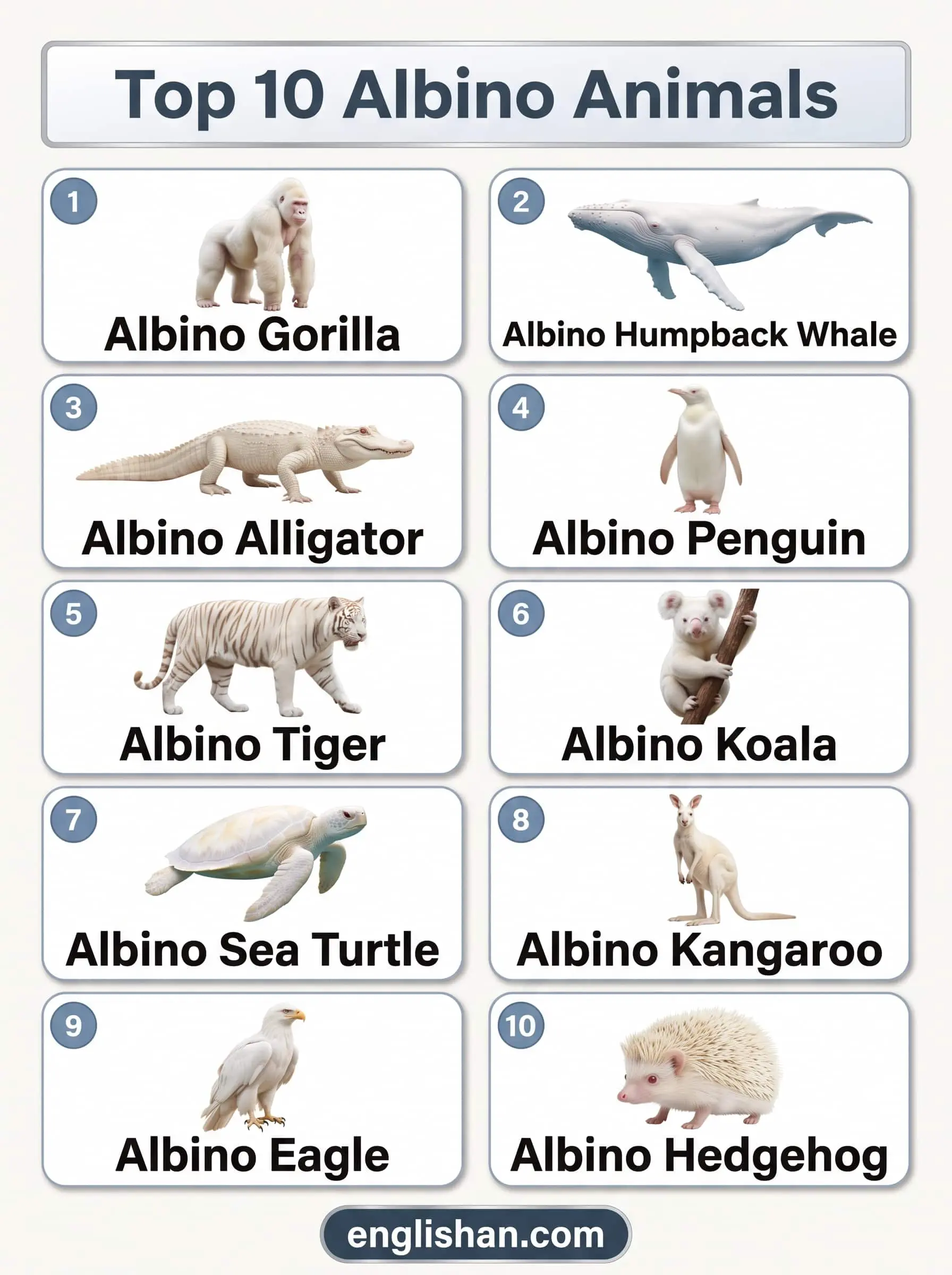
Some albino animals are so rarely documented that each confirmed sighting becomes a major event among researchers and wildlife photographers. Here are ten of the rarest albino animals recorded:
❶ Albino Gorilla
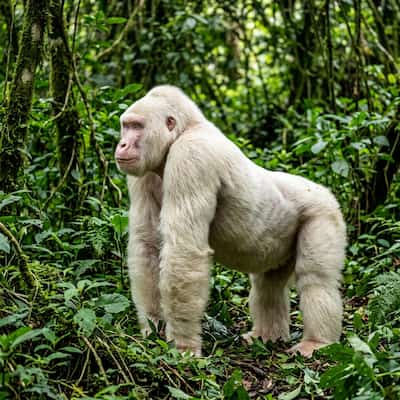
Snowflake, the only known albino gorilla in recorded history, remains a one-of-a-kind case in primate research. Born in Equatorial Guinea, he lived at the Barcelona Zoo, where scientists studied his rare genetic condition for decades. His lack of melanin made him highly sensitive to sunlight, and he later developed skin cancer, highlighting one of the biggest challenges faced by albino animals.
❷ Albino Humpback Whale
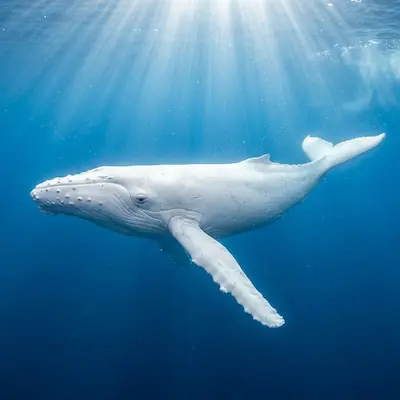
Sightings of albino humpback whales are exceptionally rare, with the most famous example being a whale named Migaloo off the coast of Australia. Its brilliant white coloration makes it easy to recognize among migrating whales. Because humpback whales travel across vast oceans and spend much of their lives underwater, confirmed sightings of true albino individuals remain extremely uncommon.
❸ Albino Alligator
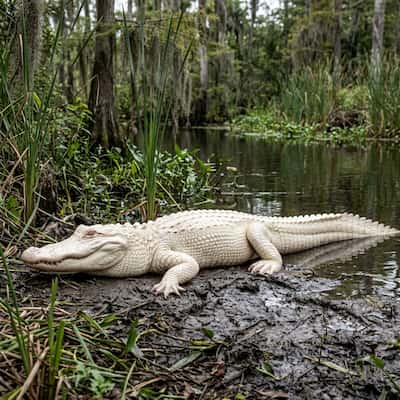
Albino alligators are among the rarest reptiles in the world and are almost never found surviving in the wild. Their white skin and pink eyes make them highly visible to predators, while their lack of pigment leaves them vulnerable to intense sunlight. Most known albino alligators live in zoos and wildlife conservation centers where they receive specialized care.
❹ Albino Penguin
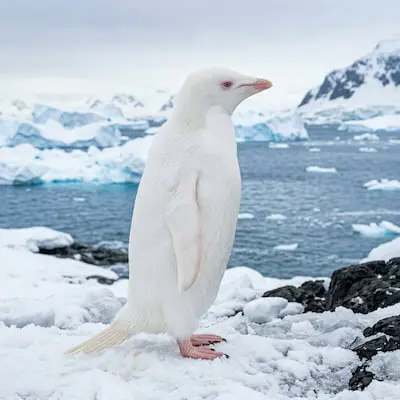
Albino penguins have been recorded only a handful of times in wild colonies, making them one of the rarest albino birds. Their white feathers reduce their natural camouflage, making them easier targets for predators such as leopard seals. Many also suffer from poor eyesight, which further lowers their chances of surviving to adulthood.
❺ Albino Tiger
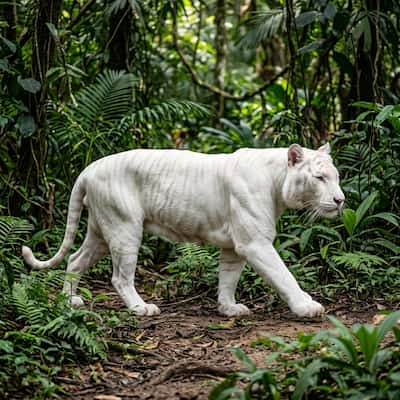
True albino tigers are incredibly rare and are often confused with white tigers, which are not albino. Unlike white tigers that usually have blue eyes and black stripes, albino tigers would lack normal pigmentation almost entirely. There are almost no confirmed sightings of true albino tigers in the wild.
❻ Albino Koala
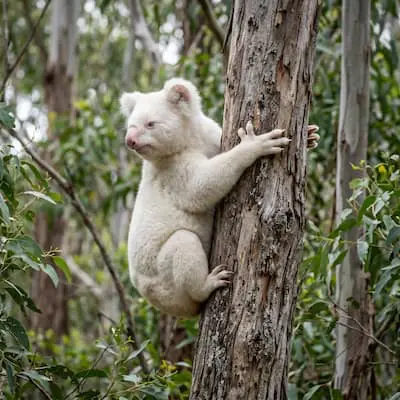
Albino koalas are extremely uncommon, with only a small number of confirmed cases recorded in Australia. Their white fur and pink eyes result from a complete lack of melanin rather than normal color variation. Most known albino koalas have been observed in wildlife parks or rehabilitation centers rather than in the wild.
❼ Albino Sea Turtle
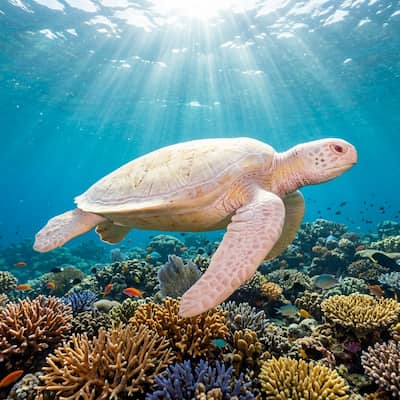
Albino sea turtles are exceptionally rare because hatchlings with albinism face enormous survival challenges from the moment they emerge from their nests. Their pale bodies make them easy prey for birds, fish, and other predators before they even reach the ocean. As a result, sightings of adult albino sea turtles are almost unheard of.
❽ Albino Kangaroo
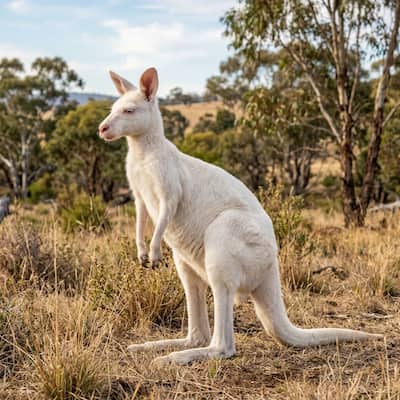
Albino kangaroos are among Australia’s rarest mammals, with only a few known individuals living in wildlife parks and protected areas. Their bright white fur makes it difficult to hide from predators in natural habitats. Although they occasionally survive in the wild, most documented albino kangaroos are found in captivity.
❾ Albino Eagle
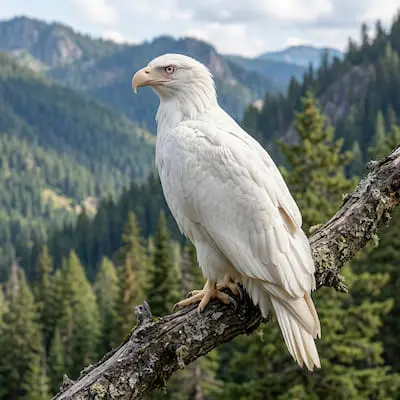
Albino eagles are rarely documented because albinism affects both their camouflage and eyesight. As birds of prey, eagles rely heavily on excellent vision to locate and catch food, making reduced eyesight a major disadvantage. This combination of poor hunting ability and high visibility contributes to their extreme rarity.
❿ Albino Hedgehog
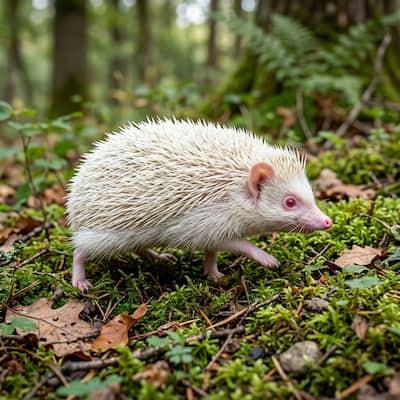
Albino hedgehogs are relatively common in captivity due to selective breeding for the pet trade, but they are rarely seen in the wild. Their white spines and pink eyes make them much easier for predators to spot, especially at night. Consequently, truly wild albino hedgehogs are seldom recorded and have much lower survival rates than normally colored individuals.
Albino Animals Names by Category
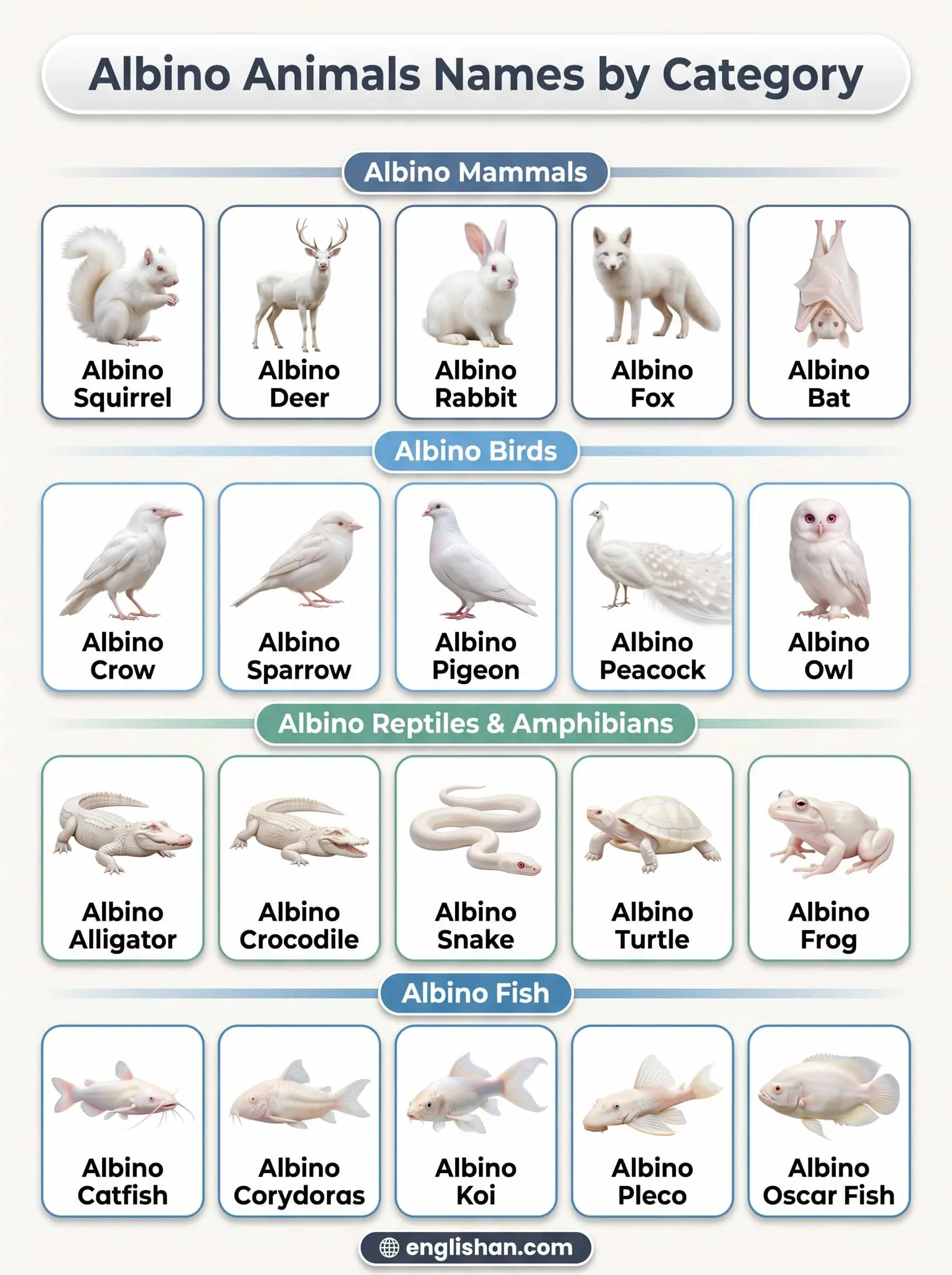
Albino animals names belong to many different species around the world. Explore the most notable examples by category below.
Albino Mammals
Albino mammals have white fur and pink or red eyes due to the absence of melanin. Their bright appearance makes them easy for predators to spot in the wild.
- Albino Squirrel – A rare white squirrel found in forests and urban parks.
- Albino Deer – A striking white deer that is considered rare and protected in some regions.
- Albino Rabbit – A rabbit with white fur and pink eyes, seen in both the wild and captivity.
- Albino Fox – An extremely uncommon fox with white fur caused by albinism rather than seasonal color changes.
- Albino Bat – A rare bat with pale skin and fur that has been documented in several bat species.
Albino Birds
Albino birds lack pigment in their feathers, beaks, and eyes, making them highly visible and more vulnerable to predators.
- Albino Crow – A rare white crow that stands out sharply against dark surroundings.
- Albino Sparrow – A small songbird with white feathers and pink eyes.
- Albino Pigeon – A completely white pigeon with red or pink eyes caused by albinism.
- Albino Peacock – A rare peacock whose white plumage results from albinism instead of normal coloration.
- Albino Owl – An exceptionally rare owl with white feathers and reduced camouflage.
Albino Reptiles and Amphibians
Albino reptiles and amphibians often have pale skin and red or pink eyes. They are especially sensitive to sunlight because they lack protective pigment.
- Albino Alligator – One of the world’s rarest reptiles, mostly found in zoos and conservation centers.
- Albino Crocodile – A very uncommon crocodile with pale scales and pink eyes.
- Albino Snake – A snake with white, cream, or yellow coloration, commonly seen in captive breeding.
- Albino Turtle – A turtle with a pale shell and skin, occasionally found in the wild.
- Albino Frog – A frog lacking normal pigmentation, making it highly visible to predators.
- Albino Salamander – A rare amphibian with a pale body and pink eyes.
Albino Fish
Albino fish are common in aquariums but much rarer in natural waters, where their white coloration makes them easy targets.
- Albino Catfish – A popular freshwater fish with a creamy white body and red eyes.
- Albino Corydoras – A peaceful aquarium fish known for its pale color and active behavior.
- Albino Koi – A white ornamental koi valued for its unique appearance in garden ponds.
- Albino Pleco – A pale algae-eating fish often kept in freshwater aquariums.
- Albino Oscar Fish – A large cichlid with white and orange coloration popular among fish keepers.
- Albino Rainbow Shark – A rare aquarium fish with a light-colored body and distinctive fins.
Famous and Notable Albino Animals Names
Every so often an albino animal becomes famous enough to have its own Wikipedia page, and it is usually because of just how rare true albinism is:
- Snowflake the Gorilla lived at the Barcelona Zoo and remains the only confirmed albino gorilla in recorded history. He is still one of the most studied and photographed albino primates ever documented.
- Albino alligators live in select zoos and wildlife parks around the world, kept there largely because they would not survive long in a natural wetland environment.
- Albino peacocks are often mistaken for a separate species thanks to their pure white feathers, but they are simply albino or leucistic variants of the same peacock you would see with full color.
- Albino squirrels have turned into genuine local celebrities in several towns across North America, some of which have passed local ordinances specifically to protect them.
Albinism vs Leucism: Understanding the Difference
Albinism is often confused with a similar condition called leucism, but the two are not the same thing.
- Albinism affects melanin production throughout the entire body, including the eyes. This is why true albino animals almost always have pink or red eyes.
- Leucism causes a partial or complete loss of pigmentation in skin, fur, or feathers, but it does not affect the eyes. Leucistic animals usually have normal, dark colored eyes.
This distinction is important because many animals mistakenly labeled as albino online are actually leucistic. A white tiger with blue eyes, for example, is not a true albino but rather an animal with a different pigmentation mutation altogether.
Can Albino Animals Survive in Captivity?
This is where things get a lot more hopeful. Albino animals tend to do far better in controlled environments like zoos, sanctuaries, and wildlife rehabilitation centers. Take away the constant threat of predators, provide protection from harsh sunlight, and suddenly a lot of the disadvantages that make survival so hard in the wild simply disappear. That is a big part of why so many of the most famous albino animals, from Snowflake the gorilla to the alligators in captive breeding programs, are living in zoos rather than out in nature.
Caretakers at these facilities also tend to take extra precautions, like providing shaded enclosures and monitoring skin health more closely, since albino animals are more prone to sunburn and related skin issues than their normally pigmented counterparts.
The Cultural and Historical Significance of Albino Animals
It is worth mentioning that albino animals have carried real cultural weight in a lot of societies, not just scientific curiosity. White animals of all kinds, whether truly albino or leucistic, have often been treated as sacred, lucky, or symbolically important across various cultures and traditions throughout history. White buffalo, for example, hold deep spiritual significance in several Native American traditions. Albino deer have inspired folklore and protective local customs in parts of Europe and North America. Even albino alligators and albino peacocks tend to draw an almost mythical level of fascination whenever they are spotted, well beyond what you would expect from a simple genetic mutation.
Why Albinism Is Rare in the Wild?
You would think albino animals names would turn up more often, given how many species can technically carry the gene. They do not, for two main reasons.
First, the recessive inheritance pattern limits how often the trait shows up, since both parents need to be carriers. Second, and more importantly, survival is hard. Melanin does more than color skin. It blocks ultraviolet damage, supports camouflage, and in many species plays a direct role in eye function. Strip that away and an animal faces several disadvantages at once:
- Poor camouflage, which makes them an easy spot for predators
- Sensitive skin, which leaves them more prone to sunburn and skin damage
- Weak eyesight, since melanin plays a role in normal eye development
- Trouble finding mates, since unusual coloring can throw off social and mating behavior in some species
Put all of that together and it is easy to see why most albino animals simply do not make it long enough in the wild to pass the gene on again. That is the real reason the trait stays rare, not because the gene itself is unusually uncommon.
Common Misconceptions About Albino Animals
A lot of people assume that any white animal must be albino, but that is not accurate at all. White coloring can come from several completely different genetic conditions, including leucism, piebaldism, and even seasonal color changes that happen naturally in species like the arctic fox or snowshoe hare. True albinism is specifically tied to a full absence of melanin production, and it is almost always confirmed by those telltale pink or red eyes.
Another misconception worth clearing up is the idea that albino animals belong to a separate species altogether. They do not. Albinism can appear in virtually any species, and an albino animal is simply a regular member of its species carrying a rare genetic mutation, nothing more exotic than that.
Conclusion
Albino animals names sit at this interesting crossroads between biology and folklore. Their lack of pigmentation creates very real survival challenges, yet it has also made them objects of fascination, protection, and even reverence across cultures for generations. Understanding the actual science behind albinism, and knowing how to tell it apart from lookalike conditions like leucism, helps separate the myths from the biology and gives a much clearer picture of just how delicate the balance between genetics and survival really is in the natural world.
FAQs
Not always, but many do have significantly reduced vision. Melanin plays an important role in how the eyes develop, so albino animals often deal with light sensitivity and poorer depth perception compared to normally pigmented individuals.
Yes, in most cases albinism does not affect fertility. The bigger challenge is simply surviving long enough in the wild to reach reproductive age.
In the wild, generally yes, mainly due to predation and sun exposure. In captivity, with proper care, many albino animals live lifespans comparable to their normally pigmented relatives.
Documented cases tend to be more common in species that are heavily studied or bred in captivity, like snakes, mice, and rabbits, simply because there are more opportunities to observe it. In the wild, it remains rare across virtually every species.
Yes, and this actually happens more often than people expect. Since albinism is recessive, two normally colored parents can each carry a single copy of the mutated gene without showing any signs of it. When both parents happen to pass that copy on, the offspring ends up albino even though neither parent looked any different.
Generally yes, especially in habitats where color is the main form of camouflage. A white coat or pale skin stands out sharply against green forests, brown plains, or blue water, which makes albino animals easier to spot and easier to catch compared to their normally colored relatives.
They can, and it is actually one of the bigger health risks associated with the condition. Without melanin to help block ultraviolet rays, albino animals are more prone to sunburn and skin damage, and in some documented cases, like Snowflake the gorilla, that sun exposure eventually led to skin cancer.
It varies a lot by species, but as a general estimate, true albinism is thought to affect somewhere between one in 10,000 and one in a few hundred thousand individuals depending on the species, with far higher odds in commonly bred animals like mice or snakes than in large wild mammals or marine species.
You May Also Like
- 60+ Zoo Animals Names with Pictures
- 90+ Dangerous Animals Names
- 70+ Animals and Their Lifespan with Pictures
Albino Animals Quiz
Albino Animals
What is albinism?
The eyes appear pink or red because blood vessels show through the unpigmented iris.
Check the eyes: pink means albino.
A white animal with dark eyes is not albino.
What is leucism?
The white peacock and many white blackbirds are leucistic, not albino.
Leucism affects the skin and feathers, not the eyes.
A white peacock has normal blue-grey eyes.
Name the condition.
An unusually dark or black individual of a normally lighter species shows ___.
A black panther is a melanistic leopard or jaguar, and its rosettes are still visible in the right light.
Melanism is the opposite of albinism.
There is no separate species called a black panther.
Why do albino animals rarely survive long in the wild?
Melanin is involved in eye development, so vision is usually affected as well.
The problem is visibility plus vision, not the colour alone.
An albino animal is easy to see and sees poorly.
Why are white tigers not a separate subspecies?
Nearly all in captivity descend from one animal, and heavy inbreeding follows.
A colour variant is not a subspecies.
White tigers carry serious inherited health problems.
Turn on JavaScript for the interactive quiz. The full practice set is shown above.