A liger, a mule, a wholphin. Each one sounds almost made up, yet all three are real animals born from crossing two different species. Hybrid animals names have a strange way of capturing our imagination, probably because they raise such a simple but fascinating question: what actually happens when two different species come together?
In this article, we will get into what hybrid animals names really are, how the biology behind hybridization actually works, some of the most well known examples on land and in the ocean, and the ethical and ecological debates that come along with them. By the end you should have a genuinely solid understanding of hybrids, not just a list of fun facts.
What Is a Hybrid Animal?
A hybrid animal is simply the offspring produced when two different species, or sometimes two different subspecies, mate and successfully produce living offspring. Here is what determines whether it actually works:
- Hybrids form naturally when two related species share the same territory, or through deliberate human breeding in captivity
- The two parent species usually need to be fairly closely related, generally meaning a similar chromosome count and a recent shared ancestor
- The farther apart two species are genetically, the less likely they are to produce offspring at all
- Even when offspring are produced, they are frequently unable to reproduce on their own
Explore more animals that start with different letters:
A | B | C | D | E | F | G | H | I | J | K | L | M | N | O | P | Q | R | S | T | U | V | W | X | Y | Z
How Hybridization Actually Works?
Genetic compatibility is really the whole story here:
- Every species carries a specific number of chromosomes, and successful reproduction generally depends on the parent species having matching or closely aligned counts
- When two species with mismatched chromosome numbers mate, offspring can still be born, but it often cannot produce viable sperm or eggs of its own, which leaves it infertile
- This is exactly the case with mules: horses carry 64 chromosomes while donkeys carry 62, and the resulting mule ends up with an odd 63, which cannot pair up properly during reproduction, making mules almost always sterile
- Not every hybrid ends up infertile, though. Hybrids formed between closely related subspecies, especially within the same genus, sometimes reproduce just fine, as seen in certain wolf and dog hybrids
Full List of Hybrid Animal Names in English
For a quick reference, here are the parent species behind some of the most searched hybrid animal names:
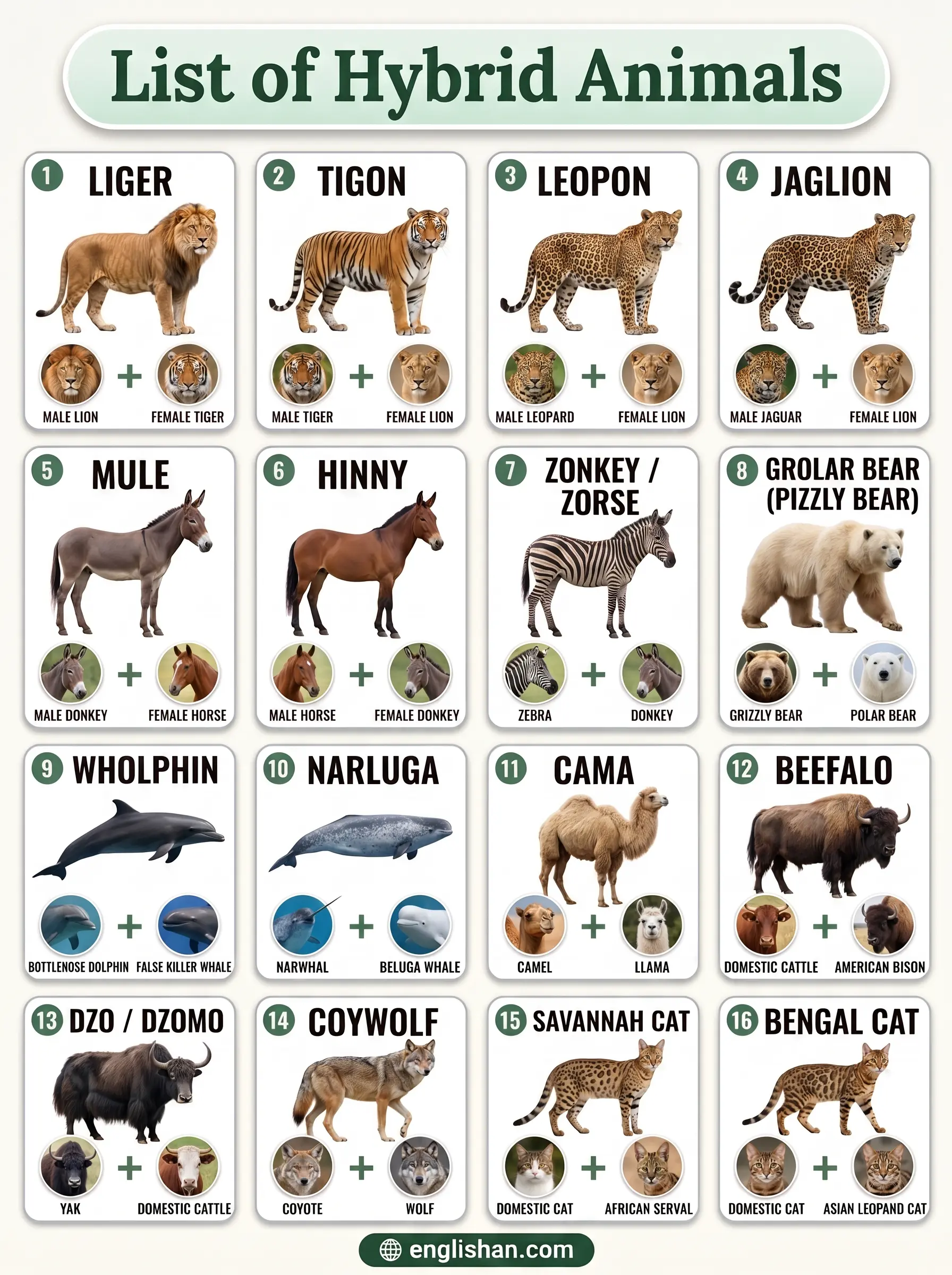
- Liger: male lion and female tiger
- Tigon: male tiger and female lion
- Leopon: male leopard and female lion
- Jaglion: male jaguar and female lion
- Mule: male donkey and female horse
- Hinny: male horse and female donkey
- Zonkey or zorse: zebra crossed with a donkey or horse
- Grolar or pizzly bear: grizzly bear and polar bear
- Wholphin: bottlenose dolphin and false killer whale
- Narluga: narwhal and beluga whale
- Cama: camel and llama
- Beefalo: domestic cattle and American bison
- Dzo or dzomo: yak and domestic cattle
- Coywolf: coyote and wolf
- Savannah cat: domestic cat and African serval
- Bengal cat: domestic cat and Asian leopard cat
- Blood parrot cichlid: Midas cichlid and redhead cichlid
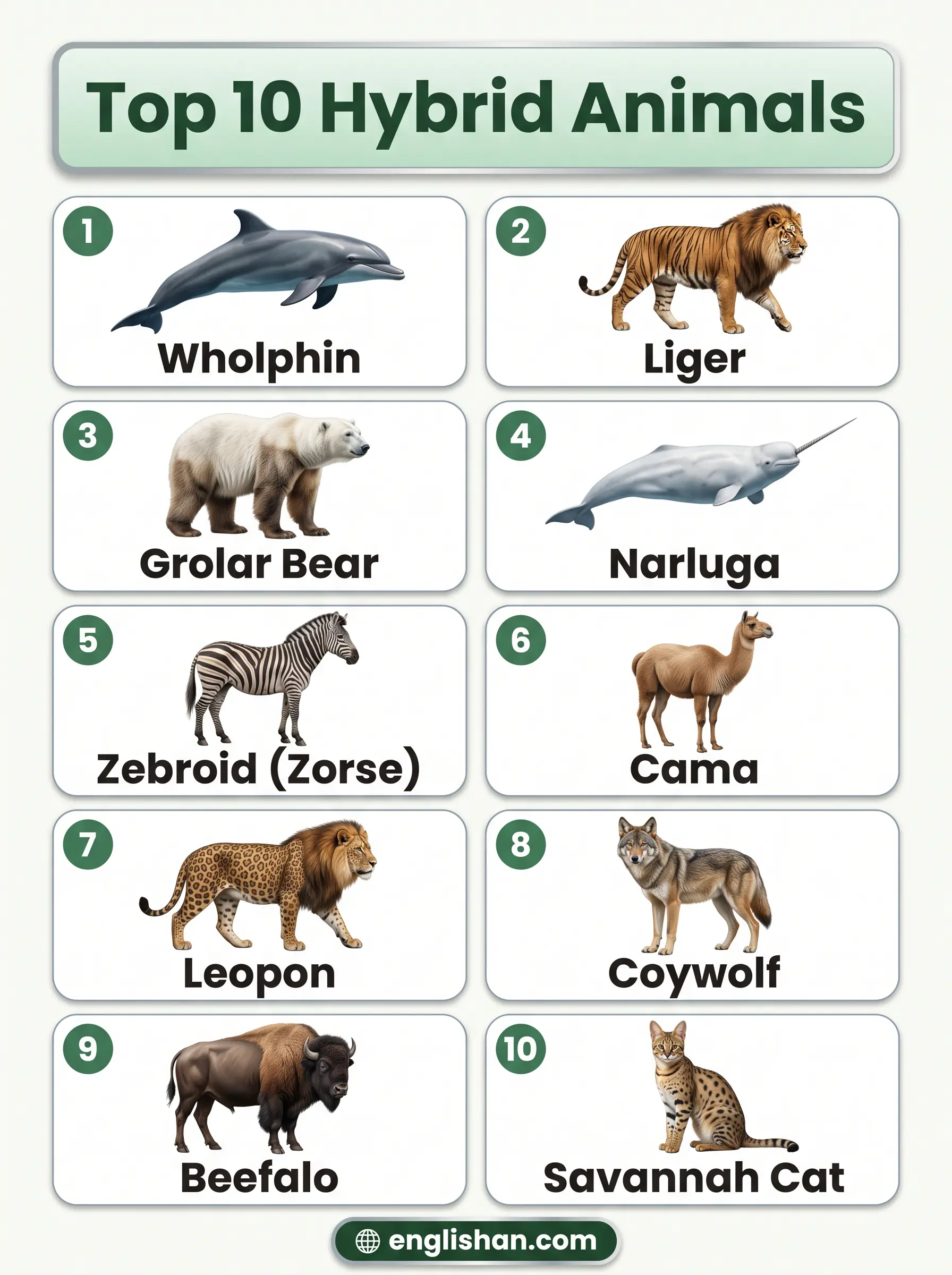
Top 10 Rarest Hybrid Animals Names with Pictures
Mules and beefalo are common enough that you could probably find one without much trouble, but a handful of other hybrids are so rare that only a few confirmed cases exist anywhere in the world.
❶ Wholphin
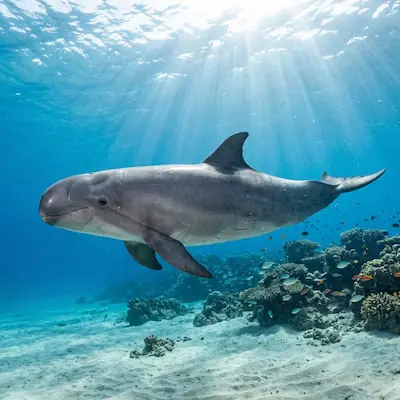
A wholphin is an exceptionally rare hybrid between a bottlenose dolphin and a false killer whale. Despite the name, the false killer whale is actually a member of the dolphin family, making this cross biologically possible. Only a handful of wholphins have ever been documented, with the best-known individual, Kekaimalu, born at Sea Life Park in Hawaii.
❷ Liger
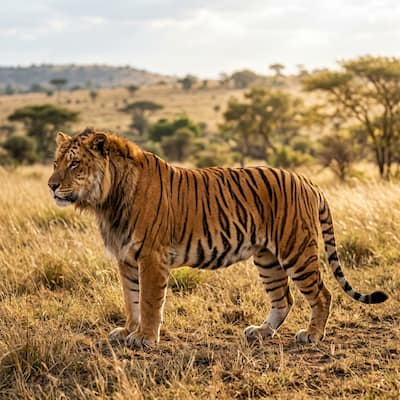
The liger is a hybrid between a male lion and a female tiger and is the largest cat hybrid ever recorded. Because lions and tigers rarely meet in the wild today, ligers exist almost exclusively in captivity. They often grow larger than either parent species due to unique genetic factors that influence growth.
❸ Grolar Bear (Pizzly Bear)
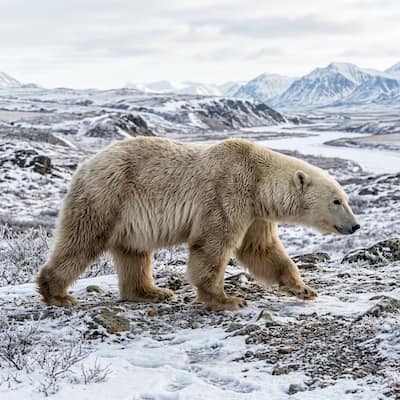
The grolar bear, also known as the pizzly bear, is a rare natural hybrid between a grizzly bear and a polar bear. A 2024 genetic study analyzing more than 800 wild bears confirmed only eight known hybrids, all descended from the same female polar bear. Despite concerns that climate change might increase hybridization, confirmed wild grolar bears remain exceptionally rare.
❹ Narluga
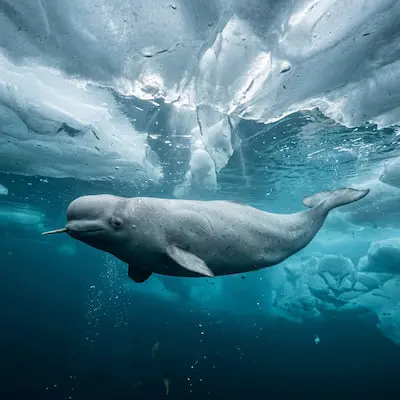
A narluga is an extremely rare hybrid between a narwhal and a beluga whale. Scientists first confirmed its existence through DNA testing and the analysis of an unusual skull rather than direct observation in the wild. The hybrid combines physical features from both Arctic whale species, making it one of the rarest marine mammals ever identified.
❺ Zebroid (Zorse or Zonkey)
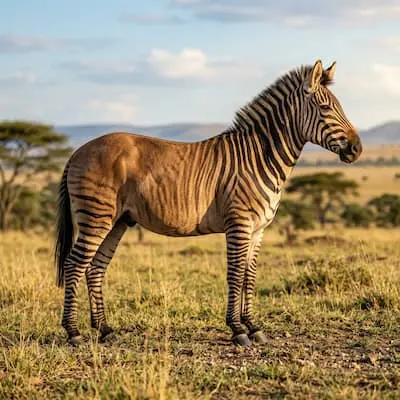
A zebroid is a hybrid created by crossing a zebra with either a horse or a donkey. Depending on the parents, the offspring may be called a zorse or a zonkey. Most zebroids are produced through controlled breeding because zebras and other equines rarely interbreed naturally in the wild.
❻ Cama
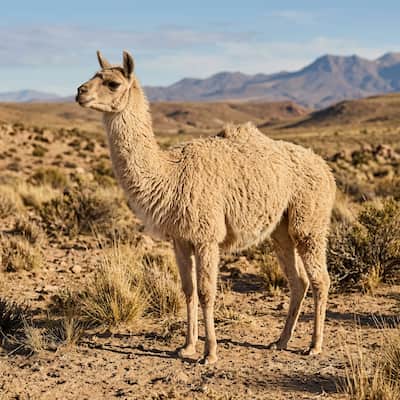
The cama is a hybrid between a camel and a llama, produced through artificial insemination because the large size difference between the two species prevents natural mating. The first successful cama was born in Dubai in 1998 as part of a breeding research program. Camas were developed to combine the strength of camels with the smaller size and gentler temperament of llamas.
❼ Leopon
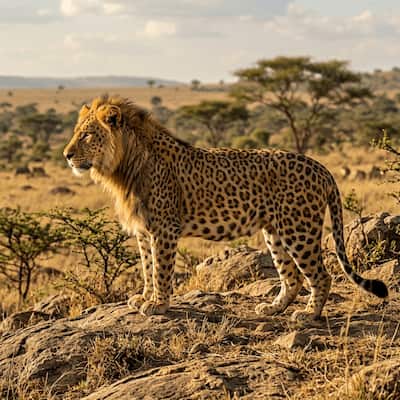
A leopon is an extremely rare hybrid produced by crossing a male leopard with a female lion. Only a few documented leopons have ever existed, most of them born in zoos during experimental breeding programs. They typically display a lion-like body combined with leopard-style spots and climbing abilities.
❽ Coywolf
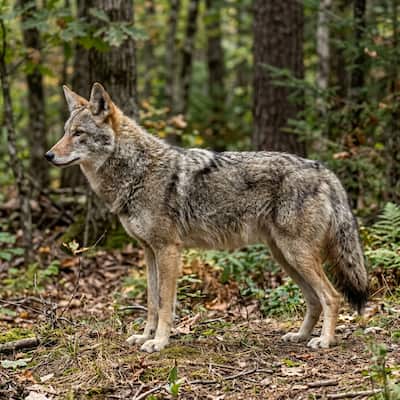
The coywolf is a naturally occurring hybrid between coyotes and wolves that has become established in parts of North America. These adaptable hybrids often combine the intelligence and flexibility of coyotes with the larger size of wolves. Although increasingly common in some regions, coywolves remain relatively rare on a global scale.
❾ Beefalo
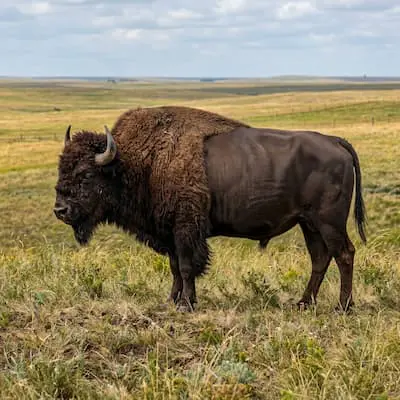
Beefalo is a fertile hybrid between domestic cattle and the American bison, developed primarily for agricultural purposes. Breeders created beefalo to combine the hardiness of bison with the meat production qualities of cattle. Outside specialized breeding programs, beefalo remain relatively uncommon.
❿ Savannah Cat
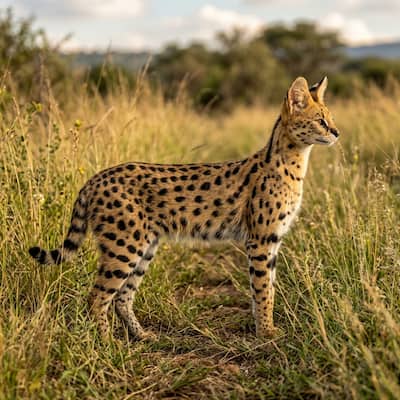
The Savannah cat is a hybrid between a domestic cat and the African serval. Its tall build, long legs, and distinctive spotted coat give it the appearance of a small wild cat while retaining many domestic traits. Because breeding servals with domestic cats is challenging, especially in the early generations, Savannah cats remain relatively rare and highly sought after.
How Hybrid Animals Get Their Names?
Hybrid animal names in English almost always follow the same naming convention: the father’s species contributes the first half of the name, and the mother’s species contributes the second half. This is why swapping which parent is male and which is female actually produces a different name entirely, not just a different individual:
- A liger has a lion father and a tiger mother, while a tigon has a tiger father and a lion mother
- A mule has a donkey father and a horse mother, while a hinny has a horse father and a donkey mother
- A pizzly bear has a polar bear father and a grizzly bear mother, while a grolar bear has a grizzly bear father and a polar bear mother
- A zonkey or zorse simply describes any zebra cross, with the exact name shifting slightly depending on which equine species is involved
This naming pattern makes it easier to search for hybrid animal names in English, since most terms are portmanteaus, blends of the two parent species’ names, built in a consistent order.
Natural Hybrids vs Human Bred Hybrids
Hybrid animals generally fall into two broad camps:
- Natural hybrids form when two species share overlapping territory and interbreed on their own, without human involvement. This is more common than most people assume, and it shows up among various birds, fish, and larger mammals whenever habitats shift, often because of climate change or human development pushing previously separated species into contact for the first time.
- Human bred hybrids are created on purpose, usually in zoos, private breeding operations, or agricultural settings. These are typically bred for novelty, research, or specific traits like size, temperament, or appearance, and most of the famous hybrids you have probably heard of fall squarely into this category.
Are Hybrid Animals Healthy?
This one really depends on the species involved:
- Some hybrids, like mules, tend to be perfectly healthy and long lived despite their infertility
- Others, particularly big cat hybrids like ligers, can run into real health complications such as accelerated growth, joint problems, and shorter lifespans, largely because of the unusual genetic interactions that come from combining two species that were never meant to breed together in nature
- Because hybridization is not something that naturally occurs between distantly related species, human bred hybrids are sometimes linked to more health risks compared to animals bred within a single species
- This is one reason why some veterinarians and geneticists remain cautious about intentionally breeding certain exotic hybrids in the first place
How Hybrid Animals Are Bred in Captivity
For hybrids that do not occur naturally, breeders rely on a fairly consistent process:
- Close monitoring of the female’s reproductive cycle to time pairings correctly
- Careful pairing of genetically compatible individuals
- Artificial insemination in cases where natural mating is not physically possible, as with cama breeding between camels and llamas
- Additional scrutiny from wildlife regulators and animal welfare organizations, since intentionally creating an animal that cannot exist in the wild raises questions that do not come up with more typical captive breeding programs
Ethical and Ecological Concerns
Breeding hybrids like ligers tends to stir up real ethical debate:
- Critics argue that breeding animals purely for novelty can cause serious health problems without offering any real conservation benefit
- Since ligers do not exist in the wild, some conservationists argue the resources spent breeding them would be better spent protecting genuinely endangered purebred species instead
- There is an ecological angle too: as habitats shift due to climate change and development, some wild populations are coming into contact more often, and natural hybridization follows in certain cases
- This raises a concern called genetic dilution, where a distinct species could gradually disappear as its gene pool blends into a closely related neighbor
- As the grolar bear research shows, this shift is not happening uniformly across every species, so it is worth evaluating case by case rather than assuming it everywhere
Famous Hybrid Animals Names
- Ligers and tigons: a liger is the offspring of a male lion and a female tiger, while a tigon is the reverse cross of a male tiger and a female lion. Ligers happen to be the largest cats in the world, often growing noticeably bigger than either parent species thanks to a genetic quirk where growth inhibiting genes from the tiger side simply do not get fully expressed. Tigons, interestingly, tend to end up smaller than either parent instead.
- Mules and hinnies: as covered above, a mule comes from a female horse and male donkey, while a hinny is the less common reverse cross of a male horse and female donkey. Mules have been prized for their strength, endurance, and calm temperament for centuries, making them incredibly valuable working animals in agriculture and transport.
- Wholphins: a rare hybrid between a bottlenose dolphin and a false killer whale, both of which belong to the same family of oceanic dolphins. Only a handful of wholphins have ever been documented, most notably at aquariums in Hawaii.
- Zebroids: hybrids between a zebra and another equine species like a horse or donkey. Depending on the parent species these are sometimes called zorses or zonkeys, and they typically show partial striping alongside a mix of traits from both parents.
- Coywolves: a naturally occurring hybrid between coyotes and wolves, sometimes with domestic dog ancestry mixed in as well. These have become increasingly common across parts of North America as coyote and wolf territories have shifted and started overlapping more frequently.
- Beefalo: a fertile hybrid between domestic cattle and the American bison. Unlike most hybrids on this list, beefalo can actually reproduce, and they are raised commercially for meat production thanks to their leaner profile compared to standard cattle.
Common Misconceptions About Hybrid Animals
A couple of widespread assumptions about hybrids do not hold up:
- Not every hybrid is sterile like a mule. Fertility comes down entirely to how genetically compatible the parent species actually are, and some hybrids, like beefalo and certain wolf dog crosses, reproduce without any issue at all
- Hybrid animals are not inherently unnatural or purely a product of human interference. While plenty of famous hybrids are indeed human bred, natural hybridization has been documented across many species long before people ever started breeding animals on purpose
Human-Animal Hybrids: Fact vs Fiction
A lot of people searching for hybrid animals also want to know about human-animal hybrids, and this is worth separating into two very different categories.
In real science, researchers do work with what are called chimeras, not true hybrids. A hybrid comes from the mating of two species, while a chimera is created by introducing cells from one species into the early embryo of another. Scientists have created pig, sheep, and even monkey embryos containing a small percentage of human cells, mainly to research how organs develop and to explore whether human organs could eventually be grown inside animals for transplant use. In one widely cited 2017 study, human-pig embryos contained roughly one human cell for every 100,000 pig cells. This research remains tightly regulated. Some countries restrict it heavily, and in the United States, federal funding for human-animal embryo research has faced an ongoing moratorium due to the ethical questions it raises.
Outside the lab, half human hybrid creatures are a matter of mythology and fiction rather than biology. Centaurs, minotaurs, mermaids, and similar figures appear across cultures worldwide, but none of these have ever existed as actual animals. They belong to folklore and storytelling, not zoology.
Hybrid Creatures in Mythology
Since hybrid creatures show up so often in myths and legends, it is worth noting a few of the most well known ones, purely as folklore rather than biology:
- Centaur: half human, half horse, from Greek mythology
- Minotaur: half human, half bull, also from Greek mythology
- Griffin: part lion, part eagle, appearing in the folklore of several ancient cultures
- Mermaid: half human, half fish, found in maritime folklore across many countries
- Sphinx: part human, part lion, sometimes with wings, most associated with ancient Egyptian and Greek mythology
- Kamadhenu: a mythical cow with a human head, peacock tail, and bird wings from Hindu tradition
None of these are real hybrid animals. They are cultural and mythological figures, and their staying power probably comes from the same fascination that draws people to real hybrids like ligers and wholphins: the idea of two very different creatures combined into one.
FAQs
Some can, like the Savannah cat, which is legal to own in many places, though regulations vary widely depending on location and the generation of the hybrid. Others, like ligers, require specialized care that makes them completely unsuitable as pets.
Both happen. Natural hybrids like coywolves and grolar bears occur without human involvement, while others like ligers and zebroids typically only exist because of deliberate breeding in captivity.
Not necessarily. Some, like ligers, end up larger than either parent due to unusual gene expression. Others, like zebroids, show a more predictable mix of traits, such as partial striping.
Only if they are fertile, which is not a given. Sterile hybrids like mules and ligers cannot reproduce, so their genetic line ends with them. Fertile hybrids like beefalo, and some wolf dog crosses, can pass their genes on, which is how hybrid populations occasionally establish themselves over multiple generations.
This shows up most clearly in ligers, and it comes down to a genetic phenomenon called growth dysplasia. Growth inhibiting genes that normally keep tiger and lion size in check are not fully expressed in the hybrid offspring, so the growth signals from both parent species essentially compound instead of balancing out.
It varies widely by country, state, and species. Some hybrids, like certain generations of Savannah cats, are legal in many places with proper permits. Others, particularly exotic hybrids involving big cats or protected species, face strict regulations or outright bans due to safety and conservation concerns.
Genetic testing is the standard method today. Researchers compare DNA samples from the animal in question against known profiles of the suspected parent species, which is exactly how cases like the grolar bear and certain whale hybrids were officially confirmed rather than just assumed from appearance alone.
Not in the traditional sense. What exists are chimeric embryos, created by introducing a small number of human cells into an animal embryo, mainly for organ research. This is different from a true hybrid, which comes from mating two species directly. Human-animal hybrids from mythology, like centaurs or mermaids, are fictional and have no basis in biology.
Most hybrid names are portmanteaus that follow a father-first naming convention, blending part of the father’s species name with part of the mother’s. That is why a liger (lion father, tiger mother) and a tigon (tiger father, lion mother) have completely different names despite coming from the same two species.
You May Also Like
- Albino Animals Names with Pictures
- 95+ Prehistoric Animal Names with Pictures
- 42+ Animals That Change Color with Pictures
Hybrid Animals Quiz
Hybrid Animals
What are a mule's parents?
The reverse cross gives a hinny, which is smaller and less common.
Mule from a jack; hinny from a stallion.
Mules are stronger and more surefooted than either parent.
Why are most hybrids sterile?
A horse has 64 and a donkey 62, so a mule's 63 cannot divide evenly.
An odd chromosome count blocks reproduction.
The mule's 63 chromosomes cannot pair up.
Name the hybrid.
The offspring of a male lion and a female tiger is a ___.
It grows larger than either parent because the growth-limiting genes cancel out.
The father's species comes first in the name.
The reverse cross gives a tigon, which is smaller.
Do hybrids occur naturally?
Polar and grizzly bears have produced wild hybrids as ranges shift.
Overlapping ranges plus close relationship makes hybrids possible.
Wild grizzly-polar hybrids have been confirmed.
Why do zoos generally avoid breeding big-cat hybrids?
Ligers in particular carry serious growth and joint issues.
Conservation breeding works within species, not across them.
A hybrid contributes nothing to either species' survival.
Turn on JavaScript for the interactive quiz. The full practice set is shown above.