Have you ever noticed how many Animals With Stripes Names appear in nature? From powerful tigers moving through dense forests to small fish gliding across coral reefs, striped patterns are found across a wide range of species. These animals with stripes are not only visually striking but also serve important purposes, such as camouflage, communication, and survival in the wild.
In this article, you will explore Animals With Stripes Names along with pictures and interesting facts. Whether you are a student, animal lover, or simply curious about wildlife, this collection of Animals With Stripes Names will introduce you to some of the most fascinating striped creatures found around the world.
What Are Animals With Stripes?
Animals with stripes are creatures that have lines, bands, or elongated markings on their bodies. These stripes can appear in different colors, widths, and patterns, helping animals camouflage, communicate, regulate body temperature, or confuse predators. Striped animals are found in nearly every habitat on Earth, from forests and grasslands to oceans and deserts.
Stripes occur across all major animal groups, including mammals, fish, reptiles, birds, insects, and even arachnids. Famous examples include zebras, tigers, striped skunks, zebra fish, and banded snakes. Interestingly, stripes did not evolve from a single ancestor. Instead, similar striped patterns developed independently in hundreds of species through a process known as convergent evolution. This means unrelated animals evolved stripes because the pattern provided similar survival advantages.
Explore more animals that start with different letters:
A | B | C | D | E | F | G | H | I | J | K | L | M | N | O | P | Q | R | S | T | U | V | W | X | Y | Z
Why Do Animals Have Stripes?
Stripes are widespread across the animal kingdom and serve multiple survival functions. Below are the main scientific reasons explained in a simple list format:
- Camouflage and Disruptive Coloration — Stripes break the body outline, making animals harder to spot in grass, forests, and shadows. This effect, called disruptive coloration, is clearly seen in tigers and bongos, where stripe direction also matches natural light and vegetation patterns.
- Aposematism (Warning Signals) — High-contrast stripes warn predators about danger such as venom, poison, or strong defense. Animals like skunks, wasps, and coral snakes use this strategy. Learned avoidance after one encounter helps protect these species long-term, and similar patterns across dangerous species strengthen the warning effect.
- Insect and Parasite Deterrence — Research suggests stripes reduce biting fly attacks. Studies (including University of Bristol findings) show flies struggle to land on striped surfaces, making zebra stripes especially effective, with stripe width influencing success.
- Thermoregulation — Dark stripes absorb heat while light stripes reflect it, helping regulate body temperature. This creates small airflow differences across the body surface, especially studied in zebras.
- Individual and Social Recognition — Stripe patterns act like fingerprints. Zebras use them to identify individuals in herds, while solitary animals like tigers may use stripes along with scent for recognition.
- How Stripes Form (Turing Pattern Theory) — Proposed by Alan Turing in 1952, stripes form during embryo development through chemical interactions (reaction-diffusion systems). Modern biology has confirmed this mechanism, explaining how complex natural patterns emerge.
Most Popular Animals With Stripes in the World
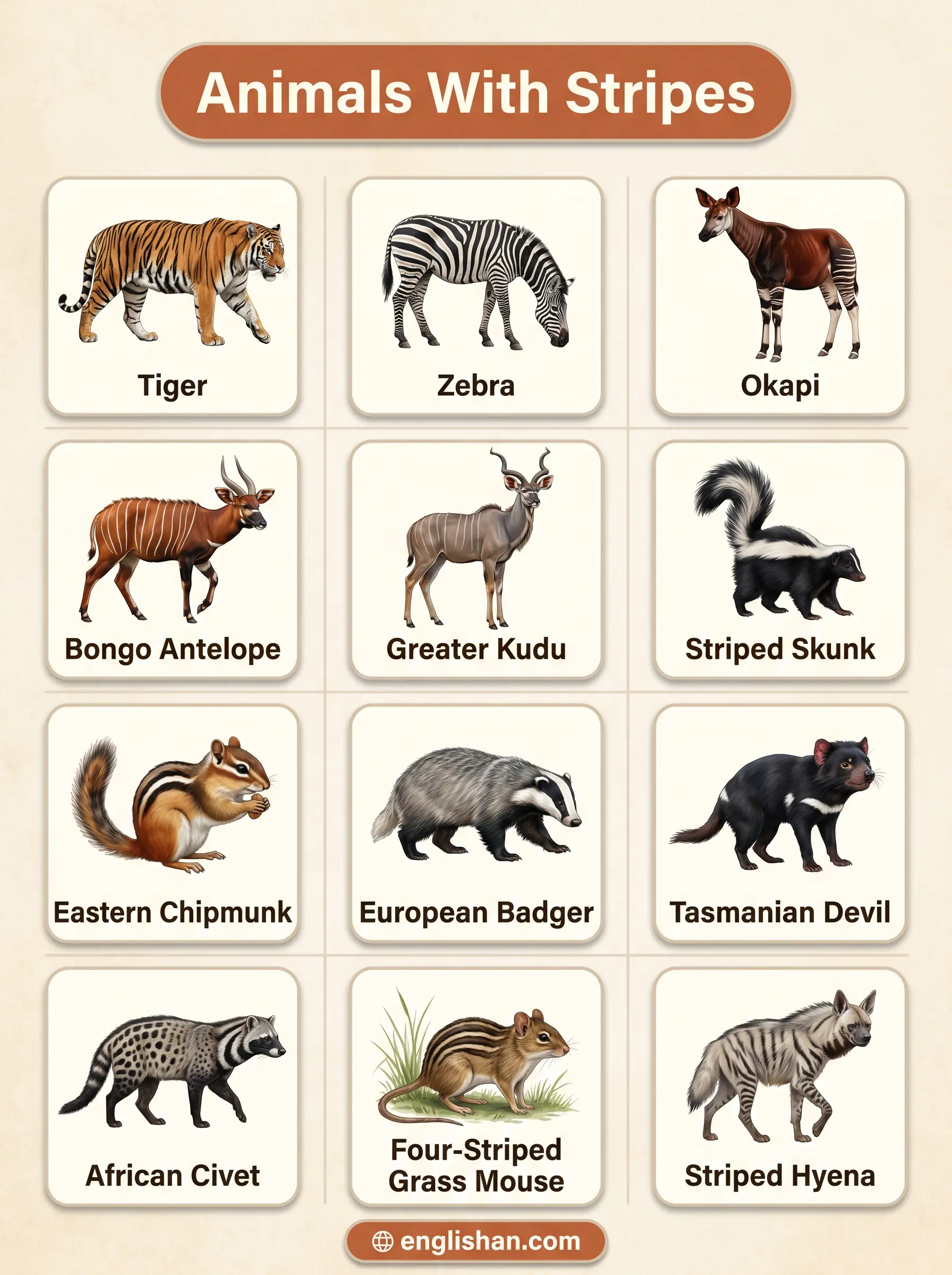
❶ Tiger (Panthera tigris)
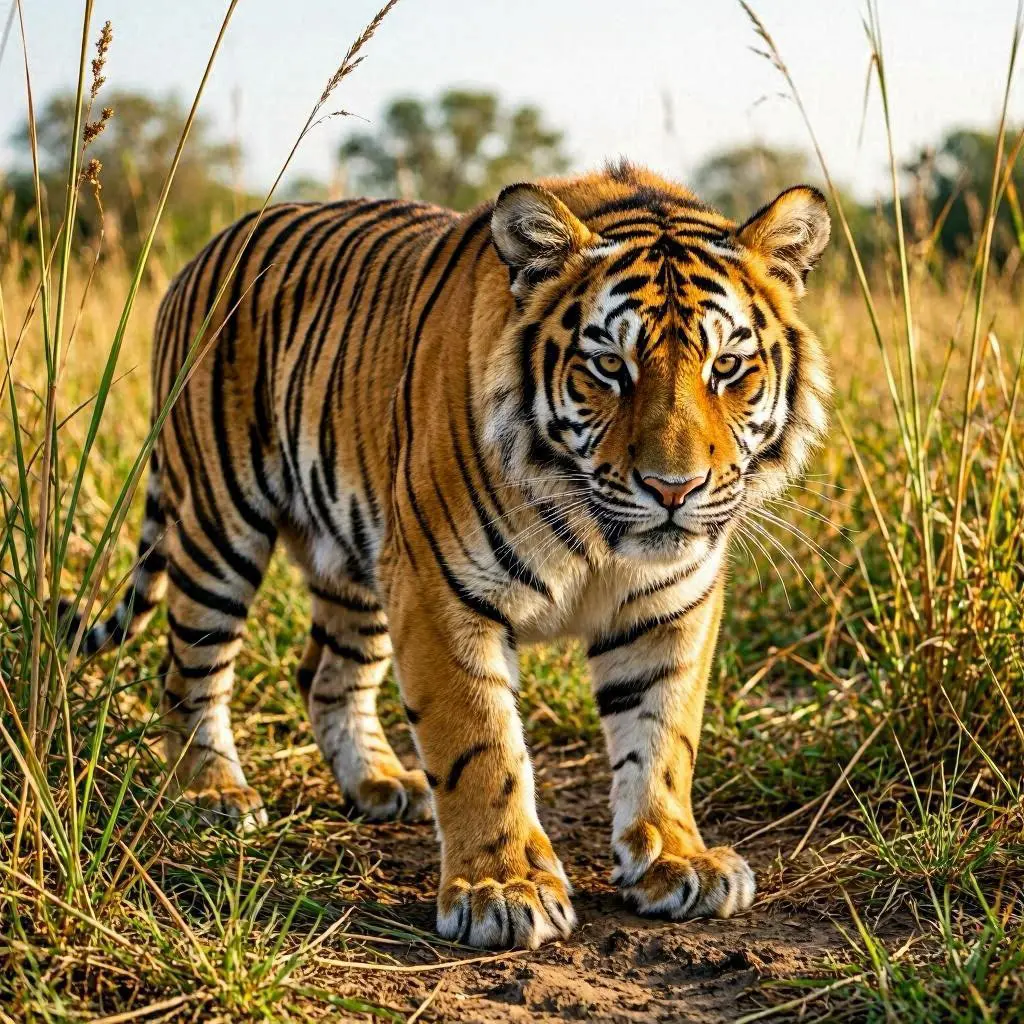
The tiger is the most widely recognized striped animal in the world and one of the most powerful predators in nature. It has dark vertical stripes on a reddish-orange coat, and each tiger’s stripe pattern is completely unique—like a fingerprint. These stripes provide disruptive coloration, helping the tiger blend into tall grass and dense jungle while hunting. Tigers are also endangered, with around 3,900 individuals remaining in the wild. A fascinating fact is that even their skin beneath the fur carries the same striped pattern.
❷ Zebra (Equus quagga / Equus grevyi / Equus zebra)
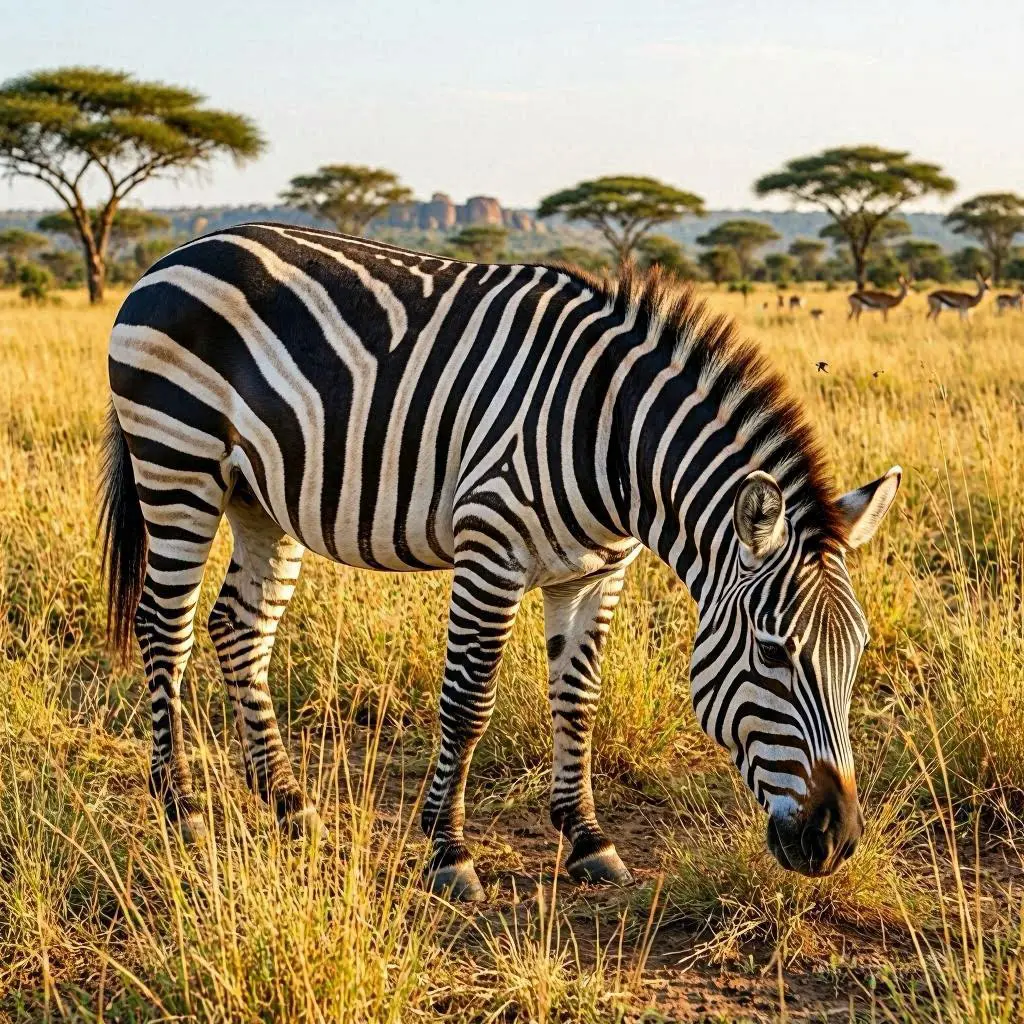
Zebras include three main species: the plains zebra, Grevy’s zebra, and mountain zebra. All are famous for their bold black-and-white stripes, which are now widely believed to help deter biting flies. Each zebra has a unique stripe pattern, useful for individual recognition within herds. Interestingly, zebras are actually black animals with white stripes rather than the reverse.
❸ Okapi (Okapia johnstoni)
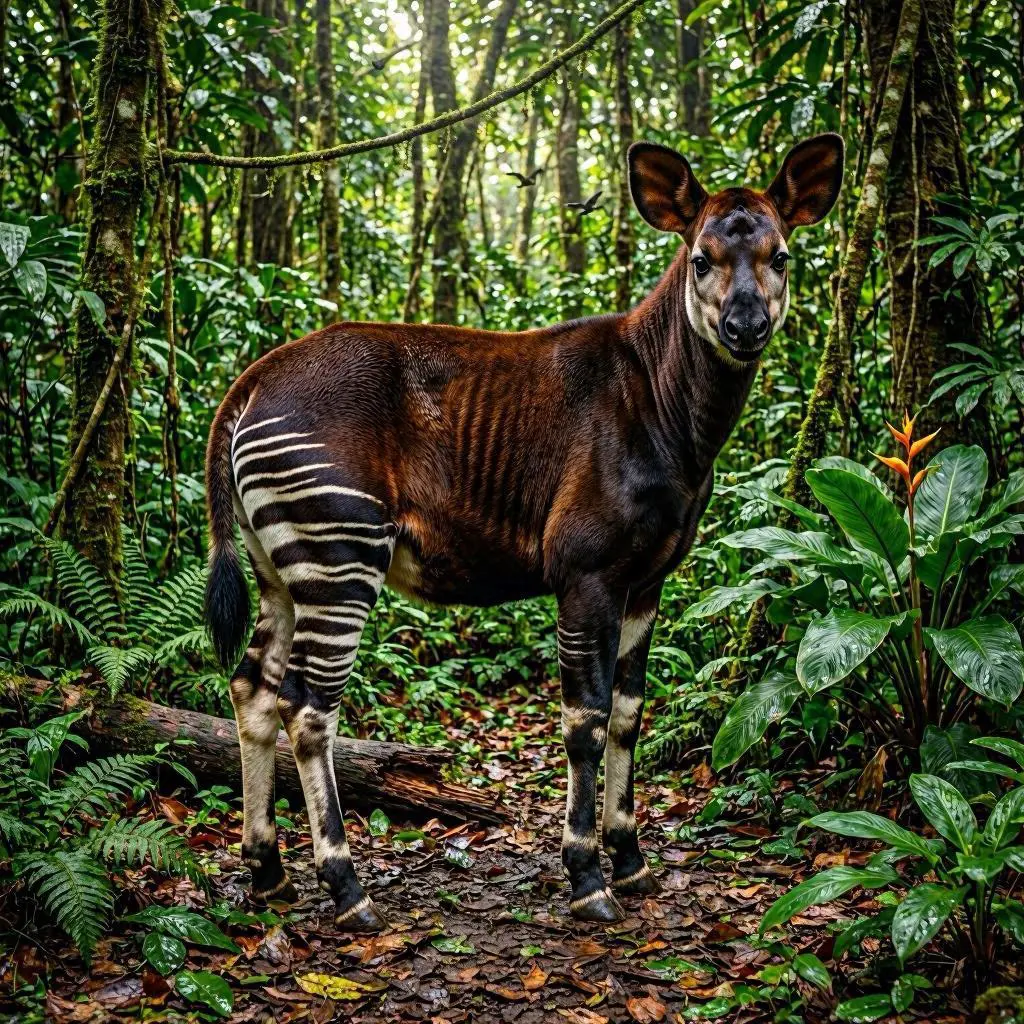
The okapi, often called the “forest giraffe,” is the only living relative of the giraffe. It has striking white-and-black horizontal stripes on its hind legs, which help it camouflage in the dense Congo rainforest. This rare animal was unknown to science until 1901 and is now considered endangered due to habitat loss.
❹ Bongo Antelope (Tragelaphus eurycerus)
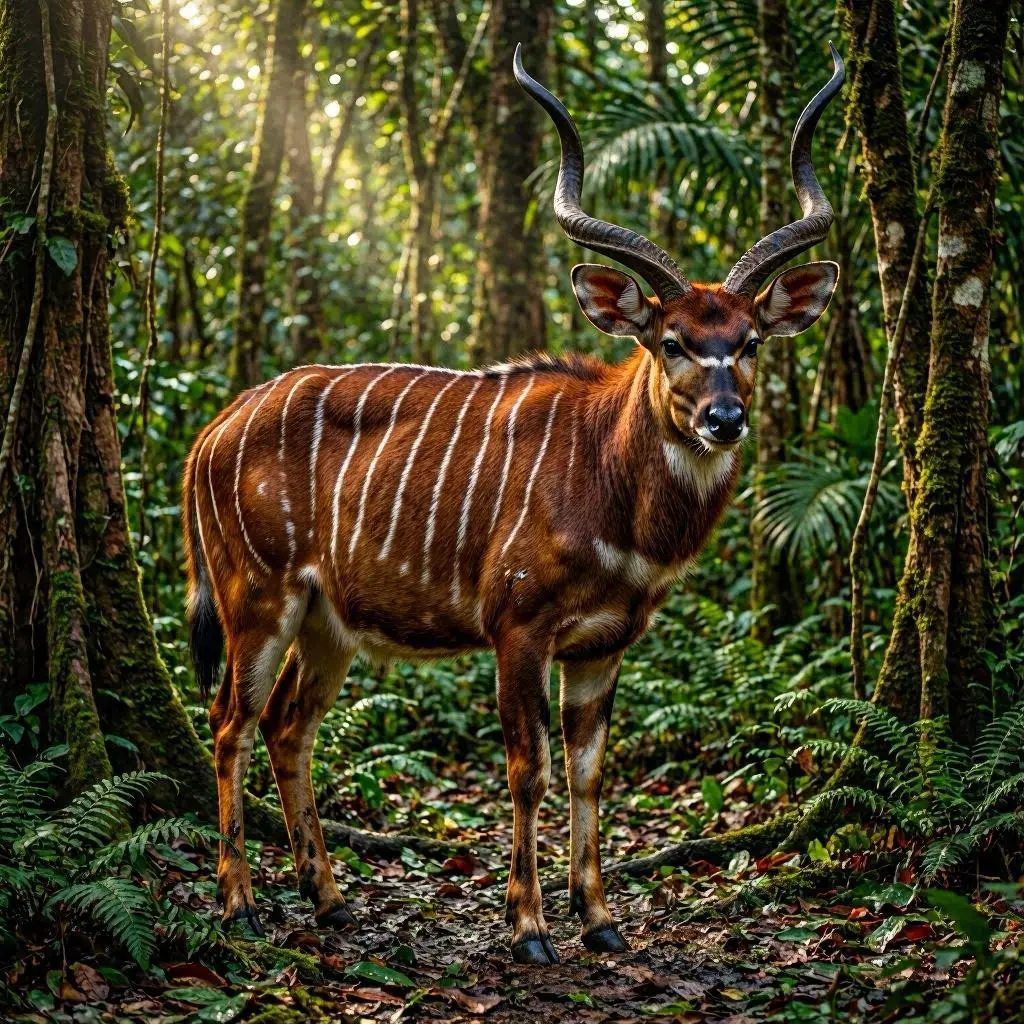
The bongo antelope is one of Africa’s largest forest-dwelling antelopes. It features 10–15 thin white vertical stripes across a rich chestnut-red coat, helping it blend into shadowy forest environments. The mountain bongo subspecies is critically endangered, with fewer than 100 individuals believed to remain in the wild.
❺ Greater Kudu (Tragelaphus strepsiceros)
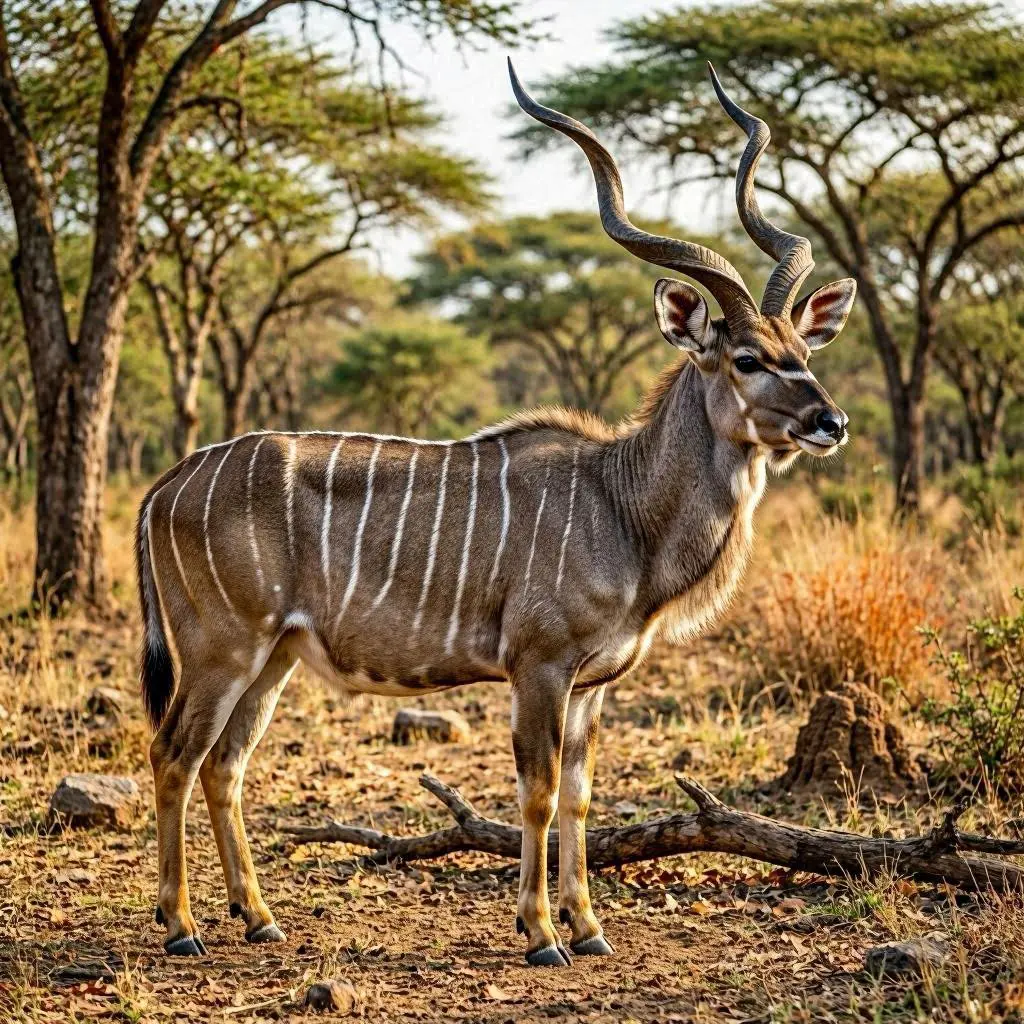
The greater kudu is a large woodland antelope known for its elegant spiral horns and subtle white stripes on a grey-brown body. These stripes help break up its outline in bushy and wooded habitats, making it harder for predators to detect.
❻ Striped Skunk (Mephitis mephitis)
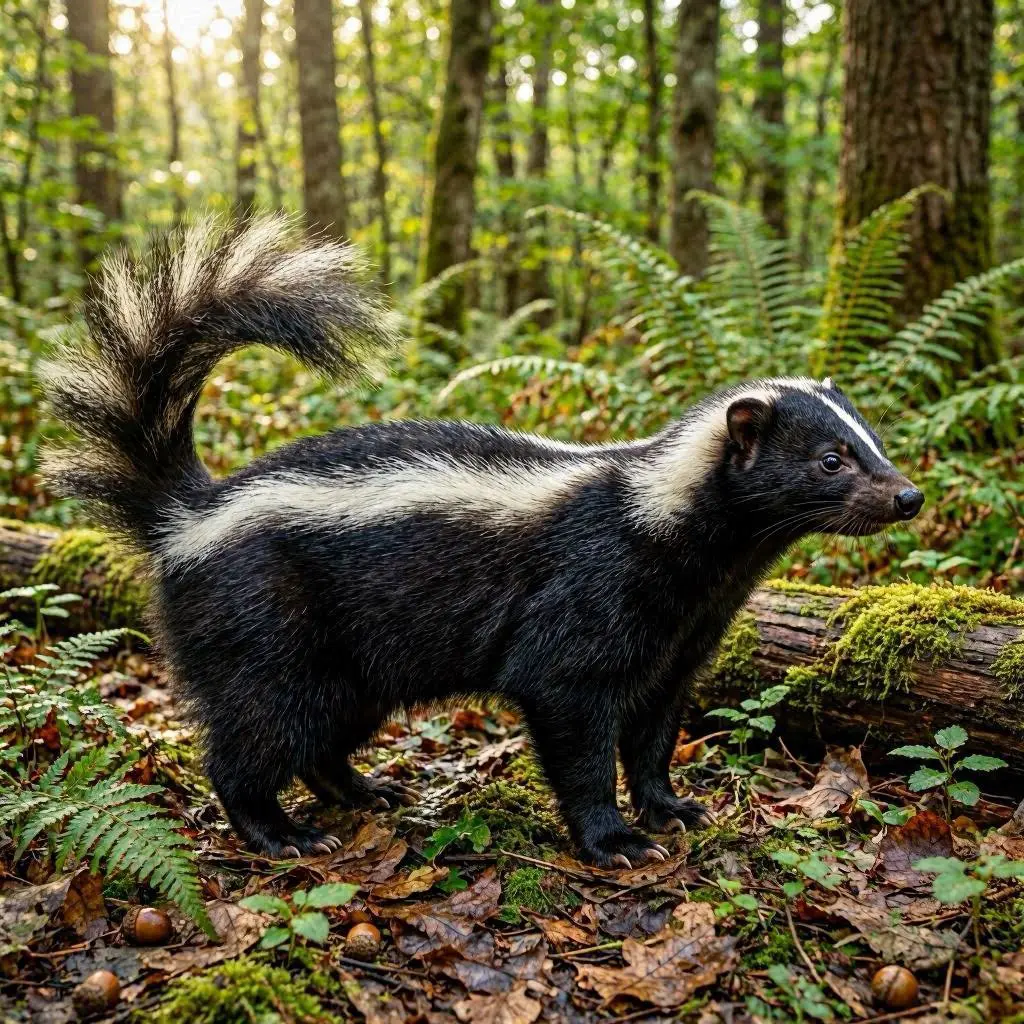
The striped skunk is famous for its bold white V-shaped stripe on a black body, serving as a clear warning signal to predators. This is a classic example of aposematism. When threatened, it can spray a strong-smelling liquid up to 3 meters, and its warning scent can be detected from over a kilometer away.
❼ Eastern Chipmunk (Tamias striatus)
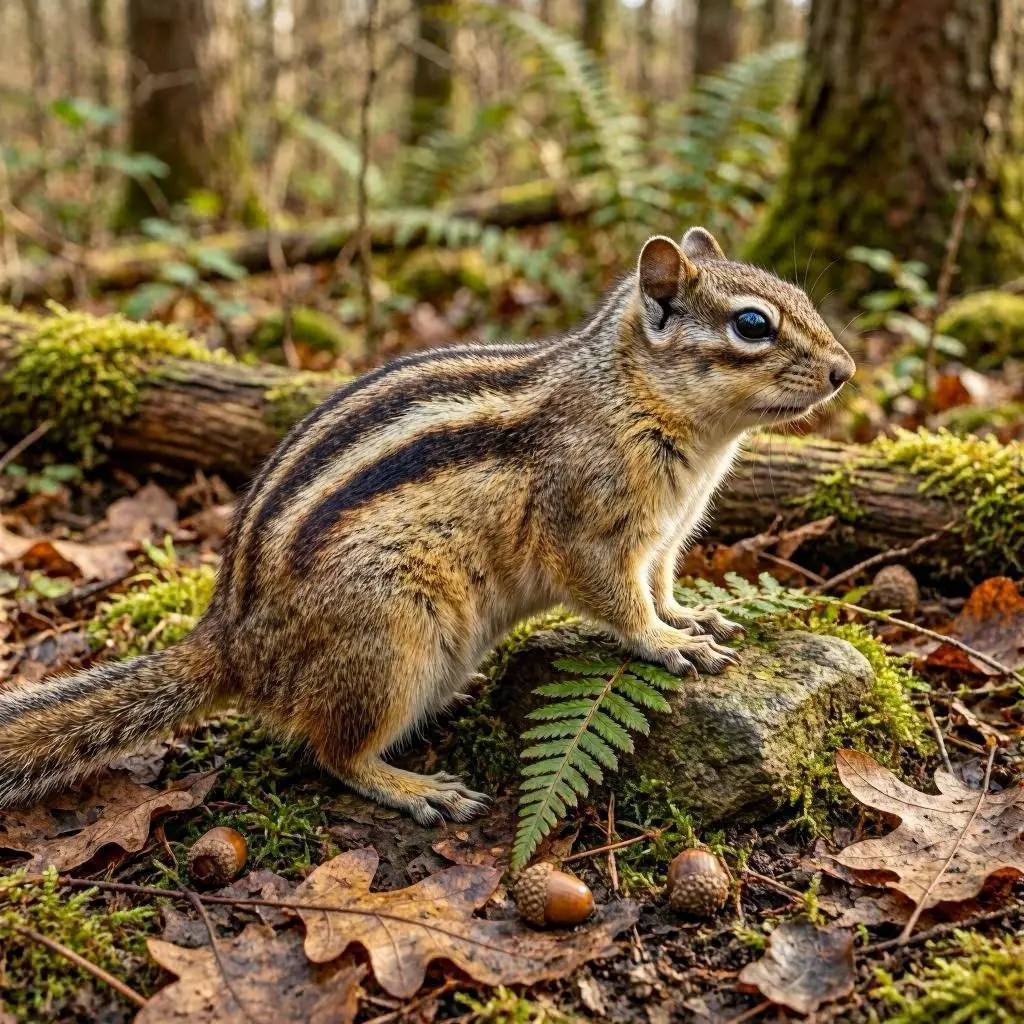
The eastern chipmunk is a small rodent with five distinct stripes along its back—three dark and two light. These stripes provide excellent camouflage on forest floors covered with leaves and debris, helping it avoid predators while foraging.
❽ European Badger (Meles meles)
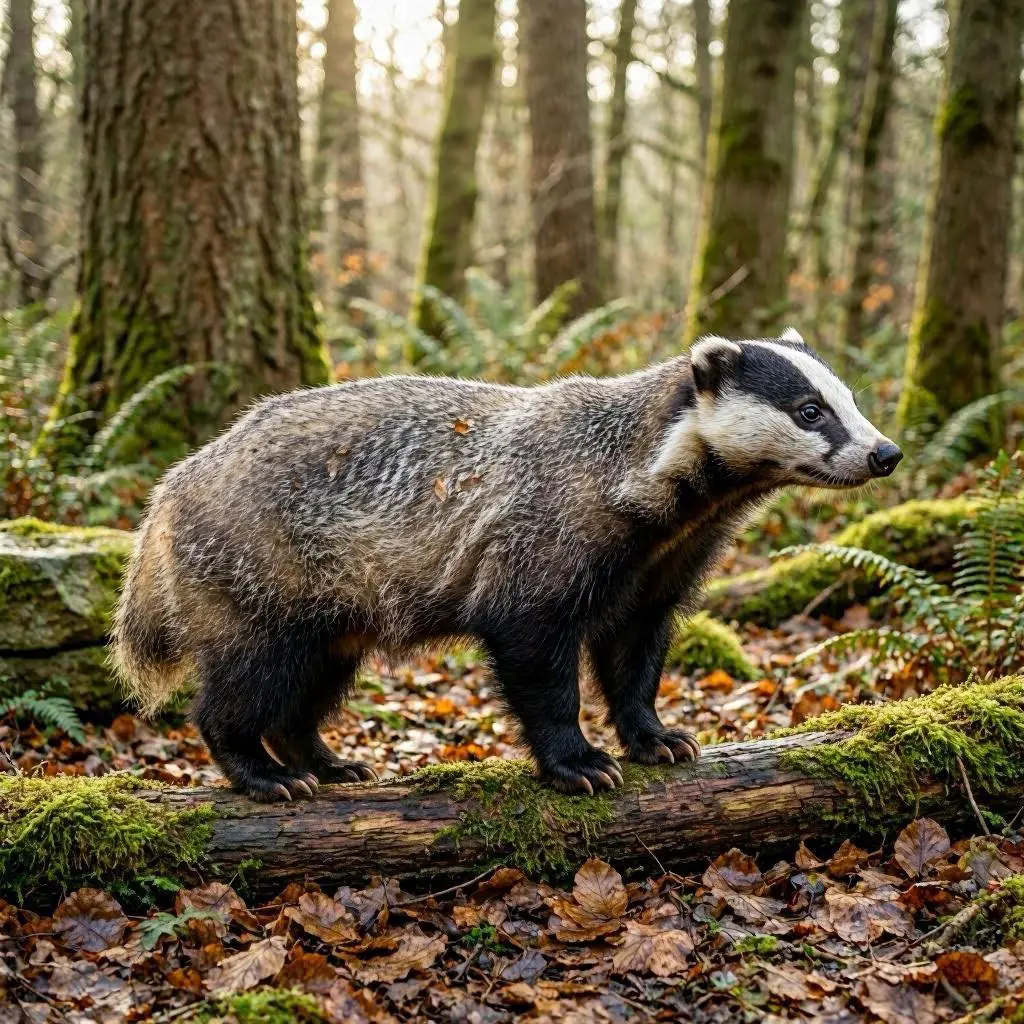
The European badger has bold black-and-white facial stripes that make it instantly recognizable. These markings are thought to help with species recognition and may also serve as a warning signal. It is primarily nocturnal and lives in complex underground burrow systems.
❾ Tasmanian Devil (Sarcophilus harrisii)
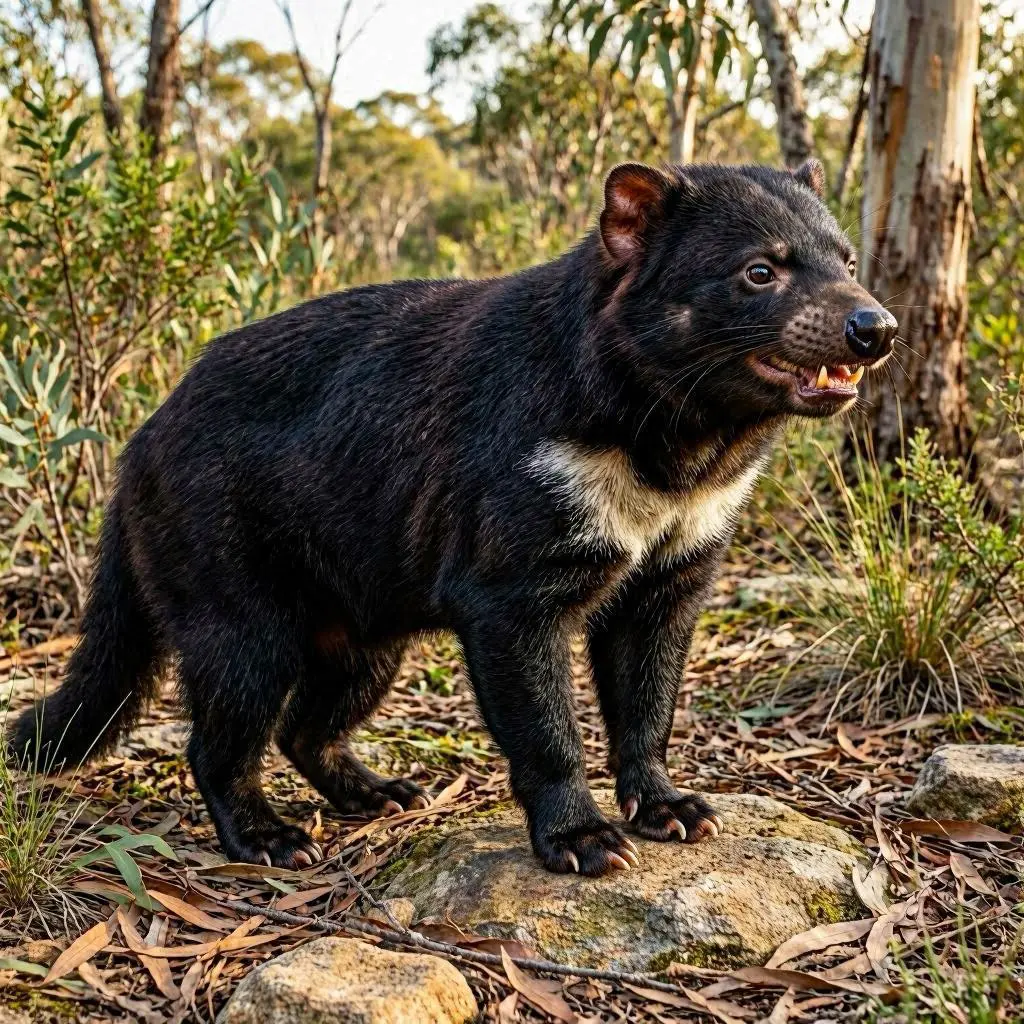
The Tasmanian devil has a distinctive white stripe across its chest on an otherwise black body. It is currently endangered due to a contagious disease known as Devil Facial Tumor Disease, which has significantly reduced wild populations.
❿ African Civet (Civettictis civetta)
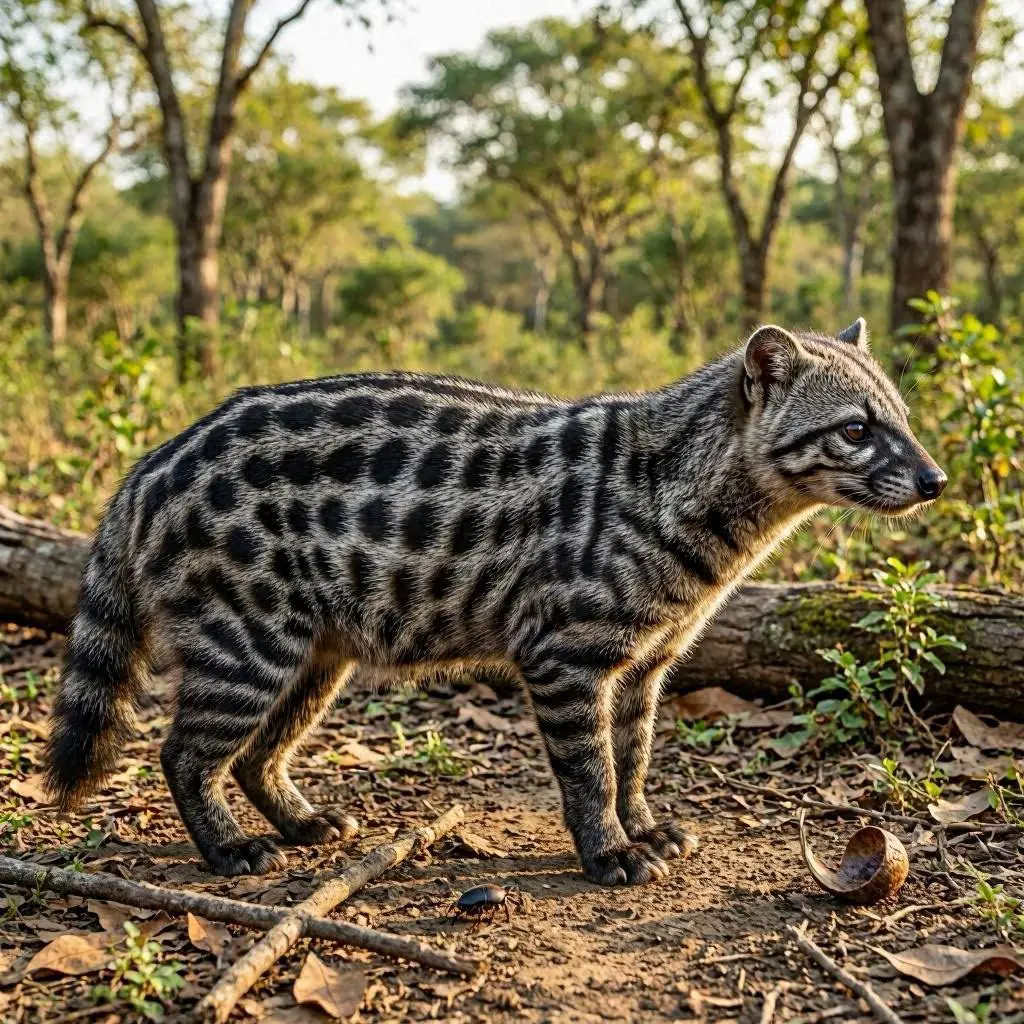
The African civet shows a mix of stripes and spots, creating a complex coat pattern that helps it blend into nighttime environments. Historically, it was also valued for producing civetone, a substance used in perfume manufacturing.
⓫ Four-Striped Grass Mouse (Rhabdomys pumilio)
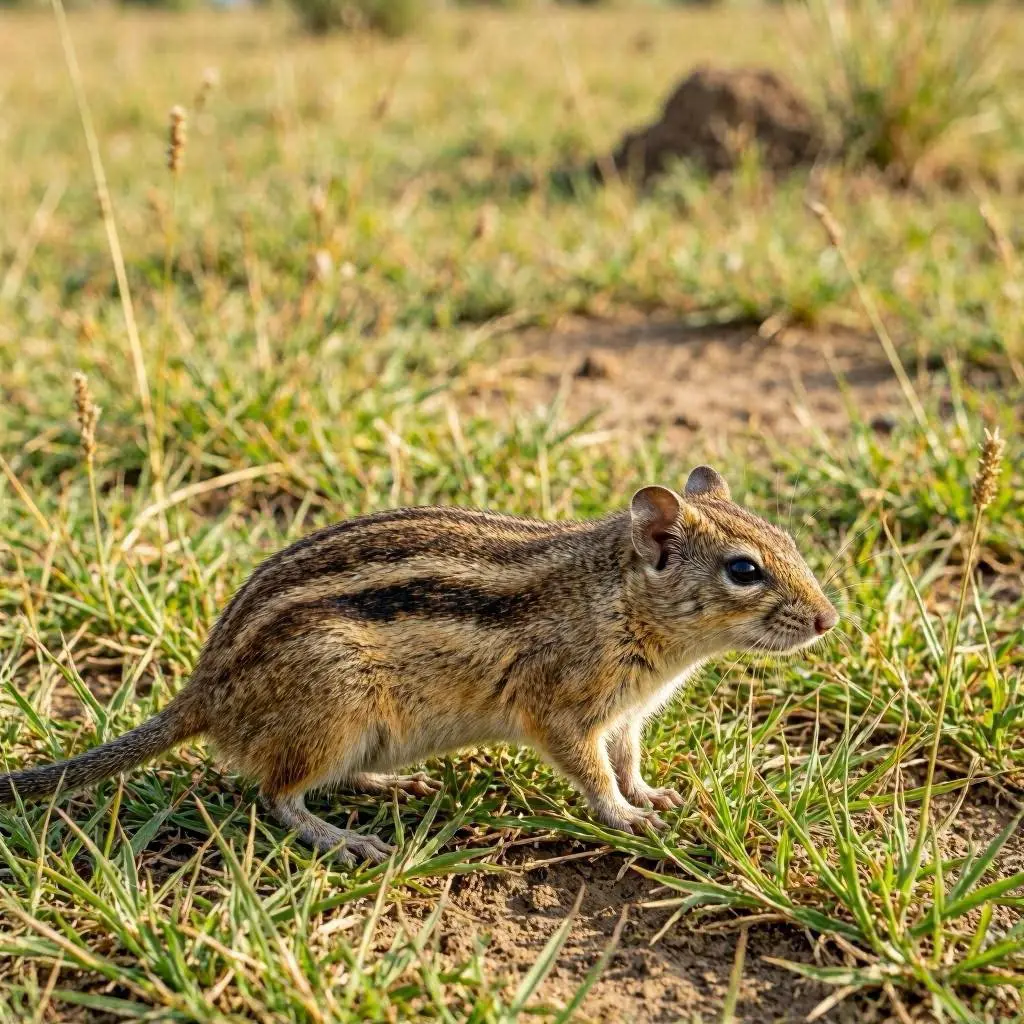
The four-striped grass mouse is easily identified by its exact four dark stripes running along its back. These markings help it stay hidden in grassy habitats across southern Africa.
⓬ Striped Hyena (Hyaena hyaena)
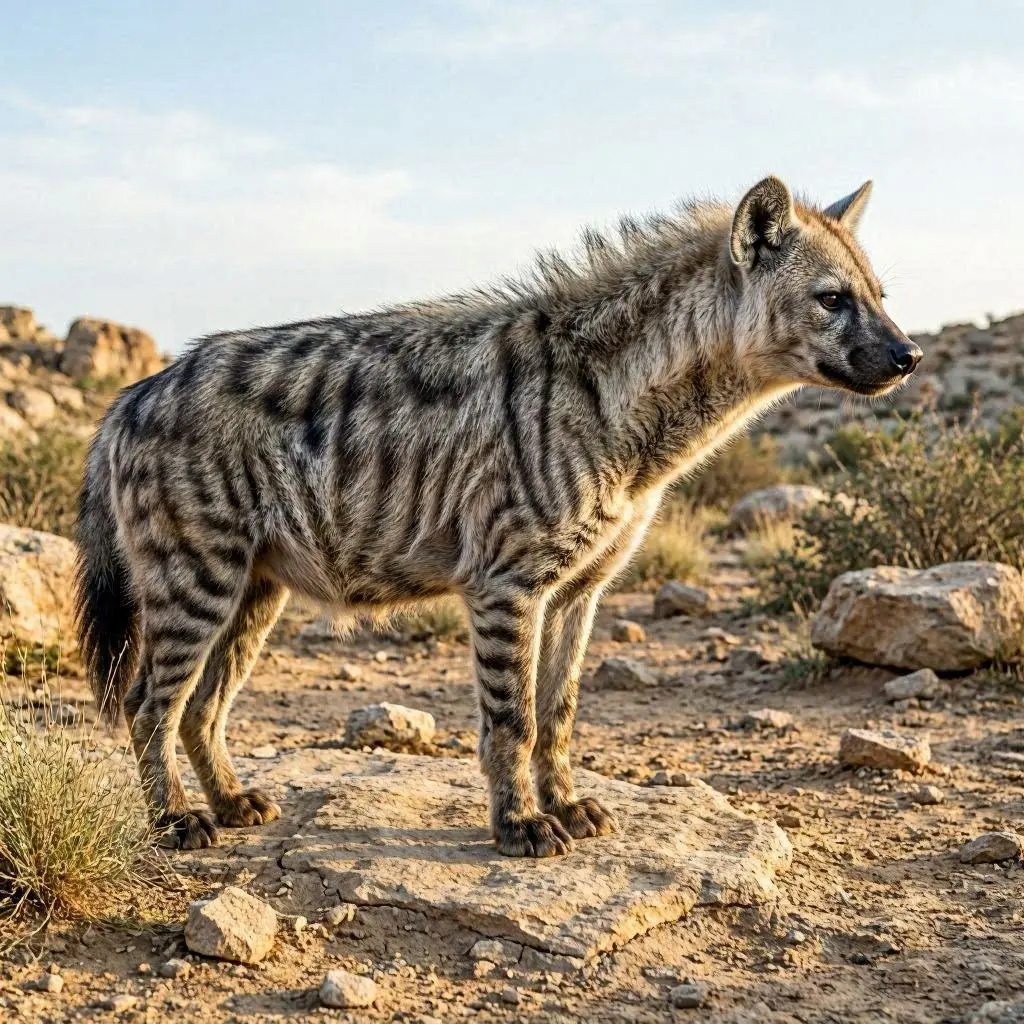
The striped hyena has vertical dark stripes on a grey or beige coat, along with a distinctive mane of long hair along its spine. It is a scavenger and is currently classified as Near Threatened due to habitat loss and persecution.
Complete List of Striped Animals (With Scientific Names & Habitat)
| Animal | Scientific Name | Class | Stripe Colors | Stripe Purpose | Habitat |
|---|---|---|---|---|---|
| Tiger | Panthera tigris | Mammal | Black on orange | Camouflage | Asian forests and grasslands |
| Plains Zebra | Equus quagga | Mammal | Black and white | Fly deterrence | African savanna |
| Grevy’s Zebra | Equus grevyi | Mammal | Black and white | Fly deterrence | Dry East African scrub |
| Okapi | Okapia johnstoni | Mammal | White and black | Camouflage | Congo rainforest |
| Bongo Antelope | Tragelaphus eurycerus | Mammal | White on chestnut | Camouflage | Central African forest |
| Greater Kudu | Tragelaphus strepsiceros | Mammal | White on grey-brown | Camouflage | Savanna woodland |
| Striped Skunk | Mephitis mephitis | Mammal | White on black | Aposematism | North America |
| Eastern Chipmunk | Tamias striatus | Mammal | Dark and white | Camouflage | Deciduous forest |
| European Badger | Meles meles | Mammal | Black on white face | Recognition | Woodland, farmland |
| Striped Hyena | Hyaena hyaena | Mammal | Dark on grey-beige | Camouflage | Dry scrub, Africa to Asia |
| Tasmanian Devil | Sarcophilus harrisii | Mammal | White on black | Recognition | Tasmania |
| African Civet | Civettictis civetta | Mammal | Black on grey-cream | Camouflage | Sub-Saharan Africa |
| Clownfish | Amphiprioninae spp. | Fish | White on orange | Species recognition | Indo-Pacific reefs |
| Zebrafish | Danio rerio | Fish | Blue and silver | Schooling cohesion | SE Asian streams |
| Lionfish | Pterois spp. | Fish | Red, white, black | Aposematism | Indo-Pacific reefs |
| Tiger Barb | Puntigrus tetrazona | Fish | Black on gold | Schooling | SE Asian rivers |
| Honey Bee | Apis mellifera | Insect | Yellow and black | Aposematism | Worldwide |
| Monarch Butterfly | Danaus plexippus | Insect | Orange, black, white | Aposematism | North and Central America |
| Asian Tiger Mosquito | Aedes albopictus | Insect | Black and white | Unknown | Global (invasive) |
| Colorado Potato Beetle | Leptinotarsa decemlineata | Insect | Black on yellow | Aposematism | North America and Europe |
| Garter Snake | Thamnophis spp. | Reptile | Yellow/red on dark | Motion disruption | North America |
| Eastern Coral Snake | Micrurus fulvius | Reptile | Red, yellow, black | Aposematism | SE United States |
| Five-Lined Skink | Plestiodon fasciatus | Reptile | White/yellow on dark | Camouflage and deflection | E North America |
| Eurasian Hoopoe | Upupa epops | Bird | Black and white wings | Flash display | Europe, Asia, Africa |
| Barred Owl | Strix varia | Bird | Brown on white | Camouflage | North American forest |
| Bittern | Botaurus stellaris | Bird | Brown and cream | Reed mimicry | European reedbeds |
| White-Crowned Sparrow | Zonotrichia leucophrys | Bird | Black and white head | Species recognition | North America |
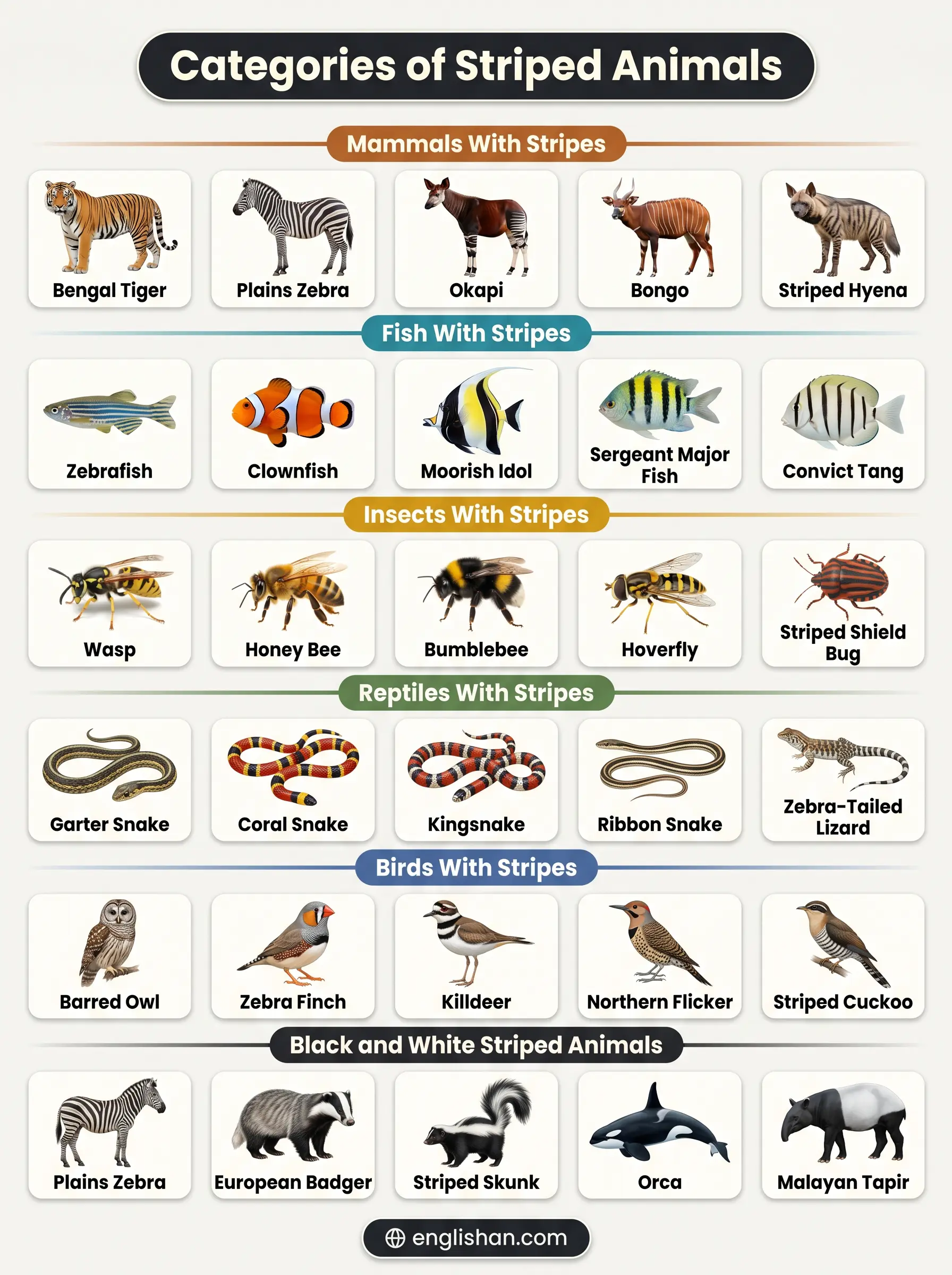
Categories of Striped Animals (With Names)
Striped animals can be found in almost every major group of the animal kingdom. From large mammals roaming grasslands to colorful fish swimming in coral reefs, stripes have evolved in many species for camouflage, communication, defense, and survival. Below is a categorized list of some of the most well-known animals with stripes.
Mammals With Stripes
Striped mammals are some of the most famous animals in the world. Their stripes help them camouflage in forests, grasslands, and other habitats while also aiding communication and identification.
- Zebra – A grassland herbivore famous for its black-and-white stripes, which are unique to every individual.
- Tiger – A powerful big cat whose dark stripes help it blend into tall grass and forest vegetation.
- Okapi – A rare relative of the giraffe that has zebra-like stripes on its legs and hindquarters.
- Bongo – A large forest antelope with thin white stripes that help it disappear among trees and shadows.
- Striped Hyena – A scavenging mammal recognized by its shaggy coat and dark vertical stripes.
- Numbat – An Australian marsupial with distinct white stripes across its reddish-brown back.
- Chipmunk – A small rodent with dark and light stripes running along its back.
- Ground Squirrel – Many species have striped bodies that provide camouflage among grasses and soil.
- Striped Skunk – Known for its bold black-and-white stripes and strong defensive spray.
- African Civet – A nocturnal mammal with striped and spotted markings that help it blend into its surroundings.
Fish With Stripes
Many striped fish use their patterns to hide among coral reefs, confuse predators, or communicate with members of their species.
- Zebra Fish – A small freshwater fish with horizontal blue stripes and a favorite species in scientific research.
- Clownfish – Bright orange fish with white bands that live among sea anemones.
- Moorish Idol – A reef fish recognized by its striking black, white, and yellow striped body.
- Sergeant Major Fish – Named for the dark vertical stripes across its silver body.
- Convict Tang – A tropical fish with bold black stripes resembling prison uniforms.
- Emperor Angelfish (Juvenile) – Young fish display beautiful circular stripes before developing adult coloration.
- Six-Bar Angelfish – Features six prominent dark bands across its body.
- Striped Catfish – A freshwater species marked with long stripes running from head to tail.
- Pilot Fish – Often seen swimming alongside sharks and distinguished by its dark vertical stripes.
- Zebra Pleco – A highly sought-after aquarium fish with dramatic black-and-white striping.
Insects With Stripes
Striped insects often use contrasting colors as warning signals or for species recognition.
- Wasp – Uses black-and-yellow stripes to warn predators about its painful sting.
- Honey Bee – Displays striped abdominal bands and plays a crucial role in pollination.
- Bumblebee – A fuzzy insect with yellow and black stripes that signal its ability to sting.
- Hoverfly – Mimics the striped appearance of bees and wasps to deter predators.
- Striped Shield Bug – A colorful insect with bold red, black, and yellow stripes.
- Tiger Beetle – A fast-moving predator with striped markings on its body.
- Striped Hawkmoth – A moth species with distinctive striped wings and body.
- Zebra Swallowtail Caterpillar – A caterpillar with striped patterns that later transforms into a beautiful butterfly.
Reptiles With Stripes
Many reptiles rely on stripes for camouflage, helping them blend into vegetation, rocks, and sandy environments.
- Garter Snake – A common snake with bright longitudinal stripes running along its body.
- Coral Snake – A venomous species known for its colorful banded pattern.
- Kingsnake – Displays striking striped or banded markings depending on the species.
- Ribbon Snake – A slender snake with long yellow stripes along its dark body.
- Zebra-Tailed Lizard – Named for its black-and-white striped tail.
- Striped Gecko – A small gecko species featuring narrow stripes for camouflage.
- Five-Lined Skink – Easily identified by the five light-colored stripes on its body.
- Racer Snake – Some species display subtle stripes that help them blend into grasslands.
- Striped Whipsnake – A fast-moving snake with thin body stripes.
- Tiger Snake – An Australian venomous snake marked with banded stripes.
Birds With Stripes
Striped birds use their patterns for camouflage, courtship displays, and species recognition.
- Barred Owl – Features striped and barred feathers that help it blend into tree bark.
- Zebra Finch – A small songbird with attractive black-and-white striped markings.
- Killdeer – Recognized by the dark bands across its chest.
- Northern Flicker – A woodpecker with striped plumage and distinctive markings.
- Striped Cuckoo – A tropical bird named for the stripes running across its body.
- Burrowing Owl – Displays subtle striped patterns on its feathers for camouflage.
- American Woodcock – Has striped head markings that help it blend into leaf litter.
- Eurasian Wryneck – A bird with intricate striped plumage resembling tree bark.
- Double-Striped Thick-Knee – Named after the two prominent stripes on its face.
- Cuckoo – Many cuckoo species possess striped underparts that provide concealment in vegetation.
Animals With Black and White Stripes
Black and white is the highest-contrast stripe combination in nature, used for both bold warnings and effective camouflage. These are the most recognizable black-and-white striped species:
- Zebra — most iconic; black with white stripes
- Giant Panda — black markings on white body
- European Badger — two black stripes on white face
- Striped Skunk — white V-stripe on black; aposematic
- Orca — dramatic black-and-white counter-shading
- Zebra Spider — black and white body; bark camouflage
- Convict Cichlid — bold black bars on silver body
- Four-Stripe Damselfish — four black bars on yellow body
- Malayan Tapir — white “saddle” patch on black body; one of the most striking mammalian black-and-white patterns
- Striped Polecat / Zorilla — bold black and white; aposematic warning of noxious spray, similar to skunks
Animals With Orange and Black Stripes
Orange and black creates high visual contrast in low-light conditions and is strongly associated with toxicity, venom, and chemical defense across multiple animal groups:
- Tiger — black stripes on reddish-orange; camouflage
- Monarch Butterfly — orange wings with black borders; milkweed toxin storage
- Clownfish — orange body with white (black-edged) bands
- Cinnabar Moth Caterpillar — orange and black rings; ragwort toxin storage
- Tiger Salamander (Ambystoma tigrinum) — yellow-orange bars on black body; aposematic
- Tiger Barb — gold and black vertical bars; schooling fish
- Halloween Pennant Dragonfly (Celithemis eponina) — orange and brown banded wings that flutter like a pennant flag
Wild Animals With Stripes
Wild animals with stripes are found across forests, savannas, deserts, and oceans. Their stripes help with camouflage, warning signals, or species recognition.
- Tiger (Panthera tigris) — Iconic big cat with black vertical stripes on orange fur; uses camouflage for hunting in forests and grasslands.
- Zebra (Equus spp.) — Black-and-white striped equids; patterns help with fly deterrence and individual recognition.
- Okapi (Okapia johnstoni) — Forest-dwelling relative of the giraffe with zebra-like leg stripes for camouflage.
- Striped Hyena (Hyaena hyaena) — Scavenger with vertical stripes that break its body outline in dry habitats.
- Bongo Antelope (Tragelaphus eurycerus) — Forest antelope with white vertical stripes for hiding in dense vegetation.
- Clownfish (Amphiprioninae) — Marine fish with bright stripes used for species recognition and protection among sea anemones.
- Lionfish (Pterois spp.) — Striped venomous fish; warning coloration deters predators.
- Striped Skunk (Mephitis mephitis) — Bold black-and-white stripes signal its defensive spray.
- Garter Snake (Thamnophis spp.) — Common striped snake using body patterns for camouflage.
- Barred Owl (Strix varia) — Bird with vertical barring that blends into tree bark.
Domestic Animals With Stripes
Some domestic animals show stripes naturally, especially in early life stages or through specific coat patterns. These markings are usually inherited from wild ancestors or occur due to genetics.
- Domestic Cat (Felis catus) — Many cats have “tabby” stripes, which appear as lines or swirls on the coat. These help with camouflage and are one of the most common domestic stripe patterns.
- Piglet (Sus scrofa domesticus) — Young piglets are often born with faint stripes that disappear as they grow. These stripes help them blend into grass and stay protected.
- Horse (Equus ferus caballus) — Some horses show faint “dun stripes” on the back or legs, inherited from wild ancestry.
- Donkey (Equus africanus asinus) — Certain donkeys have subtle shoulder or leg stripes linked to primitive genetic traits.
- Dog (Canis lupus familiaris) — Brindle dogs show stripe-like patterns formed by mixed coat colors rather than true lines.
In short, domestic stripes are generally less defined than those in wild animals, but they still reflect inherited genetic patterns and survival traits.
Small Animals With Stripes
Stripes are just as common and functional in small species as in large ones:
- Eastern Chipmunk — five dorsal stripes; forest floor camouflage
- Zebra Spider — black and white; bark camouflage for ambush
- Garter Snake — longitudinal stripes; motion-perception disruption
- Honey Bee — yellow and black; aposematism
- Zebrafish — blue horizontal stripes; schooling cohesion
- Four-Striped Grass Mouse — four dorsal stripes; grassland camouflage
- Striped Skunk (juvenile) — stripes present from birth; aposematic system functional immediately
- Tiger Salamander — palm-sized; bold orange and black banding
- Asian Tiger Mosquito — black and white striped legs; smallest truly dangerous striped animal
Animals With Stripes for Kids
Striped animals are some of the most exciting creatures on the planet. Here are the most famous ones explained simply:
- Tiger
- Zebra
- Bee
- Clownfish
- Chipmunk
- Skunk
- Okapi
- Garter Snake
Endangered Animals With Stripes
Many striped animals are now facing serious threats due to habitat loss, poaching, and climate change. These species are important for maintaining ecological balance, but their populations continue to decline in the wild.
- Tiger (All Subspecies) – Tigers such as the Bengal, Amur, and Sumatran tiger are critically endangered in some regions due to illegal hunting and shrinking forests. Their iconic stripes help them blend into dense vegetation while stalking prey.
- Sumatran Tiger – One of the rarest tiger subspecies, found only in Indonesia. It has darker, closely spaced stripes and is critically endangered.
- Amur Tiger – Found in Russia and China, this tiger is adapted to cold climates and has thicker fur with fewer stripes, currently endangered due to habitat fragmentation.
- Grevy’s Zebra – The largest wild zebra species, recognized by its narrow stripes. It is endangered because of water scarcity and competition with livestock.
- Zebra Duiker – A small forest antelope with bold white stripes on a reddish coat. It is endangered due to deforestation and hunting in West Africa.
- Okapi – A unique relative of the giraffe with zebra-like leg stripes. It is classified as endangered because of habitat loss in the Congo rainforest.
- Zebra Shark – A marine species with striped patterns as juveniles. It is endangered due to overfishing and habitat degradation of coral reefs.
These endangered striped animals highlight the urgent need for conservation efforts to protect some of the most visually striking and ecologically important species on Earth.
Difference Between Stripes and Bands
Patterns in animals often look similar at first glance, but “stripes” and “bands” describe two different types of markings. Understanding the difference helps in correctly identifying animals and studying how these patterns function in nature.
| Feature | Stripes | Bands |
|---|---|---|
| Definition | Long, thin, continuous lines on the body | Wider, thicker markings that often wrap around the body |
| Shape | Narrow and linear | Broad and belt-like |
| Direction | Usually run lengthwise (head to tail) | Often encircle the body or appear as blocks |
| Appearance | Repeated fine lines | Fewer but thicker patterns |
| Common Function | Camouflage, species recognition, warning signals | Camouflage, warning display, mimicry |
| Examples | Tiger, zebra, striped fish | Coral snake, banded caterpillar, some banded snakes |
| Visual Effect | Creates flow and motion illusion | Creates segmented or ringed appearance |
Both stripes and bands serve important survival roles such as camouflage, warning predators, and helping species recognize one another. While they differ in shape and arrangement, they often evolve for similar biological purposes in the animal kingdom.
Conclusion
Stripes in animals are far more than visual patterns—they are powerful survival tools shaped by evolution. Across mammals, fish, reptiles, birds, and insects, stripes help with camouflage, warning signals, temperature regulation, and even social recognition. From the stealth of a tiger in dense forests to the protective signaling of a skunk, each striped pattern serves a specific ecological purpose.
What makes stripes even more fascinating is their independent evolution in many unrelated species, showing how nature repeatedly uses the same design to solve similar survival challenges. Whether bold, subtle, vertical, or banded, stripes remain one of the most successful and widespread patterns in the animal kingdom.
FAQs
The tiger and zebra are the two most recognized. The tiger uses black-on-orange stripes for forest camouflage; the zebra uses black-and-white stripes primarily to deter biting flies.
Four main reasons: camouflage (disrupting body outline), aposematism (warning of danger), thermoregulation (managing heat), and individual recognition (unique patterns like fingerprints). Many species use stripes for more than one purpose at once.
Black with white stripes. The default embryonic skin pigmentation is dark. White stripes form where melanocyte (pigment cell) migration is genetically blocked during development. The skin beneath white fur is also dark.
Tigers (all subspecies), mountain bongo (Critically Endangered, fewer than 100 wild), okapi (Endangered), and monarch butterfly (Endangered). The South China Tiger subspecies is functionally extinct in the wild.
Through reaction-diffusion, first described by Alan Turing in 1952. Two chemicals — an activator and an inhibitor — diffuse through embryonic tissue at different rates and self-organize into repeating stripes. Confirmed by modern molecular biology. A 2023 study identified diffusiophoresis as an additional mechanism that sharpens stripe edges.
Yes. Clownfish, lionfish, zebrafish, sergeant major fish, and convict cichlids all carry stripes. Marine stripes serve the same core functions as terrestrial ones: camouflage, aposematism, schooling cohesion, and species recognition.
Stripes run lengthwise along the body, parallel to the spine (tigers, chipmunks, garter snakes). Bands wrap around the body transversely (coral snakes, caterpillars). Both form through the same Turing mechanism; orientation is determined by body geometry during the developmental window when pigment patterns form.
Yes. Tabby cats display stripe patterns reflecting ancestral wildcat genetics — mackerel tabby (parallel stripes) and classic tabby (swirled blotches). Certain dog breeds show brindle patterning. Some domestic horses show faint leg striping as a vestigial trait from striped equid ancestors.
You May Also Like
- 34+ Poisonous Animals Names In English
- 50+ Grassland Animals Names with Pictures
- 112+ Animals and Their Food with Pictures
Animals With Stripes Quiz
Animals With Stripes
Which big cat has vertical stripes?
The only striped big cat, and the pattern is unique to each individual.
One striped big cat, several spotted ones.
Tiger stripes work as identification the way fingerprints do.
What is the leading explanation for zebra stripes?
Experiments show tabanid flies land far less often on striped surfaces.
The best-supported explanation is insects, not predators.
Striped patterns disrupt how a landing fly judges the surface.
Name the animal.
The forest relative of the giraffe, with striped hindquarters, is the ___.
The stripes break up its outline in dappled forest light and may help calves follow their mother.
Stripes on the legs, giraffe everywhere else.
The okapi went undescribed by science until 1901.
What is disruptive colouration?
The eye reads separate shapes instead of one animal.
It hides the shape rather than matching the background.
Stripes work best where light and shade are broken up too.
Three of these are striped. Which is spotted?
Solid round spots, plus tear lines on the face.
Spots and stripes often serve the same purpose by different means.
The cheetah is spotted; the skunk and chipmunk are striped.
Turn on JavaScript for the interactive quiz. The full practice set is shown above.