Nature is full of beautiful creatures, but some of them carry a deadly secret. From frogs so toxic that a single touch can kill, to snails that hunt with chemical darts, poisonous animals exist on every continent and in every ocean. This article covers the most important poisonous animal names, categorized and explained so you know exactly what to watch out for and why in this article.
Before diving in, there is one critical distinction most articles skip entirely. Understanding this difference is essential if you want to correctly interpret Poisonous Animals Names and avoid common misconceptions that often lead to confusion.
What are Poisonous Animals?
Poisonous animals are organisms that contain toxins in their body tissues or organs that can harm or kill another creature if they are eaten, touched, or handled. The important point is that the toxin is passive, meaning it does not need to be injected. Harm usually happens through eating the animal or direct contact with its skin or body fluids.
For example, some frogs, fish, and insects are poisonous because their skin or internal chemicals contain toxic substances that help protect them from predators.
A common confusion is the difference between poisonous and venomous animals:
- Poisonous animals cause harm when they are touched or eaten
- Venomous animals actively inject toxins through bites or stings, such as snakes or scorpions
In simple terms, poisonous animals are dangerous to touch or eat, while venomous animals are dangerous when they inject their toxins.
Explore more animals that start with different letters:
A | B | C | D | E | F | G | H | I | J | K | L | M | N | O | P | Q | R | S | T | U | V | W | X | Y | Z
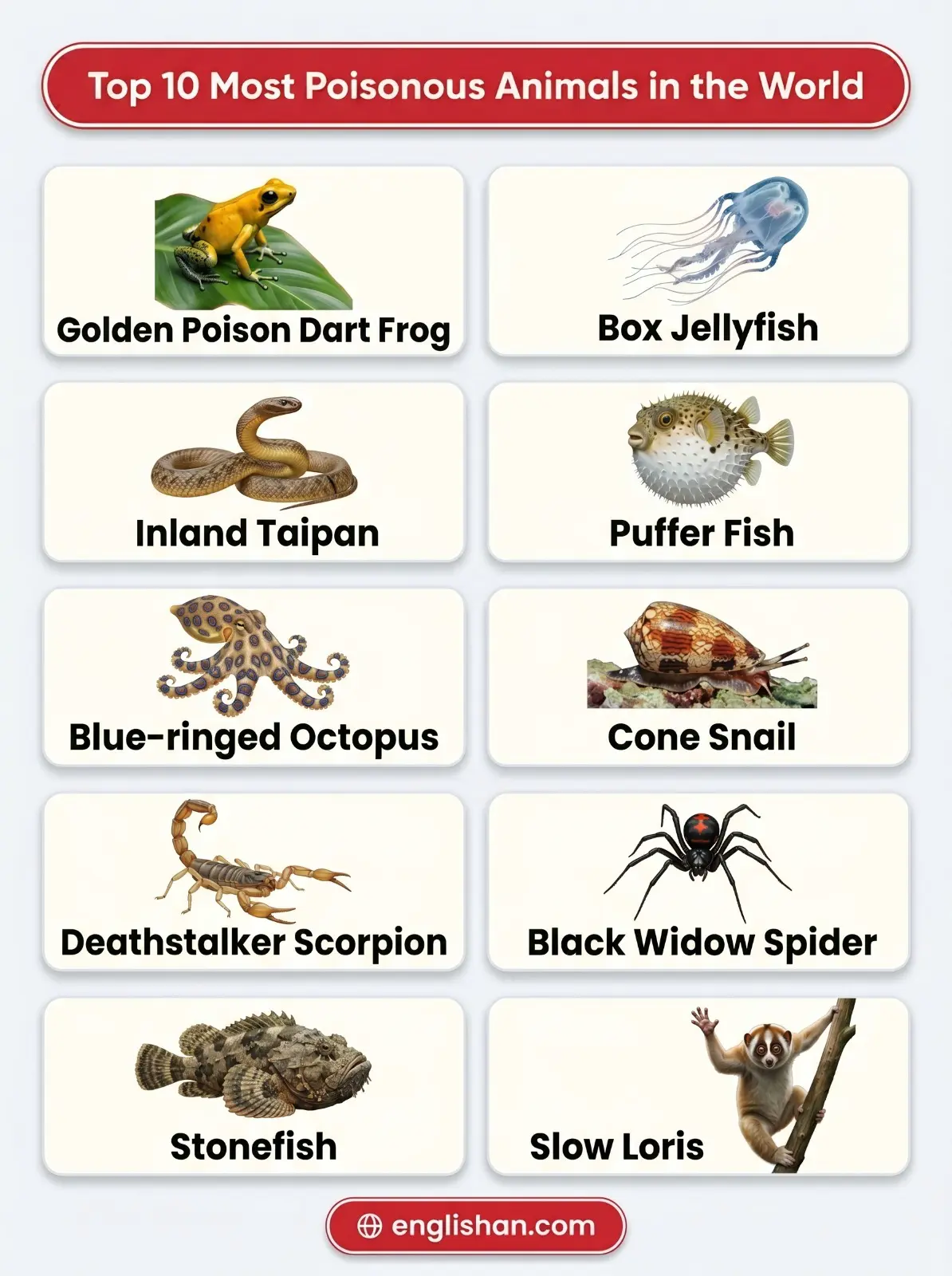
Complete List of Poisonous Animals Names by Category
Before exploring the Complete List of Poisonous Animals Names by Category, it is important to understand that poisonous species are found across many different habitats and animal groups. They are not limited to a single environment or type of creature. From land to sea, these animals have developed natural toxins as a defense mechanism to survive, making it essential to study them in an organized way so their differences, habitats, and levels of danger can be clearly understood.
Poisonous Frogs
Frogs are the most well-known poisonous animals in the world. Most of them get their toxins from the insects and plants they eat in the wild. In captivity, without that diet, they lose their toxicity.
- Golden Poison Dart Frog (Phyllobates terribilis) – Colombia; contains batrachotoxin, enough to kill 10 to 20 adult humans
- Phantasmal Poison Frog (Epipedobates tricolor) – Ecuador; produces epibatidine, studied as a painkiller 200 times stronger than morphine
- Blue Poison Dart Frog (Dendrobates tinctorius) – Suriname and Brazil; vivid blue coloring signals extreme danger
- Strawberry Poison Dart Frog (Oophaga pumilio) – Central America; tiny but produces potent pumiliotoxin
- Black-legged Poison Dart Frog (Phyllobates bicolor) – Colombia; second most toxic frog on earth
Poisonous Sea Creatures
The ocean holds some of the most chemically complex poisons found anywhere. Many of these animals are small, slow, or look completely harmless, which makes them especially dangerous.
- Box Jellyfish (Chironex fleckeri) – Indo-Pacific waters; tentacles carry enough venom to kill 60 adults; responsible for more deaths than sharks in Australia
- Blue-ringed Octopus (Hapalochlaena lunulata) – Pacific and Indian Oceans; golf-ball sized, carries tetrodotoxin, no antivenom exists
- Cone Snail (Conus geographus) – tropical reefs worldwide; fires a harpoon-like tooth with conotoxin that can paralyze within minutes
- Puffer Fish / Fugu (Tetraodon spp.) – worldwide; skin and organs carry tetrodotoxin, 1,200 times more toxic than cyanide
- Stonefish (Synanceia verrucosa) – Indo-Pacific; the most venomous fish alive, disguises itself as a rock on the seafloor
- Fire Coral (Millepora spp.) – tropical reefs; not a true coral, causes chemical burns on contact
Poisonous Snakes
Snakes are technically venomous, not poisonous. However, several species are poisonous when eaten, and some absorb toxins from their prey. They are included here because most people search for them under “poisonous snakes.”
- Inland Taipan (Oxyuranus microlepidotus) – Australia; most toxic snake venom on earth, one bite can kill 100 humans
- King Cobra (Ophiophagus hannah) – South and Southeast Asia; delivers the largest venom dose of any snake per bite
- Black Mamba (Dendroaspis polylepis) – Sub-Saharan Africa; fastest land snake, neurotoxic venom kills in hours without treatment
- Saw-scaled Viper (Echis carinatus) – Middle East and Asia; responsible for more human deaths than any other snake due to habitat overlap
- Eastern Brown Snake (Pseudonaja textrina) – Australia; second most toxic venom of any land snake
- Belcher’s Sea Snake (Hydrophis belcheri) – Indian Ocean; gram for gram, one of the most toxic venoms ever measured
- Rhabdophis Tiger Keelback (Rhabdophis tigrinus) – East Asia; unique in being both venomous AND poisonous (stores toad toxins in its neck glands)
Poisonous Insects and Arachnids
Most insects and spiders are venomous, not poisonous. But several produce toxins that are harmful on contact or when ingested, and some caterpillars are genuinely poisonous to touch.
- Puss Caterpillar (Megalopyge opercularis) – North America; fluffy appearance hides venomous spines that cause intense pain
- Deathstalker Scorpion (Leiurus quinquestriatus) – North Africa and Middle East; responsible for the majority of fatal scorpion stings worldwide
- Black Widow Spider (Latrodectus mactans) – Americas; neurotoxic venom 15 times more potent than a rattlesnake’s
- Brazilian Wandering Spider (Phoneutria fera) – South America; Guinness World Record holder for most venomous spider
- Sydney Funnel-web Spider (Atrax robustus) – Australia; one of the few spiders with venom lethal to humans within hours
- Fire Ant (Solenopsis invicta) – worldwide (invasive); alkaloid venom causes necrosis in severe reactions
- Bullet Ant (Paraponera clavata) – Central and South America; delivers the most painful insect sting on the Schmidt Pain Index (level 4, maximum)
Poisonous Mammals
This is the category that surprises most people. Mammals are generally not thought of as toxic, but a small number have evolved chemical defenses.
- Slow Loris (Nycticebus coucang) – Southeast Asia; secretes a toxin from a gland near the armpit, licks it to coat its teeth, delivers toxic bite
- Platypus (Ornithorhynchus anatinus) – Australia; males have venomous spurs on their hind legs, active during mating season
- Solenodon (Solenodon paradoxus) – Cuba and Hispaniola; one of the only venomous shrews, delivers toxin through its bite
- European Water Shrew (Neomys fodiens) – Europe; venomous saliva used to paralyze prey before eating it
Poisonous Birds (Rare and Often Overlooked)
Poisonous birds are an extremely rare phenomenon, only discovered by science in 1992.
- Pitohui (Pitohui dichrous) – Papua New Guinea; feathers and skin contain batrachotoxin, the same poison found in dart frogs
- Blue-capped Ifrit (Ifrita kowaldi) – Papua New Guinea; skin carries batrachotoxin, discovered in the same research that identified the Pitohui
- Variable Pitohui (Pitohui kirhocephalus) – New Guinea; lower toxin levels but still chemically defended
- Little Shrikethrush (Colluricincla megarhyncha) – Australia and New Guinea; mild levels of batrachotoxin in its skin and feathers
Poisonous Lizards
- Gila Monster (Heloderma suspectum) – Southwestern USA and Mexico; one of only two venomous lizards native to the Americas
- Mexican Beaded Lizard (Heloderma horridum) – Mexico and Guatemala; close relative of the Gila Monster, equally venomous
- Komodo Dragon (Varanus komodoensis) – Indonesia; delivers venom and carries bacteria in its saliva that causes severe sepsis
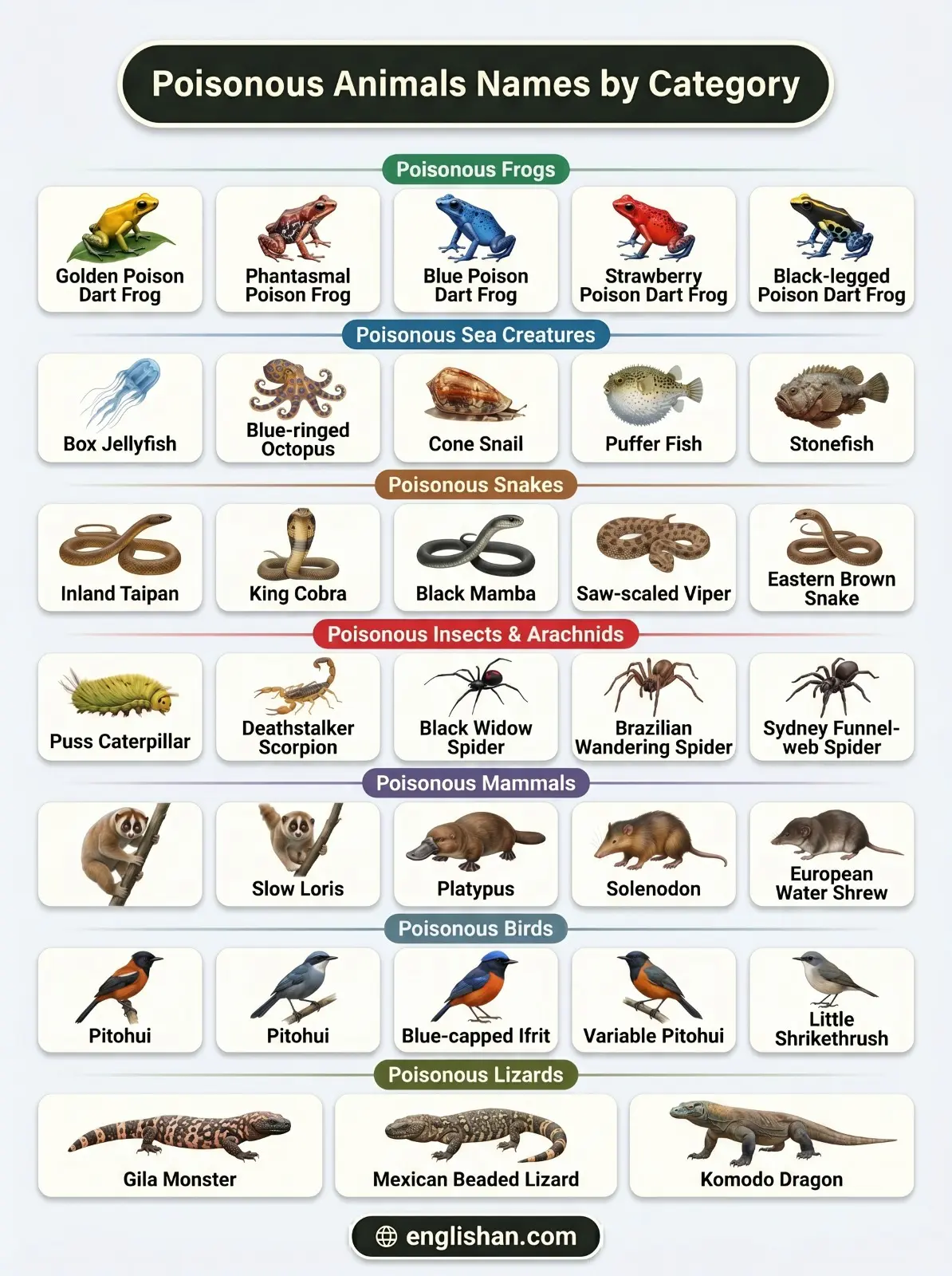
Top 10 Most Poisonous Animals Names in the World
Rankings are based on three factors: toxin potency (LD50 score), number of annual human deaths, and habitat overlap with human populations.
❶ Golden Poison Dart Frog
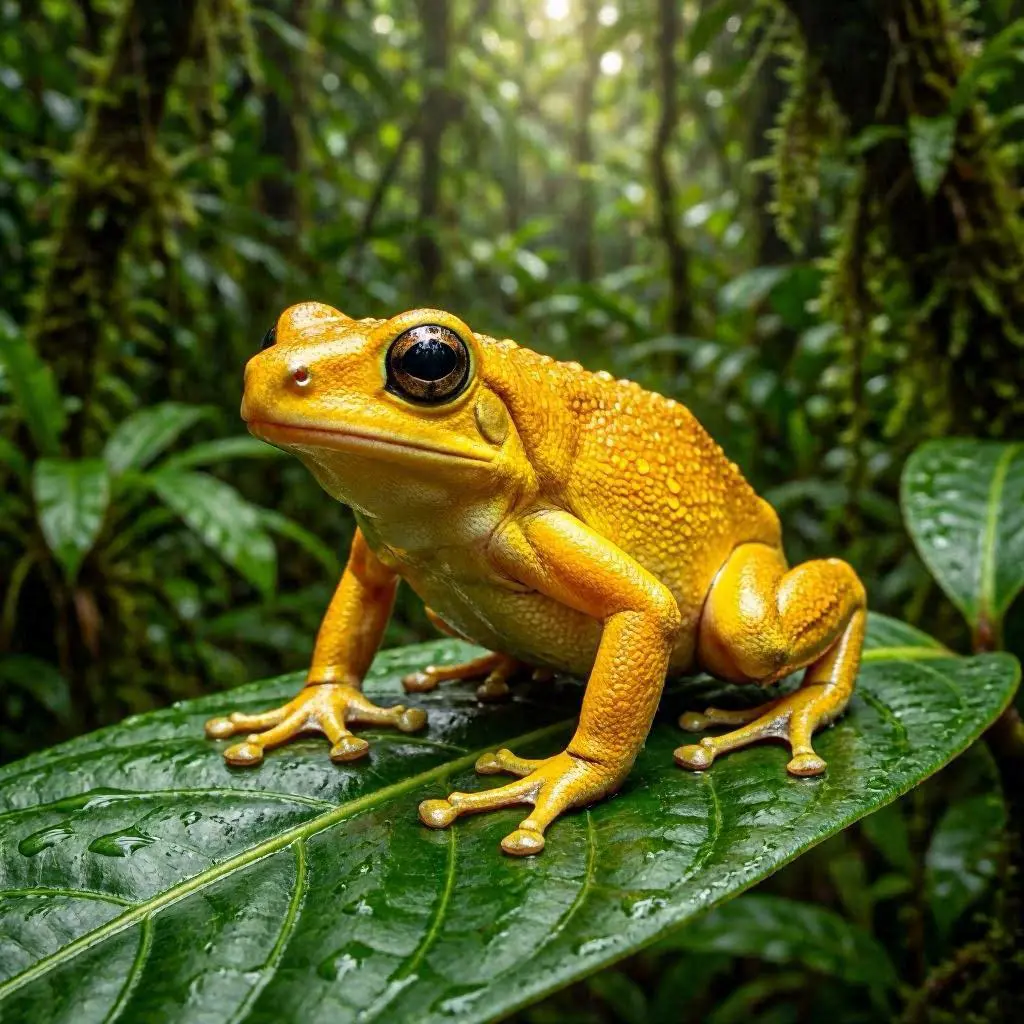
One gram of batrachotoxin can kill approximately 15,000 humans. Indigenous tribes in Colombia used its skin secretions to coat blowgun darts for centuries. It is the most poisonous animal ever documented.
❷ Box Jellyfish
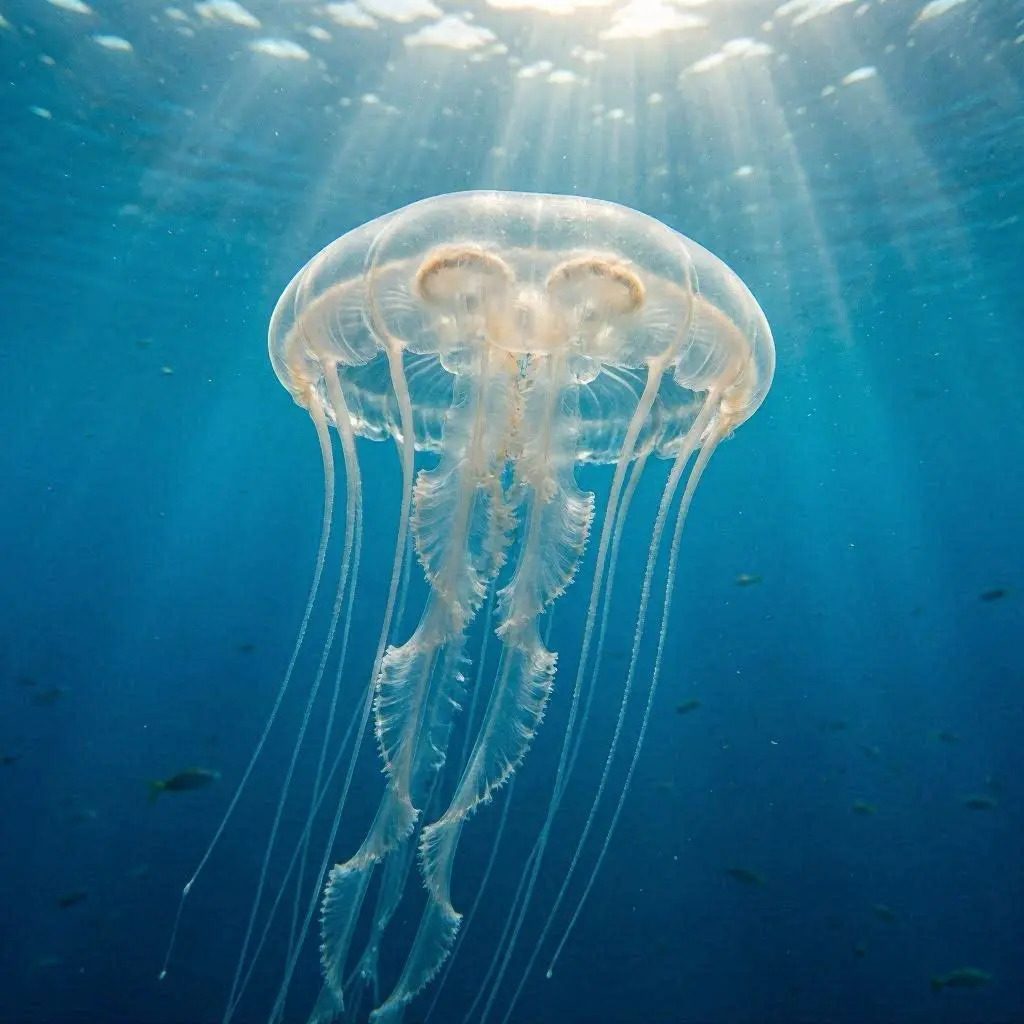
Responsible for an estimated 50 to 100 deaths per year in Australia and Southeast Asia. Its 15 tentacles, each up to 10 feet long, carry enough toxin to kill 60 adults. Death can occur in under 3 minutes from cardiac arrest.
❸ Inland Taipan
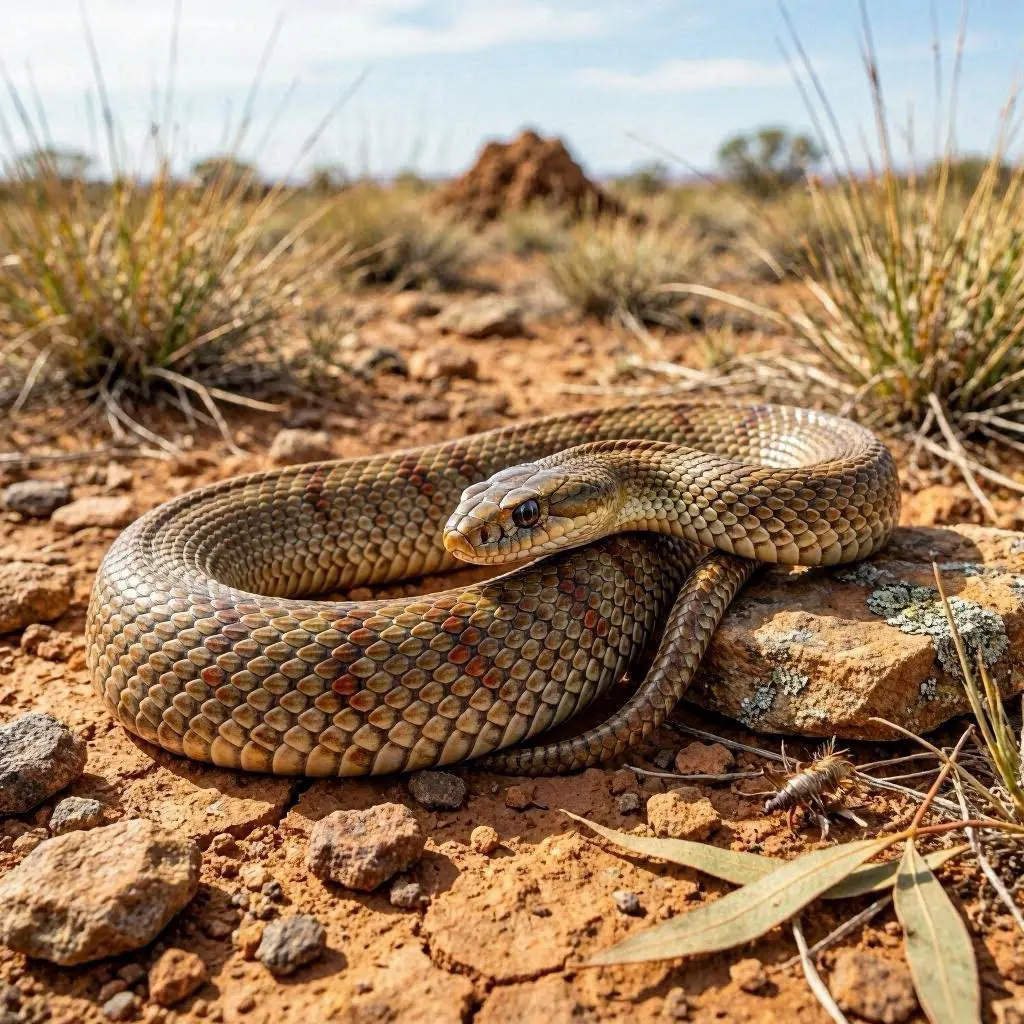
Its venom has an LD50 of 0.025 mg/kg, making it the most toxic venom of any land snake. A single bite delivers enough toxin to kill 100 adult humans. Fortunately, it lives in remote Australian outback and human encounters are rare.
❹ Puffer Fish
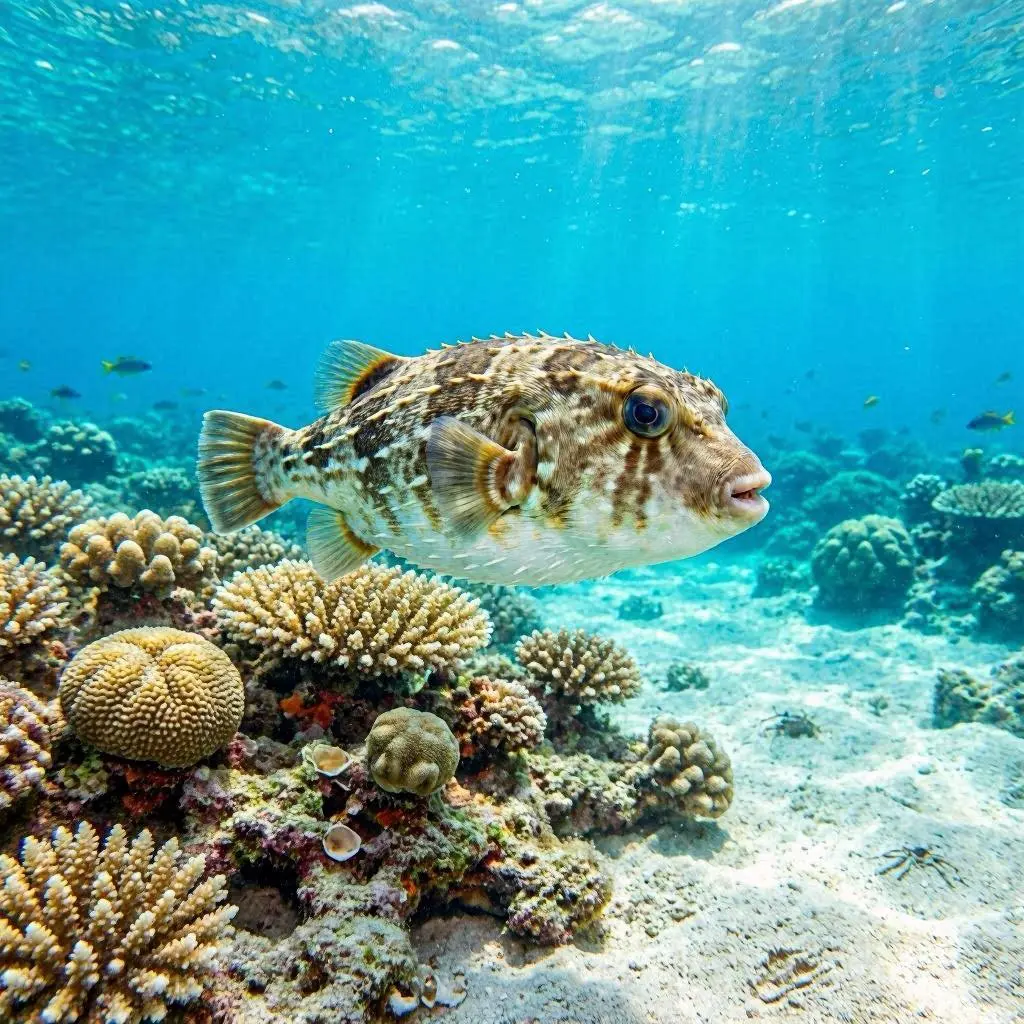
Tetrodotoxin is 1,200 times more toxic than cyanide and has no antidote. The poison is concentrated in the liver, ovaries, and skin. Fugu chefs in Japan are licensed and trained specifically to remove these parts safely.
❺ Blue-ringed Octopus
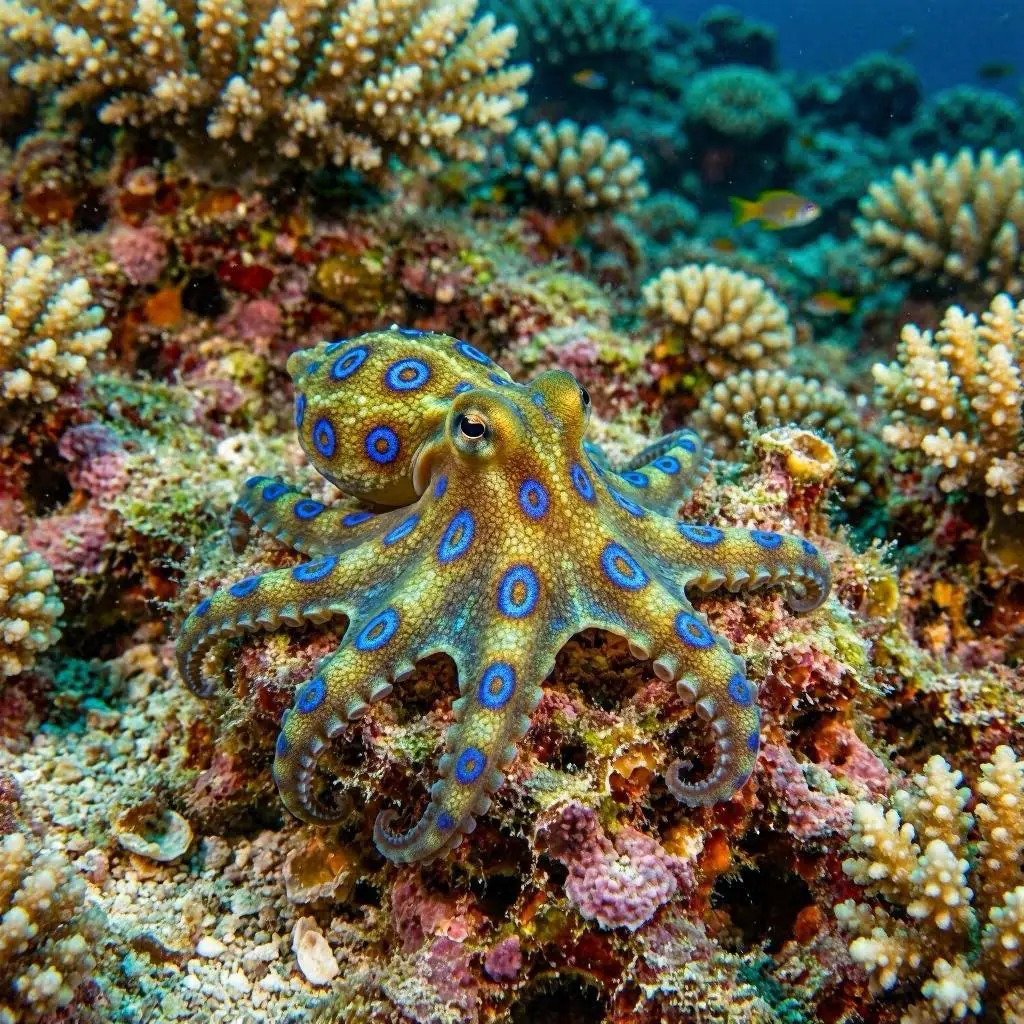
Barely the size of a golf ball, it carries enough tetrodotoxin to kill 26 adults. Its rings glow electric blue as a warning only when it is about to strike. No antivenom exists, and death from respiratory failure can occur within minutes.
❻ Cone Snail
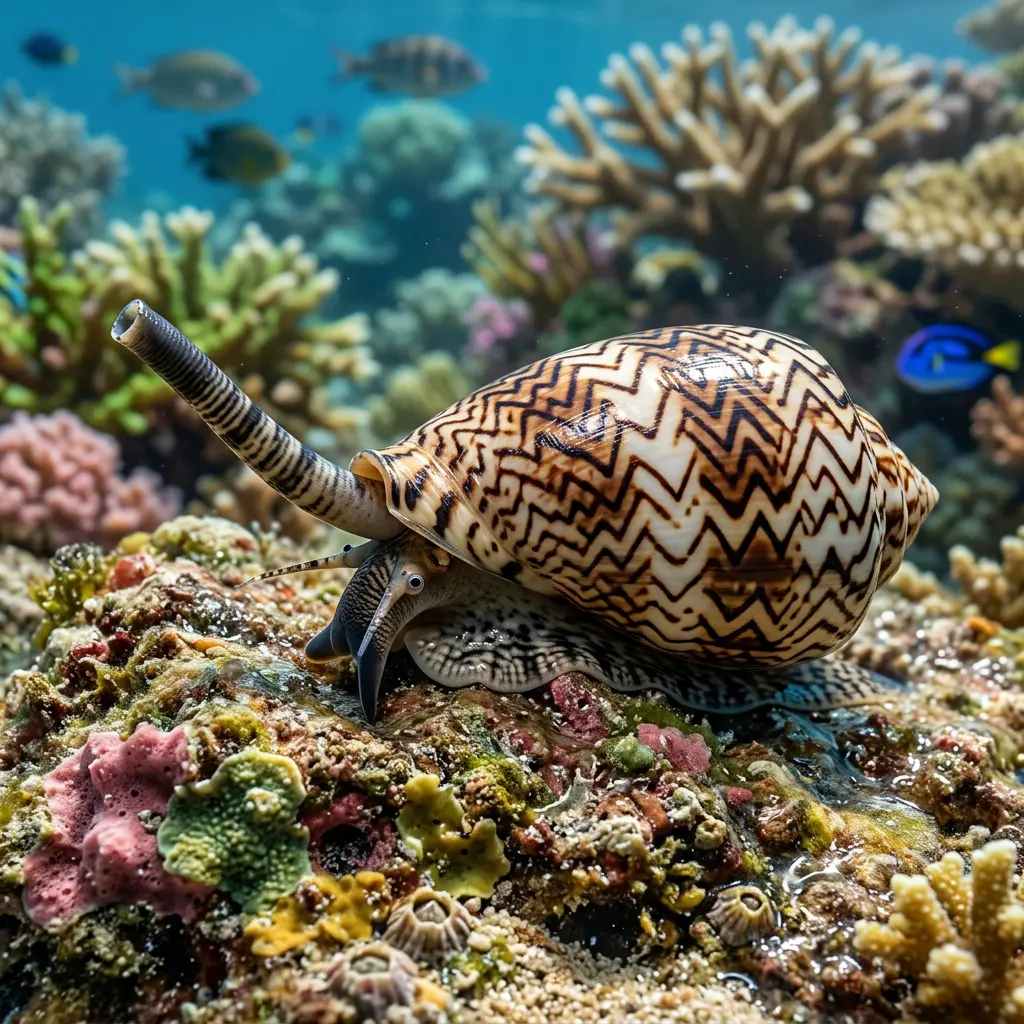
The “cigarette snail” nickname comes from a dark saying: once it stings you, you have just enough time to smoke a cigarette before paralysis sets in. It fires its venom-loaded radula like a harpoon and can strike in any direction, including backward.
❼ Deathstalker Scorpion
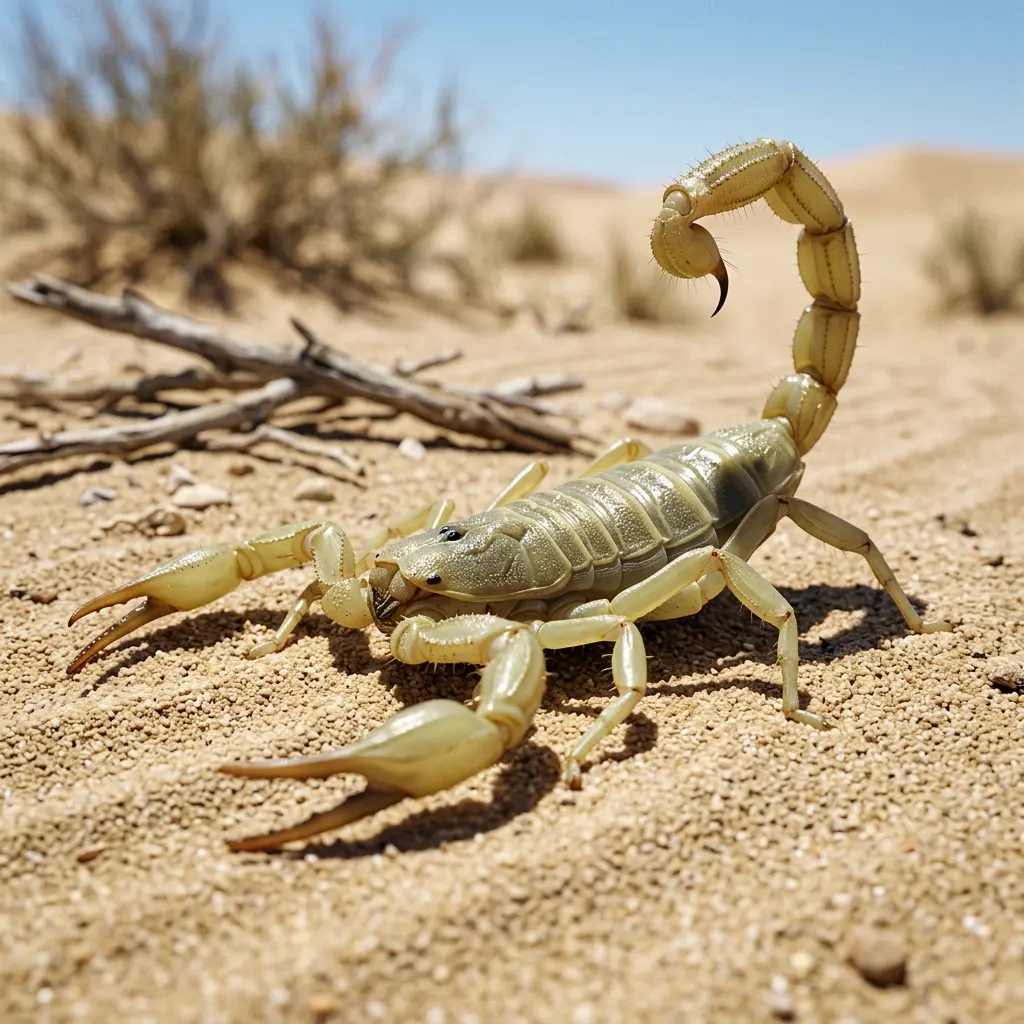
Responsible for approximately 75% of all scorpion-related deaths globally. Found throughout North Africa and the Middle East, its venom contains a cocktail of neurotoxins that cause pulmonary edema and heart failure.
❽ Black Widow Spider
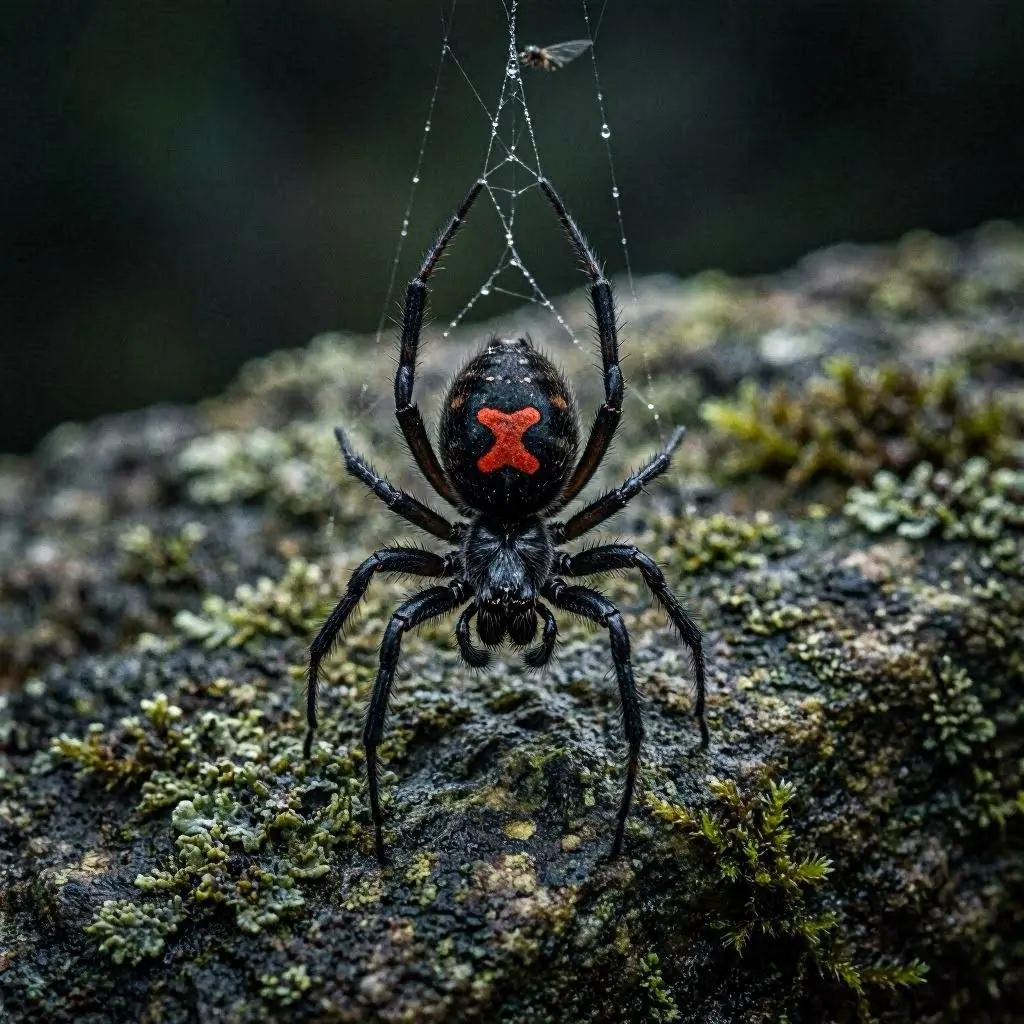
Its venom is 15 times more potent than a rattlesnake’s by weight. The neurotoxin latrotoxin causes latrodectism: severe muscle cramps, abdominal rigidity, and high blood pressure. Antivenom exists but is not always available in affected regions.
❾ Stonefish
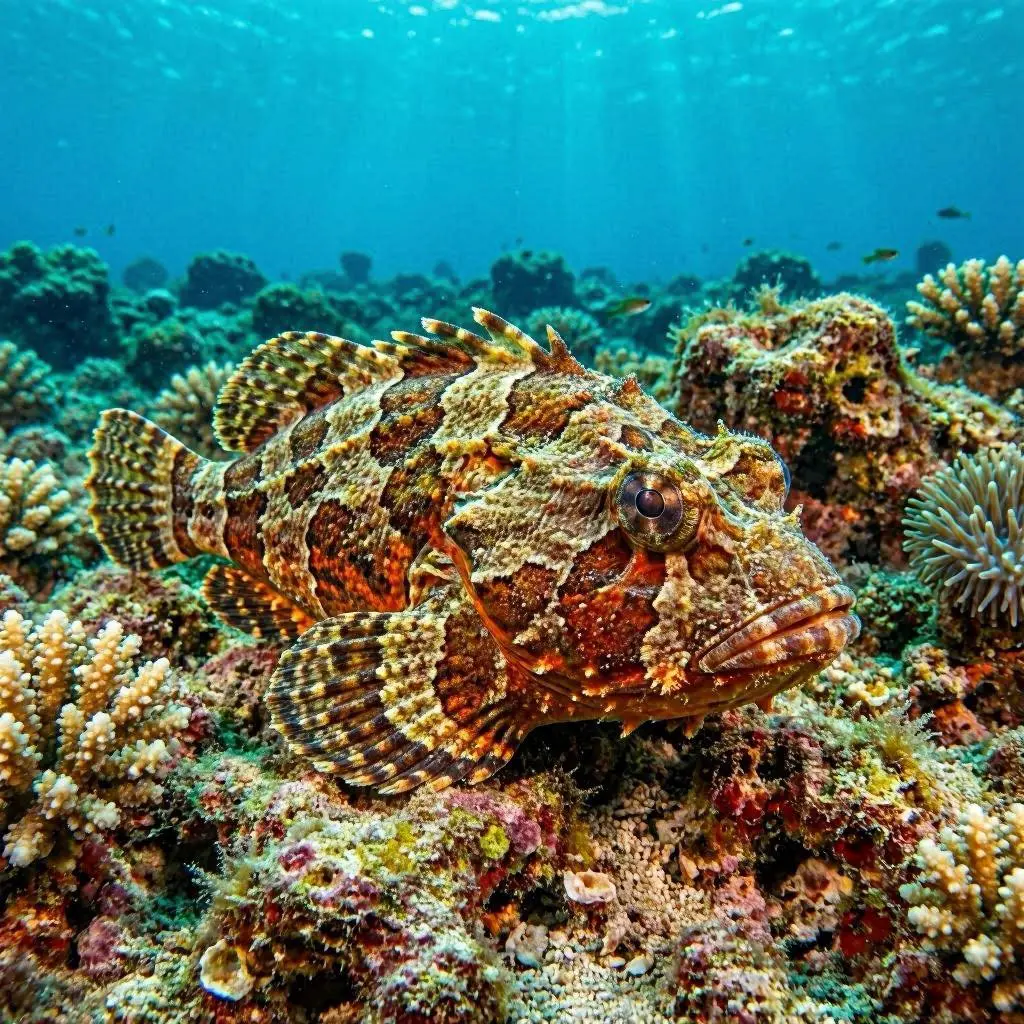
The most venomous fish alive injects its toxin through 13 sharp dorsal spines when stepped on. Pain is described as the worst imaginable. Without treatment, the venom destroys tissue and can cause heart failure.
❿ Slow Loris
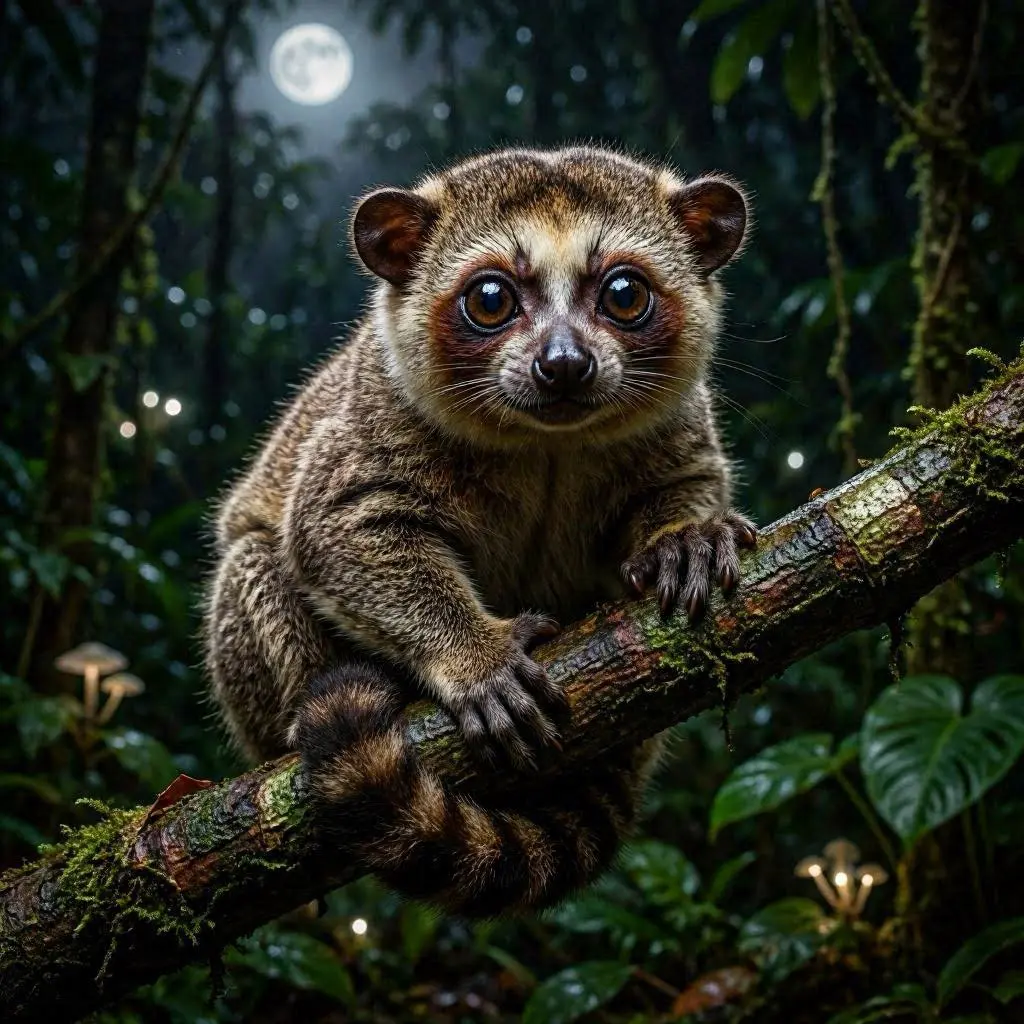
The only venomous primate. When threatened, it raises its arms, licks its brachial gland to coat its teeth, and delivers a venomous bite. The venom causes anaphylactic shock and is lethal in some documented cases.
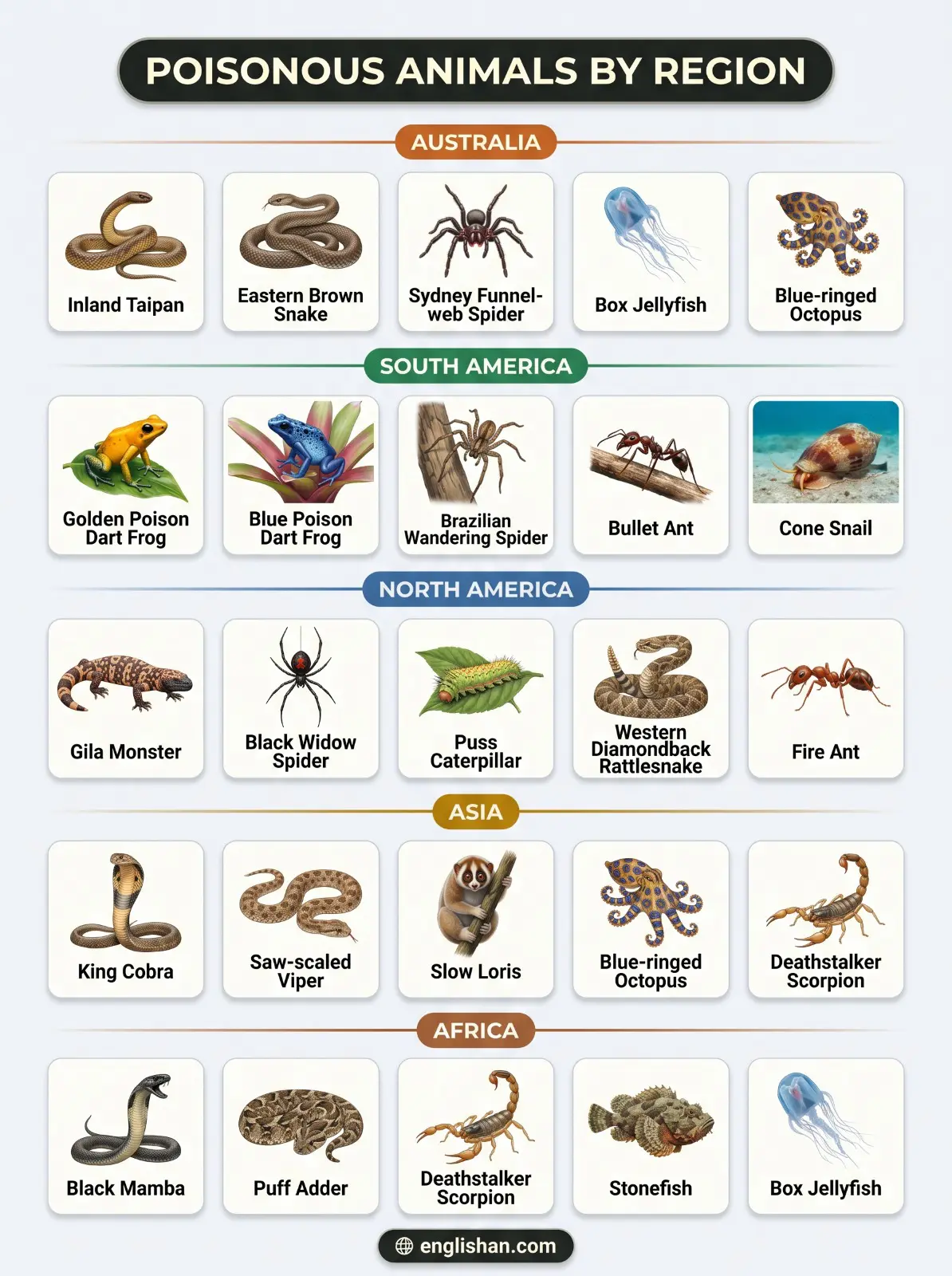
Poisonous Animals Names by Region
Poisonous animals are distributed across nearly every continent and ocean, often adapted to specific climates and ecosystems. This regional breakdown helps understand where the most notable species are commonly found and how their habitats influence their toxicity.
Poisonous Animals in Australia
- Inland Taipan
- Eastern Brown Snake
- Sydney Funnel-web Spider
- Box Jellyfish
- Stonefish
- Blue-ringed Octopus
- Platypus
Poisonous Animals in South America
- Golden Poison Dart Frog
- Blue Poison Dart Frog
- Brazilian Wandering Spider
- Bullet Ant
- Cone Snails
Poisonous Animals in North America
- Gila Monster
- Black Widow Spider
- Puss Caterpillar
- Western Diamondback Rattlesnake
- Fire Ants
Poisonous Animals in Asia
- King Cobra
- Saw-scaled Viper
- Slow Loris
- Blue-ringed Octopus
- Cone Snails
- Deathstalker Scorpion
Poisonous Animals in Africa
- Black Mamba
- Puff Adder
- Deathstalker Scorpion
- Toxic marine fish species (various)
How to Identify a Poisonous Animal
Identifying poisonous animals is not always straightforward. Many species use visual signals or deception to avoid predators, while others closely resemble harmless creatures. Two key concepts help explain this: aposematism and mimicry.
Aposematism: The Warning Color System
Aposematism is a natural warning system where poisonous animals display bright and striking colors to signal danger. These vivid patterns act as a visual “do not touch” sign in nature.
Common warning color patterns:
- Bright red or orange with black (poison dart frogs, Gila monster)
- Yellow and black banding (wasps, tiger salamanders)
- Bright blue markings on a dark background (blue-ringed octopus rings)
- Solid vivid green (some toxic caterpillars)
Mimicry: The Look-Alike Danger
Mimicry occurs when harmless animals imitate poisonous ones, or when dangerous species resemble harmless ones. This makes visual identification unreliable without proper knowledge or training.
For Examples:
- Coral snake vs. scarlet kingsnake: The coral snake is highly venomous, while the scarlet kingsnake is harmless. Both share red, yellow, and black bands. A traditional North American rhyme is often used for guidance, but it is not universally reliable.
- Stonefish vs. rocks: Stonefish are masters of camouflage and look like rocks or coral on the seafloor. There is no clear visual warning, so avoiding contact with reef surfaces is essential.
- Cone snails vs. decorative shells: Cone snails resemble attractive seashells often found on beaches. However, they can deliver venom through a harpoon-like tooth, even when handled from the shell surface.
In nature, appearance alone is not a safe method of identification. Awareness of habitat and behavior is often more reliable than visual cues.
How Toxic Animals Harm the Body: Types of Toxins
Not all animal toxins affect the body in the same way. They are generally grouped into four main types based on which system of the body they attack.
Neurotoxins
Neurotoxins attack the nervous system and disrupt signals between the brain and muscles. This can lead to paralysis, breathing failure, or cardiac arrest.
Examples:
- Batrachotoxin (dart frogs)
- Tetrodotoxin (puffer fish, blue-ringed octopus)
- Conotoxin (cone snails)
Cytotoxins
Cytotoxins damage cells and tissues directly at the site of contact and may spread to nearby areas. They often cause severe pain, swelling, tissue death, and organ damage.
Examples:
- Brown recluse spider venom
- Puff adder venom
- Cobra venom
Hemotoxins
Hemotoxins affect the blood and its ability to clot properly. This can lead to internal bleeding, organ failure, and extensive tissue damage.
Examples:
- Rattlesnake venom
- Viper venom
- Komodo dragon venom
Cardiotoxins
Cardiotoxins target the heart muscle, disrupting normal heart function and potentially causing arrhythmia or complete cardiac arrest.
Examples:
- Box jellyfish venom
- Black mamba venom
- Some scorpion toxins
What To Do If a Poisonous Animal Harms You
If a poisonous animal harms you, acting quickly and correctly can significantly reduce the risk of serious injury. While symptoms vary depending on the species and toxin involved, basic first-aid measures and prompt medical attention are often critical for a safe recovery.
General Rules (Apply to All Cases)
- Stay calm and limit physical movement to slow the spread of toxins through the bloodstream
- Get to a hospital or call emergency services immediately
- Try to remember or photograph the animal for identification (do not attempt to capture it)
- Do not cut the wound, suck out the venom, or apply a tourniquet
Snake Bite First Aid
- Move away from the snake (it may strike again)
- Keep the bitten limb at or below heart level
- Remove rings, watches, or tight clothing near the bite before swelling begins
- Mark the edge of swelling with a pen and note the time
- Do not apply ice, heat, or electric shock
- Get antivenom at a hospital as quickly as possible
Jellyfish Sting First Aid
- Do not rub the affected area, this activates unfired nematocysts
- Remove visible tentacles using a card or tweezers, never bare hands
- Rinse with seawater, not fresh water (fresh water causes remaining nematocysts to fire)
- For box jellyfish stings, vinegar deactivates remaining stingers and should be applied immediately
- Seek emergency care for box jellyfish stings without exception
Scorpion Sting First Aid
- Wash the sting site with soap and water
- Apply a cool compress to reduce swelling and pain
- Take an over-the-counter painkiller for mild stings
- Seek emergency care for children, the elderly, or anyone who develops difficulty breathing, rapid heart rate, or muscle spasms
Poisonous vs. Venomous: What Is the Real Difference?
These two words are not interchangeable, and confusing them is one of the most common mistakes in wildlife writing.
Poisonous animals are harmful when you touch, eat, or inhale them. The toxin works passively. The animal does not need to do anything for the poison to affect you.
Venomous animals actively inject their toxin using a delivery mechanism such as fangs, stingers, spines, or teeth. They choose to deploy it.
| Feature | Poisonous | Venomous |
|---|---|---|
| How toxin is delivered | Passive (touch/ingestion) | Active (bite/sting/injection) |
| Who controls exposure | The victim | The animal |
| Example | Golden Poison Dart Frog | King Cobra |
| Defense or offense | Usually defense | Both |
| Can you eat them safely? | No | Often yes (venom is protein-based) |
| Antivenom exists? | Rarely | Often |
A snake that bites you is venomous. A frog that poisons you when touched is poisonous. Some animals, like the Asian tiger snake, are both.
Fascinating Facts About the World’s Most Poisonous Animals
- Golden Poison Dart Frog is a toxin, batrachotoxin, that has no known antidote and can be fatal even in tiny amounts.
- Pitohui Bird is the world’s first documented poisonous bird, which was discovered after scientist Jack Dumbacher experienced numbness from handling its feathers.
- Slow Loris is the only venomous primate in the world, capable of delivering a toxic bite.
- Tetrodotoxin is a widespread, powerful toxin found in puffer fish, blue-ringed octopuses, cone snails, rough-skinned newts, and some starfish.
- Cone Snails Are Deceptive beautiful shells hide a venomous harpoon-like tooth that can strike from the shell opening.
- Some Animals Resist Toxins Mongooses, honey badgers, and hedgehogs have evolved natural resistance to certain poisons and venoms.
- Hedgehog Defense Trick: Hedgehogs sometimes coat their spines with toxic substances from other animals as an extra layer of protection.
Conclusion
The animal kingdom has produced some remarkably sophisticated chemical weapons over millions of years of evolution. From frogs that absorb plant toxins to birds with poisonous feathers, nature’s most toxic creatures span every habitat on earth. Understanding which animals are poisonous, where they live, and how their toxins work is not just fascinating science. It is practical knowledge that can save lives.
The key points to remember: poisonous differs from venomous, bright colors are usually a warning, and no wild animal with unusual coloring should ever be touched without expert guidance.
FAQs
The golden poison dart frog (Phyllobates terribilis) is widely considered the most poisonous animal on earth. Its skin contains batrachotoxin in quantities large enough to kill 10 to 20 adult humans. A single frog carries about one milligram of the toxin, which is enough to cause death.
Poisonous animals harm you through contact, touch, or ingestion. Venomous animals actively inject their toxin using fangs, stingers, or spines. A simple way to remember it: if you bite it and you die, it is poisonous. If it bites you and you die, it is venomous.
Yes, though they are rare. The slow loris, platypus, solenodon, and certain shrews are all capable of delivering toxic bites or stings. The slow loris is the only primate known to be venomous.
A brief incidental touch from a captive-bred frog (which has no toxin, as it does not eat the wild insects that produce batrachotoxin) is harmless. Touching a wild specimen for more than a brief moment, or having any open wound, poses serious risk.
The mosquito kills the most humans annually, estimated at over 700,000 deaths through malaria, dengue fever, and other diseases. Among strictly poisonous and venomous animals, snakes kill approximately 138,000 people per year, and scorpions kill an estimated 3,300.
The Inland Taipan has the most toxic venom of any land snake. However, the saw-scaled viper kills the most people annually because it lives in densely populated areas of South Asia and Africa where antivenom access is limited.
Yes. The Pitohui and Blue-capped Ifrit of Papua New Guinea carry batrachotoxin in their feathers and skin. They are the only confirmed poisonous birds in the world.
By toxin potency, yes. Its tetrodotoxin is lethal in very small doses and there is no antivenom. However, the box jellyfish causes more annual deaths because it is far more commonly encountered in shallow coastal waters across a large geographic range.
You May Also Like
- Difference Between Reptiles and Amphibians
- 90+ Dangerous Animals Names in English
- Top 22 Strongest Animals in the World
Poisonous Animals Quiz
Poisonous Animals
What makes an animal poisonous rather than venomous?
Venom is injected; poison is absorbed or swallowed.
If it bites you and you feel ill, venomous. If you bite it, poisonous.
A poison dart frog is poisonous; a cobra is venomous.
Where does a poison dart frog's toxin come from?
Captive-bred frogs raised on other food are harmless, which proves the source.
Change the diet and the poison disappears.
Zoo-bred dart frogs can be handled safely.
Name the fish.
A Japanese delicacy containing a lethal toxin unless prepared by a licensed chef is the ___.
Tetrodotoxin concentrates in the organs and has no antidote.
The preparation is what makes it survivable.
Fugu chefs train for years before being licensed.
Why are many poisonous animals brightly coloured?
Aposematic colouring works because a predator that survives one attempt avoids the pattern afterwards.
Warning colouring only works if the threat is real often enough.
Harmless species sometimes copy the pattern to borrow the protection.
Three of these are venomous. Which is poisonous instead?
Glands behind the head release toxin when the animal is bitten or handled.
Ask how the toxin gets in.
Dogs are poisoned by mouthing cane toads, not bitten by them.
Turn on JavaScript for the interactive quiz. The full practice set is shown above.