When we talk about the strongest animals in the world, it’s tempting to think about size alone. Big body, big muscles, done. But nature is far more interesting than that. Some of the strongest creatures on Earth weigh less than a paperclip. Others are built like living tanks. And some have jaws powerful enough to crush a car engine.
In this article, we look at strength from every angle: raw lifting power, bite force, strength relative to body size, and endurance. Because a dung beetle that can pull 1,000 times its own body weight is just as impressive as an elephant that can lift a tree trunk.
Here’s our complete list of the 22 strongest animals in the world, with the real numbers to back it up.
What Makes an Animal Strong?
Animal strength is not defined by one single factor. Different species show different kinds of power depending on how they survive, hunt, and adapt in their environments.
- Physical strength: The ability to lift, push, or pull heavy weight. Animals like elephants and gorillas are known for this raw power.
- Bite force: Some animals are strong because of their jaws. Crocodiles and big cats can produce extremely powerful bites for hunting and defense.
- Speed plus power: Strength can also mean combining speed with power. Cheetahs are a good example because they rely on both to catch prey quickly.
- Survival strength: This refers to endurance and adaptation. It shows how well an animal survives harsh conditions, hunger, or extreme environments.
- Relative strength: Some small animals like ants can lift many times their own body weight, which makes them extremely strong for their size.
Explore more animals that start with different letters:
A | B | C | D | E | F | G | H | I | J | K | L | M | N | O | P | Q | R | S | T | U | V | W | X | Y | Z
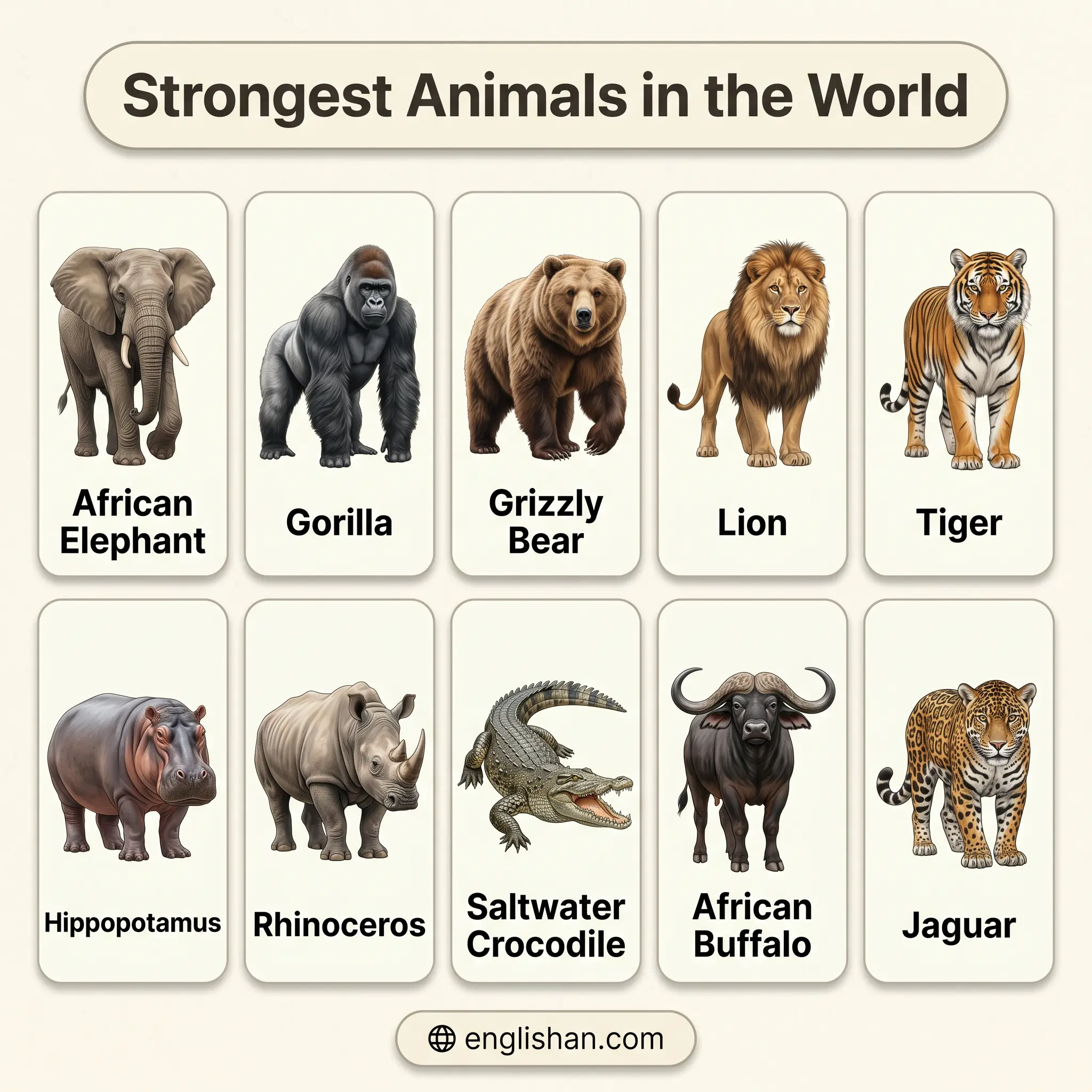
List of Strongest Animals in the World
- African Elephant
- Gorilla
- Grizzly Bear
- Tiger
- Lion
- Hippopotamus
- Saltwater Crocodile
- Rhinoceros
- Anaconda
- African Buffalo
- Orangutan
- Jaguar
- Kodiak Bear
- Wolverine
- Harpy Eagle
- Ox
- Sperm Whale
- Blue Whale
- Leopard Seal
- Hercules Beetle
Top Strongest Animals in the World with Pictures
❶ African Elephant
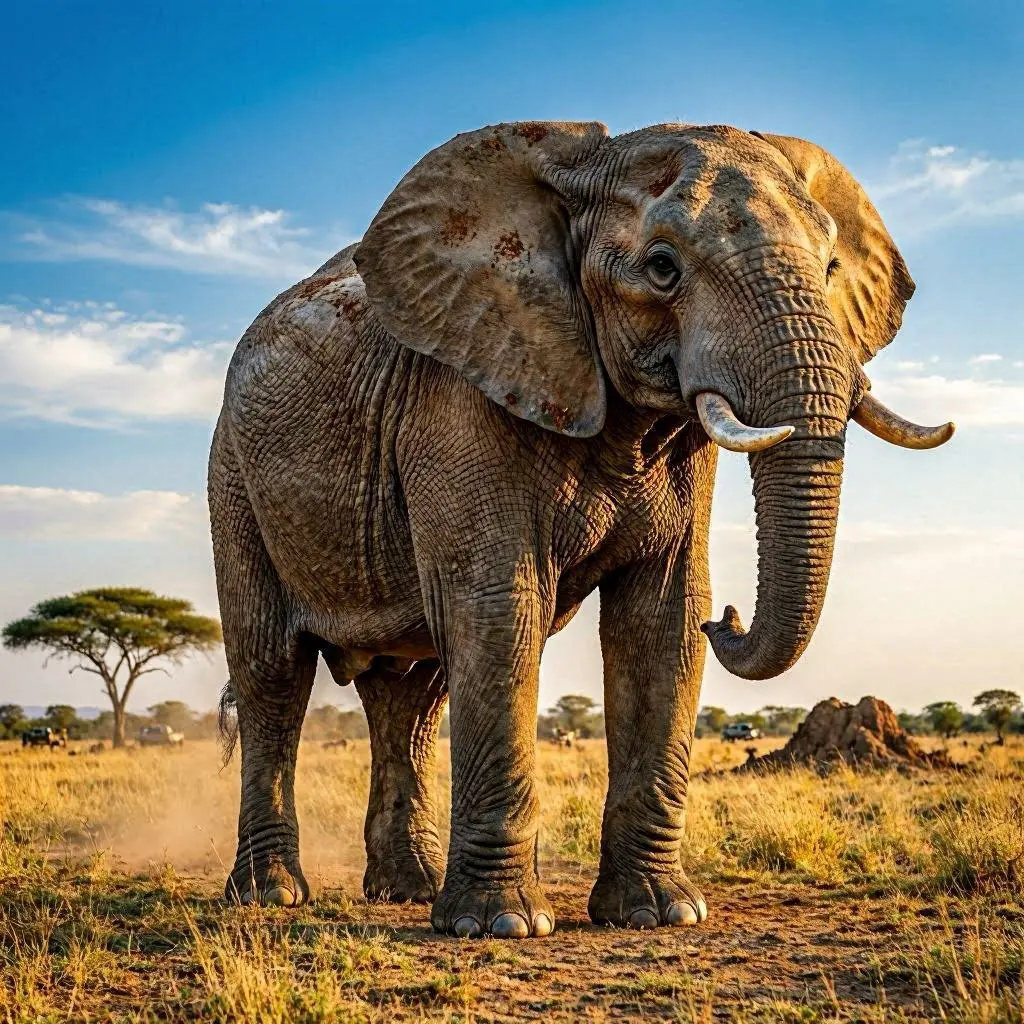
| Type | Mammal |
| Found | Savannas, forests, and grasslands of Africa |
| Body weight | Up to 6,000 kg |
| Trunk lift | Up to 300 kg |
| Total carry capacity | Up to 9,000 kg |
The African elephant is the strongest land animal on Earth. Its trunk alone contains over 40,000 muscles and can carry 300 kg. The whole animal can move up to 9,000 kg, which equals 130 adult humans. Elephants use this strength daily: pushing trees, carrying logs, digging for water, and defending their herd. Their tusks can lever objects up to 900 kg. No land animal comes close in absolute strength.
❷ Gorilla
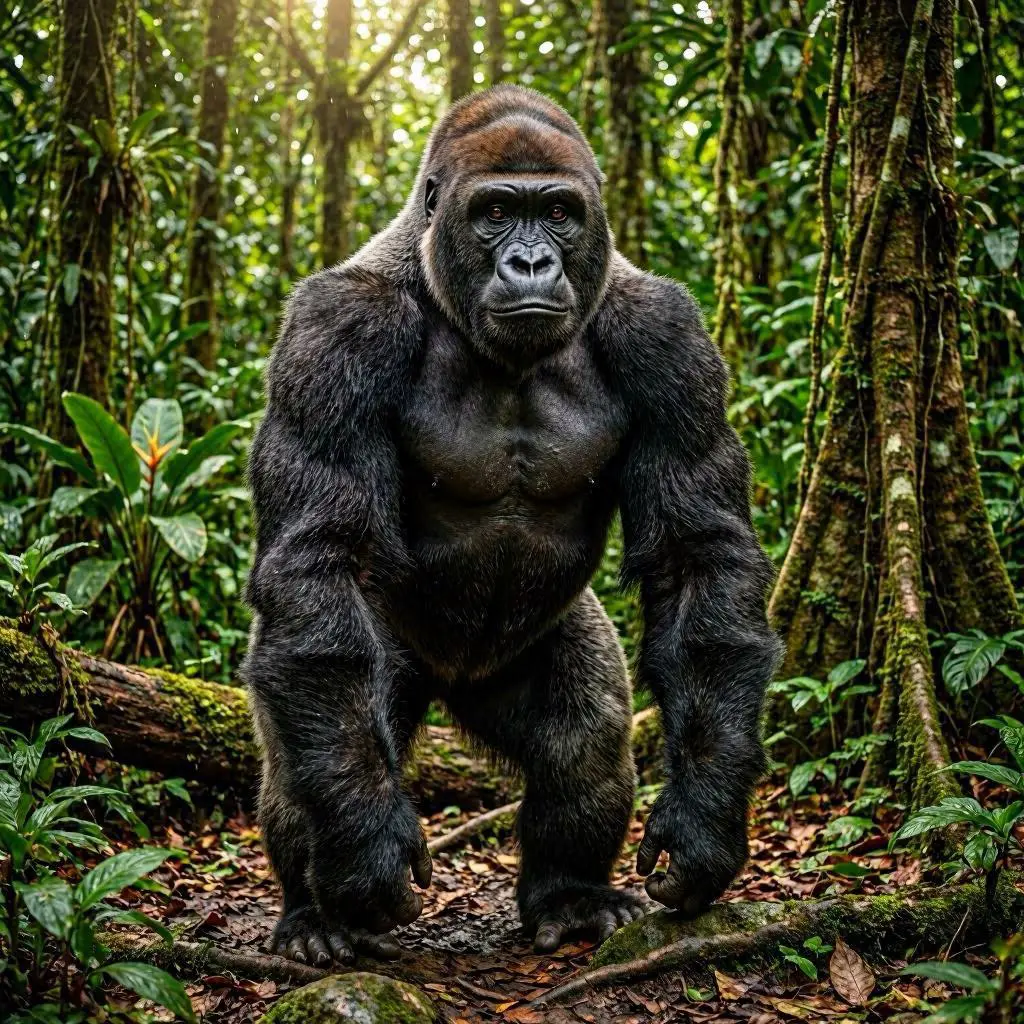
| Type | Mammal |
| Found | Tropical rainforests of Central Africa |
| Body weight | Up to 200 kg |
| Estimated lift | Up to 815 kg |
| Bite force | 1,300 PSI |
Gorillas are the strongest primates on Earth. A silverback weighing 200 kg can lift up to 815 kg, roughly 10 times its own body weight. Their daily life of knuckle-walking, climbing, and branch-pulling builds extraordinary upper body strength. The world’s strongest humans can lift around 263 kg in competition. A gorilla triples that casually. Despite this power, gorillas are peaceful animals who rarely use their strength aggressively.
❸ Grizzly Bear
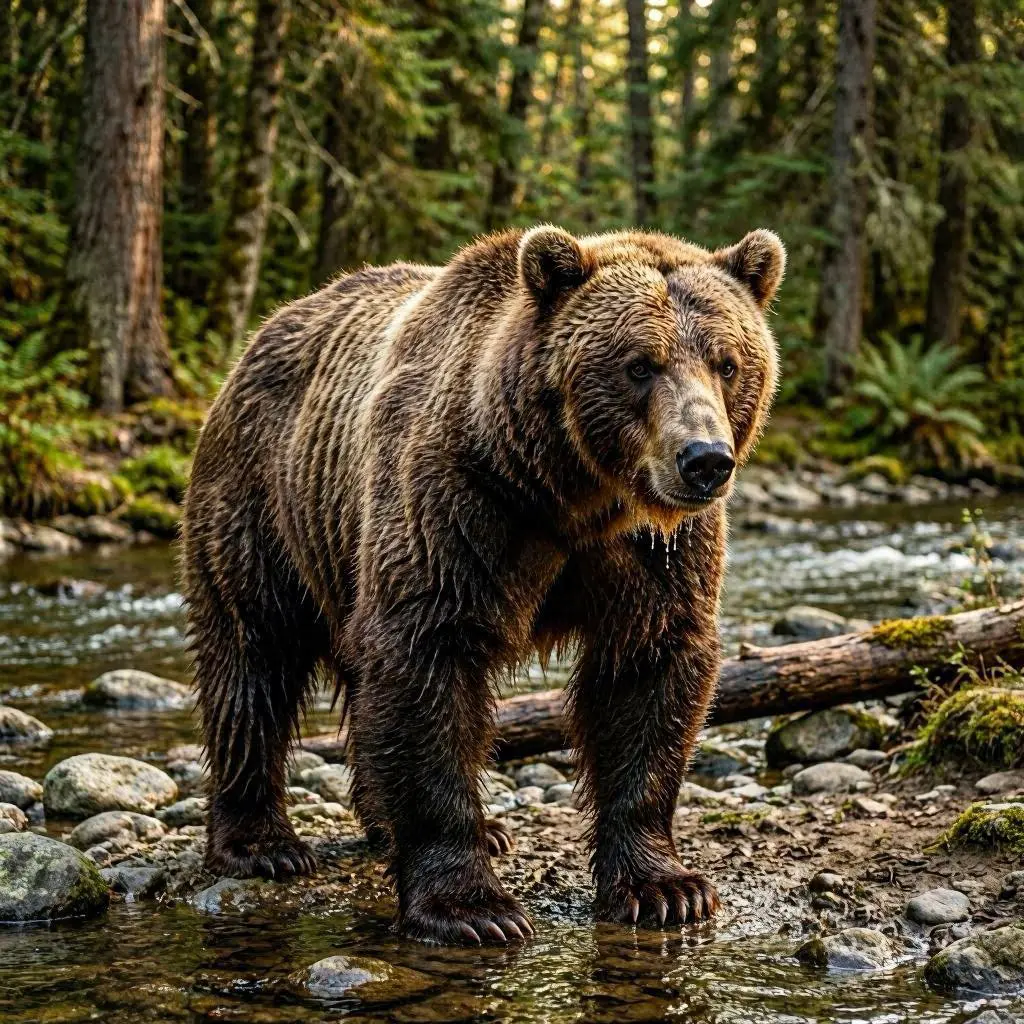
| Type | Mammal |
| Found | Forests and mountains of North America |
| Body weight | Up to 680 kg |
| Single-paw lift | 227 kg |
| Bite force | 975 to 1,160 PSI |
| Top speed | 56 km/h |
Grizzlies are one of the most powerful land predators alive. A single paw can lift 227 kg, roughly the weight of five strong adult humans. Their muscular shoulders let them flip boulders, dig through frozen ground, and overpower elk and moose. Add a bite force of up to 1,160 PSI and top speed of 56 km/h, and you have an animal with zero natural predators.
❹ Tiger
| Type | Mammal |
| Found | Forests, mangroves, and grasslands of Asia |
| Body weight | Up to 300 kg |
| Carry capacity | Up to 550 kg |
| Bite force | 1,050 PSI |
| Top speed | 65 km/h |
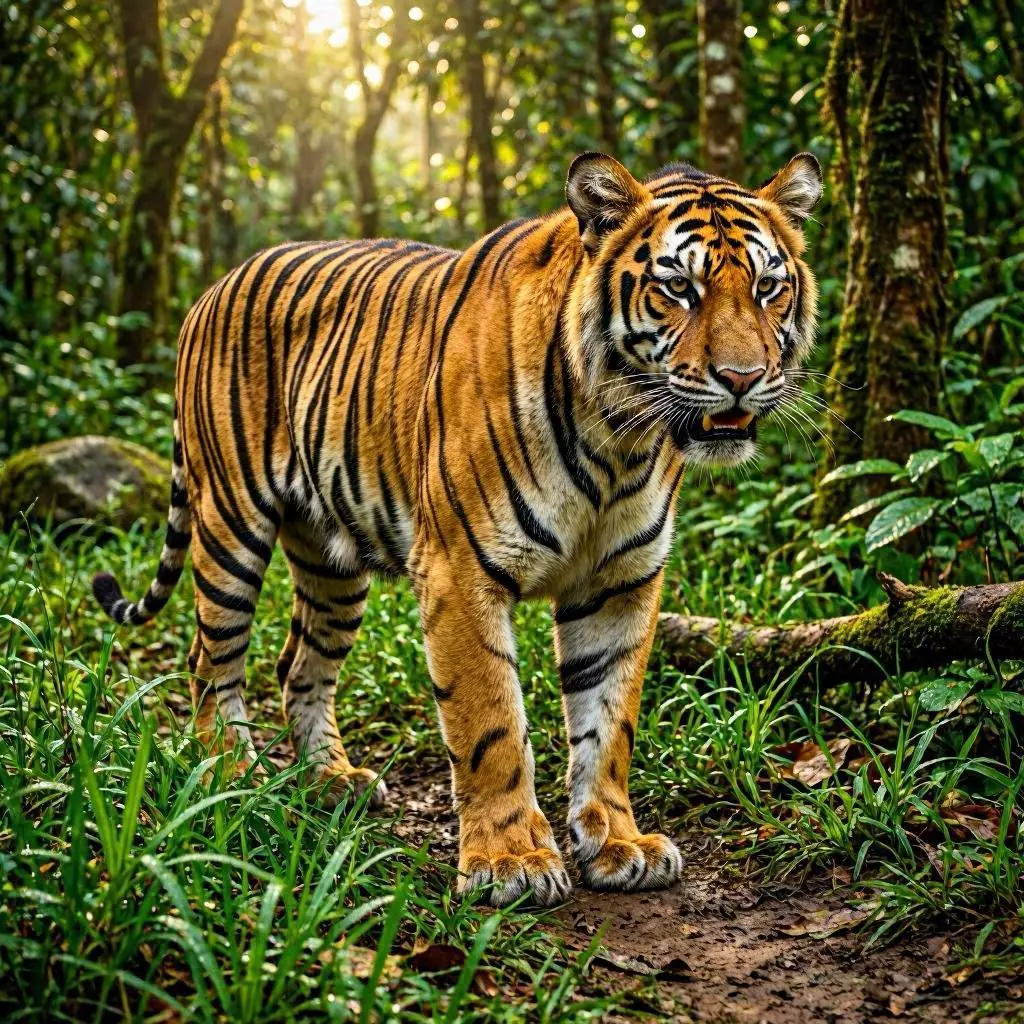
Tigers are the strongest of all big cats, and they hunt entirely alone. A Bengal tiger can carry prey up to 550 kg, twice its own body weight. They also burst to 65 km/h in short sprints and can deliver a paw strike powerful enough to be instantly lethal. Their combination of stealth, speed, and strength makes them the most complete solo hunter on land.
❺ Lion
| Type | Mammal |
| Found | Grasslands and savannas of Africa |
| Body weight | 150 to 250 kg (males) |
| Estimated lift | Up to 450 kg |
| Bite force | 650 PSI |
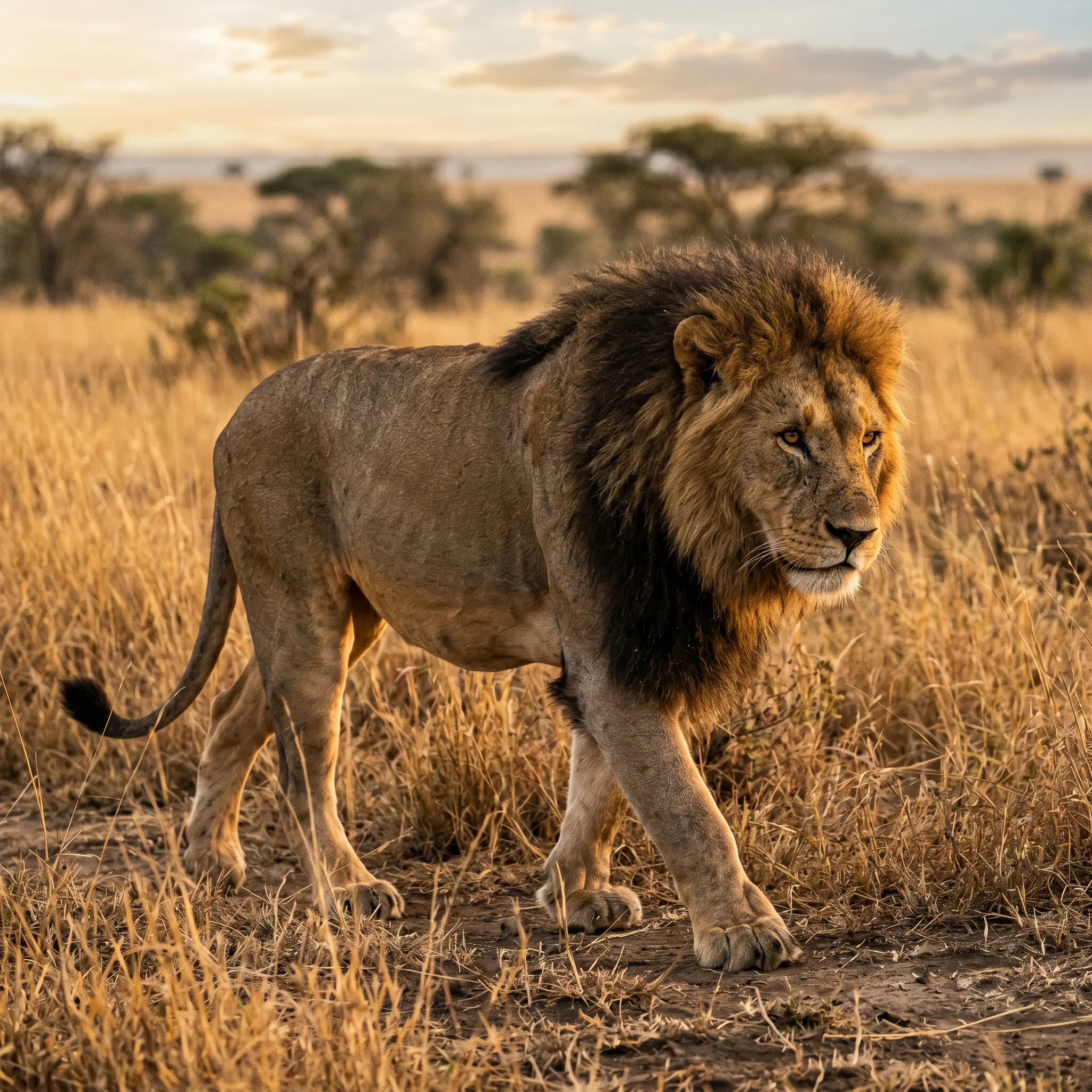
Lions blend individual strength with coordinated group hunting. A male can drag a 250 kg wildebeest across the ground and is estimated to lift up to 450 kg. When a pride coordinates a takedown on a buffalo weighing 800 kg, the combined force is something very few animals can resist. Their 650 PSI bite and powerful hindquarters make every attack count.
❻ Hippopotamus
| Type | Mammal |
| Found | Rivers, lakes, and wetlands of Sub-Saharan Africa |
| Body weight | Up to 3,200 kg |
| Bite force | 1,800 PSI |
| Jaw opening | 150 degrees |
| Land speed | 30 km/h |
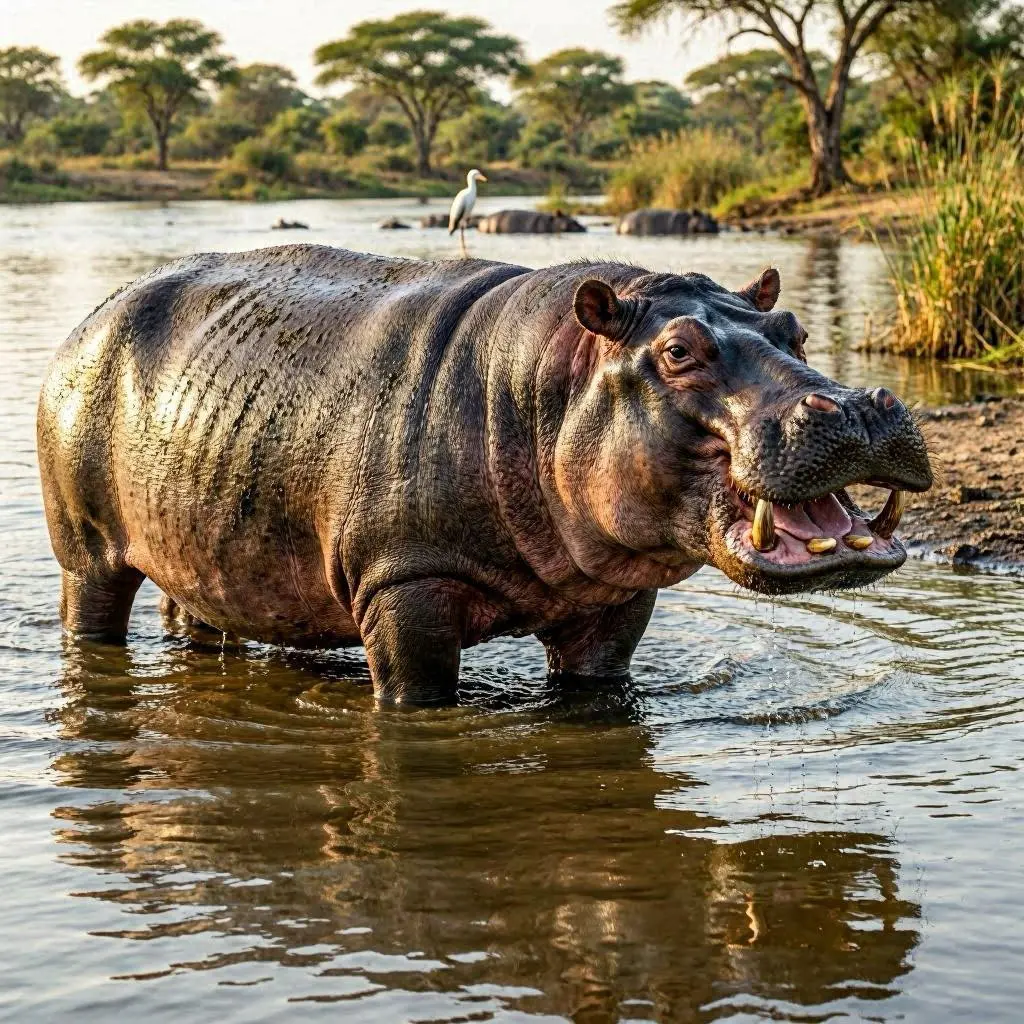
Hippos are among the most dangerous animals in Africa, and their physical stats explain why. At 3,200 kg with a 1,800 PSI bite force and canine teeth reaching 50 cm, they are built for dominance. Their jaws open 150 degrees wide and can snap a small boat in half. On land they charge at 30 km/h, faster than most humans can sprint. Hippos kill more people in Africa than almost any other large animal.
❼ Saltwater Crocodile
| Type | Reptile |
| Found | Rivers and coastal areas of Southeast Asia and Australia |
| Body weight | Up to 1,000 kg |
| Length | Up to 6 metres |
| Bite force | 3,700 PSI |
| Water speed | 29 km/h |
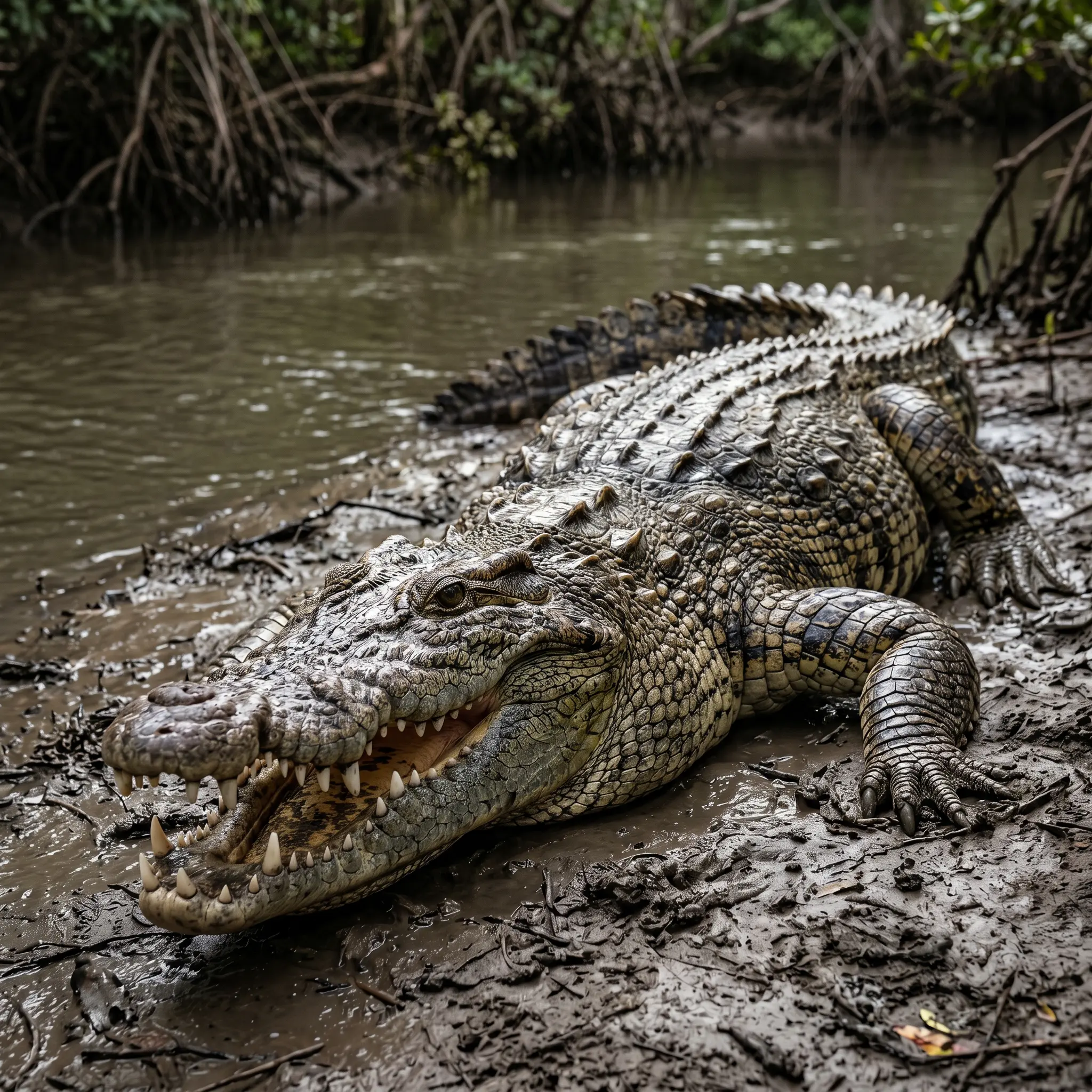
The saltwater crocodile has the most powerful bite ever recorded on a living animal. Its jaws close at 3,700 PSI, more than 23 times the average human bite. As an ambush predator it waits motionless underwater, then erupts with explosive speed. Its death roll uses the entire body to disorient and tear apart prey. One note worth knowing: its jaw-opening muscles are surprisingly weak. A rubber band can hold a croc’s mouth shut, but you would never want to test the other direction.
❽ Rhinoceros
| Type | Mammal |
| Found | Grasslands and savannas of Africa and Asia |
| Body weight | 1,800 to 2,500 kg |
| Horn length | Up to 150 cm |
| Charge speed | 50 km/h |
| Estimated push force | 800 to 1,100 kg |
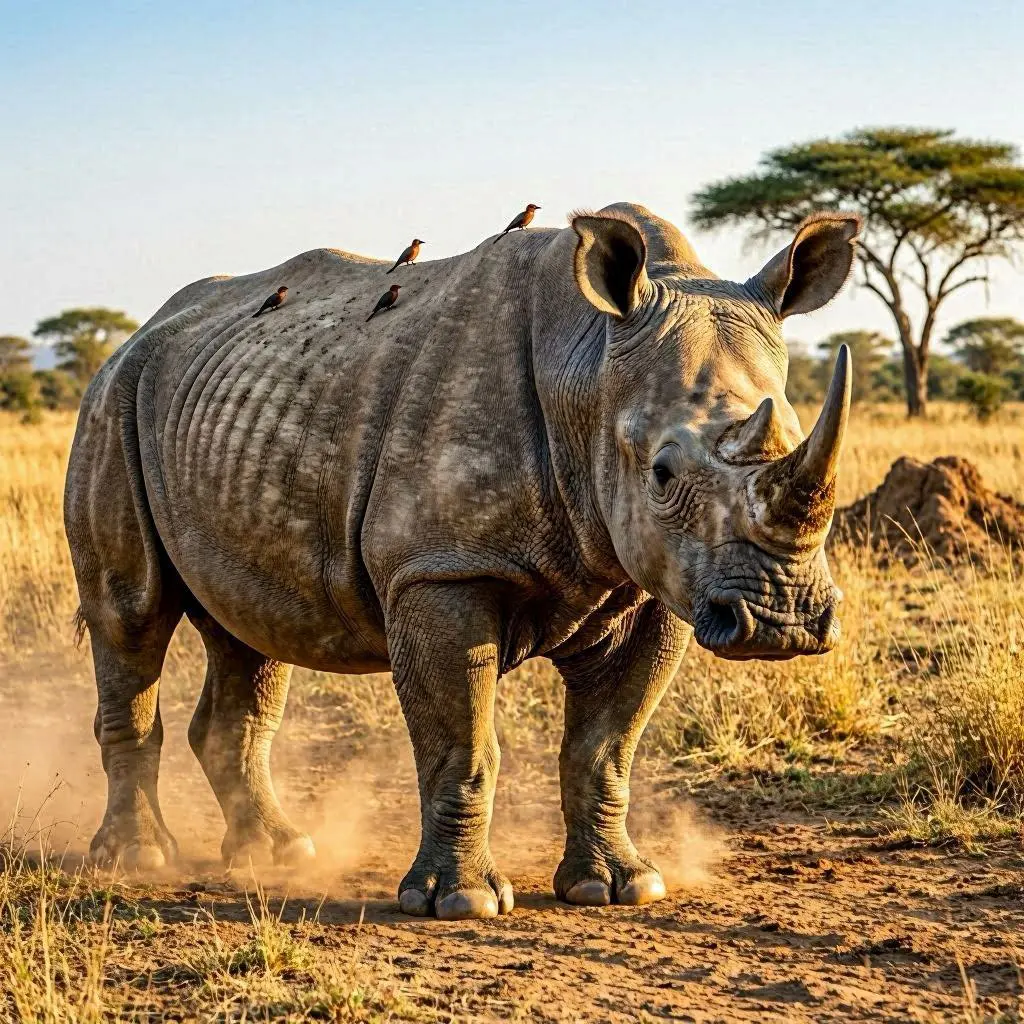
Rhinos are nature’s armored vehicle. An adult white rhino weighs up to 2,500 kg and can charge at 50 km/h. Their estimated push and pull force falls between 800 and 1,100 kg. Their hide is up to 5 cm thick, absorbing impacts that would cripple most animals. Few predators will challenge a healthy adult rhino, and those that try rarely succeed.
❾ Anaconda
| Type | Reptile |
| Found | Rainforests and wetlands of South America |
| Body weight | Up to 250 kg |
| Length | Up to 9 metres |
| Constriction force | 90 PSI |
| Maximum prey size | Up to 300 kg |
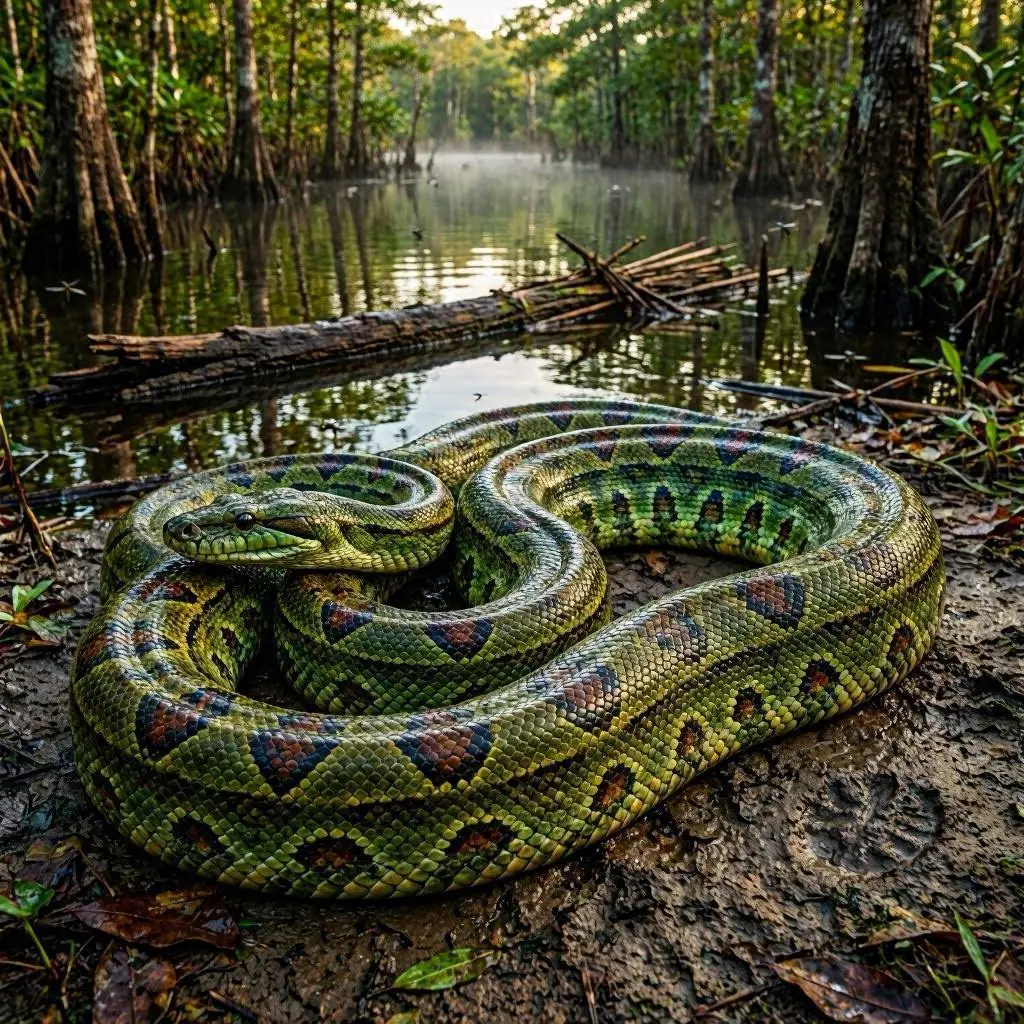
The green anaconda is the world’s heaviest snake and kills through constriction, not venom. At 90 PSI of squeeze force, it doesn’t simply suffocate prey. Research shows constriction halts blood circulation, causing unconsciousness within seconds. Prey weighing up to 300 kg, including deer and caimans, have been recorded as victims. The snake then swallows the animal whole.
❿ African Buffalo
| Type | Mammal |
| Found | Savannas and grasslands of Sub-Saharan Africa |
| Body weight | Up to 900 kg |
| Horn span | Up to 160 cm |
| Top speed | 57 km/h |
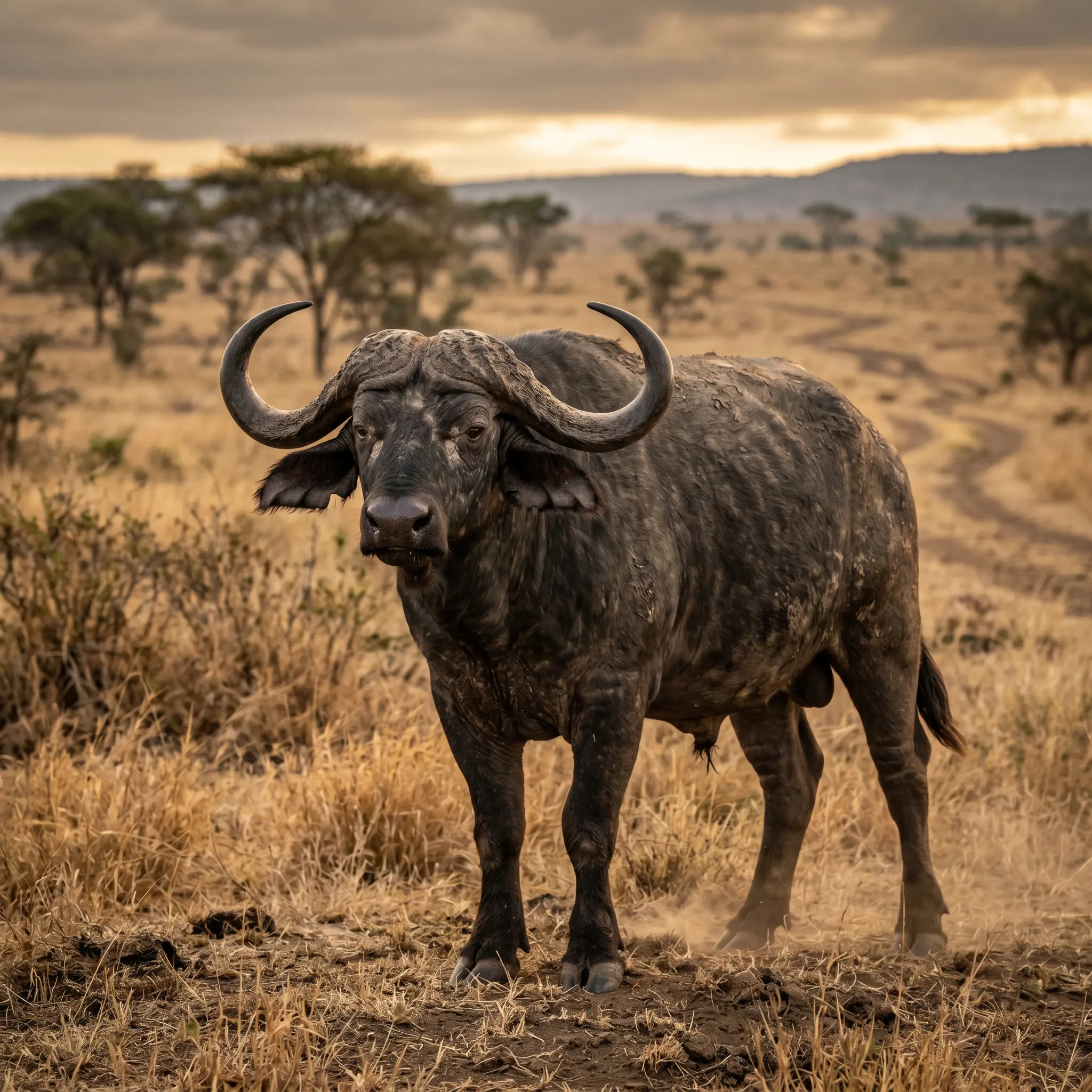
The African buffalo is one of the most feared animals on the continent. Weighing up to 900 kg with a thick horn boss acting as a natural shield, they are notoriously aggressive and will charge lions without hesitation. Herds have been documented turning the tables on predators, chasing and trampling lions that attacked their young. Their strength is as much about fearlessness and collective force as raw individual power.
⓫ Orangutan
| Type | Mammal |
| Found | Rainforests of Borneo and Sumatra |
| Body weight | 60 to 90 kg |
| Estimated lift | Up to 227 kg |
| Grip strength | 272 kg |
| Bite force | 575 PSI |
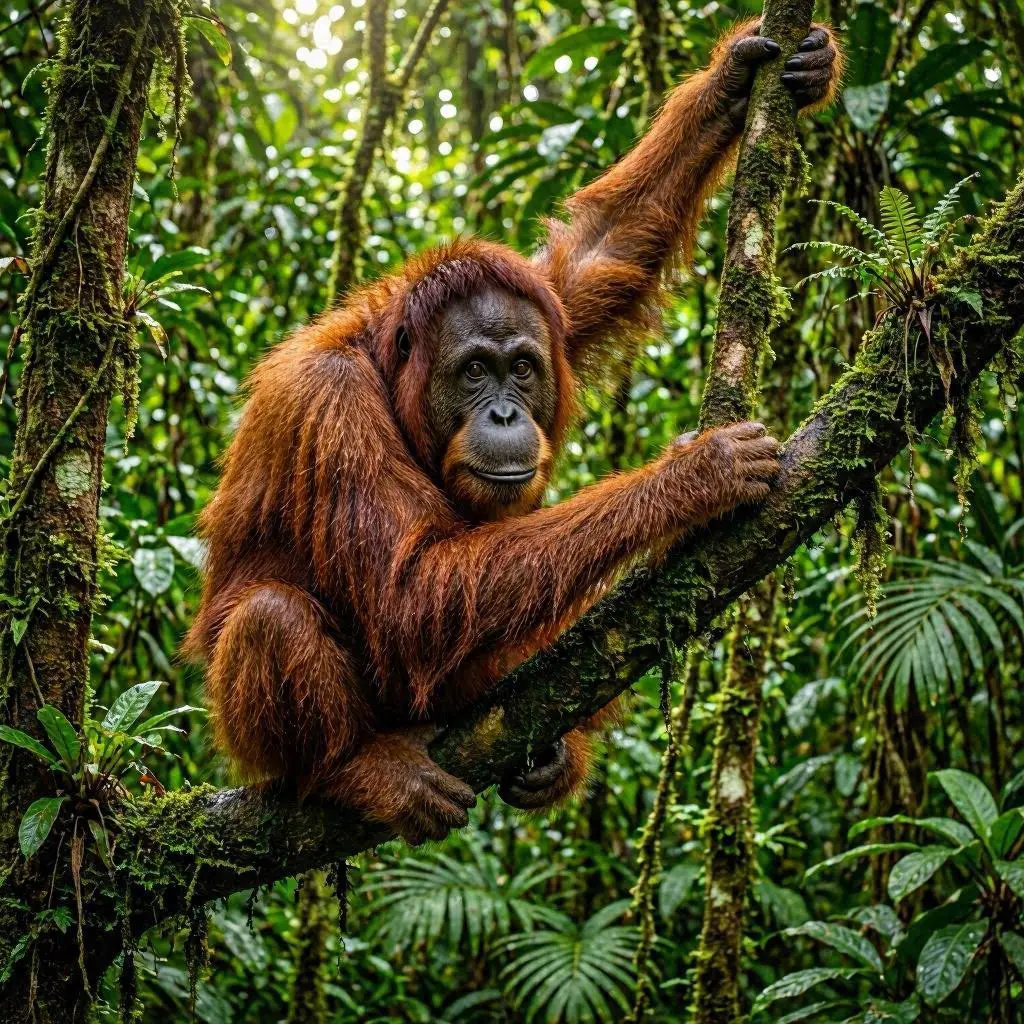
Orangutans are the strongest Asian great apes and far more powerful than most people expect. A fully grown adult can lift up to 227 kg, twice its own body weight, and their grip strength of 272 kg is what allows them to spend their entire lives in the forest canopy. Overall, orangutans are roughly seven times stronger than the average human. Their 575 PSI bite, about four times a human’s, is used primarily for cracking open hard-shelled fruits in the wild.
⓬ Jaguar
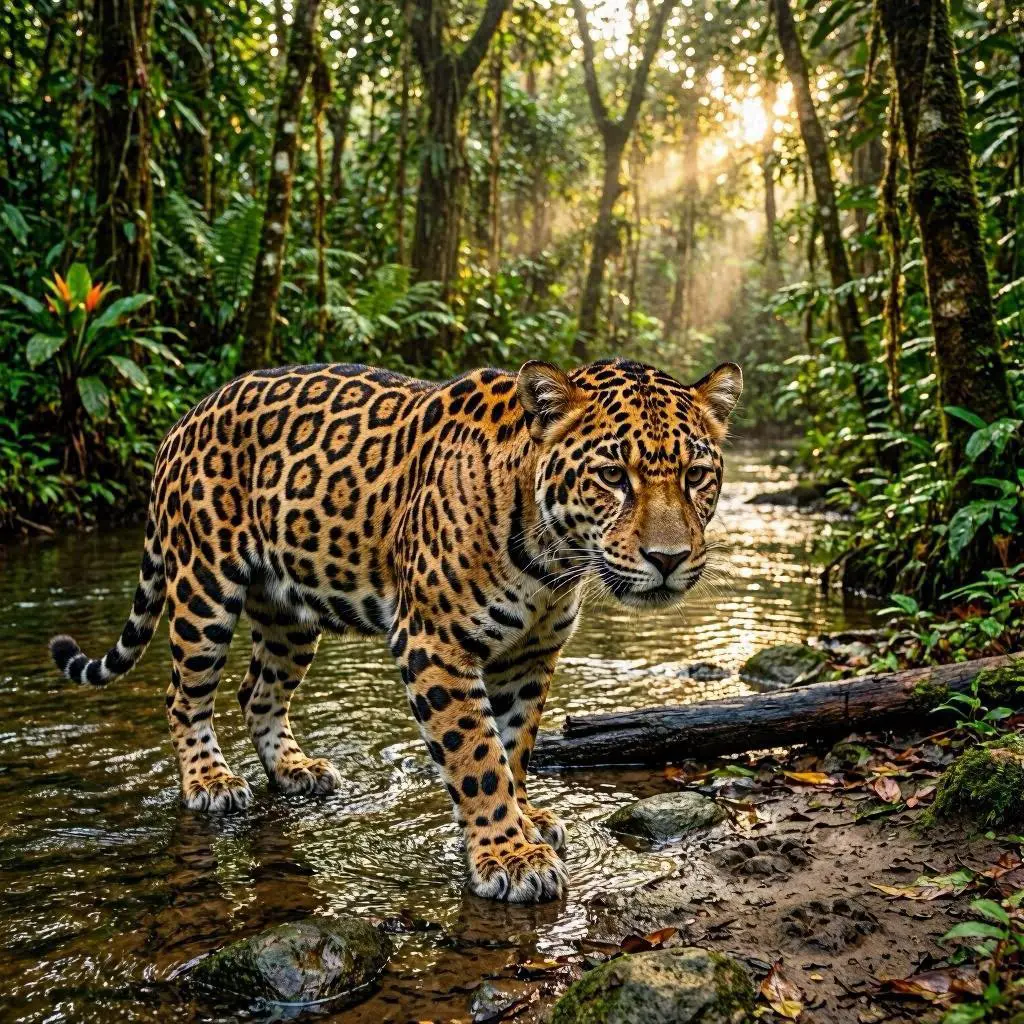
| Type | Mammal |
| Found | Rainforests and wetlands of Central and South America |
| Body weight | 56 to 96 kg |
| Bite force | 1,500 PSI |
| Drag capacity | Up to 3x body weight |
The jaguar has the strongest bite of any big cat at 1,500 PSI, stronger than both lions and tigers. It uses this in a unique way: instead of going for the throat, it bites directly through the skull or spine, causing instant death. This technique is powerful enough to pierce river turtle shells. Despite weighing only 56 to 96 kg, jaguars can drag prey three times their own weight into a tree for safekeeping.
⓭ Kodiak Bear
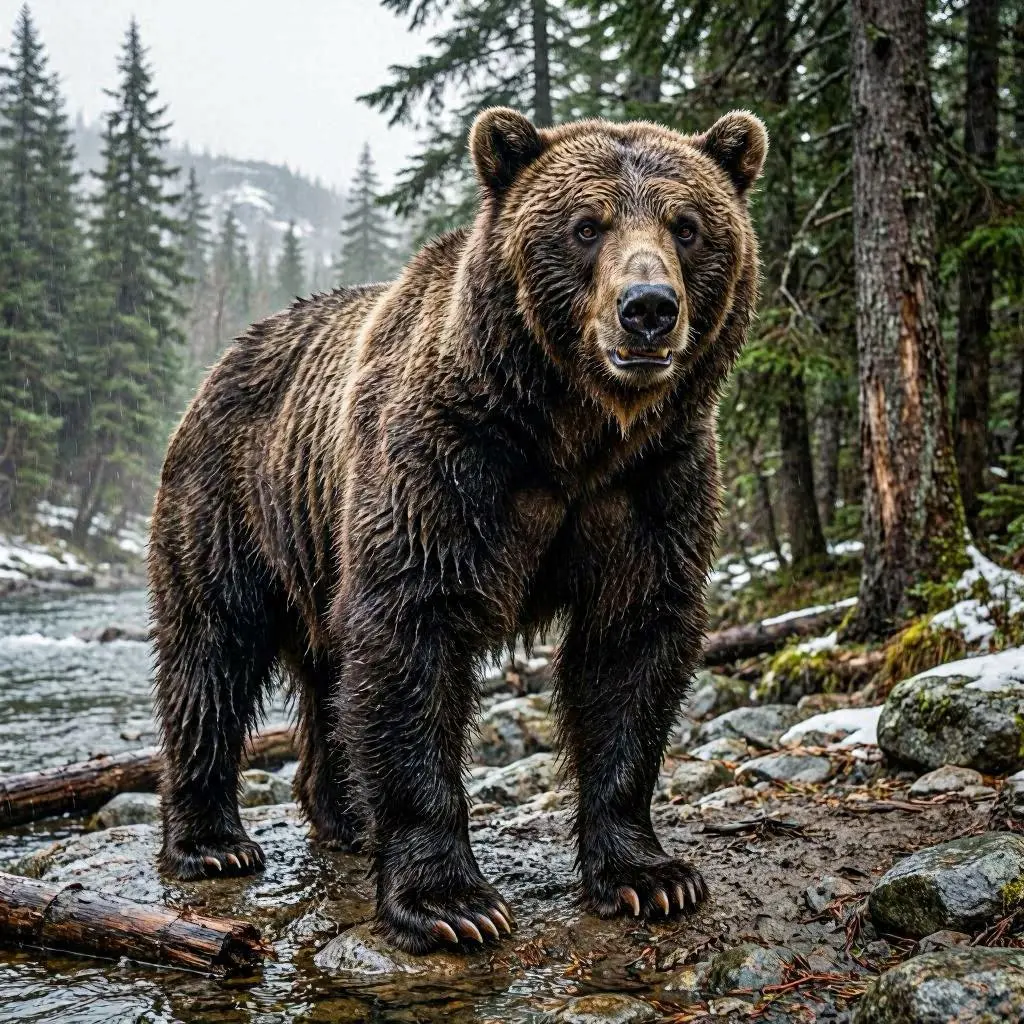
| Type | Mammal |
| Found | Kodiak Island Archipelago, Alaska |
| Body weight | Up to 780 kg |
| Bite force | 930 to 1,160 PSI |
| Top speed | 48 km/h |
The Kodiak bear is a subspecies of brown bear and one of the largest land predators on Earth. Males consistently reach 680 kg and exceptional individuals hit 780 kg, partly due to the rich salmon diet of their island habitat. Their strength profile mirrors the grizzly: capable of flipping boulders, uprooting small trees, and overpowering large prey. What sets Kodiaks apart is their reliable size. They are consistently the largest bears in the world.
⓮ Wolverine
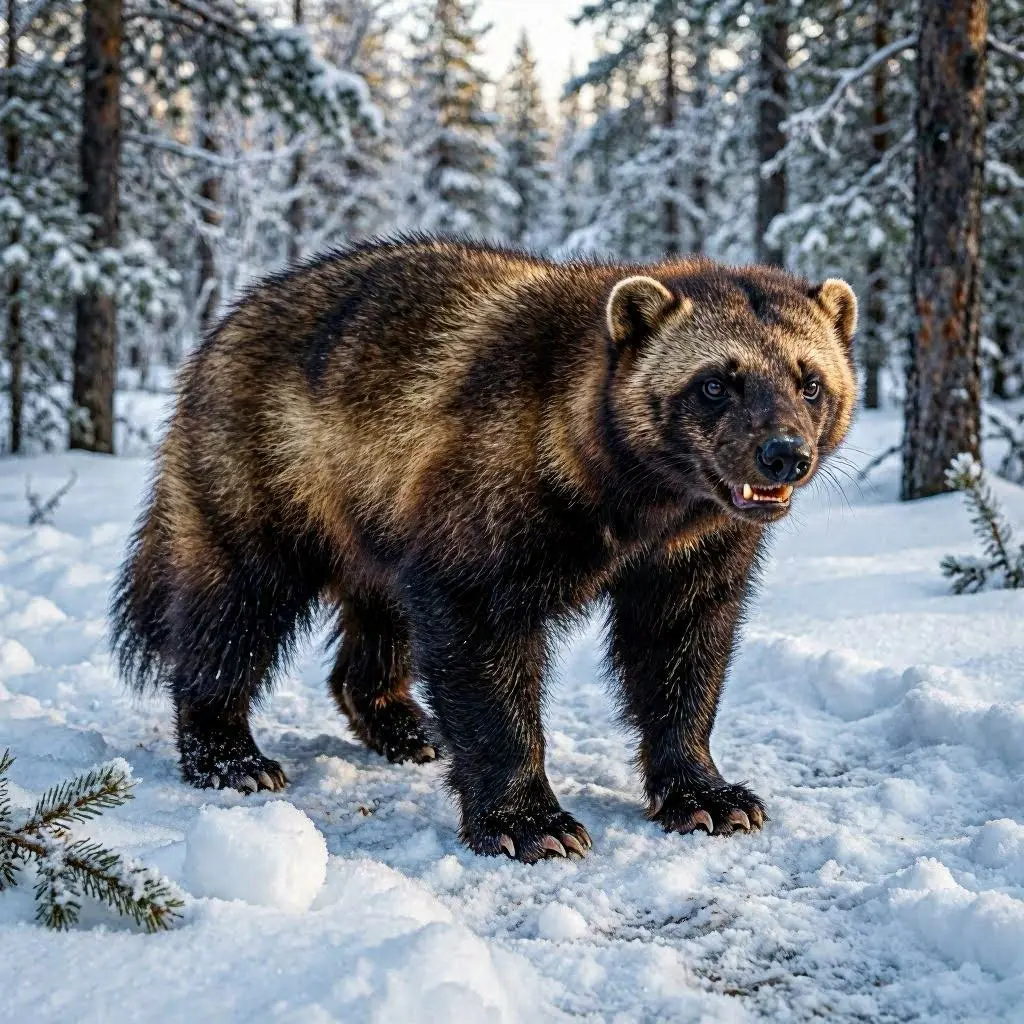
| Type | Mammal |
| Found | Cold forests and tundra of North America, Europe, and Asia |
| Body weight | 9 to 18 kg |
| Daily travel | Up to 25 km |
| Notable feat | Drives wolves and bears from their kills |
The wolverine is the dark horse of this list. It weighs just 9 to 18 kg, yet routinely drives grizzly bears and wolves away from their food. It can drag full deer carcasses weighing over 50 kg through deep snow for kilometres, a remarkable feat relative to its size. Its teeth are strong enough to crack frozen bones in Arctic temperatures, and it is completely fearless toward animals many times its size.
⓯ Harpy Eagle
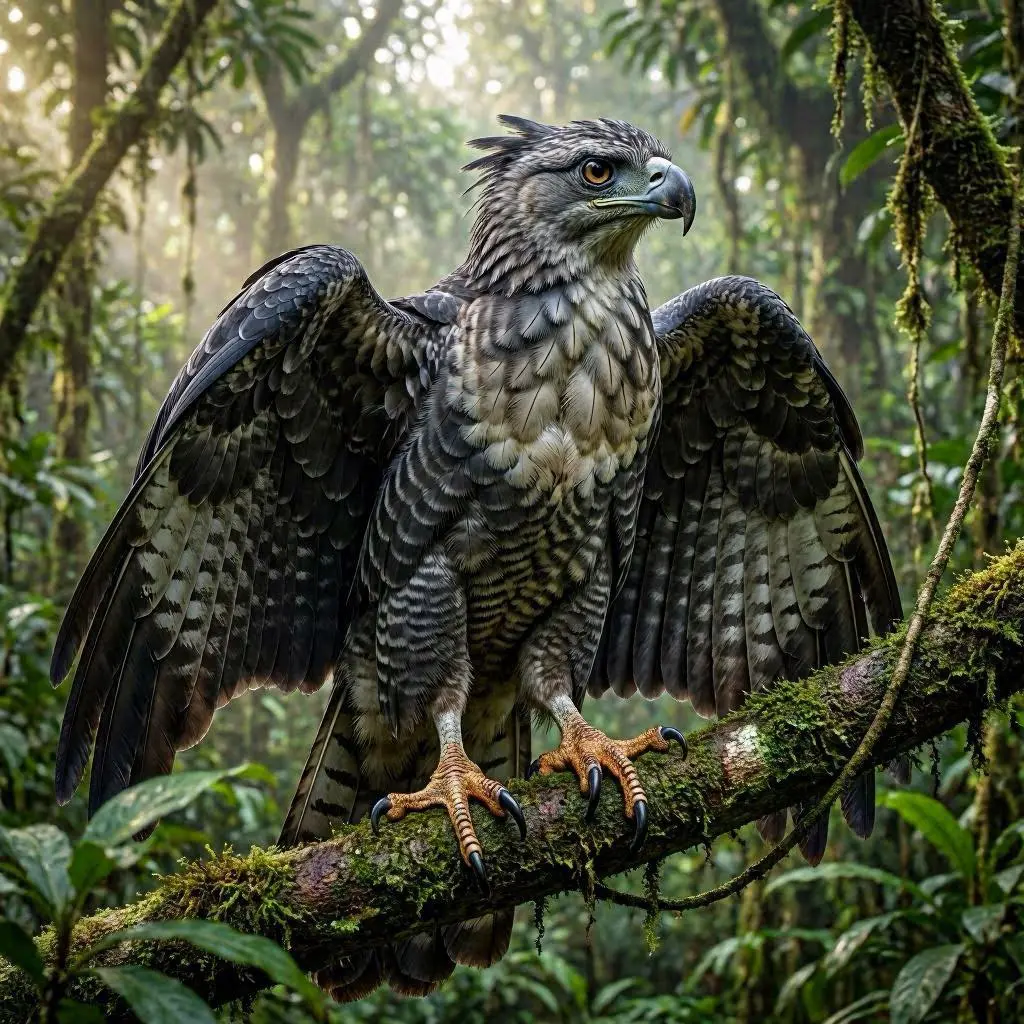
| Type | Bird |
| Found | Lowland tropical forests of Central and South America |
| Body weight | Up to 9 kg (females) |
| Lift capacity | Up to 18 kg |
| Talon length | 13 cm |
| Top speed | 80 km/h |
The harpy eagle is the strongest bird on the planet. Females weigh up to 9 kg yet can lift prey up to 18 kg, double their own body weight. Their talons are 13 cm long, roughly the same size as a grizzly bear’s claws, and exert over 50 kg of grip force, enough to crush bone. They snatch sloths and monkeys directly from the forest canopy at up to 80 km/h.
⓰ Ox
| Type | Mammal |
| Found | Domesticated worldwide |
| Body weight | Up to 1,270 kg |
| Pull capacity | 900+ kg |
| Endurance | Can pull for hours without stopping |
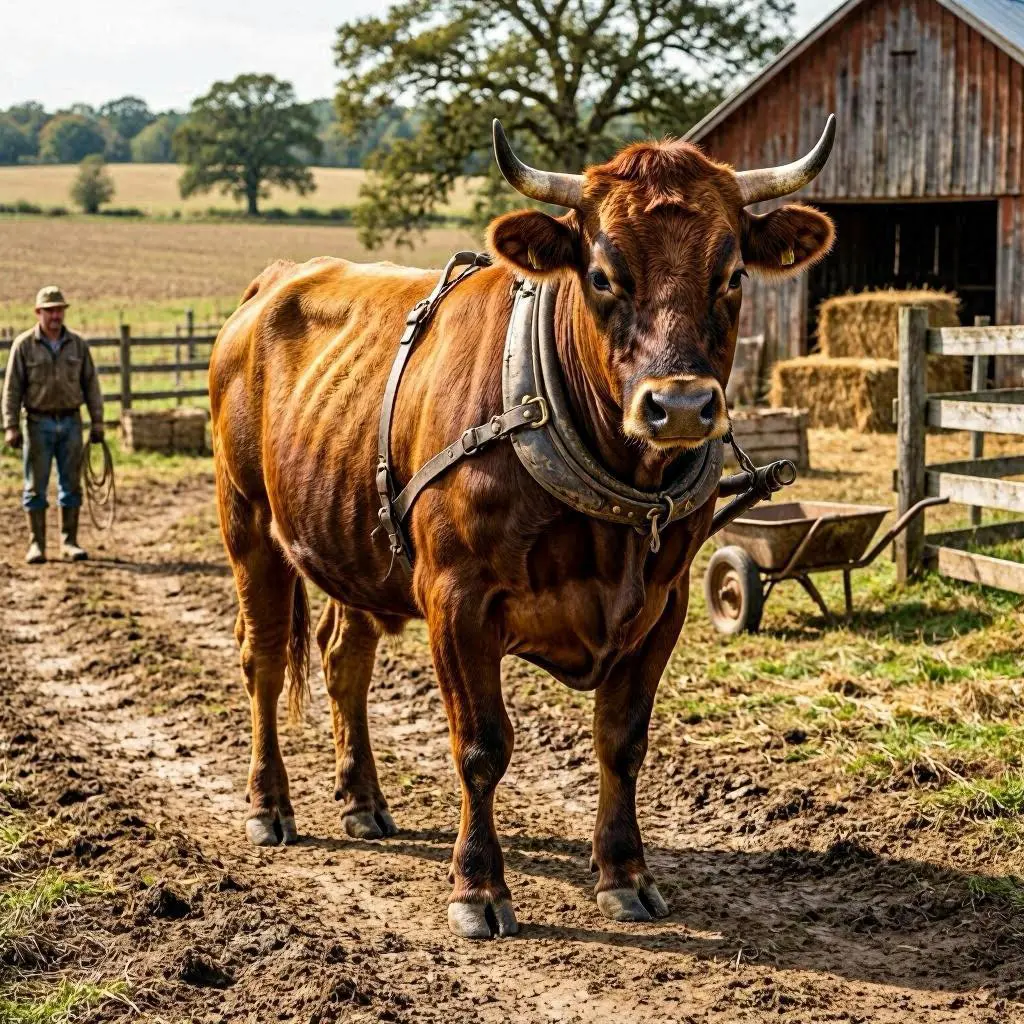
Oxen have powered human agriculture for over 6,000 years. A mature ox weighs up to 1,270 kg and can pull loads exceeding 900 kg across rough terrain for extended periods. Unlike most animals on this list whose strength is explosive, the ox is built for sustained effort. Its high proportion of slow-twitch muscle fibres lets it haul heavy loads hour after hour, which is why civilizations used them to plow fields and move stone.
⓱ Sperm Whale
| Type | Mammal |
| Found | Deep offshore waters worldwide |
| Body weight | Up to 60 tonnes |
| Dive depth | Up to 3 km |
| Dive duration | Up to 90 minutes |
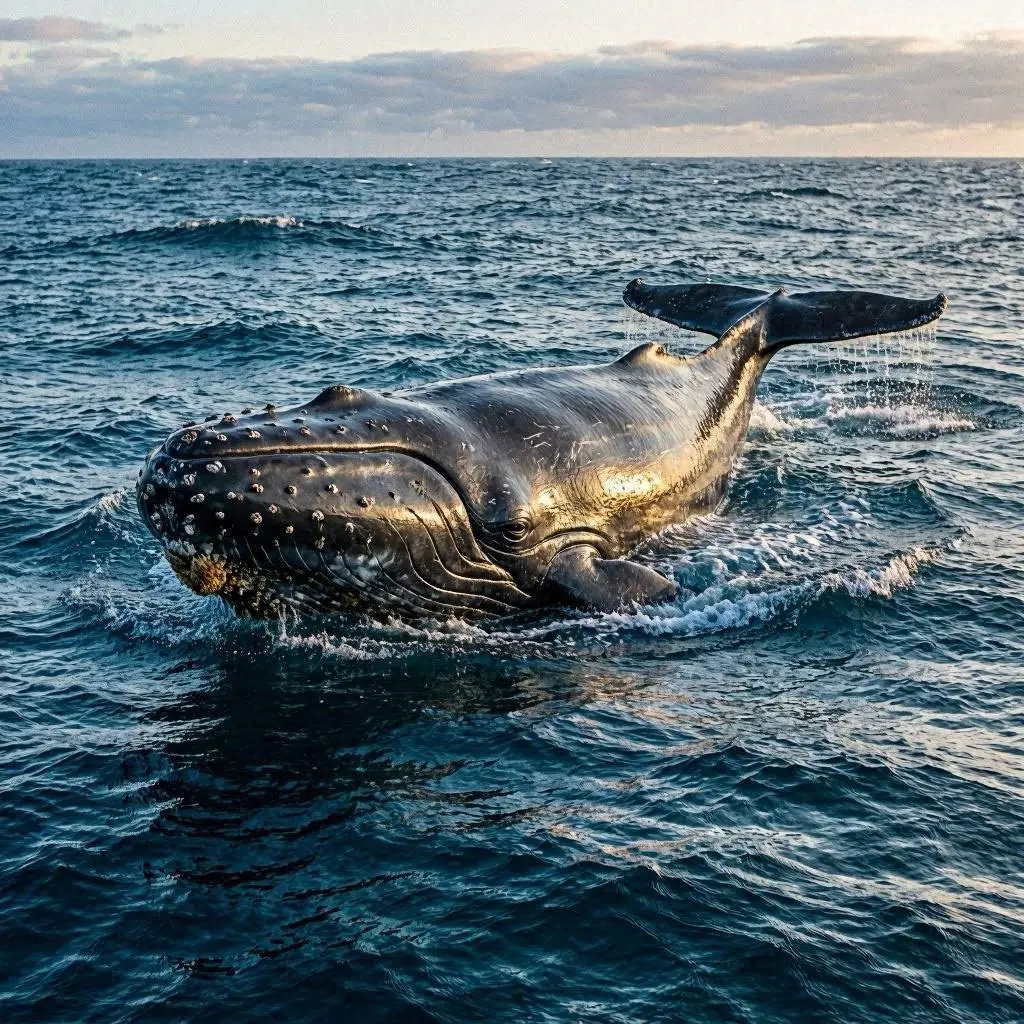
The sperm whale is the largest toothed predator on Earth. Males reach 20 metres and weigh up to 60 tonnes. Their strength is expressed in extraordinary diving ability: descending 3 km while withstanding crushing pressure, then hunting giant squid in total darkness. Their clicks, used for echolocation, are the loudest biological sound of any animal at 230 decibels. Sperm whales regularly carry scars from battles with giant squid in the deep.
⓲ Blue Whale
| Type | Mammal |
| Found | All major oceans worldwide |
| Body weight | Up to 180 tonnes |
| Length | Up to 30 metres |
| Tail thrust | Up to 500 hp |
| Heart weight | 180 kg |
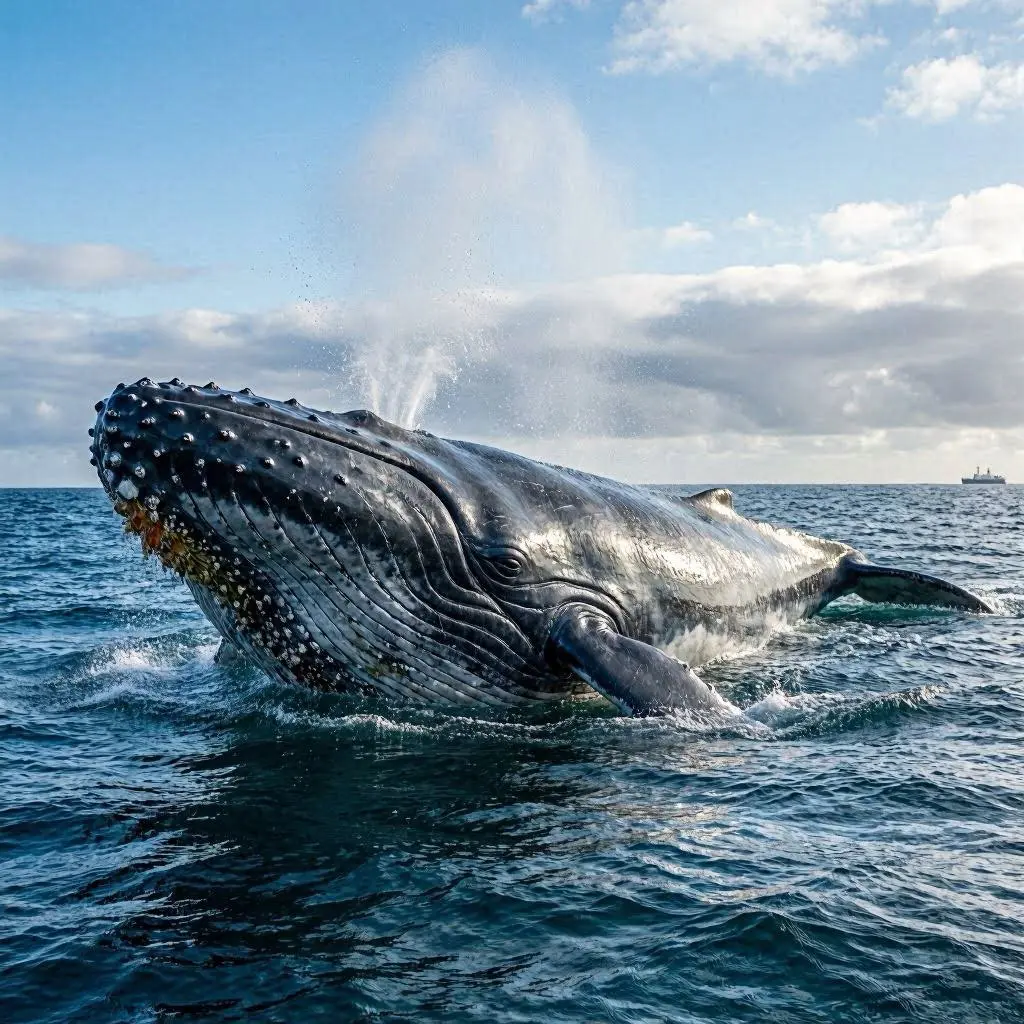
The blue whale is the largest animal that has ever existed on Earth, bigger than any dinosaur. Moving 180 tonnes through water requires tail flukes generating up to 500 horsepower of thrust. Their heart alone weighs 180 kg and is roughly the size of a small car. Blue whales can sustain 20 km/h and burst to 48 km/h. Their strength is not about predatory force but about the raw power needed to move the most massive body in the history of life on this planet.
⓳ Leopard Seal
| Type | Mammal |
| Found | Antarctic waters |
| Body weight | Up to 590 kg (females) |
| Length | Up to 3.8 metres |
| Jaw opening | 160 degrees |
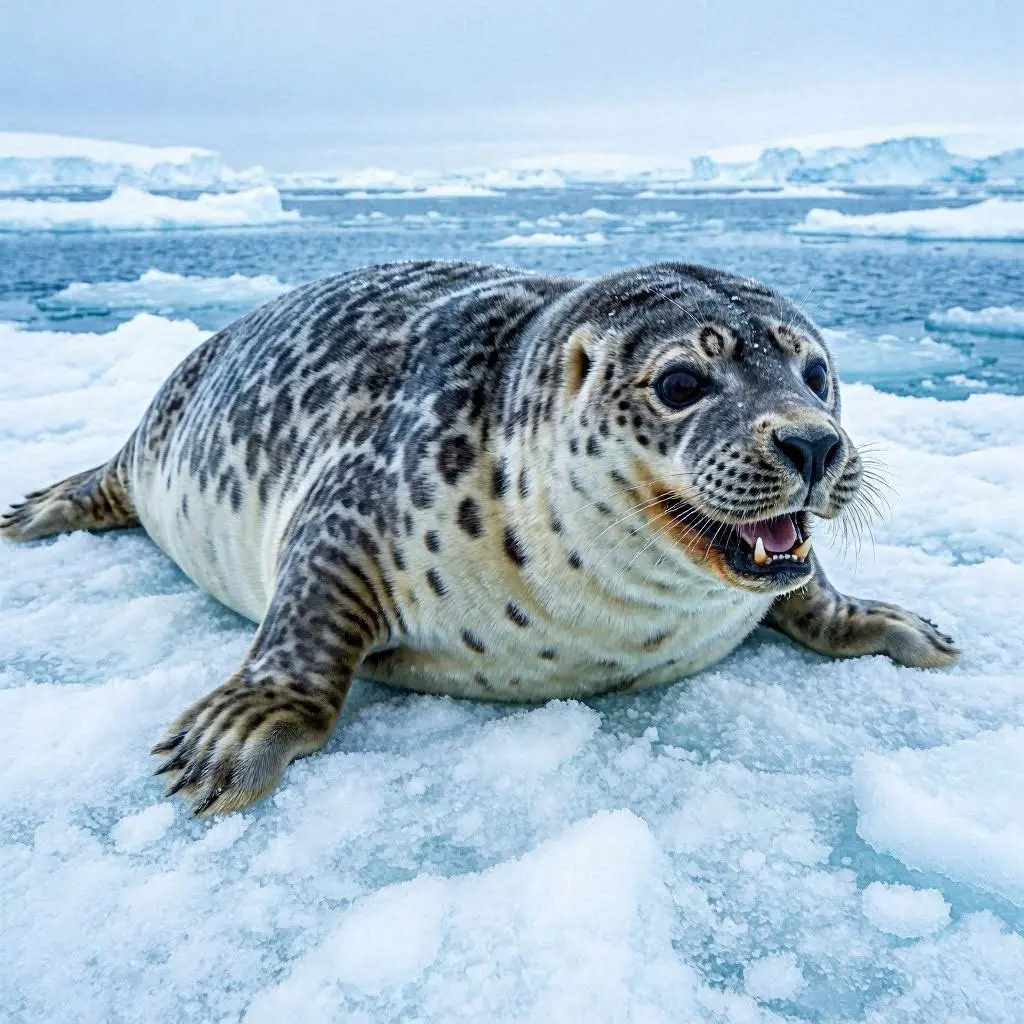
The leopard seal is the apex predator of Antarctic waters. Females reach 590 kg and 3.8 metres in length. Their jaws open up to 160 degrees wide and they use a violent side-to-side head thrashing motion to tear prey apart rather than biting through cleanly. They hunt penguins, fish, squid, and other seals, making them one of the few seal species that regularly prey on warm-blooded animals. They are the only seal confirmed to have killed a human.
⓴ Hercules Beetle
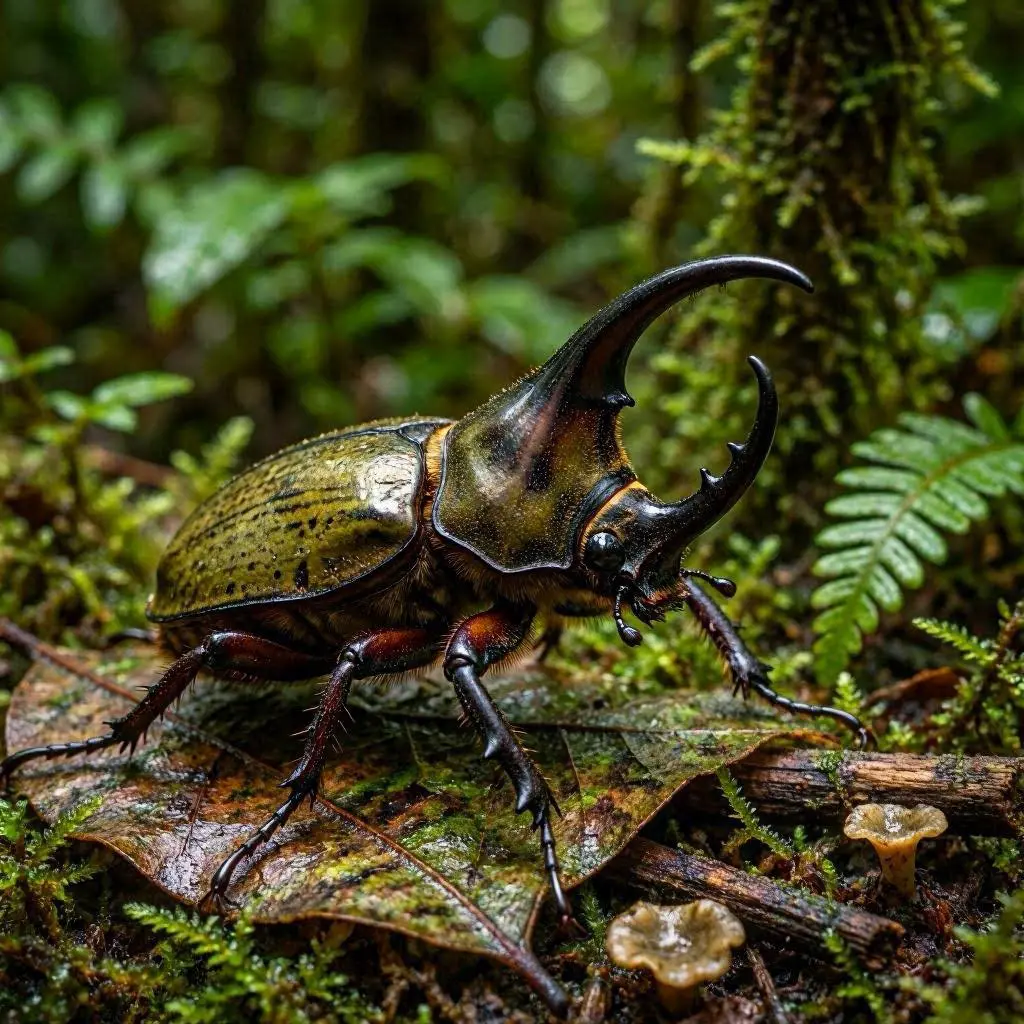
| Type | Insect |
| Found | Rainforests of Central and South America |
| Length | Up to 17 cm (males, including horn) |
| Carry capacity | 850x its own body weight |
The Hercules beetle is the longest beetle species in the world and a staggering powerhouse by any proportional measure. Males carry objects up to 850 times their own body weight, which is equivalent to a person lifting nine adult elephants simultaneously. Their hardened exoskeleton and powerful thorax muscles make this possible. Despite their intimidating appearance, Hercules beetles are completely harmless to humans.
㉑ Dung Beetle
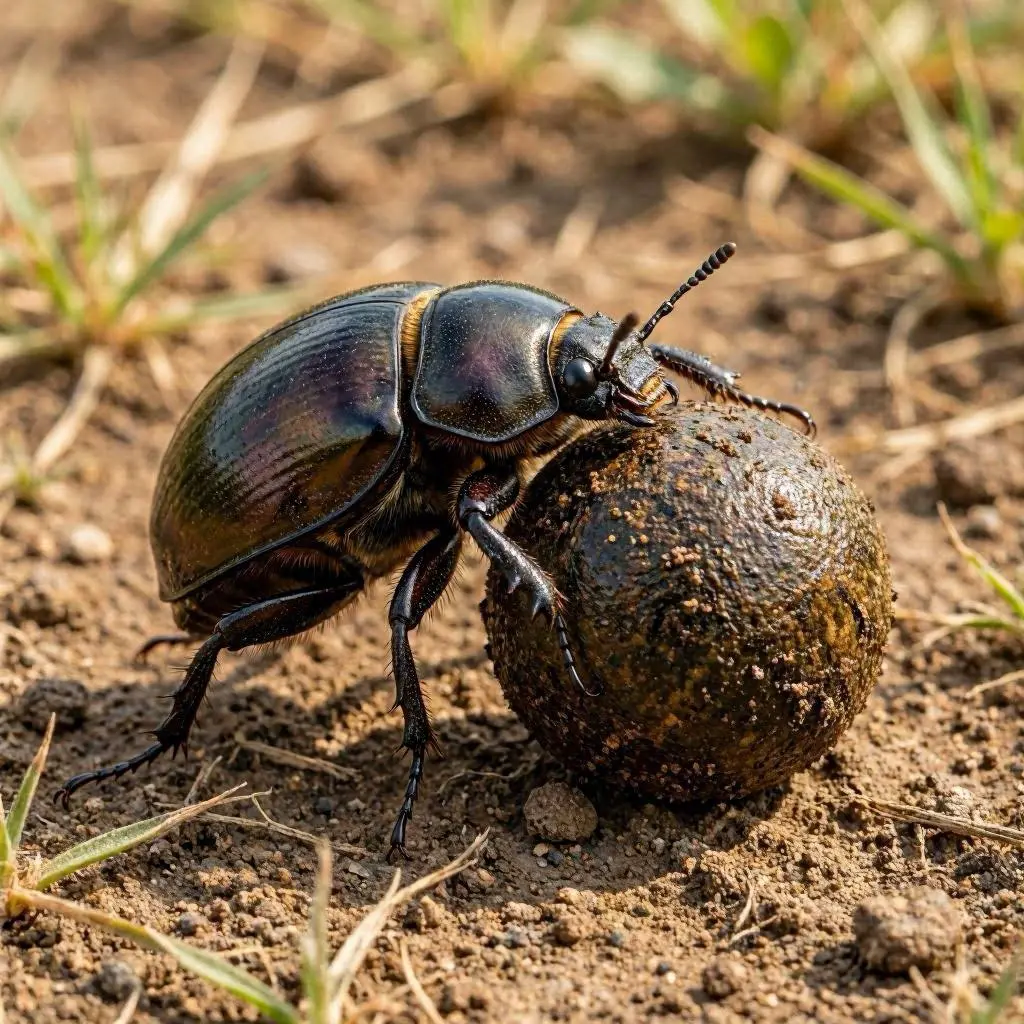
| Type | Insect |
| Found | Every continent except Antarctica |
| Body weight | A few grams |
| Pulling record | 1,141x its own body weight |
The dung beetle is the pound-for-pound strength champion of all life on Earth. Weighing just a few grams, it has been measured pulling 1,141 times its own body weight, the highest strength-to-weight ratio ever recorded for any animal. In human terms, that equals pulling approximately 80 tonnes, or six double-decker buses, with your bare hands. This record was confirmed by researchers at Queen Mary University of London. Dung beetles need this power to roll dung balls larger than themselves, which they use for food and reproduction.
㉒ Musk Ox
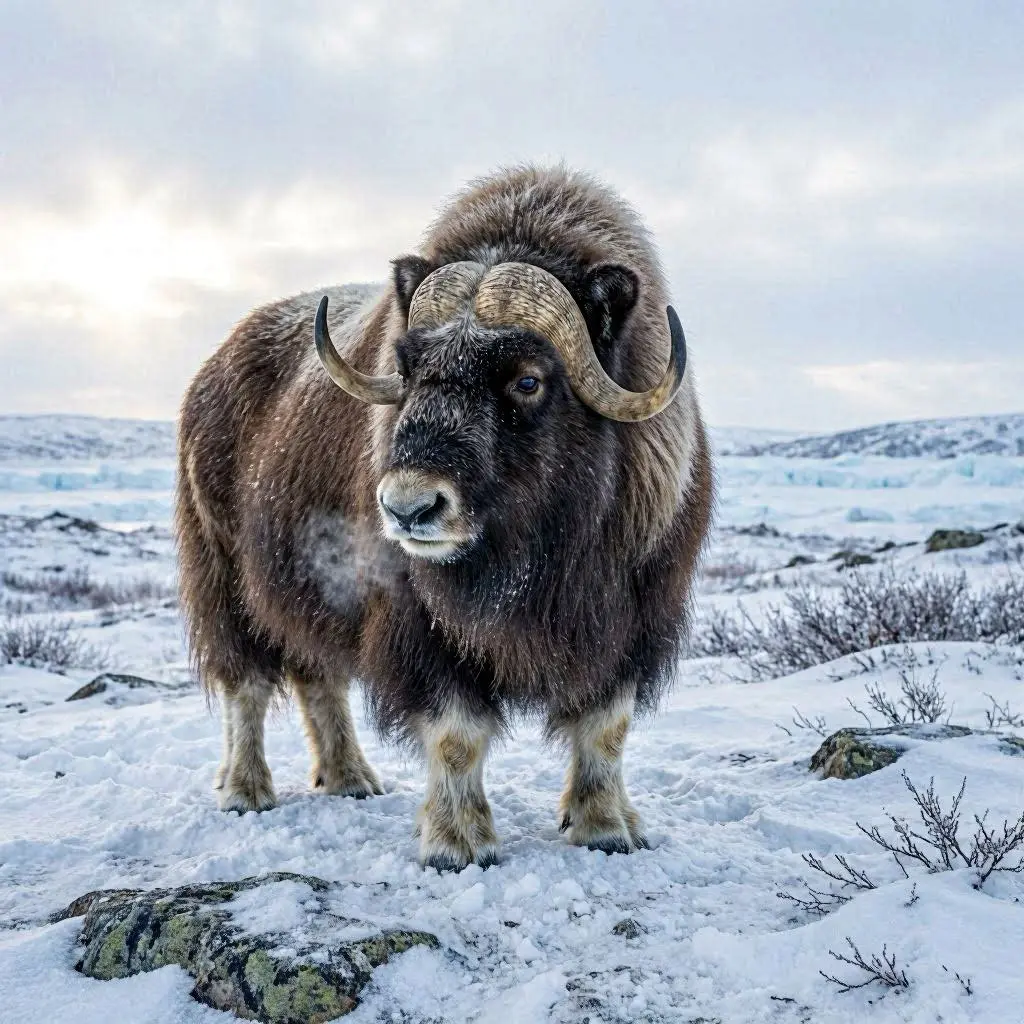
| Type | Mammal |
| Found | Arctic tundra of Canada, Greenland, Alaska, and Russia |
| Body weight | Up to 410 kg |
| Pull capacity | Up to 900 kg (1.5x body weight) |
The musk ox is one of the most underrated powerhouses on this list. Adults pull up to 900 kg across deep snow and frozen ground, about 1.5 times their own body weight. Their hooves are strong enough to crack through solid ice to reach water below. When threatened, a herd forms a tight defensive circle with horns pointed outward, a tactic so effective that wolves and polar bears frequently abandon the attempt. Their head and neck muscles absorb full-speed head-butting collisions without injury.
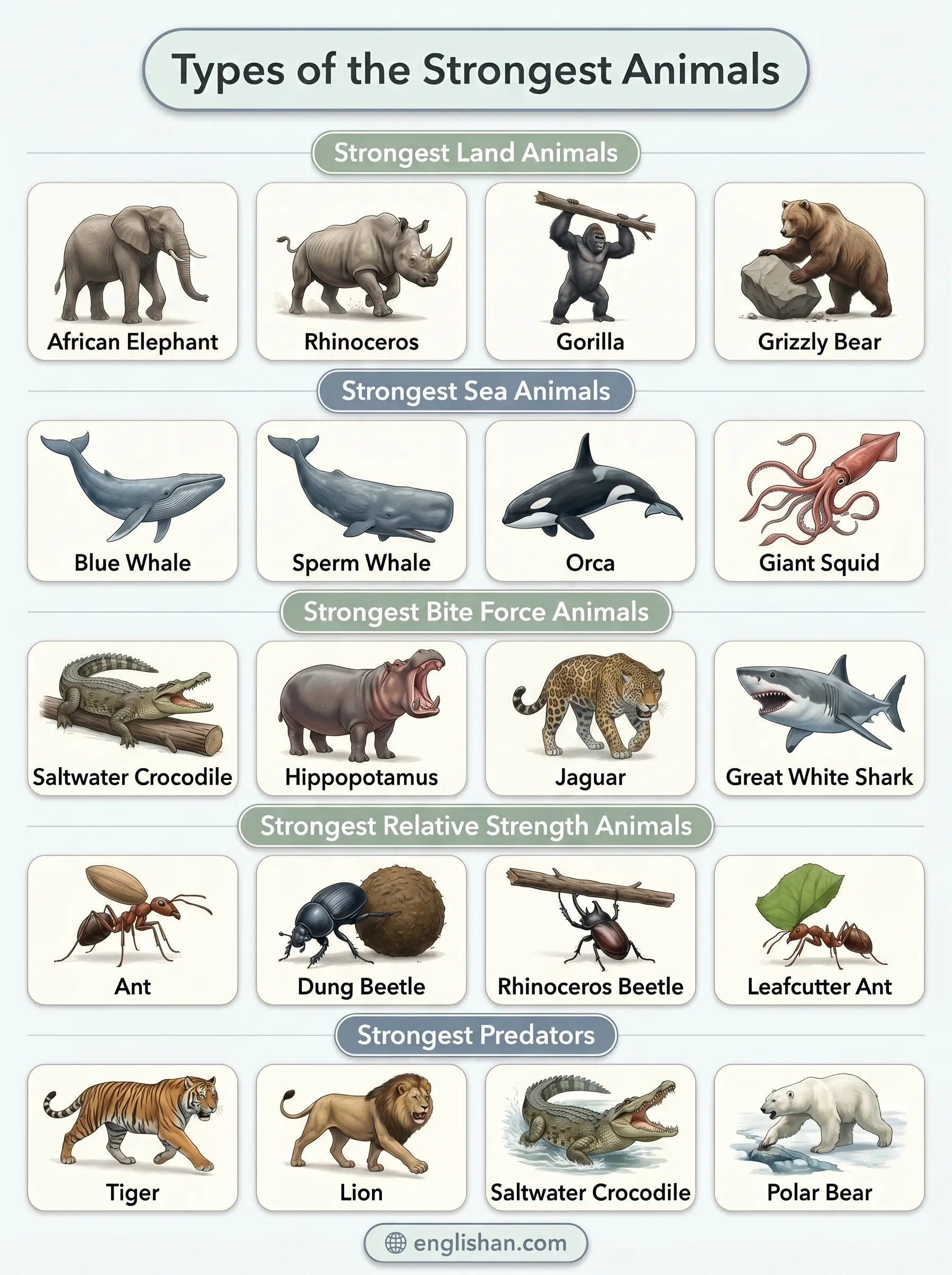
Types of Strongest Animals by Category
Animals display strength in different ways such as raw physical power, bite force, endurance, and lifting ability. Each category highlights a different kind of dominance found in nature.
Strongest Land Animals
The land is home to some of the most powerful creatures on Earth. These animals rely on muscle power, body size, and strength to survive and dominate their habitats.
- African Elephant: The strongest land animal, capable of lifting heavy logs, pushing trees, and carrying several tons using its massive body and trunk.
- Rhinoceros: A heavily built animal known for its charging power and ability to knock down threats with its strong body and horn.
- Gorilla: One of the strongest primates with powerful arms that allow it to lift heavy objects and climb with ease.
- Grizzly Bear: A muscular predator with the strength to flip large rocks, overpower prey, and survive in harsh environments.
In short, land animals show how raw physical power plays a key role in survival and dominance on land.
Strongest Sea Animals
The ocean contains some of the largest and most powerful creatures on the planet. Their strength is often measured by size, pressure power, and survival ability in deep water.
- Blue Whale: The largest and one of the strongest animals ever, with massive body power and incredible swimming force.
- Sperm Whale: A deep-diving giant known for its powerful body and ability to hunt large squid in deep oceans.
- Orca (Killer Whale): A highly intelligent and powerful predator that hunts in groups with strong coordination.
- Giant Squid: A mysterious deep-sea creature with strong tentacles used for gripping and fighting prey.
In short, sea animals show that strength in water comes from size, endurance, and hunting power.
Strongest Bite Force Animals
Some animals are not large but are extremely powerful because of their jaw strength. Their bite force helps them hunt, crush prey, and defend themselves.
| Animal | Bite Force (PSI) |
|---|---|
| Saltwater Crocodile | 3,700 |
| Hippopotamus | 1,800 |
| Jaguar | 1,500 |
| Gorilla | 1,300 |
| Tiger | 1,050 |
| Grizzly Bear | 975 to 1,160 |
| Lion | 650 |
| Orangutan | 575 |
| Human (average) | 160 |
In short, bite force proves that jaw strength alone can make a creature extremely dangerous.
Strongest Relative Strength Animals
Some of the smallest creatures are also the strongest when compared to their body size. They can lift or carry many times their own weight.
| Animal | Strength Ratio |
|---|---|
| Dung Beetle | Pulls 1,141x body weight |
| Rhinoceros Beetle | Carries 850x body weight |
| Leafcutter Ant | Carries 50x body weight |
| Gorilla | Lifts 10x body weight |
| Tiger | Carries 2x body weight |
| Human | Lifts 1.5x body weight |
In short, relative strength shows that power is not always about size but about proportion.
Strongest Predators
Predators rely on strength, speed, and hunting skills to survive. These animals dominate their ecosystems through power and strategy.
- Tiger: A powerful solo hunter with strong muscles and a deadly bite.
- Lion: A strong social predator that uses teamwork and power to hunt large prey.
- Saltwater Crocodile: An ambush predator with unmatched bite force and water strength.
- Polar Bear: One of the strongest land predators, built for survival in extreme Arctic conditions.
In short, predators show how strength and hunting ability combine to make top-level hunters in nature.
Why These Animals Are So Strong?
Animals become strong over time because of survival pressure and natural selection. Their strength is not random, it develops to help them live, hunt, and protect themselves in their environment.
- Evolution and survival needs:
Animals don’t choose to be strong. They evolve to be. Over millions of generations, stronger animals survived better, found more food, and reproduced more successfully. That process is what produces an elephant that carries 9 tonnes or a dung beetle that pulls 1,000 times its weight. - Hunting and defense mechanisms:
For predators, strength is the difference between eating and starving. For prey animals, it’s the difference between surviving and being killed. A tiger’s muscles developed because tigers that couldn’t overpower large prey didn’t eat. An elephant’s trunk developed because animals that could uproot trees had access to food others couldn’t reach. - Fast-twitch muscle fibres:
Wild animals carry a far higher proportion of fast-twitch muscle fibres than humans. These fibres aren’t built for endurance; they are built for explosive, maximum-force moments: the lunge of a crocodile, the charge of a rhino, the grip of a harpy eagle. Humans traded this for slow-twitch endurance fibres suited to long-distance travel, a trade-off that works well for persistence but leaves us looking weak next to most animals on this list. - Environmental adaptation:
Every strength on this list is a direct response to an environment that demanded it. Musk ox hooves that crack ice developed because animals that could reach water beneath frozen ground survived Arctic winters others didn’t. Sperm whales that dive 3 km found prey that shallower competitors couldn’t access. Strength follows necessity.
In short, animal strength is the result of long-term evolution, survival pressure, and adaptation, which together shape them into powerful and highly efficient survivors in nature.
Interesting Facts about Strongest Animals in the World
- A gorilla can bend and snap thick bamboo stalks effortlessly, the same bamboo that would require tools for a human to cut.
- The dung beetle’s world record (1,141x body weight) was recorded during male competition for mates, not food carrying.
- A blue whale’s tongue alone weighs around 2,700 kg, heavier than most elephants.
- An anaconda’s constriction kills by halting blood flow, not suffocation. Prey loses consciousness within seconds.
- A harpy eagle’s talons are roughly the same size as a grizzly bear’s front claws, on a bird weighing just 9 kg.
- Wolverines have dragged moose carcasses weighing over 100 kg through deep snow for several kilometres, relative to their 14 kg body weight.
- The saltwater crocodile’s jaw-closing muscles produce 3,700 PSI, but its jaw-opening muscles are so weak that a rubber band can hold its mouth shut.
Conclusion
Strength in the animal kingdom comes in forms you wouldn’t expect. Beetles that outpull machines. Snakes that stop a heartbeat in seconds. Eagles with talons as large as bear claws. Whales with hearts the size of cars.
What connects all of them is that none of it is accidental. Every extraordinary feat of animal strength on this list is the product of millions of years of evolution, shaped by survival pressure, hunting demands, and environmental challenge. These animals aren’t just strong. They are perfectly built for exactly the kind of strength their world requires.
FAQs about Strongest Animals in the World
The African elephant is widely considered the strongest land animal in the world. Its enormous body strength allows it to lift, push, and carry extremely heavy objects like tree trunks and large branches. Its strength is mainly used for survival tasks such as moving through forests, finding food, and protecting its herd.
The saltwater crocodile has the strongest bite force in the animal kingdom. Its jaws can exert extreme pressure, powerful enough to crush bones and hold onto struggling prey. This makes it one of the most dangerous ambush predators in rivers and coastal waters.
The blue whale is not the strongest in terms of bite or lifting power, but it is the largest and one of the most powerful animals on Earth. Its strength comes from its massive body size, powerful tail movements, and ability to travel long distances across oceans with ease.
Ants are considered the strongest animals relative to their body size. They can carry objects many times heavier than themselves, sometimes up to 50 times their own weight. This incredible strength helps them build colonies, transport food, and survive in tough environments.
Not necessarily. While many predators are strong because they need to hunt, several herbivores like elephants, rhinos, and hippos are actually stronger in terms of raw physical power. Strength in animals depends on survival needs, not just whether they are predators or prey.
Mainly two reasons: animals have far more fast-twitch muscle fibres built for explosive power, and their muscles are often attached farther from joints, giving greater mechanical leverage per unit of muscle. Humans evolved for endurance and tool use, not raw force.
You May Also Like
- 42+ Fastest Animals in the World
- 25+ Biggest Animals in the World
- 75+ Arctic Animals Names with Pictures
Strongest Animals Quiz
Strongest Animals
Measured against its own body weight, which is strongest?
It can pull over a thousand times its own weight — the highest ratio recorded.
Relative strength favours small animals; absolute strength favours large ones.
The dung beetle wins on ratio, the elephant on raw force.
Why are small animals so strong for their size?
Double the size and weight grows eight times while muscle cross-section grows four.
The square-cube law explains most of it.
An ant scaled to human size could not lift itself.
Name the animal.
The strongest land animal in absolute terms is the ___.
An elephant can move loads of several tonnes with its trunk and head.
Absolute strength tracks body mass closely.
Elephants were used for heavy haulage for centuries.
Which animal has the strongest bite of any living land animal?
Bite force measured well above any big cat, though the muscles that open the jaw are weak.
Closing force and opening force are different systems.
A crocodile's jaw can be held shut by hand and never forced open.
Which small animal carries many times its weight over long distances?
It carries leaf fragments many times its own mass back to the colony all day.
Load carrying is separate from a single maximum lift.
Leafcutter columns move a steady stream of cut leaf.
Turn on JavaScript for the interactive quiz. The full practice set is shown above.