grassland animals names are best understood by imagining standing in the middle of an endless golden plain. The wind moves through tall grasses. A cheetah watches silently from a distance. A herd of zebras grazes nearby. This is the world of grassland animals, one of the most exciting and diverse communities of wildlife on Earth.
Grasslands are found on nearly every continent, and they are home to some of the most iconic animals in the world, from the mighty African elephant to the tiny prairie dog. Whether you are an ESL learner, a student, or simply curious about nature, this article gives you everything you need to know about grassland animals, their names, pictures, and fascinating facts.
In this article, we’ll explore grassland animals names, their habitats, and regions where they are found.
What Are Grasslands?
A grassland is a large, open area of land covered mostly by grasses, with very few trees. Grasslands are found on every continent except Antarctica and cover about 25–40% of the Earth’s land surface, making them one of the largest biomes in the world.
Grasslands get their name because grass is the main type of plant that grows there. There is usually enough rain to support grasses, but not enough to grow forests.
Explore more animals that start with different letters:
A | B | C | D | E | F | G | H | I | J | K | L | M | N | O | P | Q | R | S | T | U | V | W | X | Y | Z
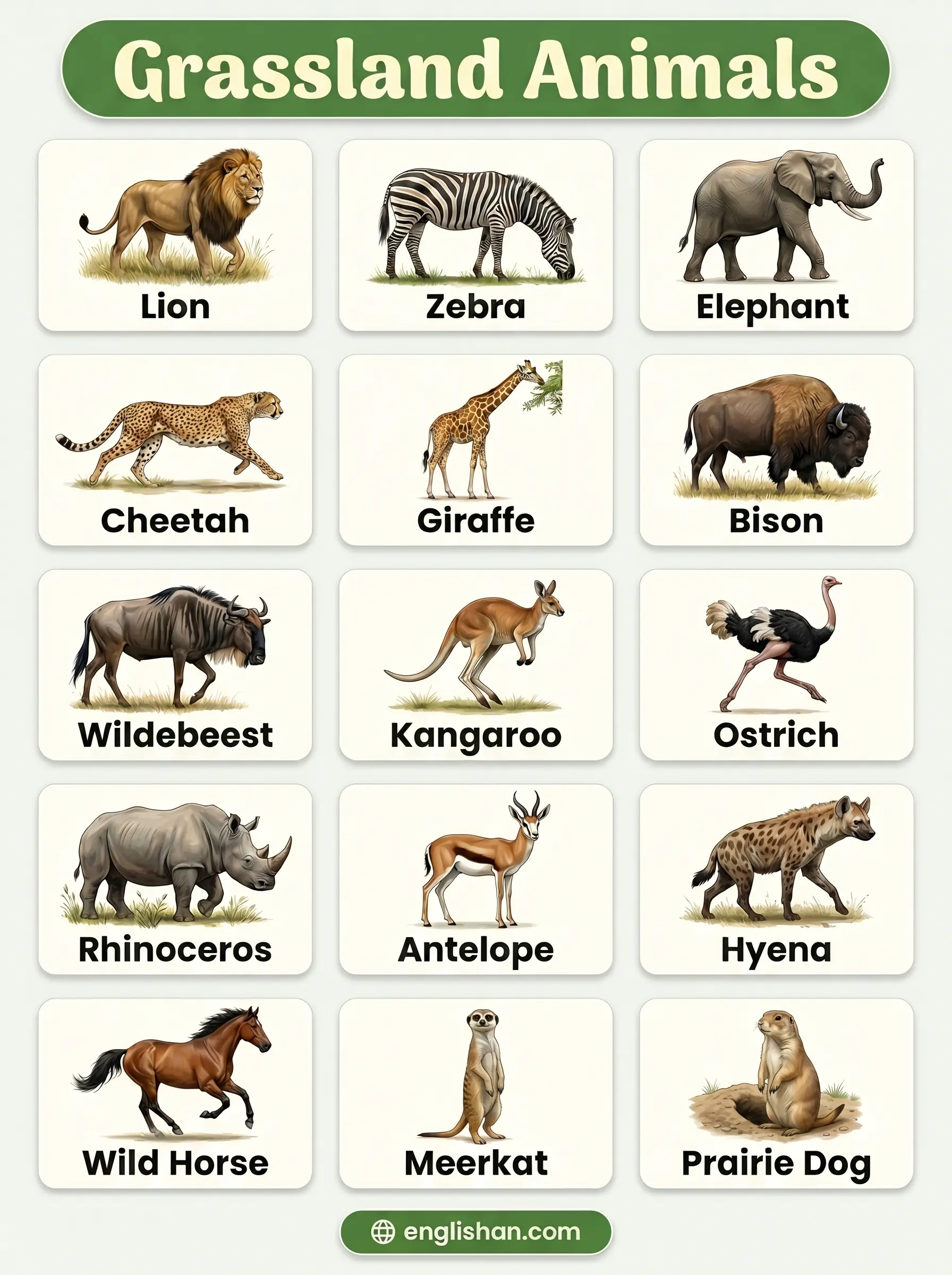
List of Grassland Animals In English
- Lion
- Zebra
- Elephant
- Cheetah
- Rhinoceros
- Giraffe
- Wildebeest
- Antelope
- Hyena
- Ostrich
- Kangaroo
- Buffalo (Bison)
- Prairie Dog
- Bald Eagle
- Prairie Rattlesnake
- Otter
- Orangutan
- Tiger
- Crane
- Monitor Lizard
- Leopard Tortoise
- Parrot
- Hedgehog
- Flamingo
- Fox
- Meerkat
- Komodo Dragon
- Leopard
- Beaver
- Gorilla
- Rhea
- Grasshopper
- Wild Horse
- Dodo (Extinct)
- Salamander
- Duck
- Rat
- Ram (Bighorn Sheep)
- Emu
- Raccoon
Most Common Grassland Animals with Pictures
❶ Lion
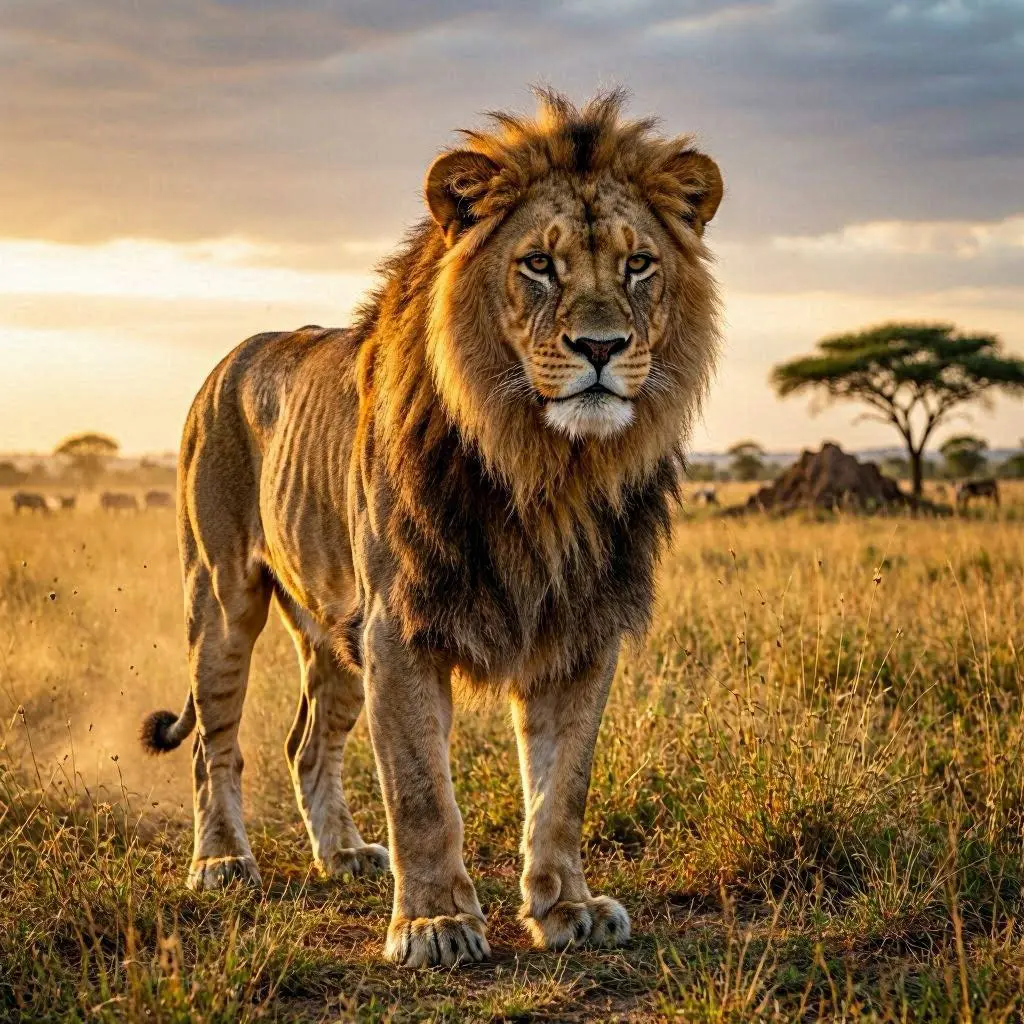
Scientific name: Panthera leo
Type: Mammal
Lions are apex predators of African grasslands and savannas. They live in prides and hunt large herbivores like zebras and wildebeests, helping maintain ecological balance in open plains.
❷ Zebra
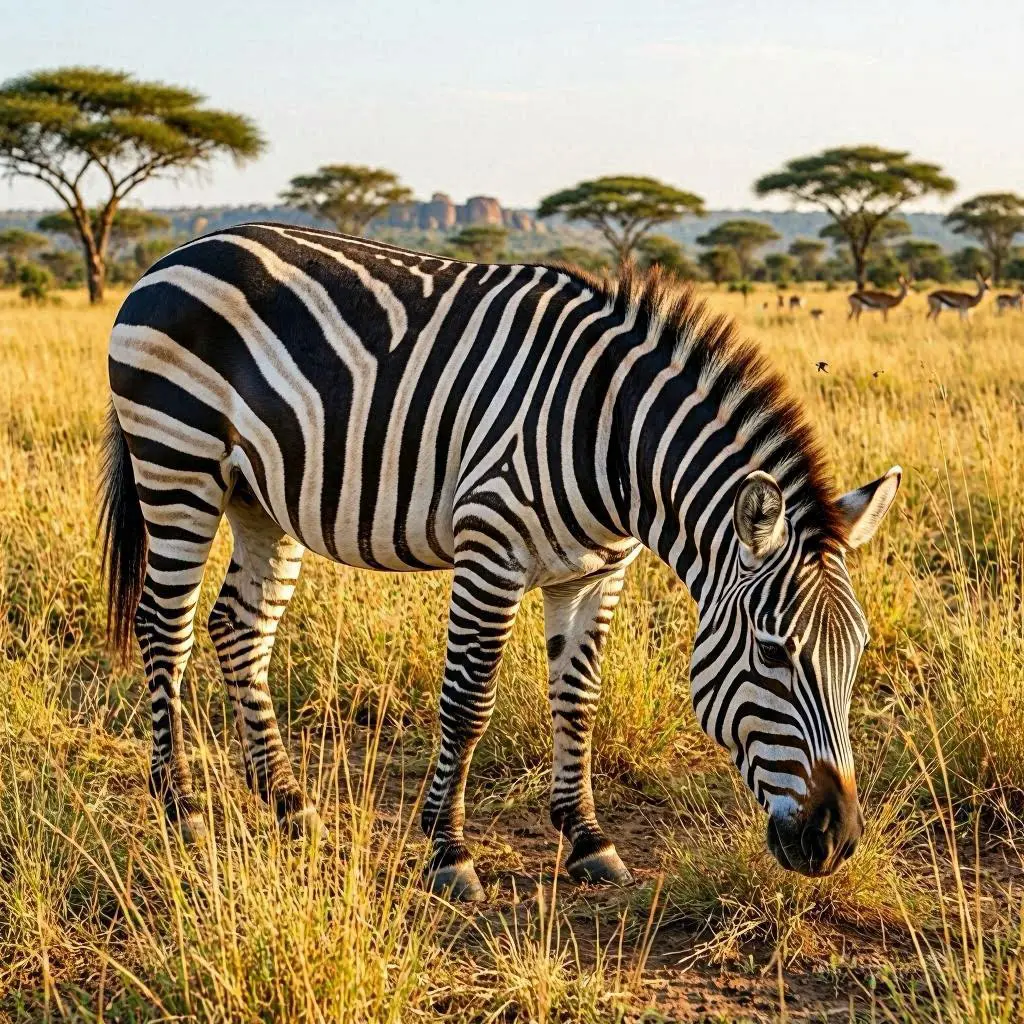
Scientific name: Equus quagga
Type: Mammal
Zebras are social herbivores found in African grasslands. Their stripes are unique and help with predator confusion, while herd living increases survival in open landscapes.
❸ Elephant
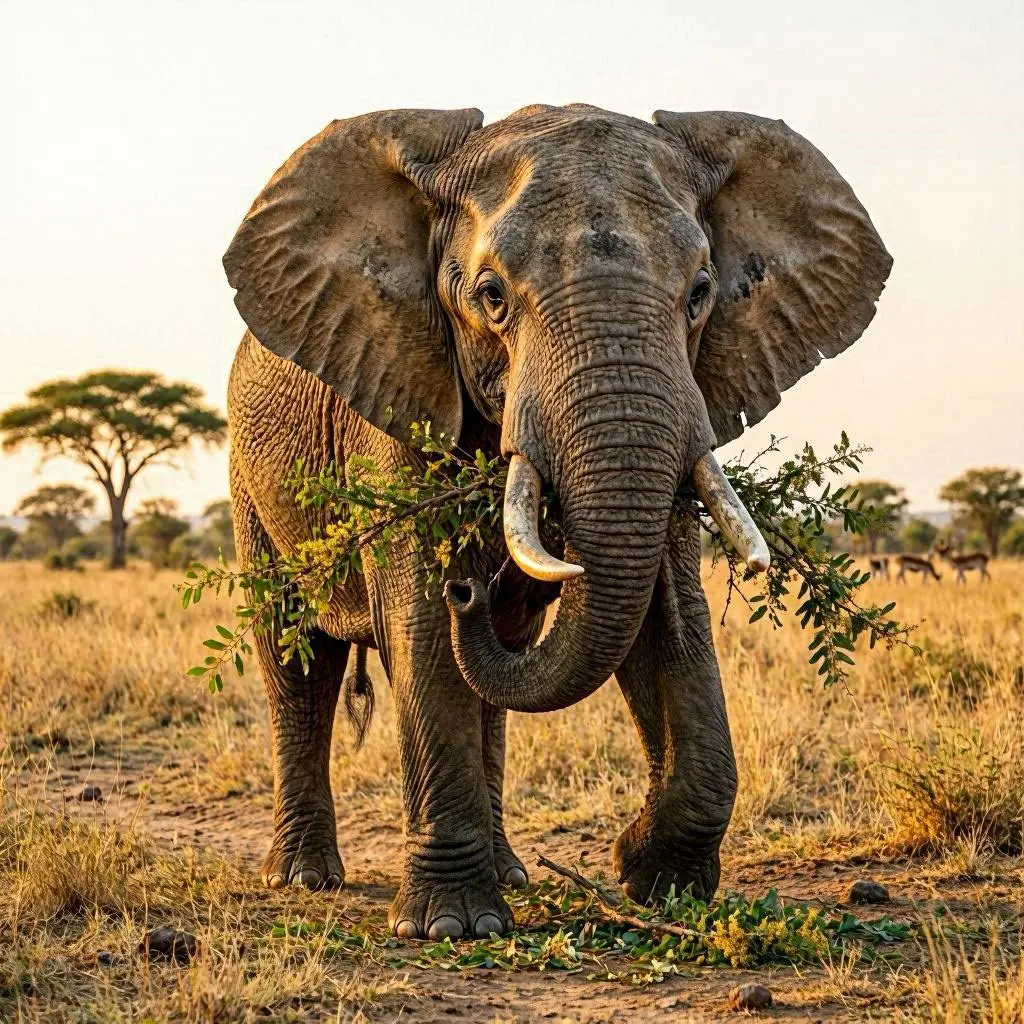
Scientific name: Loxodonta africana / Elephas maximus
Type: Mammal
Elephants inhabit African and Asian grasslands where they require vast areas for grazing. They are highly intelligent and influence grassland structure by clearing vegetation and creating water access routes.
❹ Cheetah
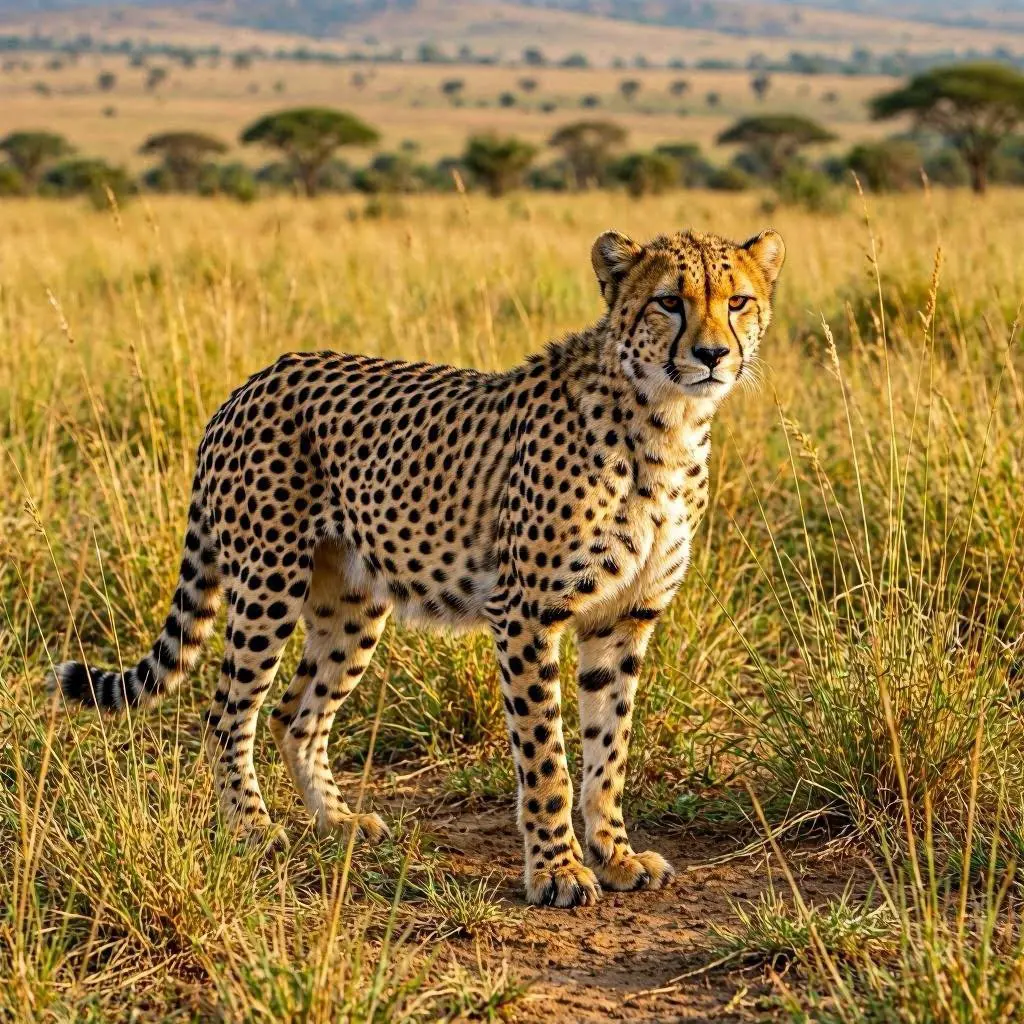
Scientific name: Acinonyx jubatus
Type: Mammal
Cheetahs are built for speed and live in open African grasslands. They rely on short, powerful sprints to catch fast-moving prey in wide, unobstructed terrain.
❺ Giraffe
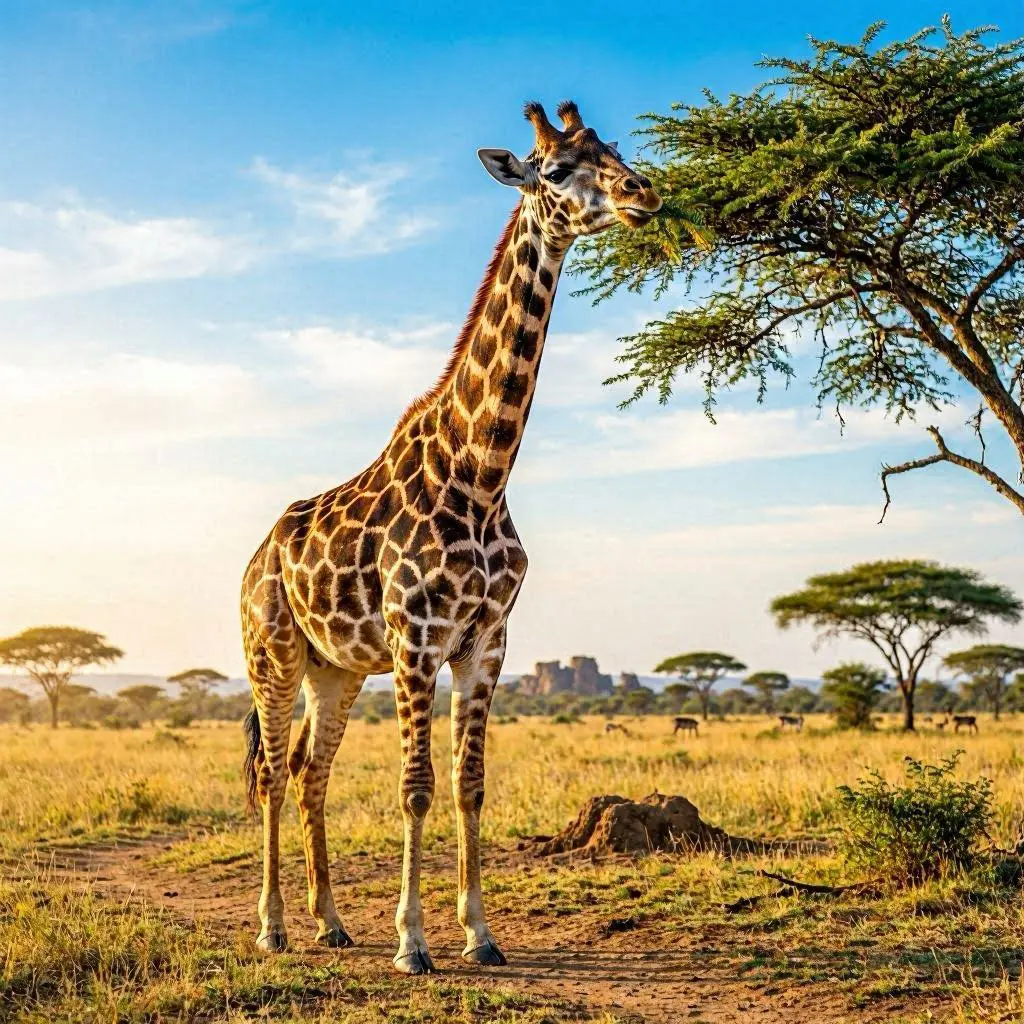
Scientific name: Giraffa camelopardalis
Type: Mammal
Giraffes live in savanna grasslands where scattered trees allow them to feed on high foliage. Their height gives them a feeding advantage and helps spot predators early.
❻ Bison
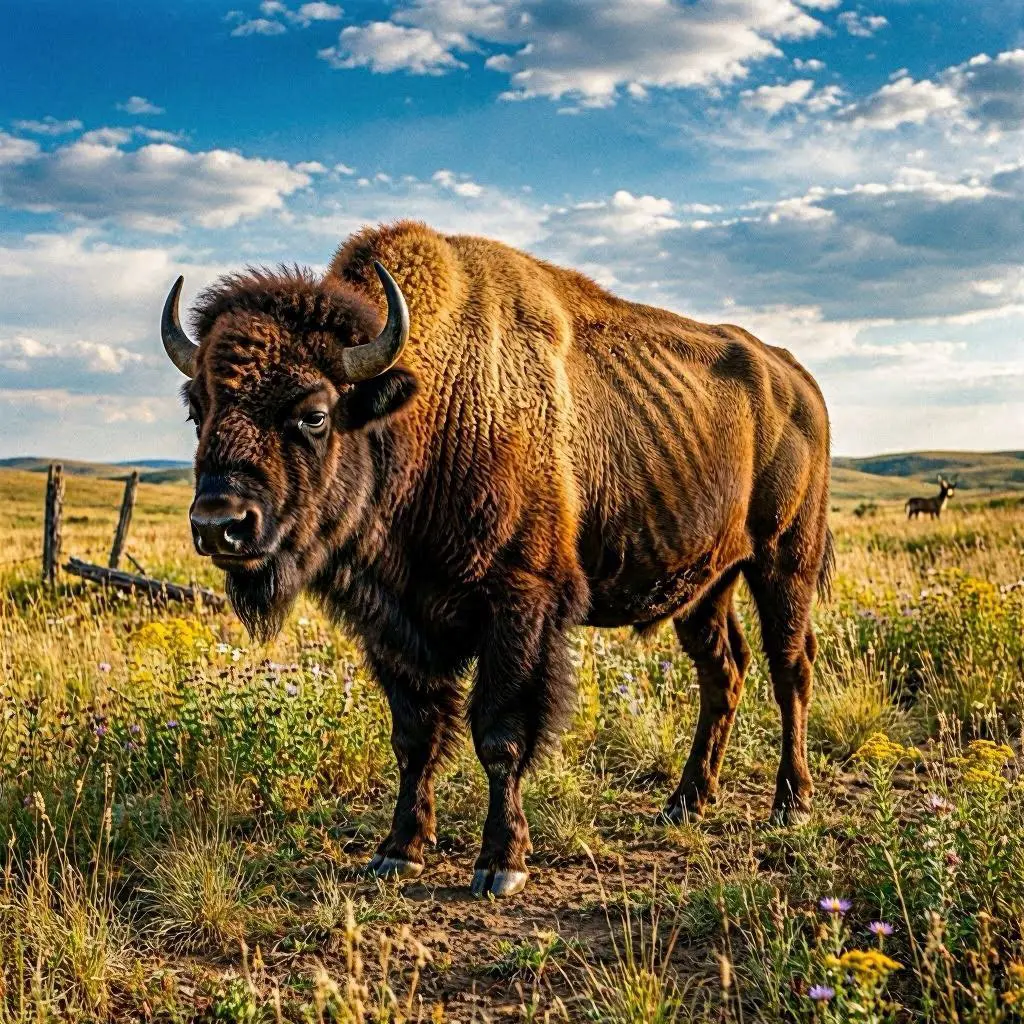
Scientific name: Bison bison
Type: Mammal
Bison are large grazing animals of North American grasslands. They travel in herds and shape prairie ecosystems through continuous grazing patterns.
❼ Wildebeest
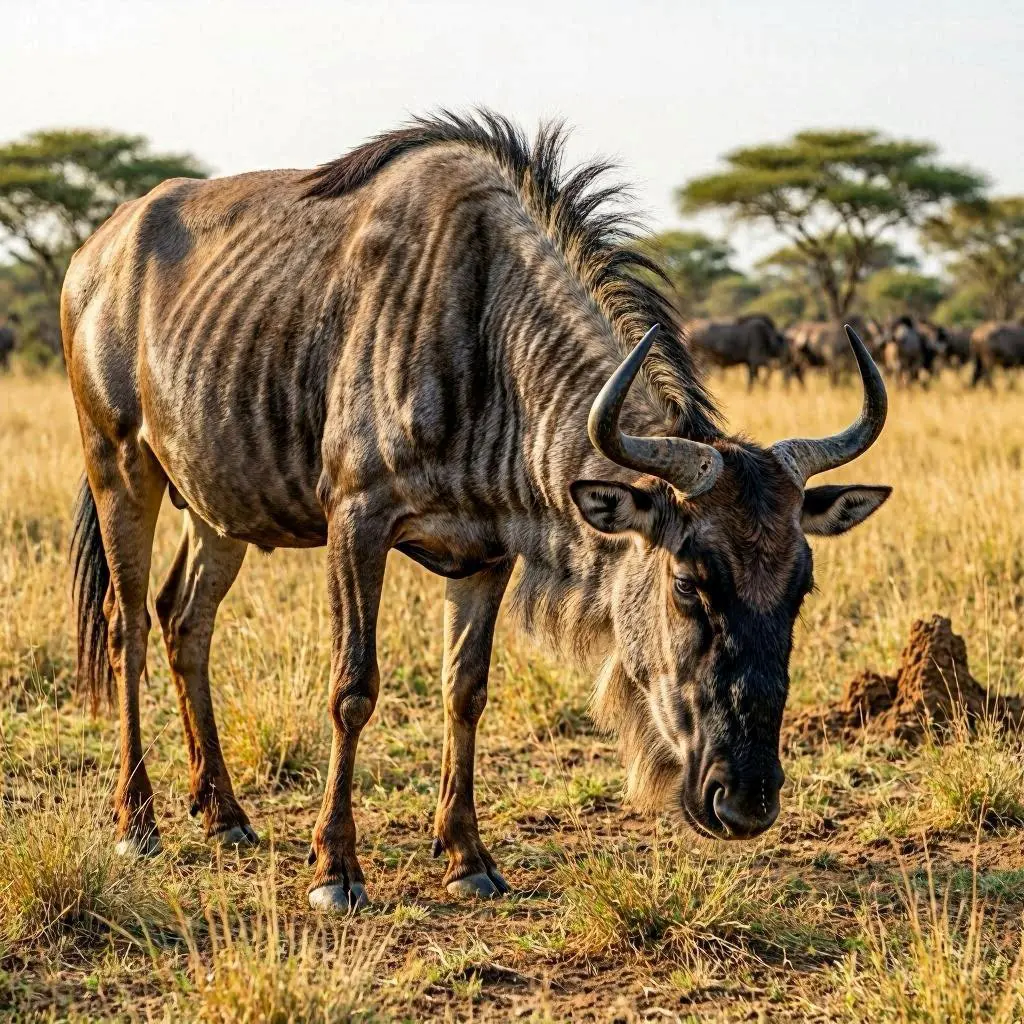
Scientific name: Connochaetes
Type: Mammal
Wildebeests inhabit African grasslands and are known for massive seasonal migrations following rainfall and fresh grass growth.
❽ Kangaroo
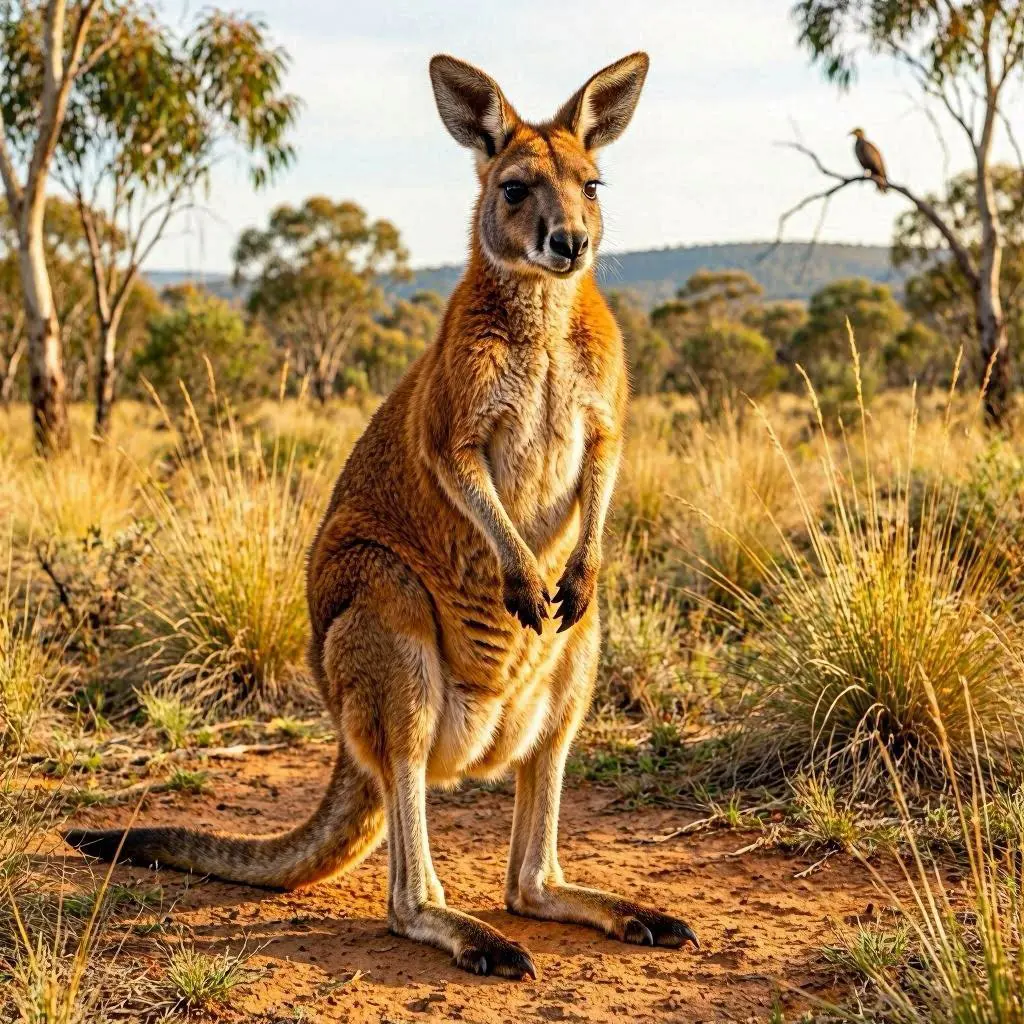
Scientific name: Macropus
Type: Mammal
Kangaroos are native to Australian grasslands and rangelands. Their hopping movement allows efficient travel across open, dry landscapes.
❾ Ostrich
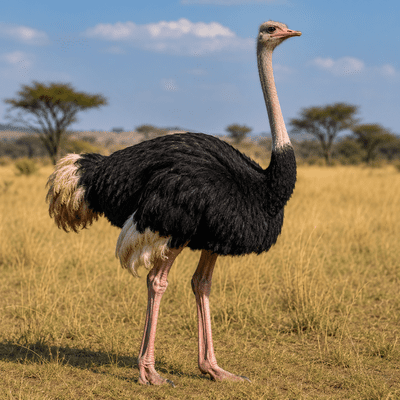
Scientific name: Struthio camelus
Type: Bird
Ostriches live in African grasslands where open visibility helps them detect danger early. They are fast runners and rely on speed rather than flight.
❿ Rhino
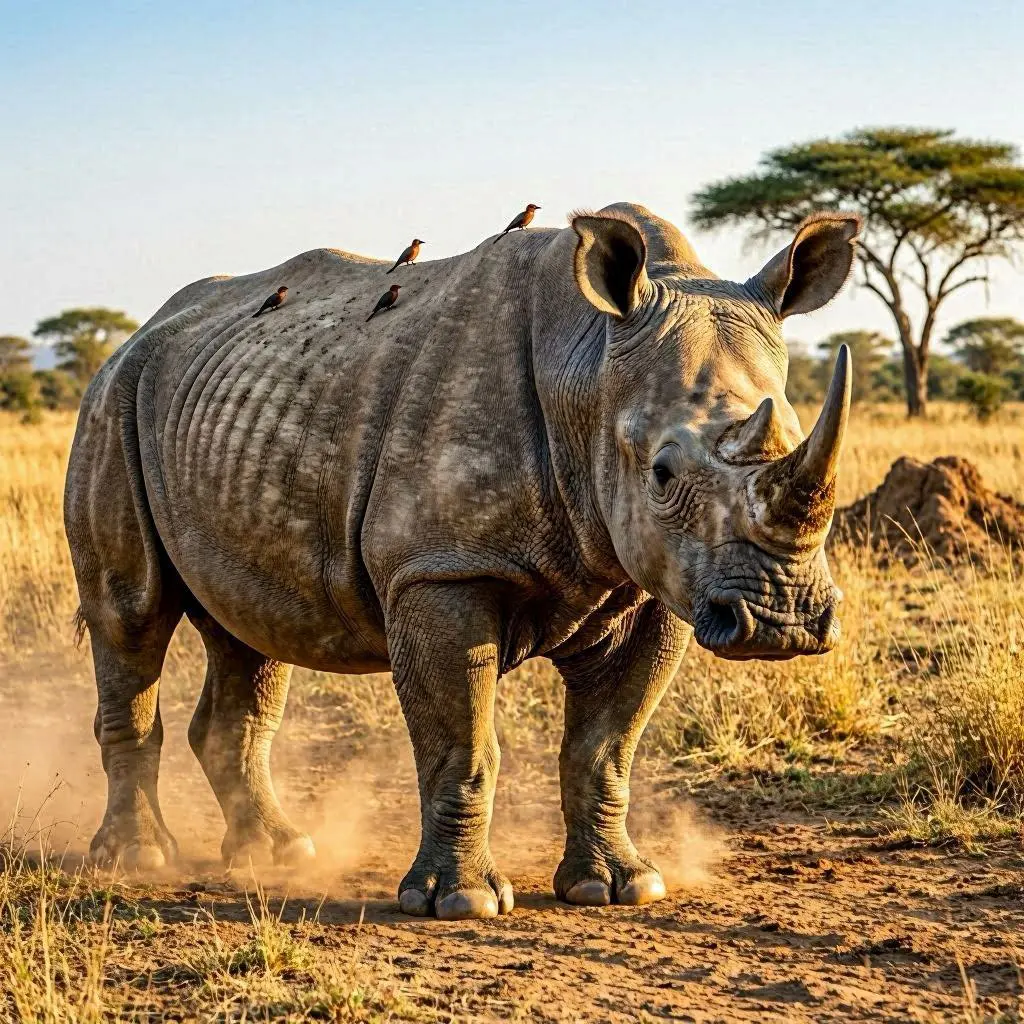
Scientific name: Rhinocerotidae (family)
Type: Mammal
Rhinoceroses inhabit African and Asian grasslands, feeding on grasses and shrubs. Despite their size, they can charge quickly when threatened.
⓫ Antelope

Scientific name: Antilopinae (subfamily)
Type: Mammal
Antelopes are agile herbivores found in African and Asian grasslands. Their speed and sharp senses help them escape predators in open plains.
⓬ Hyena
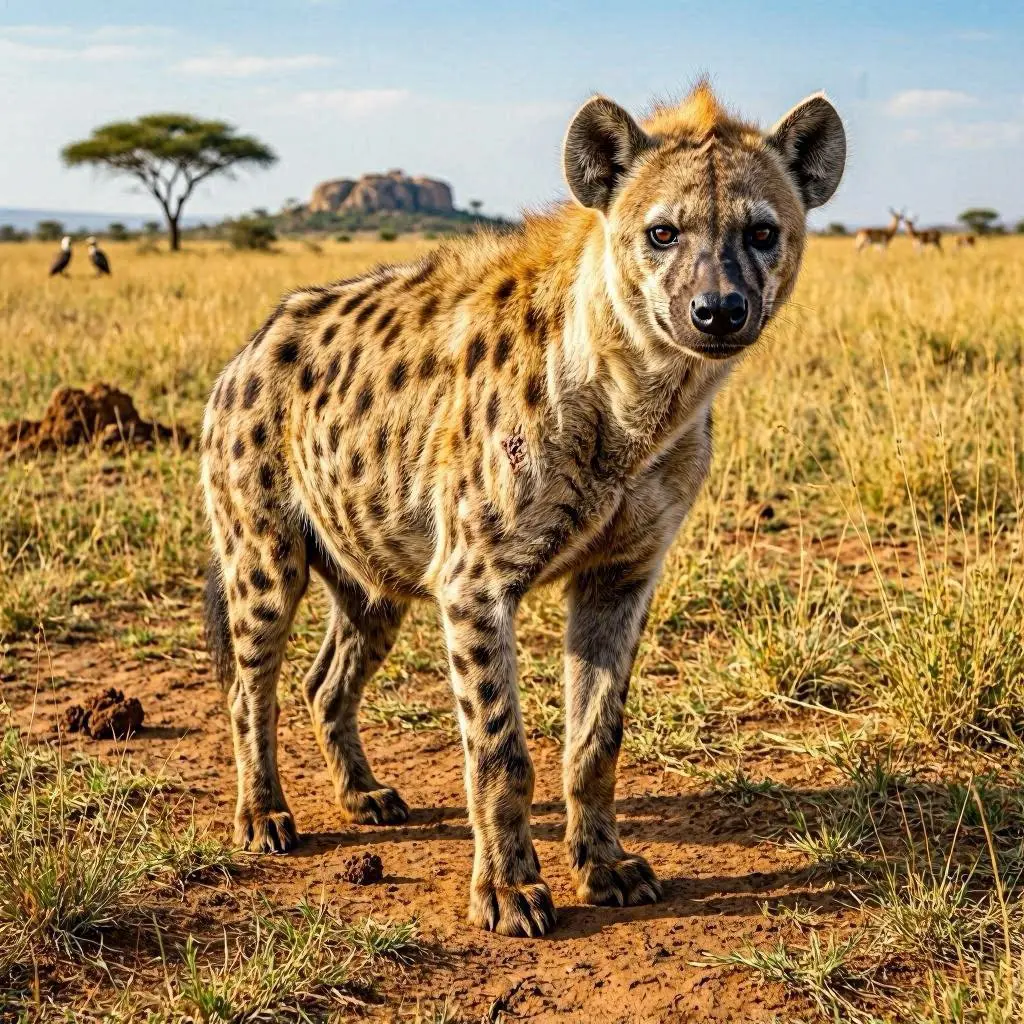
Scientific name: Crocuta crocuta (spotted hyena)
Type: Mammal
Hyenas live in African savannas and grasslands. They are skilled hunters and scavengers with powerful jaws capable of crushing bones.
⓭ Wild Horse
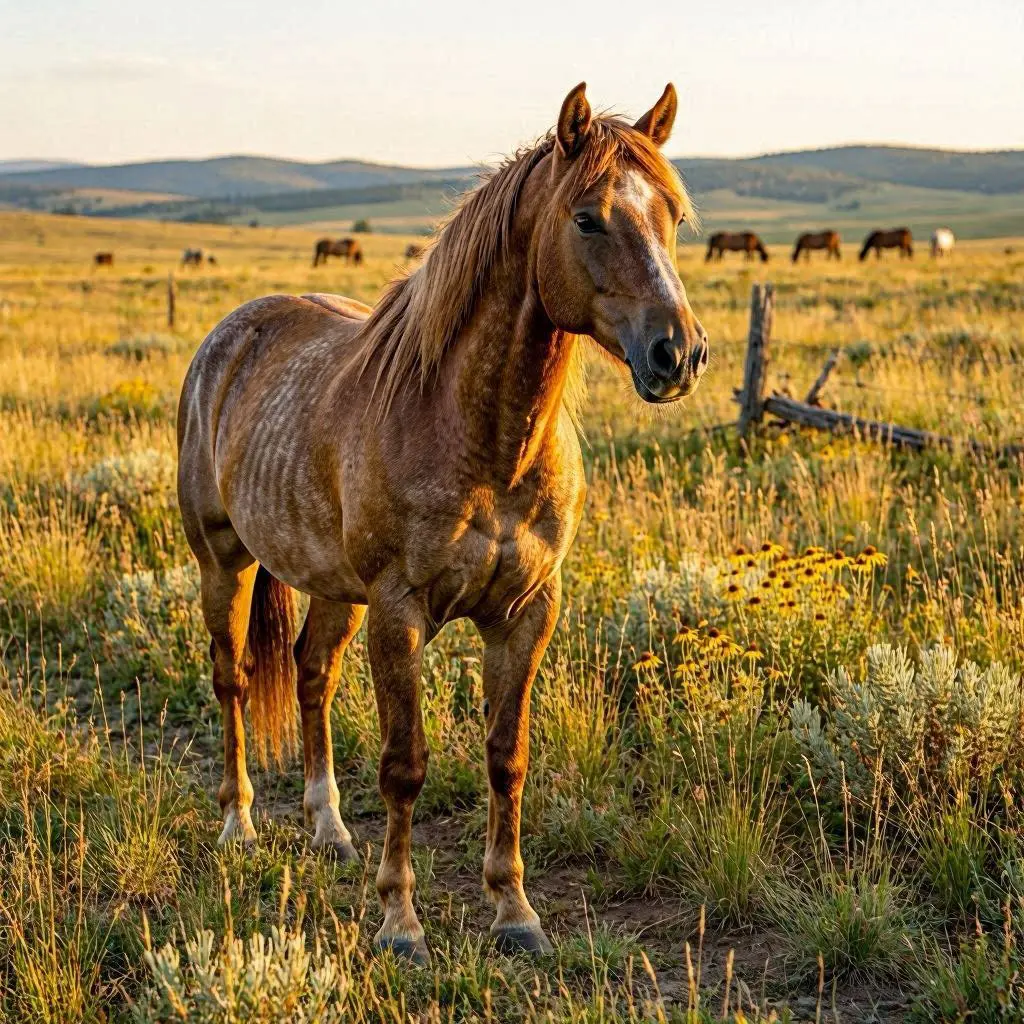
Scientific name: Equus ferus caballus (feral populations)
Type: Mammal
Wild horses inhabit open grasslands in Asia and North America. They move in herds and rely on speed and stamina for survival.
⓮ Meerkat
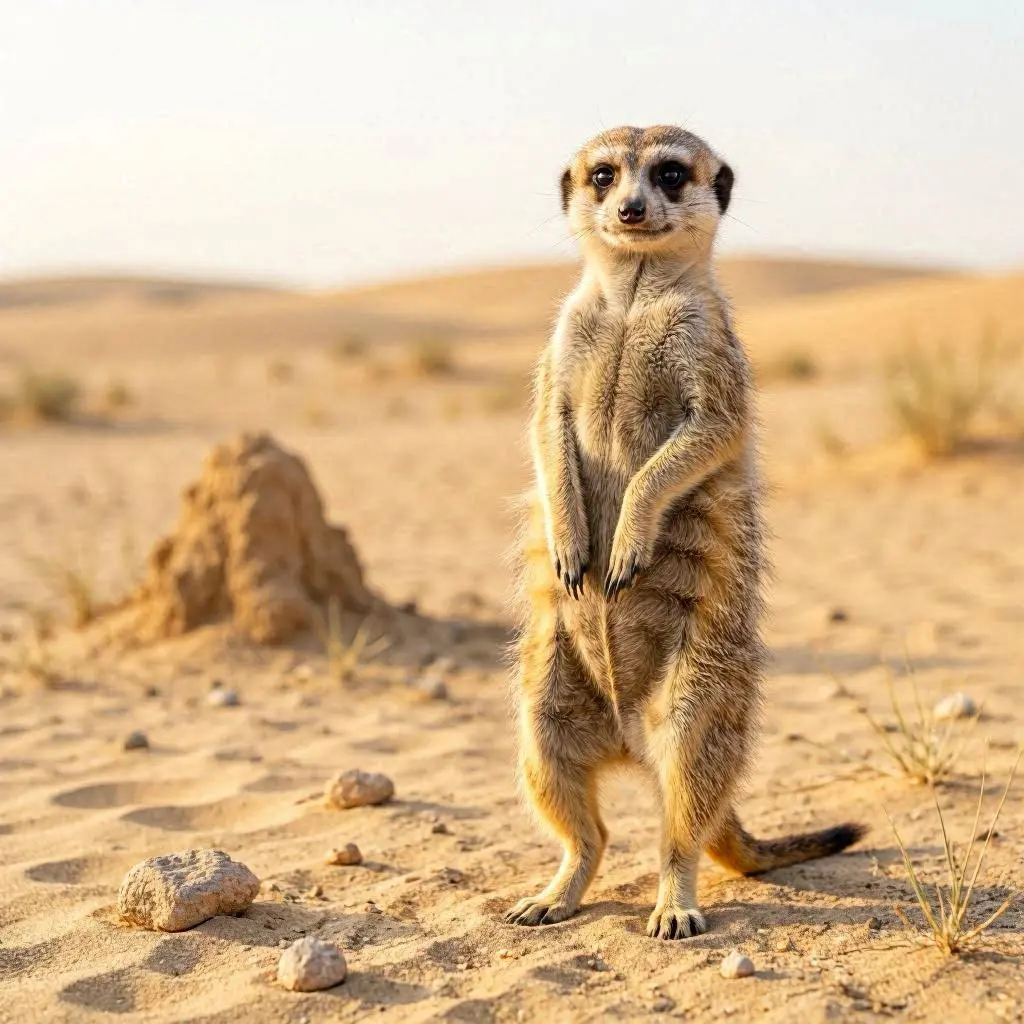
Scientific name: Suricata suricatta
Type: Mammal
Meerkats live in African grasslands where they dig complex burrow systems. They are highly social and take turns guarding their groups.
⓯ Prairie Dog
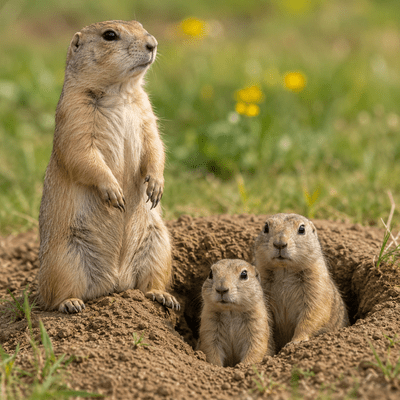
Scientific name: Cynomys
Type: Mammal
Prairie dogs are small rodents of North American grasslands. They live in large underground colonies that form extensive “towns” and use calls to warn of predators.
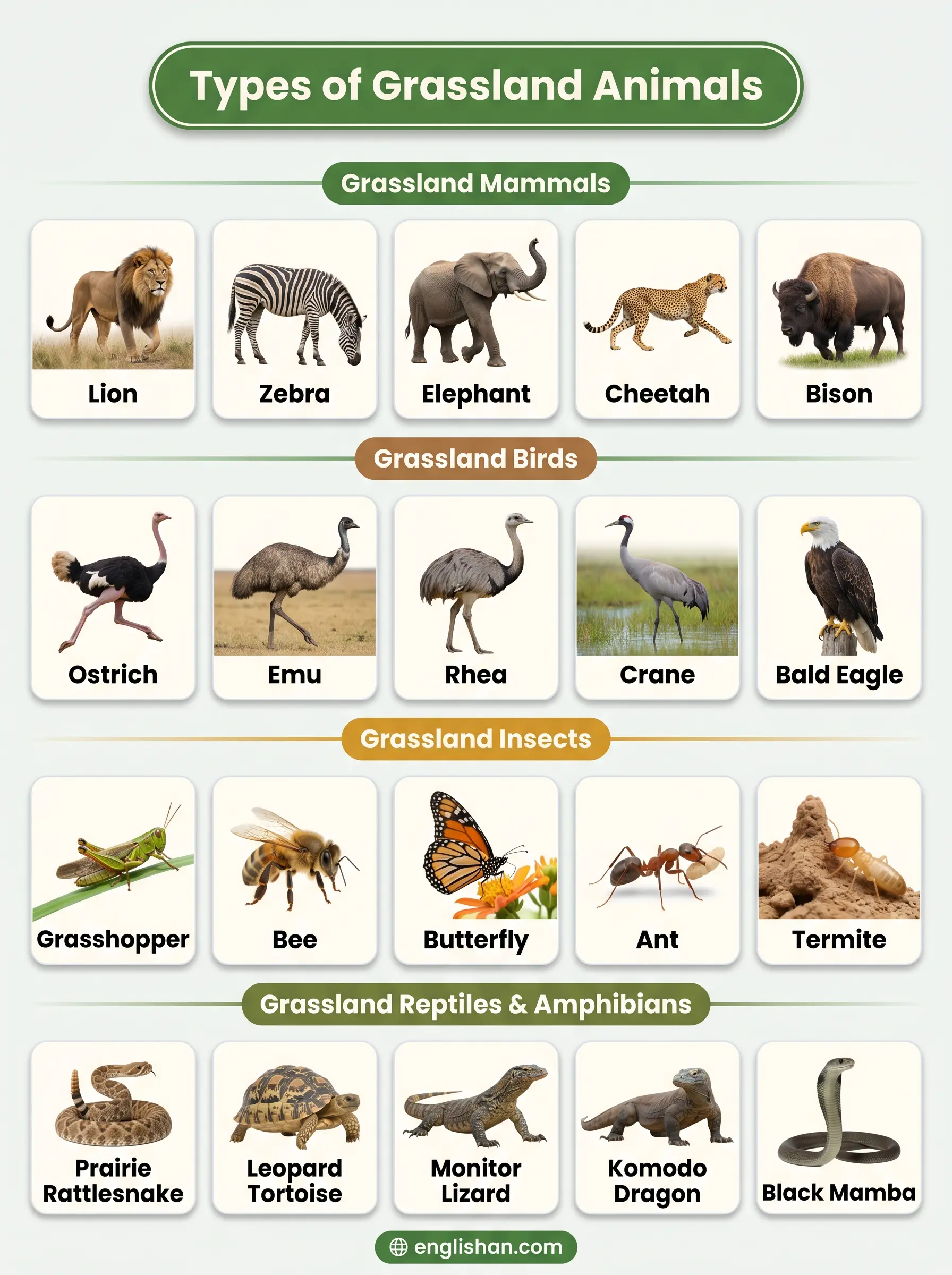
Types of Grassland Animals
Grasslands support a wide variety of wildlife adapted to open plains, dry climates, and wide grazing areas. These animals are commonly grouped into mammals, birds, insects, and reptiles/amphibians based on their biological characteristics.
Grassland Mammals
Mammals are warm-blooded animals that feed their young with milk. In grasslands, they include grazers, hunters, and burrowers.
- Lion – A powerful apex predator that lives in African grasslands and hunts in groups called prides.
- Zebra – A striped herbivore that lives in herds and grazes across African plains.
- Elephant – The largest land mammal that shapes grassland environments by feeding heavily on vegetation.
- Cheetah – A fast predator adapted to open grasslands, relying on speed to catch prey.
- Bison – A large grazing animal of North American prairies that moves in huge herds.
- Rhinoceros – A thick-skinned herbivore with one or two horns that lives in African and Asian grasslands.
- Kangaroo – An Australian grassland marsupial that moves by hopping and feeds on grasses.
- Meerkat – A small social animal that lives in underground burrows and stands guard in groups.
- Wildebeest – A migratory herbivore famous for long seasonal movements across African grasslands.
- Fox – A small, intelligent predator found in many grassland regions worldwide.
Grassland Birds
Grassland birds include large runners, predators, and migratory species adapted to open skies and wide plains.
- Ostrich – The largest bird that cannot fly but runs at high speed in African grasslands.
- Bald Eagle – A powerful raptor that hunts over North American grasslands and open areas.
- Rhea – A large flightless bird native to South American grasslands.
- Emu – Australia’s largest bird adapted to running across dry grasslands.
- Flamingo – A wading bird found near grassland lakes and wetlands with pink coloration.
- Crane – A tall bird known for its elegant movements in grassland wetlands.
- Duck – A water bird often found in grassland ponds and wetlands.
- Parrot – A colorful intelligent bird that lives near grassland edges.
- Skylark – A small bird known for singing while flying over open fields.
- Harrier Hawk – A low-flying hunter that searches grasslands for small animals.
Grassland Insects
Insects are the most abundant grassland animals and are essential for pollination and soil health.
- Grasshopper – A strong jumper that feeds on grass and plants in open fields.
- Bee – A key pollinator that supports grassland flowering plants.
- Beetle – Includes dung beetles that recycle nutrients in the soil.
- Butterfly – A pollinating insect, with some species migrating long distances.
- Ant – A social insect that builds colonies underground in grasslands.
- Cockroach – A decomposer that helps break down organic matter in soil.
- Cricket – A nocturnal insect known for its chirping sounds in grasslands.
- Termite – A builder insect that creates large mounds in savanna regions.
Grassland Reptiles & Amphibians
Reptiles and amphibians are cold-blooded and often use camouflage to survive in dry, open environments.
- Prairie Rattlesnake – A venomous snake that warns enemies with its rattling tail.
- Leopard Tortoise – A large tortoise found in African grasslands with patterned shell.
- Monitor Lizard – A fast, powerful reptile found in African and Asian grasslands.
- Komodo Dragon – The world’s largest lizard, found in Indonesian grasslands.
- Frog – An amphibian living near grassland ponds and water sources.
- Salamander – A small amphibian found in moist grassland areas.
- Horned Lizard – A camouflaged reptile that blends into dry grass and soil.
- Black Mamba – A fast and highly venomous snake found in African grasslands.
Endangered Grassland Animals Names
Many grassland animals are now threatened due to habitat loss, poaching, and human expansion. These species need conservation efforts to survive in the wild.
- African Elephant
- Black Rhinoceros
- White Rhinoceros
- African Wild Dog
- Grevy’s Zebra
- Mountain Zebra
- Saiga Antelope
- Przewalski’s Horse
- Giant Anteater
- Maned Wolf
- Pampas Deer
- Bengal Florican
- Great Indian Bustard
- Snow Leopard (grassland-edge populations)
Grassland vs Forest animals
Grassland and forest are two major ecosystems with different environments and animal life. Grasslands are open plains with few trees, while forests are dense areas with thick vegetation. Animals in each habitat are adapted to survive according to their surroundings.
| Feature | Grassland Animals | Forest Animals |
|---|---|---|
| Environment | Open, wide plains with few trees | Dense areas with many trees and shade |
| Movement | Adapted for speed and long-distance travel | Adapted for climbing, hiding, or moving through dense vegetation |
| Visibility | High visibility, easy to spot predators/prey | Low visibility due to thick vegetation |
| Common Animals | Lion, Zebra, Cheetah, Elephant, Bison, Kangaroo | Tiger, Deer, Bear, Monkey, Owl, Leopard |
| Body Adaptations | Long legs, speed, herd behavior | Climbing ability, camouflage, agility in trees |
| Hunting Style | Predators rely on speed and open-chase hunting | Predators rely on ambush and stealth |
| Food Sources | Mainly grasses and grazing plants | Leaves, fruits, insects, and mixed diet |
| Climate Exposure | More exposed to wind, sun, and dryness | More humid, shaded, and stable climate |
| Example Regions | African savannas, North American prairies, Australian rangelands | Amazon rainforest, Congo forest, Southeast Asian forests |
Fastest Grassland Animal
Fast movement is essential in grassland ecosystems where animals depend on speed to hunt or escape predators across open plains.
- Cheetah – The fastest land animal, reaching up to 70 mph in short bursts to catch prey in open savannas.
- Pronghorn – A North American grassland runner known for sustained high speed over long distances.
- Springbok – A fast African antelope that uses speed and high leaps to avoid predators.
- Wildebeest – A strong runner that relies on speed and large herds during long migrations across grasslands.
- Lion – Not built for long speed but uses short bursts of acceleration to catch prey in coordinated hunts.
Grassland Animals by Size
Grassland animals can be grouped based on their body size, from tiny insects to massive herbivores and predators. Each size group plays an important role in maintaining the balance of grassland ecosystems.
Small Grassland Animals Names
Small animals are usually quick, hidden, or burrowing species that survive by camouflage, speed, or living in groups.
- Grasshopper
- Ant
- Cricket
- Prairie Dog
- Meerkat
- Mouse
- Hare
- Lizard
- Frog
- Butterfly
Large Grassland Animals Names
Large animals dominate open grasslands and are often grazers or top predators that travel long distances in search of food and water.
- Elephant
- Lion
- Giraffe
- Bison
- Rhinoceros
- Cheetah
- Wildebeest
- Zebra
- Ostrich
- Kangaroo
Adaptations of Grassland Animals
Grassland animals have developed special features that help them survive in wide open plains where there is little cover and constant risk from predators. Over time, these adaptations have become essential for survival in such environments.
- Speed adaptations – Many grassland animals, such as cheetahs and antelopes, have evolved strong legs and lightweight bodies that allow them to run at high speeds to catch prey or escape danger.
- Camouflage – Animals like lions and grassland insects often have body colors that blend with dry grass, helping them hide from prey or predators.
- Herd behavior – Species such as zebras and wildebeests live in groups, which improves safety because more eyes can detect predators early and reduce individual risk.
- Burrowing habits – Animals like prairie dogs and meerkats live underground in tunnels, which protect them from extreme weather and predators while also providing safe breeding spaces.
Grassland Animals by Region
Different grassland regions of the world support unique animal species adapted to local climate, vegetation, and terrain. Below is a region-wise overview of key grassland wildlife.
Grassland Animals of Africa
African grasslands are rich savanna ecosystems that support some of the most iconic wildlife on Earth. These open plains allow large herbivores to graze freely and predators to hunt efficiently.
- Lion
- Zebra
- African Elephant
- Cheetah
- Wildebeest
- Giraffe
- Hyena
- Ostrich
Grassland Animals of South America
South American grasslands are wide open plains and savanna-like regions that support a mix of grazing animals, birds, and unique predators adapted to tall grasses and wetlands.
- Rhea
- Maned Wolf
- Anaconda
- Pampas Deer
- Capybara
- Giant Anteater
- Monarch Butterfly
Grassland Animals of North America
North American prairies are vast grass-covered plains that support large grazing herds and adaptable predators. These ecosystems depend on open space and seasonal plant growth.
- American Bison
- Prairie Dog
- Bald Eagle
- Prairie Rattlesnake
- Mustang
- Coyote
- Bighorn Sheep
Grassland Animals of Australia
Australian grasslands and rangelands are dry, open environments that support unique marsupials, reptiles, and birds adapted to heat and sparse vegetation.
- Red Kangaroo
- Emu
- Tasmanian Devil
- King Brown Snake
- Blue-tongued Lizard
- Echidna
- Wombat
Interesting Facts about Grassland Animals
- The cheetah is the fastest land animal on Earth, reaching speeds of up to 70 mph in short bursts.
- The wildebeest migration in Africa covers about 1,800 miles every year.
- A giant anteater can eat up to 35,000 ants and termites in a single day.
- A giraffe’s tongue is around 18–19 inches long and is dark blue-black in color.
- Around 60 million bison once lived in North American grasslands before human settlement.
- Grasslands cover about 25% of Earth’s land surface and exist on every continent except Antarctica.
- A cheetah can accelerate from 0 to 60 mph in just 3 seconds.
- An ostrich egg weighs about 3 pounds and is the largest egg laid by any living bird.
- North American prairies have reduced to only about 2% of their original size over the last 100 years.
Conclusion
Grasslands are some of the most vibrant and important ecosystems on our planet. From the sweeping savannas of Africa to the vast prairies of North America, these open plains are teeming with life — from the tiniest grasshopper to the mighty elephant.
In this article, we explored grassland animals with their names, pictures, meanings, and example sentences. We organized them by type, mammals, birds, insects, and reptiles, and by region, Africa, South America, North America, and Australia. We also discovered some incredible facts and answered the most common questions about grassland wildlife.
Learning the names of grassland animals is not just great for your English vocabulary. It also helps you understand and appreciate the natural world around you. The more we know about these animals, the better we can protect them.
FAQs
Grasslands are home to a huge variety of animals. These include mammals like lions, elephants, zebras, cheetahs, bison, kangaroos, and meerkats; birds like ostriches, eagles, and cranes; reptiles like rattlesnakes and tortoises; and insects like grasshoppers, beetles, and termites. The specific animals depend on the type and location of the grassland.
The cheetah is the fastest grassland animal — and the fastest land animal on Earth. It can run at speeds of up to 70 mph (112 km/h). However, it can only maintain this speed for short distances of about 20–30 seconds before needing to rest.
The African bush elephant is the largest grassland animal and the largest land animal on Earth. Adult males can weigh up to 13,000 pounds (6,000 kg) and stand up to 13 feet (4 meters) tall at the shoulder.
Grassland animals survive through a variety of adaptations: (1) Speed — many animals like cheetahs, antelopes, and ostriches are very fast to escape predators or catch prey. (2) Herding — animals like zebras and wildebeest travel in large groups for protection. (3) Burrowing — animals like prairie dogs and meerkats live underground to escape heat and danger. (4) Camouflage — many animals have colors that match the dry grass and soil around them.
Africa has the greatest diversity and number of grassland animals. The African savanna is home to the “Big Five” (lion, leopard, elephant, rhinoceros, and Cape buffalo) as well as hundreds of other species. However, every continent except Antarctica has grasslands with their own unique animals.
Yes, many grassland animals are endangered due to habitat loss, poaching, and climate change. Some critically endangered grassland animals include the white rhinoceros, African wild dog, black-footed ferret, saiga antelope, and Przewalski’s horse. Conservation efforts around the world are working to protect these species and their habitats.
Grassland animals eat a wide variety of foods depending on their type. Herbivores (plant-eaters) like zebras, elephants, and bison eat grasses and plants. Carnivores (meat-eaters) like lions, cheetahs, and eagles hunt other animals. Omnivores (eat both) like hyenas and meerkats eat both plants and animals. Insects like dung beetles and termites eat decomposing matter and help recycle nutrients back into the soil.
Yes, many grassland animals are endangered due to habitat loss, poaching, and climate change. Some critically endangered grassland animals include the white rhinoceros, African wild dog, black-footed ferret, saiga antelope, and Przewalski’s horse. Conservation efforts around the world are working to protect these species and their habitats.
You May Also Like
- Difference Between Reptiles and Amphibians
- Top 22 Strongest Animals in the World
- 90+ Dangerous Animals Names
Grassland Animals Quiz
Grassland Animals
Which animal does the picture show?
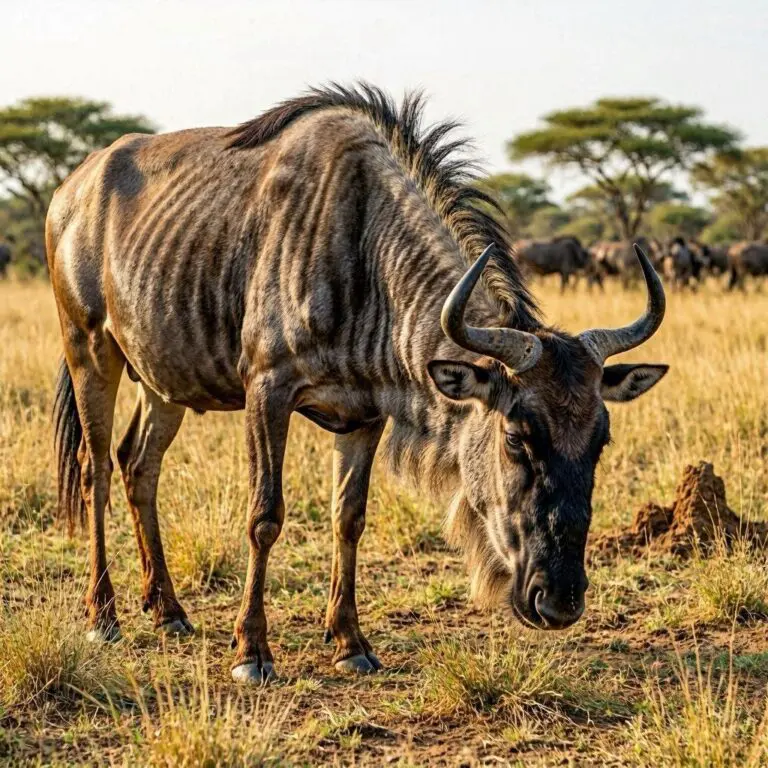
The picture shows a wildebeest.
Read the picture before reading the options.
The picture shows a wildebeest.
Why do so many grassland animals live in herds?
Many eyes and the dilution effect substitute for hiding places.
Open habitat drives group living.
A lone zebra on open plain is an easy target.
What is African tropical grassland called?
Grassland with scattered trees and a strong wet-dry season split.
Savanna, prairie, steppe and pampas name grassland by region.
The Serengeti is savanna, not prairie.
Name the adaptation.
Grass wears teeth down quickly, so grazers evolved teeth with a high ___.
High-crowned teeth keep erupting as the surface wears away.
Silica in grass is abrasive enough to grind teeth flat.
A horse's teeth keep emerging throughout its life.
Why do prairie dogs dig extensive tunnel systems?
The burrow replaces the tree, cave and thicket all at once.
Where there is no cover above ground, animals make it below.
A prairie dog town can cover many hectares.
What role does fire play in grassland?
Grass regrows from the root; young trees do not survive repeated burning.
Grassland is maintained by fire and grazing together.
Stop the fires and the savanna closes into woodland.
Turn on JavaScript for the interactive quiz. The full practice set is shown above.