

Mountain animals names include some of the most remarkable wildlife found on Earth. Mountains cover roughly 27% of the Earth’s land surface and shelter unique animals adapted to extreme environments. From the frozen ridges of the Himalayas to the sun-scorched slopes of the Atlas Mountains in North Africa, these animals have carved out lives in places where most creatures simply could not survive. Thin air, brutal cold, rocky terrain, and unpredictable weather are daily realities for mountain-dwelling species, yet they not only endure but thrive.
This article explores mountain animals names from every corner of the globe. You will find detailed lists of mountain animals names organized by animal type, by mountain range, and by fame. Whether you are a student, a wildlife photographer, a trekker, or simply someone fascinated by the natural world, this guide gives you a thorough look at the animals that call high altitudes home.
What Are Mountain Animals?
Mountain animals are species that have evolved physically and behaviorally to survive at elevated altitudes, typically above 1,500 meters (about 5,000 feet). These animals deal with challenges that flat-land creatures never face: oxygen levels drop as altitude rises, temperatures swing dramatically between day and night, food sources are seasonal and scarce, and the terrain demands specialized locomotion.
Unlike lowland animals, mountain species tend to have denser fur, more efficient respiratory systems, compact body shapes that retain heat, and hooves or claws built for gripping uneven rock. They represent some of the most specialized wildlife on Earth, shaped by millions of years of pressure from one of the harshest environments our planet offers.
Explore more animals that start with different letters:
A | B | C | D | E | F | G | H | I | J | K | L | M | N | O | P | Q | R | S | T | U | V | W | X | Y | Z
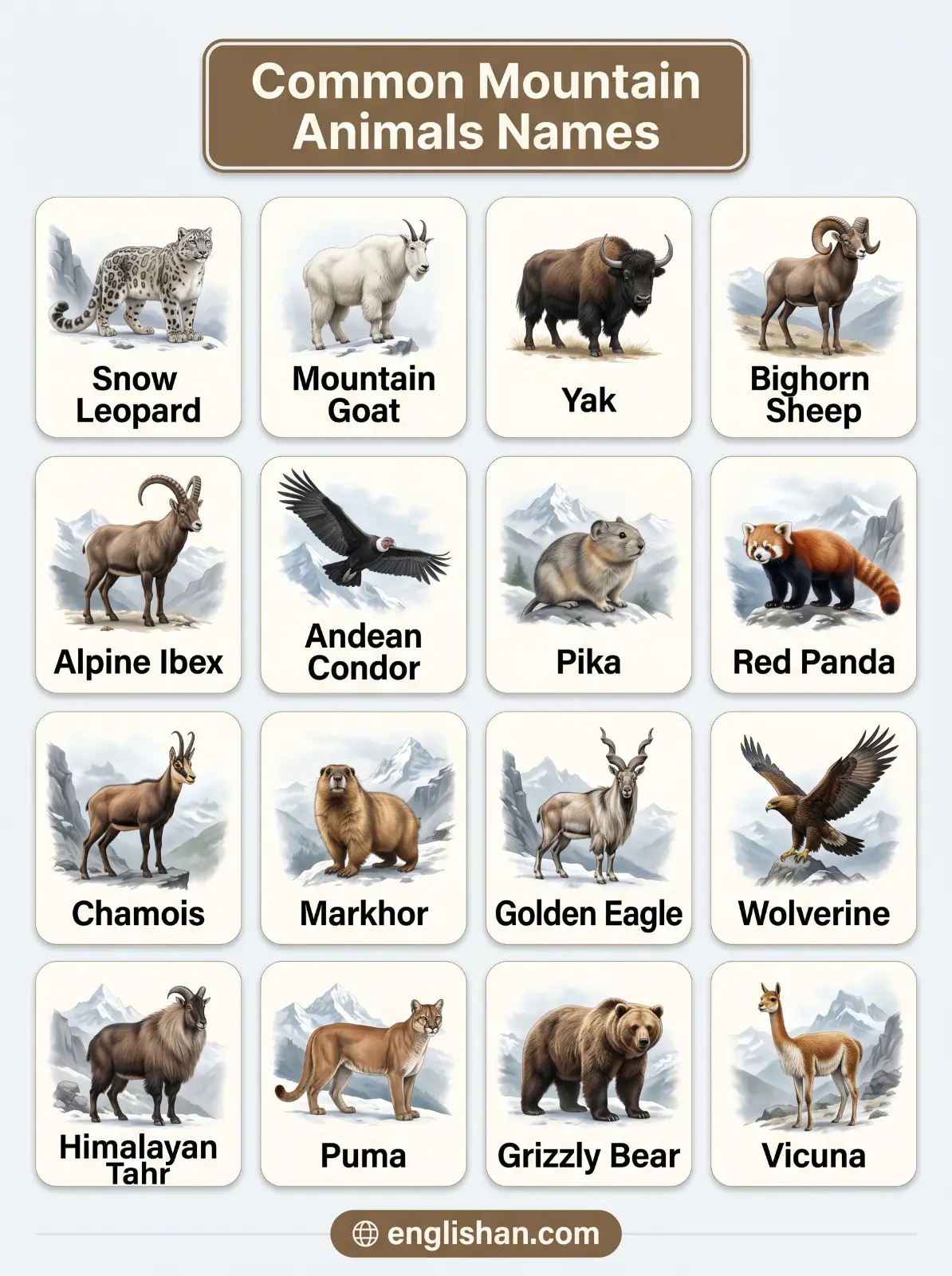
List of Mountain Animals Names
Below is a comprehensive list of 60+ animals found in mountain regions worldwide:
- Snow Leopard
- Himalayan Tahr
- Yak
- Mountain Goat
- Bighorn Sheep
- Alpine Ibex
- Puma (Mountain Lion)
- Andean Condor
- Golden Eagle
- Himalayan Monal Pheasant
- Red Panda
- Tibetan Fox
- Tibetan Antelope (Chiru)
- Himalayan Black Bear
- Brown Bear (Grizzly)
- Wolverine
- Lynx
- Mountain Hare
- Pika (Himalayan and American)
- Marmot (Alpine and Himalayan)
- Chamois
- Markhor
- Marco Polo Sheep
- Argali
- Vicuna
- Llama
- Alpaca
- Spectacled Bear
- Andean Wolf (Maned Wolf)
- Chinchilla
- Viscacha
- Tibetan Mastiff (wild ancestor)
- Ethiopian Wolf
- Gelada Baboon
- Bezoar Ibex
- Nubian Ibex
- Barbary Macaque
- Atlas Deer (Barbary Stag)
- Amur Leopard
- Snow Finch
- Lammergeier (Bearded Vulture)
- Peregrine Falcon
- Alpine Swift
- Wall Creeper
- White-tailed Ptarmigan
- Himalayan Snowcock
- Andean Flamingo
- Mountain Bluebird
- Horned Lark
- Eurasian Eagle Owl
- Alpine Salamander
- Caucasian Parsley Frog
- Tibetan Toad
- High-altitude Newt
- Mountain Horned Lizard
- Alpine Apollo Butterfly
- Bumblebee (High-altitude species)
- Stone Fly
- Alpine Grasshopper
- Himalayan Jumping Spider (highest-altitude arthropod known)
- Siberian Ibex
- Snow Vole
- Dhole (Asiatic Wild Dog)
- Takin
- Himalayan Serow
Common Mountain Animals Names with Pictures
❶ Snow Leopard
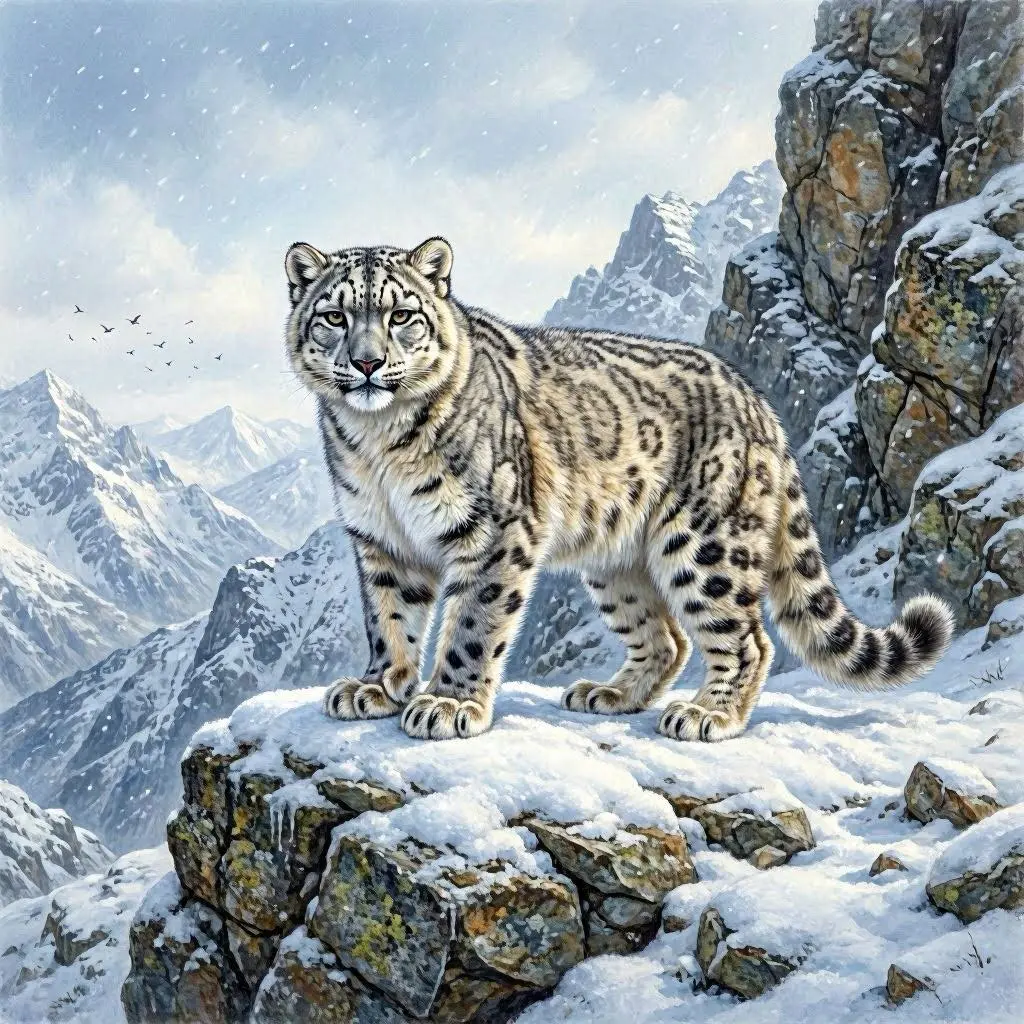
The snow leopard is the defining symbol of high-altitude wilderness. Found across the mountain ranges of Central Asia, it hunts blue sheep and ibex across sheer cliff faces with a tail so long it doubles as a balancing tool and a warm scarf in blizzard conditions. Adults rarely exceed 55 kg, making them lighter than most people imagine for such a commanding predator.
❷ Mountain Goat
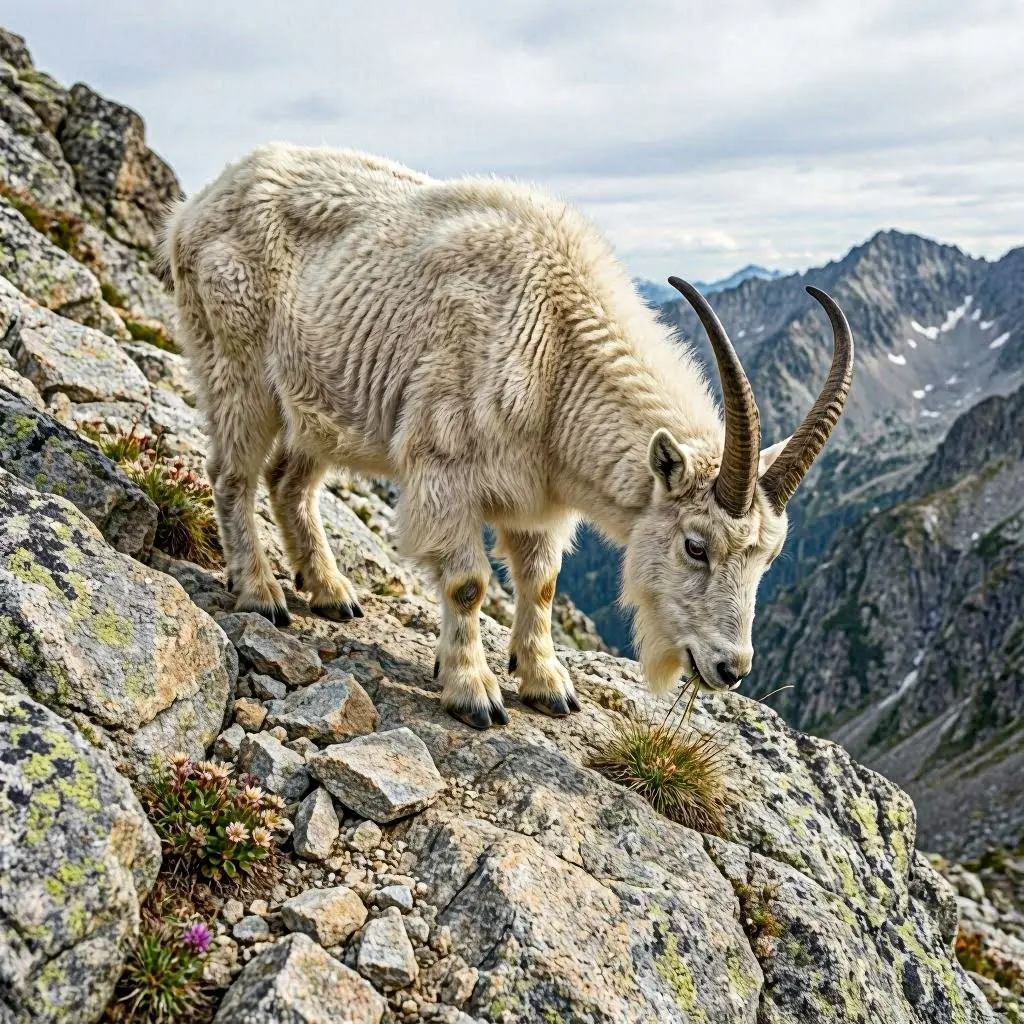
Native to the Rocky Mountains and the coastal ranges of North America, the mountain goat is perhaps the most sure-footed large mammal alive. Its split hooves contain a hard outer edge for gripping rock edges and a soft inner pad for traction. Mountain goats routinely navigate 60-degree slopes that would be technically challenging even for experienced human climbers.
❸ Yak
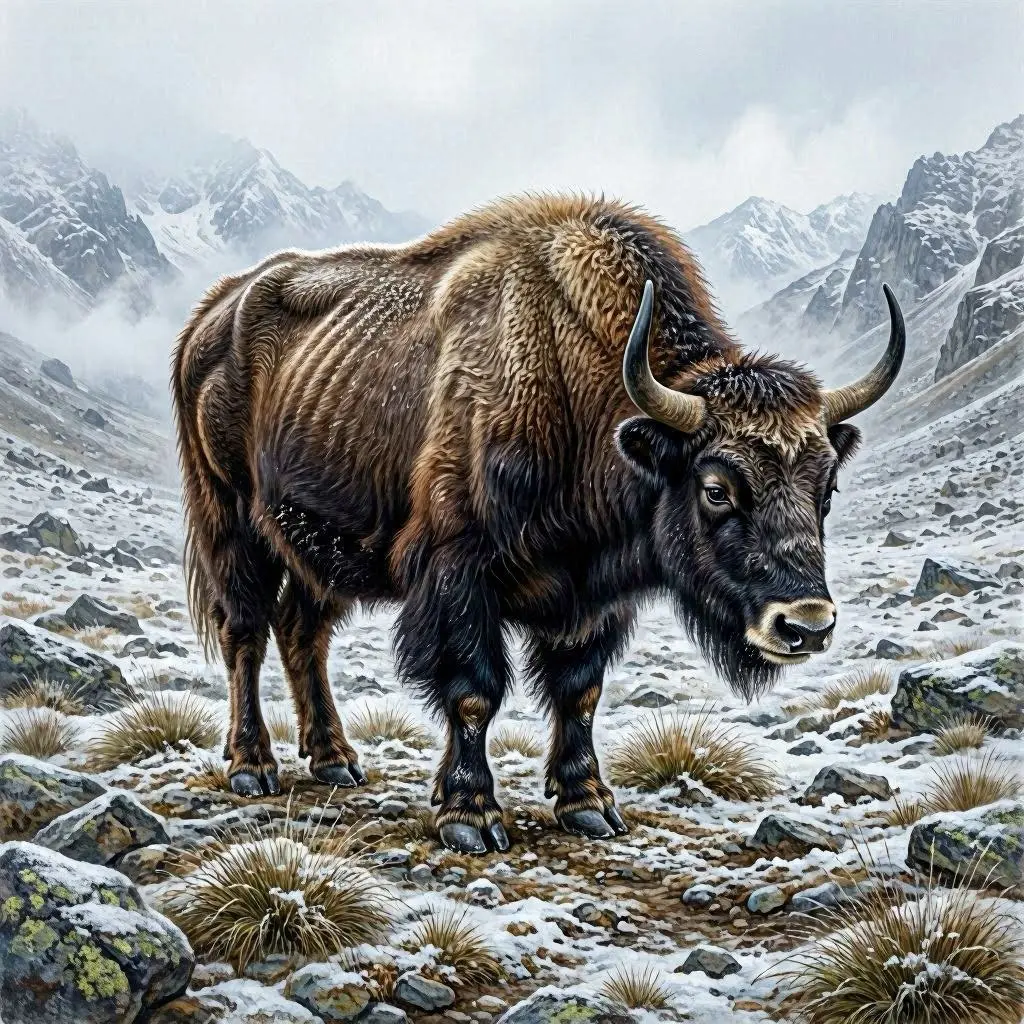
The yak is the backbone of Himalayan highland life. Wild yaks live above 4,000 meters, where their thick outer coat and dense undercoat trap body heat with extraordinary efficiency. Their lungs and hearts are enlarged compared to lowland cattle, allowing them to extract oxygen from thin mountain air without difficulty.
❹ Bighorn Sheep
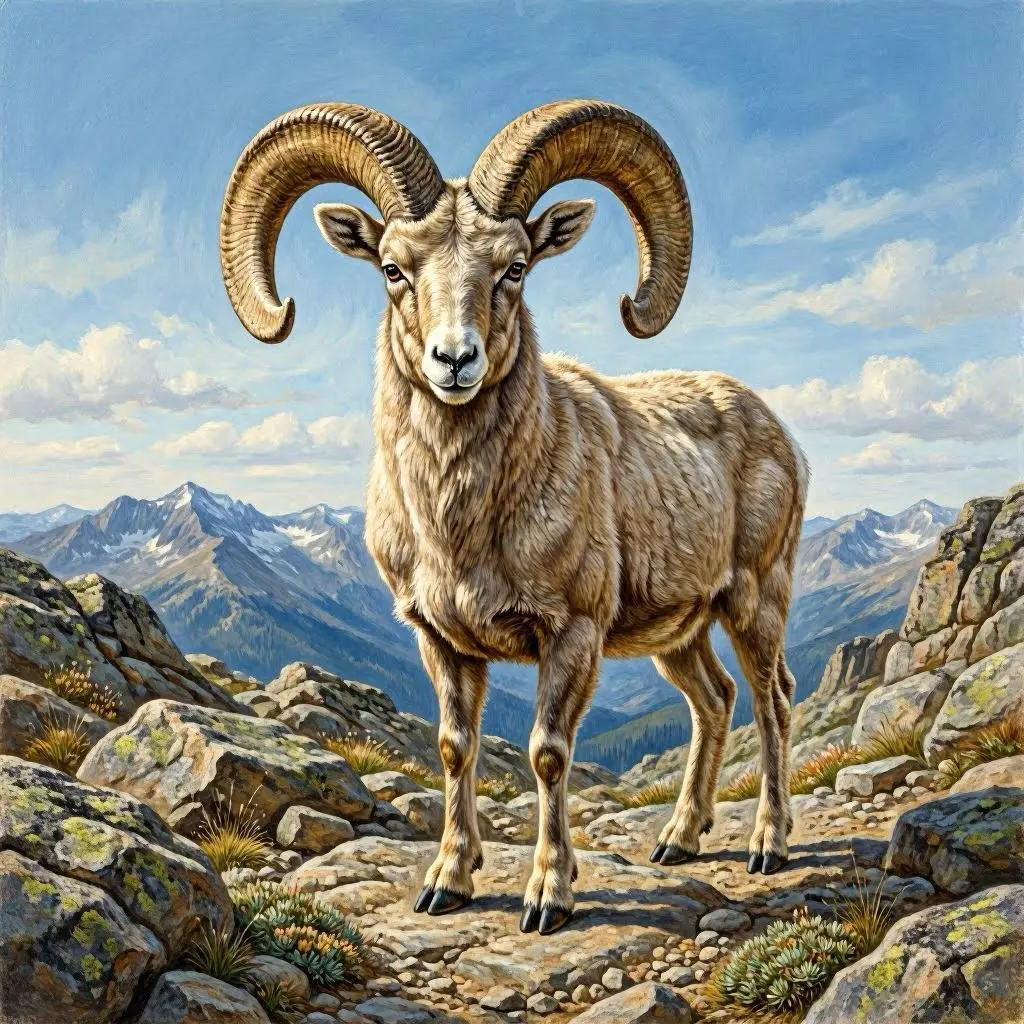
The curling horns of the bighorn sheep are not just decorative. Males use them in head-to-head combat during mating season, with impacts loud enough to echo across entire valleys. Found throughout the Rocky Mountains and the Sierra Nevada, these sheep can detect predators over 1.5 km away with their wide-angled vision.
❺ Alpine Ibex
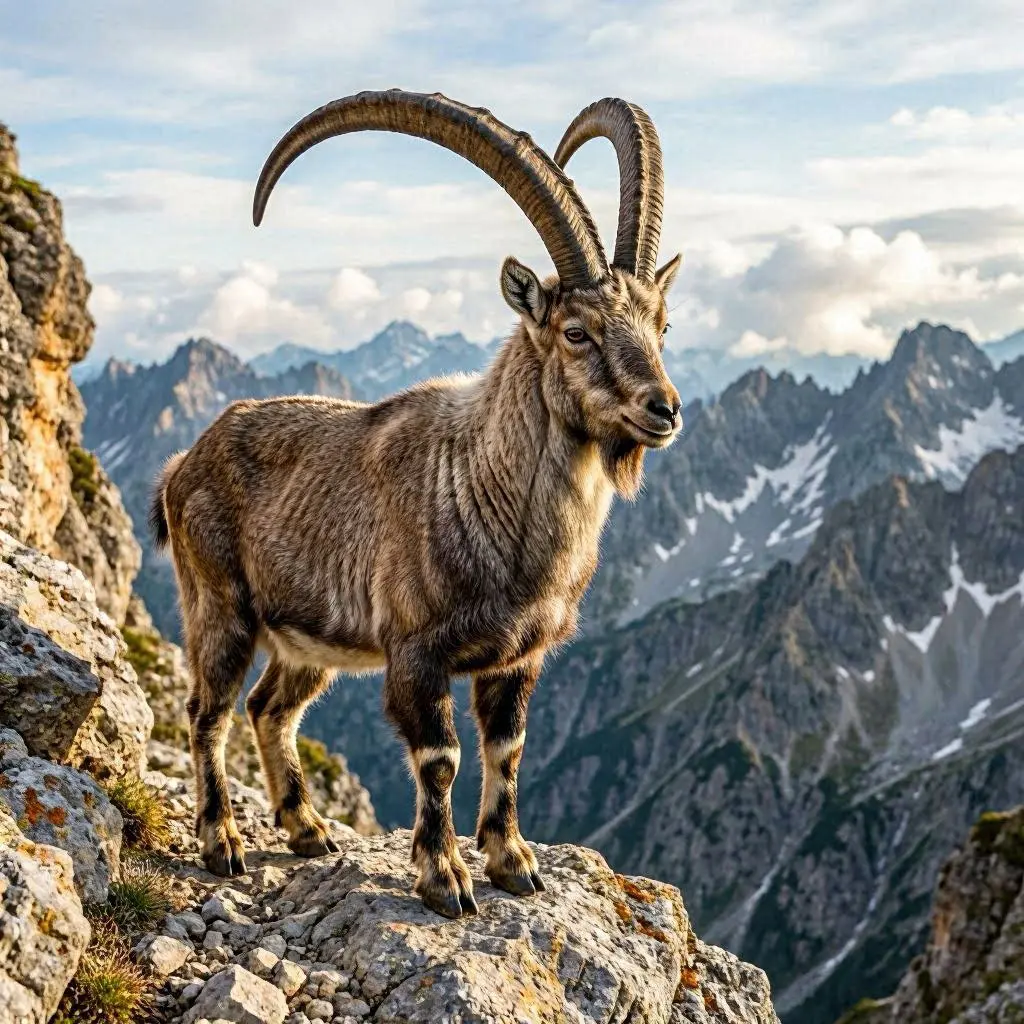
Rescued from near-extinction in the 19th century, the Alpine ibex now numbers over 50,000 across the European Alps. The males carry massive, backward-curved horns that can exceed 100 cm in length. They are famously photographed scaling near-vertical dam walls in Italy to lick mineral salts from the concrete.
❻ Andean Condor
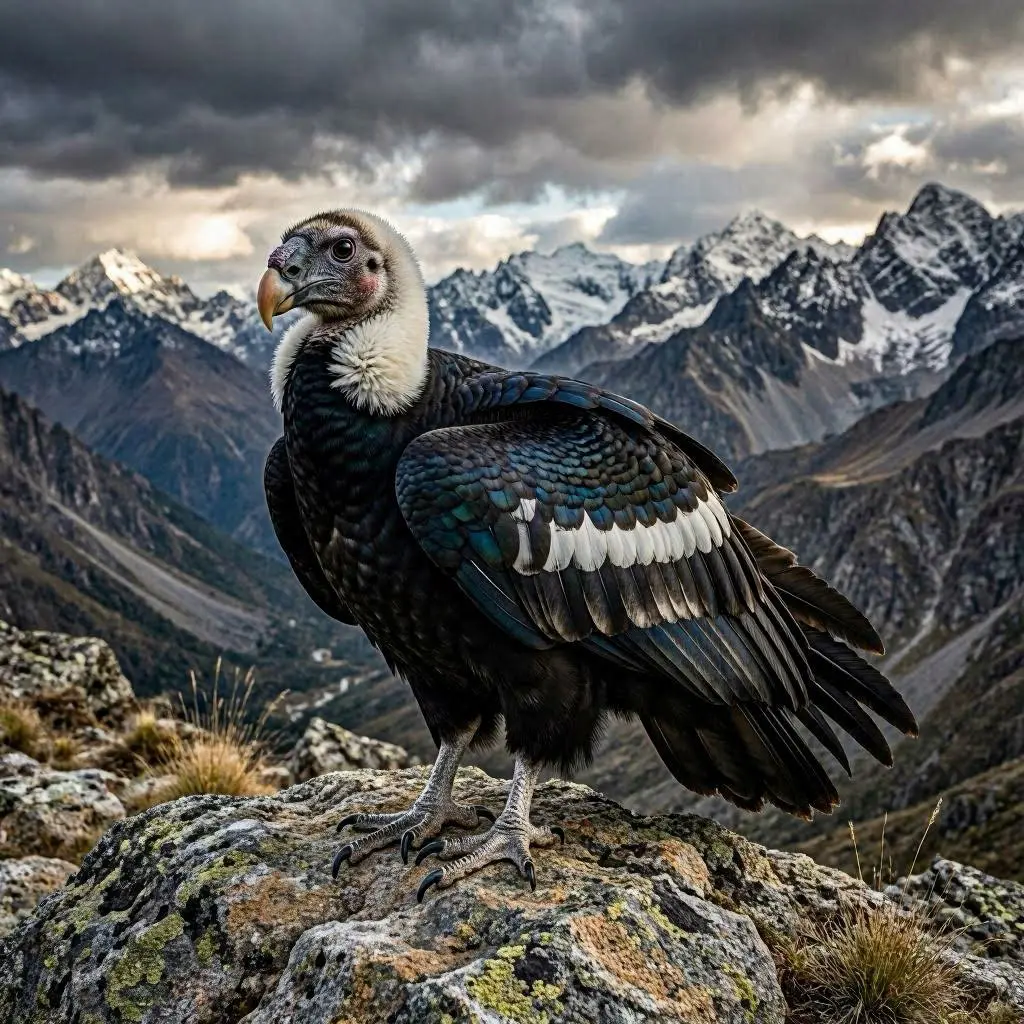
With a wingspan reaching 3.3 meters, the Andean condor is the largest flying bird in the Western Hemisphere by combined weight and wingspan. It rides thermal air currents above the Andes for hours without a single wingbeat, scanning the slopes below for carrion. Condors can travel over 200 km in a single day of soaring.
❼ Pika
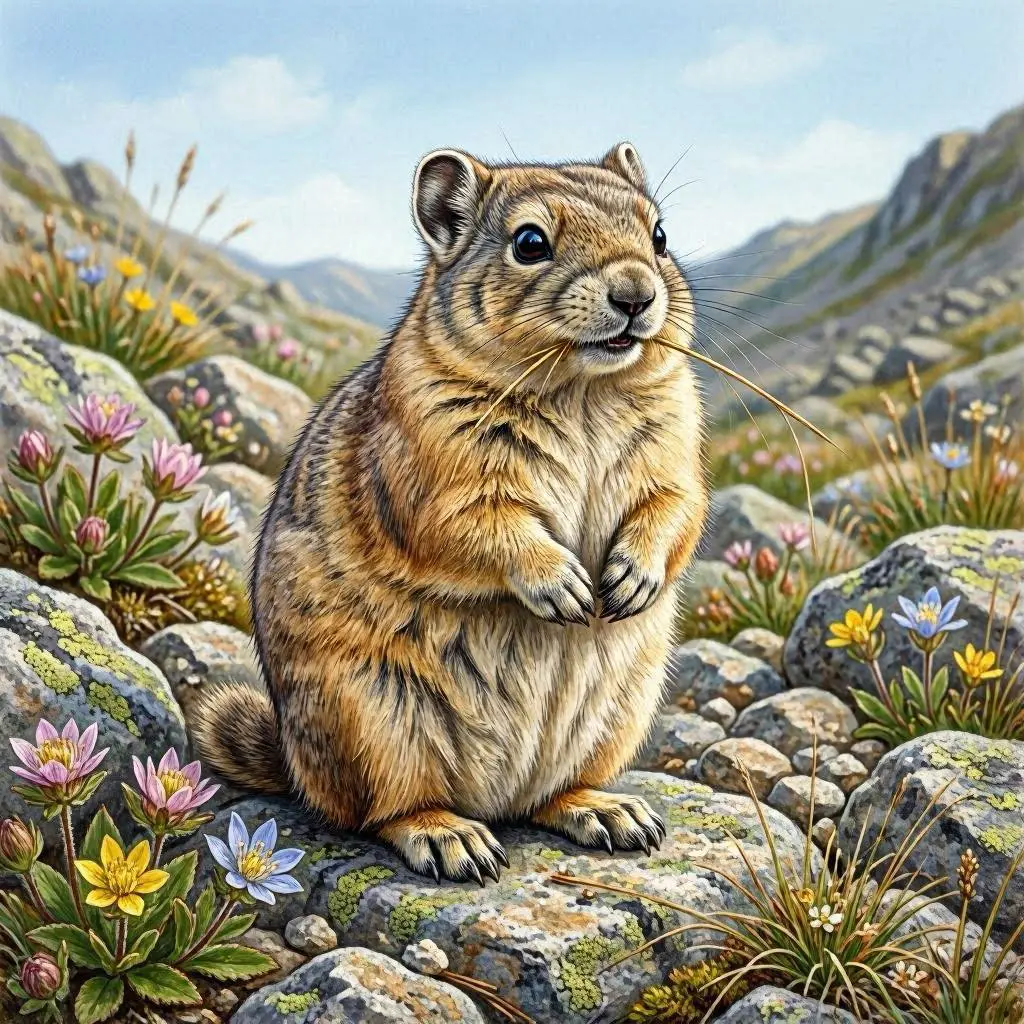
Pikas are small, round, and deceptively industrious. Found in rocky alpine zones across Asia and North America, they spend summer months collecting grass and wildflowers, drying them in the sun, and storing the hay in rock crevices for winter. They are one of the first mammals likely to suffer from climate change because they cannot tolerate elevated temperatures.
❽ Red Panda
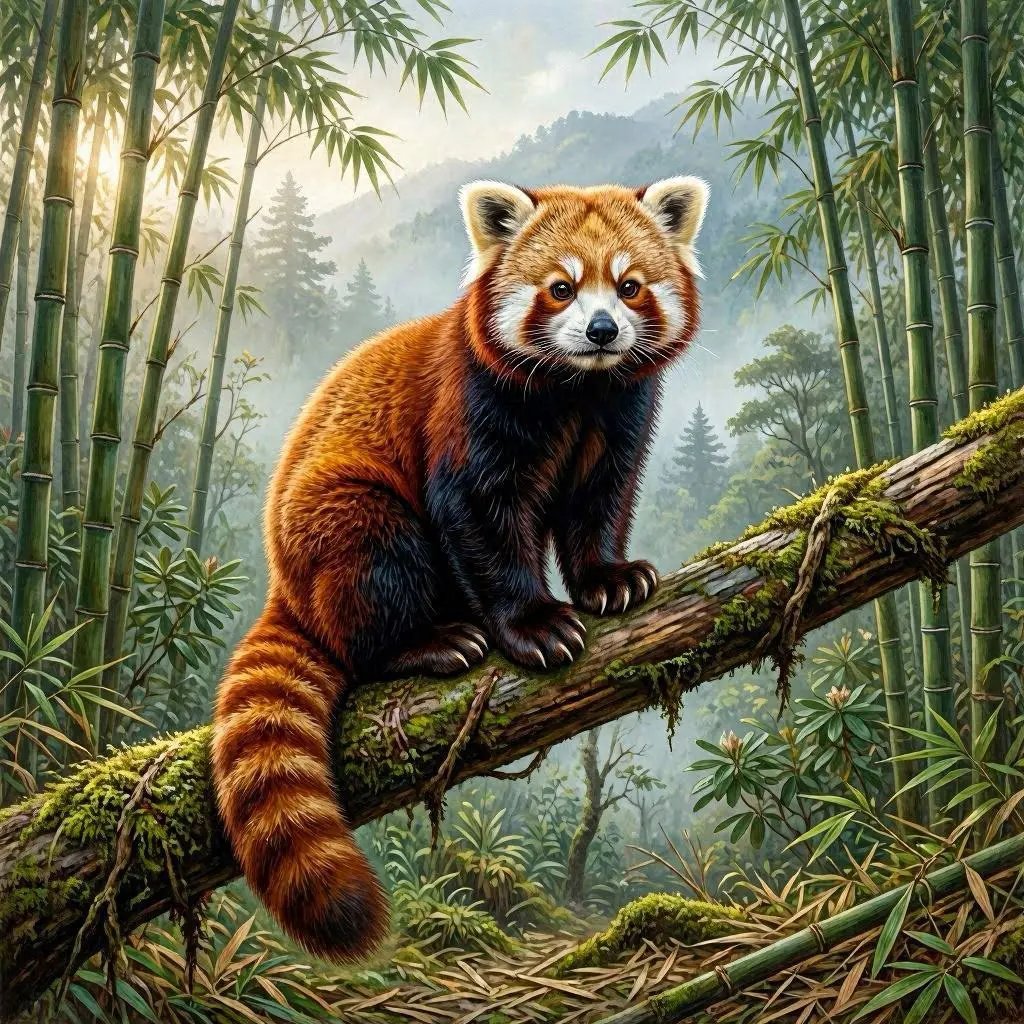
The red panda inhabits the bamboo forests of the eastern Himalayas and southwestern China, between 2,200 and 4,800 meters. Despite the shared name, it is not related to the giant panda. It belongs to its own unique family, Ailuridae. Its rust-colored fur and masked face make it one of the most visually striking mountain mammals anywhere on Earth.
❾ Chamois
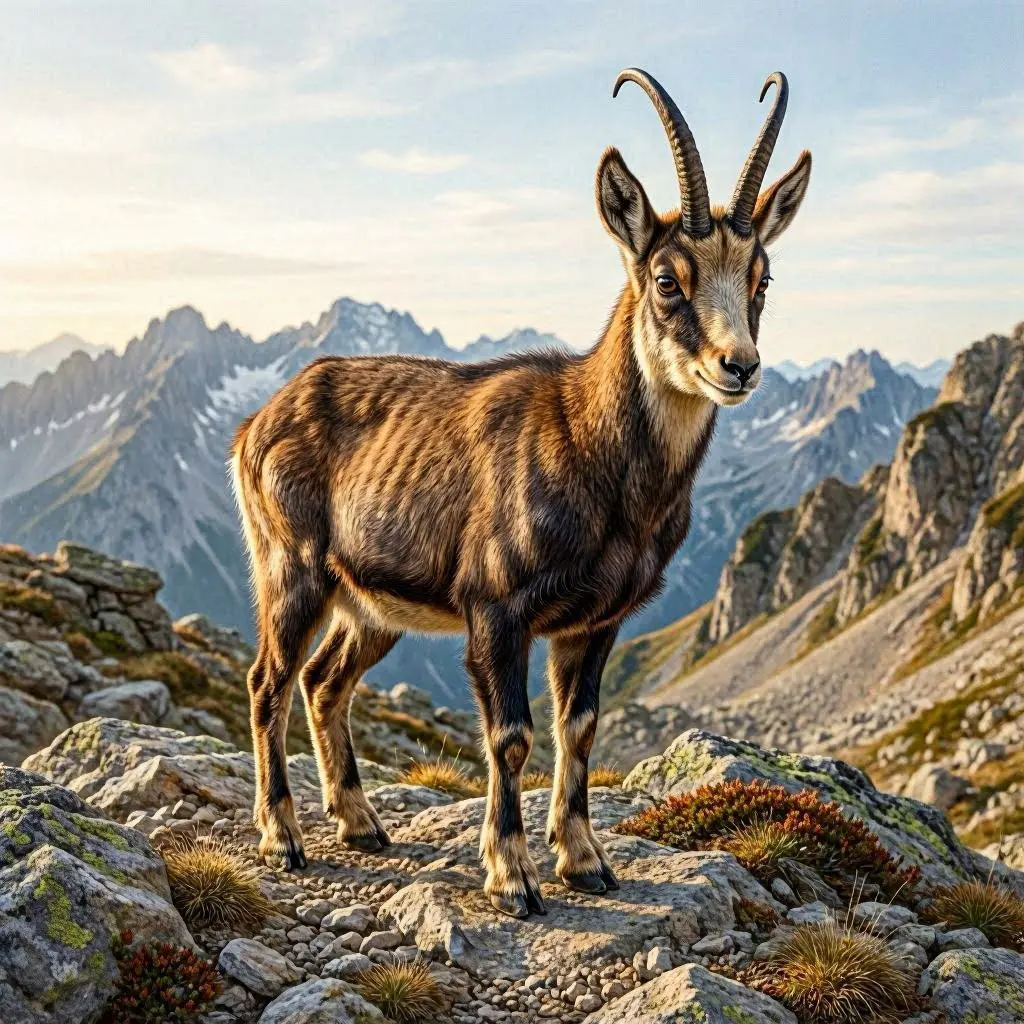
The chamois is a goat-antelope native to the mountains of Europe and western Asia. It moves across rocky terrain with a speed that appears effortless, reaching 50 km/h on steep ground. In winter, its coat shifts from brown to nearly white, providing both camouflage and insulation.
❿ Marmot
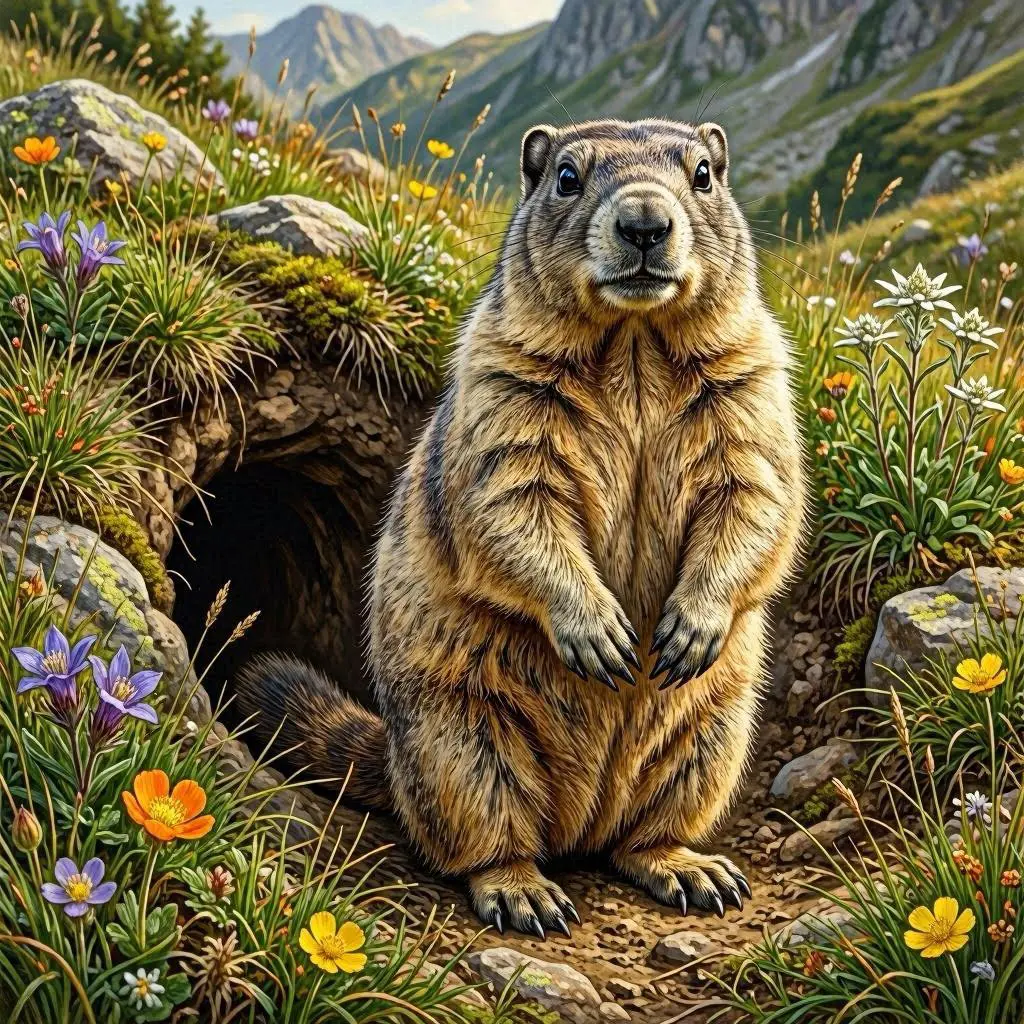
Marmots are large ground squirrels that build complex burrow systems beneath mountain meadows. They hibernate for up to eight months of the year, emerging in spring to feed intensively before cold returns. Alpine marmots in the European Alps act as alarm systems for many mountain communities: their sharp whistle warns other animals of approaching predators.
⓫ Markhor
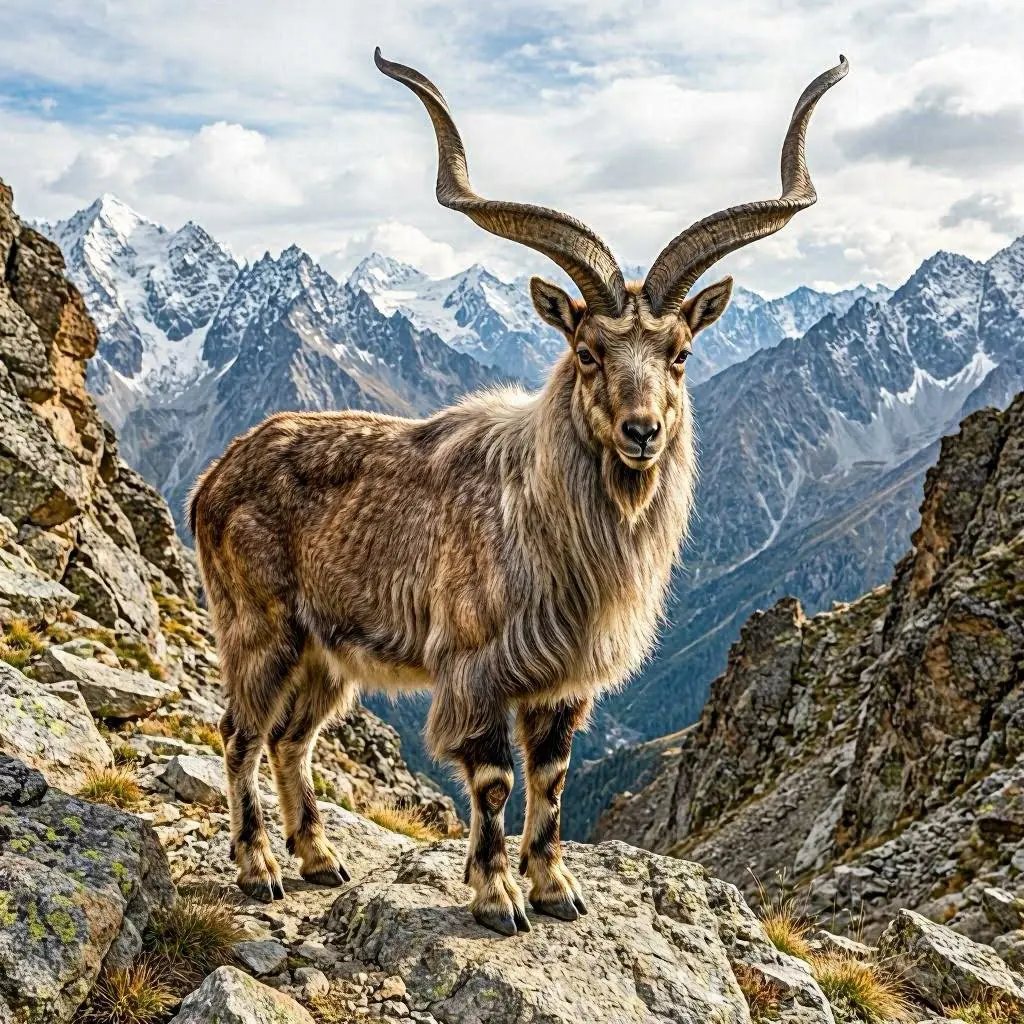
The markhor is Pakistan’s national animal and one of the most visually striking wild goats on the planet. Its corkscrew-shaped horns spiral upward in a tight helix and can reach 160 cm in large males. It occupies the sheer rock faces of the Karakoram and Hindu Kush, where few predators dare follow, and feeds on mountain grasses, leaves, and shrubs with equal ease.
⓬ Golden Eagle
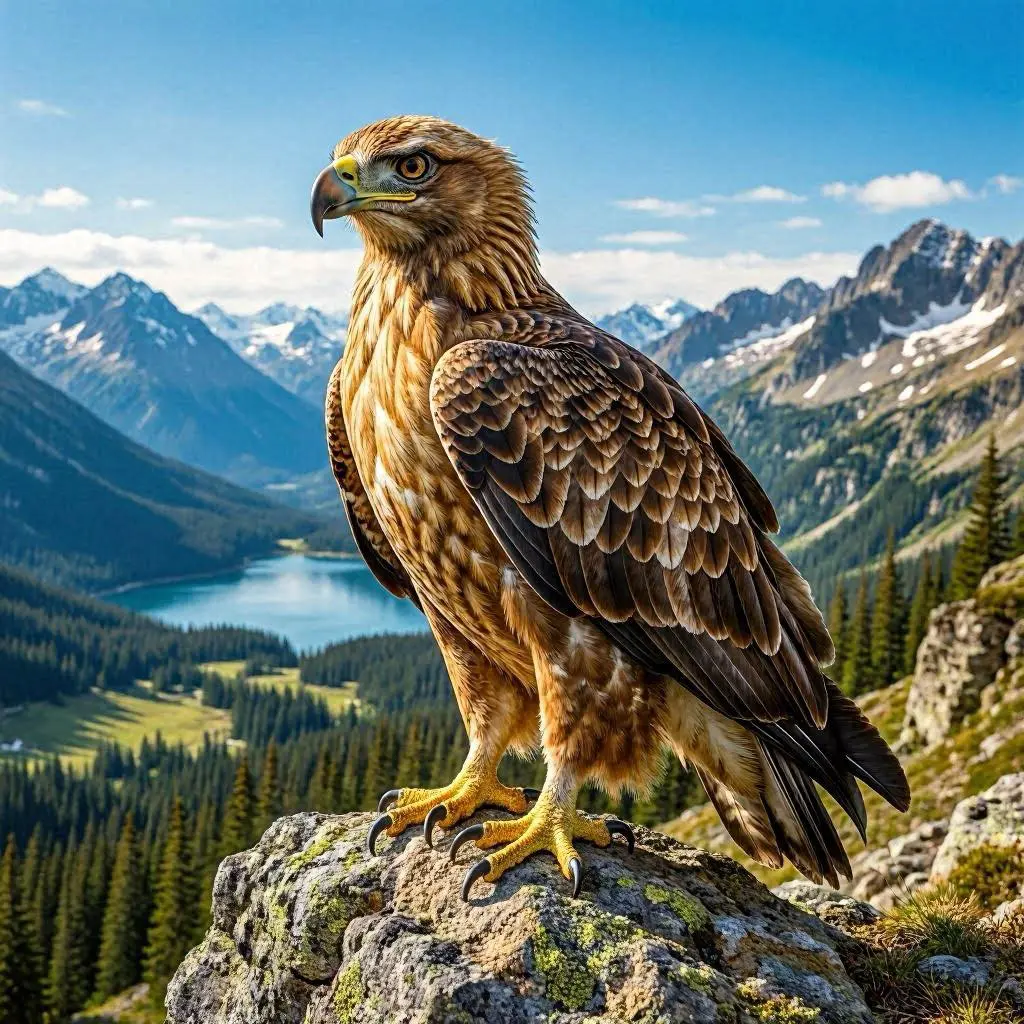
The golden eagle is the ruling aerial predator of mountain skies across the Northern Hemisphere. It hunts from extraordinary heights, folding its wings and plunging at nearly 240 km/h onto prey ranging from ground squirrels to young deer. Its nest sites, called eyries, are built on cliff ledges and reused for decades. A single mated pair can claim a territory covering over 200 square kilometers of mountain terrain.
⓭ Wolverine
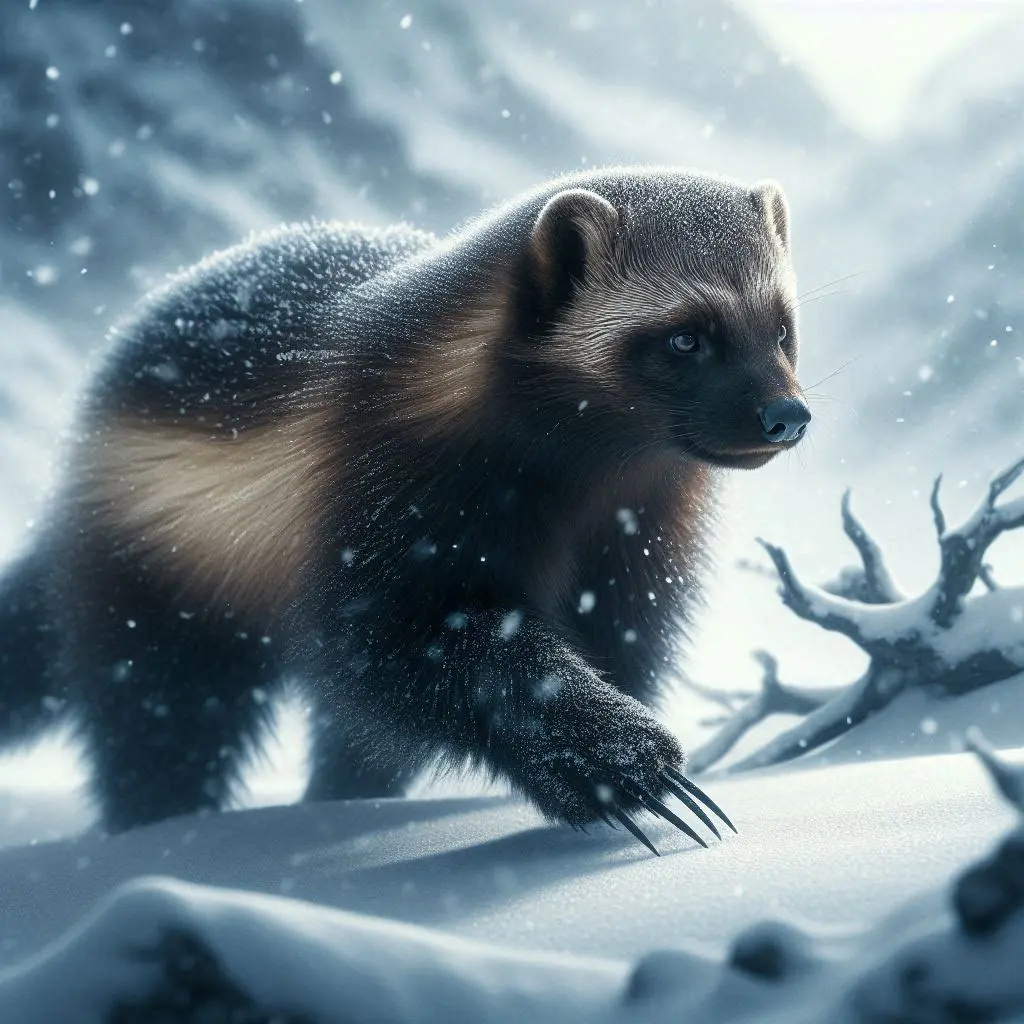
The wolverine looks like a small bear but belongs to the weasel family and carries a reputation far larger than its 18 kg frame suggests. It can drive grizzly bears and mountain lions off kills through sheer aggression. Found in the mountain ranges of North America, Scandinavia, and Siberia, it travels up to 40 km a day across deep snow on its wide, snowshoe-like paws, scavenging carcasses and hunting prey beneath the snowpack.
⓮ Himalayan Tahr
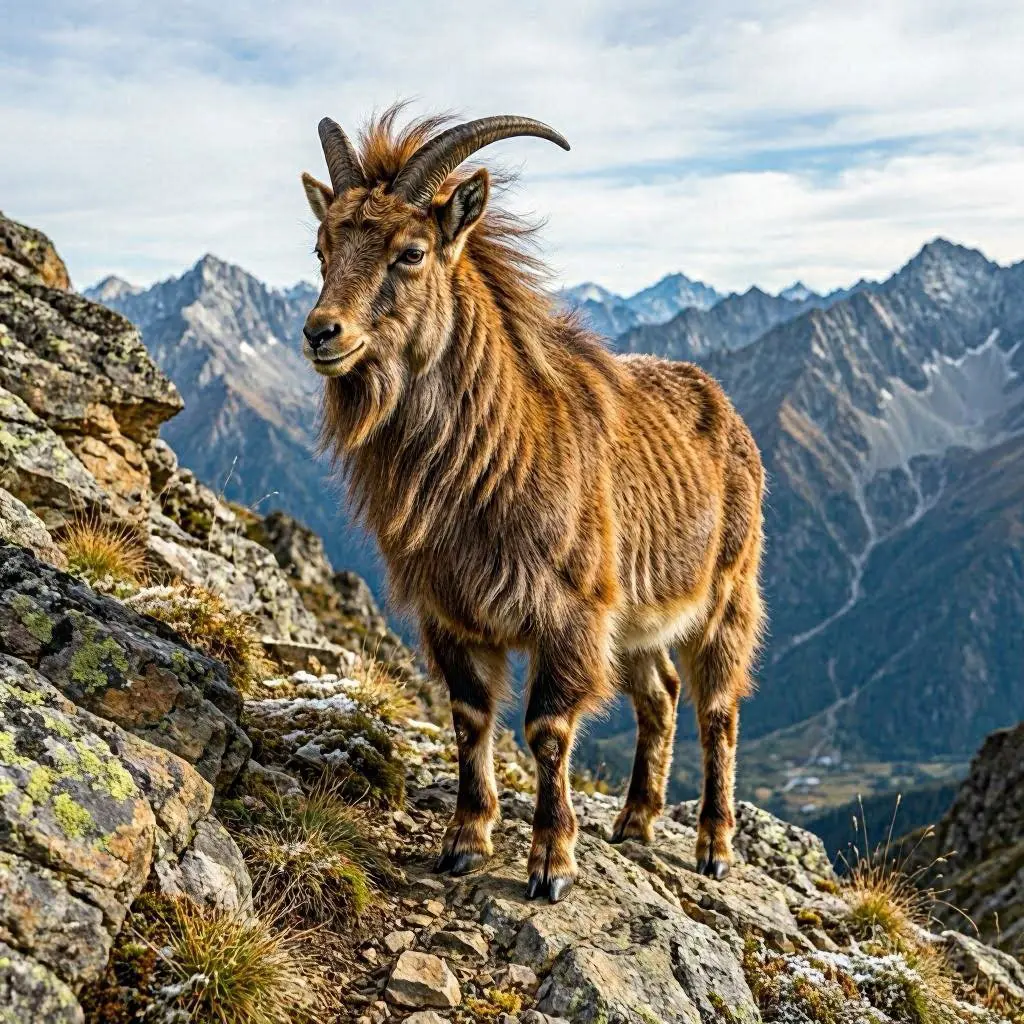
The Himalayan tahr is a stocky wild goat built for cliff faces between 2,500 and 5,000 meters across Nepal, India, and Tibet. Males grow a thick, shaggy reddish-brown mane around their neck and shoulders that makes them appear twice their actual size. Their hooves have a hard outer rim with a soft, rubbery inner pad that grips wet rock as effectively as climbing shoes grip a gym wall.
⓯ Puma
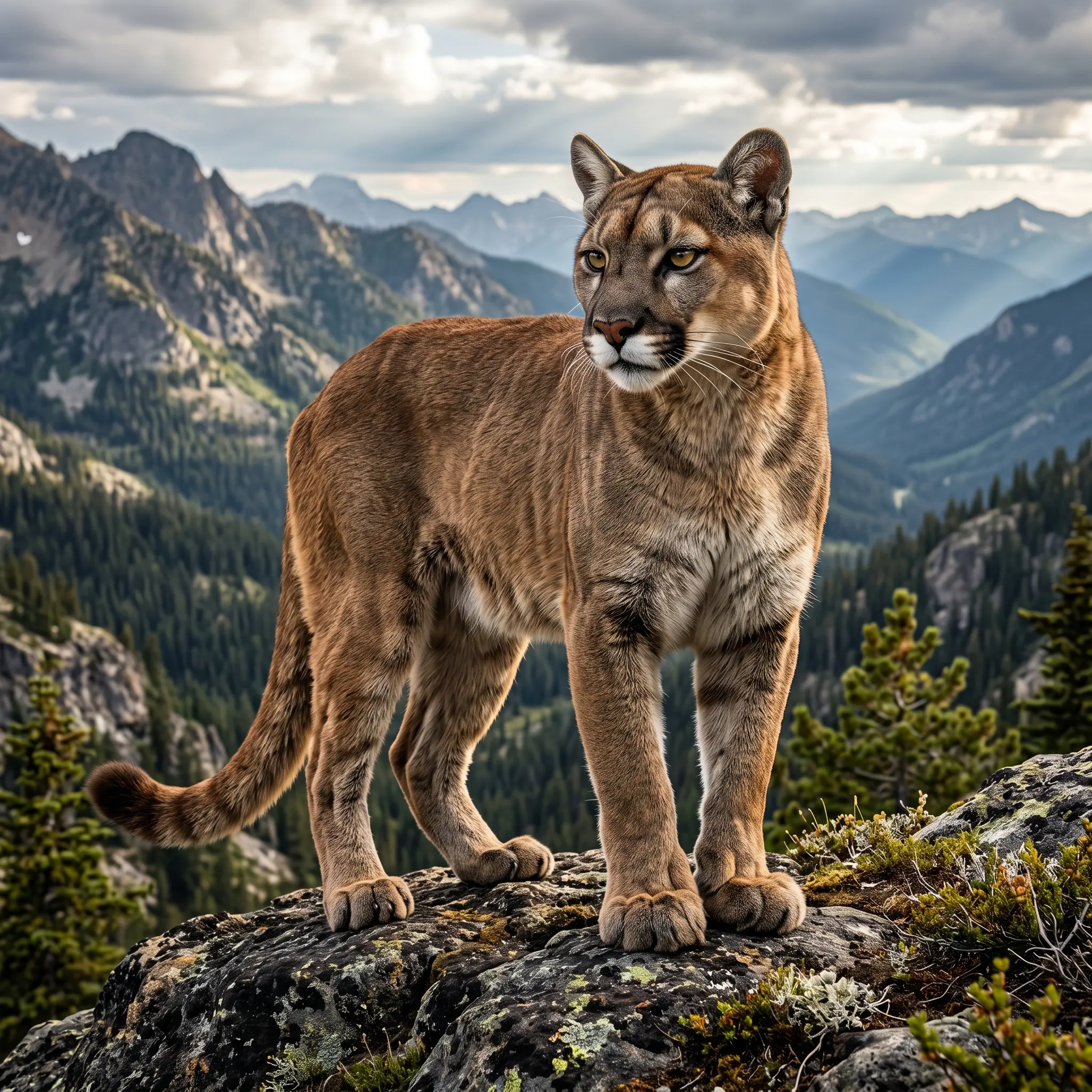
Known by more names than any other wild cat, the puma goes by mountain lion, cougar, catamount, and panther depending on where it is encountered. It holds the widest natural range of any terrestrial mammal in the Western Hemisphere, from the Yukon in Canada to Patagonia at the tip of South America. In mountain environments it is a keystone predator, controlling deer and guanaco populations across vast territories of vertical terrain.
⓰ Grizzly Bear
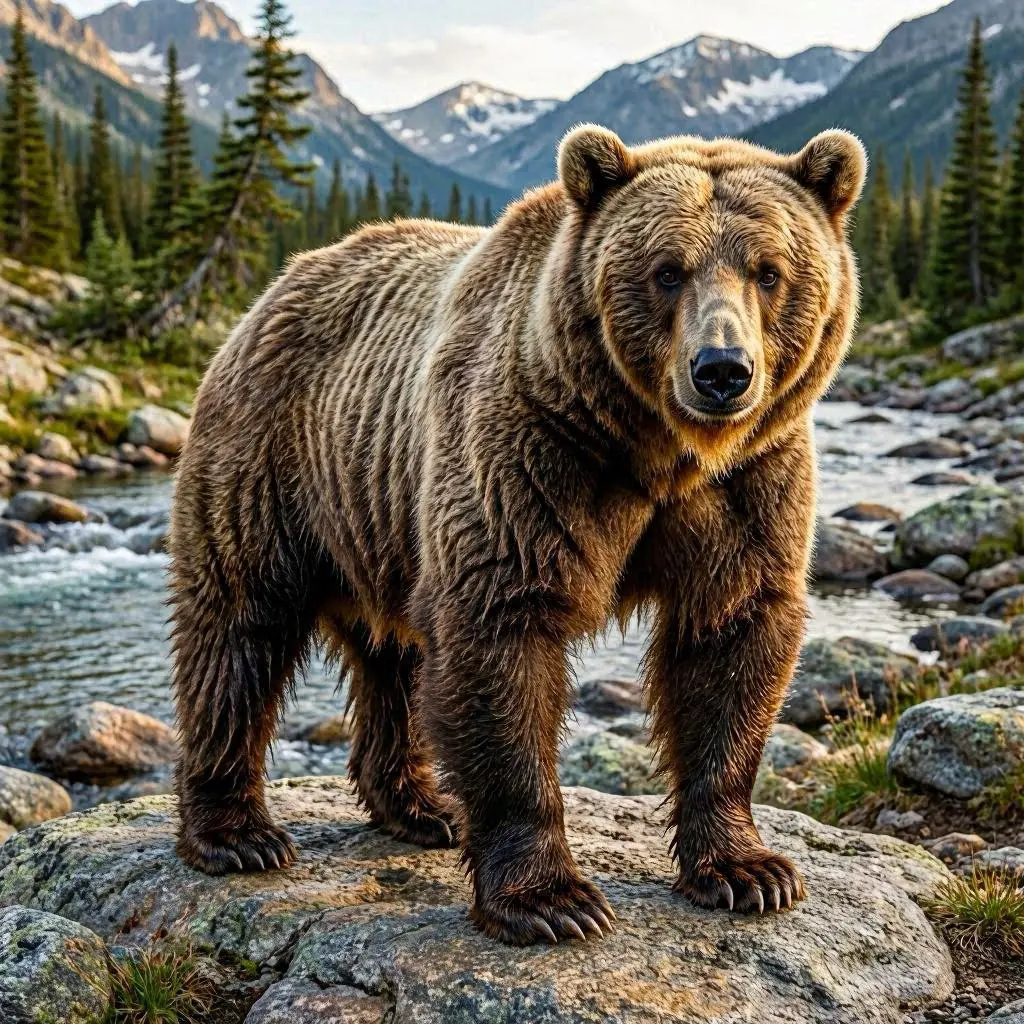
The grizzly bear is the undisputed heavyweight of Rocky Mountain wildlife. Adults weigh between 180 and 360 kg and can reach 56 km/h in a short sprint despite their bulk. They are omnivores of remarkable flexibility: in summer they dig roots, strip berry bushes, and raid ground squirrel colonies; in autumn they consume up to 20,000 calories a day to build fat for winter hibernation. The hump behind their shoulders is pure muscle used for digging.
⓱ Vicuna
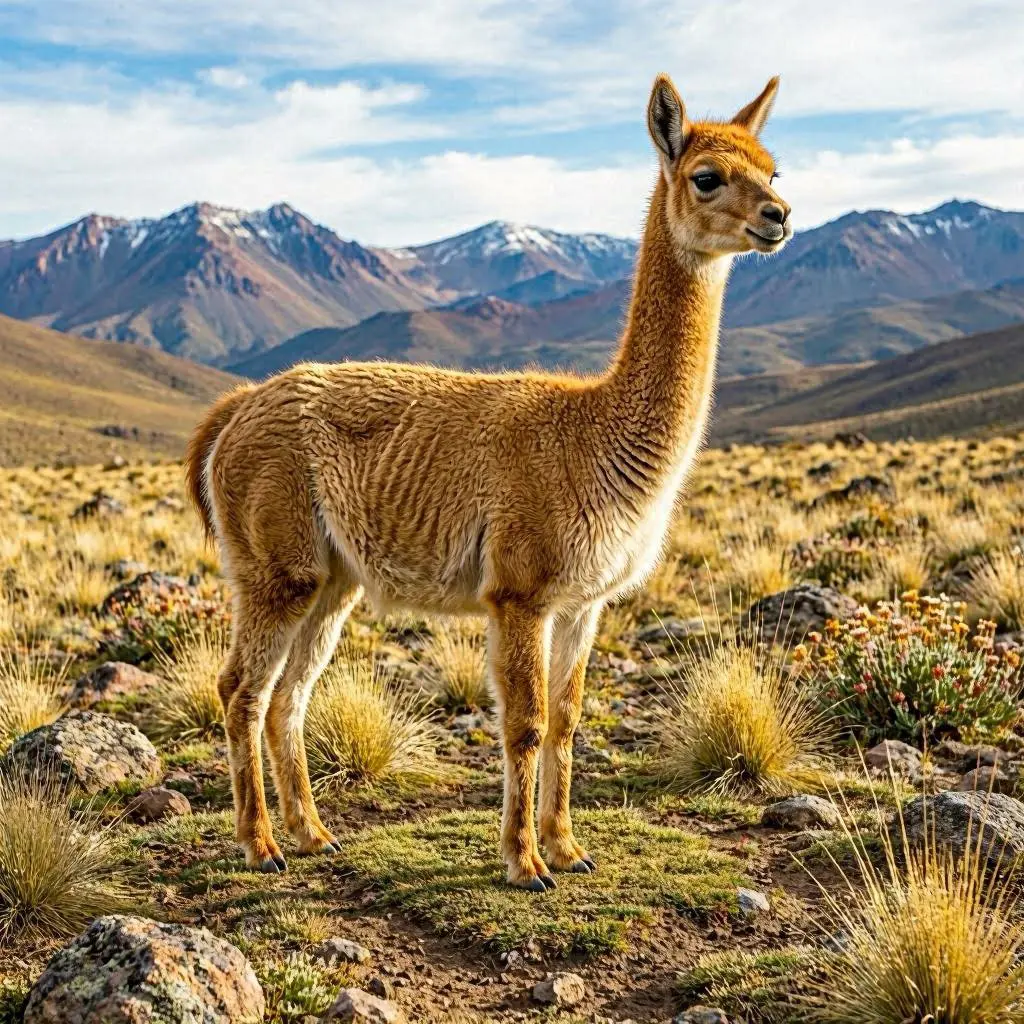
The vicuna is the wild ancestor of the alpaca and produces the finest natural fiber of any living animal. A single vicuna yields only 200 to 300 grams of wool per year, and its fiber measures just 12 microns in diameter, finer than the best cashmere. It lives at 3,500 to 5,750 meters on the open puna grasslands of the Andes, often in small herds guarded by a dominant male. The Inca considered the vicuna sacred and restricted its wool to royalty.
Types of Mountain Animals Names
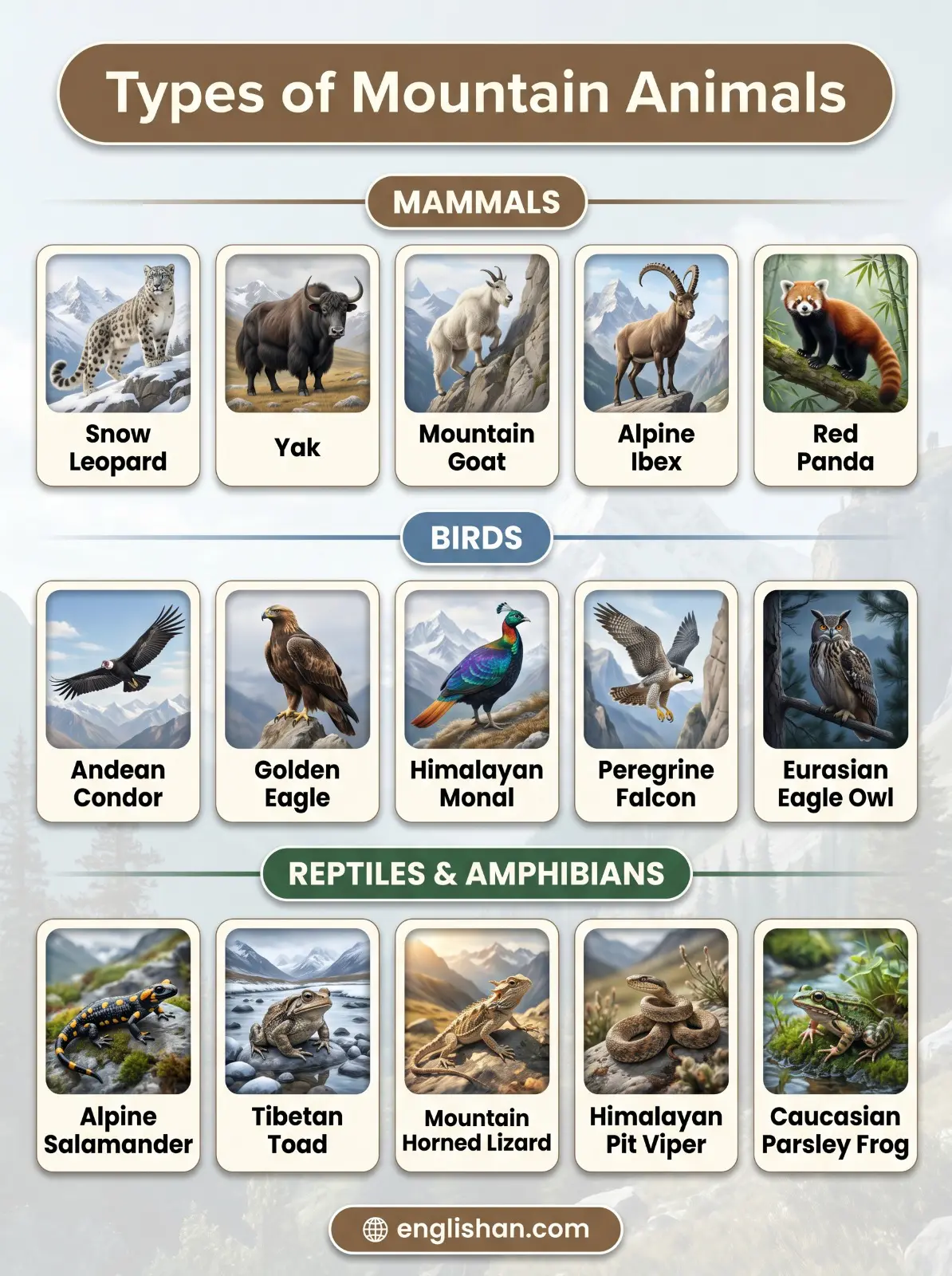
Mountain animals include a wide variety of mammals, birds, reptiles, amphibians, and insects that have evolved special features like thick fur, strong limbs, and efficient breathing systems to live at high altitudes.
Mammals Found in Mountains
Mountains are home to the most diverse and specialized mammal communities on Earth. From heavyweight predators to tiny insect-eating rodents, these warm-blooded animals have developed coats, metabolisms, and body structures that allow them to thrive where conditions would defeat most life.
- Snow Leopard – The silent apex predator of Central Asian peaks, built for rocky cliffs and freezing temperatures
- Yak – The high-altitude powerhouse of the Tibetan Plateau with enlarged lungs and a multi-layered coat
- Mountain Goat – North America’s most vertical mammal, with split hooves that grip ice and wet rock
- Bighorn Sheep – Rocky Mountain icon whose males clash horns with enough force to echo across valleys
- Alpine Ibex – Saved from extinction, now famous for scaling near-vertical dam walls in the Italian Alps
- Himalayan Tahr – A shaggy, mane-necked wild goat built for sheer Himalayan cliff faces
- Markhor – Pakistan’s national animal, carrying dramatic corkscrew horns up to 160 cm long
- Marco Polo Sheep – Holder of the record for the longest horns of any sheep species on Earth
- Takin – The strange, musk-ox-like national animal of Bhutan found in eastern Himalayan forests
- Vicuna – Producer of the world’s finest natural fiber, living above 3,500 meters on Andean grasslands
- Spectacled Bear – South America’s only bear, named for the pale rings around its eyes
- Ethiopian Wolf – The world’s rarest canid, surviving in isolated Ethiopian highland pockets
- Wolverine – The most powerful mustelid alive, capable of driving bears off kills in Rocky Mountain terrain
- Puma – The mountain lion with the widest natural range of any land mammal in the Western Hemisphere
- Red Panda – A one-of-a-kind mammal family native to eastern Himalayan bamboo forests
- Himalayan Black Bear – Recognized by the distinctive white chest patch on its otherwise black coat
- Marmot – The Alps’ most vocal resident, hibernating for up to eight months beneath alpine meadows
- Pika – The hay-making rodent of rocky alpine zones that cannot survive even mild temperature rises
- Mountain Hare – A cold-weather specialist whose coat turns entirely white each winter
- Chinchilla – The densest fur of any land animal, originating in the rocky high Andes
- Gelada Baboon – The only grass-eating primate alive, sleeping on Ethiopian cliff faces to avoid predators
- Tibetan Fox – An unmistakable square-faced canid of the Tibetan Plateau’s open highland steppes
- Dhole – The pack-hunting Asiatic wild dog of Himalayan forests that communicates through whistles
- Himalayan Serow – A secretive, mane-necked goat-antelope that favors cliff-edge forest habitat
- Snow Vole – One of the few small mammals active year-round under the snow in European alpine zones
Birds Found in the Mountains
Mountain skies are patrolled by some of the most powerful and specialized flying animals in the world. High-altitude birds face the same thin air and temperature challenges as mammals, but they also exploit the uplift and thermals that mountain terrain generates, enabling flight feats impossible at lower elevations.
- Andean Condor – The Western Hemisphere’s largest flying bird, soaring 200 km a day on 3.3 m wings
- Lammergeier – The bone-eating vulture that drops skeletons from height onto rocks to crack them open
- Golden Eagle – The most widespread eagle on Earth, diving at 240 km/h onto prey across mountain ranges
- Himalayan Monal – Nepal’s national bird, whose male plumage shifts through five iridescent colors
- Peregrine Falcon – The fastest animal alive, reaching 380 km/h in a dive from mountain cliff nests
- Alpine Swift – Breeds on alpine cliff faces and remains airborne for up to 200 consecutive days
- White-tailed Ptarmigan – Grows feathered feet in winter that function as natural snowshoes
- Wall Creeper – Crawls across vertical rock faces like a mouse, probing crevices for insects
- Snow Finch – Nests in marmot burrows and rock crevices above the treeline in Central Asian mountains
- Himalayan Snowcock – One of the few birds that breeds above 4,000 meters in the Himalayas
- Andean Flamingo – Breeds in high-altitude Andean salt lakes where almost nothing else survives
- Eurasian Eagle Owl – The largest owl species on Earth, nesting on mountain cliff ledges across Eurasia
- Mountain Bluebird – The vivid cerulean-blue songbird of Rocky Mountain meadows and forest edges
- Horned Lark – One of the highest-nesting songbirds in the world, found on open mountain tundra
Reptiles and Amphibians in Mountains
Reptiles and amphibians are Cold-blooded animals that face the steepest challenge of any group in mountain environments since they cannot generate their own body heat. The species that have succeeded in alpine zones have done so through remarkable evolutionary workarounds, from live birth to antifreeze-like blood chemistry.
- Alpine Salamander (Salamandra atra) – Births fully formed live young instead of eggs; gestation can take four years at high elevation
- Caucasian Parsley Frog (Pelodytes caucasicus) – Tolerates near-freezing stream water in the rocky Caucasus Mountain range
- Tibetan Toad (Bufo tibetanus) – One of the highest-dwelling amphibians on Earth, recorded above 4,500 meters
- Mountain Horned Lizard (Phrynosoma species) – Becomes effectively invisible against granite and sandstone through near-perfect camouflage
- Himalayan Pit Viper (Gloydius himalayanus) – Recorded at 4,900 meters, among the highest-altitude venomous snakes on Earth
Insects Found in Mountain Ecosystems
Mountain insects are the overlooked foundation of alpine food webs. Without them, the birds, reptiles, and small mammals of high-altitude zones would collapse. Several species have adapted to conditions so extreme they have no close competitors for their ecological niche.
- Alpine Apollo Butterfly (Parnassius apollo) – Striking white wings with red spots; caterpillars feed only on stonecrop plants in alpine meadows
- High-altitude Bumblebee (Bombus species) – Recorded above 5,600 meters in the Himalayas; generates body heat through rapid wingbeats
- Stone Fly (Plecoptera) – Lives as larvae in cold mountain streams; a reliable biological indicator of clean, healthy water
- Alpine Grasshopper (Miramella alpina) – Short-winged and active only on the warmest summer days in high Alpine meadows
- Himalayan Jumping Spider (Euophrys omnisuperstes) – The highest permanent resident of any animal on Earth, collected from 6,700 meters on Everest
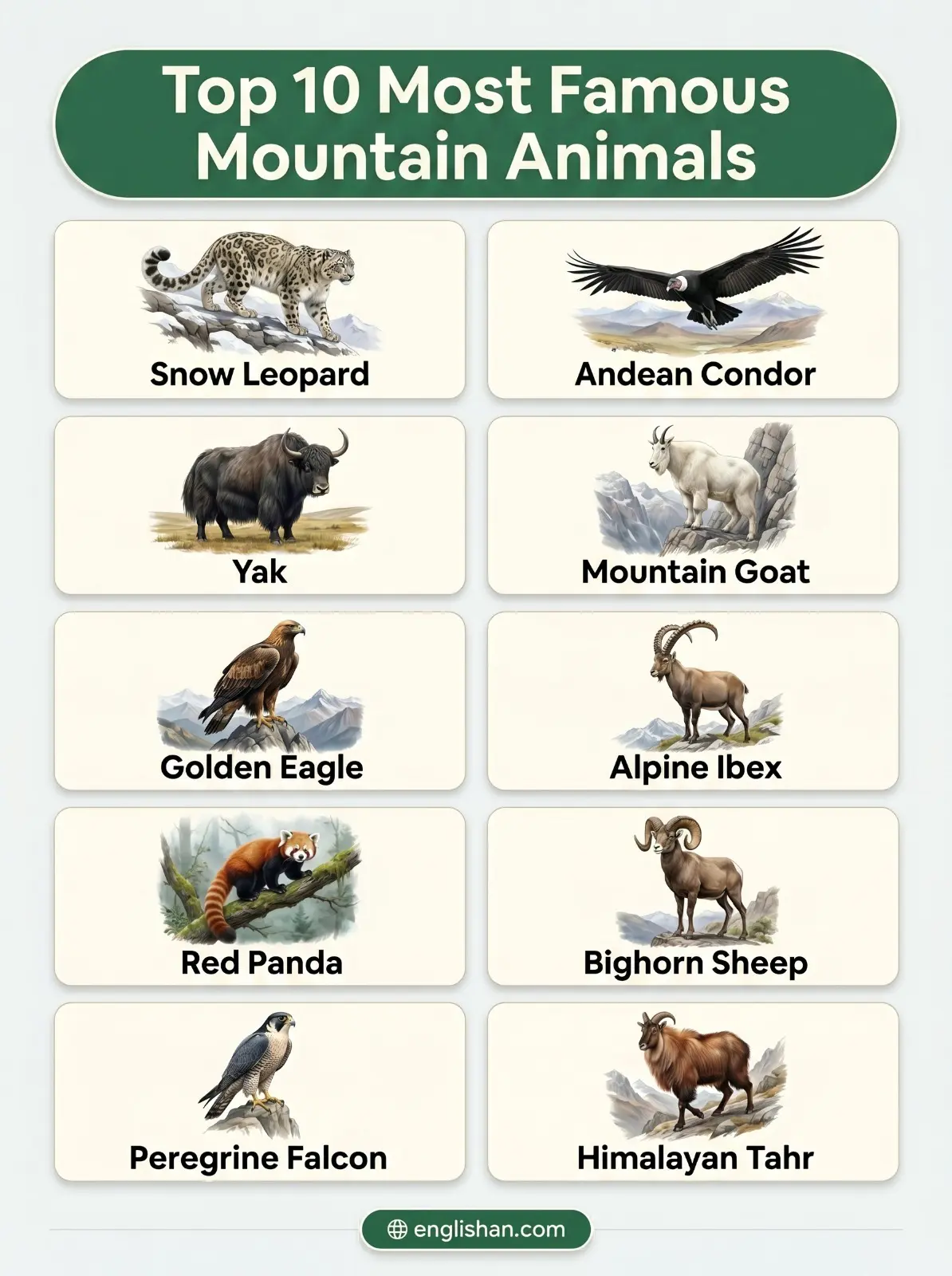
Top 10 Most Famous Mountain Animals
- Snow Leopard
- Andean Condor
- Yak
- Mountain Goat
- Golden Eagle
- Alpine Ibex
- Red Panda
- Bighorn Sheep
- Peregrine Falcon
- Himalayan Tahr
These animals are some of the most iconic species adapted to survive and thrive in extreme mountain environments across the world.
Habitat of Mountain Animals
Mountain habitats are highly diverse and change dramatically with altitude, climate, and geography. Each mountain system forms a layered ecosystem where temperature drops and oxygen levels decrease as height increases, creating distinct zones that support specialized animals adapted to survive extreme environmental conditions.
Himalayan Region Mountain Animals
- Snow Leopard — Elusive apex predator of high cliffs
- Himalayan Tahr — Shaggy goat adapted to steep rocky slopes
- Red Panda — Bamboo-eating forest mammal of eastern Himalayas
- Tibetan Antelope (Chiru) — High-altitude grazer known for fine wool
- Takin — Large shaggy goat-antelope of Bhutan and surrounding regions
- Himalayan Monal — Colorful national bird of Nepal
- Dhole — Highly social pack-hunting wild dog
- Himalayan Serow — Solitary goat-antelope of rugged forests
- Yak — Domesticated high-altitude animal vital to mountain life
- Himalayan Black Bear — Forest-dwelling bear with distinctive chest mark
- Blue Sheep (Bharal) — Key prey species of snow leopards
- Snow Finch — Small bird surviving above tree line
- Himalayan Snowcock — High-altitude ground bird of rocky slopes
Andes Mountain Animals
- Andean Condor — Massive soaring scavenger of South American mountains
- Vicuña — Wild camelid producing the finest natural fiber
- Spectacled Bear — Only bear species native to South America
- Mountain Tapir — Rare herbivore of Andean cloud forests
- Puma — Powerful apex predator of the Andes
- Andean Cat — One of the rarest wild cats in the world
- Viscacha — Rabbit-like rodent living among rocky cliffs
- Andean Flamingo — High-altitude flamingo of salt lakes
- Chinchilla — Small rodent known for extremely soft fur
- Llama — Domesticated pack animal of the Andes
- Alpaca — Wool-producing camelid bred for fiber quality
Rocky Mountain Animals
- Grizzly Bear — Large dominant predator of northern Rockies
- Mountain Lion — Solitary big cat across North American mountains
- Bighorn Sheep — Horned climber of steep rocky terrain
- Mountain Goat — Expert cliff climber of alpine zones
- Elk — Large grazing herbivore of mountain valleys
- Wolverine — Rare and powerful scavenger-predator
- Pika — Small mammal sensitive to climate change
- Canada Lynx — Snow-adapted wild cat
- Golden Eagle — Apex aerial predator of mountain skies
- White-tailed Ptarmigan — Bird that changes color with seasons
- Mountain Bluebird — Bright songbird of open mountain areas
- American Black Bear — Adaptable omnivore of forested mountains
Alps Mountain Animals
- Alpine Ibex — Recovered mountain goat famous for cliff climbing
- Chamois — Agile alpine antelope-like animal
- Alpine Marmot — Burrowing rodent known for loud whistles
- Brown Bear — Returning large predator of European Alps
- Eurasian Lynx — Reintroduced forest predator
- Gray Wolf — Pack predator naturally returning to Alps
- Lammergeier — Bone-eating vulture of mountain cliffs
- Wall Creeper — Small bird that climbs vertical rock faces
- Golden Eagle — Top predator of Alpine skies
- Alpine Salamander — Rare amphibian giving birth to live young
- Snow Vole — Small rodent active under snow cover
Karakoram & Hindu Kush Mountain Animals
- Markhor — Wild goat with spiral horns of Pakistan’s mountains
- Marco Polo Sheep — Wild sheep with extremely long horns
- Snow Leopard — Key predator of Central Asian high mountains
- Himalayan Brown Bear — Rare high-altitude bear subspecies
- Siberian Ibex — Tough mountain goat of Central Asia
- Blue Sheep (Bharal) — Important prey species in rugged terrain
Ethiopian Highlands Mountain Animals
- Ethiopian Wolf — World’s rarest canid species
- Gelada Baboon — Grass-eating primate living on cliffs
- Mountain Nyala — Large antelope unique to Ethiopia
- Walia Ibex — Endangered goat of Simien Mountains
- Lammergeier — Large vulture feeding on bones in highlands
Atlas Mountains Mountain Animals
- Barbary Macaque — Only wild monkey in North Africa
- Atlas Deer — Rare deer of North African mountains
- Nubian Ibex — Goat adapted to dry rocky terrain
- Cuvier’s Gazelle — Endangered mountain gazelle
- Mouflon — Wild ancestor of domestic sheep
- Atlas Mountain Viper — Large venomous snake of rocky habitats
Central Asia & Siberia Mountain Animals
- Argali — Largest wild sheep species in the world
- Pallas’s Cat — Small wild cat with dense fur and flat face
- Siberian Roe Deer — Cold-adapted deer of mountain forests
- Snow Sheep (Siberian Bighorn) — Remote Arctic mountain sheep
- Amur Leopard — One of the rarest big cats on Earth
- Siberian Tiger — Largest wild cat inhabiting mountain forests
Mountain Animals vs Forest Animals
Mountain and forest animals live in very different environments, which shapes how they survive, move, and adapt to nature.
| Feature | Mountain Animals | Forest Animals |
|---|---|---|
| Habitat | High-altitude, rocky, cold regions | Dense, green, warm or temperate forests |
| Climate | Extremely cold, low oxygen | Moderate to warm, humid |
| Terrain | Steep slopes, cliffs, snow-covered areas | Soft ground, dense vegetation, trees |
| Food Availability | Limited and seasonal | Abundant and diverse |
| Body Adaptations | Thick fur, strong hooves, high lung capacity | Camouflage, climbing ability, agility |
| Survival Challenges | Harsh weather, thin air, scarce food | Predators, competition, dense habitat |
| Movement Style | Strong climbers, sure-footed, slow but powerful | Agile runners, climbers, fast movers |
| Examples | Snow Leopard, Yak, Mountain Goat, Himalayan Tahr, Red Panda | Tiger, Deer, Elephant, Monkey, Fox, Bear |
Endangered Mountain Animals Names
Mountain ecosystems host many rare species that are now endangered due to habitat loss, climate change, and hunting pressures.
- Snow Leopard
- Red Panda
- Himalayan Black Bear
- Markhor
- Himalayan Tahr
- Musk Deer
- Tibetan Antelope (Chiru)
- Ethiopian Wolf
- Andean Mountain Cat
- Spectacled Bear
- Alpine Ibex
- Siberian Ibex
- Himalayan Monal
- Golden Eagle
- Alpine Marmot
These species are vital for maintaining ecological balance in mountain regions and urgently need conservation efforts to ensure their survival.
Adaptations of Mountain Animals
Mountain animals survive in some of the harshest environments on Earth through special physical and biological adaptations that help them cope with cold, low oxygen, and difficult terrain.
- Thick fur & fat layers: Provide insulation and keep body temperature stable in extreme cold.
- Strong hooves and claws: Help them climb steep, rocky slopes and maintain balance on snow and ice.
- Oxygen efficiency: Larger lungs and efficient blood systems allow survival in low-oxygen (thin air) conditions.
- Camouflage in snow and rocks: Body colors blend with surroundings, helping them avoid predators and hunt effectively.
Interesting Facts About Mountain Animals
- Snow leopards can jump up to 6 times their body length in a single leap
- Yaks can survive extreme cold temperatures as low as -40°C
- Some high-altitude birds can fly above 7,000 meters where oxygen is very low
- The Alpine Ibex can climb near-vertical cliffs with ease using specialized hooves
- Pikas store food in “hay piles” to survive long, harsh winters
- Himalayan Monals display multi-colored feathers that change with light angles
- Andean Condors can glide for hours without flapping their wings, saving energy in thin air
- Snow leopards have extra-large nasal passages to warm cold air before breathing
- Marmots hibernate for up to 6–8 months during winter
- Mountain goats can balance on extremely narrow ledges where predators cannot follow
Conclusion
Mountains are far from empty landscapes; they are home to highly specialized wildlife ranging from high-altitude insects to large predators like snow leopards and bears. Each mountain range—Himalayas, Andes, Alps, and others—supports unique species shaped by its climate and isolation.
These ecosystems are also extremely sensitive to climate change, with rising temperatures and shrinking habitats threatening many species. Animals like the pika and snow leopard are already under pressure due to environmental changes.
Protecting mountain wildlife is essential, not only to preserve biodiversity but also to maintain the balance of some of the world’s most fragile ecosystems.
FAQs
Asia holds the highest diversity of mountain animals, largely because it contains the largest and highest mountain systems on Earth. The Himalayas, Karakoram, Hindu Kush, Tian Shan, Altai, and Tibetan Plateau together form the world’s greatest concentration of high-altitude habitat. This area supports snow leopards, yaks, numerous ibex and sheep species, the red panda, Tibetan antelope, takin, and dozens of endemic bird species. South America’s Andes come in a close second, with an entirely distinct set of endemic species from the vicuna to the spectacled bear.
The snow leopard is widely considered the most iconic mountain animal in the world. It appears on the national emblems of Afghanistan and has become a global symbol of conservation. Its combination of extraordinary beauty, extreme habitat, elusive behavior, and vulnerable status has made it the focal point of mountain wildlife awareness campaigns across Asia and internationally
Mountains offer genuine advantages to species that can handle the conditions. Food competition is lower because fewer species can tolerate altitude. Predation pressure is reduced for the same reason. Certain food resources such as alpine grasses, lichen, and mineral-rich rock formations are abundant. Human disturbance, while increasing, is historically lower in mountain terrain. For some species, mountains are simply the only habitat their evolutionary history has prepared them for. The snow leopard, markhor, and gelada baboon exist only because mountains exist.
Most mountain animals avoid human contact and pose minimal threat to people who give them appropriate space. However, several species can be genuinely dangerous under the right circumstances. Grizzly bears in the Rocky Mountains will defend food and cubs aggressively. Snow leopards, while extraordinarily shy, have occasionally attacked people in close quarters. The musk ox and yak, when surprised or cornered, can deliver serious injuries. Mountain vipers and certain high-altitude pit vipers carry potent venom. The general rule: observe from a distance and never approach, corner, or feed any wild mountain animal.
The Himalayan jumping spider (Euophrys omnisuperstes) holds the record for the highest permanent residence of any animal, with specimens collected from 6,700 meters on Mount Everest. Among vertebrates, the bar-headed goose has been tracked migrating at over 7,000 meters above sea level. The lammergeier has been recorded at 7,300 meters in flight. Among resident mammals, the Tibetan antelope and Himalayan jumping spider compete for the title of highest-altitude permanent resident.
You May Also Like
Mountain Animals Quiz
Mountain Animals
Which animal does the picture show?
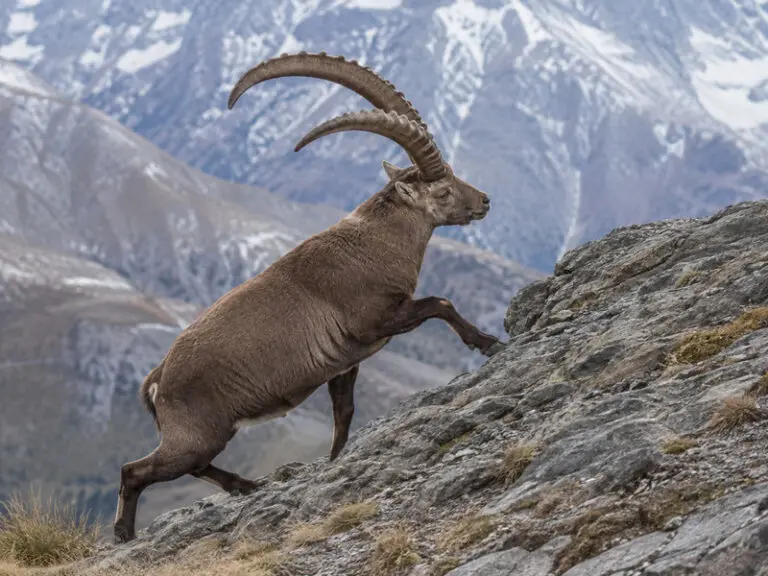
The picture shows a ibex.
Read the picture before reading the options.
The picture shows a ibex.
Why do mountain goats and ibex have split hooves?
Soft pads inside the hard rim add friction on bare rock.
A split hoof is a two-part grip, not one hard block.
Ibex climb near-vertical dam walls for the salt.
How do high-altitude animals cope with thin air?
Yaks and bar-headed geese both carry haemoglobin tuned for low oxygen.
The adaptation is chemical, in the blood.
Bar-headed geese cross the Himalaya at extreme altitude.
Name the cat.
The high-altitude cat of Central Asia, with an unusually long thick tail, is the snow ___.
The tail aids balance on steep ground and wraps around the body for warmth.
One structure, two jobs.
A snow leopard's tail is nearly as long as its body.
What is the tree line?
Cold, wind and short seasons stop tree growth above it.
Above the tree line, cover disappears entirely.
The tree line falls as you move towards the poles.
Why do many mountain animals move downhill in winter?
Vertical migration covers a short distance for a large change in conditions.
A few hundred metres down is like hundreds of kilometres south.
Red deer drop to the valleys as the snow deepens.
Turn on JavaScript for the interactive quiz. The full practice set is shown above.