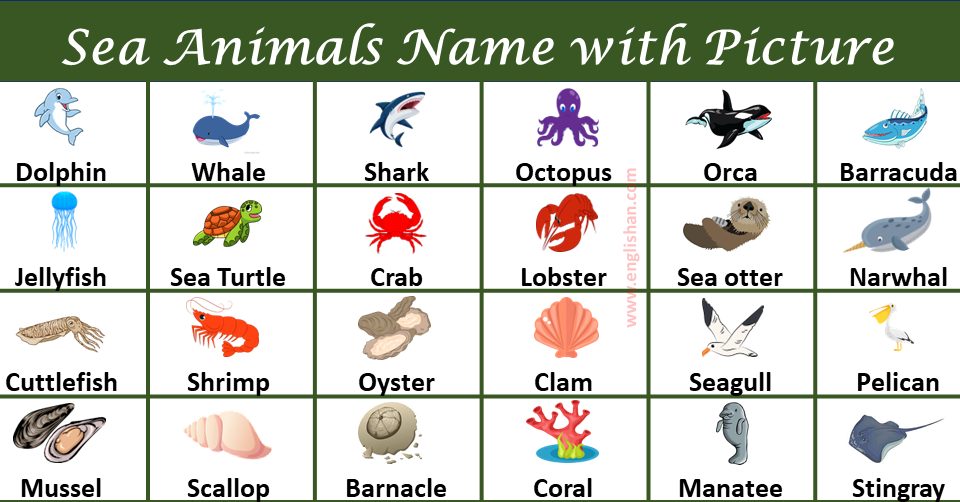
More than 240,000 marine species have been named, and there is an everyday English word for the few hundred you would recognise. Sea animals range in size from the blue whale at 30 metres down to krill small enough to balance on a fingernail.
Sea Animals Names A To Z
Sea animals are the creatures that live in salt water: whales, dolphins, sharks, rays, fish, crabs, octopuses, jellyfish, corals, sea turtles and seabirds. The blue whale is the largest at around 30 metres. Fish outnumber every other marine group by species count.
A: Albatross, Anchovy, Anemone, Angelfish, Anglerfish
B: Barnacle, Barracuda, Basking Shark, Beluga Whale, Blobfish, Blue Whale, Bluefin Tuna, Bottlenose Dolphin, Box Jellyfish
C: Clam, Clownfish, Cod, Conch, Coral, Cormorant, Cowrie, Crab, Cuttlefish
D: Dolphin, Dugong, Dumbo Octopus
E: Eel, Electric Ray, Emperor Penguin
F: Flounder, Flying Fish, Frigatebird
G: Gannet, Giant Isopod, Giant Squid, Goby, Great White Shark, Grouper, Gulper Eel
H: Haddock, Halibut, Hammerhead Shark, Harbour Porpoise, Harbour Seal, Hawksbill Turtle, Hermit Crab, Herring, Horseshoe Crab, Humpback Whale
I: Icefish
J: Jellyfish, John Dory
K: Killer Whale, King Crab, Krill
L: Leatherback Turtle, Limpet, Lionfish, Lobster, Loggerhead Turtle
M: Mackerel, Manatee, Manta Ray, Marine Iguana, Marlin, Minke Whale, Moray Eel, Mussel
N: Narwhal, Nautilus, Nudibranch, Nurse Shark
O: Oarfish, Octopus, Opah, Oyster
P: Parrotfish, Pelican, Pilot Whale, Plaice, Plankton, Porpoise, Pufferfish, Puffin
Q: Quahog
R: Remora, Right Whale, Rockfish
S: Sailfish, Salmon, Sardine, Sawfish, Scallop, Sea Cucumber, Sea Dragon, Sea Lion, Sea Otter, Sea Slug, Sea Snake, Sea Sponge, Sea Turtle, Sea Urchin, Seahorse, Seal, Shark, Shrimp, Sperm Whale, Squid, Starfish, Stingray, Stonefish, Sunfish, Swordfish
T: Tiger Shark, Triggerfish, Tube Worm, Tuna, Tusk Shell
U: Unicornfish
V: Vaquita, Viperfish
W: Walrus, Whale, Whale Shark, Whelk, Wrasse
X: No common English name for an ocean creature begins with X. Horseshoe crabs belong to the order Xiphosura, which is the closest honest answer.
Y: Yellowfin Tuna, Yellowtail
Z: Zebra Shark, Zooplankton
Sea Animals With Pictures
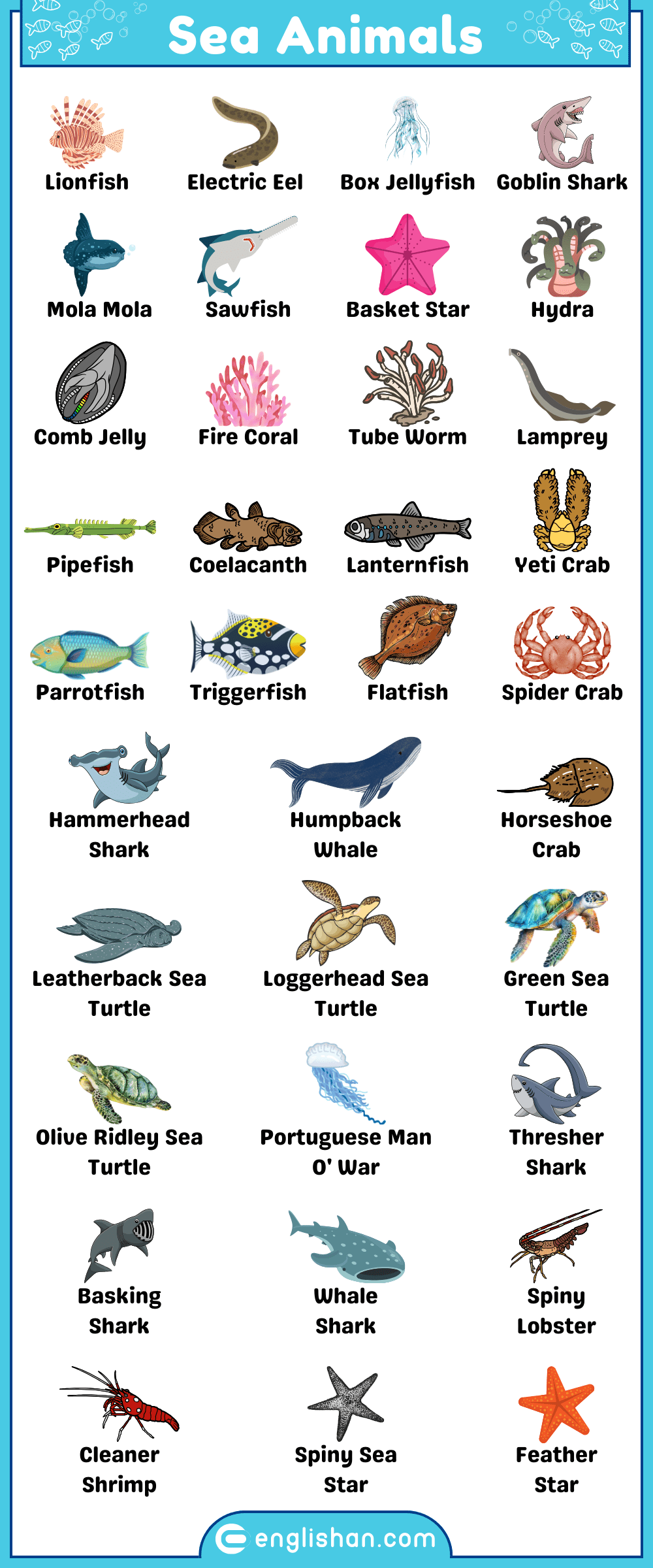
A harbour seal and a sea lion are close enough in description to sound like the same animal, and so are the octopus and the squid. Side by side they are unmistakable. The sea lion has ear flaps and walks on four flippers, and the squid has two tentacles the octopus lacks and a body shaped like a torpedo.
Common Sea Animals Names
Twelve sea animals live close enough to shore, or swim into shallow water regularly enough, that most people have seen one alive. They come from every major group in the ocean, mammals through to corals.
Dolphin
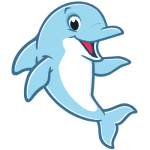
A grey, beaked mammal that travels in pods of ten to thirty. The pod hunts by coordination rather than by strength, and every animal in it answers to its own signature whistle, which works much the way a name does.
Whale

The word covers the largest marine mammals, which fall into two kinds: toothed hunters like the sperm whale and baleen filter feeders like the blue. Which kind an animal is determines how it eats.
Shark
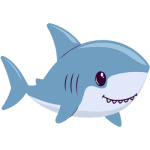
A fish built on cartilage rather than bone, which leaves it lighter and more flexible than the bony fish around it. Five to seven gill slits open down each side instead of the single covered gill. Roughly 500 species exist, and fewer than a dozen have ever harmed a swimmer.
Octopus
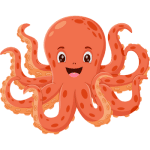
A soft-bodied hunter that moves along the seabed on eight suckered arms. It has three hearts and blue blood, and its nervous system is spread so widely that two thirds of its neurons sit in the arms rather than the head. It solves puzzles, opens jars and recognises individual keepers by face.
Jellyfish
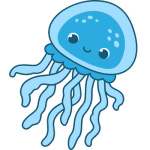
A drifting animal made almost entirely of water, carried by the current rather than swimming against it. It has no brain, no heart and no bones, and some species have drifted the oceans for 500 million years, predating trees.
Crab
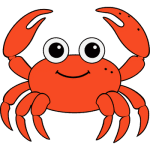
A shelled animal that walks sideways on ten legs, the front pair ending in claws. The sideways gait comes from joints that hinge outward rather than forward, and the whole shell is shed and regrown each time the animal outgrows it.
Starfish
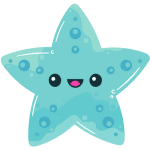
An armoured animal that regrows any of its five arms after losing one. It has no brain at all, and it digests prey by pushing its stomach out through its mouth. Marine biologists prefer the name sea star, since the animal is not a fish.
Seahorse
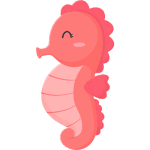
A small upright fish that anchors itself to seaweed with a curling tail. It is the only animal where the male rather than the female carries and delivers the young.
Turtle
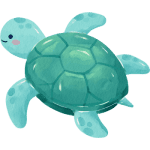
A shelled reptile that swims with flippers instead of walking on clawed feet. Unlike a land tortoise it cannot withdraw its head into the shell, because flippers and a flattened shell suit swimming better than armour does. Females return to the beach where they hatched to nest.
Seal
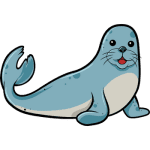
A marine mammal that hauls out onto ice and rock to rest. It has ear holes rather than visible flaps and short front flippers, which is why it wriggles on its belly ashore instead of walking.
Lobster
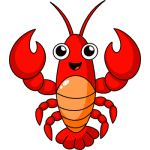
A long-bodied shellfish that walks the seabed behind two unequal claws, one heavy for crushing and one fine for cutting. It looks dark blue-green alive and turns red only once cooked, because heat destroys every shell pigment except the red one.
Coral
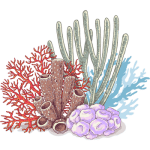
An animal that builds a limestone case around itself and never moves again. Each of those cases holds a single polyp, and a reef is that same construction repeated across centuries, which is why coral is so widely mistaken for rock.
Deep Sea Creatures
Sunlight reaches no deeper than about 200 metres, and everything living below that has adapted to permanent darkness, crushing pressure and food that arrives rarely. The resulting body shapes look invented, though each one answers a practical question: how to find a mate in the dark, how to eat when the next meal is months away, how to survive pressures that would flatten a submarine.
Anglerfish
A deep-water predator that fishes for its own food with a glowing lure on a stalk. The light draws prey within reach of a mouth that swallows animals larger than itself. The male is a fraction of the female’s size and fuses permanently to her body, losing his eyes and organs in the process.
Giant Squid
A deep-ocean cephalopod that grows to 13 metres and hunts in total darkness. Its eyes are the size of dinner plates, the largest in the animal kingdom, evolved to catch the faint glow stirred up by an approaching sperm whale. No living adult was photographed until 2004.
Blobfish
A deep-sea fish shaped much like any other at 1,200 metres, where the surrounding pressure supports its gelatinous body. The famous photograph shows a specimen collapsed by decompression, so its reputation as the world’s ugliest animal is an artefact of the trip to the surface.
Viperfish
A small deep-water hunter armed with a hinged jaw and needle teeth too long to close inside its own mouth. Light organs along its belly erase its silhouette from beneath, hiding it from anything looking up.
Gulper Eel
A deep-sea eel whose mouth is wider than the entire rest of its body. The jaw hinges like a pelican’s pouch, which lets a small animal take whatever size of prey happens past.
Dumbo Octopus
An octopus that swims by flapping two ear-shaped fins set over its eyes. Those fins are why it shares a name with the Disney elephant, and it lives deeper than any other octopus, down to 4,000 metres.
Giant Isopod
A woodlouse relative that scavenges the seafloor and reaches 50 cm. Its size is an instance of deep-sea gigantism, and captive specimens have gone five years between meals.
Oarfish
A ribbon-shaped fish that grows to 11 metres, which makes it the longest bony fish alive. Sightings of it near the surface are where centuries of sea-serpent stories came from.
Types Of Sea Animals
Almost everything alive in the ocean falls into one of six groups, and each group is defined by how its animals breathe, how they move, whether they lay eggs or bear live young, and what their young are called. The boundaries are sharper than they look. A dolphin and a shark share a silhouette and almost nothing else.
Sea Mammals Names
Marine mammals are the ocean animals whose ancestors once lived on land. They moved back into the water roughly 50 million years ago and kept what mammals keep: warm blood, lungs, and milk for their young. Because they breathe air, they have to surface, and watching for that is the fastest way to tell a dolphin from a fish at a distance.
Blue Whale
A filter-feeding whale that reaches 30 metres and 150 tonnes, outweighing every animal that has ever lived, dinosaurs included. Its tongue alone weighs as much as an adult elephant, and a newborn calf gains 90 kg a day on its mother’s milk.
Humpback Whale
A baleen whale known for songs that carry across entire ocean basins. Every male in a population sings the same version, and that version shifts together season by season, which makes the song a shared and changing thing rather than an individual one.
Sperm Whale
A toothed whale that hunts squid at depths no other mammal reaches, working down to 2,000 metres. It stays under for ninety minutes on a single breath, and it has the largest brain of any animal.
Beluga Whale
A white Arctic whale vocal enough to have earned the nickname sea canary. It has a flexible neck no other whale possesses, and it reshapes its bulbous forehead while making sound.
Narwhal
An Arctic whale in which the male grows a spiral tusk to three metres. That tusk is no horn at all but an overgrown left canine tooth, packed with nerve endings and used to read the water around it.
Orca
An apex predator that belongs to the dolphin family despite being called a killer whale. It is the largest dolphin alive, and family groups pass hunting techniques down through generations, and those techniques differ so sharply between populations that researchers treat them as separate cultures.
Bottlenose Dolphin
The dolphin kept in most aquariums, and one of very few animals to recognise itself in a mirror. Only great apes and elephants share that ability.
Porpoise
A small cetacean much more retiring than a dolphin. It is shorter and blunter, with spade-shaped teeth and no beak, and confusing the two is the most common naming error in marine English.
Seal
A pinniped with ear holes rather than visible flaps and short front flippers. That build leaves it wriggling on its belly ashore, and some species sleep underwater, surfacing to breathe without waking.
Sea Lion
A pinniped with visible ear flaps and long front flippers that let it walk on all fours. That mobility is why every performing seal in a circus is really a sea lion.
Walrus
An Arctic pinniped that both sexes grow tusks on, reaching 1,500 kg. Thick sensitive whiskers let it locate shellfish in sediment too dark to see through.
Manatee
A slow, rounded vegetarian that grazes seagrass in warm shallows and eats a tenth of its body weight daily. It has no natural predators, and almost every injury it bears came from a boat.
Dugong
The manatee’s saltwater cousin, separated by a fluked tail like a dolphin’s rather than a rounded paddle. Sailors mistaking it for a woman gave rise to the mermaid legend.
Sea Otter
A marine mammal that survives cold water on fur alone, with a million hairs per square inch because it has no insulating blubber. It cracks shellfish against a stone held on its chest, one of few documented cases of tool use outside primates.
Vaquita
A small porpoise that lives in one corner of the northern Gulf of California and nowhere else. Fewer than fifteen individuals remain, which makes it the rarest marine mammal on earth and the cetacean closest to extinction.
Fish And Sharks
Fish outnumber every other group in the ocean. They breathe through gills, swim with fins, and take their body temperature from the water around them. The group then divides in two: sharks and rays build their skeletons from cartilage rather than bone, which leaves them lighter and more flexible, while bony fish have a swim bladder that holds them at one depth without swimming. Almost every fish in the sea is one or the other.
Great White Shark
A large predatory shark reaching six metres, with serrated teeth replaced continuously through life. One animal works through thousands of them, and most encounters with swimmers turn out to be single exploratory bites rather than predation.
Whale Shark
A filter feeder that reaches 12 metres, which makes it the largest fish alive. It strains plankton through its gills and threatens nothing. The spot pattern across its back identifies individuals the way a fingerprint does.
Hammerhead Shark
A shark whose head is widened into a flattened bar. That shape spreads its electrical sensors across a broader sweep, letting it find rays buried under sand by the faint current of their heartbeats.
Basking Shark
A slow-cruising filter feeder second in size only to the whale shark. It moves through open water with its mouth held wide, filtering close to 2,000 tonnes an hour and taking nothing bigger than plankton.
Tiger Shark
A striped shark that fades in colour as it matures, and the least selective feeder in the ocean. Licence plates and tyres have been recovered from its stomach.
Nurse Shark
A bottom-dwelling shark that rests in stacked piles under reef ledges through the day. At night it sucks prey out of crevices rather than chasing it down.
Manta Ray
A ray that glides on wings spanning seven metres and has the largest brain of any fish. Its behaviour extends to apparent play and to recognising individual divers on repeat encounters.
Stingray
A flattened, sand-dwelling ray that spends most of its time buried. The barbed tail works purely in defence, and the animal uses it when trodden on rather than when hunting.
Clownfish
A reef fish that shelters inside anemone tentacles which kill other fish, protected by a mucus coating. Every individual is born male, and the dominant one turns female.
Lionfish
A striped reef fish with eighteen venomous spines behind a fan of fins. It has invaded the Caribbean and Atlantic aggressively, because nothing there has evolved to eat it.
Pufferfish
A fish that swells to three times its size by swallowing water. Its flesh is loaded with tetrodotoxin, for which no antidote exists, and Japanese chefs train for years before serving it.
Swordfish
A fast open-water hunter with a flattened bill and speeds above 90 km per hour. Specialised muscle warms its eyes and brain, which lets it hunt effectively in cold deep water.
Tuna
An ocean-crossing fish that is warm-blooded, unusually for its group. It can never stop swimming, because it must keep moving to force water across its gills.
Seahorse
An upright fish armoured with bony plates instead of scales, and the slowest fish yet measured. It covers roughly 1.5 metres an hour.
Eel
A snake-bodied fish that hunts mainly at night. Moray eels hold their jaws open in reef crevices to breathe rather than to threaten, which is why they look permanently aggressive.
Parrotfish
A reef fish with a fused beak that scrapes algae from coral. It grinds the limestone as it feeds and excretes it as sand, and one large individual produces several hundred kilograms of beach a year.
Shellfish And Crustaceans
These animals keep their skeleton on the outside rather than the inside. Some grow a jointed shell that has to come off whole before the animal can get any bigger, and others grow a shell they simply extend from within. That difference explains why a crab hides while it moults and an oyster never has to.
Crab
A crustacean that sheds its jointed shell whole and regrows it. The animal stays soft and defenceless for days each time, which is why it hides through the process.
Lobster
A long-bodied crustacean with two unequal claws, one heavy for crushing and one fine for cutting. It shows no measurable decline with age, which is how exceptional individuals reach a century.
Shrimp
A small translucent crustacean that people eat more of than any other shellfish. Pistol shrimp snap a claw hard enough to stun prey with the shockwave alone.
Krill
A thumbnail-sized crustacean that forms the base of the entire Antarctic food web. A single swarm numbers hundreds of millions of animals.
Barnacle
A crustacean that cements itself head-first to rock and never moves again. It feeds by kicking its legs through the water, and the glue holding it there is the strongest known to chemistry.
Hermit Crab
A crab that borrows an abandoned snail shell rather than growing its own. As it outgrows one it trades up, and animals will queue by size to swap shells in sequence.
King Crab
A cold-water crab close to a metre across at the legs. It ranks among the most valuable seafood by weight anywhere.
Horseshoe Crab
An armoured animal closer to spiders than to crabs, largely unchanged for 450 million years. Its blue blood detects bacterial contamination, and it is used to test every injectable medicine made.
Clam
A bivalve that buries itself in sand between two hinged shells. It draws water through a siphon and filters food from it without moving.
Oyster
A bivalve cemented to rock, filtering water where it sits. When a foreign grain works inside the shell the animal coats it in nacre, which is how a pearl forms.
Mussel
A bivalve anchored to piers and tidal rocks by tough threads. Those threads hold so well that materials scientists study them for adhesives.
Scallop
A bivalve that escapes predators by clapping its shells together and swimming away. No other bivalve does this. It also has eyes, up to 200 of them along the shell rim.
Conch
A sea snail that lives inside a heavy spiral shell with a flared pink lip. It moves by hopping on a muscular foot rather than gliding.
Nautilus
A shelled cephalopod that rises and sinks by flooding and emptying the chambers of its spiral shell. That design has gone structurally unchanged for 500 million years.
Octopus Squid And Jellyfish
These animals are soft-bodied and boneless, and they cope with that in two opposite ways. Cephalopods rely on intelligence and camouflage, and they have the most sophisticated nervous systems of any invertebrate. Cnidarians rely on neither. They have no brain at all, and their whole defence is a layer of cells that fire on contact.
Octopus
A cephalopod that moves on eight arms lined with suckers, and those suckers taste as well as grip. Each arm has its own bundle of neurons and acts semi-independently of the head.
Squid
A cephalopod built for speed, with eight arms, two longer feeding tentacles and jet propulsion. That combination makes it the fastest invertebrate in the sea.
Cuttlefish
A cephalopod that changes the colour and texture of its skin in under a second. It does this while colour-blind itself, distinguishing its surroundings by contrast rather than by hue.
Jellyfish
A cnidarian trailing tentacles armed with stinging cells. Those cells fire on contact rather than on command, which is why a severed tentacle still stings.
Box Jellyfish
A cube-shaped jellyfish with the most potent venom of any marine animal, according to NOAA. It has twenty-four eyes, and its sting stops the heart within minutes.
Sea Anemone
A flower-shaped predator fixed to rock, related to coral and jellyfish rather than to anything botanical. It catches prey with stinging tentacles and never moves to feed.
Sea Slug
A mollusc with no shell, defended by chemicals instead. Its brilliant colouring warns predators off rather than hiding it.
Nudibranch
A sea slug that eats stinging animals and then keeps their weapons for itself. It digests everything except the stinging cells, relocating those to its own skin.
Sea Reptiles And Sea Bird Names
These animals feed at sea but breathe air and return to land to lay their eggs. A gannet spends months over open water and comes ashore only to nest, and a sea turtle crosses whole oceans before hauling out on a single beach once a year.
Sea Turtle
A marine reptile that navigates back to the beach where it hatched, apparently by reading the earth’s magnetic field. Seven species exist, and every one of them does this.
Leatherback Turtle
A sea turtle with a leathery ridged back instead of a hard shell and reaches two metres, larger than any other. It generates its own body heat, which lets it swim in near-freezing water no other turtle survives.
Hawksbill Turtle
A sea turtle that prises sponges out of reef crevices with a narrow beak. The historic tortoiseshell trade damaged it more than any other species.
Sea Snake
A marine reptile with a flattened paddle-like tail and venom stronger than a cobra’s. Its mouth is small and its temperament reluctant, so bites on humans are rare.
Marine Iguana
A lizard that grazes algae underwater, found nowhere in the world but the Galápagos. It sneezes the excess salt back out through glands set above its eyes.
Saltwater Crocodile
A crocodile that reaches seven metres, outgrowing every other living reptile. It ranges hundreds of kilometres out to sea by riding surface currents rather than swimming the distance.
Penguin
A flightless seabird whose wings have reshaped into flippers. The emperor dives to 500 metres and holds its breath for twenty minutes.
Albatross
A seabird that spreads wings 3.5 metres across, wider than any other bird alive. It glides for hours on locked wings without a single flap, circling the Southern Ocean.
Puffin
A seabird whose bill turns striped and bright for the breeding season, then sheds its coloured plates. It nests in cliff burrows and carries a dozen fish crosswise at once.
Pelican
A seabird that fishes with an expandable throat pouch, scooping fish and water together. It drains the water before swallowing.
Gannet
A seabird that folds its wings and dives from 30 metres, hitting the water at 100 km per hour. Air sacs under the skin of its face and chest absorb the impact.
Cormorant
A diving seabird whose feathers are deliberately not waterproof. The lost buoyancy is exactly what lets it swim down after fish, and it holds its wings open to dry between dives.
Biggest Animals In The Ocean
Water supports weight in a way air never can, which is why marine animals grow to sizes no land skeleton would bear. The blue whale is not merely the largest animal alive; it is the largest that has ever existed anywhere, and it outweighs the biggest dinosaur several times over.
| Animal | Length | Weight |
|---|---|---|
| Blue whale | 30 m | 150 tonnes |
| Fin whale | 26 m | 74 tonnes |
| Sperm whale | 20 m | 57 tonnes |
| Giant squid | 13 m | 275 kg |
| Whale shark | 12 m | 19 tonnes |
| Oarfish | 11 m | 270 kg |
| Basking shark | 10 m | 5 tonnes |
| Manta ray | 7 m wingspan | 1.4 tonnes |
Scale at this level stops being intuitive. A blue whale’s heart is the size of a small car, its arteries wide enough to swim through, and a nursing calf drinks 200 litres of milk a day.
Dangerous Sea Animals
Venom kills more swimmers than teeth do, and most people rank the danger the wrong way round. Sharks kill roughly five people a year worldwide, fewer than falling coconuts, while box jellyfish stings kill many times that across the Indo-Pacific. The animals to watch for are mostly small, still, and camouflaged well enough that a swimmer treads on them without seeing.
Box Jellyfish
A jellyfish whose venom is the most potent recorded in any marine animal. Its sting causes cardiac arrest before a swimmer reaches shore, and Australian beaches net against it right through the summer.
Stonefish
A fish that camouflages itself as a rock on the seabed, armed with thirteen dorsal spines. It delivers the most potent venom of any fish, and almost always to somebody who stood on it.
Blue-Ringed Octopus
A golf-ball sized octopus with enough tetrodotoxin to kill twenty-six adults. Its rings flash blue only once the animal is already threatened, which gives very little warning.
Cone Snail
A sea snail that fires a venomous harpoon faster than any swimmer registers. The larger species have killed people who picked up the shell for its markings.
Stingray
A ray with a serrated barb on its tail and uses it defensively when trodden on. Divers are taught to shuffle across sand rather than step, for exactly this reason.
Great White Shark
A shark that has been recorded attacking more people than any other species. Almost all of them are single exploratory bites that the animal does not follow up.
Sea Snake
A marine reptile whose venom is several times stronger than a cobra’s. Its mouth is too small to bite most of a human body, and its temperament avoids confrontation.
Lionfish
A reef fish whose eighteen venomous spines cause pain severe enough to hospitalise. Fatalities from it are almost unknown.
Sea Animals Names For Kids
Fifteen sea animals are distinctive enough to name from a single detail: the crab’s sideways walk, the octopus’s eight arms, the penguin’s black and white. None of them needs a second look.
- Fish: it swims with fins and breathes through gills.
- Crab: it walks sideways and pinches with two claws.
- Whale: it is the biggest animal in the whole world.
- Dolphin: it jumps out of the water and clicks to its friends.
- Shark: it has rows and rows of sharp teeth.
- Octopus: it has eight wiggly arms with suckers all along them.
- Jellyfish: it looks like a see-through umbrella.
- Starfish: it has five arms and grows new ones back.
- Seahorse: it stays upright and curls its tail around seaweed.
- Turtle: it takes its shell everywhere it swims.
- Seal: it claps its flippers and barks.
- Penguin: it wears black and white and cannot fly.
- Lobster: it turns red when it is cooked.
- Shrimp: it is tiny and pink and curled like a comma.
- Coral: it looks like a rock but is really alive.
Funny Ocean Creatures
Some marine animals ended up with English names that sound like jokes, and in most cases the name records something real about the animal rather than mocking it.
Blobfish
A deep-sea fish voted the world’s ugliest animal on the strength of one photograph. That photograph was taken after decompression had destroyed its shape.
Dumbo Octopus
An octopus named for the Disney elephant, since the fins it swims with sit over its eyes like ears.
Sea Pig
A pink deep-sea cucumber that walks the seafloor on rows of inflatable tube feet.
Handfish
A fish that walks along the seabed on modified fins rather than swimming, and it ranks among the rarest fish alive.
Sarcastic Fringehead
A small territorial fish that opens its entire face outward like an umbrella to intimidate rivals over shelter.
Goblin Shark
A deep-water shark whose jaw shoots forward out of its head to seize prey, then retracts flush again.
Baby Sea Animals
The young of most marine species have a separate English word, and it rarely resembles the adult name. A baby whale is a calf, a baby seal is a pup, and a newly hatched fish is fry.
- Calf: a baby whale, dolphin, manatee or dugong.
- Pup: a baby seal, sea lion, walrus or shark.
- Fry: a newly hatched fish, before the fins have fully formed.
- Fingerling: a young fish grown to roughly the length of a finger.
- Hatchling: a sea turtle newly emerged from the sand.
- Chick: a young penguin, puffin or albatross.
- Larva: the free-swimming first stage of a crab, coral or starfish, unrecognisable as the adult.
- Elver: a young eel, once it has migrated inshore.
Sea Animals Names With Meanings
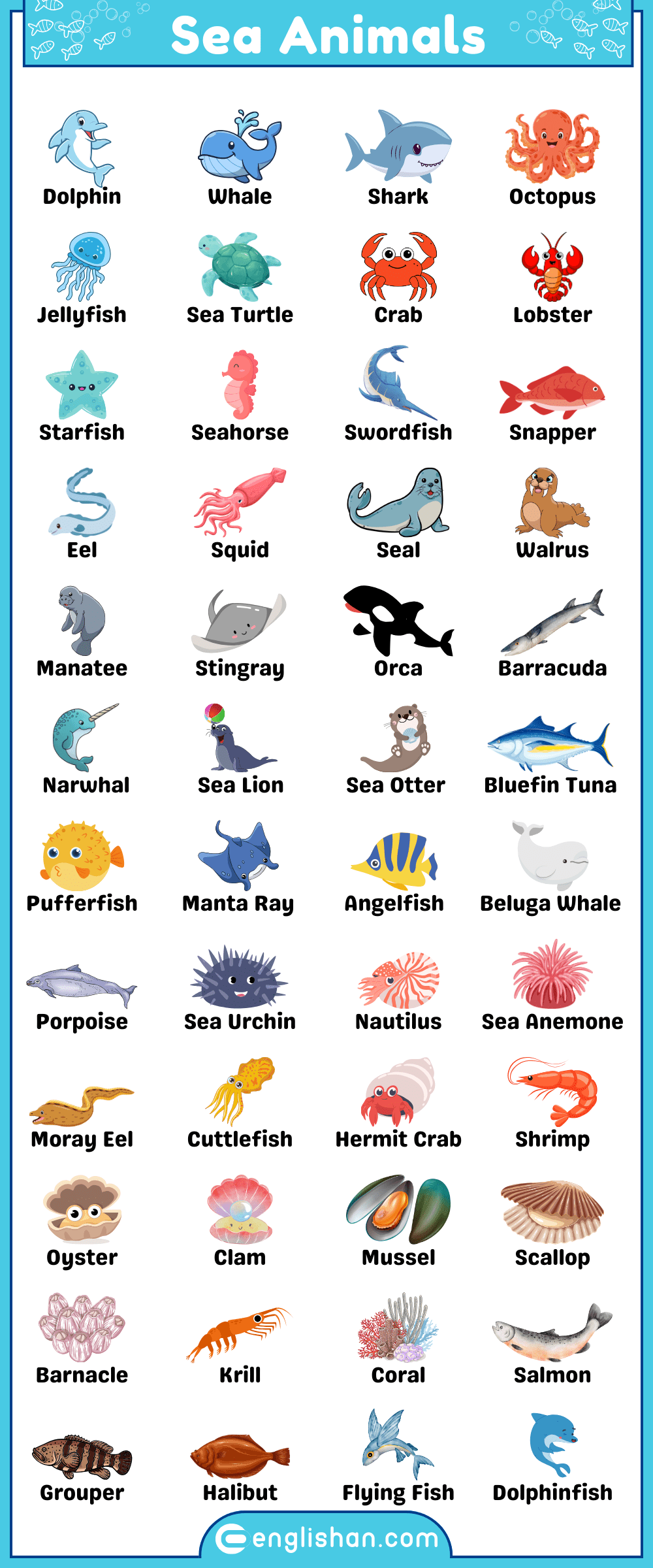
Marine biology names its groups with Greek and Latin roots, and fifteen of these terms describe almost every animal in the ocean. A cetacean is a whale or a dolphin, a pinniped is a seal or a walrus, and a cnidarian stings.
- Cetacean: the group that covers whales, dolphins and porpoises.
- Pinniped: the group that covers seals, sea lions and walruses.
- Crustacean: a shelled animal with jointed legs, such as a crab or shrimp.
- Mollusc: a soft-bodied animal, most of them shelled, such as a clam or octopus.
- Cephalopod: a mollusc with arms attached directly to the head, such as a squid.
- Bivalve: a mollusc housed in two hinged shells, such as an oyster.
- Echinoderm: a spiny five-sided animal, such as a starfish or urchin.
- Cnidarian: a stinging animal, such as a jellyfish, coral or anemone.
- Baleen: the fringed plates a whale filters food through instead of teeth.
- Blowhole: the nostril set on top of a whale or dolphin’s head.
- Plankton: drifting organisms too weak to swim against a current.
- Krill: shrimp-like plankton that whales strain in vast quantities.
- Polyp: the individual animal that builds a coral colony.
- Siphon: the tube a clam or squid draws water through.
- Dorsal fin: the fin set on an animal’s back.
Sea Animals People Confuse
Six pairs of sea animals resemble each other closely enough that the names get swapped. In each pair one visible difference separates them cleanly, and it shows without measuring anything.
A dolphin is a fish. ❌
A dolphin is a mammal that breathes air through a blowhole. ✅
- Seal or sea lion: a sea lion has visible ear flaps and walks on all four flippers. A seal has ear holes only and wriggles on its belly. Every performing seal you have watched was a sea lion.
- Octopus or squid: an octopus has eight arms and a rounded head. A squid has eight arms plus two longer tentacles and a torpedo-shaped body built for speed.
- Turtle or tortoise: a sea turtle has flippers and lives in salt water. A tortoise has clawed feet and lives entirely on land. British English keeps the two further apart than American English does.
- Whale or dolphin: all dolphins are whales in the broad sense, but a dolphin is smaller and has a beak. The orca is a dolphin despite being called a killer whale.
- Starfish or sea star: both names point at the same animal. Biologists prefer sea star, since the animal has no gills, scales or fins and is therefore not a fish at all.
- Coral or rock: coral is a colony of living animals. What resembles stone is the limestone skeleton those animals built and left behind.
How To Pronounce Sea Animal Names
The Greek and Latin group terms are harder to say than the animal names, because the stress lands where an English speaker does not expect it. Cetacean takes its stress on the second syllable, not the first. Stress falls on the capitalised part below.
| Animal | Say it |
|---|---|
| Cetacean | sih-TAY-shun |
| Crustacean | kruh-STAY-shun |
| Cephalopod | SEF-uh-luh-pod |
| Anemone | uh-NEM-uh-nee |
| Nudibranch | NOO-dih-brank |
| Porpoise | POR-pus |
| Narwhal | NAR-wall |
| Beluga | buh-LOO-guh |
| Dugong | DOO-gong |
| Vaquita | vah-KEE-tah |
| Barracuda | bar-uh-KOO-duh |
| Baleen | bay-LEEN |
| Echinoderm | ih-KY-nuh-derm |
| Orca | OR-kuh |
| Krill | KRIL |
Extinct Sea Creatures
Six extinct sea animals still have everyday English names, kept in use by fossils complete enough to reconstruct the whole creature. The largest of them, megalodon, outweighed every shark alive today.
Megalodon
A prehistoric shark that grew to 18 metres, three times the length of a great white. It disappeared 3.6 million years ago as the oceans cooled beneath what it needed.
Mosasaur
A marine lizard reaching 17 metres, and the dominant predator of the late Cretaceous seas. It died out in the same extinction that ended the dinosaurs.
Plesiosaur
A marine reptile with a long neck on a barrel body and four paddle limbs. Loch Ness sightings invoke its shape more than any other.
Ichthyosaur
A dolphin-shaped marine reptile that gave birth at sea rather than laying eggs ashore. It evolved that adaptation entirely independently of whales.
Ammonite
A coiled-shell relative of the nautilus, now known only as a fossil. It occurs so consistently that geologists use it to date the rock around it.
Trilobite
A segmented seafloor animal that survived 270 million years. Mammals have existed for less than a quarter of that.
Scientific Names Of Sea Animals
Latin binomials remove the confusion common names create, since one animal frequently has a different English name in every country it lives near.
| Common name | Scientific name |
|---|---|
| Blue whale | Balaenoptera musculus |
| Bottlenose dolphin | Tursiops truncatus |
| Orca | Orcinus orca |
| Great white shark | Carcharodon carcharias |
| Whale shark | Rhincodon typus |
| Manta ray | Mobula birostris |
| Common octopus | Octopus vulgaris |
| Giant squid | Architeuthis dux |
| Clownfish | Amphiprion ocellaris |
| Seahorse | Hippocampus |
| Leatherback turtle | Dermochelys coriacea |
| Emperor penguin | Aptenodytes forsteri |
| Walrus | Odobenus rosmarus |
| Sea otter | Enhydra lutris |
| Box jellyfish | Chironex fleckeri |
FAQs
The most common sea animals in English are fish, dolphins, whales, sharks, crabs, octopuses, jellyfish, starfish, seahorses, turtles, seals and lobsters. All twelve live in coastal or shallow water, which is why people encounter them before any others.
Twelve sea animals names are whale, dolphin, shark, fish, crab, octopus, jellyfish, starfish, seahorse, turtle, seal and lobster. All twelve are short enough for a beginner to say on the first try.
The blue whale is the largest sea animal, reaching about 30 metres and 150 tonnes. It is also the largest animal that has ever lived on earth, heavier than any dinosaur.
The box jellyfish is the most dangerous, and its sting causes cardiac arrest within minutes. The stonefish and the cone snail come next, both delivering venom strong enough to kill. Sharks attract more attention but kill roughly five people a year worldwide.
Whales, dolphins, porpoises, seals, sea lions, walruses, manatees, dugongs and sea otters are the marine mammals. Each one breathes air through lungs, is warm-blooded, and feeds its young on milk.
Yes, the sea otter is a sea animal. It lives in the coastal Pacific and comes ashore rarely, spending most of its life in salt water. River otters are a separate species and belong to fresh water, so the answer turns on which otter is meant.
Yes, sea snakes are sea animals. More than sixty species live across the Indian and Pacific Oceans, with flattened paddle-like tails built for swimming, and most never come ashore at all. Land snakes and freshwater snakes are separate animals entirely.
Sea animals live in salt water, and aquatic animals live in any water at all. Aquatic is the wider word, so it takes in rivers and lakes alongside oceans and seas. A dolphin is both a sea animal and an aquatic animal, while a carp is aquatic only. The test is whether the animal needs salt water to survive: if it does, it is a sea animal. For the freshwater side, see the aquatic animals names.
You May Also Like
- Animals Found in the Desert
- Pet Animals with Pictures
- Creatures That Live in the Wild
- Animals That Are No Longer Alive
- Animal Names Starting with A in English
- Farm Animals Names with Pictures
- Wild Animals Names with Pictures
- All Animals Names in English
- Mammals Names in English
- Parts of Fish Names in English