
Corn, chillies, and beans go into almost every Mexican dish. What changes from one plate to the next is the shape the corn takes. Pressed thin it becomes a tortilla, and wrapped round meat and steamed it becomes a tamal. Mexican food names follow the food itself, so most of them describe a shape, a filling, or the way the cook made it.
Mexican Food Names List
Mexican food changes state by state, which is why so many names exist. Northern kitchens work with wheat flour, beef, and cheese, since wheat and cattle do well in the dry north. In the south, the staples are corn, pork, chilli, and banana leaf. The same name can therefore mean two different plates in Sonora and Oaxaca.
- Tacos
- Tacos al Pastor
- Burritos
- Enchiladas
- Tamales
- Quesadillas
- Tostadas
- Sopes
- Chiles Rellenos
- Chiles en Nogada
- Carnitas
- Barbacoa
- Birria
- Cochinita Pibil
- Carne Asada
- Fajitas
- Ceviche
- Elote
- Esquites
- Flautas
- Taquitos
- Gorditas
- Huaraches
- Tlayudas
- Tortas
- Torta Ahogada
- Pambazos
- Chalupas
- Chicharrones
- Guacamole
- Nachos
- Tortillas
- Frijoles Refritos
- Arroz Rojo
- Frijoles Charros
- Queso Fundido
- Nopales
- Chilaquiles
- Huevos Rancheros
- Huevos Motuleños
- Machaca con Huevo
- Molletes
- Conchas
- Pozole
- Menudo
- Caldo de Res
- Sopa de Tortilla
- Sopa de Lima
- Sopa de Fideo
- Mole
- Salsa Roja
- Salsa Verde
- Pico de Gallo
- Salsa Taquera
- Salsa Macha
- Adobo
- Chamoy
- Churros
- Flan
- Tres Leches
- Arroz con Leche
- Buñuelos
- Paletas
- Pan de Muerto
- Capirotada
- Agua Fresca
- Horchata
- Jamaica
- Tamarindo
- Atole
- Champurrado
- Mexican Hot Chocolate
- Tejuino
- Café de Olla
- Michelada

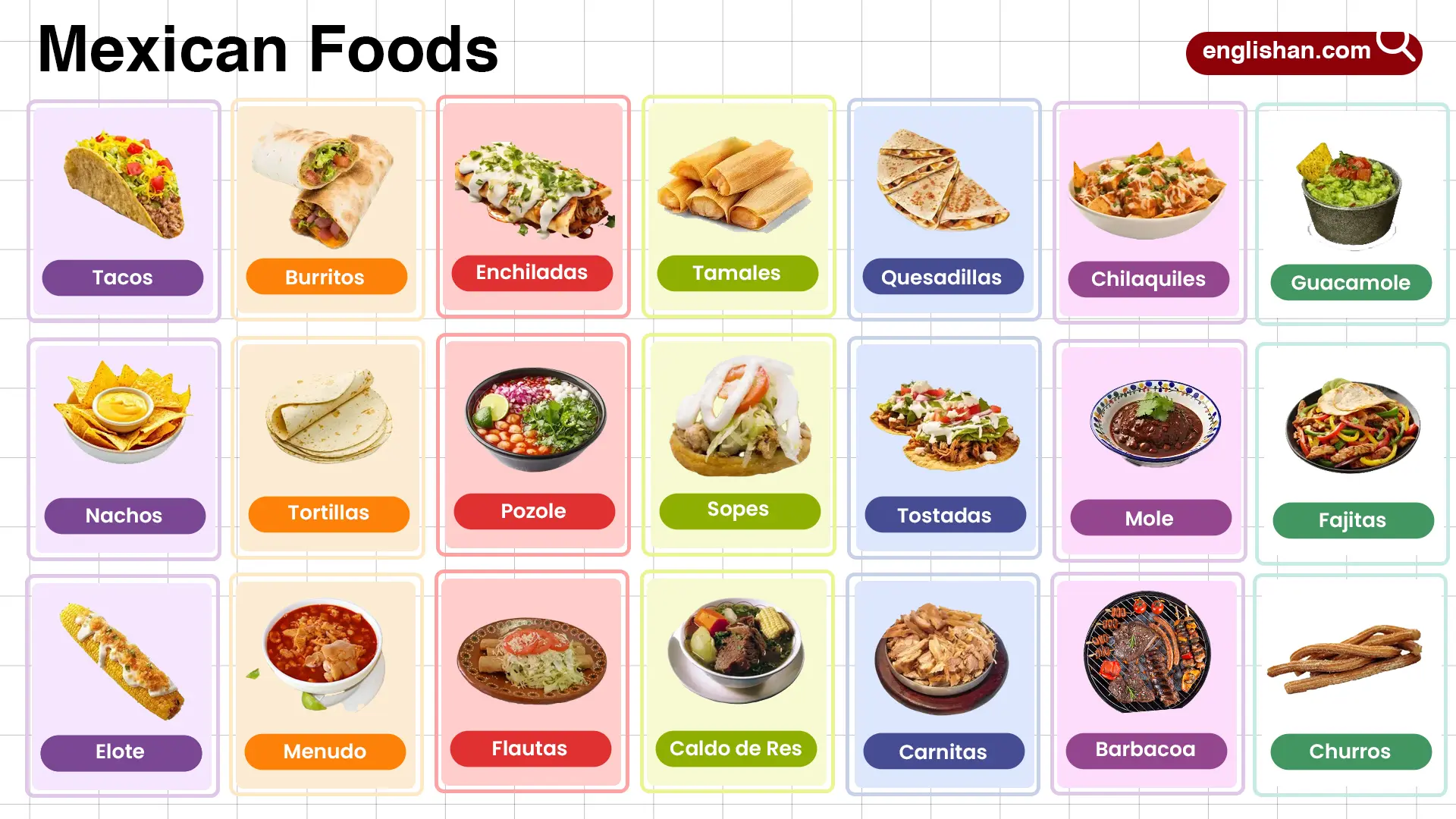
Mexican Food Names: Quick Visual Overview
How to Say Mexican Dish Names
Spanish spelling stays regular, which makes these names far steadier than English ones once you know four rules. Every letter gets sounded, the stress falls on the syllable the written accent marks, and a final e is never silent. The brackets after each name further down contain its respelling, and these four rules explain why it looks the way it does.
- Double l sounds like the English y, so tortilla ends in a y sound rather than an l sound.
- J sounds like a strong English h, so jalapeño starts with an h sound.
- Ñ takes a y sound after the n, so piña reads as peen-ya.
- H stays silent at the start of a word, so horchata begins with the o.
Capital letters in each respelling mark the syllable you stress.
Traditional Mexican Dishes and Meals
Almost every main dish in Mexico begins with corn. Cooks simmer dried corn in limewater to make nixtamal, then grind it into a dough called masa. From that dough come the tortilla, the sope, and the tamal. The meat and the sauce change from state to state, while the masa underneath stays the same.
Tacos (TAH-kohs)
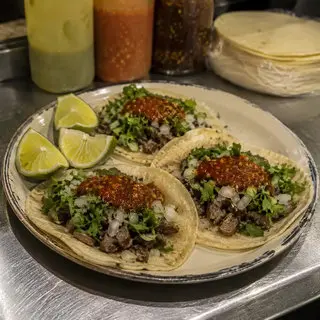
A soft corn tortilla folds around meat, beans, or cheese. Every taquería in Mexico sells them by the hundred. Out they come small, two or three at a time, finished with chopped white onion, coriander, and a spoon of salsa. The hard yellow shells sold abroad are a separate tradition, because a tortilla in Mexico stays soft and pliable.
Tacos al Pastor (TAH-kohs al pas-TOR)
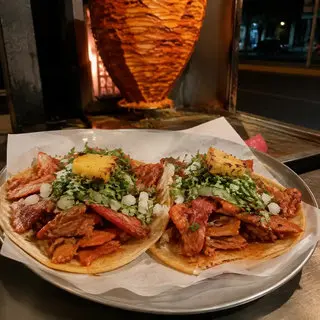
Pork marinates in guajillo chillies and achiote until it turns deep orange, then goes onto a vertical spit called a trompo. The taquero shaves the outer layer straight onto the tortilla and flicks a piece of grilled pineapple on top. Lebanese immigrants brought the spit to Puebla in the last century, and Mexico City turned the result into the country’s best-known taco.
Burritos (boo-REE-tohs)
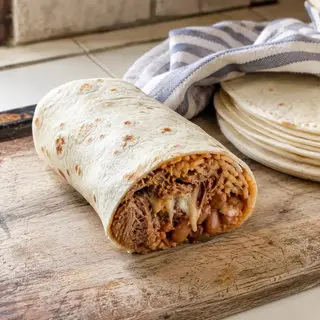
A large wheat flour tortilla wraps around beans, rice, meat, and cheese, then folds shut at both ends. Wheat grows in the dry north rather than the corn-growing south, which is why Chihuahua and Sonora eat burritos while the southern states rarely do. In Spanish the name means little donkey, and it describes the rolled shape rather than the filling.
Enchiladas (en-chee-LAH-dahs)
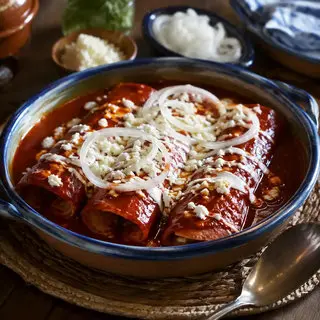
Cooks dip corn tortillas in a warm chilli sauce, then roll them around shredded chicken, cheese, or beans. Under cream and crumbled cheese, the tray goes into the oven. The verb enchilar means to season something with chilli, so the sauce names the dish and the filling comes second. Where the sauce is guajillo they come out red, and where it is tomatillo they come out green.
Tamales (tah-MAH-lays)
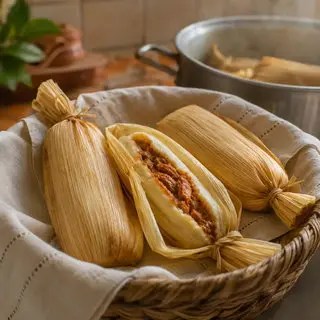
Masa wraps around a savoury or sweet filling, ties shut inside a corn husk, and steams until the dough firms up. Southern cooks reach for banana leaves instead, and the leaf turns the masa greener and earthier. Mexican families make them in batches of a hundred for Christmas and for Candlemas in February, and you peel the husk away before eating.
Quesadillas (keh-sah-DEE-yahs)
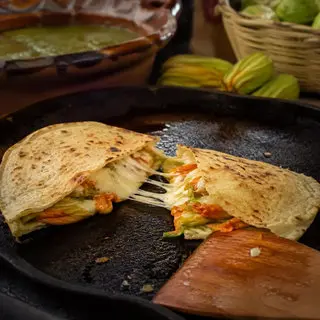
A tortilla folds over melted cheese and warms through on a comal, the flat griddle in every Mexican kitchen. Beside the cheese go mushrooms, squash blossom, potato with chorizo, or shredded chicken. The name starts from queso, the Spanish word for cheese. Mexico City still sells them without any cheese unless you ask, and cooks in the rest of the country have argued about it ever since.
Tostadas (toh-STAH-dahs)
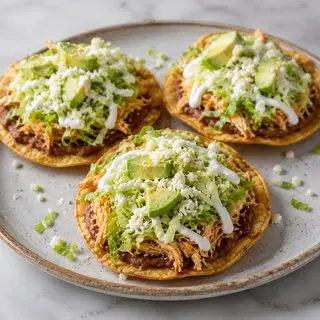
Frying a whole corn tortilla flat turns it brittle enough to take refried beans, shredded meat, lettuce, cream, and salsa across its open face. The word means toasted, so it names what the cook did to the tortilla rather than what went on top. Coastal states pile theirs with prawns or shredded fish instead of meat.
Sopes (SOH-pays)
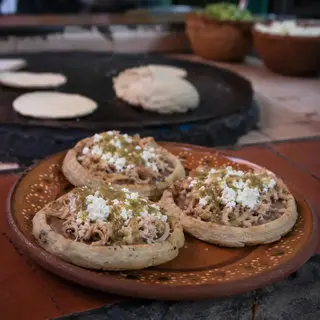
Masa presses into a thick round, the edge pinches up into a rim, and the disc goes onto the griddle first and into the fryer second. Because of that raised rim, the refried beans, meat, cheese, and salsa stay put, so a sope eats more neatly than a tostada does. At the stall they come palm-sized, two or three at a time.
Chiles Rellenos (CHEE-lays reh-YEH-nohs)
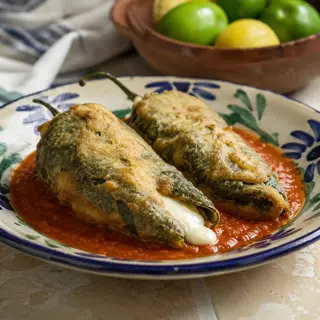
Cooks roast a poblano pepper and stuff it with cheese or with picadillo, a mixture of minced meat. Roasting loosens the skin so the cook can peel it away, which leaves the pepper soft enough to fold around the filling. Whipped egg coats the outside, the fryer puffs it up, and a thin tomato broth comes poured over the top.
Chiles en Nogada (CHEE-lays en noh-GAH-dah)
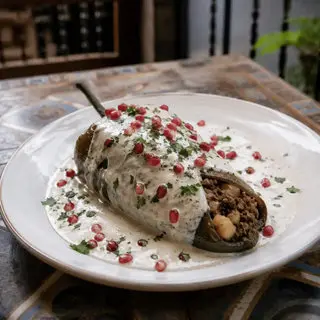
Minced pork, apple, pear, and peach fill a poblano pepper, which then disappears under a cold walnut cream and a scatter of pomegranate seeds and parsley. The green pepper, the white sauce, and the red seeds match the Mexican flag, which is why Puebla serves it through August and September around the independence holiday. Both the walnuts and the pomegranate ripen in exactly that window.
Carnitas (kar-NEE-tahs)
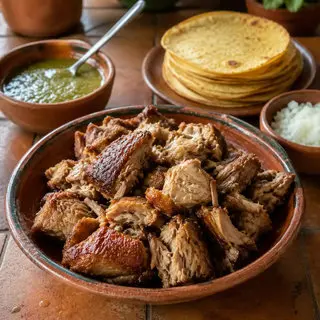
Pork shoulder simmers for hours in its own fat inside a wide copper pot until the meat shreds under a fork. A final blast of high heat crisps the outer edges while the inside stays soft. The name means little meats, and the dish originates in Michoacán.
Barbacoa (bar-bah-KOH-ah)
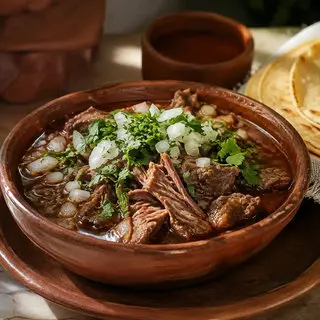
Goat, lamb, or beef wraps in maguey leaves and steams overnight in a stone-lined pit until the meat pulls apart. Central Mexico works with goat and lamb, while the north and the United States cook beef cheek instead. The English word barbecue descends from this Caribbean and Mexican method, though the modern grill has little to do with the original pit.
Birria (BEE-ryah)
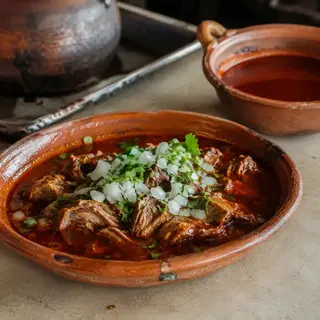
Goat or beef braises in an adobo of dried chillies, vinegar, and spices until the meat falls off the bone. Jalisco serves it in a bowl with raw onion and lime, and the cooking broth arrives alongside in a cup as consomé. Tijuana turned the same meat into quesabirria, a cheese-filled taco fried in the fat and dipped in that broth.
Cochinita Pibil (koh-chee-NEE-tah pee-BEEL)
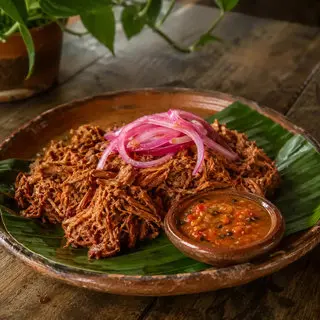
Pork marinates in achiote paste and sour orange juice, wraps in banana leaves, and roasts slowly until it shreds and turns brick red. The name comes out of Maya and Spanish together, where cochinita means baby pig and pibil means buried. Cooks once sealed the whole animal in an earth oven called a píib, and Yucatán still serves the result in tacos with pickled red onion and habanero salsa.
Carne Asada (KAR-nay ah-SAH-dah)
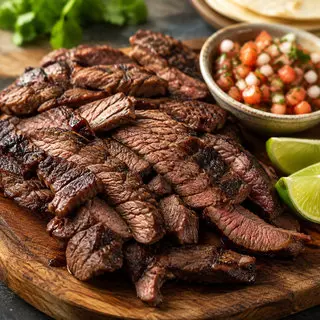
Thin beef skirt or flank grills fast over mesquite charcoal and gets chopped straight off the board. Northern Mexico builds a whole weekend around it, and the meat goes into tacos, tortas, and quesadillas rather than onto a plate on its own. Grilled spring onions, roasted chillies, and warm tortillas come with it, and Mexican grills take the full range of types of meat.
Fajitas (fah-HEE-tahs)
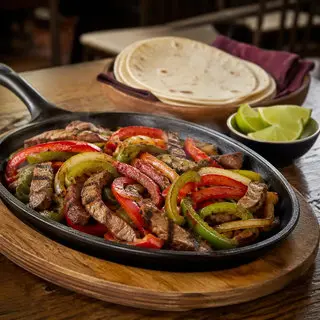
Strips of grilled beef or chicken arrive at the table still sizzling with onions and peppers, ready to roll into a warm flour tortilla. The name starts from faja, the Spanish word for a belt or a strip, which describes the cut of skirt steak the dish began with. Mexican ranch hands working in Texas created it, so it counts as a border dish rather than a Mexican one.
Ceviche (seh-VEE-chay)
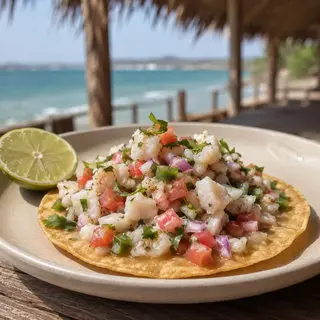
Raw fish or prawns cure in lime juice until the flesh firms and turns opaque, then mix with tomato, onion, coriander, and chilli. The Mexican version arrives cold on a crisp tostada rather than in a bowl, and Sinaloa and Nayarit eat it constantly along the Pacific coast. Although Peru created the dish, Mexico adopted it and reshaped it.
The grilling, pit-steaming, and slow simmering behind these dishes match the cooking methods named across other cuisines.
Mexican Street Food Names
Mexican street food shares one collective name, antojitos (an-toh-HEE-tohs), which translates as little cravings. Vendors sell them from carts, stalls, and doorways in the morning and again after dark, since Mexicans eat their main meal in the middle of the afternoon. Nearly all of them start from masa, the same corn dough behind the tortilla.
Elote (eh-LOH-tay)
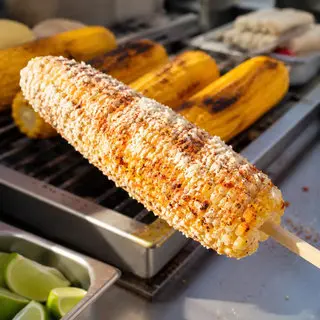
Whole corn cobs boil or grill on the cart, then go into mayonnaise and roll in crumbled cotija, a dry salted cheese. The vendor dusts it with chilli powder and squeezes lime over the top before handing it across on a stick. Behind the name is elotl, the Nahuatl term for a fresh corn cob.
Esquites (es-KEE-tays)
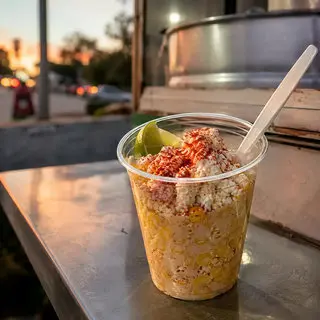
The same corn comes off the cob and into a cup, with the same mayonnaise, cheese, chilli, and lime, eaten with a spoon. Simmered with epazote, a sharp green herb, the kernels take on a taste that grilled elote never has. The word goes back to izquitl, meaning toasted corn.
Flautas (FLOW-tahs)
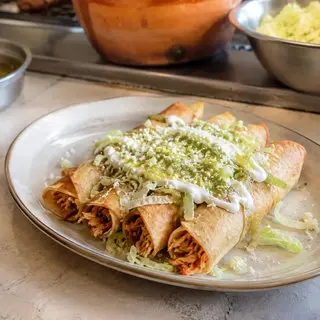
Tortillas roll tight around shredded chicken or beef, then fry until the outside turns brittle. Cream, crumbled cheese, lettuce, and salsa go over them. The name means flute, after the long thin shape the rolling produces. Most cooks make them with flour tortillas, which roll longer than corn ones do.
Taquitos (tah-KEE-tohs)
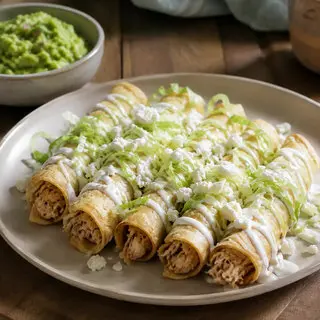
Small corn tortillas roll and fry the same way, so these come out shorter and crisper than flautas. The name means little taco. On the cart, vendors sell them three or four to a portion under a layer of cream and shredded lettuce.
Gorditas (gor-DEE-tahs)
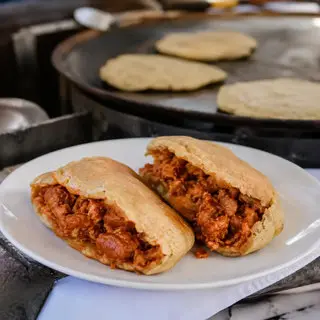
A thick disc of masa cooks on the comal until it swells, then splits open along one edge like a pocket. Into that hollow go chicharrón in salsa, shredded chicken, or beans and cheese. The name means little fat one, and it describes the puffed shape the dough takes on the griddle.
Huaraches (wah-RAH-chays)
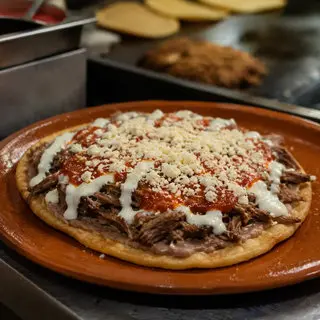
Masa mixed with beans shapes into a long oval base, which griddles and then fries. Before the toppings, a further spread of beans goes on. Meat, salsa, cream, and crumbled white cheese cover the surface, and the whole thing eats like an open sandwich. The name means sandal, because the shape matches the flat leather huaraches Mexico City wore when the dish appeared there in the 1930s.
Tlayudas (tlah-YOO-dahs)
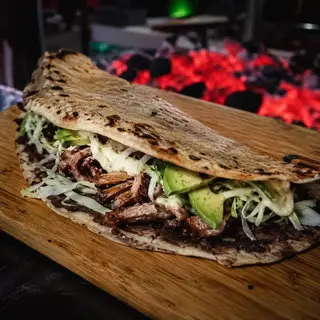
A wide, thin tortilla from Oaxaca toasts over coals until it turns leathery and crisp at the edges. The cook spreads it with asiento, the unrefined lard left in the pot after frying pork. Black beans, cabbage, avocado, quesillo cheese, and grilled meat go on before the whole thing folds in half, and one tlayuda feeds two people late at night.
Tortas (TOR-tahs)
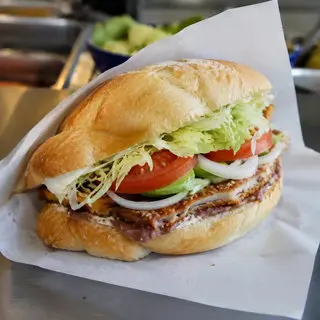
The bolillo and the telera, two soft white rolls with a crisp crust, are the base of the Mexican sandwich. The cook splits it and spreads refried beans and avocado inside. In go breaded pork, ham, or shredded chicken, with pickled jalapeños and cream on top. Every filling on a taquería menu also works between these two halves.
Torta Ahogada (TOR-tah ah-oh-GAH-dah)
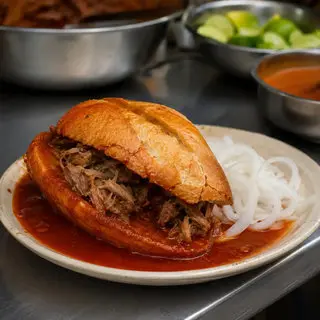
In Guadalajara this sandwich takes fried pork and then goes fully under a thin sauce of árbol chillies. Underneath goes birote salado, a dense sourdough roll that keeps its structure under the sauce instead of collapsing. In Spanish the name means drowned sandwich, and you eat it from a plate with a fork nearby.
Pambazos (pam-BAH-sohs)
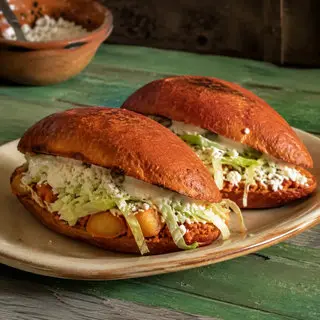
Guajillo chilli sauce coats the whole roll before it hits the comal, so the outside fries red and slightly crisp. Inside goes a filling of potato cooked with chorizo, finished with lettuce, cream, and crumbled cheese. Mexico City sells them from evening stalls, and the sauce stains your fingers.
Chalupas (chah-LOO-pahs)
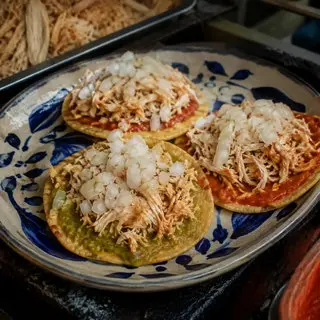
Small oval cups of masa fry until the pinched edges crisp. Salsa, shredded meat, and cheese go on top. In Spanish the name means little boat, after the shape of the fried base. Puebla and the town of Cholula keep the original version plain, with nothing beyond salsa, cheese, and onion.
Chicharrones (chee-chah-ROH-nays)
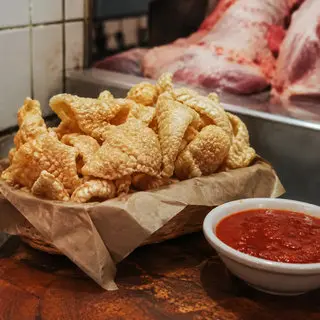
Pork skin simmers and then fries until it puffs into a light, brittle sheet that snaps between your fingers. Vendors sell it plain with lime and chilli powder, and cooks also stew it in green salsa until it softens into a filling for tacos and gorditas. Northern Mexico fries the belly with the fat still attached, which makes a heavier version.
Vendors sell these beside sweets, crisps, and cups of chilled fruit, so a street cart in Mexico stocks far more snack names than the savoury ones here.
Mexican Appetizer and Side Dish Names
A Mexican plate arrives with its sides already on it, and nobody orders them separately. Without beans, rice, and a bowl of salsa beside it, a piece of grilled meat looks unfinished rather than complete.
Guacamole (gwah-kah-MOH-lay)
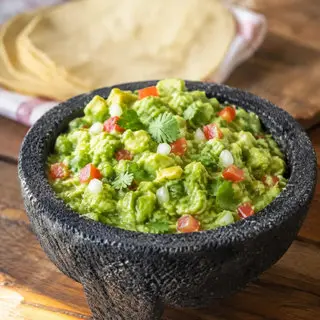
Ripe avocado mashes with lime juice, salt, chopped white onion, tomato, and coriander into a dip that also spoons over tacos. The Nahuatl ahuacamolli, which joins the terms for avocado and sauce, is where the name starts. Mexican cooks mash it in a molcajete, the volcanic stone mortar, and serve it in the same bowl.
Nachos (NAH-chohs)
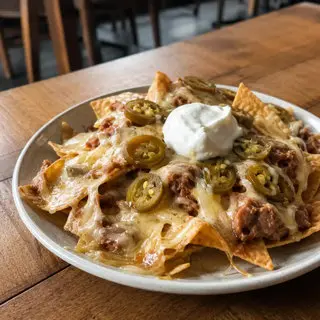
Fried tortilla triangles go under melted cheese, pickled jalapeños, beans, and cream. A cook named Ignacio Anaya invented them in 1943 in Piedras Negras, a town on the Mexican side of the Texas border, and Nacho is the short form of Ignacio. At first the recipe needed only three ingredients, and the loaded version came later from Texas.
Tortillas (tor-TEE-yahs)
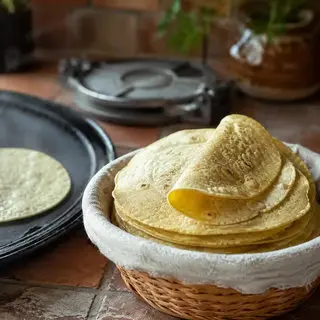
A thin flatbread presses out of corn masa or wheat flour and cooks dry on a comal for less than a minute a side. Corn tortillas reach the table with almost every dish in central and southern Mexico, while the wheat ones are northern. Warm tortillas also work as a utensil, since you tear one and pinch food up with it.
Frijoles Refritos (free-HOH-lays reh-FREE-tohs)
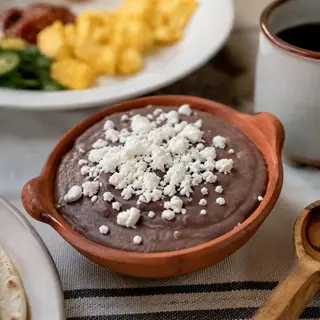
Pinto or black beans boil soft and get mashed. From there they fry in lard until they thicken into a spread. The name means well-fried rather than twice-fried, since the prefix re- strengthens the verb in Spanish instead of repeating it. They go beside eggs at breakfast, inside tortas, and under the toppings on a sope.
Arroz Rojo (ah-ROHS ROH-hoh)
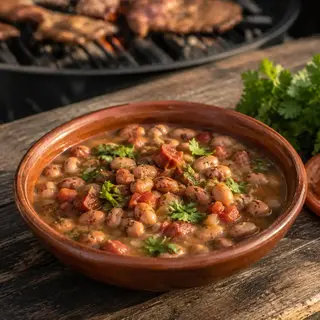
Rice toasts in oil until the grains turn opaque, then simmers in blended tomato, garlic, and onion until the liquid disappears. Mexican cooks call this a sopa seca, a dry soup, and it arrives as a first course before the meat. Peas and diced carrot go in with the tomato.
Frijoles Charros (free-HOH-lays CHAH-rrohs)
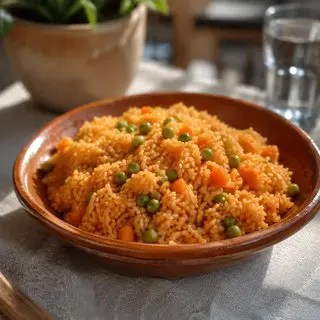
Whole pinto beans stay in their broth, with bacon, chorizo, tomato, onion, and coriander stirred through. The name means cowboy beans, after the charros who worked the cattle ranches of northern Mexico. They arrive in a bowl beside grilled meat, and the broth counts as much as the beans.
Queso Fundido (KEH-soh foon-DEE-doh)
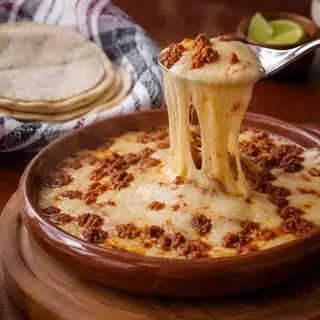
Melted cheese arrives bubbling in a shallow clay dish, with chorizo or strips of roasted poblano stirred in. Chihuahua and Oaxaca cheeses both stretch when they melt, which is what the dish depends on. Straight from the dish it goes into a warm tortilla, because it stiffens as it cools.
Nopales (noh-PAH-lays)
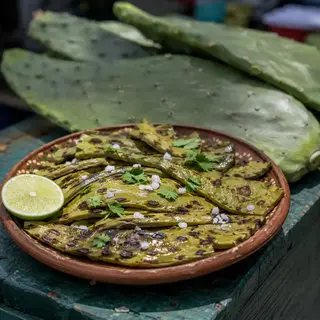
The flat paddles of the prickly pear cactus lose their spines to a knife, then grill or boil until tender. In the mouth they taste close to green beans with a lemon edge, and the texture stays slightly slippery unless the cook grills them hard. Across central Mexico they go into salads, egg dishes, and tacos. Beside courgette, chayote, and tomatillo on the same plate, they count as everyday vegetables rather than exotic ones.
Mexican Breakfast Food Names
Mexican breakfast runs savoury and starts early. Eggs, tortillas, beans, and salsa fill almost every Mexican breakfast plate. Several of the best dishes exist because a cook needed to make yesterday’s tortillas good again.
Chilaquiles (chee-lah-KEE-lays)
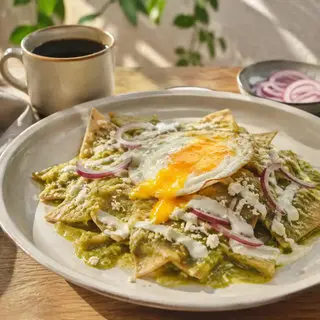
Tortilla triangles fry crisp and then simmer in red or green salsa until they soften part way through. On top go cream, crumbled cheese, raw onion, and a fried egg, and shredded chicken turns the plate into a full meal. The name goes back to the Nahuatl chil-a-quilitl, meaning greens in chilli broth, and the dish began as a way to rescue stale tortillas.
Huevos Rancheros (WEH-vohs ran-CHEH-rohs)
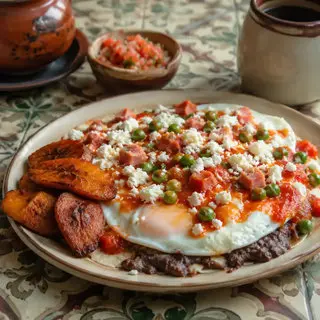
Fried eggs lie over warm corn tortillas under a cooked sauce of tomato, onion, and green chilli. Refried beans go beside them and slices of avocado go on top. The name means ranch-style eggs, after the farm breakfast the dish grew out of.
Huevos Motuleños (WEH-vohs moh-too-LEH-nyohs)
Refried black beans, fried eggs, and a tomato sauce stack on a fried tortilla, then peas, diced ham, crumbled cheese, and fried plantain finish the plate. The dish takes its name from Motul, a town in Yucatán, where a cook created it for a visiting governor. Against the salty ham, the sweet plantain is what separates this from every other egg breakfast in Mexico.
Machaca con Huevo (mah-CHAH-kah kon WEH-voh)
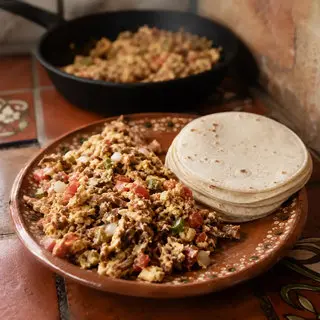
Beef dries in the sun and then gets pounded until it shreds into fibres. Back in the pan, cooks rehydrate those fibres and scramble them with eggs, onion, tomato, and chilli. Sonora and Chihuahua eat it rolled into a wheat flour tortilla for breakfast. Drying the meat began as a way to keep beef through a desert summer, and the taste stayed popular long after refrigeration arrived.
Molletes (moh-YEH-tays)
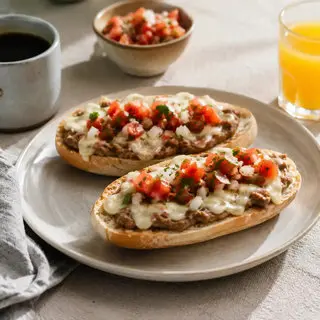
Halves of a bolillo roll take a layer of refried beans and a covering of cheese, then grill until the cheese melts and the bread crisps underneath. A spoon of pico de gallo goes on top at the table. Mexican students eat them at any hour, since a mollete takes five minutes and three ingredients.
Conchas (KOHN-chahs)
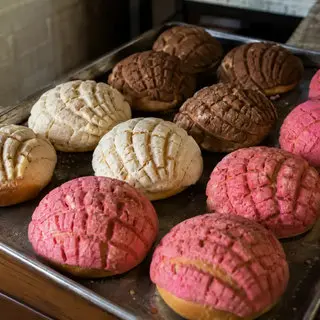
Sugar paste sets in a crackled layer over a soft round bun, scored into the curved lines behind the bread’s name. Bakeries turn out vanilla and chocolate versions by the tray every morning, and Mexico eats them dunked in coffee or in hot chocolate. Pan dulce is the wider name for these sweet breads, and a Mexican panadería sells dozens of shapes beyond this one.
Mexican Soup and Stew Names
Mexican soups do the work of a full meal rather than opening one. Families cook them at the weekend, on cold mornings, and after a late night. Most of them simmer for hours before anybody eats.
Pozole (poh-SOH-lay)
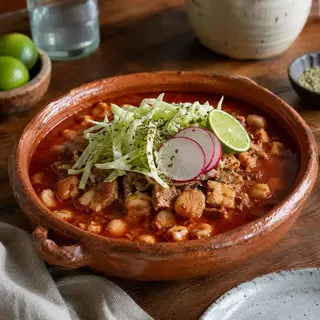
Large corn kernels simmer in limewater until they burst open, then go into a broth with pork or chicken. The bowl arrives with shredded cabbage, radish, oregano, and lime for you to add yourself. Red pozole takes dried chillies, green pozole takes tomatillo and pumpkin seed, and white pozole takes neither. For Independence Day in September, Mexican families cook all three.
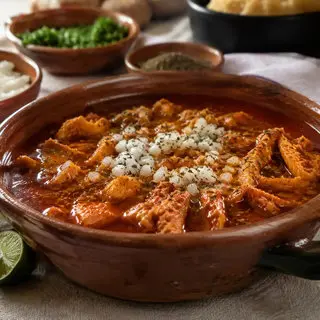
Beef tripe and hominy simmer for most of a day in a red broth of guajillo and ancho chillies. Onion, oregano, and lime go on at the table. Mexican households cook it on Sunday mornings, and many Mexicans eat it to settle a hangover.
Caldo de Res (KAHL-doh day RES)
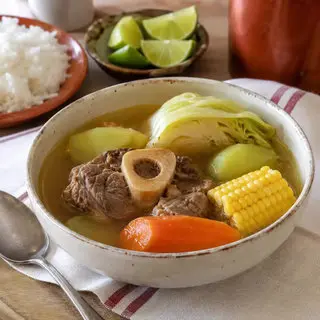
The broth stays unthickened and the vegetables stay in large pieces: whole carrots, chunks of chayote, cabbage wedges, and corn cut across the cob. Beef shank goes in on the bone, since the marrow thickens the broth. You spoon rice into the bowl and squeeze lime over it.
Sopa de Tortilla (SOH-pah day tor-TEE-yah)
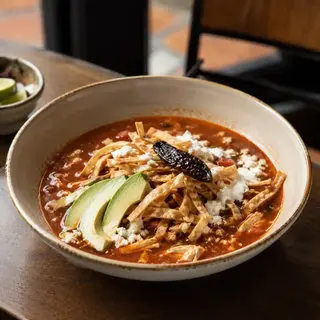
Over strips of fried tortilla pours a tomato and chicken broth, finished with avocado, cream, crumbled cheese, and a dried pasilla chilli. Because the tortilla softens in the broth, cooks add the strips at the last moment. Mexico also calls it sopa azteca.
Sopa de Lima (SOH-pah day LEE-mah)
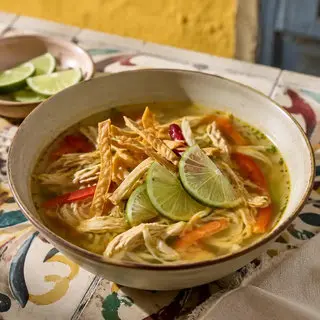
Lima agria, a bitter Yucatán lime that tastes nothing like the common one, sharpens a chicken soup. Shredded chicken, onion, and sweet pepper simmer in the broth, and crisp tortilla strips go on at the end. The citrus edge cuts through the fat, which is why the dish suits the Yucatán heat.
Sopa de Fideo (SOH-pah day fee-DEH-oh)
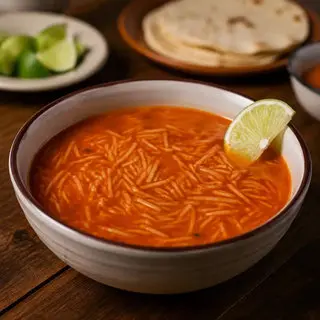
Thin vermicelli toasts in oil until it browns, then simmers in a blended tomato broth with garlic and onion. Toasting the pasta first stops it turning to mush and makes the soup taste nutty. Mexican mothers cook it on weeknights, and most Mexican adults grew up on it.
Mexican Salsa and Sauce Names
The heat in Mexican cooking arrives with the sauce rather than the meat, which is why two or three bowls of salsa reach the table at once. Salsa means sauce in Spanish, so the word alone names nothing until the colour or the chilli follows it.
Mole (MOH-lay)
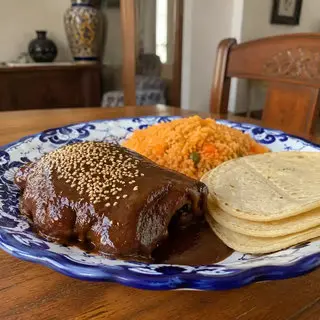
Dried chillies, nuts, seeds, and spices grind together into a thick sauce, with a little bread or tortilla for body. The pot then simmers for hours. The word comes out of the Nahuatl molli, which simply means sauce. Mole poblano from Puebla is the dark one carrying a small amount of chocolate, while Oaxaca cooks seven distinct moles, from the near-black negro to the bright green verde.
Salsa Roja (SAHL-sah ROH-hah)
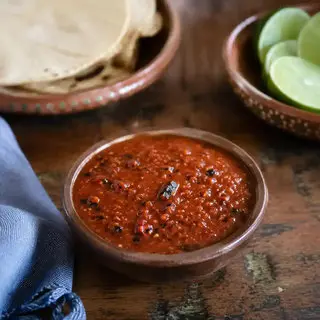
Ripe tomatoes cook with dried red chillies and blend smooth, then reach the table still warm. Guajillo and árbol chillies set the heat level between them. Over eggs, inside chilaquiles, and beside almost any grilled meat, it turns up constantly.
Salsa Verde (SAHL-sah VEHR-day)
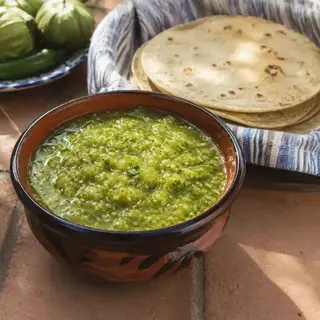
Tomatillos make this one green, small fruit in papery husks that turn tart when boiled or roasted. Serrano chillies, coriander, onion, and lime go in with them, and the result tastes sharper and fresher than the red. Cooks spoon it over pork, chicken, and fried tortillas.
Pico de Gallo (PEE-koh day GAH-yoh)
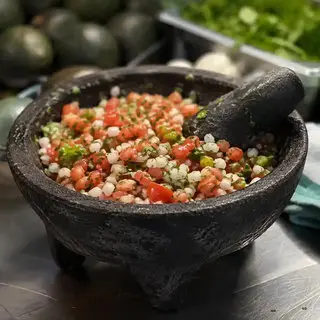
Raw tomato, white onion, serrano chilli, coriander, and lime chop fine and stir together rather than blending. Because it stays uncooked and unblended, the pieces keep their crunch and the liquid stays low. The name means rooster’s beak, and nobody agrees on why.
Salsa Taquera (SAHL-sah tah-KEH-rah)
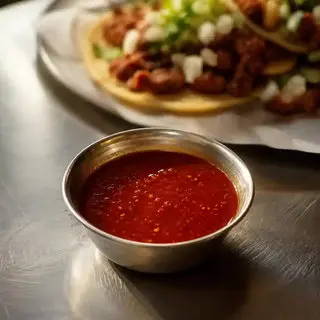
Toasted árbol chillies make the thin, fiery sauce that taquerías keep in squeeze bottles. A little tomato and garlic go in with them. Thin enough to pour rather than spoon, it does what a taco needs. The heat goes well above the everyday red and green sauces.
Salsa Macha (SAHL-sah MAH-chah)
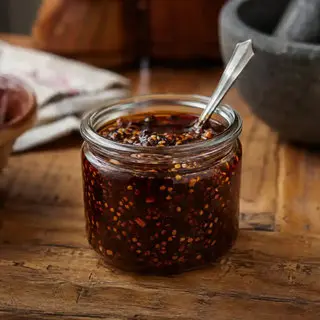
Veracruz fries dried chillies with peanuts, garlic, and sesame seeds, then grinds them coarsely back into the oil. The jar keeps for weeks, since there is no fresh tomato in it to spoil. You spoon it over eggs, grilled meat, or cheese rather than pouring it.
Adobo (ah-DOH-boh)
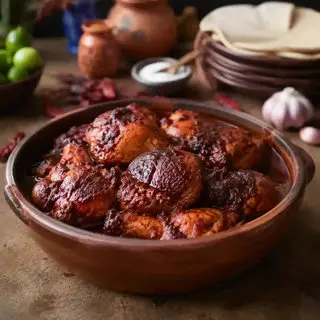
Dried chillies grind with vinegar, garlic, oregano, and cumin into a thick marinade paste, rubbed into pork or chicken hours before cooking. The vinegar tenderises the meat while the chillies colour it deep red. Al pastor, cochinita pibil, and birria all begin with a version of this paste.
Chamoy (chah-MOY)
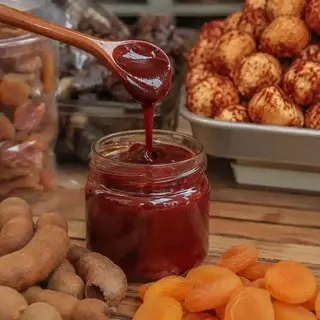
Pickled fruit, chilli, salt, and lime turn into a dark condiment that tastes salty, sour, sweet, and hot at the same time. Street vendors drizzle it over sliced mango, crisps, and ice lollies, and Mexican children grow up on it. The idea arrived with Chinese and Japanese pickled plums and turned into something Mexican.
Mexican Dessert Names and Sweet Breads
Mexican sweets originate in two places. The panadería, or bakery, turns out pan dulce by the tray before dawn, while the home kitchen handles the custards, the syrups, and anything that needs milk and time.
Churros (CHOO-rrohs)
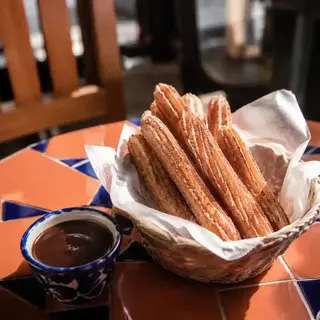
Ridged sticks of choux dough pipe into hot oil, fry until golden, and go straight into cinnamon sugar. The ridges form in the star-shaped nozzle. Those grooves trap the sugar and make the surface crunch. In Mexico they arrive dipped in thick hot chocolate, or filled with cajeta, a caramel made from goat’s milk.
Flan (flahn)
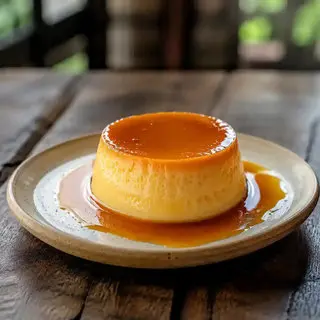
A custard of eggs, milk, and sugar bakes over a layer of caramel, then turns out of the mould so the caramel runs down the sides. Where the Spanish original stops, the Mexican version adds cream cheese or condensed milk, which makes the set denser and richer. It arrives cold, in a single wobbling slice.
Tres Leches (trays LEH-chays)
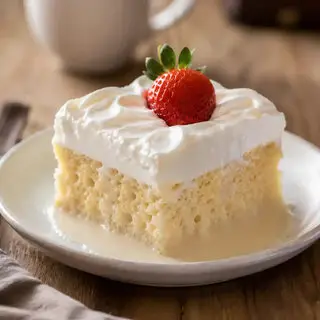
Three milks soak into a light sponge cake: evaporated, condensed, and cream, which is exactly where the name originates. The sponge stays firm enough to absorb the liquid instead of collapsing into it, and whipped cream goes over the top. Mexican bakeries sell it by the slice for birthdays.
Arroz con Leche (ah-ROHS kon LEH-chay)
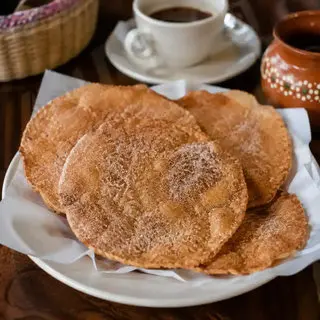
Rice cooks slowly in milk with a stick of cinnamon, sugar, and vanilla until the grains soften and the milk thickens around them. Raisins go in near the end. Mexican homes serve it warm in winter and chilled in summer, and street vendors sell it in cups.
Buñuelos (boo-NYWEH-lohs)
Discs of dough stretch paper thin, then fry flat until they blister and crack. Over the top goes a dusting of cinnamon sugar. Some regions soak them instead in a syrup of piloncillo, the unrefined cane sugar sold in hard cones. Mexican families make them at Christmas, and the discs come out wider than a plate.
Paletas (pah-LEH-tahs)
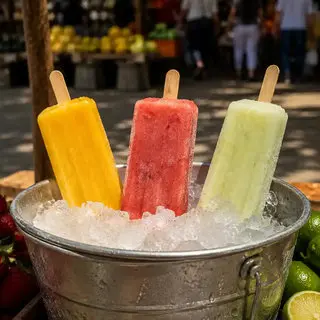
Real fruit, milk, or cream freezes into these ice lollies rather than syrup, so a mango paleta shows visible pieces of the fruit. The town of Tocumbo in Michoacán built an industry on them, and paleterías across Mexico still take their name from that town. Common flavours are mango with chilli, hibiscus, rice pudding, and cucumber with lime.
Pan de Muerto (pahn day MWEHR-toh)
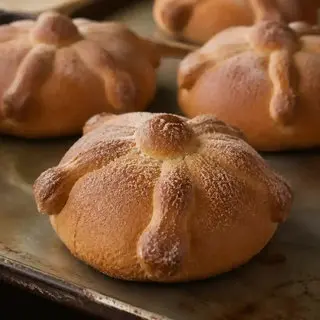
Orange blossom scents this round sweet bread, and strips of dough shaped like bones lie across the top. Bakeries sell it through late October and early November for the Day of the Dead, and families place a loaf on the altar for the person they are remembering. A dusting of sugar finishes it.
Capirotada (kah-pee-roh-TAH-dah)
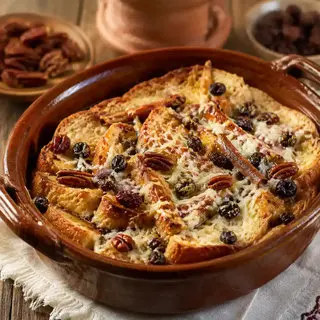
Toasted bolillo slices layer with a piloncillo syrup, cheese, raisins, and nuts, then bake until the syrup soaks all the way through. Mexican families cook it during Lent, and each layer means something tied to the season. Few other bread puddings put cheese against a sweet syrup.
Mexican Food and Drink Names
Mexican kitchens and market stalls pour cold fruit waters for the heat, warm masa and chocolate drinks for cold mornings, and beer for everything in between.
Agua Fresca (AH-gwah FRES-kah)
Fruit, flower, or grain blends with water and a little sugar into a light drink, sold by the jug in every Mexican market. The name means fresh water, and the jars line up in a row so you choose by colour. Watermelon, cucumber with lime, and cantaloupe fill most of them.
Horchata (or-CHAH-tah)
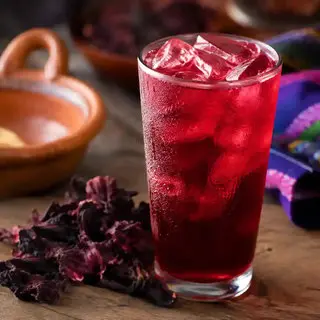
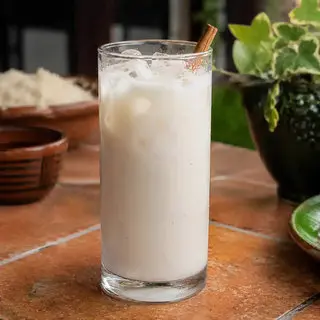
Rice soaks with cinnamon, blends, strains, and sweetens into a milky white drink. Mexican versions add milk or condensed milk, which makes them creamier than the Spanish original. It arrives over ice, and it cools the mouth after a hot salsa.
Jamaica (hah-MY-kah)
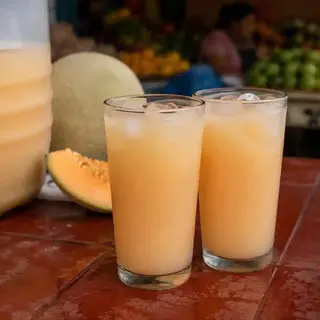
Dried hibiscus flowers steep in hot water and then strain. Sweetened and chilled, the liquid turns a deep ruby. The taste is tart and sharp, close to cranberry. Mexican cooks also chop the drained flowers and fold them into tacos.
Tamarindo (tah-mah-REEN-doh)
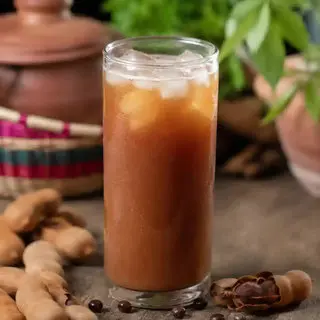
Tamarind pods boil until the sticky pulp loosens, and the strained brown liquid sweetens into something sour and slightly smoky at once. It joins jamaica and horchata as the third of the classic market waters. At the market it comes ladled from the same row of glass jars.
Atole (ah-TOH-lay)
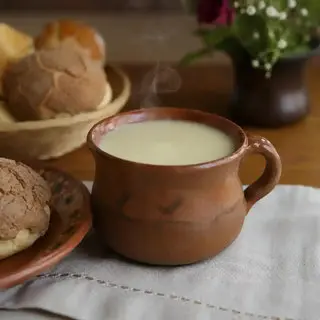
Masa thickens a warm drink to the texture of thin porridge, flavoured with cinnamon, vanilla, or fruit. Mexican families drink it with tamales at breakfast and on cold December mornings. The Aztecs drank a version of it long before the Spanish arrived.
Champurrado (cham-poo-RRAH-doh)
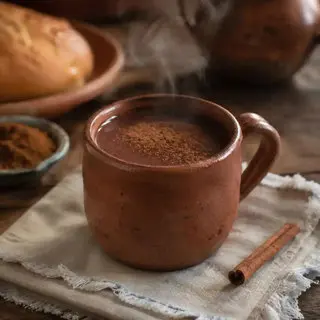
Dark chocolate whisks through atole until it thickens enough to coat a spoon and hold a churro upright. The masa thickens it in a way that plain hot chocolate never manages. Street vendors sell it from steel urns on winter mornings.
Mexican Hot Chocolate
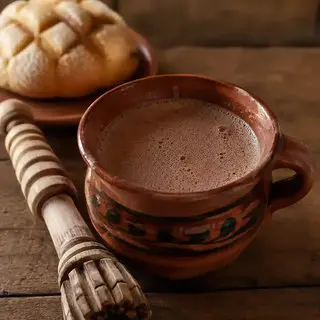
Tablets of coarse chocolate grind with cinnamon and sugar, then whisk into hot milk or water with a wooden molinillo until the surface froths. On the tongue the grain of the sugar stays slightly rough, which separates it from smooth European chocolate. Mexican cooks whisk it for that froth, and the molinillo exists to produce it.
Tejuino (teh-HWEE-noh)

Masa ferments briefly, then mixes with piloncillo syrup, lime juice, and salt and arrives cold under a scoop of lime sorbet. The fermentation stays short, so the drink stays barely alcoholic and tastes sour rather than sweet. Jalisco sells it from carts, and it works as a drink and a cooler at once.
Café de Olla (kah-FEH day OH-yah)
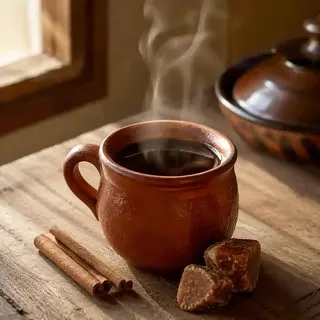
Coffee brews in an unglazed clay pot with a stick of cinnamon and a piece of piloncillo. The clay and the unrefined sugar together make it dark and faintly smoky, which a modern machine cannot reproduce. Mexican homes serve it in small clay cups.
Michelada (mee-cheh-LAH-dah)
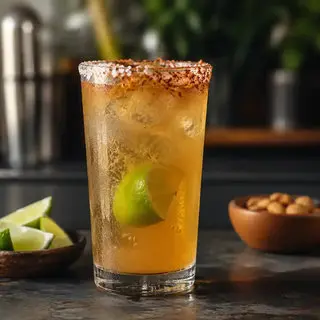
Light beer mixes with lime juice, salt, chilli, and savoury sauces, poured into a glass rimmed with chilli salt. Some versions add clamato, a tomato and clam juice, which turns the drink red and thicker. It arrives at Mexican brunch tables and on beaches all afternoon.
Which Mexican Foods Are Not From Mexico
Several dishes on an American Mexican menu were created on the border rather than in Mexico. Both traditions are real and both are worth eating, though telling them apart saves confusion when you order in Mexico and the thing you expected never arrives.
| Mexican | Tex-Mex or border-born |
|---|---|
| Soft corn tortilla tacos | Hard-shell tacos with grated cheddar |
| Mole poblano | Chilli con carne |
| Cochinita pibil | Chimichanga |
| Tlayudas and sopes | Yellow cheese dip |
| Queso fundido with chorizo | Fajitas, developed on Texas ranches |
Nachos count as both. Ignacio Anaya invented them in 1943 on the Mexican side of the border, and Texas turned the three-ingredient original into the loaded version sold today.
Related:
Mexican Food Names and Their Meanings
Most Mexican food names describe the thing rather than decorate it. Some translate straight out of Spanish, and others go back to Nahuatl, where the words for corn and avocado start.
| Mexican food name | What the name means |
|---|---|
| Burrito | Little donkey, after the rolled shape |
| Carnitas | Little meats |
| Taquito | Little taco |
| Flauta | Flute, after the long rolled shape |
| Gordita | Little fat one, after the puffed dough |
| Huarache | Sandal, after the flat oval shape |
| Chalupa | Little boat |
| Cochinita pibil | Baby pig, buried |
| Torta ahogada | Drowned sandwich |
| Antojitos | Little cravings |
| Chilaquiles | Greens in chilli broth, from Nahuatl chil-a-quilitl |
| Esquites | Toasted corn, from Nahuatl izquitl |
| Elote | Fresh corn cob, from Nahuatl elotl |
| Guacamole | Avocado sauce, from Nahuatl ahuacamolli |
| Mole | Sauce, from Nahuatl molli |
| Frijoles charros | Cowboy beans |
| Tres leches | Three milks |
| Pico de gallo | Rooster’s beak |
| Tostada | Toasted |
| Pan de muerto | Bread of the dead |
| Concha | Shell, after the scored sugar top |
| Agua fresca | Fresh water |
| Café de olla | Coffee from the pot |
| Huevos rancheros | Ranch-style eggs |
FAQs
The best-known Mexican food names are tacos, burritos, enchiladas, tamales, quesadillas, guacamole, and churros. Inside Mexico the list shifts, because pozole, mole, birria, and cochinita pibil rank just as high there. Foreign menus print the first set and treat the second as regional cooking.
The name that means little donkey is burrito, taken from the Spanish burro. Because the rolled shape resembles the packs a donkey once carried, Spanish speakers attached the word to the tortilla. The dish itself originates in northern Mexico, particularly Chihuahua, where wheat flour tortillas are the everyday kind.
Several dishes sold as Mexican were created in the United States. The most common of them are chilli con carne, chimichangas, hard-shell tacos, and yellow cheese dip. On the border, fajitas came out of Texas ranch cooking, so they count as both. Ceviche works the other way, because Mexico eats it widely while Peru created it.
Three ingredients form the base of traditional Mexican cooking: corn, beans, and chillies. All three grew in Mesoamerica long before the Spanish arrived. From the same soil came tomatoes, avocado, squash, vanilla, and coriander. Cheese, pork, beef, rice, and wheat arrived later with the Spanish.
Only the word Mexican takes a capital, since it derives from the proper noun Mexico. The dish names themselves stay lowercase in running English text. You write a taco, some mole, and a bowl of pozole. Capitalise a dish name only at the start of a sentence or on a menu heading.
The celebration dishes across most of Mexico are tamales, mole, and pozole. In Mexican homes they come out in batches large enough to feed a street. Pan de muerto arrives for the Day of the Dead in early November. Cooks serve chiles en nogada during the September independence season, and bacalao at Christmas.
You May Also Like