Many English learners confuse altogether and all together because they sound the same, but they have different meanings and uses. Altogether means “completely” or “entirely,” while all together refers to a group of things or people being in the same place or doing something at the same time. Learning the difference will help you use these words correctly in writing and speech. Improve your vocabulary by exploring more Confused Words.
Meanings of Altogether and All Together
Altogether
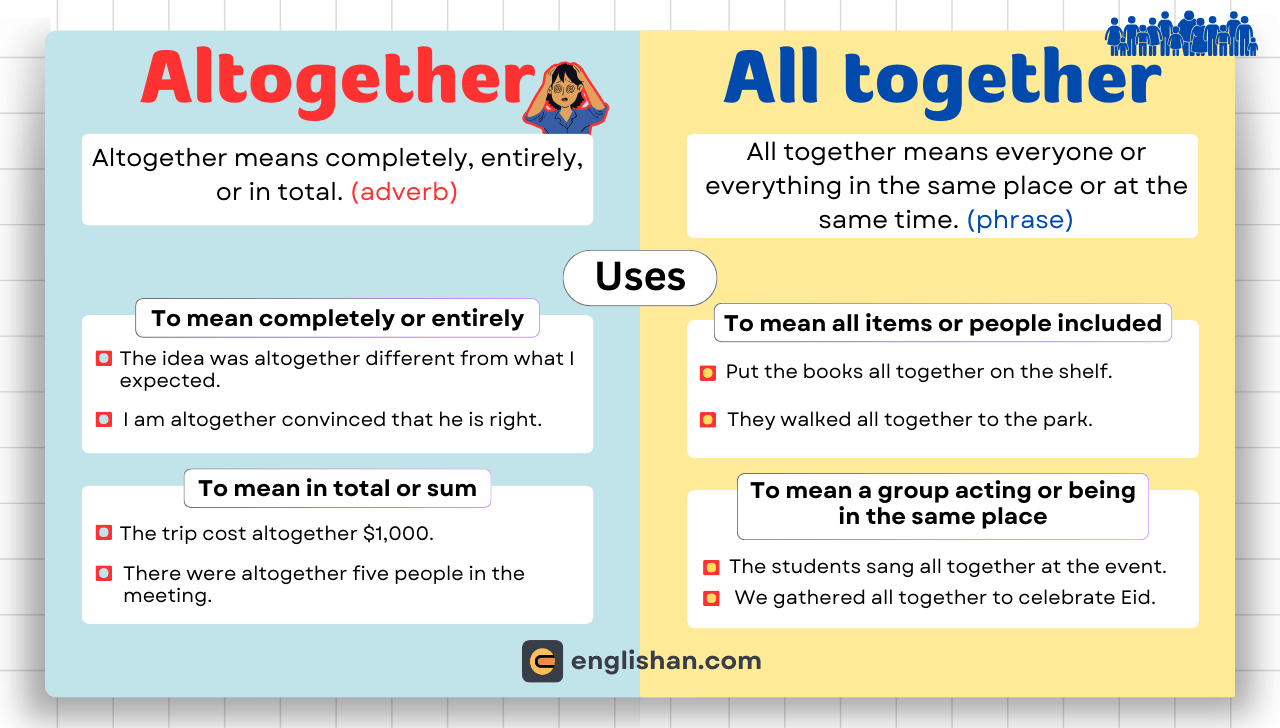
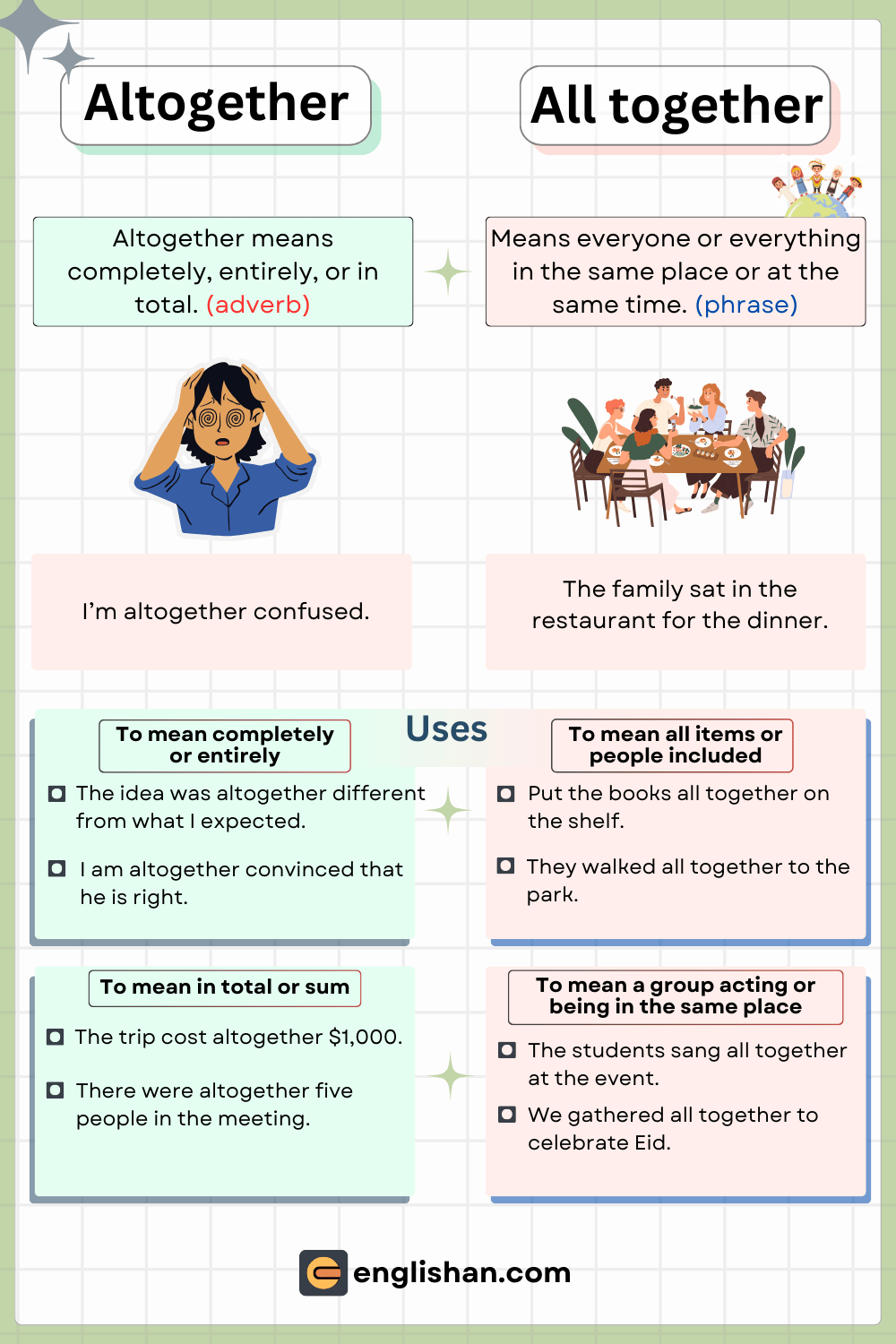
Altogether (adverb) means completely, entirely, or in total.
Example Meaning:
- The cost of the books was altogether $50. (In total)
All Together
All together (phrase) means everyone or everything in the same place or at the same time.
Example Meaning:
- The family sat all together at the dinner table. (Everyone in the same place)
Differences Between Altogether and All Together
| Aspect | Altogether | All Together |
|---|---|---|
| Meaning | Completely, entirely, or in total | A group doing something together |
| Usage | Used to describe completeness | Refers to collective action or presence |
| Part of Speech | Adverb | Phrase (adverbial) |
| Example | The project is altogether complete. | We went to the mosque all together. |
| Memory Trick | Think of “entirely” when you see altogether | Think of “everyone together” when you see all together |
Usage of Altogether
1. To mean completely or entirely
- The idea was altogether different from what I expected.
- I am altogether convinced that he is right.
2. To mean in total or sum
- The trip cost altogether $1,000.
- There were altogether five people in the meeting.
Usage of All Together
1. To mean a group acting or being in the same place
- The students sang all together at the event.
- We gathered all together to celebrate Eid.
2. To mean all items or people included
- Put the books all together on the shelf.
- They walked all together to the park.
Formal and Informal Uses of Altogether and All Together
| Use | Altogether Example | All Together Example |
| Formal | The proposal was altogether unacceptable. | The guests arrived all together at the wedding. |
| Informal | I am altogether sure about my decision. | Let’s go shopping all together this weekend! |
FAQs
1. How do I remember the difference between altogether and all together?
Think of altogether as “completely” and all together as “everyone or everything in one place.” If replacing it with “completely” makes sense, use altogether.
2. Can “altogether” and “all together” be used interchangeably?
No. Altogether is an adverb meaning “completely,” while all together refers to a group being together. Using one instead of the other changes the meaning.
3. What is an example sentence using both words?
The family was all together at the park, and altogether, they had a great time.
You May Also Like