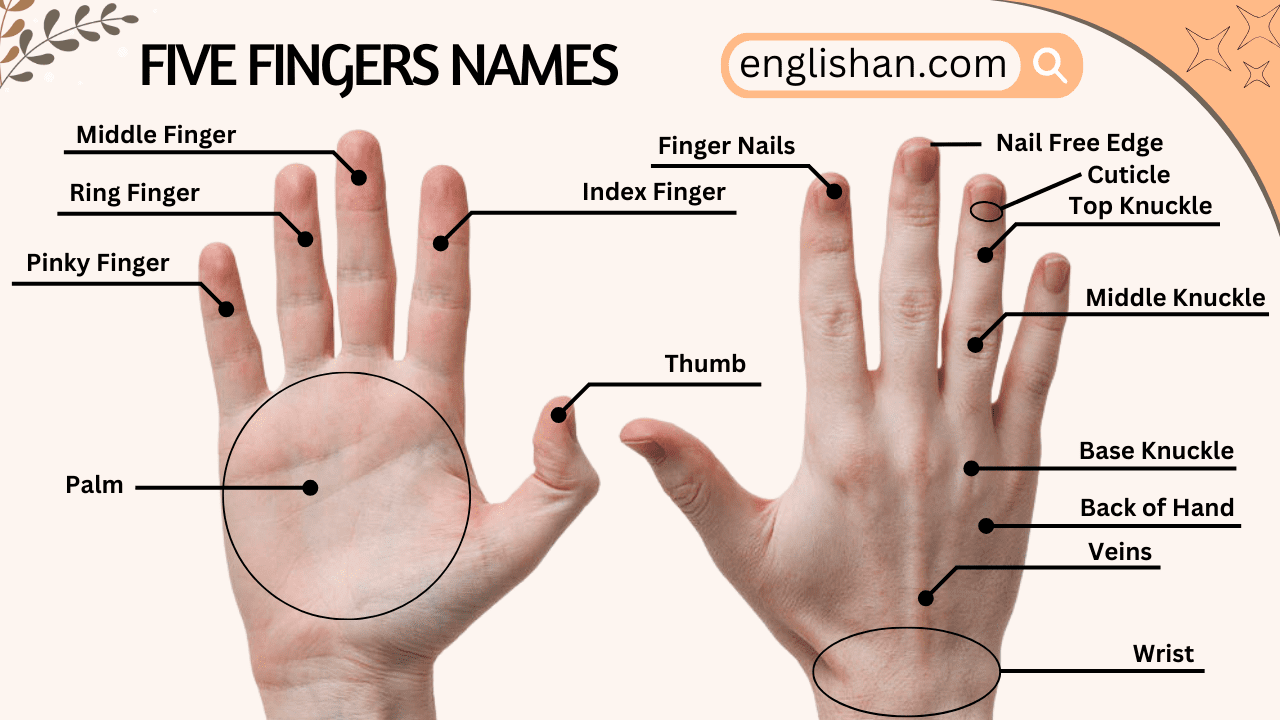
Four of the five hand finger names in English still explain themselves. The ring finger takes its name from what people wear on it, and the middle finger from where it comes in the row.
The thumb is the exception. Its name meant thick in Old English, and sound change has since left a word that no longer shows its meaning.
Each of the five fingers names has its own reason like these, and the words themselves are drawn from Old English, Latin, and Dutch.
Finger Names Of The Hand In Order
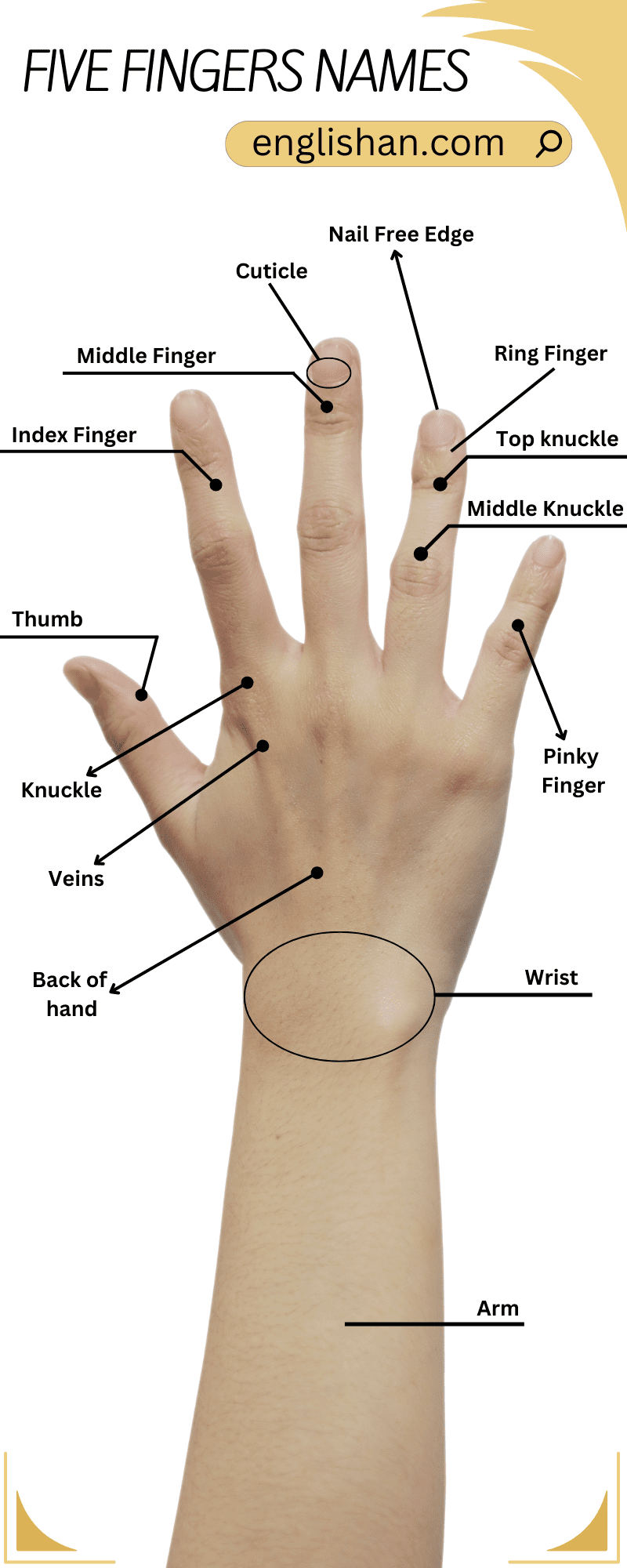
Thumb

The thumb is the short, thick finger on the inner edge of your hand. It is the only opposable one, so it turns to meet the tip of each of the other four. That single movement is what lets you grip a pen, turn a key, or hold a cup by the handle.
Two bones form the thumb, while every other finger contains three, and that missing bone is why the thumb bends in one place rather than two. The name derives from Old English þūma, built on a root meaning to swell, so this finger was named for its thickness centuries before anyone measured it.
Index Finger
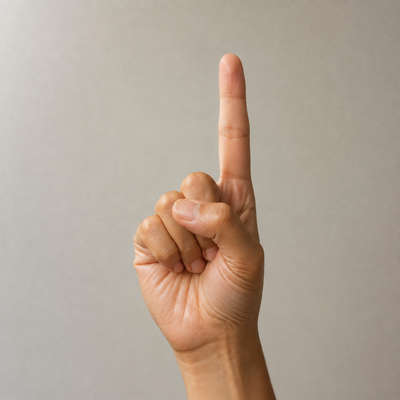
The index finger comes next to the thumb and does most of your pointing. You press buttons with it, tap a screen with it, and raise it in class when you want to ask something.
The word index is borrowed from Latin, where it named the finger that points out, so this name states the job rather than the position. Two older names still appear in English writing: forefinger, because it comes first among the four fingers proper, and trigger finger, from shooting.
Middle Finger
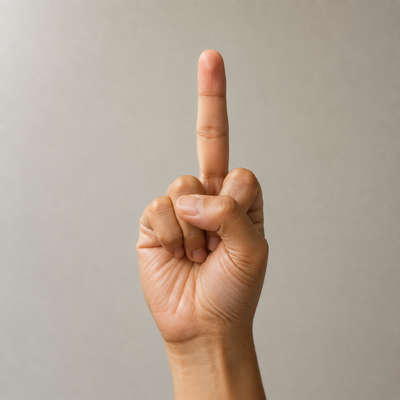
At the centre of the hand, the middle finger reaches further than any of the other four. That extra length means it takes most of the load when you grip a handle or carry a heavy bag by the strap.
The name describes nothing more than the position, and the Latin term digitus medius says exactly the same. Learners need one warning with this name: across most English-speaking countries, raising this finger on its own is a rude gesture, so the word is safe and the gesture is not.
Ring Finger
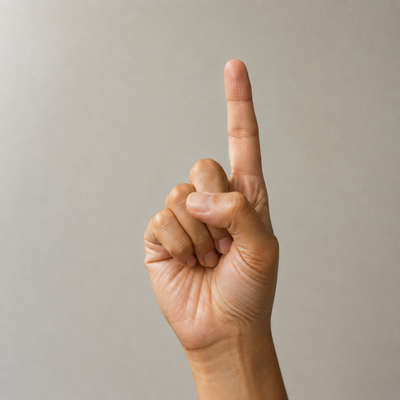
The ring finger goes between the middle finger and the little finger. Wedding and engagement rings go on this finger across most of Europe and the Americas, which is where the English name originates.
The custom began with an old belief in a vena amoris, a vein said to run from this finger straight to the heart, which later anatomical study disproved. You also cannot extend this finger fully on its own, because tendons connect it to the two fingers beside it, and that is why it feels stiff when you try.
Little Finger
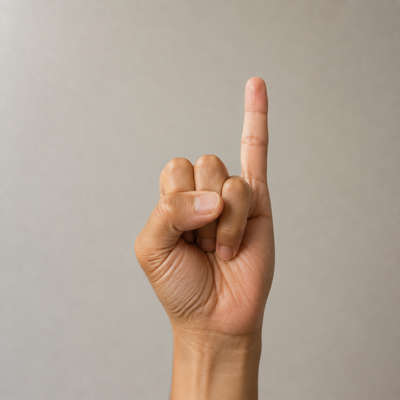
Furthest from the thumb, the little finger is the smallest of the five. Small as it is, it does real work in your grip, which is why a cut on it makes carrying a shopping bag awkward for days.
Most speakers in the United States call it the pinky. That name is borrowed from the Dutch word pink, meaning little finger, and the earliest English record of it appears in Scotland in 1808.
Beyond the fingers themselves, the palm, knuckles, wrist, and fingernails each take a name of their own, listed under hand parts names.
Other Names For Each Finger
Most of the fingers take more than one name in English, and medical writing uses a Latin set alongside the everyday one. You will meet the Latin terms on a hospital form or in an anatomy class rather than in conversation.
| Finger | Other English names | Latin name |
|---|---|---|
| Thumb | First digit, pollex | Digitus primus manus |
| Index finger | Pointer finger, forefinger, trigger finger, second digit | Digitus secundus manus |
| Middle finger | Long finger, tall finger, third digit | Digitus medius |
| Ring finger | Fourth finger, fourth digit | Digitus annularis |
| Little finger | Pinky, baby finger, fifth digit | Digitus minimus manus |
The root explains two of those Latin words. Pollex derives from a verb meaning to be strong, which matches the thumb’s job. Annularis is built on the word for a ring.
Finger Names With Numbers
Numbering the fingers produces a real trap, because two systems are in use and they disagree about where to start. Medicine and piano teaching count the thumb as the first finger. Everyday English skips the thumb and gives that title to the index finger.
| Finger | Five-finger system | Four-finger system |
|---|---|---|
| Thumb | First finger | Not counted |
| Index finger | Second finger | First finger |
| Middle finger | Third finger | Second finger |
| Ring finger | Fourth finger | Third finger |
| Little finger | Fifth finger | Fourth finger |
Work out which system applies by asking who is speaking. A doctor, a nurse, or a piano teacher who says fourth finger means the ring finger, while a friend who says first finger almost always means the one you point with. One label never shifts: fifth finger means the little finger, because only the five-finger system uses that number at all.
Is The Thumb A Finger
Yes, the thumb counts as one of the hand’s five digits in anatomy, and it takes the number one in that set. Native speakers still say four fingers and a thumb, though, and they are not making a mistake.
Real structural difference produces that phrase, not habit. Your thumb contains two bones where the other four contain three. It also joins the hand at a saddle-shaped joint that swivels, so it faces the other fingers instead of lining up beside them.
That difference is enough for ordinary speech to treat the thumb as its own category, while anatomy keeps counting it as digit one.
Five Fingers Names In Islam
The names people search for under this question are the ordinary Arabic ones, and Arabic speakers of every faith use the same five words. Islam itself gives the fingers no separate religious names.
| Finger | Arabic name | What the Arabic word means |
|---|---|---|
| Thumb | Ibhām (إبهام) | The thumb |
| Index finger | Sabbāba (سبابة) | The one that points |
| Middle finger | Wusṭā (وسطى) | The middle one |
| Ring finger | Binṣir (بنصر) | The ring finger |
| Little finger | Khinṣir (خنصر) | The small one |
Worshippers raise the index finger during the tashahhud, the seated part of the prayer, and that raised finger indicates the oneness of God. This is why sabbāba is the finger name you meet most often in a religious context.
Sentences With Finger Names
You will recognise these five names long before you produce them without thinking. Work through the sentences aloud, and swap the nouns for words from your own day.
Thumb:
- I pressed the button with my thumb.
- She gave me a thumbs-up from across the room.
- The baby gripped my thumb and would not let go.
Index finger:
- He pointed at the map with his index finger.
- Tap the screen with your index finger to open it.
- My index finger still hurts from that paper cut.
Middle finger:
- The middle finger is longer than the other four.
- She pressed the key with her middle finger.
- He bent his middle finger back catching the ball.
Ring finger:
- She wore a gold band on her ring finger.
- His ring finger swelled up in the heat.
- The jeweller measured her ring finger before the wedding.
Little finger:
- We hooked little fingers and promised.
- My little finger aches after a long day of typing.
- The child raised her little finger while drinking her tea.
Common Finger Idioms
A long run of English expressions is built on finger names, and most of them mean nothing like their literal words. You will meet these twelve in ordinary conversation, so learn the meaning rather than the literal words.
- Thumbs up: approval or agreement, given by gesture or by word.
- Under someone’s thumb: completely controlled by that person.
- All thumbs: clumsy with your hands, said about yourself more often than about others.
- Rule of thumb: a rough guide drawn from experience rather than exact measurement.
- Stick out like a sore thumb: obviously out of place in a group or setting.
- Twiddle your thumbs: wait around with nothing to do.
- Point the finger at someone: blame that person publicly.
- Lift a finger: make even the smallest effort, almost always used in the negative.
- Keep your fingers crossed: hope for a good result you cannot control.
- Slip through your fingers: lose something you very nearly had.
- Work your fingers to the bone: work extremely hard over a long stretch.
- Pinky promise: a promise sealed by linking little fingers, mostly between children.
Several of these also work as gestures rather than words, and the hand emojis mean the same on a phone screen.
FAQs
The five names are thumb, index finger, middle finger, ring finger, and little finger. They run in that order from the inner edge of the hand outward. Both hands use the same five names.
Islam assigns no separate religious names to the fingers. Arabic speakers use ibhām for the thumb, sabbāba for the index finger, wusṭā for the middle finger, binṣir for the ring finger, and khinṣir for the little finger. The index finger is the one raised during the tashahhud in prayer.
Yes, anatomy counts the thumb as the first of the hand’s five digits. Everyday English treats it separately, which produces the phrase four fingers and a thumb. The difference is structural, since the thumb contains two bones where the others contain three.
The answer depends on who is speaking. In medicine and in piano fingering the first finger is the thumb, while in ordinary English it is the index finger. The fifth finger means the little finger in either case.
Having five digits on a hand or a foot is called pentadactyly. Humans share that pattern with most other land vertebrates.
A finger beyond the usual five is called a supernumerary digit, and being born with one is called polydactyly. The extra digit most often forms beside the little finger, which doctors call postaxial polydactyly. Polydactyly is the most common congenital hand difference.
The name is borrowed from the Dutch word pink, which means little finger. The earliest English record of it appears in Scotland in 1808, and it remains the everyday term in American English.
Yes, in origin. The word finger grew from the same Indo-European root that produced five, so the number is built into the name of the body part.
You May Also Like
- Parts of Foot
- Anatomy of Foot
- Names of Human Body Parts
- Body Parts Names For Kids
- Body Parts Worksheets