n English, we have Countable and Uncountable Nouns. This means some things we can count like apples, and some we cannot, like milk. This helps us talk and write more clearly.
Countable nouns refer to individual items that can be counted as separate units (e.g., “books,” “chairs”). Uncountable nouns are substances, concepts, or entities that are treated as a whole and cannot be counted as discrete units (e.g., “water,” “knowledge”). In this article we will learn countable and uncountable nouns with examples.
Countable and Uncountable Nouns
Countable Nouns
Countable nouns are nouns that can be counted and thus have plurals.
Examples:
| Category | Countable Nouns |
|---|---|
| Animals | Dogs, Cats, Birds, Horses |
| Fruits | Apples, Bananas, Oranges |
| Vehicles | Cars, Bicycles, Trucks |
| People | Students, Teachers, Doctors |
| Food | Burgers, Pizzas, Sandwiches |
| Drinks | Coffees, Teas, Sodas |
| Electronics | Laptops, Smartphones, TVs |
| Furniture | Chairs, Tables, Sofas |
| Books | Novels, Textbooks, Comics |
| Clothing | Shirts, Dresses, Shoes |
| Toys | Dolls, Action Figures, Balls |
| Buildings | Houses, Apartments, Offices |
| Tools | Hammers, Screwdrivers, Saws |
| Instruments | Guitars, Pianos, Violins |
| Coins | Pennies, Quarters, Dollars |
| Plants | Trees, Flowers, Shrubs |
| Languages | English, Spanish, French |
| Countries | USA, Canada, Australia |
| Cities | New York, Paris, Tokyo |
| Jobs | Engineers, Artists, Nurses |
| Movies | Action Films, Comedies, Dramas |
| Music | Songs, Albums, Concerts |
| Computers | Desktops, Laptops, Tablets |
| Desserts | Cakes, Ice Creams, Cookies |
| Sports | Tennis, Football, Swimming |
| Games | Board Games, Video Games |
| Insects | Ants, Bees, Butterflies |
| Seasons | Spring, Summer, Autumn |
| Shapes | Circles, Squares, Triangles |
| Planets | Earth, Mars, Venus |
| Vehicles | Motorcycles, Scooters, Trains |
| Occupations | Lawyers, Firefighters, Chefs |
| Appliances | Refrigerators, Microwaves, Blenders |
| Beverages | Juices, Smoothies, Lemonades |
| Holidays | Christmas, Halloween, Easter |
| Flowers | Roses, Tulips, Daisies |
| Containers | Boxes, Bottles, Jars |
| Colors | Reds, Blues, Greens |
| Buildings | Skyscrapers, Cottages, Warehouses |
| Mountains | Everest, Kilimanjaro, Rockies |
| Rivers | Nile, Amazon, Mississippi |
| Hobbies | Painting, Photography, Fishing |
| Weapons | Guns, Knives, Swords |
| Shapes | Circles, Squares, Triangles |
| Sweets | Chocolates, Candies, Gummies |
| Vehicles | Submarines, Helicopters, Balloons |
| Dinosaurs | Tyrannosaurus, Brachiosaurus, Stegosaurus |
Uncountable Nouns
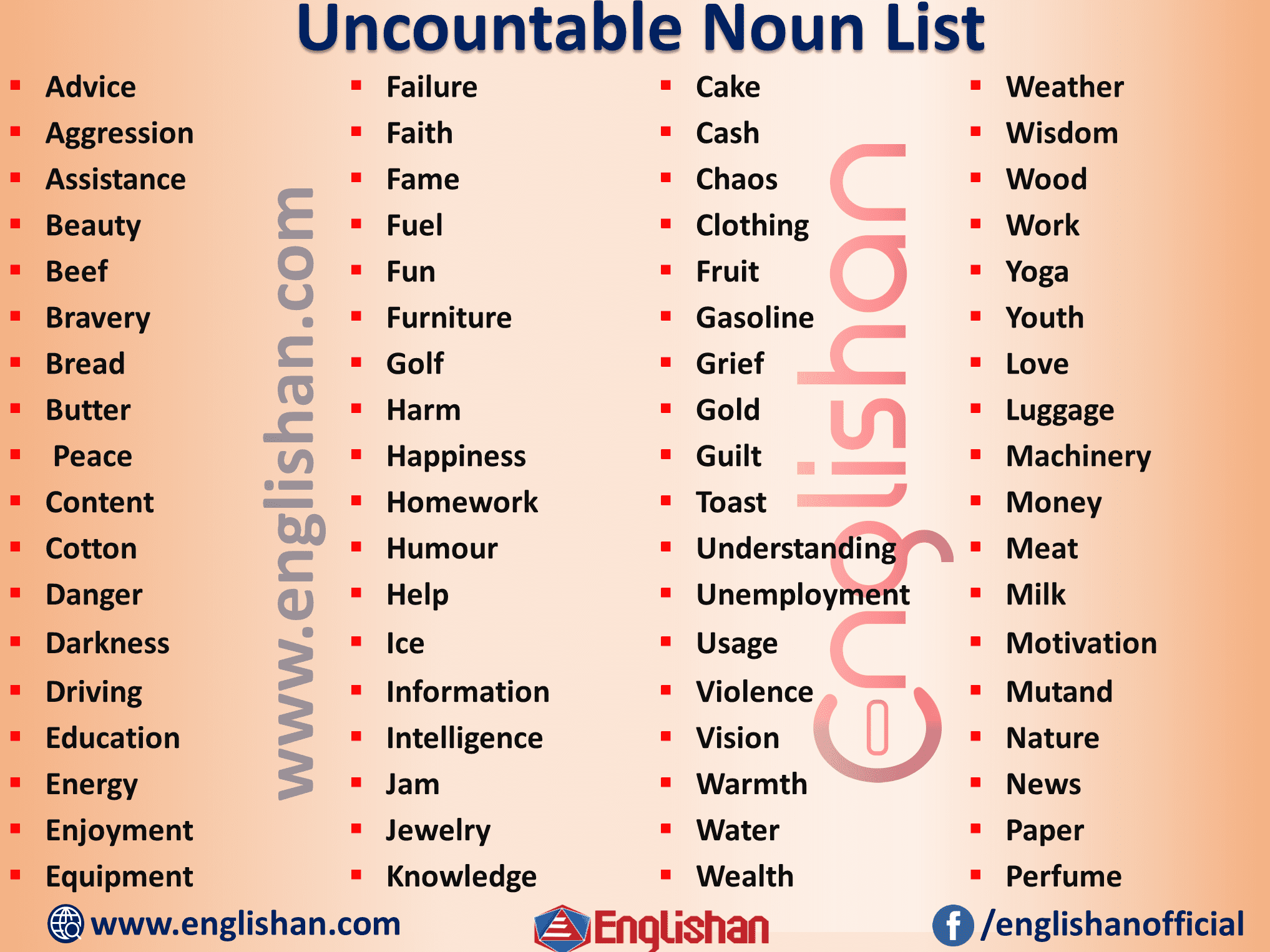
Uncountable nouns are nouns that cannot be counted and thus have no plurals.
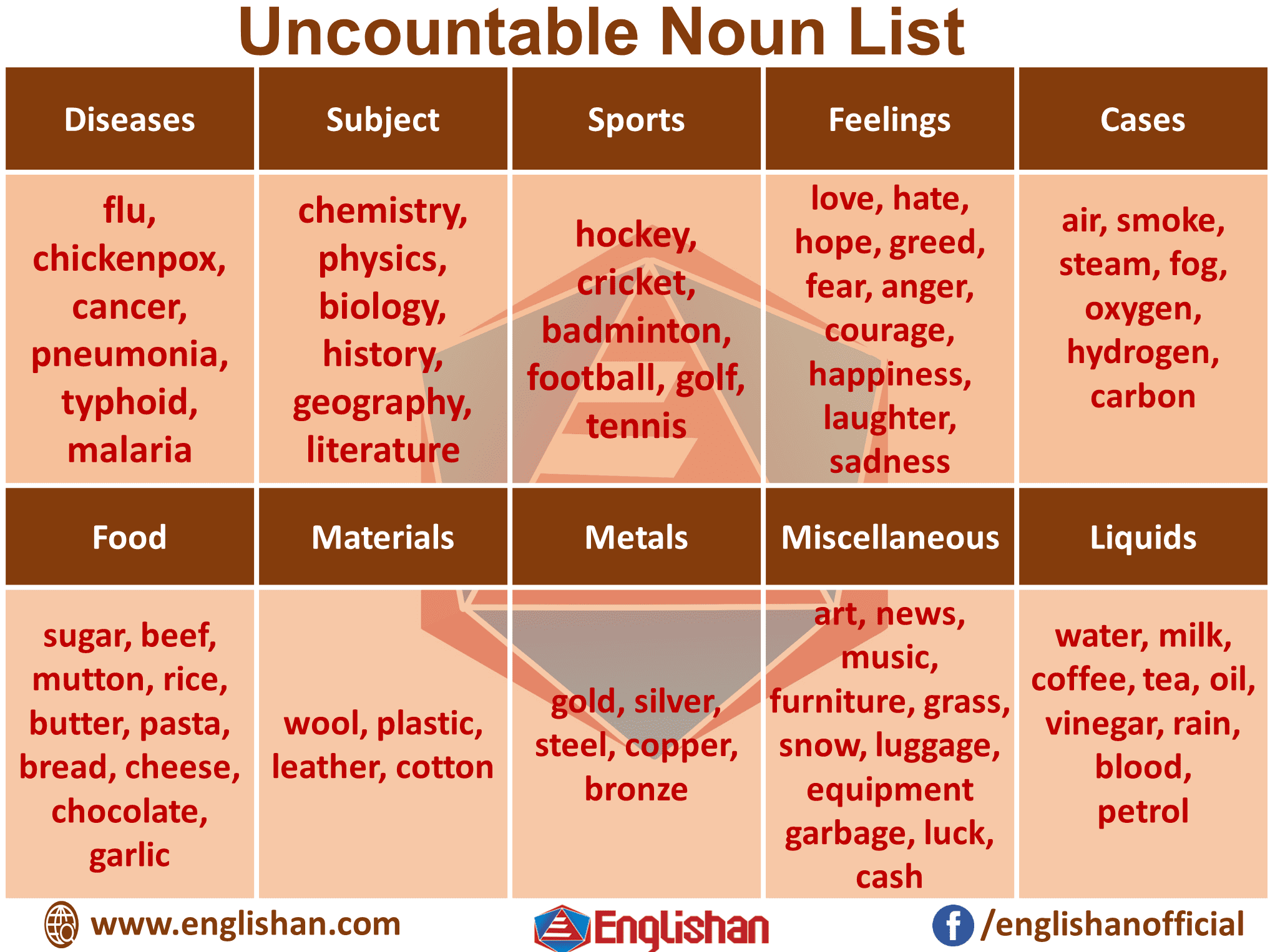
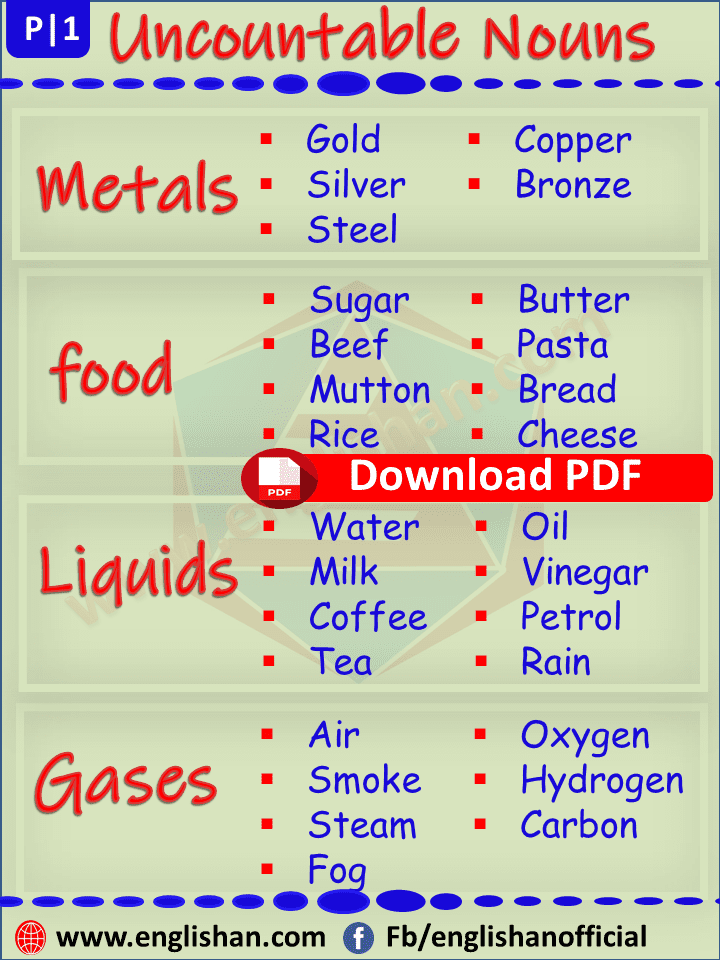
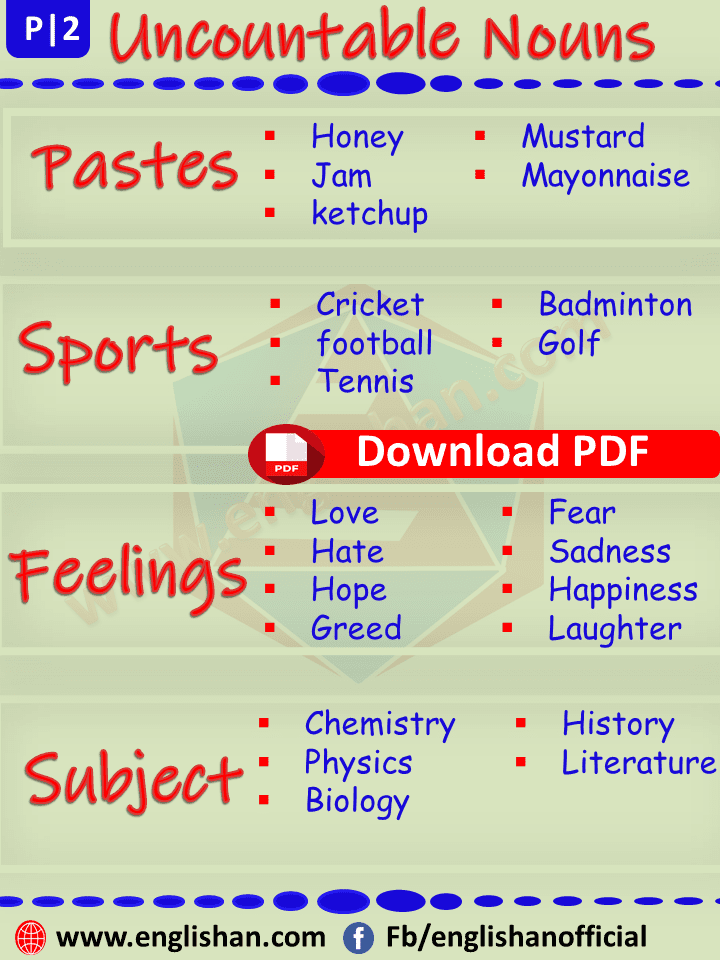
Certain materials, metals, foods, liquids, gases, powders, pastes, sports, feelings, subjects and diseases, etc. are considered to be uncountable nouns.
| Category | Uncountable Noun Examples |
|---|---|
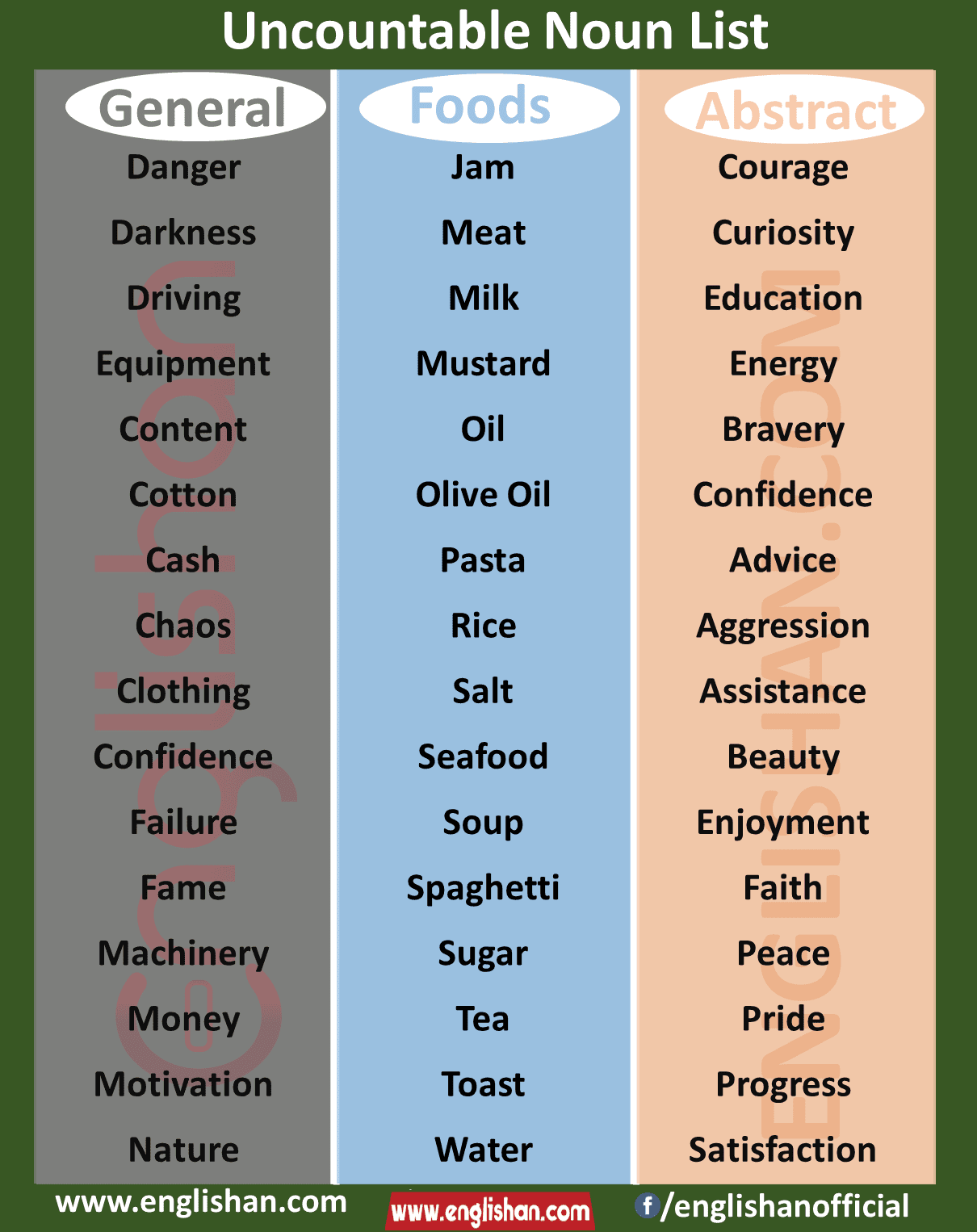
| Food and Drinks | Water, Bread, Cheese, Coffee, Milk, Sugar, Butter, Tea, Rice, Chocolate, Juice, Pasta, Honey, Salt, Vinegar, Oil, Wine, Beer, Meat, Soup |
| Abstract Concepts | Love, Happiness, Knowledge, Wisdom, Beauty, Courage, Freedom, Information, Education, Music, Time, Justice, Patience, Peace, Hope, Trust, Faith |
| Materials | Wood, Plastic, Glass, Steel, Gold, Silver, Paper, Leather, Cotton, Wool, Silk, Fabric, Rubber, Clay, Concrete, Stone, Metal |
| Substances | Air, Oxygen, Gas, Water, Ice, Steam, Dust, Sand, Smoke, Mud, Oil, Sugar, Salt, Salt, Sulfur, Flour, Glue, Lava, Cement |
| Nature | Rain, Sunshine, Lightning, Thunder, Wind, Snow, Fog, Hail, Grass, Sand, Soil, Wildlife, Space, Oxygen, Atmosphere, Wilderness, Wilderness |
| Concepts | Information, Advice, Knowledge, Homework, Software, Research, Music, Progress, Feedback, Happiness, Evidence, Language, Traffic |
| Emotions | Love, Anger, Fear, Joy, Sadness, Happiness, Anxiety, Excitement, Enthusiasm, Jealousy, Disappointment, Contentment, Regret |
| Liquids | Water, Juice, Milk, Oil, Coffee, Tea, Wine, Beer, Soda, Lemonade, Soup, Vinegar, Syrup, Whiskey, Ketchup, Mustard, Mayonnaise |
| Natural Phenomena | Lightning, Thunder, Rain, Snow, Hail, Wind, Fog, Mist, Sunshine, Darkness, Temperature, Climate, Gravity, Radiation, Atmosphere |
| Academic Subjects | Mathematics, Physics, Chemistry, History, Geography, Economics, Biology, Philosophy, Sociology, Psychology, Linguistics, Anthropology |
We use collective nouns to describe the quantities of uncountable nouns.
Examples:
- I will have a slice of bread and two boiled eggs.
- Will you please bring me a glass of water?
- Jane has gone to the shop to get a bar of soap.
- Please bring three bags of flour from the market.
- My cat drinks two liters of milk every day.
FAQs
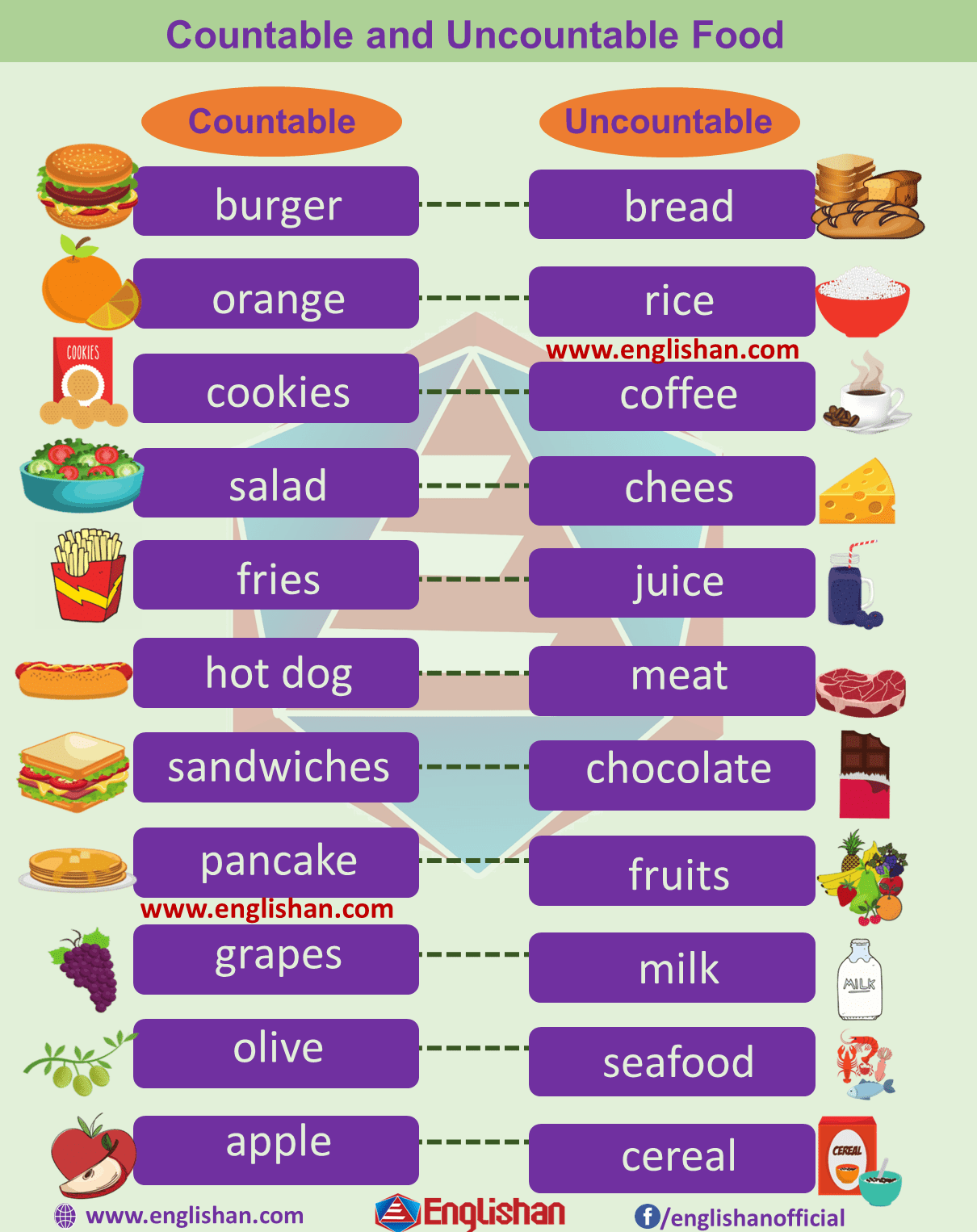
Countable nouns are things you can count, like one apple or two apples.
Example: Book, Dog, Chair.
Uncountable nouns are things you can’t count directly, like water or rice.
Example: Milk, Sugar, Music.
In short, countable nouns are things you can count, and uncountable nouns are things you can’t count.
Here are some examples of uncountable nouns:
1. Water
2. Rice
3. Sugar
4. Milk
5. Music
6. Air
7. Bread
8. Information
9. Salt
10. Happiness
These are things you can’t count directly, like “some water” or “a little rice.”
Here are some examples of countable nouns:
1. Apple
2. Dog
3. Book
4. Chair
5. Pen
6. Car
7. Student
8. Flower
9. Table
10.Shirt
These are things you can count, like one apple, two dogs, or three books.
To remember countable and uncountable nouns:
Countable: You can count them (e.g., apple, book).
Uncountable: You can’t count them directly (e.g., water, happiness).
Use Quantifiers: Countable: many, few.
Uncountable: much, a little.
Think of counting for countable nouns and use these clues to help!
To teach countable and uncountable nouns:
Countable Nouns are things you can count (e.g., apple, book).
Uncountable Nouns are things you can’t count directly (e.g., water, rice).
Use simple examples and teach quantifiers:
For countable nouns, use many or few.
For uncountable nouns, use much or a little.
Practice with sentences like:
“I have three apples.” (countable)
“I need some water.” (uncountable)
Use games like sorting or flashcards to make it easy!
Milk is uncountable. You can’t count milk directly, but you can measure it in terms of volume (like liters or cups). For example, you would say “a glass of milk” or “two liters of milk,” but not “two milks.”
You May Also Like
- Determiners and their Types
- Singular and Plural Nouns
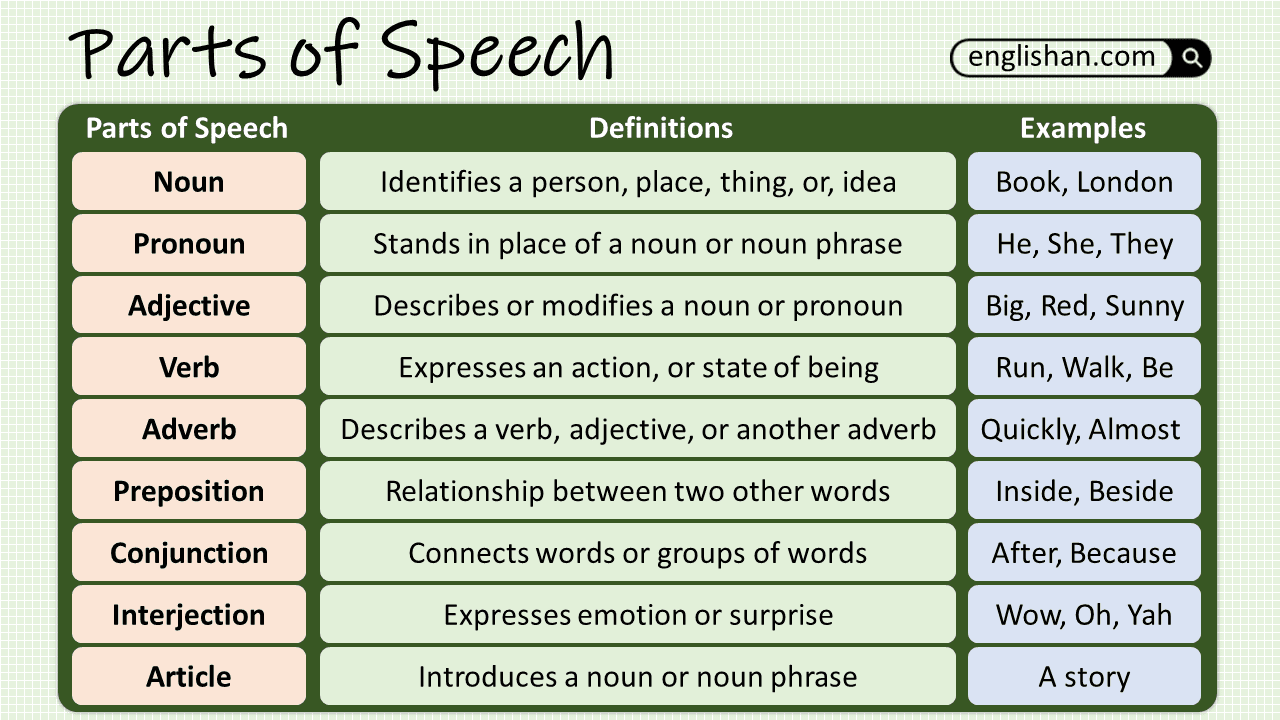
- Parts of Speech
- Articles A An The
- Types of Nouns in English
Check Your Understanding by Solving