

Horse breeds with pictures are one of the best ways to understand the diversity of horses found around the world. Horses have walked alongside humans for more than 5,000 years, first as sources of meat and milk, then as pack animals, war machines, farming workhorses, and today as companions and athletes. This long partnership has produced one of the most diverse domesticated species on Earth.
There are over 300 recognized horse breeds with pictures worldwide, each shaped by geography, climate, human needs, and centuries of selective breeding. Whether you are a first-time buyer, an equestrian enthusiast, or simply curious, this article explores major horse breeds with pictures by category, name, origin, and key traits, offering a clear reference for understanding them.
What Is a Horse Breed?
A horse breed is a group of horses that share consistent, heritable characteristics, including coat color, body structure, temperament, gait, and performance ability, documented and maintained by a recognized breed registry. Breeds are formed when horses with desirable traits are carefully mated over generations. Offspring consistently carry those traits, and registration with an official studbook is usually required for a horse to be formally recognized as belonging to a particular breed.
Horses are broadly divided into three blood temperature groups:
- Hot-blooded horses are spirited, fast, and lean, built for speed and endurance. The Arabian and Thoroughbred are prime examples.
- Cold-blooded horses are heavy, calm, and powerfully built, bred for draft and farm work. The Shire and Clydesdale fall here.
- Warm-blooded horses sit between the two. They combine athleticism with a trainable temperament and dominate modern sport disciplines like dressage and show jumping. Hanoverians and Dutch Warmbloods are the most famous examples.
Explore more animals that start with different letters:
A | B | C | D | E | F | G | H | I | J | K | L | M | N | O | P | Q | R | S | T | U | V | W | X | Y | Z
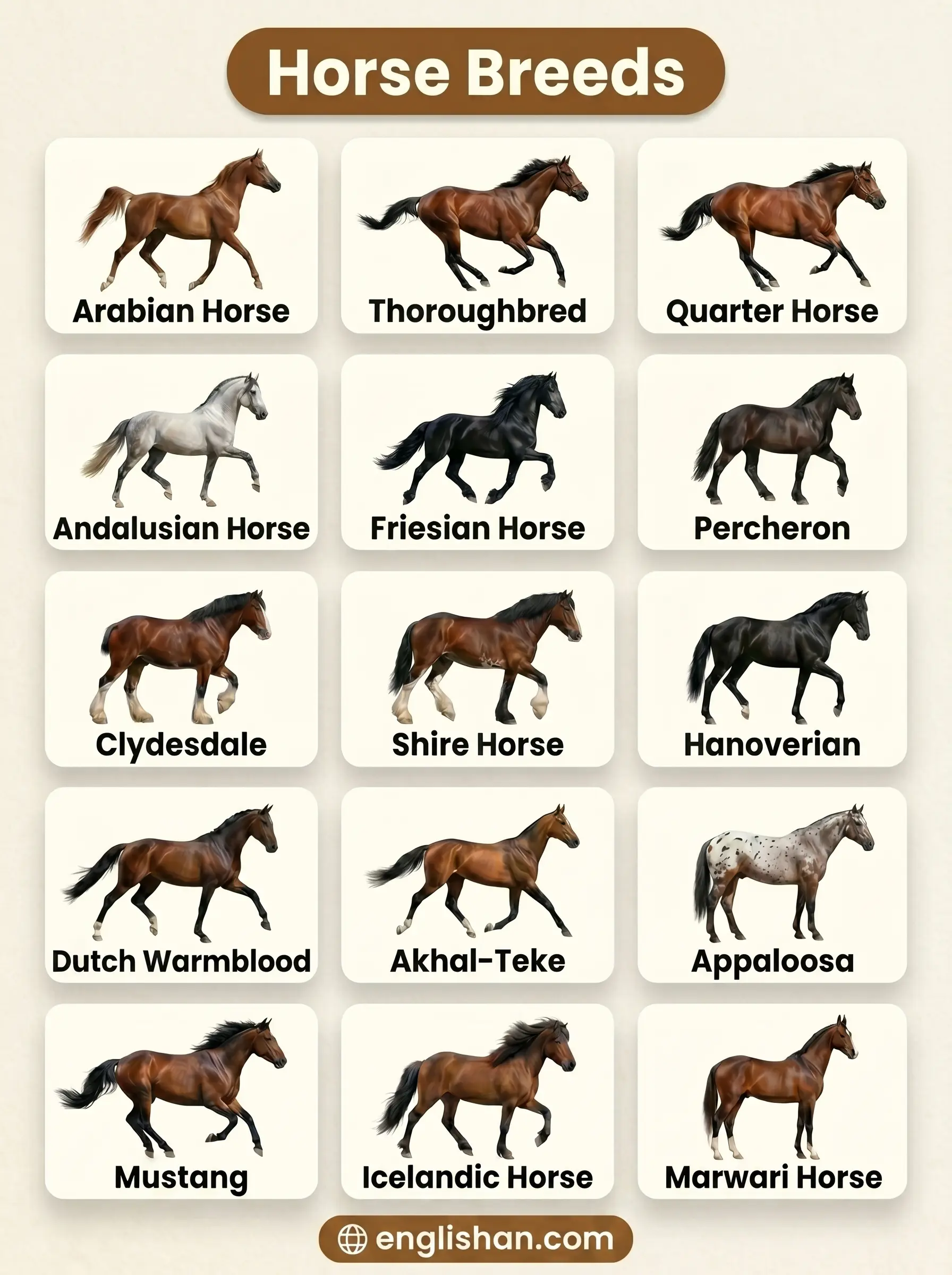
List of Top Horse Breeds Across the World
- Arabian Horse
- Thoroughbred
- Quarter Horse
- Andalusian Horse
- Friesian Horse
- Clydesdale
- Shire Horse
- Belgian Draft Horse
- Percheron
- Suffolk Punch
- Hanoverian
- Dutch Warmblood (KWPN)
- Holsteiner
- Oldenburg
- Trakehner
- Akhal-Teke
- Morgan Horse
- Mustang
- Appaloosa
- Paint Horse
- Paso Fino
- Icelandic Horse
- Peruvian Paso
- Tennessee Walking Horse
- American Saddlebred
- Connemara Pony
- Welsh Pony
- Shetland Pony
- Miniature Horse
- Marwari Horse
The Main Categories of Horse Breeds with Pictures
Horses come in a wide variety of shapes, sizes, and temperaments, each developed over centuries for specific purposes such as strength, speed, endurance, or riding comfort. While there are hundreds of individual breeds around the world, they are generally grouped into some main categories of horse breeds with pictures that help us better understand their characteristics and uses. These categories make it easier to identify what makes each type of horse unique before exploring specific breeds in detail.
Light Horse Breeds with Pictures
❶ Arabian Horse
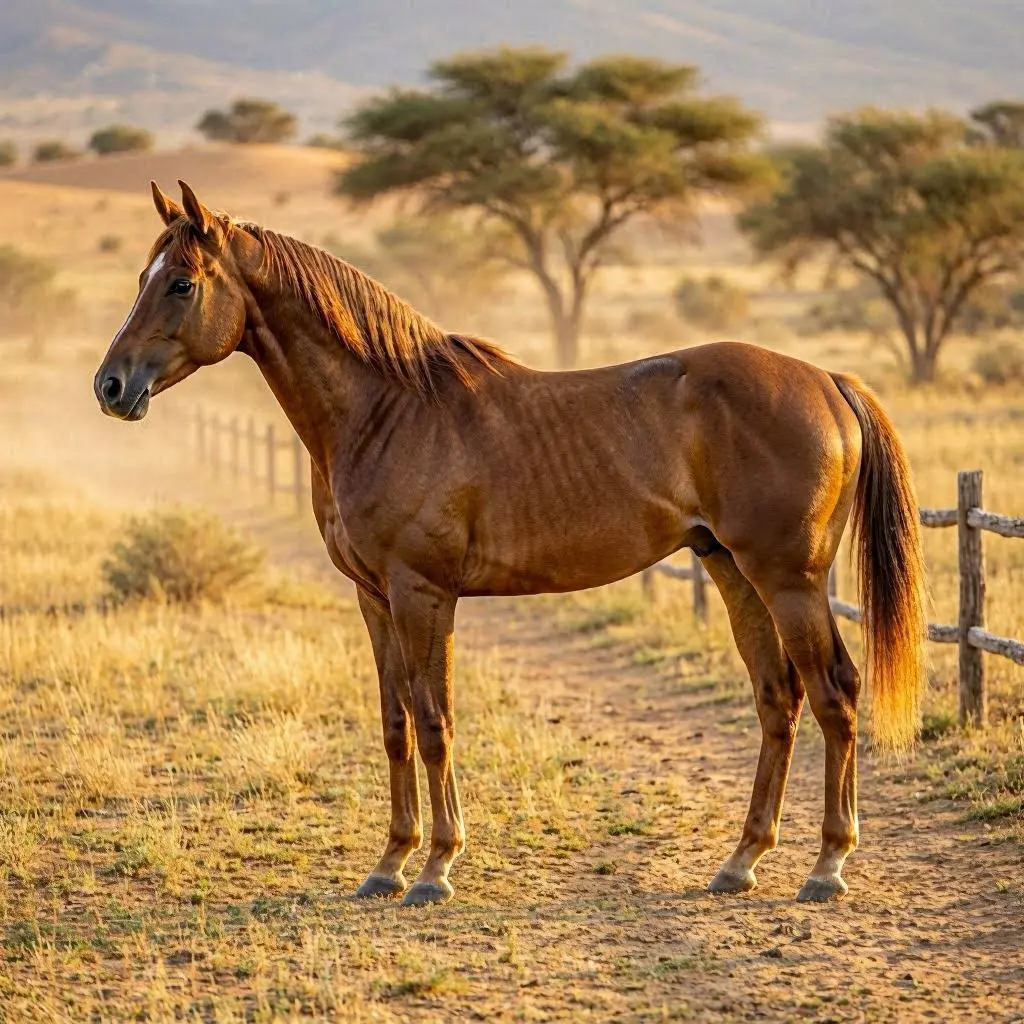
Origin: Arabian Peninsula
Height: 14.1–15.1 hands
Color: Bay, gray, chestnut, roan, black
The Arabian is the oldest documented horse breed in the world and the foundation of nearly every modern light horse breed including the Thoroughbred, Quarter Horse, and Standardbred. It is instantly recognizable by its concave, dished face, large eyes, arched neck, and characteristically high tail carriage. Arabians are highly intelligent, form deep bonds with humans, and excel in endurance racing. Their compact body is deceptively powerful for its size.
❷ Thoroughbred
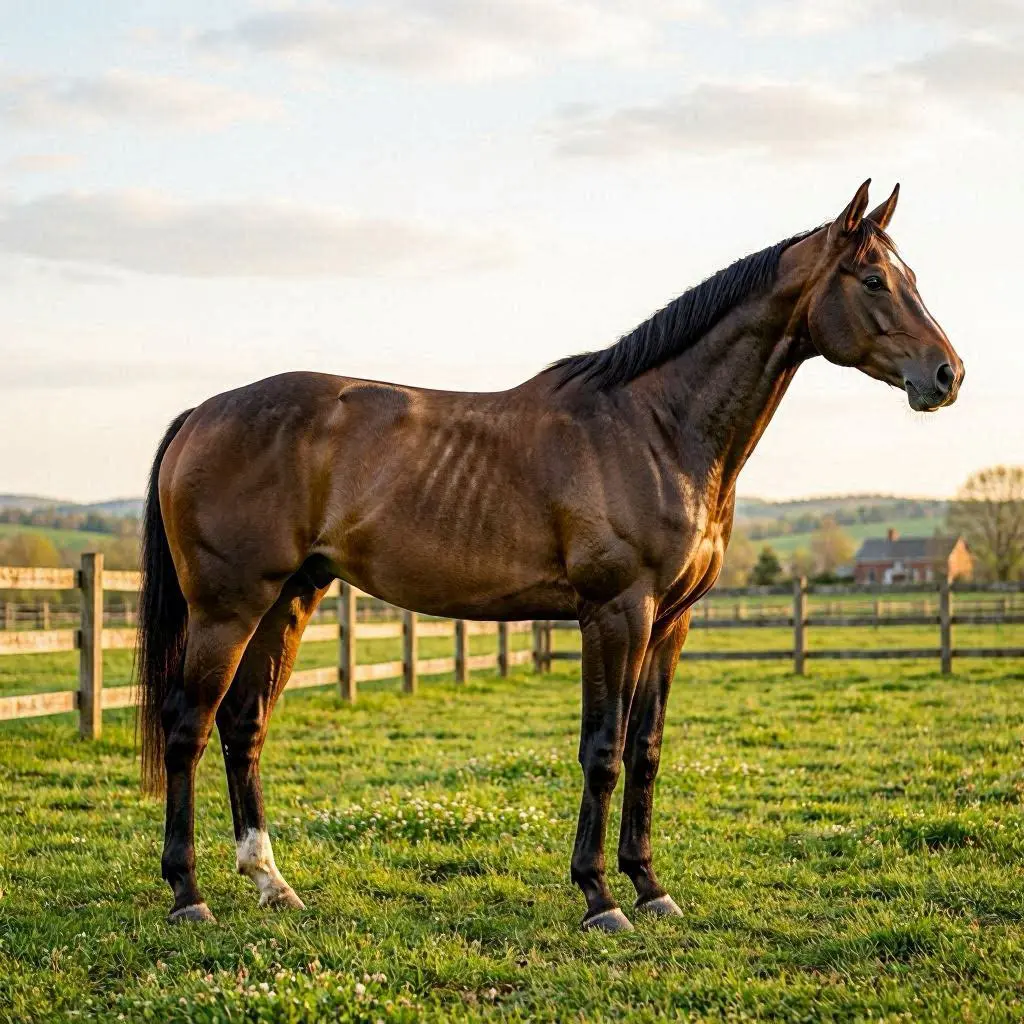
Origin: England
Height: 15.2–17 hands
Color: Bay, chestnut, gray, black
The Thoroughbred was developed in 17th-century England by crossing imported Arabian, Barb, and Turkoman stallions with native English mares. The result was the world’s premier racing horse: lean, long-legged, and built for explosive speed. Thoroughbreds can reach speeds exceeding 40 mph on the track. Beyond racing, they compete in show jumping, eventing, and dressage. Their high-energy personality means they are best suited for experienced riders.
❸ American Quarter Horse
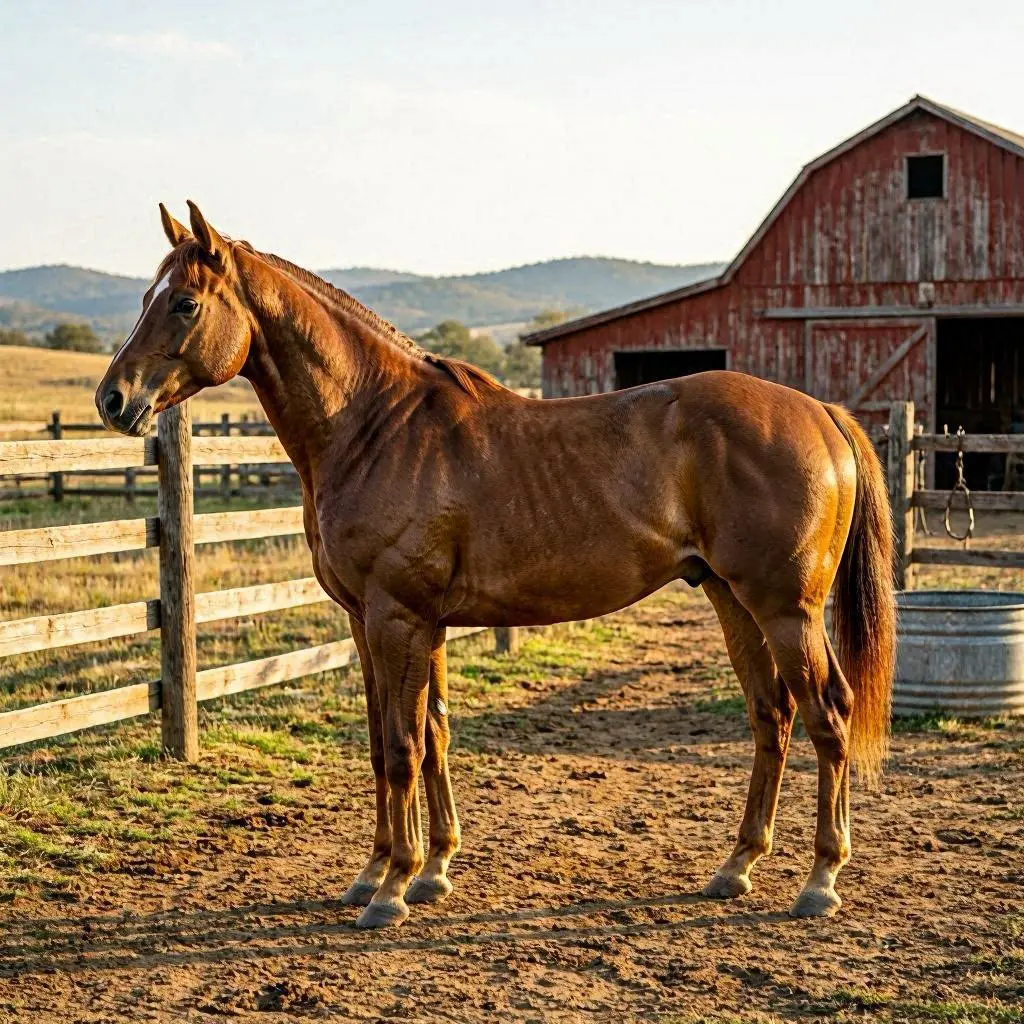
Origin: United States
Height: 14.3–16 hands
Color: All solid colors, sorrel most common
The most popular horse breed in the United States, the Quarter Horse earned its name from its unmatched ability to sprint a quarter mile faster than any other breed. Calm, trainable, and athletic, this breed excels in a staggering range of disciplines, from barrel racing and rodeo events to trail riding and ranch work. Its powerful hindquarters make it explosive off the mark, and its even temper makes it approachable for beginners and professionals alike.
❹ Appaloosa
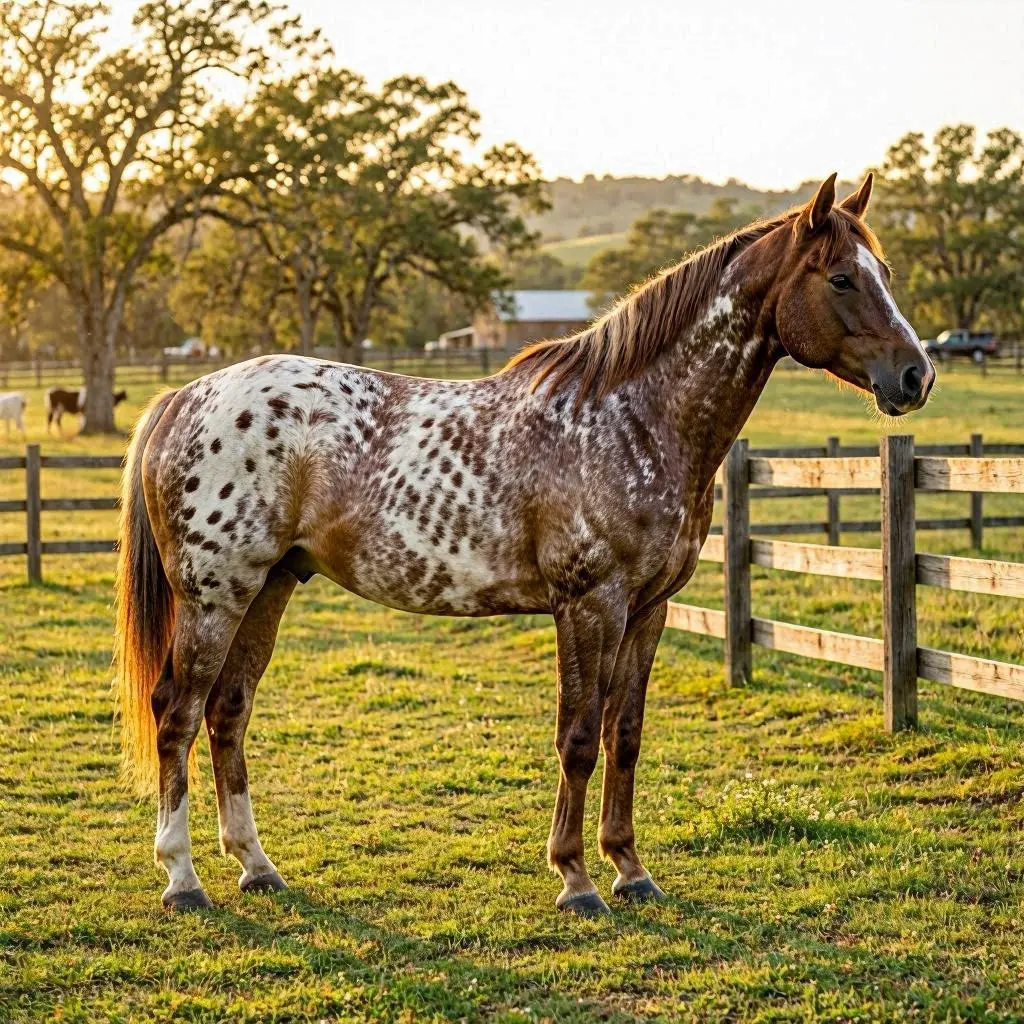
Origin: United States (Nez Perce tribe)
Height: 14.2–16 hands
Color: Spotted coat patterns: leopard, blanket, roan, snowflake
One of the most visually striking breeds in the world, the Appaloosa is known for its vividly spotted coat, and no two are exactly alike. Developed by the Nez Perce people of the American Northwest for hunting and battle, Appaloosas are hardy, versatile, and intelligent. They excel in trail riding, western events, and herding. Their mane and tail are notably thin compared to other breeds.
❺ American Paint Horse
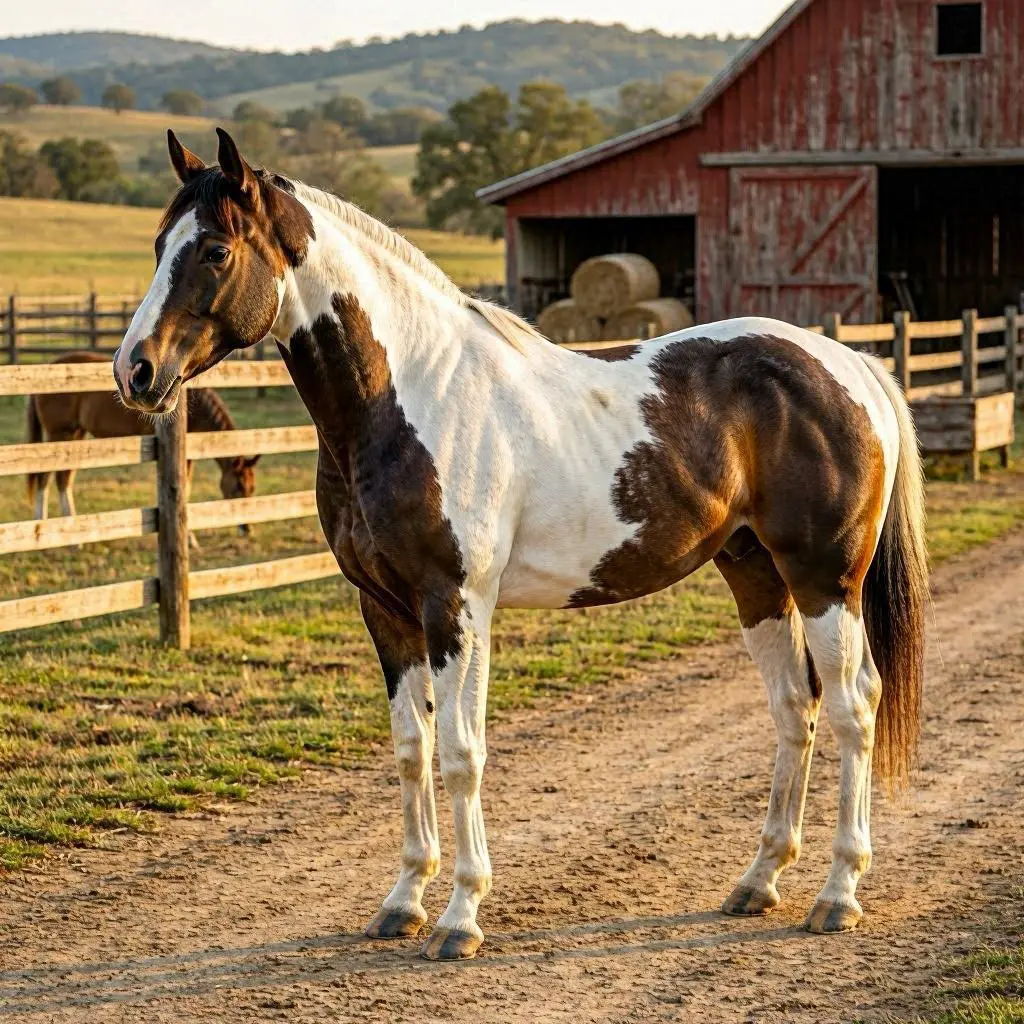
Origin: United States
Height: 14.2–16.2 hands
Color: Tobiano, overo, or tovero patterned coat
The Paint Horse combines the conformation of a stock horse with a colorful pinto coat pattern. Bred from a mix of Quarter Horse and Thoroughbred lineage, Paints are admired for both looks and versatility. They compete in virtually every western discipline and are popular trail horses. Their calm, willing temperament suits riders at all levels.
❻ Morgan Horse
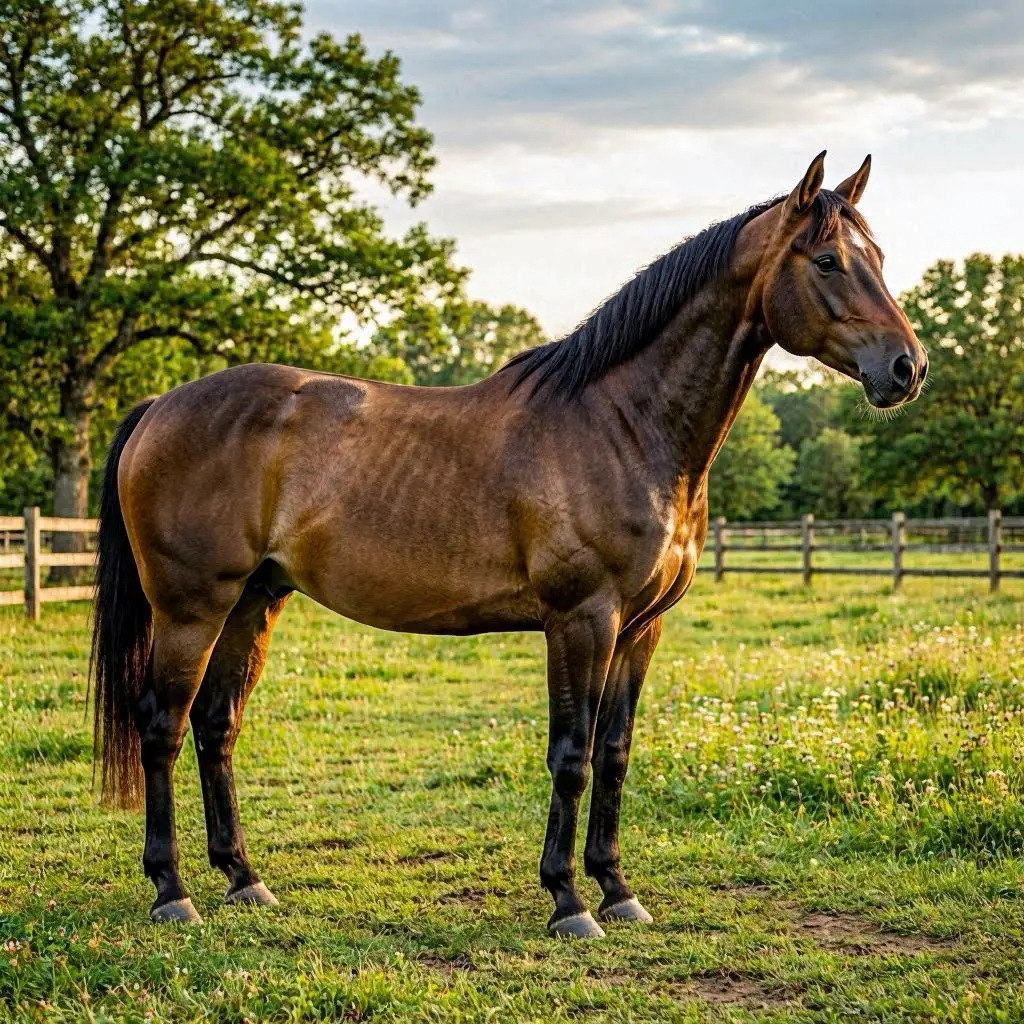
Origin: United States (Vermont)
Height: 14.1–15.2 hands
Color: Bay, black, chestnut, brown
One of America’s oldest and most versatile breeds, the Morgan descends from a single stallion named Figure, later called Justin Morgan. Compact, elegant, and willing, Morgans excel in driving, dressage, trail riding, and show rings. Their surefootedness over rough terrain and easygoing nature make them ideal for riders wanting a multipurpose horse.
❼ Standardbred
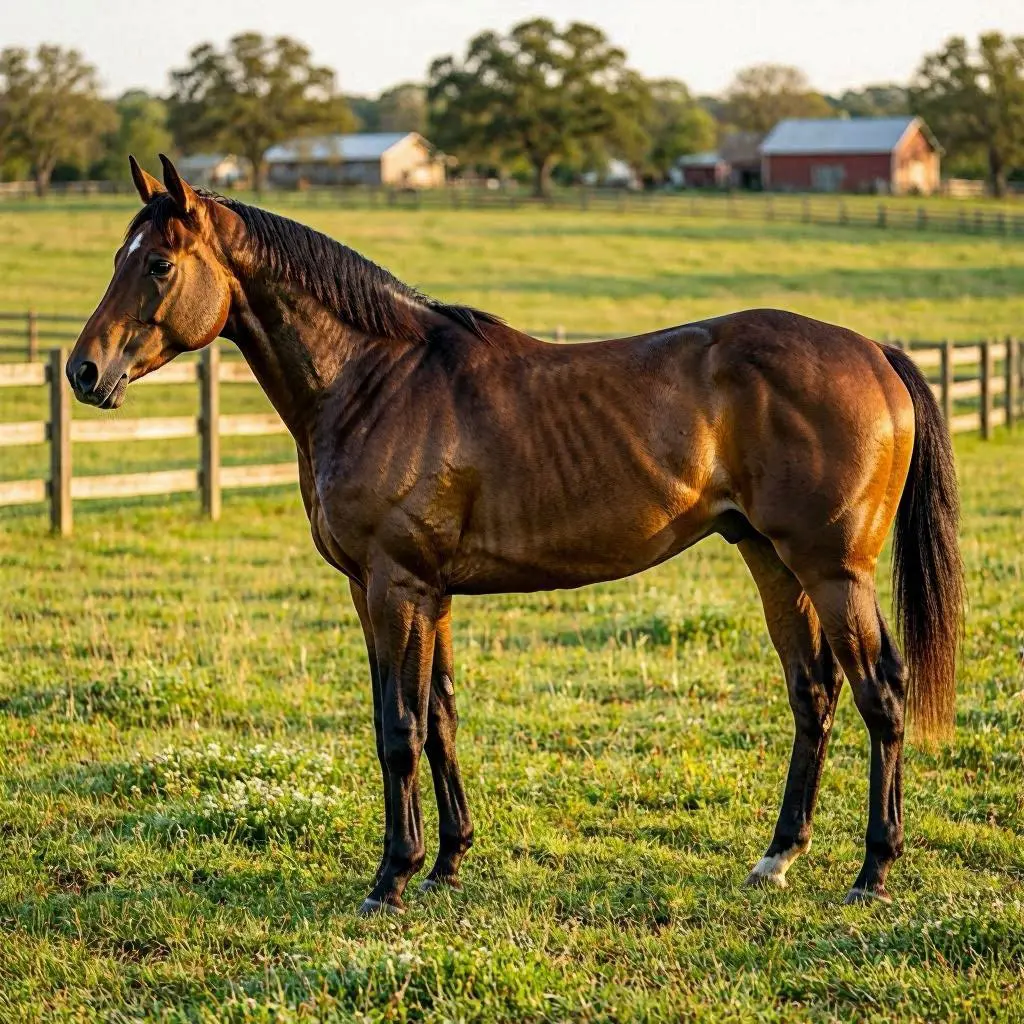
Origin: United States
Height: 14.1–17 hands
Color: Bay, brown, black, chestnut
The Standardbred is the world’s premier harness racing horse, bred specifically for either trotting or pacing at speed while pulling a two-wheeled cart called a sulky. Heavier and more muscular than Thoroughbreds, Standardbreds are generally calm, sensible horses that transition well to riding careers after their racing days.
❽ Mustang
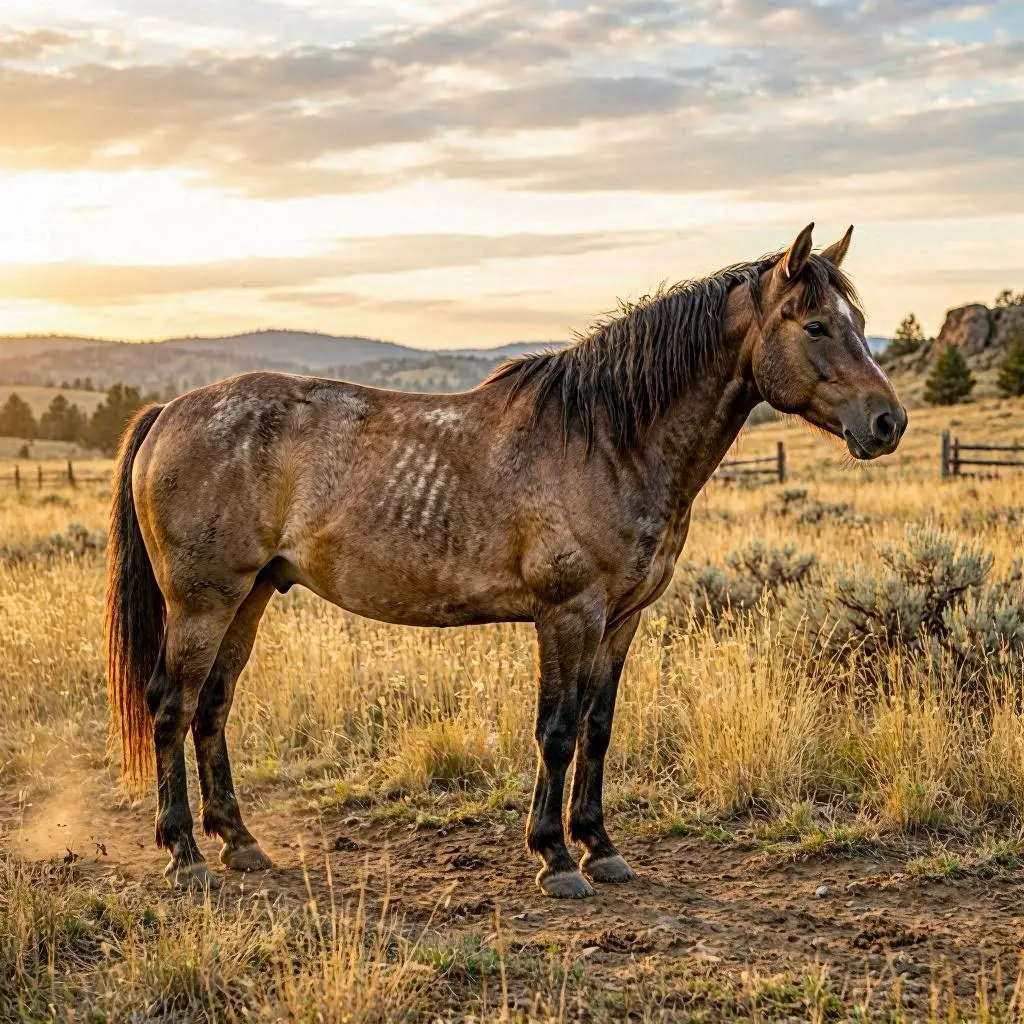
Origin: North America (feral descendants of Spanish horses)
Height: 13–15 hands
Color: All colors
The Mustang is the wild horse of the American West, a feral descendant of horses brought to North America by Spanish explorers in the 1500s. Tough, sure-footed, and highly intelligent from centuries of surviving without human care, Mustangs can be gentled and trained. The Bureau of Land Management oversees wild Mustang herds across public lands in the western United States.
❾ Andalusian (Pure Spanish Horse / PRE)
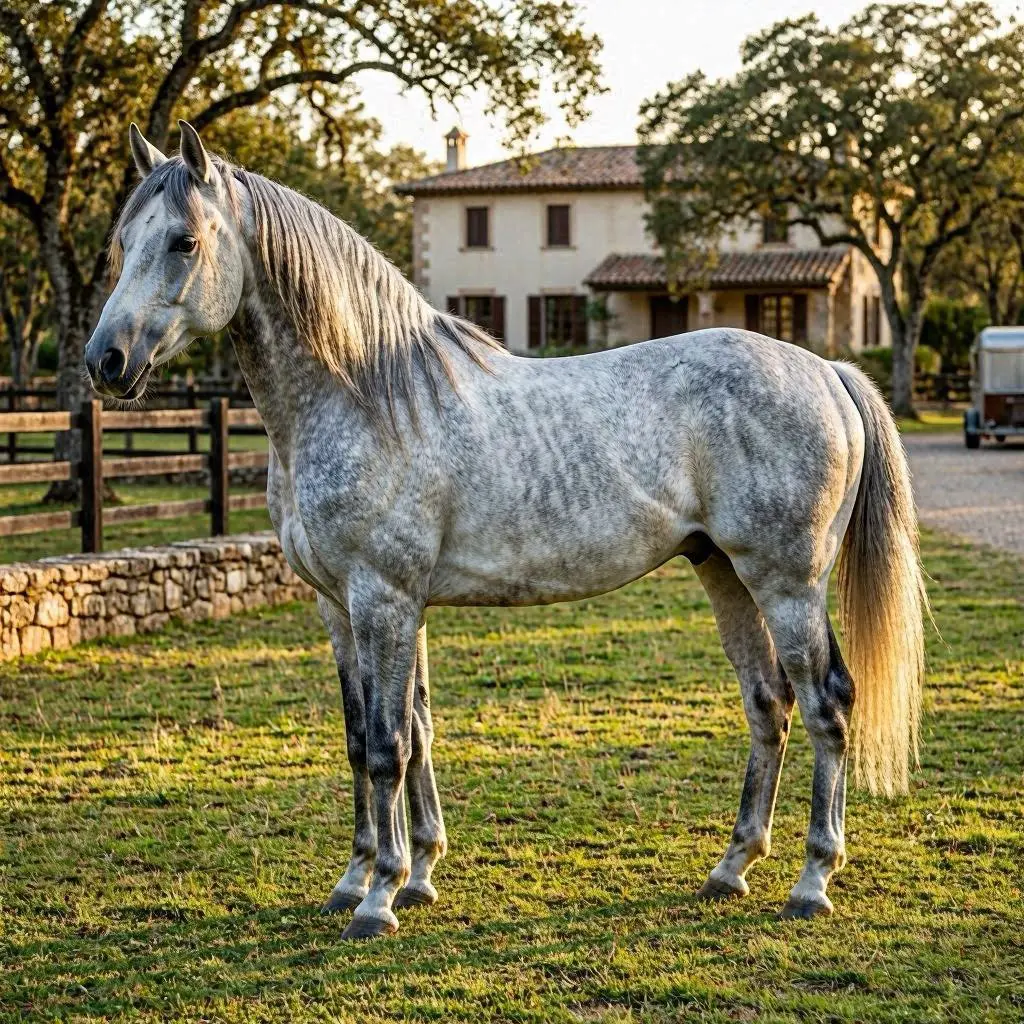
Origin: Spain (Iberian Peninsula)
Height: 15–16.2 hands
Color: Gray, bay, black
Known in Spain as the Pura Raza Española (PRE), the Andalusian is one of Europe’s oldest and most influential breeds. Bred for war and nobility, this horse moves with dramatic, elevated action that makes it a natural for classical dressage. Powerful yet elegant, Andalusians are used today in high-level dressage, bullfighting (rejoneo), and film. Their thick mane and tail and expressive movement make them among the most beautiful horses in the world.
❿ Friesian
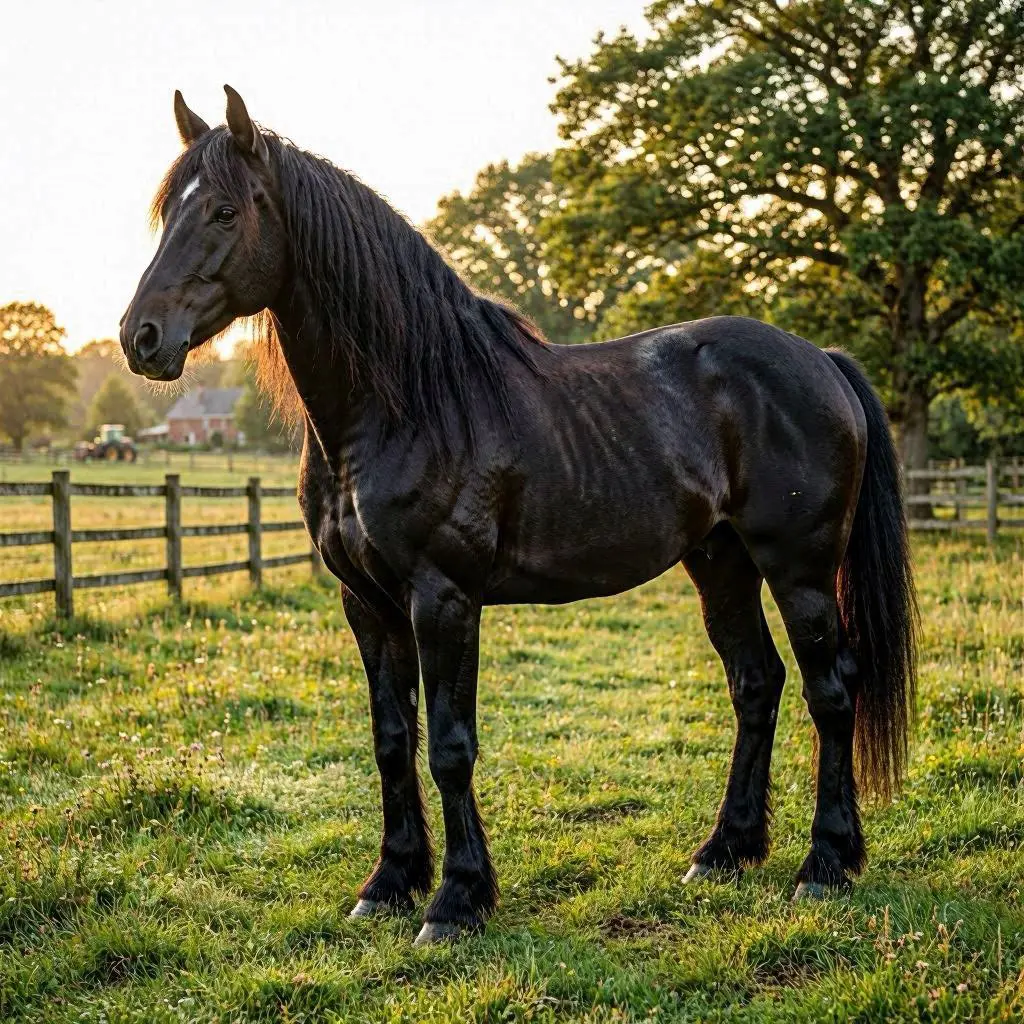
Origin: Friesland, Netherlands
Height: 15–17 hands
Color: Black (only)
The Friesian is arguably the most dramatic-looking horse breed: jet black from nose to tail, with a long flowing mane, feathered lower legs, and a high-stepping, powerful trot. Used as a war horse in medieval Europe, Friesians are today prized in dressage, driving, and film. Despite their imposing presence, they are known as loyal, gentle, and people-loving horses.
⓫ Akhal-Teke
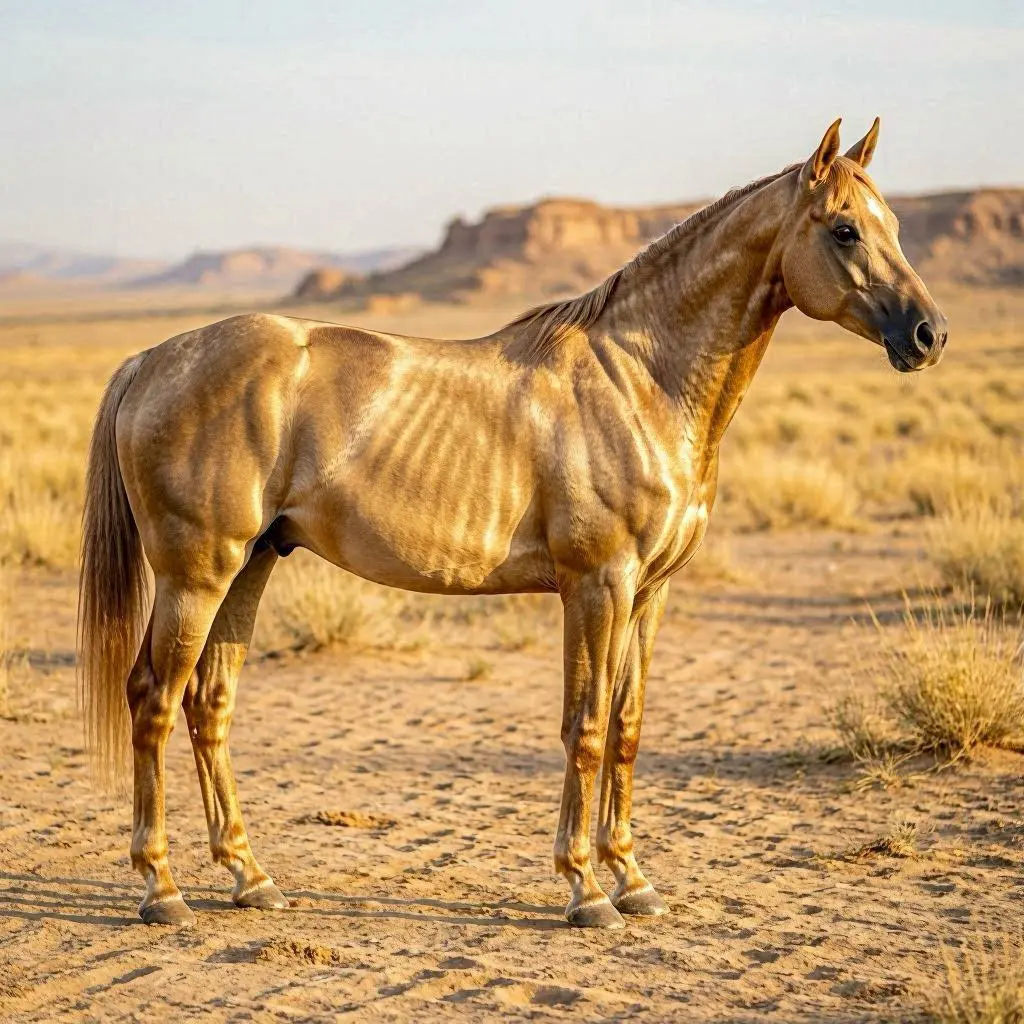
Origin: Turkmenistan
Height: 14.2–16 hands
Color: Metallic golden dun (buckskin), bay, black, gray
One of the world’s oldest horse breeds and one of its rarest, the Akhal-Teke is famous for its coat: the hair structure reflects light to produce a remarkable metallic shimmer, giving the horse a look of burnished gold. Bred for desert endurance by Turkmen nomads, the Akhal-Teke is athletic, fast, and intensely bonded to a single rider. It excels in endurance racing, dressage, and show jumping.
⓬ Lipizzaner
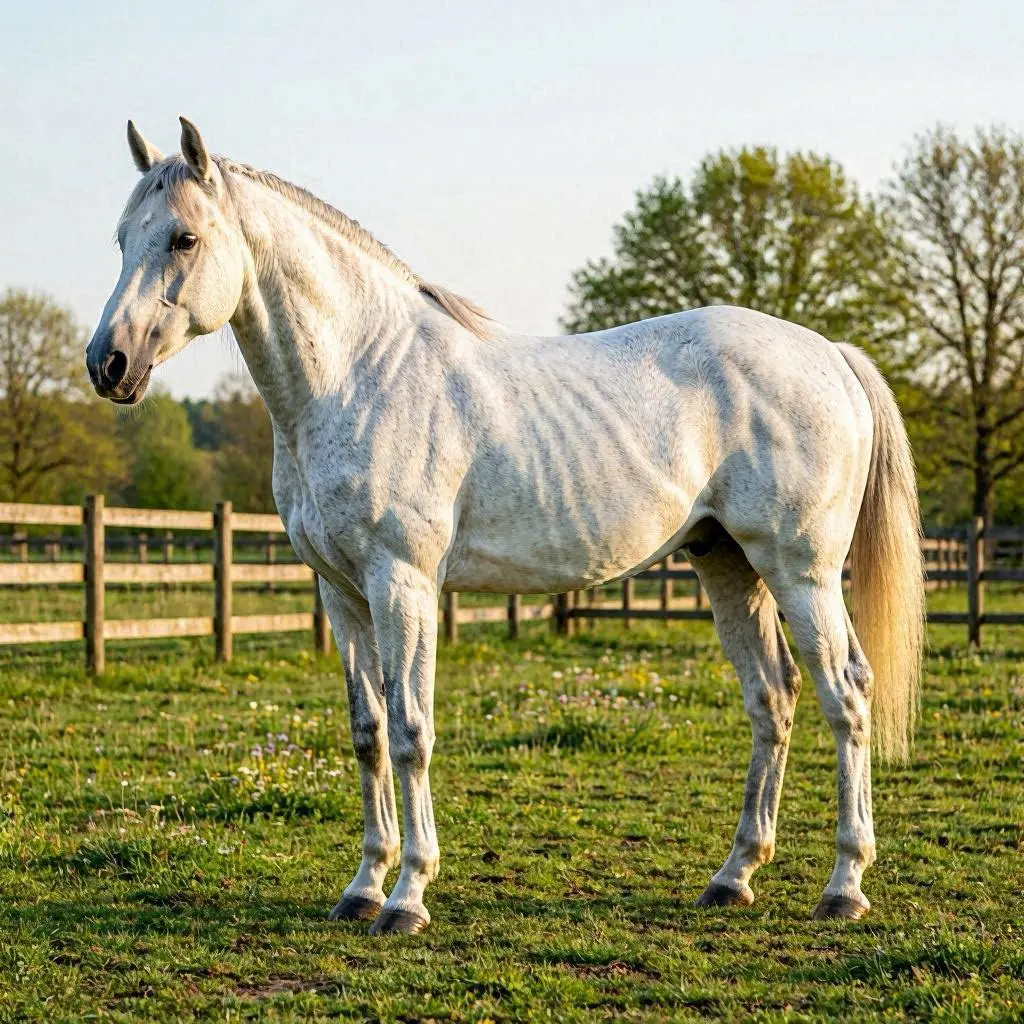
Origin: Austria (originally Slovenia)
Height: 14.2–16.1 hands
Color: Gray (appears white at maturity), rare bay
Developed in the 16th century for the Habsburg Imperial Court, the Lipizzaner is best known for the breathtaking “airs above the ground” movements performed at the Spanish Riding School in Vienna. Foals are born dark and lighten to gray as adults. Compact and muscular, Lipizzaners are considered the pinnacle of classical dressage.
Draft Horse Breeds with Pictures
Draft horses are the heavy horses of the world, built for pulling rather than speed. Their calm “cold blood” temperament combined with enormous strength made them indispensable on farms and in warfare for centuries. Today they are used in shows, parades, logging, and as gentle giants for therapy work.
❶ Shire Horse
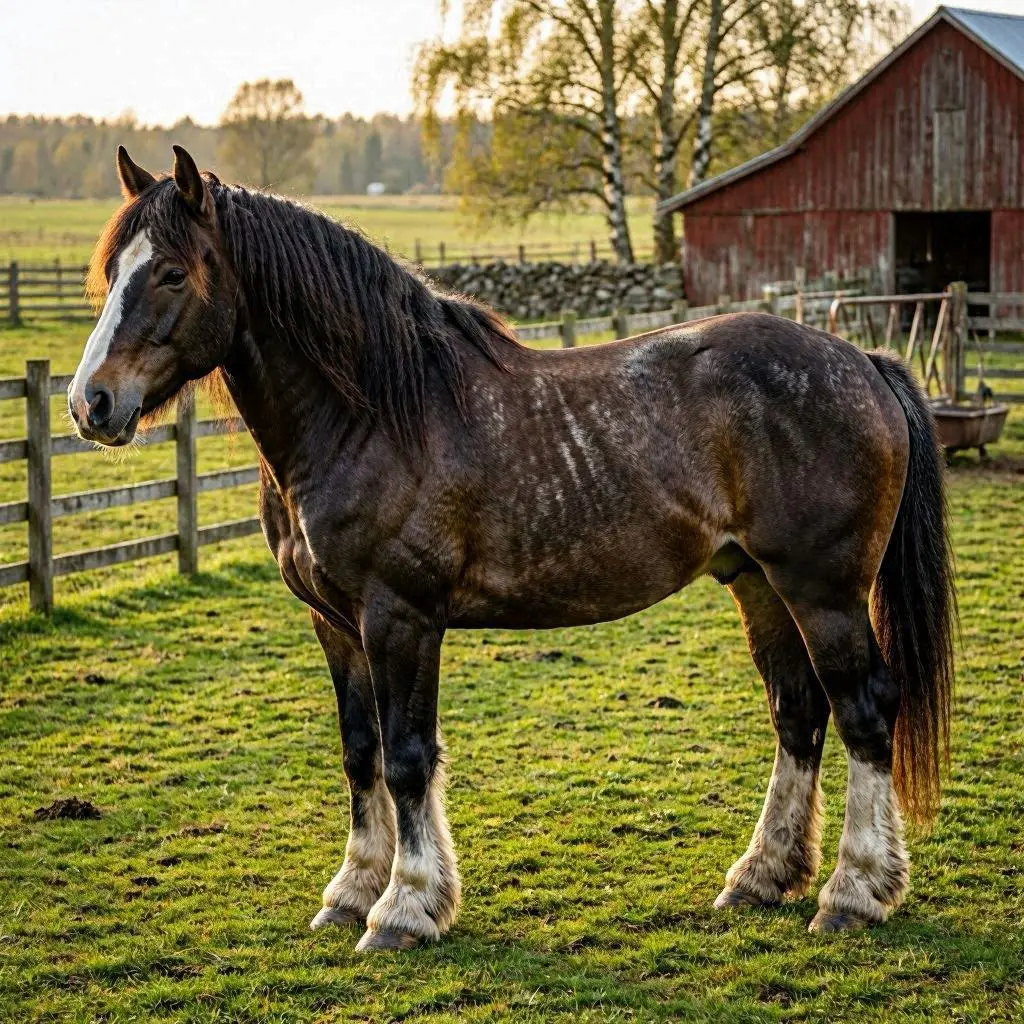
Origin: England
Height: 16–18+ hands (tallest breed on average)
Color: Black, bay, gray, roan
The Shire Horse is the tallest horse breed in the world, with individuals routinely reaching over 18 hands (6 feet at the shoulder) and weighing up to 2,200 pounds. Originally from the English Midlands, Shires were bred to pull heavy loads through city streets and work farmland. Despite their enormous size, they are famously docile and gentle.
❷ Clydesdale
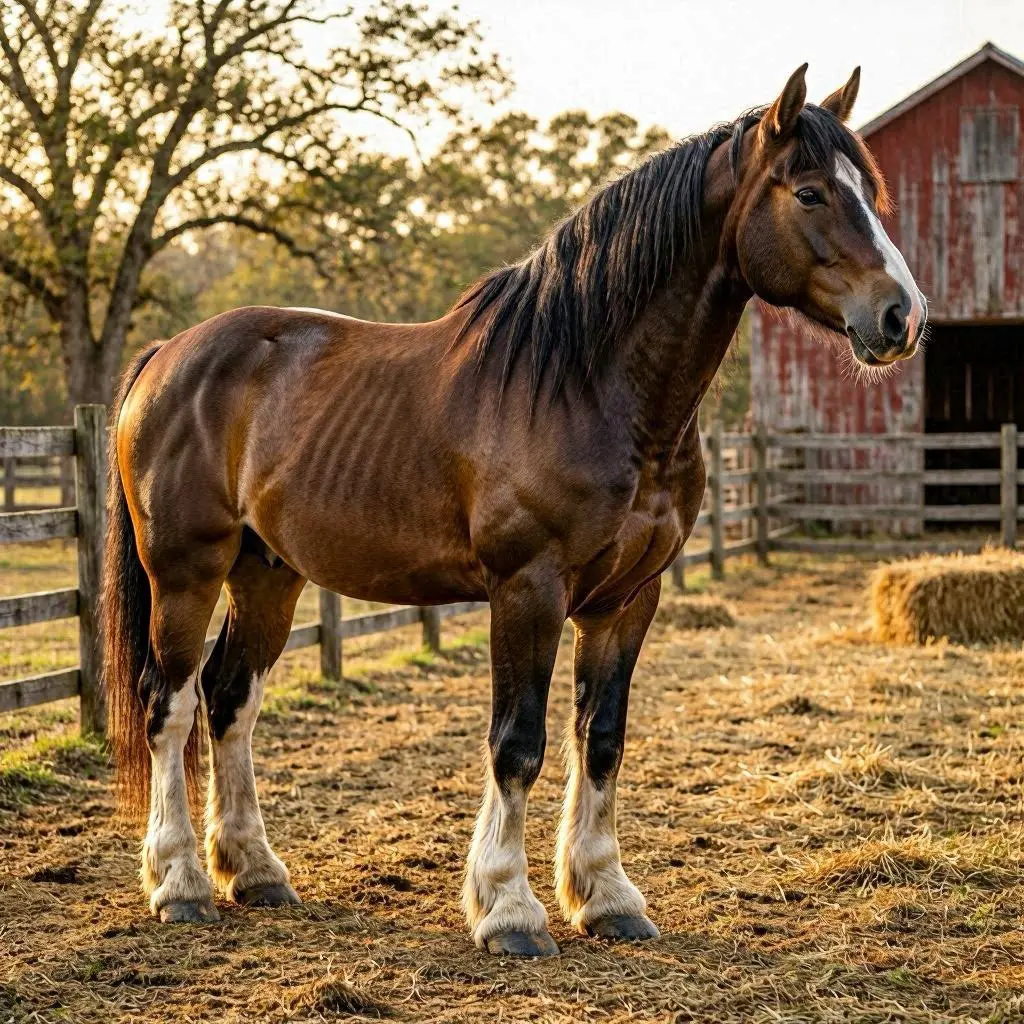
Origin: Scotland (Lanarkshire)
Height: 16–18 hands
Color: Bay, brown, black, roan with white feathering
Scotland’s most iconic breed and the horse behind the famous Budweiser commercials, the Clydesdale is known for its abundant feathering (long silky hair) on the lower legs and its high-stepping action. Slightly lighter than the Shire but equally powerful, Clydesdales were the backbone of Scottish farming before mechanization. They remain popular in shows and parades.
❸ Belgian Draft (Brabant)
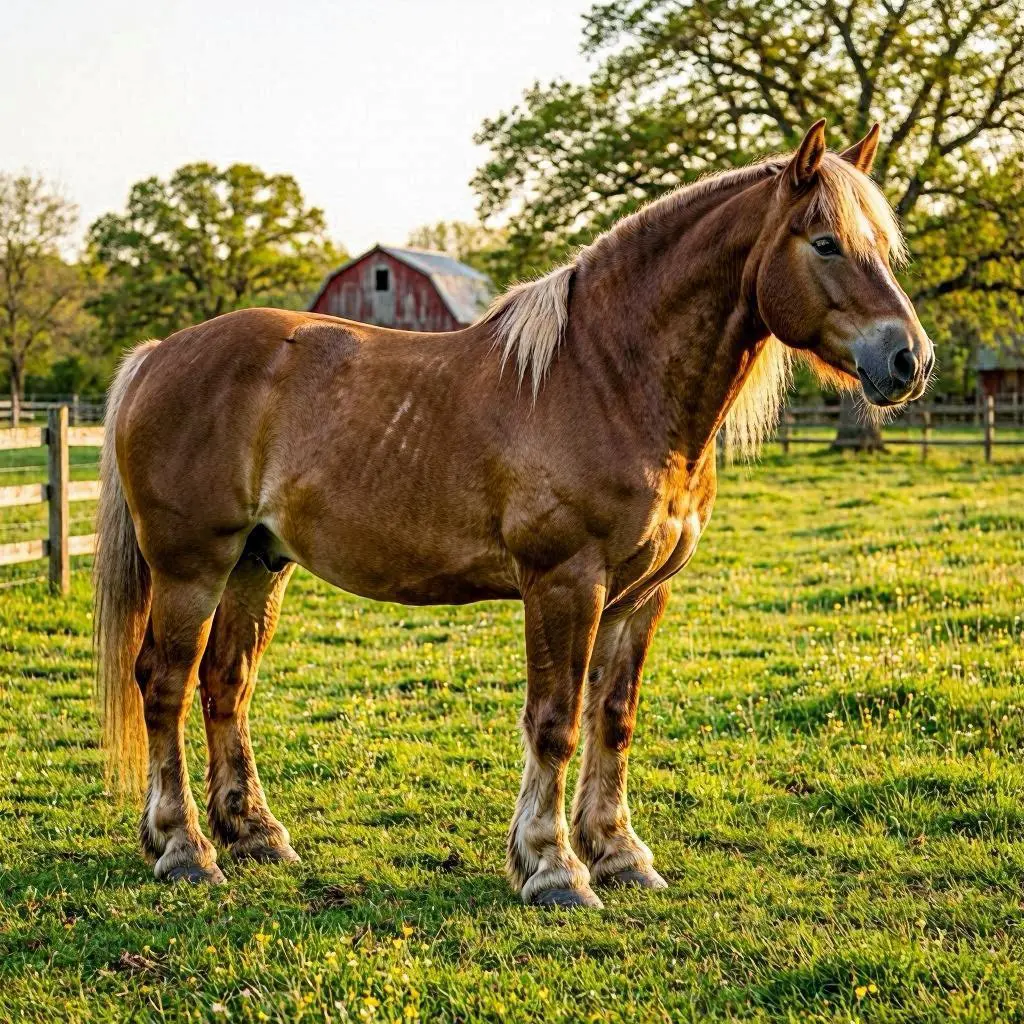
Origin: Belgium
Height: 16–18 hands
Color: Chestnut, sorrel, roan
The Belgian Draft is the heaviest horse breed in the world and one of the most popular draft breeds in North America. Exceptionally strong and willing, Belgians are used for farm work, logging, pulling competitions, and shows. Their good nature and easy keeping make them a favorite among draft horse enthusiasts.
❹ Percheron
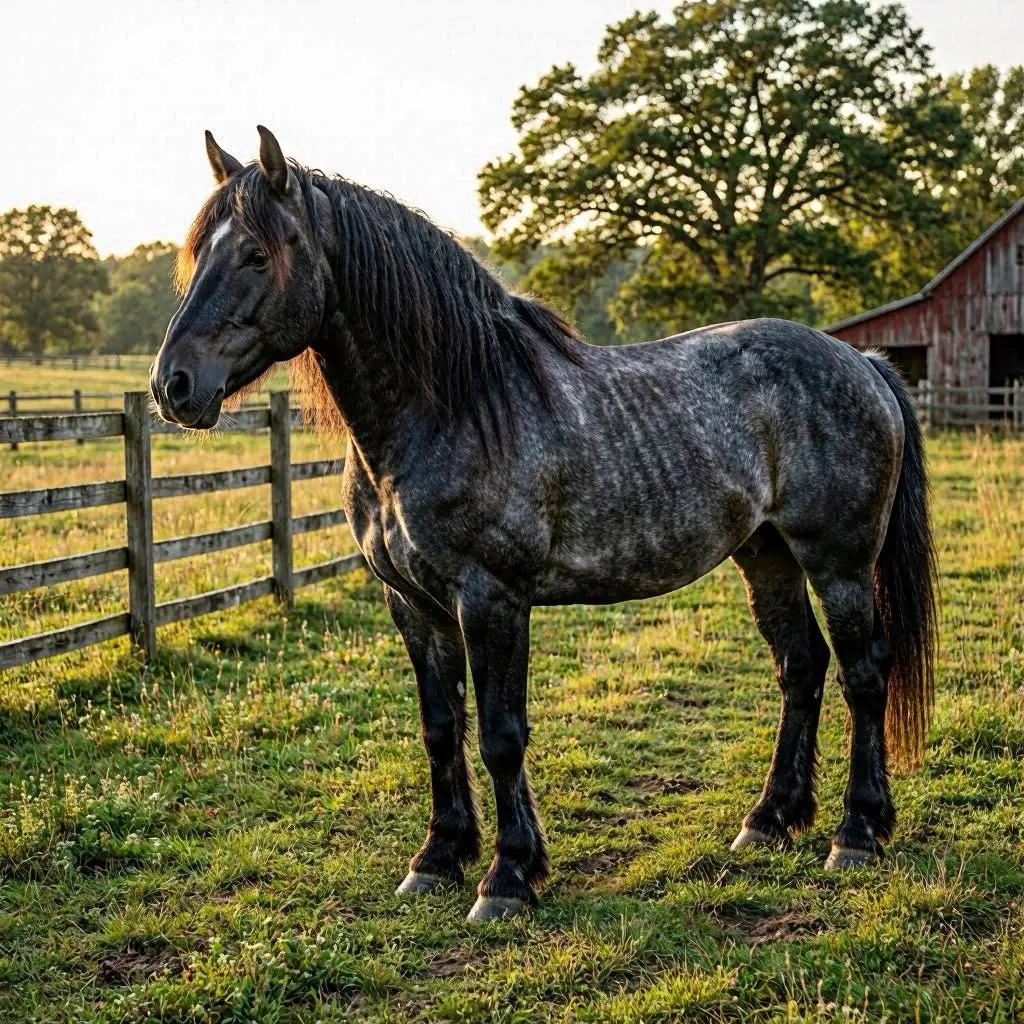
Origin: Perche region, France
Height: 15–19 hands
Color: Gray or black
The Percheron is the most elegant of the draft breeds, combining the size and power of a heavy horse with the refinement of Arabian blood introduced into the breed centuries ago. Known for their intelligence and willingness, Percherons excel in logging, farm work, and carriage driving. They are the most widely distributed draft breed in the world.
❺ Suffolk Punch
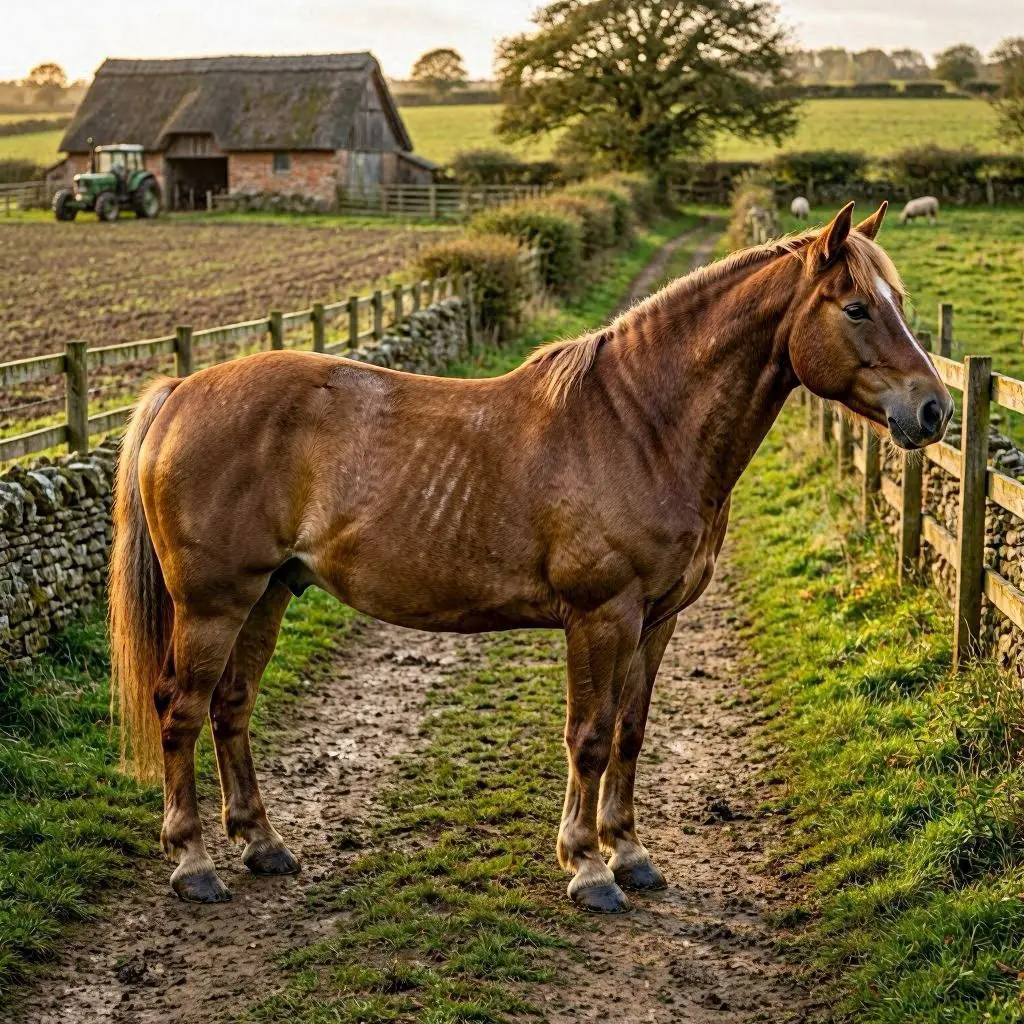
Origin: Suffolk, England
Height: 15.2–17 hands
Color: Always chestnut (several shades)
The Suffolk Punch is one of England’s oldest heavy horse breeds, dating to 1506. It is the only major draft breed that always comes in chestnut and never any other color. Compact and round-bodied compared to Shires and Clydesdales, Suffolks are extremely powerful for their height and were bred specifically for pulling heavy farm equipment in the clay soils of East Anglia.
❻ Haflinger
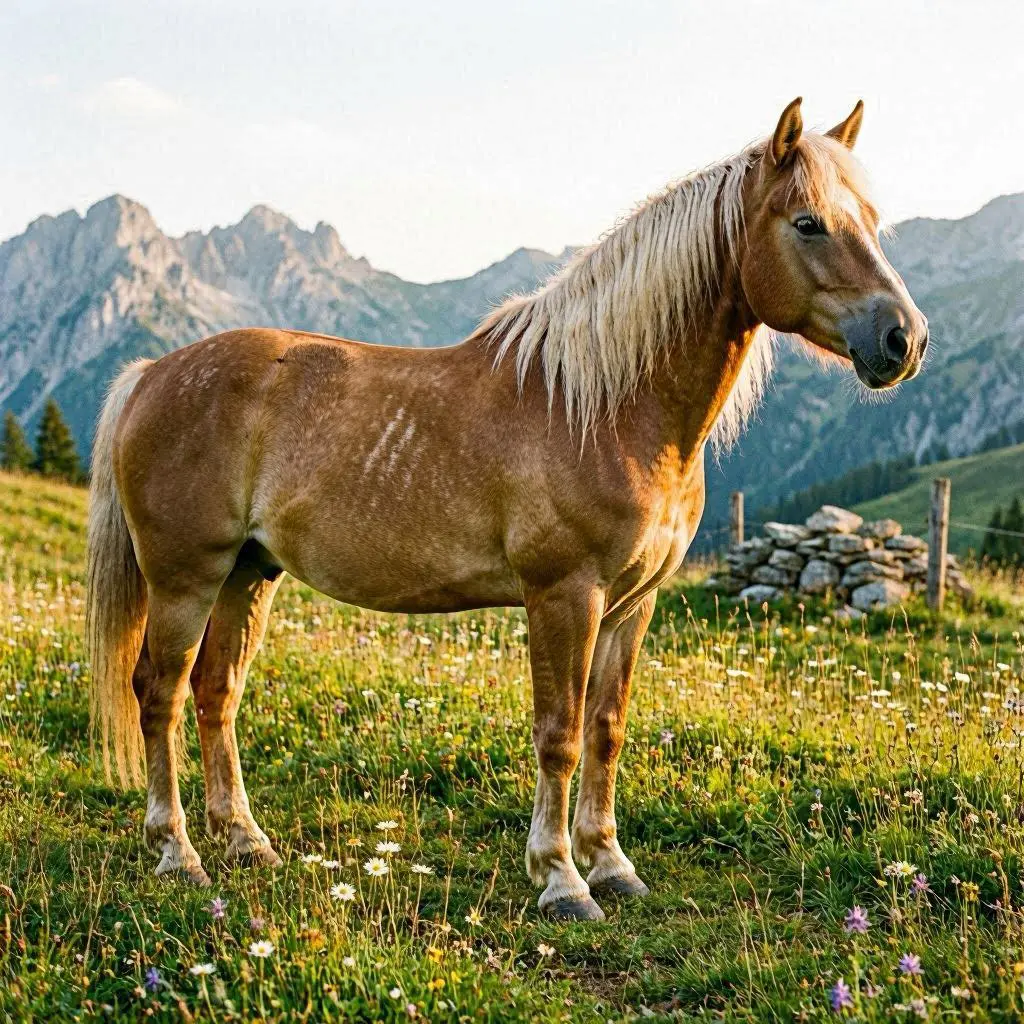
Origin: Austria and northern Italy (Tyrolean Alps)
Height: 13.2–15 hands
Color: Palomino or chestnut with flaxen mane and tail
The Haflinger occupies a unique space between draft and light horse. Bred in the Austrian Alps, it is extraordinarily sure-footed in mountain terrain, calm under pressure, and strong for its relatively compact size. Its gold-and-flaxen coloring is unmistakable. Haflingers are used for trail riding, dressage, driving, therapeutic riding, and as a first horse for families.
Warmblood Horse Breeds with Pictures
Warmbloods are modern sport horses, a combination of draft horse substance and hot-blood refinement, bred primarily for Olympic disciplines. They are registered through inspections and performance testing rather than purely by bloodline.
❶ Hanoverian
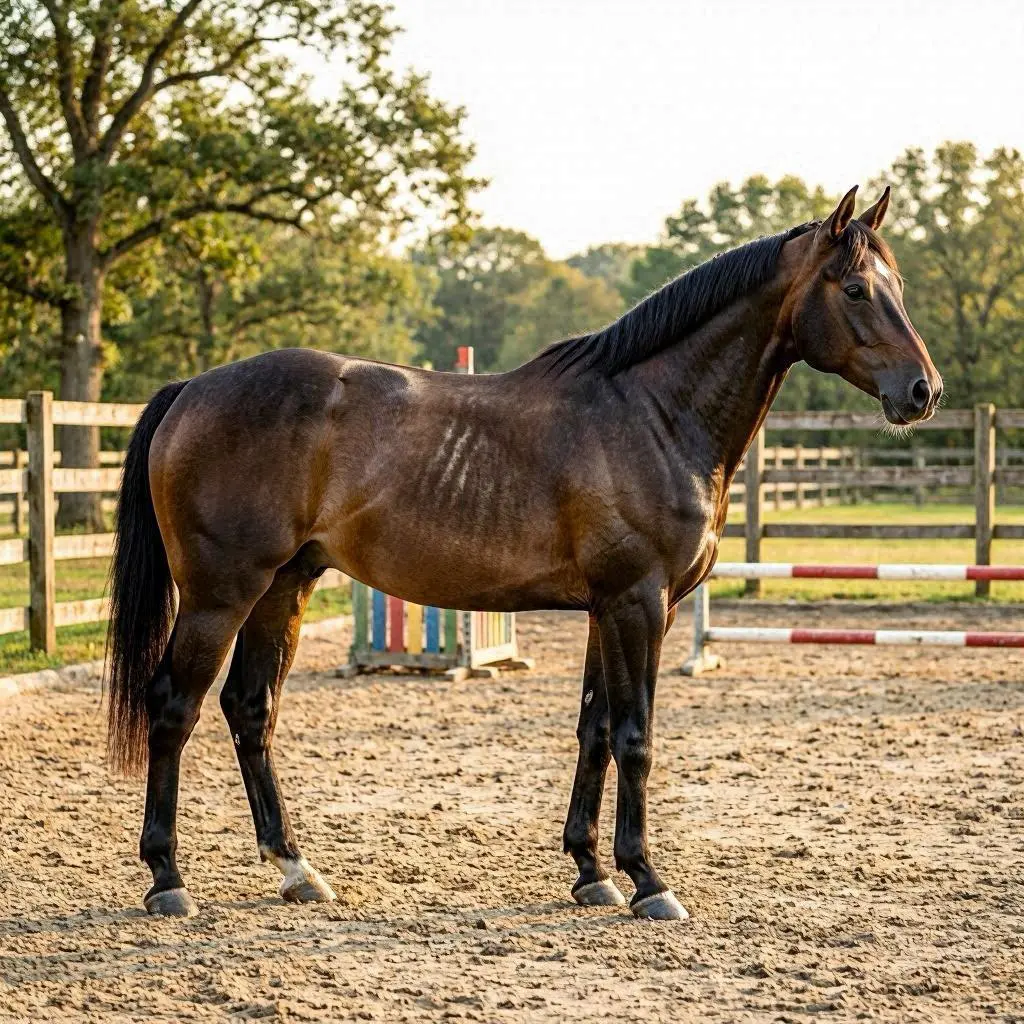
Origin: Hanover, Germany
Height: 15.3–17.2 hands
Color: All solid colors
The Hanoverian is the most successful sport horse breed in the world by Olympic medal count. Developed in the 18th century for carriage use and later refined for modern sport, the Hanoverian is celebrated for its powerful, ground-covering movement and elastic gaits. It dominates dressage and show jumping at the highest levels.
❷ Dutch Warmblood (KWPN)
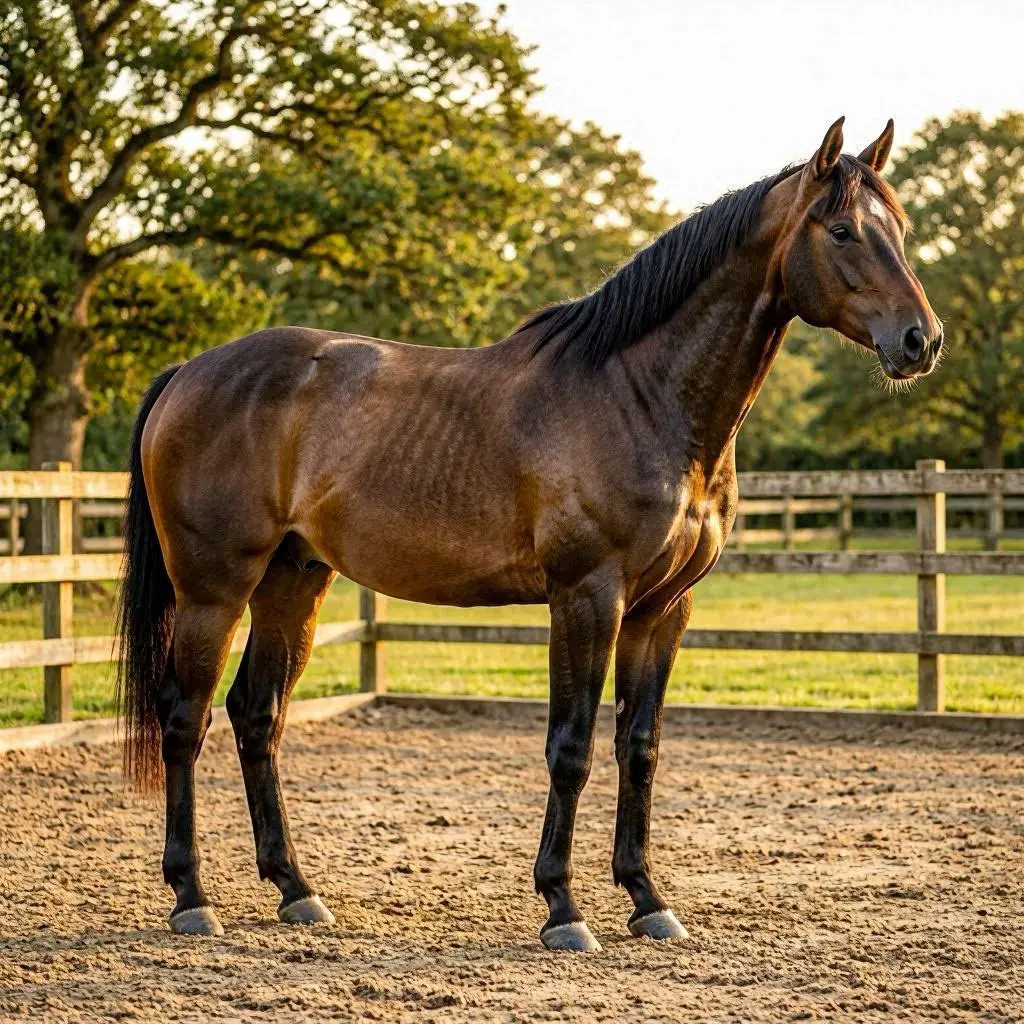
Origin: Netherlands
Height: 15.2–17 hands
Color: All solid colors
Developed after World War II by crossing Gelderlanders and Groningers with Thoroughbreds, the Dutch Warmblood (Koninklijk Warmbloed Paardenstamboek Nederland / KWPN) quickly became a leading sport breed. KWPN horses are bred in separate studbooks for dressage, show jumping, and driving, each optimized for its discipline.
❸ Oldenburg
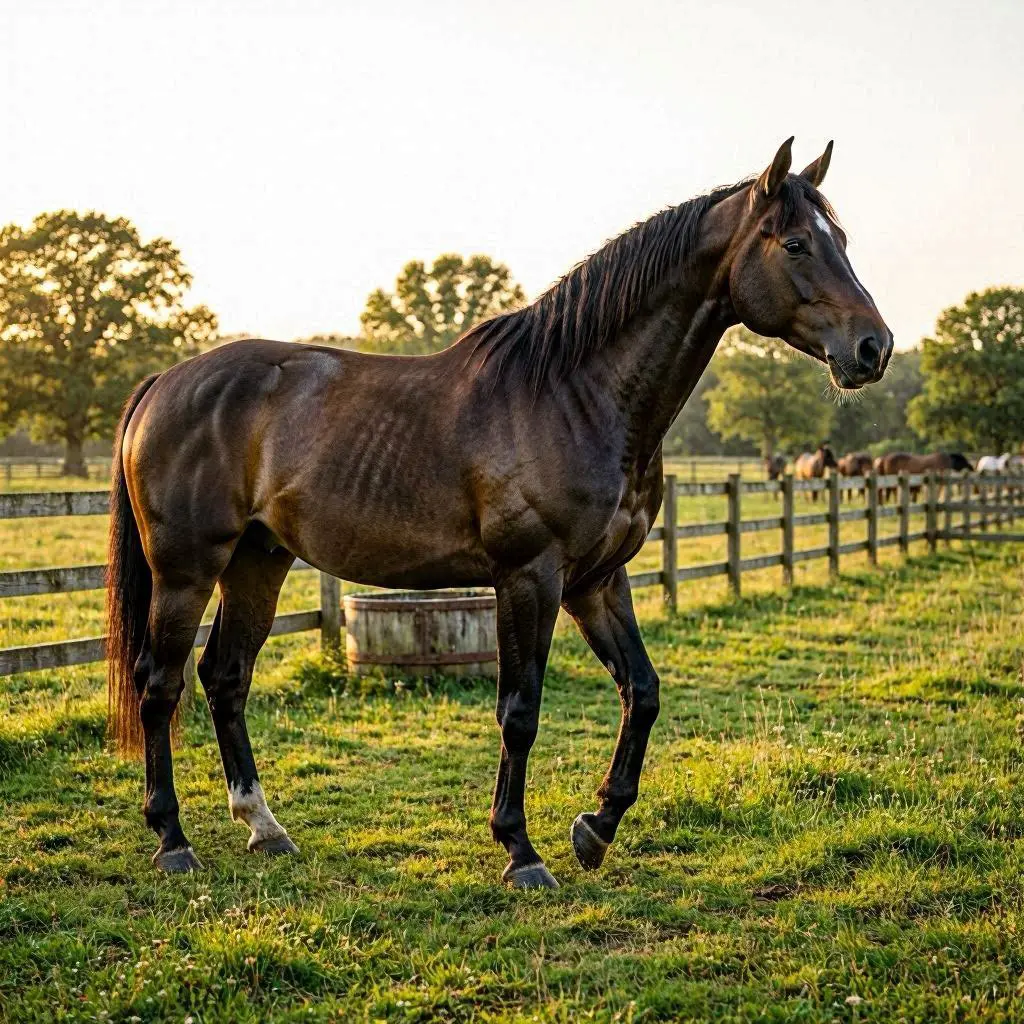
Origin: Oldenburg, Germany
Height: 16.2–17.2 hands
Color: All colors, often black or gray
One of the largest German Warmblood breeds, the Oldenburg was originally bred as a heavy carriage horse but has been continuously refined into a powerful sport horse. Oldenburgs are known for their expressive, extravagant movement and are popular in dressage and show jumping.
❹ Trakehner
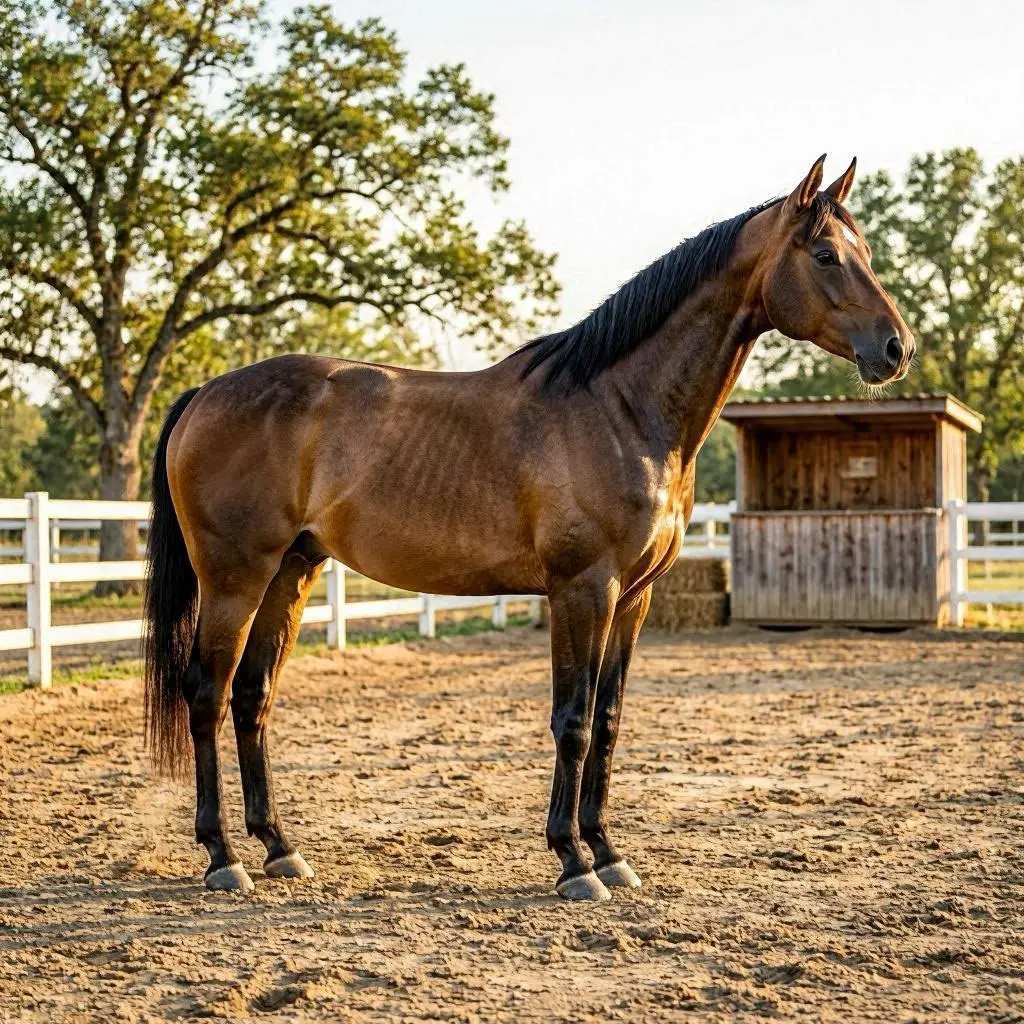
Origin: East Prussia (now Kaliningrad, Russia)
Height: 15.2–17 hands
Color: All solid colors, frequently bay or chestnut
The Trakehner is considered the most Thoroughbred-like of the German Warmbloods: lighter in build, more sensitive, and exceptionally refined. Developed at the Royal Trakehnen Stud from 1731, it has the smallest amount of cold blood of any warmblood registry, making it particularly athletic and fast. Trakehners excel in eventing and dressage.
❺ Holsteiner
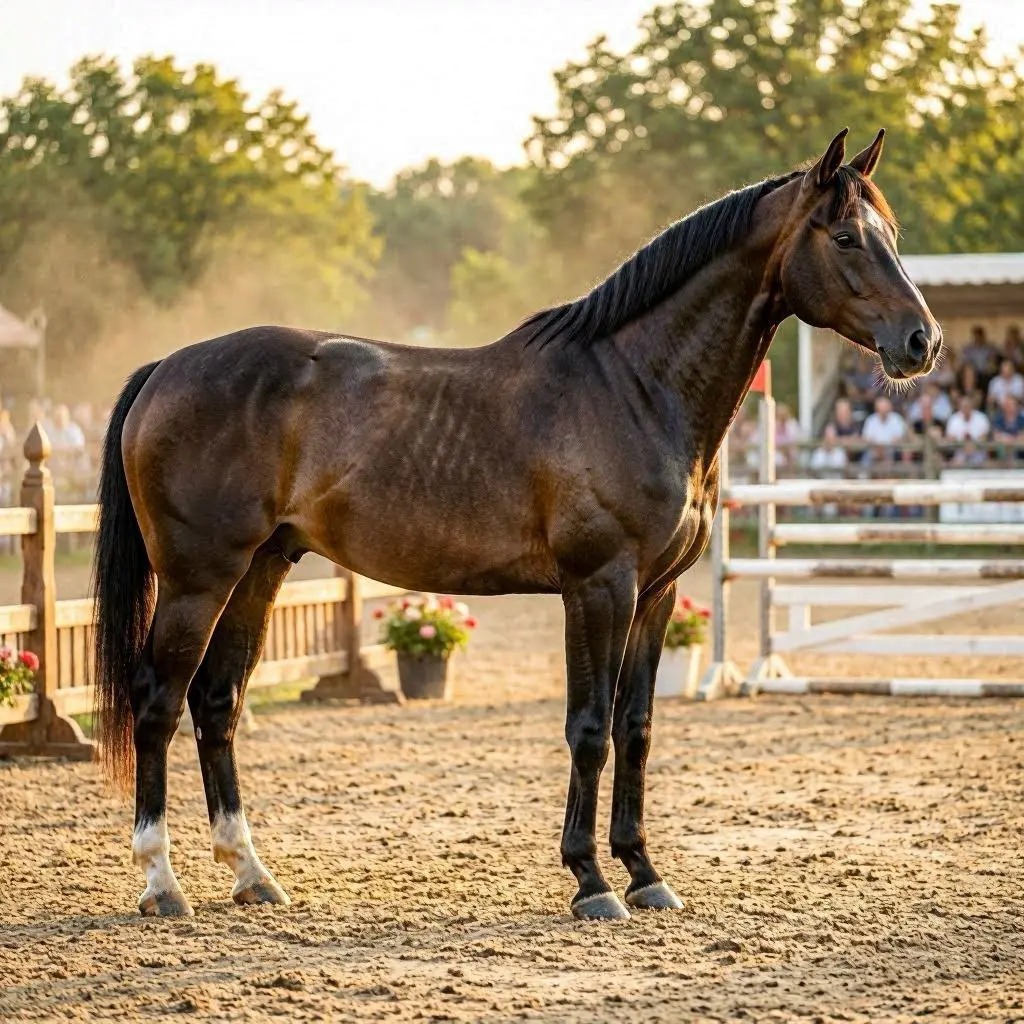
Origin: Schleswig-Holstein, Germany
Height: 16–17 hands
Color: Bay, black, gray
One of Europe’s oldest warmblood breeds, the Holsteiner was developed in the 14th century and is particularly famous for producing exceptional show jumpers. Known for their powerful hindquarters, brave character, and exceptional scope over fences, Holsteiners are a popular choice for top-level show jumping.
Gaited Horse Breeds with Pictures
Gaited horses move with a smooth, four-beat gait that replaces the bumpy trot with a gliding motion. Riders feel almost no vertical bounce, making them ideal for trail riding and long distances, particularly for older riders or those with back problems.
❶ Tennessee Walking Horse
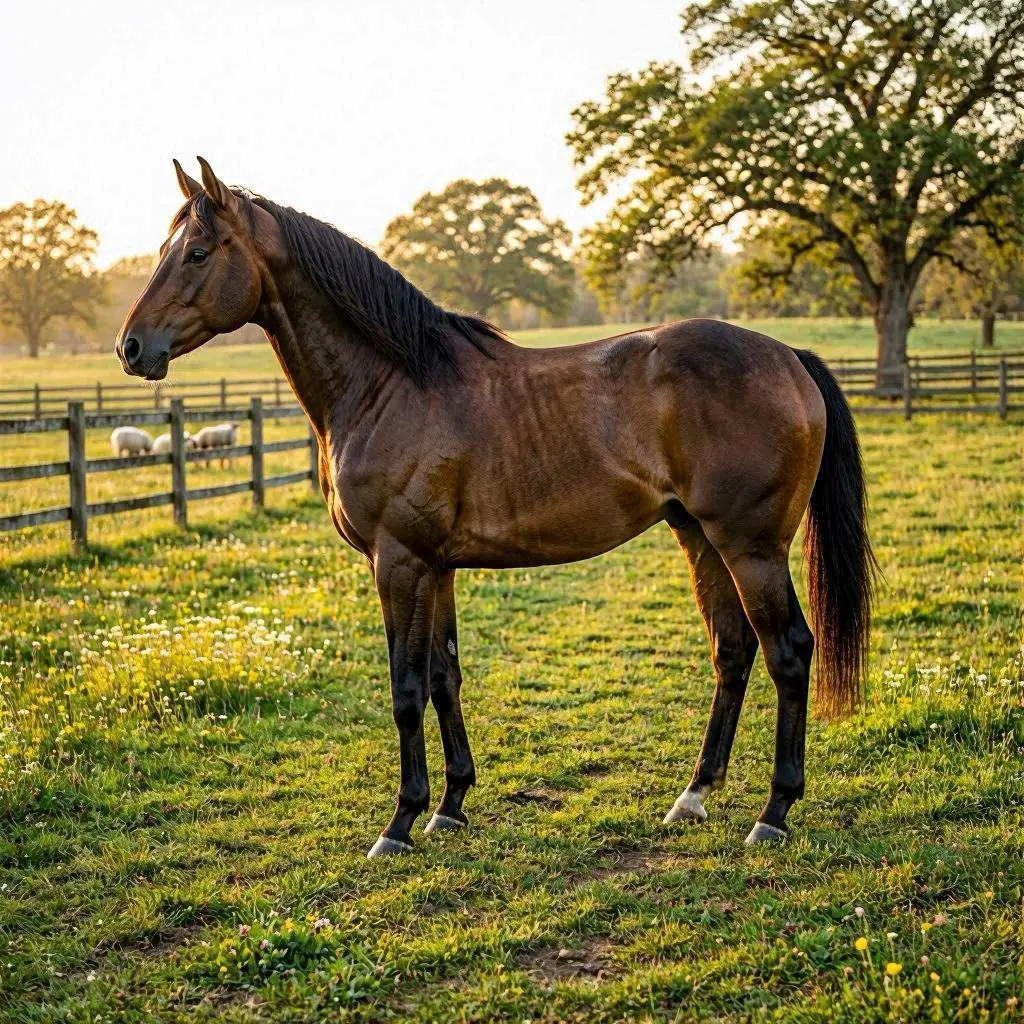
Origin: United States (Tennessee)
Height: 14.3–17 hands
Color: All colors
The Tennessee Walking Horse is the most famous gaited breed in America, known for its signature “running walk”: a four-beat gait so smooth that a rider can carry a glass of water without spilling a drop. Originally bred for plantation owners who needed a comfortable horse to survey their fields all day, Tennessee Walkers are popular for trail riding, showing, and general pleasure riding.
❷ American Saddlebred
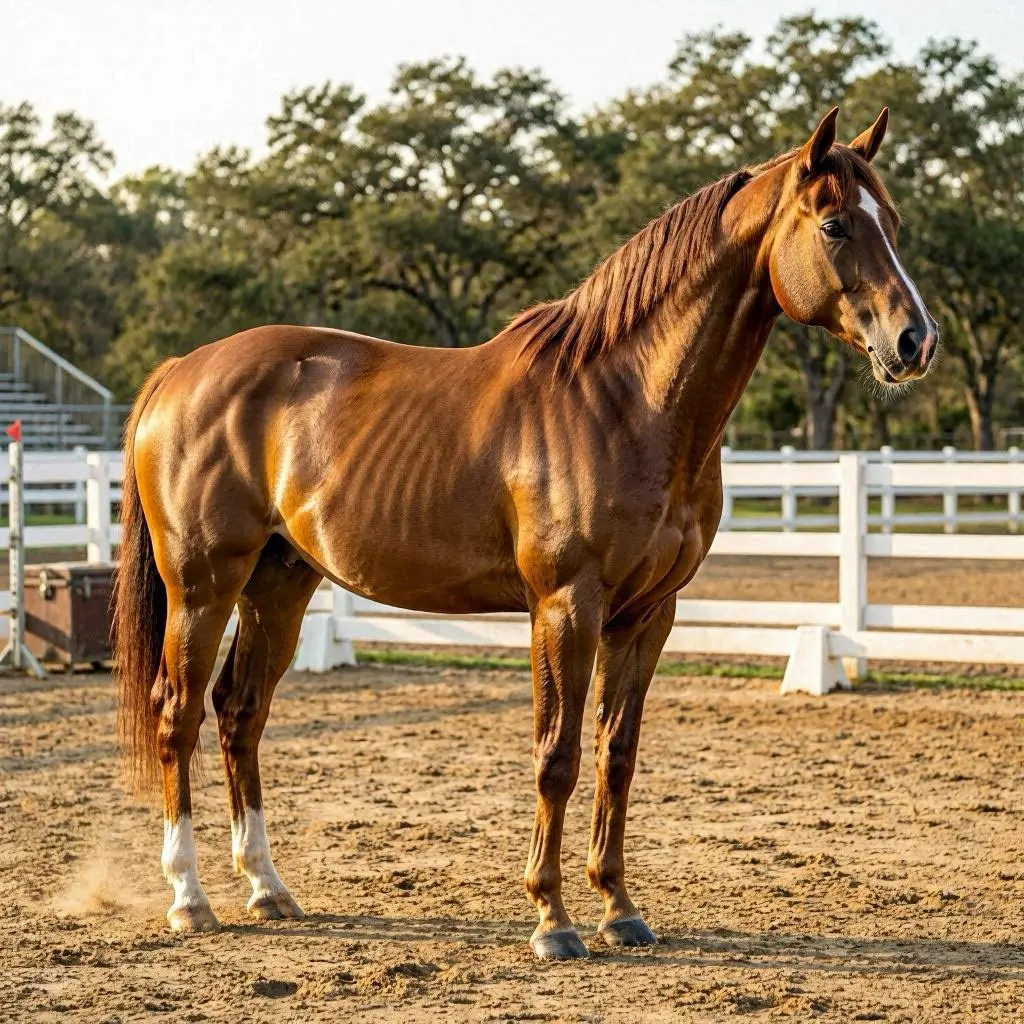
Origin: United States (Kentucky)
Height: 15–17 hands
Color: Chestnut, bay, brown, black, gray, roan
Known as “the peacock of the horse world,” the American Saddlebred is a showring breed par excellence. It can be shown as a three-gaited horse (walk, trot, canter) or a five-gaited horse, adding the slow gait and rack, a spectacular, high-stepping four-beat gait. Saddlebreds have a naturally arched neck, high tail carriage, and high-stepping action that commands attention.
❸ Missouri Fox Trotter
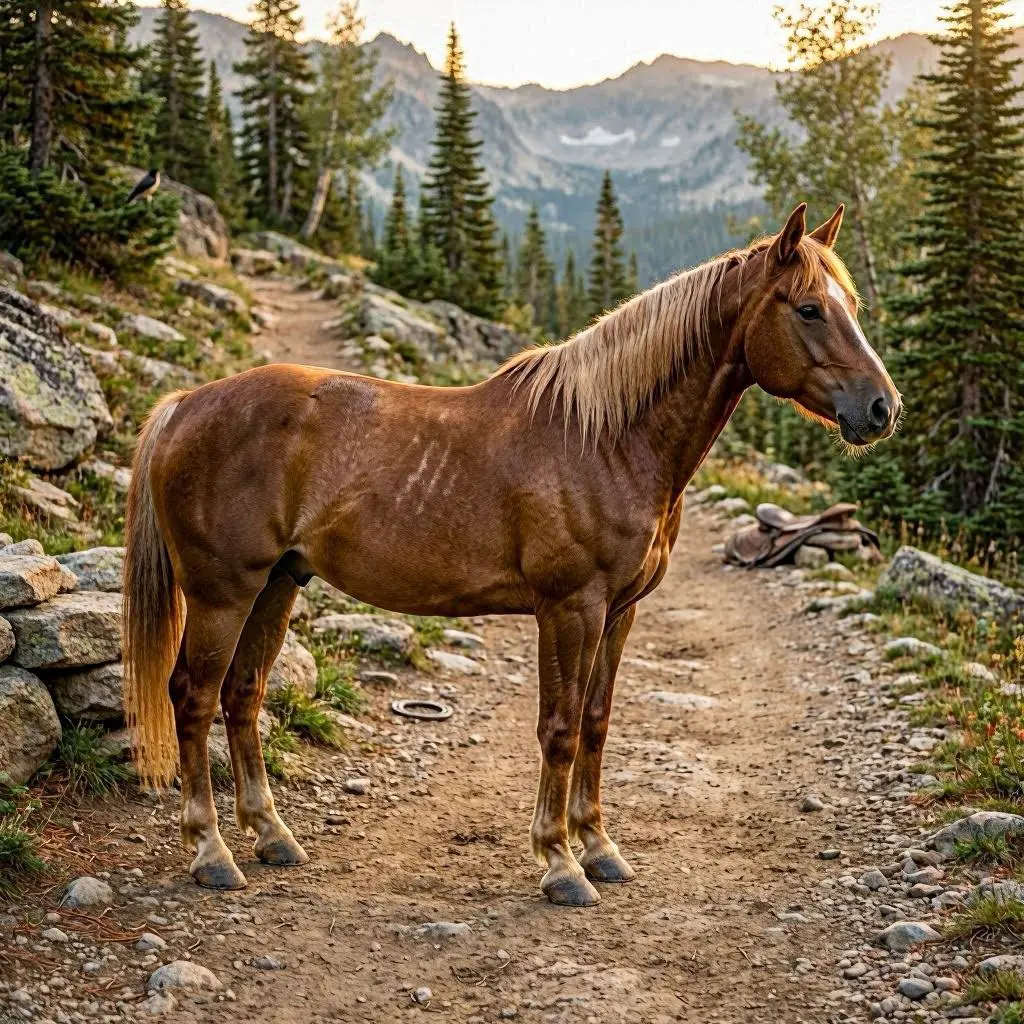
Origin: United States (Ozark Mountains)
Height: 14–16 hands
Color: All colors
Bred in the rugged Ozark Mountains where sure-footedness mattered more than speed, the Missouri Fox Trotter moves with a diagonal, shuffling four-beat “fox trot” gait. The front foot strikes the ground a split second before the diagonal hind foot, producing a smooth, comfortable ride. They are a favorite for competitive and recreational trail riding in rough terrain.
❹ Paso Fino
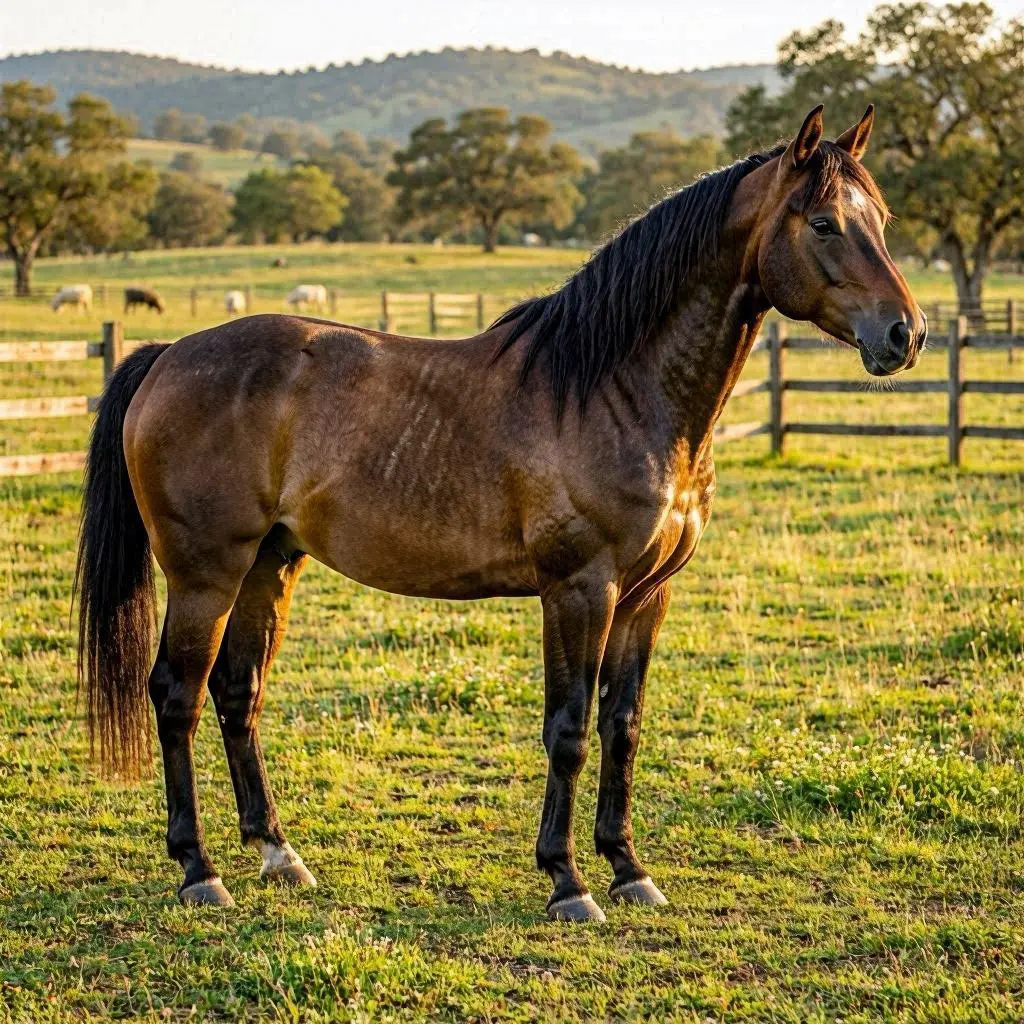
Origin: Puerto Rico and Colombia (originally from Spanish stock)
Height: 13–15.2 hands
Color: All colors
Paso Fino means “fine step” in Spanish, a name earned by the breed’s incredibly rapid, short-strided four-beat gait that is both smooth for the rider and visually mesmerizing. Descended from horses brought to the Americas by the Spanish conquistadors, the Paso Fino has three speeds within its gait: Classic Fino (slowest, most collected), Paso Corto (trail speed), and Paso Largo (fastest, covering ground).
❺ Icelandic Horse
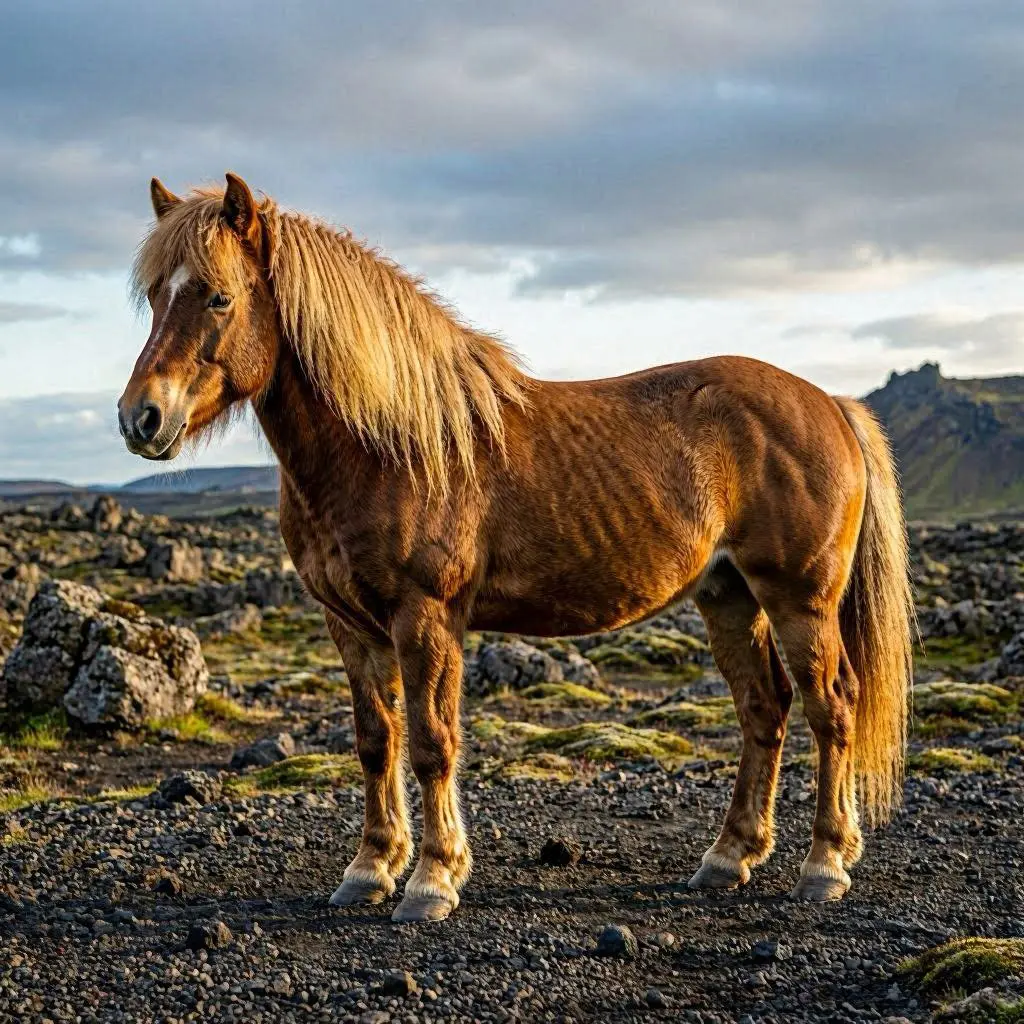
Origin: Iceland
Height: 13–14 hands (horse, not pony, by breed standard)
Color: Over 40 recognized colors
Brought to Iceland by Viking settlers in the 9th century and isolated for over 1,000 years, the Icelandic Horse is genetically unique and remarkably pure. It is the only horse breed in Iceland, and Icelandic law prohibits the importation of foreign horses. Famous for two extra gaits beyond walk, trot, and canter: the tolt (a smooth four-beat gait) and the flying pace (a fast two-beat lateral gait used for racing). Icelandics are hardy, long-lived, and exceptionally friendly with people.
❻ Peruvian Paso
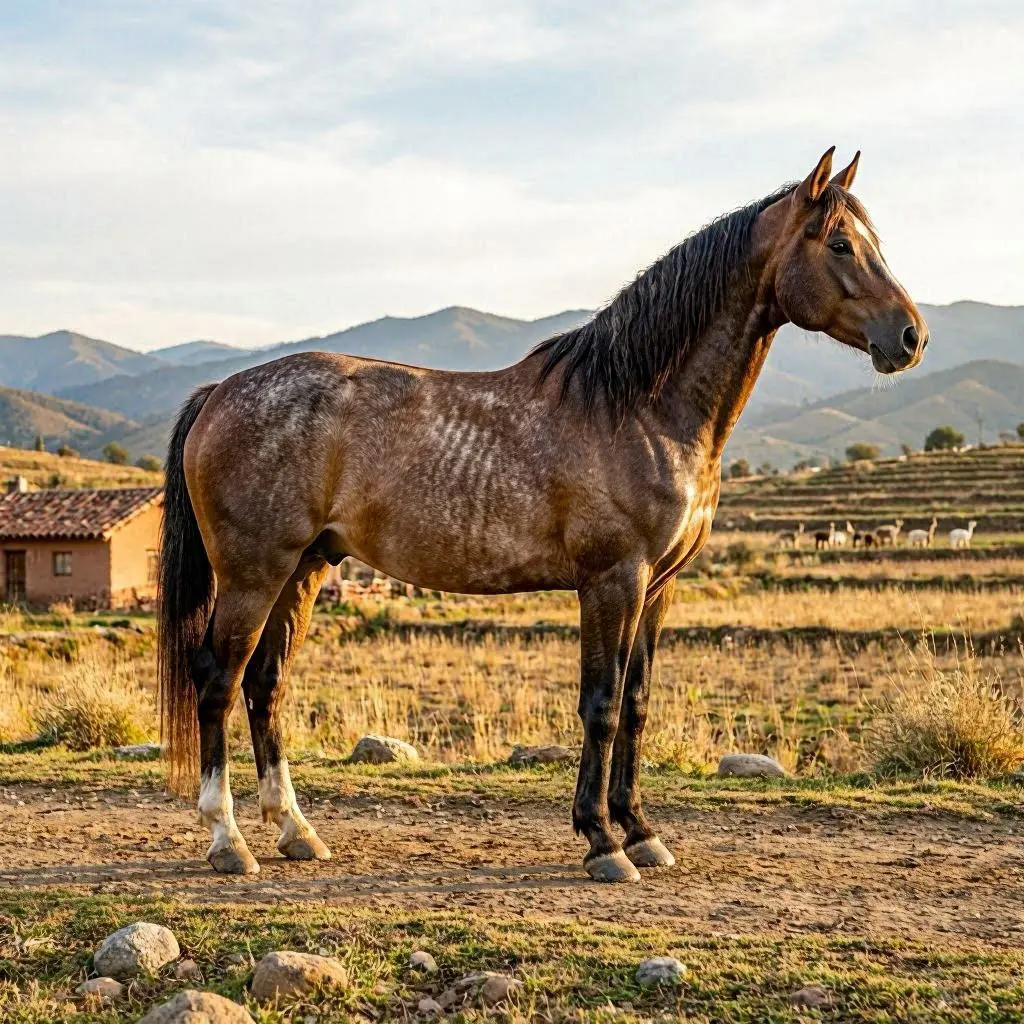
Origin: Peru
Height: 14.1–15.2 hands
Color: All solid colors
Bred over 400 years in Peru from Spanish horses, the Peruvian Paso produces its smooth gait entirely through genetics, as foals are born with it and need no training to perform it. The breed is unique in possessing “termino,” an outward rolling motion of the front lower legs during the stride, similar to a swimmer’s arm stroke. It is the national horse of Peru and is protected by the Peruvian government as a cultural heritage treasure.
Pony Breeds
Pony breeds are small but incredibly strong, intelligent, and versatile horses that have adapted to some of the harshest environments in the world. Despite their size, many ponies are capable of carrying riders, pulling loads, and competing in equestrian sports at high levels. They are especially popular as children’s mounts, but several breeds are powerful enough for adult riding and professional use.
❶ Shetland Pony
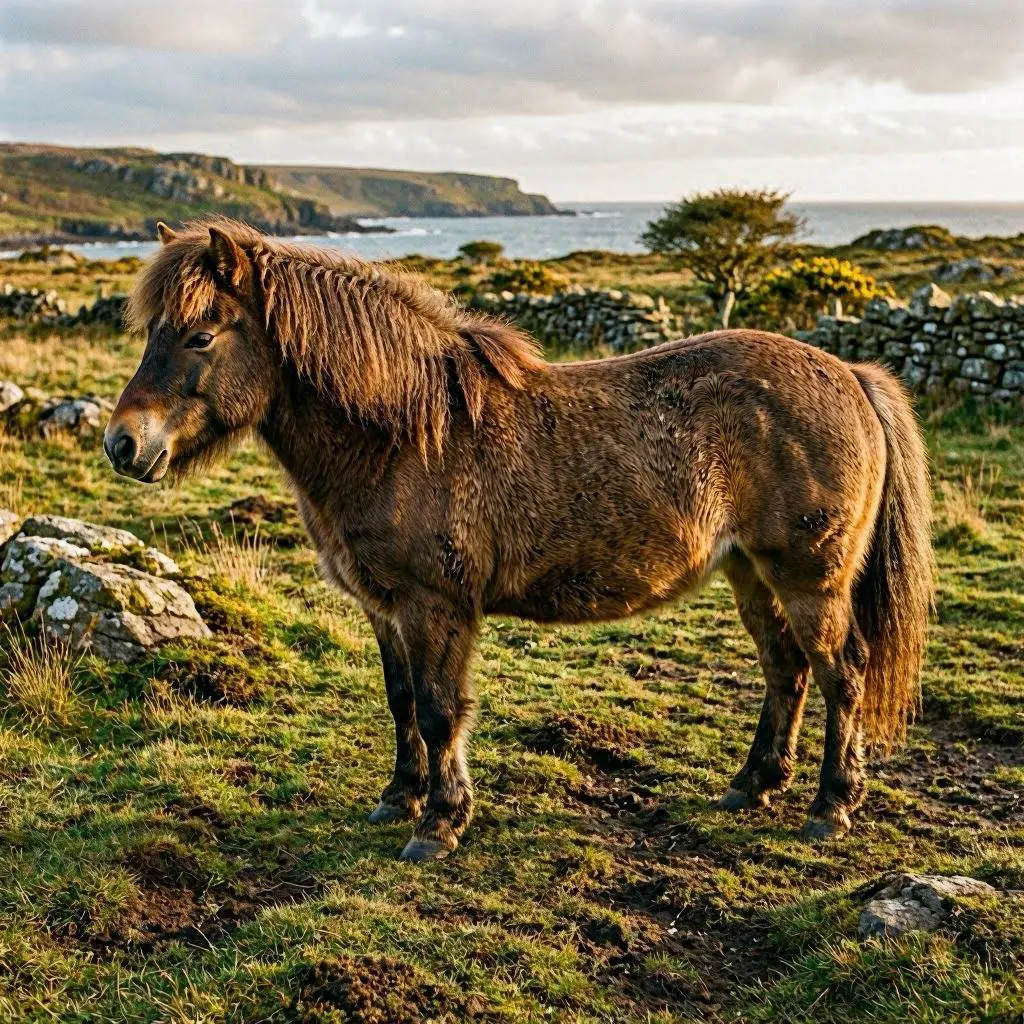
Origin: Shetland Islands, Scotland
Height: Up to 10.2 hands (maximum 42 inches)
Color: All colors and patterns
The smallest pony breed in the British Isles, the Shetland is also pound-for-pound the strongest equine in the world, capable of carrying up to twice its own weight. Originally used in Scottish coal mines as pit ponies, Shetlands today are a beloved first mount for children. Their thick double coat evolved to survive the harsh subarctic climate of the Shetland Islands.
❷ Welsh Pony
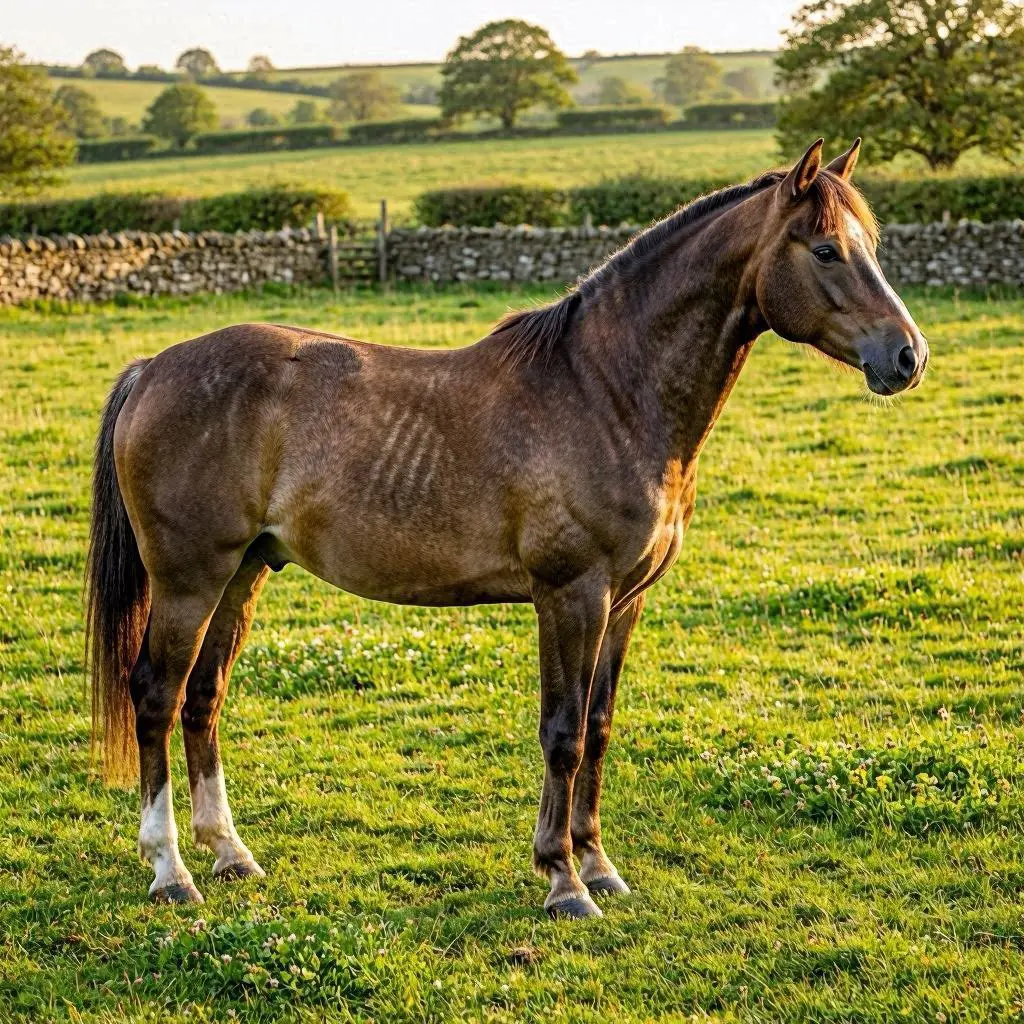
Origin: Wales
Height: Up to 12.2 hands (Section A) to 13.2 hands (Section B)
Color: All solid colors
The Welsh Pony comes in four sections (A through D) ranging from the tiny Welsh Mountain Pony to the larger Welsh Cob. Known for their beauty, intelligence, and spirit, Welsh Ponies and Cobs are used for children’s showing, driving, and adult riding. The Welsh Cob in particular is strong enough to carry adult riders.
❸ Connemara Pony
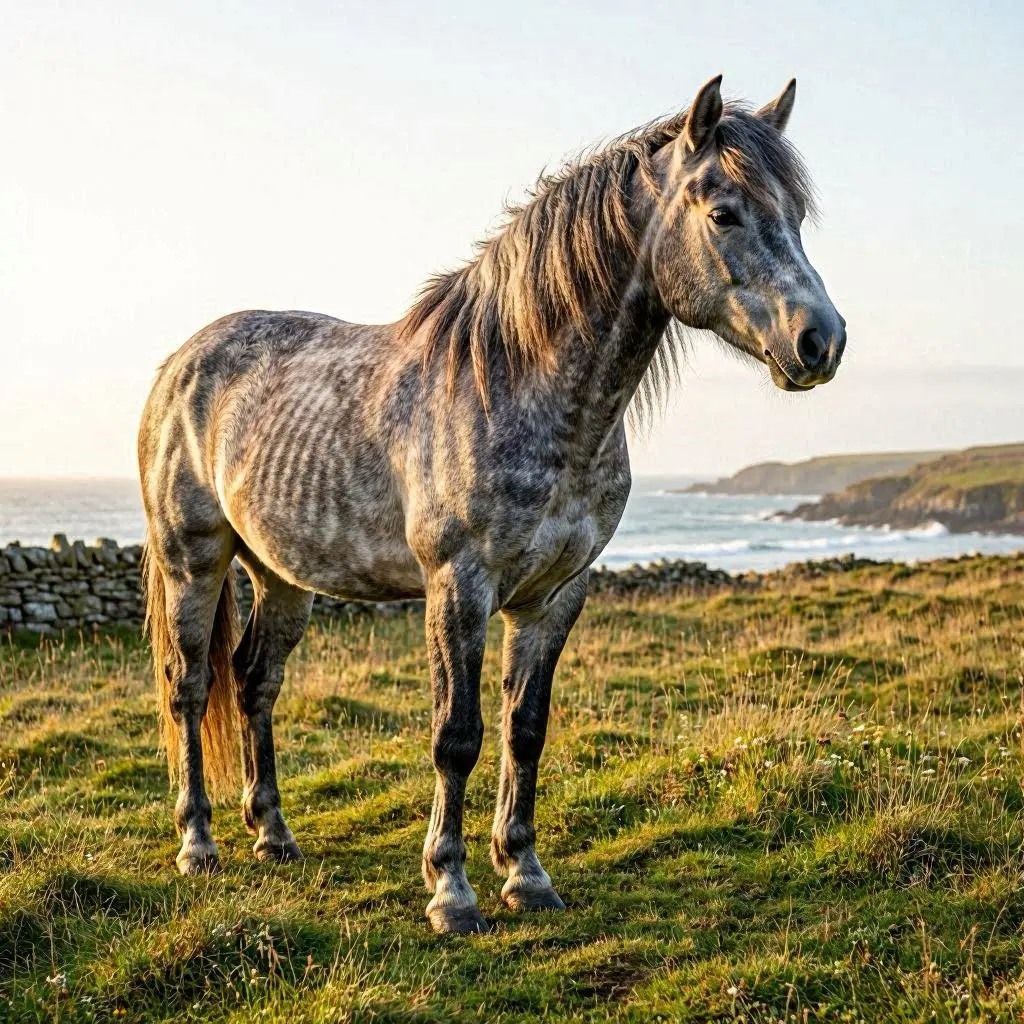
Origin: Connemara region, western Ireland
Height: 13–15 hands
Color: Gray, dun, black, bay, brown
Ireland’s only native pony breed, the Connemara developed on the rocky Atlantic coastline of western Ireland. Hardy, athletic, and exceptionally brave, Connemaras punch well above their size, and many can carry adult riders and compete at national and international level in show jumping and eventing. They are considered one of the most talented jumping pony breeds in the world.
❹ Dartmoor Pony
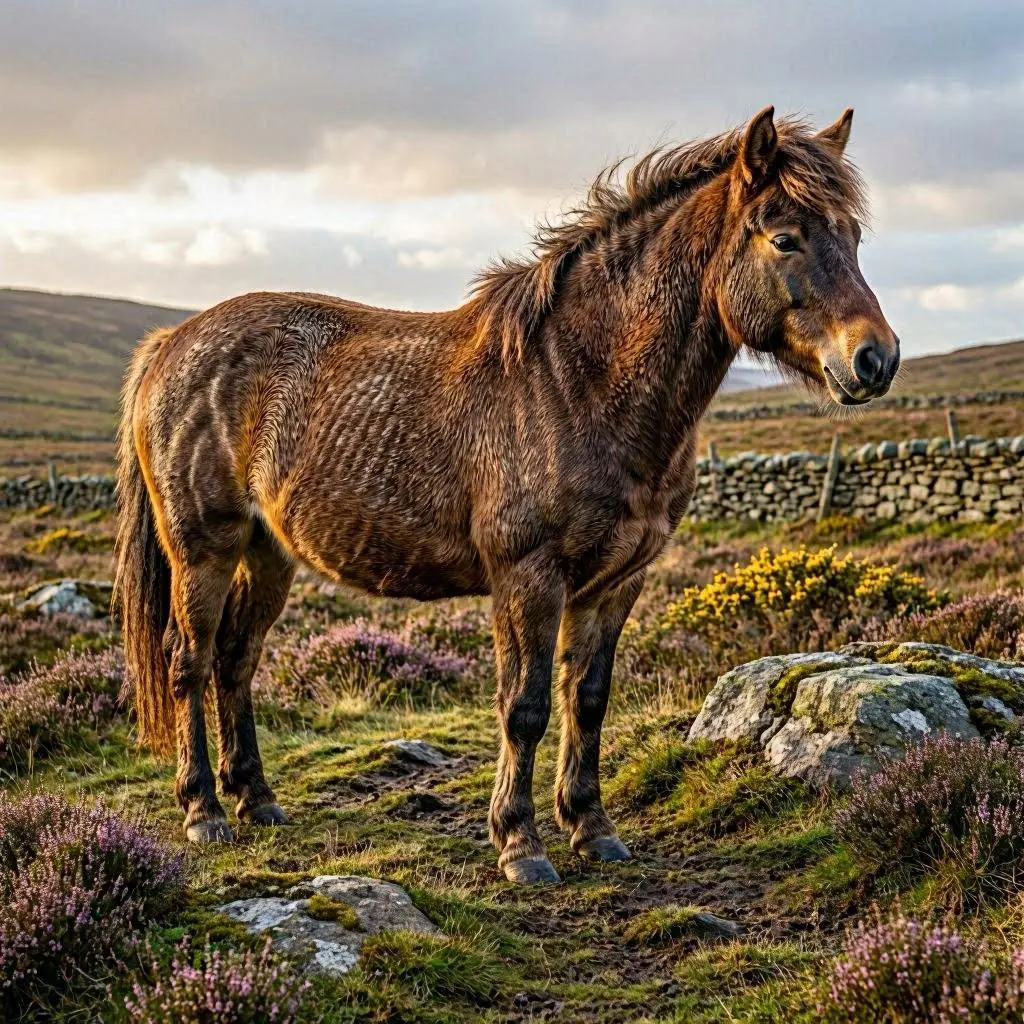
Origin: Dartmoor, Devon, England
Height: Up to 12.2 hands
Color: Bay, black, brown
One of Britain’s oldest native breeds, the Dartmoor Pony evolved over thousands of years on the harsh, windswept moorlands of Devon. Critically endangered today with fewer than 1,000 registered worldwide, the Dartmoor is a calm, gentle pony ideal for children. Conservation programs in the UK are actively working to increase numbers.
❺ Miniature Horse
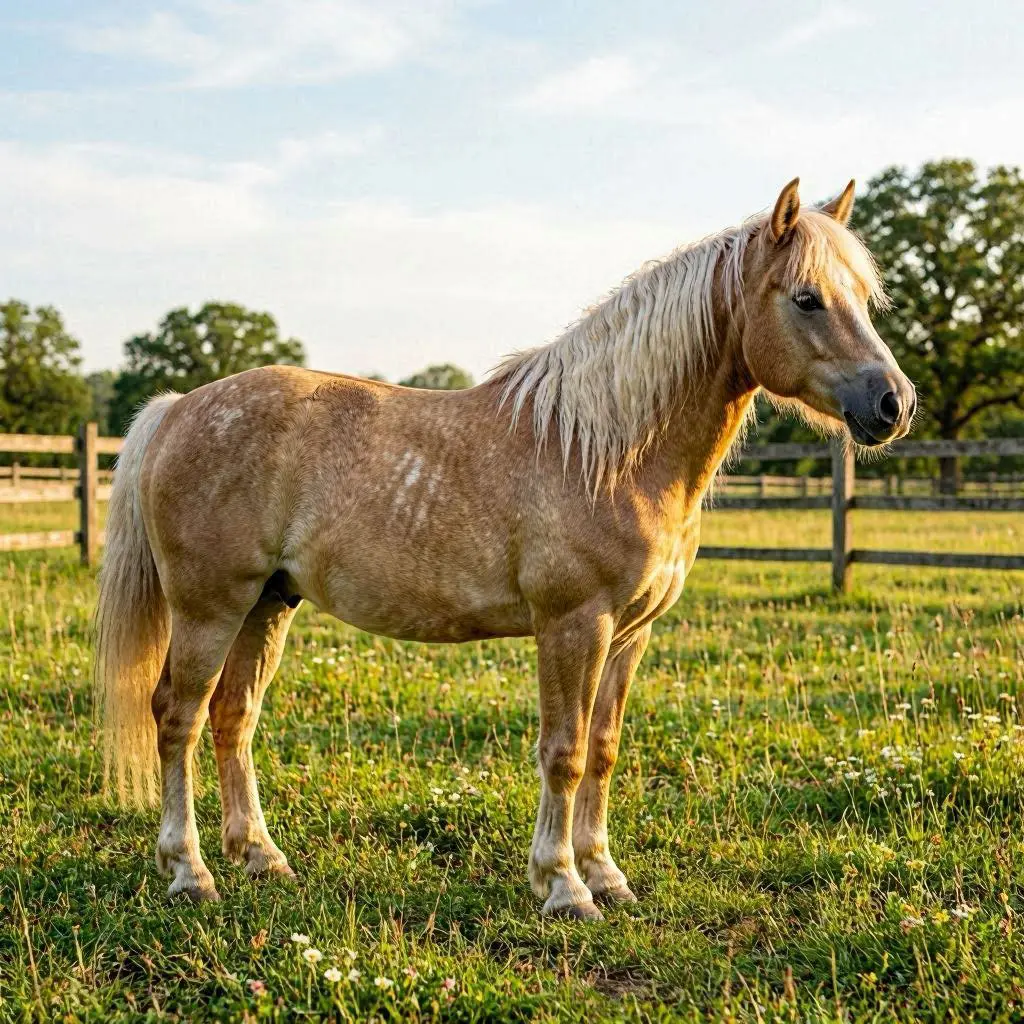
Origin: Europe and United States
Height: Under 34–38 inches (depending on registry)
Color: All colors
The Miniature Horse is not a pony but a proportionally small version of a full horse, with the same body proportions, just dramatically smaller. Bred originally as pets for European royalty and later as mine horses in the United States, Miniature Horses today serve as companion animals, therapy animals, and are shown in-hand and driven. They are recognized as horses, not ponies, by their registries.
Rare and Heritage Horse Breeds with Pictures
Rare and heritage horse breeds represent some of the most ancient, endangered, and culturally significant equines in the world. Many of these horses have survived near extinction, while others remain living links to ancient civilizations, warfare traditions, and early domestication history.
❶ Caspian Horse
Origin: Iran
Height: 10–12.2 hands
Considered the oldest horse breed in the world, the Caspian was thought extinct until rediscovered near the Caspian Sea in 1965. It resembles a miniature Arabian and is believed to be an ancestor of the Arabian breed. Despite its small size, it can jump proportionally higher than most full-sized horses.
❷ Przewalski’s Horse
Origin: Central Asian steppes
Height: 12–14 hands
Color: Dun with dorsal stripe and zebra leg markings
The only truly wild (never domesticated) horse still in existence. Extinct in the wild by the 1960s, it was preserved through zoo breeding programs and successfully reintroduced to Mongolia. It is genetically distinct from domestic horses with 66 chromosomes (domestic horses have 64). Cave paintings suggest ancient humans depicted this horse 20,000 years ago.
❸ Marwari Horse
Origin: Marwar region, Rajasthan, India
Height: 14.2–16 hands
Color: All colors, often gray or chestnut
The Marwari is India’s most famous native horse breed, identifiable by its distinctive inward-curving ears that meet at the tips and can rotate 180 degrees. Bred by Rajput warriors for centuries, the Marwari is celebrated for its loyalty. It was said to carry fallen warriors from the battlefield. Traditionally exported in very limited numbers, making it rare outside India.
❹ Nokota Horse
Origin: North Dakota, United States
Height: 14.2–17 hands
Color: Blue roan, gray, black
A descendant of horses belonging to the Lakota Sioux and the horses of Sitting Bull, the Nokota is a rare American heritage breed saved from near-extinction in the late 20th century. Known for its intelligence, endurance, and distinctive blue roan coloring, it is recognized as a living piece of American frontier history.
Popular Horse Breeds at a Glance
| Breed | Origin | Height | Best For |
|---|---|---|---|
| Arabian | Arabia | 14.1–15.1 hh | Endurance, showing |
| Thoroughbred | England | 15.2–17 hh | Racing, jumping |
| Quarter Horse | USA | 14.3–16 hh | Ranch, racing, trails |
| Appaloosa | USA | 14.2–16 hh | Trail, western events |
| Friesian | Netherlands | 15–17 hh | Dressage, driving |
| Andalusian | Spain | 15–16.2 hh | Dressage, classical work |
| Shire | England | 16–18+ hh | Draft work, shows |
| Clydesdale | Scotland | 16–18 hh | Draft work, parades |
| Hanoverian | Germany | 15.3–17.2 hh | Olympic sport |
| Tennessee Walker | USA | 14.3–17 hh | Pleasure, trail |
| Icelandic | Iceland | 13–14 hh | Gaited trail, all-purpose |
| Shetland Pony | Scotland | Up to 10.2 hh | Children, driving |
Horse Breeds by Continent
Horse Breeds in Europe
Europe is home to many of the world’s most refined sport horses, powerful draft breeds, and classical riding horses developed for farming, transport, and modern equestrian sports.
- Thoroughbred – A fast racing horse known for speed and endurance.
- Andalusian Horse – A graceful Spanish horse famous for dressage and classical riding.
- Friesian Horse – A striking black horse known for long mane and elegant movement.
- Shire Horse – One of the largest draft horses, built for heavy work.
- Clydesdale – Strong Scottish horse known for feathered legs and show appearance.
- Percheron – Powerful French draft horse used for farm and carriage work.
- Hanoverian – Top Olympic sport horse for dressage and jumping.
- Holsteiner – Famous German breed known for exceptional show jumping ability.
- Oldenburg – Large German warmblood used in elite equestrian sports.
Horse Breeds in Asia
Asia has some of the oldest and most culturally significant horse breeds, often adapted to deserts, mountains, and extreme climates.
- Arabian Horse – Ancient desert breed known for endurance and intelligence.
- Akhal-Teke – Rare golden horse known for speed and metallic coat shine.
- Marwari Horse – Indian breed with distinctive inward-curving ears.
- Mongolian Horse – Hardy breed known for survival in extreme cold.
- Caspian Horse – Very small ancient breed believed to be an ancestor of modern horses.
- Przewalski’s Horse – The only true wild horse still existing today.
Horse Breeds in North America
North America developed versatile working and riding horses used for ranching, racing, and trail riding.
- Quarter Horse – Fastest sprinter over short distances and excellent ranch horse.
- Appaloosa – Known for its spotted coat patterns and endurance.
- Paint Horse – Strong stock horse with distinctive colored markings.
- Mustang – Wild horse symbol of American freedom and survival.
- Tennessee Walking Horse – Famous for its smooth, comfortable gait.
- American Saddlebred – Stylish show horse with high-stepping movement.
- Morgan Horse – Versatile breed used for riding, driving, and sport.
- Nokota Horse – Rare heritage horse linked to Native American history.
Horse Breeds in South America
South American horses are known for smooth natural gaits and endurance, often used for long-distance riding in rural landscapes.
- Paso Fino – Smooth gaited horse with extremely comfortable ride.
- Peruvian Paso – Famous for its natural, elegant four-beat gait.
- Criollo Horse – Tough, enduring breed used for ranch work and survival riding.
Horse Breeds in Africa
Africa has fewer native horse breeds, but imported breeds adapted over time to local conditions, especially desert environments.
- Barb Horse – Ancient North African horse known for stamina and strength.
- Sudan Country-bred Horse – Local type used for riding and transport.
Horse Breeds in Australia
Australia is known for hardy working horses developed for ranching and survival in harsh outback conditions.
- Australian Stock Horse – Agile working horse used for cattle mustering.
- Brumby – Feral horse population descended from escaped domestic horses.
Oceania / Special Category
Some unique breeds don’t fit traditional continental groupings due to isolation and special genetics.
- Icelandic Horse – Small but powerful breed known for unique extra gaits and Viking origin.
How to Choose the Right Horse Breed
Choosing a horse breed depends on five key factors:
- Purpose: Are you racing, trail riding, showing, doing farm work, or looking for a companion? Match the breed to the job.
- Rider experience: Hot-blooded horses like Arabians and Thoroughbreds are better for experienced riders. Draft horses and many warmbloods are calmer and more forgiving for beginners.
- Budget: Thoroughbreds and top sport warmbloods can cost tens of thousands of dollars. Quarter Horses, Mustangs, and many draft breeds are significantly more affordable.
- Climate: Icelandic horses and Shetland Ponies thrive in cold, harsh climates. Arabians and Thoroughbreds do better in warmer, drier conditions.
- Time and space: All horses require regular feeding, veterinary care, farrier visits, and exercise. Large draft breeds and active sport horses need more space and specialized care.
Thoroughbred vs. Quarter Horse
Thoroughbreds and Quarter Horses are two popular breeds known for speed but in different ways. Thoroughbreds are built for endurance and long-distance racing, while Quarter Horses are designed for short, explosive sprints and ranch versatility.
| Feature | Thoroughbred | Quarter Horse |
|---|---|---|
| Origin | England | United States |
| Build | Lean, tall, long-legged | Muscular, compact |
| Best Use | Long-distance racing, jumping | Sprint racing, ranch work, trail riding |
| Temperament | High-strung | Calm, easygoing |
| Speed | ~40 mph (long distance) | Fastest over 1/4 mile |
Conclusion
Horse breeds reflect thousands of years of human history, shaped by geography, culture, and purpose. From powerful draft horses used for heavy work to elegant sport horses built for Olympic competition, and from smooth gaited riding breeds to rare heritage horses that survived near extinction, each breed has a unique story. Understanding these differences not only helps in choosing the right horse but also reveals the deep connection between humans and one of their oldest animal partners.
FAQs
There are more than 300 recognized horse breeds worldwide, depending on different breed registries. Some organizations may list slightly different numbers based on classification standards.
The American Quarter Horse is considered the most popular horse breed in the world, especially in the United States, due to its versatility, calm temperament, and athletic ability.
The Thoroughbred is the fastest horse breed over long distances, commonly used in professional horse racing.
Breeds like the Quarter Horse, Morgan Horse, and some draft breeds are ideal for beginners because they are calm, easy to train, and reliable.
Draft breeds such as the Shire Horse and Belgian Draft Horse are considered the strongest horses in the world, capable of pulling extremely heavy loads.
Warmbloods are a group of horse breeds developed mainly in Europe by crossing hot-blooded (fast, spirited) and cold-blooded (strong, calm) horses. They are mainly used in Olympic sports like dressage, jumping, and eventing.
Gaited breeds like the Tennessee Walking Horse and Icelandic Horse are known for extremely smooth rides, making them ideal for long-distance and leisure riding.
Some of the rarest breeds include the Caspian Horse and Przewalski’s Horse. These breeds are either critically endangered or the only remaining wild horse species in the world.
You May Also Like
Horse Breeds Quiz
Horse Breeds
Which breed does the picture show?
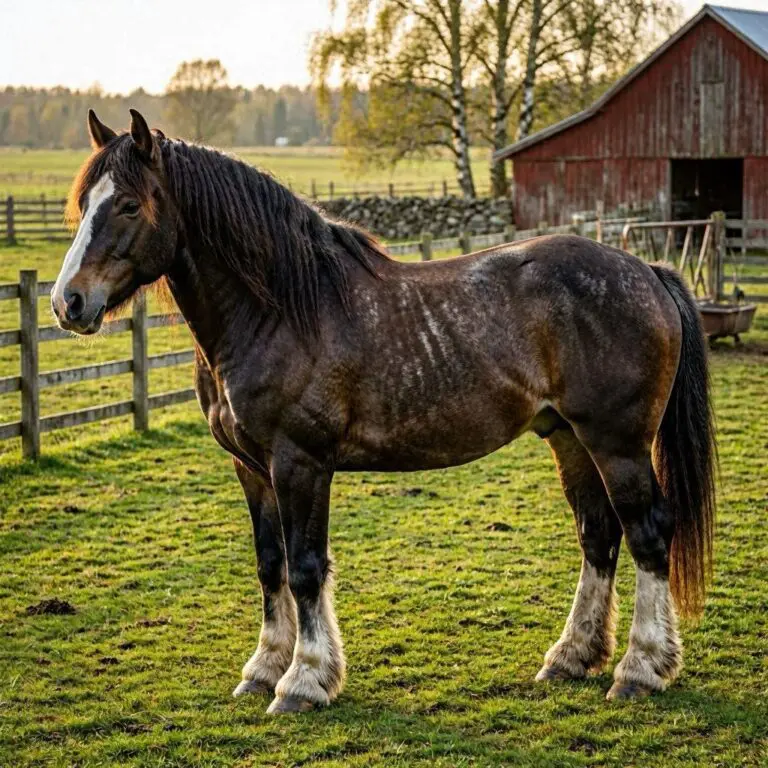
The picture shows a shire horse.
Read the picture before reading the options.
The picture shows a shire horse.
How is a horse's height measured?
One hand is four inches, and the withers is used because it does not move.
Hands at the withers, always.
A 16-hand horse stands 64 inches at the withers.
Which breed is a heavy draught horse?
Bred for pulling weight, standing over 17 hands with feathered legs.
Draught for pulling, light for speed, pony for size.
A Shire can weigh over a tonne.
Name the breed.
The oldest recognised breed, known for endurance and a dished face, is the ___.
Many Arabians also have one fewer lumbar vertebra than other horses.
The Arabian contributed to almost every light breed that followed.
The Thoroughbred traces to three Arabian stallions.
What is the Quarter Horse named for?
It outruns a Thoroughbred at that distance and loses over longer ones.
Sprinting and staying are different builds.
The Quarter Horse is the fastest over a short distance.
What separates a pony from a horse?
Ponies also tend to be stockier with thicker coats and manes.
A pony is not a baby horse.
A full-grown Shetland is a pony; a foal is not.
Turn on JavaScript for the interactive quiz. The full practice set is shown above.