Animals with sopts are some of the most fascinating creatures in nature. From powerful big cats like leopards to small insects and sea animals, spots appear in many different shapes and patterns. These markings are not just for beauty; they often help animals blend into their surroundings and stay safe from danger.
In this article, you will discover animals with spots along with their names, pictures, and simple facts. Each animal has something unique about its spotted pattern, making them even more interesting to learn about.
Why Do Animals Have Spots?
Spots are not random. They emerge from a biological process first described by mathematician Alan Turing in 1952. Two chemicals spread through developing tissue at different speeds, one triggering pigment production and one blocking it. Their push and pull creates patterns including spots, rosettes and speckles.
The four main functions of spots:
- Camouflage – Spots break up an animal’s body outline in dappled light, leaf litter, reef structures and sandy terrain, making predators and prey harder to detect.
- Warning signals – In insects and amphibians, bright spots tell predators the animal is toxic or foul-tasting.
- Individual identity – No two giraffes, whale sharks or leopards share the same spot pattern. Scientists track individual animals in the wild using spot patterns instead of physical tags.
- Thermoregulation – In giraffes, each skin patch sits above a complex blood vessel network linked to body temperature control in African heat.
Explore more animals that start with different letters:
A | B | C | D | E | F | G | H | I | J | K | L | M | N | O | P | Q | R | S | T | U | V | W | X | Y | Z
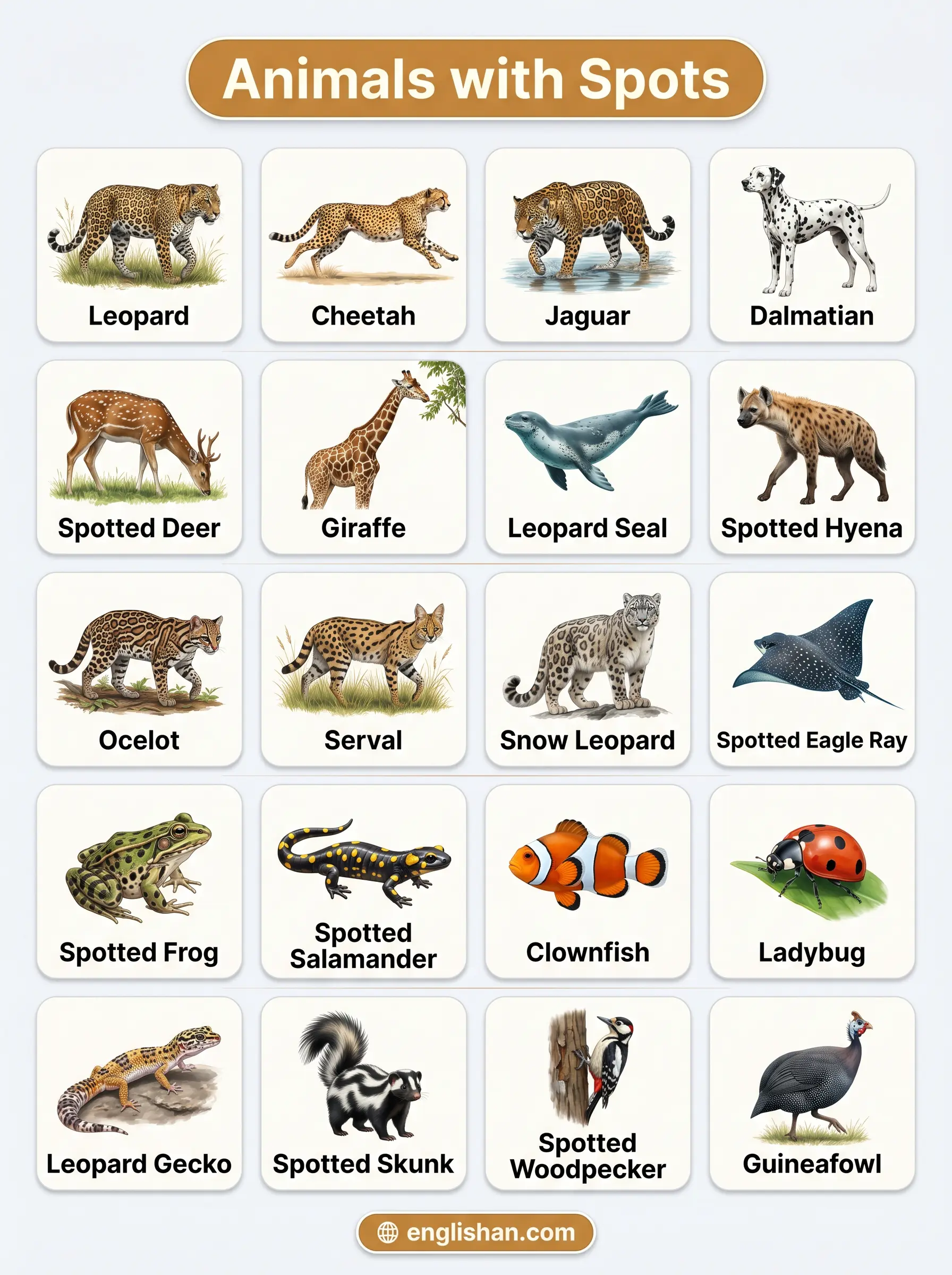
Most Popular Animals with Spots Names
❶ Leopard
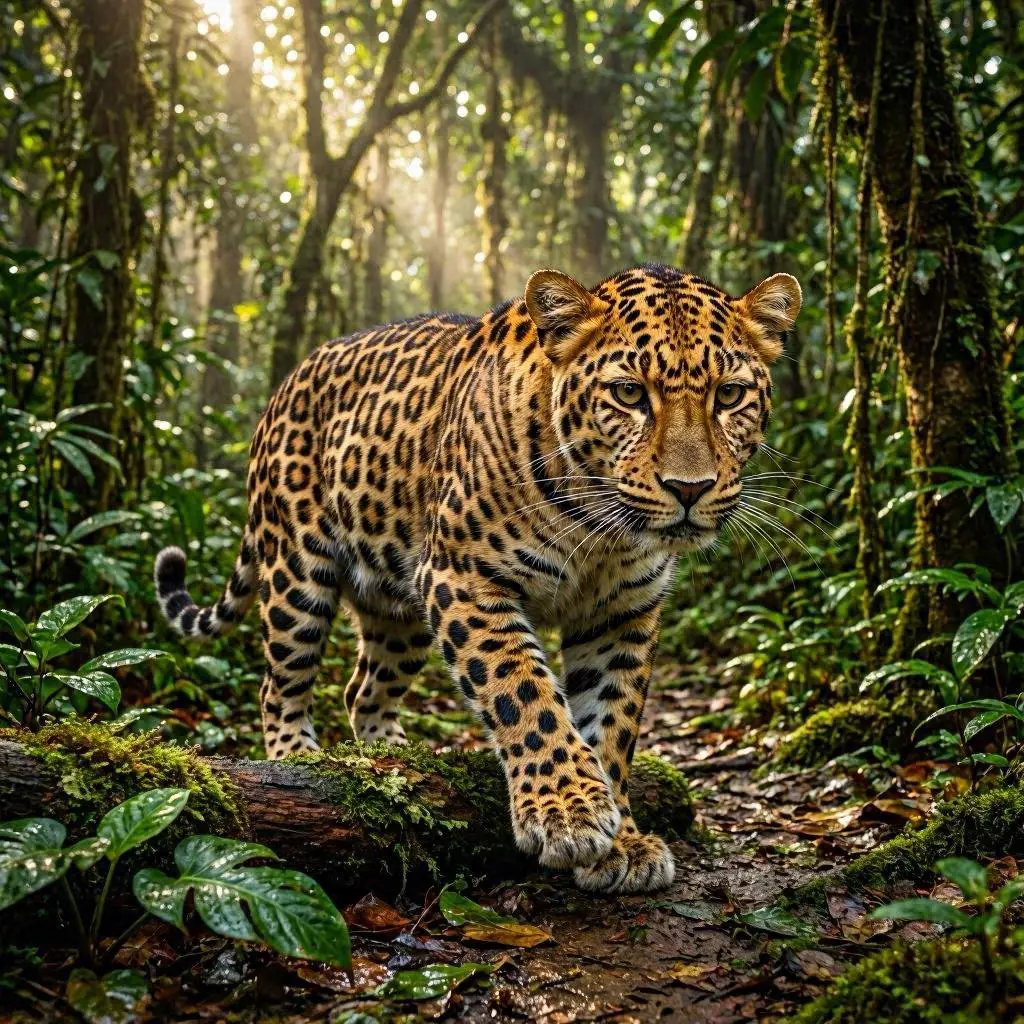
The leopard is a powerful wild cat found in Africa and parts of Asia. It has golden-yellow fur covered with black rosette-shaped spots. These spots help it blend into forests and grasslands while hunting quietly.
❷ Cheetah
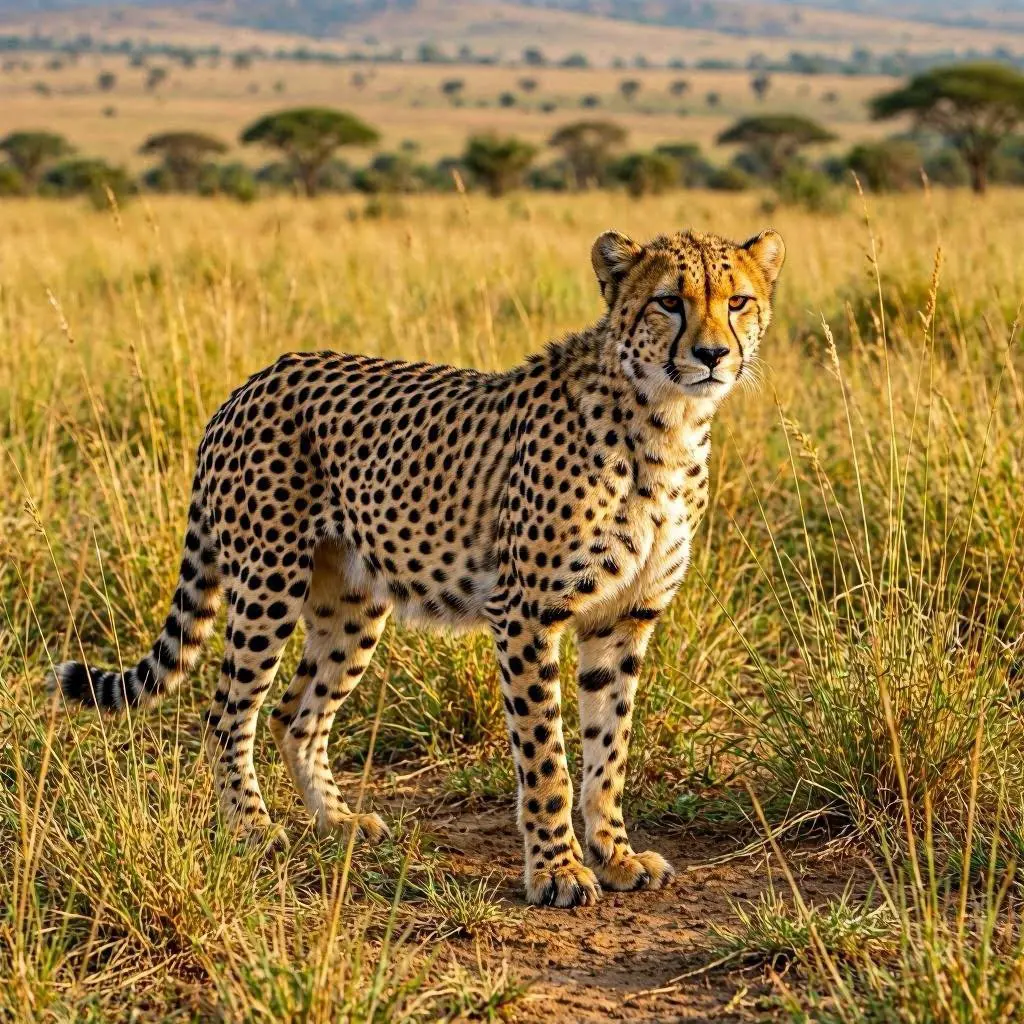
The cheetah is the fastest land animal in the world. It has a slim body with small black round spots all over its golden coat. These spots help break up its outline when it is running through open plains.
❸ Jaguar
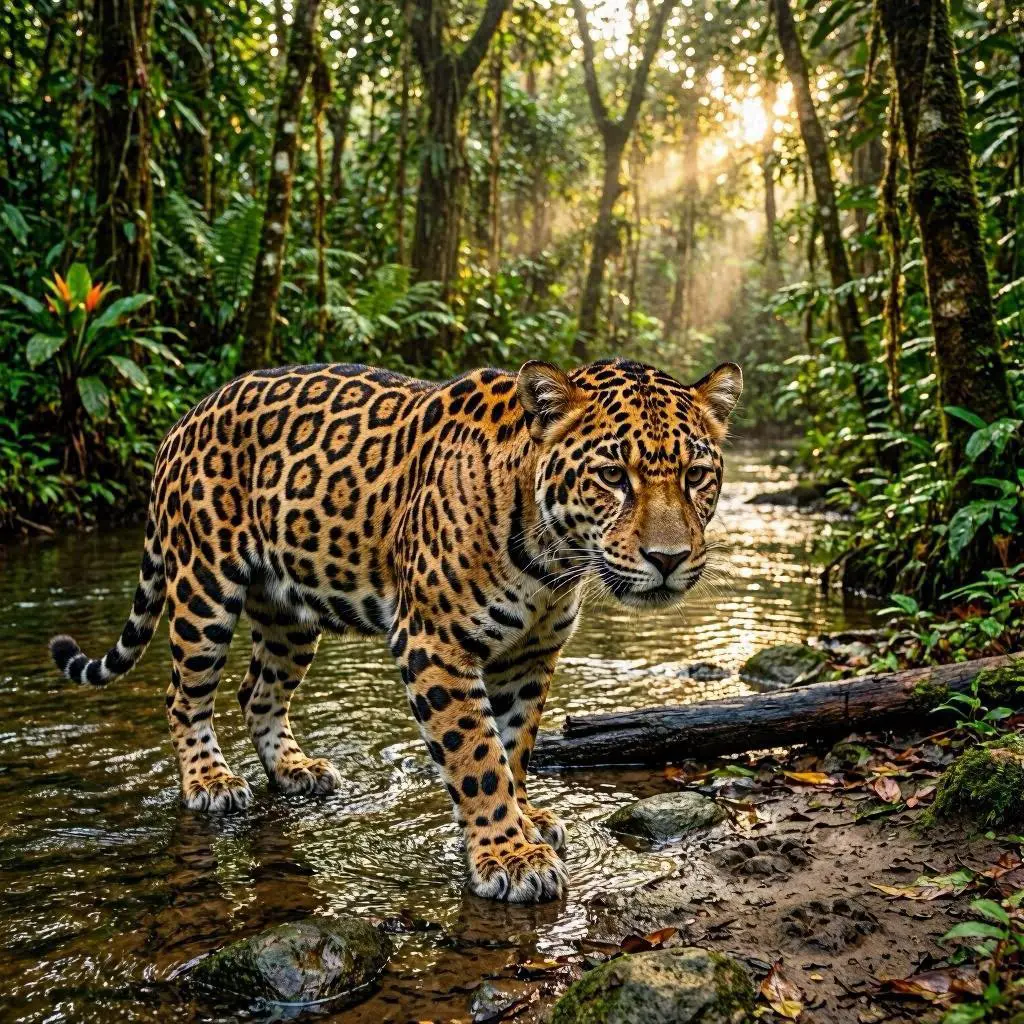
The jaguar is a large wild cat native to the Americas. It has strong jaws and a muscular body with dark rosette patterns on its yellow coat. Its spots often have small dots inside them, which makes it easy to distinguish from leopards.
❹ Dalmatian
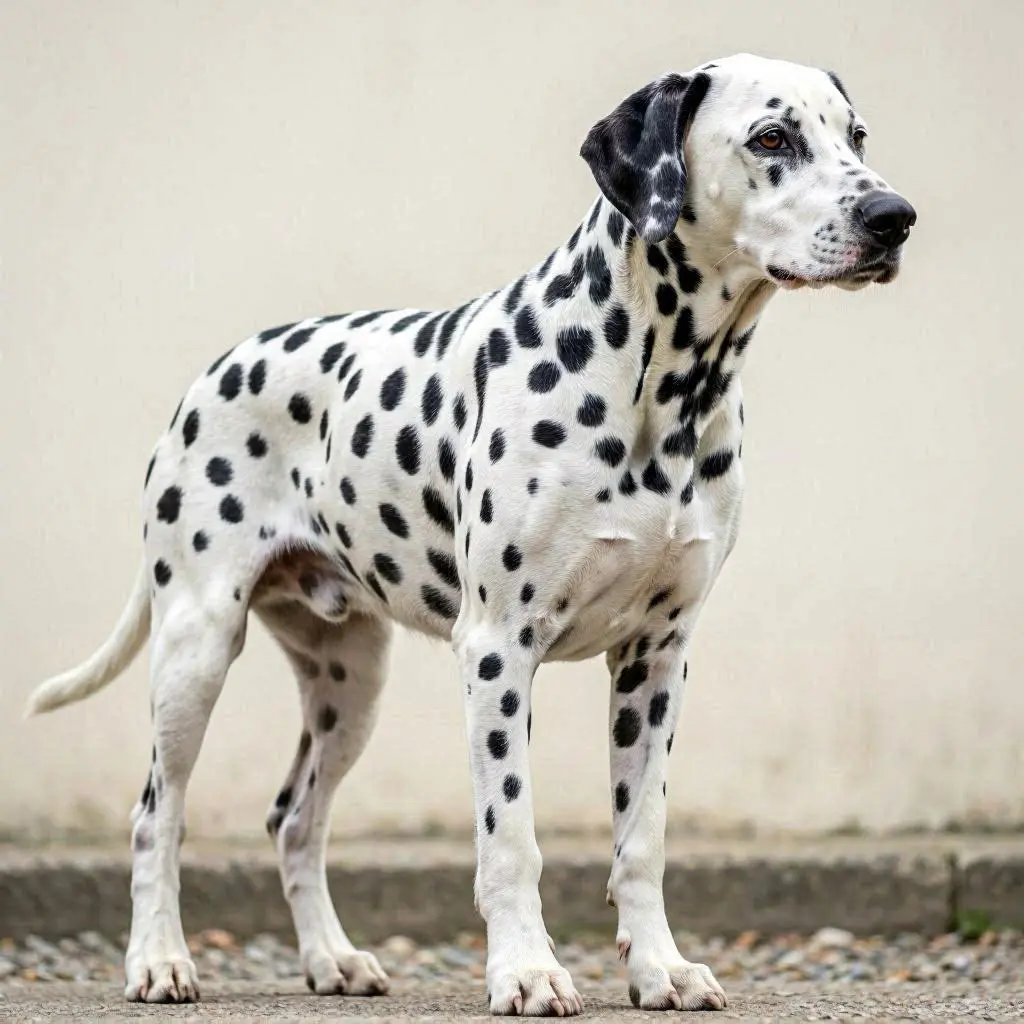
The Dalmatian is a domestic dog breed known for its white coat with black or liver-colored spots. It is energetic, intelligent, and often used as a firehouse mascot in history. Puppies are usually born white, and spots develop as they grow.
❺ Spotted Deer (Chital)
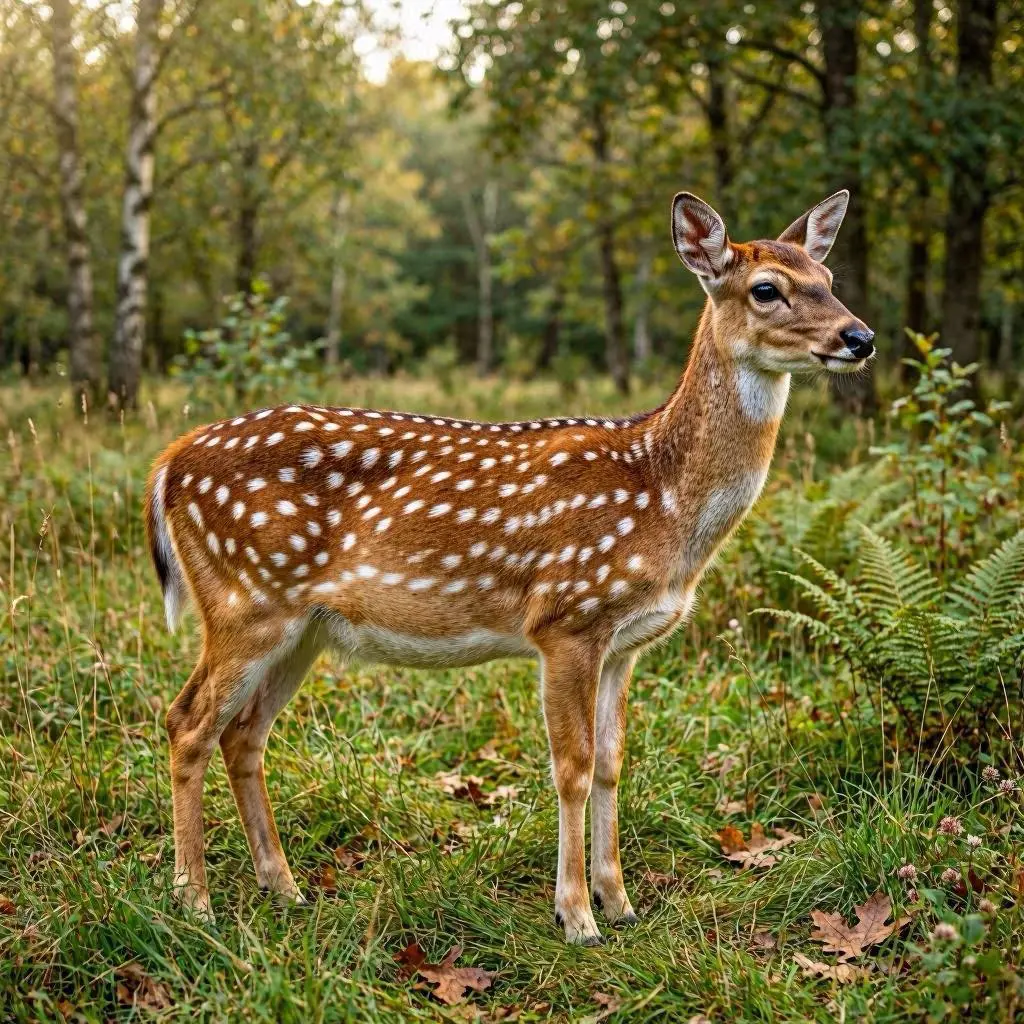
The spotted deer is commonly found in South Asia. It has a reddish-brown coat covered with white spots that remain throughout its life. These spots help it hide in tall grass and forest areas.
❻ Giraffe
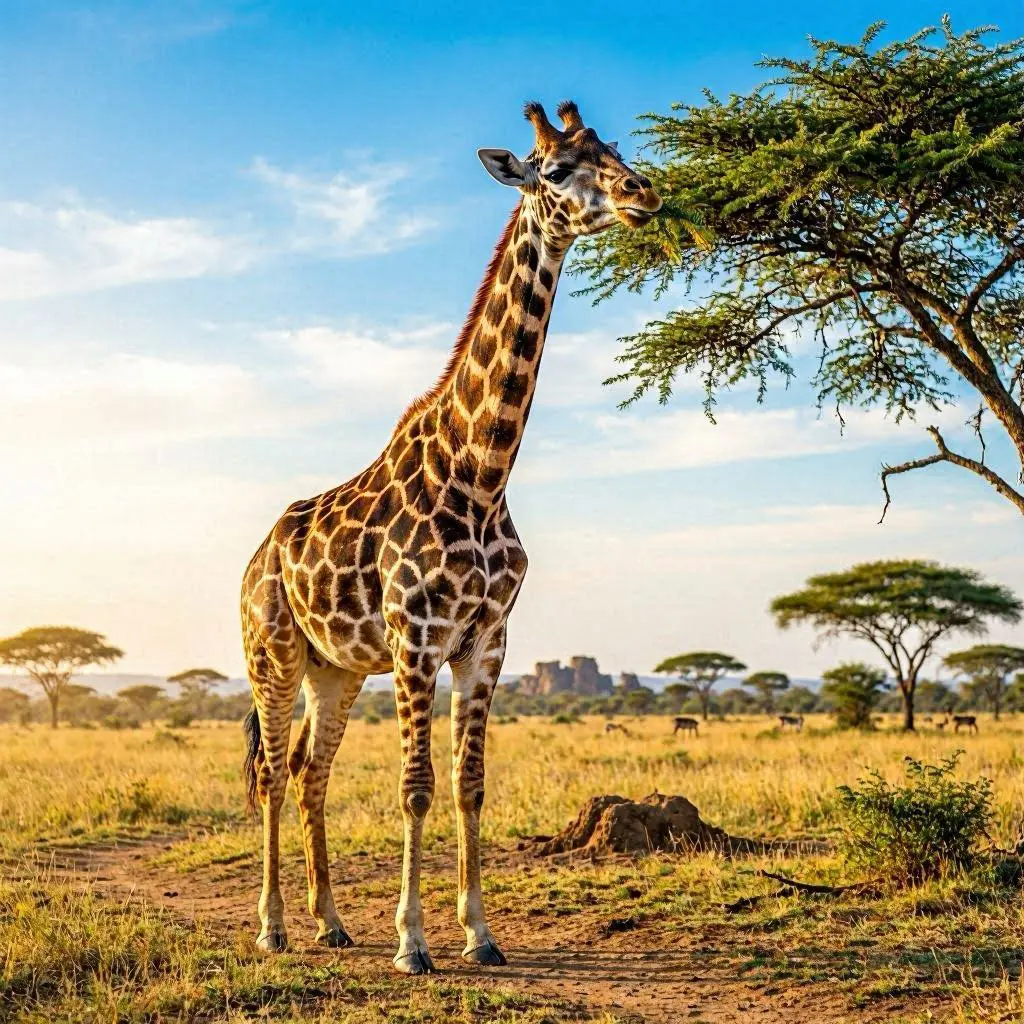
The giraffe is the tallest land animal in the world. Its body is covered with irregular brown patches separated by light-colored lines. These patches help regulate body temperature and provide camouflage in the savannah.
❼ Leopard Seal
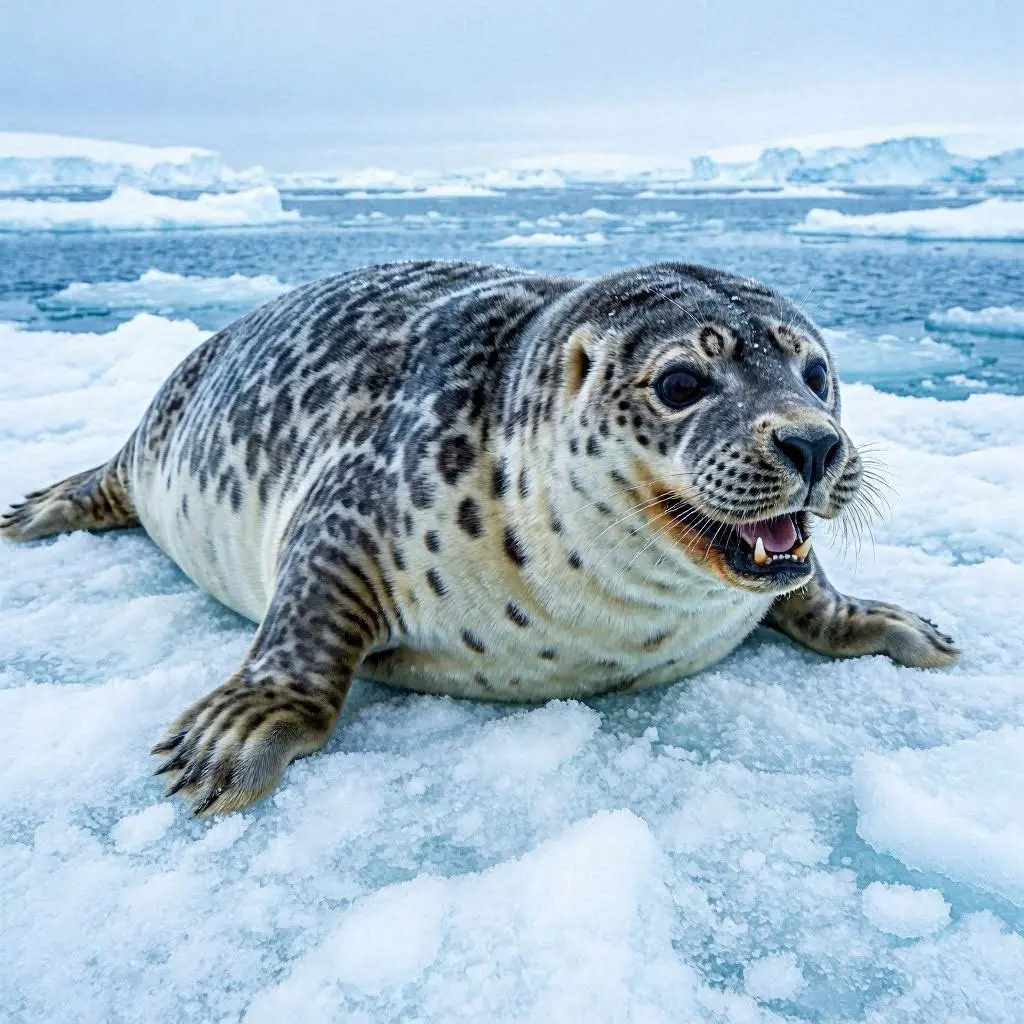
The leopard seal lives in cold Antarctic waters. It has a sleek gray body with dark spots scattered across its skin. It is a strong predator that feeds on fish, penguins, and smaller seals.
❽ Spotted Hyena
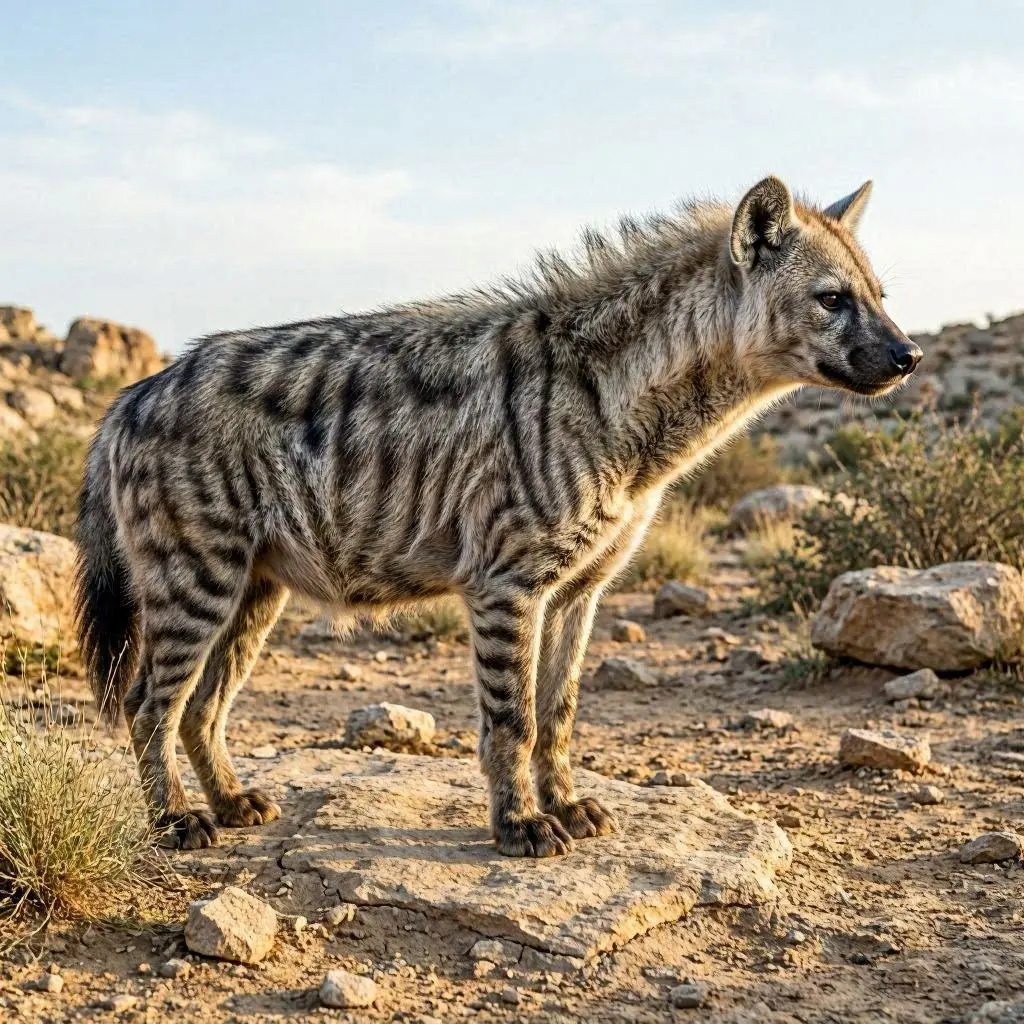
The spotted hyena is found in African savannas and is known for its strong social structure. It has a sandy coat with dark spots spread across its body. Despite its reputation, it is a skilled hunter as well as a scavenger.
❾ Ocelot
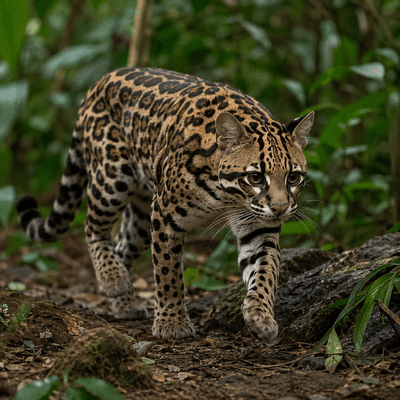
The ocelot is a medium-sized wild cat native to Central and South America. It has a beautiful coat with chain-like black spots and stripes on a golden background. It is mostly nocturnal and very territorial.
❿ Serval
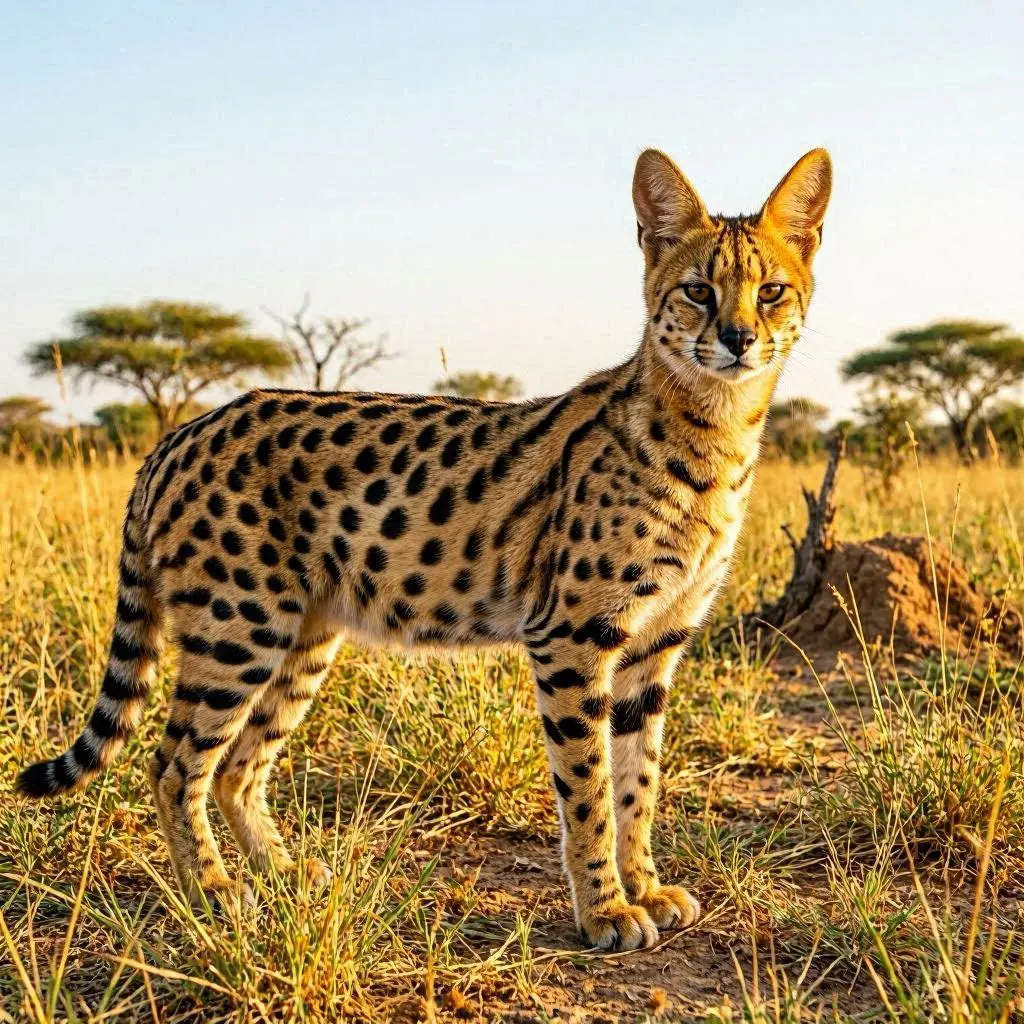
The serval is an African wild cat with long legs and a small head. Its coat is golden with bold black spots and stripes. It is an excellent hunter that uses its long ears to detect prey in tall grass.
⓫ Snow Leopard
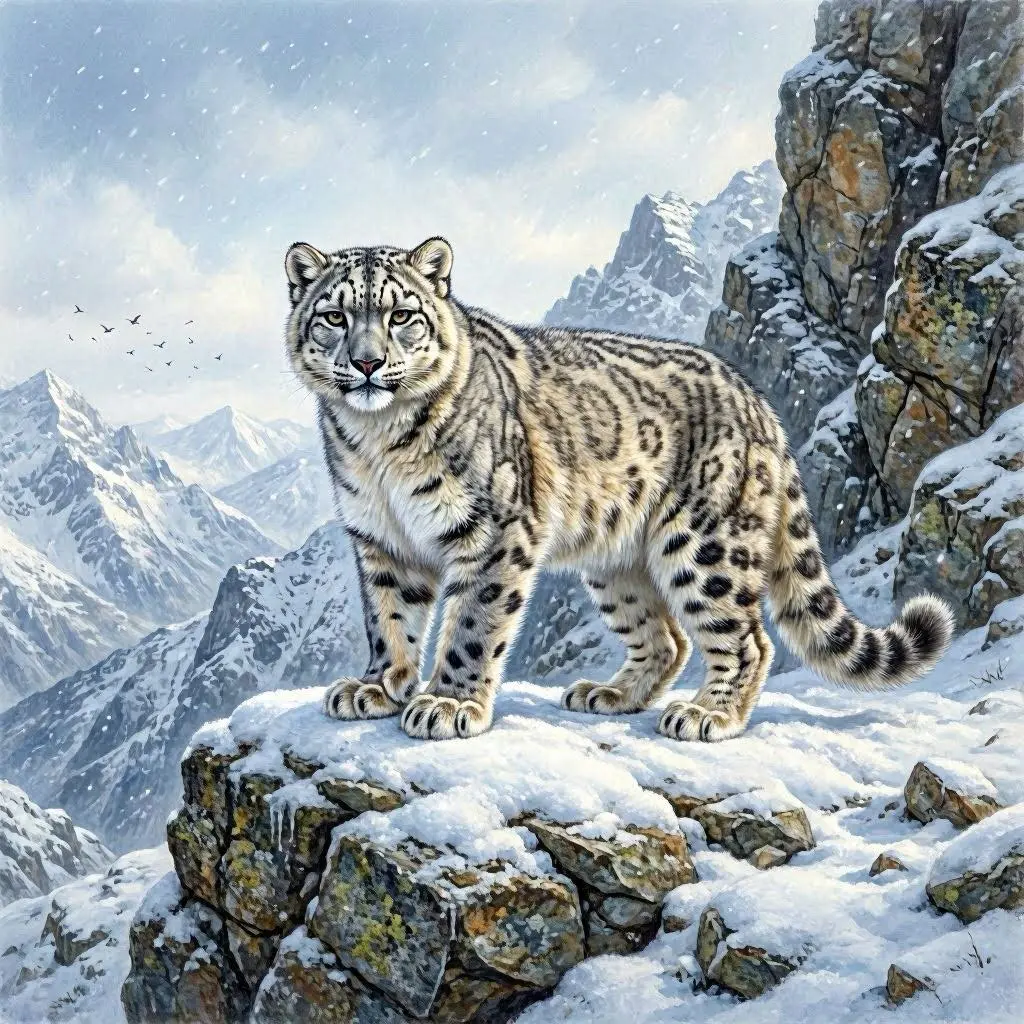
The snow leopard lives in the cold mountain ranges of Central and South Asia. It has thick gray-white fur with dark rosette spots. These markings help it blend perfectly into rocky snowy environments.
⓬ Spotted Eagle Ray
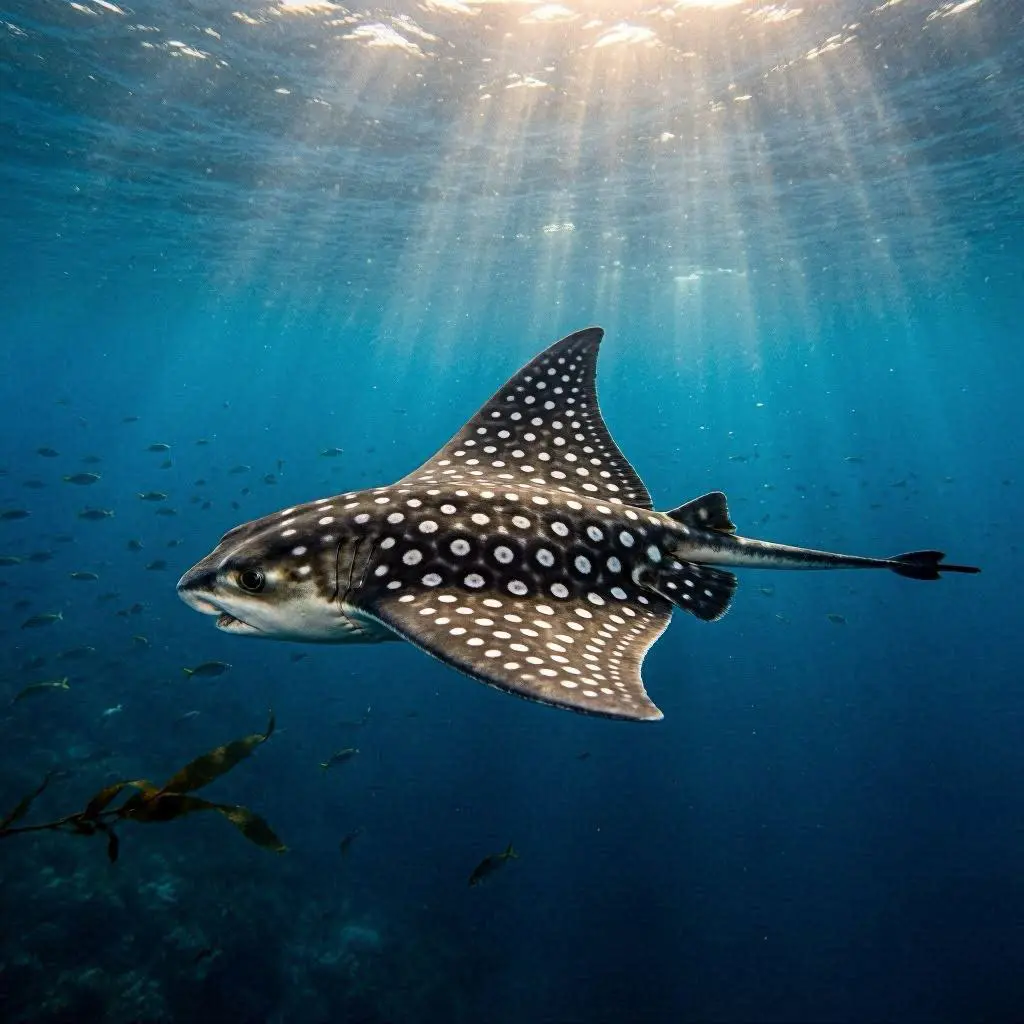
The spotted eagle ray is a graceful sea creature found in warm oceans. Its dark body is covered with bright white spots and it has long wing-like fins. It moves smoothly through water and often jumps above the surface.
⓭ Spotted Frog
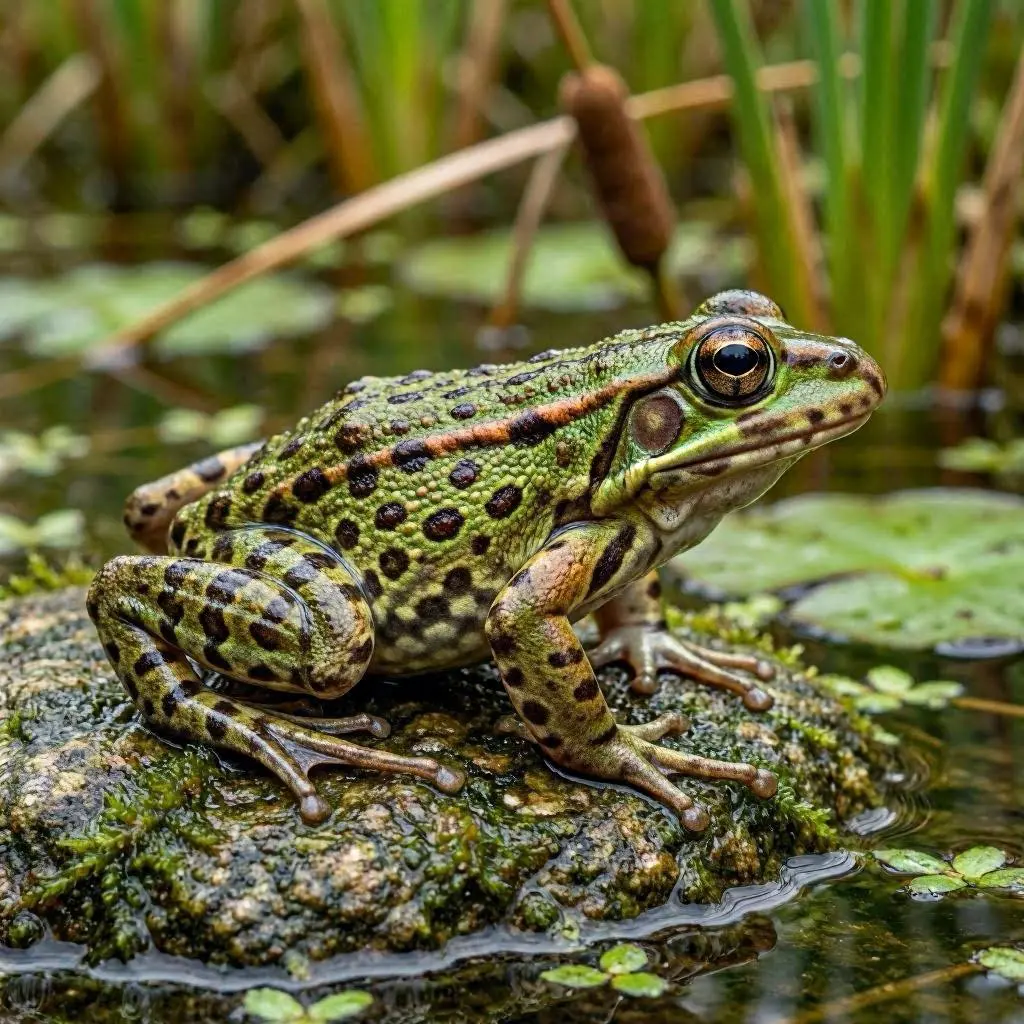
The spotted frog is commonly found near ponds and wetlands. It has a green or brown body with dark irregular spots. These markings help it hide from predators in muddy and grassy areas.
⓮ Spotted Salamander
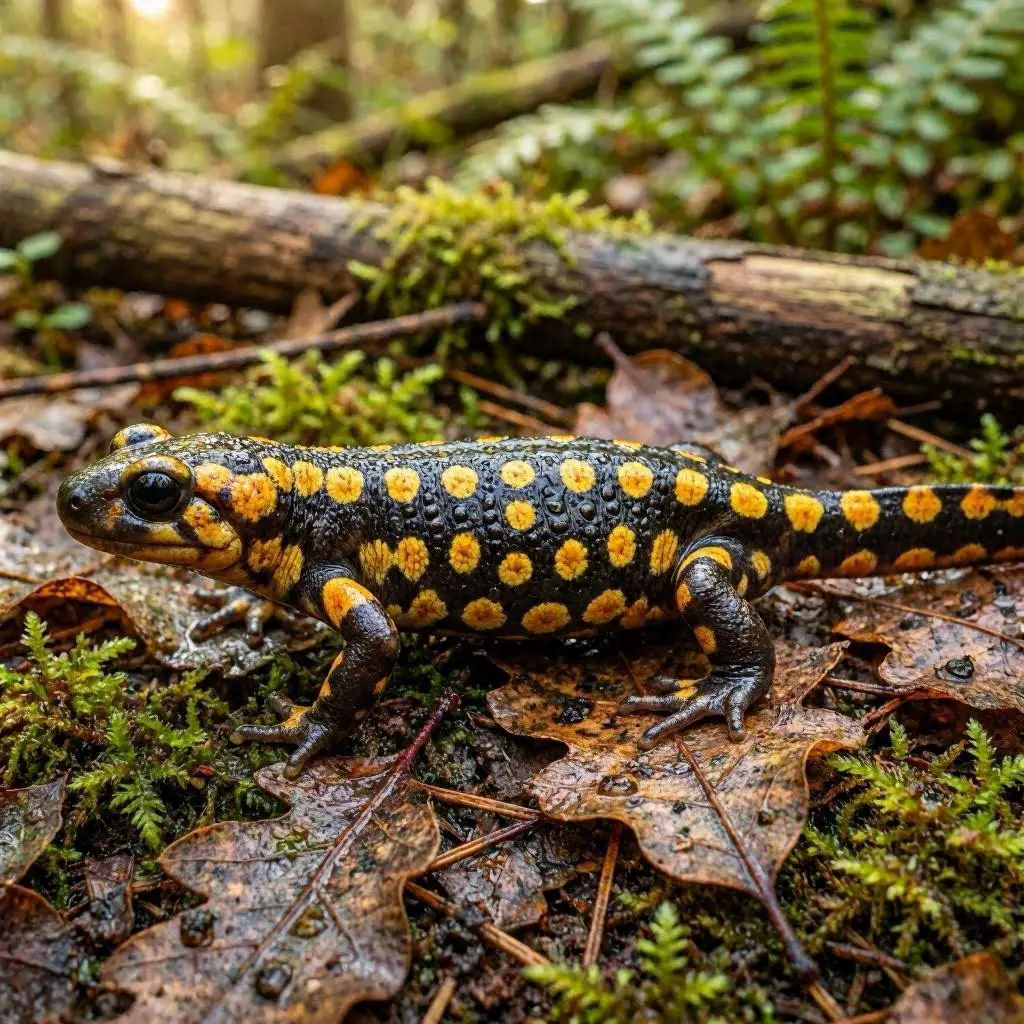
The spotted salamander is an amphibian found in North America. It has a black body with bright yellow or orange spots. These colors act as a warning to predators that it may be toxic.
⓯ Clownfish
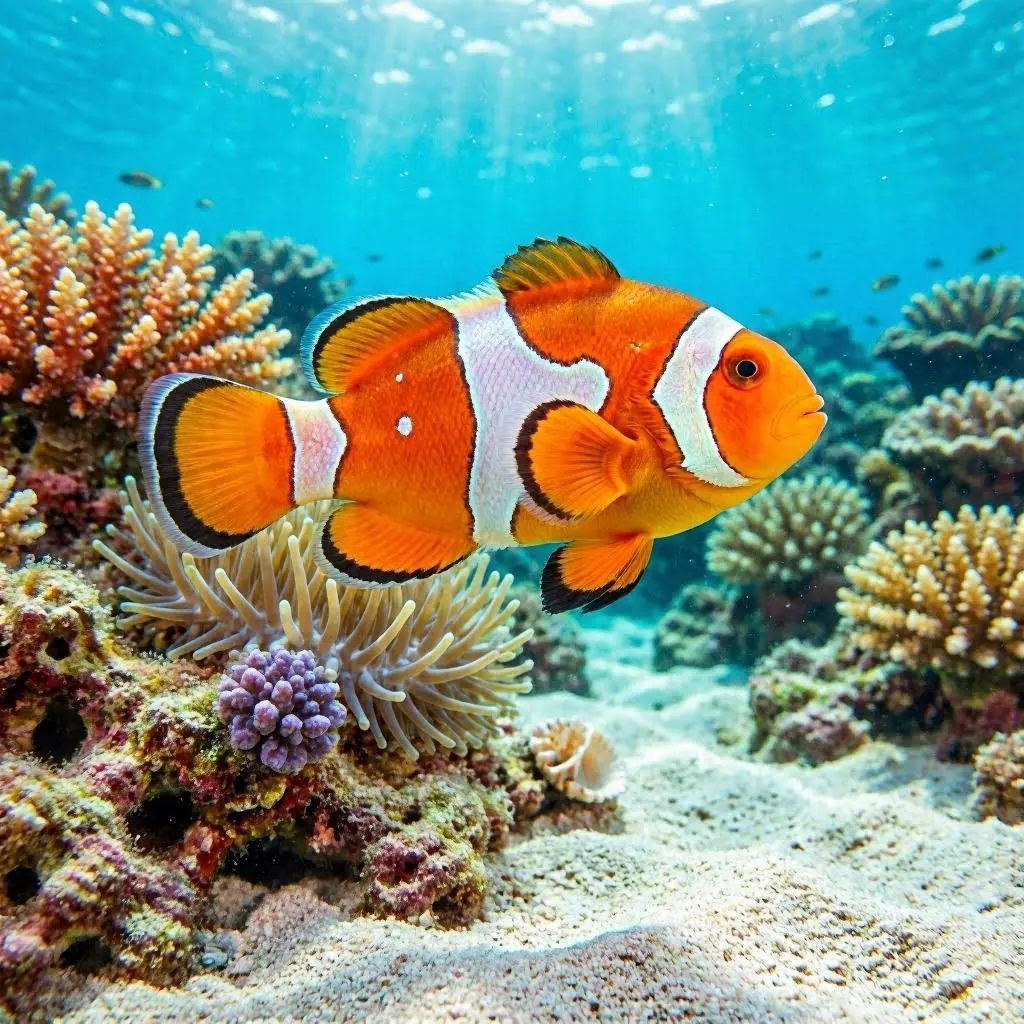
The clownfish is a small marine fish famous for living among sea anemones. It often has white stripes or small spot-like markings depending on species. Its bright colors help it stand out in coral reefs.
⓰ Ladybug
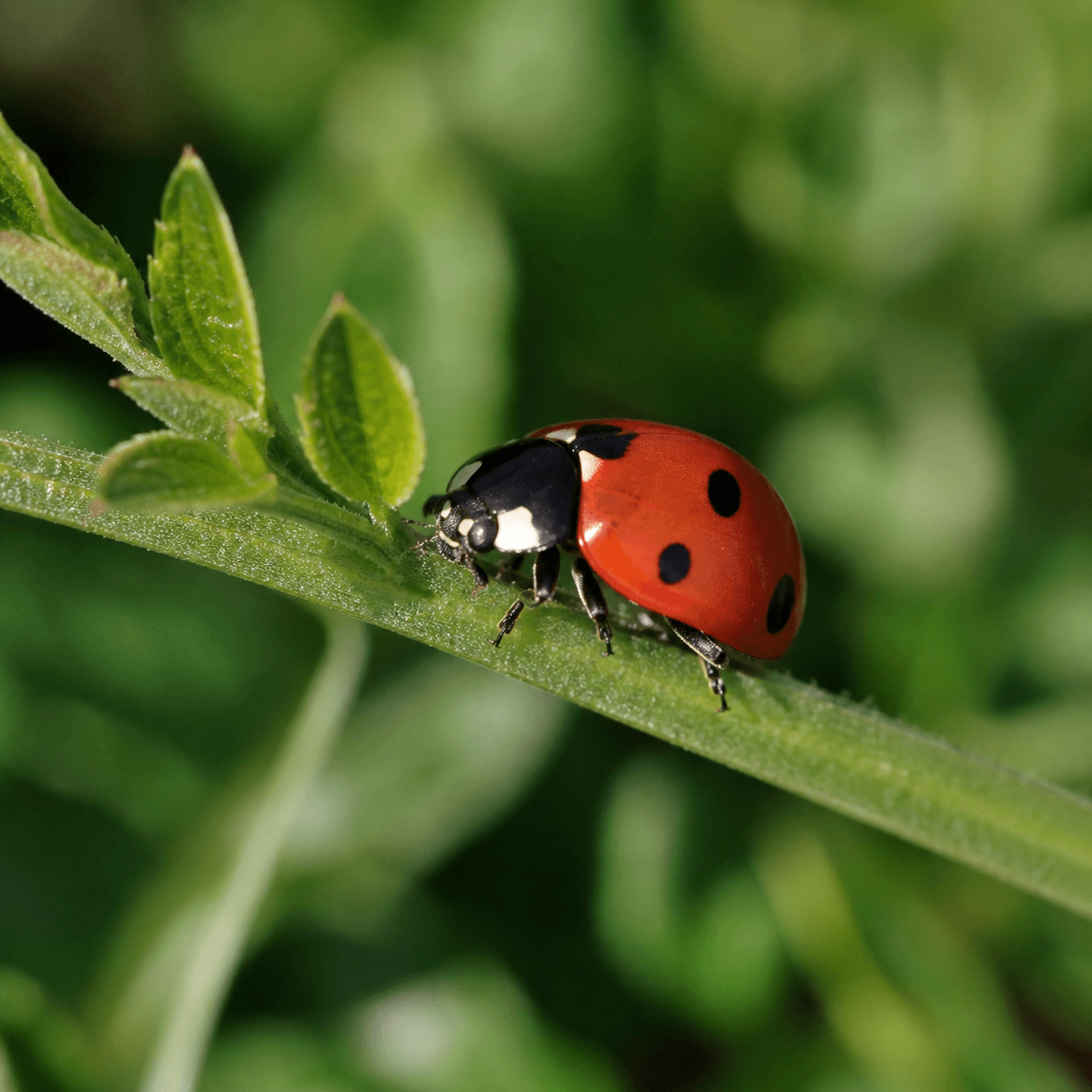
The ladybug is a small beetle known for its round body and red shell with black spots. It is considered beneficial because it eats pests like aphids. Its bright colors warn predators that it may taste bad.
⓱ Cheetah Gecko
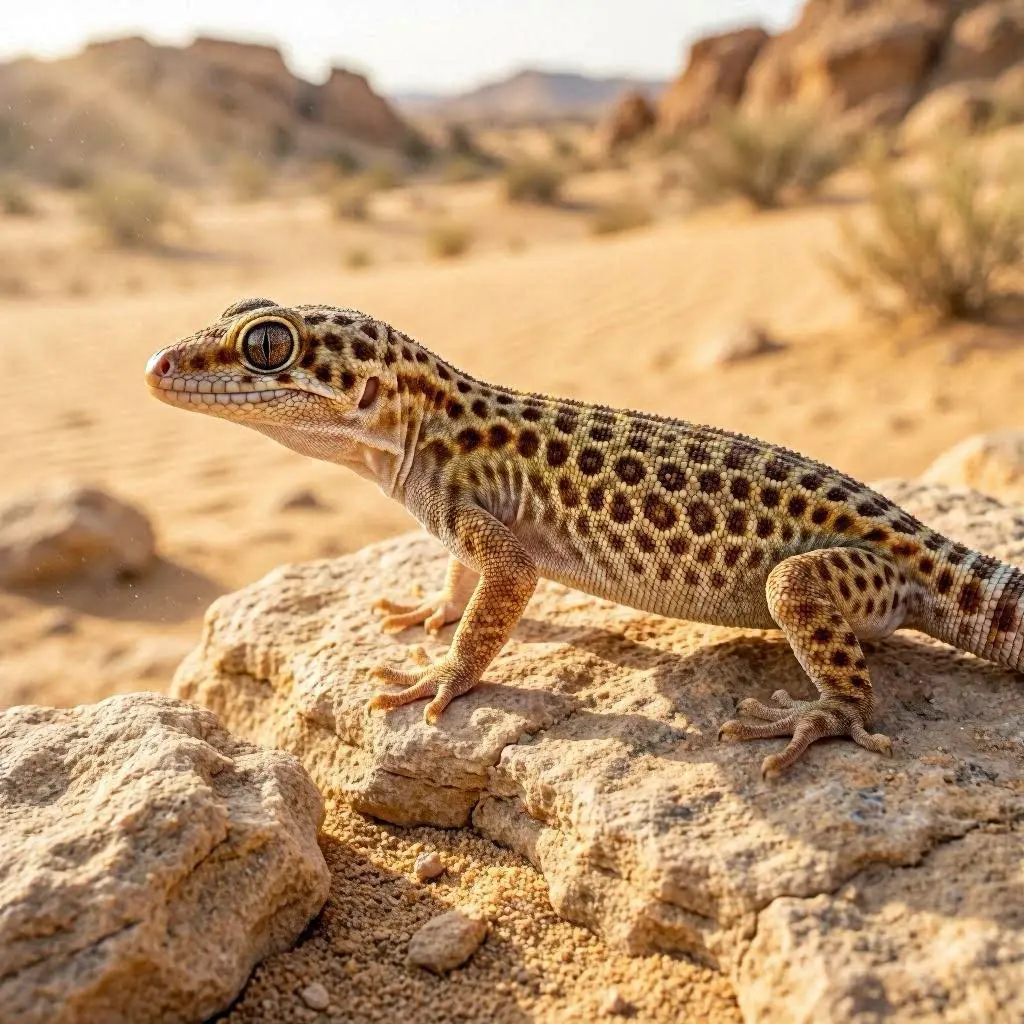
The cheetah gecko is a reptile found in desert regions. It has a sandy body covered with dark spots similar to a cheetah pattern. These markings help it blend into rocky and sandy environments.
⓲ Spotted Skunk
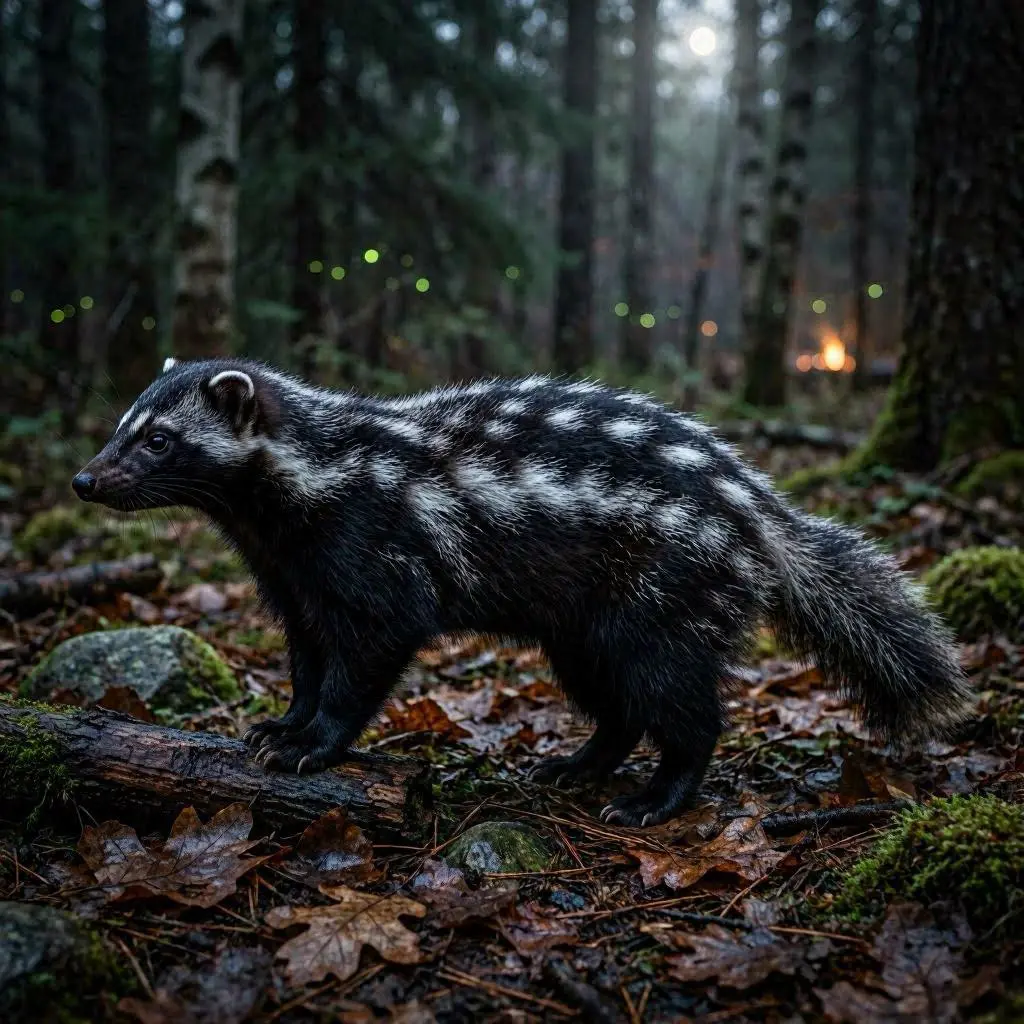
The spotted skunk is smaller than the striped skunk and has a black body with white broken spots. It uses a strong odor for defense against predators. It is mostly active at night.
⓳ Spotted Woodpecker
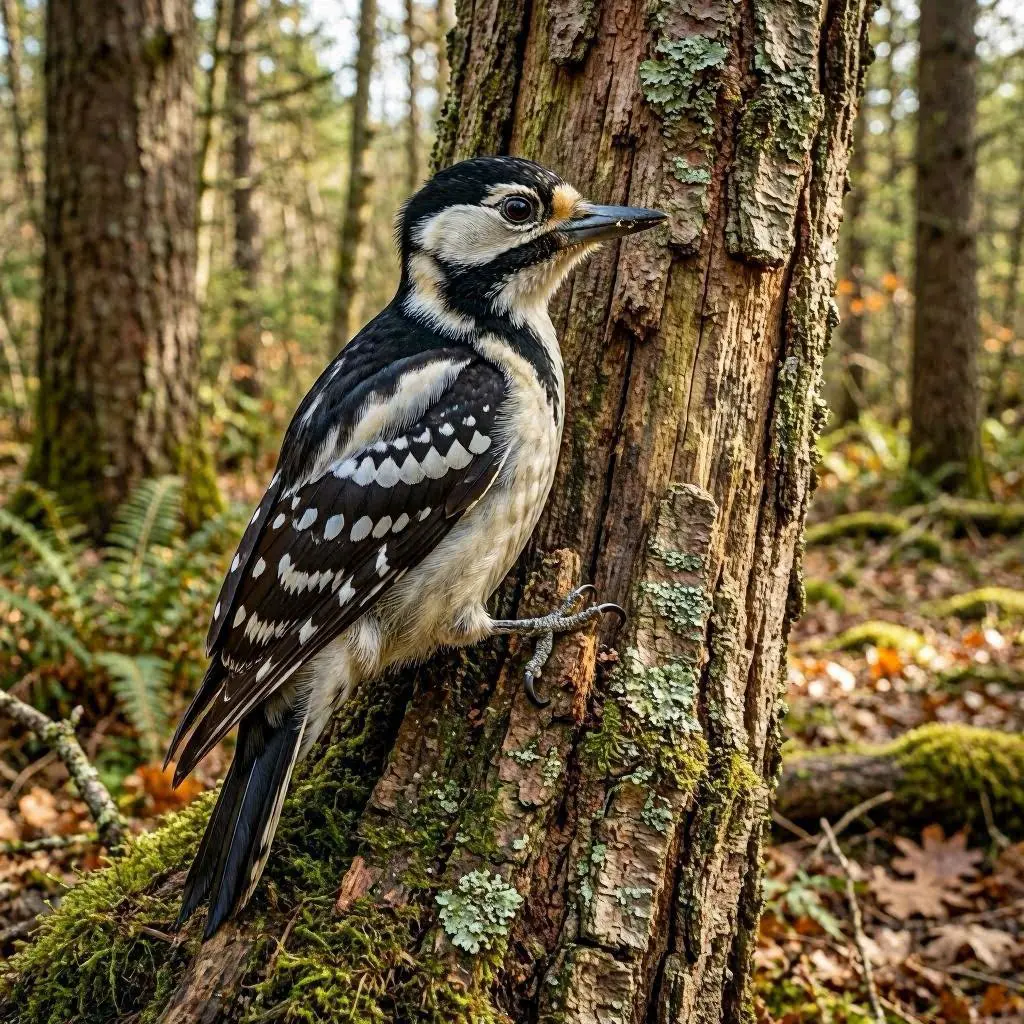
The spotted woodpecker is a bird known for pecking trees to find insects. It has black and white plumage with spotted patterns on its wings and back. Its strong beak helps it drill into wood easily.
⓴ Guineafowl
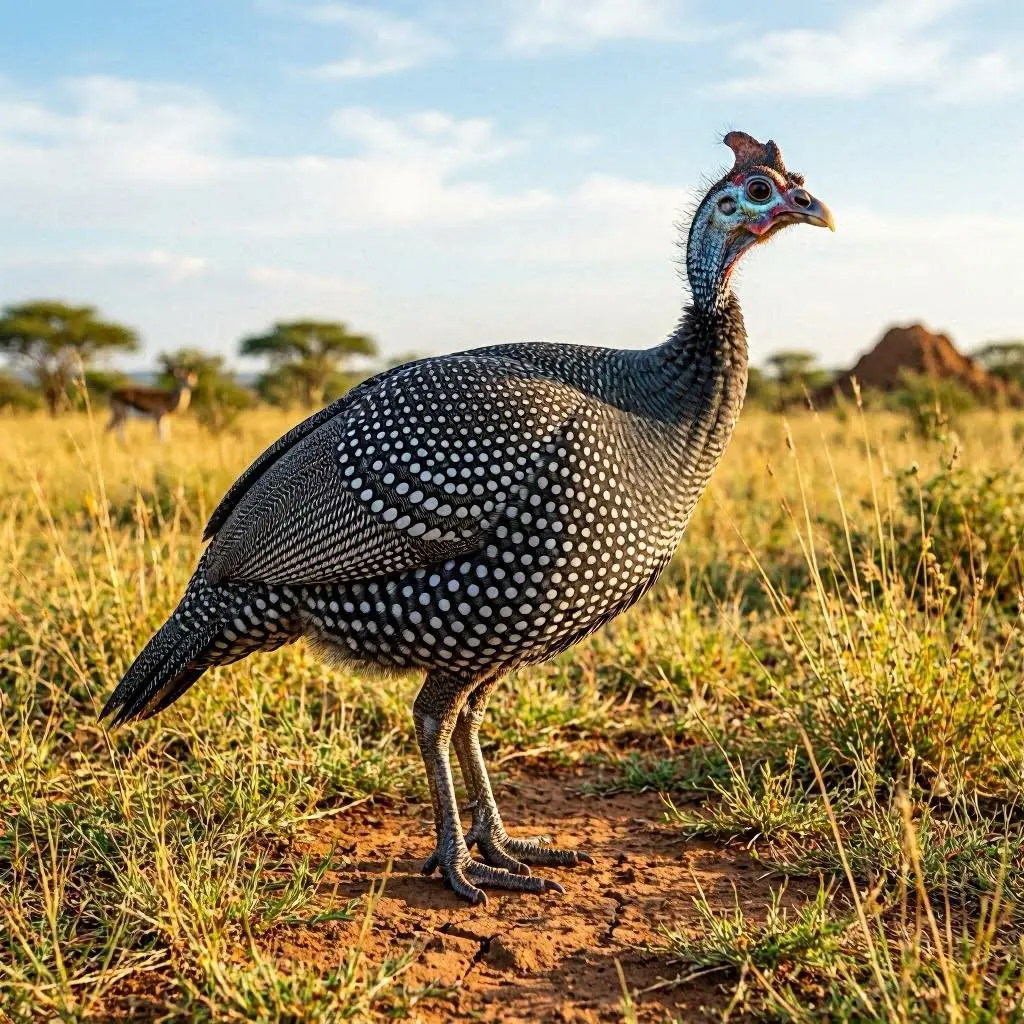
The guineafowl is a ground-dwelling bird found in Africa. It has dark feathers covered with white spots, giving it a pearl-like appearance. It often travels in groups and feeds on seeds and insects.
Types of Animal Spots
Animal spots are natural patterns that appear across many species. These markings are not only for appearance but also help animals survive by providing camouflage, warning signals, or identity. Different species have developed different types of spots depending on their environment and needs.
- Rosettes – Ring-shaped spot clusters that look like a rose pattern. Common in leopards, jaguars, and snow leopards, where they help with camouflage in forests and grasslands.
- Solid Spots – Simple, filled dots without inner markings. Found in animals like cheetahs, Dalmatians, and ladybugs, mainly used for camouflage or warning.
- Irregular Patches – Large, uneven blotches that vary from one individual to another. Seen in giraffes and Appaloosa horses, and often act like natural fingerprints.
- Speckles – Very small and dense dots that resemble sand or grain. Found in whale sharks, bird eggs, and some fish, helping them blend into their surroundings.
- Ocelli – Eye-like spots with a dark center and outer ring. Found in peacocks and some moths, designed to confuse or scare predators.
- Warning Spots – Bright, high-contrast spots on darker bodies. Seen in ladybugs, poison frogs, and spotted salamanders to signal danger or toxicity.
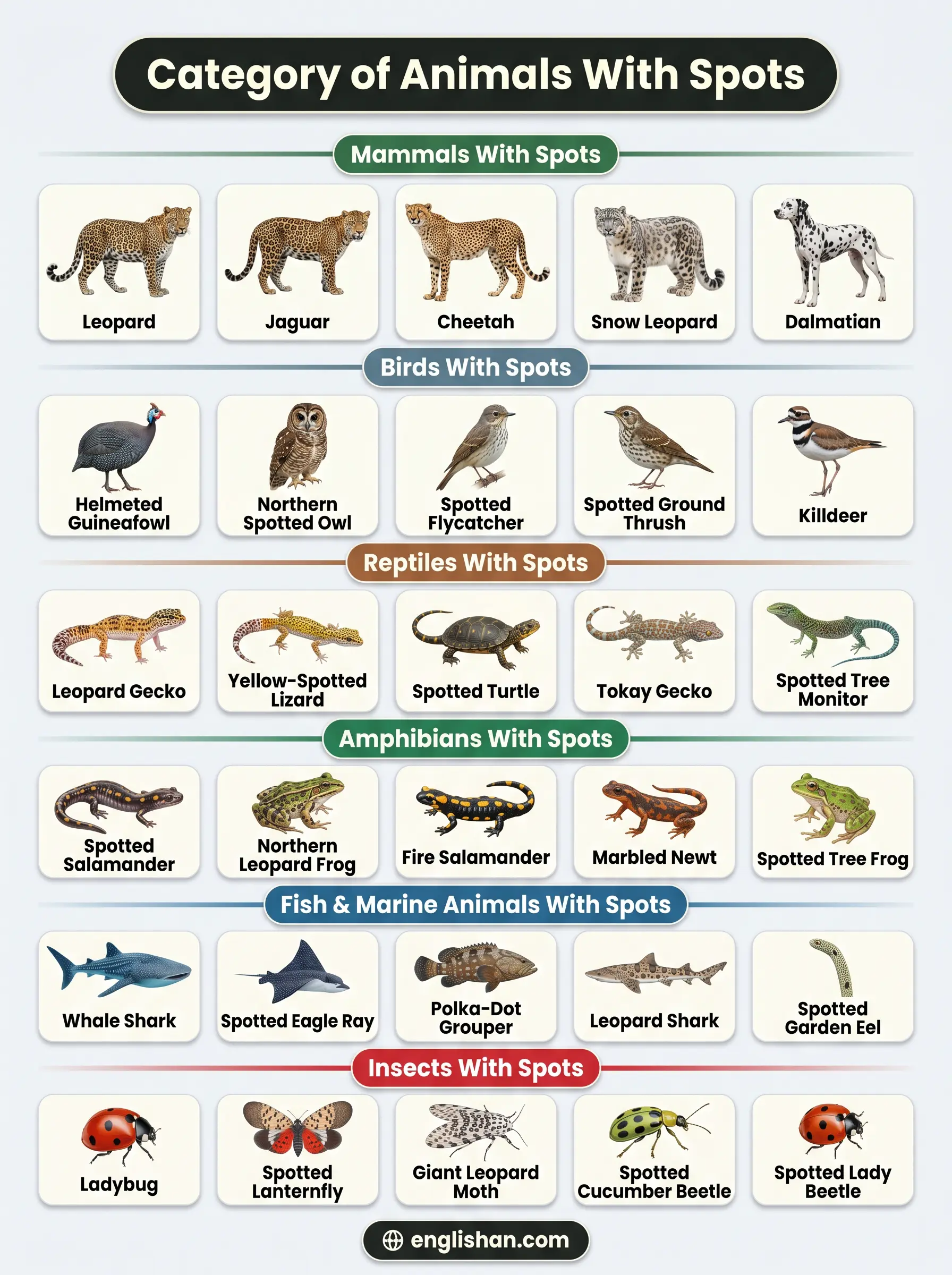
Complete List of Animals With Spots by Category
Animals with spots are found across many groups in the animal kingdom, including mammals, birds, reptiles, fish, and insects. These patterns help with camouflage, warning signals, and identification. Below is a complete list of spotted animals organized by category.
Mammals With Spots
Mammals include some of the most famous spotted animals in the world. Their patterns are mainly used for camouflage, identity, and survival across forests, grasslands, deserts, and mountains.
Big Cats With Spots
Big cats are the most iconic spotted animals. Their unique coat patterns help them hunt silently and survive in different habitats.
- Leopard (Panthera pardus) – A powerful wild cat with rosette-shaped spots that provide excellent camouflage in forests and grasslands.
- Jaguar (Panthera onca) – The strongest big cat in the Americas with large rosettes and inner spots inside each marking.
- Cheetah (Acinonyx jubatus) – The fastest land animal with solid black spots that help break its outline during high-speed runs.
- Snow Leopard (Panthera uncia) – A rare mountain cat with smoky rosettes and thick fur adapted for cold rocky regions.
- Ocelot (Leopardus pardalis) – A small nocturnal wild cat with chain-like spotted patterns in Central and South America.
- Margay (Leopardus wiedii) – A tree-dwelling cat with bold spots and excellent climbing ability, living mostly in forest canopies.
- Serval (Leptailurus serval) – An African wild cat with long legs and black spots used for hunting in tall grass.
Large Spotted Mammals
These large mammals use their spotted or patchy patterns mainly for camouflage and temperature regulation.
- Giraffe (Giraffa camelopardalis) – The tallest animal with unique irregular patches that act like fingerprints and help with body heat control.
- Spotted Hyena (Crocuta crocuta) – A strong African carnivore with a spotted coat and highly complex social structure.
Deer and Ungulates With Spots
Spots in deer species are mainly used for camouflage, especially in young or forest-dwelling animals.
- White-Tailed Deer Fawn (Odocoileus virginianus) – A baby deer born with white spots that help it hide in forest light and shadows.
- Axis Deer / Chital (Axis axis) – A deer that keeps white spots throughout its life, making it highly visible yet well camouflaged in forests.
- Fallow Deer (Dama dama) – A deer with seasonal spotted coats that fade during winter for better heat retention.
Domestic and Other Spotted Mammals
This group includes domesticated and unique mammals that display spotted patterns for genetic or survival reasons.
- Dalmatian (Canis lupus familiaris) – A dog breed born white and developing unique black spots as it matures.
- Appaloosa Horse – A horse breed with multiple spotted coat patterns developed historically by Native American tribes.
- Spotted Bat (Euderma maculatum) – A rare bat with three white spots on its back and unusual echolocation abilities.
- Spotted Skunk (Spilogale putorius) – A small skunk with broken white spots and a defensive handstand behavior before spraying.
Birds With Spots
Birds use spots for camouflage, especially for ground nesting and forest survival. Some also use spotting for identification and mating signals.
- Helmeted Guinea Fowl (Numida meleagris) – A ground bird with dense white spots on dark feathers.
- Northern Spotted Owl (Strix occidentalis caurina) – A forest owl with white spotting for camouflage in tree bark.
- Spotted Flycatcher (Muscicapa striata) – A migratory bird with faint spotted plumage used for camouflage.
- Spotted Ground Thrush (Geokichla guttata) – A forest bird heavily covered in spots for hiding on the forest floor.
- Killdeer (Charadrius vociferus) – A shorebird known for speckled eggs and distraction nesting behavior.
Reptiles With Spots
Reptiles use spots mainly for camouflage in deserts, forests, and rocky habitats. Some also use them as warning signals.
- Leopard Gecko (Eublepharis macularius) – A desert lizard with black spots on a yellow body for camouflage.
- Yellow-Spotted Lizard (Lepidophyma flavimaculatum) – A small lizard with bright yellow spots used for blending into rocky environments.
Amphibians With Spots
Spotted amphibians often use bright patterns as warning signals, especially because many are toxic or unpalatable.
- Spotted Salamander (Ambystoma maculatum) – A black amphibian with bright yellow spots used as a toxicity warning.
- Northern Leopard Frog (Lithobates pipiens) – A green or brown frog with dark spotted patterns for wetland camouflage.
- Spotted Turtle (Clemmys guttata) – A small turtle with yellow spots on its dark shell.
Fish and Marine Animals With Spots
In water, spots help with camouflage in reefs, sandy bottoms, and open ocean environments.
- Whale Shark (Rhincodon typus) – The largest fish in the world with unique white spot patterns used for identification.
- Spotted Eagle Ray (Aetobatus narinari) – A graceful ray with white spots and wing-like fins for open water movement.
- Polka-Dot Grouper (Cromileptes altivelis) – A reef fish with evenly spaced black spots on a pale body.
Insects With Spots
Insects use spots mostly as warning signals (toxic or bad taste) or for mimicry to avoid predators.
- Ladybug (Coccinella septempunctata) – A red beetle with black spots that warn predators of its bad taste.
- Spotted Lanternfly (Lycorma delicatula) – An invasive insect with spotted wings that damages crops and plants.
- Giant Leopard Moth (Hypercompe scribonia) – A white moth with bold black ring-like spots resembling a leopard pattern.
Animals With Spots for Kids
Spotted animals are fun and easy to recognize because of the unique patterns on their bodies. These spots help them stay safe in nature by hiding from predators or warning others. Here are some simple and well-known animals with spots for kids to learn about.
- Leopard
- Cheetah
- Jaguar
- Snow Leopard
- Dalmatian
- Spotted Deer (Chital)
- Giraffe
- Ladybug
- Whale Shark
- Spotted Frog
Difference Between Spots and Rosettes
Animal markings come in different forms, and two of the most common types are spots and rosettes. While they may look similar at first, they are actually quite different in structure and appearance. These patterns help animals with camouflage, survival, and identification in the wild.
| Feature | Spots | Rosettes |
|---|---|---|
| Basic Shape | Simple, solid dots on the body | Ring-like markings shaped like a rose |
| Structure | Single filled mark with no pattern inside | Cluster of spots forming a circle or oval shape |
| Appearance | Uniform and simple | Complex and patterned |
| Examples of Animals | Cheetah, Dalmatian, Ladybug | Leopard, Jaguar, Snow Leopard |
| Visual Effect | Flat and evenly spread | More textured and layered look |
| Purpose | Camouflage or warning signals | Advanced camouflage in forests and shadows |
Endangered Animals With Spots
Animals with spots are found in many ecosystems, but several of them are now facing serious threats due to habitat loss, hunting, climate change, and human activity. These species are important for maintaining ecological balance, and their declining numbers make conservation efforts essential.
- Snow Leopard (Panthera uncia) – A rare mountain big cat with smoky rosette spots, threatened by habitat loss and poaching across Central Asia.
- Cheetah (Acinonyx jubatus) – The fastest land animal, facing severe decline due to low genetic diversity and shrinking grassland habitats.
- Jaguar (Panthera onca) – The largest spotted cat in the Americas, endangered mainly due to deforestation and habitat fragmentation.
- Whale Shark (Rhincodon typus) – The largest fish in the world with unique white spots, threatened by fishing, ship strikes, and slow reproduction.
- Spotted Turtle (Clemmys guttata) – A small freshwater turtle with yellow spots on its shell, endangered due to wetland loss and illegal collection.
Do Baby Animals Lose Their Spots?
Spots in young animals often serve a different purpose than spots in adults, and many species lose them entirely as they grow.
- White-tailed deer fawns are born with around 300 spots that fade completely by the first winter as they develop speed to outrun predators instead.
- Lion cubs are born with faint spots that disappear as they mature into adulthood.
- Leopard cubs begin with simple black dots that gradually evolve into full rosettes as they grow.
- Tapir young are born with both spots and stripes for forest floor camouflage before developing solid adult coloring.
- Dalmatians are the opposite: born completely white and developing all spots within the first few weeks of life.
- Spotted turtles can actually gain more spots over time, with older individuals sometimes bearing more dots than juveniles.
Conclusion
Spots are one of nature’s most versatile and enduring tools. Whether hiding a leopard in a forest, warning a predator away from a ladybug or helping scientists identify a whale shark by sight alone, spotted patterns carry real biological weight across nearly every branch of animal life. From the biggest fish in the ocean to the smallest garden beetle, the spotted animals in this guide represent millions of years of evolution encoded in pigment.
FAQs
Spotted animals span every major animal class including mammals like leopards, giraffes and dalmatians; birds like guinea fowl and spotted owls; reptiles like leopard geckos; amphibians like spotted salamanders; fish like whale sharks; and insects like ladybugs.
They are called rosettes, named for their resemblance to the shape of a rose. Jaguar rosettes look similar but are larger and contain a central dot that leopard rosettes do not have.
Young animals that rely on lying still for safety benefit from spots that mimic dappled sunlight. As they grow faster and develop other survival strategies such as speed or flight, the spots are no longer needed and fade.
On land, the giraffe at up to 19 feet tall is the largest spotted animal. In the ocean, the whale shark at over 40 feet long is the largest spotted animal overall.
Yes. Whale sharks, leopards and cheetahs are all tracked in the wild using their individual spot patterns. The same pattern-recognition software used to map star constellations is applied to whale shark photographs.
Yes. Black panthers are either melanistic leopards or jaguars. Their rosettes remain visible as ghost patterns in direct sunlight, just obscured by excess dark pigment.
Solid spots are fully filled dots, as seen on cheetahs and ladybugs. Rosettes are ring-shaped clusters of spots with a lighter center, as seen on leopards, jaguars and snow leopards.
You May Also Like
- 42+ Animals With Stripes Names In English
- 112+ Animals and Their Food
- 60+ Zoo Animals Names with Pictures
Animals With Spots Quiz
Animals With Spots
Which spotted cat has solid round spots rather than rings?
Filled circles scattered evenly, unlike the ringed rosettes of the others.
Spot, rosette, rosette-with-centre: cheetah, leopard, jaguar.
Solid spots mean cheetah every time.
Why are many young mammals spotted when adults are not?
Deer and lion cubs both lose the pattern once they are mobile enough to flee.
The pattern matches the strategy: hide first, run later.
A spotted fawn presses flat and disappears into leaf litter.
Name the fish.
The largest fish in the sea, marked with pale spots in a grid, is the ___ shark.
The spot pattern is unique to each individual and is used to identify them.
The pattern works as a natural tag for researchers.
Photo databases track whale sharks by their spots.
What are the false eye markings on some butterflies and fish for?
A predator striking the eyespot takes a wing edge instead of the body.
An eyespot buys a second chance.
Torn wing edges often show where a strike landed.
Three of these are spotted. Which is not?
Striped on the hindquarters and legs, not spotted.
Check the marking shape, not the general impression.
The okapi is the striped one.
Turn on JavaScript for the interactive quiz. The full practice set is shown above.