

Did you knDid you know that an elephant eats up to 150–170 kg of food every single day just to survive? Or that a crocodile can go months without eating after one big meal? The way animals eat is one of the most fascinating things about the natural world, and it shapes everything about how they look, where they live, and how they behave. This is exactly what the topic herbivores vs carnivores vs omnivores is all about.
Animals around us don’t all eat the same kind of food. Some rely completely on plants, while others depend on meat or a mix of both. These differences in eating habits help us understand how animals live and survive in their environments.
Based on what they eat, animals are mainly divided into three groups: herbivores vs carnivores vs omnivores. Each group has its own food choice, body design, and way of getting energy. This simple classification makes it easier to study animal behavior, biology, and ecology.
In this article, we will break down each type herbivores vs carnivores vs omnivores in a clear and detailed way. You will learn what they eat, how their bodies are built for their diet, where they live, and some fascinating examples from each group, including animals that live on land, in the sky, and underwater.
Herbivores vs. Carnivores vs. Omnivores
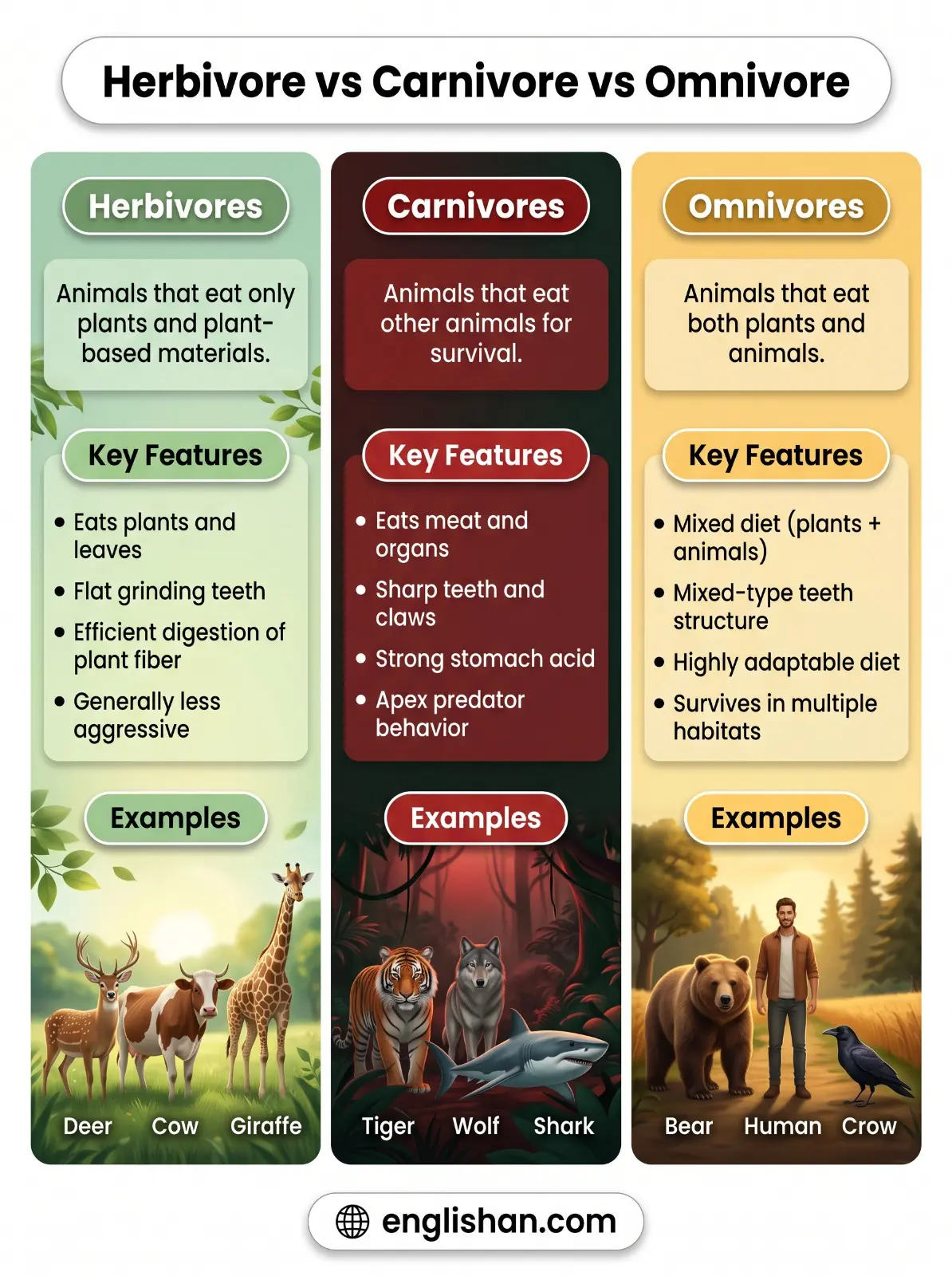
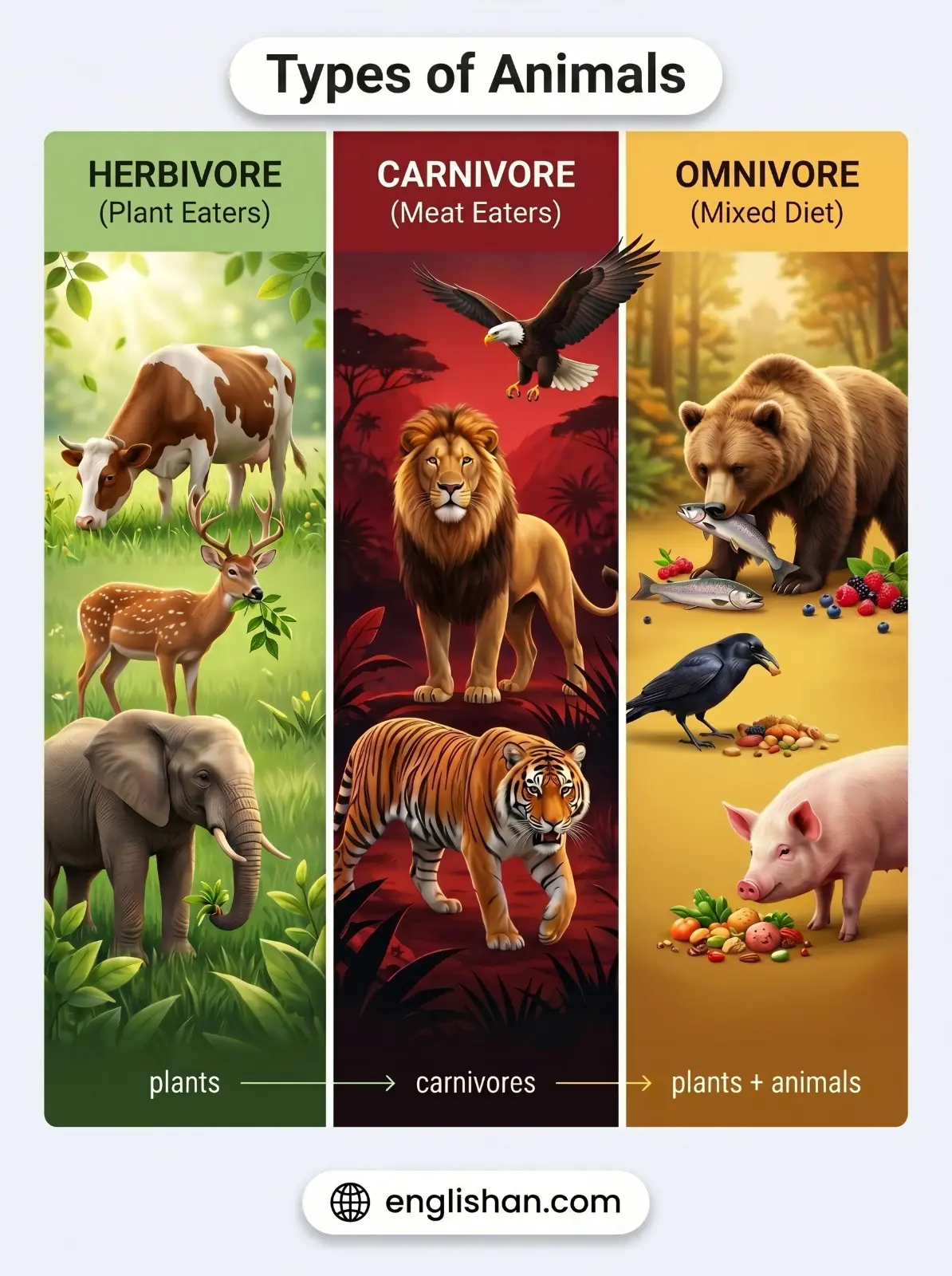
Herbivores, carnivores, and omnivores are three main groups of animals based on what they eat. Herbivores feed only on plants, carnivores eat only meat, while omnivores eat both plants and animals. This classification helps us understand how animals survive and interact in the food chain.
These differences in diet also affect their body structure, teeth, jaw movement, gut length, and behavior. Each group plays a critical and irreplaceable role in maintaining balance in nature.
| Feature | Herbivores | Carnivores | Omnivores |
|---|---|---|---|
| Diet | Plants only | Meat only | Both plants and meat |
| Teeth | Flat, wide molars for grinding | Sharp canines for tearing | Mixed — flat and sharp |
| Jaw movement | Side to side (grinding motion) | Up and down only | Both directions |
| Gut length | Very long (to digest cellulose) | Short (meat digests faster) | Medium length |
| Stomach chambers | Up to 4 (e.g., cows) | Usually 1 | Usually 1 |
| Examples | Cow, Deer, Elephant | Lion, Tiger, Eagle | Bear, Human, Crow |
Explore more animals that start with different letters:
A | B | C | D | E | F | G | H | I | J | K | L | M | N | O | P | Q | R | S | T | U | V | W | X | Y | Z
What Are Herbivorous Animals?
Herbivores are animals that depend completely on plants for their food and energy. They do not eat meat at any stage of their life and survive on grass, leaves, fruits, bark, and other plant parts. Because plants are difficult to digest, especially tough fibers like cellulose, herbivores have developed some of the most complex digestive systems in the animal kingdom.
A cow, for example, has four stomach chambers that work together to break down grass through a process called rumination (chewing cud). Their intestines can be up to 40 meters long, compared to just 8 meters in humans, because plant matter takes much longer to fully digest.
Key Features of Herbivores:
- They eat only plant-based food
- They do not consume meat or animal products
- They have flat, wide teeth (molars) designed for grinding
- Their jaw moves side to side, unlike carnivores
- Their digestive system is built to break down tough cellulose
- They often have longer intestines for better nutrient absorption
- Many herbivores live in groups (herds or flocks) for safety
Examples of Herbivores
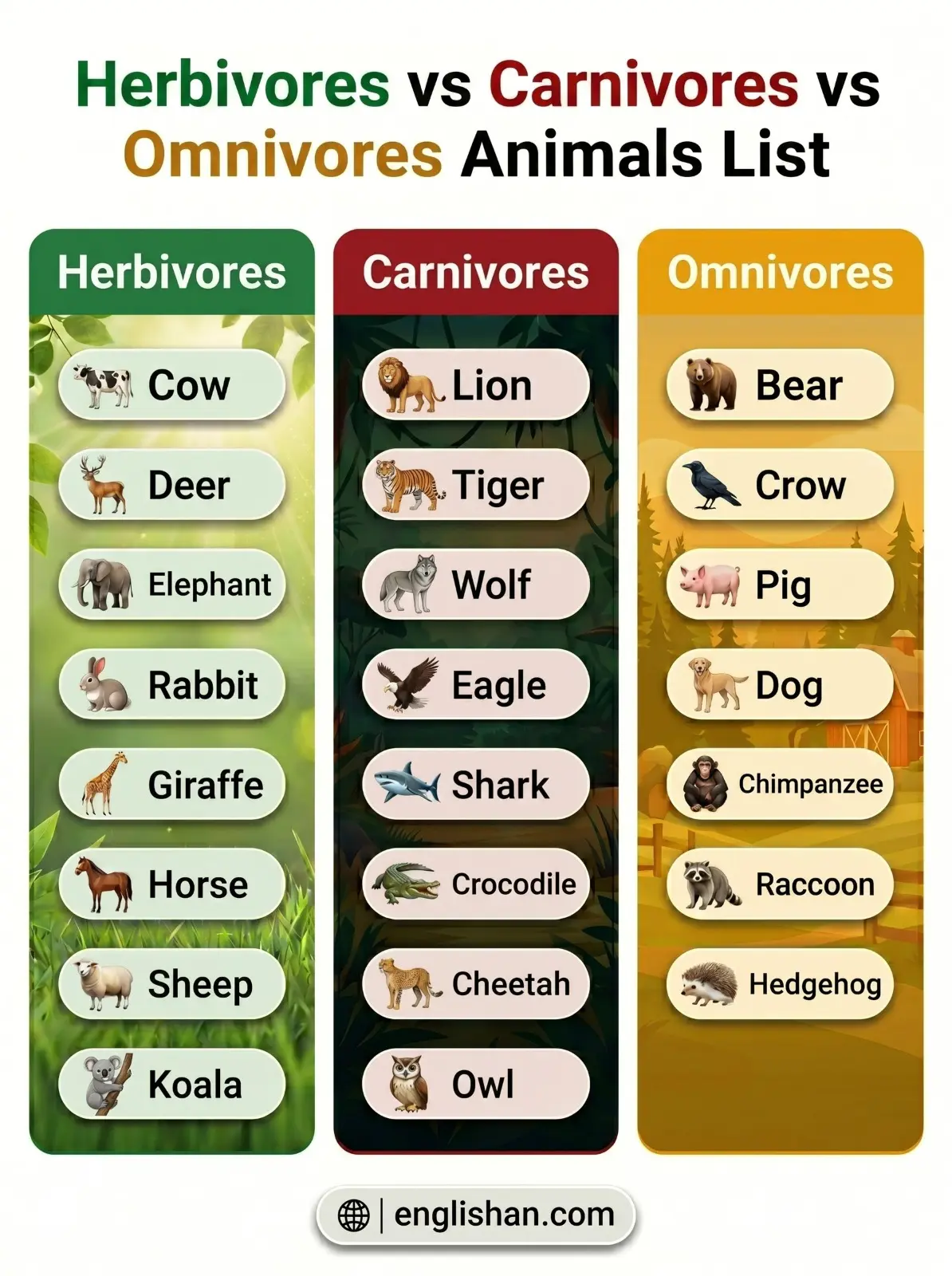
Cow, Goat, Deer, Elephant, Rabbit, Horse, Manatee, Giraffe
Common Herbivorous Animals Names with Pictures
❶ Cow
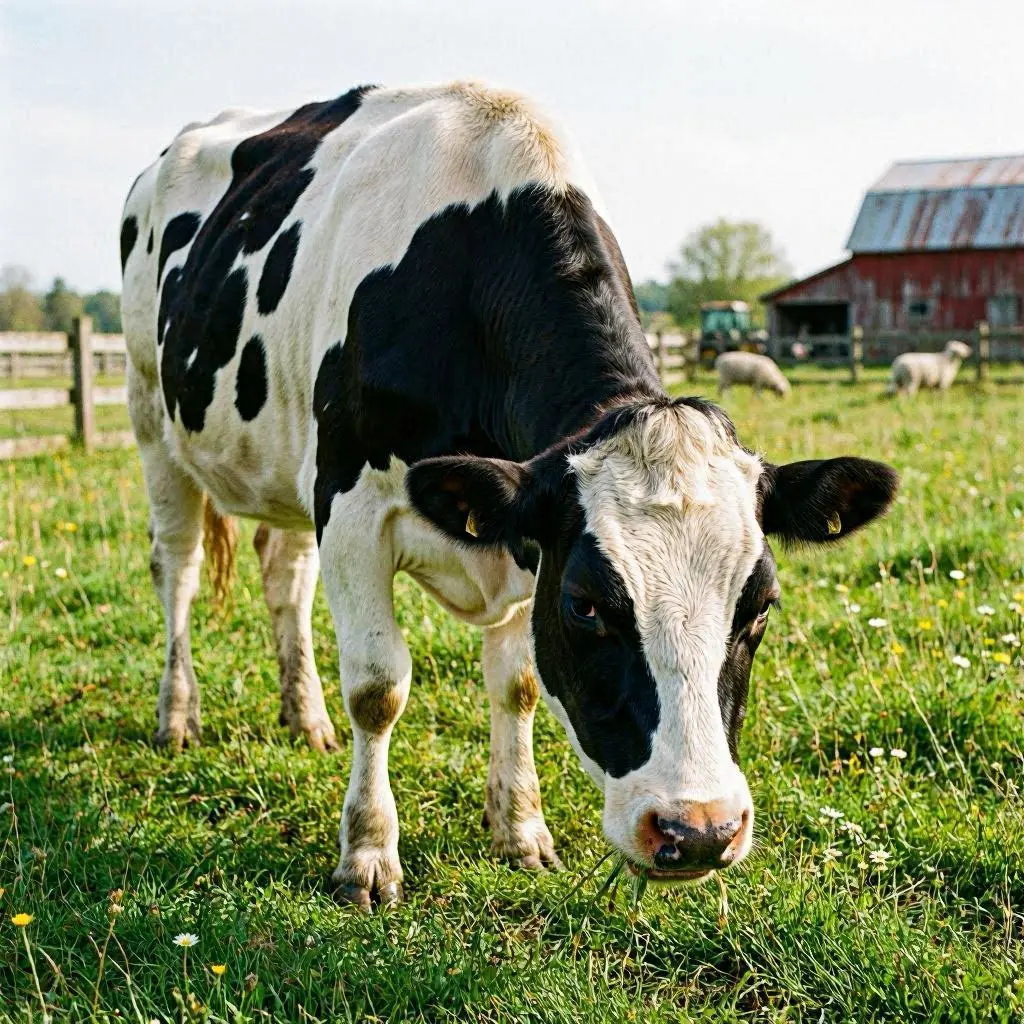
Cows are domesticated herbivores that feed mainly on grass, hay, and silage. Their four-chambered stomach allows them to re-chew food (called “chewing the cud”) to extract maximum nutrition. A single cow can eat around 25–35 kg of dry matter per day. They are raised worldwide for milk, meat, and agricultural support.
Where found: Farms, grasslands, and agricultural regions worldwide
❷ Elephant
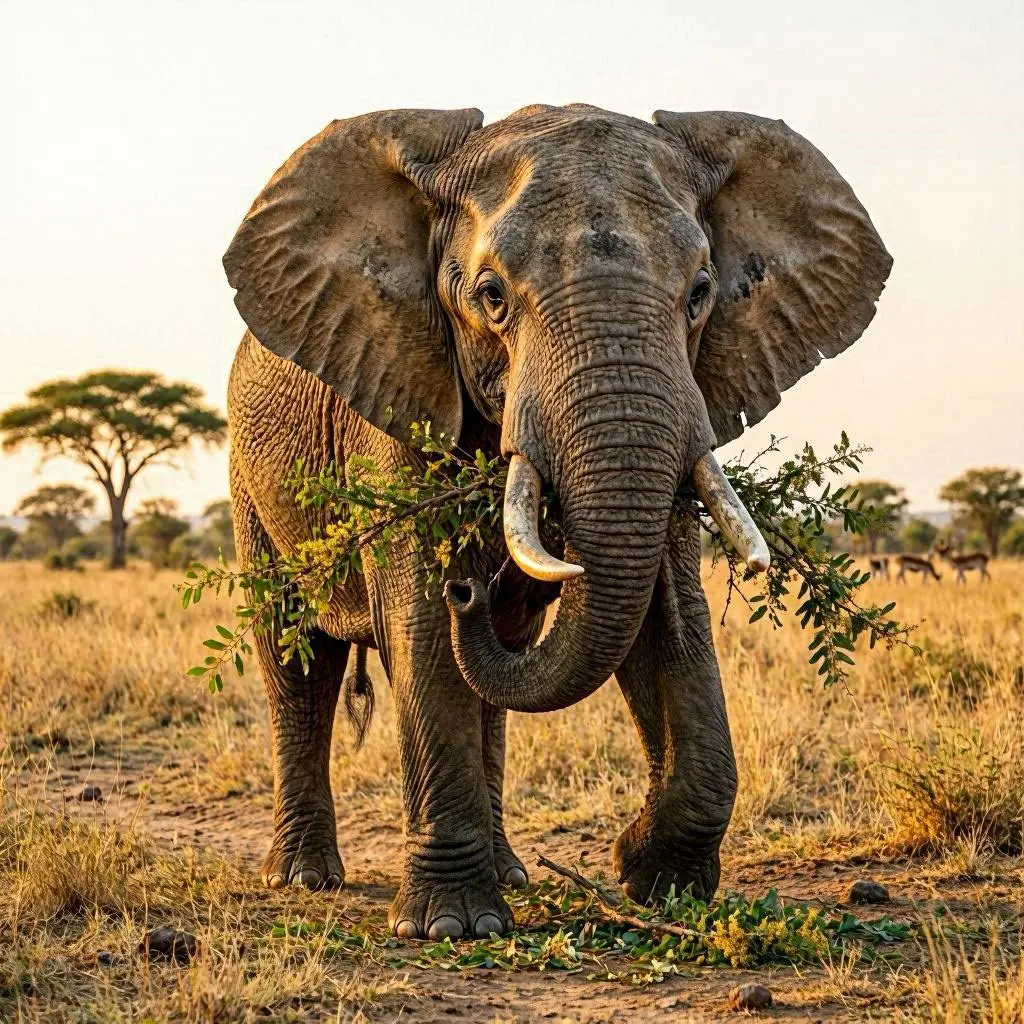
Elephants are the largest land herbivores on Earth. An adult African elephant eats between 150 and 170 kg of vegetation per day — including grass, leaves, bark, and fruits. Despite eating so much, their digestion is relatively inefficient, absorbing only about 40–45% of what they consume. The rest helps fertilize the soil and spread seeds across wide areas.
Where found: Savannas and forests of Africa and Asia
❸ Giraffe
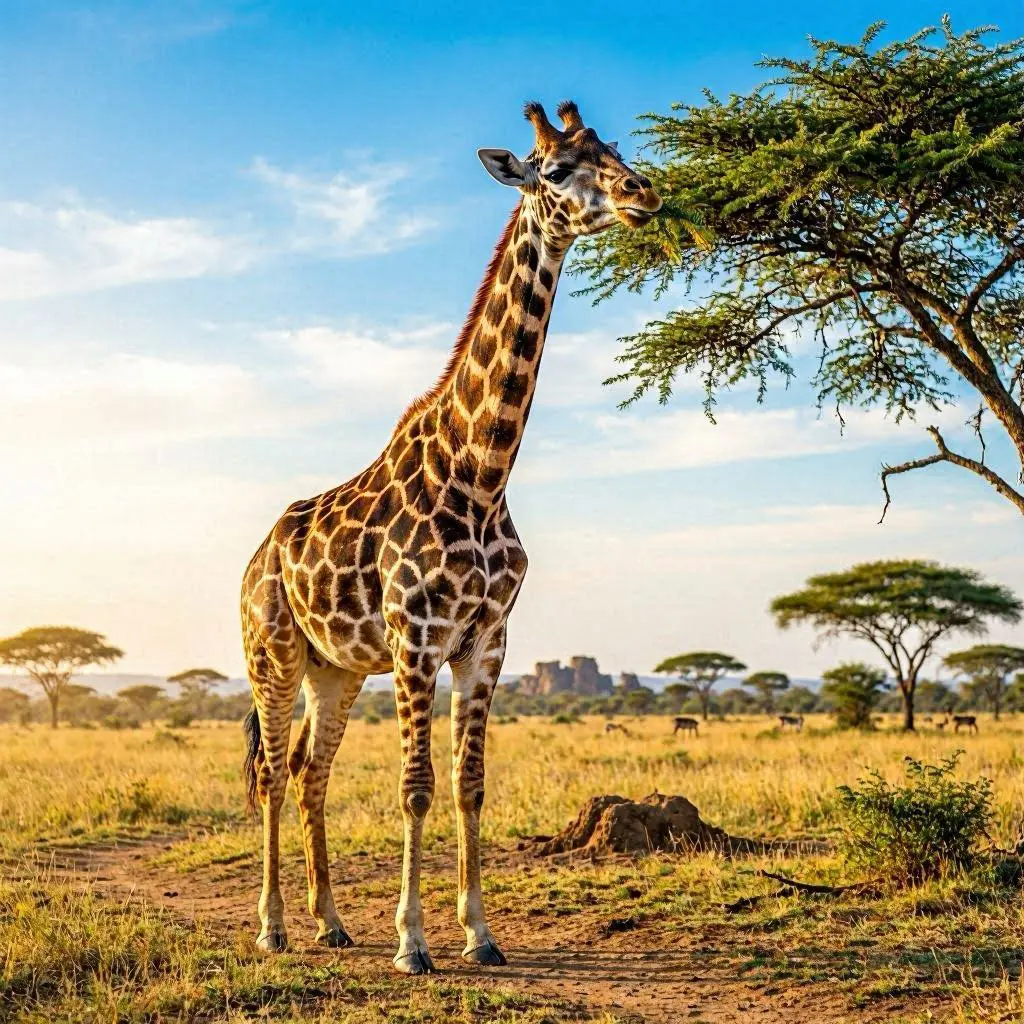
Giraffes use their extraordinary 1.8-meter-long neck to reach leaves high in acacia trees that other animals cannot access. Their long, dark tongues up to 45 cm help them strip leaves from thorny branches. They can eat up to 34 kg of leaves per day.
Where found: Savannas and open woodlands of Africa
❹ Rabbit
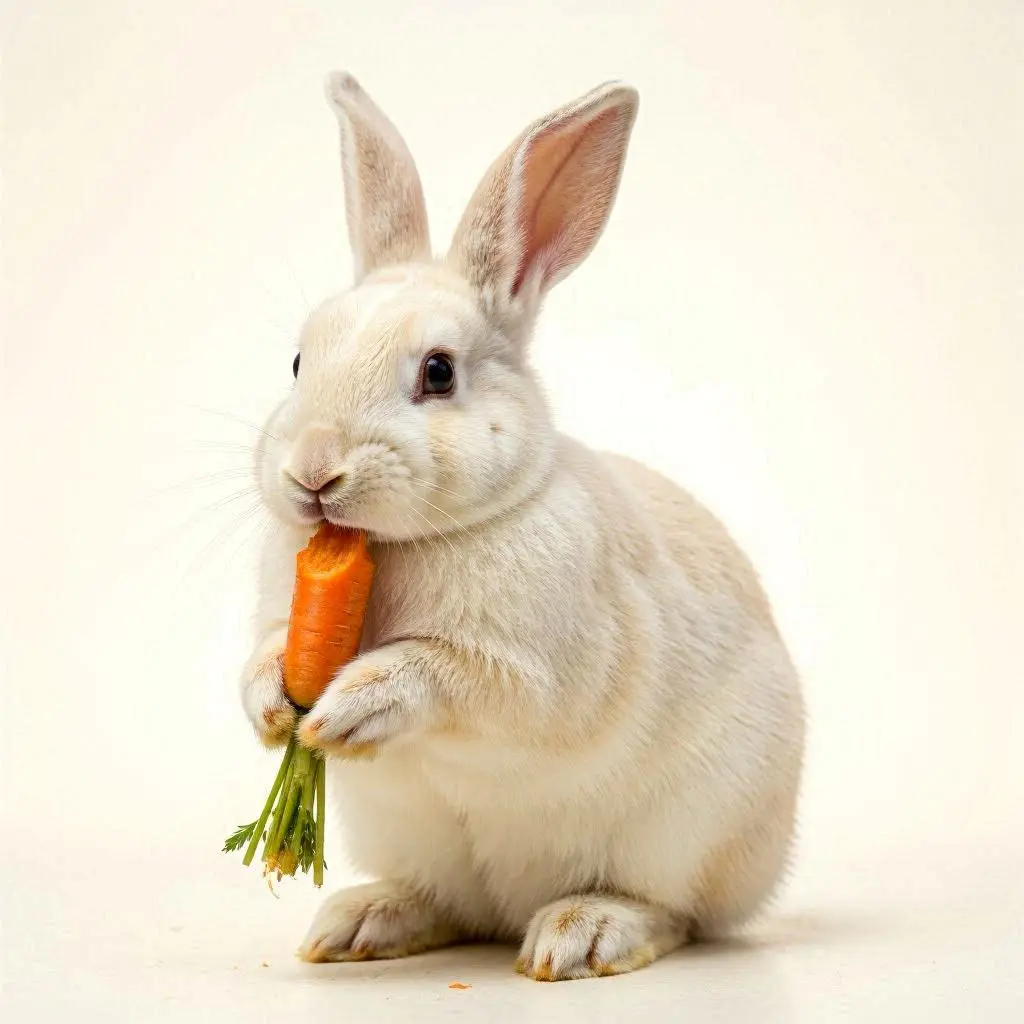
Rabbits have a fascinating adaptation called cecotrophy; they eat their own droppings (called cecotropes) to re-digest nutrients that were missed the first time. This allows them to extract maximum nutrition from grass and leafy plants.
Where found: Meadows, forests, and grasslands worldwide
❺ Horse
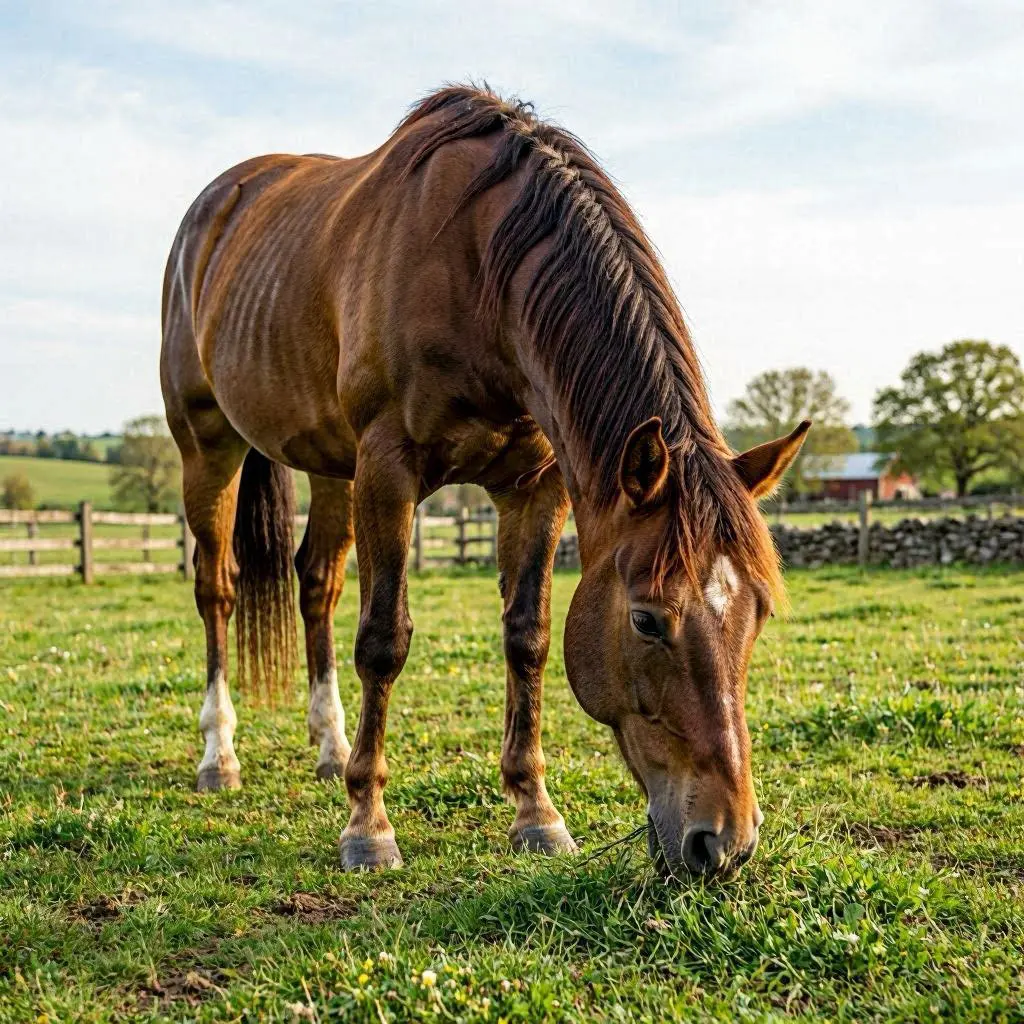
Horses are strong grazers that eat grass, hay, and grains. Unlike cows, they have a single-chambered stomach but compensate with an enlarged cecum for fermentation of plant fibers. A horse eats roughly 2% of its body weight in forage daily.
Where found: Farms, grasslands, and open plains worldwide
❻ Manatee (Aquatic Herbivore)
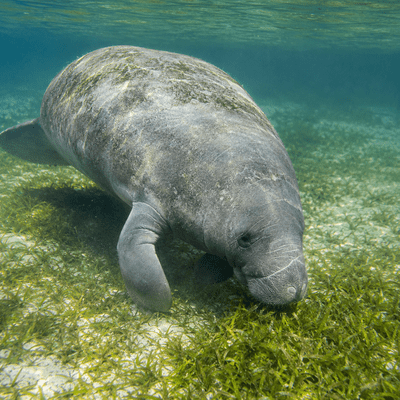
Often called “sea cows,” manatees are gentle aquatic herbivores that feed on seagrasses, algae, and freshwater plants. They eat up to 10–15% of their body weight daily — that’s roughly 32–50 kg of vegetation for an adult. They play a critical role in keeping aquatic plant life healthy and balanced.
Where found: Coastal waters and rivers of the Caribbean, Gulf of Mexico, and West Africa
❼ Green Sea Turtle (Aquatic Herbivore)
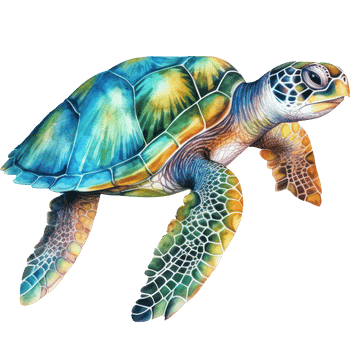
Adult green sea turtles are unique among sea turtles in being primarily herbivorous. They graze on seagrass and algae, and their feeding activity is essential for maintaining healthy seagrass beds that many other marine species depend on.
Where found: Tropical and subtropical oceans worldwide
Types of Herbivorous Animals
Herbivorous animals can be grouped into different categories based on their habitat, lifestyle, and relationship with humans. Some live on farms, while others roam freely in the wild. Certain birds and insects also rely primarily on plant-based food. The following are the main types of herbivorous animals.
Domestic Herbivorous Animals
Domestic herbivores are commonly raised by humans for farming, transportation, wool, milk, and other purposes. They are usually found on farms and in rural communities.
- Cow – Commonly raised for milk and dairy products.
- Goat – Feeds on grass, leaves, and shrubs.
- Sheep – Known for producing wool and grazing on grass.
- Horse – Eats grass and hay and has been used for transport for centuries.
Wild Herbivorous Animals
Wild herbivores live in natural habitats such as forests, grasslands, mountains, and savannas. They obtain their food directly from the vegetation available in their surroundings.
- Elephant – Feeds on grass, leaves, bark, and fruits.
- Giraffe – Uses its long neck to reach leaves high in trees.
- Zebra – Grazes on grasses across African plains.
- Deer – Eats grass, leaves, and young plant shoots.
Herbivorous Birds
Many bird species depend mainly on seeds, fruits, grains, nectar, and other plant materials. These birds are found in a variety of habitats around the world.
- Parrot – Eats fruits, nuts, and seeds.
- Goose – Feeds on grass and aquatic plants.
- Swan – Consumes underwater vegetation.
- Pigeon – Commonly feeds on grains and seeds.
Herbivorous Insects
Herbivorous insects feed on leaves, stems, sap, flowers, and other parts of plants. They are found in gardens, forests, fields, and agricultural areas.
- Grasshopper – Feeds on grass and leaves.
- Caterpillar – Consumes large amounts of leaves.
- Aphid – Feeds by sucking plant sap.
- Weevil – Eats grains, seeds, and plant material.
In short, herbivorous animals include domestic animals, wild animals, birds, and insects. Together, they play an important role in maintaining healthy ecosystems and food chains.
What are Carnivore Animals?
Carnivores are animals that eat only the meat of other animals to survive. They depend on hunting or scavenging other animals for their energy and nutrients. Because meat is protein-dense and digests relatively quickly, carnivores have shorter digestive tracts than herbivores, but their teeth, claws, and hunting instincts are among the most powerful adaptations in the animal world.
A lion’s jaw, for example, can only move up and down; it has no sideways grinding motion because it never needs to chew plants. Great white sharks can detect a single drop of blood in 100 liters of water. These are bodies built purely for one purpose: finding and consuming other animals.
Key Features of Carnivores
- They eat only meat (flesh of other animals)
- They are usually active hunters or skilled scavengers
- They have sharp canine teeth and strong jaws for tearing flesh
- Their jaw moves primarily up and down only
- Their claws or talons are sharp to catch and hold prey
- They have a short, acidic digestive system suited for meat digestion
- They rely on high-protein, high-fat diets for energy
Examples of Carnivores
Lion, Tiger, Leopard, Wolf, Cheetah, Eagle, Great White Shark, Crocodile
Common Carnivorous Animals Names with Pictures
❶ Lion
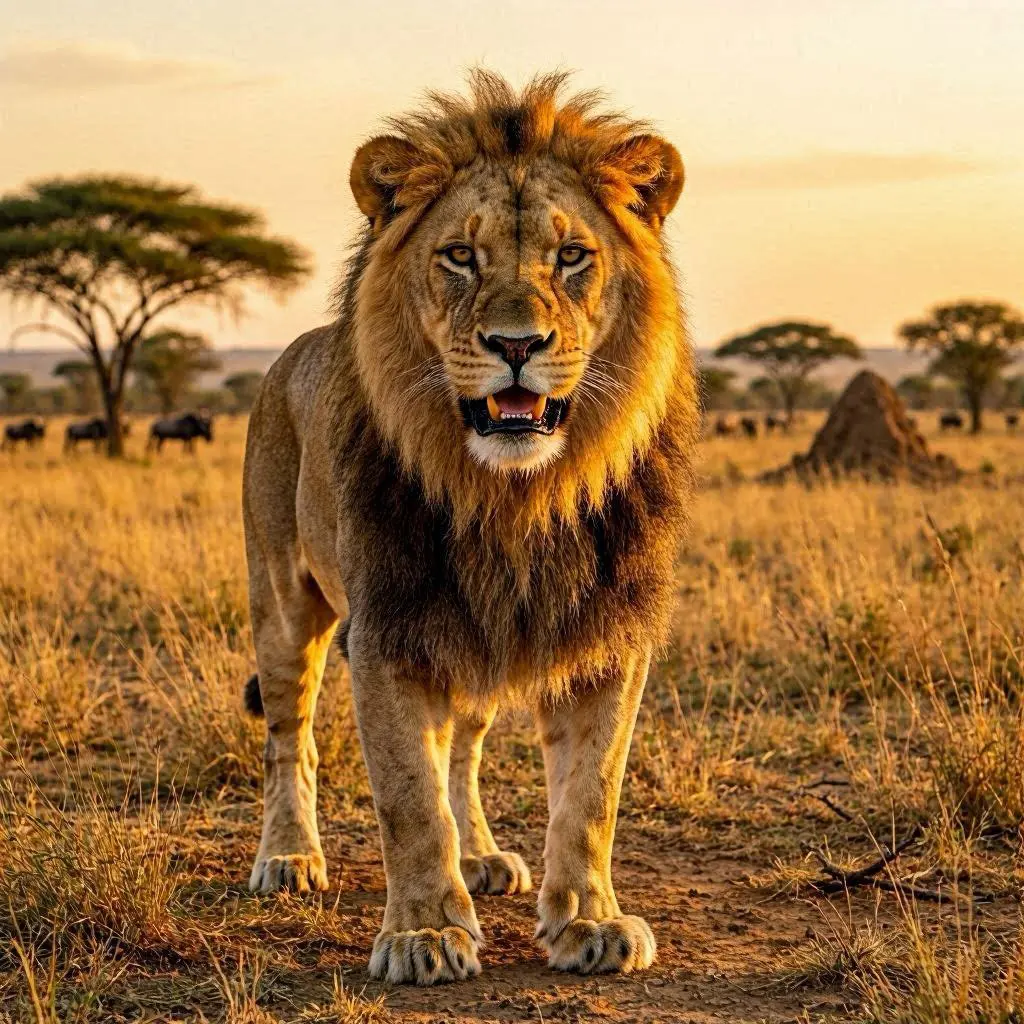
Lions are powerful carnivores often called the kings of the jungle. They hunt in groups called prides and use teamwork to catch large prey like zebras and buffalo. Their loud roar helps them communicate and defend their territory.
Where found: Grasslands and savannas of Africa
❷ Tiger
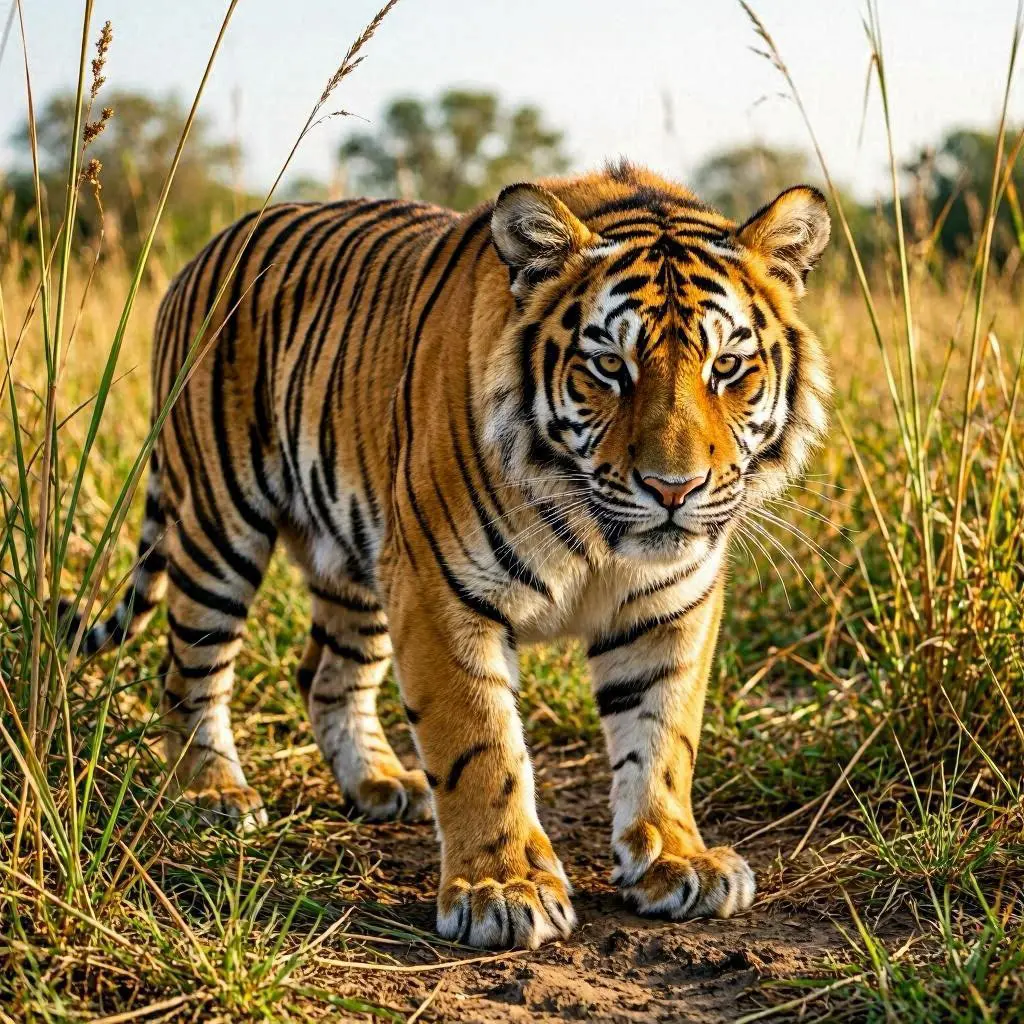
Tigers are silent and strong carnivores that hunt alone. They move quietly through forests and attack prey with sudden speed and strength. Their stripes help them stay hidden in grass and shadows.
Where found: Forests and mangrove areas of Asia
❸ Leopard
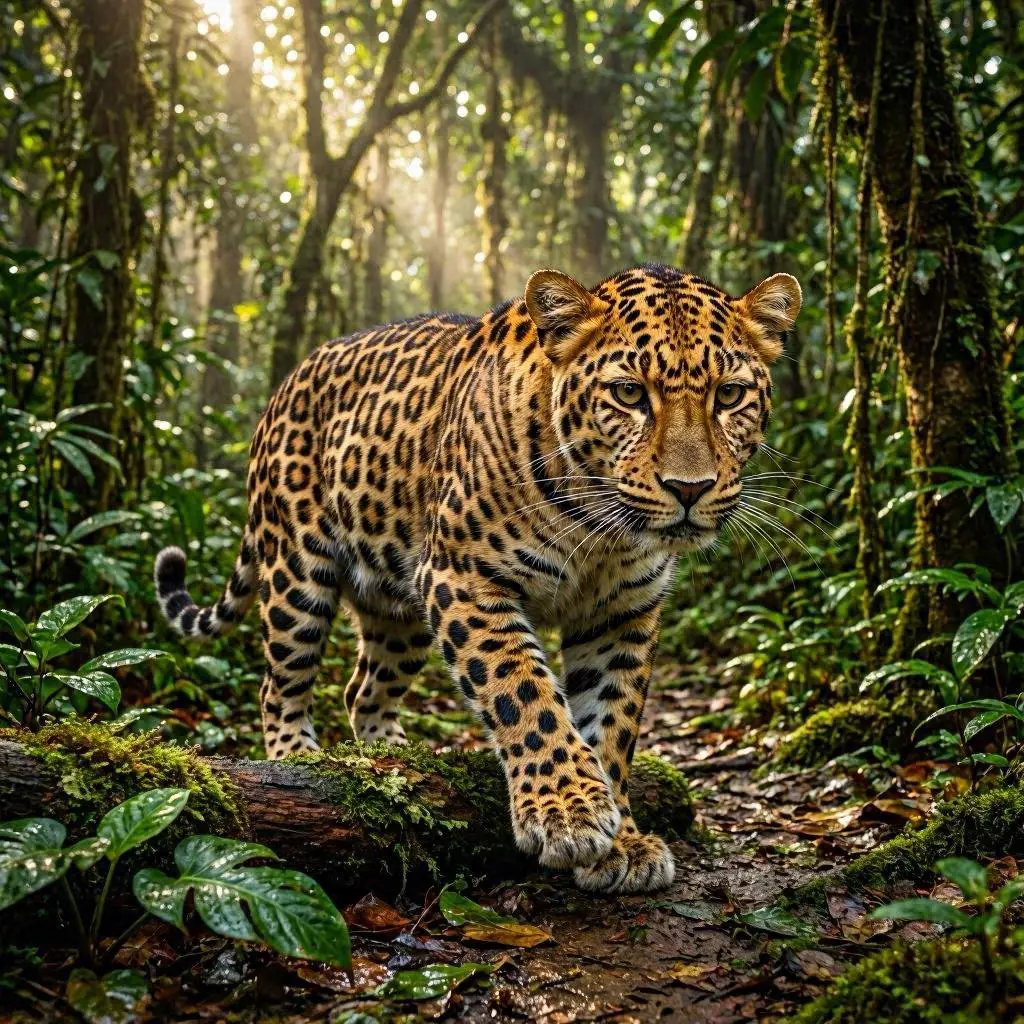
Leopards are stealthy and intelligent carnivores. They often drag their prey into trees to protect it from other predators. They rely on surprise attacks and usually hunt alone.
Where found: Forests, mountains, and grasslands of Africa and Asia
❹ Crocodile (Reptile Carnivore)
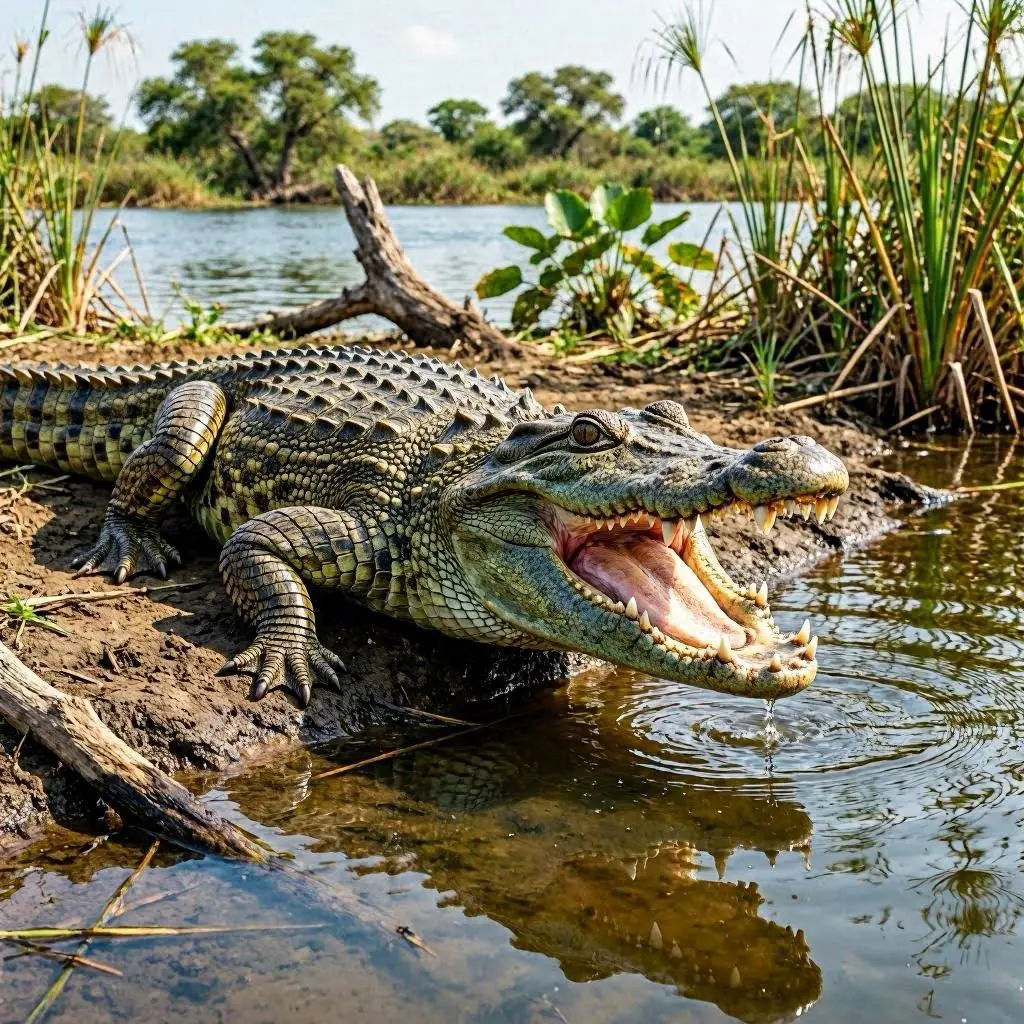
Crocodiles are one of the oldest predators on Earth, largely unchanged for over 200 million years. They have the strongest bite force of any living animal, over 3,700 psi (pounds per square inch). Incredibly, they can go months without eating after a large meal due to their slow metabolism.
Where found: Tropical rivers, lakes, and wetlands of Africa, Asia, and Australia
❺ Great White Shark (Marine Carnivore)
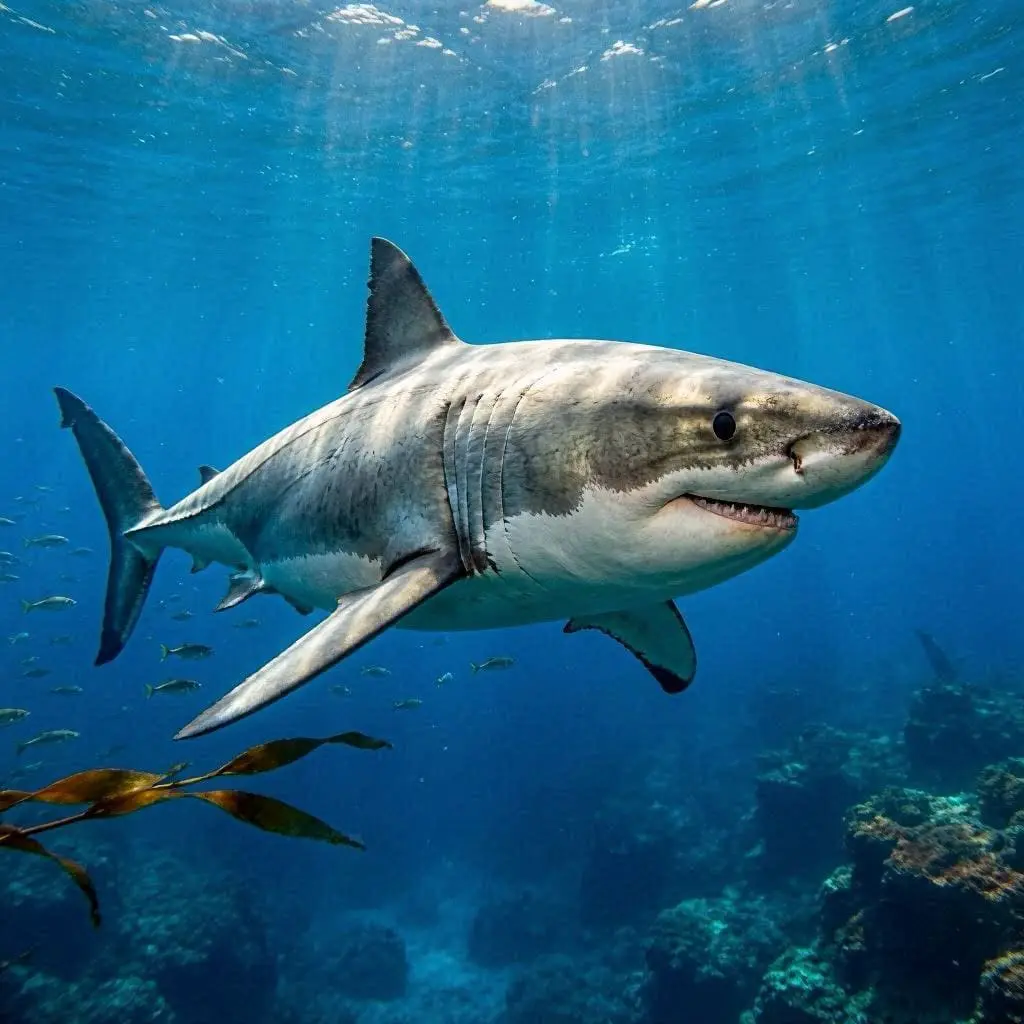
Great white sharks are apex ocean predators with roughly 300 serrated teeth arranged in multiple rows. When they lose a tooth, a new one moves forward to replace it, they can go through up to 20,000 teeth in a lifetime. They can detect blood in water from up to 1.6 km away.
Where found: Coastal and offshore waters worldwide
❻ Golden Eagle (Aerial Carnivore)

Golden eagles are among the most powerful birds of prey, capable of diving at speeds over 240 km/h. They can carry prey weighing up to 4–5 kg in flight, and their eyesight is estimated to be 4–8 times sharper than a human’s.
Where found: Mountains, cliffs, and open landscapes of the Northern Hemisphere
Types of Carnivorous Animals
Carnivorous animals are grouped based on their habitat and hunting style, as they live and hunt in different environments such as land, air, water, and forests.
Big Cats (Wild Feline Carnivores)
Big cats are powerful land predators known for strength, speed, and sharp hunting instincts.
- Lion – Social hunter that lives in prides and hunts large prey.
- Tiger – Solitary and powerful hunter known for silent stalking.
- Leopard – Stealthy climber that drags prey into trees.
- Cheetah – Fastest land animal built for high-speed chases.
In short, big cats are top predators that help control herbivore populations and maintain balance in ecosystems.
Wild Carnivorous Animals
Wild canines are intelligent predators that often hunt in groups and adapt to many environments.
- Gray Wolf – Pack hunter with strong teamwork strategies.
- Red Fox – Clever and adaptable small animal hunter.
- Coyote – Fast and flexible predator found in varied habitats.
- Dhole – Asian pack hunter known for long-distance chases.
In short, wild canines play an important role in nature by controlling small animal populations and keeping food chains stable.
Reptile Carnivores
Reptile predators use stealth, venom, or strong jaws to capture prey on land and in water.
- Crocodile – Ambush predator with extremely strong bite force.
- King Cobra – Venomous snake that hunts other reptiles.
- Python – Constrictor that kills prey by squeezing.
- Komodo Dragon – Large lizard using strength and venom.
In short, reptile carnivores are vital for balancing both land and aquatic ecosystems by controlling prey populations.
Birds of Prey (Aerial Hunters)
These birds hunt from the sky using sharp eyesight, speed, and strong talons.
- Eagle – Powerful hunter with excellent vision.
- Hawk – Fast and precise aerial predator.
- Owl – Silent night hunter with strong night vision.
- Falcon – Fastest bird known for high-speed dives.
In short, birds of prey help maintain ecological balance by controlling populations of small animals and insects.
Marine Carnivores
Marine predators live in oceans and hunt fish, squid, and other sea animals.
- Great White Shark – Apex ocean predator with sharp teeth.
- Killer Whale (Orca) – Intelligent group hunter of the sea.
- Barracuda – Fast ambush predator with sharp teeth.
- Octopus – Smart marine hunter with strong survival skills.
In short, marine carnivores are essential for maintaining balance in ocean food chains and healthy marine ecosystems.
What are Omnivorous Animals?
Omnivores are animals that eat both plants and meat. They have a flexible diet and can survive on a wide variety of food sources depending on what is available in their environment. This dietary flexibility is arguably one of the greatest survival advantages in nature. Omnivores can adapt when one food source disappears.
Humans are a perfect example. We can eat fruits, vegetables, grains, meat, fish, eggs, and dairy. This flexibility allowed early humans to survive in almost every environment on Earth, from arctic tundra to tropical rainforests.
Bears are another great example; in summer, they gorge on berries, fruits, and honey; in autumn they switch heavily to salmon; in winter, they survive on stored body fat. One animal, completely different diets across the year.
Key Features of Omnivores:
- They eat both plant and animal food
- They can survive in different environments due to flexible diet
- They have a mix of flat molars (for plants) and sharp canines (for meat)
- Their jaw can move both up-down and side-to-side
- Their digestive system can process both plant and animal food
- They are highly adaptable and found on every continent
Examples of Omnivores
Human, Bear, Pig, Chicken, Dog, Crow, Raccoon, Hedgehog
Common Omnivorous Animals Names with Pictures
❶ Brown Bear
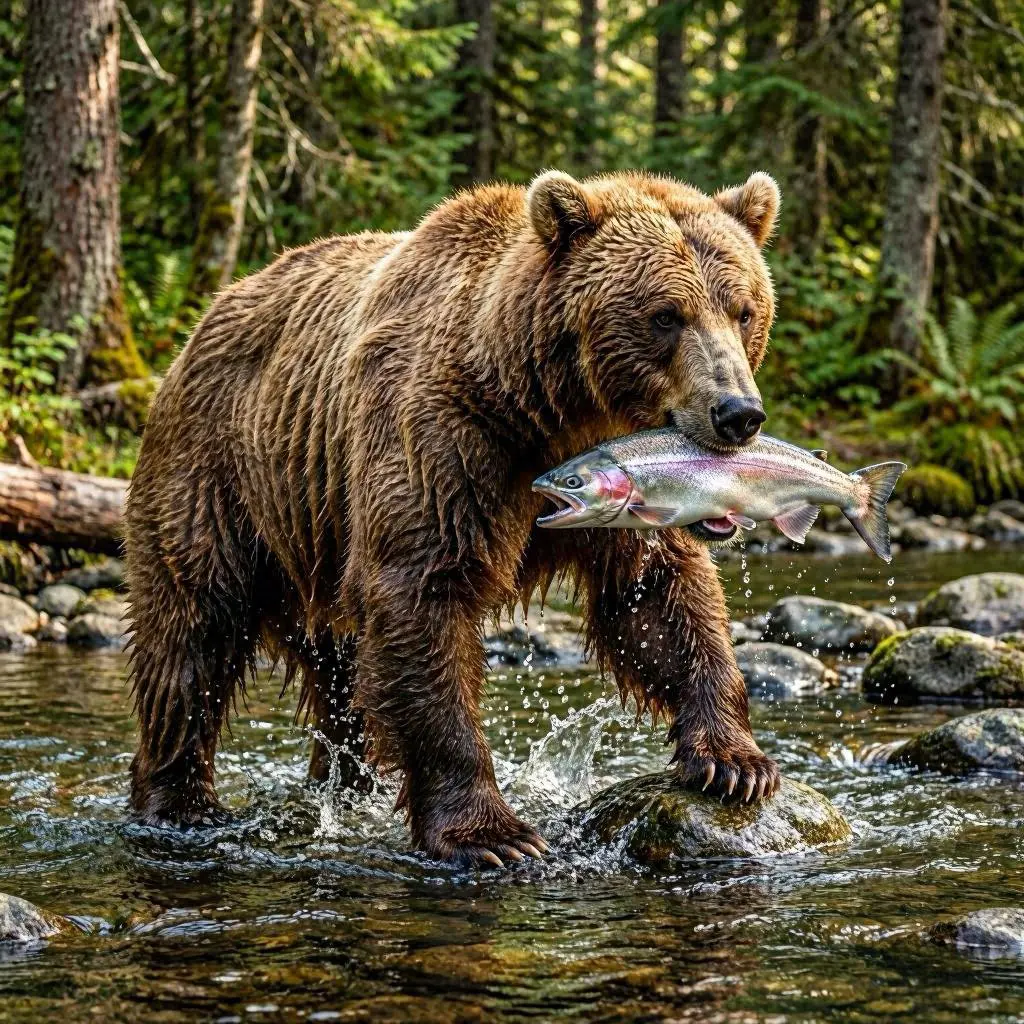
Brown bears are the ultimate opportunistic omnivores. Their diet changes completely with the seasons: spring means grass and insects; summer brings berries and honey; autumn is almost entirely salmon when fish are running upstream. Before hibernation, a brown bear can eat up to 20,000 calories per day to build fat reserves.
Where found: Forests and mountains of North America, Europe, and Asia
❷ Human

Humans are classified as omnivores because we can digest both plant and animal foods. Our teeth tell the story; we have flat molars for grinding grains and vegetables, and sharper canines that our ancestors used for tearing meat. Our digestive system can process a remarkable variety of foods, which is why human populations thrive on wildly different diets around the world.
Where found: Every continent on Earth
❸ Pig
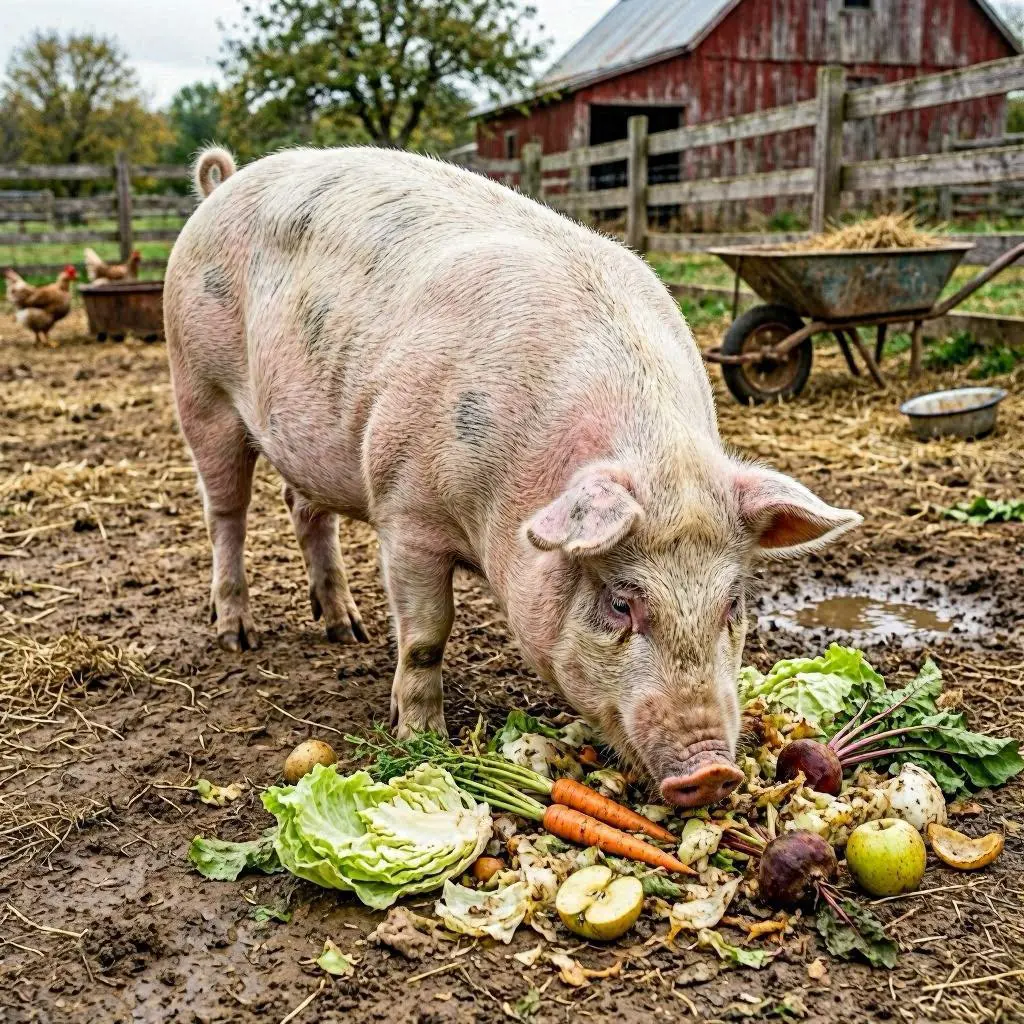
Pigs are highly intelligent omnivores with a digestive system surprisingly similar to humans. They will eat almost anything: roots, fruits, insects, small animals, and food scraps. Their rooting behavior (using their snout to dig) helps aerate soil, which benefits plant growth.
Where found: Farms and forests worldwide
❹ Crow
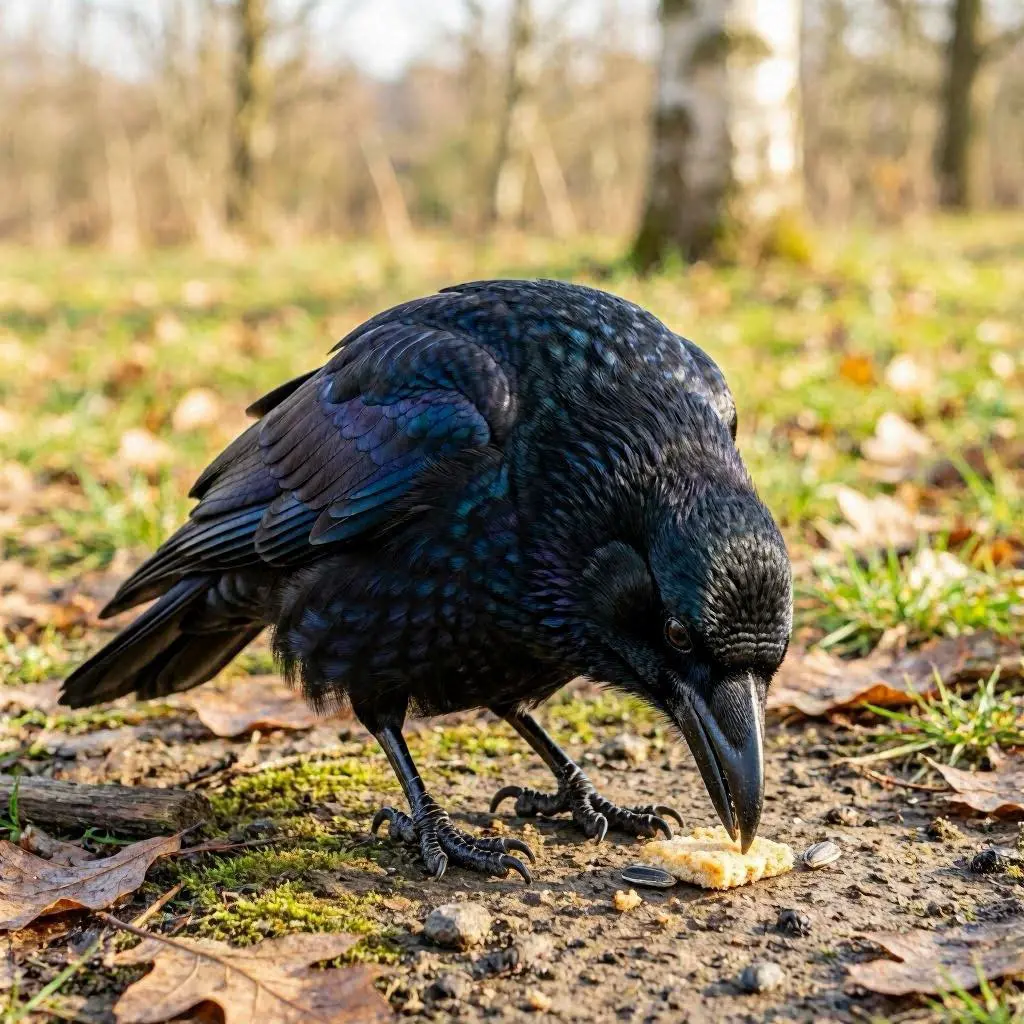
Crows are among the most intelligent animals on Earth, with a brain-to-body ratio comparable to great apes. They are resourceful omnivores that eat seeds, insects, small animals, eggs, carrion, and human food waste. They have been observed using tools, solving multi-step puzzles, and even holding grudges against specific humans.
Where found: Cities, villages, and forests worldwide
❺ Raccoon
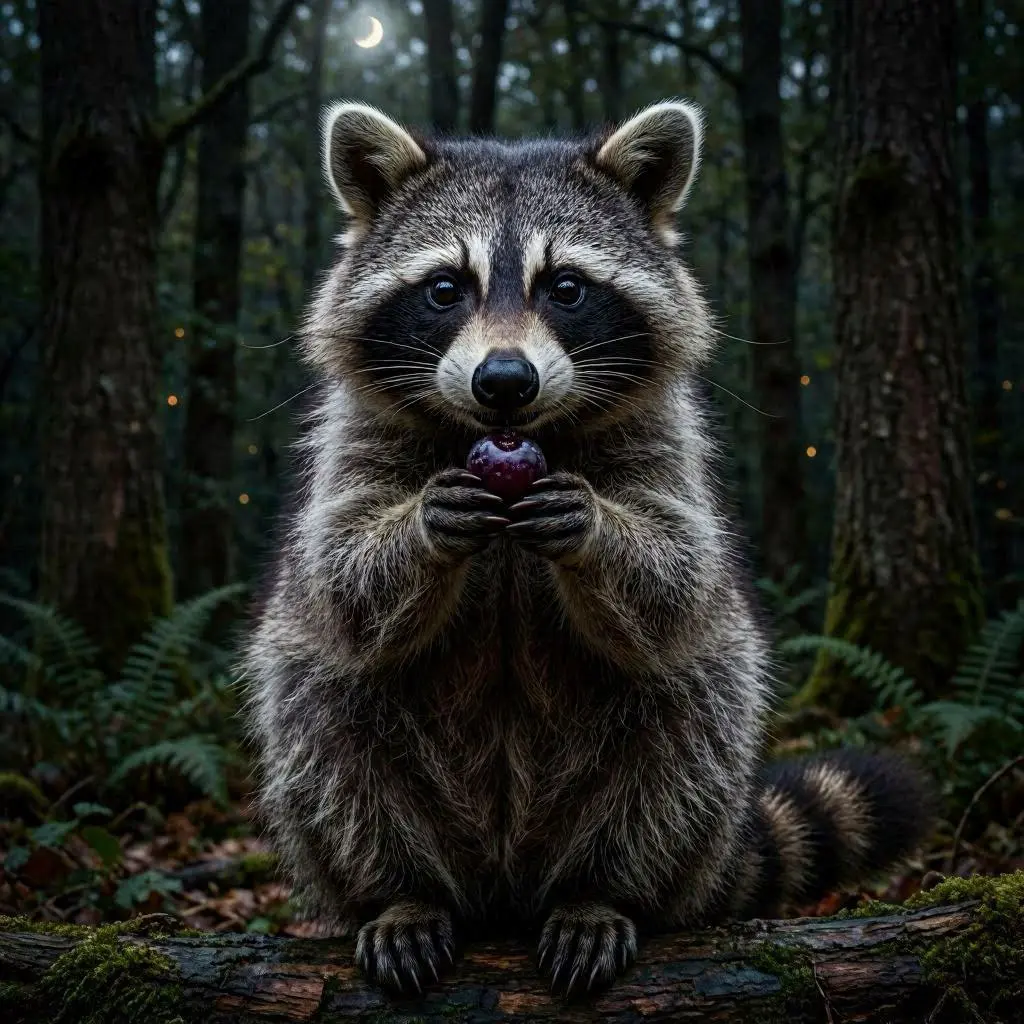
Raccoons are remarkably adaptable omnivores. Their front paws are almost hand-like, allowing them to open containers, untie knots, and manipulate food. They eat fruits, insects, fish, bird eggs, and human food waste, thriving in both wild forests and urban environments.
Where found: Forests, farmlands, and urban areas of North America
❻ Sea Otter (Aquatic Omnivore)
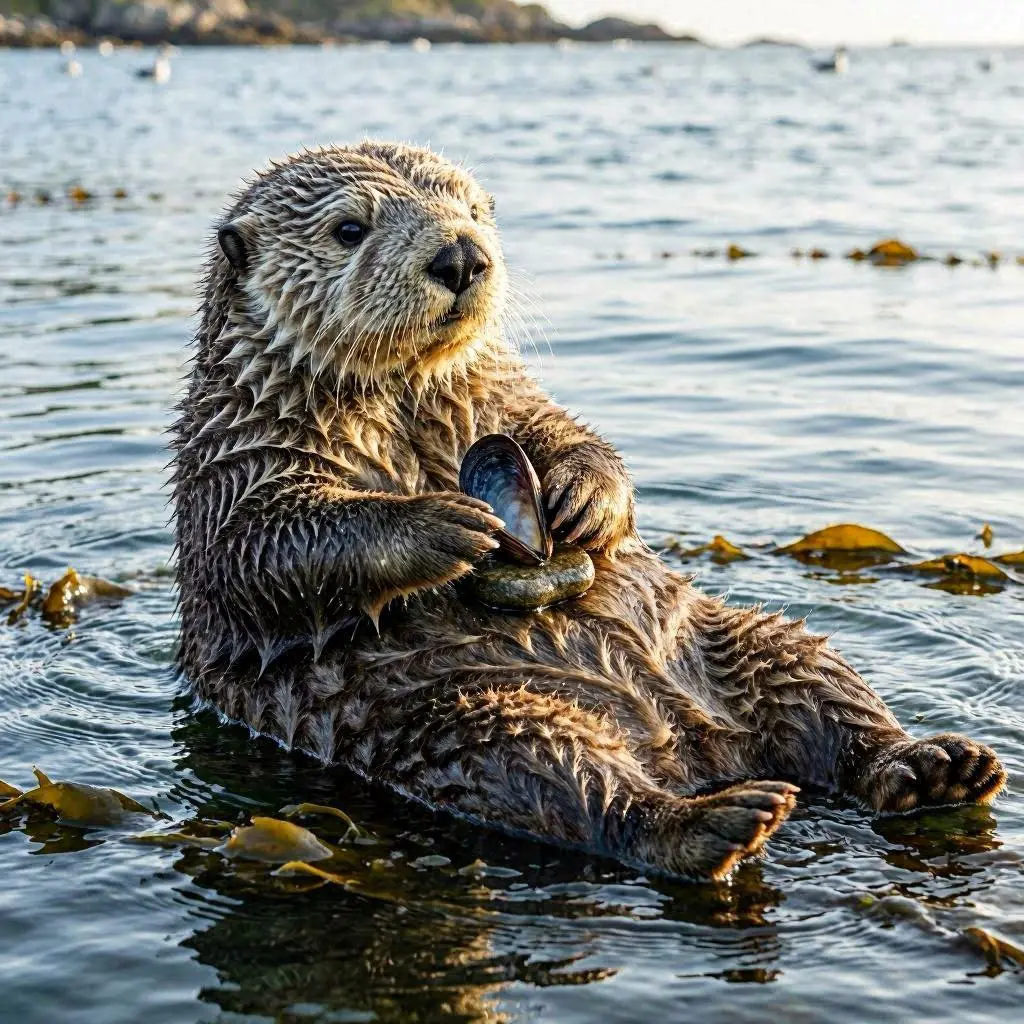
Sea otters are charming marine omnivores that feed on sea urchins, clams, crabs, and occasionally kelp. They are famous for floating on their backs and using rocks as tools to crack open shellfish on their chests. A sea otter eats about 25% of its body weight daily to stay warm in cold ocean water.
Where found: Pacific coasts of North America and Russia
Types of Omnivorous Animals
Omnivorous animals are found in different environments, including homes, forests, cities, and wild habitats. They are adaptable feeders and can survive on both plant and animal sources. Based on their lifestyle and habitat, they can be grouped into a few main types.
Domestic Omnivorous Animals
Domestic omnivores live close to humans and are often found in farms and households. They are flexible in their diet and can eat both natural and human-provided food.
- Pig – Eats plants, grains, insects, and food scraps.
- Dog – Consumes meat, grains, vegetables, and packaged food.
- Chicken – Feeds on seeds, insects, and small worms.
- Duck – Eats aquatic plants, insects, and small organisms.
Wild Omnivorous Animals
Wild omnivores live in forests, grasslands, and natural environments. They depend on both plants and animals for survival.
- Bear – Eats fish, berries, fruits, and small animals.
- Raccoon – Feeds on fruits, insects, eggs, and leftovers.
- Fox – Eats small animals, fruits, and berries.
- Opossum – Consumes fruits, insects, and small creatures.
Omnivorous Birds
Many birds are omnivores and feed on a mix of grains, insects, and small animals. They are highly adaptable and found almost everywhere.
- Crow – Eats grains, insects, and food waste.
- Peacock – Feeds on seeds, insects, and small reptiles.
- Sparrow – Eats seeds, grains, and insects.
- Hen (Hen species) – Consumes grains, worms, and small insects.
Omnivorous Insects
Some insects also show omnivorous behavior by feeding on both plant matter and small organisms.
- Ant – Eats sugar, seeds, and small insects.
- Beetle – Feeds on plants, decaying matter, and small insects.
- Cricket – Eats leaves, seeds, and small organic matter.
- Cockroach – Consumes food scraps, plants, and organic waste.
In short, omnivorous animals are highly adaptable feeders that survive on both plants and animals, helping them thrive in almost every environment.
Beyond the Three Groups: Scavengers and Detritivores
Most articles stop at herbivores, carnivores, and omnivores, but nature is more complex than three neat boxes. Some animals don’t fit cleanly into any of these categories.
Scavengers are animals that primarily eat the dead bodies of other animals rather than hunting live prey. Vultures, hyenas, and certain beetles are classic examples. While hyenas can and do hunt, they are best known for consuming carcasses left by other predators. Scavengers play a vital ecological role. They clean up dead matter and prevent the spread of disease.
Detritivores are animals that feed on decomposing organic matter, such as dead leaves, rotting wood, animal waste, and other organic debris. Earthworms, millipedes, dung beetles, and woodlice are common detritivores. Without them, dead organic matter would accumulate and nutrients would never return to the soil.
These groups are sometimes overlooked, but they are just as essential to ecosystem health as hunters and grazers.
Key Differences Between Herbivores vs Carnivores vs Omnivores
Animals are grouped into three main categories based on their food habits. Simply, this classification helps us understand what animals eat and how they survive in different environments.
| Type | Definition | Eats | Gut Length | Examples |
|---|---|---|---|---|
| Herbivores | Animals that depend only on plants for food | Grass, leaves, fruits, seeds, bark | Very long | Cow, Deer, Elephant, Manatee |
| Carnivores | Animals that depend on other animals for food | Meat, fish, insects | Short | Lion, Tiger, Eagle, Shark |
| Omnivores | Animals that eat both plants and animals | Both plant and animal food | Medium | Bear, Human, Crow, Raccoon |
In short, herbivores eat only plants, carnivores eat only meat, and omnivores consume both depending on availability in their environment.
Herbivores vs Carnivores vs Omnivores Role in the Ecosystem
Herbivores, carnivores, and omnivores all play essential roles in maintaining ecological balance and keeping ecosystems stable and functional.
- Herbivores act as primary consumers in the food chain. They control plant population by feeding on grass, leaves, and other vegetation. In turn, they also serve as a major food source for carnivores, making them a key link in energy transfer from plants to higher trophic levels.
- Carnivores function as secondary or tertiary consumers. They regulate the population of herbivores and other animals by predation. This prevents overgrazing and helps maintain balance in plant life and overall biodiversity within ecosystems.
- Omnivores occupy a flexible role in the food chain as they consume both plants and animals. This adaptability allows them to survive in different environments and food conditions. They also help stabilize ecosystems by connecting multiple food chain levels and reducing dependency on a single food source.
Together, these three groups form a balanced food web, ensuring continuous energy flow, population control, and long-term ecological stability.
Fun Facts about Herbivores vs Carnivores vs Omnivores
- A caterpillar increases its body weight by up to 100 times before transforming into a butterfly — all from eating leaves.
- Crocodiles replace their teeth continuously and can go through over 3,000 teeth in a single lifetime.
- Giant pandas are technically classified as carnivores (they are bears), but 99% of their diet is bamboo. They eat 12–38 kg of bamboo daily just to survive.
- Elephants are so inefficient at digesting plants that they absorb only about 40–45% of what they eat — the rest becomes fertilizer that helps forests grow.
- A brown bear can eat 20,000 calories in a single day before hibernation — roughly 8–10 times what an average human eats.
- The blue whale is the largest carnivore on Earth, yet it feeds on some of the smallest animals — krill. It can consume up to 40 million krill per day.
- Sea otters wrap themselves in kelp before sleeping to avoid drifting away in ocean currents. Kelp is also part of their food source.
- Wolves hunt in packs with coordinated strategies, but a lone wolf can still take down prey 5 times its own size.
Conclusion
Herbivores, carnivores, and omnivores together form the foundation of every ecosystem by maintaining balance in the food chain. Each group has a unique feeding habit that supports survival, energy flow, and population control in nature. From plant-eating herbivores to meat-eating carnivores and flexible omnivores, all are equally important in keeping ecosystems stable and functioning smoothly.
FAQs
The main difference lies in their diet. Herbivores depend entirely on plant-based food such as grass, leaves, fruits, and seeds. Carnivores survive by eating the flesh of other animals, making them natural predators. Omnivores, however, have a flexible diet and consume both plant and animal sources depending on availability in their environment.
In general, animals are biologically adapted to a specific diet, so a true herbivore does not completely change into an omnivore. However, in rare situations like food scarcity, some herbivores may temporarily consume non-plant material, but this does not change their natural classification.
Carnivores have sharp, pointed teeth designed for tearing flesh and gripping prey. These teeth, along with strong jaws and claws, help them hunt, kill, and consume other animals efficiently. Their entire body structure is adapted for an active predatory lifestyle.
Omnivores do not follow a fixed ratio in their diet. Their food intake depends on what is easily available in their surroundings. In some regions they may eat more plant-based food, while in others they may rely more on animal sources, showing their adaptability.
Humans are classified as omnivores because they naturally consume both plant-based foods like fruits, vegetables, and grains, as well as animal products like meat, eggs, and fish. This dietary flexibility allows humans to survive in different environments across the world.
Herbivores play a key role in maintaining ecological balance by controlling plant growth and preventing overgrowth of vegetation. They also serve as a primary food source for carnivores, helping transfer energy from plants to higher levels of the food chain.
In the food chain, herbivores act as primary consumers because they eat plants. Carnivores function as secondary or tertiary consumers by feeding on other animals. Omnivores can occupy multiple levels depending on their diet. Together, they ensure smooth energy flow and stability in ecosystems.
You May Also Like
- 25+ Biggest Animals in the World
- 50+ Nocturnal Animals Names with Pictures
- Extinct Animals Names in English with their Pictures
Herbivores vs Carnivores vs Omnivores Quiz
Herbivores vs Carnivores vs Omnivores
What does a herbivore eat?
Grass, leaves, fruit, bark and roots, with no animal matter taken deliberately.
Herbi- points to plants, carni- to flesh, omni- to everything.
As a herbivore, the zebra takes nothing but grass.
Which teeth mark a carnivore?
Canines hold prey and carnassials shear meat from bone like scissors.
Teeth follow diet: shearing for meat, grinding for plants.
The carnassial teeth showed clearly in the cleaned skull.
Which group generally has the longest digestive tract for its body size?
Plant cellulose breaks down slowly, so it needs a long gut and often bacterial help.
Harder food to digest means a longer gut.
A cow's digestive tract runs many times its body length.
Complete the sentence with the term.
A herbivore that chews the cud and has a four-chambered stomach is a ___.
Cattle, sheep, goats, deer and giraffes are ruminants, regurgitating and rechewing plant matter.
Ruminant is a subset of herbivore, not a separate diet.
Every ruminant brings the cud back up to chew a second time.
Which of these is an omnivore?
A brown bear takes berries, roots, insects, fish and carrion as the season allows.
Omnivores switch between food types rather than mixing them by chance.
The brown bear is an omnivore in the fullest sense.
What is an insectivore?
Shrews, anteaters and most bats qualify, and it is a narrower band inside carnivory.
The -vore ending names what is eaten.
As an insectivore, the shrew must eat almost constantly.
Turn on JavaScript for the interactive quiz. The full practice set is shown above.