Have you ever looked at a tiny hedgehog, a fluffy bunny, or a round-faced panda and instantly wanted to give it the sweetest name imaginable? You are not alone. Across the world, people are captivated by cute animals names. Their big eyes, soft fur, gentle movements, and irresistible charm make them some of nature’s most beloved creations. Whether you are a pet owner searching for the perfect name, a wildlife lover, or simply someone who adores adorable animals, this guide has everything you need.
In this article, we cover the cutest animals across the world, spotlight the top 15 cute animals names with picture-worthy descriptions, and then break down hundreds of cute animal names by category. From pets and baby animals to wild creatures and pop-culture icons, let’s dive in.
What Are Cute Animals?
Cute animals are creatures that naturally trigger a sense of warmth, affection, or delight in humans. Scientists call this response “kindchenschema,” a term coined by ethologist Konrad Lorenz. It refers to a set of physical features such as large round eyes, small noses, chubby cheeks, soft textures, and small body size that trigger nurturing instincts in people.
Cute animals are found in every corner of the world, from the snowy mountains of China to the rainforests of South America. They can be wild or domestic, tiny or surprisingly large. What makes them “cute” is not just appearance. It is also their behavior, sounds, and the way they interact with their environment and with humans.
Explore more animals that start with different letters:
A | B | C | D | E | F | G | H | I | J | K | L | M | N | O | P | Q | R | S | T | U | V | W | X | Y | Z
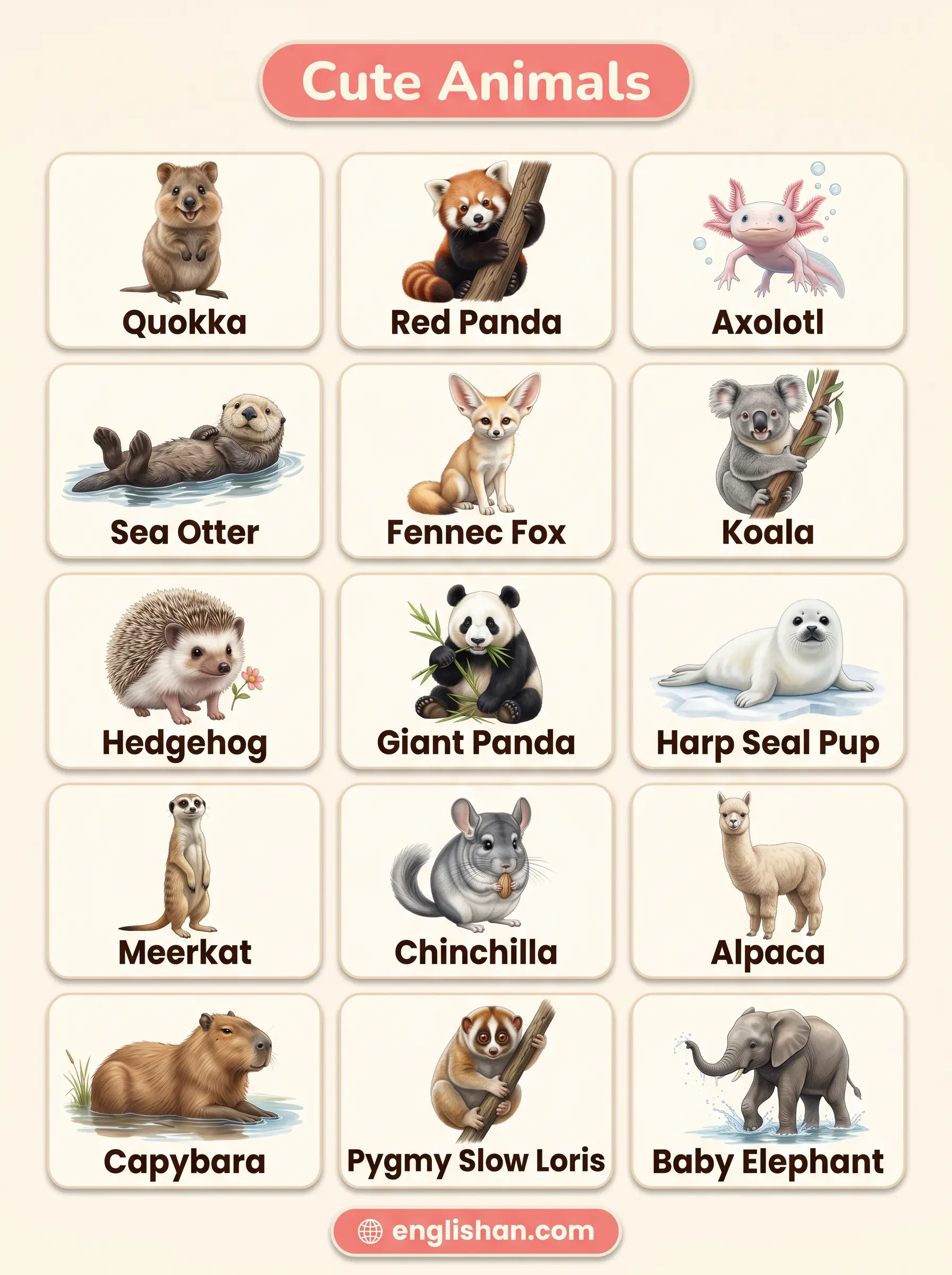
List of Cute Animals In the World
Here is a list of 35 of the most adorable animals found around the globe:
- Quokka
- Red Panda
- Axolotl
- Sea Otter
- Fennec Fox
- Pygmy Slow Loris
- Snow Leopard (cub)
- Koala
- Hedgehog
- Meerkat
- Puffin
- Baby Elephant
- Chinchilla
- Baby Seal
- Panda
- Bunny (Rabbit)
- Golden Retriever Puppy
- Persian Cat
- Hamster
- Capybara
- Piglet (Baby Pig)
- Baby Giraffe
- Duckling
- Baby Penguin
- Alpaca
- Sugar Glider
- Baby Deer (Fawn)
- Margay (Wild Cat)
- Flying Squirrel
- Narwhal
- Baby Hippo
- Miniature Donkey
- Blue-footed Booby
- Clownfish
- Patagonian Mara
Top 15 Popular Cute Animals Names with Pictures
The animals below are not just adorable. They are among the most recognized and loved species on the planet. Each one comes with a name steeped in charm, a brief profile, and the key details that make it special.
❶ Quokka
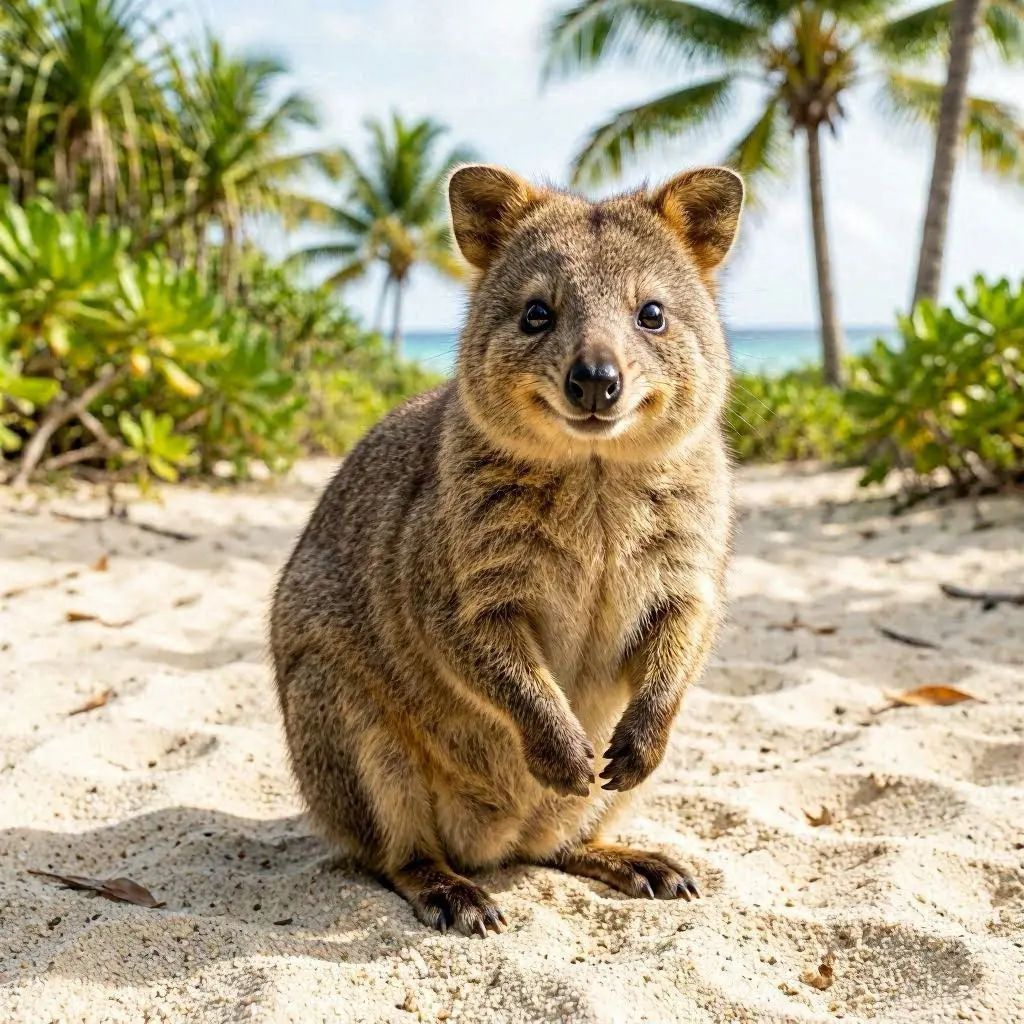
The quokka is a small marsupial native to southwestern Australia, often called “the world’s happiest animal” because of its naturally upturned mouth that makes it look like it is always smiling. It weighs around 2.5 to 5 kg and has short, rounded ears and a compact body covered in coarse brownish-grey fur. Quokkas are herbivores, feeding on leaves, grasses, and bark. They are nocturnal and remarkably fearless around humans.
Where found: Rottnest Island and parts of southwestern Australia
❷ Red Panda
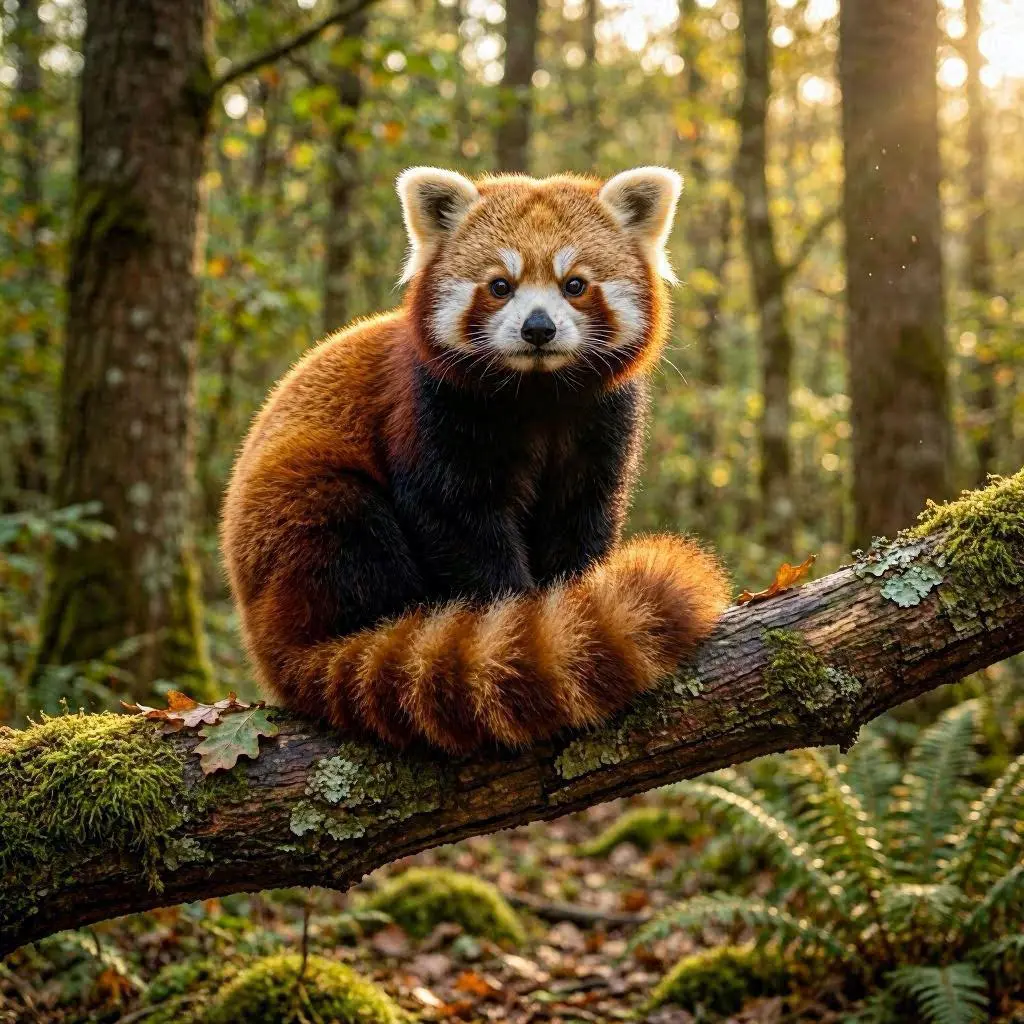
The red panda is a small, fox-like mammal with rich auburn fur, a bushy striped tail, and a round face with white-lined ears. It is roughly the size of a domestic cat, weighing 3 to 6 kg. Despite sharing a name with the giant panda, it is more closely related to weasels and raccoons. Red pandas are solitary, tree-dwelling animals that feed mainly on bamboo leaves, though they also eat berries and insects.
Where found: Temperate forests of the Himalayas, China, Nepal, and Myanmar
❸ Axolotl
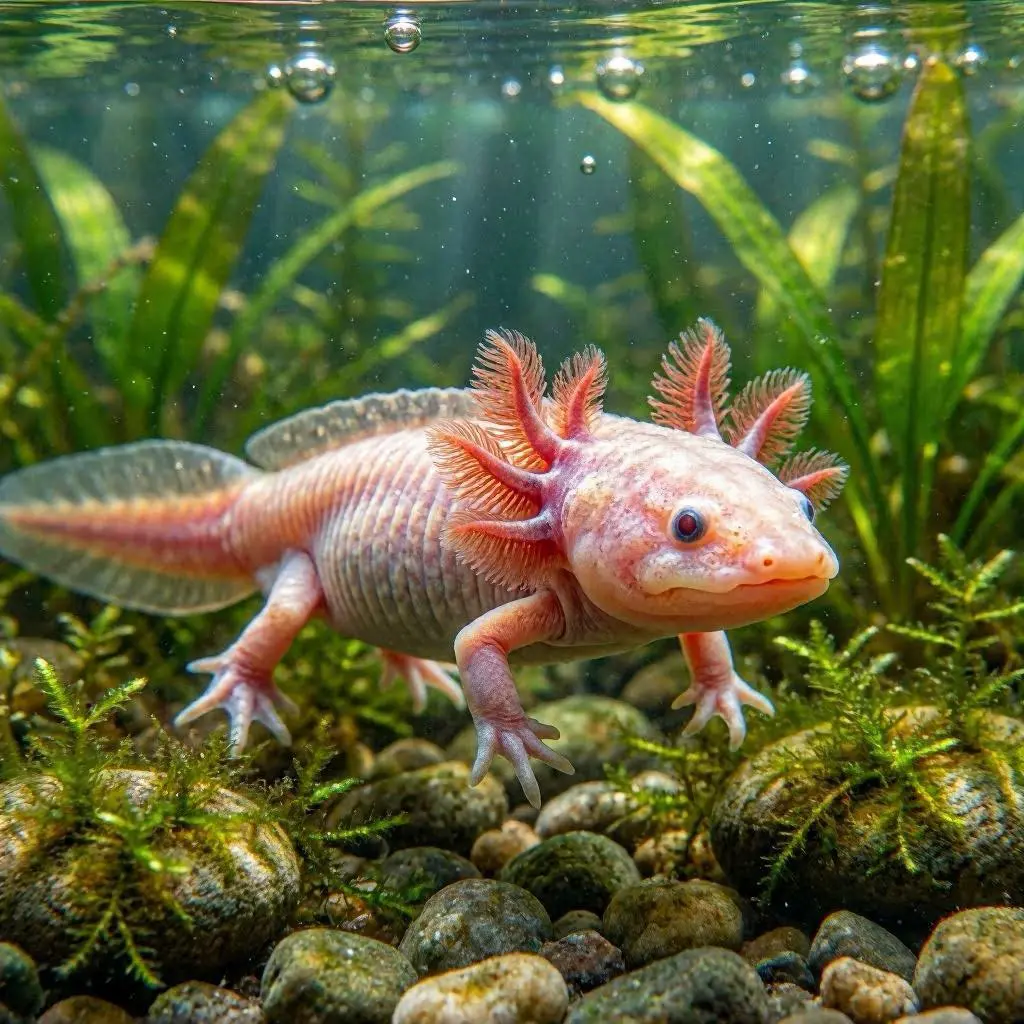
The axolotl is a permanently aquatic salamander known for its feathery external gills, wide mouth that gives it a perpetual grin, and remarkable ability to regenerate lost limbs, organs, and even parts of its heart and brain. It is a neotenic species, meaning it retains juvenile features into adulthood. Wild axolotls are critically endangered, but they are popular in aquariums and as exotic pets worldwide.
Where found: Lake Xochimilco, Mexico (wild); globally in captivity
❹ Sea Otter
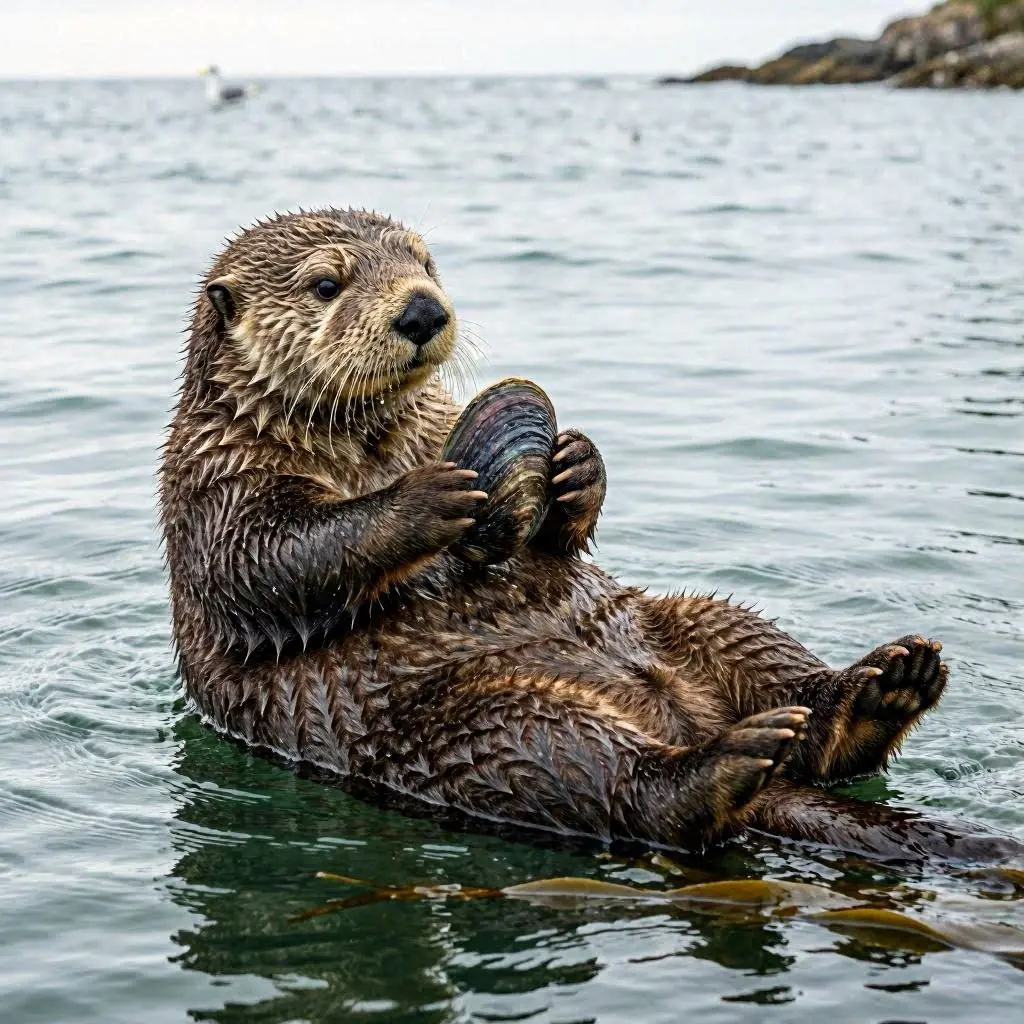
The sea otter is a marine mammal known for floating on its back and holding hands with other otters while sleeping, a behavior called “rafting,” to keep from drifting apart. It has the densest fur of any mammal, with up to one million hairs per square inch, which keeps it warm in cold Pacific waters. Sea otters use rocks as tools to crack open shellfish, making them one of the few non-primate animals known to use tools.
Where found: Coastal waters of the North Pacific Ocean
❺ Fennec Fox
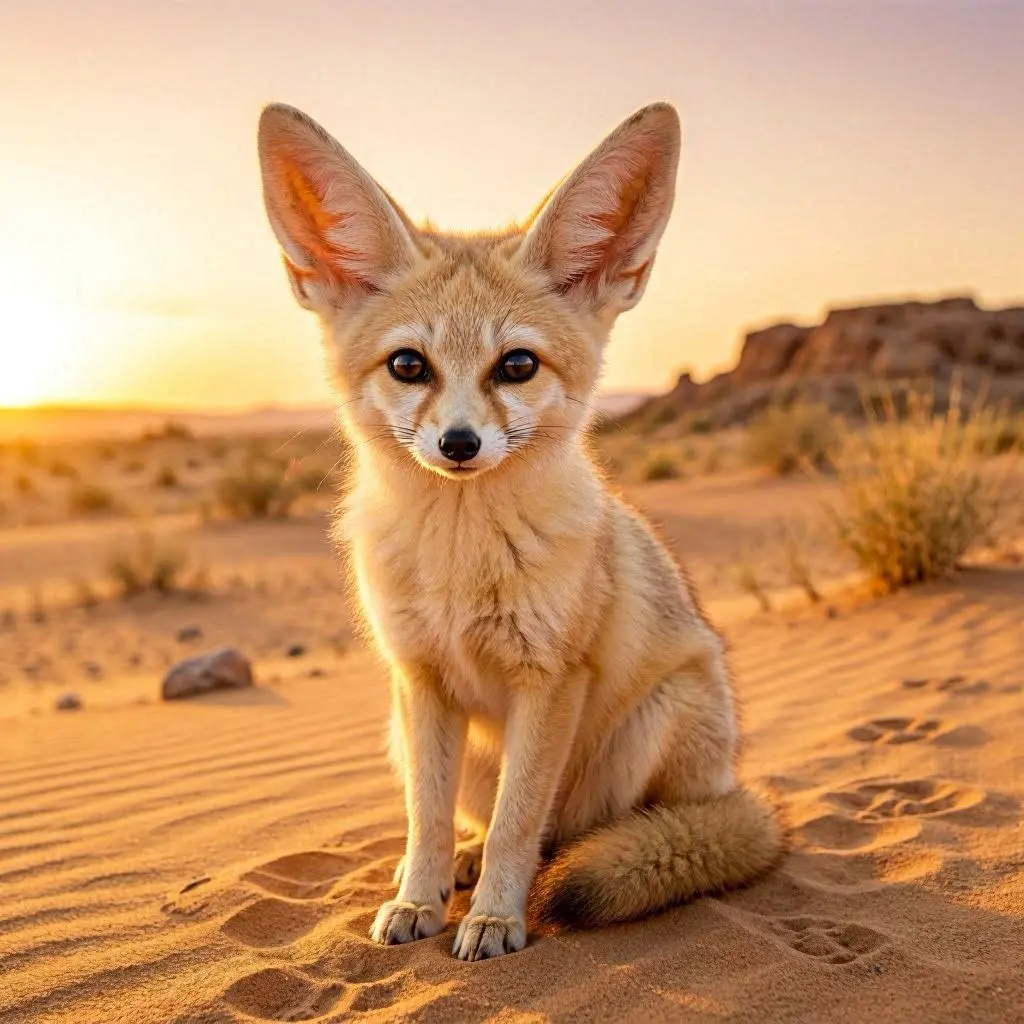
The fennec fox is the world’s smallest wild canid, famous for its enormous ears that can be up to 15 cm long. Those large ears help it dissipate heat and detect prey moving underground. It weighs just 0.8 to 1.6 kg and has thick, cream-colored fur that insulates against cold desert nights. Fennec foxes are social, vocal animals that communicate through barks, chatters, and whines. They are occasionally kept as exotic pets.
Where found: Sahara Desert and North Africa
❻ Koala
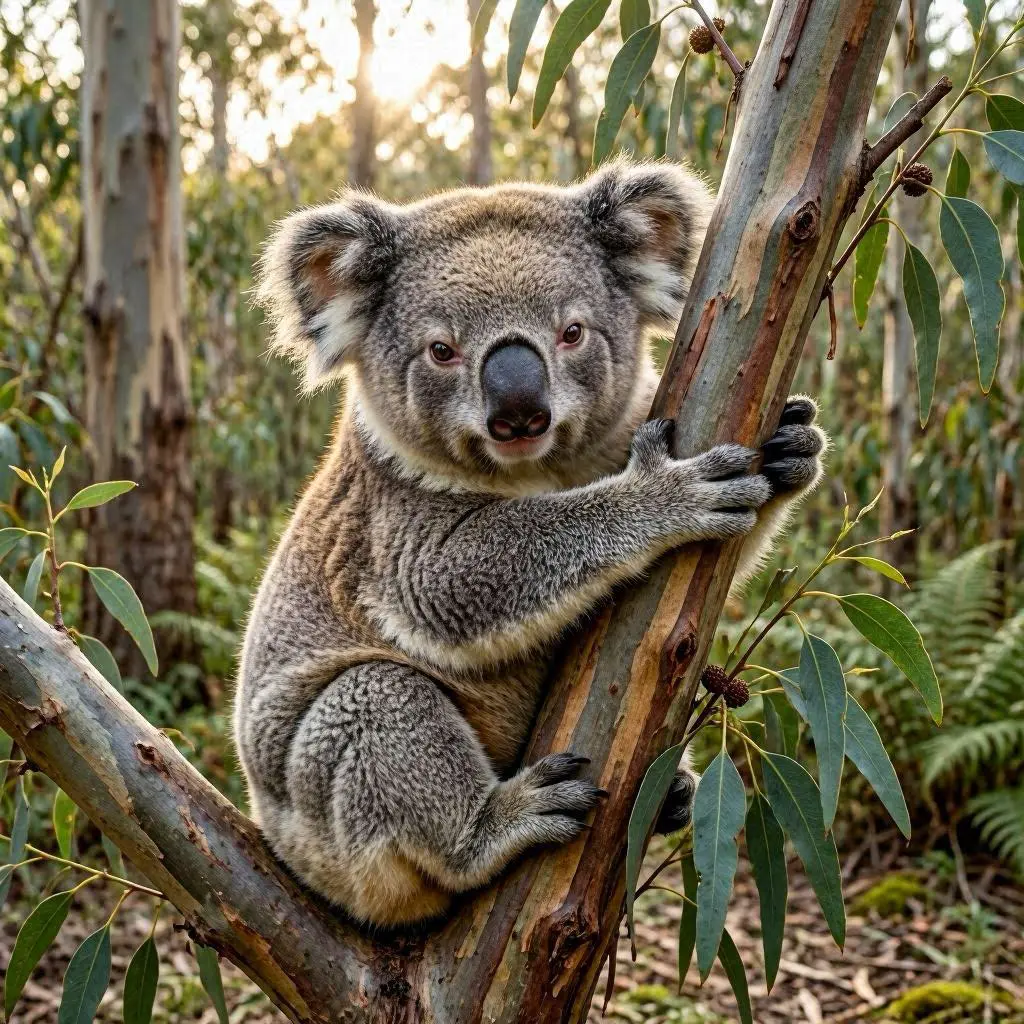
The koala is a tree-dwelling marsupial with a stocky body, large round head, fluffy ears, and a prominent spoon-shaped nose. It spends up to 22 hours a day sleeping, a necessary adaptation to conserve energy from its low-nutrient eucalyptus leaf diet. Koalas have unique fingerprints, making them one of only a handful of non-human animals with this trait. They carry their joeys in a pouch for about six months after birth.
Where found: Eastern and southeastern Australia
❼ Hedgehog
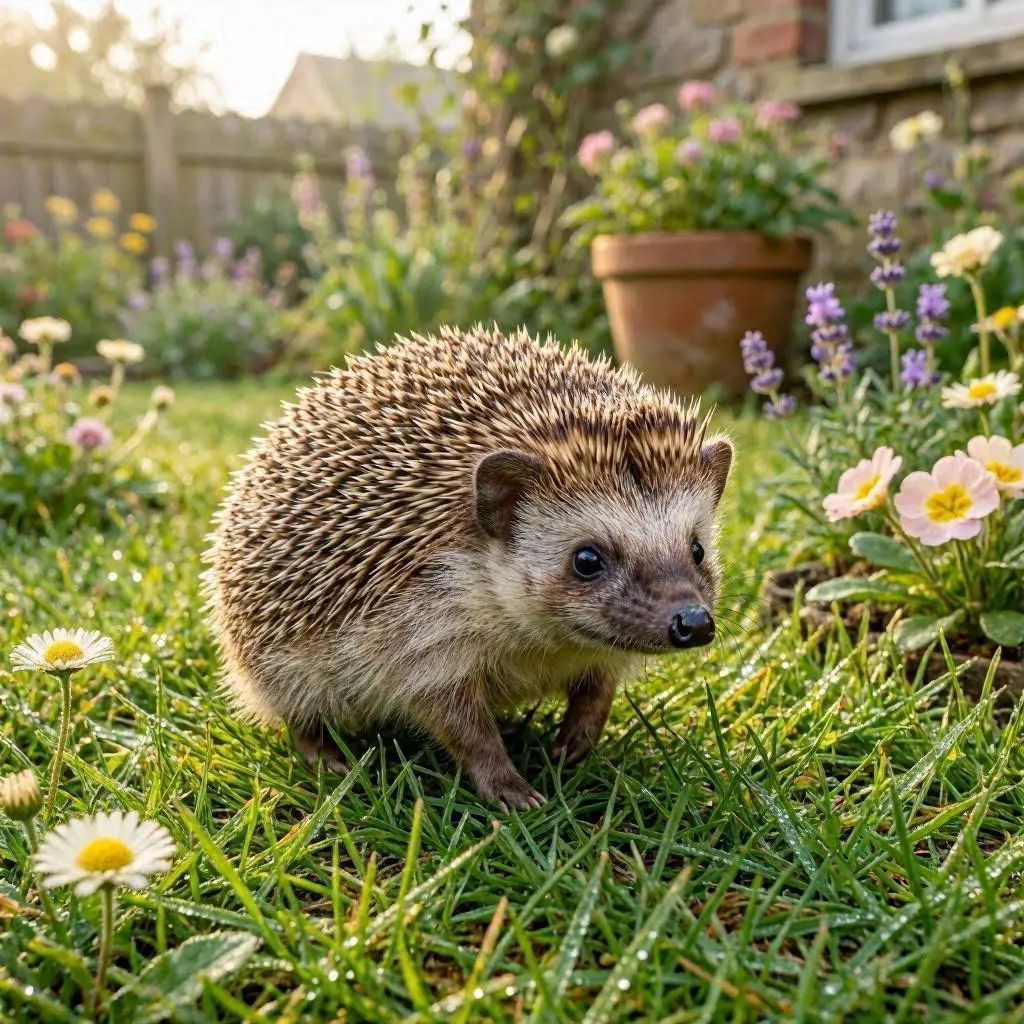
The hedgehog is a small, spiny mammal covered in up to 6,000 hollow keratin quills that serve as a defense mechanism. When threatened, it curls into a tight, protective ball. Hedgehogs are nocturnal insectivores that feed on beetles, worms, and caterpillars. They have poor eyesight but an excellent sense of smell. As pets, they are known for their curious, sometimes grumpy personalities and their adorable snuffling sounds.
Where found: Europe, Asia, Africa, and New Zealand (introduced); North America (as pets)
❽ Panda (Giant Panda)
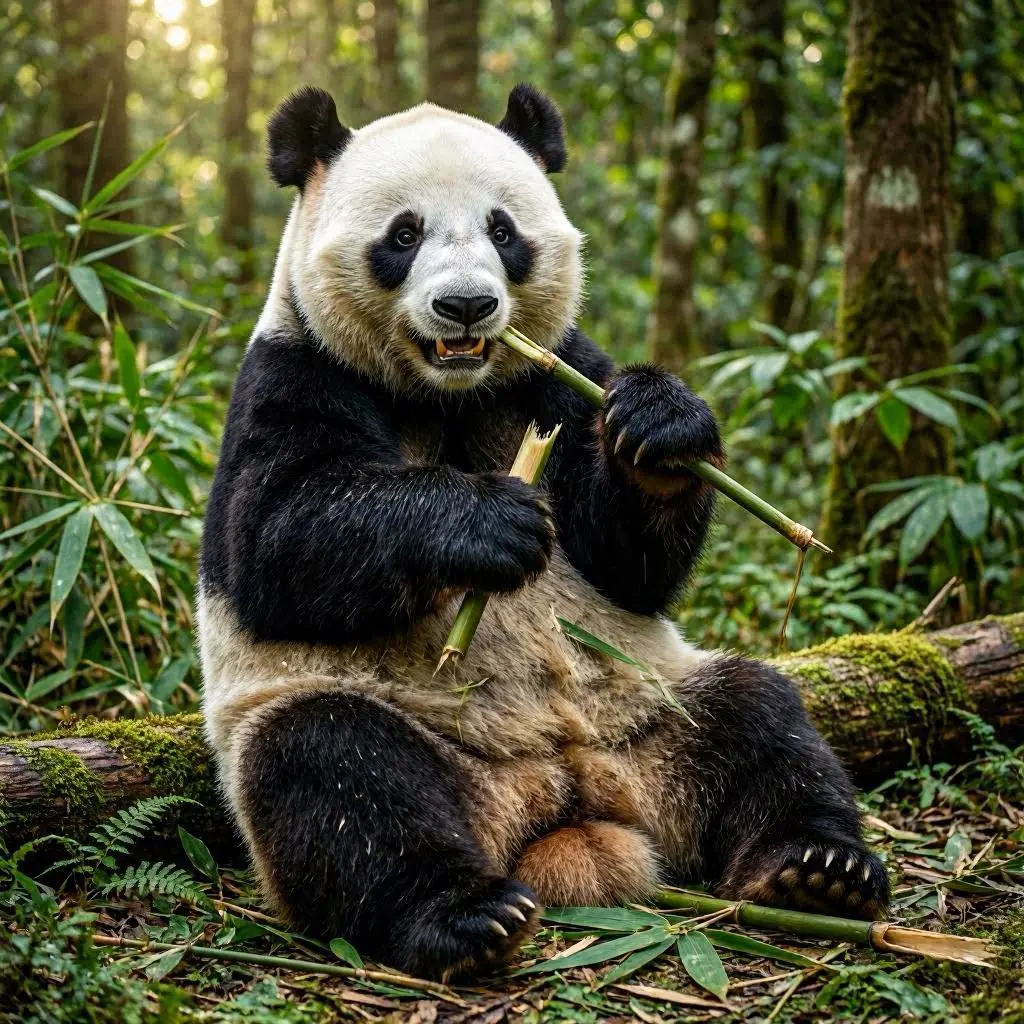
The giant panda is one of the most recognizable animals on Earth, known for its distinctive black-and-white coat and gentle, lumbering demeanor. It spends 10 to 16 hours a day eating bamboo and consumes up to 38 kg per day to meet its nutritional needs. Despite being classified as carnivores, pandas survive almost entirely on plants. They are a symbol of global wildlife conservation and China’s national treasure.
Where found: Temperate mountain forests of central China
❾ Baby Seal (Harp Seal Pup)
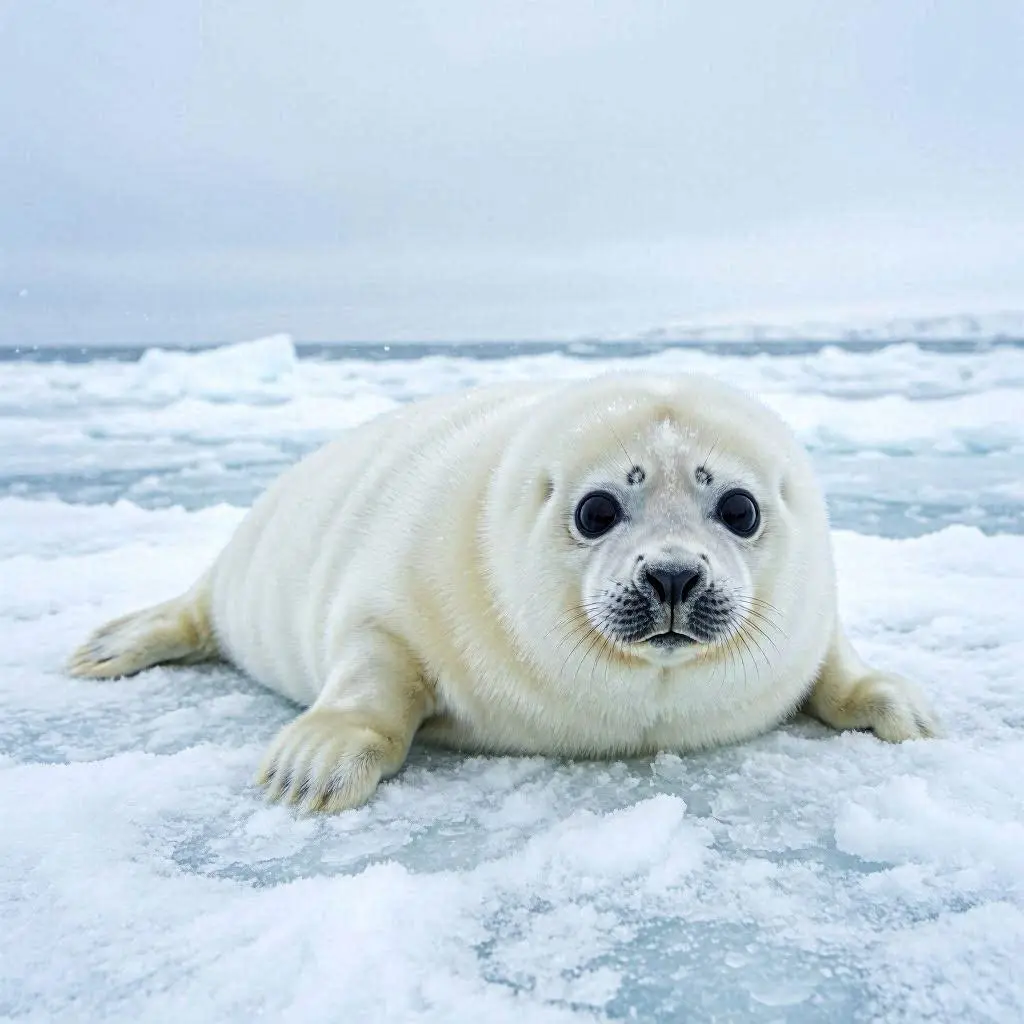
Few animals inspire as much immediate affection as the harp seal pup, with its cloud-white fur, jet-black eyes, and gentle, docile appearance. Pups are born on Arctic ice and weigh about 11 kg at birth. Their fluffy white coat, called “lanugo,” is shed within two to three weeks. During this time, they are entirely dependent on their mothers’ rich, fatty milk, which helps them triple their body weight rapidly.
Where found: Arctic and North Atlantic Ocean ice floes
❿ Meerkat
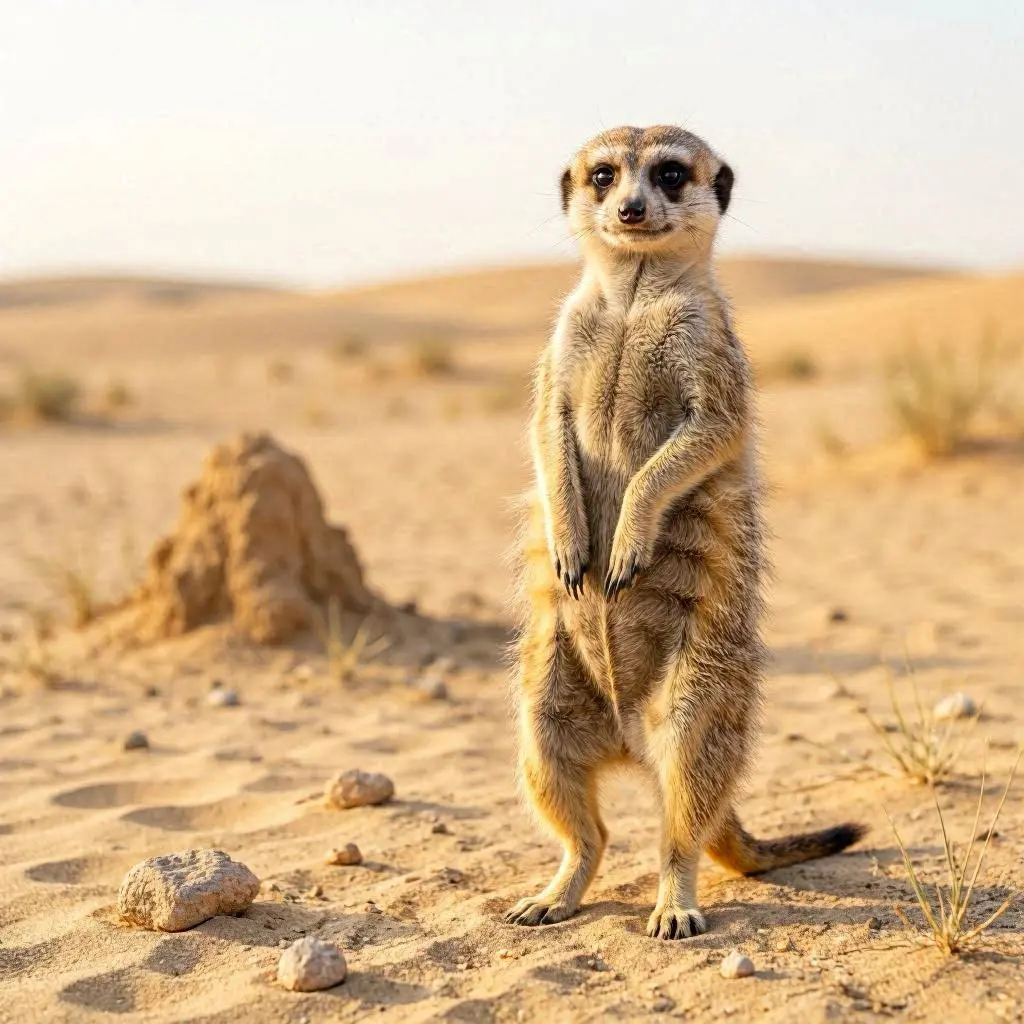
The meerkat is a small mongoose-like mammal that lives in tight-knit family groups called mobs. It is famous for standing upright on its hind legs to scan for predators, a behavior known as “sentinel duty.” Meerkats are immune to certain venoms and will readily eat scorpions and snakes. Despite their fierce survival instincts, their upright posture, alert eyes, and cooperative social behavior make them endlessly charming to watch.
Where found: Kalahari Desert of southern Africa
⓫ Chinchilla
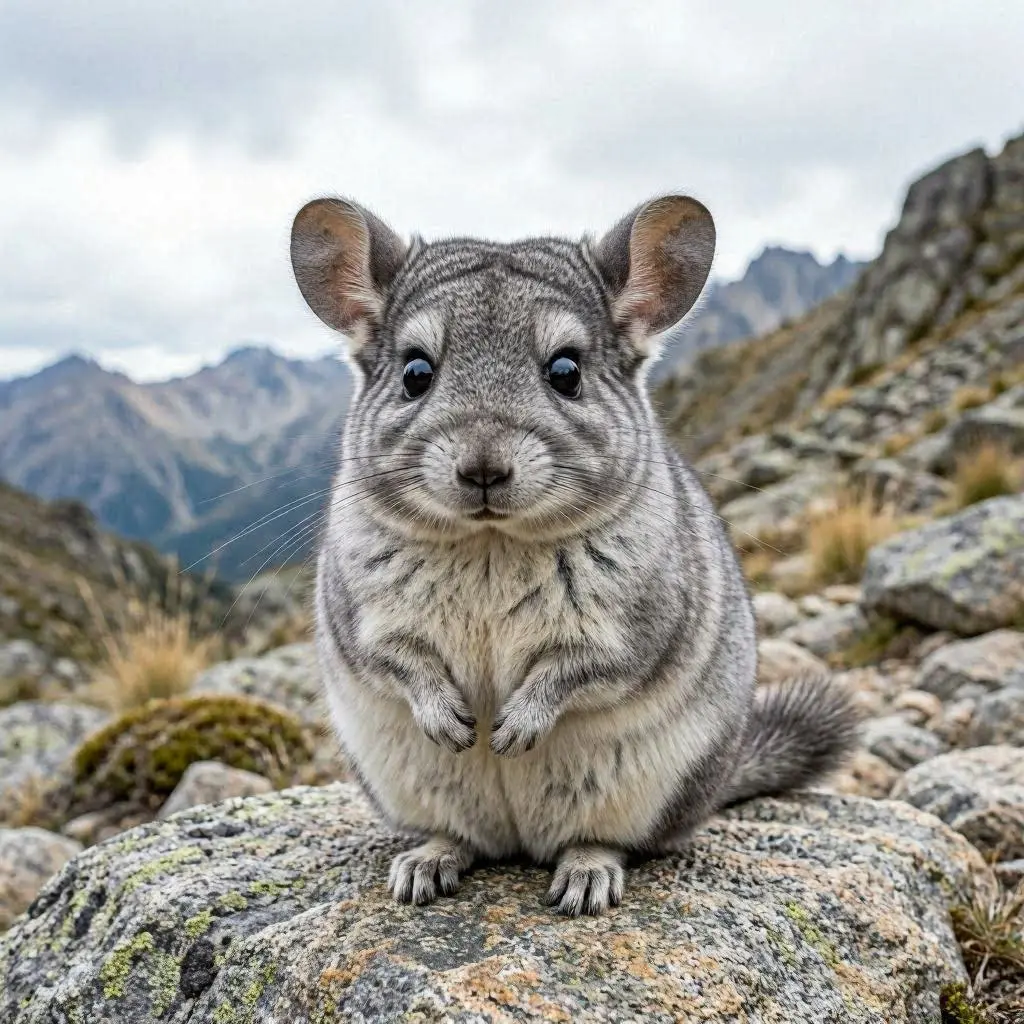
The chinchilla is a small rodent with extraordinarily soft, dense fur so fine that it has been prized for centuries in the fashion industry. It has a round body, large ears, a bushy tail, and bright, curious eyes. Chinchillas are highly active and social animals that communicate through a range of squeaks and chirps. As pets, they can live up to 15 years and are well known for taking dust baths to keep their fur clean and healthy.
Where found: Andes Mountains of South America (wild); globally as pets
⓬ Alpaca
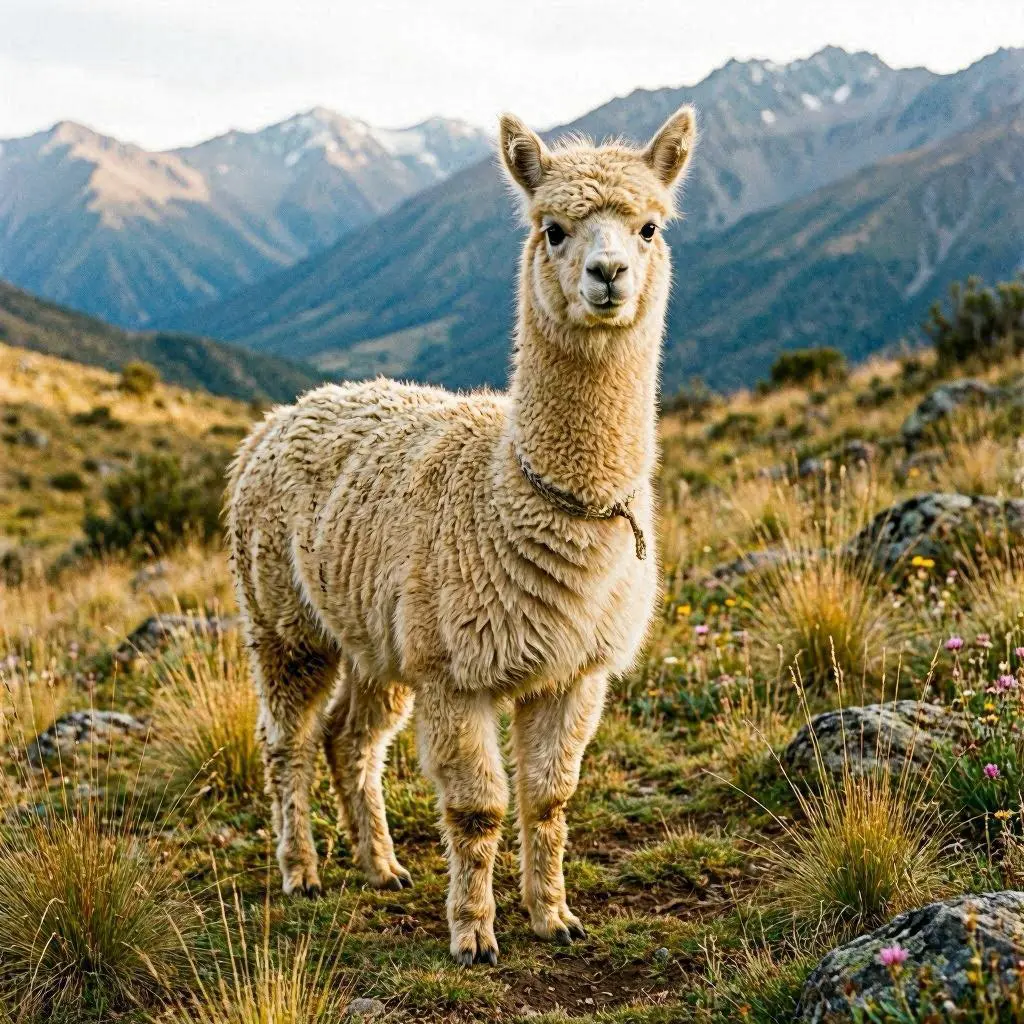
The alpaca is a domesticated South American camelid closely related to the llama but smaller and considerably fluffier. It is bred primarily for its fiber, which is softer than wool and naturally hypoallergenic. Alpacas have a gentle, curious temperament and communicate with soft humming sounds. They live in herds and are known for their expressive faces, long necks, and wonderfully fluffy coats that grow long between shearings.
Where found: Andes Mountains of Peru, Bolivia, and Ecuador; farms worldwide
⓭ Capybara
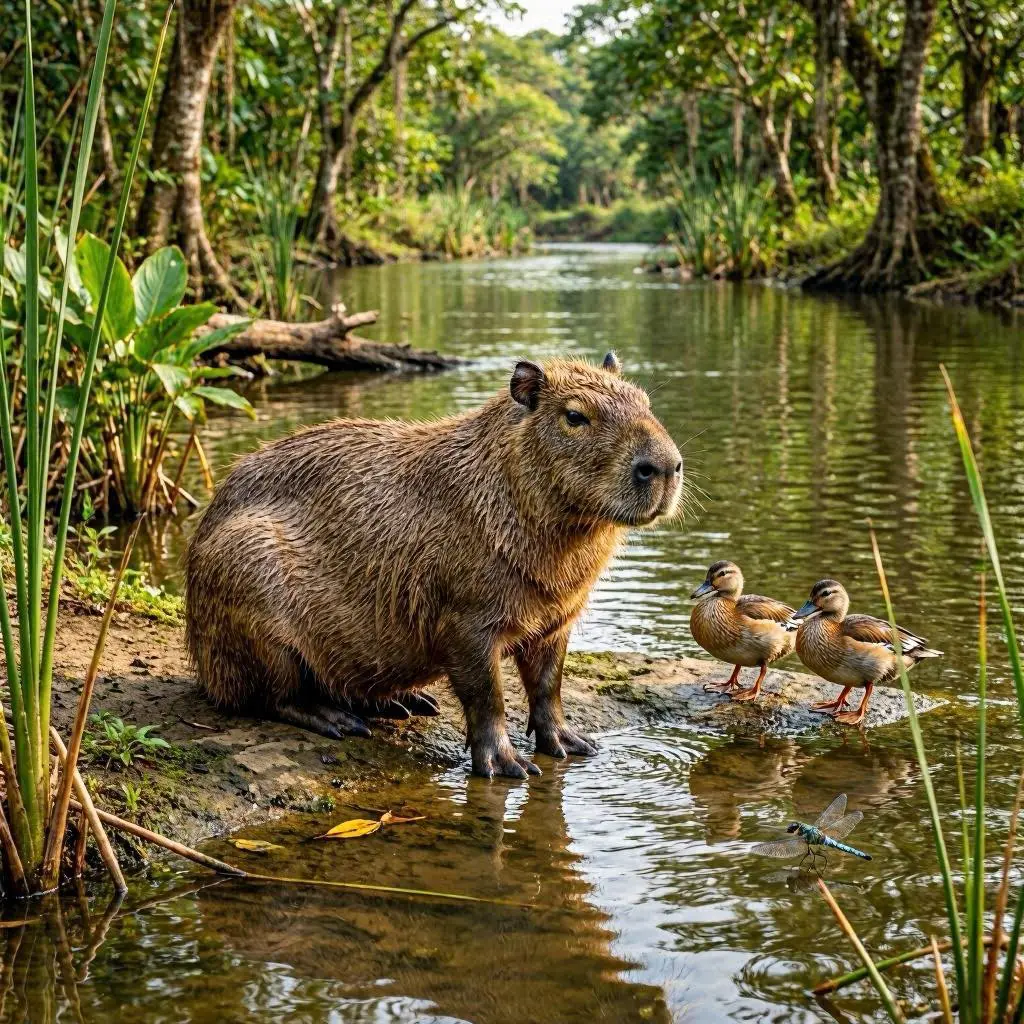
The capybara is the world’s largest rodent, native to South America, and it is remarkably gentle and sociable. Other animals such as birds, monkeys, and even cats are commonly seen resting on its back. It weighs between 35 and 65 kg and lives in groups near rivers and lakes. Capybaras are semiaquatic, excellent swimmers, and carry a calm, unbothered energy that has made them beloved internet celebrities in recent years.
Where found: South America, particularly near rivers, lakes, and wetlands
⓮ Pygmy Slow Loris
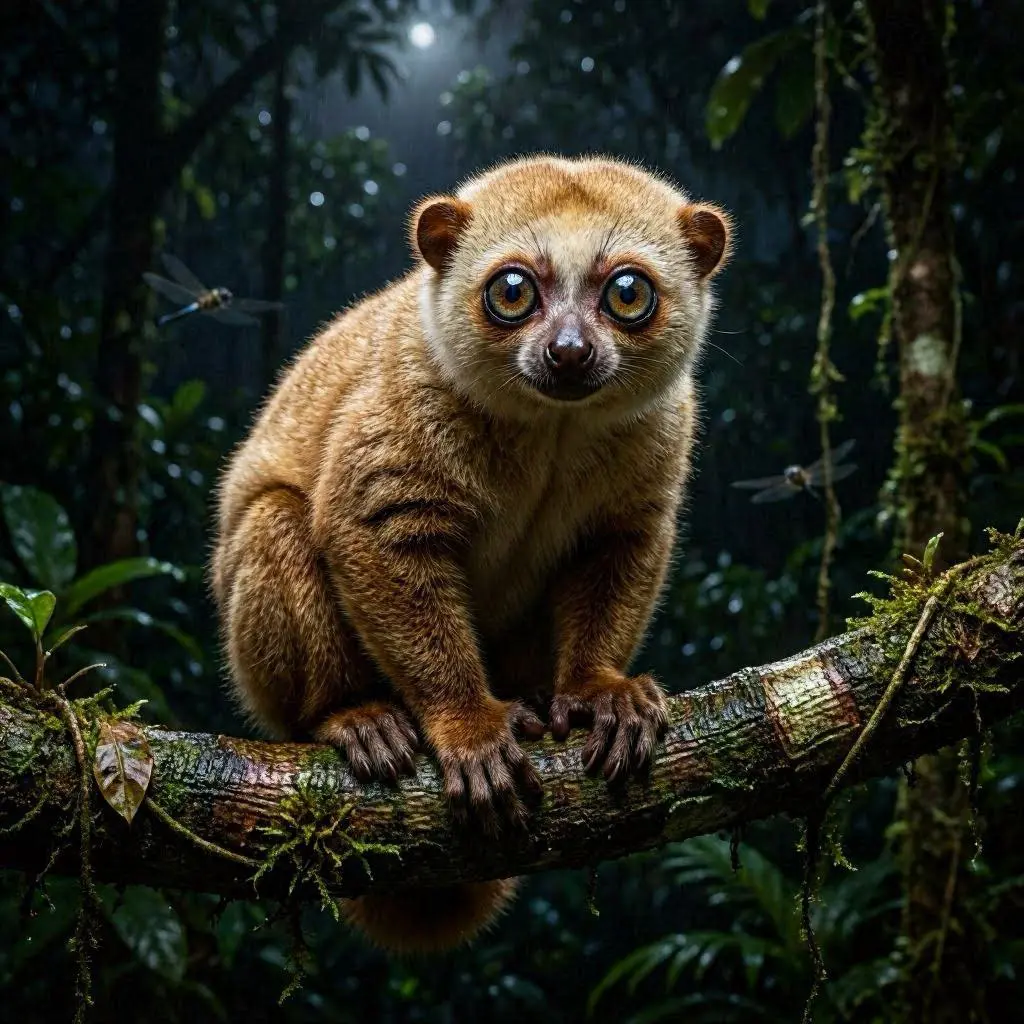
The pygmy slow loris is one of the smallest and most striking primates in the world. It has enormous forward-facing eyes adapted for night vision, a round face, and tiny gripping hands perfectly designed for life in the trees. It moves slowly and deliberately through the forest canopy. Despite its adorable appearance, the slow loris is venomous, a rare trait among mammals. It produces toxin from a gland on its elbow and mixes it with saliva for defense.
Where found: Rainforests of Southeast Asia (Vietnam, Cambodia, Laos)
⓯ Baby Elephant
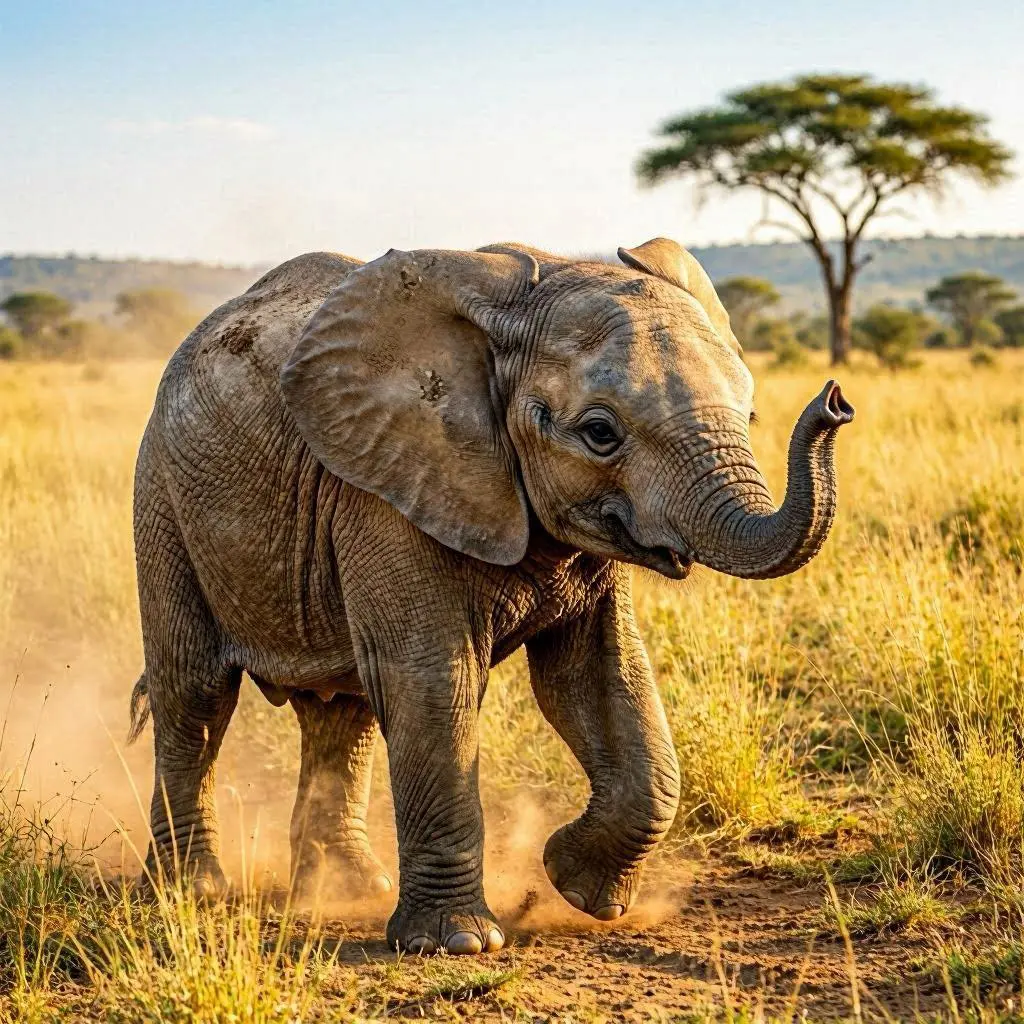
Baby elephants are among the most emotionally expressive young animals on the planet. They are born weighing around 100 kg and can stand within an hour of birth. Calves are deeply bonded to their mothers and the wider herd, which collectively helps raise and protect them. They are playful, clumsy, and intensely curious, often seen tripping over their own trunks while exploring the world around them for the very first time.
Where found: Sub-Saharan Africa and South/Southeast Asia
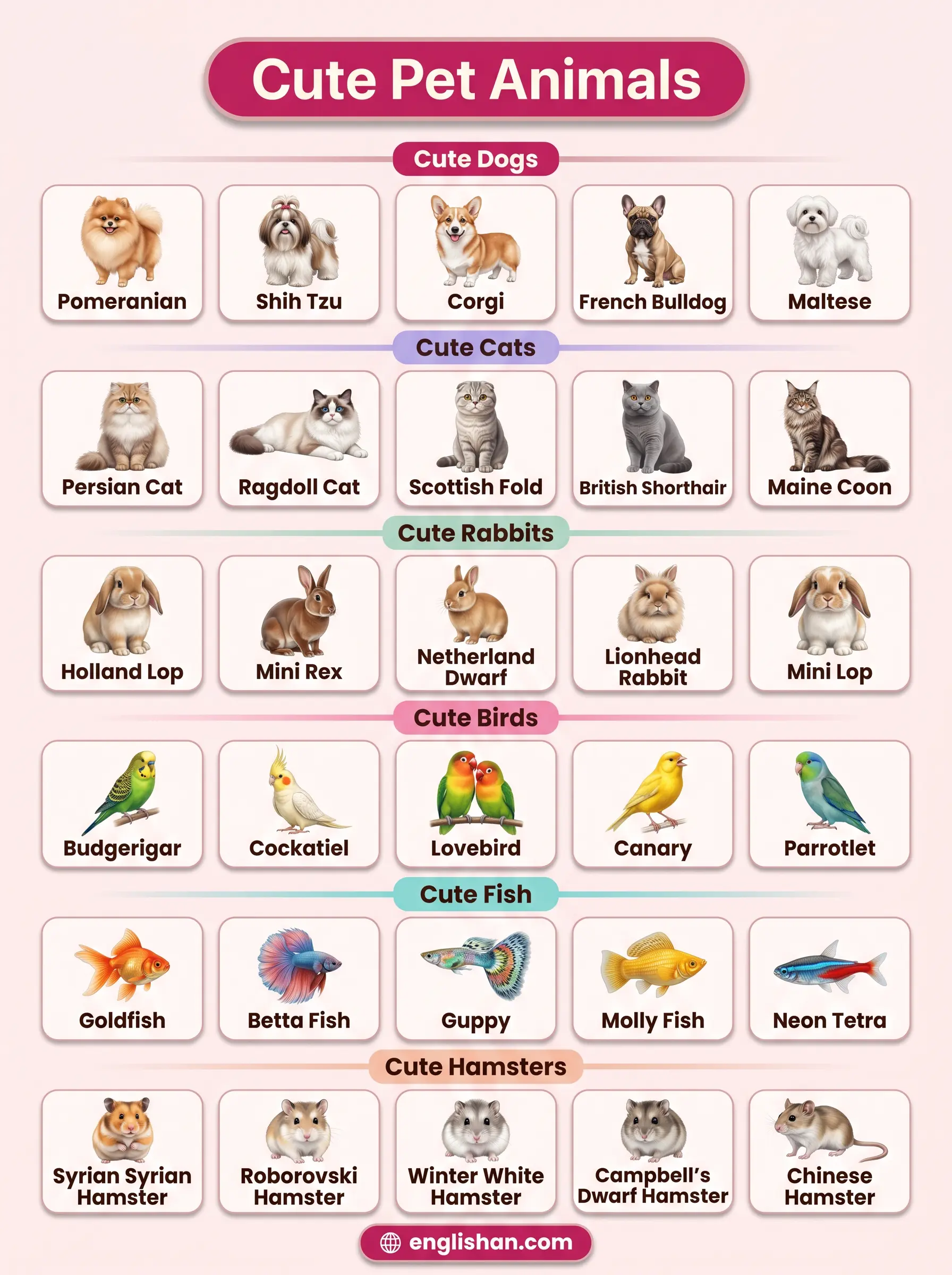
Cute Pet Animals Names
Many animals make wonderful pets because of their adorable appearance and friendly nature. Below are some of the cutest pet animals, organized by category.
Cute Dogs
Dogs are loyal companions known for their intelligence, affection, and playful behavior. They come in many sizes and personalities, making them one of the most popular pets worldwide.
- Pomeranian – A fluffy toy breed known for its lively personality.
- Shih Tzu – A small companion dog with a long, silky coat.
- Cavalier King Charles Spaniel – A gentle dog famous for its affectionate nature.
- French Bulldog – A playful breed recognized by its bat-like ears.
- Corgi – A short-legged herding dog with a cheerful personality.
- Maltese – A tiny dog admired for its white, silky fur.
These dog breeds are loved for their adorable looks, friendly nature, and strong bond with their owners.
Cute Cats
Cats are graceful and independent animals that bring both companionship and charm to a home. They are known for their curiosity and unique personalities.
- Persian Cat – A calm cat with a flat face and luxurious coat.
- Ragdoll Cat – A large, friendly cat known for its relaxed temperament.
- Scottish Fold – A unique cat distinguished by its folded ears.
- British Shorthair – A sturdy cat with a round face and dense fur.
- Munchkin Cat – A cat breed famous for its short legs.
- Maine Coon – One of the largest domestic cats with a fluffy coat.
These cat breeds are admired for their beauty, affectionate behavior, and lovable appearance.
Cute Rabbits
Rabbits are gentle pets that are loved for their soft fur, quiet nature, and playful hops. They make excellent companions for families and individuals alike.
- Holland Lop – A small rabbit with adorable drooping ears.
- Mini Rex – A rabbit known for its soft, velvety fur.
- Netherland Dwarf – One of the smallest rabbit breeds in the world.
- Lionhead Rabbit – A rabbit recognized by its mane-like fur around the head.
- English Angora – A fluffy rabbit with long, wool-like fur.
- Mini Lop – A friendly rabbit with a compact body and floppy ears.
These rabbit breeds are popular because of their cute appearance, gentle temperament, and friendly behavior.
Cute Birds
Pet birds are colorful, intelligent, and entertaining animals. Their cheerful sounds and lively personalities make them fascinating companions.
- Budgerigar (Budgie) – A colorful and social parakeet.
- Cockatiel – A friendly bird with a distinctive feather crest.
- Lovebird – A small parrot known for its strong pair bonds.
- Canary – A cheerful bird admired for its singing ability.
- Parrotlet – A tiny parrot with a bold personality.
- Finch – A small, active bird often kept in groups.
These flying animals are loved for their vibrant colors, playful behavior, and ability to interact with people.
Cute Fish
Fish are peaceful pets that add beauty and tranquility to any living space. Their bright colors and graceful movements make aquariums enjoyable to watch.
- Goldfish – A popular aquarium fish known for its bright colors.
- Betta Fish – A striking fish with flowing fins and vivid patterns.
- Guppy – A small fish famous for its colorful tail.
- Molly Fish – A peaceful freshwater fish that comes in many colors.
- Platy Fish – An easy-to-care-for fish ideal for beginners.
- Neon Tetra – A tiny fish recognized by its bright blue and red stripes.
These fish are popular choices for aquariums because they are attractive, fascinating, and relatively easy to care for.
Cute Hamsters
Hamsters are small, energetic pets that are fun to observe. Their curious nature and compact size make them popular among pet lovers.
- Syrian Hamster – The largest and most common pet hamster.
- Roborovski Hamster – A tiny hamster known for its speed and energy.
- Winter White Hamster – A dwarf hamster whose coat may lighten in winter.
- Campbell’s Dwarf Hamster – A social hamster with a compact body.
- Chinese Hamster – A slender hamster with a longer tail than most hamster species.
- Black Bear Hamster – A Syrian hamster variety with dark-colored fur.
These hamster breeds are cherished for their cute appearance, playful activities, and easy-to-manage size.
Every pet has its own unique qualities and charm. Whether you choose a dog, cat, rabbit, bird, fish, or hamster, the right pet can bring joy, companionship, and happiness to your life.
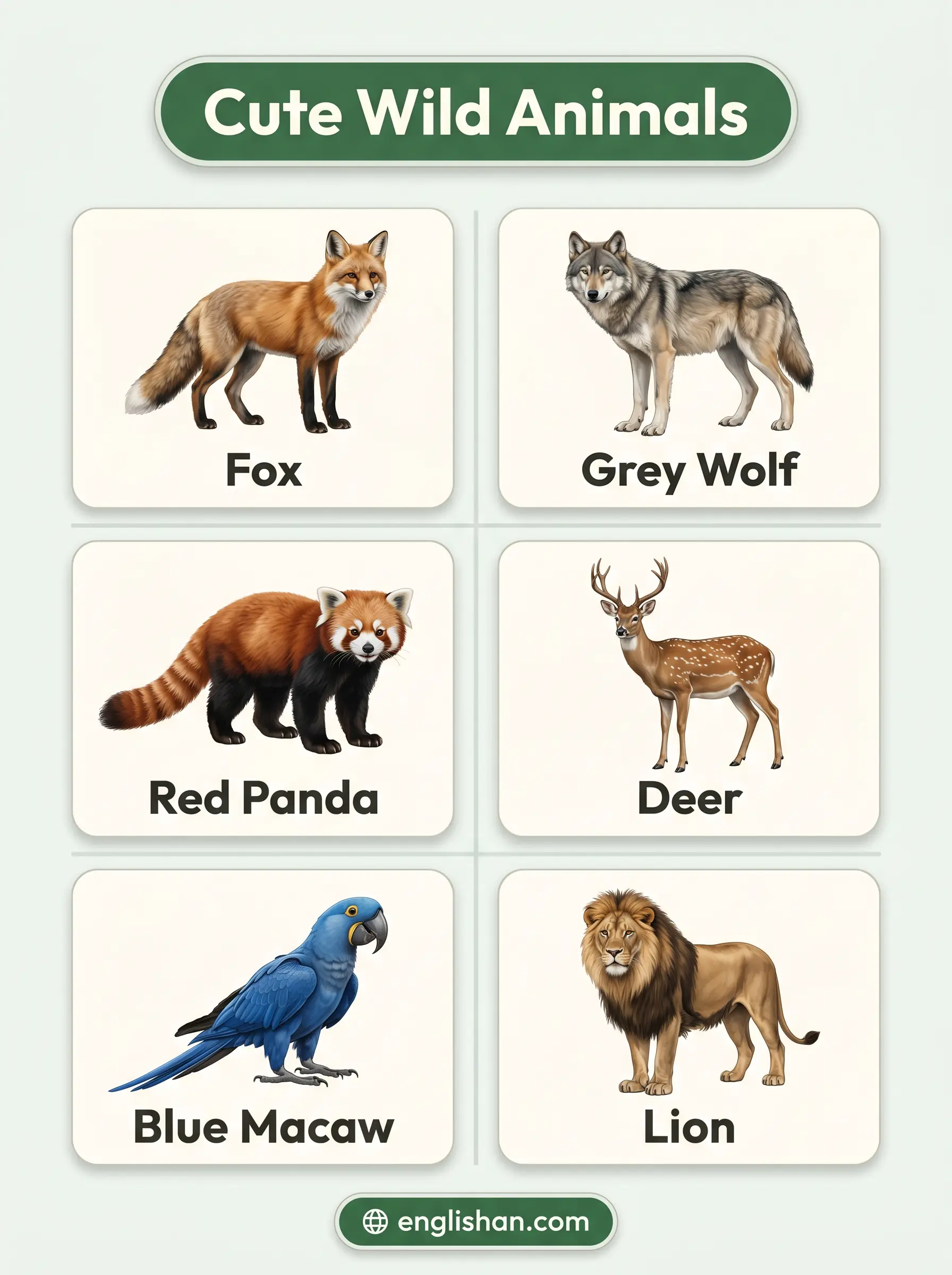
Cute Wild Animal Names
Wild animals are fascinating creatures that live in nature without human control. Learning about them helps us appreciate wildlife and understand the importance of protecting their habitats.
- Fox – intelligent and adaptable, known for its quick thinking and agility.
- Grey Wolf – highly social and lives in organized packs with strong family bonds.
- Red Panda – tree-dwelling and gentle, famous for its fluffy tail and playful nature.
- Deer – graceful herbivores recognized for their speed, alertness, and elegance.
- Blue Macaw – vibrant and intelligent bird with strong communication skills.
- Lion – powerful and confident, often called the king of the jungle.
By learning about and appreciating these remarkable creatures, we can better understand the need to protect the natural world they call home.
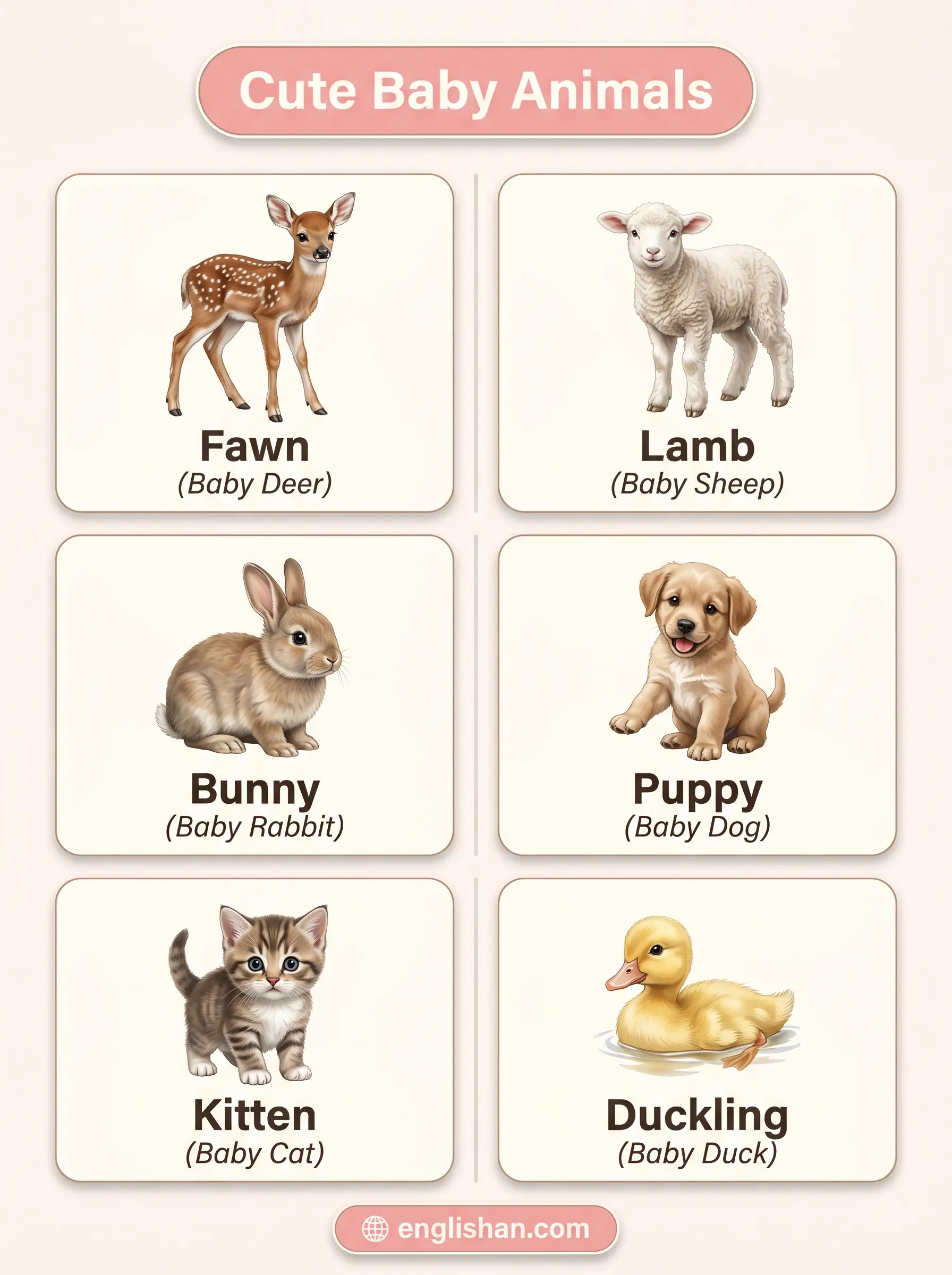
Cute Baby Animal Names
Baby animals are naturally adorable and often have unique names that make them even more fascinating. Here are some of the cutest baby animals and a brief look at each one.
- Fawn (Baby Deer) – A young deer known for its spotted coat, which helps it blend into its surroundings.
- Lamb (Baby Sheep) – A gentle young sheep that stays close to its mother during its early months.
- Bunny (Baby Rabbit) – A small rabbit with soft fur and quick movements.
- Puppy (Baby Dog) – A playful young dog that learns rapidly through exploration and interaction.
- Kitten (Baby Cat) – A curious young cat recognized for its agility and love of play.
- Duckling (Baby Duck) – A fluffy young duck that often follows its mother in a line.
Baby animals bring joy with their innocence, playful behavior, and rapid growth. Watching them develop from tiny newborns into mature animals is one of nature’s most charming sights.
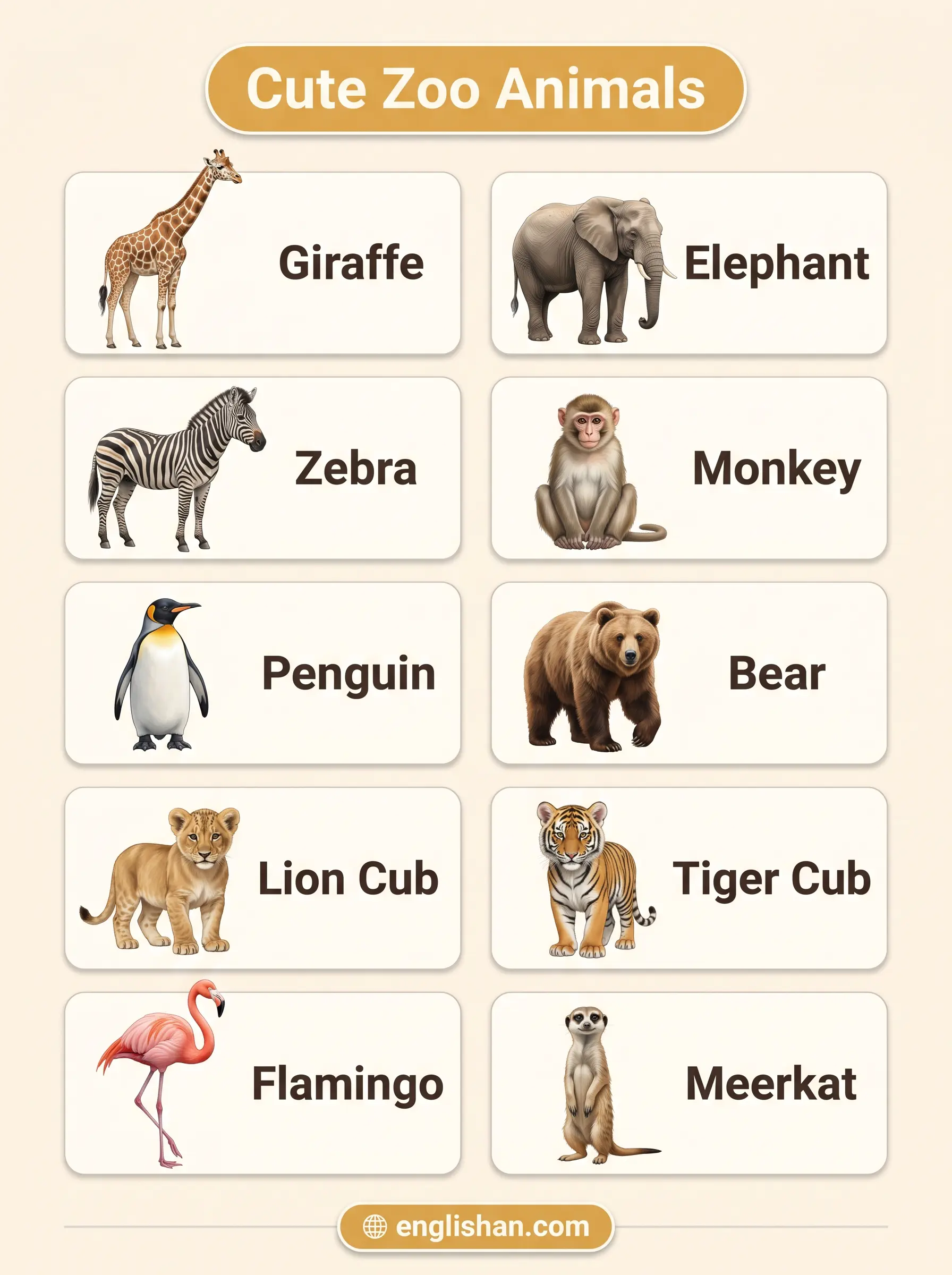
Cute Zoo Animals
Zoos provide people with the opportunity to observe fascinating animals from around the world. Among the many species they house, some stand out for their adorable appearance, playful behavior, and ability to delight visitors of all ages.
- Giraffe – Famous for its long neck, gentle behavior, and graceful movements.
- Elephant – Highly intelligent and social, known for its playful interactions and strong family bonds.
- Zebra – Easily recognized by its black-and-white stripes and energetic nature.
- Monkey – Active and curious animals that entertain visitors with their playful antics.
- Penguin – Loved for their waddling walk, social behavior, and excellent swimming abilities.
- Bear – Powerful yet often playful, especially when climbing, swimming, or interacting with enrichment toys.
- Lion Cub – Young lions are energetic, curious, and spend much of their time playing with siblings.
- Tiger Cub – Known for their striking stripes and playful behavior as they learn important survival skills.
- Flamingo – Recognized for their bright pink feathers, long legs, and elegant posture.
- Meerkat – Social animals that frequently stand upright to observe their surroundings, creating an amusing sight.
These zoo animals captivate visitors with their unique features, engaging personalities, and charming behaviors, making every trip to the zoo a memorable experience.
Cute Small Animals Around the World
Small animals are among the most fascinating creatures on Earth. Despite their tiny size, they display remarkable adaptations, behaviors, and charm.
- Fennec Fox – A small desert fox known for its oversized ears, pale fur, and excellent hearing. Its large ears help it stay cool and detect prey beneath the sand.
- Red Panda – A tree-dwelling mammal with reddish-brown fur, a bushy tail, and a gentle appearance. It is agile, quiet, and spends much of its time climbing and resting in trees.
- Quokka – A small marsupial native to Australia, recognized for its friendly expression and curious nature. It is herbivorous and highly adapted to island life.
- Hedgehog – A compact mammal covered with protective spines. When threatened, it curls into a tight ball to shield itself from predators.
- Sugar Glider – A tiny nocturnal marsupial capable of gliding between trees using a membrane stretched between its limbs. It is social and highly active at night.
- Pika – A small mountain-dwelling relative of rabbits with rounded ears and dense fur. It is well adapted to cold environments and rocky habitats.
Small animals show that size is no measure of significance. Their unique features, behaviors, and adaptations make them some of the most captivating creatures in the natural world.
Cute Animals for Kids
Animals can be very cute and fun to learn about. Kids usually love small, soft, and friendly animals that are easy to recognize and remember.
- Panda
- Rabbit
- Kitten
- Puppy
- Duckling
- Koala
- Squirrel
- Penguin
- Bunny
- Fawn
These animals are loved by kids all over the world because of their soft looks, gentle behavior, and playful nature.
Cute Animals Names By Habitat
Animals around the world live in very different environments such as deserts, forests, and oceans. Each habitat shapes the way animals look, move, and survive, often creating surprisingly cute and unique creatures adapted to their surroundings.
Cute Animals in the Desert
Deserts may look empty and harsh, but they are full of life. Many animals here have evolved clever adaptations that help them survive extreme heat and very little water, and some of them are surprisingly adorable.
- Fennec Fox – A tiny nocturnal fox with huge ears that release body heat and help it hear prey moving underground. It survives heat by staying in cool burrows during the day.
- Meerkat – A social animal that lives in groups and stands upright to watch for predators. Dark eye patches reduce sunlight glare, helping it stay alert in bright desert conditions.
- Sand Cat – A small wild cat with fur-covered paws that protect it from burning sand. It gets most of its water from prey and moves silently across dunes while hunting at night.
- Jerboa – A tiny hopping rodent with long hind legs for jumping across sand. It avoids heat by staying in burrows during the day and only comes out at night to feed.
- Desert Hedgehog – A small, spiny mammal adapted to dry environments. It survives heat by being active at night and uses its sharp senses to find insects in the sand.
- Burrowing Owl – A small owl that lives underground in abandoned burrows. It hunts during both day and night and uses its tall stance and quick head movements to spot danger early.
Desert animals prove that even in extreme environments, life adapts in remarkable ways, producing creatures that are both resilient and unexpectedly charming.
Cute Animals in the Forest
Forests are home to many small and fascinating animals adapted to trees, darkness, and quiet movement. These creatures are known for their unique survival skills and gentle appearance.
- Hedgehog – Small nocturnal animal that curls into a ball for protection and feeds on insects.
- Raccoon – Intelligent forager with strong paws used for searching and handling food, mostly active at night.
- Kinkajou – Tree-dwelling animal with a long tail, feeding on fruits and moving quietly in the canopy.
- Tree Kangaroo – Rare climbing marsupial that lives in trees and moves slowly through dense forest areas.
- Eurasian Lynx – Silent forest cat with sharp vision, hunting small animals in woodland regions.
- Western Gray Squirrel – Agile tree climber that jumps between branches and stores food for later use.
In short, forest animals remain full of hidden life, where each animal is adapted to survive and move through trees in its own way.
Cute Animals in the Ocean
The ocean hides some of the most unexpectedly adorable creatures on Earth. From coral reefs to the deep sea, marine life shows cuteness through gentle movements, unusual shapes, and surprisingly soft behaviors.
- Seahorse – A small marine fish known for its curled tail and upright swimming posture. Males are unique because they carry the developing babies.
- Leafy Sea Dragon – A sea creature related to seahorses, covered in leaf-like extensions that help it blend perfectly with seaweed.
- Sea Bunny (Jorunna parva) – A tiny sea slug with soft, fuzzy-looking head parts that resemble bunny ears, giving it a cute toy-like appearance.
- Manatee – A large, slow-moving aquatic mammal that lives in warm coastal waters and feeds mainly on underwater plants.
- Whale Shark – The largest fish in the ocean, known for its gentle nature and filter-feeding on tiny plankton.
- Sea Angel – A small, transparent sea slug that moves gracefully using wing-like flaps, often glowing softly in deep water.
- Sea Turtle – A long-living marine reptile that travels vast ocean distances and is known for its calm, steady swimming style.
In short, the aquatic cutest creatures show that charm is not about size or shape alone. Sometimes it comes from calm movement, softness, and the quiet way life adapts beneath the waves.
Cute Animals of the Arctic and Antarctic
The Arctic and Antarctic are extremely cold regions, yet they are home to many adorable animals that have adapted to survive in harsh conditions.
- Emperor Penguin – Lives in large colonies, huddles together for warmth, and is known for its charming waddle and fluffy chicks.
- Arctic Fox – Has thick fur that changes color with the seasons and uses its bushy tail as a blanket during rest.
- Snowy Owl – Features striking white feathers and yellow eyes, remaining active during the day in snowy environments.
- Beluga Whale – A highly social marine mammal known for its playful behavior, vocal communication, and distinctive white body.
- Polar Bear Cub – Curious and energetic, spending much of its time playing in the snow while learning survival skills from its mother.
- Weddell Seal – Recognized for its large eyes, gentle appearance, and ability to stay underwater for extended periods.
- Walrus – Famous for its long tusks and whiskers, often gathering in large groups on ice and coastal shores.
- Puffin – A colorful seabird with a bright beak and amusing movements, nesting in colonies along northern coastlines.
- Reindeer (Caribou) – Travels in large herds across snowy landscapes and is well adapted to cold climates.
- Leopard Seal Pup – Young seals have soft fur and playful behavior before becoming skilled hunters in Antarctic waters.
These remarkable arctic animals and Antarctic animals show that even the coldest places on Earth can be full of life, beauty, and charm.
Conclusion
The world is full of animals that remind us how extraordinary life on Earth truly is. From the quokka’s famous smile to the axolotl’s feathery gills, from the slow loris navigating the dark forest canopy to the harp seal pup resting quietly on Arctic ice, cute animals exist in every habitat, on every continent, and in every corner of the ocean.
Learning about these animals goes beyond appreciation. It builds the empathy and understanding that drives conservation. When we know an animal, when we understand how it lives, what it eats, and what threatens it, we are far more likely to care about its survival.
We hope this guide has introduced you to some species you had not encountered before and deepened your knowledge of ones you already loved. The animal kingdom is endlessly generous with its wonders. All it asks is that we pay attention.
FAQs about Cute Animals
The quokka is widely considered the cutest animal in the world by popular consensus. Its naturally upturned mouth gives it a permanent smile, and its fearlessness around humans makes close encounters surprisingly common on Rottnest Island in Australia. Other strong scientific contenders based on the features of “kindchenschema” include the red panda, the axolotl, the harp seal pup, and the fennec fox.
Cuteness in animals is largely explained by a concept called “kindchenschema,” identified by ethologist Konrad Lorenz. It refers to a cluster of infant-like physical features including a large, rounded head, large eyes positioned low on the face, a small nose, chubby proportions, and soft textures. These are the same features found in human babies, and humans instinctively respond to them with warmth and a desire to protect and nurture.
The bumblebee bat, also known as Kitti’s hog-nosed bat, is the world’s smallest mammal by body size, measuring just 29 to 33 mm in length and weighing around 2 grams. Among primates, the pygmy marmoset holds the record, weighing approximately 100 grams. The pygmy jerboa is also among the tiniest and most visually striking small animals on Earth.
Some animals that appear extremely cute are in fact dangerous or venomous. The pygmy slow loris is venomous and can deliver a painful, potentially harmful bite. The poison dart frog carries enough toxin to kill several humans. Polar bears, despite having adorable cubs, are powerful apex predators. Even the quokka, which is entirely harmless, is a wild animal and should not be touched or fed by humans.
The sea otter is widely regarded as the cutest ocean animal for its habit of floating on its back, using rocks as tools, and holding hands with other otters while sleeping. The dumbo octopus, the narwhal, the beluga whale, the clownfish, and the puffin are all strong contenders as well, each with distinctly charming characteristics.
Several of the world’s cutest animals are under serious conservation threat. The axolotl is critically endangered in the wild. The red panda is classified as endangered. The pygmy slow loris is threatened by habitat loss and the illegal pet trade. The giant panda was downlisted from endangered to vulnerable in 2016 following conservation successes but remains at risk. The sand cat and the margay are also listed as species of concern in various parts of their range.
Q7. What is the cutest baby animal?
Most people agree that harp seal pups, with their white fur and dark eyes, are among the cutest baby animals in the world. Other top contenders include polar bear cubs, African elephant calves, red panda cubs, baby rabbits, and duckling chicks. Baby animals in general rank highly on cuteness scales because they typically display the infant features of kindchenschema more strongly than adults.
Most cute wild animals are not suitable as pets and in many countries it is illegal to keep them. Species like the pygmy slow loris, the fennec fox, the sugar glider, and the axolotl may be kept legally in some jurisdictions but require highly specialized care, specific diets, and social conditions that are difficult to replicate in a home environment. Keeping wild animals as pets also contributes to habitat destruction and illegal wildlife trafficking. For most wild species, the most responsible choice is to admire them in their natural habitats or in accredited wildlife sanctuaries.
You May Also Like
- 51+ Jungle Animals Names with Pictures
- 42+ Fastest Animals in the World with Pictures
- Masculine and Feminine Gender of Animals
Animals People Call Cute Quiz
Animals People Call Cute
Which set of features do people consistently find appealing in an animal?
The same proportions a human infant has, which is why the response is so reliable.
The response is to infant proportions, not to the species.
A quokka's face reads as young even in a full-grown adult.
Which small marsupial is often described as the happiest-looking animal?
The shape of its mouth reads as a smile, though it signals nothing.
A facial structure can look expressive without carrying any expression.
The quokka's smile is anatomy, not mood.
Name the animal.
A small Himalayan mammal with russet fur and a ringed tail, not closely related to its namesake, is the red ___.
It sits in a family of its own, and is not a bear.
The name misleads; the giant panda is a bear and this is not.
The red panda was described decades before the giant panda.
Why do many animals keep juvenile features into adulthood?
Domestic dogs kept floppy ears and rounder skulls that wolves lose with age.
Domestication reliably produces a more juvenile adult form.
The same pattern appears across dogs, cats and cattle.
Three of these are marsupials. Which is not?
A placental mammal of North African deserts.
Appeal and classification are unrelated.
The fennec fox is the odd one out.
Turn on JavaScript for the interactive quiz. The full practice set is shown above.